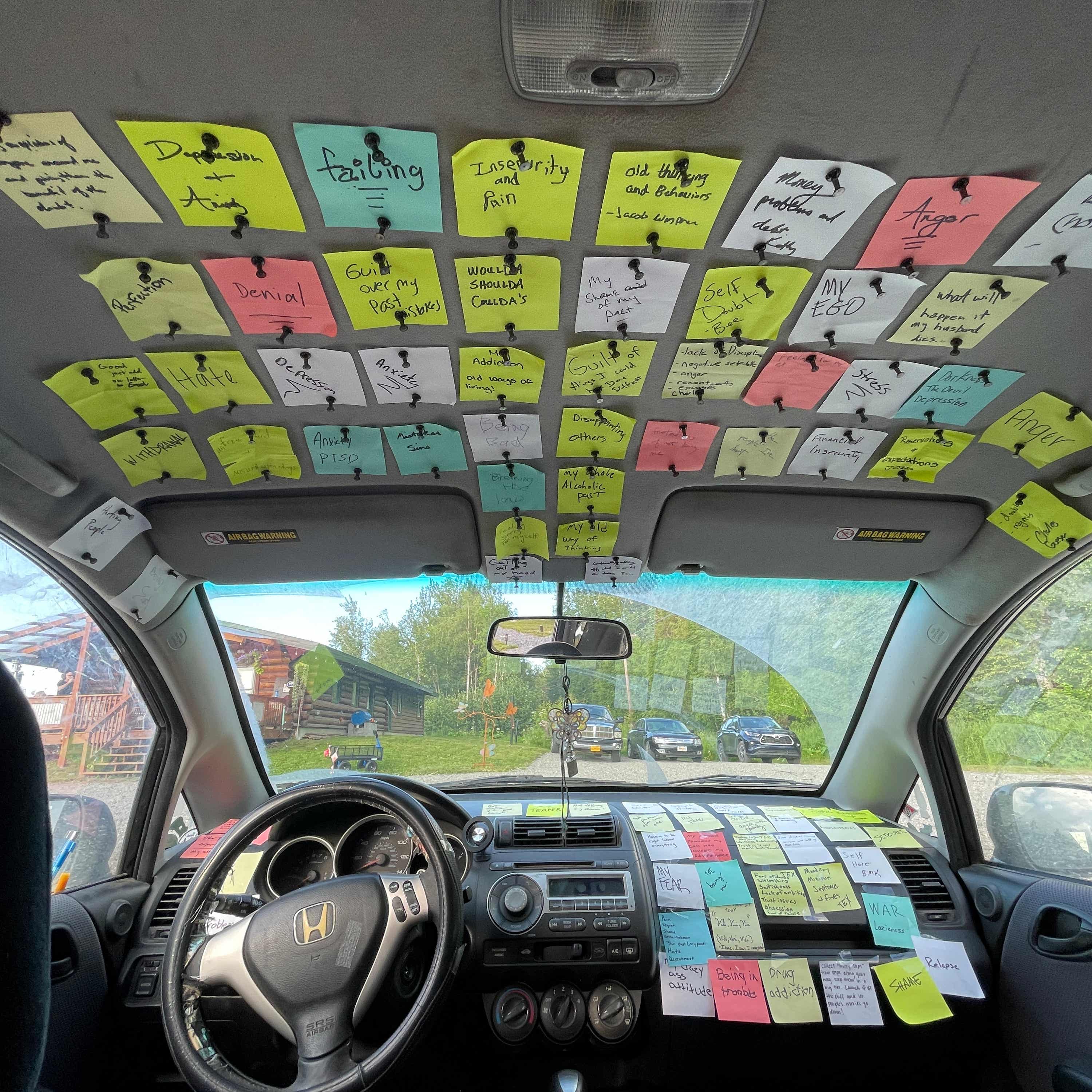
The speaker shares a personal journey of discovering true freedom through deep self-reflection and accountability, inspired by the teachings of Father Charles O'Connor. For years, he believed he had control over his life, unaware that addictive behaviors had created invisible chains that only became apparent when they became too strong to bear. A pivotal moment came when he made restitution for past wrongs, feeling a tangible relief as a heavy burden lifted. Previously, guilt and shame were suppressed through denial and emotional numbing, but through a rigorous inventory of actions and honest self-examination, he confronted these emotions directly. Without taking active steps to address them—such as completing steps in recovery—he would have relapsed, as he could not have endured the pain. True freedom, he learns, comes not from denial or escape, but from facing the past with integrity and taking responsibility. This process leads to a state of peace and serenity, where one lives on life’s terms, unburdened by guilt or shame. The speaker emphasizes that freedom is not something acquired externally, but something revealed through honest, courageous self-work—something he once lacked but now fully experiences.
Well, hello world. This is going to be a shorty. I am excited because this week, over the next few five days or so, this book I like to read in the morning, it's a daily reflection book.
It's going to have the theme of freedom. And I like that because there was a guy named Father Charles O'Connor, or Charlie as we called him, who I became very close to over the course of probably a decade or so.
Charlie moved back to Ireland a few years ago, and that is where he died. And the home he was born in was the home that he died in. And he was a remarkable human being.
And I am very fortunate to have had the pleasure of getting to spend some time and learn from him, listen to him, and be his friend.
So these were some of his favorite readings, and they've become some of my favorite readings.
You know, because I love it. I love it when we talk about freedom.
It is a very powerful concept.
It's. In my previous life, as I like to call it, I didn't really give it much thought.
You know, I thought freedom was. had something to do with a flag, or. I'm not even really sure what I thought of it, because I don't think I really thought much about it.
And I never felt that I was kind of enslaved
to an addiction, or to addictions.
I always felt that they were my choice.
That I was in control of my actions, my experiences, my situations.
That it was me, not something that I had lost control of,
that was hijacking my will,
creating this obsession
that I had a hard time with.
That I had a hard time noticing until it was so powerful.
We have a saying that
the chains of our addictions
are too light to be felt
until they are too strong to be broken.
I remember I saw that the first time
after I was trying, or getting sober, and thought,
damn.
Why'd they have to put that in my mind for the rest of my life?
But I'm glad it's there.
Because believing that I was in control, I was wrong.
And I remember specifically
feeling an actual weight, or a burden lift
off of my shoulders.
You can think that's hyperbole.
You can think that that is just someone saying something.
But I am telling you,
I was driving.
I had done my part to take ownership of a wrong that I had done.
And when I made restitution
and an amends to that person,
it was gone.
It was gone.
And I had been weighed down by this for a very,
very long time.
But it's interesting because
there were occasions where I felt guilty
about the way that I had acted.
Or maybe I had embarrassed someone that was close to me
when I was out there in my previous life
kind of using that as a weapon.
But it wasn't enough to change my behavior.
It just, it wasn't.
And then when I finally came in the doors
and started working and taking some action via some steps,
when I did this inventory
and this rigorous honesty,
it actually got me feeling pretty guilty.
That shame and that remorse
and that, those gross,
quite honestly, gross feelings.
They weren't being numbed by something anymore.
I wasn't,
I wasn't purposefully making myself blind
and numbing myself to those,
those feelings and those emotions that were there under the surface.
I just didn't want to acknowledge them.
I think that's how it worked.
And when I brought all of those actions
and those resentments and those grudges to the surface,
they were right there.
And I had to do something about them.
So what I dredge, you know, you dredge them up,
you're examining your part in them.
That's great.
But if I had just stopped there
and lived with them,
not doing,
you know, a fifth step, a seventh step, a ninth step,
there's no way I wouldn't have gone back out.
I would have gone back out
because I could not have lived
with all of that
remorse.
Rigorous honesty and inventory of my actions and my life
and not have tried to make them right.
I would have had to done something to numb that,
to take that away.
And I know what,
and I know how that works,
or at least I know how it worked for a really long time.
And I knew what to do.
But thankfully,
I didn't have to do it.
I had some folks that took some time that I met
that believed in me
and,
and worked with me slowly
to try to build a better way.
And to be able to live life on life's terms,
not trapped in the past with shame or guilt,
that is freedom.
True freedom.
It really only becomes visible
once you recognize that illusion of control
that your addiction created.
That through inventory and honesty,
you're going to surface these things.
They're not going to feel good.
But lasting freedom,
like where it really stays with you
and gives you this serenity and peace of mind,
it can come through
when you complete these actions that you're supposed to take,
these suggestions that we say.
So that way you can release the past
rather than live in it.
And I'm going to say it again,
living life on life's terms,
unburdened by these unresolved guilt
is freedom that you didn't know you lacked.
And it's right there.
Peace.
Podcast Summary
Key Points:
The speaker reflects on the theme of freedom, inspired by Father Charles O'Connor, a deeply influential mentor who emphasized personal accountability and spiritual clarity.
Freedom is not about external symbols like flags, but about recognizing hidden internal chains of addiction that go unnoticed until they become overwhelming.
The speaker recalls feeling a profound weight lifted when making restitution for past wrongs, marking a turning point in their journey toward true freedom.
Shame and guilt were long suppressed through denial and emotional numbing, but once brought to light through honest self-inventory, they became undeniable and necessary to confront.
Without taking active steps—like restitution and emotional accountability—past guilt would have driven the individual back into addictive patterns.
True freedom emerges only when one fully faces past actions, takes responsibility, and works through them with courage, rather than avoiding or denying them.
Living life on one’s own terms, free from the burden of unresolved guilt, represents a deep and lasting form of peace and serenity.
This freedom was previously invisible because it was masked by the illusion of control that addiction created.
Summary:
The speaker shares a personal journey of discovering true freedom through deep self-reflection and accountability, inspired by the teachings of Father Charles O'Connor. For years, he believed he had control over his life, unaware that addictive behaviors had created invisible chains that only became apparent when they became too strong to bear. A pivotal moment came when he made restitution for past wrongs, feeling a tangible relief as a heavy burden lifted.
Previously, guilt and shame were suppressed through denial and emotional numbing, but through a rigorous inventory of actions and honest self-examination, he confronted these emotions directly. Without taking active steps to address them—such as completing steps in recovery—he would have relapsed, as he could not have endured the pain. True freedom, he learns, comes not from denial or escape, but from facing the past with integrity and taking responsibility.
This process leads to a state of peace and serenity, where one lives on life’s terms, unburdened by guilt or shame. The speaker emphasizes that freedom is not something acquired externally, but something revealed through honest, courageous self-work—something he once lacked but now fully experiences.
FAQs
Freedom in recovery means living without the burden of guilt, shame, or unresolved resentment. It comes from recognizing that addiction created a false sense of control and taking honest action to repair past harm.
They realized through the experience of sobriety that their addiction had created invisible chains that only became heavy and unbreakable once they stopped numbing their emotions and faced the truth.
It highlights how addiction often goes unnoticed until it deeply impacts one's life, making it hard to recognize or escape without conscious effort and honesty.
Making amends for past wrongs releases a heavy emotional burden and creates a sense of liberation, showing that true freedom comes from taking responsibility and making things right.
They felt guilt because they had been using their addictions to harm others, and before recovery, they had avoided facing those emotions, numbing them rather than addressing them directly.
It brings hidden emotions, resentments, and actions into the open, allowing individuals to confront their past and take meaningful steps toward healing and freedom.
Chat with AI
Loading...
Pro features
Go deeper with this episode
Unlock creator-grade tools that turn any transcript into show notes and subtitle files.
 PodcastTranscript AI