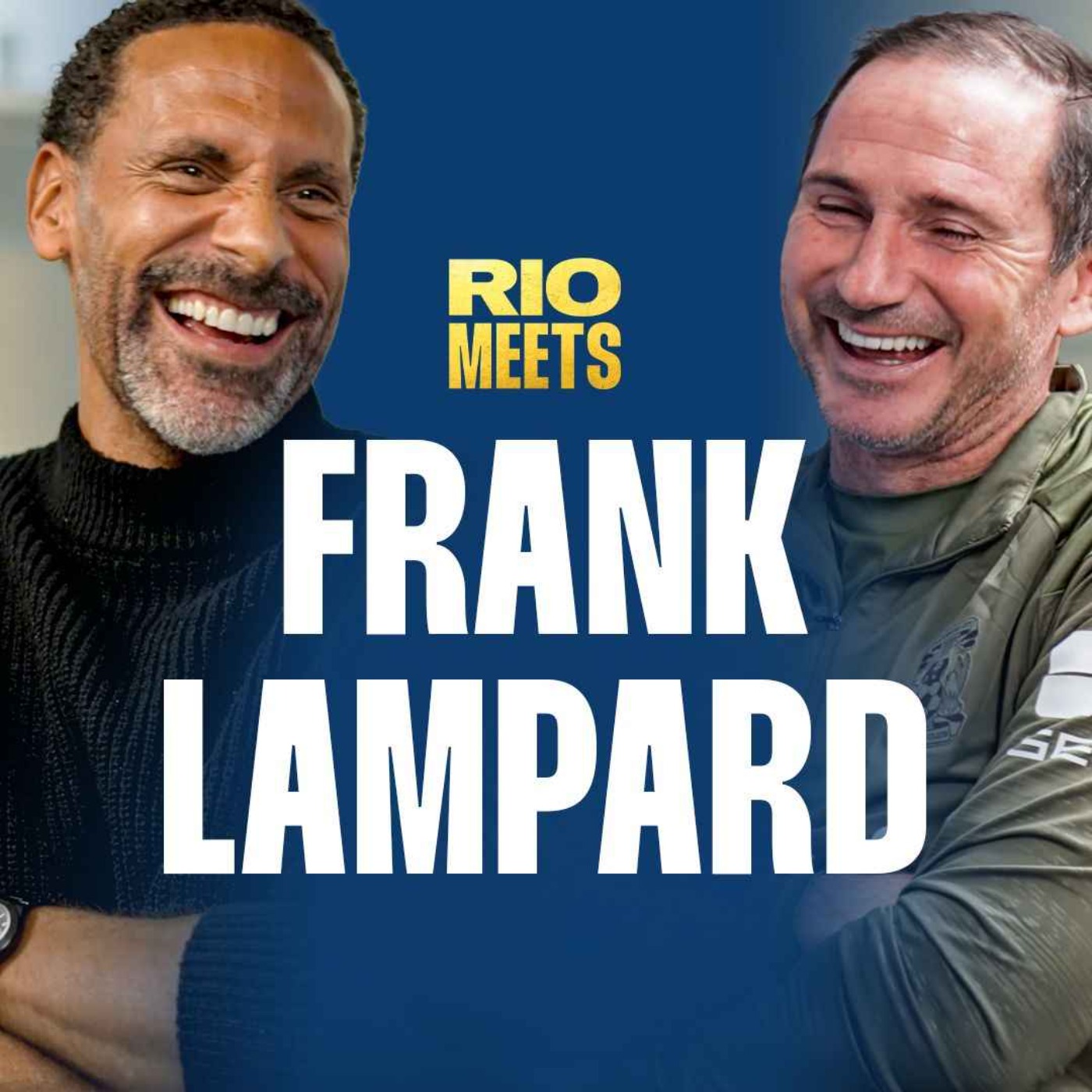
Frank Lampard: Love for Jude Bellingham & Elliot Anderson, Why Coventry Singled out Declan Rice
1h 5m 49s
Frank Lampard reflects on his playing career, highlighting his exceptional goal-scoring record—20 goals per season for five consecutive years—and the foundational role his father’s work ethic played in shaping his disciplined, driven mindset. He emphasizes how early setbacks, such as being overlooked at youth level, built resilience and humility, which now inform his approach as a manager. Lampard stresses the emotional challenges of losing a job, noting that pride is deeply affected but that reflection and growth allow for recovery. He values humility over ego, especially in conversations about past achievements or rivalries, and maintains a respectful, team-focused mindset. As a manager, he sees the evolution of the game, particularly in midfield, where physicality, intelligence, and pressure management are now critical. He admires modern midfielders like Declan Rice and Erling Haaland for their ability to perform under intense pressure and dominate in defensive and transitional phases. Lampard contrasts his own style—focused on arriving in the box and relentless pressure—with today’s more analytical, technically advanced midfield roles. The conversation also underscores the importance of team culture, mutual support among managers, and the enduring value of work ethic and resilience in both playing and managing football. Ultimately, Lampard sees the game as cyclical, with lessons from the past continuing to shape present and future success.
Who now do you look at and go, that reminds me of what I would do back in the day.
You know what, I don't really. That's what I thought.
Yeah. Seriously, I thought the same.
Yeah, I don't. It's a funny one because there's no one out churning up,
churning up my numbers. That's what I was waiting for.
If you can turn out numbers, I know you can be in the field, but it's funny.
I sometimes have the sit-in, I see people say, I play like Frank Lempard and I'm sitting there again.
I know Frank has got a glass of red wine sitting there, swirling it again.
But when he churns out 20 in five seasons consecutively, we can have a conversation.
Isn't it? It's true though.
We are here at Coventry City Training Ground.
Frank Lempard is the manager here. My old teammate at West Damm,
we were rivals Chelsea versus Manchester United.
England team mates as well.
We're going to take it back and go down memory lane.
I want to find out where it's like being a manager in the Premier League.
And he's out on the training ground, but he's giving me the key to his office.
We're going to go up there and find out what's going on under that desk.
Let's go.
Baseman, you know what I'll say to these all before we started?
Like, there's some things about you that people don't know.
Obviously, we grew up together.
And obviously, you had like your elite trainer, your new worker.
And not many would know that you're like an elite drinker.
I wondered if you were getting somewhere there.
You're a little elite these days.
I'm a little elite.
I had this fit. I've been a player when you're prime and a bit capacity for it.
I found out this weekend I was in a bad way this weekend.
After drinking with my family.
But the mad thing about it is when we were kids,
we would like to go out and have a drink.
But I always remember that, come rain or shine,
you'll be there training next day.
And you'll be up when you'll be there, diligent doing your work,
doing your runs and whatnot for that.
You're genetics.
Yeah, you must have something there.
I think I grew up on, obviously, with my dad being an ex-player,
this incredible work ethic.
And that was that he's stories were of Bobby Moore.
He used to go out drinking whatever.
Someday, at the Ups and Park,
went top three layers, went top, run round sweat, sweat it out, grew up with that.
So I think a mixture of that as an idea,
I've always liked to have a good time
and be part of the social scene as a player more.
Nowadays it's more, it's different things.
It's been at home, it's the work.
And if I ever pushed that side of it too much,
my body just tells me no.
Because you've got to stay on it here as well.
That's just a brain fog.
You've got to be quicker, you've got to be sharp.
And obviously, with the young players that you've got here,
I always just think that what turns me off
from going on the mad one is like, I've got kids, if I'll get out with the kids.
Yeah.
And that is just a hard work.
It's a bad thing, isn't it?
If you ever do do that, we're all human, aren't we?
But you do feel regret, don't you, in patience,
with each other if you ever do.
Just let me sleep.
I have no.
I do feel that.
And it's so important, and I don't necessarily stop it early in the conversation.
But I've actually had been children the second time around now.
I've got my older daughters and now I've got my two young ones.
And I really want to appreciate these years.
Not that I didn't before, but actually in the 20s,
that low 30s, whatever, life's going on,
and that's playing at the time.
Now I try to be more aware of not being that impatient.
Oh, actually, my job, not even bringing it home.
And I can have days on that, where I'm Christine's like,
you've got to give more, you're not giving them enough time,
just distracted by it.
Yeah, yeah, yeah.
I had a game.
And your focus is elsewhere sometimes.
And your family is weird, you think you're hiding it,
but your misses and kids know.
Yeah.
They don't mean that they feel that.
It's difficult.
It is quite parallel to lies in that sense.
Like, again, I have children,
and another set of children in this case.
Like, I think when I played that new career,
you put your career before everything and everyone.
Yeah.
And like you said, I'm the same.
I want to try and give my kids now a different version of me.
It's not easy in this job.
I sometimes hear about management.
And I think he's either maybe for a single man
or a person with no young children or a grown-up
or no children at all, because it is really hard,
because I naturally want to be the best that I can be.
And sometimes you're getting.
But I've probably got a decent life balance here,
where I'm close enough to be at home.
I understand it a little bit.
And I try to make the best out of it.
No, good.
We've kind of slightly mentioned their family life as well,
but also career-wise.
We started very similar times, finished very similar times as well.
Do you remember when we first ever met?
I kind of remember you coming to the training ground.
But you were like, there was a bit of noise about you.
This is kids doing these things.
And that must be where maybe I come to a game.
Yeah, I remember.
I've got an idea, but how much
us coming through together, do you think we helped each other?
Yeah, a lot, yeah.
A lot, isn't it?
Firstly, I think you were the same as me, right?
When a kid, like you would have come.
And I was a kid, like a year old and you were whatever.
I would have gone, oh, this is kid Rio, yeah.
And I would have liked it.
Yeah, I don't want anyone else to be any kid.
I don't want no one getting a spotlight.
No, so I had that professional jealousy from me, young age.
Obviously, we became really close and it's different.
And then you shifted to the centre-backs.
Yeah, yeah.
Because I was on this phone when I first saw me.
Yeah, you were.
That's why I was a bit like, I'm not sure about this.
Dad, why are you trying to get him in the car?
I know, you're a big tall boy.
Legs could do stuff.
So, yeah, but that's that ingrained kind of driven thing
that we both had.
But it was just that thing of you being a number 10.
I always remember the game you played against Chelsea.
You know, a cop game, a cop game, a two-legged,
played in the ten, and they absolutely tore them up.
And then you then transitioned into a centre-half.
And a bit, you could tell that story, Lucy.
And they were like, oh, okay, yeah, of course,
six foot, whatever and stuff.
But I saw the extra head in windy days,
but like today, all day long.
Oh, dry bars are working on your game.
Doing all these things.
And I feel that the game is just forever cyclical,
the cycles of things.
And when you listen to Managing Now, you talk about a game
and I'll go, really, when the second ball today,
we didn't, we weren't physically as good as him today.
Like, it reminds me about growing up,
because it was like the difficult side of the game.
The hard bits were drilled in us.
And we did, there's no point in for me
in doing extras where they're loose and light.
And they're a little bit, we were doing stuff.
You doing heading, because you're going,
I'm going to have to.
Yeah, yeah.
And I used to do box-to-boxes.
If stuff you don't, what really wanted to do,
but you know it's going to come at some point.
Yeah, you're going to have to live off it.
Yeah, absolutely.
And then you're like, we've got that thing
that when you start doing that.
And when you do stuff that feels horrible
and you choose that and it's raining,
and you get a little bit of luck we see yourself developing.
And you go, yeah, those are the rules.
Like, I'll say that to my boy now,
you've got to just go and do 20 others off the training.
Four times a week, three times a week,
but obviously now they're managing minutes,
time on training pitch.
So there's so much more scientific stuff
to stop you sometimes going on there.
So it makes it difficult.
But yeah, those fundamentals,
you live and divide them throughout your career.
You've got to do them early.
Just talking about like the resilience
and headspace that we remember,
we were kids coming up here.
I watched the Hi-Red map piece
in that forum.
It wasn't it.
Thanks for.
What, how much impact did,
because I've never really spoke to you about that.
How much impact did that have on you,
like short-term and long-term?
I think short-term quite a lot,
because I was a little bit insecure anyway.
I think I dipped my time into the first team,
hadn't pulled up any trees.
I think you were.
You actually went in there and looked like
you fit it straight away.
And it wasn't quite the same for me.
And then I had the nepotism things.
I knew that was a thing.
But when I actually sat there and listened to someone,
the first time I'd had sort of, you know,
a direct, yeah,
who absolutely direct from someone as stranger.
And I'm 17 at the same thing.
But I remember driving home
and being really upset to the point of a bit theory.
And I'm not over-cooking it,
because this is a young boy.
So I mean, I was like,
"Oh, I actually thought, where'd I go from here?"
I think, "It's that's going to be the thing."
And that was my sort of weak spot
of the reaction straight away.
And then I garnered some strength from it
as I started to get bed out.
But all of the long-term answer to it
is just a great thing now.
I can look back, yeah, and go, yeah.
And when you're in it, you don't know what's coming.
Now I can look back at my career
and I'm retired and very happy.
I'm playing the Curious Your Career, right?
You can refer to all your titles at many.
And I don't have to answer any more questions about it.
And I love it, because that pops up a lot.
And it was just like, "That were your trophies."
Yeah, you just did that.
God, I don't even need to answer.
And it's great. But at the time, it was harsh.
But it is a harsh world out there.
And the version of that now
that I wear about with my boys
is if they ever find a game and they flick on their phone.
And that's as bad in a different way,
because that's not how they might get constant.
Yeah, I've got a very direct one,
but everyone has the same thing.
And you have to be strong character
and maybe in big picture.
It helped build resilience to me as part of the story.
Talking about resilience, like,
that's the trait I've always seen in you, resilience.
Does that apply to you as much as a manager, as it did to the player?
I think maybe more so, is it potentially?
And then when you do lose your job,
actually, even more key when you do,
and how you feel in that first bit, it's horrible.
The first time I got told we were losing the job was at Chelsea.
And I had a job, never had this feeling before.
Fortunately, I was a thought-yod.
And then you have to go over and get better again.
How'd you get over that, like, what is that?
What are those initial days like?
I think they're really tough.
They're a mixture of emotions
that you can't explain.
Chelsea was probably tougher for me
because of what it meant to me as a club.
And because of our hungry eye, I am generally that it's like,
you know, that feeling of, like, a failure.
I'm not stupid. You know, it then pans out.
And once a dust settles, either people look back.
The good news is, and you learn it once, it happens, you once.
You can reflect on stuff and go, no, no, I did do that well.
And that was good to make the Champions League
with a pretty young squad.
Maybe I could have got those relationships better.
Maybe I could have done that in that game.
Maybe I didn't need to sink my head into my tactics book
for the last month and try and correct everything.
And I could have, you know, all those little things
and you're going to be, hopefully, be better.
I really feel for managers because it's behind closed doors.
The minute that happens, you pride takes a huge hit.
And I've got an ego.
Yeah, yeah.
Yeah, ego's massive as well.
And it's good.
I've got an ego, like, you would have anything to do.
And that's why you're hit.
Well, I'm here.
You know, maybe you're doing your thing
because we're driven loads that want to go out for our life.
I'm going to stay active.
Felly mae'n gweithio'n gweithio'n gweithio'r gweithio'n gweithio'r gweithio'r gweithio'r gweithio'r gweithio'r gweithio'r gweithio
Mae'n yw'r ffordd. Mae'n ffordd ar yw'r ffordd. Mae'n ffordd ar yw'r ffordd ar yw'r ffordd ar yw'r ffordd ar yw'r ffordd ar yw'r ffordd ar yw'r ffordd ar yw'r ffordd ar yw
Yn yw'n ni'n ni'n ni'n ni'n ni'n ni'n ni'n ni'n ni'n ni'n ni'n
Mae'n dwi'n gwaith, mae'n gwasanaeth i'r gwasanaeth i'r gwasanaeth i'r gwasanaeth i'r gwasanaeth i'r gwas
Mae'n gweith i'n gweith i gweith i'n gweith i'n gweith i'n gweith i'n gweith i'n gweith i'n gweith i'n gweith i'n gweith i'n gwe
Ys gyda'r ffordd i'w i'r ffordd i'w i'w i'r ffordd i'w i'w i'w i'w i'w i'w i'w i'w i'w i'w i'w i'w i'w i'w i'w i'w i'w i'w i'w i'w i'w i'w i'w i'w
yw'n gweithio yw'n gweithio yn yw'n gweithio yw'n gweithio yw'n gweithio yw'n gweithio yw'n gweithio yw
Dwi'n gweithio'r gweithio'n gweithio'r gweithio a'r gweithio'r gweithio a'r gweithio a'r gweithio a'r gweithio a'r gweithio a'r gweithio a'r gwe
yw'n gweithio o'r gweithio o gweithio o gweithio o gweithio o gweithio o gweithio o gweith
I'm a little book under here. I just go, 'oh yeah, alright.' I'm just saying.
It's good, but again I'm competitive and I don't mind it as well. I don't mind. I can log things that sort of like you didn't put me in your mount rash modi other day.
What one was left for what many people? It was good.
It was in it. Don't need to put me down and tell me why.
No, no, no, no. But I like that competitive energy.
I don't care, and you know what? It's hard because the whole, I say, well, I like it. I do this. You don't have to do that stuff so much like you do and I get it.
Because you will. There's no answer that solves everything. I don't take any fence to it at all.
But it's more people talking specifically about the job that you're doing.
Because I know all the context behind the scenes at my job at Everton.
There's reasons why.
Yeah, I know it now. It's like me looking at, you know, man, you're not in there. I'm like a character and going, well, why is he not getting him to run, you know, like casual observation for a moment?
If I speak to, well, I'm sure we're going to be one of it. We can't. So we're trying to do it or whatever.
And so if people talk about that stuff, I don't mind about, you know, people saying, oh, he was a better player.
Gerard Skull's empire. That's all good for you.
You know, I mean, but the job stuff. There is them.
No, my husband Rushmore was Skull Z, the era Gerard, Roy Kane.
You can't argue for any of that.
But what I always do. So that conversation always comes up as you probably know that Skull's, you know, Lampard or Gerard.
And I've always said that if I was a manager, I'd pick you.
Because I know you're getting me 20 goals a season. You've done that five scenes on the bouts. No one's ever done that 150 goals.
You're all in the same band really. You're just a preference on something.
Absolutely. And I get it. And I start, well, the question I've been asked and asked most in my career is to finish in cabbies in London or something.
And I ask you that. And there's no answer that for me is the right one. They were absolutely fantastic players.
I actually sometimes I feel like I put myself down. I've said it a lot about that.
I was really, really hard working on the training group. It almost leads to a bit of, so you want to tell it really.
When I look back on myself now, I'm not going to pack myself on the back too much now.
But now you're in the game still when you realize in how important 20 goals a season is.
Give me one, please. Now, do you know what I mean? And again, that's not just me trying to hide it because Stevie gave so much.
It's going to give so different periods of time.
It's always as well. Stevie tried and a team to win the Champions League final.
You know, probably he asked what other players could have done that.
It's goals. He just dominated and gone out. He used to be in the box and then he goes there and you can't get near him.
All those things are great. And I have my version of whatever that is.
I think it's a good thing because it's nostalgic. Look back at a good healthy Premier League era.
I'm feeling that conversation enough. Sometimes it's enough.
I was like yourself, I've boy from Romford who, like you said, was a bit chubby.
And did I think that someone would put me in a conversation with those players?
I've still got that humility that I'm just happy to stake my case from the work I've done.
But they're also fantastic matters and the story.
When did goal scoring become like such a massive part of you as a player?
Like I said, 150 Premier League goals.
Full in the all-time list, Premier League goal scorers. 20 goals a season for five years on the bounce.
And 10 goals or more in 10 consecutive campaigns.
That's like them cards up a numbers line, like you say.
That player today is a 150, 200 million pound player.
Yeah, I think a lot of it would be my dad, a young age, having been a left back.
I remember him saying to me, "Don't be a left back."
That's not when the money is. So I went into midfield.
But I didn't have that capacity of athleticism to get up and down so much.
I really worked it and he pushed me.
If you can't make a box and you won't be able to score a goal.
I remember him talking about a set of circles.
You can't be a midfield player, it just plays in there.
And so he gave me the drive for it.
I think my application to train for it was massive.
Because once I knew that that's what I wanted to be and I was that kind of hard work.
I was good at learning my weaknesses or what they were.
So I would be able to get in the box like I run more.
You left foot because sometimes you've got to shift it to your left.
Because it's quicker to get it to your left foot.
I'll expect you to go there and work on that.
I'll work on quick reactions, work on all those things.
And then when I worked on it and then I think I had a decent game intelligence
as I grew into my career of knowing when to nip off the back of people.
When to arrive and to appreciate my winger when he's going to cross.
A lot of that stuff is I was like telling someone how to drive.
Once you know it, you know it.
And I did that and there's not a written rule.
I'd only heard it really asked me.
I was like, 'How did you manage to get in there?'
I said that to him.
Yeah, he said it to me.
I went to him.
See that bit there, Rudy?
Get there.
Keep getting in the box.
And keep getting there.
And then when you've got to come out, you go back into it.
And then you talk about the finer details.
But I think in modern day midfield players for whatever reason.
I think Jude Bellemont was the one that really,
oh, Delhi Ali only came through that period.
I was like, 'Oh, is a competitor for what I used to do?'
And then they become more tens and more like a rhyming.
Which is where Jude's level was incredible.
And he's become more of that man now.
I used to like arriving from deeper.
And I just worked on it.
A lot and I was so hungry.
And that's one of my biggest things.
You'd like to say why did you come to Coventry so hungry? I want to do well and when I
learnt so I realised that goals were a big thing I just saw I'm going to work on that.
So how did it just take us back to them times approaching a game, going into a game?
How does 20 goals of season Frank Lempard go into a game mindset? Are you going, "I've got
a score today or I've got an assist or I've got a run to get that. What's the mindset
going into get that output?" I would sit in the dressing room and think, "I'm going
to go out tonight to Cafe de Parry and I want two goals in my pocket."
So I'd say, "You've got a young man, I'm going to want that bad."
Is this like West Arms? That West Arms? No, Chelsea. I think West Arms different because
you're developing and trying to get it and some of you all were in game mind that probably
being just to arrive in the box and the game was going around and you're in it goals
and you really have ones coming to Chelsea, there's much more demand to be a good midfield
player. So I can't just think about, you know, being on the end of things on the end, hitting
it into it and down, you might knock it down to me, I can arrive and that bit of game
might matter. You've got to Chelsea, you've got to handle the ball and I think sometimes
maybe again, trying to do a lot of pattern on myself and about, I think people will underestimate
that. I do a lot of stuff there as well. That's my game. I was never too, with so much
more analytical now, I feel like I have to get the players a lot of information about,
you know, their teams set up and they might be a three-two and they build and they go
into three-one and they're back four and then the wingback will go down, so they're
back five. I don't know what you think me, it might not. I can't remember. Joe's like,
"And yes, so they'll go into back five and then they'll become a three-one."
In an out of position, they were in one way, in the whole way.
And there's something for that because my idea will be, oh no, I've got Rio's at center
after today and I want to run off Sanso and then he'll be there. Whatever it is, if I
maybe pull out onto the penalty spot, would that be better for me? Or whatever, do you
know what I mean? I've got Stevie G now, he's going to be out to run me that way and
he's probably quicker than me so I've got to get going early, but I know I'll kind of
right, you know what I'm saying? And then the good news is when you intend to ask those
confident games and stand for bridge, you'll go, I think I can definitely, we're going
to have a lot of these, so you've got to keep arriving and then have the bits and arrive.
Because you've got a bit of a lot of averages as well, like, I always tell young players,
if I speak to a young kid who's in midfield or somewhere, I'd always say that Franklin
Paul was very much a lot of. if he got in one half, he didn't get in a opponent's
box two or three times, if you're going to be a bad laugh in a lot of respects.
Definitely, to keep getting in there and maybe that's why I've started to get good
actually, because you could go and you fail more than you succeed. You have to get in
the box at 10 times or saying whatever in a half or in a game to get your goal, you have
to buy a lot of averages, it makes absolute sense to me. So for midfielders that want to
arrive to the edge of the box and not go any extra mile, we're all the goals are because
we do all the analysis here and we go in the analysis and we go, we took my defending
in the box as well. You do that stand, you know, you see all the goals and you go there's
one, and then go, go, go, go, go, go, go, go, go, go, go, go, go, go, go, go, go, go,
go, go, go, go, go, go, go, go, go, go, go, go, go, go, go, go, go, go, go, go,
go, go, go, go, go, go, go, go, go, go, go, go
I would say double six sharp box. So while when you arrive into the score and people would say,
"Oh, he scored easy goals or he scored deflections, yeah, I took shots on." In some of them,
maybe get a little nick, some of them would find a top-combat and they'd be like,
"You've got this low of average, it's all day long for attacking the field player."
Do you have to remind the food and add to it that you're like, "When I'm doing you,
I just pictures the ball and dole as well, just to let them know." They might say,
"Who's when I've been doing this stuff?" They'll be like, "Yeah, I know you're now, but you know,
I don't, I'm definitely not that close. You start the problem if you become that guy.
Now when you get like, there's a say, Rudy in a few of the young girls, they're good,
the really engaging boys will come and go, "So what does it like to play at a new camp or
what was that Barcelona team like? What about that game, when this weather, and I like to engage
in that, but I don't feel the need to. I've told it, I tell a few stories sometimes of games,
but they're never like, and what I did was, it's almost like a team moment of some time,
it would be like, I can't believe it was, but Ben Wilson, when I had Goldies here,
he's a funny man, he's like a Joker in a pack, and as soon as I start going into a story about
Chelsea or something, I could see his face. There you go, that's what I can't do that much.
I take a few nuggets if I can, but I don't run me down anyone's front.
No, no, I'll get that. He's always been quite a humble guy, and that says, but talking like that,
you've still got to believe you're the best, and I think like, when I looked at you and I,
was there any time when you did look around at some point in your career and go,
"I am the best midfield player in the world?"
I think coming second to run Ardenio, that feels a bit surreal and was not a shock to me at
the time, but I never imagined anything like that to happen, and maybe looking back at these,
sort of, give me an ultra confidence in my own head, but because I was never that person,
I was always, and I think you would have been the same as the part, I was always waiting for the
next bad thing that might have been if I loosened off. So I never really got to that point where I could
go, "Yeah, I am like that." It just wasn't in me, and I probably got reminded about that when
I go and play, you think you might be the best midfield player in the world, or one-off, and then you
go and play the new camp, and then you're doing that, and chavvy it in the extra, bounce around,
you go, "That's that," and then you go, "Okay, but when I get back to Stamper Beach, then now
fill what I am." So I knew I was competing at that level, I think, for that period, but I would
never get that cocky to say that, because again, it was nice. You get cocky sun, but something's
coming around, a cocky sun. But obviously midfield's your specialist subject, right? But as a player,
when you played, who were you going into game going like, "This is a tough assignment today?"
Well, definitely Stevie. I think Stevie had that sort of athleticism as a midfield player,
that could, you know, once he opened up or he'd eat up ground to try and, you know, leave on on
you and stuff, and this quality, didn't he? So I think for me, because that was always something
that I was always trying to really max out. So if I had any sort of insecurities, there might
be a bit of that side of the game, so I'll work my, whatever off, to be as physically as good as I can.
I've got to a good place, but so Stevie, and then technically, I think, to talk to Man United,
because we're talking about Michael, to have a day, because Michael obviously was a carrot
working at Manu, and some people players would not know exactly how good Michael was, because he was
understated, and it's a little generation away now, and I was talking about how good he was,
and that gets onto Skolsey, because they would have told me, "Fielders are a member of Skolsey,
got dropped deep." You know, like every team in the Premier now has a midfielder who plays in
with the centre-off, something to drop out of it, Declan Rice for Arsenal, they would have told
I'm about, "How do I get to him?" Yeah, so far away. And then when I go to him,
there goes, "I'm going in there now." And I remember going, "I thought carrot was really
good, and Skolsey, I mean, I was good, and he hit rockets as well." But Michael would find like,
25 yards sort of like side footpaths for you. On the floor. Yeah, and then they go,
"I know, I got, he did that to get me to go there, so Liza would pop in behind me, and then
the Barcelona boys, they were the ones, I thought Chavvy and the Esther Buschett stacked that team,
broke my heart, and guys. Yeah." And then to Steve Gerrard before, were there any conversations with
you about how you play, how could you potentially play together? Not really, and I think if we both
look back, we might reflect on that and kind of go, especially if we've now become managers,
and I think Steve he speaks really well on the telly now as well. But because we're in our 20s,
and because I'm not getting into this whole debate about, you know, because we've all flushed
that one out a lot, and we were just individually meeting, it was so much doing easing or so much
doing our thing. We were absolutely fine when we got together, that was absolutely not a problem.
But from my point of view, could our community get more on, go, "Yeah, a bit more there, or whatever,
what you're thinking about that?" But we were always put into a situation to be fair,
a majority of England career, where I'm over in a double six or such. Against midfield,
we're pretty much every nation in three and everything. So I might go, "That's not really my best,
but okay." And then Steve is going, "He's sometimes there, or he's sometimes on the side."
And then he's probably going, "It's not my best." So I think we probably took that and just,
because I think we were both kind of like, "This is going to do our job then." But maybe communication,
I think we got better as we got more mature in our careers. And I think there was a big respect
between us about how we both play. And we had no problems at all. I actually really liked Steve.
I think he's, as a bloke, he's one of the sound ones. It was a great power to see, but a good lad.
But maybe we could have maybe had a bit more chat about it. Like you would, if it was you,
your teammate, a man, you or Chelsea, just had that thing from some of the few.
You're an occasional, it's key. Yeah. We've got, you know, now as a coach in that,
how would you have set up that in the midfield? You had to pay free and ill, don't you?
Yeah. So it'd have been like, yeah, you and Stevie are the side of someone sitting.
I would say so. And the camp, this camp, if we were in Funny Formula S, that we were,
we were the best number eight right available for a big period of time, because of what we were
doing for Chelsea Liverpool. But the minute you do that, then you go, "Okay, you've got
much more discipline, you can't arrive, and we were both good at arriving." We do a lot of things.
And I think at certain times we had Michael Carrick, we had Aaron Hargraves,
Aaron was fired at World Cup when he came in and was like, said, "I think there were players,
there may be some others that can't think, but even Scaldi, if you could have persuaded him to
stay in it longer, it would have been perfect, because he dropped even for a man, yeah.
I always thought with England, it was the only time where I consistently felt we were getting
popped about by everyone, like, anything called a Belarus, anyone, because they were always out
numberless in the midfield area. So I always think that, "Are you always such yourself to question
why, why, why?" But it was just numbers. That level, your own number, you can't compete.
No, it's only sort of since that period, it seems like they've sort of talked of overloads and
all these, you know, overloading certain areas of the pitch. It wasn't such a thing in that day,
but you felt it, and my issue with it is, and I think about this one of the coach, and a lot of
those, I was like, if you get the out of possession bit wrong, where you're either numbers are killing
you in the field, you can't get nearer, and you think, and it's sort of stifles your game,
and you're going to, then you get the ball, you also, I've lost a bit of edge in your game.
So if you go to me, there's use three against them to me, feel it, I go.
I can get at him, I'll be at my game.
I'll need to get off the wall and put pressure on.
Then when I get the ball, I feel like I'm on,
when you start going, "Oh, can I go to him?"
I've got him behind here.
And then you go, "Oh, you got it back."
And then you go, "Go on, Frank."
And I'm like, "Oh, just frazzled it, but I worried about that."
You know what I mean?
And it can affect him before I saw it somewhere in England before,
it's like you say, probably in all of our heads
through the time we're going,
"Why Belarus pop in a city like that?"
And then you get the ball and then you give it a whale,
something you don't know.
- Oh, no.
- Five minutes, yeah, I know. - I mean, Michael Orien said to me one time about,
"When you play football at your level, like he's level,
and then you're asking him,
I'm not been talking about you actually,
asking the likes of yourself, Michael,
care it before, to go in the championship
where you've never played before, is it almost,
does it feel like a different sport, almost?
That's what Michael kind of, that was his analogy, really.
- I think if you, I don't think it's regardless if you're career,
I think if you stay humble to it and open-eyed to it and go in it,
every game's going to feel different,
you've got to be robust for the tough games that come
that you don't expect, like, shout on the way,
where you can be awful on a terrible pitch
and, you know, Nicodroy and we did last year,
and be robust to that.
But the rest of it, I think, is like,
focus on priorities, which he comes back to,
a lot of competing, a lot of second balls,
a lot of being good at transition.
We were good at two things last year,
controlling a game again and one and crossing,
and transitioning and ripping through you quickly.
And you play all the time.
So you're getting over that when you go straight to that one on a choosing up,
and pressing and you go, "Are you better get ready for that?"
And that's changing, obviously, this year.
Yeah, mainly one game a week.
Yeah, more time to prepare.
For training time, a different approach of the game
because you're not going to be the dominant team, maybe.
No, no, it's a big deal that we were aware of in pre-season.
So we understand we may not have as much possession
because of where we've come from last year.
It was nearly 60% on average.
Now I think we're at mid-thirties.
Can you win games like that?
Yeah, you can, with a big shift on it.
Yeah, wow.
It's a big shift, so we tried to recruit for that with that in mind,
because you need to try and recruit a certain type of player
that's really robust to the defensive work,
but good in transition to be able to give you the legs to get out of the pitch
and you've got to make the most of the moments that you can have with it.
But we were quite clear on that set.
And it's a big sell to the players, that one.
Because that a great time last year.
And when he goes again, go ahead and give me the ball.
Yeah, stay in high.
Get a good one, be one.
Now you're now at left hand.
[LAUGHTER]
That's a shift as well, man.
Yeah, the good news is when I'm analysing opposition
and I like doing this, because I'm sharing them.
I asked them, I'm like, yeah, that's saccharate.
Right back.
That's the nature of a winger game.
Ashton Billy, yeah, they'll always take a winger down,
or they'll put a number six in the back line.
And that's what they do, just to understand that all other teams are having to do that,
whatever version of this hard work.
You know, I love the legs.
I think even they was, and I know this very well from them,
because we've had chats since I asked them on our early games,
where they're feeling that, oh, yeah, this is the level.
This is how I've been a lot of members into the prep.
And it's such good legs that they're not even,
they are saying it to me.
They're like, yeah, that's a nice, it's hard there.
Yeah, it seems.
So we have to understand where we're working from.
We have to stay a bit humble to that.
Like we've played full 'em, and we lose again at home.
We have 35%.
I think some people thought that we would have 60%.
I'm watching full 'em in a week proceeding that game.
They've got Liverpool, and they've got low to ball,
and they're good players, just because they're lower in the league.
So every game we have to be ready for a fight,
and the challenge of trying to sort of push out physical levels,
and everything to try and get results,
is a good coaching challenge,
'cause forever you can't even go on it,
we're gonna have to deal with that this week,
and it looks different to what last week looked.
Right, man, we've got low still to come right on this pub,
but we'll be back shortly after this.
That's interesting that the players are coming to your life,
saying like, this level, like, this is different to you.
Like what type of things are they exactly going on the back,
'cause I've never really thought about that when players come up,
and they realise the level, it's like, oh, okay,
and then they've got a wreck to it.
Or firstly, physicality.
Firstly, it's the pure physique of Premier League and power
of the players, you know, that's, and I understand that.
And I think what a lot of my ones were talking about,
I think it was probably the defensive nature of the game
of having, sometimes having players behind you,
you know, like, so for a midfielder,
and someone pops in behind you,
which a lot of teams do, they'll get players in between your lines.
Again, you're going to championship, you might be able to go,
don't worry about it, you don't have to mark him,
really in front of him, they can't get it through him.
Yeah, they can't get it through him, so you can do it at that.
But now if you do, they'll go wide,
and then it will run in behind free, back line.
You know, that's a thing, a little bit of a process for us
that I think the lads are trying to go through.
And I can tell them, 'cause I think you'll say the same.
Now, maybe not, 'cause when I said you went into West Ham
and you become straight and then you went into the England team,
quickly, I remember myself going, West Ham's first,
oh, it's a bit quicker here.
And not putting up trees, getting my first England game
under Kevin Kagan, I didn't get one for another two years.
I've just got a lot of, I've basically got a,
I don't see any really yet son, kind of,
and then I come back, and then I got in it.
So I speak to my lads, the ones that are,
be confidential, 'cause the ones that say,
yeah, they're, you know, I feel it, or I sense it,
I feel it, I'm going, lads, this is normal.
Yeah, yeah.
Maybe Wayne Rooney's not normal.
Yeah, they're not normal.
They just fall onto it.
I think the same thing.
I think that even, it might look like I was flying,
but I always thought it was five to ten games,
adjustment, whenever I went to Leeds,
went to the United, getting to the England team.
I've never thought, when I went there,
day one, I thought perfect.
And that's why I tried to say it to them,
because if I'm not there support mechanism,
then the modern world's not going to be.
Do you know what I mean?
Because the modern world can be very short-sighted
and go, you know, they were all on the parade bus
four months ago, and everyone in Coventry
was all out there, and they look at these gang,
and rightly so, the lads are done amazingly.
And if I've gained into the season,
they might be getting a bit of a challenge,
that modern world will go, they ain't good enough.
Whereas, I'm kind of, yeah, they can be,
but this is a bit of a process to work for,
and they don't feel support from me.
And just mention support, they're like,
who has been your support?
Because like, I look at a lot of the old May United players,
so I like to focus on the great support,
the vehicle for all of them,
he speaks on the phone, et cetera, he's always in there.
You've had some great managers along the way.
Who would you have been leading on?
While I was working now in my managerial career.
Yeah, well, Christine mainly,
and that sounds not on the football sense,
we're not doing tactics, but,
because she's a career woman, as well as a mother,
and all the things that you really love them for,
and respect, she's savvy enough to get stuff.
And a lot of this job is not just that.
It's, you know, stuff and fires and things.
Yeah, and she'll sometimes could take me,
and I'll come back and go,
there's a player he's annoying me
because he turned up late,
and then he's training levels and all that,
and then she'll go, "What did you say to him?"
And he'll go, "Well, I didn't say,"
"Well, go on, head guns, beat him and find out."
And sometimes it gives you a little bit of a nudge,
because there's 25 of them.
And sometimes you maybe miss something,
and so I can bounce off her
or just support when needed.
And in the football sense, Harry, I would still,
Harry's great in terms of,
there's not loads of tactical things to talk about.
It's just when you feel support from someone,
and Harry will, Harry Brednapp will be messaging me,
ring him maybe, for a game or after a game.
Great, Frankie, well done.
Little nuggets now and again.
Sir Alex, actually, to be fair,
through the LMAs, we get in touch with men,
send messages to me,
when I won the LMA award or a game that we won last year.
So, I think it's a nice little union.
I manage a sort of like that,
and it's a bit of an old school thing, maybe,
but Sean Dyer, she's been brilliant,
and he followed me at Everton,
and now he's been messaging me
like when we were in our little tufts bell in the season.
And managers look after each other like that.
Pep was always really good like that.
- They know how hot it is, don't they?
- Yeah, and they only take,
they only need a tiny thing.
It's like a voice time,
I remember getting a few voice notes from Pep,
and you almost go into that kind of like giddy kind of,
you know, 'cause he was the man, wasn't he?
I mean, it'd be great to see that result.
You've got whatever.
When we beat Rexham to get promoted,
I finished up early,
I got an adjustment and Pep's ringing me.
I'm a fair play,
'cause we can all get into our selfish bubble
when it's jump,
'cause it's so consuming.
And it's the best fun to give you little nuggets,
and I think you appreciate you all got difficult jobs.
- Well, one of the great managers,
Josie, Marie and you came up to Chelsea,
and announced himself as a special one.
Tell me about what was that first day like him coming in,
so you know it now from a manager's perspective,
walking into a club first day,
and for him to do that,
the way he announced himself.
What was that first day like with someone like him?
- Yeah, I might amaze him,
and now you do the job he realized even more,
and it has to be authentic, and he was.
He walked in,
we were all wary of him a bit,
because it was like the unknown,
we'd seen him running down the touch line,
I would try for them winning the cup,
and then the few stories about his discs,
and he's disorganising, if you don't play by his rules,
you're gone.
But then the minute he walked in,
he was into the Lowry Hotel,
and we were in England,
and he walked into us four or five Chelsea boys
that were in the squad.
So he made a B-line to come and see--
- He came, so he travelled up there,
because it was the end of season,
when it was obviously season,
right there, won the Champions League.
We were a Euro 2004, around that time.
I was like, yeah.
So he comes into the room,
he wanted to do that,
and I think he travelled a few of the bigger dogs as a squad.
And you saw the confidence and arrogance
that you were worried about,
but then you saw all of the warmth,
and then here we go now,
and it just landed instantly,
and it's a good point you're making about,
like the first impression kind of talk,
it was like, this fella just giving off an aura,
that he's gonna take us to the level
where we wanted to get to and be a winner.
He just spoke really well,
and he spoke in sort of quite short statements
that were quite fact we're gonna be winners now,
and like us 25 years ago.
- Oh yeah.
- Where do we go? Where do we follow you, too?
- Yeah, and it was like that.
- Was it that the season where you've only conceded 15 dogs?
- Yeah.
- Right.
- What's he doing in there to make you become
that juggernaut immediately?
- Yeah.
- I was main night at a time,
the way you came out of the blocks that we hadn't seen that.
- Yeah.
- And there was nowhere catching you after that.
- Yeah, I would say definitely tactfully,
it's harder to remember all the intricate details
of tactics, but the mentality thing of,
don't consider me, don't get beaten, there was a big deal.
Like, he really ingrained in, and he had a good,
he also had a good bit to work from, a good base.
'Cause he came into a team that I think was,
with myself, John and that little sort of team
that had been there before, he'd come secondally
before I got to the semi-fungers of Champions League.
He also then went, okay, I never dropped by,
I never had a check, I never had a Cavalier,
I was a late one, I was a good one for us,
when we signed about five players,
kind of go, oh, straight away.
So, in this job now, I know that you need good players.
So he had a good base, and we were really strong,
so when he said, we don't get beaten, we do this,
and we follow our way, we all got, it just worked,
we all got to, it's an amazing record,
and if you think of golf or whatever it was,
and we were really robust in a nature,
and tactically, he could be firm about fullback,
especially in big games, we're gonna play you like,
and you had gigs here or everyone would win,
in big games, fullback, you're not going in there,
I'm not going in there with a higher age.
He would bet, I like that, you know, again,
you come back to tactics now that you're supposed
to solve every tactical solution,
and go, and then when they're here and you're there,
and when you're there, you go, Palafirra,
you're not going out at half, stop Ryan Giggs today,
and that's your job.
That's good, because Palafirra knows what he's doing
when he goes out there, absolutely, he does.
He would just say, cutting things as well,
would be like, run out of any other light.
It's amazing, you got to stop it, lazy off the ball.
Like, you know, it's really done to the point,
it's done to make smile as well,
and so he was just, he had a knack of really hitting home.
Do you know that's mad, because I used to think sometimes
of the video analysis guy, sometimes,
whoever'd done it at the club or with England at times,
you'd come out of a meeting, and they'd show you
their danger man, and you'd come out and think,
he's a ten-hour tell every week.
Yeah, and he's not scared of you, but you go,
oh my, and you'd think he's better and bigger than they are.
Yeah, I do that, because the analysts
would bring in stuff for me, and I'm a bit like,
I don't know, for instance, I don't know, I don't know,
I don't know, I don't know, let's have a good look at them.
I'm looking, I'm glad.
Alex, so why me?
(laughing)
Oh, he's like Josh King.
Wow, that's what I mean, and that's what you look,
'cause your eyes get drawn to it.
And then, so that's my hit, that's my job to take a hit,
and then for the weekend, okay, all right,
is the strategy to try and stop them,
we can't forget about it.
But then, you're right, 'cause when you get,
I feel when you're doing a meaningful game,
your storytelling, again, this is what I want the game
to look like, and I know what's a better story
for me if I'm going out thinking, yeah, here we go.
As opposed to, oh no, that's all right.
You have to give them the information,
but I'd definitely try and go, okay,
well, they don't have to feel like I feel about Josh King.
They just have to be aware.
(laughing)
This boy is a better player than I even thought.
The problem for us here at Coventry
is that we really have to be aware of everyone's friends,
'cause it's so high level, probably,
chose to be a man you're back in the day.
You could kinda go, that'd be us.
Yeah, yeah, and it should be not just be aware of him.
Yeah, and it was always really the big games against you,
against Arsenal at the time, like,
city eventually in the later stages is like,
you would then aim off a couple of players,
but it's more about us, what we're gonna do.
You know what I mean?
It is crazy.
What about that Chelsea-Main United rivalry?
We had a good time playing each other
in some massive games, we won some, we lost some.
What would Joe's over-guiding their game like,
this is what we've got to do against these weaknesses?
'Cause I'll find that interesting as opposed to playing.
I'm never in your dressing room for no.
I always felt we could have a bit of bully or place,
but I always knew you could really hurt us at any minute,
and that always used to sort of worry.
That was it, it was different feel to go into Anfield
where it was always to cry again,
and it's a bit of a fight.
I can manage, "Ah, kind of mum, I know you'll get some bull here
"in the picture, feel big."
But it also feel big when they have it,
when they give it a good width,
and a real quality for it the same.
So I think Joe's approach to that would be one of those
of when we have the bull don't overexpose yourself,
'cause they can rip through you're on the counter attack
really quickly, and that's not to disrespect you.
You're really good in trellis, you could also plight.
- No, no, I get it.
- I don't know if there was any specific,
but I do like the joke about the heart,
it's not a joke about not going over the heart
for half-wire line, and that's how we go.
- Yeah, and so maybe if it was planned against your team
with your wingers and you don't really have a version
of two up front, one just behind or whatever,
if so Macaillard is planning to be your stand there,
so you're stopping that, and then it was brilliant.
- How important, 'cause that role seemed to have,
it was important, 'cause it became the core Macaillard role,
and then the importance of it kind of faded a bit,
but then now in the last few years,
it's like the role at Roddry, controlling games
and stuff like deck and rice rastole,
but how important is this role now
and how good was Macaillard for young viewers listeners?
- It was amazing.
I think in terms of stopping things,
anticipating and understanding dangerous to get to,
stopping passes into the front, it was brilliant.
It was amazing, I think it was one of the best,
and it was quick to get across to it.
And on the board, I think it could be underrated,
'cause it wasn't, like it didn't just knew
how to get it and shift it to other players,
or then just manipulate it a bit and shift it,
and was brilliant and just so quietly
going about his work at a really, really high level.
So I think it's good, and I think it's interesting
what you say about him, because I think there was a phase
where the number six become the thing
that I have in a six and two eights,
and Maca was elite at it, so it was fine.
But then as the game devolved, I think you've realised,
you better be elite if you're on your own in there,
or you could get exposed.
And I think now you've seen our teams look at it too.
And whether it's two, that then becomes one at a certain time,
but if you're done, but someone like a Rodriguez
are just so good that what he does,
but if you look at a player, you better have a will.
They've got to be really good on the ball,
'cause you've got made a team tip,
you've also got to cover a lot of ground now,
what other teams are trying to do to us.
I think in those days, they'll do a single pivot,
or whatever, that's six, it was a change a little bit,
and I may expose too much in there.
- What does a midfielder now,
like an elite midfielder need,
that's different to the requirements of when we were playing?
- Come and play down low.
I look out there, and I look at Arthur,
and I was like, "We were good, Simon,
"you've got your game back, and big pizza launch in it in 38."
Did he as an in it down to me, I was slapping it away.
And I was like, "You watch it, and you go out."
- Where's the build, where's the build?
- Where's the build?
And I remember going to New York,
and Patrick Villaro was there,
and he was obviously influenced by Pepp,
and I went out in New York, at the age of 37,
he's great, we're gonna get in the box,
score a few goals, and he's like, "I knew you."
And then we do it a bit of goal-kicks,
and then he's like, "I can keep coming, I'm gone."
- But you want me to receive one?
(laughing)
- We want back to play.
- Yeah, yeah, it was like,
so when I look at some of the boys now,
and now they're, 'cause everyone's mad,
they're receiving it under intense pressure.
And thank you, we're wrong.
We would have evolved, you know,
but it's a bit like asking,
"Would you always better have been great?"
And of course you would have,
but you'd have to do a different thing with evolved,
but when I look at it sometimes,
I'm like, "I'm goodness, I didn't have to go down there,
"and receive it with pressure, and be clean,
"and then get out there, and do that."
- I've got a bit of distance.
- Yeah, I look at players now,
I think I'm really impressive Anderson at Man City,
I come down there and receive,
I go, "You're gone, keep giving it to me,
"keep giving it to me, and I receive it."
I love seeing that.
- But what if you mentioned, obviously Anderson never,
what midfielder's around in the game now,
do you admire, do you look at,
and as a midfielder,
and go, "I really admire what's going on,
"given how you've just explained how difficult it is now?"
- Well, I do love Declan Ryerson,
I think he's become a conversation point,
so I think when you get to be so good and competing
at such a level, I think people try and pick holes in your game,
and I think it's harsh,
I think he's a really good player.
- They're not taking you for granted a bit of thought.
- They do turn this into just a common thing
that come to the territory, and that's fine,
and Declan just shrugged it off and go, "Yeah, I know."
But I watch the, the games are really floating
about midfielder players, PSG, I can't get over
what Bettina and Ruiz and I are doing in there
on much of the Mount Man City,
and we talk to a lot about our boys about this physical level,
and it's not just out, so she's in possession.
I'm watching Bettina, but this is unreal.
It's made that that six sprints don't do.
- She's a middle of the path.
- To get on the ball.
- To give me it again.
And what they're doing there,
and their rotations and coming down,
comfy to come down, then arriving to score,
receiving the ball under high, high pressure,
with the technical levels of their. - I think Ruiz goes on notice all of the road.
- Definitely.
- Easability in all areas.
- Yeah, like I don't know if there's many
that are as comfortable, down low,
and going through the middle,
and then getting arrived in the box,
if you think of us, I agree, yeah.
- But I do, I love midfielder players that are really mobile,
and I love them that can receive
the ball under intense pressure,
because I feel like now,
and when the ball comes in,
they're in the areas that are pizzas a lot of pressure,
and it's one of my things with training,
'cause I know how I used to try,
I will get annoyed if I see a training session
when a level just comes down.
So it's easy me and you could train out there still,
and you have to train at that level
to be able to have the levels,
these boys are doing it at the top, week after week.
I've got respect for that in the modern game.
- Did you see anyone now that you go,
"Oh, I can see, you mentioned Delhi Ali before,
who now do you look at all that reminds me
of what I would do back in the day?"
- You know what, I don't really, I don't really,
and I. - That's why I thought.
- Yeah.
- Seriously, I thought the same.
- Yeah, I don't, it's a funny one,
'cause there's no one out churning up,
churning up my numbers.
(laughing)
- That's what I was waiting for.
(laughing)
- If you can turn out numbers,
that may even be a real bad 20-year-old.
- I sometimes have to sit there and I see people say,
"I play like Frank Lempard and I'm sitting there again."
I know Frank's got a glass of red wine sitting there,
swirling it again.
No, no, it's true, though.
It's too easy sometimes when people say,
"It's like Frank, but you've got to go and do it for 10 years."
- Yeah.
- And then you can have that conversation, I agree.
- It's true, but again, we're giving ourselves,
those are kind of, it's a good part when you finish a game,
but we know what consistency we work with for that long,
and we want it's perfect.
We lose games, we have bad days,
but again, it's a mess you for the unplayers.
Like, don't get excited if you manage
to look like we're in a third and after five minutes,
or me for five minutes.
You've got to go and go and go and go.
Then we've got to train and be resilient to do it.
And, you know, that's it.
- Well, I'll stop, let you blow your own trumpet now.
[BLANK_AUDIO]
I thought he might mention "Judon" because I saw you wear his boots downstairs, I saw you
in the boot room.
Yeah.
You wear the juvenile boots.
Yeah.
Yeah.
But he's that boy.
I love watching him because, again, he's talking about things that I could do and I did
my way of it.
This boy way he can do.
The strength that he's got, that high speed.
And was it the guy we scored against France in that third and fourth game that the World
Cup was going to chop and doing stuff?
And you've got that, he's got that lovely arrogance.
It's a player.
Like you're playing against a meagre, we don't care him.
Yeah.
Absolutely.
And fair play to go to Real Madrid and just go, yeah, I'll own this, I haven't been his
player there.
I mean, he's got years to go but to get the numbers that you guys were doing in that midfield
area for a capsized ring, but what he's done at tournaments has gone beyond anyone that
we played with.
Yeah, yeah, yeah.
We didn't have that.
I didn't.
We didn't.
Because it's effective, a lot of people would judge you in the England shirt on that.
That's just the way it is.
I'm very proud of my caps and stuff, but you do look back and forth.
Honey, we'd done better at tournaments, but again, I think someone that he's credit to
is not just his talent, but he's like, yeah, I'm on this stage and I'll show it.
And it was brilliant.
And he's, I've said the other day, he's got 50 caps or so already.
Ridiculous.
I'm like, what's he going to get to?
He's going to take it to another level with our injuries.
He just takes it somewhere that hasn't been before, 100%.
Yeah.
He's just, he's so I think more importantly than a player, he looks like the right human.
Yeah.
Really?
Yeah, definitely.
I think Joe's they might help him, you know, because I think Joe's they'll be good for
him.
I've read some comments of Joe's they sort of loving him up and going, when I'm playing
in these right positions.
But he'll do the things a little bit, I guess, like I said, he did for me, like he's
demanding.
You know, that you do all the right parts of the game, but he spots talent and he'll go,
yeah, you're my man.
But I also need to do that.
I think we could just move on.
Just moving it on like to my whole character, there's a lot of similarities between your
journeys in terms of management, going into a championship, he went with me, he went
with Darby initially and then Coventry.
But then you both took managerial jobs of clubs that you played for when you built most
of your careers.
Would you say it's more important to be like a, an ex-player that knows the DNA of the
football club or is it more just about tactics and co-evading the right culture at the
football club?
Cool.
That's a tough question.
Now, I think there's a plus to, you know, having a status at the club where I fit in the
fans and people buy into what you're trying to do, I think that's a small plus, but that's
only in the beginning going in, because you can also be able to catch you maybe down the
line.
You're a good player, but it's not.
But I think there's a plus to that.
I don't, I think probably if you're a good manager, then you should pick out what the
standards and what the culture of the place is and it is a bit different wherever you
go.
It's different to Chelsea, to Everton or whatever it is, and you've got to realise what you're
working towards.
So I think you can probably take benefits from understanding a bit of history and culture,
but I think the best managers do it anyway.
But it's an interesting title, I get the question, I say Michael, do it there.
The problem for it is for you personally is you do hold more of it.
The emotion.
Yeah, you do, because if you live there and you live like us and we're lucky to be in
successful time, but you become, it becomes intrinsic part of what your life is, right?
And if you go there and you feel like you see something that you don't like, I didn't
really have many problems with my first time at Chelsea, but in the interim patch it was
like, this isn't, this isn't it, this isn't the club, but you can't have half to squad
in a, in a some state of deep motivation.
Whether you agree with them or not, some of them you kind of go, yeah, I can see why I don't
want to play the last eight games because they're out of contracts or they're leading in
Sansa, or they're on a line, but then some of them are actively kind of going, disrespecting
really what we're used to as a football club.
And that's really hard to deal with because it hits you there without sounding too soft
about it and you make sure you want to react a little bit to that.
Also, because you care about the club as well.
Because you care.
Because you care so much.
Sir Alex built your lot or whatever, other's periods.
And if they change in the standards dropped, then if you're there and you've been through
the good bit, it hurts you for the tough bit.
But you're definitely talking about standards there in the culture, on a consistent, consistent
basis, to produce performance week after week's win stuff.
Yeah.
And if you're not going to go into a try and race at those standards, or if you're going
to find the wrong answer in the wrong moment, and you're having a difficult moment and
players are like, yeah, it's faulting that.
We were quite good at that, I think, having it out, or little things would get stamped
out before they even began.
You go, you want to point fingers, you've got to train well or whatever, or you know.
Because you'd love many arguments in your change, or which else.
If someone's gone wrong, it'd be called out between the players.
Yeah, whatever fear.
And I think it'll be careful, because that too much isn't negative.
You know, people go, it's good that they have a bit of a. We're not too much, but there were moments where, I think, whether it's like testosterone
or, you know, alpha mal behavior, in a dressing room, would go, remember, ballet, gang, face
to face, with Kalu.
And I can't remember what it was, it was all fine after, but I'm remembering, and this
is going to be a good fight.
You know, two big boys.
And, you know, little moments in training where an attacker was left and things would
happen.
And more importantly, I think those moments can happen.
We have, like, 250 training days a year, like, it's going to happen.
But it's when there's performance or something that goes down, and someone points their
finger at someone else.
That's why we would be quite good at just getting it clear, and taking personal responsibility
for it.
I think sometimes, man, a modern day, that's not done quite so much.
There's a reason why it's not got out.
You know, maybe a victim culture, it's not me.
You know, I've been training at my best, haven't I?
Have you, though?
Do you think English coaches get jobs maybe a little bit differently to European coaches?
It's a hard one.
It's a very clickbait kind of answer, because if you still try, it's hard to get clickbaited.
No, no, no.
But I do actually have a tip.
It's a bit of a tip.
I can openly about it, and, you know, click, take, clickbait, what you want, because
I think there's a part of me that answers it with a yes, because I think it's something
like maybe culturally, I don't know if it's a British thing or whatever, but when people
are one of you around, you feel like they can be more critiqued a little bit.
And I also think we went through this thing, which was, like, the Steve Bruce Samaladis
area, what they've got critiqued for being dinosaurs, and now you look back with some
nostalgia, go, Samaladis, you're great there.
Steve Bruce got many promotions, and now we're going in, and now we're doing long throws,
like they used to do that and stuff.
So, I think they've got their version of it, and I think we have a version, for us,
English managers, I think we're really trying to fight to get over it, because the best
way to shut it up is to have some form of success, but if not many English managers
are managing it.
Not so many are managing those hard to win stuff, unless you've got the top best players.
So, you've got to try and outperform as much as you can, and I think there's a lot of
eyes on English.
I think, I certainly, as an ex-player, do other things that people think you just pack
up and go, "Guess it, jobs."
Yeah, yeah.
And I'll be going, "Yeah, no problem, Frank."
Yeah, that's. Like, do you know how I mean?
It's so, it's so lazy for, you know, some people I've heard say about, "I'll then
pardon that, get the best chances," or whatever, or something like that, because Harry would
have rang up their own.
Yeah, yeah, yeah.
Like, you've got that much pool.
Yeah.
Yeah.
I've worked 20 years for this as a player, and now I've doing all my badges and doing
as diligent as I can to get an opportunity, and maybe my 20th is a player.
That's how some credit, by the way, that's how I feel.
And then they go, "Oh, you just got to give in an opportunity and all this stuff."
So, I do think that you start on that for some time, and it carries on.
To be the other part of the answer, I think all managers get it too.
I think it, you know, it would sound a little bit kind of patriotic, but you know, this
modern world we were living and where everyone sort of backed to say, "Oh, it's just us."
It's not.
This world now is where managers are getting recruited from all over the world, and so when you're
getting in line for a job like Coventry, there'll be five other six other blocs that want
it.
We're good credentials from all over the world, and if they don't produce, they'll also
get sick.
I just think maybe we've just been British, maybe some people feel that I can get here
a bit quicker about it, or have a preconceived judgment of why it went wrong without knowing
it.
Yeah, that's true.
I don't want to finish that right now.
This is a bit more tongue-in-cheek.
Money, no object.
I mean, exclude all your players that you've got in the club now at Coventry.
The best primary league we've filled free.
What would you, how would you build it?
Who would you build it with?
Our current players.
Yeah.
Ooh, I'll go.
I've got to put Anderson in there, my opinion, for the way he's playing.
I don't get to leave anyone out here that I don't think.
Anderson in what?
The six.
Yeah.
Yeah.
I'm trying to think of the attacking options.
I think I'll put Anderson, Declan, Rife.
Two-sixes, and then it's eight-ten.
Two-sixes, and then I'll go for an eight-ten.
I'm trying to think of the eight-ten that's really been decisive at the minute.
I'm going to give you some help.
In the ten, Cherokee.
Cherokee's doing bets in there.
Palmer?
I love Cobb Palmer.
Who else is er?
I look to God.
I really like how the mate of mine, and I also say anything, doesn't like how to go.
I do.
Yeah.
You don't like it?
No, I guess in my nerves.
I think there's a good player.
There are better teams when he plays.
No, he's brilliant.
I bumped into him with my son as well recently.
Him and Kai have it.
So I know Kai.
Recently, I hotel.
My boy was buzzing, and they were so lovely with my boy.
Not that I made him a good player.
They were brilliant in pair of them.
And I said to myself, anyway, he's probably a good player.
Because you see it all size of the game, especially when you do my job, and you're watching
press and what he does.
Yeah, yeah.
He's press.
Sometimes in the first person that starts their press and keeps the ball always.
Yeah.
Yeah.
I don't want to leave out because there's some teams that are doing some stuff like
Allah.
I'm loving what Brighton is doing at the minute and what's your number.
You do come back to the bigger players at your sometimes, and I think a cold palm or
a Cherokee.
I love Alex Scott.
The ball number, I think he's really good, he's injured now, he's show-per-any-bath.
I think he will quality a neck, so the modern one round during the double six top eight.
I've waddled that a little bit, but for it on me, so.
- Well, this one, this is the last one, right?
We're gonna finish with a five-aside team
of players that you play with.
No goalkeepers, 'cause they're not really,
they're not probably players that way, right?
But the best player you've played with,
five-aside team, best five-aside team, JT.
You talk about Chelsea and England.
- And who have you played with in your life?
- I've put you in JT, I've made you in JT.
(laughing)
- You're gonna sit on the fence.
- I think he's JT.
- You won't could see golf.
You won't score, Billy.
- JT, JT.
- I'll leave you at 'cause you're in the room.
And you left me out of my room.
(laughing)
- I've got to put Diddy A-Job at the top of the pitch,
just 'cause of what he'd done.
- N-Hazard.
- I grew up with Z-Man, incredible.
- Was he one of the best players you've played with in Hazard?
- Oh yeah. - Yeah, yeah.
- Absolutely.
- Was he one you just give the ball and go, go on?
- Yeah, and we learned very quickly to just give him the ball.
And it was like,
'cause I remember his first preseason he came in
and he was, we were in America,
and he almost as one of those
that was training on most of his laces, I'm done.
You wouldn't have liked that.
We were getting ready for our,
the main group has to go,
someone's gonna have to give him a nudge in a minute.
You gotta live it up here.
And then when the game started coming,
you're like, oh no.
We were in the first game that season he played in the 10.
He just started rolling everyone in game.
I think he did some of his best bits after me,
'cause he was really good player
when I was there.
And then when I left us on my scintillat sort of,
Comte team, and James A sent him around,
well, he was just--
- He took over the league.
- He didn't know that well.
- Yeah, but no, he was brilliant.
And when I, so I've got two more.
- Drogba has a JT.
But one I'll go for is,
there's a bit of a different one is David Silver,
'cause he was one that when I went there and had that year,
he was just such a great lad,
so humble, which I really appreciated,
'cause I was like,
David Silver is quality,
but he's just a quality of him.
I think anyone who plays with him in trains with one of those,
but I was just--
- I mean, I agree with you.
- Yeah, I mean, I agree with you said that,
but we said like,
David Silver is off the train like a great player.
- Yeah.
- You don't really,
at some point, you need to play with this.
He's like my character on the one of those.
- Yeah.
- When you play with characters,
you realize, well,
he's another level than you actually imagined.
- Yeah.
- Yeah, absolutely.
So, David is losing one more than it.
Well, I don't need another striker, I'll say.
I'll go solar, solar.
- Or was what was so good about,
he's not, that's nostalgia in it,
that you speak about him.
Billard DeCarnio.
- Yeah.
- Absolutely.
He was 36, 37 when I went to Chelsea.
So, I was a kid.
Again, another step that I took where I didn't light it up,
show I won my first year, it was sort of uncay.
And John Franco just kind of went,
run a practice three kicks with me.
Do you want to do this?
You know, I mean,
you just do it naturally himself.
And he had this incredible professionalism,
sort of like he's top off,
and he was really risked.
Yeah, pretty games just sit there and read book.
He was a bit different in that way.
But for a talent, like for,
football's about being entertained
in a bit of magic.
You know, like the, the solar was like,
well, Canton, I was from Manu.
Like, John Franco is a bit like Chelsea with me.
He was a symbol of where the club was changing to.
Just a joy to watch and play with,
but it was that professionalism, you know.
Me and you loved X, didn't we?
- Yeah.
- And I saw John Franco still didn't have 36.
So, it reaffirmed to me.
Oh, yeah, follow that.
There's no game.
- But I just like, you mentioned him there.
I was going to finish,
you mentioned Paulo Di Cano.
How much of an influence was he on you at Younger?
- Yes.
- 'Cause he was a lunatic, wouldn't he?
- I was mad.
I was talking to the players about him.
We were waiting to start training one day recently.
I don't know what the context of it was.
Paulo came up, and he was a joke of a player,
and it was mad.
- It was mad, man.
- Yeah.
- I started telling the stories about him
shaving his body.
(laughing)
- Do you remember that half of it?
- It's a shave in front of the mirror.
- What's he doing?
- No.
- Mental.
- Yeah, but then about the year, like everyone he was doing.
- Yeah, yeah, yeah.
- And he was doing a beat.
- Yeah.
(laughing)
- But when we were talking about him,
not wanting to be on airplanes,
and then people he just said he didn't want to flop it,
when he played.
And also he had an intensity.
He didn't know he's training like he had his fitness coach.
He don't inversion a bit,
but agribusy in training,
in individual moments for the ball.
My talent.
- He could compare with like the top ones
if they were right for those moments.
- He just wasn't like,
he didn't have the consistency, did he?
- No.
- But if you said, if you just drew it back to moments,
then you could put him in most conversations.
- Yeah.
- Well, thanks Frank.
- Yeah, it was a great time.
I really enjoyed it, man.
- Yeah, and you had to come around.
- Great to see you.
- The way you do it.
- Yeah.
- Oh, good man.
- No, just please as well,
that you did a new party trick where you go like,
where you laugh and then you go to solve him up.
Where's that come from, though?
- I've never noticed that before.
- I didn't notice it until it started getting noticed.
- Oh no.
- Which is a while ago now.
One of my dolls sent it to me.
Oh, and they're dead.
- Look at this.
This thing you do.
My boy said it to me and I was like, they said,
"Daddy, you know this."
- No, no.
- I said, "I've never seen that."
- He's terrible.
So when I'm talking now,
and I'll be speaking to you now,
I'll go, "Right, you're smiling now."
So just fade it out.
(laughing)
- I don't know.
Once you've got to go off,
I forgot that moment.
- You can't hide it.
- I don't know what it is.
I really don't know, but it's really become intense,
isn't it?
People are saying it to me.
- No, it's good that you're not on social media a lot,
so you don't see it anywhere.
- Yeah, I'm very aware that I do it now.
So I'm not on social media, but people do send me stuff.
And now, yeah, I'm trying not to do it now.
- No, no, thank you, I think you.
(laughing)
- Oh, no, it's good, cheers.
- Well, thanks, Tom.
- Yeah, Tom is doing good.
- Thanks a lot for the season.
- Thank you, cheers.
- Thanks.
(upbeat music)
(upbeat music)
Podcast Summary
Key Points:
Frank Lampard reflects on his playing career, emphasizing his relentless work ethic, discipline, and drive to score consistently, including 20 goals per season for five consecutive years.
He credits his father, a former player, for instilling a strong work ethic and the mindset of balancing success with personal responsibility and family life.
Lampard highlights the mental resilience he developed from early setbacks, such as being overlooked at youth level, which shaped his long-term perseverance and self-awareness.
As a manager, he notes that resilience is even more critical than as a player, especially when facing job loss, where pride and emotional pain are significant but ultimately overcome through reflection and growth.
He values humility and respectful dialogue, especially when discussing past performances or rivalries, and believes in focusing on effort and process rather than ego.
Lampard admires modern midfielders like Declan Rice, Erling Haaland, and Neymar for their physicality, intelligence, and ability to thrive under pressure in high-level, physically demanding games.
He contrasts his own playing style—focused on arriving in the box and pressing—against today’s more structured, analytical midfield roles, acknowledging the evolution of the game.
The conversation underscores the importance of team dynamics, leadership, and mutual support among managers and players, especially in high-stakes environments like Premier League matches.
Summary:
Frank Lampard reflects on his playing career, highlighting his exceptional goal-scoring record—20 goals per season for five consecutive years—and the foundational role his father’s work ethic played in shaping his disciplined, driven mindset. He emphasizes how early setbacks, such as being overlooked at youth level, built resilience and humility, which now inform his approach as a manager. Lampard stresses the emotional challenges of losing a job, noting that pride is deeply affected but that reflection and growth allow for recovery.
He values humility over ego, especially in conversations about past achievements or rivalries, and maintains a respectful, team-focused mindset. As a manager, he sees the evolution of the game, particularly in midfield, where physicality, intelligence, and pressure management are now critical. He admires modern midfielders like Declan Rice and Erling Haaland for their ability to perform under intense pressure and dominate in defensive and transitional phases.
Lampard contrasts his own style—focused on arriving in the box and relentless pressure—with today’s more analytical, technically advanced midfield roles. The conversation also underscores the importance of team culture, mutual support among managers, and the enduring value of work ethic and resilience in both playing and managing football. Ultimately, Lampard sees the game as cyclical, with lessons from the past continuing to shape present and future success.
FAQs
Frank Lampard attributes his success to a strong work ethic, disciplined training habits, and a focus on getting into the box regularly to score goals. He credits his father, a former player, for instilling these values from a young age.
He emphasizes being more present with his children, especially as he has grown older. He acknowledges that his past career prioritized football over family, but now he strives for better work-life balance and is more conscious of not being absent.
Resilience is a key trait he has always valued, both as a player and a manager. He notes that it's especially important when facing setbacks, such as losing a job, and that these experiences have helped him grow and become more mentally strong.
He describes the mindset as being focused on arriving in the box multiple times during a match, with a clear goal to score or create opportunities. He believes this requires constant mental preparation and physical readiness.
He admires Declan Rice and players like Georginio Wijnaldum for their ability to perform under pressure, maintain control, and transition effectively. He particularly highlights their physicality and composure in high-pressure situations.
He notes that midfield roles have evolved from being purely defensive to more dynamic, requiring players to be physically robust, mobile, and capable of receiving the ball under intense pressure and quickly transitioning into attacks.
Chat with AI
Loading...
Pro features
Go deeper with this episode
Unlock creator-grade tools that turn any transcript into show notes and subtitle files.
 PodcastTranscript AI