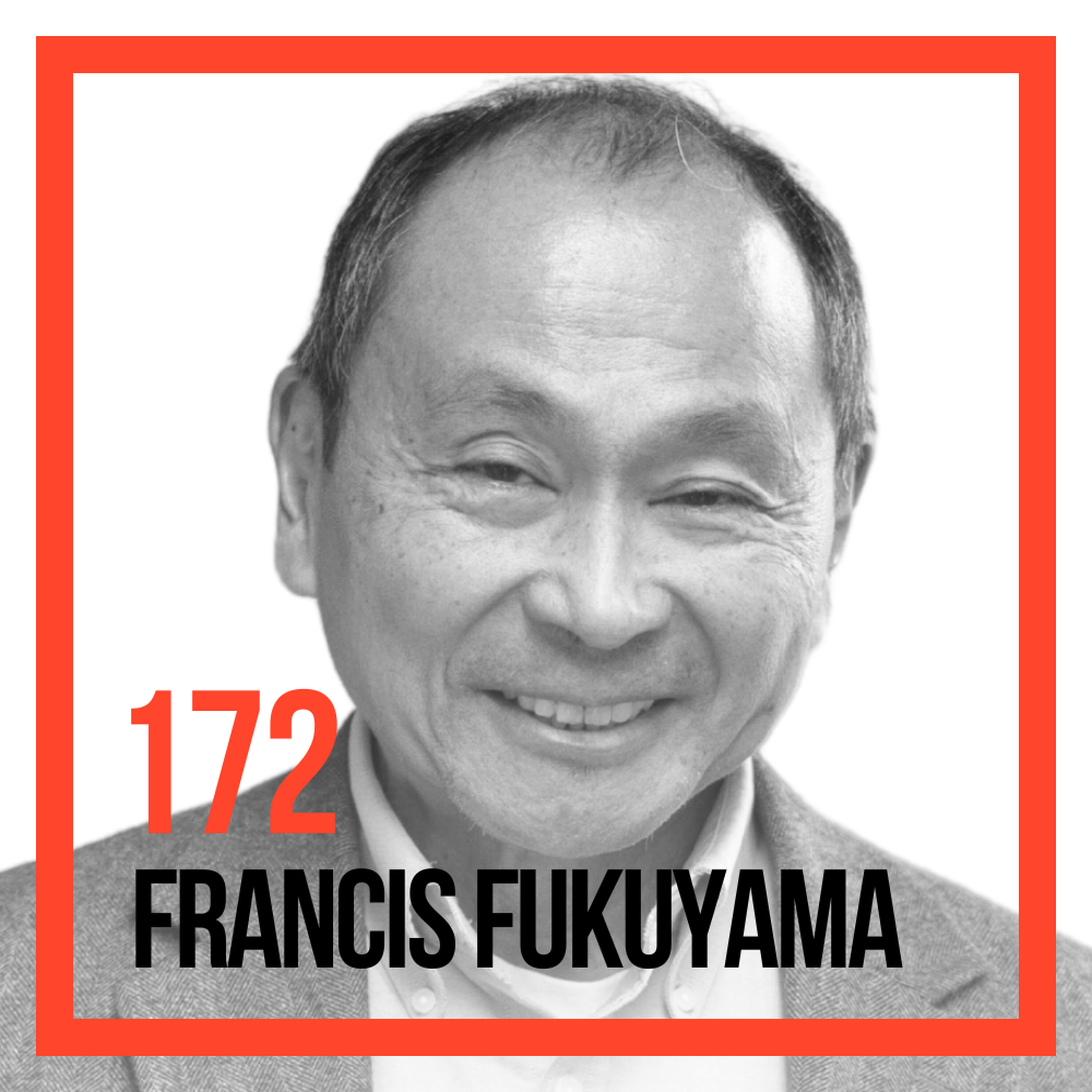
Francis Fukuyama — AGI and the Recommencement of History
from The Joe Walker Podcast
78m 11s
In this discussion, Francis Fukuyama explores the societal and political implications of emerging technologies, focusing on biotechnology and artificial intelligence. He revisits themes from his book *Our Post-Human Future*, expressing concern that genetic engineering could alter fundamental human nature, thereby challenging the foundations of liberal democracy and human rights. While initially expecting biotechnology to be more disruptive than information technology, he acknowledges the internet's profound impact on democracy by eroding shared factual knowledge. Fukuyama critiques life extension, arguing it could impede social progress by reducing generational turnover and increasing the burden of age-related diseases. He warns that genetic modifications might create new human categories with differing rights, leading to social stratification and exploitation. Additionally, he highlights risks from neuropharmacology in controlling behavior and the unforeseen consequences of manipulating human evolution. Overall, Fukuyama contends that technological advancement continuously drives history, preventing any permanent political stasis.
Well, today is my huge honor to be speaking with Francis Fukuyama. He truly needs no introduction, so I won't, in fact, introduce him. Frank, welcome to the podcast. Well, thanks very much, too. So I've been thinking about what are some topics I can discuss with you that are both important and what you haven't written or spoken much about. And that's been a challenge because you're so prolific. But it seems to me that the topic I'd most like to discuss is this question of artificial general intelligence and the recommencement of history. And in doing that, I'd mostly like to draw on one of your lesser-known books, our post-human future. But before we get to AI, some questions on biotech. So our post-human future was obviously mostly concerned with biotech, especially genetic engineering. And as I understand it, the reason for your concern was that if biotech can alter the substrate of our human nature, then that will have downstream consequences for the political order and for liberal democracy. Because if liberal democracy is about a system that completely satisfies human nature, if we change that human nature, then liberal democracy could be undermined. And we might be ushered into a post-human history. So the first question I wanted to ask you was, it's been about 25 years since you wrote this book. I'm just curious whether biotech generally and genetic engineering specifically have played out in the ways that you expected I would. Well, in the 1990s, I was leading a study group in Washington on the impact of new technologies on politics. And we looked both at information technology and biotechnology. And at that time, I thought that, you know, so this was before the, you know, the internet was only privatized at around this time and social media was still 15 years in the future. And I thought at that point that biotech was likely to be more consequential. I think that that may be true in the long run, but certainly the internet has turned out to be a much more disruptive force than I, you know, imagined at the time. But I think that both of them are going to provide, you know, fairly large challenges. I think the one coming from biotech in a way is more fundamental because really if you can alter human nature as opposed to just altering human behavior, I think that that's going to affect, you know, things like our understanding of rights, human rights, because it may put into, you know, contestation. What is a human being actually? And what's the boundary between humans and, you know, non-human beings? So with how do we, I think three crisper babies so far, there was Lulu and Nana in 2018 and then Amy in 2019 all in China. Will you expecting, I guess, more genetically engineered humans by this point? I don't know that I was expecting more. I do think though that it's going to happen. I think the barriers to doing this are still fairly high, this kind of human experimentation. But it just seems to me such an obvious, you know, path for somebody with a lot of money and ambition. And you already have, you know, a lot of Silicon Valley tech billionaires pouring a lot of money into life extension, which is another, you know, it's different from, it's different from genetic engineering. But I think it's also going to have huge consequences for human societies, right? I had Laura Deming on the podcast last week who founded the Long Jebady Fund and she's currently working on her and start up now for a cry or preservation. Yeah, you know, it's funny. This is one area where I part company with almost everybody in this, because I think that life extension is a bad idea. You know, it's something I think is personally desirable. It's nobody wants to die, but socially it's going to be a disaster if people start routinely living, you know, to very advanced ages. Because I think, you know, there's actually a good evolutionary reason why people die. If you didn't have generational turnover, you'd never have social change. And I think that's really kind of the future we're facing. Right. Yeah. If I remember correctly, that's the main kind of negative externality that you highlight in the book as far as long Jebady signs is concerned, is that our childhood experiences shape our world view in a very durable sense. And so you have these generational effects. And if you have a certain generation living much longer, kind of like a, just like a Joe Biden on steroids, so to speak, right? I mean, literally, I guess then they will entrench the particular well view in society will become less dynamic. Yeah. I mean, it's not, we've already had this with individual leaders like Castro or Francisco Franco that lived way past their, you know, their political, their, what should have been the end of their political lives. But if you have a whole generation of people that simply don't go away and don't get replaced, I just think that it's going to be very hard for, you know, human society to advance because, you know, joke about economists that the field advances one funeral at a time. I mean, sometimes you really do need an entire generation to be replaced by another one before you, you know, open yourself up to new social political possibilities. But I wanted to push back. I guess you're focusing on one specific negative possibility, but if you did a more holistic kind of cause benefit analysis, maybe it would come out in favor of longevity. Well, it's hard to see what that is. I guess you could say that, you know, as people get older, they accumulate human capital and, you know, it's better not to have to start over. But again, I just think that a lot of that human capital becomes rigid and, you know, out of touch with actually the changing environment. I certainly feel that things around me are very different from, you know, when I was young and a lot of my, you know, and I keep wondering whether a lot of my attitudes are simply reflective of the period I was born in. So I really do think that, but, you know, the trouble is that nobody wants to die. And so there's no political support for, you know, passing away, you know, earlier rather than later, right? So which current biotech, the view is most likely to drive transhumanism? Is it Chris Picassnine? Well, you know, the thing is that with that type of heritable gene editing, you actually affect not just the individual in question, but all of that individual's descendants. Right. And so it's, you know, considerably more consequential than something that simply affects the behavior of a living individual and that will die with that individual. And that's what I think, you know, got me started on thinking about this because I really do believe that human rights are ultimately embedded in human nature. And if you can change that human nature, you're going to change the nature of rights. Most critiques of the end of history focused on other perceived weaknesses, but, and correct me if I'm wrong, I think you always viewed the true weakness of the end of history thesis as modern natural science's ability to alter our fundamental human nature. Because you know, as we said at the outset of this chat, if you alter our fundamental human nature, then whatever the highest and best political it looks like could be different to liberal democracy. I'm curious, do you view liberal democracy as an end in itself? I use it intrinsically good? Well, okay, let me think we need to unpack a few of those things. I think that there are many, I didn't say it was just genetic engineering. I think the technology in general has a big effect on the viability of different political systems. So in the 19th century with the rise of industrialism, it tended to concentrate power because you needed large scale industries, mass production, and that tended to fortify more centralized government. And the thought behind the internet originally was that it would spread information and therefore power out and therefore be democratizing. You know, way was all too successful at that. And so what it's done is actually destroyed the basis of common empirical knowledge. I think that's one of the big problems that democracies are facing that there are no authoritative sources, just of factual information. So that's not genetic engineering. That's a consequence of technology that I think a lot of people failed to recognize. And in fact, it's hard to imagine how democracy really works if people simply don't agree on certain empirical facts that you know, and hold them in common in the society that they're living in. So I think there's, you know, that so my statement was not that you couldn't have an end of history if you had genetic engineering. My argument was that technology in general was the driver of history. And unless you imagine some kind of technological stasis, you wouldn't have a stasis in political forms.
And I think we're already seeing that with the developments in information technology. The technology that could continue driving history forward didn't have to be technology that alt is human nature. No, no, I say no. I mean all forms of technology have big social consequences. So that was the statement was that you can't really have an end of history unless you have an end of technological development. Yeah. Okay, so I have some questions about natural rights. So in our post-human future you argue that human dignity is grounded in something you call factor X which is this kind of emergent complex bundle of uniquely human traits. On that basis would you have denied rights to say Denisovans or Neanderthals? Well, that poses a real problem because they wouldn't be, I mean I think they would generally be recognized to be not human beings. And it depends on which of those aspects of you know factor X you take most seriously in terms of you know for example would you allow one of these proto-human humanoids to vote? You know you may say that we understand that they feel pain, they feel emotions, you know they, if you rip their babies from the mother's arms it's you know it's a terrible tragedy and so you want to protect their rights in that respect. But do they have the intelligence and the capability of actually making political choices of the sort that we expect a democratic population to make? You know we don't allow adolescents or children to vote because we feel that their mental capabilities are really not sufficiently developed and if you have a proto-human race that basically doesn't develop past the age of you know seven I think that you know you could make a very strong argument that they shouldn't have the full set of rights that you know that human beings have. So maybe they have something like factor X minus N or factor Y or whatever you want to call it. Yeah and so that would imply that it's possible to have more than one set of natural rights at the same time. Well that's the problem I think that I saw with genetic engineering you know I'll just Huxley talked about this already in Brave New World you had Alphas and Betas and then the Grammers at the bottom and they had been deliberately engineered basically to be slaves you know that they didn't have the full set of human capabilities and therefore people felt free to exploit them and I think that you know you could get you could imagine getting there in a number of different ways I mean it could be that you deliberately engineer a kind of subhuman race I think that's not that likely what's more likely to happen is that elites will start separating themselves not just in terms of social status and background and education but also genetically it's actually interesting if you look back historically there were actually biological differences or heritable biological differences between social classes that you know poor people because of bad nutrition in the middle ages were shorter and less you know mentally developed than aristocrats were and so that you know in a sense we've already experienced you know some version of that and I think the simple physical differences between aristocrats and common people reinforced you know the belief and the need for political class differences and if you could actually get to that same result you know through biotechnology I think you'd also have a call for different classes of rights right so did dwell on this a little longer let me give you my understanding and then you can tell me whether I've got it correctly so my understanding is that you weren't concerned so much with the concept of a posthuman per se as much as kind of like an uneven transhumanist transitional period so if you could flip a switch and upgrade every human in the world into the same kind of posthuman that would be less bad than a kind of transhumanist well roll out there there's a lot of different dangers I think mixed up in this and I would say that probably one of the most powerful ones is simply unanticipated consequences you know that the current human emotional makeup is the result of you know hundreds of thousands of years of evolutionary experience and we have the kinds of characteristics and faculties we do because you know that's proved to be a kind of winning combination in terms of the survival of you know the human species and if you deliberately try to manage that process it just seems to me very likely that you're going to get consequences that no one ever thought of and dealing with those you know is then going to be very very difficult so that's one category of problem another is substantively you know what would you want human beings to do you know live longer be smarter I mean people would probably pick intelligence as the first category that they'd want to monkey with but again that's going to have consequences you know as we're saying for things like rights and you know political participation so you know there are there many ways in which this could end up affecting human societies I actually think that we're already in something of a crisis in terms of life extension you know when I was on the bioethics council we spent our last year talking about essentially a gerontology you know that past you know at some point in your mid 80s roughly half of all people have some chronic degenerative disease and it means that you know a lot of your population is actually going to live you know a good 10-20 years beyond the point that they're a fully you know capable human beings and that's an economic cost that we have and I mean we're we're now grappling with it but you know it's likely to get bigger as time goes on and you know I guess the way I thought about this was that ideally what you would like in in a human lifespan assuming we do die is that all of your faculties would kind of shut down at the same time and I think the likelihood of actually having life extension in which that happens is very unlikely that certain faculties are going to shut down you know well before other faculties and so you'll have a significant portion of the population living with some form of disability and you know we don't really like to think about that you know it gets into these questions of you know rights but even as we speak you know somebody with severe Alzheimer's doesn't have the rights of a you know a younger adult that has all their faculties they can't drive they can't you know kind of make independent decisions in the way that uh you know a fully formed adult would and this is all consequences of you know the life extension that we've already achieved as a result of our existing biomedical technology and so this is why it's not a single thing I worry about I worry actually about a you know a lot of different consequences that we really haven't thought through yeah the few different threads to pick up on there I guess the longevity the worst case scenario is that people's cognitive faculties tend to shut down before they're other bodily faculties I guess it's just it's just not obvious to me that that's the direction in which longevity science is driving I don't know enough about it well it's already driven to that point so the question is could you reverse Alzheimer's or you know Parkinson's or any of these degenerative diseases I'd suspect that will eventually happen but there could be other things that start shutting down you know that we're not even aware of uh you know so yeah on the kind of like physical consequences of age well those are I mean we're already in a big social security crisis yeah but um maybe we'll be getting aji just in time to kind of rescue us from that yeah well maybe yeah yeah yeah we'll come to that briefly back to genetic engineering do you view a sortative mating as being on a continuum with genetic engineering or qualitatively different uh well it's qualitatively different in that the agency is exercised in different ways so a sort of sort of tipped mating is simply done because you know you meet a partner that you really like and you know because you're similar social backgrounds and so forth you end up marrying them and having children uh whereas genetic engineering is under much more direct control and you know can be used deliberately for social purposes like if I graduate from Stanford and marry another Stanford graduate I'm not thinking to myself deliberately uh we're trying to create a race of super smart you know tech entrepreneurs you just kind of following your instincts uh but I think the problem with genetic engineering is that that can be done deliberately you know with a you know a clear social purpose of mind
If transhumanism does continue to progress, we do enter a world in which there are different sets of overlapping but sometimes competing natural rights. How do you adjudicate disagreements between those sets of rights? Do you then need to kind of fall back to a utilitarian framework or how do you think about that? I think that it's hard to say because it would depend exactly on how these different categories of human-like creatures turned out. It also depends really on what you mean by utilitarian. I think that the main charge against utilitarianism is that it doesn't actually take the issue of human agency and human dignity depending on human moral agency seriously as a basis for rights and for defining who a human being is. It simply is a kind of calculus of pain and pleasure. I think that if you actually did develop human beings with different moral capacities, you would rethink rights. To take another possible future scenario, one thing that would be the target of genetic engineering seems to me something like compliance that all societies want human beings to be more compliant and follow rules and not cause trouble. But I suspect that for evolutionary reasons, there are good reasons why people take risks and don't want to follow rules because otherwise you just live in a regimented society with no personal freedom and therefore no innovation, no risk taking and so forth. Do you really want to breed willingness to take risks out of the population and replace that with a tendency to comply with rules and authority? So it's that kind of thing that I think worries me is that previously we had lots of ways of trying to make people compliant. We put them in labor camps and we gave them agit prop and tried to educate them in certain ways. That really in the end didn't work because I think human nature itself resisted these kinds of attempts to shape behavior. But maybe in the future we'll have much more powerful tools. The other phase that we haven't mentioned yet is neuropharmacology because you can produce behavior change really directly by using drugs and that's something that we're kind of in the midst of a crisis over right now. It's not heritable so your children don't necessarily inherit those characteristics but it also is a way of potentially making people more compliant or conforming with certain social rules that certain people prefer and again I think that that politically can be very problematic. If we do have these different creatures inhabiting the earth with different sets of natural rods, are there any obvious ways in which liberal democracy becomes less suitable as the political order for accommodating those different rights? Obviously liberalism is based on a premise of human equality and obviously if people accept the fact that there are different categories of human beings, you're not going to have that. That makes sense. Some questions about artificial intelligence. Natural intelligences have the potential to become post-humans. They might be made of silicon rather than carbon but in a cultural sense they'll be our descendants. When our post-human future was published in 2002, we're in an AI winter and the prospect of human level AI still seems like pure science fiction but since the book was published, the AI spring has well and truly arrived and it's now strikingly plausible that we could have artificial general intelligence by the end of the decade. Before I ask some different questions about what this could mean, first thing I'm just curious how you're generally thinking about the concept of artificial general intelligence, artificial superintelligence, these coherent ideas do you think they're likely to arrive soon? The first thought is that I don't like speculating about what the future is going to look like because my analogy is that it's speculating what's the consequence of electricity and asking Thomas Edison that. What would you have seen about all the uses of electricity in the next 100 years? Probably almost zero. One thing I'm convinced of is unlike blockchain or Bitcoin or crypto which I think is a kind of useless technology, AI and general purpose AI is really really big and it is going to have huge consequences. It's just very hard to know at this point exactly what direction that's going to move us in. That's my first observation and that means that I do think that the speed is going to be great. That's what everybody around here seems to think of the change and the capabilities are going to develop very rapidly. That's usually not good because social institutions in the past have always adapted to new technology but there's always this lag. I think that this is going to be an even bigger lag because the technology is going to move that much more quickly. If we do get to a post-human future, do you think that will be more likely to be brought about by a biotech or by artificial intelligence? It's hard to know and it could be the combination of the two. I think that there's going to probably be this gradual merger of computers and human brains that are going to operate in rather similar ways. This is one of those areas I don't want to speculate too much about because. No, I understand. One of my worries going into this interview was that I would be inviting you to speculate too much and as much as you dislike that kind of pointless speculation, I'm very sympathetic to you on that. I'm going to try and ask more specific questions that maybe rely on conditional predictions. That will say. Let me see. Presumably, it would take a lot for you to be willing to grant Factor X to artificial intelligence. Factor X is a complex, emergent bundle of uniquely human traits. Primarily, you can tell me, but maybe the most important of those traits is something like consciousness, but it would take a lot for you to say that an AI had Factor X. Yeah. Factor X would consist of a lot of. It's a bundle of different characteristics, which point in somewhat different directions. So for example, I have a dog. A lot of people have dogs. I suspect that dogs have some form of consciousness. They imagine things. My dog dreams all the time. Obviously, she's living in this mental world just inside her own brain. I think the reason that people like dogs as pets is that they're so obviously emotional and they have very human-like emotions. They make eye contact with you. They're happy to see you. They have preferences. They get angry at certain things. All of this, I don't think is simply anthropomorphism. I suspect. That's the other thing that we haven't discussed is. We've been talking about, could you read humans that are less than a full human being? But the other thing is, are animals actually. Are we going to realize that they're actually much closer to human beings? And we recognize there is an animal rights movement that I think doesn't have a clear philosophical basis. But I think what we may come to understand is that actually many of those parts of factor acts that we thought were unique to human beings actually are not. There are many animals that actually come close to that. So what I think about my dog all the time is that my wife is firmly of this opinion. They're sort of like a three or four-year-old. They have all the emotions and kind of emotional intelligence of a three or four-year-old. But you wouldn't want them to vote. They can't speak, kind of basic human uses of intelligence like language are beyond a dog. But they also can suffer. [BLANK_AUDIO]
probably feel things and have some degree of consciousness. So, you know, that's one reason why people really don't want to eat dogs or, you know, use them in a completely utilitarian way because we do attribute certain of those human factor X characteristics. And I think that you're probably going to have more choices like that, you know, of creatures that have some degree of human characteristics. I think, you know, one of the early ideas in artificial intelligence was the Turing test. I've always thought there's a ridiculous test. I mean, basically it says that if the external behavior of, you know, an AI is not distinguishable from that of a human being, then they're basically a human being. And I never understood why anyone thinks this is, you know, a correct way to do it. If that's the case, we've already got artificial human beings. Some of my chatbots, you know, in many respects are not distinguishable from a human interlocutor. You know, and I think that what, you know, what most people would think of the AI is missing is something like consciousness. And, you know, the whole emotional suite of reactions that human beings have, right, so the chatbot can replicate emotions, you know, they can say, thank you or please or don't do that, you know, but you don't get the feeling that that's based on an actual, you know, emotional perception. And this is what kind of annoyed me about computer scientists that were in this, you know, people like Marvin Minsky that they really do believe that the human brain is just a wet computer. And that when the computer gets to be the same scale as a human brain, it's going to develop consciousness and emotions and all this stuff. And that seems to be one of the biggest, unproven, you know, assumptions that there is. We don't know what the origin of consciousness is, right? And yeah, you know, I guess. So another way, another way to approach this problem in terms of the sphere of politics is just to say that even if it is kind of like John Searle's Chinese room and there's nothing actually, there's no subjective experience happening in the AI. The AI is able to convince people that it is conscious. On some level, that's all that really matters to politics. I mean, like one kind of story in the wind a couple of years ago, we had that Google engineer, Blake LeMoin, who was convinced that one of Google's models was conscious. And that was a very early model. But you can imagine these in the future when these models are much better and much more persuasive. That's even if they aren't truly conscious, they still might be able to demand and then successfully obtain political rights. Well, yeah, maybe. Maybe. Would AI needs to be themotic before you were willing to grant them the rights? Well, I guess it depends what you mean by that. Like, can they feel anger? I would say that you could certainly program them in such a way that they could replicate angry behavior. But that's not the same as actually saying that they're feeling anger and that that's what's motivating them to act in certain ways. So again, it's that turning test problem that you actually don't know what's going on on the inside of these machines. Even though the behavior is really indistinguishable from that of a real human being. There is a lot of my thinking about this was actually shaped by a friend of mine who wrote this book, Non-Zero, Robert Wright. Robert Wright. In that book, he has this very interesting discussion about consciousness and what it means to be a human being. And he said that, you know, there's a philosophical question that nobody has really answered, which is, why do we have subjective feelings at all? You know, he makes this point, for example, why do we feel pain and fear pain? You could design a robot, you know, so you put your hand over an open flame and it hurts and you withdraw your hand. But you can program a robot to do exactly that, right? You have a heat sensor. And the heat sensor says, oh, this is a temperature that's too high for my hand to survive. So I'm going to pull the hand away without actually having to have this internal emotional state of pain that makes you, you know, draw away. And, you know, his argument was that it's not clear why those, you know, those subjective emotional states exist. Again, if all you're interested in is the external behavior of the being, they don't have to, you know, you can program creatures that will respond to all sorts of things, you know, as if they had these internal states. And I think that's kind of crucial for believing that an AI is actually, you know, a human being is some awareness of, you know, the fact that they actually have this kind of internal subjective feeling. And I have no idea how you'd know that. I'm certain that you can get to the point where they can pretend to have those, but, you know, whether they actually would or not, is I think still an open question. If you had a society of non-themedic, kind of, spoke like, AIs, as a first approximation, what would the best political order for them look like? Would it be something like market oriented authoritarianism? Yeah, that's a trouble with a lot of these tech billionaires like, I mean, you know, this is a characteristic of a certain kind of intelligence that a lot of them have, a lot of mathematicians and people that are very good at a certain kind of reasoning have, that they feel that, you know, that's the most important human characteristic. You know, I mean, all these guys, Peter, Tiel and Mark and Jason and, you know, Elon Musk, I mean, they're all edging towards this belief in a kind of technocratic aristocracy that there's a certain human beings that are smarter and, you know, better at doing things than other human beings that they should have, kind of some intrinsic right to rule other people. And so some of them have actually become overtly anti-democratic, you know, that you really ought to delegate decision making to this kind of superior class of individuals. And I think that that he's not good for democracy as we understand it, you know, today. But if this society was just composed of synthetic AIs and they were non-phimotic, so we're taking that as a solution, that's never going to happen. So okay, something more realistic then. So imagine, imagine the next few decades on folds and AI progress kind of continue, the scaling will continue to hold the LLM's progress continues. We get better and better models, those models start to become agentic. And there are now sort of millions of black human, black limoins in the world who are convinced that these artificial intelligences are conscious that they do deserve political rights. Are there any, in that kind of scenario, are there any general intuitions you have about the predictions that you're comfortable making about what the political order starts to look like? No, I'm not comfortable making any of those predictions. I just think it's so hard to imagine, you know, I mean, do you think we should even be thinking about this or is it kind of point? Well, no, you should think about it. I think that the big issue is going to be one of power, right? That are you actually going to delegate real power to these machines to actually make decisions that have big consequences for living human beings? We already delegate, you know, decision making power to a lot of computers, you know, in terms of processing information and you know, telling us, you know, what's going on, having sensors that feedback information to us. But, you know, are you actually going to delegate to them the power to make like life and death decisions, you know, that will directly affect other human beings? I suspect we probably will and we'll get there at some point. But that I think, you know, is going to pose a much more sharp problem for, you know, for a society. Right. So we had a super intelligence today and it wasn't public knowledge yet. I know Sam Altman gives you Frank Fukuyama, a kind of preview in the OpenAI's new super intelligence. And you ask it whether it could come up with a better political order than liberal democracy for today's world. How likely is it that you think it would be able to do that? Well, I just don't think that it would be, you know, likely to get that right. It might iterate enough that over time it could work its way towards, you know, something that would help. But, you know, the thing is that, and I think this is a very common mistake that mathematically minded people have about
the nature of intelligence. Political intelligence is very different from mathematical intelligence because it's completely contextual. To really be intelligent about politics and the way things are going to work out in the political world, you have to have a lot of knowledge about the environment. And this is something I teach my students. We basically teach comparative politics, things that are doable in China are not doable in India. And in fact, they may be doable in certain parts of India, but not in other parts. Some states may be able to get away with certain things and others not. And how it affects different classes of people, how it's affected by traditions and culture and this sort of thing, is all part of what political intelligence has to draw on. And so it also gets down to this lived experience. I mean, I think lived experiences used wrongly in many cases to say that there are certain experiences that are so unique that really if you haven't actually experienced it, you don't have a right to even talk about it. But I do think that the best political leaders are ones that have certain lived experiences that allow them to empathize with people or understand pitfalls in the way that people are thinking or acting. And for a computer to actually extract that from their environment, it seems to me it would be very, very difficult to give the proper weightings to all of these experiences and then put them together in a way that would actually produce a certain order. And then the other problem is that nobody's going to want to give up power. So supposedly, the computer comes back and says, well, actually, I think you ought to delegate power to smart machines or smart oligarchs. How are people going to take that? So it's not possible to kind of raise in your ways to a political order, a priori. No, I don't. No, I mean, look, I actually believe that evolution is the way that most things came about is that you have a lot of trial and error, certain things work, and other things don't. And that's how we got to be human beings the way we are now. And I think that's also the way any future political system is going to evolve. Yeah. And there might be a certain kind of logic to the mechanisms. We can't really predict how they'll unfold. So there's an interesting passage in our post human future where you talk about how Asian cultures might be more permissive of biotech developments because there are less inhibitions on biotech in most Asian cultures. The reason for that is that many Asian cultures lack a kind of transcendental religious tradition, like Christianity. And so there is a dichotomy between humans and non-humans. There's more of a continuum. We see many examples of this in the kind of like Chinese laws in the past around organ harvesting of prisoners, eugenics, even in the-- In the course of-- --and more often, it's much more common, right? Even in the fantasies, in some cases. Yeah. I think that the three CRISPR babies emerged from China. Yeah. Yeah, I mean, they don't really-- Most Asian cultures don't have anything like Factor X, a concept that there's some core set of human characteristics that sharply distinguishes human from non-human. That has some good consequences. Well, in both Taoism and Shinto, for example, they have a belief that spirits inhabit all sorts of things. They inhabit desks and chairs. And temples and computer chips. So the spiritual world really extends to basically all material objects in the world. And it means also that in those cultures, you actually have more respect for the non-human world. Or it's less obviously there to be exploited than it would be in a Judeo-Christian culture where man has created-- there's a special creation of man and a sharp distinction between human and non-human. So that's why I think they're just going to be less inhibitions to this kind of biotech in Asia than in the West. Yeah. Does that also imply that if we do get powerful, agenteic AIs, Asian cultures, and we're likely to be the first-- or Asian countries, and we're likely to be the first countries to grant them some form of rights? Well, maybe it's possible. Who knows? Have you seen the 2003 film, The Creator? No. OK. It's a really good film. It's probably the most compelling depiction of this scenario. So I think it's said in the year 2050, '55, Superintelian AI has detonated a nuclear weapon over Los Angeles and the Western world, rallies together to annihilate and exterminate the artificial intelligence. And then this block called New Asia, which is basically composed of all the Asian countries, which kind of offers safe haven to the AIs. Anyway, I realize that there was this kind of connection to your point about the human non-human continuing Asian cultures. Yeah. It's a good film. OK, a couple of questions about AI, China, and the end of history. And I guess now we can kind of bring our horizons a little closer in and just think about the next kind of, maybe, five to 10 years. So we think about large language models and the way they're being used currently in terms of how authoritarian regimes might make use of them or be affected by them. On the one hand, you have concerns that AI will help authoritarian regimes entrench their power by providing them tools of propaganda or surveillance. There's this other view that's been gaining currency recently and I think our mutual friend Tyler Cown has been running about this, which is that LLMs are imbued with Western, but specifically American ways of thinking in very subtle ways. And that this is going to represent a vector into China and a kind of victory of American soft power. Because even the best Chinese models, like apparently deep seekers, is live to be based on open AIs models. So I'm curious how you think about this and whether you think it's likely that these models will, whether it's more likely that AI will advance or set back the cause of liberal democracy in China. [LAUGHS] OK, well, that's precisely the kind of question that I can't answer. I think that-- Is there a way we could break it into smaller chunks? That question. Well, I mean, look, these AIs are trained on certain bodies of writing. And presumably, they will pick up cultural habits that are embodied in particular literatures and so forth. And so I would imagine that if there's a Western bias to existing models, it won't be the case with Chinese models when they train them on Chinese material. So I'm not too worried-- or I guess this is worried is the wrong word. I'm not hopeful that we will undermine China by these hidden biases in our AI models that we're exporting. Hey, everyone. This is Joe, just a quick heads up that, from this point onwards, both my main mic and my backup lav mic failed, which is a rare tragedy in the world of podcasting. That means my audio quality is much diminished. I apologize for that. Fortunately, however, we still have Frank's primary mic. So his audio remains crystal clear. Some questions about the future of work, and it's themotic origins. So first, some questions about megalothemia, and then some questions about isothemia. So a lot of reasonable people predict the, by the end of the century, as a result of AI advances that we might have machines that can perfectly substitute the human labor, might even make human labor. And then obviously, you might have a world in which people are relying on something like universal basic income. I may have all of them material needs met that humans are no longer doing anything economically valuable in the economy. Assume that world does arrive. Strikes me that one of the virtues of liberal democracy, which you've written about, is that it provides outlets for megalothemia and perhaps the most important outlet is entrepreneurship. And that's for two reasons. Firstly, megalothemotic individuals generate wealth to society. But secondly, it keeps them out of potentially disruptive activities in the realms of politics and military. Curious if humans no longer do any of the economically valuable work in society. What do the new megalothemotic outlets look like? Well, look, we're already living in that world. You describe-- I mean, you have people like Donald Trump and Elon Musk that are intervening in politics because of their megalothemia. And so we're already seeing, I think, the terrible consequences of that. I think in terms of work, this is why universal basic income I think we'll never take off is that people don't just have
If material needs for resources to stay alive and pursue their hobbies, they really feel that their dignity comes from work. I think that, in fact, there's a significant resistance to being on the government dull precisely because people are proud. I am a worker. I do things that are useful. My salary reflects my use to society, and if you're just paying me for existing, that doesn't make me feel good as a human being. I think that's a pretty universal kind of reaction. That's why I just think universal basic income is just never going to be a terrible idea. Just as a complete sidebar on Trump and Mosque. I'm curious, given their mutual megalothermia, how you make sense of the kind of equilibrium and their managed to reach and their personal relationship. I don't think it's that equilibrium. I always thought that Trump is going to drop Mosque the moment that he becomes a political liability, and that's probably going to happen sooner rather than later. I don't think I'm breaching any shadowing house rules here, but I can always edit this out if I am. I was at a dinner in San Francisco recently, and one of the attendees had been at some kind of fundraising event at Mar-a-Lago in the last month or so. Apparently Trump has this trick where he goes around before the dinner and asks each of the guests, "Who do you think's more successful?" Me or Elon? Someone made a mistake of saying, "Well, Mr. President, I think you're more successful in politics, but Elon's more successful in business." That person was not invited back. Okay. Politics might start to become a more important outlet for megalothermia again in a world in which humans do less work. Yeah. Well, I don't think we're going to get to that point. But the nature of work is definitely going to change. It's going to be less than I'm going to rest and more mental and so forth. In the second edition of "Cosia's Introduction to the Reading of Hagel," there's this footnote of where he talks about the trip he talked to Japan in 1959. He thought of Japanese societies in some sense being at the end of history because after Shogun Hideyoshi in the 15th century, Japan basically hadn't suffered any civil wars or invasions of the Homeland Islands. He reflected on the rituals and traditions of the aristocratic class and viewed the rumors engaging in a form of pure snobbery where they engaged in these elaborate formal activities like flora ranging and no theater. And he viewed that as an outlet for their megalothermia. That would seem to suggest that in a world in which humans had become economically redundant that those activities take on greater importance. Maybe everyone's just trying to climb down Everest or working on very elaborate projects. It doesn't seem like a very plausible vision of. Well, but I think a lot of that has already arrived. How many people and how many billions of dollars are involved in the video game industry? I see. We're already creating these artificial worlds that have really no consequences for human beings except that they're an outlet for people's humus and ambitions and so forth. It's kind of Robert Nosek experience machines. That's only going to continue. Yeah, I mean, I think that's one of the problems in our politics is that a significant part of the American population lives in this fantasy online world where reality doesn't really intrude very much as many lives as you want and you never have to pay consequences for risks and so forth. Some people have compared or viewed as a model. The lifestyles as a landed gentry in the early modern era as a kind of vision of what people's lives might look like if slash when artificial intelligence makes people economically redundant. And I'm curious what you're making that because I can actually see a kind of disanalogy there where the reason those aristocratic lifestyles worked was because those people were kind of masters in the Hagelian sense and so they had that they had that sense of recognition and so they were able to kind of engage in aristocratic activities and not do much economic work. It doesn't seem like you could apply that same model to human feature in which people weren't themselves masters. Yeah, maybe I think that again, I just resist this premise that you're going to get to this point where people don't do economically useful work and you know that they then have time to do other things because first of all human desire does not stop expanding. Right? I mean, what makes billionaire get up in the morning? If you got a billion dollars, you could just kind of lay in bed all day, you could fantasize, you could play video games, right? But they're all out there doing stuff. And I think that you know, the reason is that there's no level of material wealth at which human beings say, okay, that's enough. I've got everything. I'm not going to do anything anymore. Just doesn't exist. Yeah. I think in this world, it makes sense that people would still be doing projects broadly construed, but perhaps not work that generates an income if I asked can be doing it much cheaper. Well, again, we're already living in that kind of a world, not that AIs are taking over, but you know, you think about a lot of the products that are sold today, you know, that are really not in the least bit necessary for any kind of human life, but people still, you know, are involved in them. And I just think that, you know, the human desires really don't have any particular limit. And you know, once you reach a certain level of material wealth, you're still going to pile on more objectives and desires, you know, that presume, you know, that you're already at a certain level, but you still want more. I just don't see how. I mean, what I do think is going to happen is that a lot of activity will go into things that are not traditionally thought of as, you know, producing material wealth. You know, you can only drive so many cars eat so many, you know, chocolate cookies. Right. Over the past few years, you may have noticed me putting more and more questions about AI in conversations with prominent public intellectuals from Stephen Pinker in 2022 to Daniel Kahneman in 2023. And the seem to lab in 2024. I do this because AI looks poised to become at least as transformative as the internet, maybe even the printing press. So it's probably worth wondering about it a little bit more and nudging public intellectuals to do the same. Many experts now believe it's plausible that humanity could build artificial general intelligence by the end of the decade. That would unlock extraordinary opportunities and pose catastrophic risks. As with any general purpose technology, the question is how to maximize the upside while managing the downside. One organization that's been wrestling with that question for more than a decade is 80,000 hours who's sponsoring this episode. They were writing serious analyses of AI back when it sounded like pure science fiction. 80,000 hours is a nonprofit that helps people find fulfilling careers that do good. The research suggests that working to reduce risks from advanced AI could be one of the highest impact things a person can do. They provide free in-depth resources, including detailed career reviews from technical AI safety research, the governance and information security, a job board with hundreds of high impact opportunities, a podcast featuring expert guests like Cole Schorman and DeJay Akotra, and free one-on-one career advice. To explore those resources and download their career guide, head to 80,000hours.org/jowalker. That's 80000hours.org/joewaalker. It's free and takes about 30 seconds to sign up. Okay, some random questions to finish on. So Hagel thought that there would still be wars at the end of history, but Kodjir thought that wouldn't. How do you make sense of Kodjir's view? Well, I think that Hagel is probably more correct. I mean, if you take humo seriously, you know, nothing substitutes. In fact, I think I said that in one of the last chapters of the end of history that there's actually nothing like the risk of violent death in a struggle, in a military struggle that makes people feel as human fully human.
human, and I think that that's going to be, you know, continue to be the case. I think that a lot of the political turmoil that we see around us now is really driven by that kind of desire, you know, people want struggle for its own sake. They want risk and danger. And if their lives are so contented and peaceful that they don't have it, they'll create it for themselves. Right. I mean, I don't know how to compare all these kids, you know, at Stanford and Columbia and Harvard and other places camping out, you know, on behalf of the Palestinians. Right. I mean, why do they care about the Palestinians? Right. What they want is they want to be seen as people that are struggling for justice because, you know, that's a noble human being. And I think that desire is really not going to, is not going to go away. And that's why, you know, the ultimate struggle for justice is really one where you actually do risk your life. And I think, you know, that's the sense that Hagel had about why, you know, War wasn't going to disappear. Yeah. But how do you make sense of kosher up to you? I don't know. Right. I don't know. Yeah. Interesting. So what more would have to happen for the singular example of China to falsify the end of history thesis? Well, I guess if in another 50 years, they were the leading power in the way that the United States was and everybody wanted to emulate them, then yeah, I would say there's no, you know, the model, liberal democratic, and we're halfway there. I must say, you know, it's not, it's not just China's success. It's our failure, you know, the failure of our democracy to actually produce kind of reasonable outcomes. Do you say any signs of the democratic recession reversing? Well, yeah, I mean, there, there, I wouldn't say that I see signs of it reversing. I think it's always possible that people can still exercise agency and make different choices. And so every election that goes by, you know, can actually go in very different directions. So I think it's important for people to remember that and the fact that they can reverse this democratic decline if they, you know, if they struggle for it. So I don't know, but I imagine you as one of the most misunderstood living public intellectuals. And that would pertain mostly to the end of history thesis. And I think people misunderstand it in two basic ways. Firstly, they think that you were predicting that, you know, liberal democracy would spread to every corner of the globe over the short term. And then secondly, obviously more egregiously, some people misinterpreted you were saying that there would be an end to history in the sense of significant events. And I imagine you probably get email every day telling you how you were wrong and you're probably at the same kind of questions every time you do a public event or a lecture. If that premise is correct, I'm curious. What that experience has been like for you and what you've learned from it? Well, I've largely learned to shut it out, you know, as you write, I mean, it never goes away. And, you know, I guess my feeling is that there are enough people that have actually read my books. In fact, there was a meme going around on Blue Sky where there was a little checklist about things you had to do to basically, I mean, one of them was apologized to Francis Fukuyama for never having read his book, you know. So you know, I think there are people that actually did read the book and kind of understand that it's a little bit more complicated. Is it changed the way in which you go about being a public individual? Well, not particularly. You know, I think that one of the big pitfalls of certain public intellectuals is that, you know, they have a big success. They get this big dopamine hit early on in their careers and they then constantly want to replicate it. And so they are forced to then take positions that are more and more extreme and ridiculous. Simply, you know, I think Denesh Tassuzah, this right wing, you know, commentator is like that he was the editor of the Dartmouth Review when he was still in college. And he made a name for himself by staking out these very conservative positions in a very liberal college. And he's been trying to replicate that feeling ever since, you know, by saying things that are, you know, yet more outrageous and yet more right wing than the last thing he said. And I just think that that's a trap that I never wanted to fall into. I'm perfectly happy to be regarded as boring because I'm taking actually a reasonable position rather than trying to shock people. I'm not trying to replicate the excitement everybody felt when the original end of history was published because it'll just never happen. And, you know, I'm not going to try to get there. Is there any other advice you'd have for public intellectuals who want sustainable careers? Because, you know, you say that you, that you didn't work kind of force yourself to replicate the success and the dopamine hit of the end of history. But, you know, you're the way to books like the origins of political, all the political order and political decay are brilliant in some sense as significant as the end of history of not as well known. So what, yeah, what other advice would you have for public intellectuals who want to be sustainable? Well, I mean, if you want to be a public intellectual, you have to begin by being intellectual, meaning that you actually have to think about things and you have to, you know, do research and take in information and process that information and then, you know, write about it. You know, it's interesting. When I published Trust, my second book, one of the reviewers said something that I thought was right and sort of revealing. He said that, yeah, this is a pretty good book, you know, most people that have a big hit like the end of history, you know, that's all they do in their careers and they don't go on to write a second book that's interesting. And I think that, you know, for me, actually, the success of the end of history was liberating in the sense that I could actually write about whatever I wanted at that point. And I could write a serious book, you know, about a very different topic and people would still pay attention to it, not, you know, trying to replicate the success of the first book, you know, the first book actually freed me to be able to write about whatever I wanted. And I think that's been a great, you know, that's been a great advantage. I never had to get tenure, you know, I actually don't like the idea of tenure because I think that it forces younger academics to toe the line in terms of, you know, the kind of intellectual risks and the issues that they study because it's very, you know, it really narrows you to a very small sub discipline within your bigger discipline. And I think, you know, I've tried to avoid that, but yet do things that are intellectually serious. Final question. What if any books he works at the moment? Well, I've just written a little bit of a autobiographical memoir, which I try to, you know, there's actually a thread that runs through a lot of my writing that might not be obvious, but that connects different books I've written. So one of them is, you know, something we've talked about already, which is the idea of Thumus, which starts in, you know, the end of history, but it continues to my most recent book and, you know, about liberalism. But the other one is about bureaucracy and why I actually spend a lot of time worrying about the state and the nature of the state and how that's all related to a bunch of different ideas I've had of course, of my career about delegate. So for example, I got a chapter in the autobiography on delegation because at a certain point, I began to realize that delegation within a hierarchy is one of the most difficult and most central questions to management, to public affairs, to law. And it's something we're still fighting about, right? And so I just believe that we've delegated too much power to the state and, you know, people on the left think we haven't delegated enough, you know, and so there's a lot of things like that that aren't obvious, I think to a lot of people saying, "How this, this is going to try to tie those threads together in a more comprehensive way." When will this be published? I have a contract, you know, I'm going to have to revise it, but probably in the next year or so. Okay, so your stuff on delegation, it's not readily apparent or that theme isn't readily apparent or organized in your existing published body of work. Right. Yeah, could you share your most interesting takes on that? Well, I'll start with an anecdote, which is why I really started thinking seriously about this. In the late 1990s, you were in the midst of the first.com boom. The whole of Silicon Valley was arguing in favor of flat organization. They're very opposed to hierarchies of, you know, various sorts. And there was a feeling back then in this very libertarian moment that everything could be organized on the basis of horizontal coordination.
The idea was the internet was going to reduce transaction costs involved in this kind of coordination. And nobody would actually have to listen to a boss, you know, in the future. And that is not true. You actually need hierarchy because actually you can't coordinate, you know, on this horizontal basis. But so in any event, this being the zeitgeist in the 1990s, I was still working at the RAN corporation and the last study I ever wrote for them was called the virtual corporation and army organization because it seemed to me in a colleague of mine, Abe Shulski, that the army is quintessentially the hierarchical organization. And here was Silicon Valley organizing itself in a much flatter thing without these hierarchies. And could the army learn something from Silicon Valley? And what I learned, so we went around to a lot of different, this was sponsored by the training and doctrine command in the army, went around to a lot of different military bases, talked to a lot of officers. And we realized that actually Silicon Valley didn't have anything to teach the army because they understood this already. That after Vietnam, they had done a lot of soul searching about why that war went so badly. They began to change their doctrine. They borrowed it a lot from the Vermacht and from the German military practice. There is a tradition in the German army called Alstrogt Taktik, which is basically a doctrine about delegation. And it says that if you're going to be a successful military organization, the senior leaders, the generals have to give only the broadest strategic direction and you have to delegate the maximum amount of authority to the lowest possible command level because in a war, the people that actually know what's happening are the second lieutenants on the ground that are trying to assault this village. And it's not the general way back 100 kilometers at headquarters that understands that. And then I began to realize that in corporate organization, that's true as well. The Toyota Justin Time manufacturing system like every worker on the assembly line had a cord. And if they saw a production problem or a defect, they'd pull the cord, stop the entire assembly line. If you think about what that means, you're delegating the ability to stop the entire output of the factory to every single individual low-level factory worker. And that requires trust. But it also requires this huge amount of delegation. And it's for the same reason the army was delegating authority is that it's the lowest levels of the organization that actually know what's really going on. So it's like a high-each-in-point. Yeah, well, so the article that I always have my students read is high in 1945 wrote an article called The Problem of Knowledge in Society. And he said that in any economy, 99% of the useful information is local in nature. It's not something that's known centrally, but it's you and your particular local context. And that's why he said that a market economy is going to work better than essentially planned one because price making in a market economy is based on local buyers and sellers that haggle and set prices and therefore allocate resources efficiently. And so all of a sudden I said to myself, yeah, well, this really is important, that in any hierarchy, you need the hierarchy because you need the generals to set the broad targets. But most dysfunctional organizations are one that don't delegate enough authority. And the army really fixed itself. I mean, the US Army has become the best fighting force in the world. I mean, the IDF in Israel had similar kind of doctrine and that's one of the reasons that they got so good at warfare. That's why the Ukrainians have been beating the Russians because they absorbed a lot of this American doctrine about delegation, basically, that's where this all started. And so if you want to, the only thing I wrote systematically about delegation was actually this RAN study on, you know, an army organization. But it shows up in, you know, other things that I've written. So lately, I've been taking on the whole doge stupid, you know, effort. I mean, this ridiculous effort of Elon Musk's to, you know, combat waste fraud and abuse in the government. I mean, he's so wrong about, you know, so many of the things. But he repeats this conservative mantra that the bureaucracy has too much autonomy that it makes all sorts of decisions that are left wing out of touch with the American people and out of the control of the democratically elected leaders. And it's exactly the wrong, I mean, it's 180 degrees wrong. The problem with the bureaucracy in this country and in most other countries is that it is too controlled by the political authorities. There are too many rules that bureaucrats feel they have to follow. If you want to fix the bureaucracy and make it more efficient as Elon Musk claims, you have to delegate more authority to them. You have to let them use their judgment, you know, you don't try to control them through thousands of pages of detailed rules and regulations, you know, for buying an office desk or a computer or something like that. So I think, you know, this delegation issue plays out in contemporary American politics, you know, as well as in military affairs and as well as in factory organization, all sorts of places. Right. It's super interesting. Yeah, for me as an Australian outside of looking in, the Doge effort is very much symptomatic of the kind of lock in American political culture that doesn't trust government and wants to place more strictures around it, you know, stopping the beast, so to speak. Yeah, it, and as a result, they kind of got the opposite of what they intended. They got a government that because the bureaucracy becomes so risk averse, so breaks down the feedback loop between policy design and policy implement. Exactly. Yeah. And that's what I teach my students here in this policy program that I run. Right. I'm not sure whether you've once applied this concept of delegation, but is there a correlation between bureaucracies that delegate more effectively and state capacity? Yes, a little bit. So this is also one of the, I just won this award last year. It's a kind of lifetime achievement award in public administration. So this is a field that Americans really don't pay any attention to because they don't like bureaucracies. But I think that one of the reasons I won the award was that I published an article back in 2013 that did exactly that. It said, what's the appropriate amount of authority to delegate in a bureaucracy? And I said, it's determined by the capacity of the people to whom you're delegating authority. So like in the Federal Reserve, the staff of the Federal Reserve are all PhD economists. And so you can safely delegate a lot of authority to them. Whereas the TSA, the transportation, security, administration are full of, you know, high school graduates. And you're not going to delegate a lot of authority to them to make complex judgments about, does this person look like a terrorist or, you know, am I going to stop this person? You just give them simple rules to follow. And so, yeah, that's how it plays out. I think the relationship between capacity and delegation. Yeah, it's super interesting. I'm excited to read more about this in the Alamo. Frank, it's been an honor. Thank you so much for joining me. Yeah. Well, thank you for talking to me. Done. Thank you, sir.
Podcast Summary
Key Points:
Francis Fukuyama's primary concern with biotechnology, especially genetic engineering, is its potential to alter human nature, which could undermine liberal democracy by changing the basis of human rights and political systems.
He argues that technological progress, including information technology and biotechnology, drives historical change, making a permanent "end of history" unlikely without technological stasis.
Life extension, while individually desirable, is viewed as socially detrimental because it could stifle generational turnover, hinder social change, and lead to economic burdens from increased chronic illness in an aging population.
The creation of genetically modified or enhanced humans risks creating new social classes with different rights, potentially leading to inequality and exploitation, reminiscent of scenarios like those in Huxley's *Brave New World*.
Fukuyama is also concerned about unanticipated consequences of tampering with human evolution, the use of neuropharmacology for behavior control, and the challenge of adjudicating rights among beings with different moral capacities.
Summary:
In this discussion, Francis Fukuyama explores the societal and political implications of emerging technologies, focusing on biotechnology and artificial intelligence. He revisits themes from his book *Our Post-Human Future*, expressing concern that genetic engineering could alter fundamental human nature, thereby challenging the foundations of liberal democracy and human rights. While initially expecting biotechnology to be more disruptive than information technology, he acknowledges the internet's profound impact on democracy by eroding shared factual knowledge.
Fukuyama critiques life extension, arguing it could impede social progress by reducing generational turnover and increasing the burden of age-related diseases. He warns that genetic modifications might create new human categories with differing rights, leading to social stratification and exploitation. Additionally, he highlights risks from neuropharmacology in controlling behavior and the unforeseen consequences of manipulating human evolution.
Overall, Fukuyama contends that technological advancement continuously drives history, preventing any permanent political stasis.
FAQs
He worried that altering human nature through biotech, like genetic engineering, could undermine liberal democracy, as it depends on satisfying a stable human nature, potentially leading to a post-human history.
He initially thought biotech would be more consequential, but acknowledges the internet has been more disruptive. However, he believes biotech poses a more fundamental challenge by potentially altering human nature itself.
He argues that without generational turnover, social change stagnates, as older generations entrench worldviews, making society less dynamic and hindering progress.
'Factor X' refers to the emergent bundle of uniquely human traits that ground human dignity and rights. It's crucial because altering human nature through technology could redefine rights and who qualifies as human.
If elites use biotech to enhance themselves genetically, it could create biological differences reinforcing social hierarchies, leading to calls for distinct rights based on genetic capabilities, similar to historical class divisions.
He warns that human traits evolved over millennia for survival; deliberately engineering changes could have unforeseen effects, such as reducing risk-taking or compliance, which might harm innovation and freedom.
Chat with AI
Loading...
Pro features
Go deeper with this episode
Unlock creator-grade tools that turn any transcript into show notes and subtitle files.
 PodcastTranscript AI