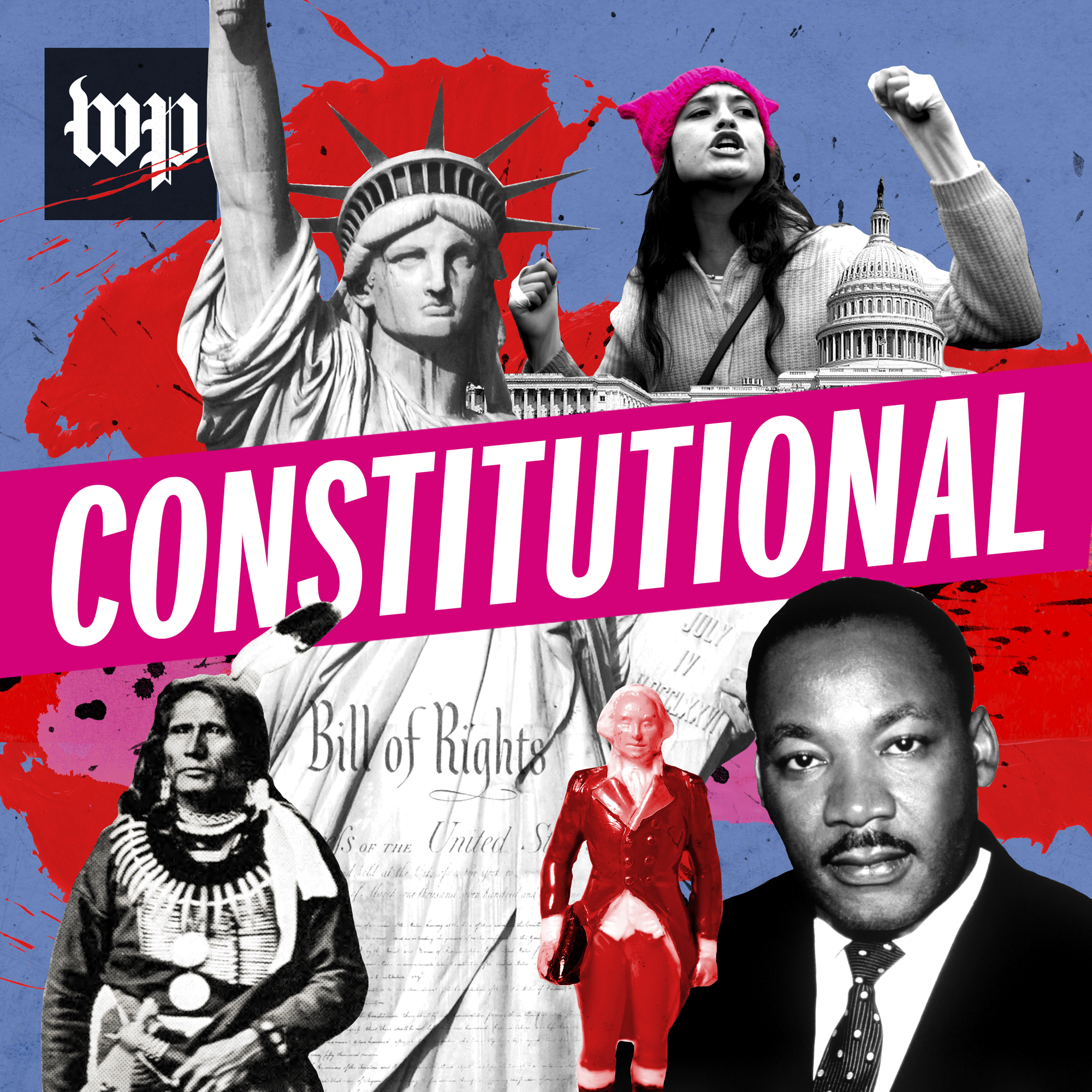
The transcription highlights the significance of the Constitution and its place in American history. It describes the oath of office taken by American Presidents, the preservation of the original Constitution at the National Archives, and the symbolic strength of the parchment material. The journey and challenges faced by James Madison and other delegates during the Constitutional Convention are detailed, showcasing the importance of key figures like George Washington and James Wilson. The process of creating a practical framework for government through compromises and patience is emphasized, underlining the historical significance of the Convention's deliberations at Independence Hall in secrecy.
Transcription
8670 Words, 50504 Characters
[music] Hi, Franklin Delano Roosevelt. Hi, Richard Bellhausen, Nixon. Hi, Gondit Goh, Kennedy. Hi, Jimmy Carter, New Selomis, where? I will thankfully execute the Office of President of the United States and will to the best of my ability to serve and defend the Constitution Constitution Constitution Constitution Constitution Constitution. The Constitution of the United States, though helped me go. [applause] [music] Every American President takes the same oath of office from the Capitol Building in Washington, D.C. And just a few blocks west from there, in the National Archives, sits the original version of the Constitution. Its pages are a bit yellowed and the edges are soft, but the document has aged well. It's in surprisingly good condition. You can still clearly make out its words, penned across the parchment and perfectly even lines of slanted script. Words that President after President vows to uphold. And here, with these pages inside the Archives Building, is where our story begins. Last year when I was making the Presidential Podcast, I visited just about every other building in Washington. I went to the Library of Congress, the White House, the Lincoln Memorial, the Woodrow Wilson House. I spent 44 weeks studying each of the American Presidents, what's made certain Presidents effective and others ineffective at achieving their goals. And what I was trying to figure out was what makes for a great leader of the United States. It took that long march through all of American presidential history to date to ultimately realize something pretty simple. What I realized was that the Presidents that we think of as great, they weren't the ones who were effective at achieving what they wanted to achieve. Our greatest Presidents were actually the ones who were effective at achieving what we, we as a nation, wanted to achieve. In other words, those Presidents who embraced the mission set forth in the Constitution to lead us toward a more perfect union, which brings us back to the National Archives. Hi, I'm Lillian. It's a nice to meet you. The Constitution is here under tight security. Do not ask me any questions about security. Okay, so we can say exactly what kind of security. By the way, that's David Ferrio, the National Archivist. But the original Constitution is here right next to the two other most important founding documents in our nation's history. Together, they form the blueprint for American's values. And these are our best tools for judging whether a President is leading us in the right direction. So what are we looking at in this room? We are in the rotunda of the National Archives here in Washington, D.C. and this is the shrine to the Charterers of Freedom, the Declaration of Independence, the Constitution, and the Bill of Rights. It feels like a shrine. It is. It's like sacred space. It's dimly lit in here. There are massive bronze gates, a marble floor, limestone walls reaching all the way up to a huge vaulted ceiling. And the document that sits right in the center is the Constitution. It's 230 years old and it's made up of just four pages of parchment. But those four pages, which were written over the course of one very hot summer in 1787, they map out the framework for an entirely new democratic nation. And the first words on that first page are we the people. In order to form a more perfect union, established justice. These words have been reproduced again and again over history. We are the people of the United States. But there's something about seeing the ink up close, the curve of the letters, the texture of the parchment. There reminds you these were words written by real people that this Constitution is such a deeply human expression of hope and vision. It was a group of 55 passionate, flawed, idealistic men who crafted the words on these four pages of parchment. Yet ultimately, it will be an uncountable number of us over time. Abolitionists, suffragists, prohibitionists, presidents, politicians, citizens, who continue to both preserve and challenge and amend the ideals expressed here. That's what this podcast is about. We the people who have shaped the values of America. And Lillian cutting him with the Washington Post, and this is constitutional. We the people of the United States, in order to form a more perfect union, establish justice. Ensure domestic tranquility. Provide for the common defense. Promote the general welfare. I'll secure the blessings of the diversity. To ourselves, my prosperity. Do ordain and establish this Constitution for the United States of America. Parchment. That's what the Constitution is made from. It's raw animal skin, stretched and dried under tension. It's a long and really messy process. Bloody, at first, dirty, exhausting. It's physically demanding. You're soaking and scrubbing and yanking on animal membrane. But over time, that carnal, raw thing gets refined. Smooth. Parchment is stronger than paper. It has a durability like leather. It doesn't tear. Over time, it doesn't crumble to dust. And part of what makes it so strong is that it has this give to it. It vibrates and bends and rebounds. It's the same material as a drum. It's the year 1776 when the colonies decide to cut their ties to England. They write out the declaration of independence on a piece of parchment. And what they say in that declaration is basically, we believe all men are created equal and have a right to life, liberty, the pursuit of happiness. So when a government, in this case, England, starts to destroy those rights, then the people, in this case us, the people living in the colonies, we should be able to throw off that government and start a new country of our own. So then they go on to list all the reasons that King George III of Great Britain has been a tyrant. He's denied the colony's representation. He's tried to keep people from being able to immigrate there. He bribes judges. He doesn't let the colonists have trial by jury. He's cut the colonies off from trading with the rest of the world. They say, "He has plundered our seas, ravaged our coasts, burnt our towns, and destroyed the lives of our people." And so they conclude, "These united colonies are, and have right ought to be free and independent states, absolved from all allegiance to the British Crown." So they fight for that freedom, and the Revolutionary War rages on for several years, all the way up until 1783. And in 1783, America then definitively wins its independence from England. But not long after the war ends, challenges and disputes and questions start cropping up among the 13 states. Questions about their relationship to one another, questions about how much power they have. Like Ken Road Island really taxs everyone crossing over its roads. Does the Potomac River belong to Maryland or Virginia? And what about the inhumanity of slavery, which some states have banned by this point, but most haven't? And then, there was Shays Rebellion. A military veteran of the Revolutionary War led a big uprising in Massachusetts. It was eventually quelled, but most importantly, it was a sign of the frustration and the instability that people across this new country were feeling. The 13 states had created this thing called the Articles of Confederation, which was basically a list of loose guidelines that was supposed to bind all these states together. But every time that a new tension emerged within the states, it became clearer and clearer that the Articles of Confederation just weren't really cutting it. So James Madison and Alexander Hamilton and a handful of others start scheming. They think we really need to start from scratch and map out a full new constitution that glues all of these states together into one unified nation. We need a strong federal government and a strong sense of self. If we don't do that, if we don't draft a clear framework for what this country should be, then the whole grand experiment is going to fall apart and this war will have been for nothing. So, they hatched this somewhat secret plan that delegates from the colonies should ride to Philadelphia in the spring of 1787 for a convention. They'll meet at Independence Hall, the same place where some of them had signed the Declaration of Independence 11 years earlier. And they'll hammer out a constitution. Now, let's zoom in on James Madison. It's spring of 1787 in Virginia, the trees are getting green again, and James Madison has just turned 36 years old. He's holed up inside Montpellier, his plantation estate, and he's reading books. Yeah, the thing about Madison, he was a scrawny little guy, so if you went on a blind date with him, well, you wouldn't find him very appealing. Julie Miller works at the Library of Congress. If you listen to the presidential podcast, you will know her well. But, it was very smart though. Smart in a way, though, that was off put into people. Well, he was the kind of person, for example, when you went to the constitutional convention, he undertook a lot of studying beforehand and wrote up all kinds of papers in which he fought out, for example, you know, with previous republics in the ancient world had been like and wrote these long essays about various ancient republics. It's the spring of 1787. You want to go out dancing? No! Because he is writing an essay about ancient republics. So there he is, getting ready for the big meeting that's coming up in Philadelphia about the Constitution, trying to brush up as much as he can about possible government structures. And I should say for a scrawny little guy who was actually very brave. Scrawney, brave, short, James Madison packs up his books and papers. It's April. The snow has turned to mild rain, the ground is thawing, and James Madison starts riding north from his home toward Philadelphia. He wants to make sure he's the first one there. It's 225 miles over land that is mostly untouched and empty. He is very alone. He rides his horse through dense forest across rivers. At this time, America is really only a strip of states running up and down the east coast. If you cross west over the mountains in Pennsylvania, you're in the northwest territory, which is land that's held by the US, but it's still wild, and it hasn't yet been turned into states. And then as you move farther west, you reach the plains and the mountains and the canyons of areas that will eventually become Kansas, Colorado, Arizona, California. But right now, that land is in part of America. It's actually being claimed and colonized mostly by Spanish explorers. And of course, across this entire expanse, our native Americans, who have lived here for ages and whose way of life has been turned upside down. So Madison, as he rides north by himself, has a sense of this vastness, the vastness of the land that stretches beyond his sight. And he knows that even though the states have won their independence from England, this country that they've created is fragile, exposed. It's just the frontier of a continent whose size and shape and landscape and mystery seem to stretch interminably beyond. Nothing feels certain, nothing feels easy. This is a time of grit, of blood and fog, of rebellion, of tension, of guts. James Madison and the other delegates riding toward Philadelphia have as their aim to create a constitution to sign ultimately a piece of parchment. And interestingly, the process they'll go through to craft the words will take about as many months as the process of creating the pages they'll go on. There are three main stages when bringing parchment from raw to refined. The first is called the wet work. It's when the animal skins are first handled, when the flesh starts to become workable. And there's still a place today in Montgomery, New York where this process unfolds. My name is Jesse Meyer, our family has been tanners for 450 years. There isn't really anyone else in the country that does parchment making. Whenever people come to us looking for parchment, they always want big and square and white. But animals aren't big and square and white all the time. So most of the time it's us having to coax something like that out of the hide. We just got a pallet of 40 salted cow hides yesterday. So we cut them in half, throw them in, soak them, rehydrate them, wash them, try to clean off manure and dirt and blood and so on. And salt, lots of salt. So then after they're washed and rinsed, soaking overnight we pull them out and then that's what we were doing today is fleshing them. We call this machine the flesher. This is a, it basically it's a series of long cylindrical rolls and it spins at very high speed. You lay the skin in there half at a time that basically will peel the flesh off the inside. That's flesh. This is step one and it's a fitting if unsettling metaphor for the kind of work the framers will do as they begin their first labors over the constitution. Please tell the state to stop us so that we don't get now robbing Philadelphia Sturgeon Street. Please watch us stop. Philadelphia now robbing. James Madison arrives in Philadelphia at the end of April, clopping up the dirt and cobblestone streets toward the state house, also known as Independence Hall. He's the first one there, weeks before the convention will actually start. Different states and delegates at different times they arrive by horseback. Jeffrey Rosen, president of the Constitution Center. And they're sacrificing physical danger simply to travel the incredible distances to come to the convention and carriages over rivers without bridges. They battle disease in what's coming to be a crushing heat. From the north come delegates like Alexander Hamilton from New York and Elbridge Gary from Massachusetts. And from the south come delegates like John Rutledge from South Carolina. And then like Madison there are others from Virginia. Edmund Randolph, George Mason, George Washington. George Washington is reluctant initially to show up at all because he doesn't want to preside over a convention that fails. But he's persuaded that his stature is so unique that the Union can't prevail without him and he does show up. Washington had been the commander in chief of the Continental Army, which just a few years ago defeated the British and the Revolutionary War. Since then his hero status has been off the charts, but he's kind of been lying low, which is hard for a man of his stature. Washington, there he stands, six foot two, towering over everyone else the tallest man at the convention. The most important decision the convention makes is the decision to put George Washington in charge. This is the one man in the country who is universally respected by all sides. And Washington's decision to accept the chair ensures the convention's success it would have failed without him. So he's the head of the convention. He doesn't say very much during the convention. He thinks it's important to preserve his neutrality purely by his presence. And next to him is Madison at about five three, noticeably smaller, thin, pinched, apparently anxious. He had a malady which he was quiet about, but he was epileptic and he would have episodes and seizures throughout his life and that fear of losing control may have doubled his devotion to scholarship into a life of the mind in a way that made him most intellectual of the delegates. After James Madison, the key voice in the convention was not Alexander Hamilton, the rap star of the moment. It was James Wilson, a name that will be unfamiliar to a lot of people who remembers James Wilson, but this was the great constitutional philosopher of the convention who in many ways had a greater influence on the preamble and on the document that resulted than Madison or Hamilton themselves. It was Wilson who came up with the idea that we the people of the United States as a whole have the sovereign power rather than we the people of the individual states. Wilson's a Pennsylvania delegate who was born in Scotland and he's such a believer in the will of the people that about a decade earlier, he was actually reluctant to support American independence. Precisely because he didn't think the people he represented in Pennsylvania wanted independence. The radical revolutionaries are angry at him and these jury verdicts against accused traders whom he defends on civil libertarian grounds, create a mob of disaffected citizens in 1779 to gather at a Philadelphia tavern denouncing Wilson and they start drinking and they yell "Get Wilson!" And this armed mob sets out for his house so he and three of his friends including Robert Morris, the great financier, barricade themselves inside Wilson's house. There's a cannon fire, there's shots, the mob breaks into the house and bayonets one of the defenders before they are driven out by the city troops and Wilson is forced into hiding six people are killed. Man this guy suffered for his civil libertarian defenses and it's just astonishing that the man who's more responsible than anyone else for the rule of we the people in America was initially viewed as two pro-British, he was a fascinating and brilliant man, it's really important to realize that the constitution we have is as much a reflection of the vision of James Wilson as anyone else. So here's Wilson about a decade later showing up at the convention. He's wearing these little cool John Lennon glasses. And with him is one of the other Pennsylvania delegates, Benjamin Franklin, who's there in sort of an honorary capacity. Franklin is 81 years old by now, he's been an inventor and author, a statesman, a scientist, a diplomat, now he's balding and a bit pop bellied. But he's still the second most renowned American of his time behind George Washington. So all these men, and of course many others, convert on Independence Hall, soon enough 55 men are assembled. The delegates are packed into this two-story brick building, white door, white trim, with a bell and a clock tower that reach up from the center to form a steeple. About 30 years before, when Independence Hall was being constructed, a bell was ordered from London to hang in its tower, and it has words from Leviticus wrapped around it. Proclaim Liberty through all the land to all the inhabitants thereof. This bell, the Liberty bell, is hanging here in the tower above Independence Hall as the delegates shuffle around inside. But it also rang out here a decade earlier, when the Declaration of Independence was signed in the same building. It is remarkable that this is a reunion of sorts for a handful of the signers of the Declaration, who were also signers of the Constitution. And that was a different task. It took tremendous courage to pledge their lives, their fortunes, and their sacred honor to declare that the king had broken the bonds of trust that united the colonies into the declared revolution. But the Declaration of Independence was not a legal document, but a moral statement of rights that everyone believed existed. The Constitution was a more difficult task. They weren't just stating self-evident truths. They had to create a practical framework for government, and there were fierce disagreements about how to structure power between the large states and the small states, the slave states, and the handful of free states. So that required compromise, it required patience, it required practical commitment to public reason. So here they are, once more gathered at the same spot, and they officially begin the constitutional deliberations on May 25th. May 25th, we know it gets really, really hot in July, and we can assume it's already getting pretty hot in May. Independence Hall is incredibly hot because the windows are closed. One of the great achievements of the convention is to deliberate in secret because the delegates needed the freedom to be able to change their minds and to compromise about the important questions that divide them, had the convention not been in secret the Constitution would never have been achieved. But the secrecy means close windows, these big wooden windows, people kind of even dropping outside to try to get some hint of what's going on, but no leaks. The delegates keep themselves shuttered inside day after day after day. Their powdered long hair tied back with ribbon is sticky with sweat, their coats and their breeches and stockings feel heavy in the heat. In the first few weeks of the convention, as June rolls along and we're reaching the summer solstice, the debates are mostly about the legislature. Specifically, how should we balance the power between the large and the small states? And they need to hash that out before they can put pen to paper. Between May 25th and July 24th, there's a lot of negotiation behind the scenes. The big states embrace something called the Virginia Plan that's endorsed by the Virginia delegates, including James Madison, that would have essentially adopted a principle of representation based on population. They're big so they want to have as many representatives as possible. The small states don't like that because they're small, so they favor something called the New Jersey Plan, which would have created something more like a set number of representatives for each state, of the kind that was ultimately reflected in the Senate, which has two representatives for each state. And finally, after a lot of deliberation, they come up with something called the Connecticut Compromise, which was championed by Roger Sherman of Connecticut, which mixed and matched the Virginia Plan and the New Jersey Plan. So the House of Representatives is a portion on the basis of population and the Senate is a portion on the basis of a fixed number of slots per state. The other big question that the delegates are wrestling with early on is what kind of president they want? How should he be elected? How long should he serve? How much power should he have? This is their chance to create a new type of leader to invent the perfect system from scratch. And so of course they want to make sure they don't end up in the same situation they were in before the Revolutionary War, with a king who has nearly unlimited power. At the same time, they're getting a bit scared by some of the increasing chaos and mob uprisings across the states. The presidency is such a fascinating debate. So James Madison wants a president elected by the legislature. As in, so the people don't get to vote on who the president is? Absolutely not, according to Madison. The worst thing James Madison says that you could do in constructing a government is to allow constituents directly to instruct their representatives or the representatives directly to be instructed by their constituents. So tweeting presidents or tweeting representatives would have been Madison's nightmare because he thinks that the people definitely have to be listened to, but their views have to be filtered through thoughtful deliberations. So you have to slow things down. The whole convention is set up to create structures that don't allow people to make snap votes or quick referenda on important questions. Hamilton wants to go even further. He basically wants what's called an elective monarch, if not a life term, an incredibly powerful president who would have the powers of a king. Only one major framework initially wants election by the people, and that's James Wilson. He's our accolade, our champion of popular sovereignty, and he says that the people should directly elect the president. The delegates go back and forth and back and forth, pounding out their vision for the presidency throughout the entire summer. And what they ultimately set along for how to elect a president is this idea of an electoral college, which is the kind of Frankenstein compromise that they came up with between popular and legislative election for a four year term with the possibility of re-election. It's not just during the long summer days that they're working through all these decisions. These men are also sharing rooms together at night. Importing houses that are just down the cobblestone streets from Independence Hall, and in the evenings they are soaking up alcohol, specifically at City Tavern. There's one receipt which still exists that shows a farewell dinner held for George Washington at City Tavern toward the end of the convention. And that night they had 55 bottles of Madera, 60 bottles of clarity, 7 large bowls of punch, 22 bottles of water, and the list just keeps going. That's just the top of it. So basically for four straight months, these men are drinking and eating and sleeping and debating together and drinking more, calling on the ideals of revolution, passionately arguing their positions in Independence Hall by day, and then drunkenly hashing out their visions for a new nation in Taverns by night. There's nothing more exciting than the Constitutional Convention. There was nothing dry or dusty or antique or obscure about it. This is the most radical body of democratic deliberation ever assembled. Remember, this is a time when there are no democracies. Britain has a mild bit of representation and its desiccated parliament, the Swiss Cantons have a bit of direct election, but otherwise the world is ruled by tyrants and thugs and kings and strongmen. And this is the first time in human history that a group of people who actually are elected by relatively popular criteria according to the very limited norms of the day, assemble. The ideas that these men were debating were radical ideas, their relevant ideas, and they're incredibly important to grapple with today. Today, we are seeing a clash between populism and constitutionalism around the world and in America. And people in this country and around the world are worrying whether basic values like the rule of law and limited government and individual rights can survive in the face of populist forces and social media and in democratic elections. And that's exactly what the framers were concerned about. James Madison and the other framers had read about the failures of ancient democracies like Greece and Rome. They studied Greece and Rome and believed that unchecked democracy would lead to demagogues and the mob that would threaten liberty. At the same time, they also believed that aristocratic governments unchecked would lead to tyranny or to oligarchy. So these months march on June, July, August, there are rounds and rounds and rounds of drafts and it goes from committee to committee to committee as the framers labor on. As the framers trudge on with crafting the constitution, the physical document is also taking shape. If the first step in making parchment is the wet work, the strenuous effort of getting the animal hide into some pliable form, the second step is to secure the shape of it, to stretch it here, to whittle it down there, to make it usable, suitable. Smells much better up here. This is where we soak and then stretch the parchment. We've got probably about 50 large wooden frames, about five feet wide by six feet tall, with ropes going through them, which we then attach to the skin. And then we basically stretch it within this frame and get it as tight in the frame as we can. This basically is a drum, when it's dry, gives you a drum sound. And then we basically scrape it to help to stretch the skin out in order to thin it down or to change the surface of the skin. The motion is kind of like swinging a bat, or maybe using a hoe in a garden or something, you're sort of swinging, trying to get a nice long stroke with the knife across the parchment. And in this moment we turn back to our delegates, working through the ideas those pages will hold. As the delegates build out this framework for a new government, they find themselves tied up over and over again throughout the summer in debates about slavery. Several states had already moved to begin gradual emancipation, states like Pennsylvania and Massachusetts. This is Erica Armstrong Dunbar. She's a history professor at the University of Delaware. So the moment that the Constitution is created, there was much conversation across the North and the South about the track for slavery and the future for slavery in the New Nation. And the framers who are in Philadelphia represent this wide spectrum of views at the time of the 55 men who were there approximately 25 or so owned enslaved people. And so more than half of the men present were committed to the system of bondage, at least financially. However there were men present, Benjamin Franklin being one of them who spoke against the institution of slavery. And so the feeling of abolition, this feeling of wanting to eventually end slavery, that was something that was present among the 55 men gathered in Philadelphia. Benjamin Franklin actually used to own several slaves, but not only had he freed them several years before the convention, he had become an outspoken critic of slavery. And he served as the president of Pennsylvania's abolition society. There are others like Franklin who are against slavery, Alexander Hamilton, delegates like Oliver Ellsworth who never owned slaves and they think the institution should be ended. But on the other end of the spectrum are delegates like Charles Pinkney of South Carolina. He owns several hundred slaves on his plantation and he's at the Constitutional Convention arguing strongly in favor of protecting slavery. Then there are some delegates who kind of occupy this middle space like Luther Martin and George Mason and George Washington who seem to believe that slavery is immoral and yet they still own slaves themselves. George Washington in particular wrote about his discomfort with it at the moment that the Constitution was created. George Washington held over a hundred enslaved people, the majority of whom lived at Mount Vernon and would be these men, women and children who stood as a sort of stark contradiction to what was supposedly promised in the Constitution. To what was supposedly promised in a declaration of independence, the men and women and children who labored at Mount Vernon would not be the beneficiaries of freedom or liberty or justice that came supposedly from this war and this Constitution. As the summer drags on, more and more compromises and capitulations begin weaving their way into the drafts. It's interesting, nowhere in the Constitution does the word slave appear, yet their bodies are counted and live within the document. The first place where this happens is in the language about the legislature. Once the delegates decide that each state regardless of its size should get two senators, but that in the House each state should get a different number of representatives based on the size of its population, well that leads to the question, how should we count the population? States like Virginia and the Carolinas want slaves to count fully toward their population numbers because that will give those states more representatives in the House. Northern states don't want that. The slaves can't vote, so counting them as part of the population would really just give white slaveholders in the South more power in Congress. They joust back and forth and back and forth, and toward the end of the summer the delegates finally settle on the infamous three-fifths compromise. And southerners agreed to have enslaved people count for three-fifths of a human being. It seers into the Constitution, attention, a massive inequity that will come back years and decades and centuries later to demand resolution. However, the priority in that meeting in Philadelphia was not necessarily to end human bondage for people of African descent. It was to create a legal structure that was strong and useful in the creation of a new nation and anything else took a back seat. Which is why we see two more places where the delegates share off moral values for the sake of moving the Constitution forward, the fugitive slave law. And it was in this place in the Constitution where it was made clear that states would be allowed to go after and reclaim men and women who attempted to flee from bondage. This clause is proposed by South Carolina delegates Charles Pinkney and Pierce Butler. James Wilson stands up and argues against it and it's initially withdrawn, but eventually the clause is reinserted. And then, on August 21st, the summer debates reach a boiling point over the slave trade. Luther Martin, a delegate from Maryland who actually owns a few slaves himself, he proposes that they ban the importation of slaves to America. He says it's inconsistent with the principles of the revolution and it's dishonorable to the American character. This sets off a major fight in Independence Hall. Slavery played a key role in what would become a national economy. And so when this idea of ending a transatlantic slave trade made its appearance at the convention, it was shot down and shot down quickly. The delegates from South Carolina like Pinkney slashed this idea as a non-negotiable. Then George Mason from Virginia steps up and even though he owns slaves as well, he jabs back that this is a national sin and slaveholders quote "bring the judgment of heaven upon a country." Oliver Ellsworth from Connecticut doesn't own any slaves, but he steps up and tax on that, you know, if we're talking about morality, we really should be doing more than just banning the slave trade. We should actually be freeing all the slaves across the nation. Charles Pinkney gets up again saying, "There is no way that states like South Carolina are going to agree to a ban on importing slaves. And if you put that in the Constitution, you're going to have a really hard time getting any of us to sign this document." So that eventually seals its fate. In the very final days of the convention, the delegates essentially write into the Constitution a protection around the slave trade, saying that the new U.S. Congress can't ban it for at least 20 years. So the earliest that the slave trade could be banned would be 1808. In many ways, there were sticky situations in the Constitution that the framers could not really figure out in 1787 and therefore in some ways they kicked the can down the road to not end the transatlantic slave trade or not even have a conversation about it until 1808. Created two decades of the institution of slavery to last but there was a guarantee that at least after that moment, after 1807, there could be a movement to end the transatlantic slave trade and that's exactly what happens. So perhaps it was, you know, some of the framers understood that at this moment, and this is the art of compromise, that at this moment it was something that would not happen. It was something that would prevent a Constitution from being formed and signed and then enacted but that perhaps not in their lifetime, but in the lifetimes of their children, that there would be movement and change. None of the framers must be entirely happy with the outcome of their deliberations about the status of enslaved persons. Those who are committed to the abolition of slavery understand that they've allowed the continuance of a grave moral injustice but they think that it's necessary for the practical purposes of passing the Constitution and the Southern states don't get everything they want either. So it's an example of the most dramatic example in American history of both sides compromising on an issue they feel very strongly about reaching a grave moral compromise in the eyes of history for the practical purpose of creating a working form of government. That's a common narrative that emerges and sticks over time about these delegates at the convention that we're seeing here, the art of compromise. Is there another way for us to see though what's playing out over the course of this summer? I think that when we center the founding fathers or the 55 delegates in Philadelphia as the constructors of this narrative of American history that they were men of a certain time of a certain place who were forced to create compromise in order for the nation to move forward. That works only if you de-center the lives of black people and at this moment enslaved people represented a fifth of the population. And so a fifth of the population somewhere around 700,000 men, women and children were enslaved enslaved in homes enslaved in on farms in the city. These were men, women and children who were treated sometimes with the most horrendous lack of regard for their bodies, for their souls, for anything having to do with them treating them as human beings. So when we place black men and women, those who were enslaved in particular at the center of this story about the Constitution, we can't help but see it differently. This is a constitution that really does nothing but perpetuate human bondage. I think one of the other things we must remember is that there were 55 men sitting in Philadelphia, Pennsylvania, at this constitutional convention. There were no women. It's a document written by men and one could argue for men. And in that document while white women were permitted citizenship, they clearly were not permitted the same types of benefits that white men received from the Constitution. And the reality is that even impoverished white men were not protected by the Constitution in the same kinds of ways, meaning the ability to vote. We don't see the extension of the right to vote to men, white men, regardless of income or land ownership until really the middle of the 19th century, the 1830s, 1840s, and of course we know that women aren't given the right to vote until the 20th century. And it would take another war and eventually something that we call the second civil war, meaning the civil rights movement of the 20th century, to close out some of the inequalities faced by black men and women, many argue that are still in place today. This would be something, a struggle that men and women would engage in for decades after the Constitutional Convention. As we reach the end of the convention here too, we also reach the end of our parchment process. The final step for both is to smooth out the rough parts, to commit to the contours of its finished form. All right, so here I have a piece of pumice I'm going to try to sand the skin surface after the shaving process, because the surface of the skin now is pretty rough. I want to try to smooth it down as much as possible, trying to make this a surface that somebody could write on. Because people would traditionally tie up the parchment onto a frame, and it's under tension, it's not like you can just sort of untie this thing and take it off pretty easily, so it would probably be much easier to just cut the sheet out of the center. By September of 1787, after a grueling summer of work, the delegates are at long last carving a final draft of the Constitution. But there's still back and forth until the final ink touches the parchment. They're trying to clear up questions about freedom of the press, presidential advisors, imprisonment, impeachment trials, and also that decision to protect the slave trade for at least 20 years, that comes as a last minute addition on September 12th. And as the final words are being drafted, there's one more issue that enrages several of the delegates. So the big drama in the last weeks of the convention is whether or not there should be a bill of rights, namely a list of fundamental rights that governments not allowed to in French, including rights of free speech, rights against unreasonable searches and seizures, rights of trial by jury. Most of the state constitutions of the time have bills of rights, Pennsylvania, Massachusetts, New Hampshire. So why doesn't the Constitution have a bill of rights if all the states had one? Well, James Madison initially says a bill of rights would be unnecessary or dangerous. Unnecessary because the Constitution itself is a bill of rights. It constrains federal power. It grants Congress only limited powers to do certain things. And then Madison's has a bill of rights would be dangerous because if you write down certain rights, people might imagine that if a right isn't written down, it's not protected. And our rights are so sweeping and they come from God or nature and not government, it's dangerous to try to limit them to a single list. That produces fierce opposition from a group who are called the anti-federalists, those who are afraid of giving the federal government too much power and really want to protect individual liberty. Three of those men were Elbridge Gary of Massachusetts and Edmund Randolph and George Mason from Virginia. But the majority over rules them and the text goes forward without a bill of rights. The language in the final version of those four pages of the Constitution was polished by delegate Governor Morris, who's the head of the committee charged with smoothing out the final language. He's an incredibly colorful figure. He's from Pennsylvania. He's something of a rake. He had one leg. He was said to have lost his other leg in a carriage accident following an asignation. So the other delegates viewed him as something of a rogue in that sense, but he's very respected and he's a nationalist who, like James Wilson, believes that we the people of the United States as a whole are sovereign. And it's Morris who penned the preamble. At the very last moment while preparing the final parchment for signing, he had made a small tweak. Maybe for style and readability or maybe some say to signal a new stronger union. In any event, he changes the opening words from we the people of the states of New Hampshire, Massachusetts, Rhode Island, and so forth to simply we the people of the United States. By the time the Incas dry, each and every delegates vision has been compromised. No one is fully happy. 13 delegates have walked out of that sweltering assembly hall and they ride away from Philadelphia before the signing ceremony even begins. Another three who stay, Gary and Randolph and Mason, they refuse to sign the Constitution because there's no Bill of Rights. In the end of the 55 original delegates, there are 39 who step up to that piece of parchment and sign their names on September 17. On the final day of the convention, Benjamin Franklin basically sums up the debate and he agrees that the document is imperfect. He says whenever you assemble a number of men to have the advantage of their joint wisdom, you inevitably assemble with those men, all these prejudices, their passions, the errors of opinions, their local interests, and their selfish views. You can't expect perfection from this kind of group, but the wonder of it all, Franklin says, is the delegates created a system approaching so near to perfection as it does. He says there are parts of this Constitution, I don't approve, but the older I am, the more apt I am to doubt my own judgment and pay more respect to the judgment of others, this wonderful expression of humility. And he encourages other delegates to doubt a little of their own infallibility and step forward to sign the Constitution. All summer, Benjamin Franklin has been looking at George Washington's chair. It has a half-sun on it with its beams radiating outward. Franklin had asked himself day after day as the debates had worn on and the rooms objects had become so totally familiar to him, he asked himself a little question. Was this sun carved into the mahogany behind George Washington, a sunrise or a sunset? As the last delegates are signing the Constitution in that room, Franklin looks over once more at the chair. Maybe it's the welcome breeze of the September day, maybe it's the energetic swishes of ink across the parchment, or maybe it's as he says as astonishment that this document could approach, quote, "so near to perfection as it does." Maybe it's all those feelings at once, whatever it is. Franklin turns to those beside him in Independence Hall and he says, "he's decided the sun must be rising." And it appears Franklin was right, at least in that the promise of the Constitution has grown brighter and brighter over time. Even though Mason and Randolph and Gary weren't originally successful in getting a Bill of Rights included, it was soon added. Because lo and behold, when the Constitution went off to each of the states to be ratified, many of the states ended up saying they wouldn't endorse it without a Bill of Rights. The right to free speech, the right to bear arms, these became the first ten amendments or changes to the Constitution. And since then, we've made seventeen others. All students at the Constitution, liberal and conservatives alike, agree that the framers wanted to create a mechanism to adopt the Constitution to changing times. And the basic mechanism they chose was the amendment process. Those seventeen other amendments that were later added over the course of two centuries have profoundly shaped who we are as a nation. The abolition of slavery, women's right to vote, term limits for the presidency. It's a document that lives, we see it change, we see it amended, and we see it amended at different moments in our nation's history. We're still working to move forward and to be inclusive of everyone who lives in our nation, whether they are people of color, whether they were born in this nation or not, we're still struggling with some of that language. And in some ways, that's the beauty of it. It's the struggle that continues. In the National Archives, you can see the Constitution and the Bill of Rights. But these days, you can also see a huge purple banner that drapes from the very top of the rotunda, creating a huge sash across this reverential space. There's teensy tiny print that covers this banner, and it lists out the 11,000 attempts there have been to amend the Constitution since that summer in 1787. 11,000 attempts. And of those 11,027 have become amendments. James Madison and George Washington and Charles Pinkney and Benjamin Franklin and Alexander Hamilton and Edmund Randolph and James Wilson. None of these men could anticipate exactly what the United States of America was to become. They couldn't imagine all the battles and changes and heartbreaking setbacks and tearful victories that this document would usher in. Or how the debates etched between its lines in 1787 would become debates set on fire in 1887 and 1987 and probably 2087. And yet, they did know this parchment was about to set forth a new kind of framework on this earth, a framework within which generation after generation of we, the people, push and pull toward a more perfect union. We are, we are, we are, we are, we are, we are, we are. Now, now, now, now, now again, power! Water! Water! Water! Water! Water! Water! Water! Water! Water! Water! Water! This is the only thing we have to say is fearless self with paralyzes needed effort to convert with grief into advance. Our government has no power except that granted it by the people. If we look to the answer, as to why for so many years we achieved so much, prospered as no other people on earth. It was because here in this land, we unleashed the energy and individual genius of man to a greater extent than has ever been done before. This morning, the Supreme Court recognized that the Constitution guarantees marriage equality. Progress on this journey often comes in small implements, and then sometimes there are days like this. When that small steady effort is rewarded with justice, it arrives like a thunderbolt. Join us on a journey through the American story, this season on Constitutional. Many thanks to this week's guests, Jeffrey Rosen, president of the National Constitution Center in Philadelphia, Erica Dunbar, professor of Black Studies and History at the University of Delaware, and the author of Never Caught, a book about George Washington's Runaway Slave, thanks to David Ferrio, the United States National Archivist, and Julie Miller of the Library of Congress. Also, thanks to Jesse Meyer, of the leather and parchment maker Pergamina, who showed us that gory process. Go to Pergamina.net for more info. Fife and Drum Music is by Oath the Turner and the Rising Fife and Drum Band, special thanks to Sharday Thomas and the rest of the Turner family for its use. Our theme music and additional compositions are by Ryan and Hayes Holiday, and the voices in our theme are the voices of listeners who graciously sent in recordings of themselves reading the preamble to the Constitution, very many thanks to all of you who participated. The original artwork for our podcast is by Michelle Thompson, and there are a bunch of colleagues at the Washington Post to thank for their help launching this new series. Among them, Kelly Johnson, Amy King, Azara El Fatal Miranda, and Jessica Stahl. Our production team basically consists of two people, myself and Ted Maldun, and so I owe Ted enormous thanks. He did the sound design, the mixing, made original music compositions. He has just all around helped bring this project to life. And last but not least, thanks to all of you for listening. I really hope you'll enjoy this series. It takes a lot to create it. So if you'd like to share your support for it and for the other great work that my colleagues at the poster doing, consider subscribing. Constitutional listeners can go to WAPO.ST/podcastoffer to get $100 off a one-year all-access digital subscription. That's WAPO.ST/podcastoffer. If you like this show, we'd really appreciate if you'd rate and review us on whatever platform you're listening to this. And if you want more info about the series, you can go to washingtonpost.com/constitutional. Thank you all so much for listening. Stay tuned for more episodes of Constitutional. Think about why you listen to podcasts. It's like having a friend who makes you think, or can help you wind down, right? Well, the washington Post has a lot of people you can turn to at any hour. You can read the most important and interesting stories. We can help you cook something delicious, give you advice on a tricky friendship, rave about a movie or a book that you shouldn't miss. When you become a washington Post subscriber, you have a companion for whatever part of your day needs it most. Get it all for just $4 every four weeks. That's for an entire year. After that, it's just $12 every four weeks. Cancel anytime. Go to washingtonpost.com/subscribe. That's washingtonpost.com/subscribe.
Podcast Summary
Key Points:
American Presidents take an oath of office at the Capitol Building in Washington, D.C.
The National Archives houses the original Constitution, Declaration of Independence, and Bill of Rights.
The Constitution is made of parchment, symbolizing strength and flexibility.
The journey and challenges faced by James Madison and other delegates in creating the Constitution.
Key delegates at the Constitutional Convention included George Washington, James Madison, and James Wilson.
The Convention took place in secret to allow for open discussions and compromises.
Summary:
The transcription highlights the significance of the Constitution and its place in American history. It describes the oath of office taken by American Presidents, the preservation of the original Constitution at the National Archives, and the symbolic strength of the parchment material. The journey and challenges faced by James Madison and other delegates during the Constitutional Convention are detailed, showcasing the importance of key figures like George Washington and James Wilson.
The process of creating a practical framework for government through compromises and patience is emphasized, underlining the historical significance of the Convention's deliberations at Independence Hall in secrecy.
FAQs
The National Archives houses the original version of the Constitution, along with other important founding documents, serving as a shrine to American values and a tool for judging presidential leadership.
The Constitution was crafted by a group of 55 passionate, flawed, idealistic men during a hot summer in 1787.
The Declaration of Independence declared the colonies' rights to life, liberty, and the pursuit of happiness, and justified the separation from British rule.
The framers met in Philadelphia to create a new constitution that would unify the states and establish a strong federal government.
Key figures in the Constitutional Convention included George Washington, James Madison, Alexander Hamilton, and James Wilson, who contributed significantly to the drafting of the Constitution.
The Liberty Bell, hanging in Independence Hall, served as a symbol of liberty and had previously rung when the Declaration of Independence was signed, marking a historical reunion for some signers during the Constitution's drafting.
Chat with AI
Loading...
Pro features
Go deeper with this episode
Unlock creator-grade tools that turn any transcript into show notes and subtitle files.
 PodcastTranscript AI