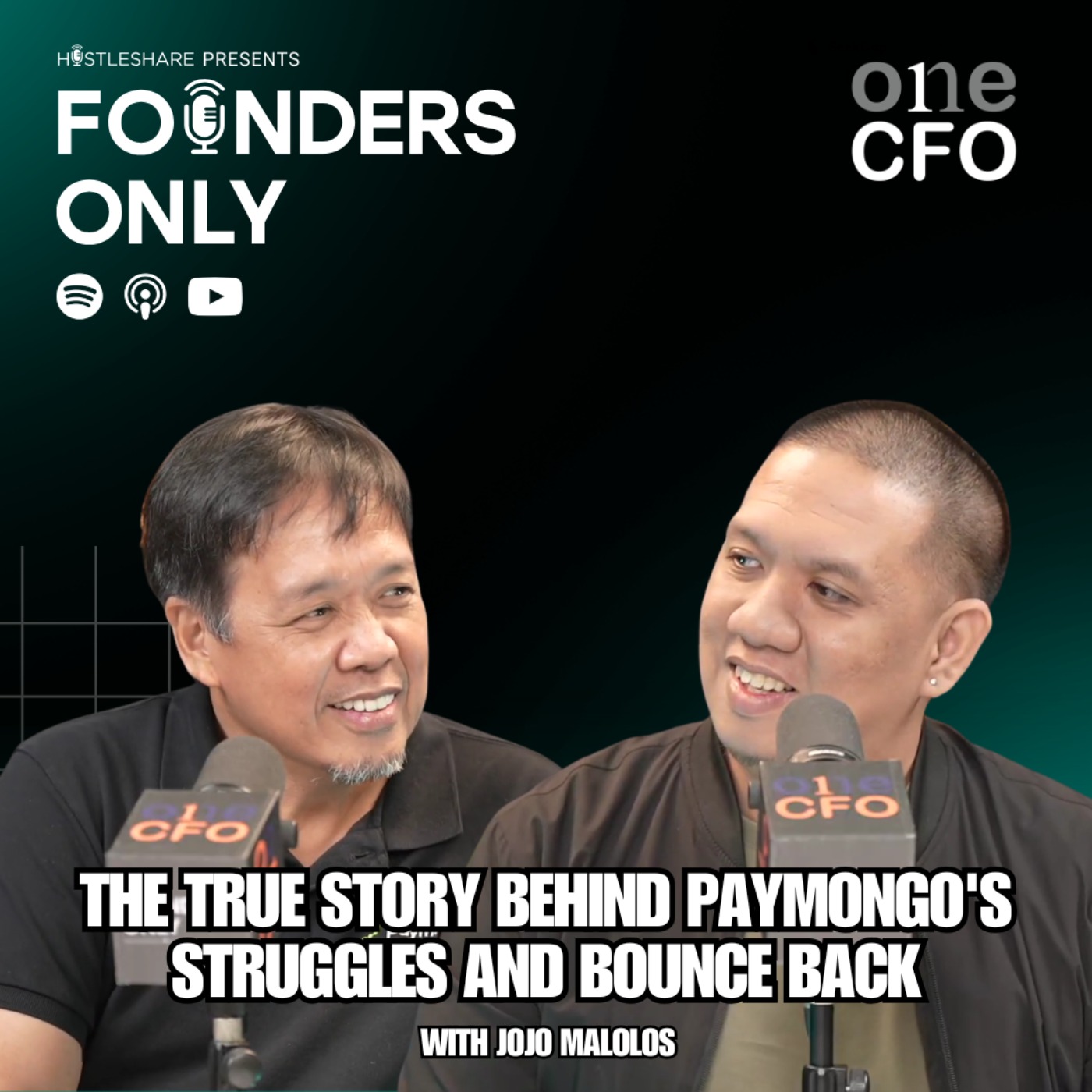
Again, the principles that we went to in 2023 when I came in, we just said, "Just have to find a way by which we can grow not the number of merchants, not the number of employees, but to grow the revenues." When you grow the revenue, you have to grow it in such a way that the direct costs are lower than before. Therefore, that's where the diversifying comes in. Before, maybe our take rate will be about 40 bips. So I look for products and services that will give me 100 bips for right, for a year. What does it take to build something from nothing? sleepless nights, impossible odds, moments of doubt, but also breakthrough, innovation, victory. Founders only is back, bringing you inside the minds of the visionaries who refused to quit. Real founders, real stores, real impact. Founders only, the journey starts here. Welcome to this episode of Founders Only. We are back again. We are officially back and we're not going to stop. So if you're again new to the show, we are Founders Only. This is the sequel of the HustleShare podcast, which is now 70 years old. So why we did this show is because we felt that HustleShare needs to now level up from a Pikachu to a right shoe. Okay, because again, the type of conversation we have in the startup ecosystem are just no longer origin stories. And we need to be topic based because we now need to really do a deep dive on the lessons of companies, of leaders, the hard decisions, everything else in between the startup ecosystem and the business ecosystem needs to tackle. And of course here today is one of the most amazing turn-around stories were in dire straits. He's actually a savior, borderline Jesus. And now we got it done. We have to welcome the CEO of Bay Mongo, Mr. Jojo. Thank thanks, thanks Ron. Thanks for having me. Finally, after maybe three or three years. I think the last time I had a session with you was maybe three, four years ago. You're still in JG. I was still in JG. A lot of things happened. Absolutely. And actually for a few years, curious about the origin story of Jojo. I had HustleShare still part of this, but put in the description box. So you understand how he built his career. But today the main thing about this episode is obviously how you turn around pay Mongo. But I want to understand first, from the last moment we talk and I had you on HustleShare again, it's going to be in the description box. Walk me through because you were supposed to be happily retired. I want to understand what happened. Why you left JG Dev and how you got into the Bay Mongo situation. Yeah, I mean, I think I think the last time we had the conversation Ron was I was trying to explain the journey that I went through in JG Dev. JG Dev is a venture capital company. Corporate venture capital company of the Gokunway Group. And my story then was the excitement and the challenges that you were facing when we were actually investing on some companies that we thought would have an impact also on the Gokunway business at the same time impact on investment or startup ecosystem in the country. And I was talking about companies that we worked with and how excited I was. And the vantage point, our vantage point then was what do I look for in companies? And then I also mentioned there one of the companies that we formed which is GoTime. And I also became the CEO of GoTime. CEO, I set it up. I was a co-founder. I set it up. Created an execution plan and then launched it and then became Chairman. And then all of those stories revolved around my appreciation of start-ups and how startups really navigate themselves through success. Because a startup responsibility doesn't end with the raising money. It always goes through the process of proving that your value proposition really makes sense. And it totally have an impact. And that's what I did. And then there was this opportunity to work on a very, very, quite successful company. In raising money, they raised $48 million in total. But all of a sudden, they were confronted with this existential problem of three founders leaving. And then all of a sudden growth was going down. And nobody seems to be able to run it. And that's where the initial interest came about. So yeah. I remember. So I bumped into Louise in one of the rooftop parties during the pandemic. You were there. I remember this party. He was scorting. He was like, oh, and this is right. The ticket for that crisis in Pee Mongols. I'm not going to talk about it. You should do your research. That's not what we're going to be discussing. Very well documented. That's not the purpose of the show. The purpose is what happened after. Right? So absolutely. And I bumped into Louise. And you were there. And Louise was like, yeah, don't worry. We're going to be fine. We have a big announcement soon. I did not know that you were the big. I'm trying to convince me that it makes sense to do. And you think, as I said, I was about to retire. I'm happily working on Go time. I mean, they're quite successful now. And Go time has become one of my probably one of the biggest decisions I made, which is to establish that and set it up for the Go time. I'm a founder. I'm the founder. I came up with that idea. I went to time to set up that joint venture. And the rest is history. Right. So you need retirement is the end for people who've been hustling for years. What built, how did Louise even convince you to even, because it's not like you're coming into a really chill situation. Yeah. This was a mess. It was a mess. Yeah. When you got into. So how did you build conviction to even do it again for Go retirement for a bit and go into this thing and be the adult in the room where the whole sky was falling? Yeah. I mean, I've been working for decades already. I've been with the FinTech industry for, you know, I was a founder. I was the CEO of Smart Money, which became Maya. And I was also the CEO of a thrift band that I converted to a digital band in Cambodia. I ran a rewards company of the Go homeways, I ran the CVC, and also I ran a set up go time. I think that type of experience to your point, you know, Oren and you rest. You're a real sense. And Oren and Oren and I was talking to Louise and basically saying, I'm with you, Louise, but you know, been there than that. But I'm into retirement. But he said that, you know, I think I think there's a point where we can prove that maybe we can turn this around and prove that, you know, not every, every founder is like what they have experience. And I started thinking about it. And the good thing about it is the founders investors really approached me. It's not just Louise. The investors and they said that, you know, I think the only way we can solve this is to get somebody who's experienced was this level of reputation who has, you know, really, really have a good network that can turn this around because that's what we need because it was totally, you know, messed up and, you know, and I said, maybe I'll give it a shot. But, you know, and this is my, what you call this, the one that I, before I left Go time and JG Deb, I talked to Lance and basically said, you know, I think I think I have a calling here. I think it, I think I still have about two to three years to probably turn things around. It's not for me because whether I succeed or fail, you know, I think I think the things that I've done prior to that will speak for itself. So, and then he said, you know, it's a, you know, we should lock and then basically said, you know, let's find out if we can, you know, work together how we can support you and all that. So, that gave me the determination to make it happen. So, I said yes to Louise and to the investors and, you know, maybe the rest is history. No, but I want to dig deep here because it's not years your decision. Yeah. I'm pretty sure you had to talk to the wifey. Who is a real boss. Yeah, so this is the decisions like this is again, you guys are looking forward to already retiring. Yeah. Right. How did you convince the family? I mean, I don't know. One last shot, the final countdown technically to do it because again, this is not an easy situation. Pretty sure it was stressful, but how did you convince the wifey and the family that, hey, Kayapa to one shot? You know, Ron, I remember somebody asking me that question several years ago. And now, you know,
I'm having goosebumps because I want to go back to the time that I told my wife that I'm going to do this. And my wife since I was in the US and I was in Cambodia, always asked me to, you know, what are you still doing? You were good. All your kids are working already. You don't need anything else. And then I told her that, you know, I think this is my part, which is the paying forward part. I'll take this. I mean, paying it forward, man. My salary was cut by two thirds, right? So I'm getting in with one third of my salary. I was already an executive in the Gokomwi group. And then at the same time, you know, I don't know whether, you know, even if they bombard with shares or options, you know, how long will it take for me to realize to realize to be successful. Wow, that's right. It's successful. It's successful. And then I think, I think the reason I'm saying good was because my daughter was around 29 years old, they asked me that, you know, why do you need to do this? You know, what will a 59 year old, 60 year old guy do in a startup whose age average is about 27? You know, what are you trying to prove? And I said, probably I'll share this with you. And, you know, I turn it around and I'll share with you. What are the, you know, what are the things that you will learn also because my, my daughter is also the marketing head of one of the big, one of the more successful health tech companies here in health tech startups. And that's what I told her, you know, after two or three years and you become successful, let's share with you. Let's start up, you know, what I learned from all of this journey. And there's a lot, man. There's, there's really a lot. I mean, even at my age, even at eye retining, I think I wouldn't, I wouldn't, I wouldn't not put all of these lessons in my autobiography, right? Yes, because I thought, I thought that I was done with my combo just into, I converted a digital bank, founding go time, you know, elevating JG depth, two point, we, you know, we really have very, very successful startups that we invested in. And I did realize that I can still get a lot more here. And, you know, there's a lot of, there's a lot of stories that I can call from from this journey with Paymonglou. That, you know, that's worth sharing with everybody. And you guys are lucky because this was supposed to be a story for her daughter, Elang. Now you all hear it. Yeah. And you can learn from it as well. So that's what I want to now talk about. So Jojo, you come in, you're ready? Got in. What were the first few days like? Cause I knew there was a mess. It was not the culture was bad. There was technically no one running the ship. What were the first few things you had to make sure when you took over Paymonglou as the leader? Well, you know, what I like about you, Ron is that, you know, we basically call us Pay the Spade and maybe it's time for me to share exactly, you know, what were, what went through my mind thinking that, you know, I got this and, you know, I have to make sure that, you know, I work on it. But the first few days, actually four days. I first, the first feeling is that I didn't know that, you know, mess was an understatement. Okay. My first meeting, my first town hall, my second day, you know, I didn't, I didn't know how, how the town hall went, but the town hall went like, you know, because it's a hundred percent remote, you know, I was in the office. I was with about 13 people in the office. Everybody was, everybody was on on remote zoom or on on on on G meet, right? So, and then, you know, I opened it up with saying that, you know, I'm here to understand what you're doing. I'm here to basically continue, you know, the promise of, you know, providing the country with a very, very successful platform. And then, but most of them, you know, started asking questions like, and this is unbelievable, initially for me, because, you know, it's like you know, you know, the game, you know, chairs, musical chairs, and then when you were when the music stopped, you were holding the ball. Did you know? What is it? I know it. I know it. I know. I know. You know? I know. I don't have a winner. I know it. I know. I know. So I was saying. And then the questions were really initially it came as weird or why just artists people asked me. They asked me, will you increase the salary of people? I said, this is my second day. What? Or will you ask us to report to office? What are you planning? What are your plans about CBC? On my second and third day and then every time I answer, you see a lot of a lot of emojis, right? They were all, you know, and I said, you know, what kind of reception am I having here? And then on my fourth day, fifth day, I went to my car and I saw my parking sign reserved for Jojo Malolos, Vandaliseman. And I don't know where it's coming from. Here you are trying to do it. It's Vandaliseman. It's Vandaliseman with really, really, you know, and they created a, they created a, what they call this, they created a Twitter account for me calling me, you know, chief elderly officer and they were, I mean, I don't know who was doing it, but I said, you know, what is this? It is something that they're telling me that, you know, you're not welcome here, but if I'm not welcome here, who's going to do this? Right? So, you know that? You kept going, dude, if I was this, you know what I would do? Fuck this shit. Exactly, exactly. Exactly. And through, and through the years, man, you know, all of this news about, about, you know, me coming in, association with Luis and all came out and, you know, and then my, my daughter was telling me, I told you that, you know, my daughter in law was also saying, you know, it's, it's, it's hard, but, you know, what, what do you, what do you do? I said, you know, I just have to hang on because, you know, there's, there's a, you know, there's something that's important here, which is, you know, does it really, does it really, is it really important for us to do something new in the kind of relative to payments? But yeah, those are the things that, you know, I went through and, and, and, and the thing there is that you have to, 245 people in the company. I have a 245 people in the company, all hired by the previous founders, right? But none of those were your guys. None of those were my guys. I only came up with my guy when, when I hired the chief people officer in, in June. Yeah. But, you know, all throughout, you know, I wouldn't know who, who is with me. I wouldn't know. I was not in the, you guys were, you were probably probably an enemy number one. Exactly. I was the one, I was the only one with the admin people who was coming to the office, right? So, we have a huge office, we're paying a lot for a beautiful office, right? A beautiful office, but nobody, you know, coming in, why? Because everybody's sort of moved, right? So, I mean, those things, and I said, you know, how do you turn this around? How do you, how do you make sure that, you know, your time is not wasted here? Yeah. And then I already talked to the investor, I said, you know, I don't know if you know that this is the situation in the company. If you do, you never told me. But you know, I'm still up for the challenge, but you have to, you have to tell, I have to tell you that you have to accept, you have to, my request is that I will have to have regular discussions with you. Man, I was regularly talking to the striped people. I was regularly talking to some of the, to the, to the Hedosophia people and all of the, all of the other investors. And I said, I'm going to go back to the next one, I'm going to go back to the next one. I think, you know, I think I'm going to go back to the next one, I think I'm going to go back. I think I'm, I think I'm going to go back to the next one, I think I'm going to go back to the next one, because this is obviously a turnaround story. Okay. It ends well. Okay. Because we wouldn't be here if we didn't have great stories to share. And we're going to be talking about that. But when we come back, we're going to be dissecting the first moves of how literally we were able to survive those, those really tumultuous times, learning things around and how to run a proper business. Well, it's about that more after the break. The path from idea to industry leader keeps moving forward. And we're back in the break. We're still with George and Melola. So that's all the, oh, grab it. The premise of how he got in Paymongo. Just the fact that you had to bear in mind that you were going to be able to survive. And we're going to be able to survive. Just the fact that you had to bear through that at the start. And do that. But still you were able to learn things around. And this is tactical. Obviously you're navigating the treading water at the start. But you eventually got it done. And one thing I remember very early on in the early days that when you came in, now super impressed with was you what a really hell of a board. Yeah. Grab the water. Grab the water.
- So walk me through how that, is that the first few moves or is there mules before the word? - Well, as I said, you know, musical chairs, you have something there and then, you know, you are confronted with this weird vandalization and then you know, some articles come in the newspaper. You know, there was even an article from Billionaire that says, you know, to miss seeing it, I'm acting as if I am the founder and I'm not the founder and then, you know, something like that and you can imagine, you know, I'm doing your favorite anyway. Those are things that we need. Those are distractions to me and, you know, I just said to myself, you know, success will basically, time will tell and success will tell them, you know, why this had to happen and it's all for, you know, for everybody, right? So, so I have that and I said, you know, what are the first three things that I need to work on? And the first one was I need to get, I needed to get a chief people officer. I need help, I need help, I need help in terms of understanding how I can navigate myself with a culture that's not mine. Right? With a tech culture, there's a tech culture, there's a organization culture, there's a corporation, right? But then, you know, and dammit, and dammit, and dammit, that's a management committee. You know, I'm not going to form dammit, dammit, and everybody else, you know, wants to, wants to understand what I want to do. And then, so I got the chief people officer. And then, as you know, Ron, you know, I'm quite embedded into the community, right? I'm very embedded in the regulators community, you know, all of the, you know, some of the, most of the regulators in BSP, in most of the deputy governors in BSP, I know in SEC, I know some of them, and then I have a huge network. I had the entire investment community with me. So the first thing that I did was, to get the chief people officer, and then basically re-establish my relationship with the regulators, and call them, this is George, this is not gay mongo, right? This, look at it as George of first, because you know, my reputation and, you know, my intention is to make sure that, you know, we're able to do it right. So, you know, I'm going back to you. And then, I found out, I found out that, you know, it's been maybe two or three years at the end of been trying to look for a board, and they, they cannot fill it up. And then BSP told me, oh, they're going to come up with independent directors soon, so, sabbiko, and then, you know, so that in the next two weeks, I bombarded myself with a lot of discussion. So, I talked to a lot of my friends in the industry, friends from before, my mentors, et cetera, et cetera. And then, lo and behold, I was able to get three of the brightest and highest, you know, most, most, most reputable people in the industry. I got my mentor in Paulina Serrano, who was the former CEO president of PLDT and SMART. I got Alex Cabrera, who is the chairman of the mayor of the Vice-Waterhouse Cooper. If there's, you know, a problem with compliance, and you have PWC, I don't know, you know, they'll tell you that you're non-compliant, right? So, and then lastly, you know, to put some, you know, some youth into the void, I was able to convince Ray Alimurong to join also as a member of the board. - Barmercy, or a man's ad ad ad ad. - And then, you know, so when I have all of those, then things start to change. - Yeah. - Things start to change externally, but internally it's all the same. They don't care who you get in, they don't even know who Ray Alimurong is, they don't know all of these people. And it's really reflective of, you know, the internal love that all of these people had for their product. - Of course. - Without understanding whether the product will work or not. So, so that was the first big thing. And then for that, you know, I, you know, my investors, you know, congratulated me. And thank me for doing this. They cannot imagine that I will be able to gather this top three, this really, really good and highly reputable people. And that's when I started getting a lot of, you know, a lot of starting discussions with some of the friends of Paulie, the friends of Ray, who started saying that, you know, oh, you can't know how to pay for the payment, so what's paying for them, you know. Yeah. So the turn of, you know, all of our suddenly increased and I realized that during the time, you know, I looked at one of the key, one of the key metric that you look at in a, you know, payment platform company is that, or any company for that matter is your LTV to Coca crazy. - Absolutely. - And the LTV to Coca crazy of the company there was 0.68 man. They were losing customers faster than for every customer that they even hired, right. So I said, how do I deal with this? You don't have, you know, you don't know who to trust in the organization, but there's a few. But how do you handle that in the context? And then the, you know, the CTO who was also a co-founder, left the company even before I started and he had about 158 engineers in the company. And I said, you know, how do we deal with this? So those are really things that, you know, I cannot fire everybody because, you know, that cannot be my first move because I fire everybody and they leave, I don't know who do my thing. So I needed to find a way by which I understand Chinook, he had the detail, you know, who will be concerned for the company like me or like the others or who would really, you know, just do it and just let's try and make this work. So that was the start. And it was really uphill climb. And I, you know, I would say, but I never experienced that face in my working as a CEO since 2008. And I've never, I've never experienced being confronted by culture like that and also understanding, you know, probably grouping for, you know, what's my next move? How do I do this? You know, who do I get et cetera, et cetera. So. - So okay, obviously you already had to go through that. What is it, where, how did you start building momentum? 'Cause it's never gonna be one time big time the whole thing is that there's gonna have to, you have to stack wins. Over the first few wins going through I, let's just call it what it is. Trust was bad, product was probably in shit as well. - Yep. - You have to technically go from the ground up and also fix what's inside and probably sift through who actually cared about who want to stay along and fix this with you. And probably inevitably you have to look for new people who can help you build it. - Over the first few wins you got. - So again, I was talking about some of the real things that you were being asked of me. And, you know, and when people started leaving, because, you know, they think that, you know, they were loyal to the previous founders who left and so they go and join them, some of them, some of them stayed. But one of the things that I discovered is, again, you know, I think I think if I come up with my autobiography, my own story and put it on the book, I think I think this, you know, I'll have a part, a chapter on this. So, so, you described it correctly. The product was, you know, I don't know why they have an installment product for a company, they doesn't have a credit card, something like that. Or, you know, I didn't realize that the reputation of the company was bad, you know, people were talking, you know, don't go pay mongo, you know, I have an experience with this guy, you know, with all those who left. So, I tried to maintain, I tried to be composed on everything that I make a decision on because it was all about the customers. So, what the first thing I did was, you know, I talked to the top 10, 15 merchants that we had. And then I understood first what their problem was with the company and they said that, you know, your product is shit, you know, it always goes down. If you increase, increase our transactions by, you know, 20 a day, you know, we have a problem, you're not paying us out, you know, we have plenty of, we have plenty of payout problems, we're just a key to our payment platform. And then every time we start to correct those, you know, I get confront, I get answers like, you know, we are a nine to five company. So, and then we don't work on weekends. And if a customer complains on a weekend, nobody's going to answer it, man. - My God. - So, I talked about 10 to 15 merchants and basically said that maybe what we need to do for the next few months is try to make sure that the volumes at least increase. Right. So that's the one. So, you know, we focus on that, you know, the bare bangs, hallu, hallu. - Yeah. - So, you know, we reinforce a relationship with them, we reinforce a relationship with some of the enterprises that we've been working with, although they were not happy, and you know, I just, you know, used my network to convince them to stay. And then, but the problem is still, you know, that, you know, we really don't have a system that will support their requirements because they only work, you know, they work on, some of them work on weekends, but most of them don't. And then, you know, our product development cycle was so long, our onboarding process was so long. And so, we focus on all of those merchants who increase their transactions. And focus on relationships, focus on, you know, minding them, focus on account management, and also focus on creating new products and services to diversify our business.
kasi ay during the time, based on the bottom of the company, ng ganda ganda ng discussions with the client, ang bing lang matatalo ako on race. So sabi, I cannot sustain a business like that. Kasi ay ang kaya ng may ako taloon ng competitor. So we focused on that. And although I still give high targets, we grew 40% during the first year. That was enough to regain an initial momentum. Kasi ay, the company was, the growth rate of the company was going down. Of course, coming from 2021, again, the increase of 70-80% after 2022, it was a big deal. About 30% or so growing, growing that 40% was. Of course, that's an uptick still. Uptick still. But at the same time, I was hoping that that can motivate and, you know, and, you know, invigorate the team. But yeah, at the end of 2023, we still have about 180 people from 245. And then guess what, you know? I mean, you know, we were still hoping that, you know, the culture will change, but it didn't. And some of the founders, you know, found comfort in setting up a competing company, right? So, I mean, you know, you entertain that, and you know, of course, you know, I can't prevent them from doing it, but you know, it is. It is, so we just have to continue working on it. But I think one of the blessings there is some of the people, you know, some of the people who are going to move to some of these companies. And again, we were saying that, you know, we can only defend for ourselves. We just got to, we just have to make sure that, you know, we are able to accomplish what we said we accomplished for the year, right? So, on the second year, you know, we launched some of the products to develop in 2023. You know, some of them were successful. Some of them fell flat on our face because, you know, the engineering architecture, we're not as ideal as we wanted to be. But 2024 was a very, very good year for us in terms of organization. Because finally we were able to get a chief technology. So, yeah. So, October 2020, where we got the chief technology office, who was also the head of technology of Trabiloka. And the good thing about that is that I was able to bring in that mindset of a tech person or a head of technology of a multi-unicorn company, both Trabiloka. So, you know, the minute his name was, his name was so said that the community came in, you know, he's thinking, you know, I didn't come here just to do incremental changes. We have to do 10x, we have to do 20x. And that's what it is. And then, of course, he found out that we had nothing in terms of infrastructure. Our costs are high because, you know, we did not know all of this. But he spent the next year really fixing everything and preparing us for a good year. We also got Lasada, we also got MaxiKerry, we also got really, really market customers in 2024 through our network. And so, one from MaxiKerry recently, and I saw a Paymo, so the back end. So, you know, we worked with a lot of companies of the Go-Hong Ways and we worked with Go-Time as well. So, I think you were able to, you know, during the time you were already able to turn it around. But the same, the problem is that, you know, it's a, the turnaround is not complete if you don't go self-sustaining. Like, if you don't self-sustain yourself and not having to wait for the time that you will need more money. Yes. And that was my objective. How can I bring this to a point where in, I don't need to be pressured by having to raise money? When I, even if I raise money, I wouldn't be able to know whether, you know, how much money do I have and when do I do that. So, we focus on OPEX, we focus on a lot of new products and services, we focus on diversifying our revenue, our revenues. And fortunately, 2024, we, we, we, we, we, 2.4x, the company. Right. We grew by, you know, 100, but of course, we were still not profitable in 2023. When I, when I came in, you know, we had about 700, 800 million pesos of losses and, you know, it was going down, but very, very slowly. But in 2024, you know, we reduced it about, you know, 40% or 50% from the previous one. So, you know, maybe, maybe my labanton, you know, at the same time, we went down from 180, probably about 140 by the end of 2024. So, that's part of the turning out. Again, you know, at least when in 2024, I felt that it was not just me. Right. You know, my management committee were very, very solid. These are your guys. These are my guys. You know, so, you know, we had, we had some, you know, we hired new people and they were with us and these people were basically coming to the office with us. And then, you know, we haven't even, we haven't declared yet that everybody can, it should come back to the office until around, I think October or November 2024. And that resulted a lot of, you know, people leaving also. But, you know, my objective then was to create that momentum for 2025. Because I told everybody that 2025 will be a profitability year. So, in 2023, we just say that, you know, we grow further. In 2024, we said, you know, we'll start the scale. In 2025, we'll scale it to real profitability. That was objective in 2025. How do 2025 turn out? We turned out very well. We grew even more than we grew. We grew about 3x. We grew our volume by about 4x. But it's now, you know, it's now showing that our infrastructure, our architecture, our platform. It's one of the most robust in the industry because we can handle as many transactions as we can. And this is the time that most of some of these marquee customers started coming in. Some of our key customers can now, you know, can now come to the platform and run, you know, hundreds of millions of transactions or volume a day. And that's also a, you know, a testament to what our CTO and his team had done. Yeah. You know, the 158 engineers were gone. We were left about four. And then, but the rest of our engineers right now are really new engineers. Very, very solid. You know, they've moved our onboarding from, you know, seven days to five minutes. What? They have, you know, they have, they have converted, you know, they've allowed us to process 10 exit transactions that we used to process. And I think this created the, you know, good level of confidence to our merchants and our partners that we think 2026 would be an even better, better, bigger, much, much bigger year for us. That's amazing in terms of momentum. You already clearly showed that. Yeah. It's really on the uptake and getting that done. But I want to talk about the, the PNL. If the goal was really to make sure that you become profitable. I had to go through a similar thing. The only difference is we didn't have runways. So we were fixing PNL while trying to survive. Month on, month on, month. We're turning seven years old now, Jojo. So we were the expert of not dying. We're the biggest cockroach in the industry. And then last year also, we, we turned around 2.4x. We doubled our headcount. It just goes to show with it's doing well. So what I. The, the. The dark days. Also forced me. Because I was very start up a grow, grow, grow, grow, VCVC. I become, I became a true entrepreneur. A true leader of men during wartime. I want to understand. What are the components on your PNL that you guys had to do to really make sure that you manage. So that the, the, the growth can really push over the top. Because like for us, what we had to make sure was our cost was really almost bare bones until we saw that there's enough margin that can sustain more growth. And then you described the team, my God, 700, hundreds of engineers. I can, I was trying to do math in my head like, how, how, how much did that cost to even have an engineering team that, that big. Did you cut costs to manage it? And really chase the upside? Or did you piggyback on marquee clients growing along with them? Or is it, it's a mixture of both? Yeah, I mentioned earlier that a big part of our decision was really on diversifying the revenues. Meaning, you know, we needed to create a way by which our revenues will not come from the MDR, which is going down, you know, almost, almost every year. Because competition is coming in, they want markets here and they've been down the prices, right? So again, you know, the, the, the principles that we went through in, in, in 2023, when I came in, we just said, you know, just have to find a way by which we can grow not, not the, the number of merchants, not the number of employees.
but to grow the revenues, right? And when you grow the revenue, you have to grow it in such a way that the direct costs are lower than before. And therefore, that's where the diversifying comes in, right? So before, you know, maybe our take rate will be about, you know, 40 bips. So I look for products and services that will give me 100 bips for, right? (audience laughs) But, you know, because you have an EMI license, you're able to, you know, come up with some lending capital, capital product, we came up with instant settlements, we came up, you know, we found the higher margins are coming from, you know, bank transfers, or also coming from the NPL and all that. So we basically managed diversify. - diversify. - diversify, how do we increase our Spotify business, how to increase our businesses with credit cards or with bank transfers? Something like that. So we just focused on that. And, but the true, through answer to your question, the real answer to your question is that, I needed help. I needed help people who really know technology, you really know people, or you really know, who really know operations, wherein we can really maximize the cost management and that. So when my city came in, the first thing that it did was our, you know, cloud costs, right? And he said, was, you know, what you have right now is a business where in, you know, you're growing, but every time you grow, your costs are also growing. So what it did was basically just took him one, one, two months to understand, you know, to take a look at our system and say, you know, you're spending so much on this, you don't need this, you don't need this. And we were really able to bring down our cost by probably around 25X or 30X. On the infrastructure, right? So, and at the same time, you know, as people leave, you know, we basically, you know, identified key metrics around productivity, right? You know, what is the revenue per head when this person came in? So we put that all in the, in the product, in the performance definition. So there's a lot of other changes, but yeah, we were, and then, you know, I got in a new head of finance early, this early 2025, you know, who I work with, when I was in the Gokong ways and, you know, and again, you know, he brought, she brought in the discipline that we have before we're in, you know, we take a look at each one, you take a look the unit economics, and they already defined all of those. And you know, together we, we, we combined all of our, our knowledge in the business, our knowledge and what, how the infrastructure will enable our business. And so we were able to capitalize on that. So it's a combination of, you know, knowing where you can get gross profit, and then making sure that, you know, the, the corresponding variable cost that we're feeling to that also goes down. And then you start continuing, defining what, you know, an active merchant is and therefore, you know, we've increased the number of merchants that we have, but you also increase the number of transactions that they have. And then, you know, the unit economics are always being investigated. If we have a customer who is basically giving us 100 pesos per month of profit, maybe we should not, you know, bother. - Tower, it's not worth it. It's not not worth it, but basically saying that, you know, we have to talk to them and saying that, you know, if you can increase this to more, you can help you, then we work with you, right? But if not, it's just, you know, you just stay in the course, we tell them that, you know, they probably can, can, can look for another operator. - It's a lot of sense. And this is again, the, the stuff that you have to go through as a real entrepreneur. Because a lot of founders now, especially my peers. Got funded 2020, 2021, 2022, 2022, 2022. - Yeah. - Who probably cannot race, are now forced to become entrepreneurs themselves. And you have to prove it with profit. - Yes. - And if you do not dissect your business down to the last line item in your PNL, it's gonna be very difficult. Because the funding will not come from a VC. - Exactly. I mean, and that's been my, again, when musical cheers, I had this ball, and I said, you know, I cannot race money. If I'm going to be see, you know, I should be racing 20, 30 million. How can I do that when, you know, I only have this much and, you know, the business like, I mean, the company raised 31 million dollars on a $3 million revenue on 20, and that's 20, 20, 20, 20. - How can that happen? Grabbing multiple, how can I, how can I, and the, you know, my stint with Paymonger and then race money with that type, I cannot, I cannot come with the multiple, right? That one, right? So, now, you know, 3 million, now I'm 20 million dollars. Right? So, it's time six, man, since I came in, I multiplied, yeah. And then the volume, the volume was about 84 billion pesos. - Yeah. - You know, during the time, oh, this good, you know. Now, you know, I did 2.2 billion dollars, right? So, 2.2 billion dollars is still about 20, about 120 billion. It's 14x of what you were doing in 2023. - Yeah. - But, you know, that's not the point. The point is that if you really concerned for your company, - Yes. - Like what you said, you become an entrepreneur. Man, I'm putting in my time here, I go to office every day, but it's motivating the people always that we can do it. That's why, you know, every time we hit this milestones, the thing that's important to me is my, the people recognizing that, you know, this is them going beyond their limits. And they're all, you know, they're all able to contribute to this. And now, going to 2026, we will be basically saying, you know, we are now, you know, we, this is now, you know, we are now control our destiny, right? - Yes. - I will not be, I will not be, I will not be how they call it. Dependent on having to, you know, each day, how can I raise one happiness? Because, you know, I got over the, over the, you know, - Yeah. - Even the profitability helps. - Yeah. - So, that's a meaning. That's what founders should learn. - Yeah. - 'Cause I had to go through that too. And. - But you're a point, Ron, I mean, you said, you know, you had to be an entrepreneur. - That's exactly the point of startup. - That's what startup is an entrepreneur. - It's entrepreneurship. - This is yours. It's like it's your money. But the problem with some of the startups is that because it's not their money, they don't feel like, you know, oh, hey, if it's fails, you know, it's not my money anyway, right? That's a change. And, you know, I hope, I hope your conversation with, you know, some of our VC heads are also along that line we're in. How do you understand that a founder is really concerned about the company and not for the glory of that company if it becomes, it's able to raise funds, right? Because each one has to go through what you went through, right? So, you know, I've been there done that, but I'm saying is that, you know, this is also a good experience for me, but it's more experienced for the team that I have. Because someday these people will also be, you know, setting up their own companies, right? - No, for sure. And again, if you're able to do right by the, how the company do the, doing things the right way and do the right way is again, this startup is just another subset of entrepreneurship. It's just powered by VC math, which I discussed with Pao and Franco in the last episode. You shouldn't be able to really pull through, but VC funding is not the end game. So if you're able to do what Jojo did for Paymongo, you're able to do NPNA, to really be in charge of our own destiny through profit. - Yep. - That's what the game is all about. And still achieve hyper growth. - Yep. - That's what separates a startup from a traditional business who is happy to grow 30% here on your business. There's nothing wrong with that, by the way, that's still entrepreneurship. Start-up is just a tech game. So that's how you use technology as a cheat code, right? A really scale up. And again, that's why when you fixed Paymongo, that was first. - That was first, at the same time, the culture and mindset to socialize. - Yes. - I mean, it was very difficult to succeed. I was the only one who was trying to change everything. And then again, I guess it took me time, it took me time before, you know, all of these people, you know, embrace the same vision, and embrace the same difficulty as we, as we as the heads or the CEO or the founders, would take. And, you know, it also helped that when we relaunch Paymongo, the new Paymongo, you know, this is no longer, yeah, that logo, this is no longer the company that the ex-founders founded. - Correct. - Because it's completely different. - Really? - Whatever they say about it, it's a different company. - Yep. - You just have to enjoy the ride when you get, when you get what every, is that you still have in the company in our success. And that was the key. The key was that everybody embraced it. When we started, when we said we will launch it as a new company, and then everybody embraced that new mindset, you know, it was the start of a very, very, you know, successful journey that we will be taking. - Grab it, amazing story. How you turn around this. If that's why in the startup, there's a startup awards. - There needs to be a turn around startup of the year. - Yeah. - A year. - It's not just all linear of new startup of the year, blah, blah, blah. - Yeah, I'm just going to turn around. - I know. - So what time will it be? (laughing) Just kidding, no. - Oh. - You know, that's what we want to be able to really say, that this is a game of endurance. It's a marathon.
this is not gonna be a quick print and then tapos na it's not it's so hard and it's really more of how much pain you can endure as well and you already talk about the business side of things but Jojo I want to now understand the leadership side of things and again the things that you would have loved to then tell your daughter three years in because I remember I just have one anecdote this is how fucked up we were in 2023 2023 just really been started a week I was in a panel with Jojo with Roland Ross of Gummou in me the moderator was Natasha about these nine one seven ventures jolly chilling and what now we were okay there's nothing weird about that panel and then Tasha just goes asked us how are you how is how are you doing this year I was the first guy 30 30 days when I lost half of my team I lost the my my co founder is a working ever so it's I couldn't answer I cried in front of everybody is like I couldn't finish I forgot what I said already but it's basically telling the story next thing I know I was at the farthest right next thing I know beside me was Roland who's also going through shit as well and that he also started crying so we were already both crying and now the third one is jojo I'm I'm I'm still thinking of something to make me cry but but something like that right so now you're going through shit too I'm just going to do just have it in so that was more more anger than you know but yeah I mean that that was classic and I think you know three of the biggest startups in one and basically you know highlighting the lessons that we learned was you know was was a spectacle in terms of you know it was it was a like a like a like a a room full of full of wisdom right and I think all of those who were who were there you know should have realized that you know getting through a startup is not for the paint of part right we're laughing about it now but in 2020 you're so fresh yeah I don't know but he wants to cry and find it always anxious right but that's what I want to now understand jojo the learn again you see you promise you're gonna tell your daughter the lessons yeah what are the lessons now that you guys what you want to impart and again luckily you guys are gonna be hearing this too well maybe it comes also with the with experience but I was coming up with the three when with three what they called my team called them jojo vism's right so jojo was those who did that guided us right so the first was the merris law if it's if it's going to happen shit will happen yep if it's going to fail it's going to fail if it's going to fuck up it's going to fuck up so what do you need to do is that you know you consider this experiment test it and then basically accept that something bad can really happen yeah for sure that's the first one right so if you do that you try to experiment so so that's the thing that you know so I allow the team to experiment because I had everybody I asked everybody to accept what is it that you don't know in this place and then we accept the fact that you really don't know if you don't know marketing but your the marketing had tell us so that we can you know we can we're not we're not going to let you go but probably we'll give you somebody who could probably tell you how to do it by something like that right so once you try to experiment and you're now you're not able to to come up with some potential solutions then the next jojo vism was rubber hits the road what happens when rubber hits the road okay so you develop something and develop and then you know you develop a new car and then you know when rubber hits the road oops you know the wheels and all that and so you have to understand that you have to be able to understand what is happening why it happened and what are the options that you have to solve it right yeah you know you you know you went to a new direction so you know the first thing you'll do is that you know what are the other paths so that I can I can go to the same destination at the same time and the last jojo vism was the was something that was very difficult for them to appreciate until I gave high high targets right so the last jojo vism was grabbing the bull by the horns right not by the balls now that's horns horns okay because if we grab them by the balls you know you would most likely be kicked and probably you know that's not the decisions so when I say when when rubber hits the road and you make a final a new decision to do this yeah you have to be able to make a decision and I will not kill you for making the wrong decision yeah because it's it's it's it's you know the grit yeah in the determination that you know what you're doing it's something else happened but you have to make a decision yeah I think those guided all of us in terms of working because every year I give a you know I give a high target I gave on the first day I gave a 2x target we hit 40% that's okay 40% out of you know 40% out of the 2x you able to achieve that on the second I put in about you know 4x target we hit 2.5 x on the third year we said okay let's hit 3x and we hit 3x right so but the thing is that you know we have to understand our limits right because if I gave them a low target then they hit it they wouldn't even know whether it's you know they can they're capable of doing something more right so that's the thing that they they learn so now all of these lessons all of these surgeries and all that would not would not have been apparent to them or they wouldn't learn from it yeah if the numbers were not good all right so the next lesson there is that you know as they own the challenges they also have to own the success they also have to own and then basically if you're not able to link yourself with that type of success if you're an engineer who's not working who's not working weak weak ends and your company successful you cannot own that success right so that's the time that you know some of these people started to understand you know oh I don't have you know I did not have anything to do with that success some of them you know just leave and all that so but again this this basically to my mind this basically reinforce the relationship of you know each other in the organization I mean it's like me having you know 80 children you know and I look like a grandfather because you know all of them are you know just like my I like a father because all of them are just like actually so that that's you know a major learning but what do I tell my what do I tell my daughter it's really great it's really determination and I said you'd be bombarded with all of these challenges yeah you know as you drive you know there's going to be a typhoon there's going to be flood but you just have to be able to grab the bull by the horn and make a decision on what to do you cannot wait for the flood to go and you know you won't be able to swim you have to make a decision right there and that's what we did all right that that's one of the things that I always share with my daughter and then thing that I I'm also going to share with my daughter is that this concept that you know you're here and the ending will always be good right the ending will always be good why because you know we pray Allah we you know we share your challenges it will always be good even if you fail it's good because you learn something from me correct and and and and and that's one of the things that we we wanted to share with everybody in the company to say you know every day every time we have challenges we let them face it remember the time that we had 56 a 50% 40% of our payouts are being paid we were on Reddit we were on Facebook yeah and then everybody would just have said you know you know you know I'm getting out of here I don't want to be you know I don't want to be associated with this type of company we grab the bull by the way yeah you know we'll fix it we'll just have to fix it and so if I think I think ownership of this process for each of the employee of each of our the beanie that we call because we call them beanie is something that's going to be for the book it's something that they will carry with them why because if you set up your own company be an entrepreneur yourself this will also guide and and and that's what I'm always proud of you know everywhere I go I always in make sure that you know people learn from what we're doing you know I'm very very proud for example that you know some of the people who work with me are now running their own companies running companies you have big companies across and you know and they always call me and basically say you know boss you know you know I learned this from you this is what I'm trying to do thank you for this and you know and and and the team is also like that each one will have to be able to share something share this their wisdom yeah it's very difficult to develop your own wisdom yeah yeah the source the wisdom source for somebody but we're training ourselves to be you know experts on our own fields because we make decisions we understand when we will be grabbing the bull by the horn and making those decisions amazing now my my next question would hover around so these are the lessons you impart with what how you let them but what did you learn about yourself Jo Jo going through all of this because that's also very very profound with right that I thought I had a very good sense of stuff already through this and I thought like I'm I'm pretty gritty, but apparently I'm capable of so much more grit.
And one thing that I really learned, and there's a lot, but the one that really stands out is that Push comes to shove I will always find a way to be optimistic despite how dark things are It I can be very creative with where I pull it from whether it's coming from fear I don't want to fail again because I've failed already before or whatever. I'll manufacture something to still feel optimistic because if I do not become optimistic as the pace setter for my whole organization Who will yeah when the things are dark? So I have to fool myself to become very optimistic first Because that's what would radiate to the guys behind the camera. It's how I tell them hey, we optimistic If I'm not optimistic myself or at least Yeah, manipulate myself to be optimistic and radiate that those are the things. But what are those for you? Well, you know, the the things I mentioned is that I Still continue to believe that you know All of these new challenges. I've had worse you know worse situations You know in Cambodia. I was all alone and you know, I'm I'm just Confronted by you know different type of culture. But here it's it's it's really But I've learned a lot. I you know, I I never imagine that at my age I would see be able to preserve that patience Not only patience for the team, but patience to what is happening Right, so when I when I tell my daughter that you know, you just have to believe That the ending will always be good and you have to take a look at the ending to be good I didn't I didn't imagine that I would be saying that initially because man, you know You you you you will be bundle as you will be put on a on a Twitter account That has never happened to me. I know I know that you know only a few people are seeing this but you know The ground of these people to do that, you know, I had to compose myself and be patient and say you know focus on the focus on the You know on what you need to focus on because if you don't then you know your god is gone and everything correct And then to your point I don't care, you know, I wouldn't care less when you know when I leave and you know You just do all of these things because I can recover myself. I so This you know, I so I didn't realize that I can still be patient Given the fact that you know, I you know, I don't I don't deserve to be doing my son Maybe I'm able to do it. I'm not going to make a lot of money. I became very very patient with that man I had several I had several you know, I won't be able to say it here, but you know I Can't imagine I cannot imagine me telling you that you know, this is just one of maybe a few 20 20 things that are happening, you know, somebody's suing me for for this and I said why are you assuming you resign then and also all that right so But the biggest learning that I have is I'm able to I'm able to articulate really Always the end game right why are we doing what we're doing? You know when I tell my team don't fall in love with your product Yeah, you fall in love with the problem that you're trying to solve yeah Because if you fall in love with your product then there's no problem that you will be able to solve Why because you will continue to make it work? Yeah, you will continue to make it work even though you know Even though you know that it's not working you will continue to make it work correct by the time you know how it works Yeah, it's a different market already and there's still no problem that you're able to solve so so those are things that you know I learned but again One of the biggest thing that What one of the biggest learnings at my age at this stage of my life is that um I can still be a mentor to a lot of people. I will continue. I will continue to be a mentor To to to my team You know I have let go of people and they still come to me and you know get get get uh uh no no You know no What they call this yield feelings, but they still come to me and you know, you know that you know that that decision was Actually the best decision that I had because you know I made me become a real entrepreneur so I'm trying to do all of this thing So and all of my you know that my I'm an angel investor, right? So and then most of my I have about 18 20 companies that I invested in And then you know, I give them nuggets of my my my wisdom because you know again Robert hits the road, you know, you know on the side of what happens You have to make a decision and if she happens she happens. Yeah. That's amazing. I have one anecdote for you As this uh resurfacing my head again You've met my wife green, right? You follow an entrepreneur as well The first time she met you her feedback in the card driving back home was like I really like Jojo Because she we both have father issues. She she has daddy issues growing up. I had daddy issues growing up I'm cool with my dad now but she goes like She reminds me of a dad that I wish I had Well, that's solid. She never said that anyone to anyone so the fact that in just that quick conversation You had with her you made you made that profound impact. Mm-hmm. There's a lot about you as a mentor and as a as a person That not just a father figure and maybe she has a father figure but the profound advice how you look at life How you treat your wife is left such an impressive mark on her That you know that now you're you with Jojo or startup then Yeah, they call me startup dad but again, you know That's also one of the learnings for me because you know Uh, it helps to be you know um you don't have to you know Uh, mask yourself with somebody something else right and it's it's it's it's really you know it's really that uh Uh, that feeling of you know being comfortable sharing with every just like you know I can have a conversation. I I'm also the A board of trustee of um Cinigang Valley and you know when when you see us talking, you know I always I always had that daddy challenge to everybody you know So why are we doing what we're doing? So you know don't don't worry about how they see you You know, that's just what you need to do something like that. I'm also a Chairman of the FinTech Philippines Association and yeah, you know You know, I also bring in something an experience. I don't experience but again that that the figure to say you know Would you do that to your daughter? Would you do that to your son if you you know so something like that and that's And that's also something that I'm able to um reconcile the fact that Yeah, I I bring in my my my family values into into the organization That's very fair. Thank you again. Just a quick anecdote. It's got a lot of reflected nugget right And thanks for that. Yeah, so two things I want to now find out though um Again, this wasn't supposed to be a long term thing. We are here to fix it up. Let it run on its own. How are you thinking about succession and pay mom go now? Yeah, I mean succession is a very important aspect in any any style of yeah when you raise money Especially if you're successful. Yeah, the first thing that you will take a look at is the longevity of the company If they see that you know, I did this all over and then you you're telling them that you're going to do this for the next 10 years You won't get the money right so so that's important. So so with the help of my chief people officer Niki We've designed the you know ways by which We have several routes to succession The first route will be somebody from the inside right okay We don't need to tell them but they need to fill it So how do we do that we give them certain levels of responsibilities levels of decision grabbing the bull by the horn situations And then we see you know how they wrap Some of them will react like you know, I don't want to be part of this because I know I'm I'm allergic to pressures etc But these these are these are things that we we observe right and then we get out of the market right and take a look at You know who are the leaders who probably will be able to embrace the same culture that we have here right And that's one of the more difficult things to do right because you know you put you you you you take some risk So every year Every year we have an appreciation of who this is And then every year the next year we give them a higher level of responsibility right so In a in a in a in a organization with 30 30 as average age It's quite difficult to do because the level of maturity is not I mean you know I I keep on hearing about you know Below 30 successful You cannot pressure these people to be successful at 30 there's only a few people who will be able to do that right So so so you get to understand you know whether they have certain responsibilities and sometimes it comes out You know yeah comes out the these people cannot do financial projections These people cannot pace you know the real decision makers These people are not able to you know go go go and and and you know Sold problems together with your customers And then we find out exactly and then we have an idea of you know What are the things that we need to develop our next year But this this gap is bridge right if it cannot be bridge then you know we go to the external So so we have a succession plan. I love it. We need that because I cannot go see you receive and then they see that you know It's only me and my city all and all that yeah And then you know if the city will succeed me who will succeed the city also so we need to be able to be ready with those. Oh, I love it It's not for it's not for me. for the VC, it's also for those individuals,. for them to understand what they're capable of doing. -For sure. -And they're ready. -And they're ready. -And they're ready. -And they say, "May I enti-com, and they're in the department booths." -And they're like, "Pah, po, jana, I think." -They compare you with you, and they compare themselves with you and say, "In the department." But, you know, we try to make it as natural as we can. -Right. And by then, he no longer like us, he'll have that time. And success, you need to be successful. You need to be able to achieve something because people will not,. will not be ready for succession if there's no success, right? -Yeah. -You have to stay in those ways. -Fay your union, Pa. -And you can see your failure. -Fay your union. -Fay your union. -In this succession, right? -I love it. Now, last question before I let you go. Again, you're a very prominent angel investor. I had a conversation with Pao and Franco in the last episode. Over what gives them and builds. builds conviction for them to invest as VC. And I pulled in the audience during the episode that the only VC is not the only path towards raising funding. There's several ways to best way, but then if you can bootstrap it and run it as your own, be a great entrepreneur, then great. But if you have access and you're convincing enough you're persuasive enough to create to get other people to be co-founders, to join you and also get prominent angel investors, like Jojo, to join you, all the better. But how do you build conviction over the 18 startups that you've already decided to back? 'Cause by the way, the difference between a VC and an angel, VC, of course they also put their own cash off if they're a general partner, but they also pull in the money of the LPs, which I think Jojo is also an LPs every once. But as an angel, they're investing their own money. -Yeah. -That they've worked so hard for the whole career. So it has more weight. Yeah, and for me, Jojo, whenever one of the secrets I got that I got on dark days before I couldn't find motivation to be positive, he ended up being the only one I could do. He asked my investor, especially the angels, that put their own money, that trusted me that I'll do right by and do what I told them I was gonna do. He's like that. And sometimes it works. We're still here, we're kicking it and we're all the better now. But from, again, here POV building conviction, what's the common denominator across? Then the startups you've decided to invest on? -Well, yeah. I started investing in when I was in Cambodia, and because I have some funds there. But I liken it to investing stocks. The only problem is that in stocks, if you lose money, okay, because you're not controlling them. But this time, angel investing, you have control. Control in a way that they have access to me. They give me access to share with them what I think. So that's the overall principle of angel investing. Meaning, I put in my money and then they will allow me to share my insights. They will allow me to, you know, not I'm not a director, I'm not part of the word, but they will allow me to comment on what I think you should. And they also allow me to help. -Yes. -For example, you know, most of my 18 startups, they have all links to Paymonger, right? But if they have payment requirements, I will help. -Matic man, I'm not a man. But the most important answer to the question is that, what do I look for for this? It's impact. You have to have an impact on the problem that you're trying to solve. Right? I invested in a company called InvestEd. Right? Her vision is that we will be able to study for a few days to begin with, you know, when they are able to, you know, -How shall we really do? -So, mobility at the same time, be able to help their parents, right? But the concept of InvestEd then was, "I'm just a man, but you know, you know, you can't help me direct yourself, you know, if I'm able to work and all that." So, so see adjust. And then again, that's high impact, right? And who are those who want to study? I want to be able to work for a few days. I realized that sometimes 50% of the money is being paid for their success in their happiness. So, you know, you have to be able to make a recovery. I also invested in a company called Humble Sustainability, which is basically, -Oh, it's a beautiful thing, right? So, you know, the objective is to make sure that you don't have to sign your equipment. So, this is basically helping them sustain it. I also invested in Edge Tutorial. -Yep. -Henry, this vision is that, you know, your teachers don't have to stop because, you know, they just have to work for the parents, but this, I mean, they gave them this teacher's opportunity to maybe earn more by teaching foreigners, right? European, Singaporeans. And they're actually good at doing that. So, the objective is to make sure that teachers, and we can make sure that they are able to fulfill their skills in teaching all of these students, to make sure that they are able to do the tutorial and to make sure that they are able to do the devil, and they can create. So, those are things, so impact. And then, you know, we have, I also had an investment in a company called OneXport. You know, you know, the entrepreneurs will be able to send money. I also invested in Nina, the brand-news, the Colorado Red, introducing, you know, a different type of. -I'm free, make up. -I'm free, make up. I'm free, make up. And then, you know, you can get it in 7/11. You can get it. It's giving us so impact. So, if you have a problem to solve, not a product to love, then the next thing is, can I make impact? Can I make a impact? So far, so good, you know, the investment. -Have you heard of names? -Amazing. -There's still around. -Yeah. -There's still around doing well. -And doing well. -Yeah. And, you know, I was invested in some companies in Singapore and Malaysia, Indonesia, where, you know, it's an immense earned wage access, making it easy for employees who always, you know, who salary is always less than, you know, how they live and what more support they're day-to-day living. By giving the opportunity to already, you know, earn or be paid for the work that they have earned already in the week or in the month. Right? So, impact again. And then the good thing about it is that, you know, they send the report, I give them comments about the report, and then they have a meeting with me, you know, we have a conversation and, you know, and I'm happy, you know, looking at it that way. And it's not a stock investment. So, in case, you know, they're still there, then, you know, I just transfer to my children. So, the kids, my kids, I learn from them. Learn from these, you know, founders, and how to have impact in society. Right? Last question before I let you go. So, again, you've seen Franco and, and, and, and how said this, that when people approach them and ask for investment, they get advice. But when people ask advice, typically, eventually, yet investment. Now, not everybody's going to be eligible for investment by you. Of course, even if impact, there's obviously other layers for that. But what would be your advice for founders right now in this climate, where, it's a totally different climate of where we were three, three, four, five years ago? Yeah. You have to really be able to run businesses and be sound, deep waiting, hillow. Right? The imparang, dapat magenda, and whatnot. What would be your advice for up-and-coming founders now? So, you say who want to try to pitch you? Because it's not guarantee, it's his own money. So, it's on provocative. Yeah. If you want to fund you now here, it doesn't owe you shit. If you want to fund you or not, right? So, what advice that would be useful in the climate now? 2026, all the way probably to the end of the decade? That's a very good question. In fact, I'm in the middle of having conversations with some founders. And the first thing that I ask is that, how serious are you? Kind of with that business. I mean, the real thing about startup is that when you succeed, it's a real company. You will hire employees, you will continue to improve the product, you will continue to have impact, you will continue. And then, cost will go up, are you serious with it? Do you really know what you're doing? Do you really, what you're doing, what you will do and what you will be when you're actually successful in doing that? So, that's the first thing. Because you need to get the conviction. The conviction of these people to really move forward. So, if they say yes, then the second one is that, "Bootstop should be your first priority." Yes. Baro money, get money from your friends. Bootulmari. Bootulmari, Tita and all that. Don't go looking for a VC for your idea because it's going to take you years. And by the way, once they give you the money, it's a different case altogether. They expect.
They don't expect you to be successful quickly because it's a 7 to 10 year period that they're looking at. But in the course of you asking for them money again in the next fundraiser, they will ask you, "Are you profitable?" At the early stage, they cannot ask you to be profitable, right? But they had the right to say that because I would be putting in another. I will be tapping up my investment. If I know that my previous investment is not going to work, why will I tap up? So you have to bootstrap, you have to understand the serious money I will start up, and then bootstrap first. And then when does the angel invest to come in? I invest only a small portion, a small amount, if you have a bootstrap amount. And then with my money, it will complete your. The thing that you'll be doing in the first year or so. And that's a natural way, baby. And then also, of course, I'm getting experience from JGDeF before I get to see them, I get to understand who are the competitors, how unique the product is, if that product isn't really going to solve the problem. Absolutely, so I wish we had more time, but thank you so much. Finally, we are able to learn more about the story and the world can learn about it. But before I let you go, if people want to work with you, what's up next for Paymongo in 2026, and if they want to collaborate with you, what are they going to do? Well, they can send an email to the company and then also email me directly, Jojo@
[email protected]. All right, thank you so much Jojo. Before I let you go, follow us whenever podcasts app you're listening to, but if I have a podcast on YouTube, and if you do, have some questions, comments, or whatever, don't forget to like, comment, and subscribe. It's very important because we're starting fresh with this channel in Founders Only on YouTube. So make sure that these support us. We'll keep doing this as much as we can. That's just like what we've been doing in Hustle Share. We've been doing it for seven years, but Founders Only is the Vehicle that we will be pushing forward, for a save. But again, if we didn't say some Jury on, it's going to be the show notes on hustleshare.com. If you want to be like Jojo who supported this podcast before, we still support us at premium.hustleshare.com. Again, Jojo, thank you very much. Thank you for having me. All right, I'll see you guys in the next episode. Peace. You've just witnessed greatness in the making. These aren't just success stories. They're blueprints for your future. Founders Only, where Ambition meets Wisdom. You've heard their stories. Now it's time to write yours. Founders Only, streaming now on all platforms. Subscribe and never miss a story. They risked everything, failed spectacularly, and came back stronger. Founders Only, the show where successful entrepreneurs reveal what it really takes. Where Risk meets Reward, get ahead now. Subscribe to Founders Only on YouTube and Spotify for breakthrough conversations, expert advice, and the insights your competition doesn't have.
 PodcastTranscript AI