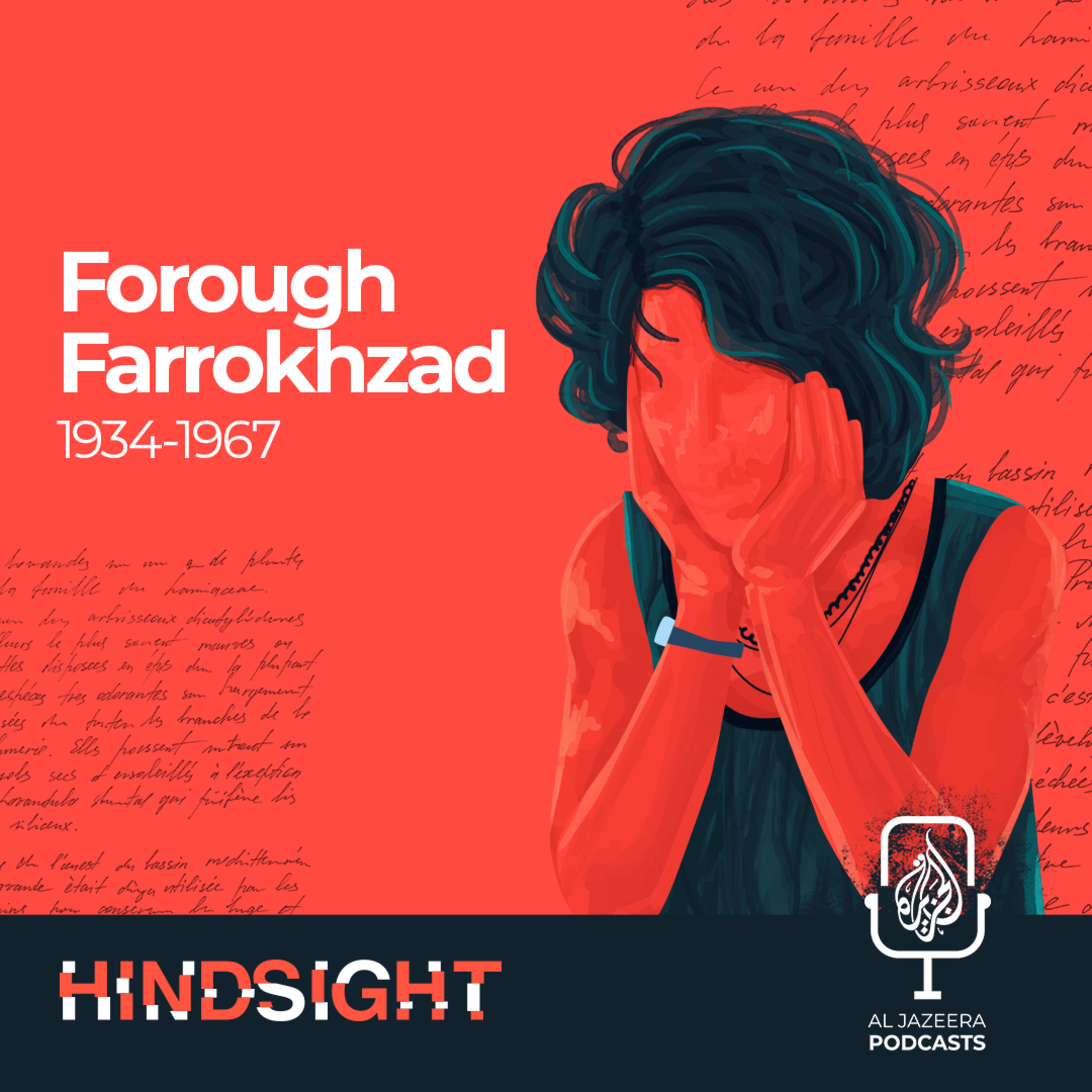
This podcast episode from "Hindsight" dramatizes the life of influential Iranian poet Forugh Farrokhzad. It begins in 1989 with a clandestine exchange of her banned book, then recounts her story from her birth in 1930s Tehran. Defying strict upbringing, she married young but found marriage restrictive. Her determination led her to personally submit poetry to a magazine, resulting in the 1955 publication of "Sin," a poem explicitly describing a woman's desire. This caused a major scandal, as she was a married mother. The ensuing backlash, including a vindictive published account by her lover, ruined her reputation, ended her marriage, and caused her to lose custody of her young son, a lasting pain.
Despite being ostracized and institutionalized for depression, Farrokhzad persevered. With an introduction from a respected writer, she published her first collection, "The Captive," becoming the first Iranian woman from a non-literary family to do so. She later found creative partnership and love with filmmaker Ebrahim Golestan, built a career in film—winning awards for her documentary "The House is Black"—and adopted a son. Her fourth and most celebrated collection, "Reborn" (1964), explored female identity and passion, cementing her legacy as a revolutionary poet who broke literary and social taboos.
Ever wonder what history is most famous and infamous people would say if you ask them for their side of the story? Well, this is it. You're listening to Hindsight, an original podcast by Al Jazeera. I'm Charles Dance. This is a dramatized series based on historical events that resurrects some of the world's most memorable figures. You've heard of them, but now it's time to hear from them. The year is 1989. Two young women in hijabs meet on a quiet neighborhood street on the outskirts of Taran. Their heads gathers cover their hair and their clothing is loose-fitting. They greet each other warmly, a kiss on each cheek, and then set about walking. But as they round the corner onto a quiet alley, one of them passes the other biscuit tin. Her friend launches round and then discreetly lifts the lid. Look, I brought you some cookies. Inside is a slender, battered copy of a book. On the cover, in black and white, is a beautiful young woman. From under-art to brows, she stares out with a knowing look. It's a copy of a reborn by Faroo Farazad, a book of poetry that has been banned in around for ten years. Faroo Farazad is known today as one of Iran's most influential poets. A woman who not only wrote honestly and beautifully about love and lust, but also dared to have her work published. Her legacy is mitten in her name, Faroo, which means eternal light. She may now be considered one of the most celebrated poets in Iran, but while alive, Faroo suffered the consequences of her candor from the moment she put pen to paper. I was born in Tehran, in the dead of winter. There's been a lot of confusion out there as to what year, 1934 or 1935. One thing is for certain. I was born in a time when nobody was ready or willing to hear what I had to say. We were middle class. My father, Muhammad, was a self-made man. He came up through the military and eventually became a colonel. He was very strict. Originally, his family name had been Rezohi, but while reading poetry in prison, he fell in love with the word Faroo Khzot and decided to change his last name. My father had been the head of the Shah's properties, but the Iranian political landscape being what it was at the time, he was removed and imprisoned while my mother was late in her pregnancy with me. Within a year, he had been returned to his position and to our family in your shat. But sadly as a result, he missed my birth. My mother Tehran was known for being outspoken and honest. It was almost as if she had a hard time lying. A trait one might say Faroo Khzot inherited. She was so strong-willed in fact that she refused the veil before the unveiling act of 1936 and attended the American school in Tehran. When she was 16, she met my father at a relative's dinner party. He was more than 10 years older than her. But they fell in love. Her parents didn't approve, but she was adamant and they were married. By the time she was 35 years old, my mother had given birth to seven children. When I was still very little, we moved to a beautiful big house in the province of Mazand Eran, in the north of Iran. On one side was the Caspian Sea, on the other was the forest. My mother was a doll collector. She loved their pristine little outfits, clean fingertips and perfect hair. She used to try to dress us like them. I suppose I looked a bit like a doll at the time. My eyes were dark and white, but my hair was blonde and curly. I liked the dresses well enough, but I hated being controlled or told what to do. So instead, I would run through the forest, getting dirty and ruining the perfect white of the dresses she had put me in. I loved the feeling of the soil underfoot and the soft leaves whipping past me as I ran through the trees. Like a wind-up doll, one can look out at the world through glass eyes, spend years inside a felt box, bodies stuffed with straw, wrapped in layers of dainty lace. With every salacious squeeze of one's hand, for no reason one can cry. Ah, how blessed, how happy I am. When I was six years old, we moved back to Tehran. Iran was different then, or at least it felt different. It was more important to look and sound like Westerners than anything else. Our new home was a sunless two-story building with a pond inhabited by red goldfish and brown frogs. Along the tall walls of our courtyard were trees bearing figs, plums and sour cherries. I used to spend hours in that garden reading poetry or writing confessions of childish love in my notebooks. I went from roaming the forest to roaming the city streets, but I loved it. I fought the boys who bothered me, gave them a proper beating too. That's right, run away, coward! I went to a co-ed school as a child. Eventually I was enrolled in a technical high school where I could study painting and sewing. But it all changed when I was sixteen. It was then that I met the man who would become my husband. His name was Parviz Shopur. He was our neighbor and a distant cousin of my mother's. Parviz had studied economics, but he was an artist. He created calligraphy caricatures. That's so clever. How did you come up with that? We fell in love, but my parents were thoroughly opposed to any talk of marriage. He was eleven years older than Farooq. It's exactly the age difference between her father and mother. Farooq's attraction to older men would continue throughout her life. I was in love. I loved him so much that I threatened to kill myself if they refused to let us get married. So finally my parents relented. On September 14, 1950, we were married in my family home. We had to save money, so it was a quiet affair. My sister, Puran, had married only a few months earlier. So I borrowed her dress and her emerald ring for the ceremony. And instead of dinner, we served tea and sweets. We didn't even take pictures. After the wedding, we moved to Afos, a city in the southwest of Iran where Parviz began to work for the Ministry of Finance. I was thrilled to finally be married. Not only was I in love, but being married meant no one could tell me what to do anymore. No school outfits, no perfect doll dresses. Now I was a grown-up woman. I could wear what I wanted, even make-up. I also became a mother. Two years after we married, I gave birth to my son, Kamiar. My sweet little baby boy. I was still a teenager myself, but I loved him with all my heart. I used to pluck my eyebrows, put on sick eyeliner, red lipstick, and a mini skirt, and walk through town with my baby. No one could tell me what to do. Though they did try, her community either disapproved entirely of her manner of dress or considered it flamboyant, even sloppy. He turned out that being married didn't mean I had earned everyone's respect. No matter how Parviz treated me, no one else took me seriously. At parties with our friends, men would approach me. They would say things that weren't true. They spread rumors about me, about what kind of person I was, what kind of woman I was, and other things. Get your hands off me. Stop it. No, I don't know what you're talking about. Let's go. So I spend my time writing poetry. In fact Parviz encouraged it. Despite her new freedoms with her husband, all was not well. There was something missing, incomplete in some way, perhaps. Faroe found herself wrapped in a secret, and once exposed, it would nearly destroy her. But ultimately the sin would free her to become the rebel.
poet. Camilla was about two years old when I had decided I wanted to publish my writing. It was customary at the time to be published first in a magazine before attempting to produce a collection of your own. Despite the incredibly long tradition of Persian poetry, there were very few published female poets in a round at the time, and most of the women who were published came from famous literary families. Usually, they'd be introduced to publishers by these family ties. For her part, Farouk had no such support, nor any patience for protocol. I went to the offices of a magazine called Rochand Fek with a few of my poems. I showed up, unannounced with no introduction to the magazine by anyone else, and I just asked them to publish my work. The head of the literary department, Mr. Mosheery, stared at me for a moment. The audacity of the act was lost on me at the time. I remember shaking and looking down at my fingers to see they were covered in green ink. Farouk's poems were like nothing Mosheery had ever seen. While Persian poetry never shied away from the subject of romance or desire, it was always a man doing the talking. But here was a poem written by a woman, openly and plainly discussing her desire for a man. In one page, a century-long tradition of literature had been reversed. He told me he had to consult with the editorial board first, so I sat in his office and waited. Finally, he came back. They'd agreed to publish my work. My poem, "Syn", was published in their magazine soon after. I was a published poet. I had succeeded where so many had tried and unjustly failed. And the poem itself was successful. It was widely read. I received many letters from people who said they were moved by my words. Lost in flamed his eyes, red wine trembled in the cup. My body naked and drunk quivered softly on his breast. I have sinned a rapturous sin beside a body quivering and spent. I do not know what I did, oh God, in that quiet, vacant dark. Farouk refers to herself with "I" throughout the poem. In a culture where autobiographical statements were uncommon and even looked down on, the use of the pronoun "I" was bold enough, let alone coming from a woman. She went so far as to call herself "the sinner". But unlike the other adulterous women in Persian poetry who undergo a religious awakening and find the so-called "right path through a marriage" or "death", in sin, Farouk admits her crime and takes responsibility for her actions, but never offers any repentance. If anything, the poem celebrates her sexuality. But they didn't tell me they were going to publish the poem along with my photo and my biography. They made it abundantly clear to everyone that I was a married woman with a child. Worst yet, they made it clear that she was the one having an affair. I also received many angry letters, angry about the poem, about me. Clerics condemned me, condemned the poem and the magazine. Worst yet, multiple men came forward claiming to be the lover in my poem, Liars. In the end, the real man in the poem was much more vindictive. His name was Naser Hodayar. He was the editor of Rochand Fek and my lover. Yes, the man of this sin. Naser Hodayar, a man who had much more power than she did, was so jealous of the claims by other men that he decided to publish a serialized story called the "Bruz Blossom", describing their affair in almost pornographic detail. He claimed it was fictional, but the series was accompanied by a sketch of the adulterous woman in the story and she looked exactly like me. Please Naser, please. I'm begging you. You're ruining my family. You're ruining me. My reputation was destroyed. There were more and more rumors about me, wild stories about promiscuity. I couldn't do anything about it. Both my father and my husband were furious with me about the publication of the poem, about the affair. Paris didn't leave the house for a week after it was published. He couldn't bear to be seen in public. Our marriage fell apart. No matter how much I cried or apologized, it wasn't enough. Everyone blamed me. They said I left him that I left Kamiar. But I was a treacherous woman, a bad wife, a hedonistic animal, that I was a cruel mother who abandoned her child for her career. I didn't leave. Please. But how could I stay in that marriage? Kami, baby, please. Look at my mom. Come to my mom. Don't do this. Please. He was only five and they took him from me. I was his mother. I still am. They told my little boy that I didn't love him, that I left him for an affair. Lie after lie they built a wall between me and my child. He eventually stopped wanting to see me. The pain of losing him stayed with me for the rest of my life. By becoming a poet, Faruch was denied motherhood. The law in Iran considered custody the right of the father in a divorce. Iranian women, however, were not seen as having a right to motherhood. Rather, it was a privileged society granted them. I wrote to Parviz desperate for him to understand. My arms and legs get tied up with my own bleak imaginings and then I see that I no longer have the power to resist that I am done with this life. I moved back to Tehran but my father disowned me. I had no money, no where to go. Finally a friend took pity on me and took me in. I used to walk around the house staring at my own reflection in a hand mirror, crying. Years later I would write about that heartbreak. I rested against the wall. I said slowly. Is that you, Kami? But I saw that nothing remained of that bitter past but a name. Faruch was known as a mad woman, a ruined woman. A magazine in Tehran published an article about her quoting a medieval writer Al-Frababi who said, "Heaven forbid the day when the daughters of Eve who are lacking a rib become poets and beware the day they go mad." My publisher told me that the only way I was going to be published now was if an established writer, a male writer, would agree to write an introduction to my collection. I took a gamble and went to see Shujahidin Shaffar, a famous writer and literary figure in Iran. Shujahidin Shaffar was incredibly well-established. Showing up like this was a bit like going to Watergate reporter Bob Woodwood's house unannounced and asking him to write the preface for your poetry collection. We had never met but he recognized me immediately. I was the one who wrote "Sin" after all. But he was impressed with my work and so he agreed. In 1955 I published my very first collection, The Captive. Sin, of course, was not included. More than a mere introduction. Shujahidin Shaffar wrote a defense of a woman's right to confess and depict her feelings candidly and openly. The collection of 44 poems marked the first time in Iranian literary history that a woman from a non-literary family had published a collection of poems. Perhaps because no woman before me took steps toward breaking the shackles binding women's hands and feet and because I am the first to do so, they have made such a controversy out of me. Despite her success, the pain of everything for all had endured and lost became too much. She entered the deep depression and later that year a tale.
to take her life. After that, my family took me to a psychiatric hospital and institutionalized me. The doctors gave me electric shock therapy. She would spend a month in the psychiatric hospital. After I was released, I flew to Europe on a cargo plane and visited Italy and Germany. It was the first time that I had ever left Iran. I was desperate for breathing space. I just needed an escape from everything. I felt as if I was living in a dark, dank cave. I was happy to be a foreigner. It allowed me to better understand other people. In the process, I grew to know myself better as well. After a long stretch abroad, I went home. In 1956, I published my second collection, The Wall. The poems were about the sense of bondage imposed by love and society. I dedicated the collection to parvies. How will your memory die in my heart? The memory of you is the memory of first love. In 1958, I published my third collection, Rebellion. The world around me was changing. People were becoming angry at the exploitation of Iran's natural riches by Britain and the US. At the same time, rumors had begun to spread about what was happening to political dissidents. But I was also changing. Rebellion was about the desperate struggle between two stages of life. The last gasp before a kind of letting go. But for all her success, being a published poet didn't guarantee financial security. I had no money, so I went searching for work, just all jobs at first to make ends meet. My reputation was still tarnished after sin. I married parvies so young that I never graduated high school, so it was hard to find a decent job. The same year I published Rebellion, a friend introduced me to Ebrahim Golisdhan, a wealthy film director and producer. He gave me a job answering phones and then later I became his assistant. But Golisdhan also saw talent in the young woman. Forook was about 24 at this time and she was interested in filmmaking. It was clear to Golisdhan that she was an artist with potential. He was older than me, an established filmmaker. His career was respected, he was respected. He was also married. But love doesn't know those kinds of boundaries. He never left his wife. But he never left me either. Despite the age difference and Golisdhan's marriage, their relationship was passionate, calm or even and romantic. They were utterly devoted to one another. When I wasn't with him, I would write to him and he would write to me. I called him Shahi. That was my nickname for him. Shahi, you're the dearest thing I have in life. You're the only one I can love. Shahi, I love you and I love you to an extent that I am terrified of what to do if you disappear suddenly. I'd become like an empty well. The year after I started working with him, I went to England to study film production. But I didn't stay long. I returned home to work on a film that Ebrahim's brother was making called The Fire. I began to act in films and theatre and continue to work as an editor. In 1962 I travelled to Bababori, a rural village in the northwest of Iran to begin work on my own film. A house is black. The film was a documentary about a leprosarium, a hospital in which people with leprosy were not only ostracized but imprisoned. The film did well. We won awards. More than just well. The film was praised for its stylistic affinity to her poetry, and even won the best documentary award in 1963 at the Oberhausen Film Festival in Germany. But perhaps she saw something in those people that she recognised in herself, locked away from the rest of society, punished unfairly. With her newfound success came a reputation as a serious filmmaker. And then something unexpected happened to Faroe. I met a little boy named Hussein during filming. He was the son of a couple with leprosy. I adopted him. Hussein, you name Biomamaja. Come here. Yes, perfect stand right there. No husband, no father, just me and my Hussein. No one would ever take my camis place, but I loved Hussein for the rest of my life. And the void in my heart felt as if it was filling up. In the spring of 1964 I published my fourth collection. This one consisted of 36 poems. It was called Reborn and I dedicated it to Gilles Ston to my Shahi. Amongst its many themes, it explored the rebirth of a woman's identity as a lover, exploring passion with the context of domestic seclusion and evolving into a break from those bonds. The opinion of the Iranian intellectual community had shifted considerably towards Faroe. Born was hailed as a major work, rivaling the best in the short history of Persian modernist poetry. And she was now considered a cornerstone of the Iranian intellectual community by both the literati and the media. I still had to work to make a modest living, so I kept working at the film studio. Abraham moved me from my little apartment to a house he had built just for me, close to his home and close to our work. It wasn't the life I thought I would have when I was younger, but I felt at home and I had a stable world around me. More and more people came asking about my poetry, but they were all so focused on the fact that I was a woman. A poetess, they called me, maddening. I was a poet. If my poems, as you say, have an aspect of femininity, it is of course quite natural. After all, fortunately, I am a woman. But if you speak of artistic merits, I think gender cannot play a role. In 1966, I decided to go to London to study again. This time I focused on directing and filmmaking. On the way back to Iran, I attended the second film writer's festival in Italy. While I was there, I decided to visit a fortune teller and she read my poem. You're in love with a man, she told me. But a bloody accident hangs over your head. No, no, check again. Are you sure? But she was. I was terrified. I loved Abraham more than any man I had loved in my life. I couldn't lose him. I called my sister, Puran, as I raced back home to Iran. Puran, listen to me. Go check on Abraham. Tell him to be careful. Please, please, just go check on him. Farouk returned to Iran shortly after. But it wasn't Abraham that she should have worried about. On Monday, February 14, 1967, Farouk went to visit her mother at home. As she set off, her mother, Teran, warned her to drive safely. Unbothered, Farouk got into her car and drove off. Farouk was killed in a car accident. She was 32 years old. Hundreds of people attended Farouk's funeral. The layman and intellectual alike. A fifth collection of her poems was published posthumously. Included in the collection was a poem called Let Us Believe in the Beginning of the Cold Season, which almost seemed to predict her death. I am cold. I am cold and it would appear that I will never be warm again. I am cold and I know that nothing will be left of all the red dreams of one wild puppy, but a few drops of blood. After the Iranian Revolution in 1979, the new Islamic government officially banned her poetry for nearly a decade. She remembered today as Iran's Sylvia Plough, a prodigal genius ahead of her time, but also taught.
by her demons, losing her son, being abandoned by her family when she needed the most, and the society isolation she faced as an artist and a woman. She's considered one of Iran's most revered and scrutinized writers, her career and her life stretched between extremes. Her poems are widely available, her bravery, creativity and tenacity despite her struggles continue to inspire. Farooq inspired poets, academics and writers both in Iran and abroad, including Jasmine Dazne, who wrote Song of a Captive Bird, a novel inspired by Farooq's life and work. Dazne said, "For all of its history, in Iran, a poem could get you killed and set you free." Hindsight is an Al Jazeera original podcast produced by Kelly and Kelly. Their team is Director Nessa R.F., series producers, Lauren Burke of it, and Michael Tanko Grande. Co-producer, Jodie Kamaleri, executive producers, Chris Kelly and Pat Kelly. This episode is written by Nessa R.F., story editing by Michael Tanko Grande. Farooq Foddxad is played by Natalie Amin. This episode is narrated by me, Charles Stance, editing and sound designed by Paul Tedesghini, additional editing by Dave Schumker, sound engineered and recorded by Vordville Sound. Associate producer, Nessa R.F., poems translated to English by Shola Wolper, special thanks to Roya Hassami R.F. and Paven Hassami. Research and fact checking by Al Jazeera and Joy Lee, script editing by Danello Haveleska. Hala Soudani is Al Jazeera's senior copy editor. Jodie Freers is Al Jazeera's executive producer of podcasts. Hindsight is an historical drama podcast. All dramatized scenes and dialogue are inspired by actual events, old interviews and in some cases new conversations with people close to the subject. [BLANK_AUDIO]
Podcast Summary
Key Points:
The podcast dramatizes the life of Iranian poet Forugh Farrokhzad, focusing on her defiance of societal norms through her candid poetry about female desire.
Her publication of the poem "Sin" caused scandal, damaging her reputation, ending her marriage, and leading to the loss of custody of her son.
Despite persecution and depression, she persisted, publishing influential poetry collections and becoming a respected filmmaker, adopting a son later in life.
Her work, including the collection "Reborn," revolutionized Persian literature by centering a woman's autobiographical voice and unrepentant exploration of passion.
Summary:
This podcast episode from "Hindsight" dramatizes the life of influential Iranian poet Forugh Farrokhzad. It begins in 1989 with a clandestine exchange of her banned book, then recounts her story from her birth in 1930s Tehran. Defying strict upbringing, she married young but found marriage restrictive. Her determination led her to personally submit poetry to a magazine, resulting in the 1955 publication of "Sin," a poem explicitly describing a woman's desire. This caused a major scandal, as she was a married mother. The ensuing backlash, including a vindictive published account by her lover, ruined her reputation, ended her marriage, and caused her to lose custody of her young son, a lasting pain.
Despite being ostracized and institutionalized for depression, Farrokhzad persevered. With an introduction from a respected writer, she published her first collection, "The Captive," becoming the first Iranian woman from a non-literary family to do so. She later found creative partnership and love with filmmaker Ebrahim Golestan, built a career in film—winning awards for her documentary "The House is Black"—and adopted a son. Her fourth and most celebrated collection, "Reborn" (1964), explored female identity and passion, cementing her legacy as a revolutionary poet who broke literary and social taboos.
FAQs
Forugh Farrokhzad was an influential Iranian poet and filmmaker, known for her candid and groundbreaking work on themes like love, desire, and female identity in mid-20th century Iran.
'Sin' is a poem by Forugh Farrokhzad that openly describes a woman's desire and sexual experience from a first-person perspective, challenging traditional Persian literary norms and sparking controversy upon its publication.
Her work was controversial because she wrote openly about female sexuality and desire as a woman, defying social and literary conventions, which led to public condemnation, rumors, and personal backlash, including the loss of custody of her son.
After 'Sin' was published with her photo and biography, Farrokhzad faced severe criticism, angry letters, and rumors. Her marriage deteriorated, she lost custody of her son, and she was socially ostracized, leading to depression and hospitalization.
She became the first woman from a non-literary family to publish a poetry collection in Iran, breaking barriers for female expression and establishing herself as a key figure in modernist Persian poetry, despite ongoing gender-based scrutiny.
Yes, she was also a filmmaker, directing the award-winning documentary 'The House is Black' about a leprosarium, and she worked as an editor and actress, contributing to Iranian cinema and theater.
Chat with AI
Loading...
Pro features
Go deeper with this episode
Unlock creator-grade tools that turn any transcript into show notes and subtitle files.
 PodcastTranscript AI