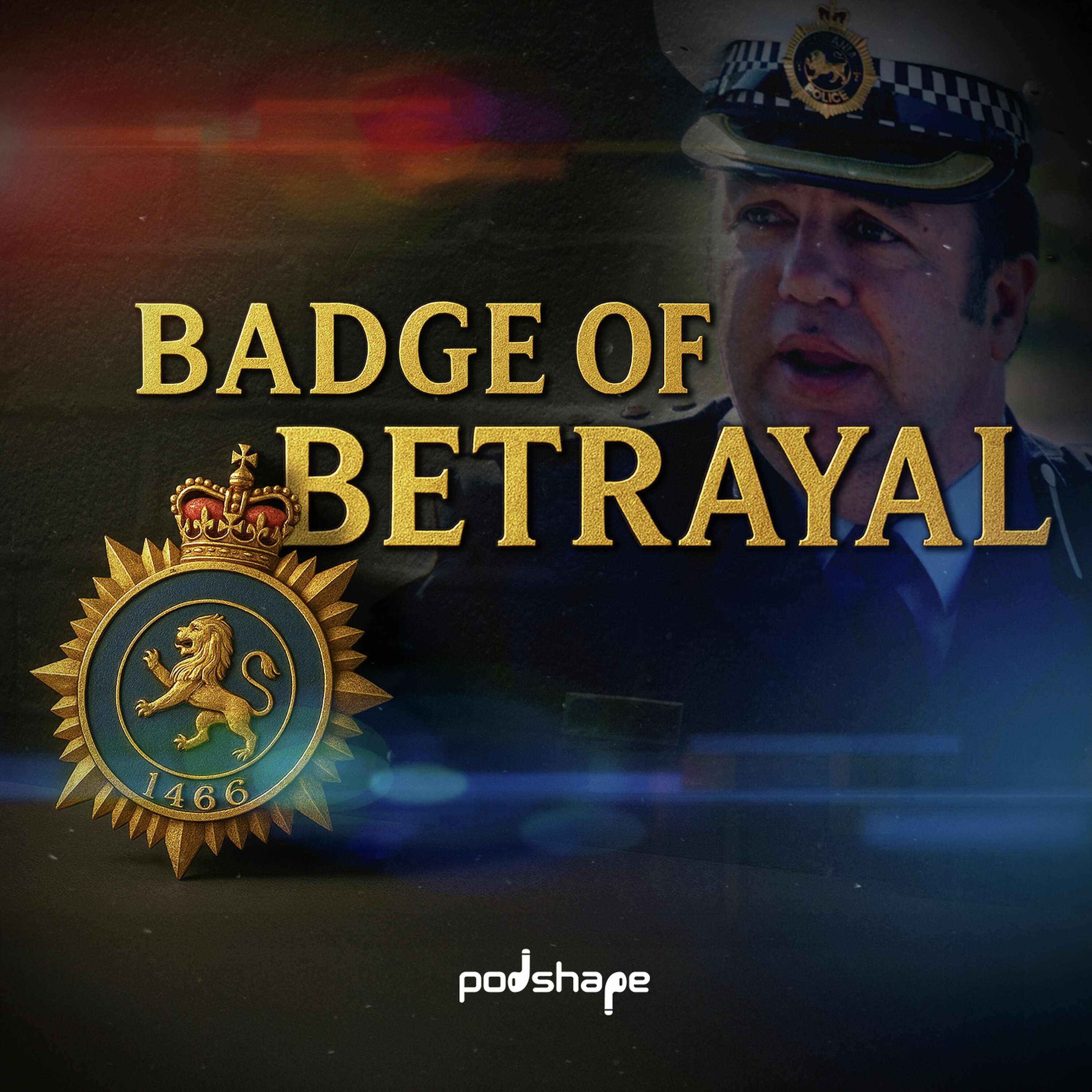
The recent public submissions to the Tasmanian parliamentary inquiry into police misconduct and Paul Reynolds’ case reveal a growing conflict between official statements and independent findings. The Director of Public Prosecutions defends police investigations as objective, citing high standards of proof, while Tasmania Police’s own submission—signed by Commissioner Donna Adams—faces criticism for omitting serious allegations and downplaying misconduct. A major point of contention is the claim that granting Paul Reynolds a full police funeral was within the scope of the independent Weiss review, which contradicts the reviewer’s 2024 assertion that it was outside her terms of reference. This inconsistency raises serious questions about the legitimacy and scope of the review. Additionally, multiple serving police officers have come forward anonymously, revealing widespread morale issues, fears of retaliation, and allegations of misconduct by senior officials. They express concern over proposed changes that would remove key protections like presumptive PTSD and work step-down provisions, which would disproportionately affect injured officers. While the Tasmanian government introduced these protections in 2019 just days after Reynolds’ death, no official record links the reform to his case. The submissions highlight deep systemic issues, including a lack of trust, poor mental health support, and a culture of silence, prompting urgent scrutiny of police leadership and accountability. The inquiry now faces the critical task of determining whether the funeral decision was adequately investigated and whether current policies are protecting officers’ wellbeing.
A Poetay Production
Welcome back to Badger Betrayal and this urgent episode that we've rushed released.
The first submissions have been made by the public to the government inquiry into
Tasmanian Police and Paul Reynolds. Now it's no surprise that the submissions that have been
made public today are from Tasmanian Police and the Department of Public Prosecutions.
There's nothing to draw from that comment. It's simply a statement of fact. It of course
makes complete sense that Tasbowl gets on the front foot before the commission gets underway.
We got an email this afternoon that was sent to us and anyone else who made a submission
or showed interest from the committee and it said, "Dear stakeholders, we are getting in touch
to provide an update on the House of Assembly Standing Committee on Government and
Administration B inquiry into Tasmania Police responses to allegations of officer misconduct."
The first tranche of submissions has now been published on the inquiry's webpage.
Please note that the committee has received a significant number of submissions and they are
currently being considered. The publication of submissions will be an iterative process.
The submissions that the committee resolves to publish will be uploaded progressively
as the committee works through them and you will receive further updates when this occurs.
As I've mentioned before, just because you make a submission, the committee then has the chance
to ensure submissions are relevant and stay within the terms of reference that have been set out.
So right now, as you heard, there have been a lot of submissions and still more coming through.
Right now we can see eight submissions that have been accepted, mostly from organisations and academics.
This includes the Law Society of Tasmania, the Integrity Commission and a few others.
It also includes the Director of Public Prosecutions and a five-page submission
that's signed by the current Director of Public Prosecutions.
The submission from them gives us some important new context.
The DPP says that since 2017, his office has reviewed approximately 130 matters involving
allegations of criminal offences committed by Tasmanian police officers.
Those matters have included allegations of rape,
indecent assault, family violence, manslaughter, fraud, and assaults on children.
The submission also explains the order in which these matters are dealt with,
where allegations could amount to a criminal offence professional standards conducts the criminal
investigation first. Only once that criminal investigations have been resolved
does professional standards move into any disciplinary investigation using its compulsory powers.
But then perhaps the most significant part of the submission from the DPP is their conclusion.
We've used a voice actor to read the following.
In conclusion, in my many years of reviewing allegations of misconduct or the potential
commission of criminal offences involving police officers, I have never held concerns for the
objectivity or standard of the investigation. In cases where we decline to prosecute,
this is a reflection on the very high standard of proof rather than an issue with the quality
and standard of the investigation.
This is a remarkably clear endorsement of the way Tasmanian police investigates allegations
against its own officers. And we say that because an important statement to consider
along the evidence and the experiences that we've been documenting throughout Badger betrayal.
The second submission we'd like to examine is from Tazpal itself.
It is a lot longer than the one from the DPP. It's 115 pages long.
It's signed by the current Commissioner of Police, Donna Adams.
My texts have gone off today, and in fact many have come to me saying they've read the
submissions that have been published at so far. One text said, "Just read it," says nothing,
admits no failings, clouds serious misconduct by flooding responses with unrelated matters,
such as customer service complaints, and low to serious allegations. It omits most of the
damaging materials and hides behind policies and procedures they don't apply to themselves.
That's one person's view. That view is from a current serving police officer.
There is something in the Tasmanian police's submission to this parliamentary inquiry
that immediately caught my attention, because it relates to something we've already examined
on Badger betrayal, and many others have as well, including the Greens, Jackie Lamby,
and others within Parliament. It's the decision to give Paul Reynolds a full police funeral.
In its submission, Tasmanian police goes into considerable detail, defending the scope
of the independent police review. Police say the review was broad. They say its terms of reference
were appropriate, and in their words ought to address all issues. And then they make this statement.
This has read exactly from their submission. The decision to provide a police funeral was within
the scope of the review, and was substantively considered in the final report. The review they're
talking about is the Weiss review. Now that stopped me, because after Regina Weiss released her final
report in July 2024, she sat down for an interview with the ABC in Hobart, and she was specifically
asked why her report did not explain the decision at the highest levels of the Tasmanian police to
give Reynolds a full police funeral. This was her answer. Why doesn't it seem though that there are
any quotes from interviews that explain that decision to award a full police funeral? We can't
find anything in the report that actually speaks to that decision at the top level. Well, also in my
terms of reference, David. That wasn't in my terms of reference. If you read the five objectives,
the funeral wasn't one of them. Weiss went on to explain that she believed she had
actually gone close to the edge of the terms of reference simply by discussing the impact of the
funeral on victim survivors, police officers and their families. I think I've actually probably
you know, cheated on the edge of the terms of reference by talking about the impacts of the
investigation not being finished and the impacts of the funeral because really this this review was
for the people. It was for the victim survivors, the vicarious victims, which are the police officers
and families and people that worked with him. It's a review for them. It's a report for them,
and of course, it's a report for Tasmania police sporting communities and the general community.
So now let's put those two statements next to each other. In July of 2024, the independent
reviewer herself says the funeral decision wasn't in her terms of reference. In September 2026,
Tasmania police tells the parliamentary inquiry that the decision to provide the funeral was within
the scope of the review and was substantively considered. Now, there may be a distinction here.
Tasmania police's submission lists the funeral as one of the first of five key contextual issues
considered by Weeces. But when the submission reproduces the six actual objectives of the review,
none specifically direct Weeces to investigate the decision to grant Reynolds a police funeral.
And that's important because discussing the impact of the funeral is not necessarily the same thing
as investigating the decision. Hold it. Who made that decision? Who was consulted?
And what information did they have? And why knowing what was already known about Reynolds at that
point was he still given a full police funeral? Those are very different questions. And we know
from the Tasmania police's own submission that just two days before the funeral,
a briefing approved by the then commissioner Darenhine stated the professional standards had search
Reynolds home over concerns about his relationship with male use and that there may have been an
exchange of intimate photographs and electronic devices had been seized. The same briefing recorded
that Reynolds family had requested a police funeral. The Weeces review itself later observed that
the information already held by Tasmania police at the time indicated at a minimum that Reynolds
had groomed teenage boys and exchanged explicit material with them. So this isn't simply a question
of semantics. Was Regina Weiss actually empowered to investigate the decision making that led to
Paul Reynolds receiving a full police funeral? Or wasn't she? Right now, the words of the independent
reviewer in 2024 and the position Tasmanian police is putting the Parliament in 2026, don't appear
to say the same thing. And I think that's the question this Parliamentary inquiry now has the
opportunity to answer. We're going to watch the website closely and we'll bring you anything we
feel relevant when and as we can. In the second half of this episode, we want to talk about our last
episode with Tom. He's our current serving police officer that came forward. After that second
chat aired last week, the floodgates continued to open up around six hours.
stories coming from Inside Tasmanian Police.
In Episode 33, we aired a contact that had come forward.
We always thought this contact was more than one officer, and now we can confirm it's
a group of officers who have come forward to us.
They've actually replied to us in recent days.
They can't speak to us on the show because they fear retaliation, but they have given
us some detail, which we're going to reveal in this episode.
When I asked him if they could reveal at least their rank, they allowed us to reveal
this.
He's an extract from their email read by a voice actor.
We make up an inspector, sergeant and two constables.
We are still serving and have served all over the state.
The morale is at the lowest we have ever seen it, and we have all been in the job for over
30 years.
And a note just because we're using a female voice actor does not mean these people are
women or men.
The allegations they make against some of the most senior people in Taspole at the moment
can't be verified by us independently right now.
And we make no assumptions about what they tell us are based in fact.
And we also don't know if they have sour grapes or across the bear against these senior officers.
The issue is that most Tasmanian police officers do a good job and a good people.
There are more Tasmanian police officers than ever per head of population and the worst
crime rates ever.
This is because recruiting has seen a huge increase and we are not an employer of choice.
Who would want to work in an organisation where there is no trust or support?
Police officers are leaving in droves every week.
You currently have two **** off on workers comp.
No loss there really.
However, keep their personal work vehicle with their unlimited fuel card and $200,000
plus salary.
Then add **** to the workers comp which at the moment is four never before had this many
commissioned officers been on workers comp.
One plays **** several times a week and jokes that they are paid to play golf.
Then add the one who earned $206,000 and gets that per year whilst they sit at home telling
everyone that they have no intention of returning.
These four current serving officers also told us about some allegations about senior officials
who are trying to change the current presumptive PTSD and no step down provisions.
They say some people inside Tasphold want to get rid of PTSD presumptive and they know
step down provisions in the next bargaining agreement.
At the same time, they are promising big pay increases and the people who have come forward
to us say that the majority of Tasphold are young constables and they will no doubt take
it.
Now, no step down provision for police means that if an officer is injured at work and
has to go on to work as compensation, their weekly payments don't automatically reduce
just because they are off work for a long period.
Normally, work as compensation payments can step down after a set amount of time.
But for eligible police officers, that reduction is removed, meaning their income support can
stay at the higher rate for longer while they are unable to work.
I also wasn't aware of the word presumptive PTSD, so I spoke to a few experts who were able
to explain in the form of Tasmanian police and workers comp what it means.
In the Tasmanian police workers compensation context, presumptive PTSD doesn't mean someone
is only presumed to have PTSD.
It means that once an eligible Tasmanian public sector worker, such as a police officer,
has actually been diagnosed with PTSD, the law presumes their employment contributed substantially
to causing it, unless of course there is evidence showing otherwise.
That makes it easier for them to access workers compensation because they don't have to prove
the work connection from scratch.
The PTSD diagnosis itself still has to be made through a proper clinical assessment, but
the presumption is about what caused the PTSD, not whether the person had it.
So in plain English, normal claim, I have PTSD and I need to prove my work substantially
caused it.
Presumptive PTSD says I have been diagnosed with PTSD and because I'm an eligible worker,
the starting assumption is that my work substantially contributed to it unless there's evidence
to the contrary.
Tasmanian introduced that legislative presumption in 2019, after a policy change in 2018.
As purely a matter of timing which we thought was interesting, the Tasmanian government
announced presumptive PTSD provisions just 12 days after Paul Reynolds died, but the reform
process had actually begun the year before.
We found no official record identifying Reynolds or his death as a reason for the change.
This group of police whistleblowers also told me they can't or won't give evidence before
the commission.
We cannot give evidence before the commission of inquiry.
We have to provide a name and contact details and we can just not do that.
We totally appreciate the issue of anonymous information and the trouble that it caused
and everyone has the right to face their accuser.
But how can that be possible when the accuser holds all the power?
Thanks for listening to this urgent episode of Badge of Betrayal.
If you'd like to follow more of the cases that we're currently investigating, you can
follow us on our Patreon account.
Just search PodshapeTrueCrime.
Podcast Summary
Key Points:
The first public submissions to the parliamentary inquiry into Tasmanian Police and Paul Reynolds come primarily from official bodies like the Law Society, Integrity Commission, and the Director of Public Prosecutions (DPP).
The DPP states that since 2017, its office has reviewed 130 cases involving police misconduct, including serious crimes like rape and family violence, and asserts that investigations are conducted with high objectivity and standard.
Tasmania Police’s 115-page submission, signed by Commissioner Donna Adams, is criticized for omitting damaging details, prioritizing unrelated issues, and failing to address serious misconduct allegations.
Tasmania Police claims the decision to give Paul Reynolds a full police funeral was within the scope of the Weiss review, contradicting independent reviewer Regina Weiss’s 2024 statement that the funeral was outside her terms of reference.
The discrepancy between the official review’s terms and the police’s claim raises questions about whether the funeral decision was properly investigated or authorized.
Multiple serving police officers have come forward anonymously, alleging misconduct by senior officials and expressing deep morale issues, including high stress, retaliation fears, and a lack of trust in the system.
Officers report that current policies may eliminate PTSD presumptive and step-down provisions in pay agreements, potentially harming injured officers’ long-term financial stability.
The introduction of presumptive PTSD in Tasmania in 2019 occurred just 12 days after Paul Reynolds’ death, with no official link established between the reform and his case.
Summary:
The recent public submissions to the Tasmanian parliamentary inquiry into police misconduct and Paul Reynolds’ case reveal a growing conflict between official statements and independent findings. The Director of Public Prosecutions defends police investigations as objective, citing high standards of proof, while Tasmania Police’s own submission—signed by Commissioner Donna Adams—faces criticism for omitting serious allegations and downplaying misconduct. A major point of contention is the claim that granting Paul Reynolds a full police funeral was within the scope of the independent Weiss review, which contradicts the reviewer’s 2024 assertion that it was outside her terms of reference.
This inconsistency raises serious questions about the legitimacy and scope of the review. Additionally, multiple serving police officers have come forward anonymously, revealing widespread morale issues, fears of retaliation, and allegations of misconduct by senior officials. They express concern over proposed changes that would remove key protections like presumptive PTSD and work step-down provisions, which would disproportionately affect injured officers.
While the Tasmanian government introduced these protections in 2019 just days after Reynolds’ death, no official record links the reform to his case. The submissions highlight deep systemic issues, including a lack of trust, poor mental health support, and a culture of silence, prompting urgent scrutiny of police leadership and accountability. The inquiry now faces the critical task of determining whether the funeral decision was adequately investigated and whether current policies are protecting officers’ wellbeing.
FAQs
The DPP's submission states that since 2017, their office has reviewed 130 cases involving allegations of misconduct by Tasmanian police officers. They assert that investigations are conducted with high standards and that decisions not to prosecute reflect the high burden of proof, not flaws in the process.
The independent reviewer, Regina Weiss, stated in 2024 that the decision to grant a police funeral was outside the scope of her review’s terms of reference. Tasmania Police now claims it was within scope and substantively considered, creating a discrepancy that the inquiry is now examining.
It means that if a police officer is diagnosed with PTSD, the law presumes their employment contributed substantially to the condition, unless evidence shows otherwise. This makes accessing workers' compensation easier without requiring a full work-cause link.
The police submission omits damaging allegations, includes irrelevant matters like customer service complaints, and fails to address concerns about the funeral decision, raising questions about transparency and objectivity.
They allege that senior officers are trying to remove presumptive PTSD and step-down provisions in future pay negotiations, despite promises of large pay increases, which could negatively impact officer welfare and morale.
Morale is at an all-time low due to lack of trust, poor leadership, and systemic issues like inadequate mental health support, despite high pay and benefits that do not reflect the working conditions.
Chat with AI
Loading...
Pro features
Go deeper with this episode
Unlock creator-grade tools that turn any transcript into show notes and subtitle files.
 PodcastTranscript AI