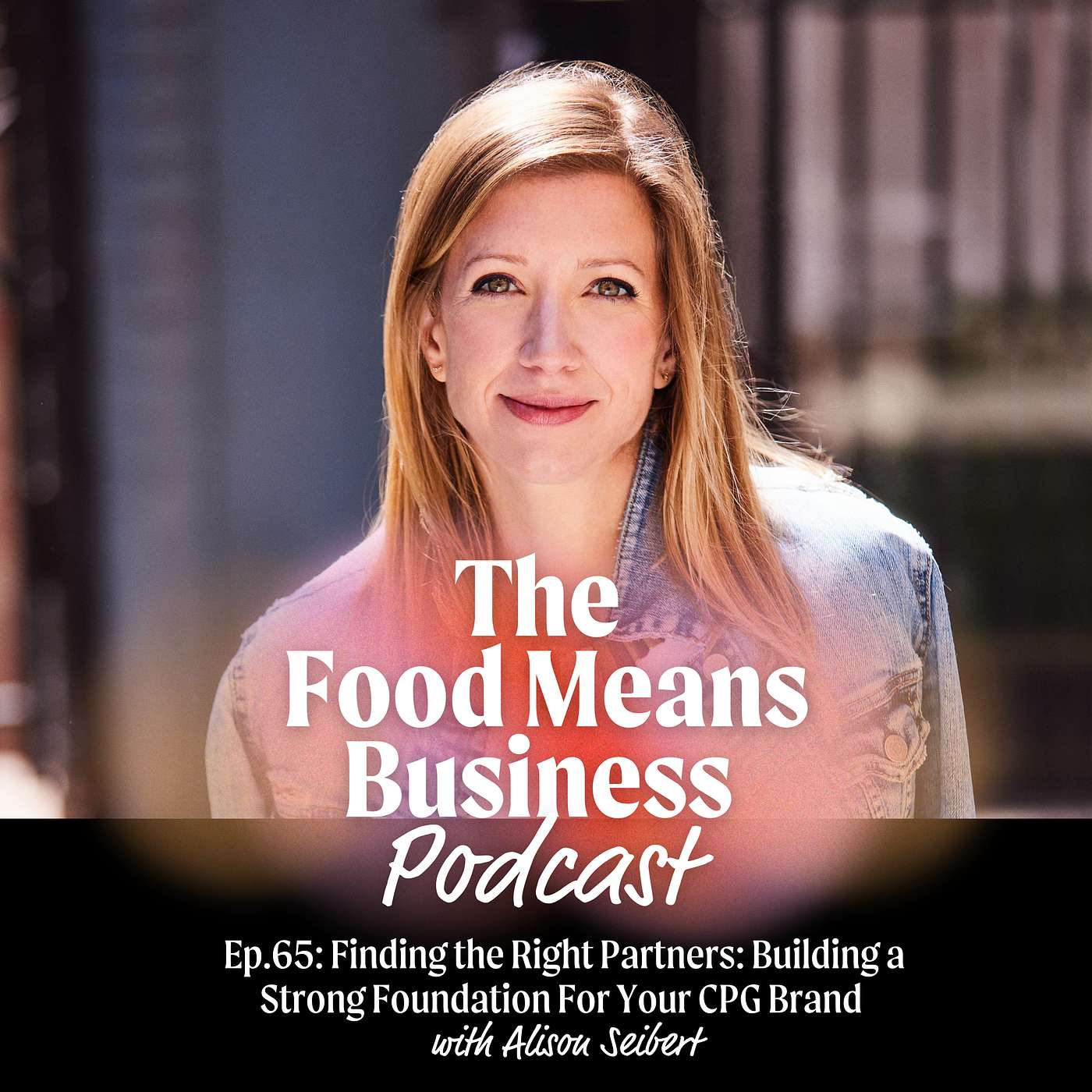
Finding the Right Partners: Building a Strong Foundation For Your CPG Brand with Alison Seibert
from The Food Means Business Podcast
31m 47s
Allison, founder of The James Collective, shares her journey from a marketing and PR career in New York to launching a boutique CPG communications agency rooted in authenticity and deep client relationships. Her transition was driven by a passion for food and beverage, an MBA in international business, and a realization that traditional agency models failed to serve smaller, passionate brands. The James Collective offers a holistic, integrated approach combining public relations, influencer and expert relations, strategic partnerships, and long-term marketing advisory—prioritizing value alignment over transactional outreach. Key advice for CPG founders includes owning a strong brand message, clearly defining their audience, maximizing every piece of content through strategic repurposing, and building personal, long-term relationships with media and influencers. Allison emphasizes that sustainable growth comes from both intentional business practices and self-care, which she maintains through yoga, running, cooking, and social engagement. The agency has grown from a single founder to a multi-location operation with a strong focus on niche, mission-driven clients. Celebrating 10 years in business, Allison highlights the importance of consistency, community, and human connection in building a resilient and impactful brand. Her insights offer a practical, human-centered roadmap for entrepreneurs navigating the evolving CPG landscape.
You are listening to the Food Means Business podcast, which features the personal stories
and secret ingredients behind what it's like to abandon your day job to start a CPG food
and beverage business.
I'm Janaba Johnson-Jones, former marketing executive, turned entrepreneur, and founder
of Food Business Incubator Huts & Kitchen.
Join our community of fellow Food Business owners and subject matter experts to learn and
laugh with us as we explore a startup world that's a little more culinary and a lot less
corporate these days.
All right, Allison, welcome to the Food Means Business podcast and so happy you're here.
I'd love for you to tell us all about your career trajectory.
We're off about going chewable to business owner.
Tell us all about you.
Sure.
So I am the founder of the James Collective.
The James Collective is a PR and Integrated Communications Agency that works, especially
in the CPG Food and Beverage Space.
We work with quite a lot of distributed food brands, luxury wine and spirits, and then
we also do some work in the design and travel industries.
I found in the business in 2015 after really spending my career outside of taking a little
bit of time off to get my masters and my MBA in the agency world in New York.
So my trajectory really started right after I graduated from college.
I was moving to New York after college.
I knew I wanted to be in New York.
I knew I wanted to do something in marketing and communications.
I studied comms, very practically also studied art history and my underjewish studies.
And landed my first job out of college at a PR agency in New York that was specialized
in the wine industry, which was really unusual.
So a lot of our clients work.
Wine clients, I had a lot of exposure to international clients I was working across different
wine boards that were supported by the EU.
With that, I had a lot of exposure of course to the restaurant and food industry, which
is very much interrelated especially this is that, you know, about 20 years ago integrated
with the wine industry as well.
And I worked there for a handful of years and then knew that, you know, there was something
more for me and I really wanted to get my masters.
That was always something that was really important to me.
So you got my MBA because I wanted to understand the back end of running a business.
I wanted to really understand what my clients were going through and just also understand,
you know, really better ways to run a team.
So I quit my job.
I actually moved to Paris and I did my MBA really around the world.
So I was living in Paris for about six months.
I was back in the States of Philadelphia and then I had a couple little since, um, between
China and Japan where I was studying not only international business, studying things
through school, like, you know, international negotiation, really sexy and exciting things,
like accounting, but also with that, I had a lot of exposure to just different food cultures,
you know, obviously foods around the world, how could break people together and whatnot.
And I graduated from my MBA during the Great Recession and you list to say I wanted to get
into a little bit of a different role than the agency role that I was in for, but given
that it was a recession, really, that people who were hiring the most were agencies.
Obviously hiring an agency is a lot less risk even hiring a full time employee.
And also there's just generally, unfortunately, higher turnover at agencies and I was already
pretty well networked in that world in New York.
So move back to New York, told myself that I wasn't going to go back into the food and
beverage industry specifically because I know I have my MBA and I wanted to work with
different clients. So I worked in an agency that was based between Portland and New York,
beta small office in New York, Portland, and I was working across all different types
of clients.
I was representing private equity firms, beauty firms, tech companies, but half my portfolio
was always in the food and beverage industry and very quickly I learned and what's reminded
that these are my people, you know, these are my people, they're really passionate about
what they do.
I remember calling my parents when they didn't say everybody just wants to feed you, you
know, everywhere you go, no matter how hard things are, no matter how much you're hustling,
like people still at the end of the day want to feed you.
So I worked at that agency for years and I'm working my way up to becoming sort of the
lead of this food and beverage department in our New York office and this was kind of
there early 2010s.
And what I was seeing working for a more generalist agency at the time was that the way
that I was working with my clients who were largely in the food and beverage industry
was wildly different than perhaps the way that, you know, in a business development
meaning in a new business pitch, you know, we were kind of catching our services because
the way that I was finding that people were consuming information about my clients, the
way that my clients were connecting as a brand with their consumers or their buyers had
really shifted a lot because, you know, keep in mind this is really at the birth of social
media had been around for a little bit, but we were using it a lot more consumers were
getting much more savvy about where their food comes from and thinking about, you know,
reading ingredients list when they're picking things up off the shelf, certainly interacting
with brands in a different way and also even just the media landscape was shifting really
dramatically to be focused more on digital much more on integrated work.
So I sort of saw the writing on the wall there.
I had an amazing experience with the last agency, the last quote unquote, you know, full-time
dawn that I worked at.
I had an incredible network coming out of that.
I really cut my teeth in the food and beverage world.
I was representing, you know, clients like wines from Spain, which represents all of
the wines from the country of Spain, which is pretty wild.
I helped Chef Jose Andres launch his food product line.
I was doing really exciting things, but again, I was seeing that, you know, the way that
I was working with clients, I was working with them really intimately.
I really understood their business.
I knew their team really closely, and oftentimes I was working with the one marketing person
in Pals or the one brand manager directly with the CEO and the CMO things, you know, kind
of they were operating in ways that a lot of the bigger companies that my firm was working
with wasn't operating.
So I really became part of their internal team.
So as I said, the writing was on the wall for me from that perspective.
I knew that I wanted to start my own business someday.
Another reason why, of course, I did my MBA and I gave myself a deadline.
I was like, in one year, I'm going to launch my business, whether or not I have any clients.
So I started to write my own business plan.
I landed on the name, which was another story.
I got all the kind of backend, you know, nitty-gritty bureaucratic things that I put for launching
a business, gave myself a deadline in April 2015.
And long story short, when it ended up happening is in early January 2015, I got a few little
kind of side clients that I could just do little test projects there.
And I didn't have any long-term clients come March 2015 in my pipeline.
So I was like, you know what, I gave myself this deadline, I'm going to do it.
And on April 1, 2015, I signed my first long-term contract with the client, which was really
the birth of the James Collective.
So as I said, yeah, it was really wild.
And for me, you know, the thing that I think really helps me get from, you know, as you
like to call it, cubicle into entrepreneurship, entrepreneurship church is that I knew that
I didn't want it to be about me.
I knew that I wasn't interested in making an agency, that I was doing everything, I was
running everything.
So I really believe in the private team.
My journey to the point of launching my business was really all about the teams that I got
to work with.
So very quickly, pretty much as soon as I can, I have heard my first employee, I heard
my first employee in August 2015.
And then we've been growing since then.
So today we are, we're still a boutique agency, as I said, you know, where we are usually
between eight and 10 people in house.
We expanded in 2017 out to the Bay Area, so we have a small team in Newark and a small
team in the Bay Area.
And we still serve its clients, you know, obviously we're much savier now that we were
in 2015, but we still serve as clients in a lot of the same ways that, you know, sucked
true with why I started the business, which was we really, I really, really strongly believed
in being internal or external members, excuse me, through our clients' internal teams,
understanding their problems, understanding their dreams, understanding where they wanted
to go, their pain points, et cetera.
And then also ensuring that we could deliver more sort of integrated work that worked for
the clients that we were working with where maybe they didn't have the same resources as,
you know, a giant tech company or a big distributed beauty company and things like that so that
they could grow in a way that was very sustainable.
So you mentioned integrated quite a bit.
And you talked a little bit about the services that your company offers for things.
So we at our core are a public relations agency, our agency.
I would say that most people that come to us, most clients that come to us, come to us
looking for PR, so they want to see their name, you know, in lights, they want to see their
story and the media, they want to get a lot of coverage for their products in newsletters
and, you know, blogs like yours and national newspaper and TV shows, things like that.
So 60% I would say more or less of what we do is still in that sort of PR media world.
And then we integrate really what I like to explain is sort of three different buckets
of work in addition to that and everything always goes together.
It's a very holistic approach so we're not just doing PR.
are and then just to write some other things.
So the first is I've sent it to PR.
The second is what I like to call people
of influence relations.
Not influencer relations.
So we are working with people oftentimes
in getting our client stories and products
in front of those people who provide some sort of influence
in terms of other spotting decisions.
It could be for a white client like a sommelier.
It could be a big basketball player
who is a giant wine collector.
It could be a shaft, you know, who wants to use a certain grocery
product that we work with.
So sort of media as a first, second is influencer
and taste me really, shoving this third
and the thing that actually is my personal favorite thing
that we do is we do quite a lot of strategic partnerships
and collaborations with our clients.
So that can look like partnering our existing client
with another brand to create a collaborative product
to bring to market.
It could be something like partnering with a nonprofit
to explain the values set of a company
that we work with via donation
and a partnership with a nonprofit.
It could be a partnership with, you know,
personality or an event or things like that.
But usually it's partnerships or collaborations
with other brands.
So that we can not only get in front of their audiences,
but also create just an additional reason
for consumers from media and for influencers
to get excited about our products and our brands.
- I could talk about that all day.
- Yes.
- I could see why it's your favorite.
Like obviously like you lit up a little bit more,
but also it seems like it's so much fun
just to like to pair ton of two brands together
to do something interesting that their audiences my like.
- And you know, it really, this thing that is exciting
to me about it having dumbness for a long time
is that it's still something that's kind of shifting
in terms of how we can do it.
There's a lot of innovation that goes into it.
So I would say the clients that are,
usually the most forward looking or innovative
are those that embrace us the most.
And then it's also fun just to get to connect with other brands
that we're excited about, you know,
that we perhaps can't work with for whatever reason,
but to work with their teams to create something new
and exciting and you know, reach their consumers,
their buyers, their audiences, you know,
whatever it is be the collaboration.
- So that's the third thing that we do.
And then the fourth thing, and this is always the thing
that I say that's the hardest to sort of quantify,
you know, to pitch, if you will,
if we're talking a new business, products,
but it's just kind of general marketing consulting.
So we work with a lot of our clients for a long time,
much longer than I think the bridge and agency relationship.
One of our clients at Jacobson's self company
has actually been with us for nine years.
- Wow.
- For that she's nine and a half years old.
- So with that comes this added layer
and really being able to be kind of at 30,000
for you of the company,
because we're not necessarily always in it every day,
but also taking a 30,000 for you of the industry
and being able to deliver, you know,
whether it's strategies or even just feedback,
relationships, et cetera, for clients in a way
that can help them, I think, grow their longterm sales
and brand ordinance.
- Cool.
So you obviously work with tons of different clients.
And so today we're gonna talk about the five things
that CPG founders can do right now to positively affect
the long-term sustainable brokerages.
I love this topic so much that I can't wait to jump in.
(laughing)
So important, all these tips.
- Yes.
When we were initially being about doing this interview,
I was thinking about the folks that are listening
to your podcast and, you know, it's so overwhelming.
Marketing can be so overwhelming,
which is also frankly why a lot of people hire
agencies or freelancers.
But the reality is, you know, you don't have to make it crazy.
You know, you can choose to do a couple of things
and do it well.
So wanted to talk through just kind of five things
that you can think about doing.
Now, this week or this year to apply them for your business.
- That was good.
- Let's jump in.
- Cool.
Okay, so the first one, obviously, you know,
you need to land on a good product.
And good means different things to different people.
But you need to be confident in your product.
You need to make sure that the aesthetic,
that the brand is there, that, you know,
you feel good about what you're delivering to the world.
So once you have that, once you have a product,
once you have the brand, the aesthetic, et cetera,
you need to land on and more importantly
own your messaging on every channel.
So at the end of the day, most people and, you know,
certainly we see this more and more
with the growth of direct-to-consumer sales,
DTC sales, social media, et cetera.
People really gravitate to stories.
One of the things that the team collected
that we really love to do is just tell other people stories.
That's kind of the core of our business.
So ensuring that you are clear on your message,
on who you are, on why you founded the company,
on what you're offering is,
what the benefits of your product, et cetera,
is really important.
And then more importantly, once you have that,
is ensuring that that message can exist everywhere.
So every channel that you work with,
whether you're at a trade show booth,
at a food show, whether it's on the shelf,
whether it's your social media,
your email newsletter, et cetera,
and just ensuring that, you know,
it might not be exactly exactly the same length,
things like that.
And we can talk about that in the next point,
but making sure that you feel good
about the consistent messaging across every channel
will really help explain your brand
to folks who might be unfamiliar with it.
It's so interesting because as the business owner,
even with my business,
like I keep thinking people get tired
of hearing the same thing over and over again,
but then I have to realize,
like they're not paying attention.
So you've got to repeat it because you can,
and on the different mediums, right,
until they get it.
So yeah, that makes sense.
Exactly.
I mean, you think about the number of times
if somebody has to see a message or a brand
to even think about if they want to make a purchase.
You know, we are all very much in our heads,
and I think that we all think that people are looking
at us and thinking about us or our brand
more than they actually are.
So, you know, we have to get tired of it
because we say it every day,
but for most people, it might be the first second
or third time what they're hearing it.
So that consistency is really important.
Yes, definitely.
Okay, what's number two?
Number two is identifying and understanding your audience
or your buyer.
So this is kind of marketing 101 in a lot of ways,
but the reason that this is so important is, you know,
I find this even with really established brands
that we work with,
brands that have been around for 150 plus years,
you cannot be everything to everybody.
And there is that old marketing attitude.
If you're everything to everybody,
you're nothing to everybody, eventually.
So, ensuring that you understand who your audience
or your buyer is or more importantly,
maybe you haven't watched a product yet,
but you have a sense of who you want,
your buyer or your audience to be.
It's really important because then what you can do
is that you can make decisions off of that knowledge
or off of that focus.
Really, especially if you have a smaller brand,
you know, I think about this with the James Lektiv,
we're not a giant multinational agency.
You know, we know that we want to work
with a client of a certain size.
We know that we want to work with certain CPG brands,
wine brands, spirits brands, hotels,
things like that, you know, we've niched down quite a lot.
And that really helps us not only focus,
but really, really under the end,
who, you know, are our clients
and what their pain points are or what they need.
So, in the world of CPG or in the world of food,
that's really important because then that helps you
decide what channel they want to use.
So, if you are only selling to shops,
versus selling, if you bring to a customer
who's going in our grocery store,
you're probably going to be speaking,
you know, a little bit differently on a different channel.
You might be speaking through distributors,
versus speaking, you know, through social media, let's say.
And then that ultimately helps you not only focus,
but again, to go back to point one,
ensuring that your message is correct,
and is right for all those specific channels.
- I love that too, 'cause it's really a filter.
Like, you, so you can, it helps you be-
- Exactly.
- All kinds of decisions about your business.
- Yeah, and with that clients,
some of our clients will even, who are more established,
you don't want to go back to the partnership conversation,
we get a lot of incoming requests for partnerships
from other brands and whatnot,
and a lot of our clients will even create a go-no-go
for considering partnerships.
And I think that that's a really good way to think about,
you know, if you're just getting your feet wet
and marketing your brand, you know, what's an absolute no-go?
What are you going to say no to?
Because, you know, it's just not the right fit,
or what's an absolute yes, more importantly.
- That's true, true, true.
So, number three is make sure you're maximizing the usage
and reach up anything that you're doing,
any content you're creating, or any when to achieve.
So, can we talk a little bit about that?
- Absolutely.
So, this, this obviously, these chips
sort of go nicely together and play together,
which is really important because, again,
you want to maximize anything that you're doing.
I see a lot of times brands try to, you know,
let's say create a bunch of really beautiful social media posts.
And it exists for one day on social,
all that content exists for one day on social.
They've spent all this money on photography.
They've done a lot of work on, you know,
the post captions and things like that.
And then you never see any of that again.
So, you know, that's a very specific example,
but our approach, especially when you are a smaller
and growing business, is to think about maximizing
anything that you are.
creating any effort that you're putting out, any effort or energy that your team is putting out to reach as many people on as many channels as possible.
So a good example of this is let's say you were to get an amazing media result, you know, the New York Times writes about your product is the best
excellent world. That's a giant one. That's probably one of the biggest ones any entrepreneur can, you know, ever hope for, but that can't just exist on your time.
How can you take that then and share that article or maybe share some quotes from that article in a newsletter to your distributors for your buyers to get excitement from them.
How are you then repurposing the title from that article on your social media for the consumers that are already early supporters of your brand.
How does that then parlay into your email for your DTC channel or, you know, do you turn perhaps a little negative information from that article into a blog post or, you know, a blog post with another partner, things like that.
So thinking about anything that you're creating, you know, you could, you could almost like kind of family tree it out, if you will, if you got one thing that it goes to this, that's this, this, this.
It does not mean that you were not necessarily just reposing that one article in full. You want to make sure that you're utilizing that energy, that effort, that result in the right way for the right channels.
But ultimately, you know, you want to harness anything we are doing.
Great. So what's number four?
Number four is, let's see here, if you're doing media or influencer outreach, which is obviously a large part of what we do, what we spend most of our timeline at the game selective, make it personal, make it thoughtful.
So you're working with people, and this, this actually also goes to buyers, you are working and reaching out to people who you know will be interested in what you're doing.
But that doesn't mean that you can easily break through the noise. So the more that you can be thoughtful and personal in your outreach, just like you would be in any sort of business relationship.
The better chance you have of breaking through that noise, you know, for us, we want to reach out in a way that's very personal with something that we know that they will be interested.
So to go back to the earlier example, a writer, let's say, who's writing for a broad national audience for the New York Times is not going to be interested in the same stuff or, you know, sort of angle.
And let's say somebody who is only writing for, you know, a grocery business publication for other grocery.
So thinking about kind of what isn't it for them, what is engaging for them, what would really help you stand out with those people is really key.
And then beyond that, of course, think about, you know, this is not a transactional relationship. You really want to think about building relationships for the future.
Even if something doesn't hit right away, even if perhaps you know you send a sample of a product and the writer doesn't write about it or the influencer isn't supposed to matter, the buyer doesn't buy it.
That doesn't mean that, you know, they're totally not interested. It might just mean that it wasn't the right time or it wasn't on trend or they didn't have shelter, it's whatever it is.
So don't be afraid to also use that as a way to build a relationship with the future, stay in touch with those people, show them how great your product is, show them how great your company is.
And really give them something to latch on to because you never know where it'll go.
It's true. I love that I recently got some business from someone that I met five years ago that remembered me, remember the conversation.
Exactly.
So it makes the biggest difference in the world to keep in touch and like maintain those relationships.
So let's bring it on home with this last one here.
Okay, last one, very similar and wrapping up the whole five, of course, you know, these all as I said, work together.
Very similar to how you would work with media influencers or buyers, how you would approach them, think about partnerships and collaborations in the same way.
So a partnership again, you know, we don't have to be creating a giant collaborative product that launches nationally.
It could just be something like, hey, let's do a collaborative newsletter.
You know, we both send out a newsletter about each other's products and why we, you know, play nights in the sandbox together to our shared audiences.
And you know, we get a double audience views from that we get to reach a mere audience.
So we like to think from this perspective of, you know, personal outreach.
Really being thoughtful about the brand's partners, et cetera, that you're working with to ensure that you are really not only giving something that the brands existing buyers or audiences would find engaging.
But also that you're nurturing that brand relationship and also that those audiences in the future.
So I like to think about this in terms of the amazing thing about partnerships.
Not only are you reaching a mere audience that you can then engage in the future, but you're also utilizing the partnership with that secondary brand or the brand who is a collaborator or the partner.
That was a way to share your value set of the brand and also share your benefits as a brand.
So, you know, you are probably, let's say you have a brand that is extremely focused on a really easy example is, you know, very well sourced organic ingredients.
You're probably not going to go and work with a brand that, you know, just sources from wherever, but they have a cool sexy marketing brand, you know, that's, that's not something that is really thoughtful in the approach of that partnership.
It's similar to how we work with the influencers, we want to think about really working with the right brands, the right partners to ensure that not only are you reaching the right audiences, but you're reaching the right audiences with a nice aligned value message.
Thank you so much for sharing those tips. It was great. So I want to bring it back to you.
And also an entrepreneur is that so we're like, because we both work in a service business. So sometimes I don't know that people actually see me as a business owner, I'm like, I'm a business owner as well.
So I want to ask you, I'm like, I have a manager, PNL too, I mean, exactly, exactly.
So I wanted to ask you just like, what do you do to take care of yourself? What do you do for self care?
I could speak for a whole podcast on this, we totally honest with you. I think that this is a really, really important topic, not just for entrepreneurs, but I also think of the model for your team, if you have a team, it's really important that you show that you have boundaries, you can set boundaries, you can take care of yourself.
Actually, one of the value, we have five values in our company that we, that we could sort of measure, not measure our team on, but that, you know, we ensure that we're always checking it on and one of it is about really leading with work life integration, rather work, the work life balance, you know, making sure that you have your own life outside of work.
I always believe, especially with what we do, that makes you a much more interesting person and a much more dynamic employee or a record kind of per client.
So definitely, you know, to start kind of the self care wellness conversation just around our approach to work, I think is really important outside of work, you know, when I have this boundary set, I have a 25 year yoga habit.
I started doing yoga in, when I was a teenager, and that is my sanity, I got my yoga teaching certificate a few years ago, just to help deepen my practice.
But so yoga is definitely a huge part of my life, physical movement in general, I sort of say it's like my, my moving meditation, I'm not a great meditator, I've struggled with it for years, just turning my brain off, turning the entrepreneur's brain off.
So, you know, I do a lot of different ways, whether it's yoga, I'm an avid runner, I'm hiked with my dog, all of that, but outside of kind of the physical, you know, wellness movement realm, I am also an extrovert.
So, I do get my energy from other people from being around other people from, you know, engaging and learning from other people, my, what I live between California, New York, and in California, we, we do a lot of kind of like dinner parties and just entertaining just because there isn't the same restaurant scene.
Here in wine country, there is a New York, and so my husband and I cook a lot, and that's one of our aerated soft carrots, just, you know, focusing on creating something, cooking, trying your recipes, my husband also actually is not also an entrepreneur.
So, you know, we have a little bit of an insane house all yet he has a wine brand called gal wine, so, you know, a lot of times, a lot of strands that open up a couple bottles and, and cook and just really focus on that downtime and that connection time around food is a huge part of my, my self care routine.
I love it.
So, I've had some kitchen we have what we call a money bill that we ring when we're celebrating something so I'm wondering what are you celebrating could be personal professional or both.
We have I mean, we have some really great new clients that we just signed on in both the food and the wine space, so you know it's always exciting when you get to start partnering with new people and learning about their businesses, we just started working with big school and resters, which is one of the original craft nut butter companies were working
with Joseph Alps, which is one of the founding lineways of Napa Valley, but even beyond that, I think that, you know, my bell ringing moment is that we're about to turn 10 years old.
And so that feels like a huge accomplishment for me, for my team, certainly, you know, as you know, when you run a business, you kind of feel like you do it over every year, you know, you're constantly growing and learning.
10 technically in the end.
in January, it is a huge, tolerating moment for me.
- Congratulations.
- Thank you.
- So thank you so much for being here.
Let everyone know where they can find out
about you and the James Collector.
- Sure thing.
So our website is theJamescollective.com.
You can connect with us there.
We also have a link to connect me email.
Sign up for our newsletter.
We formally do quarterly.
So it's full of information, but not spammy.
We do keep a blog actually on our newsletter
or excuse me on our website as well.
Just to make sure that we're sharing the information
that you know, like I said today,
during information that we feel will be relevant
for either clients or, you know,
potential clients and food businesses.
And then on social, you can find the James Collective on LinkedIn
where, you know, we put even more than on our blog
and then you can follow us on Instagram at JamesCollective.
- Amazing.
Thank you so much.
Thanks for having me.
You're welcome.
This is fun.
The Food Means Business Podcast was produced
by Hudson Kitchen.
It is recorded at the studio at Carnegie Point
and mixed and edited by Wild Home Podcasting.
Our theme song is by Damien DeSandy's
and I'm your host, Janaba Johnson Jones.
Follow Hudson Kitchen on Instagram at the Hudson Kitchen
and to get food business bites,
right near inbox, sign up for our newsletter
at thehudsonkitchen.com/newsletter.
Listen, follow and leave a review on Apple Podcast,
Spotify or wherever you get podcasts.
Until next time.
(upbeat music)
Podcast Summary
Key Points:
Allison founded The James Collective, a PR and integrated communications agency specializing in CPG food and beverage brands, after a career in marketing and PR agencies.
She transitioned from a corporate role to entrepreneurship by leveraging her MBA, deep industry knowledge, and hands-on experience with food and beverage clients to launch a client-focused, team-driven business.
The agency uses a holistic approach combining PR, influencer and expert relations, strategic partnerships, and long-term marketing consulting to deliver integrated, sustainable brand growth.
Key success principles for CPG founders include owning a clear brand message, understanding the specific audience, maximizing content reach through repurposing, and building thoughtful, long-term relationships with media, influencers, and partners.
Personal well-being is prioritized through physical activity, mindfulness, shared experiences, and intentional downtime—especially in cooking and social connection—forming a sustainable entrepreneurial foundation.
The business grew from a solo founder model to a boutique, multi-location agency serving niche clients with deep internal alignment and shared values.
Strategic partnerships are not just about reach but about value alignment, cultural fit, and future relationship-building.
Consistent, clear messaging across all channels is essential for brand recognition and trust, especially in a crowded, media-savvy marketplace.
Summary:
Allison, founder of The James Collective, shares her journey from a marketing and PR career in New York to launching a boutique CPG communications agency rooted in authenticity and deep client relationships. Her transition was driven by a passion for food and beverage, an MBA in international business, and a realization that traditional agency models failed to serve smaller, passionate brands. The James Collective offers a holistic, integrated approach combining public relations, influencer and expert relations, strategic partnerships, and long-term marketing advisory—prioritizing value alignment over transactional outreach.
Key advice for CPG founders includes owning a strong brand message, clearly defining their audience, maximizing every piece of content through strategic repurposing, and building personal, long-term relationships with media and influencers. Allison emphasizes that sustainable growth comes from both intentional business practices and self-care, which she maintains through yoga, running, cooking, and social engagement. The agency has grown from a single founder to a multi-location operation with a strong focus on niche, mission-driven clients.
Celebrating 10 years in business, Allison highlights the importance of consistency, community, and human connection in building a resilient and impactful brand. Her insights offer a practical, human-centered roadmap for entrepreneurs navigating the evolving CPG landscape.
FAQs
The James Collective is a PR and integrated communications agency specializing in the CPG food and beverage space. They offer PR media coverage, influencer and industry expert relations, strategic partnerships, and long-term marketing consulting to help clients build sustainable brands.
Allison transitioned from a marketing career in PR agencies to founding her own business after realizing her passion for food and beverage brands. She completed an MBA globally, gained hands-on experience working with wine, spirits, and food brands, and then launched her agency in early 2015.
Integrated communications means combining PR, influencer relations, and strategic partnerships into a cohesive strategy. The team ensures consistent messaging across all channels and aligns with clients’ values to create authentic, engaging brand experiences.
Consistent messaging helps build brand recognition and trust. Consumers often need to see a message multiple times before forming a decision, so maintaining a unified brand voice across social media, retail, email, and events ensures clarity and strengthens audience connection.
Startups should repurpose all content—like media features or influencer posts—across multiple channels. For example, a news article can be used in newsletters, social media, or partner promotions to extend reach and maintain engagement without wasting creative energy.
She emphasizes being personal, thoughtful, and long-term in outreach. Even if a connection doesn’t convert immediately, maintaining contact builds trust and increases the chance of future collaboration or mutual growth.
Chat with AI
Loading...
Pro features
Go deeper with this episode
Unlock creator-grade tools that turn any transcript into show notes and subtitle files.
 PodcastTranscript AI