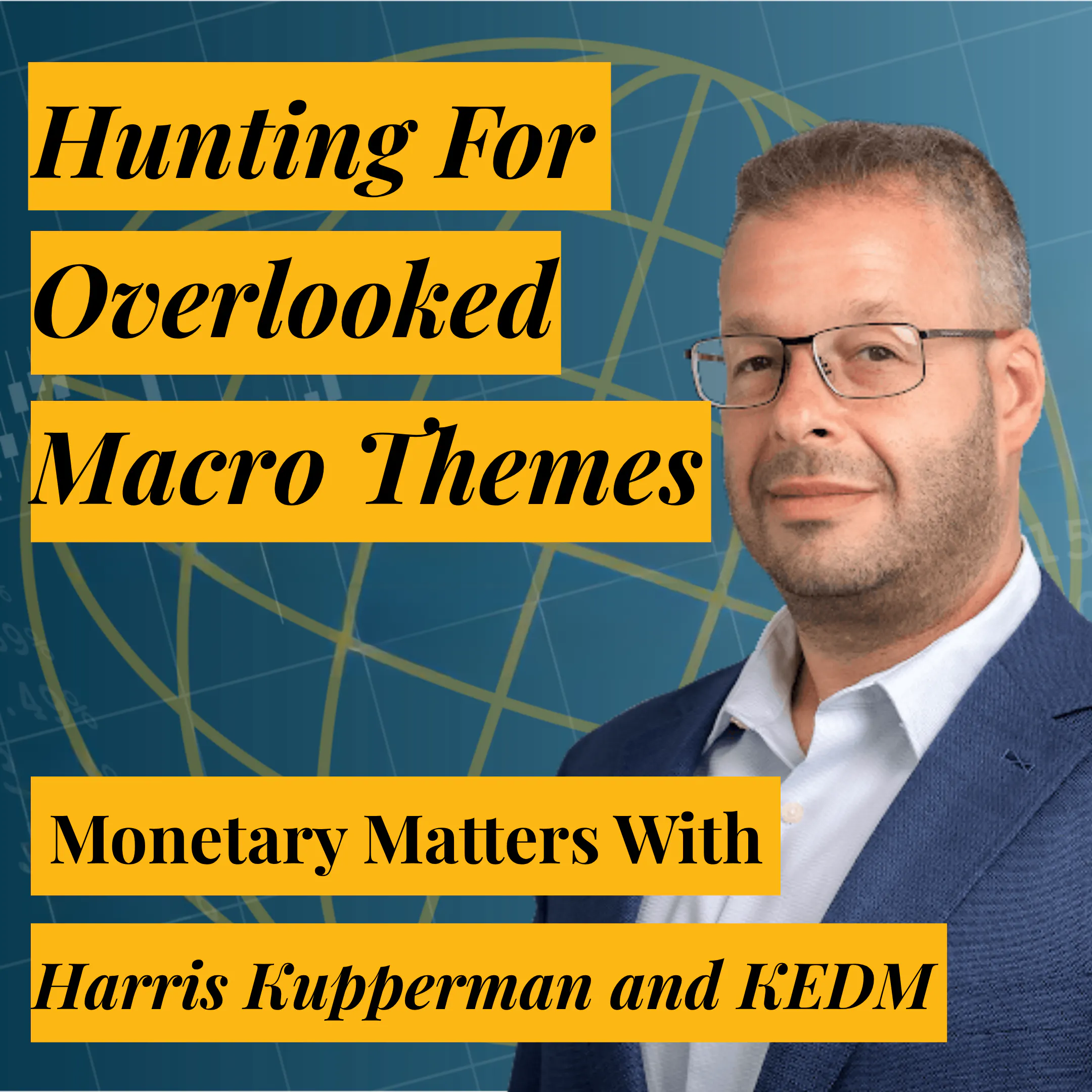
Finding the Market’s Most Overlooked Macro Themes and Profiting from Global Volatility | Harris Kupperman
60m 4s
The discussion centers on two major investment themes: refiners and Latin America. For refiners, the key driver is a structural tightening in global refining capacity, exacerbated by geopolitical events like the war in Iran and refinery outages in Russia and the Middle East. Crack spreads have surged, leading to massive earnings potential for refiners, especially those in the U.S. Gulf Coast (PADD 3). Investors like Harris Cuperman and Roderick Van Zoylen emphasize that the market underestimates how long this tightness will last, as no new refineries are being built, and even if the war ends, it will take years to replenish depleted stockpiles. They favor large refiners like Marathon and Valero for their scale and buyback programs, though smaller names like PBF Energy offer high operating leverage. The second theme is Latin America, which has benefited from a weaker U.S. dollar, pro-business political shifts (e.g., in Argentina, Chile, and Peru), and a rising commodity cycle. Investors highlight that the region’s outperformance is not tied to AI but to domestic economic recovery and friend-shoring from China. Overall, the conversation underscores the importance of tracking crack spreads and refinery announcements as key indicators for the energy trade, while Latin America offers a broad-based opportunity driven by macro and political changes.
You can look at commodities and have all the opinions of the world. Nothing matters until the commodity tells you it's ready. I think the most important thing to track in this whole thing isn't when Hormuz opens. It's when guys announce brand new refineries. And no one's announcing refineries right now. Because no one thinks that this is actually a tight market. They just think this geopolitical tightness, and as soon as the war ends, there's this excess slack in the system. And so, until people announce many millions of capacity additions, I think it's a great trade. In today's market, theematics drive everything. You have the narrative, you have the fundamentals, and then you have the catalyst. Today, I'm speaking with two investors who are experts at combining thematic macro and equity research with event-driven special situation catalysts. Harris Cuperman, CIO of Praetorian Capital, and Roderick Van Zoylen, CIO of Nightwatch Capital. They are both primary contributors to Ken and Research, and today we are going to discuss some of the themes and events they are tracking that many investors are missing. And for monetary matters listeners, we have a special offer. For the next two weeks, you can get $1,000 off your first year of Ken and Research if you sign up at the link in the description. We'll have more on that later for now. Let's get into it. It has been a big picture macro-themedic-driven market over the last year, really, for a number of years now. That is where I want to start. And one of the themes that you both have highlighted in Ken, that is really at the forefront of everything that's happening right now with the War in Iran, is refiners. This is a theme that you flagged back in-- I believe it was the fall of 2025. I'm not sure if it was Q3 or Q4. And since then, crack spreads have basically doubled. And refiners are doing very, very well. Obviously, the War in Iran probably wasn't in the cards when you first wrote that up. So talk to me about what got you excited about refiners then, and what the situation is now given how much has changed. Very big picture. It's a supply demand. I do supply demand stuff. They're very basic. If you look at plads or rice, they'll tell you that there's some deletions going on in Europe and the US. And there's some additions happening in the Middle East, India, Nigeria, Mexico. What those guys miss is that people in Texans run theirs at 95% utilization. And the Mexicans burn theirs down. India doesn't hit the same uptime percentages as the Texans do. So it kind of looks balanced. But when you actually look at it on utilization, it isn't. And I think even the way rice that was looking at it, it was going to be a slightly tightening market. And they were looking at 6,7,800,000 barrels a day of demand growth. And I think it's going to be a higher number. That's just a personal view. But you can look at commodities and have all the opinions of the world, nothing matters until the commodity tells you it's ready. I've yelled the screen for years and years saying this thing is imbalanced. And the market doesn't care. And what I saw happening is that December 26th and December 27th crack started waking up and started getting slightly bid. It was telling you that the market was saying that this is getting tight. And of course, everything starts with evaluation. These things are a third replacement cost, maybe less. And so that's a good starting point. But I want to see a cash flow. And that cash flow is driven by the crack spread. When the crack spread started inching up in the summer last year and then really started accelerating the fall, that's really what got me interested. And they're like, look, sometimes you just get lucky and you get a war. But that wasn't the trade. And I think in the five to seven years, it takes to build new refineries. And the world obviously needs more refineries. This is going to be good and bad quarters. Maybe this war lasts a long time. Maybe it doesn't. I don't really know. I mean, go read Trump's tweets and figure it out. But they're definitely over earning right now. Let's go into buybacks. And if you buy back a lot of steel, really cheap, it's really good for shareholders. And so that's the trade we flagged it. We basically got the inflection of when it went from being a pretty mediocre business to a very good one. - Broderick, did you see it the same way? - Yeah, so copy flag this sometime in 2025. And it took some time to get me convinced on the thesis. I think the last five years post-COVID, there hasn't been a major shortage. There's been some capacity additions in China in the Middle East. And at all the book is now sort of empty. So it took me some time to see it the way he does. But like now, like you said, the Flex players waking up, but there's fundamental reasons for that. As these keeps getting better and better. Vain Israel was incrementally positive for US refiners. They have high complexity. They are set up to a heavy crude, which if Vain Israel exports more of that towards the US, shorted shipping distances as well, then they have a cost difference. And yeah, a cost benefit. And then of course, after the state of war, the war's got closed. Jet food prices go up. Cracksplats are insanely high. You need a few quarters like this. And you'll definitely make money on a long, long, refinery position. It's interesting. And maybe we should just quickly define crack spread for everybody who's not deep into the refiner. So refiner's are refining crude oil into refined products like jet fuel, like diesel, gasoline, et cetera. And so the spread is the difference in price between what a barrel of oil goes for and what they're able to sell the refined products that they're getting out of that. And so when that spread widens, that means refiner's can make more money. And so when you talk about refiner's, there are ETFs, but then as well, as you said, there are things that benefit specific refiner's, like US refiner's versus refiner's overseas with Venezuela. How deep are you digging into the specific refiner's and trying to find the ones that are most levered to these tailwinds? - I just took it from a big picture standpoint. Funny thing about refiner's, they tend to burn down a lot. And I don't wanna be in the small guys because if you have three or four refiner's and you lose one, suddenly your debt cobbin's become material. I really wanna be in the guys that are pad three focus. You know, I didn't expect that Venezuela to come in. I just went to Seaborn, but obviously Venezuela gives you a huge advantage versus many other refiner's. I don't want the mid-con. I don't, you know, I really want the pad three guys. And so for me, the way I thought about it is this two really large pad three. You know, it's marathon and Valero. The way the market structure is set up today, the big guys just get bigger because of fun flows. That's a beauty of passive. And so I wanna buy the thing that the big guys have to buy. And I didn't really overthink it. I didn't get too deep into the weeds. There's some reasons why Valero is better than Marathon. Some reasons why Marathon's better than Valero. But, you know, choose two and it's kind of how I set it up. You could definitely get in the weeds. And there's some guys who got to ride on smaller finer exemption or, you know, a bunch of other ways to win and lose at this game. But, you know, we're not really here to, you know, drill deep into the theme and say, I'll grab some of this and sell some of that and maybe short this. It's more of a hey, here it is. Get some exposure and don't overthink it. This is how I'm about everything. - I have to agree with Goppy here. You can get really cute and go after the small caps that are trading at a meaningful discount and are probably a bit lower quality. But in the end, if the theme works, you're gonna make money on all of them. The only thing that maybe speaks in favor of the smaller names and a name like PBF Energy, that's also, it's higher cost. They've got some leverage in there. If the boost does end up, the boost in Klekspress does end up being temporary. I think two quarters at current Klekspress and they pay down all of their net depth. So with the small ones, you'll definitely make money with even just two quarters of elevated Klekspress. That's what would argue in favor for small ones. But in the end, a diversified basket or whatever fits your preferences in terms of risk. - Very important to mention this is very path-dependent. As Rudric said, there's a lot of operating leverage here. Like if you look at the prompt crack spread right now, it's 55. That's up from teens, you know, a year ago. That's a lot of operating leverage. If you look at someone like a Valero or a marathon, they're roughly the same size. They're each gonna do about a billion barrels a year. Like every dollar the crack spread goes up, you know, all else equal, which it never is in this game 'cause there's always these weird differentials. But for very back of the envelope, every dollar goes up, there's a billion dollars of pre-tax and it all drops the bottom line almost. And so, you know, when you're looking at that 30 uplift, that's a lot on companies that are like 60 billion market cap. Like obviously, you know, they're over-earning and they're not gonna over-earn forever. But even just getting a couple quarters, you know, done at this rate of cash flow, does materially change the, you know, the outcome out a couple of years in terms of debt paydown at PBF or buybacks at Valero or Marathon. You know, it's a really path-dependent and getting that extra even month or two really changes the outcome looking out a couple of years in terms of how much cash accrues during these periods where it over-earns. - Well, we're about to get some look through into how long this is gonna be, or at least how long executives think we've got Marathon reporting this week. I'm not sure about Valero. - Last week. - Last week, okay. So what did we hear from them last week and what are you expecting? Because obviously, people can see what's happening with the crack spread, right?
And the thing that market participants are debating is how long is it going to last? - I don't think they have any better idea than you do, or Trump does, or the iradians do. I don't think anyone really knows. What we do know is that if you keep drawing down product at the rate you're going, it might take, you know, we've been two months now into this thing, it might take six months to replenish. If this goes another two months, and you really start drawing stockpiles, it could be a year or two to replenish. I mean, don't forget also that the Ukrainians keep taking out refineries in Russia. There's refineries that have burnt all throughout the Middle East. No one really knows how long it takes to repair those. Even if the war ends tomorrow, they can't just flip those refineries on. You have to get a product, you know, two of these refineries get refined. There's a lot of steps along the way. I don't think anyone knows how to model this out, or, you know, maybe the real smart guys at Vittal do, and that's why, you know, the 27 cracks spread December keeps going up every day. Like, you know, let them figure it out. All I could do is just rely on that cracks spread and say, you know, the trends in my, in my direction. But I also think this is going to be over earning and under earning through this cycle. And you have to accept the fact that this is going to be good in bad quarters, but if something structurally tight, the bad quarters, you should still make good money, and in the good quarters, you really over earn. That's just the nature of cyclical industries. I think the most important thing to track and this whole thing isn't when Hormuz opens, it's when guys announce brand new refineries. And no one's announcing refineries right now, because no one thinks that this is actually a tight market. They just think this geopolitical tightness, and as soon as the war ends, you know, there's this excess slack in the system, and no one wants to build new capacity. We had a similar scenario with Russia and Ukraine, and I know, a marathon, and I'm not sure about Valera, but I know marathon absolutely printed in 2022. That was the peak in terms of its EPS. They had another strong year of over earning in 2023, but not quite as high, but the stock itself went on and rallied all the way through 2024. How much are you thinking about that prior cycle as a comp for this in terms of how much they can over earn, how long these types of things take to fix themselves, and how long the stock can rally even beyond that sort of momentum as the market digest that over earning. Well, I think you need to separate two things, right? They over earned for a long period of time, cash built up in a balance sheet, and then it took them an extra year, almost two years to deploy all the extra cash they had into buybacks. And that's what pushed the stock price higher. I think the Russian Ukraine war was the first thing that showed me personally that this sector is getting tight. There was a lot of building that happened in the back half of the 2000s because the cracks were high, and a lot of those were fineeries that came online early mid 2010s, and they just saturated the market and just destroyed profitability, and you needed to see deletions of smaller inefficient facilities. That basically happened the whole back half of the 2010s into the 2020s. And I think the Russian Ukraine war showed us that the market had reached a new balance, and a positive balance, where a couple million barrels came offline, and the cracks went crazy. Look, I don't know. I think it might rhyme, might not. I mean, these are all sort of different, sort of the same. - I'm pulling up Marathon right now, and I think it was $28 EPS that they did in 2022. And we have projections this year for the, looks like the consensus expectation, the median and the mean are pretty much the same at like 22.7, 22.8. We've got some people predicting, you know, extremely high EPS of 34, 35, but then you've got people, some estimates, are still down in the low to mid teens. A lot of dispersion in terms of how Wall Street and analysts are thinking about the earnings this year from refiners like Marathon. And so my question would be, is that dispersion and expectations a good thing for you if you're longer finers? And how could expectations be so wide? - Well, the best and brightest of the analyst community goes and focus on semiconductors. They go focus on things that drive trading commissions. No one follows these stocks, no one cares. Look, all you need to do is plug 55 crack into your model, and you're gonna get a really, really crazy number. I mean, these guys might be off by a figure, you know, like it's kind of crazy. Look, I just told you, like it's 30, you know, billion, pre-tax, a 60 billion market cap. I mean, obviously there's gonna be tons of, you know, factors that offset that, you know, you have some back-radiation to deal with. You've got some differentials. I mean, I don't think the actual number's 30 on 60 billion market cap, but I mean, directionally, it's a lot higher than where the analysts are currently. Of course, it was a lot of year left, and you know, we're only into May cracks, but I just think it's one of those situations where analysts in the energy sector never get bullish and never get exciting, 'cause energy always, you know, steals their soul and crushes them. And so they kind of want to be behind, and there's probably a lot of estimate push coming up in the back half of the year. But once again, no one's really following this stuff. I mean, I like to go, and I talk with Roger Galad, I mean, we tend to be in places where you don't have tons of the smartest guys playing. I kind of want to play against lazy people. I mean, in the end, the only marginal buyer of a refiner is me or it's the company's own buyback. There's no one who wakes up in the morning and says, I really need some marathon right now. I like that setup. I mean, Roger, how you see it? - The end of this expectations look, if you go back two months in time, cracks press were sort of weak, and there was this whole long term supply demand imbalance that got us excited. And now cracks press got elevated, and the longer that lasts, the higher EPS for this year will go, and consensus estimates, at the moment are only turning upwards. So for anybody who plays this quarter to quarter, that's a positive. But in the end, like one year's, two years from now, we're in it for the long term supply demand imbalance. And there's not that many new refineries being built in 2007, 2028, and after that, there's nothing in the order book. And then, copy started with pointing out that whatever's being built in Mexico, I think Nigeria, I think that mistake, and has a pretty one, that's trying to ramp up, they're just not running at nameplate capacity. So even if it looks like a large number of new supply coming online, it's a fraction of that. - Can we talk about how important buybacks were? Buybacks, I know, are something that you track on the event driven side. Are you starting to see buybacks come up from, not just refiners, but anywhere else in the energy complex? - They've learned over time, not to reinvest back into the business, this isn't, show oil in 2013, 2014. They're not gonna build a new refineries, there's very little else to spend it on than buybacks. So there's some minor signs, and we're expecting a lot more of that in the next few quarters. - Let's move to another theme that I know that you both have been focused on in that's Latin America. Coming into this year, we had the first year that emerging markets as a whole outperformed the S&P, the NASDAQ in recent memory, really. And that has continued into 2026 with Latin America doing a lot of heavy lifting. Now a lot of people, and this is something I recently learned in looking into it like South Korea is technically an emerging market, even though Taiwan as well also an emerging market. So the semi conductor boom as much as people would like to say, oh look, emerging markets are outperforming the big companies in the S&P and the NASDAQ that are tied to AI. There is some AI that is playing a role in broader EM out performance, but Latin America certainly not part of that story and has been doing extremely well. So what is happening in Latin America? And then let's drill down a little bit on Brazil. - In Q4 of 24, in catam we flagged a number of times, like two or three times, right off the Trump one, that for magnet work you need the dollar to go down. And if you think of Latin America, they've really been crucified by a strong dollar. To keep their currencies in line, they've had high real rates, which has destroyed domestic economy. I'm a commodity bull, and I've thought the commodity cycle would get going and it sort of has been now, especially agriculture is finally waking up. But the real change is that the politicians went from being communist to pro-business. Malay was the first, he had the hardest job in terms of the heavy lifting need in Argentina of his making progress. We saw Bolivia go a right of center for the first time in my life. Chile went right, Peru, I think Colombia's next. And obviously the big ones Brazil were, you know, Lula's approval rating drops about one point a month, every month since we first flagged it. And we said, go by Latin America, We give you the big picture.
I think Latin America works in a mega world, especially if we're gonna basically friend shore out of China into Latin. And it's played out fabulously. I mean, you could have been real smart and chosen the right stocks. You could have just bought the ETF. You'd have ended up almost the same spot. We flagged some tickers obviously, but in the end, you get the trend right, and this really matter what QCP choose, as long as it's not some squirrely little one. And we really got the macro right, and I think the real thing we're watching is what happens in Brazil. But it's amazing to see them now go, that they've cut rates twice. We started buying into a rate cycle where they were raising rates. You've seen the REIS rally from six to five. Actually broke through five, and you've seen Lula's approval ratings collapse. I think it's gonna work well for us. We nailed it. I'm proud of the team. So that's the politics, and the way both Kappi and I are playing it is through financials by either B3D, the Stock Exchange, or XP, which is a broker/wealth management platform. And they've both been suffering four years from very low turnover inequities, which all comes back to if interest rates are 14, 15%, one inflation is five, six percent, or less. You make 10% real yields. Why would anybody hold anything other than fixed income and venture into equities if you make 10% real? And that seems to be changing. Kappi mentioned there's been two rate cuts, but it's really been the inflation expectations, not so much inflation itself. And higher yields just because there's been capital outflow. There's not been a lot of FDI, which all comes back to the political setup that Kappi described. So we've got two companies that are very torqued to a pick up in equity turnover. Lower rates means people have an incentive to get back into equities. And typically you don't see small 10%, 20% jumps, things like that. You can have multi-bagger potential if equity volumes three X, four X. Yeah, I can jump a lot. Like we got positioned before the turn. We got positioned when things were terrible, but in the theoretical it was going to turn. Look, in February and March, we saw the first two consecutive months with equity volumes exploding. We saw a retail investor starting to get involved. There's actually growth in accounts for the first time. And that's 40%, 45% growth in equity trading for two months in a row. It's happening. People are starting to look at the equity markets again. And I think it's just the start. I mean, there's a bunch of tourists that are long, EWZ, which is fine, but I don't really have a view of iron ore prices or oil price with petrobras. Like that's basically what the benchmark is. I think people are going to start pulling away the onion and looking at the next tier down of stocks, which are directly tied to the Brazilian economy. And they're going to have to open local brokerage accounts to buy those. Some of them trade in the US, but most of them are going to trade in Brazil. And then from there obviously, the next step is to get IPO. It's a lot of IPO's that need to happen. There's a lot of private equity stuff, full of stuff that probably should have been listed five years ago. They've talked about privatizations. There's a lot of steps along the way where I think this can be very, very reflexive. And that's not just Brazil. It's all of La D'Am. I mean, we talk about Colombia. The banks have gone crazy there. We've talked about Chile. Once again, the banks have gone crazy. When you look at emerging markets, it's usually the financial assets that are the most liquid. And it tend to be listed in the US because they need access to capital. And that's usually the thing you end up buying by default, though, most. But it's all done really well. I mean, look, I've even flagged the Argentine Stock Exchange, because I'm a shareholder of. I just think it's all going to work. And you build your best basket of it. There's a lot to keep up with. And this might be a good time to talk about how you track these themes over time at Kedem. So Rodric, I want to ask you, we have a special offer here for listeners to monetary matters for Kedem. And I want to ask you about how your customers, how your clients use Kedem, how you're tracking these types of themes in real time and communicating them alongside these eventative and special situations that can be theme-agnostic. Let's take a step back. And a copy who founded Kedem, and I think that was 2019 or 2020. And in those days, I was just a subscriber, like a heavy user of the data. But I think the original idea, Kedem, is actually an interjective I'm wrong, but there are so many opportunities every day in the market. And sometimes you come across a spin-off of a privatization, like an interesting setup that has already worked. And you're looking at it and you think, hey, that setup was sort of obvious. If I had known about that half a year ago, I would have made a lot of money. So the idea was to get a team of data analysts. And now you're talking to us. There's another partner who's been publishing of Monday Monitor. There's four data analysts on the background and there's data analysts every week. They're just going through all the SEC filings or the equivalent outside of the US. And they're trying to flag CEO changes, play of decisions, spin-offs. It's a lot of data, which some of our subscribers get a bit overwhelmed by, which is why there's a team of us. And we try to make it a bit more digestible. We try to pick out the ones that we find interesting. That doesn't mean that those are the most interesting setups. But we try to highlight. There's a lot of M&A arbitrage this week, distribution solutions group, maybe by the time the disk gets published. It might have already worked out. I find that an interesting setup, which is why I'm involved in it. But every time-- and that's what I like about it-- every time that I talk to one of our subscribers, they have a completely different use case. We have somewhere between 400 and 500 hedge fund allocators. Retail, high net worth individuals that are in this. And I talk to retail investors. And they say they look at our IPO unlock monitor. And we want statistically shown. And if there's an IPO unlock and you shorten names 30 days before the unlock happens and hold it for 30 days, you tend to make a decent amount of money. And everybody just has a different use case. That's all the event-driven stuff. Obviously, we've been talking about a lot of more thematic setups as well. And in my perspective, they overlap quite a bit. And I think we're all value investors in this school. Or I self-identify as a value investor. But I've also learned in the last 10 years that value in itself is borrowing and doesn't necessarily work in the same way it used to work. Something needs to change. And that's really the key of CAD and something needs to change. We're trying to find things that are changing. And then it's up to the reader to figure out whether he finds that company or that industry interesting. But something can change either on a company's specific level, which is the event-driven portion. Or maybe an entire industry is about to inflict, which is what we're trying to highlight on the thematic side. All of Brazil might be inflecting or the miners might be inflecting. And it gets even better when those two things overlap. There's some example stare that we might be able to get to. But when thematic and event-driven overlap, that's where the real multibaggers end up being made. Yeah, Kapi, I want to ask your perspective. As a user, as Roderick said, there's a lot of professional investors, other hedge funds that are customers, as well as those high net worth. You certainly fall into the hedge fund category. How are you using CAD on a weekly basis? I use a lot. Look, the whole reason we built this product is because I kept missing trades. As Roderick said, and I wonder, make sure we didn't miss stuff. There's over 100 pages of data. Now, sometimes I'll drill down into a sector. There's a few I like. There's over 20 data sets. But some of them just consistently find interesting stuff, instead of buying buybacks. And it is changing the cap structures, because of the nature of how passive it is. But I mean, demutualization is privatization. These are all quirky and weird. And the thing is, sometimes you don't even know when it's going to start trading. Just one day starts trading. And you need to be ready ahead of time. But I wanted this so I didn't miss stuff. How do I use it? I mean, the great thing about Roderick and the whole team is that they're flagging everything for me. It's like having my own team of analysts that I don't really pay for, because it's really hard to go through 100 pages of data every week and say, oh, they just updated the form 10. And it's going to be next month. I want to just kind of go through it all and let someone else tell me, hey, what do I focus my time on? Because my time is my most viable thing. And it's just great. There's usually 10 to 20 cliff notes a week. I read them all. They flag stuff I totally miss. I just did the starting point. Then I drilled down into the sectors. I'd say probably once a month, I'll go through the whole 100 pages and just sit there in a Sunday and read the whole thing. You can't do that every Sunday, right? That's what the cliff notes are there. But that's how I use it. I'm looking for setups really where something's mispriced, where something is truly interesting. But it has to align with my own macro view. I want tailwinds, cheap stocks to stay cheap. Sometimes things get just too cheap. And some fun flows thing. It's kicked out of the index. Something like that. It might be interesting. But for the most part, I'm just trying to find something that aligns with my own mental
of you. And you know, there's a lot of these things where you have a hot sector and there's a spin-off, there's a privatization, demutualization, bankruptcy emerge. And it's in a hot sector where multiples are exploding and because of this fun flows dynamic, you get in really cheap and you basically get in at last year's valuation multiple and that's the best set of possible. But I use it in lots of ways and that it's a great product. Like I said, we built it for us at our fund and kind of handed the keys over to Roddrick to run with. Well, look, I know that we have the offer. Remind everybody, go to the link in the description. You can get a thousand dollars off your first year to Kedem and you'll get access to all of the reports, access to the Discord room. Will you be able to chat with other Kedem subscribers about all of these situations as well as those happy hours that you host, Kuffy every month. You talk about you love when these things align. We, in talking about Latin America, you said you like the exchanges. You like that the trading volumes as equity turnover in Latin America picks up. You think that they're going to benefit. I know that just volatility picking up, trading picking up, trading the madness. So to speak is also one of the themes. You've called the theme long, vol. Obviously long, vol for most people is going out and trading actual volatility. But you're trading long volatility in a very different way. What's going to be about this view on exchanges, brokers and just the rise of active trading? We live in a world where there's a lot of uncertainty. I don't know what some is going to decide next, but I do know whatever it is that there's going to be equity volatility and volatility in oil prices, ec prices, all of that. So yeah, we made this medic around that. We've spoken about stock exchanges in the world that sort of benefit from that. But the torque, you get even more torque on the commodity side, commodity brokers. At the moment, we're trading an insane amount of oil and gas futures, which wouldn't surprise anyone. I think there's a structural trend there just because brokers are really good at talking you into edging, not just your oil exposure if you're an airline, but also your interest rates risk and your FX risk. It's no longer just the airline trading oil and gas, but hedge funds must speculate a bit as well. So there's a structural trend, but there's definitely a counter-sicklical trend. I've also run a long book. As for me, I always like to have some counter-sicklical exposure. I think commodity brokers fit that bill. Now, the big problem with commodity brokers is that historically it's not a tech-sevy business. People have a relationship with the broker. They trade, or they give the trade to whichever broker took them to the strip club the day before or gave them a good time. So the more traditional brokers, BGC, TPI cap, aren't really that exciting. If the broker leaves, he takes a relationship with him. He goes on garden leave, brokers have to outcompete each other a completely different market. A bit niche, but we like niche is the commodity futures merchants, which the largest ones, Stonex and Maddox are the ones helping out to mid-segments. And what they effectively do is they settle your trades or they clear your trades on exchanges like I's and CME. So just like if you want to trade equities, you go through your stock broker, if you want to trade futures, you go through them. And this has become a much more tech-sevy business. Compliance-wise, tech-wise, it takes them one and a half years to onboard an exchange. It takes them half a year to onboard their clients. We're talking about a really sticky tech-enabled, more like financial infrastructure business. So it's a very niche business we've discussed it at length. Anyone who's heard me talk or what was that? Get them in recent months. I'm going to be a supplier that I really like my Arex. I can't stop talking about that one. But we're talking about companies with a structural tillwind, a secret or tillwind from the increased volatility. And they're really high quality businesses. Stonex, you're talking about 20% ROE and Maddox, you're talking about 30% ROE. We just keep liking the tillwind. The tillwind keeps getting better. So is this something where you have the current clamor for commodities as it relates to the Iran War? But also you just have a breakdown of the 60-40 portfolio. In an inflationary regime, bonds are not providing the hedge. And a lot of people have talked about energy exposure, managed futures. These types of strategies as replacing bonds in the portfolio, do you see just commodity volumes benefiting from the broader macro-environment of inflationary regimes overall? And do you see this as something that is, yes, they're obviously if the war in Iran ends tomorrow, you're going to see volumes come down. But if you look out five years from now, 10 years from now, and we're not in a deflationary regime like we had pre-COVID, people are going to be trading more of these products. We'll definitely be trading more of those volumes, whether that is necessarily the inflationary environment or like I said, a stronger awareness over this, where we're hedging more, we're speculating more. I think that's the big structural diver here. And by the way, if it's more the war in Iran, and there's also a lot of airlines that normally had not necessarily airlines, but commodity industrial players in commodity space, and usually they hedge for one or two years. And they've sort of been pushing it forward. They don't get the best places if they close their hedge right now. So I think there's a bit of bend up demand as well. I really don't think volumes will follow for clear-fledged away. Yeah, Kaby, what's your view on it? Yeah, I mean, look, any volatility helps the merits of the world. They're not taking retail customers as their client, but when these guys all choose some commodity to go after, there's going to be volatility, and that's going to create opportunities for hedgers. A lot of the customers at Marx are either in the Prime Broker side, which is hedge funds or CTAs. But a lot of their other customers, it's your guy in Brazil trying to hedge his coffee crop. And he's not going to open a brokerage account and hedge off a five lot of coffee, but he might want to buy weather hedgers, he might want to buy currency, interest rate. I mean, those Marx guys are really good sales guys. They keep reaching out to me. They want my business for my hedge fund. And they'll figure out how to sell this guy with a couple bags of coffee beans, also to products. And the funny way it works at a corporate level is that when you're the CFO and you get to write on interest rates or currency or whatever it is, they told you to hedge. At year end, you get a nice big bonus. And if you get to wrong, well, I don't know, it's a hedging loss. It just goes below the line. It's like adjusted out of EBITDA. I know it even talks about it. So as the CFO, you're really incentivized to go gamble. It's like big boy gambling as opposed to retail gambling. And I think the big boys haven't gambled as much because it hasn't been a lot of volatility and a lot of reason to hedge, which is really just gambling. I think they're going to start gambling more now. As soon as one of their friends who actually had oil hedges on or had whatever hedge they needed for this a ran war, and they get a big bonus at year end, it's going to incentivize all the CFOs to go hedge. And I think that's really Marx's bread and butter. There has been a lot of chatter about prediction markets becoming a place for these types of companies to do real hedging. I think I saw last week an article about the first block trade. Is any of the market share at all under threat from these prediction markets? I mean, yeah, I guess. But I just think it's another place for corporate solayoff risk. If it's large enough, I mean, it's a future technically, which means that Marx can clear and settle it if they wanted to push into that market. I just think it's another place for people to layoff risk and hedge. And any volume is a good volume. If there's a pricing anomaly on Calci and there's an arbitrage opportunity, then there's going to be trading via Metmarx as you arbitrage all that. I think it's more as more. I think it spreads narrow people trade more. That's just the history of financial markets since the 1970s. They are actually pushing into those prediction market contacts, I believe. One of the first or probably the first offering structure products to their retail clients with prediction markets is the underlying. So rather than have a binary outcome where you can lose everything, you can buy a bond proxy where you make nothing if you football team loses. And instead of doubling your money, you make 20% if they win. It makes it easier to justify to your wife that you're actually just gambling. I guess. So it's a business opportunity more than a threat. I want to go to one more theme before we get into a venture. And some of the themes we've been talking about Latin America, volatility. These are very big picture macro questions. Sometimes the themes, when you look at them on paper, they seem like they're much more pointed. They're oftentimes tied to a big picture macro trend. And one in particular has been elder care. And that, if you think about it, we've been hearing about the
the aging of the world and these demographic trends for a while, but to put it into a theme like elder care and actually find tickers for it versus these sort of big picture conversations that you hear people having. I'd really love to talk about that because I think it's such a great example of how you can take something which is as high level as you can get in terms of demographics and to still it down to a basket of tickers. I love this theme just because there's very strong supply demand set up here, but also this thing didn't start working until some of the event driven triggers that were remodeled or in catam work out so I'll get to that in a second, but senior living facilities everybody knows we're aging like the first baby boomers are turning 80 this year, but it's a commoditized industry in 2017 everybody knew this as well and the industry was over applied and margins hit a trough. So in 2017 the industry stopped building new senior living facilities and then of course we hit COVID and part of the senior population passed away or people just didn't want their grandparents to live in a senior living facility where germs are being spread. So there was a second hit and two years later in 2022 there was a nursing shortage which just blew up the operation of course for that business. So senior living facilities have gone through a bear market from like 2017 to 2024 I think where they were hit three different times in three different ways which means right now there's no new facilities under construction and from planning to finishing construction and ramping up a population you're talking about at least five years. So the boomer population, the potential demand for senior living facilities is about to take off and there's no new supply until 2030 or 2031. Very similar to where you're talking refiners or senior living facilities it's sort of the same thing. Now what I like about this is the event living angle. There's a couple of expensive names the reads who sign triple net leases and just have 20 years of stable income inflation index and they don't care whether a facility is 80% full or 90% full doesn't matter to them. Well towers vent has have done extraordinarily well because they could buy all those distressed units but we don't want to pay one and a half times with placement value. It's expensive we want to buy the cheap one which means you end up with the shitty operators which for many years there was broke deal. You talk to anyone in the industry they could give you a lot of anecdotes by broke deal wasn't the best operator. And if you listen to management they would always they didn't bother maximizing occupancy and in most of the US state you want to you don't want empty units. It's a bit different because you need some nursing capacity so there's a little bit of variable cost but still you want to maximize occupancy. So a couple of things we are taking in in cadm is an activist monitor. We had an activist stepping in trying to kick out management and get themselves elected to the board of directors they didn't get on the board but management has been turned over and we got a new management team and if you listen to them completely different they were they it was a different story let's maximize occupancy and only a few months later you could actually see occupancy which is a report month they like taking off and closing the gap with with all the competitors. So we had the activists we had a CEO change one of the things we're taking investor days which which seemed like a sort of borrowing non event in some cases but we found out also statistically companies that haven't had an investor day for multiple years. I think for broke deal might have been five years ago since they had their last investor day and when they take time out of management agenda and expect all the analysts to show up and listen to them they probably have a new story to tell and in this case we knew what that story was. So there were just several triggers activist CEO change investor day that showed us change was happening and that slowly beginning to get reflected in the share price. Next up hello to last year I think it will continue to do well over the next five years but there will be up and down maybe maybe it's done a bit too fast for for the change that's happened don't go out and buy book deal just today but in the next five years it's extremely interesting industry to look at. Combination of ED and these thematics is interesting I know another theme you have is existing home sales I'm looking through the monitors from the most recent the cliff notes from the most recent report we've got mergers in with remax and real brokerage how often are you seeing that crossover between a theme that you've highlighted in activity at the company level. It happens a lot we just spoke about myrex and myrex has worked well but it was like half a year ago it was still just a seven times PE company so there were event driven angles as well there was a misguided short report last year which we discussed at length within cadm that just came up with allegations that turn out to be completely wrong but there's also been a lot of overhang from the private equity sponsors at IPO two years ago and they've sold down from 100% to I think they are around 7% today so we've been highlighting every step along the way that the rally in the last month that was after their investor day where they laid out their actually the interesting story but it was also after PE sold I'm from 17% to around 8% today so when those two things align that's where the real upside the real multi-baggers and upcoming form. I mean I want to flag with merrex you know the stock was kind of stuck in the mud and doing nothing for a long time I mean theoretically there was a lot of trading volume because of the war and theoretically they should have had a great Q1 but it wasn't until they actually announced the investor day to brag about how great the month of March was that the stock started moving and I think the main thing they really nailed home was that January was a good month February was outstanding March was even better and volatility is actually their friend and it's a long volatility trade effectively and I mean it's been obvious to hear it talk to management and it's been obvious like in lots of ways but until they said that and they raised guidance and it pre-announced Q1 until they said all that Wall Street didn't care and then the stock went screaming and I mean given that they announced a investor day kind of out of the blue it should have been pretty obvious it was going to do really well you know you could use this as a short-term trading catalyst but also like I think it changed the perspective on the stock as being this is a long volatility trade as opposed to you know this is something else I don't really know what the screw is thinking and I think that's what's so unique about you know what we're doing at Caddum in flagging these sort of things and yeah investor days they guys only do that when the good news is good right you know there's some companies that do it every year like Apple or something but when a company comes out of the blue and they really spend a lot of their time and they build these 100 page decks and invite all their shareholders and they waste a couple weeks of their lives preparing for this you know they have to write a script they have to practice the script as a video like they're not doing that unless they do this is really good and so just play investor days they usually trade up actually that's what I like about Caddum there are so many different ways to use it and and we tell our subscribers how we are using it just in case they find that helpful but everybody uses it in a different way we've got a very active discord room where copy shares his thoughts on the market I share mine but all our subscribers are there and they point us at things that might have been in the 100 pages of monitor or in some cases they haven't been and they point us towards the statistics situations yeah you have one new well it's not new it's an old monitor that is back from the dead it's fitting considering the monitor that that we're talking about and it's the fallen angels monitor that as you said in Roderick you two things can stay cheap for a long time and they can keep getting cheaper and cheaper and cheaper and sometimes it just gets stupid right and and I think that's what you're trying to do with the fallen angels monitor is find these things where it's really really hard to call a bottom and to say that it can't possibly get anywhere but sometimes you do kind of have to put your neck out there and say I think we're getting pretty close here so talking to me about the fallen angels monitor and maybe we'll start with you cup because it's something that really started under under your tenure and Roderick you brought it back and we can talk about why now is the right time for it to come back. So fallen angels like you said there's decent quality businesses that just got too cheap and as we know Wall Street only cares about two things revenue growth earnings growth Wall Street does not care anymore about valuation I care about valuation but Wall Street mostly doesn't and so when you have a business that isn't you know growing revenue and earnings fast enough for Wall Street it's just kind of forgotten.
and wasn't usually crashed down, it just kind of leaks lower. And coming out of COVID, there were a lot of these companies, and we made a huge list of them, and many of them were multi-baggers. And then unfortunately, 'cause I run a hedge fund, I had to get rid of this because it might be seen, it's subjective. And as a result, it might be seen as investment advice, and this is a compliance function, I get rid of it. One of the reasons why we passed the torch on to Rodric is that he doesn't have the same compliance burden that I do, and so he could actually bring back some of these monitors. And I expect to see a lot of improvements and changes over time, that we just couldn't do, that we wanted to, we couldn't. And so I'm super excited, he brought it back, it's a new monitor. I'd love to know what he thinks is cheap. - It was always my favorite monitor back in the Cupid days. And I think a lot of our subscribers felt the same way. It's always difficult, even now, we don't wanna make recommendations. There are not recommendations, there are companies that have come down a lot, and we think they're good or decent quality businesses. I can't believe Cupid gave the entire description without his, my favorite quote from him, which is, "If something goes from totally fucked to somewhat shitty, you can make a lot of money." And that's the idea of the Fallen Angels monitor. We just relaunched it. There's a couple of names in there. You mentioned like, existing home sales. There's some ways to play that. There's some, most of them are consumer names, and they're still getting a lot worse. Like, there's a lot of cheap stocks, even though we're not making recommendations. We also don't wanna put things in there a few quarters too early, because being a few quarters too early means it might still go down another 50%. Or in some cases, poor balance sheets, they might completely go out of business. So, it's hard to be careful with that, but one of the things that we highlighted there, Iqon PLC, which is a CIO business. It's from suitable companies, outsource their R&D process to CLOs, like an Iq-R or an Iqon. So, it was already selling off, because of course, this is in the AI loser basket. But, lightfully or unfully, I know some are paying in there, but then it's sort of another, I think, 40% in a day, because they had a misstatement in their financial statements. They had to postpone their Q4 results by two months, and they said, "I will revenue might have been overstated by 2%. Our free cash flow is still the way we stated it, but revenue might have been overstated." And all of a sudden, I guess a lot of institutionals aren't comfortable with that kind of risk. There have been a lot of situations like that over the last two or three years, like a driven branch or something, and a lot of those situations ended up making money if you bought it on the announcement day. We're looking into things like that as potential new monitors in the future, but for now, we just picked out this one name, because we're using the quality business that generates a lot of free cash flow and put it in the full and angel monitor. Accounting errors might be a really interesting monitor to keep track of. Hadn't even thought of that one. The last two years, one or two exceptions, you would have made money on all of them. When Kedem started, this was all not that things couldn't be automated, but it wasn't quite as easy to automate things as we have now with AI. It wasn't as easy to test some of this data back test to determine, are there any strategies that work here? How have the advances in AI technology improved what you're looking at? So the team of data analysts, they're a lot better at IT than I am, and I'm confident to say that Kepi is as well. They're young guys, pretty smart. They can automate things. It's a lot easier to connect to the SEC at-car database and go through all the different filings than having to do that manually. And CEO changes was always a process that took a lot of time. There are certain 8K filings you left to go through, foreign companies or foreign filers, 6K companies. It's a cumbersome job that took one person about one day a week. That getting automated, and rather than taking the other half of the day off, there's a lot more information you can get out of it. Like it's nice to know that a new CEO is starting at a company. Compensation packages are. It can be. They set the incentives for management. They can be really interesting to tell. One of the things we flagged recently was a CEO change at Remittly. And the new CEO, his base salary, I think it's somewhere in the $300,000 a year. It's not a lot. But there's an insanely large RSU package with strike prices at the time the stock was trading at $14. And he wouldn't get paid until the share price hit anywhere between 20 and 45. It would fast in different trenches. Things like that are easier to scream for. And I'm not aware of any Bloomberg terminal or equivalent that is at the moment structurally scanning things like that. So it's a data series I'm quite happy with. And I think there's a lot of information in management compensation. Well, I want to close with the theme from this week. And that is the US consumer. And if you look at the high level data, the US consumer seems to be strong. But if you dig into it a little bit, we get into this K-shaped economy that I think everybody is familiar with at this point. So when you chose to write about the consumer this week, what was it that you wanted to dive into? I think consumer spending picked in 2021 and then when rates were raised and consumer spending tumbled. I started looking into a lot of those names in 2023. It stops go down. So there must be opportunities. And I think for the three years after that, at least twice a year, a couple had to talk me out of buying consumer name and that saved me a lot of money. He keeps doing that regularly. But I spend a lot of time on different consumer names. And there's a lot of different names there where you think that margins are well below normalized. Notables are extremely low. But it just keeps getting worse. And we're highlighting niche industries, matter sales. Most people don't take matter sales. But if you do, we're back to 2009 lows. Only 2009 was low for a year. And we've been low for a couple of years. And I get that in 2021, people both metasas and pull forward a little bit of demand. But now it's going the other way. Like there's a huge deficit of metasasales. How many years can you tell your wife that even though you're not moving to another house, you're going to stay in the same metas, even though it's moldy and smelly? So I think there's a lot of opportunities. But I'm also aware that it's too early. These are all names that eventually will find their way to the Fallen Angel Monitor. But for now, a couple of you keep stalking me out of those names. It keeps saving me a lot of money and keeps me from doing something dumb. But we just wanted to highlight a couple of those sectors. Consumer companies mean something different to everybody, right? And the products, like a mattress, these are multi-year products. They truly are things that can be deferred. Like I can't defer toothpaste. I can't defer even close. Clothes are somewhat discretionary. But at the end of the day, like I can't be totally naked. I can't be totally out of style with what everybody else is wearing. Eventually you need to do something. A mattress is something you can truly sit on as well. You're looking at pools. When you break down the consumer sector, why did you choose to look at these names that seem to be the most discretionary of any type of purchase? So I pick mattress sales because I think existing home sales, which used to trend at around 5 million a year and have been well below 4 million, I think in the last years, will normalize. It's rate-dependent. Iran has changed most people's rate outlook, I think. The other sectors that we're discussing are things like boat sales or RV sales. A lot of those sectors, what they have in common, is there's a lot of, supposed to be, a lot of recurring income. Nobody needs to go and buy a boat tomorrow because the other boat got too old. Everybody who buys a boat knows how much maintenance spend there is. And there is a certain amount of recurring spending there. Same with RV and there's also a used RV market that isn't weakening as much. But we're totally aware, we're not pitching those ideas today. We're totally aware of how difficult the climate is for consumers. But the names that we do mention, we think that ones that change us, and they've been taking a lot of market share in the last few years. They have a lot of upside, once things start to look better. Unless Guppy gives me the olgo and consumers, I'm staying out of it. Yeah, consumers just invest. One day there'll be a bull market consumer, but I don't think it's today. All right, well, we'll leave it right there gentlemen. Thank you so much for joining to talk a little bit about what you're seeing right now, how you're using Kedem. Reminder to everybody, the link in the description, monetary matters listeners, can get $1,000 off their first year of Kedem. Go check it out, get some sample reports, take a trial, and
and sign up for KETM. Thank you guys so much. - If that's your, thank you.
Podcast Summary
Key Points:
Refiners are a key investment theme due to a structural supply-demand imbalance in global refining capacity, with no new major refineries being announced.
Crack spreads (the difference between crude oil and refined product prices) have doubled since late 2025, driving strong cash flows for refiners.
The market is underestimating the longevity of high crack spreads, as geopolitical events (like war in Iran) and refinery outages create a tighter market than perceived.
Investors favor large, diversified refiners (e.g., Marathon, Valero) over smaller ones due to lower operational risk, though smaller names offer higher leverage to temporary earnings spikes.
Latin America is outperforming due to a weaker dollar, pro-business political shifts, and a commodity cycle upturn, making it a strong emerging-market play.
Summary:
The discussion centers on two major investment themes: refiners and Latin America. For refiners, the key driver is a structural tightening in global refining capacity, exacerbated by geopolitical events like the war in Iran and refinery outages in Russia and the Middle East. S.
Gulf Coast (PADD 3). Investors like Harris Cuperman and Roderick Van Zoylen emphasize that the market underestimates how long this tightness will last, as no new refineries are being built, and even if the war ends, it will take years to replenish depleted stockpiles. They favor large refiners like Marathon and Valero for their scale and buyback programs, though smaller names like PBF Energy offer high operating leverage.
S. , in Argentina, Chile, and Peru), and a rising commodity cycle. Investors highlight that the region’s outperformance is not tied to AI but to domestic economic recovery and friend-shoring from China.
Overall, the conversation underscores the importance of tracking crack spreads and refinery announcements as key indicators for the energy trade, while Latin America offers a broad-based opportunity driven by macro and political changes.
FAQs
A crack spread is the difference between the price of crude oil and the refined products like gasoline, diesel, and jet fuel. When it widens, refiners make more money, driving their profitability.
They saw crack spreads starting to rise in summer 2025 and accelerating in the fall, signaling tightening supply-demand. Refiners were also trading at a third of replacement cost, offering a good entry point with potential for cash flow.
The most important indicator is when companies announce new refineries. Until that happens, the market remains tight, and refiners are likely to over-earn.
They see buybacks as a key driver of shareholder value, especially when refiners over-earn and use cash to repurchase cheap stock, which boosts returns.
Larger refiners in PADD 3 (U.S. Gulf Coast) benefit from economies of scale and passive fund flows, while smaller refiners face higher risk from operational disruptions like refinery fires.
Latin America benefits from a weaker dollar, pro-business political shifts, and commodity demand. The region is seen as a strong investment theme, with ETFs performing similarly to individual stock picks.
Chat with AI
Loading...
Pro features
Go deeper with this episode
Unlock creator-grade tools that turn any transcript into show notes and subtitle files.
 PodcastTranscript AI