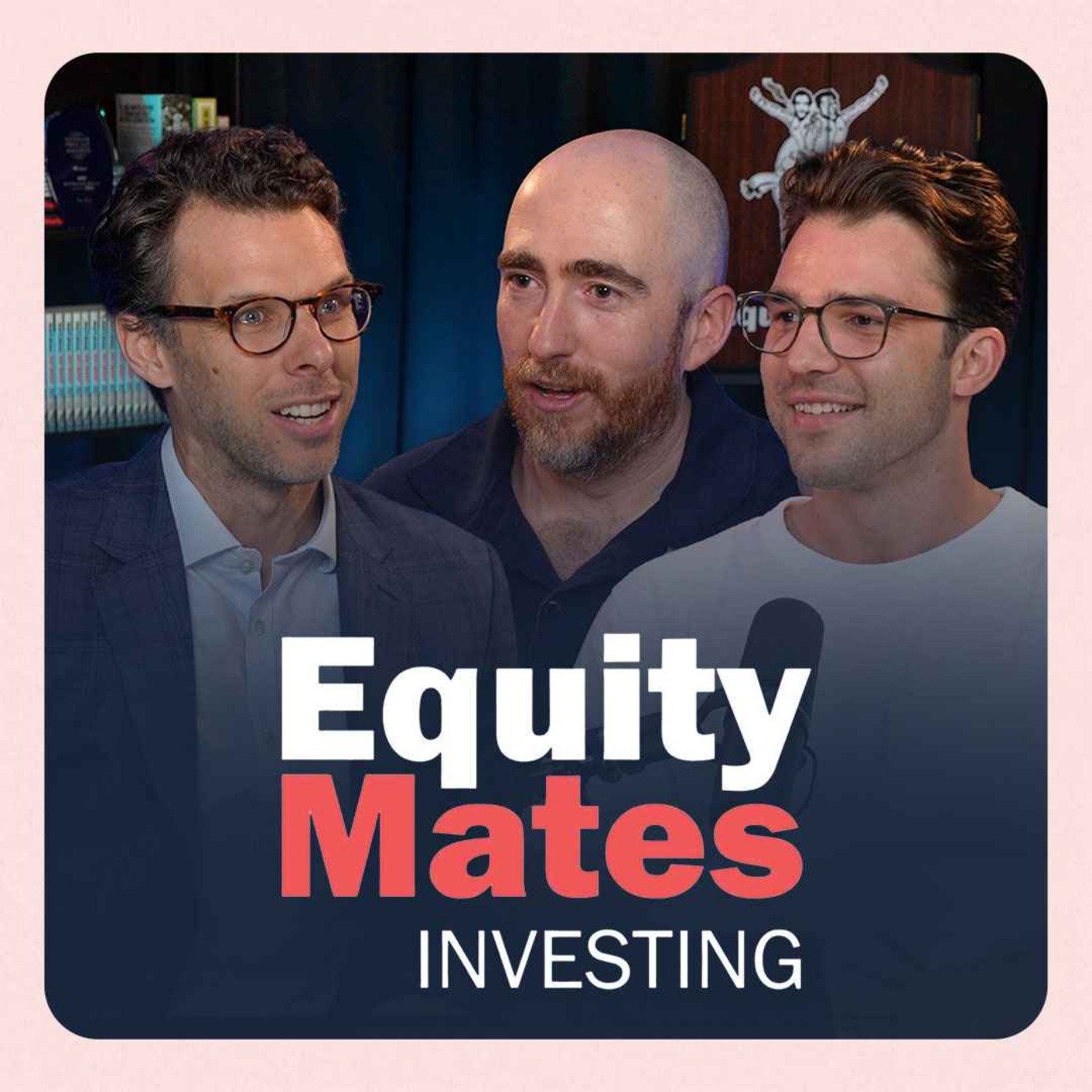
Finding opportunities in well-known names with Ryan Joyce
from Equity Mates Investing Podcast
41m 57s
The discussion emphasizes that great investments are often found in familiar, large-cap companies rather than obscure stocks. The investment philosophy centers on building a concentrated portfolio of high-quality businesses with durable competitive advantages, acquired at attractive valuations and held for the long term. Despite extensive analyst coverage, large-cap stocks can still be mispriced due to emotional trading, speculative trends, and overreactions to short-term events, which creates opportunities for disciplined investors. The edge in investing comes not from having more information but from maintaining patience, exercising valuation discipline, and acting when market sentiment diverges from long-term fundamentals. Portfolio construction balances diversification across sectors and geographies to mitigate short-term volatility while avoiding overconcentration in uncorrelated risks. Examples like Mastercard illustrate how consistent compounders can deliver strong returns without requiring highly differentiated short-term views.
Everything you're about to hear is for education and entertainment purposes only. Whilst we are licensed we're not aware of your personal financial circumstances. Any advice is general advice. Equity mates operates under Australian Financial Services License 540-697. You don't need to find undiscovered gems to be a great investor. In fact, some of the best investments are staring us in the face, in our pockets or in our homes. Equity mates! Welcome to Equity mates, a show where we explore what's possible in the world of investing. If you've just joined us for the first time, you're welcome to our community. My name is Bryce and as always I'm joined by my Equity buddy Ren. How are you going? I'm very good Bryce. Very excited for this episode. Excited for how you set it up as well because I think it's a common thought that a lot of investors, particularly new investors have, that investing is about discovering that unknown name, that small cap that has huge growth potential. But I think what we've learned over the past 10 years of doing Equity mates is that the big names can grow a lot and sometimes the most obvious investments that have been staring us in the face. We have missed because we thought they were too obvious. So we're excited to unpack how we can find the best opportunities in the big names and we're going to shortly be joined by Ryan Joyce, who's the Deputy Portfolio Manager and Magellan Investment Partners to unpack it all. Now before we welcome Ryan, we want to say a massive thank you to Magellan for partnering with us and sponsoring today's episode. If you'd like to find out more about the Magellan Global Opportunities Fund, the ticket is OPPT. Please visit Magellaninvestmentpartners.com or speak to your financial advisor. Before making an investment decision, you should read the relevant product disclosure statement and consider whether the investment is appropriate for your personal circumstances. All right, now that we're appropriately disclaimed, let's get to our conversation with Ryan Joyce. Ryan, welcome to Equity mates. Thanks for having me. Before we jump into the nitty-gritty on finding opportunities in the big names, can you tell us about the story of your very first investment? There's two, I'm not sure which was first to be honest, that jump out in my mind. The first was a mining services company called Osenko. I was a civil engineer at University. I graduated as a civil engineer. And when I was doing vacation work, I went and worked in their offices as part of the degree. You know, like a lot of people getting into investing, I think you see a business, you experience a business, and maybe you invested in those first. I was early in my investment journey. I'd been reading about high RWA companies. You know, they're a very good thing for free cash flow and can be a sign of an economic moat. And this business was doing great. Turns out that was very short-lived. That moat was not durable. This was a mining services firm during the mining boom in 2007, 2008. So it was doing very well in the short term. I think I came back 12 months later, second-stinted with that vacation period. Things had changed dramatically. The morale, the organization had dropped a lot. So there was another lesson there. And ultimately, you know, there was nothing durable behind that RWA. Yes, it was a capital-like business. Much more of a rising tide lifts all boats, type of business and didn't turn out. So well, you know, the lesson there for me was that durability of returns, not just looking at past RWA, for example. The other one that really sticks out and I think goes into this topic that you've raised was realestate.com. Still at university trying to find a place with three other friends. You can imagine we got knocked back a lot. So we had to fill in a lot of applications to a lot of searching. I was after the GFC. So we were able to buy in some shares there at four, five dollars a share. Sold them, I think, a few years later for maybe $10, feeling pretty happy with myself. And then I looked it up for this episode again, sitting up around close to $200. A very expensive lesson in the power of compounding of these quality businesses over time. And that when you can find those businesses that do have that long growth trajectory, they do have that economic mode or advantage competitive position. Sometimes the best thing you can do is let them sit there. Yeah. And you know, not feel the need to be too active. Yeah. There are two very different lessons there. Nice. Nice. Well, I love how both of those investments really shaped the conversation we're having today. When we were preparing for this episode and looking at some of the top holdings in the Global Opportunities Fund, it is filled with some very well-known brands and companies. So can you, I guess, explain your investment philosophy? The philosophy and the strategy for the fund, I would say, are quite straightforward and understandable. Looking to build a balanced, but concentrated portfolio of high quality companies boarded attractive to fair prices and taking a medium to long-term view with those businesses. So each of those words is very purposeful. We can break them down a little bit. Always start with quality. For us, we have a approved list that you need to make it through the investment committee before you're able to be invested in. That list is around 200 companies. The big focus there is understanding the economic mode, understanding their ability to sustain returns above the cost of capital and what are the protections around those returns, the durability of those returns. It's not just what is today. We also have a moat trend score. This needs to be board looking. So that's the quality part, balanced, but concentrated. We're looking for 20 to 40 businesses in there. Usually runs in the high 20s. We don't want to dilute your best ideas too much, your best quality businesses too much. This is a strategy that's taking massive sector bets. It's not a strategy that's taking massive macro bets geographically. It's barely heavy into the US and Europe and it developed to markets. We think there's good businesses across those geographies, across those sectors. In the short-term markets, sectors will come in and out of favour. Having that balance allows you to not get too impacted by some of those short-term factors. We're seeing a lot of those at the moment that can bring sectors in or out of favour. If you have that balance, it provides an opportunity if some of the ones that have done well, you can trim down those positions, reallocate it to where you see more opportunities. That really leads into that next point of valuation discipline or companies acquired at fair to attractive prices. I started on quality, but you absolutely can overpay for quality. You do need to be disciplined here. I think we've all seen those market dialing companies where people just continue to justify higher and higher prices. Then they have a stumble. Something breaks that quality narrative and gaps down meaningfully. That balance allows us to be patient, allows us to wait for opportunities to lean into where we see opportunities. Those can come in a few things. It could be short-term issues that we think are being overplayed in the market. It could be the insights coming from the analysts team. They might be at the industry level. What's playing out over that medium to long-term horizon? What's going on within a specific company? What strategies are they doing? How are they improving operations? How are they expanding their business? I'd say that's maybe outlines a strategy. I think I also touched on that rebalancing that we're going to be doing a lot of between sectors, between companies where we see those opportunities. Ryan, when so many of the big companies that are in your portfolio are covered by so many analysts and everyone's got their eyes on them, why is it that so many of them still get mispriced? It's a good question. I think people think because they're bigger, the market's going to be more efficient for these businesses. Perhaps it is to a small extent. I think there's two big reasons things still get mispriced. The first is that markets are made up of humans. Humans are emotional. We love narratives. We have a lot of cognitive biases. We're constantly looking for mental shortcuts for heuristics. All of these apply to large caps, just as much as they apply to smaller companies. I think you could make an argument that it's exacerbated even. They're in the news headlines. There's massive debates going on on X or Twitter or Reddit. So you have these echo chambers as well. On top of that, a lot of market activity, I would say, is more speculative in nature. It's not investing focus. It's not paying for something based on what you think. It's worth, if we think of passive investing, particularly at the stock level, it's quite agnostic to the value of the individual companies. You think of all the ETS that have get created every time we have a big news event and youth thematic. People are putting together buckets that you can gain exposure to that thematic. Those buying into those are probably not thinking about how this is a specific company benefit from that over time. It's a bit more of a higher level view. I think the other thing that's interesting is we're seeing this rise of systematic investing. You could argue that incorporating AI and incorporating data might push things to be more efficient as well. Look, I don't think that's the case. I think they're actually optimizing for outperformance, for gaming markets, not for creating more efficient markets. They're actually very different things. I think we've seen some of these strategies and the rise of these strategies actually create more short-term volatility, more potential advantages to take advantage of opportunities. I should say to take advantage of mispricing. The second thing is markets are forward-looking. The future is uncertain. It includes unpredictable behavior of certain individuals. I think we've seen a lot of that. We like to think in scenarios. There's not a spot estimate that there's very few businesses where you can get a very narrow estimate of what the business is worth. It's worth something between here and there and the future will play out and individuals will matter how other companies respond will matter, how industries evolve. That creates the opportunity to do good research, to look forward, to take informed views of how you think this is going to play out.
and be selective about where you have different views on that. It doesn't need to be everywhere. A company that's pretty well known is actually a pretty simple business model as Netflix. It's been a very volatile stock over the past few years. Gonna have this big tailwind during COVID when everybody signed up, stuck at home wanted to watch video. Then we had this period where people were able to go out, go traveling, experience the outdoors again, that subscriber growth slowed for a period, and then it re-accelerated again. Once you'd had this pool forward was digested, and it just created all this short-term noise and volatility in what was otherwise a structural trend of households adopting streaming services, Netflix being the primary one and shifting from broadcast. A lot of reaction to these short-term noise, and I think you're always gonna see that because you're always gonna have these events that just cause deviations in the short-term and humans are gonna extrapolate those events. One thing we're really interested in is how you find an edge in this market. And I often think about, you know, back to the early days of Warren Buffett. Like his edge was literally that he would just read more than other people. He had this information edge because he did the work and that allowed him to find great opportunities. Information as an edge is like, it's kind of been eroded now because it's so widely available. Maybe it's too widely available and the edge is actually in just consuming the right information. But when everyone has access to so much information and AI now helps us distill it all or try and make sense of the volume of information out there, where do you think your edge as fundamental long-term investors comes from? - I think the first thing is discipline on your investment philosophy. So there's different ways you can go about investing, obviously, but I think one really important thing is to have your philosophy into stick to it. If you're changing between those, things you're likely success rate of generating outperformance, I think goes down meaningfully. And there's always this temptation to get pulled into someone else's game. So I think you really need to stay disciplined on that for us, that's sticking around that longer term time frame focusing on quality businesses and being patient. You know, you're right, this information's widely disseminated. It's very easy to get your hands on. You can ask Chachi Pati, just dig in more, tell me more and just kind of keeping on going. So I think it's very difficult to know more than everybody about everything, like that's just impossible, right? So what you're trying to do is look, be patient, find opportunities where you think on average, the crowd is maybe getting it wrong. They're not going to come along every day, so that's where having that balance portfolio and being patient is critical and then exercising good judgment, obviously, doing the work to dig in further. But you don't need to be smarter than everyone, just the crowd is maybe getting things a little bit wrong on average at points in time and be ready to act. I think and have the conviction to act at those times. How do you build that idea of what the market thinks? It's an interesting question. There's this concept of expectations based investing, which I think has validity and you need to, in particular, I think be aware from a risk perspective of what's priced in. But at the same time, I think the importance of that maybe diminishes a bit if you take longer term perspective. So I think if you're investing on quarterly results, then yeah, you probably need to have a pretty good sense for what the market's expecting and sell side brokers, or they'll have their estimates, they'll have the whisper numbers, the bogies, all these sort of things. But to be honest, with the amount of volatility going in and out of results, even with that, I think it's getting quite difficult to figure out, okay, that's the number, but how much is it shifted in the week going into the result? We consume that information, but I'd say that's more for awareness than to drive investment results. And as I said, I think if you zoom out a little bit, maybe the importance of that expectation space investing diminishes a bit. If we think about something like MasterCard, it's delivered 20% returns per annum over the last decade. It's a five-barger over 10 years. Did you need to have a very differentiated view there? I'd say the view has been that the networks would remain a duopoly, that people would continue to shift from cash to card, that as people shifted offline to online, maybe there's some more services, they could sell you, and that as you do that, you can expand margins. Yeah, it's been a pretty consensus view, but people don't invest with that time horizon. So if you're happy to say, hey, I think this thing can compound at 15% per annum over 10 years, it's not going to drive massive out performance in a particular year, but if you're happy to own that in your portfolio, maybe you're trimming a little bit here and there a valuation gets stretched. You don't necessarily need this very differentiated, short term view in particular. MasterCard is the classic example. The way we set up this episode was like, the best investments maybe in your home or in your pocket, it is a brand that has stared people in the face. You know, like the length of time we've been alive at least, it's, you know, we are the shift that is going on, but yeah, you're right. Like we've spoken to so many expert investors and it's just not in the portfolio, and it's like, damn, we missed it. Well, I guess we've made it. Maybe, yeah, the next 20 years, yeah. I've missed it, Lee. No, we own it, we like it. So I think there's still value there if you're, if you're patient. Nice. Nice. What you've mentioned a couple of, yeah. You've mentioned a couple of times the increased volatility around earning season. We've certainly heard that more and more, particularly the last two earning seasons from active managers who have come through and knowing that there's the increased chance of more volatility in some of the names that you really like. Does it change your portfolio construction at all and particularly like how much cash you hold? Like, does it give you more opportunity to be opportunistic and does that change? Anything as a result? I think not at the cash level. So we always run less than 5%, but call it around 3% in this strategy. So I don't think it necessarily changes that. What it does change is, we talked about valuation discipline, but also wanting to have that medium-term focus and not trading around results because we're not trying to develop differentiated views on what happens this quarter or next quarter, for example. But if something runs up because people are getting excited about something into results, up by 15%, do you act? Is there this tension between, well, I'm exercising valuation discipline, but I feel like I'm trading a little bit around short-term results. So I think to some extent, you need to kind of resolve those kind of two things which seem a little bit in conflict. And I think that just comes back to again, acting on your longer-term value. So yeah, if something moves enough that you're saying your margin of safety here on your longer-term view has been eroded, then you might be trimming based on the share price move, based on that erosion in the margin of safety. That was there. So I think potentially creates more activity at the margin, but not based on the result, just based on the perspective returns. So we're going to jump into three stocks that are in the portfolio and a bit of detail. But before we do, looking at the portfolio, it's clear that there is a range of industries and themes represented as a bottom-up stock picker. How much time do you actually think about this or is it just a function of these are your best ideas that have gone in? Absolutely. So at the portfolio management level, let's say there's a lot of consideration given to that portfolio balance given to what risks are being correlated in the portfolio. And I'd say there's two different types. There's ones that you do want to correlate because you have a differentiated view on them. And there's risks that you don't want to correlate because they're a function of maybe a bottom-up idea, but they have common exposures to them and you don't want to necessarily correlate that. If we took something like a luxury business, an airport business, a hotel's business, all quite exposed to travel, you might like them for very different reasons. They might be doing something good at the company level or within their industry, but you don't necessarily have a bullish view on travel. And that's probably what's going to drive the returns or a meaningful portion of the return. So we're always looking to make sure we're not over concentrated, particularly in those risks, where we don't have a positive differentiated view and create that balance. But I don't know. Well, we want to dive into a few names. Before we started recording, you gave us three names. And what we appreciate is that they're all very different companies. Taiwan semiconductor manufacturing company, TSMC, dollar general and then booking holdings. In my opinion, the sexiest of the three-net firms, you might disagree, but-- Dollar general. Yeah. Let's start with the one writing the AI wave. Let's start with TSMC. So for people who aren't familiar with it, what does company do? It's a new monopoly provider of the most advanced semiconductor chips. So those go into smartphones, PCs, laptops, servers in the cloud. And as you kind of referenced, most recently, going into AI workloads also. In the clouds, it competes with Samsung and Intel, but both have fallen behind in a struggling to kind of catch up here. It's an industry where there's this virtual cycle of being in the lead. You get this feedback loop from your customers, from the manufacturing itself, move into that next node, costs tens of billions of dollars. It's very risky and devor. Your customers don't want to sign up if they don't think you can execute. So once you're in the lead, you've got a very high probability of staying there. And so that comes to that quality of the business that we've talked about. And so just what's the general thesis for TSMC? So I think I touched on the first element there for us, we're starting with quality. So that dominant position at the leading edge, we think gives it pricing power, gives it ability to recoup that capex and generate a positive return on that capex. And those capex needs are going up and up. Sometimes people think that's a bad thing. If you're needing to spend more capex and you can generate a return, that's a good thing. From our perspective, the other thing we've talked about these long term compounders and the value of just hitching your wag into these qualities.
companies with exposure to them, is that structural growth in compute intensity? That includes in the cloud, that includes the edge, that includes robotics and automation and other things the future will come. For TSMC more specifically, you've also got an expanding TEM. So they, which is a bit different, I would say to what I just talked about where historically there was some lower value parts of the semiconductor supply chain, but as it's getting more and more difficult to get to that next node, to get that next level of performance, you're needing to do a bit more vertical integration, to get there, you're needing to expand those more and those less value added activities become more value added. And as the harder that TSMC is, you're the natural person to push into that. So it's actually increasing their share of that industry a little bit as well. The final point I'd say is just the agnosticism. So what I mean by that is they're agnostic to who designs the chips. They're a bit agnostic as to where the chip is deployed. Is it in the cloud, is it in your phone, is it in the PC? And so we think of it as kind of all roads lead to TSMC, which we think is a very positive thing. TSMC is a known company at the moment. It broke the trillion dollar evaluation mark. It's up 100% in the past year. People know about it. So I guess when you build a thesis and importantly in these big names, think that like there's a greater opportunity than the market sees it or something like that. Like how do you build a view that's different from consensus? Yeah, this is an interesting one because I think we all agree it's a nice thematic to have exposure to this rising compute intensity. It certainly has been and we think it will continue to be, of course, there may be some digestion of this cap expend along the way. But then we're thinking about well, how do we get exposure to it? I've talked about why we like TSMC. And what I'd say is we like TSMC more than the alternatives. More than most of the alternative as well. If you contrast it with an Nvidia, with a Broadcom, with an AMD, a Marvel, ARM, there's a few companies that you can play this way. But what are the ones that you can have conviction that they're going to maintain that market share, that dominant position, their margins in five years time? We think about some of those fabulous companies, the incentives for the big customers, the hyper scalers to design their own silicon, to save hundreds of billions of dollars that they're paying to Nvidia in gross profit each year. It's massive. It's not going to happen in a year or it started to happen, but probably not in a meaningful way within 12 months. But what happens in five years, in 10 years, is it the same as it looks today? Or does the landscape look very differently? We think there's a good chance it looks quite different. And we've seen this. We saw it with Apple, started with Qualcomm, took him a long time to get modems, right? This is not easy to do, but they're basically turning off all of Qualcomm's chips. So when we think about how to gain exposure to that, we want to have conviction that we're getting it through a company that is going to be able to profit from it and maintain its position. And we think to hear some say is a good bet there. And so in terms of the risk side of things, what are you looking for that might cause your thesis to break? Yeah, so a few obvious ones that are kind of the flip side of what we've talked about, Intel and Samsung making significant gains, signing customers, showing the yields that they need to it, these kind of more pilot production phases for these leading edges. So that's something we monitor closely. I would say they're still a lag to actually getting meaningful capacity up and running at those leading edges. Becoming too exposed AI or getting nervous about the level of spending, which is very relevant debate today. One of the things we like about TSMC is about 30% a bit less of it is exposed to AI. So it's actually a lot more diverse and something like an Nvidia, more of a positive optionality than the entire thing, let's say. And then risks to what happens in Taiwan. So the world's trying to solve for this concentration of chip production that goes on in Taiwan, China, you know, thinks they want it reintegrate Taiwan into to their country. So there's something that needs to be resolved over time that might be resolved in a relatively peaceful manner or a less peaceful manner. So that's something also that we need to monitor. Yeah, it's interesting that only 30% of their work comes from AI because coming in here thinking about it, I would have assumed the biggest risk is AI is a bubble, but it's like 30% of their work comes from AI. I imagine the backlog of orders, you know, like everyone's desperate to get chips, like all the car makers and all of that. I imagine they could, if AI demand went to zero, which is unlikely. I imagine they could be backfield some of that 30% as well. Some look, there's no debating, they've benefited from it. So if you did have a reversal in that shift, there will be an impact, but the extent to that impact, you know, the risk adjusted returns that we're looking for. I talked about, you know, different scenarios and we're running different scenarios for TSMC and what AI CapEx looks like. They just get a lot wider for some of these other businesses than they do for TSMC. Compare it to like an Nvidia or something. Exactly. Yeah. Yeah. And it trades on a price to earnings of less than Walmart. So yeah, market for market multiple. Yeah. Yeah. Yeah. Which yeah, also quite attractive. Yeah. So that was the first name TSMC. If that is a company that is talking about billions of dollars of CapEx and the like the highest priced products in the world, let's go to the absolute other end of the spectrum dollar general for people unfamiliar. Tell us about the company. So this is a discount grosser in the US that has around 20,000 stores. These are mainly in rural low income areas. You know, as you alluded to, they do tend to sell very low price products. They have a park called value alley, which is selling one dollar, you know, groceries in general merch, given the environment in the US at the moment. It was pretty incredible. They said their same store sales in that value alley were actually up 18% year on year, which you know, this total sales of sales were up 3%. And that doubled that 18% from about 7 or 8% last quarter. So it's just interesting inside into the amount of kind of value conscious behavior that's going on in the US. Nice. So what is the broad thesis around dollar general? This is more of a turnaround story that we've had here. They were a very quality compounder for most of the 2010s through to 2023, I would say. But then they got hit by a combination of, you know, this perfect storm of macro conditions. So what did we have? We had handouts during COVID or money that was being made available to fill kind of this demand gap, particularly for low income people. So they were spending freely at these stores. You had wage inflation. I'm going on. The Democrats were pushing through minimum wage increases. And then these things reversed. So their core customers, they got a lot more stretched from an income perspective. At the same time, you had inflation ticking up. So they became more value conscious and you had wage inflation in their stores for their employees base. And so their margins really got crunched. On top of that, the business was very poorly managed. At the top of that cycle, it took on financial leverage to buy back stock. It just wasn't running at stores as well. So it was a CEO transition that didn't go well and ultimately was unwound and they brought back the prior CEO. So Ernie's got crunched financial leverage, went up and the market really didn't like that. Understandably, we had a look at it and the view was that yes, there's some things here that definitely not as good as they were in 2020-21 leading up to this period. There's some structural pressures here. But a lot of this is also self-inflicted. It's not going to be a quick fix, but some of this is just blocking and tackling retail basics. They brought back the prior CEO who'd done a great job over that previous decade. And he started to implement some of these changes. We're not expecting them to get back to the profitability. But as they implement these changes as you drive the operational improvement, maybe the financial metrics don't improve straight away. We would say they're more about lagging into cater, but we really started to see these operational metrics improving. So getting the right stock to the right store at the right time, getting it onto the shelves off the floor, not having your staff constantly turn over. Getting on top of theft, they tried to roll out, self-checkouts that didn't really work for their customer base. So they had to reverse that. And so we've started to see those drive improvements, margins of stabilized improved. They've generated a lot of cash flows. They got rid of excess inventories. They brought down that financial leverage. And we think there's more opportunity for those operational improvements to deliver a better financial outcome. So I'd say we're early in that process and progressing through it. But we've also got a very cautious management team. They disappointed the market. More so the previous management for a few years and they're rebuilding credibility. So they're, when they're putting out full-year guidance, I think this is very top of mind for them. And so they're cautious. And that's also what we think creating an opportunity where they may be underplaying what they really think is going to transpire. It's interesting in your discussion of the thesis. It was all about the company itself and the turnaround. And what you didn't really speak about the macro at all, which I guess aligns with your philosophy as bottom-up stock pickers. These companies, so Dollar General and then Dollar Tree, I've certainly been hearing a lot about with the conversations around like the K-shaped economy in the US and the richer getting richer, but the poor are really struggling. Dollar General's up 55% in the past 12 months. Dollar Tree is up 65% in the past 12 months. A lot of consumers seem to be trading down from like a Walmart to these cheaper grossers. How much does the macro picture factor into your thinking? Or is it purely a bottom-up story? It's both. So we are looking to maintain that balance. We're thinking about what is the overall beta of the portfolio and how will it respond to a K-shaped economy or a hard landing. I'd say Dollar General probably do better in kind of a more severe recession. When you get job losses in particular, people trade down. If you have this more value conscious, it does okay, but if people are still
still employed prices are a bit lower at Walmart. So, and if you can afford to fill up the car, drive maybe 30 kilometers to Walmart, and you can afford to do a full grocery shop by and bulk, maybe that's the more value point. - That's interesting. - To do it? But if things are a bit tough, if oil prices are up, maybe you just want to, you're doing fill-in shops and you just want to go locally, that's when they do a little bit better. So it's been resilient in this environment, I'd say it's probably benefited, maybe less so from trade down from Walmart, for example, but from other grosses, regional grosses that we don't hear much about, where they don't have Walmart's low prices and the big box stores, but they're, and so these guys are actually priced at a discount to those. So they are capturing some of that trade down, but we'd actually expect them to get more if you had unemployment go up and that this would act defensively, particularly with that stronger financial position that they now have. - One of my favorite named grocery stores, Piggly Wiggly, over in the US. - I've heard of that one. - You haven't heard of that one. - Next time you go to the States, I'm pretty sure it's in the South, but yeah, yeah, yeah. - Classic. So Ryan, what are some of the things that you're looking at that would cause your thesis to break? - Yeah, we talked about those operating metrics. So we want to obviously hear what the company says, dig into that, monitor that with experts. If we start to see those store out or reverse even, that would be quite a negative indicator. The other threat that we're monitoring, we talked about Walmart and Amazon. We think they have some insulation from their geographic location and that customer focus. But if we saw them really step up investment in those overlapping areas, that would cause us to review the thesis. At the moment, they're more focused on around their own areas, Amazon in particular, kind of from existing same day facilities, but these are big pocketed, deep pocketed competitors. So they stepped up that investment risk that we would be monitoring. - Nice, well, two interesting companies in very different markets. The final one, booking holdings. So for people unfamiliar with it as a company, what does it do? - Yeah, so hopefully most people are familiar with this one. It's a travel booking website or app or an OTA online travel agent. Just for some context, more than one billion room nights were booked on the platform last year. That's across booking.com and a go to, which is Southeast Asia platform. So it's by far the biggest in the industry. You can also book air travel, car hire, experiences. These are more of a convenience factor, kind of bundling it together. Almost all of its economics are driven by the hotel bookings, where the supply base is much more fragmented and the value of that incremental booking on a hotel room night that expires. If you don't have someone fill it up, mean they're much more willing to pay for that distribution or that customer that booking can bring to the hotels. What goes into the thesis for booking holdings? - We start with quality. As I said, the dominant OTA in many markets around the world, those dominant OTAs, they have a bit of a network effect of more customers equals more supply of hotels, equals more customers. It's harder for a new entrant to feed both sides of that. And then there's also big scale benefits in branding awareness, managing payments. It's not easy dealing with local regulations so you need that local scale. And I'd also say capabilities in digital advertising. They're still getting a lot of volume from Google. So you really need to know how to quiet traffic on Google convert that traffic to drive your business over time. And then there's the structural growth thematic. So we think, you know, travels ahead of GDP, online travels ahead of travel, bookings ahead of online travel companies. And then within that, they also have a growing mix of direct bookings. You know, they might get some indirect traffic. They do that a couple times and that tends to convert to a direct booking at some point in the future. And when you say that, you mean people go to booking.com rather than through Google ads? Is that what you're saying? - Exactly. So maybe the first few times you start there but then you download the app. - Oh, yeah. - Because you want to monitor it when you're on the trip. Maybe next time you still go through Google and you're like, "Hey, I can do it on the app." And the economics are vastly different. If you go through the app, they don't have to pay away Google. They make almost no money through Google, basically. - Oh, that's interesting. - You're almost paying for that chance to convert them to a direct booking. And they're better at that than they're competitors. They can make a little bit more money on those indirect bookings because they have a much better chance of converting them in the future. And then the final aspect is, there's been this big AI disruption debate going on in the market and there in the thick of that. And there's this debate around, is it are the horizontal services or LLMs, Google search or chat GPT? Are they going to steamroll all these vertical providers? We think bookings very well positioned to integrate AI and agents to further improve and differentiate that travel experience. It's actually not that easy to do. It has all the hotel relationships. It has the customers. It has the loyalty program. Has the data, the reviews, the photos. It's very capable technically in terms of integrating this stuff. So execution will matter, but we think they've got a lot of things going their way to integrate that in a positive way and actually potentially accelerate that mix of direct bookings. People think there's a problem here, but maybe it's one where AI is solving a bit of a problem that doesn't exist. You have a lot of tech commentators talking about how fantastic it would be if an AI agent could just book your hotels for you on a trip. I find the experience on booking.com pretty good. Maybe if it's a work trip and you're just staying in a city center, you're not too sensitive. But if you're spending your hard earned dollars going for a week, two weeks somewhere, I kind of want to look at the photos. I want to make sure I'm comfortable with where I'm staying, what it looks like. I can use the filters. I'm not sure I want to outsource too much of that, turn up somewhere, maybe you're traveling with someone else. It's not quite what was expected. So to me, I think there's a little bit of a solving a problem that doesn't exist here as well. Yeah. And so then I guess on the flip side, what are the risks you're watching, what would be the red flags that get you to get out? So monitoring that consumer behavior, as we talked about at the start, the future is uncertain. So that it's possible that these horizontal services execute really well and booking executes poorly and consumer behavior starts to shift. So we take that into consideration in sizing it, in running the scenarios, and so we're going to continue to monitor that. The other thing I would say on that, though, is that so far I'd say things are actually despite the share price in the near term, some positive things in the other direction. We've had Google rule out becoming an OTA, going to direct, open AI is pulled back on its instant checkout ambitions, more in e-commerce, but a bit more broadly there. It's actually, again, very hard to do this to get a consistent experience, particularly for high-ticket items, like a travel booking, and also seeing them at the same time shift focus away from doing everything in consumer and chat GBT to trying to compete more effectively with Anthropic in the business side of AI. So if you think of them as the two big funnels, the two big potential traffic in that horizontal side, they're kind of saying it's going to be status quo-y. That's today's, that might change, and that's something we'll also monitor. - Yeah, it's fascinating. Well, I love it. Three different companies in three different industries. We appreciate you taking us through them. We always like to close with the same final three questions, and unfortunately, well, maybe fortunately for you, we're going to ask you to nominate another company here, but this time not as an investment today. What we want to understand is business quality, and we want to make a list of the best quality businesses that our experts have seen. So forget valuation, based purely on fundamentals, be it mo, later, whatever business model, whatever it is, what's the best company you've ever come across? - This might be a bit of a boring one, I'm afraid, but I'm going to nominate Apple. - Okay. - Yeah, it's not one we've owned for a while now because of valuation, but it's just a very sticky ecosystem. But even aside from that, it's hugely popular with its users. You look at the promoter scores. It's not just sticky because people can't leave it. It's sticky because people want to be there. They're continuing to grow their share. They own effectively the gateway to the internet for people. That's a very valuable position to hold. We think the phone is also a fantastic form factor. So there will be more devices over time, in different ways to interact with AI, but we think the phone is going to be kind of the central anchor point for all of those things. And then just the scale, it has the ability to drive efficiency in its supply chain, the ability to vertically integrate where it makes sense. We talked about them replacing Qualcomm's chips, for example, having their own silicon in those devices differentiates and provides another cost advantage and also very cash-generative. So a lot of the cap-exes put on to their manufacturing partners, also from a sales perspective, a lot of the discounting gets done by the telcos or a lot of the phones get purchased by businesses for the users. So you actually got businesses and the wireless companies subsidize the product on behalf of consumers as well. So it's a very smart and durable business. - A lot of it. - So Ryan, what's the best investing resource bet book, article podcast, YouTube video, you name it, that you've recently enjoyed? - There's one called BG2 with Bill Gurley and Brad Gerstner. It's a great tech podcast. They have a lot of interactions with people in Silicon Valley and can get some really interesting people in there. So I mean, that's a very good resource to just stay on the leading edge of what the debates are going on there. To balance that out, I'd nominate Stratekery with Ben Thompson, less investing focused in a way, but much more focused on the strategy of these businesses and maybe some of these announcements and the medium and longer term implications, which are investment focus, but very interesting to monitor.
to think about. Love it. We'll include links to those in the show notes. And then final question, what advice would you leave young investors with today? Yeah, I think it's always good to read, to listen to podcasts, which we just touched on. But I also think it's important to figure out your own investment philosophy. You can't just read other people's for too long. Otherwise, when things happen, you're perhaps not really quite sure what your philosophy is. And then I'd say also when you're investing in something, really think about what you are buying and why. Now that might sound obvious, but I think it can be tempting to be a little bit spurious at times. It's not necessarily that difficult. You talked about AI and the ability to kind of get a lot of information, synthesize that information. But I think leveraging that to really get comfortable and know what you're buying, because that I think will make the difference between if you have these wobbles, which we've talked about and what you're inevitable, particularly if you're taking this longer term view. It's the difference between capitulating, selling out or seeing that as a buying opportunity, is that understanding of the business. So I just think that's pretty cool. Mm-hmm. Well, Ryan, thank you so much for coming in and sharing your time with the audience today. A reminder, if you would like to find out more information on the Magellan Global Opportunities Fund, the ticker is OPT. We'll put a link in the show notes. Otherwise, head to Magellaninvestmentpartner.com. But, Ryan, thank you so much. You've been listening to an Equity Mades Media Production. This podcast is intended for education and entertainment purposes. Any advice is general advice only and has not taken into account your personal financial circumstances, needs or objectives. Before acting on general advice, you should consider if it is relevant to your needs and read the relevant product disclosure statement. If you're unsure, please speak to a financial professional. The host of this podcast and their guests may have positions in the companies mentioned. Equity Mades Media operates under Australian Financial Services License 540-697.
Podcast Summary
Key Points:
Successful investing often involves well-known, high-quality companies rather than undiscovered small-cap stocks.
A disciplined investment philosophy focuses on quality businesses with durable economic moats, purchased at fair prices, and held with a medium- to long-term view.
Market mispricing in large-cap stocks persists due to human emotion, speculative activity, and short-term noise, creating opportunities for patient investors.
An investor's edge comes from discipline, patience, and the ability to act when the market's short-term view diverges from long-term fundamentals.
Portfolio construction emphasizes balance and concentration to manage risk without diluting best ideas, while avoiding overexposure to correlated risks.
Summary:
The discussion emphasizes that great investments are often found in familiar, large-cap companies rather than obscure stocks. The investment philosophy centers on building a concentrated portfolio of high-quality businesses with durable competitive advantages, acquired at attractive valuations and held for the long term. Despite extensive analyst coverage, large-cap stocks can still be mispriced due to emotional trading, speculative trends, and overreactions to short-term events, which creates opportunities for disciplined investors.
The edge in investing comes not from having more information but from maintaining patience, exercising valuation discipline, and acting when market sentiment diverges from long-term fundamentals. Portfolio construction balances diversification across sectors and geographies to mitigate short-term volatility while avoiding overconcentration in uncorrelated risks. Examples like Mastercard illustrate how consistent compounders can deliver strong returns without requiring highly differentiated short-term views.
FAQs
Equity Mates is a podcast that explores investing possibilities, focusing on how everyday investors can find opportunities in well-known companies rather than just undiscovered gems.
The fund aims to build a balanced, concentrated portfolio of high-quality companies bought at fair or attractive prices, with a medium to long-term view, emphasizing economic moats and durable returns.
Markets are influenced by human emotions, cognitive biases, and speculative activities like thematic ETFs, which can create short-term volatility and mispricing even for large caps.
Edge comes from disciplined investment philosophy, patience to act when the crowd is wrong on average, and focusing on long-term compounding rather than short-term information overload.
He learned that durability of returns matters more than past performance, as seen with a mining services company, and the power of compounding in quality businesses like realestate.com, which he sold too early.
The fund maintains balance across sectors and geographies to avoid overconcentration in risks where there isn't a differentiated view, ensuring correlated risks are managed carefully.
Chat with AI
Loading...
Pro features
Go deeper with this episode
Unlock creator-grade tools that turn any transcript into show notes and subtitle files.
 PodcastTranscript AI