Film and American World's Fairs 1893-1964 with Dominique Bregent-Heald
24m 37s
This Hagley History Hangout features Professor Dominique Bridget Heild discussing her research on the history of motion pictures at American World's Fairs from 1893 to 1964. The project explores how these short, non-theatrical films, created for educational and promotional purposes, evolved alongside the rise of cinema. The films served as tools for various agendas, including promoting settler colonialism, national branding for foreign pavilions, social education, and corporate public relations. A significant focus is on corporate use, exemplified by DuPont's pavilions, which employed films and interactive displays to craft a positive public image and market a modern, chemistry-enhanced lifestyle under campaigns like "Better Living Through Chemistry." The research also highlights the synergistic relationship between fairs and the film industry, noting how these immersive multimedia experiences anticipated modern theme park attractions. The discussion underscores how these films act as historical archives, reflecting the period's cultural values and anxieties, while also being powerful instruments of persuasion and ideology.
Thank you for joining us for another Hagley History Hangout. My name is Gregory Hargreaves, Assistant Director of the Center for the History of Business, Technology and Society at the Hagley Museum and Library in Wilmington, Delaware. Now you know during these history hangouts, we like to bring you some of the great work being done by folks who have used the historical collections held in the Hagley Library, especially scholars who have received support in the form of research grants and fellowships of different kinds from the Hagley Center. One such scholar joins me today. Dominique Bridget Heild is professor at the Memorial University of Newfoundland. Dominique, thank you for joining us today. Thank you, I'm excited for the conversation. Oh terrific, you're welcome. Let's start by painting with broad strokes, so to speak. What is it you're researching and writing about? Well currently I'm writing a history of film at American World's Fair starting with the 1893 Chicago World's Colombian which was the first fair to include motion pictures and ending with the 1964 New York World's Fair which was the last major US international exhibition. So this is a very broad time frame and it covers both the height of the world's fair movement in the United States as well as the rise of cinema from a scientific curiosity to the dominant mass media of the 20th century. So when most of us think about film history in the US we tend to think about Hollywood features and commercial theaters but running alongside this was a fascinating world of films made for what are known as non theatrical spaces. So these could include museums, schools, clubs and of course world's fairs. The films were short, there were about 10 to 30 minutes long and they were either created in-house or they were commissioned by nonprofits, corporations, industries, government entities with this kind of growing sector of industrial filmmaking. And through this kind of combination of storytelling and showmanship they were designed to educate, to sell, to entertain and sometimes all of that at the same time. What an interesting topic. Yes, thank you. It is a lot of fun. Well, could you perhaps take us to the beginning, the 1893 World's Fair in Chicago? What was the role of film in that? In fact, it's a little surprising that film was present at all. Yeah, so the well-known, he was kind of a celebrity of the kind of mid to late 19th century Edward Moybridge. He developed this, it's called a Zua praxiscope that he used to record animal movement as well as movement of humans and kind of like success, he called it like instantaneous photography. So he actually erected at the Chicago World's Fair a kind of what's often called the first motion picture theater, although it wasn't quite that. And he charged an additional 25 cents admission where the fairgoers could go and he would lecture in front of his, in front of these first moving images. So that's kind of like seen as like if you've ever seen images of like the kind of galloping horse, that's Edward Moybridge. He was the first to do that in 1872. Yeah. So then what was its role in the fair? Why was the fair a place to exhibit this work? Yeah, well fairs are kind of known as places to kind of laboratories in a sense of visual presentation and kind of experimentation. So you kind of start out with this first kind of like more, you know, educational, say use of motion pictures and then you've, you know, kind of fast forward to let's say the 1964 World's Fair where you've got kind of immersive multimedia presentations again, especially built theaters kind of really pushing the boundaries of what cinema can be and what the cinematic experience could be for fairgoers, very participatory kind of like I said immersive, like a very embodied experience, you know, pushing buttons, so kind of being really, really involved with the film. And also the kind of the other aspect that I'm very interested in is not only kind of like the, you know, the kind of film technology that's kind of only a small part of it, film technology at World's Fairs, but how these films open a window into American cultural, social, political and film history. So I'm a historian, I'm first and foremost and I kind of think of film as an archive that captures the hopes, the anxieties, the values of the moment. And then of course the films aren't neutral, but they're rather very powerful tools of persuasion and ideology. So I see my role as a historian is to kind of piece together, this hidden history, you know, figuring out who made these films, how were they shown, and then how did they show, help shape American culture and identity through the world's stage. So in this project, I kind of have five major strands in terms of how film was used at World's Fairs. The first one is to see how they supported settler colonial and imperial logics. Secondly, how they worked as nation branding tools. So this is like particularly those foreign pavilions. So they would often use film to promote cultural diplomacy, trade and probably more than anything else promote tourism. Thirdly, I look at educational and social welfare films and how they reinforced sometimes challenged dominant ideas about race, class, gender, and ability. And fourth, I trace the synergistic ties between the American film industry and the world's fairs. And finally, I study how corporations used motion pictures to promote their products and processes. So again, kind of fueling mass consumer capitalism. And it was this last strand in particular, which is what brought me to the haggly. And what put haggly on your radar as an important place to come for this research? Yeah, absolutely. So of course, as you know, it has vast holdings of corporate materials, audio, visual content, which of course, a lot of the films World Fair or Films are digitized, which is wonderful. It has World Fair ephemera and papers of industrial designers like Raymond Loewy. And so this is really where the haggly proved invaluable to understand how film exhibition was woven into these broader strategies of advertising, branding, and kind of selling modern lifestyles. And since I only had one week, I concentrated on the DuPonts exhibits at the Texas Centennial in 1936. And the New York World's Fair in 1939. And most importantly, probably the 1964 DuPont Pavilion, Spectacular Pavilion, which all of these incorporated motion pictures in its kind of display. Mm-hmm. Well, what was DuPonts trying to do? What was its aim by involving itself and putting itself on display, as it were? Yeah, yeah, that's a great question. This is kind of something that I'm just digging into, kind of the backstory of it. But as far as I understand, by the 1930s, DuPont had turned to public relations as a way to kind of soften any negative associations that might come with, you know, chemical research. So this is if you've, you know, people have heard of the Better Living Through Chemistry campaign. So this is when this emerges and it lasts until the 1960s. And, you know, this kind of encompassed a huge kind of PR program that goes beyond
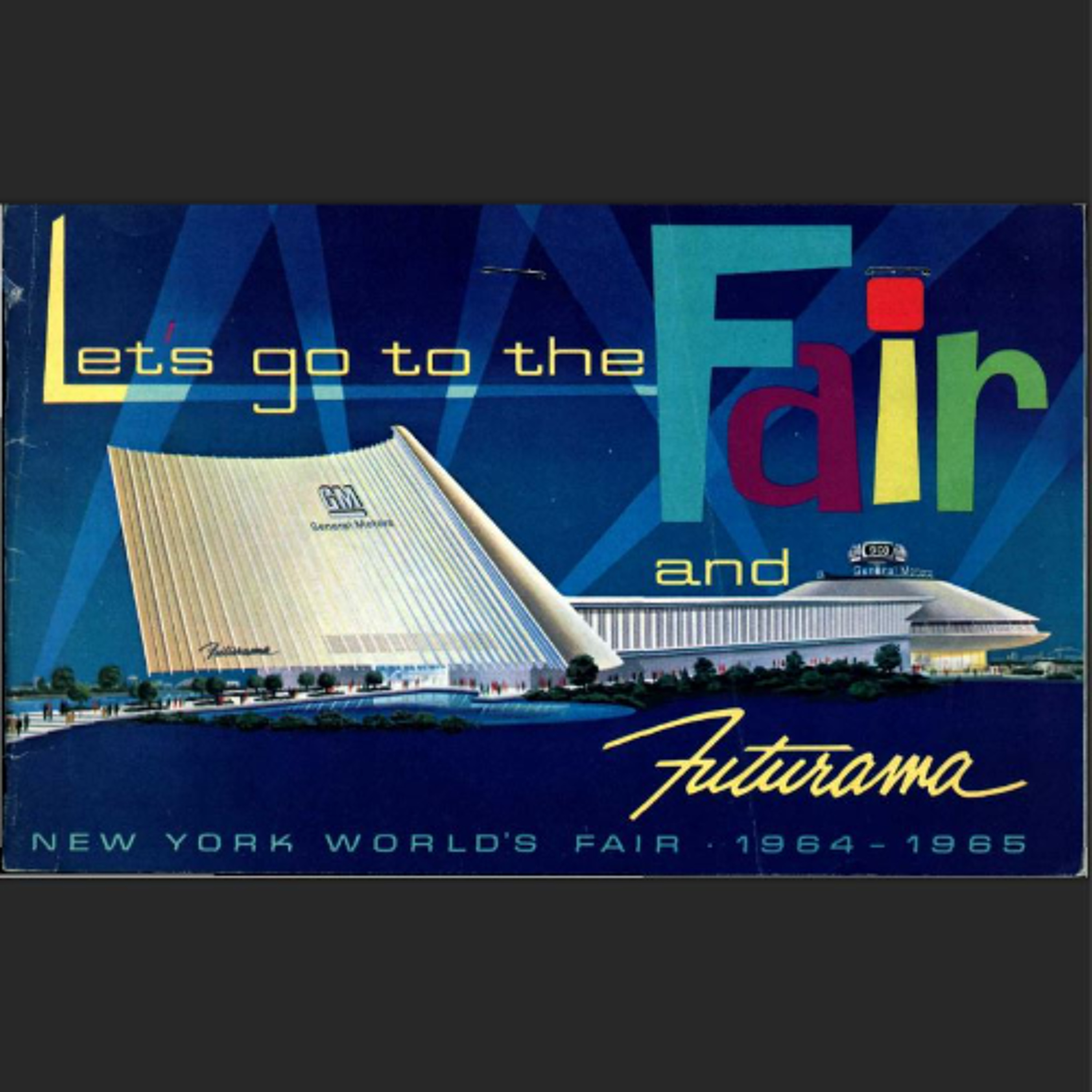
motion pictures. So DuPont sponsored a radio program called "Cavocate of America," which was later a television version. And so their participation in world's fairs was kind of part of that same agenda. So through films and displays, it's a way for the company to project and very carefully managed, you know, kind of curated image of its role in modern consumer life. And you know, really kind of emphasizing that its products would provide the American public with the best, you know, possible standards of living. So this is different than advertising, which is kind of more like the hard sell approach that you would see in commercials, but rather it's more about shaping positive public perceptions of the company. And you see a lot of other corporations doing that, particularly in the 1964 world's fair that they would have pavilions and films that, like for example, the Johnson Wax pavilion had a film that had absolutely nothing to do with Johnson Wax, but it was a way to kind of promote this kind of image of the company as being, you know, you know, I don't know, you know, part of this really good free enterprise, American free enterprise system. And fairs are really great for this because there, you know, one of the few ways that provide direct person to person contact with potential consumers. And motion pictures, so if you have a theater, you've got a pavilion, you're going to have a captive audience to convey the message. And you know, that message would be that Dupont's role in the lives of Americans was kind of unparalleled and undisputed importance. And also the, you know, kind of the really neat things about film is it has this unique ability to make complex subjects such as the field of chemistry, which I personally know very little about, but it will make those kind of kind of hard science concepts more digestible to fair growers or it can turn, you know, kind of dull facts and figures into something more dramatic and exciting. So that's really why you see corporations like Dupont turn to world's fairs, turn to motion pictures, you know, in this period. And if you want, I can give one kind of cool example. Please do. Okay, so Dupont's the wonderful world of chemistry presentation in 1964 is really fascinating. So it combined live performers and then it would have sliding screen panels of 70 millimeter color film. And the actors would actually interact with the projective images and it would be a way to like show like, you know, how cool, you know, what's different fabrics were in the fashions that they were wearing and et cetera. And then it was also kind of essentially transcending the limits of the film medium by making it very interactive. And it was kind of like a musical review. There was, was choreographed and a Domenico more Tolito, I hope I pronounced in that right. So he's an artist that joined Dupont in 1945 as a design advisor to its advertising department. And he really was the person that kind of spearheaded this concept of the Dupont pavilion and this circular theater. So I spent a bit of time with his papers at the haggly and it really revealed kind of a really interesting debate between, you know, kind of the blue sky artists vision and then kind of the reality of like the company's, you know, budget and what it was trying to portray. So that was probably one of the my favorite things that I looked at at the haggly in April. Mm-hmm. Do you have a sense of how these things were received by fairgoers? Did they walk away having their minds changed in some way or thinking differently about these things some way? Yeah, that's really hard to get at. I know, and this is, you know, kind of an overarching issue with people who do cultural history and film history as myself, the kind of reception piece of it. Did this actually change people's minds about Dupont? I know they did, because I did see after 1939, World's Fair, they did some kind of post kind of exit surveys and studies of people. And they also had kind of like focus groups and kind of psychological studies of like the mind of the consumer. But I still, I don't really have, haven't had access to that kind of hard data unfortunately, you know, which would be wonderful. I'm hoping to do another trip to the haggly at some point to do more research because there's a lot in those Dupont files. So yeah, hoping that I can kind of fill in that missing piece of the puzzle at some point. Well, when I think about film at American World's Fair is a really notable example that comes to mind is General Motors in 1939 and how their use of visual media to sell a vision of the future of the United States as automobile dependent. And of course, subsequently that came to pass in a manner not that different from the story, the vision that GM was trying to sell at the World's Fair. I wonder if you could perhaps speak to that, perhaps unpack that a little bit for us. Yeah, I think you're fricking the Futurama. Yeah. Yeah, that was again a really very cool film that combined kind of animation and again, this kind of kind of in a way like a bizarre vision of the making of an automobile because if I remember correctly in the film, there are no actual people in it. It's mostly kind of like almost like stop motion animation assembling the car together as this kind of clean, almost in a way anticipating kind of a future of manufacturing without humans. So in a way, that way it was very prescient. One thing that's kind of interesting about that film and a lot of World's Fair films that are used by corporations is the emphasis on process. So how like there's this kind of desire to show to fair goers how things are made. And so this really is a way that again film and through kind of innovative means like animation, show how the kind of manufacturing process works, which to many people might seem kind of boring, but through like the pavilion through this kind of multimedia, the kind of like I said at the outset, the big emphasis is on storytelling and showmanship. So by having all these kind of like whizz bang, you know, fancy, you know, theaters in which you know the later GM World's Fair exhibits you'd actually kind of sit in a chair and actually move through the kind of the motion picture again very much anticipating modern theme parks and of course Walt Disney, because you're probably where was his Walt Walt Disney Enterprises did a lot of the kind of work on World's Fairs exhibits, particularly in 1964. So like the Pepsi, I know I'm kind of going off on attention, but this is how my brain works. The Pepsi Pavilion was kind of where the the small world first kind of was initiated and the carousel of progress, which was also in Disneyland started off at the World's Fair. So you do see kind of also like Walt Disney is again a good example of like the synergy
between film industry and world's fairs and industrial designers and corporations who were building these pavilions and incorporating film would often rely on people working in the film industry. Some as well known as Walt Disney, others lesser known crafts people set designers to almost make it seem like you were not only watching a movie but you were actually kind of in the film. So again, anticipating that kind of immersive theme park experience that we're familiar with today. So it's another way that world's fairs is a kind of a really neat vision into the past because there often be exhibits that were more historical a nation but very much future oriented, particularly just to circle back to 1939 which was about this vision of a world of tomorrow at the precipice of World War II. So again, that historical context is quite important in which people were wondering what the future holds. Excuse me. Mm-hmm. What was part of the object here to have fairgoers associate themselves or identify with the subject of these films? Oh, yeah, absolutely. You particularly my previous book and work was on film and tourism. And a lot of kind of travel logs in tourism films. So for example, the ones that would be shown at World's Fair. So like I mentioned earlier, if you had like a foreign pavilion, they would as early as 1915, which was very surprising to me at the, was it 1913, like the San Francisco World's Fair. Argentina, I believe, was the first foreign country to have a kind of dedicated motion picture theater in its pavilion to show films promoting tourism. And so the idea is for you as a fairgoer to kind of through film, imagine yourself as going to these places. And certainly a lot of the, another kind of good example of that that isn't tourism related is the, I'm trying to remember the exact, it's the Middleton family goes to the fair or something was put out by Westinghouse. And it's again kind of, you know, this, this film of like your, you know, typical mid-century American, you know, family and, you know, trying to kind of appeal to fairgoers that would also be of that same demographic. Although the demographic affairs was a lot more diverse than was, of course, what was pictured, you know, on screens, which was, you know, definitely more geared towards, you know, your white kind of nuclear family, you know, particularly in the 30s through the, through the 50s and not 50s. Because there weren't many world's fairs in the 50s, it was just really 59 and Brussels, but the 30s and then the 60s. Well, it's a really interesting project, Dominique. Thank you so much for taking the time to share it with us today. Thank you. I really enjoyed sharing my passion for film and world's fairs with you. Well, you're very welcome. And for the audience, if you would like more haggly history hangouts, more information on the center for the history of business, technology and society at the Hagley Museum and Library, you can join us online. Visit haggley.org. That's H-A-G-L-E-Y.org. Don't be a stranger.
Podcast Summary
Key Points:
The research examines the history of film at American World's Fairs from 1893 to 1964, focusing on non-theatrical, short films used for education, promotion, and entertainment.
Films at fairs served multiple purposes
A case study on DuPont illustrates how corporations used fair pavilions and interactive films for public relations, to shape a positive public image and demystify complex industries like chemistry.
These fair films were precursors to modern immersive experiences, blending storytelling with technology and influencing later developments like theme park attractions.
Summary:
This Hagley History Hangout features Professor Dominique Bridget Heild discussing her research on the history of motion pictures at American World's Fairs from 1893 to 1964. The project explores how these short, non-theatrical films, created for educational and promotional purposes, evolved alongside the rise of cinema. The films served as tools for various agendas, including promoting settler colonialism, national branding for foreign pavilions, social education, and corporate public relations.
" The research also highlights the synergistic relationship between fairs and the film industry, noting how these immersive multimedia experiences anticipated modern theme park attractions. The discussion underscores how these films act as historical archives, reflecting the period's cultural values and anxieties, while also being powerful instruments of persuasion and ideology.
FAQs
Her research covers the history of film at American World's Fairs from 1893 to 1964, exploring how films were used in non-theatrical spaces like fairs to educate, sell, entertain, and shape cultural and political narratives.
Films supported settler colonial and imperial logics, served as nation branding tools for cultural diplomacy and tourism, reinforced or challenged social norms, showcased ties between the film industry and fairs, and promoted corporate products and consumer capitalism.
Corporations used World's Fairs to manage public perception through PR campaigns, such as DuPont's 'Better Living Through Chemistry,' using films to make complex topics digestible and promote a positive image of their role in modern consumer life.
It combined live performers with 70mm color film on sliding screens, creating an interactive musical review where actors engaged with projected images to showcase fabrics and products, blending art and corporate messaging.
Fairs featured innovative theaters, like GM's Futurama with moving seats and Disney's contributions, which anticipated modern theme parks by creating participatory, immersive cinematic experiences that made audiences feel part of the film.
Foreign pavilions used films as early as 1915 to promote tourism and cultural diplomacy, allowing fairgoers to imagine visiting other countries through travelogues and promotional content shown in dedicated theaters.
Chat with AI
Loading...
Pro features
Go deeper with this episode
Unlock creator-grade tools that turn any transcript into show notes and subtitle files.
 PodcastTranscript AI