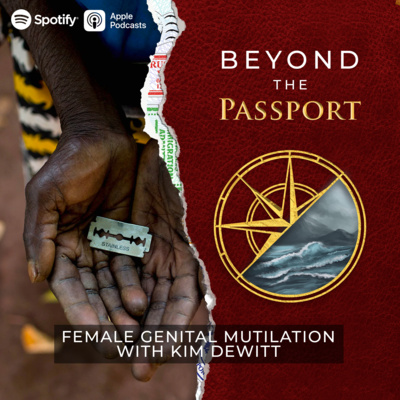
FGM(Female Genital Mutilation) and the Olmalaika Trust
from Beyond the Passport with Jasper Iturriaga
52m 56s
In this podcast episode, the host recounts a trip to Kenya's Masai Mara National Reserve, where he lived with the Masai people and learned about their nomadic lifestyle and traditions, such as the jumping dance for marriage and the historical practice of mixing cow blood with milk. Guest Kim, who moved to Kenya as a child and later lived in Lebanon, Cyprus, and Singapore, now runs the Omelika Trust near the Mara. The trust focuses on rescuing girls who have suffered trauma, particularly from female genital mutilation (FGM) and forced early marriage. Kim provides a stark, graphic explanation of FGM, describing how it involves cutting off the clitoris and sometimes sewing the vaginal opening shut with acacia thorns, using unsterilized tools like razor blades or tin cans without pain relief. This practice, she notes, causes severe pain, infections, bleeding, and even death during labor, with no health benefits. Despite being illegal in Kenya and many countries, FGM remains a cultural rite of passage in about 30 nations, unrelated to religion. The episode transitions from a positive safari narrative to a sobering discussion of the trust's mission to end FGM and support survivors through education and healing.
Hey guys, just a little disclaimer, this episode is super inspiring and it's probably one of my favorites but it can be very graphic and it might be a little disturbing to some so just a little heads up as he listens. Okay, enjoy the podcast. Congratulations, your visa has been approved. Welcome to me on the passport. Passing your seat belts has been journeyed together around the world. Yeah, a few years ago, Vijay and I went to Kenya. That was 2018, 2019, something like that. I was in Kenya with Taj and Wati, group friends of mine. We were in an area called the Masai Mara National Reserve. We went there. One of them was, I think one of them was amazing experiences, you know, the first time in Africa growing up, growing up, I really fell in love with national geographic and I hate reading but I'm always in the library checking out national geographic pictures about Africa and you know, you have these shows that you watch as Carvee channel, Bear Grill, Survival shows and Africa is one of the most, you know, growing up just impressive. You know, I was like, man, I want to go there growing up and so when I was there, a really, really amazing experience. And so today, we have someone from Africa. From Kenya to be exact. Some people are angry when you talk about Africa, if it's like a country. But we're specifically talking about Kenya and our friend is Miss Kim. How do you pronounce your last name again, Kim? Do you win? Do you win? Okay. Can you tell us more a little bit? Okay, just a little background before you get in, Kim, Kim, we have a project this year, 2022, which month did we go there? February, February, we went to Kim's place, we were working for a project for a organization called Child Impact International, which Vijay, Worker, Sen. Editor, and also Worker as a filmmaker and we are supporting Kim's trust. It's just going to talk more about that, the all the lack of trust. And we're going to talk more about that as you move forward. But Kim, can you give us a little background of who you are, where you from? What do you do? Sure. I was born in the US and shortly afterwards my parents decided to come to Kenya as missionaries. So I actually left the States when I was just two years old and was raised here in Kenya for about 12 years, then Beirut Lebanon for a few years evacuated to the island of Cyprus and went to high school in Singapore, then back to the US now back to Kenya. Wow. What was that? Let's a little recap from the US to Kenya, to your old from two years old and then where? And then to Beirut Lebanon and then the Cyprus. Of course, that was during the worst part of their Civil War probably. So we spent a lot of time in bomb shelter and then finally we were evacuated to the island of Cyprus. And then you went to high school in Singapore. That was a lot. Okay, so that's like three continents. How was cool? Kim, were you at home school? At all? Ever? No. For grade school because you were in Kenya in the middle of the year. Yeah, and in all of those places I went to either mission schools or to American schools. So you're boarding school child. Yes. Tell us a little bit about, okay, B.J. and I went to the Masai Mara. We spent some time there. I think we spent like a month or so. I've done three trips to Kenya and it's all in Masai Mara. I've done some in some Burulan, know that, some places, KC and all these places. But Masai Mara is very special to me. Number one, these are farry. Amazing safari, of course. The Masai Mara National Park. But I think one thing special for us is that we live with locals whenever we're there. You know, and so we would go to safari houses and all that like fancy, uh, glamping situation. But my favorite part is just living with the Masai, you know, and yeah, talk to us a little bit about the Masai people. Like, who are these people? What what are they about? The Masai live along the whole southern part of Kenya and they trickle in the northern part of Tanzania, St. Mara Masai. And they're nomadic. So they cattle, sheep, goats, they're herdsmen. They move the herds according to the rains. If it's dry, they'll walk hundreds of miles to get grazing areas for their cattle. They are a pabbie of, they're one of the few tribes in Kenya that stayed very traditional, stayed to their culture. When Kenya was colonized, they pretty much refused to change to the western ways. And I think that's a large drawing card for tourism because it so much about them sort of takes you back in history to maybe what you read as a child and imagine versus others who wear western clothes and don't walk around with spears. Exactly. Yeah, I think that's there's a big attraction with tourists. And when people come to Kenya, you never hear them say, oh, I can't wait to see a Hisee person or a Tikuyu, but everybody's like, ooh, I want to see a Masai. That's true. I remember we went to a Masai village and a Boma, one of the biggest Boma, I forgot the place that, which I of the Mara we went in. But I remember, they went to have, they gave this traditional dance, the guys. And we were told that the tradition says that the higher you jump, the higher you jump, the bigger possibility, the more chances of you getting a wife. And the highest jumper gets a wife, right? From the elder in the chief. And came, I tell you, man, I was jumping. I was, I was, you know, if I knew how to do back then, I did it three times. And I'm still single. You didn't get off the ground. You don't do, you don't need to do me dirty like, you know? But anyways, I was jumping so hard. I was like, but unfortunately, I'm still single. It's, it's unfortunately, you proved that tradition wrong. Yes, exactly. It's a scam. That's what it is. But anyways, back to the Masai. I remember, you got DJ and I, remember when we drank tea? It was like, okay, we drank it for like four, a couple of days. We didn't know he was made a blood and can you tell us more about that? That's a scam too. Yeah. Actually, historically, the Masai warriors would mix blood with milk. I think it's more of a protein, sort of iron in with cow's milk. But for the most part now, it's not done. And it might be done at a special ceremony or something like that. But often when you go to their villages and you talk with them as tourists nowadays, most of what they say is kind of re-recounting the past. No more blood. No more blood. It makes me feel better. Yeah, it was like, oh, yeah. Nowadays, he is just tea leaves and milk and sugar and some water. Good to know. Good. Yeah, but it's amazing. I've heard like the older ones, you know, they have this big, like, holes in their earring, their ears, their ears. He's really interesting. And some of them, our legit fought lions. It's wild. And it used to be to prove your manhood. You either participated in or you actually had to kill a lion, but because wildlife is protected nowadays, it's no longer necessary or they've worked on not part of their. And I've heard, I've heard Kim that now, because the Masai, they're only the only tribes inside the park. And they're not supposed to be people living there. But since they it's their home, you know, they live with people and now they have clashes with their cows, the cattle and the wildlife. In the Masai Mara, they don't actually live inside of it. They live on the edges of it. When we have dry seasons and a lack of rain, they'll often take their cattle into the reserve because the reserve doesn't have fences around it. Animals wander freely. It's not like a park that's fenced in. So the animals can come and go all the time. And so often the they'll take their cows into grays. And there's some issues with that. Yeah. But that's true. That does happen. And sometimes
because there's tourists there, they'll take the cows in actually at night because the tourists are not out and about at night. So it's like a switch, when it gets dark, the cows move in, when the sun comes up, the cows move out and the tourists come out to look at the animal. It's funny how Kim says tourists are not supposed to be out of bed. Because we went out and we ran outside. There was one time we were in this photo of BJ in with the night sky. And we were not supposed to be outside, but we like bribed them aside. They're like, hey, can we go outside? And the land cruiser. And I was like, BJ. And I couldn't hear the heinous laughing on the background. And I'm like, oh my god, this is so scary. But I have to, I mean, we at least one shot, an amazing shot of land cruiser and BJ standing up. So nice. So it was one of my favorite moments up there. But anyways, that was illegally done. Hopefully, we won't be banned. But we were not eating by the lions, so that's great. But I've heard that the lions are the least of our concerns. It's the elephants and the buffaloes that kill some more people. And the hippos. The hippo is the number one killer. And they're vegetarian. But the hippo is very routine. He doesn't have that great of eyesight. They graze at night because they're grass eaters. And so what often happens with them is somebody gets between them and the river and they know the river is safety. So they're hustling back. And you just happen to be in the way. But they're vegetarian. They don't eat you. There you have it. Be careful of vegetarians. Okay, Kim, tell us a little bit about, okay, so usually when you go to Kenya or Africa, it's either you see poverty in the pictures. And you're like, oh, poor place. You know, no, that can't stuff. But there's a difference between people who, when you read news, the news is people are just statistics. You know, but when you live, we'll live with people. They stop becoming statistics. They're just the people. They see them. You see them. And so, bring us and just talk to us about not being a tourist. And just you as a person living there because it was like, technically, even though I've been there many times, I'm still a tourist. And I've not lived as much as you in Kenya. Tell us a little bit of the struggles there. And Omalika, where is it situated? And tell us about that. A little bit. Let me go back on the tourist thing. I think that a foreigner is always a foreigner. And so to, probably to most Kenyans, they would look at even me as a tourist. Although there's, you know, you're not, you're always an outsider. An outsider is an outsider, regardless. I'll never be a true Kenyan. But with tourism, with the longer you live here, it's just an understanding, it's friendships that make the difference. With a tourist, you're just coming to take pictures and to see and leave with somebody who lives here like me. There's bonds that a tourist wouldn't have. But I'm located right on the edge of the Mara. Probably five minutes from the main gate into the reserve. Our place overlooks the Mara, because we're on the side of a hill. In a little town, or we call it a center, called Secondani. And that's where we come from. Can I say a little bit before you forget him? If you follow him on Facebook, she has wildlife videos every single time. I look forward to this. Because she puts cameras on the fences and she always sees the elephants and buffaloes. It's really interesting. So if you have Facebook, follow him or Instagram, they're almost like a trust. Really, really interesting. Yeah, I think because I was raised here and I camped, our family would go out camping on weekends. In the US, when you camp, you have these camp spots where you roll in and you hook up your toilet and you hook up showers and everything. Here when you camp, you literally set your tent up in the middle of nowhere. There's no showers, there's no toilets, there's no people, there's nothing but you and wild animals. And so when I grew up, that's how it was. We would literally camp all the time. And you would have elephants in camp, you would have lions in camp, anything would be there. Yes, I think I just have a real love for nature and wildlife. So we try, we love the wildlife that are around us here. It's really cool when you have elephants walking by. Talk about the organization that you with, the Omelike Trust. Can you tell me more about that and what does it mean? Omelike? Malike in Swahili. Malike means angel. Every tribe has their own dialect. The Masai use a lot of words with O-L before it, O-L-E or just O-L. And so to make it, because we live in Masai, and a little more Masai, we put the O-L in front of it. So the home is Omelika. Don't confuse it with Oklahoma. And so Malike means angel. And basically, it's a, we have several projects going on here, but the main thing that we're involved with is girls that have a little girls, that have experienced trauma in their lives. And one of those things is female genital mutilation and childhood. Marriage. So we take in little girls that have experienced trauma, all the way down to infants. And we help them start the healing process, get education, and then eventually are able to reunite with their families again. Wow. We did a film about this, but it was for a much more, I don't know how to say it, just a little tame though, I'm just kidding. So today, just a little disclaimer, we're going to do it a little bit more graphic. And just the reality of it, we're not going to miss it. So if you're squirmish and. And they begin to, maybe we're overeating. I just want to heads up, but yeah. Kim, talk to us about the female genital mutilation. What does that mean? What is it? What's that all about? First of all, I want to really thank you guys for this, because a lot of people want to ask me questions about FGM, female genital mutilation, but they don't really want to know what it is. And it's hard for me because I'm so passionate about ending it. I like to say exactly what it is, because otherwise we can talk about something that's just like using a different language and how much did you glean if you didn't, if you don't understand that language. So I want to thank most of you for giving an opportunity to really share what FGM is. And it literally. It literally goes with the name. Female genital mutilation is so key to it. And there's about three or four different types of. It's also called circumcision. So sometimes I might use one word or the other here in Masayalan, they call it circumcision. There's about three or four different types of it. So it can range from anywhere from cutting the clitoris off to cutting off the clitoris and the labia, majora, and menorah. And then sometimes even stitching girls up afterwards. So it varies in how extensive it is. Wait, I didn't know that. You didn't tell us that when we were there. Stitch it. Some different cultures or tribes will cut everything off and then they literally will show you so a girl shot so that the opening for her to urinate out of is maybe the size of a pencil. And there's been cases where ladies were thought to have a tumor. And when they opened them up, they realized it was years of they're not being able to have their menstruation properly because the whole was too small. And so when they had their periods, nothing left because of that. So yeah, so then what happens in those areas where they do the sewing up the night that you're married, your husband has sexual relations with you and breaks that open during the act of sex. And then often the family will come in to verify the blood and everything like that. And it's a celebration to show that you really were a virgin before you were with him. So those are more areas like Somalia, some of those places. That's like a more extensive. I've known girls and read about girls that were actually sewn shot with Acacia sorens. And I don't know if you've ever in your time here stepped on in Acacia sorens.
Yeah, it's like even when you get it out it's still a little painful. Yeah, it is Yeah, you can imagine in that area, vaginal area actually having those acacia thorns used to to sow you shot. Okay, well, if you're listening to this and if you're shocked, we're shocked as you because Kim did not tell us about this when we were parent Kenya. But yeah, so um then here in Masai land, um they they're not they don't usually do it to that extent. But they will take the clitoris most of the time, pull the clitoris out and then they cut it off. Usually that's what it is without going further than that. Um but our girls and people I've talked with used the expression sawed it off. There's a big difference between cutting or slicing and sewing. If you think of sewing, it's a movement back and forth. It's not just a quick slice. And in a while, you know, years back and probably in some places still, they used to simply take a piece of tin can sharpen that tin can and use that to cut the clitoris off. Now the majority of people now use a double edged razor blade. But you can imagine a sharpened tin can trying to cut any part of you is not a quick slice. I mean when you think of it like that and that same razor or that same tin can is used on multiple girls without any sterilization without cleaning it in between girls without antibiotics without any pain medicine, nothing. They can just go from one girl to another girl to another girl using those same instruments to do it. So it's truly truly in all sense of the word mutilation. Yeah and we want to make it clear that there's no clinical benefit or whatever benefit whatsoever for this practice, right? It's purely cultural and it's like a right of passage. Yeah so here in Masai land it's considered a right of passage from being a girl to a woman. So after you've had it done now you're ready to be a wife, you're ready to be married off. Some people will tell you that it's also will make you less promiscuous and it will also some believe that it makes you more fertile. So you'll have more babies all of which is not true at all. In fact it can it causes major problems when you get pregnant and go into labor. The mother can die. The vaginal area doesn't stretch like it should anymore because there's so much scar tissue. The mother can die during labor, the child can die during labor. There's girls who actually bleed to death during the when they're being circumcised and when they're going through the female genital mutilation they actually could die from bleeding to death from that. All sorts of infections they can get. There's absolutely no benefit to it at all. And did you did you mention there's no anesthetic? Nothing. Yeah no anesthetic to full pain. Full pain. Yeah. Yeah. And then you can imagine afterwards how it is as well for days your sore when you know a burning sensation down there there's nothing they put on some some of the girls that we have have told us that they had sugar put on them because they said sugar helps with a calculation of the blood. Some told us that they actually took sour milk and mixed it with flies and then they would put it on them. And and we hope that every now and again I have never quite figured out the fly benefit. But yeah it's it's pretty wild. Well this one turned from the amazing Safari trip to the dark side. Sorry. Yeah this is really dark. But it's illegal came right? It's illegal yes right? It's illegal it's illegal in Kenya and in most countries it's illegal now. They're really fighting hard to bring awareness about it and and to end FGM altogether. It happens in hubby 30 31 countries around the world. So it's not just Africa but it is illegal it has nothing to do with any religion. Some people like to pin it on different religions. Nothing to do is add it's all cultural and and it happens the Philippines still can really yeah it happens in the south so same thing. We don't know and really talks about it but now yes I was doing a podcast about it was mentioning that there's a group down south of the Philippines and someone commented that it's not as rampant because now we it's voluntary for a woman to do it but it's like come on man no one's really want to go through that you know you know we've had girls we have girls right now at the home who actually requested it. They were young and they don't know what it is though. Yeah. So nobody other girls were having it done and nobody will say what it is so you want you know this peer pressure you want to be like everybody else and so both of them were circumcised but they both had no idea what they were getting themselves into and both of them have said if we knew what was going to happen to us we would never have done that but you know some so some fighters and and don't want it they run away beforehand others request it and then wish they never had and then some are just simply forced into it. You are mentioning some some girls were running away and I've met some of those girls who ran away and you took care of them. Yeah so the girls we take in here are connected with FGM either they were they've already been circumcised they've endured it or they were at high risk in and about to be so that's why they're here and yeah we have two girls the girls that I was actually just talking about that had requested it and it had happened to them. They were young there and they actually are now with us because they were circumcised the husbands to be came to the home they saw them they said this is our only chance to get an education we know another girl who went to the center this little town and she was safe so it got dark they slept together in their little minyata and then about midnight they ran and they ran literally through the Massaimara reserve all night long without any light without anything and by morning time they reached where we were they went to the school they went through the safari game with all the wild animals and survived. I said to them you know they actually told us how they had to sit and wait sometimes because they could see elephants ahead of them in the darkness and they had to just wait behind which until then I said to them you could have been killed by so many things and they said we would have rather been killed than been married off. How old did his girls came? They came to us probably maybe 13 years old but we have girls here who were married at eight so they were actually circumcised maybe at seven years old and then we had husbands a couple of them had husbands that might have been 60 or 70 years old and they were only eight years old. Okay I've also heard some stuff where some of these girls are even tied to the tree and their knees and all that kind of stuff. Yeah this is really like when I was there it took me a few weeks to properly sleep at night hearing these stories because that really just affected me and you know okay you're probably listening to this podcast and like wow it's not happening to me or it's not happening to people near me and all that but when you actually go there when I went there and just seeing these kids' faces and you know their story their face does not really leave your mind. Yeah I want to mention that these are one of the most like beautiful kids with ever seen. Amazingly beautiful just bubbling. It's important for people to realize we've had people who wanted to come here and visit and they had like kids maybe girls or children sons I don't know 12 years old 13 years old and they asked you know what do you do and I explained you know the girls here have endured trauma of different sorts and they said we're not comfortable bringing our children there to just because of what those girls have endured. I'm always like you they look just like your own children you know when your circumcised it's nothing you don't they don't wear a sign saying I
endured FGM, you know, they're laughing, they're playing, they're normal children. So from the outside, you would never know anything had ever happened to them. They're amazing in their resilience and in how they come back and how they can, their survivors and successful at surviving. But there's nothing you're going to see looking at them to know what they've been through. Yeah, I would let my daughter mingle with them. Yeah, they're the most amazingly fun girls, even though we don't speak the same language, it just hang out together, you know, it's nice to sing with them too. Very good singers. But Kim, I remember you talking about some of these kids were putting a hyenas, hyenas, you know, talk about that, some of the kids that you adopted there. Yeah, now we take in infants in our county, which is quite large. There's no place for babies who have experienced trauma, infants, anybody to go. So we're now officially the home in this county that takes in babies and infants. And so what happens is unfortunately there are occasions where babies are literally thrown away. And COVID, we had thousands of young girls who became pregnant, school kids. And so some of this we're thinking is from young girls who gave birth to themselves. And in Masai land, I'm going back a little bit. So remind me to come to where you wanted me to be. When you get pregnant in Masai land, a lot of people give birth in their homes. They don't go to hospitals and their homes are made of modern manure, darkers, no light, there's no running water. And so they have a tendency to not eat very well during pregnancy in order to keep the baby as small as possible to create an easier delivery. So a lot of times you might see somebody and not realize their pregnant because of them not eating well. So a school girl can hide her pregnancy for a long time. They wear sweaters, they wear jackets and you wouldn't necessarily know they were pregnant at all. And then they give birth somewhere out in the bush and they might just leave the baby there and then try to go back to regular life. And so I think at least one of our girls I feel in my heart might have been a child giving birth to a child a baby. But yes, we do have abandoned babies. One of them was found in a hole. We're thinking it might have been a hyena hole. She had been in there maybe for a day or so. Ants had bitten her. She had cuts on her from stones around her and somebody heard her crying and they called for help and they got her out and so she was in hospital for a couple days and then she was brought to us. But of the six babies we have right now, all of them were basically thrown away, found in the rubbish or found in different places and then we get them as little infants just a few days old. So they're all, do it. Their last names? No. In Kenya forners cannot adopt babies. Okay. Okay. So when babies come to the trust, it's a court case and they call it a committal here but it would be like a legal fostering type thing where they're legally in our care until a certain day and then that keeps getting renewed as needed. So if you're an abandoned baby and you come to us after six months, if we get all your paperwork in order and everything you can actually be put up for adoption, buy a Kenyan family. Yeah. And just to add to this, Kim's the organization she worked with, the only like a trust, they take care of them from infancy until they finish university. Is that correct Kim? Yeah. We have a couple guidelines that with that. So anybody who comes to the home, we look for sponsors, for donors and then we pay for their education. Once they are transitioned home again, then there's certain guidelines that they have to follow with communicating with us, getting paperwork to us and they can't get pregnant and then basically we can, as long as we have a donor and they're following the guidelines we set up, we will pay as long as we can pay through university, as long as we have those things in place. So Kim, we've been talking about girls who are under the circumstances and abandonment and those kinds of stuff. We've mingle with them and they look like like perfectly happy kids. But like how are they handling the trauma? What is a healing process look like? And what do you do in order for them to help them overcome that? I think, well, we have a lot of staff here. We have a social worker for counseling. We have a nurse A. We have extended care, pediatrician. We have an OB/GYN. We have psychologists in case there are those needs. But what we have found is simply being in an environment where you feel safe, you feel loved and there's a sisterhood with all the other girls that are here. That alone is so huge in a healing process. When you can realize you're not all alone, that there's other people who understand, there's other people who have endured what you have. And yet you're still loved, you're still accepted, you're still valuable. That I think can boost you so far and is life changing for many of them. And then the fact that they can get an education, that's life changing to them. They are a little different than Westerners. I think I always get myself into trouble with this. I know that when somebody's raped or has endured some type of trauma, we're all humans. Regardless of our skin color, regardless of where we're from, we all have emotions, we all hurt, there's pain. But there are some cultures that seem to bounce back easier than others. And I'm not sure where that comes from. These girls, if they were in the US, would be doing counseling the rest of their lives and possibly put on medication and all that. But here, it's like, this happened to me. I have to keep going. I have to find a way to make it in life. And so I'm loved, I'm taken care of now. It'll be okay and I'm going to move on. In all my years, I still haven't figured out how that works for some on one continent and how it doesn't work for others on another continent. But there is something within them that pushes them to be survivors. How does that, what's the thought process like when you come in your, and I guess I'll say that, you know, Kim's place is a really a safe place, like a citadel. It's like, it's surrounded. It's surrounded. We'll put this on the, the description. You can follow them at the Omelike Trust. We put the link there in the description below. But there's pictures there, drone shots that I took. And they're surrounded by this wall with fans and electric fans and cameras and the girls are safe. It's such an amazing environment. But Kim, what does that feel when you go and see a baby, you know, like see these kids and you, you know, the first time you see them, how does that even feel? You know, I can only just listen to your story, but how does that feel? You know, you see a baby child. I think, you know, it's ironic that today we just got another child. She's actually the same age as Angel who is one of our girls. I remember Angel. She's half the size of Angel. And she, she was brought today because her, her mother drinks and so neglects her and her sister and her father assaulted her. So she has a cut from the top of one eye all the way across her face, all the way down to the other side. And we were, it's a wound healing. We were told she was hit with a soda bottle by her dad across her face.
So she's been with us now about two hours and I was over with her. You know every baby that comes you're you're just blown away that people could do stuff like that to anybody to no matter your size or age your heart just breaks for them but at the same time you're so happy that we're here because now today begins her healing. Today her life will begin to change and so you can either choose to focus on the fact that this child was thrown out or this happened to this child or this to this baby or you can look at today begins a new day. Today that that past becomes history and and she has a new opportunity and a new a new beginning starts and so for me that's what I have to focus on that if I if I allow my emotions to dwell on what brought those girls here would be so discouraging and you would feel like so overwhelmed because we have so few here and imagine how many there are out there you know they say that there's three million girls and women are at risk of FGM every year which translates down to 8,000 girls every day. 8,000 girls around the world every day are likely to be circumcised. So as much as we need to understand those statistics and realize that that's happening at the same time if you just thought about all that all the time you would be so discouraged and and for me I could say oh I just have you know 20 girls here or 10 girls here and imagine 8,000 I'm not doing enough which I'm not I wish I could do more but you have to focus on the positive and that is that the baby's here now that girl is here now and this will be a life changing experience for her and she will never abandon her own child she will never put her own girl through FGM and so that's a life changed a family changed and eventually a community changed. I remember talking about this I don't know if you're comfortable talking to this podcast about how you were struggling also and how these girls were you know how these girls even saved you you know and even remember that talk that we had that was really powerful I want you to share that nor our little humble podcast. When throughout my childhood from moving from different places and just being raised probably very differently than the average American child there were a lot of things that I went through and and struggled with personally my parents did the best they could and when I was in elementary school finishing up elementary school we were at a mission station and there were lots of families there and there were some that had kids my age there were some that had much older children and one family had a son who was much older than me and he forced himself on me and I remember that I didn't tell anybody it was so hard because you know you're all missionary families and everybody knows everybody and what will that look like to the community and what would that look like to other people there and I would be accused of this and I would be blamed maybe you know it was me who caused all of it and and so for for pretty much 40 years of my life I relived that experience every day I thought about it I I felt all the feelings I every sense in me remembered every single thing that happened and I never talked to anybody and then I've always had this from living in Kenya and a lot of the time living around the must-see people I I always had this strong feeling for the girls that had endured FGM and and I realized over time that I was drawn to them because of so much similarity between my childhood and theirs their circumcised by ladies by family it's your own mother holding you down and tying you up to have your clitoris cut off it's it's your everything is arranged for you and done that is hurtful by those you know not by strangers and then I could understand that because what I had experienced was from those around me people who knew me people who were part of our mission family and then once your circumcised you don't tell people you know I was circumcised there's no sign there's nothing you're not proud of it you're embarrassed and so once again that was as something I could relate to because I was embarrassed of what had happened to me I thought I was a bad person I thought I had done something wrong and these girls experienced that same thing they don't feel valuable they feel like like they're not complete they're not whole anymore and so there were so many so many things that I could understand about them and I think that's where this home the trust was came from was my feeling of there's so many people out there that are hurting that have scars that nobody can see where we're all sympathetic you know we run and open the door when there's somebody with a cane or or with crutches or wheelchair will hold the door open will you know you see somebody who's blind you see somebody who's burned it's like people are so compassionate and and I realized there's so many of us that have scars that nobody can see and from the outside we look happy we look confident we look like we've got it all together and on the inside we're literally holding together help together my stitches you know we're not complete there's there's so much hurt inside of us and and I knew if when I heard their stories and when I learned more about FGM and other things like that I realized that I am valuable too I am worthy of being robbed and I thought their stories helped heal me and in turn I want to turn around and give opportunity for every girl that I can help to help her heal to create an atmosphere that that can help her feel so valuable and worthy regardless of her past and the things that she struggles with so that's how this home my past their past all meets here at the trust and we leave here different people wow have you ever told your story to any of the girls again I have every now and again I think they need a good lecture I think it's important sharing is important we carry burdens and I think sometimes we we we think that we have to be perfect I I was a pastor's wife I worked at mission schools and and students look at you and and everybody thinks you you know you you feel you put it on yourself that you have to be this perfect person and when your pastor's wife hey you're like supposed to be there with a halo and on a cloud playing hard thank you and reality is we're simply humans and we're struggling and and from the outside you don't let people know that and so I think it's so important to learn that you can share and you can tell people your story and I think the girls gain strength when they look at me and they know things happen to me too and and and I want them to learn to talk and share because them sharing can help another girl and that can help another girl it's like a ripple effect you talk about your resiliency you know and I think a big part of it is because they're exposed to you and I think you sharing your story to them is really important I remember I'll always remember the the one frame in your library that says broken crayons till color and I think that's very powerful for them to just understand that you you know even with you.
everything they've gone through that's not the end of their life and that's what you do there and they color and I think you color him and you said that um you'll never you'll always be a foreigner to the Kenyans but for what it's worth I think at least to the girls your family to them and I think that's what what's important Oh thank you and I'm gonna make me cry that's what we do almost made me cry yeah thank you so much you have been one of my um having inspired me the most game so thank you so much you've always been an inspiration I remember Kim talking about how in heaven you know well we won't be having any scars because someone took died for us and and he was like telling us about how the only person in heaven that will have scars Jesus because he he had that scars who are scars will be healed so I'm happy for these girls yeah the significant thing about that is he took those scars on purpose and none of us have willingly um asked for the type of scars that some of us carry oh yeah well thank you so much Kim thank you Kim we miss you we miss your passion shoes passion fruit juice yeah Kim I'll be there soon I think the lottery I'll come to the Philippines come over we'll take care of you thank you so much well if you guys wanted to help Kim the description the information is in the description below if you guys want to do Nate you can also um check out our program in child impact uh that org but if you wanted to visit Kim's site that's almost like a trust that org is that the right website Kim yeah almost like a trust that org and or you can message her on Instagram she's active there too and we and people can come volunteer yes yes yeah you can come they're dentists their nurses can come and help out so please come you can go safari yeah spend some of the yes safari also if you just wanted to be a tourist you come to Kim's place and the the proceed goes to the girl to help the girls uh with isafari yeah they have a nice safari camp there so it's amazing you should come thank you so much Kim all right awesome guys thanks so much miss you wow you guys finished the whole episode thank you for listening and journeying with us we have more amazing stories in this podcast so if you have not checked them out please do we release one episode every Monday join us next time beyond the passport thank you for listening tantantantant
Podcast Summary
Key Points:
The podcast host shares a personal experience visiting Kenya's Masai Mara, highlighting his fascination with Africa since childhood and the cultural traditions of the Masai people, including jumping dances and blood-milk tea.
Guest Kim, raised in various countries including Kenya and Lebanon, runs the Omelika Trust in Kenya, which supports girls who have experienced trauma, such as female genital mutilation (FGM) and child marriage.
FGM is described in graphic detail
FGM is illegal in Kenya and many countries, but persists in about 30 nations as a cultural rite of passage, with no medical or religious basis. The trust works to end the practice and help survivors heal.
Summary:
In this podcast episode, the host recounts a trip to Kenya's Masai Mara National Reserve, where he lived with the Masai people and learned about their nomadic lifestyle and traditions, such as the jumping dance for marriage and the historical practice of mixing cow blood with milk. Guest Kim, who moved to Kenya as a child and later lived in Lebanon, Cyprus, and Singapore, now runs the Omelika Trust near the Mara. The trust focuses on rescuing girls who have suffered trauma, particularly from female genital mutilation (FGM) and forced early marriage.
Kim provides a stark, graphic explanation of FGM, describing how it involves cutting off the clitoris and sometimes sewing the vaginal opening shut with acacia thorns, using unsterilized tools like razor blades or tin cans without pain relief. This practice, she notes, causes severe pain, infections, bleeding, and even death during labor, with no health benefits. Despite being illegal in Kenya and many countries, FGM remains a cultural rite of passage in about 30 nations, unrelated to religion.
The episode transitions from a positive safari narrative to a sobering discussion of the trust's mission to end FGM and support survivors through education and healing.
FAQs
The Masai Mara is famous for its amazing safari experiences, including wildlife like lions, elephants, and hippos, as well as the traditional Masai people who live nearby.
The Masai are a nomadic tribe in Kenya and northern Tanzania who traditionally herd cattle, sheep, and goats. They are known for staying very traditional and refusing to change to western ways.
FGM is the cutting or removal of the clitoris and sometimes other genital parts, often using unsterilized tools like razor blades or sharpened tin cans, with no anesthetic, causing severe pain and health risks.
No, FGM is illegal in Kenya and in most countries, but it still happens in about 30 countries around the world due to cultural traditions.
The Omelika Trust is an organization in Kenya that helps girls who have experienced trauma, such as female genital mutilation or childhood marriage, by providing healing, education, and family reunification.
Hippos are the number one killer because they are vegetarian but very routine, have poor eyesight, and can charge if someone gets between them and the river, their safety zone.
Chat with AI
Loading...
Pro features
Go deeper with this episode
Unlock creator-grade tools that turn any transcript into show notes and subtitle files.
 PodcastTranscript AI