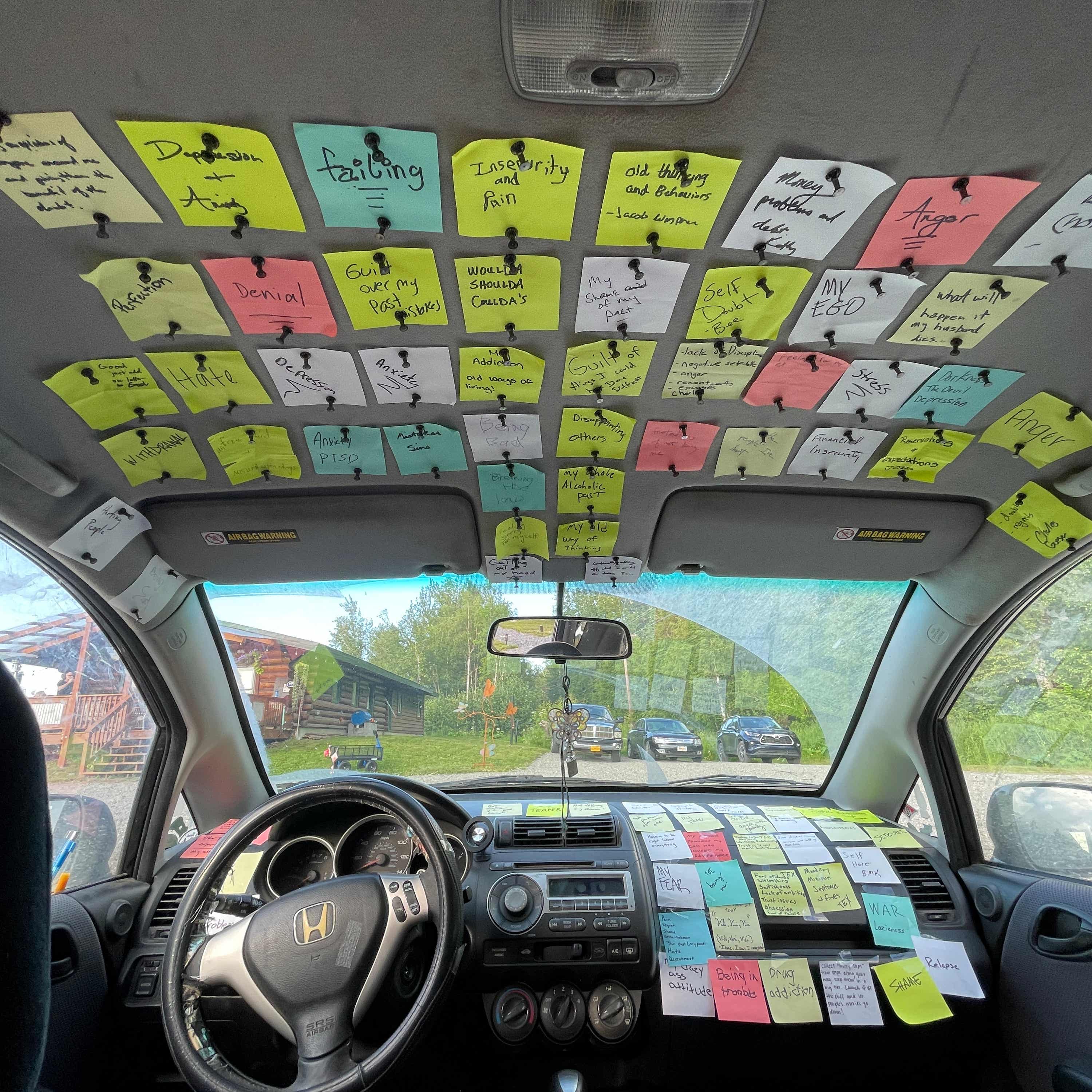
Fear is not just an emotion but a reflection of our attachments—what we hold onto or desire. The core insight presented is that fear arises when an attachment is threatened, either by losing something we currently have or by failing to gain something we want. This dual framework—loss of possession versus unmet desire—provides a clear lens to understand and analyze fear. When we recognize these patterns, we can pause and ask whether the fear is rooted in reality or in an illusion of control. The discussion emphasizes that our fear often stems from a need for certainty, stability, and self-reliance, which life rarely provides. Instead, life offers change, uncertainty, and surprise. By honestly confronting these fears through daily self-inventory, individuals can uncover where they place their security—whether in relationships, achievements, or self-image—and begin to let go of what is beyond their control. This process fosters courage, acceptance, and a deeper trust in life’s unpredictability. Ultimately, the key is not to eliminate fear, but to understand it as a signal of where our values and vulnerabilities lie. This awareness allows us to live more freely, with less resentment and greater peace, by recognizing that true stability comes not from control, but from embracing the present and trusting in a larger, more forgiving reality.
Well, hello world. It's been a minute. I am still working on the race recap from the 100 mileer I did a few weeks ago. Back on the 30th, it'll be a month by the time I think I finally get it done. What do I think it's worth it? It'll be the first thing that I publish from a writing perspective and quite some time. I hope you come back and read it. I don't even know why I went on that little diet tribe, but anyway, today we're going to talk about fear. And the reason being is I went to a meeting on Saturday morning at 8 o'clock outside. Love it. It's one of my faves. And the discussion was based off of reading that we had that morning, but primarily it was about fear and kind of how our relationship with it and understanding of it changes when you start working some form of a recovery program. And I find that I have a very practical view on fear, but there's like a bit of a philosophical underpinning, and I was a friend that brought this definition of almost like a categorical definition that I really, it's just really stuck with me, but thinking about it for three days straight. And kind of at the center of it all is that this idea that fear is an attachment that's under threat. So if I trace it backwards, what am I attached to that can I associate with that fear? It almost works every time. You know, it may be an attachment to a person, maybe a job, maybe it's a relationship, maybe it's a way I think about myself where I think or my reputation, a plan I have, something that I, you know, a future outcome, a sense of safety, like that's real. Or who I identify or this persona that I built up that I want people to believe in. And the two categories he brought up with fear is broken into two things. That were fears that were going to lose something that we have and fear that we are not going to get something that we want. And I really like that because it is this, this is framework. And that it allows me to really look and examine when I get into the moment of being afraid as to why, right? So I'm afraid I'm going to lose something that I have. So that's possession, a security, identity. I can fear losing love, comfort, money, status, my sobriety, my health, a job, relationships, or this life that I think that I built. And sometimes the thing we fear that we're going to lose is real, I guess they are. And then other times it's this, this, imagine, how would I say this, imagine control. And so in a way it's saying that I have something, but I do not trust that I will be okay without it. And that's playing on my emotion, right? That is a, an emotional problem, almost a spiritual problem because it reveals to me where I put my security, like what do I think is holding myself together? And in the program we often will say that fear exposes this, this idea of self-reliance and this, this illusion that the only way I can be happy or have peace of mind is if circumstances stay exactly as I have them now or how I want them to be. And that second fear is, you know, the fear of not getting what we want. And that's rooted in desire, expectations, my projection of the future. I figured that I'm not going to get into that relationship, I'm not going to have that new job or that new opportunity, I'm not going to get that recognition that I want, it's not going to be the outcome that I want, someone's not going to accept my apology, financial security, success, whatever this version of life that I've convinced myself that I have to have, that I've imagined, and if I don't get it, something's going to be bad. It's that I need something to happen in order for me to be okay. And that's a kind of hard way to live because it robs me up like right now of being president and it places me in this emotional, turbulent future that doesn't even exist that makes everything, like my serenity, my peace of mind, my confidence in the future, my reasonable happiness, all of that becomes conditional, right. I'm saying to myself, it can only be okay later if everything happens the way that I want. And I think this is why we get like wrapped up, we talk about resentment as the number one offender, and I think it's because fear, in some cases, will come before we resent something, right. We get resentful because we don't get what we want it, and then we resent a person place or thing. And so it's all weekend, right, I'm thinking about this, and I'm like, I can use this as like a diagnostic tool, and so just instead of just being afraid or fearing or getting wrapped up in like worst case scenarios, I can say to myself, what am I afraid I'm going to lose? What am I afraid I'm not going to get. And we talk about it, it's like we get a chance to pause, we get this little bit of space for a second. And I get to examine it, it's not like driving me anymore, I'm just more like talking to it. And when I identify kind of what it is, I can say okay, is this real, like should I be fearful of this? Because I could be, right, it's the fierce evolutionary, or is am I just making this up? Is what part of this, we talk about what can I control? Like what part of this can I act on? Is there some of this I just have to let go and trust that something greater than me is going to help me with this? Do I have to be a little more courageous? And again, and this is something that I have to deal with a lot is that so much about life in general. I believe it's all about me, right? The fear is not really about all of these things, it's about me, my will, me. And I forget that everybody else has one too. You know, when I'm afraid, when I have fear, it's what will happen to me if I don't get the what I want. It will happen to me if I lose something that I have, what happens to me? And it's almost as if I'm trying to defend in my brain this preferred vision of this reality. That might not even be here. You know, I want this certainty, I want guarantees, I want control. That certainty, guarantee and control, those things, life just doesn't give you them. You know, I find that what life seems to allow for more often is change, some uncertainty, grace, surprise, hope, sometimes loss, sometimes disappointment. That stuff happens, it's real, but I don't have to fear it. It's, but it is, I think, closely related to control. But it gives us a chance, right, like to identify and to recognize and to articulate and think through what fear is doing or why we have it. It shows me where I can try to find some acceptance, find, try to find some courage, try to find some action. When we talk in the program all the time about doing like a daily inventory, I can do that with fear. Fear could be something that I think about when I'm doing that inventory and really be rigorously honest with myself. Am I trying to control something? Am I depending too much upon the approval of somebody else? I just want to. in the future? And, you know, am I confusing something I desire with something that I need? And this one that I think about is important is, you know, I think we forget that we have done hard things and survived hard things before. I mean, I think there's always, I'm always going to have things to crop up that scare me, that make me fearful. I just got to be honest with why I have it. I just have to be honest about why I have it. And that's okay. I like telling myself the truth. Peace.
Podcast Summary
Key Points:
Fear is fundamentally understood as an attachment that is under threat, whether it's something we already have or something we desire.
Fear can be categorized into two types
Recognizing these patterns allows individuals to examine their fears more honestly, identify illusions of control, and shift toward acceptance, courage, and trust in a greater reality.
Summary:
Fear is not just an emotion but a reflection of our attachments—what we hold onto or desire. The core insight presented is that fear arises when an attachment is threatened, either by losing something we currently have or by failing to gain something we want. This dual framework—loss of possession versus unmet desire—provides a clear lens to understand and analyze fear.
When we recognize these patterns, we can pause and ask whether the fear is rooted in reality or in an illusion of control. The discussion emphasizes that our fear often stems from a need for certainty, stability, and self-reliance, which life rarely provides. Instead, life offers change, uncertainty, and surprise.
By honestly confronting these fears through daily self-inventory, individuals can uncover where they place their security—whether in relationships, achievements, or self-image—and begin to let go of what is beyond their control. This process fosters courage, acceptance, and a deeper trust in life’s unpredictability. Ultimately, the key is not to eliminate fear, but to understand it as a signal of where our values and vulnerabilities lie.
This awareness allows us to live more freely, with less resentment and greater peace, by recognizing that true stability comes not from control, but from embracing the present and trusting in a larger, more forgiving reality.
FAQs
Fear is described as an attachment that is under threat—either losing something we have or not getting something we want.
The two types are fear of losing something we already have (like love, health, or sobriety) and fear of not getting something we desire (like a job, relationship, or recognition).
Fear reveals what we attach ourselves to for security—such as identity, reputation, or a sense of control—showing where we place our emotional and psychological stability.
Fear comes before resentment; when we don’t get what we want, we may feel threatened and resent a person, place, or situation because of our unmet expectations.
Yes, by asking 'What am I afraid I'm losing or not getting?' we can pause, examine, and understand the root of fear rather than reacting to it automatically.
Fear often stems from a desire for control and certainty, but life is inherently uncertain—fear arises when we rely on external outcomes to feel safe or happy.
Chat with AI
Loading...
Pro features
Go deeper with this episode
Unlock creator-grade tools that turn any transcript into show notes and subtitle files.
 PodcastTranscript AI