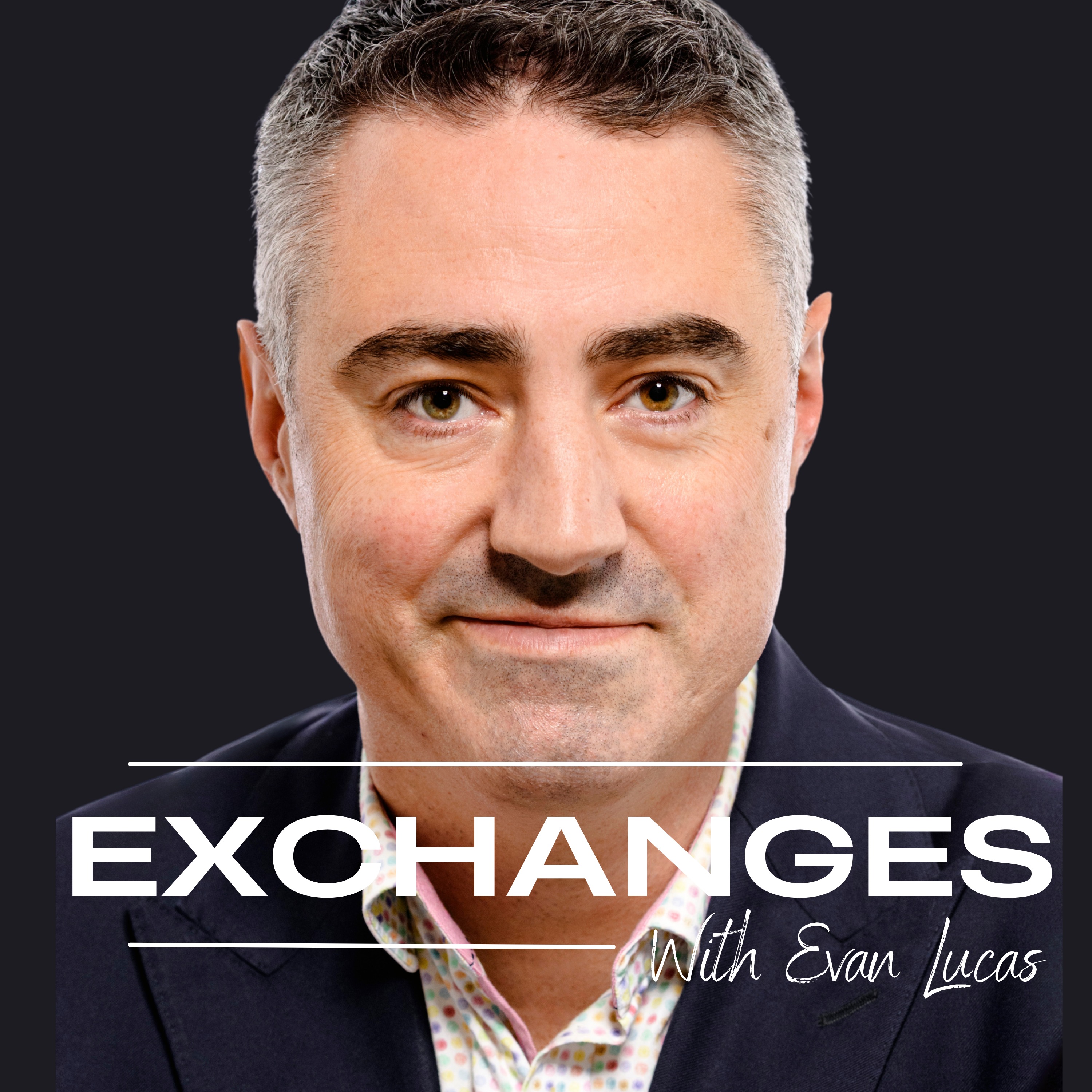
Speaker 1hello and welcome to exchanges the our revolution is here working has changed the way that we look at work is different we have now found ourselves consulting more than ever before and more and more people are turning to become founders of their own internal or external businesses so how do we deal with that and how do we actually build the brand and the leverage that we need to make them successful Natalie McDonald is and I put my hand up a very very close personal friend we've known each other for a long long time but she is an expert in this area she has got her own organization called working asset and she spent over a decade and a half dealing with the communication the brand awareness and the brand creation you need to drive yourself forward but also the passion behind what she does is about how parenting and carers navigate the work environment you in the current 2026 and Beyond numbers that we're going to deal with so without any further ado here is Natalie McDonald on this week's exchanges Natalie McDonald welcome to exchanges Evan
Speaker 2Lucas thank you for having me who'd have thought about 15 years after we very first met which we are coming up to now because we're both very old who would have thought that the shoe would be on the other foot and you would actually be asking me
Speaker 1questions I've always asked you the questions so again for those listening background Natalie and I have been in communication from when she started in Riga of all places in Riga in Eastern Europe in Eastern Europe and then you moved to Australia and all that kind of stuff and and how that happened we were talking when you were over there and now you're here you've had an incredible career over those 15 years which I'm glad you bought it up because that was going to be sort of where I came to it your whole world is around and has been around media it's been around journalism but realistically what you've now found yourself doing and and why I wanted to get you on here is about the experience of the work environment the experience of the work market how it's not just transforming but moving at such a speed of light that the way that employees and employers are dealing with it is very different so take me through how you've come to now do work at it which is your new Venture and congratulations but why you got so strongly about actually starting up this whole movement
Speaker 2idea sure of course so as you say for background um as you say the the shoe is on the other foot you are asking me the questions and once upon a time for a number of years it was the other way around as as a business reporter overseas first in Europe and then in Australia at Sky News business um before I moved into the world of Tech um and joined LinkedIn as a founding news editor um here in Sydney and working with that team over the course of seven years as you say very much in that professional workplace setting um and I think what was fantastic about that work and where I was really able to flourish and grow was the recognition that we are all so much more than just our job titles and just the industries that we work in so the type of coverage that I got to do uh through the bushfire crisis and into covid supporting small businesses um interviewing um uh CEOs uh bank chiefs um government ministers small business owners themselves uh who were really really doing it tough um at that time and connecting them with the resources and the information that they needed um and that pivoted into diversity inclusion and belonging in the workplace so how we can support underrepresented communities and underrepresented voices like women caregivers lgbtqia plus those uh who are neurodivergent or disabled how can we support them in the workplace and ensure that we are building stronger Workforces stronger organizations and therefore stronger economies now to get to where I am now which is working at it my advisory that supports professionals small businesses and organizations um and and execs when it comes to building purpose-led values-driven personal Brands and how they deliver messages that matter to the people that matter to them and essentially connect content strategy with their business goals um was I was made redundant I was part of this this early wave of the AI transition and I say this with a with a smile because lol how can you not it's a laugh or cry situation really and I did I did do the crying a little bit as well I should add um but I was made redundant um six weeks after returning from my second parental leave um gosh we love that for the mums don't we um and that was and that was part of the these AI led changes in the way that we were able to make sure that we were in the workplace now when I came out the other side of LinkedIn I had 35 000 followers on the platform I had a newsletter that had um that has 116 000 subscribers um I came out with a platform and I had used that platform to talk about as I say small business um gender Equity um working caregivers I had fronted a lot of LinkedIn products around LinkedIn lives and conversations the role that I had in the way that I had used that platform and nurtured my community meant that I came out with options I did that that typical LinkedIn redundancy post that unfortunately we're seeing so many of now um and my comments and my emails were flooded with people being like would you be interested in freelancing here would you be interested in guest hosting podcasts uh events also got some random ones around um you know my med tech firm in Missouri would you be interested in checking out the website like no Mr Missouri thank you so much but we're probably not like the key to one another's future financial success um but my point being I came out the other side with options yeah not everyone does any further yeah
Speaker 1yeah yeah because I want to keep going with that story yeah can we step back and without divulging your own personal intellectual property because clearly that's what you now use with your brand talk me through the mechanics of building that LinkedIn scenario because you know people pay big money to have six-figure followings on on our newsletter and and having you know big high five-figure numbers on subscribers and followers what's the mechanics behind that because again there's like this adverted commas out there this idea that we don't know the secret herbs and spices and the secret sauce and all this kind of stuff to do with it what's the magic in the mechanics that got you there
Speaker 2being very human and I know that's a really awful answer so let me let me rewind even though
Speaker 1the AI and the algorithm is now in charge of how
Speaker 2that works but it it it rewards values-led purpose-driven expertise-led content that speaks to a problem that other people within your community are trying to solve so if you want to do to solve so just to go back a bit you're right obviously my land is is LinkedIn and there are so many people out there Evan who claim to be experts on the platform and they are just setting out all these myths and magical ways the fact is there are 17 million professionals in Australia using LinkedIn and there are a lot of people that are essentially trying to fly the plane that that I helped to build so I always say be very very discerning when it comes to who you are following for advice when it comes to things like LinkedIn I'm not necessarily saying you have to follow me for advice but just be discerning about who you get that information from and if it's not coming from professionals at LinkedIn um or those very close to the source then then just just be wary but in terms of what the platform rewards so some really really simple things if you post on LinkedIn once a week that is 4x-ing your profile visibility if you post on LinkedIn twice a week that is 5x-ing your profile visibility so it's not asking for a lot and you start to kind of get that for that positive feedback loop so if you're trying to do like some habit setting that's that's a bit of a of a start point um what LinkedIn and and what it doesn't reward is the the super heavy promo stuff LinkedIn wants your your expertise and not from a perspective of like stealing your IP as you say or stealing your data but how you are using that to build community to give and also to get help so really almost creating a bit of a search engine really about how you can build your career and how you can make smart choices so the example that I always give on content as I cannot stand it makes me want to throw my computer out the window when someone like posts uh an award you know those static like it's an award on a desk it's like well done like you won an award for a nomination that you probably had to pay for and it's just like I'm so pleased to announce blah blah blah it doesn't tell us anything it says nothing so if you want to level up that kind of content you might say here's how we build award-winning teams at such and such with three to five guiding principles or when you're hiring so that's like yeah we're getting a bit into the intermediate level if you want to really notch it up and get to like expert level here are the three hiring principles that we use when we build award-winning teams and here are some of the mistakes that we made along the way you are instantly humanizing yourself humanizing your organization people are inherently chasers. They want to know the shit that went wrong in order to be right. And you are immediately flipping that conversation around to be expertise led, to be showing why you are an expert in your field, why you might be a great manager or a great employer. And it is constantly looking to position yourself as an expert of choice, as an employer of choice, as a leader of choice within your industry. So it's getting smart about that content.
Speaker 1Yeah. So then that obviously gets picked up by the algorithm and away we go. So getting back to what you were saying before, I rudely interrupted you with the mechanic question, is you now have that brand, right? So you've got that base, you've got the five to six years of heavy lifting that you did to build the work at it sort of community. What are you using that brand for? And then how have you turned that into. Something that is now clearly driving what you do forward, allowing you to do freelance, allowing you to do, in my world that I refer to it as what you want, when you want, how you want.
Speaker 2It was really about. Yeah. So I guess to move away from the mechanics back into the fields a little bit. Obviously, as I say, when I came out the other side of LinkedIn, I was just inundated with requests. And a lot of it was around LinkedIn and was around how I had built the platform. And for a while, in all honesty, I found it really fucking galling. Because I was like, guys, they're not paying me anymore. And this is.
Speaker 1Just to stop on that, because this is what I was going to ask you next. You and I've had this discussion offline many, many times about brand turning into value. So how do you go from having that incredible brand, that incredible presence that you've built, to actually asking to be paid for it? Because there is. Yeah. There is something there that annoys me as well. And it's why I'm glad you've already gone there. Why do we, particularly in this country, I would argue, refuse to pay for expertise and services in this kind of world when everyone knows they need the expertise? How do we breach that?
Speaker 2I think there is a feeling, and especially obviously at the moment when we look at the AI acceleration, there is a real. There is a real sense of feeling that like, oh, I can do this myself. Or, or alternatively, a sense of feeling of like, oh, I know I should do this, but I just don't have the time. Or I don't know where to start. And it becomes too hard basket, or just this can that is like just constantly kicked down the road. And I mean, I'm the same. My New Year's resolution was that I was going to start leveraging TikTok. And I did well for a while. And honestly, I've slowed down on it. And so I understand it. And I'm like, oh, I can do this. And I think that's the thing.
Speaker 1Is that because you didn't get the value out of it?
Speaker 2No, it's just that I have two small children and a small business and a freelance portfolio and ran out of time. But no, I think TikTok is, I think it's fun. I get it. I think also a lot of, I think, but that's, I think that's because it's difficult in some instances, not all instances to distill maybe the value out of it. I think that's the thing. I think the conversations that you're having, or even some of the conversations that I'm having into something that is like a TikTok friendly format. So it does take a little bit of reimagining to be like, how do I translate this conversation into that format? Now that is the TikTok world. Obviously that is not, that is not my, that's not my space. But I'm trying to make it my space. But I, meaning I understand how people can just go, oh, I'm particularly small businesses. I'm so busy. I've got this to do. And I have that to do. And I have this to do. And it's recognizing that it just comes all together. From my perspective, I think the expertise just leads. And as I say, the fact that the knowledge that I have around the platform around to how to build black brands is just pretty unparalleled. And I don't say that in like
Speaker 1a really, it is, it
Speaker 2is just, it is just.
Speaker 1I'm all about the idea that, you know, we need to embrace our own expertise. We need to embrace what our inverted commas, I try and use this in a different way, what our gift is. Right. Everybody has their own gift. And I know your gift. So I try and say to people when they, oh, you know, the Australian also UK thing is the tall poppy syndrome or just sort of, you know, what the Americans are really good at is actually saying, this is me and this is what I'm good at. And so I think to, to give
Speaker 2you a couple of numbers on that, as I say, you know, in Australia, there are 17 million professionals using LinkedIn. There has been about a 58% growth in the number of people changing their name. And I think that's a really, really good thing. And I think that's a really good thing. on huge reach and huge access. And so that was really, it was that knowledge and that understanding that I had come out of the other side with options and with opportunity, but not all professionals. And again, I speak particularly to my underrepresented communities, to women and caregivers largely, who we know in times of economic vulnerability and workplace transformation, which is what we find ourselves in right now. They are the last people to have invested in themselves, in the skills, the confidence, the tools that they need to build personal brands, to build out their network, which means if the worst happens, they don't have those same options and they don't have the same opportunities that I have been able to build. So while working at it looks after all professionals and all industries at its heart, it is ensuring that professionals from all communities and all backgrounds and industries and experiences have opportunities. And so being able to share my expertise and continuing to have impact at scale, that's the real heartwarming driver behind it.
Speaker 1Yeah. So that then moves into the next part. You talked quite passionately about your family situation. I know you're very passionate about helping those individuals in there. Does that go back to those numbers you said before around the increase in founders? It's not just redundancy, but the flexibility of running a micro and small business is part of what you're also seeing in the business. And why you are trying to leverage out that expertise about how you can actually use social media as your shop front, use small and medium enterprise thinking to build not just your brand, but getting paid gig and getting paid services. Because as you said, I agree completely with what you said before is that AI is now making this idea that I don't need human service. And I'm not talking about human resources. I'm talking about human service, because AI can give it to me. Where are we with that point as well?
Speaker 2So, I mean, we can go all the way back to COVID. And frankly, even earlier, when we look at, as I've mentioned before, when there are periods of economic disruption, it is women and caregivers who are disproportionately impacted. And we see that time and time and time again. And although, obviously, as I say, I was, early in the AI transition related restructures, it's impossible not to, again, continue to see these cases and continue to see how this plays out for women and caregivers. And I think organizations, and frankly, I think even at a federal government level, we need to be thinking about what does the AI transformation mean for workplaces? We are seeing tens of hundreds of thousands of professionals in Australia and overseas being made redundant. And we have to think about what does that do to workforce participation, to productivity, which, gosh, we've heard a lot about that in the last 12 or so months, and what it means, economically speaking, moving forward. I think that is a genuine consideration that we need to be looking at, because we are seeing huge numbers being laid off. Where the fuck do they go?
Speaker 1Yeah. Where do they go? So on that, let's, because I'm not going to go into that. I don't want to drill into that, because I'm, let's use CBA as the example, right? So CBA has been pretty open about how they see the AI revolution going, particularly in, you know, in banking services. We saw them, you know, remove 45 jobs last year, directly in their words linked to AI. They've had 400 job losses already indirectly or directly lost on it since. They're spending $90 million on reskilling, but they are also still preparing everybody in the organization that further job losses are coming. Is that the model or is it something else? Because again, they argue that they're doing the right thing, that they're actually communicating loudly and proudly that AI will change it. And therefore, it's not just accepting, it's about they are saying we're spending the money to move it. But I get back to your point about productivity, what we found from, again, their own numbers, the productivity that came from using AI created so much work, they actually get to hire more people. to fix the, you know, the volume it created behind it. Where are we with regards to how we now operate from an employment perspective and from a hiring and from a human resources perspective with that as the background to where AI is clearly going at a big institutional level?
Speaker 2I think we're creating a workforce that's really scared. I think we're creating a really anxious and a really nervous workforce. And if you look at when DEI was really a trending conversation, and I hate the fact that it was trending and now it's kind of not because it just should be. It just should be part of the fabric of our workplaces. Sorry, diversity, inclusion, equity, or actually as we used to call it at LinkedIn, it was DIBS, diversity, inclusion, and belonging. And I really, really like that phrase. And so I've inherited that one. I've kept that one with me. But we would talk a lot about psychological safety in the workplace. And people being able to show up as their whole selves and do their work. And COVID just changed that forever. Our professional and our personal lives had never been closer. I became a parent during COVID. And so I never had to do the work like you don't parent, parent like you don't work thing. And I've spoken only gratefully of that. That was a magical ignorance for me. And it's wonderful. But I think what we're seeing now is we're seeing workers who are either. Job hugging. Job hugging is rampant at the moment. People are frankly too. Job hugging. Staying in the role that you're in because frankly, you're too scared of what's out there. So staying in a role that you might have outgrown because it offers you security at that moment in time.
Speaker 1It's almost a job blanket by the sounds of that term.
Speaker 2Yeah, it's just like a little security blanket. Yeah, 100%. And why wouldn't you? Cost of living crisis, our food bills, our daycare bills, rents, mortgages are soaring. Why wouldn't you job hug? So you've got potentially if you're looking at an office, if you're looking at a workforce, you've got a certain percentage of them are job hugging. They don't necessarily want to be there, but they're too scared to leave. The rest of them are desperately trying to catch up with AI. And again, there was some data that was released by LinkedIn late last year, early this year, that said that people felt by trying to learn AI and trying to learn these systems was like a full-time job in itself. And that you actually had certain demographics that were kind of fibbing a little bit, maybe being less truthful about how quickly they were adapting and how strong they actually were using AI systems. And then you also have obviously your percentage of your workforce that are showing up and they're happy to be there and do their thing. But I think if you've got a workforce that doesn't really know if they're coming or going, how can they be contributing to their full extent and not, you know, chatting in the kitchen or reading some of the, tech gossip websites or whatever about, you know, are there whispers of layoffs? What is the world going to look like? Am I going to be able to pay my mortgage in six months time? That is terrifying. And that's not to bring it back to me, but to bring it back to me for a moment. Why it is so, so, so important to be doing it now, to be investing in your personal brand, to be nurturing your network, to be creating an avenue and a platform to demonstrate your skills and experience and expertise, and also who you are as a person. Because that network, that you are nurturing could be the stepping stone to your next opportunity. If, when should you need it or want it?
Speaker 1Yeah. We've had a couple of guests on here to sort of talk similar about that. I mean, they talk about the productivity of having an organization where, you know, your team isn't able to thrive because they're under some form of pressure. I think is the word to use it, whether that is a marginalized community, whether that is somebody on the spectrum, whether that is, you know, again, using your term, you know, people that are in job hugging, the impact of their, for their output is much, much lower because they're, they're not actually completely focused on their, you know, their scope. The, the thing you just raised there is there's two sides to this. That's also come out of COVID is I need to then ask you about, you know, work-life balance with working from home. So you talked about actually having communication with staff, the ability to actually have lunch together to, you know, communicate, somewhat socialize, et cetera. What's your view, about where working from home is going? You know, you've seen Victoria now legislate it to try and make it law for all, but it doesn't work as easily as that. What, what is your view about how that step will become the future of work and how firms deal with that as part of their work culture?
Speaker 2I think hybrid work and flexible work. It is such a, it is, it's such a double-edged sword. Um, I do think it is brilliant. I do think it is great. I do think empowering and supporting professionals again in industries and roles and organizations where, where it does make sense and, and, and, and it can be done. Um, I think that hybrid work is, is a really, really excellent thing. Um, and I think that organizations that are pulling teams into the workforce five days a week, uh, I think it is antiquated. And I think the flow through impact in years to come, we might not see it or feel it now. Uh, but I think fast forward three, four, five years. Um, and I think that you will start to see that in, in the workforce.
Speaker 1Yeah, I'd have to agree. The thing that's sort of fascinating again about it is it's the cost of it is the other part of the question. So you're looking and we, again, speaking off air before we came onto the podcast, organizing, organizing, organizing, organizing, organizing, organizing organizations and where they sit, you know, how they're hiring, what they're looking for, their structure, how many of them have modernized and how many of them have it? Because that's the next part of your question here is, you know, there are some really good ones. There's some really poor ones and the ones that have got the heads in the sand. How do we get to modernize teams? How do we deal with not just the AI story? Let's sort of put that to one side, but what the better teams are doing to deal with all the changes and everything we've just discussed.
Speaker 2It's a really, I mean, it's a conversation that we've been having for years, but it's making your office and your workplace and your workspace a place to be. Going into the office is bloody expensive. I'm like, I'm currently for a freelance role that I'm in at the moment. I'm currently, I am traveling in and I'm happy to do so. But it's really expensive. I, for various reasons, I'm having to, I'm driving, I'm paying for, I'm parking, I'm grabbing lunch because, and sometimes breakfast because coming back to, I have two small children. My mornings are like my own personal Vietnam, getting out the house. If I've, if I've managed to eat something by 1135, like that's a bloody good day. But I'm having to pay, it is, it is expensive. And again, in like a cost of living crisis, like those are things that are weighing on your employers as well, employees. And if they are having to balance, okay, well, I've got an offer from, from this organization. I've got an offer from this organization. Do they facilitate hybrid work? If they're in the office, what benefits are there to me there? Is my entire team located there or am I in a geographically diverse team? In which case, if I'm going into the office and being made to go into the office, what am I actually getting out of it? So it is, it's, it's, it's looking holistically at what are our workplaces and it's not just having a fucking ping pong table. It's having an actual access to amenities and resources that are fulfilling and that actually speak to all facets of, of, of wellness, whatever that may look like to the individual.
Speaker 1Yeah. So getting back to working at it, your whole thing is around entrepreneurship and about driving entrepreneurship, particularly as you said, for moms and carers. Take me through what an entrepreneurship look like is for a mom in the modern world, because, you know, back in the day, it would have been starting up a small business that may have bent. You went online, bought stuff out of China and sold a good or some description. It then became a service. But what is entrepreneurship in the current environment that you're trying to harbor?
Speaker 2So I refer, I guess, to use myself as, as, as an example. I refer to, to my current, this season that I'm in as a portfolio career. And, and Evan, frankly, like it's probably similar. Yeah. To yourself as well. And that's the thing. I think that that is becoming really, really important. Yeah. I think that that is really normal when it comes to how many of us are operating. And it might be that you have something that is a side hustle, or it might be, you know, like myself, I have the advisory working at it where I support clients, as well as a freelance gig here or there, as well as maybe writing an article for an organization or doing an event hosting spot or that kind of thing. And it's this idea that all together, if you put that jigsaw piece all together, it kind of makes up an entire career, or it makes up certainly about 23 and a half hours of the day, which is, which is how it feels, which is how it feels some weeks. And I think that is actually really reflective of a lot of the individuals in the organizations that, that I'm dealing with, where they're kind of piecing bits together that, that fill out sort of an entire community. And so I've worked with leaders across, you know, market, research, PR, education, again, much in the media space as well, a lot, because that's been my home for many years. And so I think it's a sliding scale. Some of them are what we would call solo printers. Some of them do have employees. But it all comes back to kind of the same thing, especially when we're looking at teams. And that is, how do you use your employees as your brand ambassadors, essentially, leveraging the experts that you have within your organization? And they are all experts. Otherwise, you wouldn't have hired them unless you've kind of done bad hiring. And using their expertise and empowering them with, as I say, the skills and the confidence and the tools to own their voice, to own their stories, and to go out and tell that to the world. And then allow that to halo back to your brand. And this idea that a rising tide floats all boats. If, you know, you've got your CMO or even, you know, even your EA is out there telling your brand story and sharing their expertise, that is all going to come back to you in that rising tide floats all boats.
Speaker 1Going back to your portfolio career, because I completely agree with you with where you sit there. How are organizations seeing those kinds of people in their organization and vice versa? Because, you know, I'm sure you've experienced it. I'm going to use my own personal story. There is resistance to organizations with someone like you and I, where, you know, we sit there and go, look, I'm very happy to consult to you, very happy to work on this scenario, but I won't come on as a full-time employee. How are you finding that deal? Because I agree, the portfolio careers, the flex that comes with it, some institutions love it, some don't. How are you dealing with that?
Speaker 2Honestly, some of the conversations that I've had from my perspective is, at first glance, it is a, oh, well, we have a content team, or we have a person whose role and responsibilities that is. And then it gets to sort of that second phase. And there is sort of a moment of, oh, but we don't have that expertise. And so actually something that I did coming into the new year was a slight repositioning as a fractional partner. And as someone who can work with your marketing team or a founder-led organization, or even working directly with consultancies or PR firms as kind of internal in terms of on, you know, client success programs and that kind of thing. And people do seem to be getting that and understanding that a touch more coming into 2026. But we are obviously seeing. There's such a rise of, you know, people doing fractional work, people building portfolio careers, but it took a while. It took a few door knocks and it took a few doors closing before realizing, oh, okay, here's the secret sauce. Here's how to position myself and saying, here's how I can plug in and amplify what you're doing. Because you may have a content team or a socials team or an editorial team, but you don't have this. But it's taken a lot of resilience that has been a real resilience journey.
Speaker 1Yeah, it is one that I find has resistance. There's no doubt about it. And again, I completely agree that, you know, we've already got people doing that. Why would I pay you to do something I've already got a team to do? And it is about that gap, filling that gap being, as I said, this is my thing and this is the difference I can bring to you. I can't believe we've been going already for over half an hour. So I am going to have to wrap up with the question that I ask every single one. Which is, Natalie McDonald, if you're in charge for just one day, what would you do? In charge of? Anything you would like.
Speaker 2Oh, my goodness.
Speaker 1Yeah, that's normally the response I get to that question.
Speaker 2If I were, if I was in charge, honestly, if I was in charge, I would get a group of really, of influential caregivers together. So thinking about Georgie Dent of the Parenthood, Samantha Payne of the Pink Elephant Support Group, I would get, and there's so many whose names I'm going to kick myself with for not thinking of who they are after this. But I would get together a group of influential, impactful caregivers. And lay out, this is what caregivers, and just by the way, I use the term caregivers really intentionally because I'm not just talking about the mums. I'm not even just talking about the dads and the non-birthing partners. I am talking about those who may have, have parents or relatives or grandparents or, you know, are caring in any sort of capacity. Just to mention, I do that really intentionally because families are all different ways and we all carry different responsibilities with. But I would get the caregivers together and actually get them to the productivity round table and actually talking about what do professionals and organizations and the economy need, particularly in the context of the AI transformation. What do organizations need to be doing to ensure that all professionals, all professionals can show up and do their job, get remunerated for it, and build a workforce and an economy. But I would get the caregivers together and actually talk about what do professionals and organizations and organizations need to do to ensure that all professionals, all professionals can show up and do their job, get remunerated for it, and build a workforce and an economy. That's, that's really it. And that's why, as I say, I am so happy and so pleased to be supporting those conversations online and in the spaces that I do and helping others on their journey to do that.
Speaker 1That is a beautiful way to exchange what has been an incredible exchange. Natalie McDonald, thank you so much for joining me.
Speaker 2Thank you, Evan.
Speaker 1Big thank you to Natalie. And I really hope you enjoyed what was a great conversation. Loved all of her insights. You can tell her passion and the passion is what she's clearly sort of alluding to that you need to drive that brand forward. Get the habits you need to do and understand that, yes, there will be institutions that are slightly resistant to what you might want to do, but it works. And it does certainly drive that forward. So Nat, thank you so much for coming on. To you out there as always, thank you so much for listening, watching everything in between. We have done a lot of the research in that moment. A lot of you haven't hit subscribe. So if you can, please subscribe. Please hit the subscribe button on whatever medium you're getting this through. The more subscribers we get, the bigger we can grow. And don't forget, we've got an email. It's exchanges at evanlucas.com.au. If you've got any questions, ideas, guests you want me to get on, all of those in between as well. But as always, thank you so much for listening. We'll speak to you next week.
 PodcastTranscript AI