Ex-CIA Officer Warns: Trump is Gutting the Expertise America Needs Right Now
34m 4s
A potential terrorist hijacking unfolded on a Dubai-to-Tel Aviv flight, where a violent cockpit struggle between the pilot and an Omani co-pilot resulted in a near-catastrophe. The Indian pilot, who flies for Emirates, intervened by stabbing the co-pilot and opening the cockpit, enabling Israeli passengers—many with military or medical training—to subdue the attacker and safely land the aircraft. The incident underscores the resilience and preparedness of Israeli civilians in crisis situations, drawing parallels to 9/11. The Omani co-pilot’s short tenure and possible ties to Iran’s IRGC raise serious questions about his motives and whether this was a lone wolf or state-sponsored operation. Meanwhile, British authorities report a similar failed terror plot near RAF Fairford, involving Middle Eastern nationals, suggesting reconnaissance activity potentially linked to Iran. The broader context reveals an emerging threat from state actors, with Iran and Russia increasingly engaging in asymmetric attacks. Despite this, U.S. counterterrorism leadership appears distracted, prioritizing domestic issues over global threats, and underfunding critical intelligence operations. This raises deep concerns about national and international safety, especially as geopolitical tensions rise and traditional terror models evolve into state-driven, covert operations. The episode concludes with a sobering reflection: while the world may feel safer than in the past, complacency is dangerous, and vigilance—both in policy and public awareness—is more essential than ever.
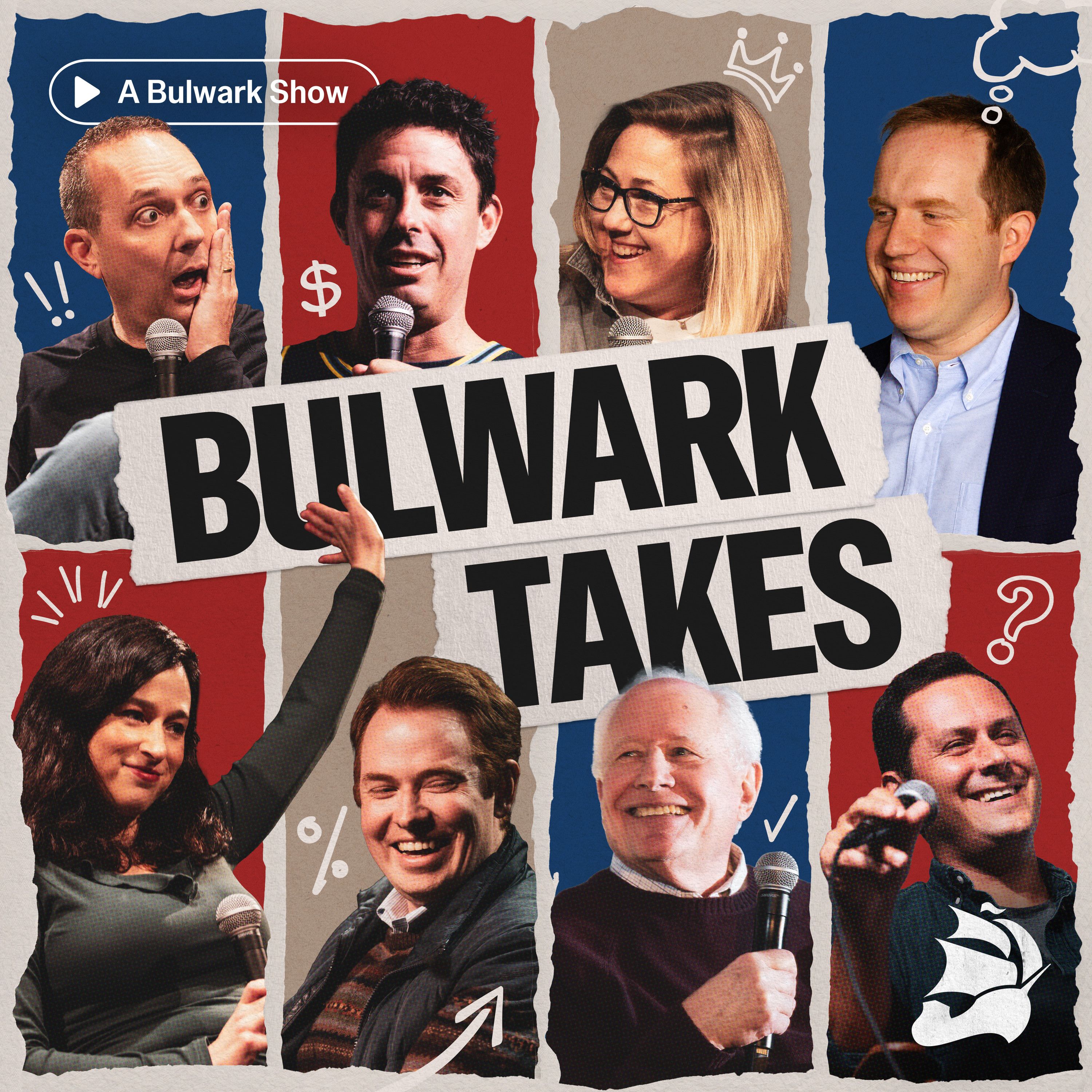
Hi everyone, it's Mark Palamarapless, a 26-year veteran of the CIA. I'm joined here today once again with my good friend and pod co-host upcoming pod. It's not been announced or it's been announced, not started yet. The reporter in the spy that's coming in November, but if it bullworks takes today, Michael Weiss, good to have you here. We have an enormous amount of breaking national security news. It's awesome we get to do this every couple of days now because the news is coming out as hot and heavy in the national security world and let's jump into today what occurred. I think it broke as I was actually watching some TV this morning and my phone blew up with this incredible story of a potential hijacking, potential terrorist incident in the skies over the Middle East. They fly Dubai, flight with almost 200 passengers and crew on board ends up taking off from the Emirates. It's going to Tel Aviv on a regularly scheduled route and it looks like there was a struggle in the cockpit in which the captain and the co-pilot kind of go at it with what appears the co-pilot trying to take over the plane and perhaps conduct some type of mass casualty terrorist incident. The news kind of broke over several hours. New details came in. There's incredible video on social media of actually people inside the plane. I think it plunged several thousand meters and must have been terrifying. You take a look at the plane on the ground. The kind of the tail is kind of chopped off and maybe a third of it. I don't even know how it was airworthy. Then the stories that have emerged of this Indian pilot. He flies for fly Dubai and Emirati airline but he ends up stabbing the co-pilot and Omani who is trying to take over the plane. There's a giant struggle. The pilot actually opens the cockpit so the passengers can rush in and God bless, I guess, the notion of the Israelis passengers there who are kind of a steely bunch. If anyone's going to hijack a plane, there's going to be Israelis in the back who are prior military service and who kind of know how to handle themselves. There's going to be pilots and doctors and everyone. And at the end of the day, after the passengers subdue the co-pilot, there's someone in the back who knows how to fly, jumps in the cockpit, lands the plane safely. This is insane but it's certainly, I think, stopped. What would have been a mass casualty incident? Michael, you and I were online chatting about it quite a bit. Wow, it's all I can say. Yeah, I mean, you got season six of Fowda right there and the space of about 90 minutes, right? I mean, the footage, it's kind of extraordinary. So somebody had said on Twitter that it's mind-boggling to consider had 9/11 happened 20 years down the line. Everything would have been mediated. Everybody would be uploading footage of the hijacking of these planes onto their cell phones. There's Wi-Fi on the plane. So we have in real time, everyone on the flight freaking out because the plane is nose diving by about 13,000 feet. You mentioned the tail was completely ripped off. There's blood on the shirt of one of the passengers who rushed the cockpit and subdued the Omani co-pilot and then the plane lands. Everybody's clapping. They're singing songs. Which is what, which is what all Israelis do. They do anyway, but now they have extra permission to do it today. Yeah, and I mean, you know, just there's, it's hard to derive some humor out of something, as you say, that could have been gone very much in the other direction. It had been a mass casualty event, but somebody had posted and you alluded to this. Overall, the probability that a plane full of Israelis will contain a trained assault team, two additional pilots, statistically at least one cardiac surgeon, a psychologist, a lawyer, and a diamond dealer is substantially higher than 50 percent. But this is the Israeli mentality. I mean, I got to tell you, you know, both of us have a whole bunch of Israeli friends and contacts that we certainly kind of use in our national security reporting. And that is what they, I mean, there's a sense of kind of resolve there. And even when you look at the Israeli social media and the press now, it's not that people are joking about it, but it is really kind of a hardy bunch. And I will say that, you know, the heroism that that the passengers exhibited is absolutely extraordinary. Go back, of course, to 9/11, flight 93, you know, the famous Todd Beamer, quote, let's roll, all those things. But, you know, very similar to that. And, and, you know, and, and of course, that Indian national, the pilot, incredible stabs his co-pilot who's trying to take over the plane, opens the cockpit again. I mean, and by the way, he also did the squawk of, I think it's 70, 7,175 hundred, I'll get it wrong, but there's a way in which airline pilots can can trigger on that there's a hijacking and he did that too. So, there was certainly some alert on this. But, you know, of course, everyone is going to now jump in and maybe you talk about this in a sec in terms of motivation. You know, what was the Omani pilot trying to do? You know, what were the targets of his, of, you know, is it was this kind of suicide by pilot? We saw this before. I mean, in Egypt era 990, many years ago back in, I think 1999, I was actually on that investigation, in which in Egyptian, the, in Egyptian first officer drove that plane right under the drink off of Massachusetts, horrible, killed all bunch of people. There's the German wing's flight of several years ago over the French Alps again and suicide by pilot. But, you know, jumping into your knowledge of the Middle East, here's, here's the big question, you know, are the Omani's, are the Saudis, the Emirates going to be cooperating with the Israelis? How does attribution here matter to the Israelis? If it's a lone wolf versus state actor, you know, walk us through that. I mean, the, the Saudis, as you know, have a very deep and abiding intelligence relationship with the Israelis, even though there's not the form of diplomatic recognition. This is what the success of US administration can try and achieve with the respect to the Abraham Accords. They're not getting anywhere with the Saudis because the Saudis have conditioned this on Palestinian self-enfranchisement, Palestinian statehood, which I mean, after October 7th and the war in Gaza is is more of a remote prospect than ever. But I would have no doubt the Saudis are cooperating with the Israelis. The Emirates even more so. I mean, there you have the intelligence sharing and the diplomatic recognition. Abraham Accord is great. Yeah, I think, you know, to a lot of people, it's going to be who don't follow, you know, sort of the developments in the Middle East over the last several years. Perhaps mind-boggling that a plain full of Israelis was flying from Dubai to Tel Aviv, right? That that's something that just didn't happen for many decades. And now it's this traffic, both ways, is quite common. Israel is going on ski trips, ski holidays in the UAE. So the Emirates will be all over this. Now, Oman is an interesting case. I was actually meeting with an intelligence officer here in New York during UNGA, where we were discussing the role that Oman has been playing with respect to the war in Iran and trying to resolve it. Obviously, they're a key intermediary for the United States and have been for a long time. They help broker the JCPOA with Iran, to sort of halt the Iranian enrichment, or to, you know, to put a cap on the Iranian nuclear program. But everything I'm hearing now from US sources, including some active duty US Army people who have been deployed to the region and were kind of integral in Epic Fury, the Omanis are playing kind of a double game. They're a little bit sneaky, a little bit not so reliable. Doing things for the Iranian side that perhaps has set some noses out of joint. And in fact, I think there was an illusion to this in the early reporting when the ceasefire was being negotiated many months ago. Woodcoff and Kushner, and take this with a pinch of salt, because we've discussed the kind of traveling road show of idiocy that they represent. But they were very upset, apparently, with the Omanis at one point. They thought that they were being done the dirty. So that's not to say that there's any kind of state sanction or backing to this. But the fact that it's an Omani national is probably going to raise some eyebrows here and there. Don't you think they're going to be deeply embarrassed? I mean, I haven't kind of spent time in the Gulf. And this is going to, I think there was a security failure on the Emirati side, clearly something happened there. But of course, I think maybe pilots are not scrutinized as much getting on the aircraft with weapons. I'm not sure exactly. But though, the Omanis in particular, I mean, they like this idea of neutrality. And the big question will be, are they going to cooperate with the, with all the regional security services? Because it's got, it's embarrassing. Like this is not embarrassing. Yeah. Yes. And apparently, I mean, again, the reporting, everyone has to be very careful when there's any suspected terror incident. And we're going to come into another story that's now eating up the global headlines and why we actually paused on doing a show about this several days ago. So you have to follow the facts. But it has been reported that this Omani co-pilot was only in his job for about a year. So my Spidey sense starts to tingle. Maybe this was a cover operative sent by the Iranians, somebody recruited by the IRGC to create a mass casualty event or a terrorist spectacular as the, as the terminology, oh, so you from this degree puts it. We don't know. We don't know. It could just be, you know, as you say, a lone wolf. I think some people have kind of screwed the pooch on the reporting. And there's been a bit of tone deafness, the New York Times suggested there was an altercation in the cockpit. BVC has been even more kind of wishy-washy like, oh, you know, meal service got interrupted. It's like, yeah, I mean, what are they arguing about? No, I mean, it seems obvious. You know, if the guy wanted to top himself, there are better ways to do it than to crash an airline, an airline or full of innocent civilians, right? So yeah, I mean, it certainly looks like a terror attack, an abortive terror attack. But we'll know more. I mean, I have no doubt this stuff is going to leak fast and furiously now. Oh sure.
And the last, well, there's a couple of things on this. One is, let's just remember, if it's a lone wolf terrorist attack, if it's not attributed to Iran, or maybe one of the kind of Islamic extremist groups, it's still a terrorist attack. - Sure. - I mean, and in my old world in counterterrorism, that is the hardest type of attack to thwart because there's no sell to penetrate. There's no source to recruit. There's no, you know, intercepted communications. There's no training camp where someone's gonna go. And so, let's not forget, you know, lone wolf terrorism is something that I think by, you know, my ilk has been extremely concerned about for some time. And so, that becomes important though in terms of attribution. And let's just end this segment with a notion of, there's gonna be huge pressure on the Israeli government or perhaps an inclination on Prime Minister Metanyahu to do something for his own political reasons. It is Israeli election season. Security is the name of the game here now. And there's no way this is a Israeli contrived op. There's some bullshit on social media that says it. There's always going to be that kind of success. But this does have an effect on Israeli politics. And already there was a brief, there's something in the press the other day. There was a briefing that occurred yesterday. The Israeli opposition went in. The opposition members went in and were briefed by the Israeli security services on the overall threat picture because Netanyahu has been insinuating that Israel may be attacked before the October 27th elections. And then now I think BB is going to kind of use this trying to do so to his own advantage. I don't think it's gonna work. But there's always that notion that, the famous kind of Kissinger adage that there's no such thing as Israeli foreign policy. It's only domestic politics. And so domestic politics is gonna come into this now. And the big question is, would Israel or will Israel try to retaliate? Obviously if it's a lone wolf, they cannot. I think probably they would like it if it was the Iranians behind it. I hate to say that, but it's certainly true. We just have to see. And that's why intelligent services, not only Israelis, but working with their partners. It's so important to get this right because of course all eyes are on Iran. And now we shall shift to the next big incident. And today is really the programs on terrorism and the idea of the safety of the international community will get to the big picture in a second. But it will play a clip in a sec of the British Prime Minister who made some kind of surprising statements today about potential attribution to the, I guess a botched terrorist attack in the UK about 80 miles northwest of London. There are strong indications that Iran played a part in what happened over the weekend at RAF effort. But of course it remains an ongoing, complex and serious police investigation. And of course, we are working closely with our colleagues in the United States of America. We almost did a podcast on this as you noted. We pulled back because it was so unclear on what occurred. But why don't you walk us through where we are now on US officials talking about this? British officials talking about this. And perhaps in white matters actually, maybe we were sober to hold off on any kind of statements on this or any kind of show that we do. But getting a right matters, right? It does. And this one has kind of sort of oscillated wildly between two different things. One, it looked initially like a thwarted terror attack, right? You had a group of, I think, five guys between the ages of 25, 35 of Middle Eastern background, although British nationals pulling up in a white van. They were suspected to be IEDs and send the area materials on the van to an RAF air base from which the US has run sorties into Iran. The IRGC had put a target on that base explicitly. All the hallmarks of a terror operation. And then they arrest these guys because some local farmer dymed on them. And they released them within, I think, less than 36 hours on bail, but said we continue to investigate. Suddenly, it's getting a little weird. Were they petrol thieves? Were they just in the wrong place, the wrong time, Donald Trump had come out and said, oh, we knew about this. And we believe this to be a terror operation with foreign hands. Don't credit much that he says, because he often sort of gets ahead of his keys and likes to preemptively take credit for things that have nothing to do with the United States or his administration. But then Marco Rubio more so reminded when it comes to these things came out also just a day or two ago and said, we believe that there's a foreign actor behind this, and this is by no means wrapped up. So today, the reporting, or actually yesterday and today, the Times of London reported that one of the suspects dymed on himself and his cohort. So basically got cold feet and said, I'm calling in a terror attack that I'm a part, right? And the question is, in the van, there was no bomb. Where there's no explosive material. So was this a dry run? Were they surveilling the locations? So then actually carry out the terror attack? Who is this guy? And why did he get cold feet? And also who's behind it? And you know, you just play the clip, Andy Burnham, the British Prime Minister saying that is suspected that Iran was indeed behind this attack. So it could well be these were guys who were secondent or recruited as proxies of the IRGC, GoBOM, RAF, Fairford. They went to do a dry run to scope out the terrain. Using a vehicle they would eventually use. One of the guys almost, you know, four lion style kind of goes, like, I don't want to do this. And he basically pulled a plug on it. So even before they could carry it out, it's now been disrupted. But that doesn't mean that there wasn't an actual credible threat. I don't know, exactly. And again, wait for all the details. I'm just piecing together based on the very strands of information that are in the British and international media about this. But it does look like there was some there there, right? This wasn't just a hoax or this wasn't just petty crooks. All right, let me give you kind of a funny rundown here. So, you know, we were going to do our show. And we actually recorded it, but then we pulled it back because after we were kind of discussing the Iranian angle, then all of a sudden it looks like it was not that. But then, so I actually did a TV hit on MS now, where I said all this stuff. And then it then, when I talked about Iran, and then of course, it turns out it might not be. So I'm feeling bad. So I write this thing on Axe, a little meoculpa, saying, okay, maybe I kind of got ahead of my skis. But we'll see. And so then I just wrote today, another meoculpa, to my meoculpa, saying, well, actually I was right. So screw you all who attacked me all over the place. Because a lot of people, and you know, it was not, anything we say on this is got to be based on, it's not just speculation. It's also a lot of informed analysis. I'm sorry, British officials are hinting to us behind the scenes, that it could be the Iranians. You have the President of the United States and the Secretary of State saying things. You have half of the British government's special operations forces descending all over the place. I don't know. Something, and the timeline didn't actually match up between when this little old lady, if it was this, whoever it was, you called this in. It seems like they actually, the British were monitoring this already, and that person who called in the threat actually might have thwarted the surveillance operation. So everything is very kind of convoluted, but like I said, I did a meoculpa, I'm a meoculpa. So all the haters out there who were crappin' all over me, they can go stick it. - Yeah, you've got a head of and behind your skis. - I know, right, exactly. So you're tumbling down the black diamond mountain now. - I know. - But okay, but no, it's attribution, let's go back. Attribution, just like the Israeli issue, now in the British issue, like, you know, because there is a juicy target out there called Iran, that if Iran is seem to be culpable for this, it kind of goes into a lot of the things that we have been warning about for some time, which is the Iranian terrorist apparatus getting activated, and perhaps succeeding, or in this case, thankfully not. And so this really does actually matter, and I guess from British friends did say, just just wait, we gotta get this right, and they're not wrong when they say that. - No, and I mean, what they call horizontal escalation, which is something the IRGC is eminently capable of. I mean, in what was it, 2012, they blew up a bus load of Israeli holiday makers in Burgess, Bulgaria, that was a Hezbollah operation. I mean, they have form here, the Amir Barber. - The retaliation for something that happened several years earlier, so they also have patients. - They've played very long, yeah, yeah. I mean, I just saw there was some kind of legal development or indictment over the MIA bombing in Buenos Aires, which was what, 1990? - 1990s. - Yeah, yeah. So I mean, they know how to do this. And one of the things we were kind of girding our loins for, and talking to law enforcement and counterintelligence officials after the launch of Epic Fury is, what if the IRGC starts to activate these networks and we have, you know, I don't like the term sleeper cell, 'cause it sounds a little too Jason Bourne, but let's call him sleeper cells in the United States and elsewhere, who suddenly start doing stabbings or shootings or blowing things up, right? They could do this. And, you know, one of the things you notice now, the narrative begins to shift a little bit. The straight-of-form moose is now reopened, right? Sencom has done a beautiful job. There's no Iranian oil tankers that are bypassing that waterway. So the Iranian energy revenue is dropping precipitously. Traffic for other countries is now almost back up to pre-war levels. A lot of people, you know, the FTD crowd, they're giving credit to Trump. Oh, he's staying, of course, this is all succeeding. Well, okay, but now the danger is.
And, you know, you're people who studied Iran and sort of the Iranian security mentality will attest to this. The danger is if Iran does feel more existentially at risk, right, like the regime could start to quake, there could be another domestic uprising, there could be all sorts of things. What are they going to do to try and, you know, they're going to escalate, they're not going to expect the enemy gets a vote. I mean, that's the thing that, you know, with everyone kind of doing the victory lap, the Iranians are not going to sit this, you know, sit this out and just, just have, just be, you know, strangled economically. I think they're going to try to react in ways in which they are unfortunately pretty capable and reacting. But let's, let's now take this all. So we have these two terraces, and so one of the things I was having this kind of existential thought today and something I'd written about, I, and, you know, we can, you know, put it up on, uh, online later, I think I wrote a piece for Newsweek, I wrote a piece for the Atlantic Council, but it's just this notion of are we safe? You know, we're talking about, um, uh, several decades after, after 9/11, uh, and you can't help but kind of be worried about are we becoming too complacent in terms of what I really did for a living in the counterterrorism world? By the way, you actually reported on this and you spent a hell of a lot of time in some crappy places. You wrote a book. Wait, but your book is behind me somewhere. You wrote a book on ISIS for God's sakes. You're right. No, there wasn't. There wasn't a day that went by from about 20, 14, 15-ish to 2026 where there wasn't some actual terror attack, yeah, or suspected terror attack, happening in Europe or Asia or whatever. And that dominated all of our thinking and so now, you know, so now you take a look at the recent counterterrorism strategy that that the head of, um, CT, we call it counterterrorism at the National Security Council is, uh, Seb Gorko put out and it, it was kind of landed for a lot of us several months ago, like a big dud. It talked about radical antifa terrorism. Um, now, you know, this narco terrorism strategy, blah, blah, blah, and, you know, the worry that that a lot of us have is, well, wait a second, if you have FBI agents and I've said this a million times, God bless the rank and file of special agents who do counterterrorism in the FBI. They're very good. There are a lot of friends of ours. But you have a leadership, um, which is more worried about taking these FBI agents and chasing migrants at Home Depot, um, doing immigration arrests, uh, and the bottom line on a lot of this is in it with a, you know, the US government has finite resources and if we're pulling things, um, such as ISR, that's drones intelligence surveillance and reconnaissance out of places like Africa where there's ungoverned spaces. If you're pushing them down towards Mexico and, and, and such a little America, if you're taking personnel, you know, off of the, the, the, the CT mission, um, you know, that's going to make us less safe. I mean, we had a, you know, there's a, there's always saying terrorism isn't a problem until it is. Remember before 9/11, the Bush administration was kind of poo-pooing the whole terrorist threat. Again, of course, there was kind of the catastrophe that, that occurred. So I do wonder, you know, are we safe? And I think Americans should worry. You're talking about something that happened with civil aviation, something that happened outside of US, uh, air base and an administration that is just not, I mean, money and people matter. My old friends who used to run counterterrorism were still in the intelligence community are not working that issue anymore and that actually gives me a lot of pause. Well, you know, it's interesting in the first Trump administration, I remember they had a national security or national defense strategy, which was announced. I think it was Jim Mattis who put it together. And one of the observations, this is when you had actual professionals still in positions of authority and government under, you know, in Trump's first term. One of the things that they observed was, okay, the ISIS-Keelefit is crumbling, uh, Al-Qaeda is on the back foot, uh, the, the, the era of non-state actor terrorism, perhaps, is coming, is, is, is, is on the decline. What we need now need to worry about, and remember, you know, just a few years prior, Russia had invaded in the next Crimea and started a dirty war in Donbass, what we have to worry about now is a return to great power rivalry and conventional state actors, the threat posed by state actors. So, so what do we find ourselves in now, the current situation? The United States goes to war with Iran by our own government likes. This is the world's leading sponsor of state terrorism, right? They have enormous capacity, enormous resources, and know how, and now will, to unleash hell all over the world. And also, we find ourselves in a state of cold war approaching, perhaps a hot or warm state with Russia. Another state sponsor of terrorism, we don't call it that, but one where, again, you cannot open a newspaper any day of the week in the current environment and not find some active Russian sabotage that blowing up an arms depot or a weapons manufacturing plant or derailing a train in France or Poland or sending drones into NATO territory, I mean, I, we just discussed this huge panic about will Russia put troops over the line into NATO? Will they launch rocket or mortar fire into the Baltics and all of this stuff? So, so we have two powerful countries with big budgets that go largely toward defense and to kinetic operations such as this. And unlike ISIS, unlike al-Qaeda, we're, you know, I mean, we're at war with Iran, I guess, technically speaking, but according to the president, the war is all over, right? So we're in this kind of weird state, neither war nor peace, but we don't expect them to, as you say, get a vote, to retaliate, to use these resources against us. And yet we find ourselves now in a situation where the people in positions of authority. I mean, literally CT, you know, postings going to 21-year-olds who've basically just graduated internships, who have no background in government whatsoever, no professional capacity to do this work. And a guy like Pete Heggseth who, you know, seems to think if you have an education that goes beyond Sunday school, you're too woke in DEI to serve in this man's Pentagon. I mean, it's, it's, we're, these are very dangerous times. I don't like an alarmism. I think it serves no analytic purpose and it just, it's, it's, it's, it's, it's, it's, but, I will tell you, there's, you know, the people, I, you know, I'm very friendly, friendly with them in the CT community, or kind of, you know, whether it's Matt Levit at the Washington Institute, Colin Clark, the Sufon Group. I mean, everyone is very worried about this now. And, you know, there, on the, on the positive side is, you know, there is an ecosystem of intelligence relationships that we still have, or liaison relationships around the world. And that has actually survived the Trump insanity with alliances, just because counterterrorism is something that everyone understands has to kind of transcend politics. And, you know, there, there's been, you know, a very kind of robust system within the United States on what we call the joint terrorism task forces, these are FBI task forces in each city, made up by members of the intelligence community and other places. I mean, there are, there are, there are still pockets of excellence. I just don't think there's enough resources or attention to it, just because it's a, it's a, it's a, it's a numbers game. And then there's a succession, as I noted before that, you know, this is official US government documents. I mean, really we're going after Antifa, you know, radical transgender terrorism. That's insane. I mean, can you, I always, I was, I was, I was in the UK and I was, I was joking with some former British intelligence officials. Can you imagine in a, in a meeting, if you actually go to our British counterparts and say, let's discuss radical transgender terrorism in Antifa right now, and how we're going to combat this together, because I've been told to do this by my headquarters, and everyone's just going to kind of look at you, like you have a giant, you know, dick grown out of your forehead. But I think that this is a legitimate debate to be had right now, you know, are we safe? And so I am, I am very concerned. There was a great bumper sticker we had at CI headquarters. I cannot believe I don't have this anymore. There's actually two things. One is a bumper sticker, one's a poster. The bumper sticker was the world is safe because the CIA is at war. I mean, what a great sticker. I put it on my, actually, I wouldn't put it on my car, but I love that. The world is safe because the CIA is at war. And that was our mantra. And the other, which was, this was after post 9/11, is a poster, and it was kind of tragic. It had a picture of the World Trade Center and what would have happened. But they said every day is September 12, meaning you have to be vigilant. And I loved it. That was the mantra that we had, you know, you've met a whole bunch of, and be friends with a whole bunch of my old colleagues as well, from the CT world, who did incredible things. I mean, you know, the kind of Herculean effort of CIA officers in battling Al Qaeda, but I just worry that we don't have that sense, not that sense of resolve. We don't have the people in the resources right now, and that scares me. No, and, you know, one of the things on the 25th anniversary of 9/11, a lot of articles about it, we lost the global war on terror. This was all just an exercise in, you know, sort of, peric victories, tactical victories, but not strategically just a failure. Actually, this is not true. And, you know, Hassan, my co-author in the ISIS book, and I had discussed this at length before the anniversary and before Trump's return to power. One of the things that GWAT did accomplish, it convinced a lot of these transnational jihadis, or people who were inclined to go after the far enemy, as they call it, the United States, that the juice just wasn't worth the squeeze. It's much better if you're going to be a, you know, kind of medieval-minded Islamist. Stay in your own cabbage patch, and cultivate your garden there. Don't take the fight to a bigger, more powerful enemy, because even though you might bleed them, and you might kill loads of people, eventually they're just going to destroy everything that you're trying to build. And, you know, one of the sort of strange dialectical effects of this is the current president of Syria, Ahmed Alshara, who started out as an emissary of Abu Bakr al-Baghdadi, sent into Syria to build the, what was then, the Islamic state of Iraq, to build their franchise there, which then became ISIS. Then he defects from them, he joins al-Qaeda, then he defects from al-Qaeda and goes to war with both ISIS and al-Qaeda. He's now the president of Syria, having perfume spritzed in his face by Donald Trump in the middle of the office, and meeting with literally every European nation.
EU leader, and normalization is the name of the game now. He learned because of GWAT that this just doesn't work. In the grand scheme of things, this is a busted flush jihadism that targets Americans and civilians. They're not to say that these people don't still exist, and there's still terrorist groups and cells. Absolutely. But it has fundamentally, I think, transformed some of the self-believe propaganda of these guys. And so in that sense, it wasn't accomplishment, right? It cost us enormous amounts of blood. It made stupid, stupid mistakes like invading Iraq. And now I would argue, I mean, Iran is a different thing, but waging these acts of adventurousism in the Middle East, I'm fundamentally so old, it's just a horrible idea in general. However, credit to where it is due to people in the CT world and people who fought these wars, it wasn't in vain, it wasn't for nothing. It has actually had an impact. Oh, I've had this thought. I mean, as I sit back with all you see all the hero crap and the back on my bookcase, which actually is not only that, it's also some memorialists and friends who were killed and to operations that went awry. And I do wonder, was it all worth it? But that's, I think, maybe it's a topic for another episode. Now, I have to end this. So we are talking about is the world a safe place now? I think we can both agree, perhaps that's a question with an answer we don't like. But yesterday last night was a bit of a tragedy in which my Red Sox got their asses kicked by the Aggies. I'm wearing, I'm wearing the Lucky Green City uniform now for game two. We'll see what happens. You've been actually very kind not to mention this. I got a whole bunch of text messages from friends actually about my mental health status today. Are you okay? Yeah, actually, I forgot to put this on, but I have my, my Jay Z New York Yankee saying I'm gonna wear this for the remainder of the show because this is annoying me. You're wearing a paraphernaly. I needed a, a terrorist incident to actually get, oh, get me past this debacle last night, but you got to believe a little Ted Lasso thing. That's one hell of a therapy session. You've got to get there, man. On the Red Sox loss, but at least there was an attempted hijacking. But finally, all is not lost because my favorite band, and you know who it is, it just announced their U.S. tour and slipknot is coming to Nationals Park. They're also coming to Fenway. But July 16th, they will be in D.C. And look, I will kindly invite you to come see the slipknot concert if you want to, to say I'm excited as an understatement. I would do it just out of sociological fascination. You got to see it. You got to get a ticket. I almost thought I'd be getting a suite there. But exciting times for the, for the heavy metal world slipknot on a U.S. tour. I will be. This is actually for the purpose of people who don't really know us that well, this is sort of where our conversation, our, you know, kind of mutual respect and amenability ends when it comes to popular culture. No, that's not true. We like the same movies and TV shows, but it comes to music and sport. It's like my brother is like, "Hey, man, Interpol and Morrissey are playing in Brooklyn, but it's going to rain that night." I'm like, "Well, of course it's going to rain. It's Interpol and Morrissey." So we're going to that show. I've got nothing to talk to you about. Yeah, that's all right. I mean, I'm kind of a strange person because I can act like, you know, a pseudo intellectual. I can act smart, but I love heavy metal and I drive a pickup truck. So there you go. Oh, there you go. I actually had to drive a truck too believe it or not, because I lived in Queens and I had to blend in. So I had to give it up. It was a very painful experience from moving back to Manhattan. Thank you again, Michael. Another outstanding episode of Bullwork Takes. Join us again. I was going to say next week, but perhaps sooner, given the events of the world. If you like this episode, please subscribe to the Bullwork. And once again, a little plug for November when the first official episode of the reporter and the spy shall debut. Thanks to all the listeners, thanks to all the viewers, all the comments too. We absolutely love them and we'll read some more on air, but we appreciate all the the reaction from the audience. My favorite so far, by the way, it was somebody who who compared this to page six meets John LeCarrie. That's exactly what I was going through. That is that it. That is like I might have written that Sunday comment myself. So whoever you are, well done. Thanks all. See you soon.
Podcast Summary
Key Points:
A potential terrorist hijacking occurred on a Dubai-to-Tel Aviv flight, involving a violent struggle between the pilot and co-pilot, with the latter, an Omani national, reportedly attempting to take control of the plane.
The Indian pilot, who flies for Emirates, stabbed the co-pilot and opened the cockpit, allowing passengers—many of whom are Israeli military veterans—to subdue the attacker and safely land the plane.
The incident highlights the resilience and combat readiness of Israeli passengers, who acted decisively in a crisis, echoing the heroism seen in 9/11 flight 93.
There is strong suspicion that the Omani co-pilot was a lone wolf or a covert operative linked to Iran’s IRGC, given Oman’s ambiguous role in regional diplomacy and its history of balancing relations with Iran and the US.
The UAE and Saudi Arabia are expected to cooperate closely with Israel due to deep intelligence ties and the Abraham Accords, though the incident raises concerns about regional trust and transparency.
British officials now suspect Iran may have been behind a failed terrorist operation near RAF Fairford, involving Middle Eastern nationals with no bombs, suggesting a reconnaissance or dry run.
The broader context reveals a growing danger of state-sponsored terrorism, with Iran and Russia both engaging in asymmetric operations, and a risk of escalation due to geopolitical tensions and regime insecurity.
The US counterterrorism strategy appears misaligned, with leadership prioritizing immigration and social issues over real threats, leading to weakened intelligence and reduced vigilance in global security.
Summary:
A potential terrorist hijacking unfolded on a Dubai-to-Tel Aviv flight, where a violent cockpit struggle between the pilot and an Omani co-pilot resulted in a near-catastrophe. The Indian pilot, who flies for Emirates, intervened by stabbing the co-pilot and opening the cockpit, enabling Israeli passengers—many with military or medical training—to subdue the attacker and safely land the aircraft. The incident underscores the resilience and preparedness of Israeli civilians in crisis situations, drawing parallels to 9/11.
The Omani co-pilot’s short tenure and possible ties to Iran’s IRGC raise serious questions about his motives and whether this was a lone wolf or state-sponsored operation. Meanwhile, British authorities report a similar failed terror plot near RAF Fairford, involving Middle Eastern nationals, suggesting reconnaissance activity potentially linked to Iran. The broader context reveals an emerging threat from state actors, with Iran and Russia increasingly engaging in asymmetric attacks.
S. counterterrorism leadership appears distracted, prioritizing domestic issues over global threats, and underfunding critical intelligence operations. This raises deep concerns about national and international safety, especially as geopolitical tensions rise and traditional terror models evolve into state-driven, covert operations.
The episode concludes with a sobering reflection: while the world may feel safer than in the past, complacency is dangerous, and vigilance—both in policy and public awareness—is more essential than ever.
FAQs
A potential hijacking occurred during a flight from Dubai to Tel Aviv, where a struggle broke out in the cockpit between the captain and co-pilot. The co-pilot, from Oman, reportedly attempted to take over the plane. The Indian pilot, who flies for Fly Dubai, stabbed the co-pilot and opened the cockpit, allowing passengers to rush in and subdue him. The plane safely landed after a steep dive, and footage shows passengers, many of whom are Israeli, reacting with calm and bravery.
There were no reported fatalities. Passengers and crew were unharmed, though the plane experienced a severe dive and the tail was damaged. Blood was found on one passenger’s shirt after they entered the cockpit to confront the co-pilot, indicating physical contact during the struggle.
Many Israeli passengers have prior military or emergency training, including in combat and crisis management. This background enabled them to act decisively and safely during the cockpit struggle, helping to subdue the co-pilot and restore order.
The Omani co-pilot had only been working for about a year, and there are suspicions he may have been a cover operative recruited by Iran’s Islamic Revolutionary Guard Corps (IRGC) to carry out a terrorist act. However, no definitive evidence has been confirmed, and the incident could also be a lone-wolf attack.
The UAE, Israel, and U.S. intelligence agencies are closely examining the incident. The UAE is expected to cooperate due to strong intelligence-sharing ties with Israel. There is concern over Oman’s reliability, as it has reportedly played double roles in Middle Eastern diplomacy and possibly has ties to Iranian efforts.
Yes, it appears to be a failed terrorist attack. The co-pilot’s actions were likely premeditated, and the incident involved a full-scale attempt to hijack a civilian aircraft. However, the intervention by passengers and the pilot prevented mass casualties, marking it as an abortive but serious act.
Chat with AI
Loading...
Pro features
Go deeper with this episode
Unlock creator-grade tools that turn any transcript into show notes and subtitle files.
 PodcastTranscript AI