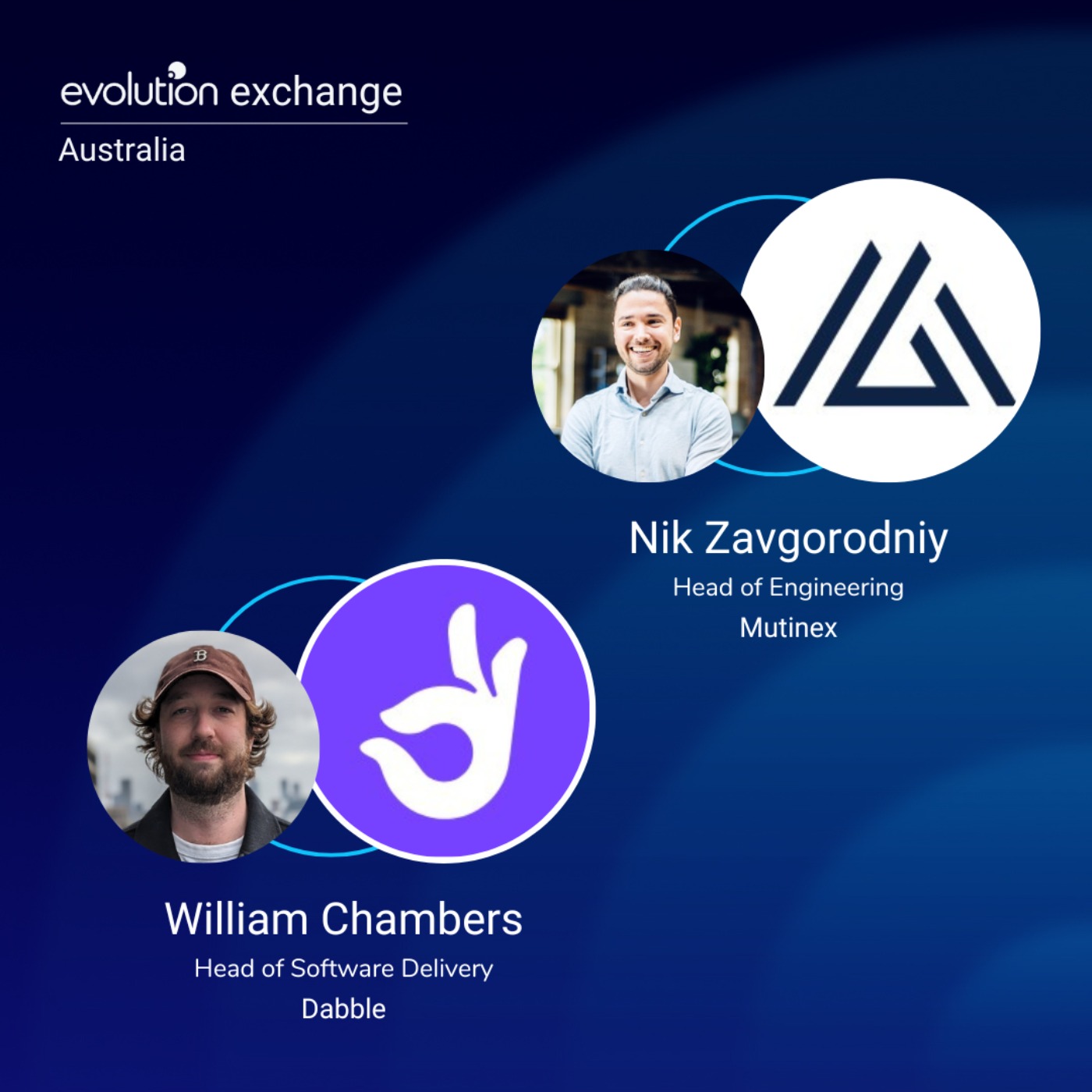
Evo AU #210 - The Secret to Scaling Culture - Aligning Vision Across Divisions
66m 40s
The discussion focuses on scaling company culture and aligning vision during growth from startup to scale-up. Panelists Nick and William emphasize that early-stage startup culture, characterized by informality and rapid iteration, must evolve into more structured processes and professional boundaries as teams expand. Key strategies include investing in developer experience and observability to sustain efficiency, and embedding values like psychological safety—framed as "purposeful transparency"—to encourage open feedback and collaboration. Leadership plays a critical role in navigating this transition, ensuring founders and teams adapt together through continuous cultural refinement rather than one-time initiatives. The process is ongoing, requiring awareness of gaps in skills and culture, and balancing innovation with operational scalability to retain talent and drive long-term success.
I'm Shawna, I help connect tech companies with top tech talent. Today I'm your host. Welcome back to another Evolution Exchange podcast. Today I'm joined by two senior leaders within the Australian technology industry. And we're going to discuss a pretty hot topic, which is the secret to scaling culture and aligning vision across divisions. We're going to cover areas to give you a little insight, a lot of balancing between pragmatism and ambition, behaviors versus processes, rituals to reinforce culture, and more kind of future proof of scaling as well. But firstly before we jump in to this hot topic, I would love to introduce our two incredible panelists. And I'm looking at Nick, if you want to give a little intro and kick off. Absolutely. Thanks so much for having me, Shawna. Yeah, I'm Nick. I'm currently head of engineering at a place called Mutax. We effectively predict business growth based on the marketing and investments, which is a very niche, but very interesting and incredibly difficult space to tackle. I've been with business for about three years now, started as an engineer, lit a few projects, lit a team, and then had to step up as a head of an inch. For my first time being in this role, which is very exciting for me and very challenging at the same time, but comes with a lot of learning on the spot, which is I guess what startups are built for. Thank you. Thank you so much. I'm still here. Thanks so much, Nick. Looking forward to hearing more about this. Will. Yeah. Thank you so much. Yeah. I'm William Chambers. I'm head of software delivery at Dabble. I joined Dabble five years ago. I think I was employing number eight. Current head count is around about 270 across three regions. I think I was able to get a lot of experience. And what it means in practice is that, yes, you can start with a certain, you know, DNA of the early stage start up. That is crappy. That was too fail fast, learn fast and move on. But then when you when you grow into that, I guess, more mature scale of phase of closer to 100 people, you realize that that's not going to let this longer works. You need something more a Boston place. You need to put together some rough implementation of processes that would guide people of how to work, how to interact with each other, how to grow, how to learn all those things that create more transparency and scalability within the business and the business and the business.
that also might flash with the cultural DNA of that early stage group of people who built the core of the business. And what effectively leads to or might lead to in a lot of cases that those people will find that they don't feel like they're aligned with the business and the businesses outgrown them. And potentially you will need to be able to as a founder, as a leader to navigate the process to help those people either adapt or essentially find other, again, early stage places where they will feel like home. So it's an it's an ever-warving process of tailoring the culture and tiring the right people that align with how you want to run business. So it's not a one-off exercise to do a lot of hooray species come together with five bullet points and then forget about it. Like it's an ongoing work that you need to be very aware of. It's just never done is it? Like it's never done. One of them nothing. It's like there's probably going to be some things like I don't want to say it. I don't want to learn horn but like I think I've completed Gira. I think I'm just like I don't know. I don't think there's much more valuable Gira stuff for me to learn but like culture, people, teams, like systems. God, it's never ending and like you can look at it as daunting or it's like, yeah, it's it's a really exciting thing. Like you said, Nick, to be in these positions of leadership, you see the growth around you. And you start to see the opportunities where it is moving and go like that's an area that we actually want to move in was to suitate that. Let's bring that into the fold. Let's make that part of what makes working here special. And yeah, it's both exhausting and daunting and highly rewarding. It was so fun. Sure is. I was just going to because Nick, you did bring a point to talk about and kind of jump and straight into that. Might as well bring it up now. It was identifying gaps in culture, in the technology. And then within the team skill sets, when you're kind of moving from the start up to scale up, I think that's not what you've both experienced. But yeah, do you want to both talk us through sort of how you navigate that and when does that start to pivot and what you've experience in your journey? Yeah, yeah. It's probably best to start with with a few examples that probably a lot of people would feel familiar with. Right. You you join a small start up where everyone's a family, everyone knows each other, you go on lunches all the time. Then suddenly you are a 50, 60, 70 people business, you start, you know, start, you rather stop remembering names of the new starters because there are so many of them. The change there is that you need to put some guidelines or some rules or some practices that effect to create some like professional boundaries between between people. Like, you know, you can you cannot be a one be happy family anymore because there are so many people around you as a feasible that model. And by extension, same can be applied, I guess, to engineering to, you know, to my own home. Five five team company, everyone can just run around running things on the laptops and show prototypes to each other. 50 dollar 50 people business. You need process in place, you need to work tooling needs to have observability and quite nice to deploy and have preview environments and whatnot. So like there are a lot of different things that you need to identify as you grow to to make sure that you will. Keep scaling you're not going to introduce to me bottlenecks in the process and you effectively live some headroom for for the business to keep expanding. Brilliant. Read your insight and examples Nick. I don't have to say, well, you're not in there. Are you. Yeah, it's a really interesting one. So like just to be fully transparent, the I would say that the composition that we have in like our technology leadership group. At the moment, it's like we have our CTO, we have our sort of GDM of technology. So looking up to probably more the data cloud security piece myself who's probably looking more after the culture and then head of software to the group who's kind of look at the technology part of it. And I'd probably speak more to this one and the technology space, even though I'm sort of more in the culture side, but we work really close together. And I think one big area for that growth that you were talking about there, Nick, five people in a room to, you know, 50 people across three locations, 150 people across like 10 locations. We did a really strong investment in developer experience, not even just at the start, like it was really baked into our culture. And when I joined Scott was like, we deploy it's going to see to go aside, we deploy whenever it's ready to go. And I'm like, I would like to sleep on the weekend. Scott will not be signing up for that. But he did it in such a way of like really strong observability. Obviously like test driven development principles, a high level of care, high level of production like environments. Really good read me is in handbooks and ability to build environments and all of this stuff. So the developer experience bit of it has been a really big. I think he is to why we've been able to sort of scale as quickly and as sustainable as we have. Have we got it right 100% of the time? No, but the observability piece, I think there is key, which is when we start to see issues from a technology perspective, whatever it means like in terms of code bases and applications, like from a culture and a process perspective. More often than not the observability so high that we see an alarm going on, or we see a build time of an environment going from five minutes to 25 minutes. And just that culture for people to speak up on, they see that the development experience is hurting, has helped us. Like staff retention is a really good measure of some of these things and staff retention is insanely high within tech at dabble. And that, you know, I was thinking of like what would I carry from my job into my next job if I left dabble tomorrow. It's like, yeah, developer experience, massive hack for getting good culture, scaling organization, best practices and autonomy within the teams as well to identify these issues and collaborate on solutions. That's a great question, Dr. Yeah, so isn't it? Oh, yeah, yeah, it's really good. So the observer, although sorry, the observability piece and the developer experience, you guys embedded that really early on. Is that right? Yeah, and then continue to bring that through as you scale. Yeah, I wouldn't even say that we embedded it embedded it makes it sort of sound like I think you sort of used it before. Like it's like it never done like you can just do like a culture meeting at the start, but like we finished culture. No, I was just kind of mind of everything and obviously from people's past experiences of being like, yeah, used to hate how it was here. So let's do a better here. And yeah, it's only present ever present. And then also with technology things change. You know, technology's involved at such a rapid rate. And I don't know, Nick, if you're feeling it, but like we've probably had one of the sort of once in a lifetime. And then we've had a lot of revolutions in the last three years of AI and it's like, how are we going to back that into things and it's. We are heading headed into a whole other podcast. Yeah, yeah, but yeah, part two, three and four. Yeah, brilliant. Point will something that I think speaks really kind of highly around culture and values is the psychological safety piece. Which sounds like it comes hand in hand with your observability process because you guys have got key values that I've set up that which are like a speak up. I think you've mentioned that a second ago. Allow an environment where people can speak up, being happy to be wrong, asking for help, offering for help, debating, then getting on board. Talk us through that. It's interesting. Yeah. So those are the coach code for lack of a better sort of word and I know it's. It's both one of the most important terms and it feels like one of the cheapest terms bandied around a psychological safety. Yeah. It's probably not what we call it. It's like we call it good culture and turns out psychological safety is a part of good culture and all of those sort of buzz words that kind of get put in book good times and you hear them so many times that it lose meaning that. Yeah, with that culture code, we're sort of joked about like we created a cult because like our retention rate is like 95% in technology over five years. We've just kept pretty much everyone who's joined. They've grown into new positions. Some succeeded. Some have put their hands up to go back down to other positions, which was really good. And yeah, like we get a little bit in our heads and like have we created a cult like could we tell these people do anything tomorrow and they do it because of the blind coltine traits that this is.
now starting to observe. And I think the ones that save us, these are the values that save us, is that being happy to be wrong. That is a really key one. It happens across all layers of business. I speak specifically within tech, but like definitely a bit of company cult to there. That debate then can on board is such a good one. You've got highly intelligent, self-motivated engineers who love solving problems and are in a quite complex phase. They're going to have differing opinions. They're going to have different ideas. It's going to be hard at times to identify what the best or right idea is. And more or less, we obviously have that leaders in key strategic positions and they will listen, collaborate, provide feedback. All of these things second nature. There's no rituals around it. And then when that sort of leader in that space makes a decision, we've all had our voice heard, we all feel valued and we move on and we do it. And yeah, that is, I think that's a really good safety net for us to be like, you know, someone, I mean, fire in the belly goes or they're sort of checked out and looking at what's next. There's debate that happens there. There's a fragility that it's okay to get it wrong. There's never anything to point it up or blaming. It's just like, what can we do that next time? And I think that's like those two of the ones that I really, really like that we have here that I always think, how would I fit into previous workplaces? And I'm like, no, that ego over there would never take. I'm being wrong. And that's just sort of the thing that I'll sort of foster for the record on. Nick, what can you kind of can you relate to to that? And is there any kind of examples of probably have a slightly controversial opinion here? But I don't actually do it. Yeah, but I think that framing this value of psychological safety might actually backfire in many occasions. The reason is here's very delicate balance between creating site or driving psychological safety within a company and creating a culture of direct transparent feedback because some people might feel that they will push the person, the giving feedback to out of psychological safety zone and somehow break the cultural DNA agreements with the team. So it's it's very important to balance the wording there properly and make sure like everyone understands that psychological safety doesn't mean that you shouldn't deliver direct constructive feedback to your peers even if it makes them uncomfortable. And the way we played with this idea for a while and our founder Henry absolutely fantastic person, he is very opposed to psychological safety as a concept within the piece. So the way we were very framed that it was purposeful transparency as a value. Like you want to be transparent with people around you because it drives everyone's growth, you want to be respectful as well. So don't be around the bush when you keep someone feedback but also make it very pragmatic, rational, grounded in a certain situation and that can drive the receivers growth as a result. But I think it's not entirely disagreeable for your will. I think you've got a good point. Yeah, just a quick question although as well I think there's a piece of we as managers have like pretty good communication skills and you know that sort of radical can, there's such a transparent feedback sort of a model. Have you had times where you sort of had to acknowledge it maybe some of those communication skills aren't there? They're giving the feedback with the right intention but maybe just don't have it like flexed their chops of communication often. This person actually needs like written details sort of stuff in front of them to consume before they can kind of be challenged with that sort of thing. Have you ever had to sort of deal with taking those people who write intentions but maybe this need to grow some of those sort of communication chops? Absolutely. I think you're going to face those people regardless of what you put into your culture dog to be honest. Part of the journey there is to make sure you stay across those outlier cases where people don't know how to exactly operate within that framework or just more broadly they say don't have good communication skills. They may be not empathetic enough to the other side's situation so they just go come in hot to deliver some scaling feedback without thinking about how it would make the other person or the other team feel or whether it was constructive or emotional and then they just forget about it in the movement. So you need to be ready to work through those cases and track if the behavior of these people improve and sometimes it's going to be a fundamental misalignment with what you want to see in your team. Excellent. I think as well you mentioned will just under that point is that when you create an environment where you learn people to be a bit more as well as a free to fail and also then with the process of good feedback. Like you mentioned Nick it does foster sort of innovation and collaboration. Can you talk a little bit about that? Yeah. I think talking to Nick's point earlier like innovation kind of comes from who you bring in the door. We have been very lucky to say probably our first batch of hiring was senior level engineers that had high levels of autonomy. We've probably got two to three years before we really started to add like okay we're going to fill it out some junior teams on the way filled with sort of engineering ladders within this to sort of do that but that really helped us. I think just get to a point of maturity where those people had like were making decisions autonomously and they were I don't know I think we got a real say something I do think we got lucky I think all startups have to be lucky but like there was a really really good like landscape for us to do what we did in and yeah I think back to it and I do think it's not a luxury I'm going to have at many workplaces but getting really senior people on as your first sort of cohort has helped us massively in that respect and you know you can do the what if someone like oh what if you didn't get that person what if like we got another person it's like I think it would have been fine because there is that sort of like mass culture that kind of carries people forward but it is something I reflect on comparing to other previous workplaces which is like yeah turns out the way Dring Street does actually have like a bit of money in it so does always be the ability to go to market for seeing your talent and that has definitely been like a luxurious pace to have in it but does not mask the fact that the people who brought on borders fantastic people yeah okay great and Nick you had a point I think if that really it leads us nicely into this guys and building and aligning the culture DNA with leadership as the company grows so I don't know if you mean maybe you know your leaders leaders leaders like everyone kind of needs to be in on that transition of the journey um how has that worked out you guys and talk me through that Nick I think it's always tricky to find the the right approach there because it will vary so much from place to place from founder to founder from from a group of founders to group of founders right you're dealing with very highly intelligent effective and efficient individuals who pretty much build the company and they they feel like it stands on these shoulders and they feel responsible for every single little thing that happens in the business and that's just normal that's expected what makes it challenging is that um you as leadership uh you need to guide them through the process of how to help them navigate the process of business growing and then potentially losing the context of every single little thing that happens in every corner of uh of the team and then that comes often with rickshaw or with some misalignments or with even some bushbag from time to time when they would want to step back in and maybe respite be very reactive to things going wrong or something.
of flies having every now and then and not trusting teams enough to resolve everything on their own. So there is that journey that happens probably over the course of multiple years. I've seen that multiple times. It's never easy for anyone but nonetheless, it's essential for business to succeed. And this is where two, I guess really wills point the culture building exercises where you can involve everyone, including fathers and create that shared DNA shared understanding of how we want to work together can help a lot. But then also you need to build that DNA of having their transparent feedback delivered to both directions. You need to be able to go to your father and tell them that they're doing shit if they're doing shit. If it doesn't work out, if it hinders the team's productivity, if it makes say the new status feel like they're being micromanaged, that's not okay. You need to be able to go and talk to them about it. If you can't, then there's probably an indicator that something's not right with how the business operates right now. Okay, so definitely relies on the behaviors, maybe of your sort of co-founders as well. And the leaders above you guys are over. Right. Because ultimately you hiring smart people to trust them to do the job, right? It's you hiring the leaders, you hire teams, you hire your individual contributors, you build that machine that will be building your business, ultimately automating yourself out of the job. So you need to be able to take a step back, take a month, take a month vacation without any repercussions for the business, come back, it's going to be, you should be operating as it used to. If it doesn't, then it means that there are certain gaps that need to be identified. And this works not just that if I'm the level with, be much any leader level within the company. You need to be able to keep it in fighting those gaps and feeling them, automating them or the restructuring the processes so that they no longer exist. Yeah, brilliant. Will, you mentioned behaviors and processes. Again, lean really nicely into this point, doesn't it? Tell us about that. Yeah, so I'll give a little bit of a preamble because I do feel like this is, this can sound a bit pretentious. I apologise and advance to everyone. When I joined, I was very lucky to scone, I aligned very much on how software delivery should and should not be done. So I actually got to build it from the ground up with no legacy systems or processes or anything to inherit that I had to remove that people maybe thought was a fake even I'd convince them that the new way of doing things was effective. So wow, all I'm going to say is that is the most luxurious position of my career that I've ever been in and I've loved it every day since. It puts a lot of pressure on it. It doesn't work. It's all on me. But yeah, I got to codify like how we do end-to-end software delivery, started out as like a 4,000-word document and has since been removed from a 4,000-word document. She's not always going to be that apart from a bit of a handful of our engineers who love reading. But the big one that I thought was I'd worked in a lot of teens previously, which is they see a featuring JIRA and they think it's going to solve collaboration. And I'm just like, I've been down this dance way too many times and my big one has always been that behaviors are what raise the ceiling and processes are what look for the floor. So, similar to your typical point, there are like you need to have the systems in place to support these leaders as the organizations grow. I think I've seen, seen and heard from other people's workplaces where process is the innovation. And more or less process adds a gate to pass through a decision gate, a point of failure, a point of friction, another meeting, another sort of like form that has to be submitted. And yet to find that really lead to innovation. So yeah, our big one is if we're seeing things that we think we can do better at, we start with behavior. We've straight up start with behavior as the innovation piece. Talking to some of the previous points in there as well, it's like we got together in a room, all of the leaders within technology and product once every three months. So every flare up, every point of friction, every this kind of got under my skin, we were never more than three months away from being in a room together where we could talk about it, talk about it as a group, cross-pollinate ideas. There might be another team that experienced that nine months ago that are now like, oh yeah, like we actually just started doing like a refinement session with all of the team members where they could feed back to product on the requirements that are coming in. So yeah, I will say that within that as well, it's like the behavior where that sort of the action items out of that comes from. We're being in a room together for every three months and you know, you discuss the shop aspects of it during the workshops and then you'd go out for dinner and drinks and you'd just chat then. Yeah, I think that's a really big part of where the idea comes from like next year earlier. So you can't put it on the piece of panic on expect for the loop that's like it needs to be read or read or read or lost and shared. I hate to say it. I'm really sorry to say it to companies and to leaders and to individuals like I just still get to see anything that is more important than getting those people in a room together. Very lucky that early days because we launched in COVID, I think it was nine months working together before we'd all met each other. We all found out that we're all way taller than we thought. Having spent nine months on zooms but the company very much prioritized. We need a good reason why you're not traveling around Australia to visit your co-workers, your teammates, other leaders and the hosting events to sort of facilitate that leadership growth with individual within the organization. So it's expensive if you're listening to this and you're like, no, that's going to cost so much. I'm like, I'm investing on people. We're really great. Actually, Nick, this point as well, like it sounds similar to what Will is talking about and getting people together but also recognise and the balance then between magnetism and ambition. How do you kind of strike the balance with that? My favourite answer is disability parents. It was important to figure out, I guess, for the startup you read is the level of risk you are comfortable taking on. It's going to be different if you are building a new cool tool for product managers versus if you're building a health tax startup and in each you deal with somewhat sensitive information. The amount of risk taking will be vastly different. Once that's reasonably clear, then I think within those boundaries you need to figure out how aggressive can you be in shipping new functionality in creating the least possible team is that will be just pushing things directly to your customers or to your users and that balance will change over time as you scale because probably in the first year or so no one would actually care if your product is scrapped or it has bugs again, as long as you're not in like health or fintech or any obvious sensitive data handling business. But that's sort of curve will change as you grow because when you get more users onto your platform when you actually start caring about the retention rates and all that metric associated with that then that's when you probably want to start paying more attention to the availability tooling and how well your product behaves and whether your user experience is good enough to keep the users engaged and sticky and come back to using the product. It's very different from stage to stage. In early days you probably wouldn't even know what you're building because you will be figuring out your product market feeds for a while. So you've got to be scrappy as well.
possible for that change is all the time. That's probably the main message from what I've seen. Okay, pretty good. Anything you want to ask that will? Yeah, I think just from like a culture and perspective, I'm serious. First hand, a lot of those things. I think what we first broke into the market, everyone was like, wow, Brad and Frashad is really exciting. Doubles way off on the next. And then a year in people, I've thought it was a really strong measure of our success is that people look at us in the same echelons, 15, 20 times larger operators. And they were like, they put us there. And then about a year in, they were like measuring us against them. And we're all okay yet. You guys now expect like mature, polished, perfect experiences across all touch pointers. That was a really, that was a, like we did, we did really well with it. But it was like, oh, yeah, like we very quickly went from like the favorite child to a new child being born and that's the thing like the mini child and we had to deal with that. But yeah, it's a, it's, I just think something that you kind of always have to be awareness is such a big part of all of this pragmatism versus like purest sort of scale from a culture perspective, the composition of teams. I think, you know, this is part of the sort of PVD stuff we do behavioral crow filing. And I know that to some people that will be saccharine and to some people they'll be like, yeah, we've done the behavioral crow filing. We find it really good. But compositionally, I think we've found that teams that have one sort of dominant collection of people, which is that they, they don't have the right sort of breadth and depth of different diversity and voices to succeed. One of the more difficult relationships that I have to maintain is one of our engineers who I am, I don't know what the model is, but I am the vibes. Yapa, yellow energy. Yeah. Everyone having a good time. That's good enough for me, kind of operator. And Dan is the bluest or blue engineering mindset wants to be accurate and correct 100% of the time. And it took some of those workshops for us to sort of stand in the side of the room, but oh, this is why Dan and I always get frustrated with each other. These were the completely opposite sides of this behavioral communications spectrum. And it didn't tell us that we can't work together. It told us that we have to work extra hard to work together. And that is still today one of my more cherished relationships at work. He's that person who I can't just send him eight slack messages. Yeah. Rambling. Like I have to think through what I'm going to say to him. Yeah. I need to know that if I say something, he's probably going to think about it for three weeks and come back with like a really well articulated argument of which kind of like, oh, I stopped thinking about that five minutes after we spoke. So, the awareness of that is. Yeah, the purest impragment of thing. I think like you got a smash them together, but you got to do it with those systems around them that support them and give them a voice and make sure that decisions are being made without sort of a leaning bias towards pragmatism or purest sort of the origin. Yeah. Yeah. Yeah. It's a good point. It also probably leans into the question of when to hire more specialist type of talent versus generalists. You want to have people with broad set of skills in early days when you scrap and when you're figuring out what you want to do. And having, using your example, someone like Dan, who's a very deep thinker and wants to take their time figuring out the problem is fantastic. When you already have all the bootstrapping around you and you have the product and you just want to take it to the next level. But then when you need to shift something quick and dirty in a week's time, otherwise you're going to run out of cash and crash and burn. And it's probably going to be a misalignment. So, it's important to figure out what's the type of persona you want to see in your team, which also speaks to you. To the whole cultural DNA we were just up to what you were today. That's brilliant. Okay. You both obviously brought up the point of the whole sort of shift and the evolving through different stages of startup scale events, prize obviously. And Nick, you weren't to talk about the managing of clashes within original team members, which obviously sounds more of like a negative point, but I'm sure something a lot of listeners will experience and then will you also have something similar, but it was more around like defining moments. So key decisions and cultural practices that enabled the growth. But yeah, like let's, if you want to tell us a little bit Nick around your experience and kind of how you overcame them, sort of clashes with the original team members in that road journey. How you kind of managed through that? Yeah, it's probably the extension of the things I've touched on previously, right? You will inevitably have the set of people who worked on the original V0 and then saw through the evolution of it through many, many, many, many layers on top of that original set of decisions being made. So they would inevitably, this is just human nature be attached to that on various levels. And it's sometimes it's hard or free use will let go of your baby after you've spent years of sleepless nights, delivering something and stuff. You have five primal teams around you supporting path and you need to upskill them and they start making decisions that would probably misalign with what your original thoughts were. So it's challenging, it's difficult and it's important for the company for the culture to support that journey. You've got to sit down with your OGs and you've got to involve them in the decision making process of the evolving system and figure out how they can still ingrain themselves into the new iteration, the new evolution of the process and the culture that you want to take the business to. But sometimes it's just not a viable path. A lot of people prefer to purely work at scrappy places because they have so much impact and they don't need to care about boring stuff like durability and all that jazz that to them feels like enterprise bullshit and they just don't want waste time. They want to work on solving cool problems and not scaling those problems to hit hundreds of thousands of users. So it's important for you to sit down and identify those gaps. Sometimes they might come in in the form of different parts of the system or the product that no one wants to touch just because they're so sensitive or no one actually knows what to do with them or you would see a few people in the team who don't take leave at all just because so many things depend on the knowledge and the presence in the team if they leave. You have a big gap and you can no longer support different parts of the businesses and that doesn't necessarily apply just to engineering can be any any section of the business although engineering is probably more evident in this case. So yeah, you need to create evolutionary parts for the original team to evolve into the growing business, support them along the way if it doesn't work out, support on finding the the next best place for them. Yeah, excellent. Okay, will there anything you want to add to that? No, I think just sort of like on the the moments. Yeah, defining moments. Yeah, I think there's sort of been in workplaces before. This is a repeated phrase that I use but like I learn a lot of how to do things by experiencing how not to do them like that is just an experience piece that I sort of very close on. Yeah. One thing that really frustrated me was when you'd be doing story point one week and then a hot like time or a scrum manager would be like, oh, we're going to go you know T shirt sizing was like and then four weeks later it's Fibonacci and Simplons and Cool Books is really great ways to name a hat between different things. And one thing I'm really proud of that we did was keeping the process consistent. So we just did bought nightly sprints. I hold very little separate quadcopter topic that I hold very little regard to estimation. You know, it's bad at it. It takes time. It erodes the ability for engineers to do that work. It makes them feel bad when they get it wrong, which is going to be 100% of the time because humans terrible at estimation.
So we just did 60 sprints before we made any process changes. It was Wednesday to Wednesday. Team members would get together and talk about the work they need to do with product, and they would build sprints, and then that go away, and they'd do the sprints. Our goal was pretty much that our engineer should be in two to three hours of meeting for week max. And we've got there a little bit bloating now as we scale for sure, but that's a challenge for us. But the thing that we changed at 60 sprints, I think we're at 140 now, on the 70. So at C&T sprints, we implemented sprint goals, and that's our way to measure. We were never really looking at sprints from how many story points are there, and as it took much or as it took less, we were really just looking at it from, do you guys believe you can do the work? And we started to realize that we've had lots of little priorities creeping in, teams maybe have three to four priorities. And before we changed to sprint 60 was, you're going to capture a statement, which is your sprint goal. To all the tasks in sprint help your chief at goal. And if the piece of work is BAU or lower priority or a nice to have from product, you just go and does this impact our ability to go with the sprint goal. So I think the amount of, like the very few things that we've done to refine it has been great. And I will say week on week, I would go in thinking I needed to quit. We needed to start from scratch and read the process from the ground up. And I'm really proud of all of the moments of temptation to change the process we resisted. It was really fun workflow that you saw as Joe quit. Kate and Scott about who are sort of a CTO and a henna software around, Tuesday I would catch up with the teams and I'd go home in a half minute and I'd be like, I think my head would shame up down a terrible job. But I'm a little bit joked this is. (laughs) And then Wednesday I'd externalize some of my thoughts and Kate and Scott were like, yeah, chance. Sounds less than ideal, but I've done sound broken. And if those say we catch up as a group and it'd be like, yeah, it's fantastic. We're all doing a great job. We need to tweak this little dial over here from 8.5 to 8.7. And going in with that mindset of being willing to change and being willing to be wrong and being, okay, to me to turn around about however it wants to be the pleasure working with you. But like, yeah, this isn't good enough. You should expect better and yeah, I'll see you soon. Was a really good exercise to go through but it has to be married with that. Yeah. Clarity for our team members to start to work. Week on, week on, week on, week. And just know what success looks like to them. Success to us. The last 60 sprints has looked like setting sprint goals and achieving them. It has looked like when a sprint goal looks like it's more challenging than we thought, shifting some stuff out of sprint will bring you some more help to deliver it. I'm not coming in week on week. It's being like, oh, cool. Now we're like writing our acceptance criteria and lack something. Everyone has to learn lack of it. Like, I'm not the lead. Music to my ears. Thank you. I'm glad externally it resonates. But yeah, so I definitely will. Yeah, I, I, I, I, I just despised through points and estimation. It was a lot of a great thing. I got a sense of it. And you might, yeah, I'll send you mine. He needs to eat us later and you can, uh, you can let me know if you think it is. Let's lose it's out. I'm just aware you were kind of on a time, but we have got like one major topic to get through that you both obviously are here to sort of discuss is the future outlook. And sort of what's next for global collaboration and aligning vision across the regions. You know, and sort of the different divisions as you guys expand. Have you got another five minutes? To jump into that. Excellent. Um, so yeah, I mean, it's something that you both, you know, keen to talk about. Well, yeah, like Nick, do you want to tell us a little bit about sort of the strategies for aligning vision across new divisions during your next round of expansion? I'm, I'm just thinking where to start because it's, it's such a broad problem of that. Any, any scaling business faces. Yeah. It probably starts with formulating internally what your vision is and making sure that the existing teams know what the vision is and they can communicate or they can actually describe it in layman's terms to, right, to the new starters. Because it's, it's, it's not enough just to have some nice one page of stating where where the business is going. You need to have the buy in from, from the team needs to make sure your cultural lines with the next phase of your evolution. You need to make sure that the talent is a, is a board of that and the, the, the profile and distribution of talent aligns with where you want to take the business next. But then, um, when, when you hire more people, when you build more teams, uh, there are practical ways of making sure that you can actually scale your existing knowledge, scale your culture, scale, your approach to solving problems. Uh, typically you'll pick one or two existing people who have been with the business for a while, you establish them as, you know, the, uh, the outpost posts in, in the new divisions in the new teams and they, you grow people around them. Uh, and effectively by extension, they will translate the vision of the culture, the messaging that you want to see to the new start is an, like, grows in the walls, like a, uh, like, research sells dividing in a, uh, in a, in a living being, right? Um, um, be exact sets of rituals that you will have the exact set of tools that you will have to support that will, will, will, differ significantly. Are you a full remote business? Do you have a single HQ? Do, do I use somewhere in between that? Are you scaling into a whole new region in a different time zone? There are, there's so many different, yeah, additional aspects to how you want to practically approach that. Why did probably doesn't change the, the fundamentals? It's just the, the takes different means of getting there. Yeah. So it's sort of like not assuming that everyone is on, on the, not assuming everyone understands the vision and making sure, you know, you hear it from them that they are have clear, um, ideas of what, what it all means and what the future looks like in the vision and, at the mission and being able to translate. You effectively, you effectively need to ensure that the vision and the values they bubble up, not, yeah, so, guess, guess get down from the top because it's, it's, it's, it's, it's not going to work. No, that's a really good point actually. Um, and then I know, well, because you were mentioned as well, so are those rituals, um, that evolve as the company scales, um, which is probably something similar. Is that? Yeah, totally. I mean, the you guys have picked this topic on like, the actual month where all of this is happening. For me, so like, I will say that, you know, the challenge I think facing me personally and, you know, professionally within in dabble or like networks scaling, we are pretty much going to be going from an Australia based technology company to multiple regions of, and we never, we never, ever, ever, ever wanted to do like, oh, we'll do offshore support. Nice. If you're committing code to the code base, you are doing it because, you understand the vision why we're doing it. You understand the standards that we adhere to. You're not just focusing on fixing a problem. You're focusing on building a really nice application. And, um, so we have no intention of doing this like siloed peens overseas that contribute to one key piece. The full big cross functional delivery teams of their sort of on right. So the network of that is probably the biggest challenge for me at the moment. Um, we are moving to team of teams. Very mature model is, uh, pretty well recognized. And I think it solves the problem that we are facing, which is not how do we do more work, better work. It's how do we do it across the network? And how do we share information and allow those regions to be autonomous and empowered and, uh, same culture that we have here, but, but doing it across multiple regions. Um, within that as well, my challenge is, I always like, the Atlassian model of being socialization was always like, go to a new region, do what Atlassian does, but localize it to the culture. We can't just lift and shit exactly what and how we do things. We will have some cultural nuances that are absolutely really looking forward to learning and defining with those key leaders that we put in those regions first. Um, yeah, that's, uh, that's really beginning. And like we were talking about it before, if like vision, alignment, strategic alignment, all of that stuff is the key. You know, as we have these networks of bigger, more dispersed teams, leaders in different time zones, your ability to communicate effectively what the strategic direction, the vision, what the missions are is critical. And I had just have a absolutely batched insane idea as to how to do it. I don't think I'm ever going to get to do it, but like I've thought of like crap.
creating a newsroom essentially, 'cause like a PDF project update into a Slack channel, when there's 800 Slack channels, does not feel right to me anymore. 15 minute podcast. A newsletter, a quarterly magazine. I love the idea of pairing like a data analyst, like a bi analyst role with a journalist. - Yeah. - And they are just providing updates in multiple mediums through the business to help that knowledge and information sharing meet the varied ways that people consume information. And I just, I don't know, I think it's just one of the weirdest ideas I've come up in a long time, but the more I'm a lifesaver, it just comes into my head. - Like sense. Yeah. Yeah, that's awesome. Well, it's really insightful as well, you know, to who you're going on that journey, you're kind of in that brainstorming, setting kind of your ritual stage. So that's really good advice. Nick, you, I think and yourself as well will, it was about the hurdles and the current challenges. You've already kind of gone through that. And then aligning the vision across divisions. So what are you sort of seeing there, Nick? As you're starting that journey? - Well, to us for now, it's relatively simple or maybe simpler because we still mostly all in Sydney as a team. We have a small growing team in New York that we are building out. What helps in our cases that our founder is moving to the States permanently to help build the business there so that will naturally drive the cultural alignment of the new office. But I think to be fair, reflecting on the past few years of working full remotely, then not working remotely, then working hybrid. - Yeah. - It does help to identify how you want to run your business strategically. And it's probably one of the more important decisions you need to make on the culture point of view. Because if you decide in early days that we're all work in the same location, but then two years down the track, you suddenly want to be able to fully remote for a variety of reasons. Then you need to be prepared that maybe half of your half of your team will not be prepared for that or aligned with that or work effectively in that setting. So, and then it goes vice versa. You can't just go and take full remote team to be in the office problem because you're probably going to lose up for your talent. - I suppose will. You're a driving starter. - My morning brain energy. Okay, completely. - That January. - January morning brain. - Definitely mind operating at about 20%. Well, no guys, this has been a fantastic conversation. I think there's many points that have come out of that one will I think that resonates well as how you guys, even though you're pretty much remote, you dedicate time to get all the leaders in the flesh, in the room together, which I think is something that isn't really an alternative to us there. You know, it turns out we're humans and do like, obviously, so you go back to the Will and Dan different perspectives then find socializing a lot more exhausting than I do. So you have to be quite a mess out of it for sure. Like we have found that we don't want to go to the office. Not everyone, for sure. And we don't have any mandate. So just go one thing, and don't come in. And I just think that's a really important piece to do is like just think of people as individuals. And some people love to come in some weeks. Some people are a little bit fried and want to focus on a really challenging piece of work. And yeah, trust the individuals and invest in them. And make sure you get face to face to them as much as you possibly can and turns out good things into, they're gonna be perfect, good things and so you can guarantee. - Yeah, that's brilliant. I think both of you guys as leaders have gone quite successful journeys and scale guys. And it sounds like you've got a lot of great practices and processes and also the mindsets and the leadership styles where you're open to change but also committing to what works and trying not to pivot too much off that but allowing sort of the room for innovation and change, which is still important. And then again, identify that you're both obviously, I've got researchers and leaders that allow for that to happen from the ground up. So there's really nice mix of ingredients there that I think for a pleasure. You've all added a lot to in the journey and I'm wishing all the best, which are sort of scale to the US, which is exciting. But yeah, if there's anything else you'd like to add this point guys, otherwise we can wrap it up any other thoughts. - Just trust the people that you hire. - Yeah, very important. It really is. - We all stay always, I say this at the end of the course, we go and things quite passionately because we care. - Yeah. - The thing that probably gets uttered the most at the tail end of course is, it's all gonna be okay and we're all doing our best. - Fair. - Yeah. - Undermost, really yet. - Yeah. - Ending on a positive note. - That's awesome. - Okay, everyone, we're all doing our best. - We're all okay. That's all you can do as your best. - That's great. So we'll leave it there for now, but I want to thank you both for joining me on the podcast and for writing such interesting insights surrounding such a relevant topic for today's senior managers. The topic itself I think will be a hot one. So thank you all for listening. I look forward to catching you all next time on the Evolution Exchange podcast.
Podcast Summary
Key Points:
Scaling culture requires balancing pragmatism with ambition, evolving from startup flexibility to structured processes as the company grows.
Key practices include investing in developer experience, observability, and psychological safety to maintain team alignment and innovation.
Leadership must continuously adapt, fostering transparent feedback and involving founders in cultural evolution to prevent misalignment during growth.
Summary:
The discussion focuses on scaling company culture and aligning vision during growth from startup to scale-up. Panelists Nick and William emphasize that early-stage startup culture, characterized by informality and rapid iteration, must evolve into more structured processes and professional boundaries as teams expand. Key strategies include investing in developer experience and observability to sustain efficiency, and embedding values like psychological safety—framed as "purposeful transparency"—to encourage open feedback and collaboration.
Leadership plays a critical role in navigating this transition, ensuring founders and teams adapt together through continuous cultural refinement rather than one-time initiatives. The process is ongoing, requiring awareness of gaps in skills and culture, and balancing innovation with operational scalability to retain talent and drive long-term success.
FAQs
Scaling culture requires balancing pragmatism with ambition, focusing on behaviors over rigid processes, and implementing rituals that reinforce core values. It's an ongoing process that must evolve as the company grows from startup to scale-up.
As a company grows, informal 'family' dynamics must be supplemented with professional guidelines and processes. This includes establishing clear communication channels, implementing scalable engineering practices, and creating structured growth paths for employees.
Investing in developer experience—through observability, streamlined deployment processes, and good documentation—is crucial for sustainable scaling. It improves staff retention, enables autonomy, and helps teams identify and solve issues collaboratively.
Psychological safety should foster open dialogue, but it must be paired with a culture of respectful, direct feedback. Framing it as 'purposeful transparency' ensures feedback is constructive and grounded in specific situations, driving personal and team growth.
Leaders must navigate helping early employees adapt to new processes or supporting them in finding roles elsewhere. This requires ongoing cultural tailoring to align people with the evolving business needs while respecting their contributions.
Leaders must guide founders and early teams through the transition from hands-on control to trusting autonomous teams. Involving everyone in culture-building exercises helps create a shared DNA and understanding as the company scales.
Chat with AI
Loading...
Pro features
Go deeper with this episode
Unlock creator-grade tools that turn any transcript into show notes and subtitle files.
 PodcastTranscript AI