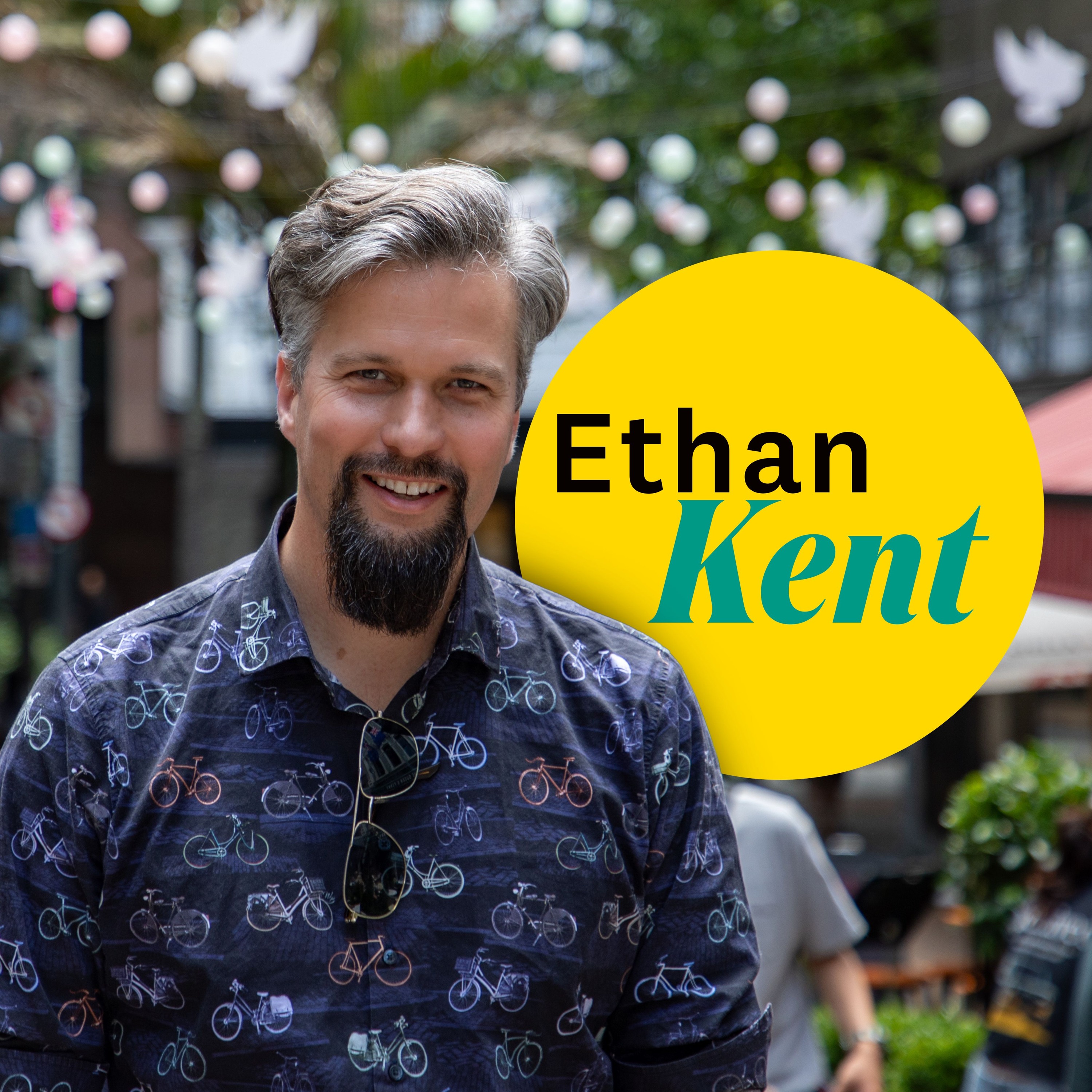
This podcast episode from the Auckland Urban Development Office features international placemaking expert Ethan Kent, executive director of PlacemakingX. Placemaking is defined as a provocative, community-led process that challenges traditional urban design by focusing on human-scale connections, comfort, and diversity. Auckland’s approach involves engaging with communities—especially Mana Whenua—before any plans are made, then collaborating with the private sector to realize opportunities from underused council properties.
Kent emphasizes moving from "place taking" (extractive development that depletes shared value) to "place-led development," where public realm investment drives a virtuous cycle of private investment that respects and enhances community identity. He praises New Zealand’s innovative learning culture and networks like Place Aotearoa-Toroa, which have inspired global placemaking networks. Skeptics are valued for deepening the process, and the private sector increasingly recognizes that great public spaces and transit are critical for economic development and attracting talent.
Regarding Auckland’s City Rail Link, Kent suggests using its launch to reinvent transportation planning around destinations and people, not just cars. For downtown living, he advocates leading with inclusive public spaces that layer uses (e.g., play areas with cafes) to create attachment and welcome diverse groups, including families. The episode underscores that placemaking is an ongoing learning process that builds community capacity and ownership.
[Music] Welcome to a City of neighbourhoods, brought to you by the Auckland Urban Development Office. This episode is part of a series on placemaking. When Auckland Council no longer needs a property, we don't immediately sell it without any thought to what a developer might do with it. We first look at what opportunities the site could offer for surrounding community. We then collaborate with local communities and the private sector to realise those opportunities. Over this series, we'll be talking to people who inspire and assist us to deliver amazing places in Tamaki, Makoto or Auckland. And today we're very fortunate to have an international placemaking expert in Ethan Kent and Ethan's over here doing a lot of great work for Auckland and for other cities in New Zealand advising us on better placemaking. So that's what we're talking about today. Welcome Ethan. Thank you. It's a glad to be here. For those who haven't heard of Ethan, Ethan's the executive director of Placemaking X. It's a hub and a global network of placemaking professionals from over 100 countries. Ethan's based in Brooklyn, New York, where he grew up, and is the son of the founder of Project the Public Space, Fred Kent. So thinking about and advocating for better ways of designing our cities, towns and neighbourhoods is an Ethan's family. Both Ethan and his dad are well known across the globe as advocates for and practitioners in community-led urban design. And Ethan's not everybody's going to know what placemaking is, what we mean by placemaking. So in many ways, placemaking is actually a provocative word that was meant to challenge conversation and to help people realise that they are experts in their community, their public spaces in ways to improve it. Our work really started with trying to make public spaces work for people. How do we support human connection, comfort, diversity, health at the human scale? And I love the name of your podcast as a city of neighbourhoods because it's this neighbourhood community scale that's often left out of shaping cities. But placemaking also has really evolved to be about how people in places build each other up. And it's an ongoing learning curve. It's an ongoing question of how do we best support each other to support places? So it is for the Auckland Urban Development Office and wider Auckland Council, we're always in the business of having an area, a piece of land, a precinct that hasn't seen in your love for a long time and is in decline. And that's generally where the urban development office is stepping in. So within that, we could just have a technocratic exercise where we hire an urban designer, we hire architects and say, come up with design and go say to develop a build this. But they leave the community out entirely. Yeah, and I like the way you framed it as a space that hasn't been given any love because it's really placemaking is about leading with some love but then trying to attract and allow others to give love to it too. When you feel loved by a supported perspective by a place, you put an emotion, a virtuous cycle of connection, of contribution. And we need the technocratic skills all the more, but what's limiting our cities isn't understanding the solutions or the skills. The skills are here, the problems are often understood. It's how we organize and harness the collaboration across departments and the council, across sectors and the community, and ultimately how we challenge and build the capacity of communities to really shape and support public spaces themselves. With the urban development office, we have not the same approach for every precinct, but certainly the approach is similar and I think it goes to what you're talking about. The first thing we really do is talk to people. We look at a place and we talk to the people who live there, the people who use it. We pay particular attention to Manifenoa, the Maori who have always been there, pre-colonisation and post-colonisation. We do a lot of talking to people and that's really before any plans. We start very high level and work down to detail, but at each stage of that we are talking to locals, talking to stakeholders, talking to our elected members. So from what you've seen in New Zealand, I guess Auckland in particular, are we getting it right? For sure, I've learned so much working here, actually, I've been here many times almost over 20 years and have followed how the culture of learning is really something to celebrate here and how you guys synthesise the best ideas. In your teams you have been strong, obviously first and foremost the connections and the learning from the Maori community have grown a lot longer to go for sure, but that's something that you should be proud of, I think, and something to build on. The diaspora is of other cultures here that have come here recently and longer ago, how those are all adding to their urban conversation. But you're also really innovated in what we call place lead development, which is really leading with place making and listening and trying small things to public places, but then looking at how that can attract development and people on the terms of that community and to respect it and create a virtuous cycle of development and investment that adds to and grows the existing identity in place. Is this happening all around the planet? Is it in pockets or is it in general? So, one of the reasons we wanted to really network the place making conversation globally, and I want to give credit, first of all, to Place Bignare-Toroa, which is an informal network of place making leaders around this country, they pioneered a learning model of collaboration that has been replicated and has inspired more than 30 countries in regions to have similar networks. And with place making acts, we were inspired by that, so we founded it to help support these other networks, but also connect them. And each part of the world is leading the place making conversation from different strengths, from sometimes it's the politicians, sometimes it's the developers, that it's very often the grassroots community leaders, but we find that whoever's leading it is also sometimes limiting it, and that they're best supported by diversifying who's participating in the conversation. So, every part of the world has a strength of weaknesses, every part of the world has something to teach and something to learn. I do think this part of the world is particularly open to learning and synthesizing models, so we look, you know, the models of place that governance and development, think are particularly powerful and ripe for leadership. Encourage listeners to look at the podcast notes, we'll put a link in there to our website about how we operate and how the Auckland Urban Development Office actually goes about doing regeneration, I think it's a useful description and very much in line with what you're saying, for the skeptics. And we do have some of those. There are people who see what the council's doing and think for God's sake, why didn't they just leave it to the market, developers understand the market, so developers should be left to just to get on with it and everybody else should stay out of their way. That's not to say that all developers think like that because we've got some great developers in Auckland who certainly think in a community wide sense, but can we just leave urban regeneration to the private sector? I love that question for a range of reasons. First of all, skeptics are the most valuable people in a place we can process. They make it better for everybody. You need some negativity, bad ideas even can make a process deeper and more thoughtful. Right now the dominant development paradigm is what we call place taking. It's extractive of the shared value of the public realm, of, you know, the cultures that have gone before, but also of social life, of human connection, of all the fundamental aspects of successful civilization essentially. So it's really a race to the bottom, but the market also, we've seen around the world, can respond to what we call a place capitalism or place led development. The best way to disrupt corporate capitalism, which extractive is what we call place capitalism and leading with the shared value to drive the market and attract investment that adds to shared space and benefit accordingly. Leading with place the way that, you know, often development office has been doing, we think is a pioneering model for reducing risk for development, attracting investment developers to add to the existing place vision of that community. We've had some good examples in recent years where we have proposed heavy investment in public realm right next door to private sector heavy investment in commercial and retail office space. And in talking to those developers and the occupiers of those commercial spaces, they are really quite vocal in telling us they place huge value on the public realm because not only is it get people into their neighbourhood, it also gives the people they employ places to go at lunchtime, the environment is better. They're trying to attract talent and attach talent, you know, again, the sort of love ability is a means to attract talent and draw out talent and great places draw creativity and the people that are there we need to move from a city that you just consume passively, you know, culture that just perpetuates this sort of consumption to one that public spaces and communities that people want to be part of. People used to chose a job first, and recently they choose a place first, but I think even more so they're going to choose a place that they can contribute to being part of. Interestingly our national statistics bureau in Stats New Zealand did some work getting on a bit now I think I think it finished in 2010 but talking to immigrants about what they value and why they chose to be here when they first came after a year or so, how's it all going for you after several years, you know, did this live up to what you expected and what were the reasons you came and place is a huge part of that. Actually it's access to natural environment, it's access to good public spaces, it's safety, things that are very much in the public realm and those things tended to be as important if not more important than the job for sure. Yeah, I thought it was a great piece of research. We still got some anxiety in our community, I think post-COVID that the working from home thing got entrenched in particular, you know, given Auckland certainly central Auckland, there's a services economy, you're not on a production line, you can work at home. We can do that meaningfully but there are people who think that you know people should be back in the city centre, there are some people who have said that people should be ordered back into the city centre and I think it's a much nicer idea that we attract people back into the city centre. Is it a global problem? It's definitely a global growing pain right now that the city centres are changing, you know, again it's because people can now live where they like more than ever, they can invest where they like. You know, we have tried to make places all the same and that's not going to keep people, you know, we've tried to become livable, not lovable. So we're not creating places that are comfortable and friendly and I think, you know, Auckland has been doing well.
doing that part of it really well, but I think that the next evolutions may be a really building a capacity of people to grow those spaces themselves and sort of a facilitative role of government and communities. - So we should be perhaps even talking directly to people who work in offices, I mean, the people actually, the front end of the service industries, what they want in their city centre. We talk to people who live here, which is great. We talk to building owners, property owners, and I think we probably talk to firms, but yeah, are we actually talking to employees that would be useful? - Yeah, yeah, not just asking them what they want, but giving them the tools to help be a part of the solutions and helping create an entrepreneurial ecosystem that supports businesses that have to help the space like markets and makers. And when the city's incomplete, when there's vacancies, when there's parts of the city that don't feel so loved, those are also opportunities to invite people to help shape it, just these problem solvers with us. - And we certainly have that. There are different levels of building occupancy and even value growth in different parts of the city centre and it's causing some anxiety. I think one thing that will help in terms of people coming back into the city centre, both for work and for play, is we're about to commission our philanthropy largest investment ever in infrastructure, which is the city rail link. And this going to double the number of people in the city who are within a half hour train journey of the city centre. I think the commute for some people is a deterrent to coming into the city to work. They should improve that. Excitement is building and the anticipation is positive. But we want to max the feeling, we want to max the excitement, max the visibility of that launch. Do you have any suggestions on what we do on day one? - Well, first of all, I heard this is a recently on that service too, that New Zealand has the highest rate of car ownership in the world. - Wouldn't surprise you. - Yeah, so. But I also know one of the innovations of the Auckland transport community is this idea of movement versus place. And we really think that transportation planning, you know, there's so much backlash right now to investing in whether it's transit or bikes or even walking. We think the way to sort of shift that conversation to make it more constructive is to really start it with place making, with places to go, places that you can accomplish many things at once, places to drive to, not through. And I think New Zealand maybe doesn't have the destinations, the transportation, the roads, the transit isn't really defined by and being used as a catalyst for public spaces and destinations. And so when you launch this new momentum for rail and reinvent the relation of the city to rail, this is an opportunity to sort of, you know, rethink, turn upside down transportation planning to start with people in places. One of my father's favorite quotes is, "If you plan a city for cars in traffic, you get cars in traffic. If you plan a city for people in places, you get people in places." But I think, you know, with the construction too, I was involved in Sydney and George Street in advance of the rail coming in there, the businesses were all concerned and we did various activations and workshops to build their capacity to do place making actually during and after that. So it's an opportunity to reinvent how people feel about the city and participate in shaping it again. - I think that possibly puts Jonas on us, there are a lot of great things to do in the city centre. And we have agencies, there's job is to promote those. And they do a good job and we want those fun things to do, those non-work things to do in the city centre to be promoted and as well as great activations. - Interestingly, we recently had the chief executive of our regional Chamber of Commerce on this podcast. He's also the former leader of one of our major political parties, so he's no small fish. He agreed that investing in streetscapes, public transport and public spaces is economic development. We've also got our largest property investors telling us at public space and public transport that the critical location factors, and they agree with something that you've said that successful public spaces are the new end content. Although investment in public services and public places isn't direct investment in productive capital, they met a more and more to our private sector. So what do you think is going on there is the private sector beginning to see the value? - For sure. - And yeah, Auckland should be celebrated for the incredible investments in urban design and public realm and green street. That's a transformation that and cleans work in the whole waterfront to me just totally reinvents how the cities perceived locally and globally. The face to the world of waterfront has been transformed to really reflect the cultural and social life of the city. And I think developers and private sector have seen that change, I hope, and want to be part of it and contribute to it. To me, that's that example of place led development, that a broader collaboration of development, virtuous cycle of private sector and public sector life supporting each other. - That's worked. - I think so. - I guess along with businesses, we also have an explicit objective to grow the residential population of the city center because we think it makes good social environmental and economic sense. What attracts people to live downtown? - That's a good question. And definitely you want more housing and more density and that's one of the biggest challenges around the world. But the order with which you attract them downtown is key. And you want to lead with places for everybody. This is the downtown that is meant to be and should be for not just the whole city, but the whole country. This should be the place where everyone feels welcome and it's attracted and engaged. And residents can add to that, but they have to add to it knowing that this is gonna be active. You want them to have ownership over it and participate in it, but you want them to move here because these are spaces that are not necessarily just for them. That said, you need local services and a lot of the amenities for residents actually make it better for everybody else. Even tourists want to feel like they're in a place that locals live. So they want even the tourist locations to have reasons for the locals to be there. We have a concept called the Power of Ten, where we say a great city has at least 10 public destinations, each destination or district has at least 10 places in it. Each place has 10 reasons to be in it. So the layering of different uses is a way to layer the different user groups that you're trying to attract. So having those uses for children to play and the different services they get a coffee, and even the dry cleaner, whatever it is that people might need. But it's the layering of those different purposes and meanings in a space that make it magical. That would create attachment and attract. Groups of people but also prevent anyone use their user group for dominating it. We often worry about the children aspect, how you make a city seem to good for kids. Another really great example is that around the world. So that's definitely one of the biggest areas of interest and momentum and the place making movement. They're not only doing lots of spaces for children, but with children. And it's amazing. And especially in the US, we tend to build fancy playgrounds, but they're off in the middle of nowhere. And the simplest example to make it succeed is making it interesting for parents actually too. The caregivers, I think of one of the simplest ways to make it attractive to get people to come to a downtown or further away from their home. Is if you have a place to get a coffee or a drink while you watch your kids play, parents will come from much further away and stay there longer. But to often those uses are separated out. To be able to combine those things. Playing uses is a simple thing that often planners, landscape architects tend to dissipate energy by spreading everything out. Places for parents tend to be a drag. The kids places for kids tend to be a drag for parents. Exactly. OK. You touched on something about diversity in the city center. And we have a very diverse city center. And partly what happens is that people come from overseas and don't really know the place. First place they move to is the city center. And then they tend to then gravitate out once a town where they want to be. But so the city center is pretty diverse. How do we work that into our engagement with people, our activations, our place making? Yeah, well, first of all, maybe embracing that in a sense is this is the welcome center for New Zealand. And how people are welcomed in and supported, like the libraries, what are the spaces that make these groups feel welcome and attached and help them succeed and contribute to the economy and the culture here. One of the major assets of New Zealand, Auckland is the Manifinal of the Marri cultures. And what I've learned from Lucie Tacua that's been very important in the place making conversations here is she's told us that you don't just need indigenous place making, not just place making that represents and reflects the Marri cultures. But we need all place making to be indigenous. And that's a provocative challenge in thought when we're welcoming new cultures, people want to be able to be rooted in a place. They want to contribute to it. And in some ways, they want to become indigenous too. And I think that can enable them to respect and conform to the existing indigenous culture. So how they're welcomed in to add to the diversity. And the power of 10 is again one tool that allows, how do we attract a range of different groups to feel comfortable around each other and give them purpose to stop in that space? And there's issues of homelessness that are everywhere and lots of ways that needs to be addressed. We've had a big success on around the US is to prevent anyone user group from dominating it. And that includes almost people by bringing in other groups, but not just by pushing out any group. So great places are inclusive, celebrate difference, but allow everyone to become more themselves and more comfortable with the differences in others. They did define with the place. I was in a new-ish mall the other day and I was thinking, you know, it was busy. But I thought, my God, I could be in Singapore, I could be anywhere. And there was nothing it told me. I was in Tamaki, Makora, Auckland. How do we grow our uniqueness and cultural identity into our design? We don't necessarily lead with the design. You lead with the stories of the place, the people of that place. And the best public spaces are actually flexible. And they can evolve and change. A lot of the biggest mistakes with designing public spaces are designing them too much, spending too much money sometimes on them and making them too rigid. So, you know, we, in Auckland, you know, the place-making work has really led with what we call lighter, quicker, cheaper, the short-term low cost improvements, that build momentum, test things, and actually lead to really good engagement. And also, it's really important that it's not too fancy. That's informal. That makes it more accessible and comfortable for people, actually. What's an example of that? Not picking the fancier seating, making it a little more informal, allowing less formal cultures, too. You know, there's a strong white-year-old culture that's really heavy in most of our cities around the world and it's in a how we create
markets or support small businesses that maybe immigrants are adding them to the space is a really key way to see the culture and identity. And yes, and design features as well, but leading with them can be kind of holding things sort of static in rigid in some ways too. Almost a word but not allowed to say is gentrification. We invest in a place because it hasn't had enough love and we want to make a better for the people who are there, but we wind up through that investment pricing that people who are there out. This is something that people are concerned about. The good examples from. It is a valid concern and the market forces are very complex so it's hard to generalize in any location, but we think place making is often good at preventing negative cultural gentrification, but the economic forces are sometimes hard to people don't own their property. There's something called place keeping, which is in very settings looking for ways to help people that maybe pushed out to get access to capital, you know, to afford staying in the communities that they've helped to build. So gentrification is a valid fear, but yeah, unfortunately sometimes it is preventing people from investing in their neighborhoods in ways that actually may prevent it. Place making could be a tool for existing communities to proactively showcase what they love about their community, build the strength of their community and their economy in ways that will build the resilience from outside investment. And it's hopefully attract investment in people still, but in ways that respect and build that community. And I guess I'm thinking about the same area, probably the front line of gentrification. I think in people's minds is probably Karanga Happy Road, which is a much loved, the hospitality driven area and people go there and it certainly is more behemian than most of Auckland, and people don't want that to go. But there are others who do want it to go, they would like to maximize the land values and affect. And so we often find ourselves up against people who invest in the status quo, versus people who want positive change, and quite often the opposition to projects is actually very loud, the media love it because it's conflict. And so it seems to be the voice of the entire city, but it's actually the voice of a few people. Any advice on how to deal with opposition to good projects? Yeah, yeah. A big problem everywhere, and people call them the Nimbis that are not in my backyard, folks. And my feeling actually is that if you really look at some of the best projects in the world, that's New York City, that's the Highline or Central Park or Washington Square Park, it was actually the Nimbis that were key to preventing something from happening. They were energized by trying to get power because the only power that a lot of communities are given is to say no. And the only way they've succeeded is when they harness that negative energy, that oppositional energy into something positive. So place making is about giving them the tools, the processes, the inspiration to say what they want because people aren't asked that. We need people to care. Nimbis are attached to their place, they love their place. That love is not being directed in a way that helped build it further and helps perhaps preserve the values that they care about so much. So start at the level of values and agree on those between you and then ask people to worry bigger, frankly, you know, ask them to rather than care about their one issue, help them realize that they have broader responsibility, a broader wisdom, broader ideas they contribute, and that there's lots of crises we're trying to solve too, from isolation and loneliness in our communities, to safety, from crime, but often people are actually much more afraid of crossing the street than they're after. We've gotten used to being afraid of crossing the street, but that's much more dangerous than anything we do in the day. We're riding a bike or driving, or even driving. And so our roads, you know, that's a huge safety issue that we're not creating our streets to be places that we're comfortable that our stress levels were reduced on, and that's what keeps us out of the city center more than anything else, I think, is not feeling safe walking on streets. And we've heard that. Though, pleasantly, the crime stats have pointed in the right direction. They're actually reported crimes down in the city center, which is. But it would be interesting, like, you know, in any given intersection, would you ask people, are you more afraid of crime? Are you more afraid of getting hit by a car? In a lot of intersections, I think people would be more afraid of getting hit by a car. I'm a bike rider. I'm definitely more afraid of being hit from behind, or a door, certainly opening, which has happened. I was going to try and close off and just saying, "When you go home in six months time, you think of Auckland, what do you think?" The thing I've learned most from Auckland and been inspired by is this way that place-making, this sort of later quicker cheaper activations are part of a larger investment strategy of attracting development to add to those places. Respect to the culture of the land, the people that are there now and attract investment that makes these places work better. That's, to me, place-making right now, globally has had success in making public spaces better, and making public spaces an issue and a cause, but right now we're not changing fast enough to keep human beings on this planet. But place, to me, is the focus that has been missing, the sort of fall in between the cracks of all the different disciplines and all the different causes. And it's really fundamental to why we're on this planet. This physical existence to contribute to and benefit from the shared value of our public realm. So a place movement is really what's needed to save the planet for people and help people and places build each other up. And New Zealand's learning on place-led development is central to that leadership and the model that can be replicable and go viral around the world. We're organizing a series of conferences on these topics. We need people from Auckland and New Zealand to come to these events and be part of the learning journey. That sounds fantastic. It would be great to have a few of our very good developers. And as I said, we do have them to participate in something like that. They could make a very valuable contribution, I'm sure. Ethan, thank you for your time. So after this, and it's enjoyable and a lot of things, and hopefully they didn't work too hard for the rest you say. It sounds like you've had a pretty grueling schedule. I feel very lucky to get to be part of the incredible learning community that is the Auckland place-led community. It's very convivial, very diverse, very multi-sector. It's really about this ecosystem that really should be celebrated and supported. Thank you. If you'd like to learn more about the topics explored in this episode, check out our episode description for links. This has been an episode of a City of Naiburth, Recording at the Auckland Council in the beautiful Auckland City Centre.
Podcast Summary
Key Points:
Placemaking is a community-led approach that prioritizes human connection, comfort, diversity, and health at the neighborhood scale, challenging traditional technocratic urban design.
The Auckland Urban Development Office engages with local communities (including Mana Whenua) early in the process, before any plans are made, to identify opportunities for underused properties.
A shift from "place taking" (extractive development) to "place-led development" creates a virtuous cycle where public realm investment attracts private investment and adds to community identity.
Skeptics are valuable in the placemaking process, and the private sector increasingly recognizes that successful public spaces and transit are critical for economic development and talent attraction.
The upcoming City Rail Link is an opportunity to reinvent transportation planning around people and places, not just cars, and to invite community participation.
Attracting residents downtown should lead with inclusive public spaces for all, layering different uses (e.g., play areas, cafes) to create attachment and prevent domination by any single group.
Summary:
This podcast episode from the Auckland Urban Development Office features international placemaking expert Ethan Kent, executive director of PlacemakingX. Placemaking is defined as a provocative, community-led process that challenges traditional urban design by focusing on human-scale connections, comfort, and diversity. Auckland’s approach involves engaging with communities—especially Mana Whenua—before any plans are made, then collaborating with the private sector to realize opportunities from underused council properties.
Kent emphasizes moving from "place taking" (extractive development that depletes shared value) to "place-led development," where public realm investment drives a virtuous cycle of private investment that respects and enhances community identity. He praises New Zealand’s innovative learning culture and networks like Place Aotearoa-Toroa, which have inspired global placemaking networks. Skeptics are valued for deepening the process, and the private sector increasingly recognizes that great public spaces and transit are critical for economic development and attracting talent.
Regarding Auckland’s City Rail Link, Kent suggests using its launch to reinvent transportation planning around destinations and people, not just cars. For downtown living, he advocates leading with inclusive public spaces that layer uses (e.g., play areas with cafes) to create attachment and welcome diverse groups, including families. The episode underscores that placemaking is an ongoing learning process that builds community capacity and ownership.
FAQs
Placemaking is a concept that challenges people to see themselves as experts in their community and public spaces, focusing on human connection, comfort, diversity, and health at the human scale.
Instead of immediately selling a property, Auckland Council first assesses its potential opportunities for the surrounding community, then collaborates with locals and the private sector to realize those opportunities.
Community involvement ensures that development is not just a technocratic exercise but leads with love and builds a virtuous cycle of connection and contribution, creating places that people want to be part of.
No, because the dominant private sector model can be extractive, but leading with placemaking can attract investment that adds to shared value and reduces risk for development.
People are attracted to city centers that offer diverse, layered public spaces with multiple uses, such as places for kids, coffee shops, and amenities, making the area feel welcoming and active for everyone.
The City Rail Link will double the number of people within a half-hour train journey of the city center, improving commute times and boosting excitement and visibility for the area.
Chat with AI
Loading...
Pro features
Go deeper with this episode
Unlock creator-grade tools that turn any transcript into show notes and subtitle files.
 PodcastTranscript AI