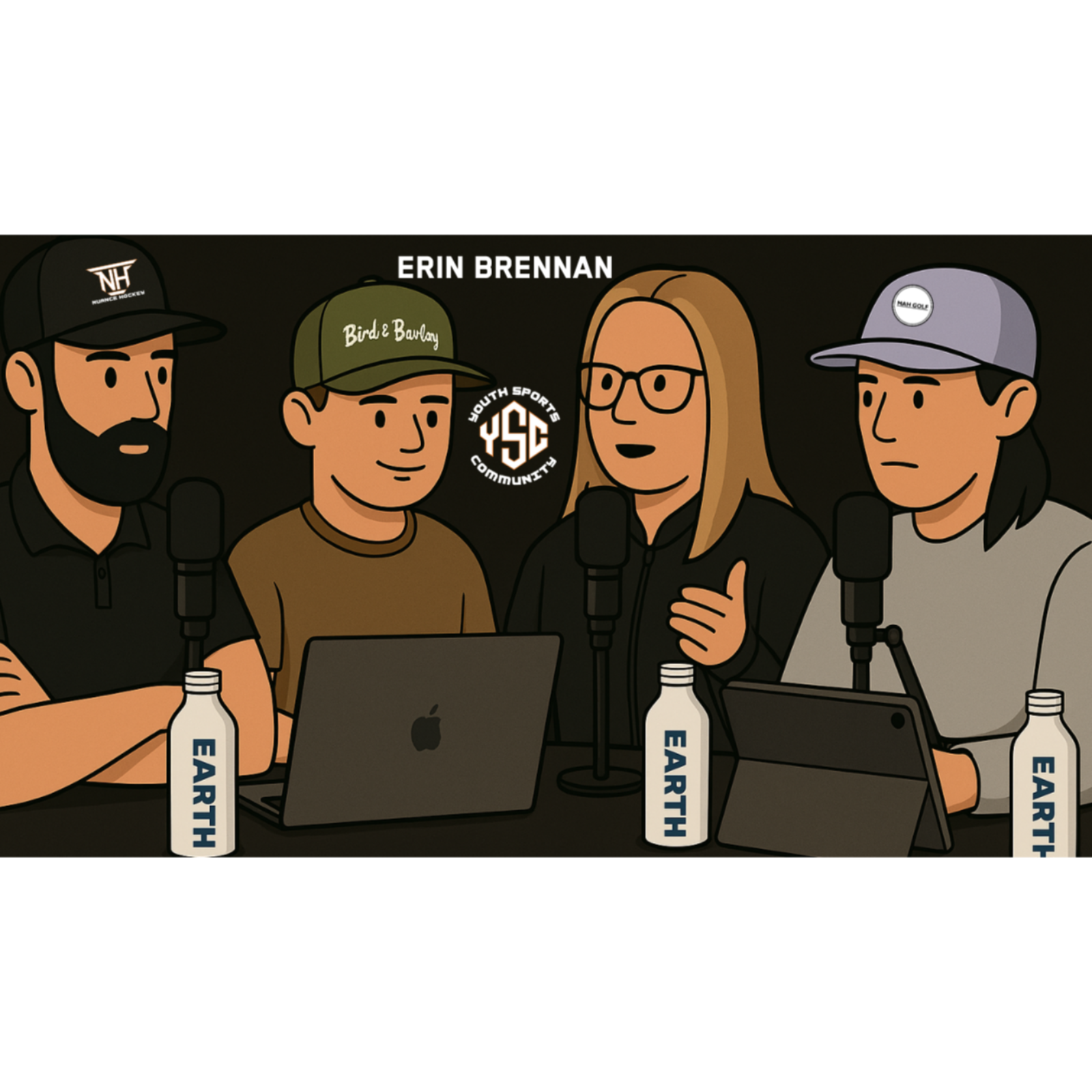
Erin Brennan: Mind Over Matter — Building Mentally Strong Youth Athletes
110m 49s
The podcast episode from the U-Sports community features an interview with Aaron Brennan, a certified mental performance consultant. The hosts introduce Aaron's professional background and her work with Mind Over Matter Performance. Aaron reflects on her youth sports experiences, recalling early memories like playing catch with her grandfather and participating in various sports including fastball, curling, volleyball, and swimming in her hometown of Peace River. She discusses the value of multi-sport involvement for youth, emphasizing how it teaches essential life skills such as teamwork, problem-solving, and receiving feedback, which contribute to becoming "good humans" on and off the field.
Aaron contrasts the benefits of team and individual sports, sharing how curling became her primary competitive focus. A pivotal moment was gaining access to a mental performance consultant at age 17 through Team Alberta, which she describes as life-changing. This early support helped her manage performance anxiety, burnout, and the pressures of being a student-athlete, profoundly influencing her career path. Today, her work focuses on helping young athletes develop self-awareness, set meaningful goals, and balance sports with other life demands, aiming to normalize mental skills training and foster holistic development in youth sports.
(upbeat music) - Hello, everyone. Welcome to the U-Sports community, a community striving to enhance youth sports. - I'm Taylor Mettick. - I'm Sean Cunodden. - And I'm Matt Maugh. - Thank you for joining us today. The U-Sports community is proudly presented by Nuance Hockey and Maugh Golf. - Nuance Hockey provides detailed driven on-and-office development in the Edmonton area. For more information, please visit our website at nuance.hockey and us on social media. - Maugh Golf provides lead coaching for golfers of all skill levels at the Millwoods Golf Club in Edmonton. Our apparel is provided by Burton Barley. Pair inspired golf focused. To receive a 15% discount on your next order, please visit burdenbarley.com and use our promo code on capital YSC-15. - This episode is produced by Nick Hussie of Hussie Multimedia and hydration is provided by Earthwater. We are very excited to have Aaron Brennan join in the community for today's podcast episode. Aaron is a certified mental performance consultant and the owner of Mind Over Matter Performance. - Aaron holds both a Bachelor of Arts and a Master of Arts degree from the University of Alberta, specializing in sport and performance psychology and works primarily with a diversity of performance disciplines. - Aaron has practiced within the applied landscape professionally for 10 years with national, provincial, and local organizations. In addition to working with teams, athletes, coaches, and parents in a variety of sports. Her passion for her work comes from her love for human connection and sharing stories. - She has the incredible ability to listen and connect with people of all ages, backgrounds, and identities to discover their goals, dreams, and aspirations while helping them realize the potential inside themselves. In her spare time, Aaron is an active community member who volunteers with various youth sport organizations in Edmonton, including the Special Olympics. - Aaron is also a professional member of the Canadian Sports Psychology Association and holds the lead position of the CSPA governance committee. Not long after having the privilege of meeting Aaron, I was very fortunate to partner with her on a mental skills research project in 2018. Over the years, it's been awesome to follow her growth and success in the field she loves so much. Aaron, we really appreciate taking the time to be here and welcome to youth sports community. How you doing today? - Oh great, thank you. What a welcome. I feel very privileged to be here too and being able to jump on your platform and connect regarding something that's so near and dear to my heart and also knowing that the three of you have made it such a big priority in your worlds to focus on this area as pretty special. I think we spend a lot of time in high performance spaces and the sense that socialization of sport. So to go back to our grassroots and be really connected with youth is something that matters a lot to me. So really excited to talk a little bit about it today. - Well, a lot of accolades we highlighted as an adult for you but as a kid, what are some of your earliest memories of youth sports and sports you grew up playing? What a powerful question because I think that goes back to what's your why when you fall simply into what you love about sport. And I immediately thought back to my grandfather's backyard and just playing catch and him gunning the ball right at my head not being able to catch and him reminding me that one day I'm gonna be grateful that he used to throw with that heart at me. And then as I grew up and played in a few more events that sentiment remained true. So I think of early sports. I think of being drug to the arena to the ball diamond with my parents. So having this, you know, I guess shared interest in sport with them and being in those spaces and then naturally by association, you know, you start throwing rocks at the curling rink or you're spending a few minutes at the ball diamond after. So I was fortunate enough to have parents that were community minded in terms of a variety of sports and just, you know, Saturdays and Sundays spent doing those sorts of things. And then naturally going maybe a little bit more competitive, you know, as I grew up. But I think the simple game of catch in a backyard that was too small, being threatened that if I ever broke a window, I was in trouble. Was that first vivid memory for me with my grandpa? - That's awesome. At school, do you have any sports that you started to get into at an early age within the school system? - Yeah, I remember playing youth sport basketball up in Northern Alberta. I grew up in peace rivers. So, you know, what else was there to do other than play as many sports as possible? So started in basketball curling. I played ring at, I swam. And then I really loved volleyball. Probably grade seven. Fortunate enough to, you know, be involved in everything and my parents made sure that we had access to that. A lot of not just individual sports but team sports too to build special relationships. And, you know, when you're part of a small community, you get involved that way and you just kind of grow with the people that you grow up with in the sports space. So, I was fortunate enough to be in those rooms. And then secondly, you know, once I got into curling, then it became my competitive space. And probably grade nine is when I really made the commitment to the high performance, you know, pathway of curling. And unfortunately, I had to make, you know, those dreaded decisions of picking your one sport at one point. But I did try to play and hold out as long as I could with everything across the board. - And you mentioned the catch in the backyard with your grandfather was baseball something that stuck with you through those years of playing all those different sports? - Yeah, I was able to play fastball up until I was about 16 years old. And then the off season training with curling took over. And once you get to certain ages, as you guys know too, when you pick that specialized sport, you got to be careful with injury. So the off season training took priority. And, you know, I always played slow pitch for fun in the summer with my friends. But definitely transitioned from playing fastball with my friends into curling, which was great. It was a wonderful opportunity to have and had a lot of success in that area. But, you know, I work with a lot of baseball right now. Shout out to all my youth athletes in baseball. And they know how much I love being on the field with them. I do the warm up with them because I can't help it. I just want to be there. Okay, guys, let's throw the ball around. And they're pretty funny too. They challenged me and they told me if I'm not doing something right. So, they hold me accountable. And, you know, we talk about purposeful practice and intentional training. And my little 11, 10, 11-year-old boys, man, they're going to be something one day. The team that I worked with this summer, they were pretty extraordinary. And you want to talk about warming up with purpose. These guys have got to figure it out. It's so pretty. That's good. How important was it for you at that young age to have, you know, slow pitches, kind of that secondary sport, the curling? Like, was it helpful to kind of have a little break mentally? Yeah, and I did that with volleyball too, because I was playing volleyball until grade 10 and 11, high school sports, you know. And being able to be in a different team sport, to train my body, get my body a break, but also how fun being in a sport where I could just go play with my friends and love it. And then we did quite well in high school. So it was, you know, you're playing with your friends, you're having fun, you're training, you're still keeping your body intact. And up in Northern Alberta, we didn't get the ice until October. So, for the month of September for me, it was great because I was able to train and do something meaningful. Until I got into the opportunity to be able to be on the ice a little bit. What was your first team sport exposure, you know, as a kid, was it softball or baseball or fastball? Yeah, fastball. And what was that like getting into a team environment for you at such a young age? I loved it. I think I always geared more towards that social piece of team sport. You know, I had, my dad was coaching me, so I had friends that I grew up with. We were all playing and it was just fun. Like the pure love of sport, that's what I think of right away. I don't think of the formalization. I don't think of any of the, you know, the hard stuff. I think of getting to go play ball with my friends on a Tuesday. And I remember that. I don't remember what happened in the game. I don't remember that, you know, I just remember learning how to turn to with one of my dear friends who was playing second. I remember my dad giving her feedback on the drill. And I remember when she turned to that day, and we first got that drill and we figured it out. And it was just the most amazing thing ever. It's funny how those moments are, you know, you hold, you hold those ones dear. I don't remember what happened that week. But when she turned to, it was just effortless and we practiced it for so long. So yeah, I would say that fastball was that first team sport that I really connected with. And then it made things a lot easier for curling too, knowing how role-definement works, communication, learning how to be coached and take feedback. It just, it made it easier later on for sure. And I think I say that a lot to the athletes I work with now. We want them to have as much variety as possible in the sports they play and participate in, because it's only gonna enrich their learning and their ability to compete later on. - I think those are really good points. The positions, the roles you have to play, learning that at a young age, 'cause that leads to things later too. So we're gonna team environment at work and whatnot and being able to work through your problems as a team, 'cause you still have to play the game. But you gotta figure out how to work together. Even if there's like disagreement or, not everyone's gonna like each other all the time, but you have to work together as a cohesive unit to accomplish a goal. - Well, you know what, Matt, it's interesting, 'cause most of the parents that I start conversations with now when I work with their children or their youth athletes, it's all about the skills that we talk about in mental training or mental performance are gonna help them be good humans on and off the ice in and out of the gym, on and off the ball field. And problem solving is one of them. How to take feedback, how to work through challenge and build resilience. So I think if we can remember that pure joy of you sport, but remember that the participation in it also is a space to learn these great skills. It just helps them be really great humans. And I think when I think about my professional philosophy, it goes back to making sure we create spaces for kids to grow and learn and also help them be really good humans no matter what community they're a part of. - And on the individual side, were there any sports and forgive me, I don't know much about curling other than I did it on a field trip once and realized it was way harder than it looked. - You picked a different sport on it. - Yes, yes, right. Did you have any sports that you were competing on the individual basis mixed in there at all? - Yeah, I started in swimming and I lasted two seasons and it was interesting because most of my capping project in my master's was on swimming. So how to implement mental training for swimmers. And I do a lot of work with swimming to this day. So the irony is as I still have to work through it and deal with the challenges of not necessarily being successful at it and learning about a sport that it wasn't easy for me. I think I always gravitated towards the team sports just with the culture and being part of something bigger. But at the same time, if I didn't participate in the individual side of sports, I think I wouldn't have had that understanding of what it takes to be able to train when it gets lonely, to be able to mentally work through challenge by yourself. And now as I work with individual athletes, having that understanding is pretty important too because I wasn't very good at it. So knowing that that's something I'm striving to still work through as I learn new skills as an adult, you know, golf, you know, we kind of joked about it Sean, but I mean golf's hard for me and that's okay. It's just I have to learn to maybe temper my expectations a little bit with what I'm doing. - That's the biggest thing with golf actually is learning what your expectations should. - Right. Yeah, I think we might need to talk about that. The future of Matt, you and I might be hiring you. - Well, for Matt and I growing up, you know, being big golfers and Matt still being in that game in a big way, teaching and playing still to this day, you know, for me that contrast between hockey and golf, I thought was super cool to have and really healthy. The thing that I loved about golf on the individual side was that if you had success, no one could take it away from you. It was all you, but at the same time, if you didn't play well, you couldn't blame it on anyone else. It was you had to look in the mirror, you had to hold yourself accountable, take responsibility, and realize hey, it wasn't my deep partner that was bad, there was no excuses. You had to accept that and try to make improvements and work harder and make those adjustments. So I found that part to be really, really helpful when it was contrasted with the team sports. Are there any contrasts that you kind of found throughout those years that you could pull from one and bring to the other? - I think a lot of, you know, the self talk, understanding what motivates you, figuring out what kind of athlete you want to be, and I say that to this day, what are you willing to do that others aren't? So it doesn't matter if it's an individual sport or a team sport, it's learning about who you are, and the work I do today, it's so based on self-awareness and finding out what motivates you, how to set meaningful goals. I know I'm kind of diverging here down that mental training path, but I think when you are at a young age, you start learning about who you are and what you need. And I think those skills that you build and the challenges you work through, they're gonna be, you know, they're gonna show up in other spaces too. So I think for our youth athletes who are competing and training and enjoying themselves and trying to make decisions, I, you know, when I have these conversations with them, it's about figuring out what they're really passionate about. I don't want that to sound corny, but it truly is. Like if you love being on the golf course more than anything, that's where you probably need to be, right? And knowing yourself, learning how to communicate that and making sure we have support systems for kids today and learning how to have those conversations and finding out what they're really passionate about and then supporting them in it. - And for you growing up, you know, obviously the realm of sports psychology has evolved a lot over the years. I'm assuming, correct me if I'm wrong, that you didn't have access to one when you were a kid. How did you start to find some of that self-awareness yourself, was it through family, through teammates, combination of both? - Great question. So I think for sure having a parent as a coach who competed in different sports was very helpful because he was a great role model that way. So thanks dad for that one. And teaching me how to be aware of what I needed in the moment and how to take a time out, how to reset myself. You know, having some great checks and balances, he had a bit of a rule that after a practice, or a game for that matter, we wouldn't talk about things till we pass the McDonald's and peaceover. So I kind of joke when I talk to parents like that car ride home, what are the rules? So you know, having a parent who is very active that way in my development was super helpful. And then secondly, learning how to just manage myself in sport. But when I think, when we qualified as team Alberta, that gave us a whole access of resources to move forward with and I was fortunate enough to work with mental performance consultant named Claire when I was 17. Yeah, we had access to that with being named to team Alberta at the 2003 Canada Games. So we had access to her for a whole year prior to competing. And I truly believe today that she's changed my life. And what's really remarkable is I get to work with her every day. And we kind of have this special story and connection now as colleagues. But I truly, to this day, say that Claire probably changed, she changed my life. She taught me how to manage performance anxiety. She taught me how to talk about mental wellness and what it meant to manage burnout and stress being a student athlete. And to be able to now sit with her at a table and talk about these things as a grown up and then give back to the community that she's given to me and supported has been such a gift. So having access to her and then working with different people a little bit and then knowing I got back into the field for the right reasons to me. Just I guess the stars kind of align knowing that I was always drawn towards it. I loved her sports like sessions. I actually saved my papers that I did with her when I was 17, 18 and it was quite remarkable to go back and see some of my answers and how I viewed success and my biggest challenges as a 17 year old. - How much of an eye opener was that? I mean, that's 20 years ago and a lot of that stuff then probably seemed very new age. - It was, yeah. - How much of a maybe a shock to the system was it to discuss all those things that you just highlighted with someone, especially being 17? - Yeah. It was a shock because there was a sense of vulnerability when you're 16, 17, you're figuring out who you are. You qualify for these things and maybe some of your friends are doing different things in your community and you're committing to training at different hours and you're giving up your weekends. You're not showing up to parties at 11, 30, 12 o'clock at night. You're really tapping into your values and trying to make decisions about what you're willing to sacrifice to be able to compete at a high level. So the shock of knowing that there was gonna be sacrifices but privileges as well that came with it and then the responsibilities of when you earn a title and you're defending it or you're representing not just the province but the community you're part of, your family, that has always been something that has meant something to me. So to do that with grace and respect for the people in my communities was something even as a 17 year old that was instilled upon me from with my family. So I think learning how to have skills to manage some of those expectations and pressure that came with it was very helpful and that's definitely where she supported me in learning how to time manage with school and that's something that I'm doing with athletes now all the time, especially that 16 to 18 year old range as they go into diplomas here right away. I think I've done more exam study schedules with some of my athletes than I ever thought but that's great 'cause it's learning how to balance what it means to be an athlete today, right? So the shock of talking about perfectionist tendencies or learning how to communicate your emotions in uncomfortable situations when you're 16, 20 years ago when it wasn't as normalized. Oh yeah, there was some big conversations but also some big learnings and I think normalizing that and now making sure that when I get to work with people these are normal things. It's healthy to talk about our emotions. We want to talk about mental wellness and we want to make sure we give kids the opportunity to learn and grow in those areas too. So shocking but also a little bit long-winded there but now it makes so much sense. I'm so grateful that I was able to do that. - And just to go back a little bit, you talked about all these different sports that you were playing growing up and again how important that variety is, walk us through the process of how the passion for curling rose to the surface a little bit and how did you identify that? How did you figure out that it was the one that you were meant to put more focus into? - Yeah, oh, I got to go back. I remember they had this new event and there was a group of girls in my local surrounding area that needed someone that was under a certain age. So they asked me to be part of their team and that's how it started. I was part of my own team in Peace River for a while. I'd curl on Wednesdays and part of a junior program that parents volunteered coaching at and then as the weeks went on, we'd play in different tournaments and bounce bills for that matter and it was just fun like I loved curling. I never really took it that serious. And then I was part of this group and this team and we started doing very, very well and it took off. And when you start doing very, very well, good things happen, practices increase, strength and conditioning, all of a sudden becomes a thing, you go to camps, you start surrounding yourself with different coaches, different leagues, we started playing in men's league. We were just like 15, 16 year old girls playing against men in Northern Alberta, which was great. And we had these people that were so supportive, like donating things to make sure we could travel. I remember doing some fundraising stuff. We just had such great people in our community that were behind us. And I think being able to travel and do a sport that I loved with my friends at the time, just there wasn't a better place to be. So now I joke because I'm fortunate enough to work with curling quite a bit. When I get to step out on the ice and open the doors and I get that whiff of free on or just, you know, that smell. Ice, I'm like, it's so safe to me, it's home. And although I stopped competitive curling when I was 22, 23, you know, I always played for fun, I knew my heart was in something else. And the greatest gift I've been given is to find my way back to curling organically now in my role professionally. But that love for throwing a rock is still there. And I mean, I still fight the same technical challenges as I did. But seeing my friends and people I care about do so well and be part of their programs and youth sport and give back that way, to me makes sense. And I think deep down, that's how my curling journey had to be is I had to be in it to be able to do what I do today, not for the success of what it was then. Now we say to people that I work with, I feel like I'm in this giant puzzle in my life. And everybody and every experience is a piece. And I don't know how things fit, but the relationships I built when I was 15 and 16 with some of these coaches are remarkable because now I'm getting to work with their kids in my role now. And these pieces of the puzzle are starting to form and come together and I'm starting to see really cool images of these experiences. I hope one day at the end of it, I get this giant puzzle of my life being like, that's how it all kind of made sense. - Full circle. - Yeah, real full circle and pretty exciting. - Yeah, that's super cool. And so with a lot of our hockey guests so far, we've had almost all of them talk about being at the outdoor rink as a kid and just so many benefits that come from that. You know, the unstructured environment of it, but also the ability to play against different ages and not constantly be around just the same isolated group of peers and competitors. So again, not knowing a lot about curling, I'm curious and you'd mention playing against those men where there are quite a few, especially in those early years, opportunities to play against people younger, older and have a little bit of that variety where you're having to step up because now you're playing as a man that I've been playing their whole life. Obviously you got to a point where you're playing competitively and probably playing more with the girls your age, but just curious in the curling world how that works and how many sort of different experiences you might have had in those ranks. - Yeah, I think obviously it's changed now 20 years later, but growing up rural, you play where you can play, right? Like I'm up in Northern Alberta, I'm not living in a city where there's a defined junior league, like it was very different. So you played where you could, you'd go spare for people if it meant having access to ice time. And now it's obviously changed, but back then I just wanted to play when I could play and I needed to throw rocks. And it didn't really matter who was against, but yeah, I would play in a women's field, so I needed to spare, you know, Thursday night men's, we played once we got to a certain age, so we were continuously challenged. And then, you know, I'd go throw rocks with different people, even in university, I had a diverse group of people that I trained with and I love that because that's where, you know, that the wisdom of sport gets shared. And I think today when I, you know, working with athletes too, I want them to get as many rich perspectives as they can. So whether it's on the outdoor with my nephew on the 26, just playing tag, you know, keep away and stuff, he's now learning how to skate in a different way, right? Or if, you know, we're just throwing the ball around with my dad, he throws it a certain way and is telling me to do something versus my grandpa at that age. So as many perspectives and learnings is so important, that unstructured play, also I think it's about surrounding yourself with people who help you enjoy sport. It doesn't matter what kind of coach it is, if you like skating with someone, so go and skate with them and have fun while you do it. And I think we're seeing what you're talking about with that, you know, structured practice and unstructured. That's where the creativity comes from in the magic of learning new skills, too, with not the same practice style every day, right? - Right, and on the other side of it for curling practice in a structured form, again, not knowing much about curling, but what does that look like? Are you by yourself, just throwing rocks? What's a typical kind of structured curling practice like? - Yeah, well, if you talk to most of the elite athletes now, they would have individual team practices and individual practices or you add team practices. And then their goals are, you know, really defined based on what they're working on, whether it be individually or from a team perspective, if it's, you know, shot management stuff and communication strategies and how they're dealing with ice conditions, whereas individually you just might be working on something technically like golf, where you go to the driving range and you pick a skill that you're working on and you're trying to hammer it out for 20 minutes or so until you've had enough quality reps. - Yeah, we like to usually mix in like the technical and then the unstructured together. Like, I might work on something for a bit, but then I'll want to like, play it out and see how it works and mess around. Like, and we do this together a lot with golf too. Like, that's the funny thing with golf is even though it's individual, like, you still end up practicing with other people all the time. Kind of like tennis, which you have to. But like, we'll just go to like a short game there, like a practice and then you're just trying to hit like random shots. So I'm guessing in curling, you might just do something like that as well. It's certain times where you're just kind of messing around, seeing how much you can curve a rock or something like that. - Yeah, yeah. And I mean, the game has evolved so much since when I've played like the practices are so different from when I played. I mean, we had a structured practices 15, 16-year-old girls, but it was curated by our coach. And when I'd go through individually, it wasn't as big of a deal like I'd go through, but now, in order to be at the top of your game, you have to do things with definitely more intention and a commitment level that needs to be up there if you want to be in that space. - Positionally, how was it determined, you know, who's lead, who's second, who's skipped, everyone rotate, get a chance or was it like, Aaron, you're gonna be your skip. - Oh God, no Aaron was the lead. And Aaron was a very happy lead. I can talk about myself in third person here. No, so we had defined positions and based on the skill sets and I loved to sweep. Like I loved being active, strong communicator, put me at front end and I just loved it. I loved throwing the rocks first. They were very simple, put it top four, do my job, get out, let everybody else do their job. And I liked to sweep, like I just, it was very, at that time, I didn't need to do much. And I think for me, my skill set that I brought to the team was definitely, you know, being a great communicator, being able to be supportive, happy, go lucky, bubbly. I know I was there for a lot of laughs too, which was good 'cause it kept everybody pretty, pretty even killed in those situations. But yeah, you know, the whole dynamic of curling has changed in the way they, you know, decide teams and go through positional work and structure. But for me, back then, for you sport, it was very coach driven at the time. - And what about off the ice? So obviously, in the hockey world, off ice training has really increased significantly over the last, you know, 10, 20 years. It's evolved in a number of different directions. What kind of opportunities were there to hone your curling skills off the ice? - Well, there wasn't much back then, right? The other skills came in through multi-sport commitments. So by playing other sports, you're staying in shape. You know, we did other activities as a team. We did, you know, we all saw physios to make sure our bodies were okay. We did a little bit of modified strength and conditioning at that time. We did mental performance. But it was more, you know, in season you practice, off season you do other things. You go camping, you go to the lake, you have fun. You know, you play fastball at that time. And, you know, I think Gretzky talked a lot about that too, being, you know, multi-sport athletes in Canada growing up with a lot of our athletes. And I love that. Like, I love when kids can play many sports and enjoy what they're doing. And, you know, early specialization is such a big debate right now because of, you know, when's the appropriate age to make those decisions and how do we avoid injury and burnout? Like, all that stuff is on my desk every day. It feels like, but I think it's great when we have athletes and especially youth who can play in spaces in many, many sports and learn the skills that are gonna help them in that other one later on. For me, you know, I definitely was doing multi-sport. So I was keeping my body in shape that way. I was pretty committed in the school space academically. So I spent a lot of time making sure my academics were on point. That was a big value of mine. And then just, I think too, you know, not as much being in the gym as much as being aware of the commitments I had. And as a result of that, that drove my day, if that makes sense. Yeah. So, obviously you're very driven and committed to your sport in school. Like, your parents are very supportive. Obviously, with your dad coaching you, how much pressure did they kind of put on you ever or were they smart and supportive? Maybe in a bit of a role. How, like, the roles played out with mom and dad a little bit? Yeah, that's, you know, it's funny 'cause I get to talk about that with other people all the time. And I haven't thought about that for a long time. I had a great support system with my parents both coming from families of sport being central in our households in a variety of sports. So, the value was always there, unparalleled support. I had a great space to grow and learn in. Academics was always the priority first, though. And if you didn't have your stuff done, you're not going to practice. So, there was consequences. Practice wasn't entitled. Practice was earned. And, you know, the stuff that I had to do in order to be able to compete and train the commitment was always there, shared responsibility. I learned those skills, but sport was still a privilege. You know, to be part of that, but once you made a commitment in our family, you honored that commitment. And you learned about who you represented. My mom and my dad were both very, very supportive in the way that I handled challenge. I think, you know, now knowing what we know, them being open to talk about time management, they knew that I was pretty stressed there when I was about 17 and helping me manage some of those challenges. I talked about it openly, learning how to manage, you know, high-performance anxiety and spaces where I felt like I was being pulled with academics and sport and not sure, you know, how to manage a day being overwhelmed and really exhausted with the fatigue part. So, you know, mom and dad put a couple of rules in. They met with my teachers in order to help me deal with some of the challenges at school. And I think I was pretty lucky to have teachers as support systems too, managing my workload, helping me figure out what was appropriate and, you know, how to flourish in both spaces when I was missing, oh my God. I think I went to school like seven or eight days in March of one year. So, I was doing a lot of homework on the road. So, having those systems allowed me to, you know, allowed me to succeed in it. Because if I didn't have them in the, have such strong support, I wouldn't have, I wouldn't have made it through. - So, your parents obviously incredibly beneficial to your life going through these formative years. You mentioned the teachers, any and obviously you talked about Claire who, you know, you still get to work with today. Any other coaches from your youth sports years that really stand out as having a positive impact on you? - Oh yeah, the list is endless. And one of the cool things about growing up in a small community is you grow up with your friends, but you also grow up with their families. So, I had people that were assisting coaches or that were volunteers at events. And I got to be with them. And I had our curling coach was a pretty special person in my life, he loved to challenge me a lot. And to this day, I'm pretty grateful for him. I think I earned my stripes with him a little too in terms of kept him on his toes with how he was gonna challenge me. Lord knows that, but I think the people in my community, whether it be the ice makers, the parents of friends who gave us rides, people who helped us fundraise, all the support systems. When you have those relationships, they have that little cocoon for you, right? So, there's an automatic checks and balances in sport growing up in a small community that are in place. And then to this day, my teachers, 100%, because I wouldn't have been able to do it without having teachers check on me, helping me to manage school. And also, I had coaches that were in the school sports base that were dual roles that were also teachers. So, I was getting to spend time with them. I know one of my coaches taught me all about process oriented goals, and I think I was in grade nine. And to this day, I have a favorite school counselor that on Fridays, we'd go to the gym at lunch, and we'd put a can of Coke on the line. And we'd play 21, and I was curling at the time. So, he kinda did that on every Friday that I was at school. If I was gone, it wasn't a big deal. But we'd go meet for a game of 21 at noon. Everyone else would be eating, and we'd go play 21, and we'd bring a Coke, and whoever won got the Coke that day. And I still phone them on his birthday every year here in December, I've been close with him for many years. He's been retired, but he coached me, and then school counselor, and he was a system principal at the time. And we have these people in our communities that truly shape a lot of our youth, and I couldn't be more grateful to have had people like him in my life. - Well, it's incredible to have, and very fortunate to have that community, and also those great influences throughout those years. We do like to also flip it around and talk about any that potentially stood out as negative influences, or things that you would wanna focus on doing differently. Obviously, we don't need to name any names, but we all learn lessons from making mistakes, right? So, just wanna ask that question as well. Were there any particular coaches or teachers, no one's perfect, that maybe did things that didn't resonate quite as well with you, that you took forward and said, "Hey, someday I'd like to do that a little differently." - I had coaches that challenged me, that really got me out of my comfort zone, and maybe coached in a different way that I didn't connect with, but at that time, I needed that in order to grow and learn how to be coached by different people, or taught by different people, because you're gonna work with different learning styles, different teaching styles, different coaching styles in your community. So, for me, it wasn't as much as having one or two people that maybe frustrated me as much as just like, I had to learn how to cope with a different set of skills. And I think that's great. I mean, you're not gonna connect with everyone, but you are gonna be in a space with different personalities. You need to learn how to take feedback from maybe people you don't agree with, or if that learning style isn't best for you. You also now have a responsibility to say, this is what I need, too. And if we can empower kids to use their voice, to find ways to connect with maybe someone who isn't their bestie right away, but can work together and find a way of common communication and common language, I think that's really important to work on those skills. And I would say that I had to do that. Absolutely, I hated math, and I found a way to get through it, but here we are. I work with emotions, not numbers now. (laughing) Well, that's a really good point. Starting to have that awareness of what your equation for success is and what environment you need to try to be putting yourself into. And also having the realization that that's not always gonna be possible, that you have to deal with some of those less than ideal situations, get through it. But being cognizant at the same time of like, hey, this isn't exactly the perfect environment for me. Maybe next year I can, or halfway through the season, I can make some tweaks to put myself in a little bit better situation. And you know what's interesting about that, Sean, is I kinda do the plant metaphor now, right? When you think about what a plant needs to grow, we're all different plants. We all require different environments. Some of us need to be watered, maybe more often. Some of us need a little more tender loving care. Others might be a little bit of a cactus. You know, we can stay dry for a little while and not need like that incessant affirmation or whatever it is. But you know, when you look at the study of resilience, it's high challenge, high support. So we talk a lot about resilience in the literature right now and it's a hot topic, everyone's talking about. We want our kids to be resilience and growth mindset and all that, those big juicy words. But when it really boils down to it, resilience is being able to work through challenge with support. And even if there's a perception of support, so you don't need to be holding my hand through every drill. But if I know you're there to talk to, and if I know I can call you up and be like, can I have your perspective on this? Or would you come help me with this? You know, kids are gonna be more resilient. So it's okay to fail, it's okay to make mistakes and be in tough situations. And I'm grateful for those because now I'm great at time management, well, that's debatable. But you know, I'm working on that skill set. You know, I learned how to communicate, maybe with people I didn't connect with right away. I'm still learning new skills. I just started my scuba certification and I was scared of like learning new skills as an adult. So you know, this commitment to lifelong learning has always been really important to me. And I think what you know what you're highlighting to is making sure we have different spaces and learnings and opportunities to get out of our comfort zone, really. And we do that, you know, when we're five or six, but we also do that as adults when we're trying new things, even today, like being with you guys, this is a little nerve-wracking for me being asked questions about my growth and development when normally I'm the one asking the questions, right? - Do you think overall that the level of resilience in youth today is less than it used to be a generation ago? - That's a really heavy question. And I think it is, but I'm curious to see what you think. - I think to answer that fairly equitably and responsibly, we need to remember that the environment today for kids is so different. And I think the environmental context, you know, I can't answer that straight out, but what I can say is curious and interesting to me is the systems in place are hard. You know, I can't imagine having social media access as an athlete today when I was 15 and 16 and the concept of being on all the time and the expectations that come with that. I'm still helping kids work through that myself too in my work of like, what does this mean? What is social media, what role does social media have in your world and how do we figure out who you are as a person away from that? I think the resilience piece is interesting too, because, you know, we had two years where communication strategies and the way we communicate was grossly halted. So when we have athletes and youth in any level of sport that maybe didn't have those same opportunities, there's gonna be a divergence in the path in some capacity. Now, are we seeing challenges with the way people communicate? Yes, are we seeing challenges with how we handle conflict and stress and pressure? Absolutely, but it's not just kids, it's adults too, who are dealing with that. And some of the mental health issues in our country that we're struggling to work through, you know, the resilience piece, if we could all be so lucky to have wonderful people in our life to help us through that, right? And fortunately, sport is a place where we can build those connections and work through it, but I think we have a social responsibility right now to make sure kids in any space that they're in are getting the support they need, whether it be from a coach like yourself, whether it be at the golf course and what you do, making sure we share this information in your role. And then for me, it's my every day making sure kids feel value seen, heard, and they're happy, healthy and safe, right? So to answer that, I can't give you a direct line, but what I can say is it's one of those things where to me, it's a call of action as to how can I contribute to making sure kids are building those skills and have a safe place to land when they experience challenge. Do you think maybe potentially the, we talked about this a lot actually, like the phone. Oh God. Right, so I see kids like, yeah. I usually know right away like who wants to be there or not. Like if before practice, someone's just sitting on their phone waiting until it starts or if someone's like, I don't really know, they have a phone, like they're just getting ready. I just find the phone is like a big indicator typically. Yeah, and one of the things I, when I first start working with an athlete, we talk about the use of the phone. So how do you use the phone? What are the challenges you face with it? What are some of the rules you have at home with your phone? Because if I have an athlete that's fatigued all the time and they can't sleep and they want to talk to me about their routine at night, and if they're not putting their phone away, we have a problem, right? Also, if they're about to go into a dressing room and their snapchats going off crazy and they feel the need to go and answer it, but they actually have to focus on their pre-game routine, we also have another problem because now their activation levels are being compromised and their focus is not where it needs to be. So I don't think banning the phones is in the answer as much as learning how to work with them ethically and responsibly, and then having conversations with not just their parents, but with themselves. As to how do you use the phone? What safeguards do you have in place? What are the strategies you use to put your phone away? Do you give yourself time? Do you have a different device for music? Do you put it on, do not disturb? And then the older they get, when we have athletes that are at heavy competitions, a lot of them go dark, they shut down their social media, they'll talk a lot about that, or they have someone else manage it. So I have social media plans for all of my athletes who go to big events. That's one of the normal things that I do. How are you managing your phone? Who's looking after it? If something happens, how do you want to be communicated with? And everyone's very different in the way they engage it. But I like to have these conversations at a young age. So A, it's normalized that we talk about the struggles that exist with the phone. And then secondly, they start learning how to talk about it and then have a plan in place to manage it. So by the time they're 16, 17, going to a provincial championship, they know how they're going to manage their phone. They're not just trying to figure out what's happening in front of them when they're in a playoff situation. It's a really good point, because for me, for golf, I don't really want to look at my phone before, during whatever. So if I write, you have a caddy, actually, it's before I hate this, but if I'm on the range, I need to know what time it is. Right, so instead of me actually going to look, because then I might see something else. I might ask the person, what time is it twice in a minute? It's at least more. That's OK, but that's OK. But that's something you had to do, right? It's a boundary that you created, which is good for just a general thing for anyone who has the phone or how you're going to be communicated with. That's a really good point. And then, too, when you're on the course, I'm curious about that, because that's when you trust with your caddy. You know that that's their job. That's their role in the moment. They're going to do that for you. And if you trust it, you're fine. It's the moment when you are concerned about something on your phone that it becomes now a distraction. And then we have to give them the skills, or yourself, for example, to manage that distraction. Because now you're more worried about your phone than you are on your course management, or your prep, before you go and play, right? And then we're having to get you in the right head space, moving forward with that. What's the earliest age you'll start implementing those type of habits and boundaries? Five or six? Yeah. So I mean, just literally when they can start knowing how to operate a phone, why not start? I pad. Yeah, I pad. And I mean, I have a young gymnast. And she's great. And she knows when she gets time on her iPad. And sometimes she doesn't. And having honest conversations about it is great. And I think when you have parents who are bought into finding ways to work with these challenges, instead of just healthy boundaries, instead of just like, you can be on it or not. And talking about it gives them a really safe space to work through it, because it's always there now. You're not getting away from your phone. You're not getting away from social media. You can choose to decide how much you want to participate in. But the way of the world with technology is it's always in front of us. When did you start noticing the phone or social media starting to become more and more of a factor with your athletes in your line of work? I think once I started-- when I was out on my own-- I finished my master's. I was doing my practicum under supervision. And I had to have some conversations with my supervisor about how can I set up a meaningful system to work through the phone? Because I had athletes that just couldn't focus. And it was one of those conversations. I need to have a plan in place of how I am ethically going to support them, but also have a system to say, your phone's there. It's OK. It's learning how to manage it. It's not going away. So it's the same thing when I have an athlete that says to me, like, I just want to play out of my head, or I don't want to be in my head. Well, buddy, you're never getting out of your head. So the phone's there. You own it. So you're going to have it. So how are you going to work within the system? So we kind of chuckle about that. But I would say, you know, when I-- so I would, 2013, '14, is when I really noticed it. And then I made it a priority to this day. When I talk to parents, I ask them about what they're-- if they have phone policies with their kids, or their social media plan that they have with their kids, and how it's used in their family. And it's a pretty meaningful discussion, because it's all to make sure that the kids are happy, healthy, and safe. You know, with all the NIL stuff and whatever coming up with sponsorship with the kids now? Oh, God. When-- Yeah. Should the athlete ever be in control of that, like, most of the time? Or do you think it's maybe a parent or someone else's job? Like, that's a really tough one. Like, for the high performing ones, especially. Yeah, well, I think we have, you know, the concept of consent and guardianship. And these are big, important things to consider when you have youth athletes at play, because they're still under the care of their parents, right? And even they may be getting the brand or the deal or the strategy or whatever it is that they're working on the sponsorship. But they're still minors. And when they're a minor, there's an ethical responsibility of the parents to be involved, usually, right? Now, do we need to teach kids to use their voice and have autonomy and communicate, and collaborate, and learn, and grow? Absolutely. But that's a team-- Team movements there. Can you give them a team count as that come up quite a bit with, like, who control social media and whatnot with the high performing athletes? It's usually driven by them. But when it comes to a team thing, it's different. So it depends on individually what they're doing. But, you know, there's appropriate policies in place in different spaces. And I think, too, you sign code of conducts in different spaces you're in and subscribing to the values of the organization you work with. And the responsibilities you have when you represent different people, different teams, and organizations. So that's always very clearly communicated. But when it comes to the social media side, usually, people are managing it individually. But when you're part of a bigger team or program, obviously, it's organizationally based. Yeah, I mean, like you said, the phone is not going away. It's so integrated with life. We have to find healthy ways to create boundaries and deal with it. I'm seeing that a lot at our school. Obviously, all the schools with the new rule change are going through that challenge of kids still need their phone to be able to call mom and get picked up like you need your phone for certain things. But where it was before of being able to just take it out in the middle of class or two seconds before you get on the ice, obviously, it kind of swung too far. So they're still trying to calibrate that balance. It's very interesting to me to see, you know, again, there's a spectrum. People are different, like you have said. We've literally had some kids when phones have been taken away, saying, I'm addicted to it, like and like hanging onto it, not wanting to give it. Like that's how extreme it's gone for some people. And that again, that's totally understandable. Like there are some people that have spent 18 years. Well, maybe not quite 18. They're 18, but they've been on their phones since their five. So called 13 years, just glued to this device. And it gets into those levels of where they're truly addicted. I mean, some of them I think of maybe they say that just as a sort of, hey, don't take it away from me. But some of them I think they're genuinely at that point. In those extreme cases, you know, how much does your plan have to shift from someone who's like a five-year-old, just learning how to use the phone properly versus someone who has formed a really deep habit with the device and with social media? Well, I think it's a lot goes into parent involvement. That five-year-old doesn't have a full phone. It's they have access to YouTube kids or fun games on the iPad. It's the ones that are really using a phone for the purpose of the phone in addition to social media becomes part of the challenge. And I think it's having open conversations about mental wellness, because that's what it is. It's how does the phone and being online or engaged or being on this concept of being on affect you mentally? And how do we talk about that? And what does that mean? Because it's going to be very different for you than it is for you is for Matt, right? And I think we were part of a generation, not to speak for all of us, but of that where we were at the tail end of it, right? Whereas now, kids are growing up with it. So I didn't have a phone until I was 18 and I'm so thankful because I think it would have-- Oh, I can't even imagine what it would have done to me. And the travel-- oh, my God, I'm being on all the time. I felt like I was on already at 17 all the time now. Just knowing what I know about my professional responsibilities with a phone, even, to be a 12-year-old and be worried about a brand deal or do I look OK in this video? And I'm going to post it. Oh, my gosh. And then the body positivity challenges that come with it, the social engagement, the online bullying. I mean, the list is endless. And I don't want to sound on a soapbox as much as just say, we need to continue to advocate for healthy conversations around it and making sure we have ways to support kids as they navigate it, whether it be in the classroom, on the ice or in the hallway or in one-on-one sessions with your coaches or whatever you're doing, right? Right. And just to drill into that a little bit, the conversation obviously is so, so powerful to have what, what are you really trying to tease out in those conversations? Like, where do you start and where do you, what are some of the steps that you take in those conversations? Well, I think figuring out like, why are they using the phone where they're dependent on it so much? Is it because you want to feel connected? Or is it because you feel like you have to respond to someone right away? Is there things that you're interested in? Do you use it as a coping mechanism to avoid communicating? Right. How many times have you walked into a meeting and people have been on their phones? Right. And not acknowledge you. Right. I think that's one of the biggest challenges we're facing today in organizational psych is that connection piece. And I know that's a horrible feeling. When you walk into a room and everyone's on their phones and you're like looking to say hello to someone, new, like, oh my god. So for me, it's recognizing the role of their phone. And some of them are, some of them, it's problematic. And others, they're fine with it. But it's giving them a space to say, well, you know what? Maybe I could be better. Or you know what? I am going to put my phone away 20 minutes before. And instead of listening to the podcast on my phone to fall asleep, maybe I'm going to put it on my iPad so that I can keep my phone in the kitchen. Or wherever it is. So you're coming into that conversation with a level of curiosity. 100%. That's how you're starting it, OK? And then it's not meant to be you shouldn't have your phone dismissive power imbalance or anything like that. It's like, how do I support you with this challenge? Because I struggle with this as an adult. So I'm hearing you say that you need to manage your phone better because it's affecting your pre-game routine. OK, so what are we going to try? What's the first thing we can do? Maybe it's just putting it away 10 minutes before. And then OK, you can do the 10 minutes great. Let's try 20. What did you notice? Slow build, slow process oriented goals, right? And then recognizing-- you can say, you know, what is more important right now on your phone than you getting yourself ready to be at your best? Well, nothing. OK. So let's focus on you. Do you find you get a lot of-- like you just said, like those aha moments from your athletes? It's for you when you challenge them like that? Yeah, but only when I have the rapport and the trust when that relationship is built, I can push. So not right away. Oh god, no. It's you develop it over time. Yeah, and I've been fortunate enough to work with some really special youth athletes. You know, that are 16, 17, 18 now that I started working with when they were young. And when you have that foundation and that trust, it's more of a conversation. It's more of a suggestion. It's not I'm telling you to do this. Or why is she making me do this? Well, I'm telling you because I care about you number one. And you're telling me you want to help with it. So my job here is to make sure you're happy, healthy, and safe, and that you are doing what you want to do, which are your goals. So I'm going to make sure that I'm pushing you healthily, getting you out of your comfort zone. But also, if it's really important for you to have a good game like you just told me last week, and if you're not following that pre-game routine that we spent half an hour on, that's on you, buddy. That's not me. This is you now, because if you want to have that successful training session or that game because it's important to you, what are you willing to do? Put your phone away. You need to more so convince them that they need to do it more so than telling them, but then also hold them accountable for it in the end. Right. And if you have the trust with your friend or with a peer or with a coach, most people are coming from a place to care, right? I'm not telling you to put your phone away because I want to see you struggle or that I want to hurt you. I'm telling you-- I'm going to suffer with it. Yeah, exactly. Exactly. I want to see you succeed. And if it means giving you 10 minutes, so you can go do ball drills in the hallway. Put the phone away, and we'll get a different listening device so you can put your music on. Are there any-- because obviously you think of teenagers, we were all there. You're going through those years where you're trying to spread your wings, be more independent, make your own decisions, and listen a heck of a lot less to parents and people around you and authority. So I'm sure you see that all the time. Are there any ways that you can help fast track building trust through those difficult teenage years? Obviously, it's time. It's just proving and showing that you care, which sometimes is difficult and takes a long time. Is there any other little things that you can do to fast track that process with teenagers, especially? Yeah, I feel like I'm giving out a secreting belief to my magic, which is kidding. Just like my magic fairy wand here. I had a mentor tell me once that people don't care how much you know until they know how much you care. Right. And that's always been instrumental in my professional philosophy. And I've always valued human connection. People-- I learned that from great people in my life, the way growing up in a small town, how people stop and talk in the grocery store. I watched my dad do it and seeing how he connected with people and just genuinely showed up because he cared about how someone else was doing. I saw that. And I think that's part of my DNA now, whether nature doesn't matter. But when I show up, I want to be present with the people that I'm in with. There's an empathy, there's an ability to connect and understand and find out about you and what's important to you today, compared to just being there because I need to tell you something. I mean, I think when you're early on in your career, you're trying to prove yourself. You're really working hard to show how much you know and that you're capable and that you're competent. And then you kind of figure out who you are. And I think I'm at a point in my career right now where I really love working with kids. It's my jam. Can I work with high performance athletes? Yeah, and I do a lot of that. But like youth athletes, it's my bread and butter. So finding ways to connect what they're interested in, showing up and really remembering the little details and be respectfully and ethically involved in their world. To me, that's kind of been the magic ingredient just shown up and being there. And when they're really in it, sitting with them in it and listening and not listening to reply, but listening to understand. There's that great Stephen Covey quote. And I think that's something I've really tried to nurture in the last few years when I'm working with all people. It doesn't matter if it's youth or professionals in a bunch of different spaces. It's more listening to what they're really saying. For sure. And showing up that way and being in it. In the trenches with them, when they need a little bit of it, right, support. And is that even more important if I'm assuming? Because again, I see this on the ice. I know Matt sees it on the golf course. If an athlete comes to you primarily because the parent wanted them to or they're on the ice, primarily because the parent wants them to try to be a hockey player, I'm assuming that creates even more challenging situation to overcome, not impossible. But if they genuinely want to try to make those changes and believe in it versus it being parent driven, the needle can move certainly quicker. In those parent driven situations-- because for me as a coach, I'm not going to tell that kid to get off the ice. I still want to try to help them. But they're going to be usually less engaged than someone that has come there on their own. Potentially just to disrupt up to the group as well if it's a team environment. And if that happens, then you're addressing it in a different way. But yeah. So just in those situations where maybe open again, the parent's care and that's coming from a good place, do you find that that presents some extra challenges in those situations where maybe the athlete isn't as bought in yet? It can. Absolutely in terms of commitment level, motivation, dealing with why they're doing what they're doing. But at the same time, I also work with some really great people where a lot of the kids I'm working with, it's not just sport driven, it's do you want to learn how to cope with stress of exams? So I think when I get to share with athletes the purpose of mental training and what it can do. And I meet with the athletes now. I make that kind of part of my intake with an athlete with a parent. I don't just take on a new client anymore. I want to meet with the athlete and see what they're interested in and with the parent as well so that we can make a collaborative decision as to if I'm a good fit. And if the youth athlete is ready to work with me or work with someone, because it doesn't matter if they work with me, I truly want them working with someone who is the right fit. And that's my ethics in place. But I want to make sure that we're finding the right people because the right coach, same thing. I might not be the right practitioner for someone, but maybe someone else is. And if you connect more with them, I'm going to make sure that you have that person. I'm going to give you my referral list and go from there. But at the same time, if I do find that there's a valuable connection or if there is a good fit, I want that athlete to use their voice in making sure they want to be there. So we talk a little bit about that, what it looks like, what are the responsibilities of the athlete as well, not just of the parent. So I'm pretty fortunate to work with some pretty great people. But yeah, absolutely those challenges can exist. And if they do, we just have to manage expectations, kind of like what you said with golf on the course, right? So what are we actually working on and why is it important to you? Well, and if you lead with that too, saying, hey, if I'm not the right fit for you, then I'm happy to recommend you to someone else. And that immediately builds a whole bunch of trust. Because you're genuinely trying to do what's best for them and not being selfish. And I 100% mean that. And I actually remember talking to you about this. I don't know if you remember the conversation. But I think we were at the Donna Nareena in the-- we had just finished a non-ice session. A little Donna. Yeah, Donna Nareena. And we were sitting, you were sitting across from me. And we were just taking off our skates. And we actually had that conversation about integrity in the work we do. And not to throw this one. Good memory here of an elephant. That's a good job. But we had this conversation about the integrity piece of the work we do, whether it be with coaching or mental performance. And I remember saying, these are my values. I want to work with people who want to be in the space I'm in. And usually you can tell pretty quick where the values align. And even more now in my career, I want to make sure that I'm aligning with those values. And even in your work too on air and what you've done in the way you've been in spaces, you can really see who those people are and showing up for the right reason. For sure. And you know that, right? I just trust my gut at this point. I don't know what you've seen in your world. But I'm curious about this. Not to throw the question back at you. From a performing standpoint, and you've been part of sharing stories and telling stories with other people and learning. And people give you that gift. You know right there if there's authenticity in it. Oh, for sure. And even with guests too, and getting someone on a live program, if they want to be there, and they want to share their story. And especially when I interviewed a lot of kids, high performance athletes that were 17 to 21, you could tell the guys that wanted to do the interview. And then some that maybe their skill set for an interview wasn't there. But it is interesting, you know, interesting dynamic when you look at things like that. What are some characteristics? So that gravitate you towards wanting to work with an athlete? Ooh. Well, I'm just going to preface this with. If someone's willing to share their story with me, truly, that is the greatest gift someone can give you. So to me, there's a privilege that comes with that. But some of the characteristics that I admire or that I get really excited about when they show up authentically. Number one, when they're just kids, they tell it like it is, and they just are comfortable in their own skin or they're learning about who they are. So seeing that right away or them asking me questions, they're curious about what I can offer. I've had some great interrogations. And I ask them. I'm like, you know, your mom and dad are here in the meeting, but you drive the bus here. Like, time to come at me and ask me questions about things you want to know about me, because I've got to ask you questions about you and what you're looking for. Time to turn the table and turn the script. I want you to maybe think about what you'd want to know about my approach and such. So when I have an athlete that's curious, when I have an athlete that's willing to do the work that others aren't, I have a couple special just diamonds that they've committed to growth mindset. They've worked on this stuff. And it almost makes me tear up. Because it's just like they've put in the work. And what they've done is nothing short of extraordinary. And I'm not talking about the performance, like the KPI stuff. I'm talking about the type of humans they are. So when I can work with people who want to be here, care about just being the best version of themselves, I'm going to do anything to make sure I get them to where they need to be with them in a respectful, full way. But when I see that commitment level, when I see that belief, when I see that willing to handle challenge, and also when I see that vulnerability, to me, that's a person I want to be in the trench with. And you're a practice with the younger kids. Are you typically with the parents or without? It can be both. Some kids are comfortable with their parents there. But usually without, safe sport is all about making sure we have safe spaces to talk to our kids and facilitate conversation. So I can meet on Zoom. And I always say to parents, please get the kitchen put at the kitchen table so you can come in and hear anytime. That's really important to me. Also, in public spaces, when we meet too, making sure that we're seen at any time, anyone could come sit in in a conversation. But it's pretty much individual. But I always welcome. And I work a lot with parents too on how to support their kids. So making sure that we have a team of people, a little support system, in our national sport systems, we have what's called integrated support teams. So people, the coaches, team managers, physios, strength and conditioning, nutrition, mental performance, we all make up what's called the IST, the integrated support team. So I try to build little networks and communities around the people that I work with too, to make sure that if the athlete gives me permission to talk to their coach, then I can work with their coach on some of the things that we're working on together. I truly believe in having an open line of communication with their parents. Now, I tell my athletes, I'm not divulging everything, but there are themes that we need to talk to your parents about whether it be in relation to how to support you, confidence, learning about what your schedule is going to be for the next three months so we can support you in that, making sure that they have a little community around them as well. So a lot of one-on-one, but within a bigger network for youth within, you know, safe sport guidelines, but also, if they're a minor, there's responsibilities that need to be there as well. - Well, I mean, it's amazing how focused you are on just developing them as a human and how powerful that is and how quickly that will help build their trust in you. I'm curious if you start to get into a situation where an athlete is dealing with severe anxiety or depression and those type of other psychological issues come out. I mean, to me, I've always believed that if you have anxiety and your sport, you absolutely more than likely have it in the rest of your life. Are there boundaries there where you then have to refer to a different psychologist or how do you manage that sort of gray area in the middle? Well, not gray area, but that overlap 'cause there absolutely is some overlap. - Yeah, and we always say we work in the field of mental wellness, but when it comes to mental health, we have the appropriate referrals and people in our systems and some of us have dual roles that are mental performance consultants. We have some that are registered psychologists in each province that have to align with their provincial bodies. So for me, I know what my scope of practice is. If there are things that are outside of it, I have my network of people that I make sure that we have a direct line and two to get our athletes the support they need. I also make it very clear that I don't just drop them. We find ways to work together so I can work on this stuff because anxiety and sport, I can talk about that. But if we need more support, if it's becoming a mental health issue, then absolutely, there's a referral process in place and we make sure that that support is given as soon as humanly possible. - Right, and that's obviously a fluid line and very case by case. - Yeah. - You know, how to, you know, is it pretty obvious when someone is getting to that point where sometimes as it take a while to sort of realize, hey, like, you know, maybe we need to also add this registered psychologist into the mix? - Every athlete is a plant. They all grow differently. - Yeah, right, yeah, case by case. - Case by case. And honestly, I'm very upfront about it in my initial meetings with them as to how the difference between mental wellness and mental health, when we have mental health challenges, what are the systems in place that I use? How do I talk about it? How do I normalize it? What they can expect from me if I ever think that there's concerns that are, you know, outside my scope, and then as a result of what are we gonna do? You know, what does that look like? How do we bring mom and dad or your parents into the mix? How do we make sure we get you the support? And then how do we normalize talking about this stuff as we wanna get you help, right? - What is that difference between wellness and health? - Well, I think the wellness piece is holistic in terms of the year every day, mental health. When we know that, you know, there's something more that debilitates your every day, for anxiety, for example, that's when we need, you know, to look at diagnosis is that an assessments and have people that are trained in them to do them, right? Let's see it every day that know what those challenges are, and then make sure that there's, you know, the appropriate discussions that happen as a result of, do they, what kind of support do they need? Do they need psychology support? Do they need medical support? What does that look like? And make sure those safeguards are in place for our youth, absolutely. - Do you find there's still a bit of a stigma around whether it's mental wellness or health? I mean, I think it has shifted drastically from five years ago, 10 years ago, 15 years for sure. Do you still see a little bit of resistance out there to lean into these type of practices? - Yeah, every day. - Yeah. - They're still overlapping like mental wellness and mental health, right? You know, the formula of like the actual diagnosis and the disruption of mental health, like that's pretty concrete, 'cause we have a scientific evidence to support that, right? But the wellness piece of how me being mentally well looks very different than you, right? And some people just don't know enough about it yet. I think when we normalize it, when we talk about mental health, advocacy, mental wellness initiatives, making sure that that's the forefront of our spaces that we're in. And I think that pushback comes, a lot of people are just scared to talk about it, still too. So if I can be in a space where I normalize it and it's healthy to talk about how we feel and making sure that these resources are available, that's half the battle, but also that people feel like, you know, the weak stigma is still associated with it, or you know, maybe I'm the only one going through it, or I'm scared to talk about it, making sure that they have safe spaces to do that. And they know that if I'm there, I'm going to help them with it. And I'm not running until and everybody unless, you know, ethically, I have to. That's a very common conversation. - If you find, like, male to female is a big difference, and I know with, like, it seems like with males all the time that you want to, like, keep it inside or you're taught me. I don't know how it's on the other side, obviously, but-- - Yeah, culture, big, big time, and where you grow up and the challenges you face. - I think it's everywhere. I think it just shows up perhaps differently, according to, you know, different emotional and maturity levels. The environment that they grew up in, I think sometimes you see patterns on the male, female side, or different, you know, spaces that you start to see, maybe it becomes more prevalent in, but I think it's there, I think it's what you do with it. - Yep, for sure. For anyone that's maybe either less fortunate, or, you know, parents that aren't super supportive, is there an outlet that, you know, some kid around might be able to find their limbs on resources and whatnot? - Kids helpful, number one. That's the first one I go to. - And maybe talk a little bit-- - And we'll get that number, for sure, out there, we gotta get that. So the kids help phone. The Canadian Mental Health Association is really great, and not being afraid to talk to a counselor or teacher. They have resources, and you see them every day. There might be stuff within schools that they can give you the resources that are available externally too. We wanna make sure that kids have access to this support. And I think, you know, even with Bell, let's talk, and things that we've really tried to do to prioritize mental health initiatives as well, the normalization process has made it more accessible, but it's still hard. So if you can be that first point of contact, whether it be on the ice, if you notice someone's having a bad day, or on the golf course, making sure that you're checking in with your people, and being part of the normalization process that right there is half the battle. - Yeah, I think normalization is such a big part of it, I mean, again, different generation, but I think back to all points you've said, I think back to when I was playing, number one, the awareness of knowing there's even people like you out there, which was not known to me until, you know, at least midget, if not, past that. And then getting to the point where, you know, again, it's normalizing, you don't feel reluctant to do it. Like, you're so different, and there's other people that are going through it. And then the integration with the team, where it's a resource, and it's promoted versus looked, potentially looked down upon. And so I know, at that point, the concern was, hey, like, if this gets back to my coach, I don't want to give him any other reason to, you know, think less of me. And so, I think we've come a long way from that point, where now you can engage with people like yourself, and there's less of a concern that it's going to be looked at as a negative, and now, in a lot of cases, it's being looked at as a positive, as it should be. When it's being normalized in our sport systems, right? So our provincial sport organizations are leaning into mental wellness initiatives. All of our national sport organizations have mental wellness planning, as part of their athlete development models. So everything that you, you know, so that's going to trickle down naturally. It's making sure that our grassroots recreational spaces, we have people that can help in those environments as well. But yeah, we have, you know, our Canadian sport system is definitely leaning towards making this a priority, and they've committed to that with some of the funding. In the last couple of years, there's more stuff coming out on that. I'm not going to speak to anyone in particular, but I can just say that we've done a better job of making sure this is at the priority piece of athlete development, knowing that mentally well, athletes are the type of people we want to make sure we're supporting and growing, and having, you know, lead by example, too. Well, I'm not asked about the difference between, you know, males and females. I'm curious about the difference between sports, because again, I think about hockey. And like, if I was just golfing at that time, and I think golf is really cool, because again, it's an individual sport where you don't necessarily need to worry about what your coach thinks of you. It's what you do. It's a number you put up. So you don't have that subjective variable of, you know, I've got to dress the right way or I've got to make my, you know, unless you're on a team. Well, on a team. Like it calls right, but on the individual side, like, you can be free to make more decisions. So I find it really interesting when you look at pro golf, pro golfers have been usually significantly ahead of a lot of other sports and their willingness to try things that are cutting edge. So a lot of golfers were having mental performance coaches way before other sports were doing it. And I think a big part of that is because if anyone didn't like it, it didn't matter. They could, they could do what was best for them. So on the hockey side, a team sports side, also a sport toughness, that type of stuff. I certainly felt that there was maybe a little bit more resistance to normalizing things like this. Do you still find that's out there today that maybe some of the more macho sports are a little more reluctant to engage others? To add one thing. It's also like a coach that's outside of the system. Yes, if you're seeking someone like you that's not part of the team. Right, because you can be embedded in the program where you can be external. And I've worked in both. Whereas I'll have a team that hires me to come in and do six mental training sessions with their hockey team, for example, or I'm seeing individual athletes. I think the landscape has changed. I think people have always said sports sports are so mental, but they haven't really committed to implementing the mental programming. Whereas now there's a shift because that's going to be the difference that sets you apart from everybody else, right? You technically can be as gifted as someone else. You're working as hard physically. You can both be 6, 3, 190 pounds, whatever. But what's going to be the difference? Right. And in the grand scheme of things, it's always upstairs. Yeah. Totally. I should be careful with the word always, but usually. Yeah. If you work at it. If you work at it. Yeah. So I would say there's more of a push in all sports. I think adopting people in my roles into the spaces has been super helpful. We have full-time people, you know, every NFL team pretty much has someone like me working with them. You know, all of our big sports have have access to this now. And the professionalism piece, the more normative it is, the more it's going to trickle down. Right. Have you had to deal with in a team sports setting of athletes, maybe complaining about their teammates and almost passing the blame and pointing the finger and how do you get knowing that you're speaking with all these individuals, maybe what are some things that you have to say to get everyone to reunite and stick together in those kind of settings where everyone's almost blaming each other versus an individual athlete who can only blame themselves. I think you've got to look a lot about the team culture first, the culture that they're in and understand how it works. Number one. And when you look at high-performing teams, high-performing teams have a couple things in common. They have great role-definement, role-clarity, and they're good communicators. So when you can teach a group about why that's important and get them to buy into that and understand what it means to be a good communicator, how do we communicate on this team, what are the norms and the culture that we create in the space we're in, there's a lot more buy-in. Now, are there going to be challenges? There's always going to be conflict, but are there systems in place to protect the integrity of the culture, right? So maybe we don't play a blame game on this team. We take accountability and the type of communication we give is objective. When we're in high-pressure situations, we use certain words, right? Because we don't want to make anything blow up, for example. I think I've dealt with those things, but what I've tried to really do is work on the things that we can control, which isn't some magic ideas. Talking, we control in the moment, what are we each responsible for in the roles we have, what's our job to do that day, given depending on what sport it is, and then what do you need to communicate? And what have we committed to as a team? What are our values? And is that behavior in alignment with our values? Because if it's not, not negotiable, there's consequences. As per what you guys came up with, right, to be exactly being able to facilitate those conversations and come back to it. And a lot of the times when I'm doing work with team, they come, majority of the time, they're coming up with those values and those behaviors. And now a lot of them are signing code of conduct, right? And a lot of them understand how respect works, and, you know, you want to be treated with respect, you respect too. And that's hard when you're young and learning, but at the same time, we want to make sure that we're creating a safe environment to not just practice and train, but to play as well. Right. And the partnership agreement in a business or like Matt was saying, a work environment or any relationship, really, right? Do you find it's helpful to formalize that with a, you know, I mean, it's a code of conduct for younger kids, but I mean, in a way, it's a contract, really, anytime you sign anything. Do you find that to be helpful to formalize it? I mean, obviously in the work world, there's, that's pretty standard. You put your name on it and you know, you honor it. I mean, I know the kids love to sign their agreements like I'm going to play for this team. Like that's become a big thing for them now, right? Like just being able to sign something is probably healthy because you're going to have to do that more in life and know what that means to put your signature on something. It's relatively new, though. Do you, do you find that is, is good to actually get like a pen and paper or what are you? 11. Yeah. Yeah, but what they did, an individual code of conduct, their team did, but we did a big team one on the board, so we had them write it out with markers, we had them come up with their values. We talked about what the big words mean and what are the behaviors. And I've, I've actually talked a lot about teams I've worked with this year, the concept of professionalism. Of course, it's age-appropriate. So what does professionalism mean? What do the behaviors look like, right? And I bring that up so, you know, if they're 10 or 11 years old, well, professionalism could mean lining up your bags. It can mean making sure we leave the dressing room cleaner than we found it. It could mean making sure we hold the door for people. So giving them these ideas of what appropriate conduct looks like and then what their team subscribes to based on their values and what are their expectations? Everyone's on time. You know, we're not leaving garbage everywhere. You know, we want to make sure we look professional because if you want to be considered professional that way, which I'm hearing all of you guys say right now, so what are, are non-negotiables. And if they, if you have them come up with it and then yes, they can sign their own little codes of conduct that they can do as a team, but I help facilitate the team one. And then if anyone has individual challenges, then absolutely I'm there to have that conversation. But my U11's knocked it out of the park. They have a pretty defined system of what's acceptable and what's not in their, in their culture, which is great because that's preparing them for work environments. It's preparing them for behaviors in school, you know, there's, there's responsibilities. Yeah. And do they keep a copy of that? I have to ask the coach if they each have a copy. I know the coach does, but yeah, we have, we have a team one and they had pictures on it. I like that they came up with it, but do you think it might work even better if it's almost, I don't want to say unspoken, but you sport this tough because the teams change every year a lot of times, but you'd see with professional teams like that I've went in cultures, like they might not have it necessarily like written down, but it's like the core leaders. It's there. It's carried. Yeah. Yeah. Yeah. Yeah. And I mean, you know, you go back to Ted Lasso and having believe on the, on the wall and that's great, but from that concept, you know, the values are there of human connection and people. And it's a great show. I mean, I feel like I can use a lot of that in my sessions today, be curious, not judgmental, right? But if we can make sure that we're talking about these things and if it's coming from them, the athletes are more than willing to participate and they kind of have their own checks and balances too. Now, we have to police that a little bit, of course, like what's acceptable to give feedback and how do you do it? And if we see someone doing something that doesn't align with our values, what's the appropriate way to discuss it? How do we talk about it? How do we work through it as a team? And what does that actually mean? So they're learning problem solving and conflict management at a young age too, which is our responsibility to teach them learning that, right? Yeah. Well, and just because we're kind of talking about the younger kids again, we had talked about the specialization. I think probably every single one of us at this table agrees that having that variety, being a multi-sport athlete for at least a certain number of years is just so healthy. Like you said, having that balance, not having the repetitive injuries, the mental break, I mean, I know for me, like when I finished hockey, I was craving golf. And when I finished golf, I was craving golf, and I was coming back hungry, right? Do you think there are any cases where specializing at five, six years old is healthy? I think in some sports, it's going to happen, maybe not that early, but they start exactly gymnastics. You look at the average age of gymnast, right? And then also we have the challenge of, I think it was one in four young girls are dropping out of sport as teenagers, it's a one in four. You know what, I got a fact check that. I will get that information. But we're seeing challenges with even keeping youth, female athletes in sports, so that's another conversation. But I think the early specialization piece for some sports naturally has to happen. We know that. There needs to be an ethical way that it's integrated and evaluated. So we have our long-term athlete development models in Canada that align with best practice and research. So I encourage everyone in different sports worlds to go and look at them and familiarize yourself with what's an age and developmentally appropriate for the sport that it is. Because some naturally you need to start earlier based on body size, shape, all that stuff that goes with it. The way we train, how much we train, the challenges we face at certain ages, that needs to be considered carefully before making the commitment to train at a certain level. I would argue. Well, and gymnastics is interesting because your window of opportunity to make the highest level is very small, basically still a young to mid teenager, right? Like after that, you're kind of close, so tennis and tennis for sure, yeah. You're skating? Yeah, there's sports where you see like teens in the Olympics. Yeah, those are the ones, exactly the ones that we're talking about. Now in terms of everyone being a different plant, I think of some guys that I've played with. It was certainly not the majority. It was kind of just a couple here and there, you know, your McDavid's of the world that are just genuinely to their core and lately obsessed with one thing. I mean, I think in that case, obviously you don't want to hold someone back. It's just more when you have that situation of, you know, the majority of kids that want to still be kids and play and just, you know, play a bunch of different sports where they're kind of being pushed into that minority of like, no, you need to specialize to keep up with the people that are just totally obsessed and genuinely love just thinking about one sport or one. Like pure intrinsic motivation, right? Totally, right? Yeah. Like that's interesting because for that person, it makes sense, but to try to make everyone else like that person, which I feel is happening quite a bit in a lot of these sports is not the recipe for that, that other athlete. Yeah. It's hard. Yeah. It's really challenging and I feel like that's something I'm working through every day and what that looks like. But when you show up, when you try to have honest conversations and authentic conversations with kids too about what really makes them happy, you kind of find out, right? And then supporting them in that. But also for the ones that want to be in that space, you got to let them play too. Totally. Right? Because if you love it, who might it tell you you can't love something like that, right? For sure. But then the checks and balances become, do we have safeguards in place to make sure that they have a healthy identity outside of it? Because what if they got injured? And then they're not able to play anymore, right? What other things are they passionate about? What are they interested in? You don't want a day to day be based on performance that is night or week or what? Exactly. Right? And then the conversation and I think that's the challenge and you sport right now is being in these spaces and this template that people are trying to adhere to and it doesn't work that way. I don't know the last time a plant grew the way I wanted to, I wanted a plant to grow. So for me, it's figuring out what they need and you know if I say to athletes in my first session, if you want to quit your sport, I will 100% have that conversation with you. I will support you in it. And if you want to tell your parents, you want to join something else, I will be there for you every step of the way. And if that's what truly makes you happy, we're in it, right? And I'll tell the parents that too, like I have no problem advocating that, but making sure that the youth has looked at everything and makes the decision ethically and healthily that's best for them. What's the youngest age of an athlete that was maybe specializing in one thing that you saw Bernardin or they even came to you and said like, I'm whether they knew that they were burnt out or not or even if they self-admitted like I'm burnt out. Great question. Anywhere from like that 10 to 12 age, I think once they could actually verbalize what fatigue meant and understood their training and they were exhausted 10 to 12. And as someone who went through burnout at a young age, I promised myself ethically that I wouldn't not let that happen to any athletes that I worked with the best of my ability to make sure we're creating a safe and healthy place for them because it's a hard place to be when you don't know what it is and what's happening to your body and not knowing the right words to work through it. Especially with that age you're going through. Oh God. Yeah. Yeah. Yeah. Like you have so much going on. Yeah. Can you talk a little more about your personal experience with burnout when that happened and what you were feeling? Yeah. I think I was just, I took on too much and I didn't know how to communicate it and I thought I had to do everything the right way and perfect and- Was it with curling? Yeah. I was curling at the time. I played some other sports. I volunteered for a bunch of things in my school. I was really worried about my academics and I just didn't know how to cope and my body would shut off and I'd sleep at really weird times and really weird places and it was humiliating. Not being able to do the normal things that felt like that of our kids were doing. Never wanted to talk about it. I passed out one time at school. It was one of the most embarrassing things in my life even saying it today just like that horrific like flashback of like, oh my god, that actually happens to me in the cafeteria. And then one time I was writing an exam and I fell out of my chair and I was just completely overwhelmed and my brain was just working too fast and my body was just saying slow down and now knowing what it is, learning that, being able to talk about it and be open about it and I have no problem sharing that but recognizing that like holy smokes, I learned a lot at that stage and then learning the strategies to manage it. So I think to recognizing it now when I work with other people, you know, being mindful of my story is my experience and not putting it on anyone else but recognizing that, oh, I heard that before. I've thought that before. I've seen that before and then what is the right way to help support someone through it. And what age was that that you went through that? 16. 16. Yeah. Heavy. How did you pull yourself out? How did you rebound? I worked with the sports team. There you go. And as a result of that curling getting into T-Malberta, that was with Claire. Yeah. So the Claire helped me for sure with it. I think having good people around, having teachers that maybe checked in on me and helped me modify things was really helpful. My parents being super supportive and then having friends that were okay with maybe me going to bed early or like knowing that I had to say no to certain things sometimes just because I was exhausted. And I mean, I don't even know if they knew what it was, but being, you know, having empathetic and compassionate people in my world was really helpful. But I would say that organically having access to someone like me helped me manage the stuff that was a product of it. And as a result of I learned how to deal with, you know, negative self-talk, perfectionist tendencies still working on those, like, that stuff never really goes away for me. But for me, it's more learning how to work through those challenges now as an adult, too. Learning yourself with positive influence is like the biggest thing because I was talking to another golfer of all this the other day and just who he had surrounded himself when he first got on tour was like the worst thing. Like, you never know if things would have worked out or not. But he was like kind of like, was like a detriment. Like usually the guys I wanted to go all the time, they weren't always, you know, prepared and then that kind of led them to him. So yeah, having that positive influence around you and surrounding yourself with good people is a massive part of development or just living in general. And I had two really good teammates that I can think of, one that was very patient with me, understanding it and then the other that dealt with some anxiety and she was really good just to be like, today's a rough day. It was a rough day and knowing that you could talk about it indirectly at the time was pretty special. So having the right teammates, the right environment, the right people who talk about mental wellness, too. We are going to have bad days and, you know, if you show up 60% of you today, that's great because that's the best we're going to get. So let's do the best we can with that 60% and that's okay, too. Well, and having those teammates to be able to just to just get it out right into talking, I mean, that's obviously such a big part of all this is the ability to have conversations and to get things out. On that point, do you find that there's a little bit of a balance between, I mean, obviously if you feel emotions and you're just reacting, that's too far one end of the spectrum. If you bottle them up for a week or a year or a month or whatever it is, that's not good either. Every plant's different. But do you find kind of a, you know, average sweet spot of when it's good to start letting those things come to the surface? Well, I think you most youth to the talk about being safe enough to talk about how they really feel. So the work I do is number one, emotional awareness. What emotions do you feel in certain situations? What are some of the predominant ones you feel in these spaces? And which ones are helpful in the moment? Which ones are harmful? Right. And then what do we do with that information? Right? Because you can't regulate your emotions until you know what's really going on or you can try to regulate them. I got to be careful with the way I say that. But being aware of what's happening and how you react and then what strategies you have to, you know, if you know that you want to slash your stick every time after a bad call or if you make a bad play and you're angry, which happens a lot after a dumb penalty, that system do you have in place to manage that emotion? And I call it shift management. So you come off a shift, what are you doing in the moment that you're on the bench to get yourself collected together, take a deep breath, control that emotion a little bit. You're not necessarily going to push it away completely because you're allowed to be mad. You made a bad play. Okay, fine. But you only have 10 seconds before you're getting feedback from your coach or your line may be less to be able to reset. So managing the reset, teaching athletes how to work with healthy resets because what works for you is not going to work for me. So find what reset is going to work, whether it's like saying something to yourself, picking a spot to look at, to stick tapping on the, on the board or in front of you. You know, I see that from a few of them sometimes are splashed in the water bottle. It kind of depends. And with golf, too, like being able to come off the tee, reset yourself, take that, that step, park it before you walk onto your next shot, put the club away, letting go of what just happened. You know, there's so many different movements and resetting strategies that just depends on the world. So maybe in the present, or in the past, or the future, like, it's the next shot. Yeah. Wow. Is it going to help you being in the past? No, it's already done. Right. And worrying about the present. That can help you. Whatever is in front of you. Right there. Yeah. Right there. Like a camera. What's Navy sealer? It's like six feet. Yeah. Six feet. Yeah. Yeah. You know, six feet. Take control of that first. Because that's all you can control, actually, anyways. But it's like, deal with what's in front of you first. We're both moving on. Right. So, you know, if you're in the back of your feet, there's that really common saying. And ground yourself first. Center yourself. And then deal with the next six feet. Right. So being able to be mindful present. And as we're seeing a movement towards more of that mindfulness, being in the moment, knowing what works for you. That self, I'm going to keep coming back to that because that self awareness is the kicker. And I work with, even when I'm working with professional athletes, you know, Olympians, people that are at the highest levels of their sport, I always start with self awareness. I don't go right into the resetting strategies. I don't go into their perceptions of stress and pressure. I go into, who are you? Tell me about yourself and what do we need to learn in order to move forward? Right, day to day. I know with my students, I always say like, you need to take like inventory every day. Like figure out where you're at. Yeah, let's go ahead and put it. So you know what you're dealing with. Because like some days you might be high energy, some days you're low. You've got to like take that into account. And that kind of changes your playbook for the day I find. It's a great way to put it. I love that inventory where you're at today. And you can do that check in right a little bit of a roll of decks of where you are, how you're feeling. Yeah. You know, what are your goals for the day? And what are you trying to get out of your session or your training day, right? Too. A little golf shop analogy. Yeah. Taking inventory every day. I have to like do some days where like I use whoop, but not everyone needs, you know, really needed. But I heard very background talk about it where he'll look, like he doesn't like to look at it and not like look at it. Maybe if I'm going to compete just because I don't want that number to be like, you know, glaring, but I might check it just to see like a my higher low today. Because if my recovery is really bad, I need to like slow down that day. Like I know I can't do this much. Maybe I've got to play the more like a simple game or something. Or I really have to keep in check of like my motions because. Negative emotions always are way harsher than positive I find. I'm guessing most people are like that, like they'll hold on to negative things way more than like the good moments. On emotions are emotions too, right? Yeah. So you just got to like calm down in certain days. Will you shorten your like warm up routine at times? Yeah. Yeah. Just make everything a little shorter. Or I won't walk as fast or something like. Slow things down, right? You adjust. You calibrate. You walk to the first tee, like just to slow down a little bit. Yeah. Or just more time just hanging out. Yeah. Can I bring up something about worry that I found interesting. This was about like nine months ago. My dad shared a clip with me and it was all about the way he trained body language for like two years. There was a clip on it. And I found that really interesting because I talked to my athletes. You know, your body is a billboard for confidence is one of the common sayings in sports sake. And I think a lot about the way we train body language. You know, our body language is our big tell of our confidence in no matter what sport it is. And I really like how he phrase that. It's a lot about, you know, it is one of the hardest skills I had to work on was my body language. And where he looked and his focus levels and his sight lines and making sure his body was a certain way. And I work with athletes on that all the time. So hearing him advocate for that was pretty great because for me, it's like that's mental training in action. Those are the skills you can work on in the moment. And even like you said, being mindful of the way you approach approach a box. Like there's just so many of those minute details that we can implement in their everyday training environment that are so mentally driven. I wouldn't definitely like one because think of like your boss comes in and he's, you know. Well, like the coach on the bench. Yeah. Kind of thing. He's all grumbling and he's looking down and he's just like, you know, you have no confidence now. You're like, man, this guy doesn't believe we can do anything. But if he has this chest up high and if you're down. Shoulders open. Oops. Yeah. You're belief, right? And then I contact you, right? I know what's coming at me or I know what I'm focusing on makes a big difference. You work with coaches? Yeah. And is, is body language maybe at a, you know, high of the list? High priority. Yeah. Yeah. And the way you give feedback and how you stay calm under pressure and all those juicy things. Yeah. And it will energy transfers. Like you said, right? You've got a coach that's just having a really negative day. The players are going to feel that. Like when you go into the doctor's office, why do you think they take their blood, your blood pressure a couple of times? Yeah. Right? You tighten up. And then by the 10 minutes there, your blood pressure starts to go down. I always chuckle in that situation because I'm like, oh, yeah, I'm back to normal now. There you go. But same thing when you're around someone who naturally has a tight disposition, right? You're going to, you're going to tighten up. So if I don't want to portray that, I need to work extra hard on relaxing my body. Shoulders open. Make sure that I have that open, you know, empathetic space. Maybe I'm mirroring you a little bit, making sure you feel comfortable. And then you're more likely to open to me, right? Yeah. Well, what was the saying? That, you know, crossling arms on the bench as a coach is a sign of insecurity. I never heard that one. That was interesting. You're going to be watching that. You could go out too though. Yeah. Yeah. That too. Perfectionist tendencies you mentioned. What's the line of, you know, you still want to preach those because you want maybe that 100% effort from someone. But where's the line where, you know, you don't sway towards the, yeah, you know, 60% is okay. Just show up and do this. But how, you know, how do you find that balance in athletes? Because there are people that want to be, they want to achieve 100% and anything less is not satisfactory. Well, it's all about managing expectations. Number one, what is a successful rep look like, drill look like, effort look like. And we have to be very careful when we use the word perfectionism because people throw that word out a lot. And I think if my sports like theory class, if I can remember correctly, we have adaptive and maladaptive perfectionism. So healthy perfectionism is a good thing when the skills, the traits that you learn help you function normally. But when they become out of control and dysfunctional, that's when they become maladaptive. Meaning they're harmful and you're too focused on that 100% or the outcome. You're actually not thinking about the process and the success that you've achieved along the way. Because what if you had a great 80% session, you made 80% of the shots or you hit the target that many times. Great, maybe you worked on a different skill, but it was only 80%. And maybe that day, that was the most you were going to get. But if you're always working on a hundred, that's a pretty hard line and I don't know what you'd, but. Well, 80% percentage and hockey, that's probably not a good game. No, I saw this one. I can't which basketball player it was, but he was over nine and he played like whatever called 39 minutes or 36 minutes. So obviously like to always bad, but the coach was like, okay, each shot takes whatever one second. So that's nine seconds out of 36 or 30, whatever that you played well. So do you want to like look at the whole game is bad or like it's just a small percentage that wasn't as good. Right. You know, the other 95% of it was great. And it's all about appropriate timing and evaluation of what you're working on. Because in training, you're going to work on certain things which you're supposed to fail. You're supposed to have hard reps. You know, I teach process over outcome a lot. And in a game, there's going to be certain things you have to do well to compete at a different level. Now with emergence of data analytics and access to information, we got to remember that it needs to be age appropriate. When you're 12 or 13, if you're working all on your key performance indicators and you're more obsessed with your say percentage and your numbers that you're pointing up, putting up instead of what we're supposed to be working on in training. We have a big problem because you're not thinking about what you need to do to be successful then. And that's very problematic to me because are you thinking of being hard on your stick or are you thinking of being first to the pot competing. But if you're too worried about putting the puck in the net, you're not doing all the things you need to do in order to get the puck in the net. So it's really training that brain to be process oriented at a young age. The outcome is going to happen good, bad, or ugly, right? But it's shifting focus to what we actually need to work on at the appropriate time for the appropriate age. Not to sound on a soapbox there, but I feel like I'm fighting outcome every day with my athletes. I'm like, I appreciate you had a great game. I don't care about your points. I care if you did what we said you said you were going to do. Did you want to show up and follow your pre-game routine? Yes, you did that great. You wanted to be first to the puck this many times. Great. You wanted to make sure you were a great teammate and you used your voice. Awesome. Like those things I want to see. And yes, those numbers are going to come, but we don't need to be obsessed over the numbers when you're still trying. It's like a triangle theory where it's the building block to the top. It's not about the game today. It's like the total progression, like the later part. Because we only were like the singular game, like you're missing out kind of the whole. Bigger picture. Massage, I guess. Yeah. Process over outcome. I tell my athletes, if that's the only thing you ever learned from me, I just need you to drink the coolate of process over outcome. I will have done my job, but you know, they kind of joke. They ain't we know. Yeah. Yeah, good. Well, keep hearing me say that day that I don't say that to you is the day we have a problem. Well, and like you said, the environment now has made that so much more difficult. Right. Like you said, data analytics out there, the social media, like everyone wants that clip of them scoring a goal. 100%. And as a former defenseman, and I love teaching defensive tactics on the ice, like it's really hard sometimes to get them to buy in to enjoying breaking up a two on one as much as scoring a goal. Like, score a goal is great. Like, don't get me wrong. But no one is posting a video of them sliding and breaking up a two on one on social media, right? And if I was working with you, Sean, that would have been one of the things like a successful shift or a successful game. How many two on ones do you want to break up? Right. That would be a conversation you had, like for you to have a successful game, that would be one of the qualities I would discuss. So you can still feel good about that. Feel good about that. Yeah, because you're maybe not going to get a goal as a defenseman. And if we're just measuring success on how many goals you get, no, but like how many shots did you did you start? How many, you know, how much time and space did you take away? Yeah. You know, you broke up three, two on one. That's fabulous. That's one. A period. Great. What are we going to do next game? Right. Hopefully you're not playing the two on one. Right. But, you know, like, be proud of those little work-oriented, effort-based successes that you're not getting the glitz and glamour for. Right. And unfortunately, they want the highlight real, but like, do the hard work, the dirty work that's not always, you know, front and center. And you're going to be rewarded for that because that's the grip piece that usually comes out eventually. Well, and even in a lot of those more advanced analytics, and some of the youth leagues obviously don't have as much as the older leagues have the more technology. Right. But they're still typically, like, you're always going to have goals and assists. Of course. But all those defensive metrics are typically just not even there. Right. So you've got to do more work to make sure that they can see those successes, which is fine, but I can totally understand what you're saying. Like, you have to find a way to, you know, appreciate and enjoy those defensive, you know, accomplishments just as much as getting to go. Smaller role that you play, you're playing on that. 100%. You know, that's interesting, Matt, because one of the first exercises I do with athletes, once I, depending on their sport, is actually go through what their role is, what they're responsible for in their role and what their role requires of them. So I have them list 10 or 15 things that they need to do in their job. And then we use that as a little bit of a, not necessarily a metric, but a reference point as to what does a good skate look like or what does a good swim look like? What is your job? Depending on the sport, of course. Right. But we use that exercise to then base success on where they able to do their job today. And what did it look like? What did it feel like? And were you proud of what you did? Right. Because maybe if you're having a crap game, maybe just being first of the puck is all you're getting today. And that's, if you, that's what you can do and you can do it really well, great. So just a small example. That is a nice team of sports as you can do little things that make a big impact. Like you can make hits. You can play defense. The tough one is like individual sports. It's not going right. Like the whole thing is. Yeah. Like you're just. You're on your own. Yeah. When I think when I look back, I always talk about getting into this profession, the road less traveled. I didn't do it linearly in terms of like I wanted to do this. So, you know, I competed as long as I could. I knew at some point, like I loved the sport, but I loved it in a different way. And I wanted to make sure my academics were the priorities. So I gave it up and I focused all my efforts onto schooling. And then fortunately was able to come back through volunteer coaching and then got into the U of A program. Did my master's there under some great, great and wonderful people. And I fortunately had a lot of people in my corner that saw a lot of that passion. And we're willing to support me in going through the sports cycle. And they knew I wanted to be on an applied focus. So I was fortunate enough to do a master's program that worked with new sport, integrating mental training. I was able to work under Dr. Lisa Rodgerson, who's one of my mentors to this day. You know, she always said to me, do good work and good work will speak for itself. So, just trying to always prioritize that and keep that in the back of my mind right now. When I show up, do things with authenticity and intention and do good work. And usually it works out pretty, pretty well. So, fortunate enough to have great, great mentors in different sports that I've worked with too. And the communities that I've been in, whether it be youth sport or high performance spaces. And when you watch great coaches or when you watch great managers or physios or just all these wonderful people in them being masters of their craft. It kind of gets you going to inspire you to do the same. So, I've been fortunate enough to work with some extraordinary people. And, you know, I want to be sitting at the table with those types of people. It doesn't matter if you're the best plumber, the best engineer, you know, a coach that thinks extraordinarily in systems I want to be learning from the best. That's where I continue to strive to today and make sure that the mental training is accessible for youth. And then all athletes and different spaces in the country. Did you have that clarity coming right out of grade 12? So, did you go straight to the U of A or did you take some time or were you pretty clear for you? I actually went to a Grand Prairie first for two years. I lived with my aunt, which was awesome, and started out in a small school. And I knew I wanted to be in the Bachelor of Arts, like I knew I love stories and I love people. Undergrad is actually an honors English lit, which is quite funny because it's all about stories and people. And I get to write and learn about stories and people. And then the second kicker to this is that when I did my grade 9 competency exam, we used to do this career aptitude test in Alberta back in the early 2000s. I'll age myself. And basically, I did it in grade 9 and my number one job was to be involved in sports and my number two was to be involved in counseling. So, wow, those things, for me, had some credibility, apparently. But, you know, I get into volunteer coaching. I love being involved in curling and then naturally knew that, no, I'm probably more in the mental training world. So, I was able to have some support making that transition. And then, kind of the rest is history. And being able to do what I love every day, it's such a privilege. You know, I get to walk into an arena or a ball field on a Sunday afternoon. And I don't know, that's in my world. That's a pretty great place to be. Okay, I think. So, after you did your, it was English? Yeah. Yeah. How did you make the transfer into specializing more on the sports? Sports. So, I started volunteer coaching curling. I applied for my master's, got into the program, did some of the coaching courses and realized, no, I'm not a coach. I need to be involved in the sports side world. So, got in that way, did three years of schooling, did the master's capping project on you sport, which super excited to do. Excited to be part of. And then, I did all my practicum work with Dr. Rodgerson and then became certified with the Canadian Sports Ike Association. Our field has grown so much and making sure we have people who are working incredibly with the, you know, correct certifications and making sure we know that we're doing the right thing ethically and having the supports in place for athletes is important. And I take great pride in that work that we're doing and grateful that it's growing and continuing to be part of that with people who are getting involved in that here in the next few years too. And that certification process, that's after you're done your master's, that's a separate certification process. It can be done while you're, while you're starting it. So, the Canadian Sports Ike Association, feel free to check out their website. It shares a lot about what we do as certified mental performance consultants in sport in Canada. That's great. And in your bio, it had mentioned that you are, are you on the board of that? Yeah, I have a lead role in governance so I'm involved in managing council and volunteering my time. And to be part of it is really important to make sure that we, you know, we do things ethically and we have the right supports in place to help people in our profession. It's something I take great pride in and wanting to surround myself with leaders in our field as well and be part of that team is pretty special along my regular day-to-day work. Just to know what's going on in our world and stay up to date and professional development and make sure the legitimacy of our profession is safeguarded too, right? Absolutely. Well, we know you got to get going and we really appreciate you again taking the time to be here with us today. It was an awesome conversation and thanks so much for coming in today. Well, I really appreciate it and full disclosure, I'm going to an athlete meeting at the curling ring. I'm running to the curling ring for a meeting right now. But if anyone has any questions, mind over matter performance, I love working with youth. I'd be happy to answer any questions. Please feel free to send me an email. We'll link all that. But for right now, I just, I'm grateful for the opportunity to advocate and to connect with community members to make sure that we're, you know, providing those safe spaces. But also sharing a lot about what we do and giving youth the opportunities to grow and learn in ways that they want to to, you know, it doesn't matter what discipline we're in. I think when we can come together like this, we're pretty lucky to make sure that kids have access to this because what I would have, you know, to be able to have this early on would have been great too. So make sure we do good work and it'll speak for itself. And then the hotline like we'll include this in the show. Yes, but the hotline for the kids. Kids help line. Absolutely. We'll get that. We'll get that. We'll just put it in there. Yeah, we'll get that going. I don't have it off the top of my head, which I should. So that's a learning lesson. Awesome. Well, yeah, this has been great and thank you again so much. Thanks for having me. Really appreciate it. Thank you, everyone, for tuning in to help support the community. Please visit our website at eSports.com and follow us at eSports community on all social media. You can also follow and rate our podcast on Apple, Spotify and Audible. Subscribe and like our video feed on YouTube. Links for all our platforms can be found in the show notes. Best way to help grow the eSports community is to comment on and share our content with your fellow parents and athletes. This episode was produced by Nick Hussie of Hussie Multimedia, and hydration was provided by Earthwater. The eSports community is proudly presented by Nuance Hockey and MaGolf. Nuance Hockey provides detailed driven on and off-ice development in the Edmonton area. For more information, please visit our website at nuance.hockey and follow us on social media. MaGolf provides elite coaching for golfers of all skill levels at the Millwoods Golf Club in Edmonton. Our peril is provided by Burton Barley. Perry inspired golf focused. To receive 15% off your next order, please visit burdenbarley.com and use our promo code YSC15. We look forward to you joining the community next time.
Podcast Summary
Key Points:
The podcast introduces Aaron Brennan, a mental performance consultant, discussing her background in youth sports and her journey into sports psychology.
Aaron emphasizes the importance of multi-sport participation for youth, highlighting how it builds transferable skills like teamwork, communication, and resilience.
She shares her personal experiences with both team (fastball, curling, volleyball) and individual (swimming) sports, noting how each contributed to her development and professional philosophy.
Aaron credits early access to a mental performance consultant at age 17 as life-changing, helping her manage performance anxiety and stress, which now inspires her work in supporting young athletes' mental skills and overall well-being.
Summary:
The podcast episode from the U-Sports community features an interview with Aaron Brennan, a certified mental performance consultant. The hosts introduce Aaron's professional background and her work with Mind Over Matter Performance. Aaron reflects on her youth sports experiences, recalling early memories like playing catch with her grandfather and participating in various sports including fastball, curling, volleyball, and swimming in her hometown of Peace River. She discusses the value of multi-sport involvement for youth, emphasizing how it teaches essential life skills such as teamwork, problem-solving, and receiving feedback, which contribute to becoming "good humans" on and off the field.
Aaron contrasts the benefits of team and individual sports, sharing how curling became her primary competitive focus. A pivotal moment was gaining access to a mental performance consultant at age 17 through Team Alberta, which she describes as life-changing. This early support helped her manage performance anxiety, burnout, and the pressures of being a student-athlete, profoundly influencing her career path. Today, her work focuses on helping young athletes develop self-awareness, set meaningful goals, and balance sports with other life demands, aiming to normalize mental skills training and foster holistic development in youth sports.
FAQs
The U-Sports community is a platform focused on enhancing youth sports, proudly presented by Nuance Hockey and Maugh Golf.
Nuance Hockey offers data-driven on- and off-ice development programs in the Edmonton area.
Maugh Golf provides lead coaching for golfers of all skill levels at the Millwoods Golf Club in Edmonton.
Aaron Brennan is a certified mental performance consultant and owner of Mind Over Matter Performance, specializing in sport and performance psychology.
Playing a variety of sports enriches learning, builds transferable skills like communication and teamwork, and helps athletes become well-rounded individuals.
Her early involvement in team sports like fastball taught her role definition, communication, and how to receive coaching, which later supported her success in curling and her professional work.
Chat with AI
Loading...
Pro features
Go deeper with this episode
Unlock creator-grade tools that turn any transcript into show notes and subtitle files.
 PodcastTranscript AI