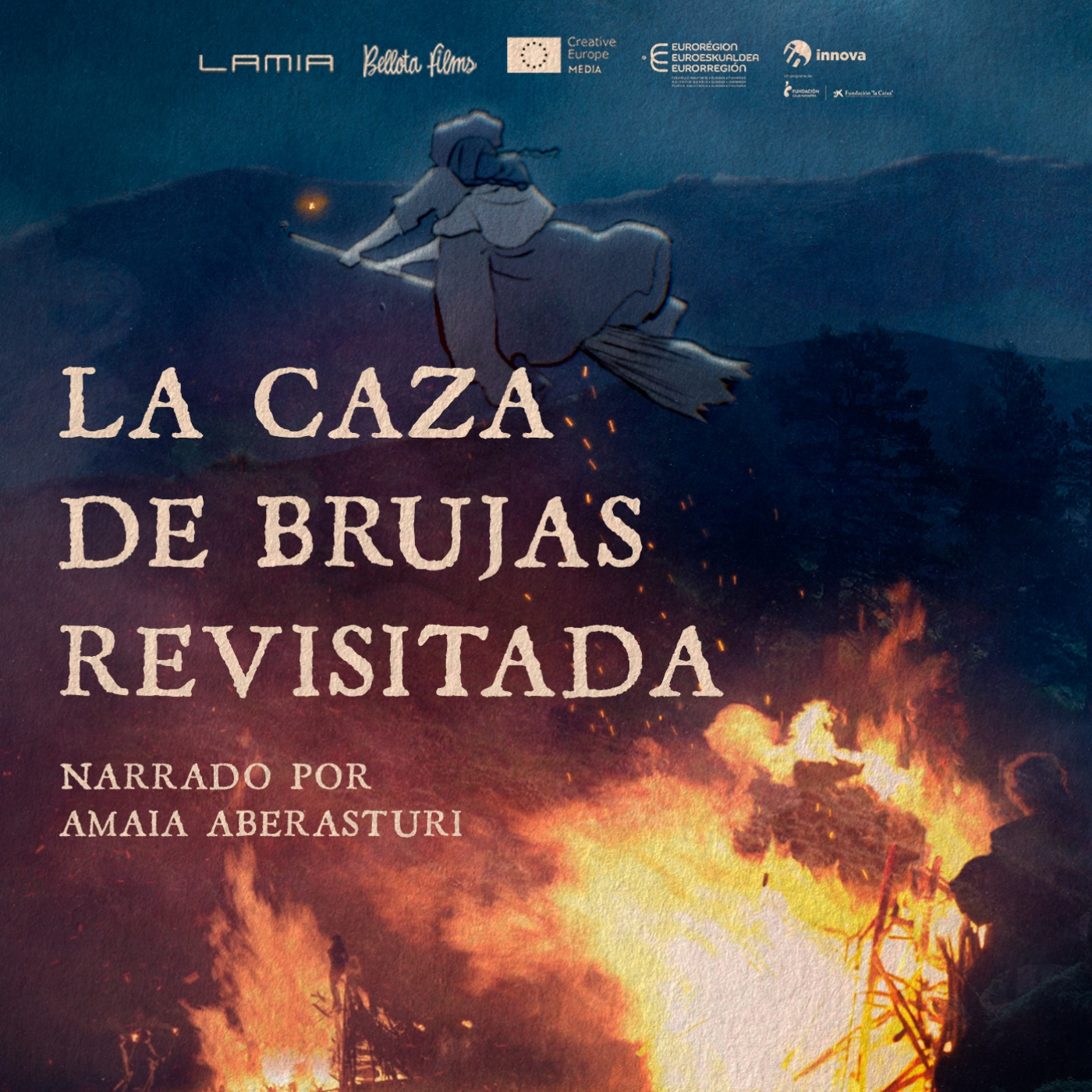
The transcription discusses the origin of evil depicted in Rupese paintings featuring witch figures, tracing the concept of witches to the historical context of the Middle Ages. It delves into the witch hunts concentrated in specific regions like the Franco-Alpine, Italian, and Pyreneic areas and their connection to societal crises such as the Black Plague and wars. Additionally, it highlights Silvia Federici's research on how capitalism directly influenced witch accusations. The text emphasizes how during times of crisis, blaming witches provided a scapegoat and false sense of control, leading to persecution and violence against women, forming a dark episode in history that continues to be studied and reflected upon today.
Transcription
2440 Words, 14609 Characters
Certain issues have been disturbing our social thoughts for centuries.
The origin of evil is one of them.
The first demonstrations that we have a material record of them are in the Rupese paintings,
where the famous witches of the caverns appear,
which are those figures so evocative, half human, half animal,
which sometimes have horns, sometimes body like herbs, bulls, that kind of creatures.
Sergio Valero is a doctor in philosophy, specialized in cultural anthropology.
The figure of the witch, as we know her today, appears in the medieval context.
But before we get into that origin, we must understand the historical context that made it possible.
The fall of the Roman Empire at the end of the fifth century marks the beginning of the Middle Ages.
With it, a new society appears that seeks to unify its values.
Thus, religion, economy or government form begins to homogenize.
A first part of the Middle Ages, especially linked to texts such as the Episcopal Canon,
is going to talk about witches as adorers of pagan deities such as Diana, Diana Ekate Artemisa.
The multiple manifestations of evil that we have so far also unify.
The beliefs that lead centuries between the population are added to new fears infunded by Christianity.
Thus, the figure of the witch that we all know, the one that flies in the snow,
who dances around the fire, eats children and prepares potions.
All this is going to change in the second half of the Middle Ages,
where the concept of the witch appears as what we have today.
Because here the witch is already taken as something real, as if the witch is someone who really has a pact with the demon.
And what have disappeared stories to scare the youngest, begins now to be consolidated as a reality.
So everything that so far were practices, pagans, especially linked to mystical cults,
to the adoration of deities, have been adopting a dark matiz.
They are being interpreted as something evil.
In this context, a collective imaginary is created that will last several centuries
and for which thousands of women were executed, vilipendied and attacked.
Thus forming one of the great episodes of violence against women in our history.
An episode of what has barely been talked about.
So far.
The haunted house.
The haunted house is a phenomenon that does not admit simplistic explanations.
An evidence that is used throughout the centuries to discipline and dominate women
has been removed from the Middle Ages and no one will talk about it.
The human being since they were in the caves, has been afraid of the night, of the darkness and has created its myths.
The figure of the witch as we know it.
Episode 1. Imaginary crime.
We are at the end of the Middle Ages.
It is not in the era of crisis, the horse of the 14th and 15th century.
It is a moment when men and women in different places in Europe
begin to be accused based on a new crime, which is the crime of witchcraft.
A crime that is accepted for the first time in those years.
It is formulated that crystallizes from the 1420s.
And that throughout that century it will be consolidated and spread throughout Europe.
And even further.
Paul Castell is Doctor of History and Professor of this subject in the University of Barcelona.
Approximately we are located in the territories around the Western Mediterranean.
There is a very important first focus, which is the Franco-Alpine area.
Then we have a second focus, which is the Italian focus, the cities of the center of Italy.
And then we have a third focus, which would be the pyreneic focus.
This triangle, that is to say, from the Pyrenees to the Alps and even to the Central Italy,
constitutes what we call the cradle of the witch hunt.
It is in this triangle where the great witch hunt is concentrated, which will be in Europe at the end of the Middle Ages.
What we call witch hunt begins in the 15th century and ends at the time of the illustration, in the 7th and 18th century.
From there we can no longer talk about witch hunt in the sense that European courts stop considering the crime of witchcraft
as a reality, at least as something that can be punishable and the object of judgment.
The end of the witch hunt, which does not end, is the popular belief in witchcraft.
The evil caused by the witch hunt will continue. In fact, it survives and reaches up to 020, especially in rural areas and others.
Historians like Paul Castell have decades trying to find out the reasons
that motivated the exponential development of the witch hunt in those certain areas.
Everything that is the Dominican network or the mendicant orders, the exchange of information
between the French and the Dominicans, some of the first actions, for example, in the Italian area,
we know that they are very linked to those linked to observance.
Therefore, there is something, there are certain factors to analyze, but we do not have a clear answer to why.
The territorial divisions in the 16th century list many of the current ones. Spain is an example of this.
In the first legal proclamation of the crime of witchcraft, Spain does not exist yet.
At a historical level. The first law, as such, is preserved and preserved.
It is what we call the "ordination of the Valle d'Aneu".
This is in the Catalan kingdom, in the area of the Pallars.
And it is about some legal statutes, promulgated by the Pallars county and by the regular authorities of that valley.
The Pyrenean Comarque of the Valle d'Aneu fulfills the perfect requirements
to initiate the dictation of the Brugesco crime, presents the judicial autonomy
and has the capacity to dictate its own laws.
While other parts of the territory are shown reluctant to believe in the witches,
this Catalan area advances into the events.
These authorities, in order to face a new reality, a new crime against God and against the Valle,
define it as such, that men and women meet at night with the devil,
they swear on fidelity and homage, they curse on Christian faith,
they rape and kill small children, they provoke different diseases and so on.
Because of all these crimes, it is very difficult to substantiate the judicial system,
you have to say it, because new statutes are created.
With this law, a indiscriminate and cruel hunt begins that ended up suffering thousands of women.
And the question is, why? It is assumed that civil investigators are lawyers,
they have studies to read and write.
Toti Martínez de Lecea is a basque historian.
They are hidden people, how can these people believe that there are poor women who fly in coves,
that they are provided with the devil, that they burn fields and poison waters,
that they make men and women powerless, and above all,
that they take out the children from their mothers' womb to give them to the devil.
How can they believe Leonardo da Vinci and Michelangelo?
It is a brilliant time, and in that time it is precisely when the great hunt of witches begins.
And they believe everything I have told you, that if they go to the woods and kill children and such, why?
[Music]
Finding the origin of a epidemic is extremely complicated,
even more so when we talk about the 14th century,
for that time a terrible disease in only Europe, the plague.
[Music]
Some researchers at the moment give to this pandemic an astronomical origin,
like an eclipse or the passing of a comet.
Others thought of a geological origin,
like a seismic movement or a volcanic eruption.
We had to wait five centuries for a scientific investigation to discover the bacteria Gersinia pestis.
This microbes affected rats and other rodents and through their parasites,
especially their thumbs, it reached humans.
Gersinia pestis could be at home and labor space two or three weeks before the first symptoms of the disease were manifested.
Inflammation of lymphatic nodules located in axile, English or neck
and high fibers that often caused delusions.
After approximately four days, the first deaths were produced.
A society that is in full crisis, remember that it is being produced in the middle of the 14th century,
then a black plague in Europe, a society suffering from a major population fallout.
This affects the cultural, economic and political level,
as it will be later in the whole of Europe.
But when Gersinia pestis was 500 years old to be discovered,
another irrational origin revealed the population.
These deaths were witchcraft.
Many times behind the witch hunt, the reasons behind the witch hunt,
the reason why people believe in witches,
is the search for answers to what is unknown.
Jesus Mario Zunari is a modern history mathematician at the University of Navarra.
And for that many times the answer is the espiatory file.
There is an epidemic, or what we would know today would be an epidemic,
because the children die of acid receding and we do not know why.
What is the cause? Witches.
There is a person who has died and will be in circumstances.
Surely it will be the witches.
Witches become the espiatory file in the explanation for the bad that surrounds them.
To the deaths caused by the black plague,
we have to add other crises that end with a large part of the population at the moment.
Then comes the 100-year war, then comes the bubonic plague.
And what happens?
In the Pyramid of Power, above are the nobles, the king, the nobles,
then comes the church, and below the Pyramid is the people.
But it is the people who work in the fields of the Lords,
occupy the earnings of the Lords and pay taxes.
And not only that, but when the Lords fight,
they take the peasants and take them to war,
because of all these dramas that occur between the 13th and 14th centuries,
then there is no one to pay taxes, there is no one to work,
there is no one to go to war for the Lords, so you have to have children.
Totti Martínez de Lecea, novelist specialized in the witch hunt.
Due to everything that I have told you about wars, pandemics, deaths,
that winter, which are several years without summer,
therefore there are no harvest and people die of hunger.
Well, if I have eight children and my eight children are dead of hunger,
I don't want to have a nine.
And here in Akudo, to the parter, to the heir, to the comadrona,
who is going to give me the herbs or the herbs to abort,
or to have an anticoceptive.
And then here it is the fault of the parters,
the comadrons, the heirlooms.
Then you have to finish with them,
and it is easier than accusing them of witches, right?
Thus, with the world in crisis, a common enemy is created,
a evident blame to which to take away the misfortunes.
At times of crisis, they take the best out of us,
yes, but they also take the worst out of us.
So the 14th century is a moment of total crisis in Europe.
All this context is the one that is going to propitiate that
witchcraft becomes such a fashion topic, so to speak.
And also, if we see it in other contexts, in other times,
we are going to see exactly the same thing.
If we look, for example, at the context of American problems,
the famous Salem process,
when does the Salem process take place?
Well, in the major context of crisis.
Sergio Valero, doctor in philosophy.
The great persecutions always take place at the moment of crisis,
because it is also a way of...
it is an easy solution to blame someone,
to find an culpable in a minority group
or in a group that is different or that does not fit society.
So if the social problems that you are experiencing,
of ambrunas, of plague, of disease, of wars,
of bad harvest, you can attack them.
There are witches who are making promises to destroy the harvest
or to become impotent to the profit
or to make them face each other,
or to come to the pit,
well, of course, everything becomes much easier.
The best crime is to solve it with a culpable face.
Because everyone is relaxed.
Peace and tranquility come back.
[dramatic music]
[dramatic music]
[dramatic music]
[speaking in foreign language]
[speaking in foreign language]
Silvia Federici is a philosopher,
historian and feminist activist.
A large part of her career has dedicated her to study the hunt for witches.
And specifically, how capitalism was the direct cause of these accusations.
[speaking in foreign language]
[speaking in foreign language]
[speaking in foreign language]
[speaking in foreign language]
[speaking in foreign language]
[speaking in foreign language]
[speaking in foreign language]
[speaking in foreign language]
[speaking in foreign language]
[speaking in foreign language]
[speaking in foreign language]
[speaking in foreign language]
[speaking in foreign language]
[speaking in foreign language]
[speaking in foreign language]
[speaking in foreign language]
[speaking in foreign language]
[speaking in foreign language]
[speaking in foreign language]
[speaking in foreign language]
[speaking in foreign language]
[speaking in foreign language]
[speaking in foreign language]
[speaking in foreign language]
[speaking in foreign language]
[speaking in foreign language]
[speaking in foreign language]
[speaking in foreign language]
[speaking in foreign language]
[speaking in foreign language]
[speaking in foreign language]
[speaking in foreign language]
[speaking in foreign language]
[speaking in foreign language]
[speaking in foreign language]
[speaking in foreign language]
[speaking in foreign language]
[speaking in foreign language]
[speaking in foreign language]
[speaking in foreign language]
[speaking in foreign language]
[speaking in foreign language]
[speaking in foreign language]
[speaking in foreign language]
[speaking in foreign language]
[speaking in foreign language]
[speaking in foreign language]
[speaking in foreign language]
[speaking in foreign language]
[speaking in foreign language]
[speaking in foreign language]
[speaking in foreign language]
[speaking in foreign language]
[speaking in foreign language]
[speaking in foreign language]
[speaking in foreign language]
[speaking in foreign language]
[speaking in foreign language]
[speaking in foreign language]
[speaking in foreign language]
[speaking in foreign language]
[speaking in foreign language]
[speaking in foreign language]
[speaking in foreign language]
[speaking in foreign language]
[speaking in foreign language]
[speaking in foreign language]
[speaking in foreign language]
[speaking in foreign language]
[speaking in foreign language]
[speaking in foreign language]
[speaking in foreign language]
Podcast Summary
Key Points:
Origin of evil depicted in Rupese paintings with witch figures.
Historical context of the Middle Ages shaping the concept of witches.
Witch hunts concentrated in the Franco-Alpine, Italian, and Pyreneic areas.
Witch hunts linked to societal crises like the Black Plague and wars.
Capitalism's role in witch accusations studied by Silvia Federici.
Summary:
The transcription discusses the origin of evil depicted in Rupese paintings featuring witch figures, tracing the concept of witches to the historical context of the Middle Ages. It delves into the witch hunts concentrated in specific regions like the Franco-Alpine, Italian, and Pyreneic areas and their connection to societal crises such as the Black Plague and wars. Additionally, it highlights Silvia Federici's research on how capitalism directly influenced witch accusations.
The text emphasizes how during times of crisis, blaming witches provided a scapegoat and false sense of control, leading to persecution and violence against women, forming a dark episode in history that continues to be studied and reflected upon today.
FAQs
The fall of the Roman Empire marked the beginning of the Middle Ages, where a new society sought to unify its values in religion, economy, and government.
The witch hunt began in the 15th century and ended in the 17th and 18th centuries with the Enlightenment period.
The cradle of the witch hunt was in a triangle from the Pyrenees to the Alps and even to Central Italy, where the great witch hunt concentrated at the end of the Middle Ages.
Persecutions like the witch hunt often took place during crises as an easy solution to blame a minority group or find a scapegoat for societal problems.
Silvia Federici, a philosopher, historian, and feminist activist, has studied the witch hunt and believes that capitalism was the direct cause of the accusations.
During the Middle Ages, witches were seen as figures believed to have a pact with the demon, performing actions like flying, dancing around fires, eating children, and making potions.
Chat with AI
Loading...
Pro features
Go deeper with this episode
Unlock creator-grade tools that turn any transcript into show notes and subtitle files.
 PodcastTranscript AI