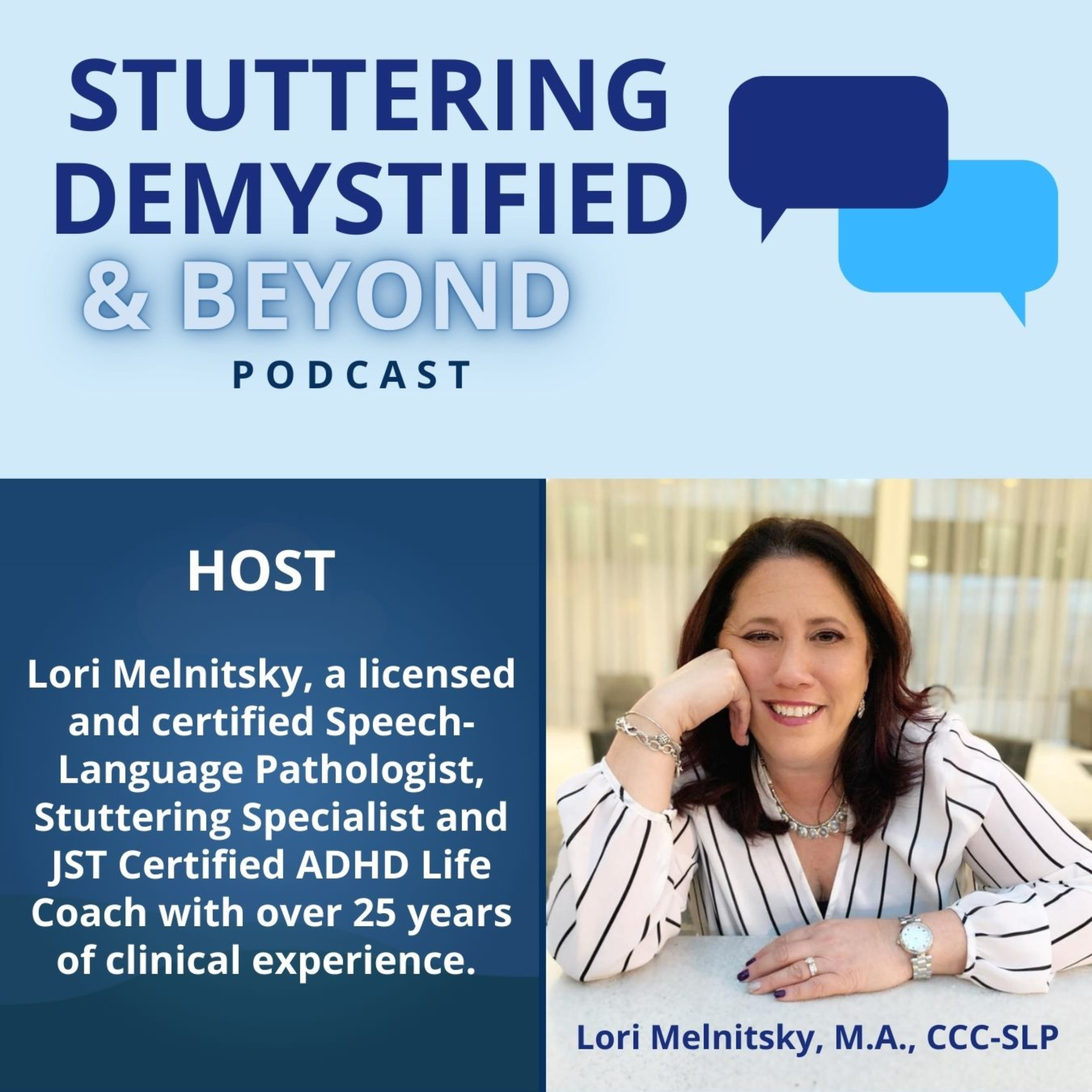
Episode 95: Talk It Up Program: From Stuttering to Helping Others
10m 37s
Laurie Malnitzky, a speech pathologist, developed the Talk It Up Fluency program for individuals who stutter based on her personal journey with stuttering. She emphasizes the emotional aspect of stuttering often overlooked by conventional speech therapy. Understanding stuttering requires more than just setting goals; it demands commitment, time, and specialized support. Intensive programs and ongoing maintenance are essential for improving fluency. The Talk It Up Fluency program offers a comprehensive approach combining speech therapy, coaching, fear elimination, and continuous support. Through her program, Laurie aims to help individuals embrace their stuttering, improve fluency, and gain confidence in communication. The program emphasizes commitment, time investment, and a willingness to not strive for perfection but to put effort into the process. Laurie's approach highlights the importance of support, practice, and understanding in the journey toward fluency and effective communication.
Transcription
1116 Words, 5908 Characters
Hi and welcome to another episode of Studdering demystified at the Han. I am your host, Laurie Malnitzky, and I am so excited to have you on today so that I can talk about a program that I developed for teens and adults who study based on my experience. And the truth of the matter is, most people, most speech providers just don't understand Studdering because it involves more of an emotional component. And it's not something that we learned of that in school about counseling and we didn't learn enough about Studdering because there isn't enough known. When I believe it's because 1% of the population studders, it's not the type of disorder that you can just make goals and it's easily cured. It has to be done in a certain way and you need commitment, time, and you need someone who really understands Studdering. So going back to when I was younger, maybe 16, I finally had found someone who understood Studdering and had started to help me become more fluent. Again, I knew many people who had achieved a higher rate of fluency. I belong to a practice group and I knew it was possible and I'm so glad that that opportunity was there. Fluency was a good thing because we wanted to be able to be heard. We didn't want our vocal folds blocking and we wanted to go into Duck and Donuts and order a small coffee with sugar and a munchkin and a chocolate donut. Now to you, that might sound like easy. What's the big deal? So a person who's studders, that could be a nightmare. I could stay up all night. So I started to realize for myself that I wasn't going to change how I spoke, going to speech once a week. It wasn't going to happen in school. I needed someone who really understood Studdering. That was a long journey. It was before I was a speech pathologist. So I went to this person once a week before college. I started to see some success, not enough, but I started to see some. She was excellent. She understood it. I went to college. She introduced me to other people who stood there and I started to also not feel alone. At that time, they were starting more intensive programs. It was actually a man who was a psychologist. So those words are harder for me, so I try and stretch out the first word. He did intensive workshops where I learned a lot about doing things in a more intensive manner. I learned a lot about meeting others who studied. I learned a lot about collaborating. I learned about diving into fear. If you're sometimes diving into these fearful situations, it could actually decrease anxiety in the end. So if you're afraid of picking up a phone, maybe the first thing to do would be to just pick up a phone with nobody there and then get used to it, use some of the strategies that I learned and also have somebody near you who could encourage you. So I started to realize that more speech was needed. Fast forward, I did go to a few fluency shaping programs that were done maybe two weeks intensively and I started to see fluency was more possible. I started to also see that it was hard and that maintenance had to be offered and continued support had to be offered and it was okay if you needed, if you went for a program and then six months later you needed more help. It wasn't like a failure, there wasn't a cure. You were trying to find ways to increase fluency and it was all right. So eventually when I went back from my master's in speech, I had always decided that one day I was going to offer my own fluency programs with not only speech offered but also coaching and eliminating fears and eliminating avoidance. So I developed the Talk It Up Fluency program which you can find on my website, while islandspeech.com. It is done virtually. I do it few times a week. It's pretty much customized. I try and do it eight weeks, two times a week and then we go on a maintenance once a month. It's based on what I'm doing right now, trying to feel my vocal folds vibrating. That's something I don't see talked about and I think it's very important when I can feel my vocal folds vibrating. It's a lot easier for me to be fluent. I have to do trying practice at least five times a week even now. And I have seen such gains. I'm going to share with you an 18 year old young woman who finished working with me last year. She was going to college and when she started in March of last year she was studying a lot and by May she was doing a public speaking presentation with a lot of encouragement being offered. Another one was a 24 year old actually young woman also who was going for a social work degree who was really scared. She got the job. She's talking and as she says, I stutter every once in a while who cares which is like really important to have the attitude and for the most part I can control what I want to say and how. So that's very important. You want to say what you want to say and you want to say how. For those of you who don't believe in fluency shaping, I think it's wrong if you don't stutter to tell. I think it's wrong to tell anybody anything, but especially if you don't stutter, don't tell people how to act. Because it's very frustrating when you can't say what you want and if somebody wants to have that opportunity, let them have it. For the talk it up fluency program, I'm going to tell you what you need the most is commitment, time, you know, obviously a financial responsibility because it's a more intensive program. So it's not covered so much by insurance and a commitment to not be perfect all the time, a commitment to put your heart and soul into it. So if you have two hours each week to get started, I suggest you do it's a great program and I am talking to you with what I'm teaching you and we're going to try and get all of you together afterwards as you graduate so you have other people to practice with. So I wanted to share that with you. I hope it makes sense. [BLANK_AUDIO] [BLANK_AUDIO] [BLANK_AUDIO] [BLANK_AUDIO]
Podcast Summary
Key Points:
Laurie Malnitzky developed a fluency program based on personal experience for teens and adults who stutter.
Stuttering involves an emotional component often misunderstood by speech providers.
Achieving fluency requires commitment, time, and understanding of stuttering.
Intensive programs and support play a crucial role in improving fluency.
The Talk It Up Fluency program focuses on speech, coaching, fear elimination, and maintenance.
Summary:
Laurie Malnitzky, a speech pathologist, developed the Talk It Up Fluency program for individuals who stutter based on her personal journey with stuttering. She emphasizes the emotional aspect of stuttering often overlooked by conventional speech therapy. Understanding stuttering requires more than just setting goals; it demands commitment, time, and specialized support.
Intensive programs and ongoing maintenance are essential for improving fluency. The Talk It Up Fluency program offers a comprehensive approach combining speech therapy, coaching, fear elimination, and continuous support. Through her program, Laurie aims to help individuals embrace their stuttering, improve fluency, and gain confidence in communication.
The program emphasizes commitment, time investment, and a willingness to not strive for perfection but to put effort into the process. Laurie's approach highlights the importance of support, practice, and understanding in the journey toward fluency and effective communication.
FAQs
The Talk It Up Fluency program is a program developed by Laurie Malnitzky for teens and adults who stutter, focusing on speech improvement and emotional support.
Commitment is essential in stuttering therapy as it requires time, effort, and dedication to see improvements.
Intensive programs can help increase fluency by offering specialized workshops, strategies, and support to manage stuttering effectively.
Having a support system is crucial in dealing with stuttering as it provides encouragement, understanding, and opportunities for practice and collaboration.
Having a positive attitude, accepting occasional stuttering, and focusing on controlling what you want to say can be key in managing stuttering effectively.
Chat with AI
Loading...
Pro features
Go deeper with this episode
Unlock creator-grade tools that turn any transcript into show notes and subtitle files.
 PodcastTranscript AI