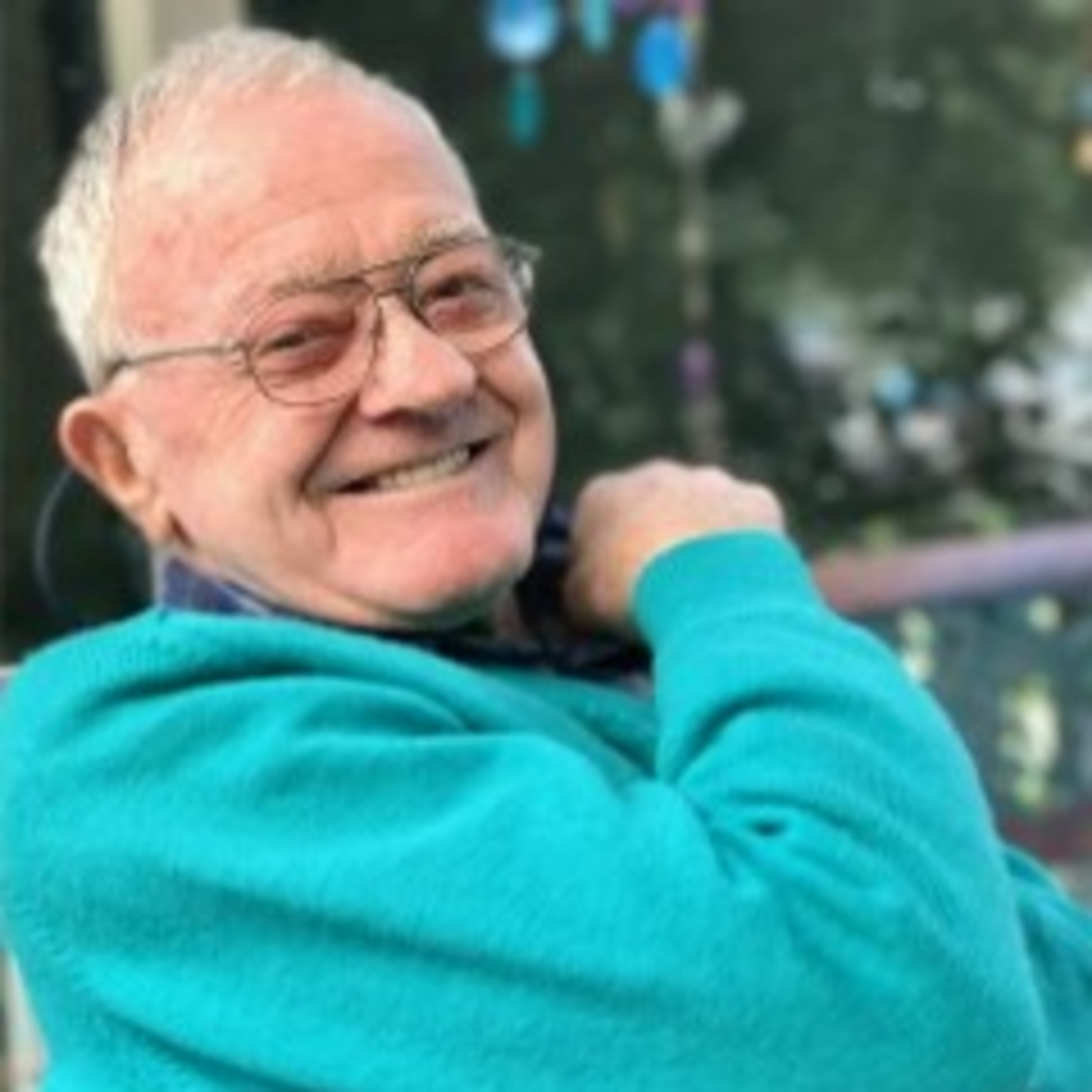
Tom Blair shares his life story growing up in Casted, born in 1937 to Rose and Jack Blair. He describes a tough childhood during the Depression and WWII, with food rationing, but his family survived thanks to their land with cows, chickens, and vegetables. After leaving school in 8th grade due to family illness, he started as a bowser boy at Callister Motors in 1951, eventually becoming a mechanic. He completed his apprenticeship, served in national service in 1957, and worked at McCulloch's for 17.5 years. Economic hardships, including droughts and recessions, led to multiple job changes and a failed business. Tom retired from Castan Waters in the late 1990s due to physical strain. He recalls pastimes like rabbit shooting and the wool boom of the 1950s, which brought prosperity to farmers. His narrative highlights resilience through hard times, community connections, and the evolution of local industries, offering a personal glimpse into Casted's history and the challenges of mid-20th-century rural life.
[Music] Hello and welcome to Casted & Connections. An initiative of Hands Up Casted & where a group of enthusiastic locals have come together to capture, preserve and share stories of people who have a connection to Casted & Connections. [Music] Welcome to Casted & Connections. I'm Evelyn Pevett and I'm interviewing Tom Blair. Hi Tom. Hi Evelyn, how are you? Good. I'm wondering your life in Casted & Boy? Yes. Born and bred. Yes. Can you tell me a little bit about that? Yes. Well my name is Thomas William Blair. I was born in Casted & on the 7th was the 5th, I named 37 at the Casted & Hospital to Rose and Jack Blair of Mitchell Street in Casted. It was not known as Mitchell Street back then because the street road never had a name. It was affectionately known as Kaer Langway. I can remember my grandfather John Blair at about the age of 4, 5 years old, who lived next door to us and he passed away in 1942 and I always remember something very funny. Uncle Dave Deacon was putting in use some end floor in the in the separator room at Nanomless, which was a cricket pitch from our house and Uncle Dave wanted to put me in the cement. So Thomas took off back home very fast. We started school in 1943 at the age of 6, which was the starting age back then. I think it's still the same. It was in the right in the middle of the Second World War and life to us back then was fairly hard because the population was just coming out of the depression and then went into a world war which made things very difficult for people, for families because nobody had anything and that included money which was very scarce. We had to live with coupons, food coupons which rationed you to any certain things, so much a month which was very tough but we were very lucky because we had three acres of land and a couple of cows and chucks and the like. Plenty of vegetables which everybody had to grow because you couldn't buy it and we lived reasonably well but there was times when things were very tough. Shortage of food, bread, butter and all that sort of thing. This is for the population but we had cows and we had our own butter, cream which was a delicacy back then. Always had plenty of milk, chucks, plenty of eggs and all that sort of thing and things went along fairly well. We had to make our own fun as children because we never had any modern gadgets like I have today and we done all sorts of stupid things and rabbating and fishing and chasing snakes and you name it we don't. From ourself or had a fairly rough childhood concerning illnesses or almost died a couple of times in about 1940, forever, contracted pneumonia and plurcy which really took me life but only for the education and good nursing of the right people saved me life and I had to add penicillin. It saved me life. In 1946 I had an appendix operation which turned out very bad. I finished up in the Hamilton hospital with a twisted bowel and I was in there for three weeks which nearly took me life. It was a very traumatic time for this, this boy at the time anyway it was around Christmas time and the 3 HA used to have a children ward around to talk to the children and I got the chance to talk on 3 HA and my brother and John who was now deceased and his best mate, Don Lovall from Warnable, we were coming out of the army and then demod and I got the welcome to my home, so I have a 3 HA. That was a feather in Thomas's case. So you had school here and then you went to the hot? Yes, yes or school at the state school right which back then was the state school and Hawaii school on the same grounds. Okay. Yes and then later on it became secondary college up the man road and school didn't go real good for my, I was much of an academic and I remember in the second grade I missed that much school, six months of schoolings one year in the second grade because of illness and all sorts of things and I had to stay back and spend another 12 months in the second grade. So how did you go in school? I went right up to the 8th grade and I had to sort of leave school a bit earlier than normal which was leaving age 14 back then because of illness in the family, my my sick and dad was sick, he was all low, he was still working and all the girls were working and the younger ones were golden and the younger sister still going to school and I had to be the dog's body at Island, they were all the cooking and bedmaking and washing and you know that milk and cows separate milk and make them either. Busy time. Oh yes it was very busy and anyway we got through that and things started to pick up in the very late 40s, dad improved a bit mum coming good and so it was time for me to find a job, dad was working at Cushing's grocery store at the time and he got me a job there as a grocery boy and I was supposed to start work on Monday morning and back then the Caster News came out on a Friday and my even Callister who owned the Callister Motors, one handy street casting was advertising for a bowser boy so dad asked me would I like to do that? I said no yes I'll give it a go so when I said 'Demon' he took me down to the garage and had an interview and I started on the Monday morning as a bowser boy. Can you remember your first wage? How much did you know? My first take home wage was 15 shillings but the actual wage was 30 shillings but back then they used to keep half your wages back in case you didn't like it. So as a bowser boy what did that involve? Well the first thing you had to do in the morning was read the meters on on the bowser which opened up a little lead and you looked in and took the meters then you had to dip the tanks underground with the caps off and you'd pull the stick out and you'd seen how much fuel was in the tank and that had to correspond with the numbers on the meter and that told you if anybody was taking any fuel. Yes and that was the first thing to put out your little bottles and got everything ready for your customers when they come along. And what did you do for them? That they don't do now. Well back then you put in the amount of fuel they nominated and you asked them didn't they want the Torres Blown Up or oil dipped or ready to check or windscreen what so they might know what they wanted and you do it. You didn't have to do it you volunteered you had to ask them which was fair enough. And when they paid you by Dean and. officer would give you the change if there was any change. Handed it out and wished them a happy day on a way you'd go. So how long did you do that for? I've probably done that for 12 months or a bit more. And in between serving petrily, you were working in the workshop cleaning and helping the mechanics, you know, washing parts and this sort of thing. And they were teaching you the basics of motor cars and all that sort of thing. And you had to pick all that up as you went along. And how many people did work at my callisters? Well, back then there was probably about eight. That was in 1951 I'm talking 51 and 2. And then that increased right up to 27 or eight as something after the building was put up in the early 50s and become a big Ford garage, which it was previously a Ford garage when Murray McCulloch the board in 1946. And he developed it to put this new big building up, which is to present today, known as Farm Supply. It's just celebrated it's hundreds, isn't it? The building? It would have been 19, I'm not sure what the opening day was. Yes, they were great times. So you became a mechanic? Yes, I, in 1955, I started my apprenticeship. Because I was behind in the apprenticeship program, I had to do two years of schooling in Hamilton in one year. I was doing third and fourth year in the one year. I had to travel to Hamilton every week to the tech school, main branch tech school. I spent the day there and the teacher would be teaching us all about mechanics and the point of points of the automotive trade, which was very exciting and fun time. Trout get up at 5 and the morning catch the bus to Hamilton. Didn't matter what the weather was like yet to do it. It was tough, but you had to do it. And in 1956, I was doing the final year, we were all doing our final year and we got our national service cooler. But fortunately, because we were finishing our apprenticeships that year, our teacher Tom Kean, he got us all the third to the intake of February 1957. They had following this year, following year, which was good. So they didn't want to interrupt our exams and everything, which was good, very good, good thinking. So we all passed with flying colors and I'll mention one or two names that you might remember was Barry Francis. You all know Barry Francis Mothers. He was one of them, Johnny Dorman and Fred Baker, Normie Gravestox, who was from Dunrobbin in Castan here. He was one of the trainees. So we all went into the Army in February 1957 for three months in camp at Buck Abunnual. And they started disbanding the national service program because when we left, we had to pull down the big marquees of our battalion, which was a sight for stories. And anyway, that was okay. Commander Yhami and continued on. They wished me job at McCulloch's tomatoes. Yes. And everything went well. We had a lot of fun during the 50s as young lugs growing up in 2018 and 1956 on the 7th of May. And the 9th of May had me licensed. And a few weeks later had me first set of wheels. And what was that? An old A model Ford nut board with a canopy. With a brand new? Oh no, no. It belonged to, would you believe a young salvation army lieutenant here in Castan, about a whopping 90 pounds. And how long did that last year? Oh, I had that for a few years. And I restored another A model Ford. Back then I was restored. It was a roadster, two-door roadster. And drove that for a while and then upgraded to a more modern Ford angle. So how long did you work at McCulloch's? I was 17 and a half years at McCulloch's from 1951 to 1968. And when did you go to then? I left McCulloch's when broke. It was known as Glen Ford's back then in 1964 of the James Haines. And because of the drought years there was no vehicles, no one had any money. And I was put off there. Everybody was put off except Roy McCulloch. He kept the place going for a little while. And I went and worked for Bob Asprey. Bob had a car yard. Where was that? That was in Piedens. Back down at the back of Piedens, opposite Murra Piers, there there was a car yard and built a garage, a little chain there, and that's still operating tonight, which is strange. So how long were you there then? Well, there was only there for a couple of years because things got very tough in the very early 70s. Money was, I purchased the garage off Bob Asprey and operated it for about 18 months and you couldn't, banks wouldn't lend you money. Nobody was paying, you didn't do work. That's a good price for them and they wouldn't pay. Or couldn't pay. And then all my sent me to the wall. So I had to close up before that happened or otherwise I would have been. And I went and worked at Whitney Motors, which was Tate's old garage in Murray Street, Peron Whitney, and that went broke. Things were very tough back then. It was very hard to get vehicles, very hard to get money. And anyway, he went broke. The place closed up and I went and worked for Helios. With Bob Asprey was working for Helios back then. Yeah, it worked there for a number of years and things got tough there and had to put follows off. I'm going too fast. No, I'm going. Well, I'll skip a decade or two. Oh, I recall back in the 50s when growing up as a young bloke with his first vehicle. This was a good time. We used to spend a lot of time shooting. Rather, it's mainly because rabbits were bringing good good money back then. Every weekend we'd go out, ferritate, shooting, spotlighting, you know. And in 1956 Roy McCallum had a little Ford Angler and there was Roy, Ian McCallum. Monk McCallum and myself, we went right up to the Murray to Bell Randall's big tune. It was a sight. Anyway, we managed to shoot three things and onto this farm as property. Even back then the farmer wouldn't let shooters on their property because for this reason, there was a lot of new Australians come into the country in the city and they would come out into the country and not get permission. They'd shoot up water tanks, cut their fences just to dry through, even shoot their stock, shoot anything that moved. And this was the reason why we had, I think we, for memory, we visited three farms before a farmer would let us on. He's far to shoot pigs and the catch cry was, "Oh, Troy, sound so next door, Troy, sound so next door." And finally we got this on this farm and we went back the following year in my all-A model Ford. That was a sight. Went back to the same farm and we didn't shoot any pigs or we lit a couple little ones and we caught one and bought him home. What's rare? To rare, this little pig, they're only little suckers, you know, back then and the place was flooded. There was no big, big pigs were around, but we found these three little big streams that were on on the island and we caught one and took him home, bought him home, give him today, they had reared it up. This was 1957, 1958.
And he sold him at the Pigeon Carf sale and got 13 pound yen for that pig. Talked to sale. Yeah, they couldn't believe the price. But 13 pound yen for pig back in 1958 was a lot of money. So where did you take all the animals to be sold? Well, they used to have Pigeon Carf sales here. Right, where were they? I helped. At the sale yards. Yeah, the sale yards at the right. Oh, at the right. Yeah, and my brother-in-law was the boss of Australian estates then. And of course, he put the word around that there was a pig coming up the sale at the casting genuine, I think, to help. And Pigeon Carf sale. Well, boys come from everywhere. That's where I bought 13 pound yen. So how did they transport all these animals after the sales? Well, in trailers and trucks. Yes, stock trucks. All right, they didn't send them down to the railway station. Not back then, I know. There was back then, there was no stock counts. Not a lot of aware of. The only thing back then was super coming in and sleepers going out. The red gun sleepers back then was big business. Were they cutting them, do you know? Or all around the bush, wherever there was good trees, longs, mature trees. But eventually that was stopped because of conservation. And they invented the board in the reinforced concrete sleepers. Because a lot of them sleepers went into railway areas where there was white ants. And all that sort of used to eat the sleepers' laps. And they changed to a lot of cement sleepers. That was big business. And that employed quite a few japs around the town. When did you retire? In '98, no, I was retired from mechanics here. I was having terrible shoulder problems, neck problems from years of strain. Don't tell me a mechanic's job is easy. Was still at Helios? I retired now. I retired from Castan Waters, which is still operating by Glen Nought. I went from coxons to there. And yeah, I had to retire because of my physical condition. It was getting too tough. And from then on, when I retired, I just fished. I'm too efficient. Too efficient. I know that because I've gone with it. Yes. Well, thank you, Tom. Thanks for sharing your tiles. That's a little bit of it. Yeah. I should have wrote down some more things and put them all in better sequence. It doesn't matter. Not to worry. Well, thank you so much. Yeah, thank you. But we went through good times, but we went through hard times. And things never really started to come real good until maybe the 70s. And there was more money around beef cattle, big prices and that sort of thing. But in the early 50s, when after the Korean War stopped, the world countries were having cold winters. And there was a huge demand for war. Because no one had anything after the Second World War. The countries were broke. They never had food, you know, and all this sort of thing. And Australia's war boomed. It bought up to one pound a pound weight, which was astronomical. When you look back then, the price, the value of a pound. And the farmers back then, they were on clover, real clover. They'd come into town, they'd drive home in a new car and a new tractor. They were throwing money around like it was going out of fashion. It was unreal. Yes. And rabbits were become big business. Frozen rabbits, which our neighbour had the freezer works, whole jackhails. Yes, I remember her house. And the rabbits would be frozen in the freezer and they'd be loaded into a seabed trailer and then straight down to Melbourne overnight, waiting at the factory to be processed. And they used to cut the rabbit in half. It would be the bottom half, they'd be packed up. And most of it went to Russia. Russia were buying our rabbits because Russia had nothing after the war. They were very destitute, like a lot of the countries were. Money was it? Or a member reading somewhere where we were cooking in 40 years to pay off their land-least debt to America. What happened to the Pelt? Well, I don't know what they done. Did you strip them before you took them? No, they went as whole rabbits, so we just got them. The Pelts would have went into making a Coober hats and felt hats and all that sort of thing. They were big business things back then. Well, they didn't waste that. The top half of the rabbit probably went into Pet Food, you know, the chest part of the head and neck because there was very little on that for a human, you know, yes. That would have probably went into Pet Food's and fertilised, goodness knows what. They've been used for making hats because that's what the Coober has made out of the rabbit food, you know. Now, to all out of the Fisial. Well, okay, thank you, Tom. You're a very interesting man. Thank you, Evan. Thank you so much for doing this for us. Yeah, right. Well, I hope someone listen to it and get a little bit of an insight. Yeah, thank you. It was good times and tough times that's been flowing with life. We hope you've enjoyed today's episode of one of our homegrown heroes. Jump over to one of our other episodes to continue the casted and connections journey with us. Please don't forget to follow our podcast and share it with your family and friends. Thank you for listening.
Podcast Summary
Key Points:
Tom Blair was born in Casted in 1937 and grew up during the Depression and WWII, relying on family land for food.
He started work as a bowser boy in 1951, later became a mechanic, and completed his apprenticeship while serving in national service.
Tom faced multiple economic downturns, job losses, and health issues, including pneumonia and a bowel operation.
He retired due to physical strain from mechanics work and recalls rabbit shooting, wool booms, and local industries like sleeper cutting.
Summary:
Tom Blair shares his life story growing up in Casted, born in 1937 to Rose and Jack Blair. He describes a tough childhood during the Depression and WWII, with food rationing, but his family survived thanks to their land with cows, chickens, and vegetables. After leaving school in 8th grade due to family illness, he started as a bowser boy at Callister Motors in 1951, eventually becoming a mechanic.
5 years. Economic hardships, including droughts and recessions, led to multiple job changes and a failed business. Tom retired from Castan Waters in the late 1990s due to physical strain.
He recalls pastimes like rabbit shooting and the wool boom of the 1950s, which brought prosperity to farmers. His narrative highlights resilience through hard times, community connections, and the evolution of local industries, offering a personal glimpse into Casted's history and the challenges of mid-20th-century rural life.
FAQs
Tom Blair was born at Casted Hospital on May 7, 1937, to Rose and Jack Blair of Mitchell Street in Casted.
Life was hard due to rationing and scarce money, but his family had cows, chickens, and vegetables, so they lived reasonably well.
His first job was as a bowser boy at Callister Motors, where he pumped fuel, checked oil and tires, and helped in the workshop.
Tom started his mechanic apprenticeship in 1955, and due to national service, his teacher arranged for them to defer service until after exams in 1957.
He left school at age 14 because his parents were ill, and he had to help with cooking, cleaning, and farm chores at home.
Rabbits were frozen and exported, mainly to Russia, for food; pelts were used for hats like coober hats, and the trade was big business.
Chat with AI
Loading...
Pro features
Go deeper with this episode
Unlock creator-grade tools that turn any transcript into show notes and subtitle files.
 PodcastTranscript AI