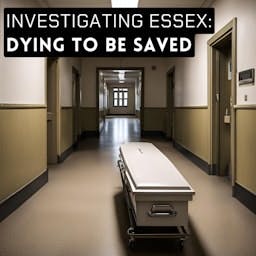
This podcast investigates systemic failures within Essex’s mental health services, particularly under the EPIT trust. It highlights repeated misconduct by staff, including sexual abuse, medication errors, and dangerous statements, all of which reflect a breakdown in professional standards and ethical care. Personal testimonies from patients, families, and whistleblowers reveal a culture where vulnerable patients are dismissed, families are ignored, and life-saving interventions are denied. The case of Joshua Leder—a 35-year-old man with a history of psychosis who died by suicide in 2020—is presented as a tragic outcome of systemic neglect, where staff failed to recognize his deteriorating condition and denied him essential anti-psychotic treatment. A key finding is that emergency teams, despite knowing his history, rejected admission and refused medication, leading to his death. The inquest concluded that his death was contributed to by ‘neglect’ from the system. The podcast also documents broader failures: a lack of coordination, poor communication, and dismissal of family input. It underscores that while resources exist, they are poorly managed and implemented. Whistleblowers describe being silenced, blamed, or labeled as 'cranks,' indicating a toxic internal culture. The narrative calls for institutional reform, specifically improved understanding of patient histories, holistic care planning, and active family engagement. It also highlights the work of advocacy groups like Inquest, offering free legal support to bereaved families. The campaign song “Fighting for Justice” by Sam, influenced by his own experiences at the Linden Centre, serves as a powerful call for accountability and change. Ultimately, the episode argues that the system fails not due to lack of funding, but due to a failure of compassion, competence, and transparency—where patients are treated as cases rather than people. The deaths of over 2,000 individuals, especially those discharged and then dying within months, point to a deeper crisis that demands public inquiry and structural reform.
Warning, this is a true crime podcast and is not suitable for all audiences.
Please use discretion.
This episode contains references to suicide and sexual assault.
Please take extra care whilst listening.
Institutions are only as good as the people working in them.
They can have all the facilities, funding and procedures in place.
But they will only work if the people working in them are competent, law abiding and kind.
Today, we're going to take a deeper look at some of the people working under EPIT and
how some of their actions have been criminal.
I'm Naomi Channel, and this is Investigating Essex, dying to be saved.
There is another reason why I wanted to be the one to put this podcast together.
I was treated for my own mental health struggles via the Linden Centre.
I was lucky enough to receive incredible support from some of the community staff members
who would come out to see me whilst I was struggling during one of my pregnancies.
They were incredible.
I never had to go into the Linden Centre.
I was always seen in the community, but I honestly owes so much to the two women who treated
me and the psychiatrist who assessed me.
They were kind, caring, and their support and advice meant that the pregnancy I had with
my son was not affected by past trauma and because of them, I have the ability to be able
to enjoy life again.
But like every institution, it only takes one member of staff to be able to overshadow
some of the brilliant work that the staff do.
I'm no vigilante, everybody makes mistakes.
But when it gets to a point where there are repeated sexual assaults, suicides, and
over 2,000 deaths all within one trust, then lessons aren't being learnt.
All the information I am going to relay in this episode is already in the public domain,
through tribunal records, criminal records, and press articles.
Some of them have been harder to find than others, but ultimately I, and I'm sure many
of you listening, want to know why.
Why are so many people being failed by these services?
And who is contributing to that?
In September 2017, mental health nurse Russell Murray started relationships with two mental
health patients from his place of work, the Priory in Chelmsford Essex.
He knew that both patients were extremely vulnerable.
A friend of his ex-partner told the hospital that he had been contacting patients and
arranging to meet up with them.
In 2013, mental health nurse Malcolm Fisher was working out of the PETA broth ward in
Clackton and District Hospital in Essex, when he administered a patient with the wrong
medication, and for failing to help a female colleague who asked him for help, because she
was struggling with a male patient who was being aggressive towards her.
He was suspended, but just before his suspension was lifted, he went onto his social media platforms
and wrote abusive and offensive things about people he worked with who had testified against
him.
He was then struck off.
Anita Allen Angel was a mental health nurse who worked in facilities under the PET.
He was struck off, after it was discovered that he was continuously given patients the
wrong doses of medication, not following manager's orders when it came to administering doses,
and not keeping track of medication that patients had already taken.
He faced nine charges of lack of competence and one of misconduct.
But just before his hearing, he told the nursing and midwifery council that he wouldn't
be returning to nursing.
In October 2018, mental health nurse Kingsley Chakwei Mecha O'Keeke was working at the
Linden Centre in Chelmsford.
He was supposed to be observing mental health patients, but was caught sleeping twice
through his shift, for a total of two and a half hours.
When he spoke to a colleague about the patient's needs, he said, "They should just be left
to kill themselves, more patients will come."
There were also allegations that he had lied about conducting observations when he hadn't.
He was suspended for six months.
I could go on and on for ages, going through staff members who had contributed to serious
failings or misconduct.
But what I really wanted to do was to hear from someone who had worked in one of the
impatient units and get their perspective.
Over the last decade, Melanie Leighee has been contacted by several whistleblowers who
have worked or are still working in the Essex mental health system.
These are members of staff who have concerns, and they share their concerns with her because
they don't feel like they can share them internally without fear of repercussions.
There is one staff member in particular that I know about.
I won't say his name to protect his identity, but he has spoken to the BBC, and he blogs
anonymously online.
I got his details and approached him, though I didn't hear back from him.
It's hard to get a whistleblower to trust you, as a new journalist coming in and I get
it.
He's raised concerns and issues that he saw as an employee in his role as a mental
health nurse in Essex.
He no longer works for the trust, and he ended up getting dismissed from his role seven
years ago.
This was in relation to his whistleblowing.
He reached out to Melanie Leighee and told her things that have contributed to her campaign.
Melanie sent me pages and pages of conversations between them.
I'm giving her information about past cases of suicide at the trust, alleged cover-ups,
and other pieces of information that do cause concern.
As I said, I'm not a vigilante, I'm a journalist, so I'm going to be really careful with what
I say because I don't want to falsely accuse someone of something and I don't want to spread
misinformation.
So I've taken extracts from what the whistleblower has said, both in anonymous public record
and through messages and posts I've seen from his account to Melanie.
The voice you hear next is not the whistleblowers, but they are his words.
In the mid-2000s, there was sexual misconduct, a member of staff abusing a patient.
I raised that as a worry, but it was made out that it was the patient's fault as she
had a personality disorder.
She had enticed the staff member.
The staff member was discharged, but it wasn't a very good experience.
It wasn't consensual.
Patients who sustained sexual abuse at a younger age may be less inhibited.
There is no way a patient can consent.
The whistleblower did tell Essex Police of this incident.
In another message, he told Melanie what Aprilt was saying about her behind her back, despite
her campaigning for answers for her son's death.
You know they said some unpleasant things about you don't you, that you were unhinged, part
of blame for Matthew's death, etc.
Any layperson would think you were paranoid.
It's not until you see the underbelly and felt, or have been subjected to it, that it's
all very real.
You were viewed by the trust as a liability and a danger.
You were described as a crank, revengeful mother, whereby those in the know were aware
that you were looking for answers and accountability.
Your son's incident, or the details.
I presume there is dirt under the carpet as they were also cagey and defensive about the
whole incident, who knows.
But when they falsely write care plans, etc., it all snowballs.
Melanie, I am a marked man for speaking out.
It is what it is.
I hope it works out for you.
I've seen firsthand how horrible it is for Melanie to receive messages like this.
The whistleblower was asked by the BBC in an interview how he would feel if one of his
friends or relatives were being treated by the trust.
He said, "I'd be concerned, worried.
I'd try to find an alternative."
Not all members of staff feel like the whistleblower.
In April 2020, annual reports.
One in five employees said that they would be looking for another job in another organization within the next 12 months.
This means that 80% of their workforce won't be, and indicates that they do get some job satisfaction.
But sometimes, even those who enjoy their jobs can make judgments or decisions that in this line of work can be life or death.
35-year-old Joshua Leder lived in Wivenho, Essex.
He had a long history of mental illnesses, including schizophrenia and psychosis.
Here's Joshua's brother, Dan.
Dan, can you tell me a little bit about who Joshua was, my right in thinking that he was your younger brother?
Yes, so Josh was quite a lot younger than me. I was 13 when he was born.
There was obviously a very big gap between us, so I was off to uni when he was still at school.
But we were quite close, and I had quite a big brother role in his life, where I was offering him guidance and he'd come to stay with me and I would take him out.
It was a very nice relationship we had.
Do you remember the first time you thought or maybe your family had a suspicion that Joshua might have mental health issues?
It was after the GCSE year, and he moved school. He was a school in Ipswich, and then he moved to Cultivus to Sixform College.
He was a cannabis, but a kind of LSD, I think, and other things like that. And it really flipped his mind, something a switch went off.
And he started getting extremely paranoid, couldn't really function, couldn't really go out, thought everyone was looking at him, going to attack him.
He had the classic symptoms of psychosis, drug-induced psychosis. But the problem is it didn't go. It kind of stayed then for the rest of his life.
So there was something that happened, which I think happens in a small proportion of people when they dabble in drugs, is it just totally fried his brain really? He couldn't really function properly thereafter.
From quite an early age, from about 16, he was then introduced to the mental health services in Essex. And then went back to school in Ipswich, did his A levels, did not brilliantly, but got, did well enough to go to Bath University.
He was then transferred to the mental health services in Bath, and then did a degree in a graphic design, managed to get through that, he was okay.
And then came back to Essex after that, and really struggled to get his life together from that point.
So then he was living at home for a bit, and then he came to live with me in London for a little bit. I was living in near Brooklyn at the time, and he got a job working in a kind of web design company.
And that lasted for about a year, and he was doing all right. It was hard, but he was doing all right.
And then we kind of went back to Essex, he was kind of back and forth, and then we decided that he would go to France for a bit, because my mother's French, there's a big family down there.
And we thought going down there, being in a kind of nice, slightly different environment, sunshine, kind of help him to get his act together.
And he was there for about three, four years actually, and pretty stable throughout that period.
And then eventually he met a girl, and they had a relationship, and they kind of more or less moved in with each other, and then he had a baby son.
One main issue that Joshua had was that he didn't like to accept his mental health issues, and he didn't like to take medication.
There would be this cycle that would keep on beating itself, where he would stop taking his meds, start getting very paranoid, and start wanting to kind of flee to go somewhere else, where he thought all his problems could be fixed.
So, and it was always generally far-flung places in the world, where he thought this is the solution to all his problems. So one trip he flew to, the jungles in Peru, to take Ayahuasca, this kind of medicine that you, it's not medicine, it's kind of this natural occurring substance, I think, which is a hallucinogenic, which people take.
I mean, you've probably heard of it. And my other brother, Sam, had to go to Peru to fish him out of this community, where he had been taking Ayahuasca, and was like to convince that was the solution to all his problems.
And then he came straight home and ended up in a mental health facility sectioned in high gates in London for weeks after that.
But this was, you know, this was a repeated pattern, so he went to Buddhist monastery in upstate New York, and he was pretty creative about all the places he found on the internet.
And the same thing would generally happen, he would end up, it would all go to Pat, and he would end up in some mental health facility.
In 2018, Joshua moved back to Essex to be nearer to his parents and to his son, who he saw every fortnight.
So, I got in touch with the mental health facilities, our services and said, look, we've really got to break the cycle here. We've got to come up with a plan, because this is what has been happening regularly over the last few years.
I'm saying, look, there needs to be a meeting, we need to have a kind of sit down with a family with Josh, and I should say Josh had given me ongoing consent to be involved on his behalf with all the mental health services written consent.
He was always fine with that.
But my experience then with the various kind of meetings we had was that every time there was a meeting with a psychiatrist, they didn't really understand his history, and I had to explain it all over again.
And so, when he was going to them saying, I'm not psychotic, I don't really have a problem, none of this medicine agrees with me. They were like, regularly taking him off the vital medicine he needed, like the anti psychotics and putting him on to some anti anxiety, anti depression thing.
And this kept on happening, and he kept on seeing different people and peeing around, he put to different organizations. And I kept on attending the meetings, but when I was told about them, I was usually told about them by Josh, because they were even though I had consent, they never contacted me.
But he was so chaotic, I only found out about them at the last minute, mostly. So I was like scrambling to kind of get heard. They just didn't, they didn't understand any in some instances, they just weren't really interested in listening to what I had to say.
Particularly the emergency treatment group, the home first team, I'm afraid I have nothing good to say about them, because they were deeply hostile to hearing anything the family had to say and didn't include us, didn't involve us, didn't inform us, and just made huge mistakes, huge mistakes as a result.
Dan, what was the turning point when did you and your family realize that Joshua was now seriously declining, because I read in a note that your mother described Joshua as on the edge of life, and I believe this was around the same time that she actually took him to the lake's hospital in Colchester, which is under Apert.
And she begged for him to be given either anti-psychotic medication in the form of a depot injection, so he couldn't stop taking the meds himself, and therefore his symptoms will be more managed, or even to go in as an impatience.
This was in the middle of COVID, so things really spiraled out control in March 2020.
When he definitively stopped taking his medication, great timing, because that was the first
lockdown.
So, he was living on his own, couldn't see anyone, and couldn't spend time with my parents,
who were both in their, they're now in their 80s, and were very vulnerable, and my dad
had just, I was recovering from treatment for lymphoma cancer, so he was extremely vulnerable.
And then things were just getting worse and worse and worse all that year, and he was
increasingly suicidal from kind of, say late September onwards, he kept on expressing
kind of really serious suicidal intent, and we kept on trying, I kept on trying to get
meetings with the psychiatrist, I was delayed by a month, couldn't get any meetings, I said,
look, he's on, he's psychotic, he needs to bish, on anti psychotics, and it all, I mean,
we just couldn't get hurt, and then my mum takes him in, I think, on the 22nd of November
to the lakes, he's basically saying, I mean, he's going to kill himself very clearly, and
the previous weekend, the police have been called, because he had found, or he had got
sort of, he had sourced a rope from the shed garden shed, and they've taken it off him.
Well, no, it wasn't quite the way, it was in October, I can't remember the precise date,
but it was, it was, it was shortly before that. So it was all very clear what was going
on, it was all well thought out, and he was very serious about carrying things out.
And he speaks to all the first nurse, and he's, she takes great care in listening to
what he has to say, and comes to conclusion that he needs to be admitted. And then, and
by the way, by this time he's been off his anti psychotics for months, so he's in a total
state, and he's completely, barely functional. And I'm like, look, that's great, he needs
to go in, he needs to be put, they stabilize and put his own, his own, his own psychotics,
my mum is saying the same. And then another nurse comes in, who's from the home first team,
who knew Josh, and basically denied Josh was psychotic, said he needed time on his anti-anxiety
meds, and he was sent home, and with a phone number, you know, and I remember for that meeting
at the lake, so I was on the phone in London. Well, it was, it was, it was not only that
he wasn't being admitted, which I, I thought it was very obvious he needed to be admitted,
but that he was, he was refusing to be given any psychiatric, any, any anti-psychotic medication.
And by that time Josh was agreeing to go back on anti-psychotics, he was clearly psychotic.
I've repeatedly until I was blue in the face, it's said to everyone in their dog, he needs
to be on anti-psychotics, and he also need, we need to put him on deeper injections.
And the response to that from the nurse who kind of swaggered in and said go home, you'll
be fine, was not, there's no psychiatrist in the world, which will give you, which will
prescribe you anti-psychotics. So he had formed a view without looking at any notes, without
really understanding Josh's case, that there was no psychosis. And I was, at that point,
I got, I got absolutely furious with him. And I said you just need to stop talking now,
because you are, you are, you are undoing all the work we have done, trying to get Josh
back on track, and accepting that he needs to be on anti-psychotics. He did not, so he
didn't really understand the first thing about Josh's case, and was making all these
life and death decisions without the basic information about Josh.
And this was a life and death decision, because on the 24th of November 2020, Joshua was found
dead in his flat after taking his own life. If he had been given anti-psychotic medication
or had been admitted as an impatient, there was a strong chance that he would still be alive.
He was just 35 years old.
So I, yeah, I think there is something extremely wrong about the way he put managing himself,
and I don't, I, I don't think this is fundamentally a resource issue. There were lots of resources
that were thrown at Josh, but totally uncoordinated, chaotic way, where no, where had we all sat
down and come up with a plan at the start, half the resources would have been used.
Well, I mean, you know, we got, I got comparison with the mental health services in London,
and where I live, because he was, he was here in under the care of Candon and Islington
as well for a while. And I think the big difference between London and Essex is that they would,
in London, they would listen to the family. And they would, they, they would all sit down
and kind of try and figure out what was wrong. It seemed like a much more kind of careful,
carefully thought through approach to mental health, whereas I felt, our EPIT was that
never happened. And, and then I would say also there was a kind of real hostility to both
two families contributing their views, and also real hostility to admitting people.
Joshua was laid to rest, and his family then had to prepare for his inquest. They instructed
Mary Varney, a partner of law family day, to represent the family. They had questions
that they needed answers for. The central question being, why had Joshua not received life-saving
care? Then I've read through some of the transcripts from the inquest, and I've read the statement
that the nurse gave through his testimony, and he said that he broke his own processes,
and he wasn't sure if he had read the notes regarding Joshua's medical history. I also read
that now in hindsight, he is, in his own words, quote, kind of disgusted at his own actions,
for not doing anything for Joshua, other than intent to update his care coordinator,
which didn't include any immediate safety provisions to safeguard Joshua.
So whilst he has admitted thought, and I know that the inquest ruled that it was suicide
with neglect from Epert. How did you make sense of all of that? Because I. Is this just. I have
no words for this one, really. It was clearly a decision that was made without any real
prior knowledge, as you've said, of Joshua's condition, his extensive mental health history,
and he was supposed to have been one of those members of staff did know his mental health history,
because he was part of that emergency response team. So what do you think about it all now?
So I just think from the top, there must be a view that you treat families as kind of
problems. You try and keep them at bay, because you know best you're the practitioners,
and they have just seemed to have a much higher threshold for actually admitting people.
So I just think there are lots of systems that are wrong with Epert when I compare it to
how things were in London, because I'm not saying it's perfect in London,
but certainly the trust that I was John, that was under Joshua's care, but when they understood he
had a. They put a lot of time and effort into it, and I felt very listened to you.
So Dan, with your experience, your lived experience in dealing with Epert and how
worst outcome happens for you and your family. What do you want to see change now and/or after
this inquiry? Because I know you're a core participant, aren't you?
They need to accept there is a particular problem in Essex, and I should say just on my mum's,
my parents' road in Wivenau, there are two other families who suffer exactly the same problems,
and it's not unloaded, there's only about 20 hours on the road, and I think to me two things
need to happen, one is that they need to have much better ways of really understanding what's going
on with mental health patients, and what is the nature of the problem, right at the start and come
up with a plan, which is holistic right at the start, but secondly they need to start listening to
families. Dan, how do you want Josh to be remembered?
So, yeah, Josh, when he was well, he had a great fun, had a big heart, was really lovely
to be around, and he loved, he was very musical, he was very artistic, he had tons of interests,
you know, things that I have no idea about, he knew all about them, about, you know,
what art, and music, and hip hop, and he just had so many things going for him, and when
he was well, that really shone, and what also shone was his generosity and his fun spirit,
you know, and that was what he was really like, were not for his illness.
I spoke to Mary Varney, the solicitor who represented Joshua's family in quest, and here's
what she had to say about this case.
Yes, so I heard about it first from his brother Dan, who knows that I'm a lawyer specialising
in representing bereaved families in inquests in the procedure that happens in front of a
coroner where somebody has died a unnatural death, so because Joshua had taken an act that
ended his life or believed to have done at that stage, there was going to be an inquest
that's a matter of law, and Dan, who knew me anyway, came to speak to me to see if I could
help his family in the inquest.
I knew quite a lot about the concerns that have been raised in Essex, both through previous
work that I'd done, my colleagues had done, partnership with University Trust is a sort
of standout, I guess, it's horrible to use that phrase, but a trust that we know as lawyers
where we see where things go wrong, no, and my view, there are some clear systemic issues
across it, but it was, didn't make it any less difficult to learn what had happened to
Joshua and, you know, to see the messages that the family had been sending, pleading
for help being clear in such eloquent terms to mental health professionals that Joshua
was his mum put it on the edge of life, yet that still was not enough to get him admitted
and for action to be taken to keep him safe, instead he was sent home from a hospital with
nothing more than was already in place at the time that was not working to keep him safe.
It was, as the coroner said, a holy inadequate service that Joshua received, and his death
was contributed to by Nidla.
So, you know, my job is to try to deliver what the family want, it's not about what we
as lawyers want, but what our clients, what the family want, and my role is to help them
achieve that, and the Inquest process provides families with an opportunity to put the questions
that they have to the people involved, this was about having an opportunity to ask witnesses
why they made the decisions they did, and for a coroner as an independent judicial officer
to make their own findings about what happened, and very powerfully here, the coroner found
multiple failings set out in clear detailed terms how badly Joshua's let down, and made
this finding that, although Josh did die through suicide, it was contributed to by Niglet,
and by Niglet has a specific meaning in coroner's courts, and it is a significant, basic
failing.
Mary, I know that this is something you do a lot, you go to Inquest, you represent families,
you, and the rest of your colleagues at Lidae solicitors, what would you say to any of
the other families that might be listening that think they might need representation in
an Inquest, or in a case where they are still left without answers?
I would recommend contacting Inquest in the first instance, they can provide some support
but also they have a network of the Inquest Lois group, there are others like me who, including
colleagues at Lidae who have the relevant expertise to help, and I think it's worth mentioning
that I would be very surprised if any of them charged for sort of an initial discussion
to understand what circumstances the family are in and what they were seeking to achieve,
and then it's important to understand that Lidae is available to families, very families
in some Inquest on a non-means-tested basis, that means there are no financial eligibility
criteria.
I'll link Inquest's website in the show notes. In 2022, a man from Essex called Sam was
approached by a family member with a poem, she'd had her own experiences with mental health
as had Sam, and he turned that poem influenced by his own experiences of being under the
care of the Linden Centre in Champsford into a campaign song. I want to introduce you
to Sam, he's a lovely guy. Mental health has been part of his life from a young age, his
own mental health started to decline when he was a teenager. Here's Sam.
He was about 17 years old. He was in a real dark place, I was homeless, sleeping outside.
Yeah I was just in a real dark place, we felt really low, had the constant suicidal faults.
Sam was referred to the Linden Centre by his college, and he thought he was going for
talking therapies, and he did, but he soon got put on medication, and he was trialed
on several different types, making him feel like a guinea pig.
Because you go there for help, because you don't know what you need. That's the way I see
anyway, you go there for help, you expect some sort of outcome to help you, but it doesn't
always come into fruition, does it? I've got someone to talk to, to then, someone who
listens and understands, at the time I thought I understood my issues. It's when I went
after a few times, and I had to repeat what I'd said, I like a city before I felt like
a guinea pig as well, the different drugs I was trialed on, sleeping drugs, benzos,
uppers, downers, you know, searcherling, puttyapin, amatric saline, metrazapins, just to name
a few. I felt like a zombie all the time, I felt sedated a lot, you know. I guess I kind
of felt like I was going there for other people. I never really felt like I was going there
for myself.
Me and Sam had an off-mic conversation as we'd both been treated via the Linden Centre
about whether we'd want to go back. We both agreed that we probably would reach out,
but we just wanted people to be aware of when things go wrong.
I think you've just articulated exactly what this series really is about. It's about just
being aware of the failures that can happen, and hopefully advocating for change, but to
never want someone to not access these potentially life-saving services, if they're done in
the right way, you know, these are a lifeline to so many people. Can you tell me a bit about
the campaign song that you wrote, because I think it's brilliant.
Well, it was my step sister Amy, it was her idea. She approached me with some lyrics.
It's probably about a verse, maybe a little bit less than a verse. So I twisted it, and
I finished off the rest of the song, I changed it, you know, I wrote, made it into a three
four-minute song, if I think it's about three and a half minutes. So it's always important
to have a connection with any sort of, you know, music you write, anything you do.
And for that, I definitely did have a connection. I've got my own experiences with the Linden
Centre, my step sister Amy, she was in there as well.
And I'm going to play the song now, because I think it's brilliant, and the lyrics are
so brilliant. But I just want to know, are you doing okay now? I know you've got four
children now.
I feel a lot better now than I did years ago, you know, much, much better.
Sam has a wonderful partner, four wonderful children, and he's working on new music.
He's brilliant at what he does. He has a real talent, and you'll hear that when his song
plays out on this episode.
The song's called "Fighting for Justice". I'll link the music video in the show notes.
Elirics tell a story. They are impactful and reflect the experiences of many families
across Essex and beyond. Next time we're going to hear from those
who lost loved ones after years of being under mental health services in Essex, but they
won't be included in this inquiry. The reason, because they died more than three months
after they were discharged from an inpatient facility, some of them only just outside
the three-month window. If they were to include the number of deaths of people who died
after years of treatment within Essex mental health services, but without that three-month
window, the number of deaths would be way higher than 2000. I'm Naomi Channel and this
has been Investigating Essex, dying to be saved.
This lyrics tell a story of corruption in society. Crantic teams, but it seems that
I can keep abilities. You just want to break from your insanity. You feel alone, you've
been ignored, but they won't give you clarity. Take away the bitter faith, you got left
in humanity, close to falling down. You're losing those stability. A cry for help can
need to help inside of a facility. Professionals are mental health, but wherever they're
priorities, a side of me. It's about that's reality. Not every single one but some are
nation's honest, audacity. To cover up another tragedy, overpatience, no one what they
broke is far from factory, the agony. They've been causing fiddies, families. My
heart goes out to them, I might have prayed you're resting, peace, station, legacy.
And the trip of her's eventually, I got it in my pocket. This is situation, yes to me.
Fighting for justice and treat like nothing is proper disgusting. We've got to do something
when the public inquiry, not a private discussion. With those seats that don't you blame
to feel the repercussions, despite it's from Matthew. Despite it's from Ross too, we want
a private inquiry. Not you bring the pen to reviews. Left the parcel way in just a week
before we're introduced. Alligations and rapes are dating, no one hears you.
Sections. In a place that's supposed to keep you safe for patience, I'm unfortunate.
I'm not to never leave a game. Speak again. River game. My family's left the grieve
again. Stop forgetting, busy painting pictures of the renaissance to frequent. Should
they even be your one off? The great and people love the doors and make sure they can't
run off. Treat it in humane. There's evidence and negligence to tame for better health,
better summer than the life's gone. It's so wrong. Report abuse and gay ignored. Left
the way in the fold. There's no weapon for you anymore. Crucifix you up. Reset them
I'm a chemicals leave you feeling rough, but the side effects are made of cool medicinal.
I make sure rats are mine, use the problems I surveyed amid the grammar 25s. They'll
go blocked if you wear. So rate it, edge of a knife. I took up a rate I went to far
but glad I survived. With those
who seek to dodge a blame, to fool the repercussions. This fight is for Matthew. This fight is
for Rostru, who won the private inquiry. Not you being the pen the reviews. Left the
parts away in just a week before we're introduced. Alligations and breaks are dating.
No one needs you. Bloodies people pushing down in you. The place
that made you sane. But they start from Bravo's down in you. They're dead to
well been trained as well. She really changed your attitude. Ninety-fade is found and
that was just a case in Matthew. Young dude, a life ahead of himself. At the whole
world to see. But not a chance to excel. And as others swell. 'Cause the system has failed.
Put a patient through hell and shift the blame from themselves. No one needs you.
[Music]
[Music]
[Music]
Podcast Summary
Key Points:
The Essex mental health system, particularly under EPIT, has been marred by repeated staff misconduct, including sexual assault, medication errors, and dangerous statements that prioritize patient harm over care.
Multiple staff members have been found guilty of serious failures—such as improper medication administration, inappropriate patient language, and harmful remarks about colleagues—highlighting systemic negligence and a culture of accountability failure.
Whistleblowers and families, like that of Joshua Leder, reveal a deep-rooted pattern of institutional hostility, lack of family involvement, failure to recognize severe mental health crises, and life-threatening decisions that result in avoidable deaths.
Summary:
This podcast investigates systemic failures within Essex’s mental health services, particularly under the EPIT trust. It highlights repeated misconduct by staff, including sexual abuse, medication errors, and dangerous statements, all of which reflect a breakdown in professional standards and ethical care. Personal testimonies from patients, families, and whistleblowers reveal a culture where vulnerable patients are dismissed, families are ignored, and life-saving interventions are denied.
The case of Joshua Leder—a 35-year-old man with a history of psychosis who died by suicide in 2020—is presented as a tragic outcome of systemic neglect, where staff failed to recognize his deteriorating condition and denied him essential anti-psychotic treatment. A key finding is that emergency teams, despite knowing his history, rejected admission and refused medication, leading to his death. The inquest concluded that his death was contributed to by ‘neglect’ from the system.
The podcast also documents broader failures: a lack of coordination, poor communication, and dismissal of family input. It underscores that while resources exist, they are poorly managed and implemented. Whistleblowers describe being silenced, blamed, or labeled as 'cranks,' indicating a toxic internal culture.
The narrative calls for institutional reform, specifically improved understanding of patient histories, holistic care planning, and active family engagement. It also highlights the work of advocacy groups like Inquest, offering free legal support to bereaved families. The campaign song “Fighting for Justice” by Sam, influenced by his own experiences at the Linden Centre, serves as a powerful call for accountability and change.
Ultimately, the episode argues that the system fails not due to lack of funding, but due to a failure of compassion, competence, and transparency—where patients are treated as cases rather than people. The deaths of over 2,000 individuals, especially those discharged and then dying within months, point to a deeper crisis that demands public inquiry and structural reform.
FAQs
Examples include Russell Murray having relationships with vulnerable patients, Malcolm Fisher administering the wrong medication and making abusive social media posts, Anita Allen Angel repeatedly giving patients incorrect doses and failing to track medication, and Kingsley Chakwei Mecha O'Keeke sleeping through his shift and suggesting patients should be left to die.
The podcast argues that institutions are only as effective as their staff, and despite resources, systems fail when staff act unethically or when there is a lack of accountability, leading to repeated tragedies like suicides and sexual assaults.
The whistleblower revealed internal concerns about sexual misconduct, staff dismissing patient concerns, and a culture of blame and hostility toward families seeking answers, highlighting systemic failures and a lack of support for patients and their families.
Joshua Leder, a 35-year-old man with schizophrenia, repeatedly stopped taking medication and sought alternative treatments. He was denied life-saving anti-psychotic medication and was sent home despite clear suicidal intent, leading to his death by suicide in November 2020.
Families feel ignored, dismissed, and powerless, with decisions made without understanding the patient's history. This lack of communication and care leads to deep trauma, prolonged suffering, and a sense of being blamed or treated as a problem.
Whistleblowers provide firsthand accounts of misconduct, unsafe practices, and systemic neglect, often at great personal risk. Their testimonies help bring hidden issues to light and support calls for transparency and reform.
Chat with AI
Loading...
Pro features
Go deeper with this episode
Unlock creator-grade tools that turn any transcript into show notes and subtitle files.
 PodcastTranscript AI