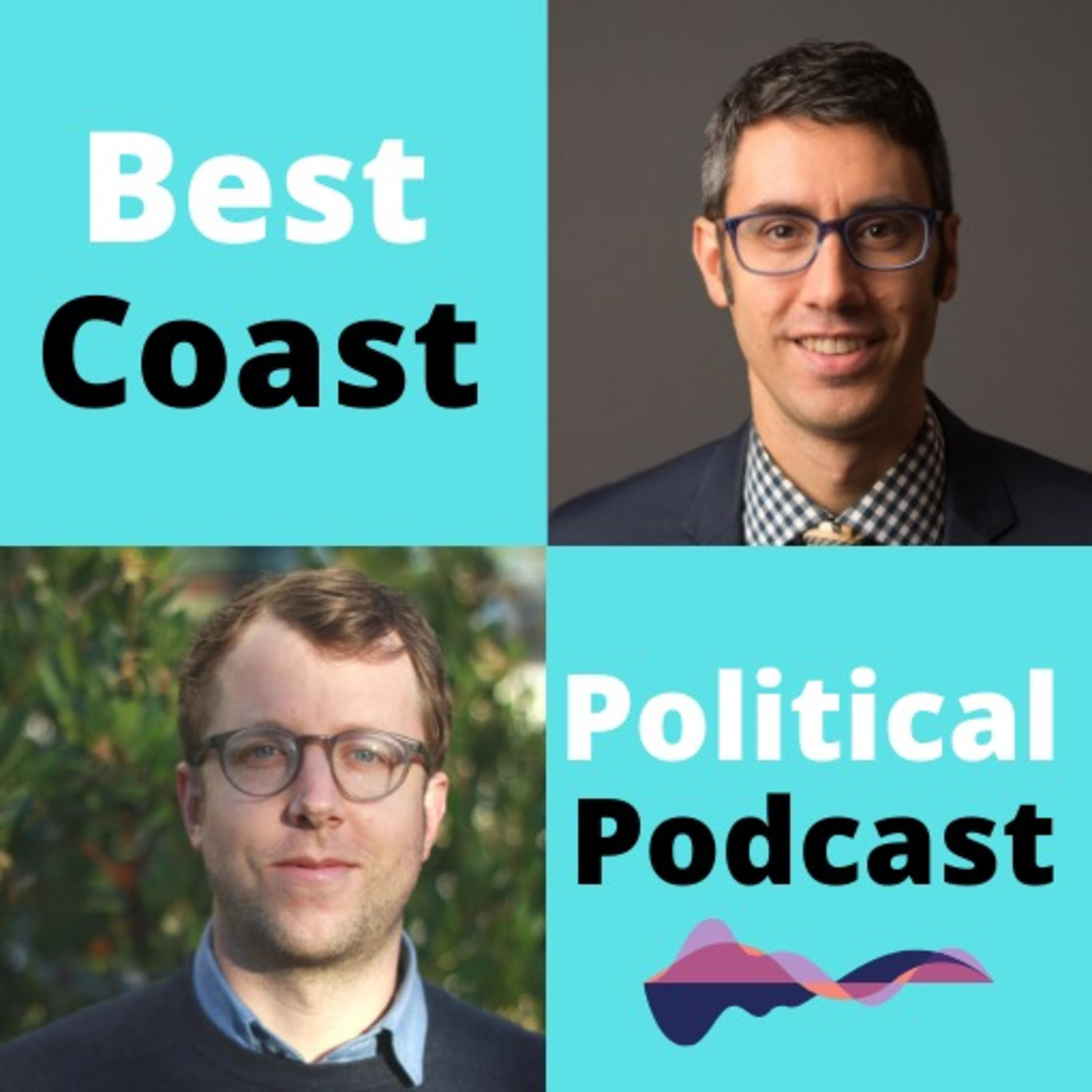
Episode 8: Does Victoria Need More Skyscrapers, with Guest Ian Sutherland of the Downtown Residents Association
from Best Coast Political Podcast
69m 39s
The Best Coast Political Podcast hosts Jeremy Cardona and Matt Dell introduce a discussion on downtown Victoria development, featuring Ian Sutherland, head of land use for the Downtown Residents Association. Sutherland, a civil engineer with 35 years of experience, provides insight into the Starlight Development project replacing Market on Yates and a car dealership. The conversation centers on Victoria’s housing crisis and the need for densification, but questions arise about its form and location. While the 2012 Official Community Plan (OCP) envisions growth through 2041, Sutherland argues that some proposed densities, like the 7.5:1 floor area ratio for the Yates project, are excessive compared to Vancouver’s Yaletown (5:1), which features tall towers with ample light and air. He advocates for "missing middle" mid-rise buildings in urban villages rather than solely concentrating density downtown. Hosts express differing views: Matt supports dense downtown development for vibrancy, while Jeremy emphasizes affordability and equitable distribution of densification across neighborhoods. The episode also touches on preserving heritage and character, with Sutherland noting that low-hanging fruit like parking lots have been built upon, and demolition of existing buildings is now beginning. A lighter segment discusses a planned post-pandemic party, symbolizing reflection and healing across three James Bay halls. Overall, the podcast explores tensions between developer interests, community values, and sustainable urban planning in Victoria.
[MUSIC] Welcome to the Best Coast Political Podcast with Jeremy Cardona and Matt Dell. Coming to you from Victoria on this dark and cold Sunday evening, broadcasting from the unceded Coastalist territories and how you doing Matt? Hey Jeremy, I am great. Happy to talk about some of Victoria politics on a Sunday night, which doesn't seem like a break, but for me that's a nice relaxing break. It just docked shop with you. Yeah, tonight we're talking about some controversial proposed developments in downtown. We're just kind of getting into the weeds with downtown and development. And we are going to be talking about a proposed development that is owned by Starlight Development. And they've purchased the area that is currently marking on yates and London drugs and even the area one block to the east of there that's currently a car dealership. And so do you want to introduce our guest for us, Matt? Yeah, so you know you and I have been talking a lot about what we want downtown to look like in 2050, you know, visioning for our kids, what we want it to be for them. Lots of people are ready to talk about this subject. Something that I've always looked up to is Ian Sutherland from the Downtown Residence Association. Ian is the head of the land use for the DRA. He is a 35 years in the building industry as a civil engineer. He was born and raised in Victoria. He has traveled the world looking at architecture. I've sat on the VCan table, which is a community association that we're with them for five years. I've always kind of looked up to his knowledge on downtown development. He definitely knows is the subject matter better than anyone I've seen. And I always thought we'd have him on the podcast. He's a pretty straight shooter who definitely knows a lot of the technical side of things. So we will see what he has to say about Starlight. And he's big into a couple other developments downtown, the Telus Ocean Center, beside the Empress, which is going to remake a couple of lots of the huge glass, kind of a mirrored future building. He's big into heritage in Old Town, including the Duck Building on Harold Street. Broad Street, right? So we will get Ian's view on all that stuff. And I think I'm going to learn a fair bit about the official community plan and how these new developments stack up against 2012 OCP. So it's going to be a bit controversial because I don't think a lot of people know how they feel about downtown Victorian. How they what they want it to be. Yeah, and we're trying to organize these conversations the way that they're accessible to people who are not totally in the weeds about things like density and zoning because it can get really dry and technical really quickly. And I think you should be able to have a conversation and we're trying to have a conversation that is more from the point of view of values. What is it that people want? What kind of a city do you want to live? Do you want to live in a city that's like Vancouver? Do you want to live in a city that's like one of the mid-size European cities? What is Victoria going to be as it starts to change? I mean one of the things I think we'll probably talk about in this conversation is that developers have discovered Victoria. They discovered Vancouver obviously a long time ago but because it's difficult and expensive to develop in Vancouver some of that's come over to Victoria. Just really last five or six years it's not just like our small and medium-sized local developers. We now have like big like sovereign funds. Starlight, international, big international developer. And they want to make money and they don't really care about the character of our city. So there has been skepticism and I think just about everyone, to not everyone but probably 85% of the people in Victoria realize that we need to densify in some capacity. There's relatively few people who say no more blame them any kind. We'll say yes, densification is happening but it's really a question of where and how and how much and those are much stickier questions. Yeah absolutely and there's a lot of nimbism which is you know rightly so people are kind of like well why here and why not over there and why here and why that why this and it's just difficult you know I don't want a condo on my street obviously but I want it to be downtown and what the answer is are you saying are you saying you actually don't want a condo on your street or are you saying like that like hypothetically? Well my street is not set up for condo it has a little school on it and a bunch of single family homes. I mean I think we want to build things within I'd like town houses on my street. I'd like duplexes and triplexes but I don't I think a condo would be out of character and I think they're better suited downtown or in urban villages. I live on a quaint little little little street but there's a lot of operative but you know it's an interesting conversation. There's lots to think about and the affordability for me is the biggest piece like we are in a crisis and the crisis of affordability has real implications on people's lives. It's damaging for families, it's damaging for kids, it's damaging on relationships, it's damaging on mental health and we have to do something about affordability and we all have to kick in not just downtown but the neighborhoods as well. That's exactly it. Well that's missing mental peace which we should talk about in a separate episode but it keeps coming up but I mean one of the things that you know in looking through the official community plan and then following along with development statistics. Downtown in Harris Green has taken on more than its fair share of densification and that's meant a lot of skyscrapers. The urban villages in Victoria like Quadra, like Hillside, like Fernwood Square, like Cook Street have not absorbed enough of let alone the areas outside of Victoria right. We want to start talking about Hubei right now but there could be a lot more densification going on in and around those urban villages and that's very consistent with the official community plan. It's when we think about densification this is maybe my message my message for the day to our listeners is that when you think about densification you don't just have to think about towers. You can think about two three four five six story buildings what are called missing middle or mid rise buildings that are close to services close to transportation networks without having a 30 story tower. There's other ways of densifying. But do you not agree though and I don't disagree but downtown there is a spot of density and people like that like I like to go to a dense like New York. I know I like to go to New York because I want to get dense spot and I think it offers a lot of value a lot of people a lot of restaurants and I don't think it's bad to place a lot of density on downtown although I think other areas also need to say hey you know what we can't just be a single family neighborhood when there's a housing crisis and I like a dense downtown Victoria. So you and I know you and I differ on that a little bit although I don't know a lot about this so I'm very happy to learn from you and I haven't learned from you and truthfully I have a lot of learning to do on the subject overall but we will learn from Ian on this. I do too because I know that the densification levels differ in downtown right I like old town has one level of densification the rest of downtown has a different one so maybe we'll probably get into that with Ian because I mean if you think about it like a lot of old town is not skyscrapers right if you think about lower Johnson how tall those buildings three stories maybe four but there's no setbacks right the buildings come up really close to the edge of the sidewalk they have a pretty big footprint there's there's a amount of densification there or a nice level of density. So we need to answer them that you know these are the kinds of questions I think about and you know and it's also like what are we knocking down to build things like those are questions that we should all have well I think what we all don't want is for Victoria to bulldoze a territory just to build a certain level of density we've lost something then yeah yeah for yeah there's some truth in there absolutely okay before we're getting on you want to talk about your party though what's your party what's the deal with the party am I invited is everyone invited everyone in Victoria is invited to my party and anyone who falls me on Facebook knows that I've been I've been like I've been fantasizing I guess you would say about I've started to allow myself to think about the post pandemic period wow and I know I don't know when that is but in in my head you know according to Trudeau everyone's going to be vaccinated in this country by September yes so in my head the pandemic is over in October I don't know if you're I think October is say Halloween yeah I mean other people think well we're we're talking 2022 but anyway I thought why not to start planning this this incredible party now and yeah some of the details need to come into focus like like when it's gonna be and like where are you gonna get it weird it's gonna be hard but I had I had one initial idea you want to hear my initial idea there yeah this could change but I thought I don't want to just have like a normal party where there's beer I want to do something that is like high art and something that is symbolic something that would have made David Bowie proud and so here's my initial thought I thought what if we rented out all three of the of the halls of the of the rentable halls public halls in James Bay Eidl vice the white eagle hall and then the James Bay Athletic Association we rent all three of them out in one evening and it's essentially like a festival in between these three sites you maybe even apply for a grant for it to offset some of the costs and at the first site which would be the Eidl vice you would it would it would be a sequential event everyone would go not all at the same time but you would go to the Eidl vice first and the Eidl vice there would be music and food and activities there but they would that that spot would represent the pre pandemic period that is like traveling back in time to before the pandemic and the artistic events and the symbolism and the music would like okay yeah symbolic to represent your life pre pandemic and then you would travel after
after that to the White Eagle Hall. And that represents the pandemic. - What's that gonna be like? What's a pandemic? Why would anyone even wanna go there? I don't wanna go to the front. - It's an opportunity to reflect on who you were and what happened to you during the pandemic. It could also be a opportunity to affect people we've lost or the businesses we've lost or the suffering that's happened. It could be a little bit more serious, a little darker. And then you travel over to the athletic association and then that is the post pandemic period. And that's the catharsis, that's the healing, that's the transcendence. And so myself and I family and some of my friends have already started to think about some of the things that might go on. For instance, like being able to write down paper and have to carry something forward about yourself from the pandemic. What is it about this pandemic period that you wanna maintain? What is it you wanna go back to? But what is it that you've learned and maybe you wanna keep with you as you move forward and then be able to write that down and put it into some kind of artistic tree or something. I don't know, I haven't worked out all these, but that's kind of my initial vision. - So I'm there, man. I'm there. I want you to get past the first haul that I'll be toasted after the first haul. Yeah, you never made it to the last ones. - There's gonna be booze and there's gonna be music and there's gonna be dancing. And online someone was like, "Well, will there be fire artists?" Like people spinning the fire? I don't know. - Hell yeah. - I'm gonna call the people spin the fire. - That's fire spinners. - Fire, there's definitely gonna be fire spinners. And my daughter was like, "Well, what if we had a bonfire? We burned all the masks." - Oh wow. - Well, they don't want the fire department to show up. But I do like something like that, you know? - It's gonna be, post-pandemic is gonna be nuts. Like people are gonna go crazy. I'm actually gonna worry for my liver what's gonna happen. - Well, this party is gonna usher in a post-pandemic period. That's the whole idea. - Oh my God. - I love it. - Okay, I love it. - I'm planning to be up. - Yeah, I'm down. Why don't we get Ian on and talk about downtown? - Okay, let's do it. - All right. (upbeat music) - So we started talking about downtown because there's some controversial developments happening downtown. The Starlight project that where it's gonna replace market on yates. And sometimes it's hard to understand and let it drive. It's hard to understand who to listen to. We have developers who are doing the work. We have city planners who are trying to follow OCP and we have people like Ian who are the residents and the volunteers who I think really live in the area and care deeply about downtown. That kind of how you characterize your role on the land use planning on the DRadian? - Well, we like to think of ourselves. I mean, our role as the land use committee for the downtown is basically to facilitate dialogue between applicants for development applications and the public at large. That's our primary role and kind of relay that information to the council to aid them in their decision-making process. The other, one of our other jobs that we're tasked with is to kind of cast an eye over policy making and provide input to the ways policies created and interpreted during these applications. So that's our primary role. We do find ourselves advocating for other things such as community amenities and things like that. - So what guides downtown? We have an official community plan. Is that the primary guiding document that kind of visions on what downtown will look like going forward? - Yeah, so the official community plan kind of provides the broad strokes. There's a local area plan called the downtown core area plan that kind of fills in the more detailed issues provides design guidelines and specifics like setbacks and things like that. - And what year are those? The OSCP was in 2012 that came out and how long does that last for? When is it vision out to? - There's supposed to vision for 30 years. - It's 2041. - Yeah. - That would make sense. - So it's pretty new. I mean, a lot of people refer to it as, oh, it's old, it's eight years old. And no, it's actually compared to a lot of other jurisdictions. It's extremely new. - Did you help draft that one? - Yeah, we participated in the public review. I don't know how much of our input was actually considered, but we provided it. - If we could just zoom back a bit for those who don't follow zoning and by law and growth management around town, but are interested in Victoria and its heritage and its culture and its character, maybe give listeners a sense of what the down-down residents association, what your guys' view is on the changes that are happening in Victoria, what do you want to see change? What do you want to see say the same? And you can speak either for the DRA or just for yourself, but give us a sense of where you're coming from. - Well, as far as the DRA is concerned, our mandate is to support the OCP. I'm as a representative of the DRA, that's our, that's our-- - How about taking that hat off and just speaking as Ian then? - Okay. Yeah, my personal view on it and, and certainly some of the feedback that was provided early on in the process was that there was a, you know, there's a few shortcomings with the document. Some of the proposed densities were perhaps over generous, I guess you could say. Certainly when you consider, I mean, I like to ask people, you know, what do you, what do you think Victoria should look at? Look like, I mean, go to another city or country and tell me a city or something that you think that we should be emulating and then study that. That's quite interesting, you know, and I'd ask you guys the same question. - Where'd you ask you then? What's your answer? - I mean, well, what do you-- - What's your answer afterwards? - I mean, what do you, I specifically, I ask, well, do you think that the downtown Victoria, Harris Green should perhaps look like Yale Town? - In Vancouver. - In Vancouver, should it be more like the West End of Vancouver, which is kind of more of an older, high density area of Vancouver, residential area of Vancouver. And it's, and it's super interesting to listen to people's response because they'll say, oh, Yale Town's way too dense, you know, we don't want something like Yale Town or the West End is just right or something like that. And then you kind of look at the planning document because Yale Town is pretty much built out now. So it's a really good example of the West End of Vancouver is, you know, built out. Most people will visit it there. They know what it looks like. Downtown Victoria is just, we're just kind of starting, like the new OCP is only eight years old. Basically, what's happened to date is a lot of the low hanging fruit has been picked off, like all the parking lots have been pretty much built on now. We haven't seen a lot of demolition of existing buildings. So we're getting, we're getting large buildings going up, but they're kind of isolated. And we're starting to see clusters around Johnson and Vancouver in those areas. And so it's just in very small areas are actually seeing how the plan is truly manifesting itself. - Well, let me just go, do you want, yeah, go ahead, Matt. - No, no, no, go ahead, let's keep on this. Do you want, do you want a hair screen to look like Yelthound? - Do I personally? - Yeah. - I would prefer it to look like Yelthound to the way the direction it's going. - And what's the difference? Like would Yelthound be like more like mid rise rather than really tall buildings? - No, Yelthound has got tall buildings, up to 30 stories. - What's the difference then? The difference is in Yelthound, the density is lower. The prescribed density is lower by about 20%. You can only build four towers per city block and the Vancouver city blocks are a lot larger than ours. And then you need a minimum lot size of, a lot bigger than ours, let's say 25,000 square feet before you can build the tower. So what you end up with and then the rest of the block has to stay at a much lower
density. So what you end up with is tall towers with lots of kind of air and light around them. That's a Yale town you're talking about. That's the Yale town. So we're essentially on the market on Yades property I'm going to call it we're going beyond the Yale town. It's way beyond. Okay bigger than the Yale town. Wow. Way more dense. About almost perhaps up to 50% more dense. I love to I love just when people bring these applications in and we look at the densities and I know they're just numbers and the numbers really confuse people because it's hard to kind of translate a small number into a bulk of a building. But some of these buildings that we're seeing the Yades on Yates for instance has a density and I'll just touch on this briefly but seven and a half to one. Okay so that is Calune Hong Kong density. And whereas Yale town is five to one maximum only in certain spots on a city block. Five to one density means essentially if you built on the whole property wall to wall that would be a five and a half the same density as a five and a half story building. Yeah but you can't build out to the park it was straight out to the property lines because you have to have windows and things like that. So you have to so when you bring it in you go up. So is your is your concern which I think is a fair one it sounds like that Victoria is becoming too dense it has the potential to I mean right now it's right now it's not right now it's not because we've just built on you know a few dozen parking lots and right and there's still space between all the buildings and you know it's you know it's not as impactful as it has what it might be when it's completely built out and that's and I say like that corner of Vancouver and Johnson and Yates you can really start to see the buildings clustering together there's very little distance between them our setbacks you know like for instance the setbacks in Yale town are 85 between towers here it can be as low as as always way less than half that so you're looking at people's TVs in the next units and things like that it's not it's live abilities not. Can you answer your question I mean in terms of my own vision of what I think Victoria is or should be let's say over the next 30 years to me it's not so much a quenched question of density about about where and how we're densifying and I think you know I posted a really great video today to my Facebook feed that I really encourage people to look at if you google it it's called the missing middle mystery Vancouver and it's made by a great urbanist group there in Vancouver and they explain what the the bargain was the big bargain between single family home owners and the city over the last 50 years which was essentially to densify the heck out of downtown big tall glass skyscrapers and then everything else is single family homes and there's really nothing in the middle and so Vancouver has a very very particular look to it that looks very different than pretty much any other city in most of North America let alone Europe or elsewhere so for me I don't want Victoria to look like Vancouver I don't want a bunch of skyscrapers in my downtown I would prefer to densify and distribute that densification more around the city especially around urban villages and on my read of the of the official community plan that's what we're supposed to be doing and I was just looking at materials from the city of Victoria today and 60% of our recent developments have been downtown and it's supposed to be more equitable than that it's supposed to be more distributed there's supposed to be more going on in Cochute Village in Fernwood and Quadruon elsewhere but downtown get stuck with all the development and as a result everything goes vertical so I would like to see more mid and low-rise buildings and missing middle than I would skyscrapers I don't want a 32-story building in Victoria I just think it's out of scale with who we are how do you and I'm not going to disagree with Jeremy there but one another variable that comes in is you have developers who have projects and they need to get certain financing so Starlight is proposing a block and you know there's a lot of good aspects to it it's a million square feet of rental unit which I think is great there's green space but if you say okay you can't do that Starlight we don't like that well they go okay well we're gonna we're gonna leave we're not gonna go build townhouses in Fernwood because we don't build town that's not what we do so Ian how do you kind of balance that where you kind of also have to let developers do what they do which is develop and and they are there to they have to make money and they're trying to I think take community input as well it's a fine line is that anything you have us stay on that? Well I've been in the development industry myself for 40 years and I and there's it's always a fine balance between you know balancing the priorities and the numbers again it's all about it's about all about cost and and you know the developers have to make their margins there's no there's no doubt about that whether increasing density you know can create affordability or or or make it I mean that is something that a lot of that gets bandied around and off a lot that oh we just let these guys increase their density a bit and then the product will be cheaper and more affordable I've never witnessed that personally in my 40 years basically what it does is it increases the profit profitability for that project alone which in turn increases the base price for land for the property right next door so when that property gets sold for development the the base level price for that property will be interesting so you're saying there's no like direct correlation between more densification means more affordability no I mean this is the problem is that like I don't have an MA in in you know an urban development and a few people do and every time we talk about the subject I get bombarded with a bunch of different articles that often have contradictory conclusions about you know what actually is the cause of driving up the cause the price of the city what where does affordability come from and it seems everyone seems to have their pet theory that's based on their own bit of research but you know for mirror mortals such as myself it's hard to know where the truth lies there but to supply and demand the old classic rule if you build more units there's going to be more supply in the market and and and less demand and prices will come down I mean I just I find it hard to get away from that argument on I mean let's look at starlight for example say about 32 story 27 a 22 and 19 and 17 so yes we can shave those down which is essentially just shaving units off the market so as much as maybe we don't want I don't want to look at that skyscrapers downtown I have a hard time rationalizing to people that that's supply and demand argument doesn't exist but you're suggesting that's not true perhaps well not incrementally you have to increase supply pretty substantially you know to bring the price down yeah right now what we've got is falling interest rates which is which is in turn you know people's ability to pay is pretty much static you've got the price of borrowing dropping which means that that monthly payment the people can afford will now purchase more more money therefore the price of real estate automatically rises to absorb whatever people's ability to pay maybe that's that's just the reality and then you've got all this hot money in the world sloshing around searching for a home and and of course a lot of that's getting dumped in real estate now because the bond market is really bad so you've got you know outfits like starlight coming in and developing and and doing so with fairly small you know margins so starlight what happens in your role so we have this controversial project which I'm going to call it controversial because a lot of housing affordability people like it a lot of people don't like it what what happens now when it when where does the community input come in and where does your role as as the calut come in or have you already accepted community feedback on this or what kind of potential are we looking at giving back to the developer here that is actually valuable before they walk away how does that process work well we we've conducted the public meetings and we've we've had some feedback from the public some promises were made at those public meetings that were immediately abandoned by the developer yes do you want to get into it sure they promise to abide by the OCP limits for density and within a couple of months that was abandoned and now they're higher than the OCP maximum it's funny because when you go look at their website they they talk about this project like it's definitely happening but I mean it's oh that's that's what developers do I mean give it give it the sense they bought the property so yeah it's going to happen in one form or another they bought the Harris Dodge property they bought the I understand that they bought the London drugs property so they they did they will do something there what what would you like to see it become oh it's it's it's it's it's going to be a series of powers uh
at a at a density that that hopefully complies to the OCP that's that's pretty much for certain the configuration of those towers in the height and and that's that's probably all what's going to be discussed. Do you think we can is there is the 32 is the biggest one which you know view towers next door is 18 so this is I've always thought view towers is pretty tall 32 is quite beyond 14 almost double let's say. How is that up for debate still like like are they going to say we'll say 32 but then we'll fight our way down to 30 or like what do you see coming out of the outcome of this is that are we going to knock that down at all or is that going to stick which would be setting a new landmark for Victoria for height. Yeah I mean it's I mean our our policy is is to support the core planning documents and and of course the limits there are 24 and I think it's 23 or something like that and so that's what we'll recommend and and and the density of five and a half to one instead of the six that they're asking for personally I find that they went six stories over. The height though just just to and this is this is my personal opinion the height is less important I think in a lot of cases then then the actual bulk of the building like if you look at a building like view towers it has a floor plate size it's actually double what what the the local area plan calls for and and if you walk down the north that northern side of view towers on view street you you you can see the shadowing it's it's pretty significant there there's parts across the street that never see the light of day but if you have a if you have a taller and narrower tower you do the light the light will get around it you know during the day and and it it's actually a blessing pack to its neighbors and that way too if you go up higher you can pull you can pull further away from your neighbors as well I mean that's just my personal observation so yeah well shadows are a big consideration right because they they affect everything from the plants growing on your balcony to your your well-being and there's a lot of people have seasonal affective disorder and who wants to live in a shadow all the time exactly and there's no policy currently for shadowing in big oh really not yeah that's true yeah so the density is a bigger issue for you so six to six to one over what should be 5.5 to one is is a bigger concern I'm not saying you're wrong at all it's a bigger concern than the height which I think is a lot of people is a simpler concept like turn two oh my god and density is doesn't really mean much I mean density is it's all about the bulk of a building on a certain size lot it and it's basically how how the building treats its neighbors and and when you're cramming a huge amount of bulk right up next to your neighbor it it impacts the livability of your neighbor let me ask you this question in a different way maybe in a more direct way do you feel like downtown Victoria and Harris Green has absorbed too much of the growth that more of that should be pushed out to the residential areas into the urban villages in Victoria City I don't know about whether it's too much I mean the downtown has a capacity to be redeveloped and and absorb a lot of growth for the region in a livable way I just my concerns are that the current that the current regulations don't really promote that entirely yeah how so but what do you mean but well just just that you know this the setbacks and the the density I mean the if you lower density you increase livability it's it's it's kind of a default really okay and and and and I don't really think that you're going to impact the price of affordability that much there there are I mean we are on an island we are surrounded here by on three sides by water so there is a limited supply of land but we're not I mean if you look at the area north of of of Chatham Street and you know there there are areas that would still and Victoria that could that could take on a you know it's a fairly substantial population absolutely and that market on Yates block you know really offers not much at all it's a one-story commercial block there's the shops in there there you know it's completely underutilized so I think what it's cool about Victoria is there's a lot of blocks like that that offer huge potential to just simply give back more to the community more commercial space I assume way more underground parking more rent there's no green space on their currently and these guys are doing a half acre of green space which you know for people am I right that's I think that's correct the half acre of green space it'll be interesting to see how green it it is of course yeah yeah it might not be it might be hard hard skates they're promising a public plaza which is which is great it's it's it that is a great thing yeah so is there any opportunity now for citizens who don't like what this looks like to impact have a say in this building still or starlight just basically are we stuck with absolutely absolutely how's the council council responds council responds to emails you if you if they get 1200 emails on this project it will likely not go ahead that's by personal take that sounds like I need to get organized then they do they do respond to public input on on on scale I mean one of the things I don't like about it honestly um Ian is that it's it's um it feels like carpet baggers coming in and trying to park their money somewhere I would much rather be supporting one of our smaller or mid-size local developers frankly well the Vancouver the the out of town uh developers have arrived they started coming here around six or seven years ago yeah uh they and and and developing in Vancouver is difficult and expensive and developing here by comparison is as easy as pie uh right last they they have a willing um a willing council uh and and uh and uh and uh you know the regulation is you know fairly do they use local work work work crews at yeah building yeah uh well thanks for informing us about starlight uh appreciate it maybe we can shift to what about tell us uh ocean so tell us proposed a ocean center it's a building downtown across from the strafficon I believe where there's two rental car lots uh it was a city-owned lot that the city sold for 8.1 million that building kind of came out of nowhere and then I haven't heard much about it yet I know you have some strong views on that one it would be a core building downtown so that is in the literal heart of downtown like beside the emperous uh old downtown what's the status on that project well the city it's city land city-owned land uh tell us hasn't bought it tell us has an option on it or they have a contract on it subject to approval of rezoning uh um and uh and I think they had partnered originally um with uh the jaws on it um and the jaws uh participated um right up until uh they were awarded the uh they were awarded the competition for the property based on the on the submitted plan uh we haven't been able to to actually find the plan uh that was submitted we we requested an FOI um to the city to the city and and and they uh redacted it so we don't know exactly what was pitched to the city to get to to win the competition for the property uh but since then the jaws have withdrawn from the project right and uh and a company a small uh developer a smaller developer uh uh arise has has uh yeah them on our podcast yeah we just had them on yeah and and arises um it's kind of interesting uh they they haven't uh well well i in the last decade anyway they haven't built anything downtown um so so it's an interesting and first time for everything although it's or not we're talking about getting uh local developers going you know at some point you gotta do your first reno in first house and i imagine the first big guy is a big challenging one but yeah well we've had very good luck with the with the with the jaw family uh over the years they've they've really done uh extremely nice work do we know why they pulled out no well
What's your concern with the project? - Well, right now, again, it's the OCP designation for the property for density is four to one, which is quite similar to the, there's a condominium right next door called the ARIA. And its density is actually lower than that. And they are requesting a much higher density, almost 50% higher, probably, or not quite 50% I don't know about this project that well. Is it mixed use, residential commercial? - No, there's no residential in it. It's all office, which is a bit of an odd use as well because it's kind of in an area that's all exclusively hotels and residential. So they're inserting an office use in an area that's not used for it right now. - Would you prefer to see residential there? - I'm not, the use doesn't really bother me too much. It's the bulk, again, it's the bulk of the building. It has these very tall stories. So it measures out, it balks out at a round. If a condominium was the same bulk as that, it would be 8.81, which again, is Hong Kong density. So this right now it hoakes up above the Empress Hotel well above the Empress Hotel. So you'll be able to see it from the harbor. And there's this lovely tell us neon sign. - How many stories would it be? - It'll be floating. - 12 at the max, I believe. - But they're very tall stories. The stories are 60% taller than a normal residential story height. And I believe there's some very tall stories. - Let's get it. - So there's some 20. It's also gonna be really, it's gonna be very interesting to see if developers continue to build these large office towers given the changes that we've seen to the economy during the pandemic and so many people working from home. Presumably some of those people are gonna flow back into the office as to the end of the pandemic. Quite a lot of them might stay and continue to work remotely. So I do wonder, I mean, Victoria has already been over developed on commercial space. You know, my wife's in private practice and she's, she's looked into moving before and there's always so many, there's so many commercial spaces available all the time. It's totally a renters market for commercial. - Wow. We realized what it's not, it's not for residential but it is for commercial. - We realize that there's gonna be a building built on that side, there's no go. And we would just like to see something that's a little more congenial to their state. - So why do we, what's the deal? OCP is four to one and people come and go, why do I want to six to one or five to one? What happened? Is the OCP just a guiding document at this point or is it legally binding at all? Is it more of a guide? - Well, they call it a guide. We like to kind of refer to it more as more like a contract between the public and the council and the development community. I mean, when this document was formed, everybody was sitting at the table and everybody agreed that yeah, this is where it's gonna be. And now, and it's funny 'cause it's the last, it's just the last five years that all of these applications are coming in with OCP amendments attached to them to increase density above the maximum. - Which counselors are most supportive of allowing flexibilities to the OCP? - The Olamir is probably number one. And I think Marianne Altos is also very supportive. And then it's a mixed bag after that. - Right, of course, and it's interesting, 'cause on the flip side, we had this project in Cook Street a couple months ago that was, I believe a six story, look like it fit, a lot of work done, kind of more in line with what I know Jeremy supports. And that actually got denied for other reasons that it didn't actually include enough residential units. So we're kind of caught in this, in this bind between, six stories aren't okay, tall ones aren't okay. And I think Victorians don't really have an idea of what we want because everyone wants something different and it sounds like we don't want to, you know, budge. - And you add into that mix, very complicated arguments about affordability, which was also part of that whole argument in Cook Street, right? That it wasn't affordable enough or there wasn't enough affordable units. - It's hard to make affordable, I mean, I'm doing developing right now, my costs, construction costs now are like significantly. - Yeah. - Over just a year or two ago and it's tough and then again, the price of land. And developers, they're always looking at what the guy process street just paid for their property. - Well, Ian, let me, this is your chance to tell us, what is the pathway to affordability in Victoria in your opinion? - Well, I don't know. It's the most desirable city in the country to live in. And you've got the, you know, a lot of people that are successful and retiring and want to live here. I think there was a survey once of Canadians and 40% of Canadians wanted to retire to Victoria. - Yeah. - That would be, you know, several million people wanting to move here. And the reality is is that they can't, because they can't afford it. - I honestly don't think when you've got a city as beautiful as this one, it's going to be an expensive city, no matter what you do. I think affordability, the key to affordability is senior government really has to become more involved. - Yeah, I agree. - I think market housing is for the market. And guys like me will, I mean, we have to sell to the market. - Absolutely. - And yeah. - And the government, if for worker housing and things like that. And there's a lot, there are a lot of nonprofit housing providers in Victoria who do a fantastic job. - Capital Regional Housing Corp. - Not just those, there's some smaller ones as well, but yeah, capital regional housing court for sure. And they do a great job. And they could be supported more, I think, directly. Because if you give Pacifica, if you give Pacifica or one of these, if you give them $200,000, they can leverage that with senior government up to 10 times. - Right, matching funds and et cetera, yeah. - Well, they only need a 10th. They can really get it. And again, I think if the inclusionary housing policy, I don't know if you followed that or not. - Yeah, well, and Matt and I have been learning about all, I mean, all this stuff gets really complex. We were just learning the other day when we had Luke on from a rise about the A-Hop, the affordable housing ownership program, which has run through BC housing, which allows units to be sold 20% or so under market. It's still a little unclear to me how many sales that last four, if it's, I don't know if it's always in perpetuity or just for one sale, but these different kind of mechanisms, let's just say, just to try to keep, to allow middle income people to buy places, which is challenging here. But my issue, and you can tell me what you think, but one of my issues right now about the conversation about development and in Victoria is that it tends to get very myopic around housing. We just talk about housing and affordability, and we lose sight of the fact that development always has a multiplicity of aspects to it. It's not just about housing and affordability, it's also about transportation, it's about services, it's about access to schools, it's about access to healthcare. I moved here almost 10 years ago, it took me years to find a doctor to find a general practitioner. My mother just moved here, forget about it. Our kids are dealing with challenges in public schools, and there's a lack of access to late French immersion in this town, something we've never talked about in this podcast. What big transportation was as the city grows. So I really want that conversation around development to take into account all these different views, just cram ourselves full of housing, and then we don't have the services to support that population or the jobs. - Yeah, well, one of the DRAs big things is amenities. I mean, we're taking a brown field area, like which is the downtown, it's been developed before for commercial, and it's now being redeveloped for residential. And in order to create a complete community, you need things like parks and schools, and so on.
Yeah, yeah, all of those public amenities that go with it. And there's there there is a shocking lack of consideration of all of those things and like you mentioned as well. There's very little consideration made to green space parks. There's we see kids playing soccer in the parking lot. So the tire shop next to our next to our place. Because there's no there's no pocket parks. There's no basketball courts. There's yeah, like that. And that's something that we hope would become a bit of priority. And again, you know, providing things like daycare and you know, medical service. Absolutely. Yeah. How does the DRA feel about more pedestrian zones in downtown? Like shutting government street off to non-commercial traffic, making a pedestrian zone? So I personally, I think it's great, supportable. If we can strike the right balance between you know, the commercial retailers in those areas, that's the big question is whether you can generate enough traffic to keep businesses viable. Yeah, which is an argument for having more people downtown. I know the business owner friends I have is they're going like let's get people down here. It's dead downtown, you know, after six o'clock on a Monday, like people are trying to have a lively downtown and there's simply not enough people being drawn there. I know for myself, I rarely go down with a family. I don't have an issue with it. It's just it's just not a spot that that draws me as a dad down there. So I think it's a big argument for further densifying. Well, I do. Yeah. I was like, yeah, go ahead and I want to switch gears on something. Yeah, but I was just going to say going back to an earlier podcast we have, the number of music venues has declined in the city. You know, the stuff that brings people out in the evening has gone down. I mean, the Copper Owl, my favorite bar, you know, no longer is no longer around. No longer has live music. So it's mad, it's absolutely right. Like we need to bring the vitality back to downtown, even pre pandemic. I mean, you know, obviously the pandemic has made all this worse, but even pre pandemic, it's like, what is bringing people, what's bringing people there, you know, and those are really important conversations that we're going to have to have as we think about the post pandemic period. We talked about two big projects, Starlight and Tell Association. I know there's a couple other ones. What's on your radar? I want to throw the deck building, which I wouldn't be talking about, but what else when people say controversial downtown, is there anything else you are dealing with in your role that people might not be aware of in the next 10 years? Well, there's certainly a lot of pressure. Old Town, which is the area to the west of Douglas Street. I mean, when the OCP was being rejagged in 2012, it was recognized that Old Town was very important. I mean, we have a billion dollar tourist industry here, and they don't come to look at the towers in Harris Green. They come to look at our Old Town and shop in the shops and meet in the restaurants and things like that. And that's an asset that needs to be protected because it could be snucked out fairly easily without too care and attention. So when the OCP was being rewritten, it was decided, and there was a conscious decision was to, you know, the density, additional density was to be absorbed in the area to the east of Douglas Street, which is Harris Green and that density is in the Old Town where to be maintained at 3 to 1 or less. Now 3 to 1 is just a number again, but it's interesting to point out that all these old heritage buildings, they come in at a very low, I mean, the average down there is maybe 2 to 1 1/2. I own two heritage buildings in Old Town and one of them is 1.25 to 1 and the others 2.2 to 1. And that's kind of standard, right? So they're quite small. So they can be overwhelmed quite easily by the construction of larger neighboring buildings. And then you lose that whole, you lose all the cool backboards and and the alleyways and all that stuff, just just just-- All the stuff that adds character, right? Absolutely. Yeah, we love that. That's that is I think what is a non-negotiable and Victoria, I would say, I mean, most people, that is what we are. We want to do with affordability, but that is, so the west to Douglas Street, I didn't know it was that big. I thought Old Town was mostly the area around Chinatown, but you're kind of saying it's the whole west of Douglas to the water essentially. So we're getting applications again that are pushing the envelope over 3 to 1 in Chinatown, which is a national historic site. And Old Town, like the Duck Building is perfect example. You know, they want to basically just just take, just keep the facade of the Duck Building and build this and completely take everything out and go 50% higher than the maximum. And what would you like to see there? Personally, I'd like to see the existing Duck Building upgraded as it is and restored as it is. I mean, I've done two of these buildings myself. I know it's possible. Yeah, they're tricky and they're expensive and a bit expensive to do. I think that the approach at the duck is, I mean, they want the density to create the boutique hotel that they're proposing, of course. You Vic, you Vic owns it. You Vic owns it. They're going to partner with Dave Shard, from Shard developments to build this boutique hotel. And it'll be at least to an operator long term. That's the. You prefer to see it be like what office space then? Residential, whatever, it could be off. It could be in any use. But just to retain more of the building fabric, I think probably one of the big things is that they want to put a parking garage underneath it. And these old brick buildings aren't. Yeah, it's very difficult to insert like a huge parking structure underneath one. And there's no current requirement for parking for a historic building. It's anyway. It's a great thing. It could be very. And I don't know, Chris LaFave has made a career out of restoring these old buildings and converting them into condominiums and done quite a nice job and really retained the majority of the building fabric. And I think that's possible with the dock and. And we hold the key location too. It is very much. It's literally in the center of old downtown. Are there other buildings that were on your list? Matthew wanted to discuss those. One or two other things I wanted to mention. I just was going to throw out to Ian to say, "Is there anything else people should be aware of?" We've talked to three now just on the radar building. So old town, dock, starlight. Well, I was going to talk about the building that burned down, right? Yes, yes, sure. Cross the street from the neck. And then the other thing that came up on our podcast a couple of weeks ago was that the art museum is looking to potentially move down into somewhere between capital iron, either right next to capital iron or somewhere over there between there in Rock Bay. I don't know if that's on your radar. No, yeah. Yeah. There's the Montrose. There's a proposal on the corner of Blanchard and Fort for a 20-story tower for an Airbnb style hotel. Right. That's where the Montrose. Is it an office supply? Is it an office supply store there now? Oh, a month, yeah. And maybe some ditch records, perhaps in there? Yeah. So what. Wow, that would be a bit. I mean, Airbnb is dead now. Yeah, well, I don't know. They're counting on recovery, obviously. It's going to take several years to build it. And again, it'll be operated by a third party. How many story is that one proposed? 20. But it's quite dense. Again, there's a heritage building, the Montrose, just to the north of it and they're transferring density from the Montrose building to this site. And then what is it? Designating the Montrose heritage, which is fine, but they're not going to seismically upgrade it or anything like that. And so the hotel building itself will. On its own property will come in at around 9.9 FSR. That's on the Avenue Manhattan. Wow. That is extremely. Yeah, it's pretty dense. 20 stories. Yeah. So, do you say FSR? Well, on its own property at 9.9, I think it is for 9.9 something. It's pretty dense. They're borrowing the surplus density from the Montrose heritage building and moving it over. That's pretty. Well, we didn't really get it. And, well, I don't think. Council, the one thing that's interesting to know is that Council actually has the discretion to pretty much do anything at once.
- Right. - That's a big change density. - They can do, and there's no recourse. - As long as it's compliant with the BC Building Code. - I don't know, yes. - I gained a few pounds during the pandemic. I wouldn't mind transferring those to somebody else. Like, you know. - Nate. - Yeah, no take. - Yeah, I didn't know that. That's kind of crazy. That worries me though, because I like ditch records and I shop at Monk and I like those buildings and it's just like. - Yeah. - It's a beautiful corner. That's a really old towny corner where I think people, people love Fort Street. It's a great street. - Love Fort Street. - Well, Fort Street is designated a heritage corridor. And we haven't heard any good arguments about how this project would affect the heritage corridor. And it's also within the 90 meter, there's also in the OCP a significant building clause that anything within 90 meters of the cathedral needs special attention for, you know, to preserve viewscapes and things. Of course, this project is within that 90 meters and we haven't really heard an argument that supports how this project will be mindful of it. - Is one of the problems Ian, and I think this is a problem across the world, is that people are too exhausted to be engaged in what's happening around them. And this is particularly in downtown where you have so much action happening. People are working, they're taking care of their kids. And so this stuff is happening and you're like, "Oh, let's start a campaign "or let's get some ideas of people like, "I'm trying to, you know, I'm doing this for green peas "and I'm recycling and I'm fighting my talent "to get taxes and it's just too much." And people just don't care. And I know on VCan, which you and I sit on, the Community Association, downtown needs support. And I'm getting a sense that maybe there's not enough public, like you'd like more feedback from the public or are these kind of sneaking through just because the public can't have time to care about it. - Yeah, it's a bit of everything. And I think you really put the finger on it. There's a lot of development for tea downtown. And part of it is that people don't understand the process fully. And they kind of think, "Oh, it's a done deal." And they don't realize that they know that their input does count. And it will be listened to. But you're right, there is a lot of fatigue. People kind of get fatigue from this whole process. And it does grind you down. - Well, that's what we're trying to do. I think Jeremy and I, not that we're gonna accomplish it, but we're just saying, let's just talk about this. Let's admit, we don't know anything. Let's get people on who do no stuff and ask them regular old questions. And at least it's up on the internet. And you don't have to attend a meeting on a Monday night calic meeting, which is exhausting. And you can go for a run and listen to it or whatever. And I'm hoping that we, and there's some other people out there that are doing some cool stuff. They're side walking Victoria. There's some cool blogs popping up of people just starting to think about this. And I know there's just a lot of intelligent people in the community. I mean, yourself who I've always enjoyed listening to and Luke from a rise and Pam, and just trying to find some consensus. So I think we should probably leave it there 'cause I know I could talk for another two hours and I'll look forward to doing that at VCan. And we're gonna keep doing these. And I mean, I hope we can have you on again to talk about another aspect of it. But thank you for explaining a lot of things that I did not know. - Well, you're most well. - And I'm in the loop. So you know, I attend all this stuff with you. And I'm still learning. - I apologize if it was too, if I, if it was too, that's perfect. - No, that was perfect. Everything was easy to digest. So thank you. - Yeah, thank you so much, Ian. And I just had one sort of final question to leave you with, or you could leave us with. And that is what, in your opinion, what would you like Victoria to be thinking about as we think about the post pandemic period in downtown? What should we be focusing on? What, where's our opportunity to do something great moving forward and having come out of this pandemic? - Well, public space is so important. And I think it's, the pandemic has really shown us that public space is incredibly important for people's wellbeing and, and, and, yeah. To be able to get out of your shoebox size apartment and find a little patch of green somewhere to stay for a few minutes away from, from, you know, to distance yourself. - Yeah. - For you to the protocols and things. It's very important. And I think there's opportunities for the city to do, you know, Shippoint Park, it's still sitting on the shelf. The David Foster walkway, it's, it's there waiting to be done. You know, the government street all extended the extension to the Chatham Street. That's, that's another great public space potential. All, all just sitting and, and, and, you know, designing considered years ago and just kind of waiting to happen. So it'd be, it'd be wonderful. - Thanks. - Thanks, that's really great. - Completely agree. - We don't want to just have private spaces. We want to have public spaces for everyone for downtown residents and for visitors to enjoy. So thank you. That's a really great point to leave us with. Really appreciate you taking a time. - Okay. - Well, thanks you. (upbeat music) (upbeat music) - All right, well, that was awesome to have you and on and learn a bit. I, every podcast we do, I want to say that's the post I've ever learned. But maybe that's because I'm learning it all of them. But I learned a lot there and I've been talking to you and already, I feel like the density piece was really important that I haven't recognized how important that is and I'd like to keep talking about this throughout the year with other people with different angles and trying to piece together what, you know, we think. - Yeah, I think, I mean, Ian helped me to evolve my own views because I've become singular minded in my criticism of skyscrapers. But obviously it's not just about height and Ian. I think did a really great job of saying we need to think about it not only in terms of height, but also in those density ratios, like four to one or seven to one, which is like how much the building would be spread out over a footprint. So it's not just about height, but it's also about thinking about density in a different way. And he had a really, I saw some really interesting things to say about things like shadows, right? It's not something that we think about on a daily basis, but a big building has a certain shadow. What is the effect of that shadow on the people across the street, for instance? - Yeah, and you can do this with computers now. Compared to when View Towers was built and there was no computers now, it's a full shadow model. And you know exactly where the shadow was gonna be at all times of the day. So, you know, I personally put up some faith, definitely some faith in developers. I think a lot of them have, they have some care about the community and about their art and about what they do. And even people like Starlight who are international, you know, these guys are the ones that are doing a job that I'm a lot of us are ready to do, which is a huge project, it's huge amounts of money. And so I think that a better community conversation is what I do think needs to happen. And that's a hard thing to do to get people's input, people are busy. So I'm happy we talked to them. I'd like to keep this conversation going as a few other people. To talk about it, I know we can't talk about development all the time 'cause it gets a bit dry and I gotta live your life. But that was fun. I'm glad we had you and on. - Yeah, and let us know what you think. We're really keen to hear what people want to see Victoria be coming, what your vision is for how this town develops. So let us know if you have thoughts. - Yeah, absolutely. You were saying some people have been listening to the arts podcast, so we'll have to think about some arts artists next. I just don't want to spend some time talking about kids, which is something that's important for me right now. How the city's working for kids, but we can sort that out later. Maybe for two weeks time. And yeah, that was nice, nice pandemic activity. I had a couple beers during the, this and just listen to Ian and feel like I'm catching up with friends. - Yeah, this is a good conversation. So thanks Matt, thanks Ken to Ian and we'll see you next time. - Okay, Adios, good night. (upbeat music) (upbeat music) (upbeat music)
Podcast Summary
Key Points:
The podcast discusses controversial downtown Victoria developments, focusing on a Starlight Development project replacing Market on Yates and a nearby car dealership.
Guest Ian Sutherland from the Downtown Residents Association (DRA) brings 35 years of civil engineering experience to discuss land use and the Official Community Plan (OCP).
Victoria faces a housing crisis requiring densification, but there is debate over where and how—whether through downtown towers or "missing middle" mid-rise buildings in urban villages.
The OCP (2012) guides development to 2041, but critics like Sutherland argue proposed densities, such as a 7.5:1 ratio for the Yates project, exceed examples like Vancouver's Yaletown (5:1), risking excessive density.
Hosts emphasize balancing densification with preserving city character, heritage, and affordability, while noting that international developers may prioritize profit over local values.
A secondary topic is a post-pandemic party idea, symbolically moving through pre-pandemic, pandemic, and post-pandemic stages in three James Bay halls.
Summary:
The Best Coast Political Podcast hosts Jeremy Cardona and Matt Dell introduce a discussion on downtown Victoria development, featuring Ian Sutherland, head of land use for the Downtown Residents Association. Sutherland, a civil engineer with 35 years of experience, provides insight into the Starlight Development project replacing Market on Yates and a car dealership. The conversation centers on Victoria’s housing crisis and the need for densification, but questions arise about its form and location.
5:1 floor area ratio for the Yates project, are excessive compared to Vancouver’s Yaletown (5:1), which features tall towers with ample light and air. He advocates for "missing middle" mid-rise buildings in urban villages rather than solely concentrating density downtown. Hosts express differing views: Matt supports dense downtown development for vibrancy, while Jeremy emphasizes affordability and equitable distribution of densification across neighborhoods.
The episode also touches on preserving heritage and character, with Sutherland noting that low-hanging fruit like parking lots have been built upon, and demolition of existing buildings is now beginning. A lighter segment discusses a planned post-pandemic party, symbolizing reflection and healing across three James Bay halls. Overall, the podcast explores tensions between developer interests, community values, and sustainable urban planning in Victoria.
FAQs
It is a podcast hosted by Jeremy Cardona and Matt Dell, focusing on Victoria politics, particularly downtown development and community issues.
Ian Sutherland is the head of land use for the Downtown Residence Association, with 35 years in the building industry as a civil engineer. He is known for his expertise on downtown development in Victoria.
It is a proposed development by Starlight Development that would replace the Market on Yates and a nearby car dealership in downtown Victoria.
The OCP is a guiding document for Victoria's development, created in 2012 with a 30-year vision extending to 2041.
Yaletown has a density of up to 5 to 1 with taller towers and more open space, while the Starlight project has a density of 7.5 to 1, which is much higher and comparable to Hong Kong.
The DRA facilitates dialogue between developers and the public, provides input on policies, and advocates for community amenities to aid city council decisions.
Chat with AI
Loading...
Pro features
Go deeper with this episode
Unlock creator-grade tools that turn any transcript into show notes and subtitle files.
 PodcastTranscript AI