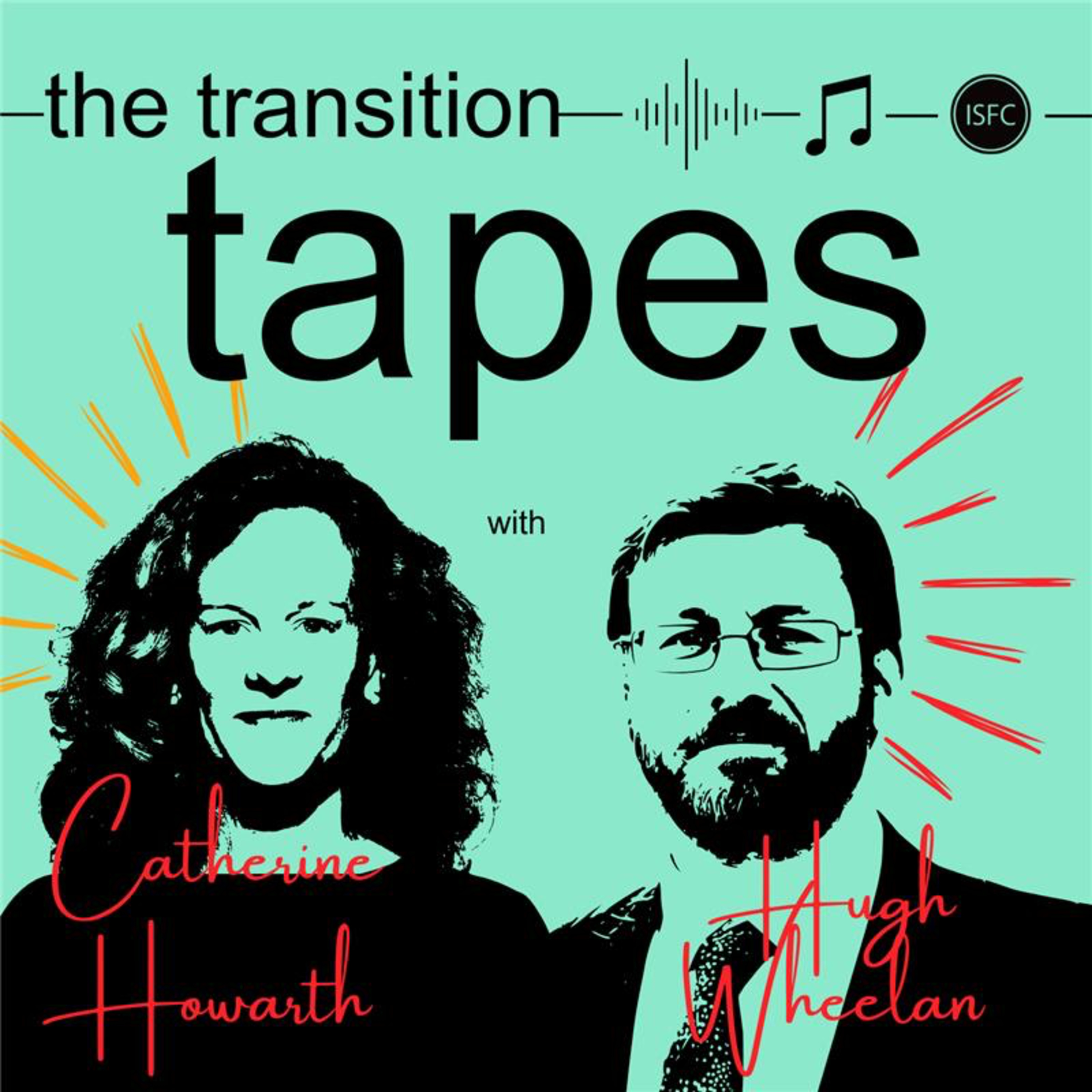
Episode 8 | Catherine Howarth - Turning shareholding into action
41m 40s
The podcast features Catherine Howarth, CEO of Share Action, discussing the importance of pension fund member engagement in sustainability and investor accountability. She argues that pension funds, which manage the deferred wages of millions, must incorporate member voices through structured mechanisms like deliberative assemblies or digital platforms to enhance decision-making and system legitimacy. This aligns with Share Action's focus on responsible investment. Additionally, she addresses the role of investors in holding banks accountable, particularly when banks retreat from climate commitments. Share Action provides research to guide voting at AGMs, urging investors to prioritize long-term transition risks despite political pressures. Howarth also advocates for legal clarifications to ensure fiduciary duties consider both financial returns and the real-world impacts of investments on members' lives, reinforcing the movement for sustainable finance.
The Transition Tames Transition Tames With Hugh Wheelham The podcast for the people making finance sustainable And financing sustainability Walk it back to the Transition Tames The podcast for serious debate on green and sustainable finance And much more as you know as listeners We also get to know our guests through the music they love The books they read, the films they watch, podcasts they may listen to And any great advice or sort of thinking that they've received in their careers or wisdom That they might like to dispense on this podcast more of that later Thanks for joining us. My name is Hugh Wheelham I'm an award-winning finance journalist and media entrepreneur Specializing in green finance, ESG and sustainability And the Transition Tapes is bought to you in partnership With the international sustainable finance center, the ISFC The think tank that helps financial institutions, investors and policy makers integrate Sustainability into strategy and practice And it is my great pleasure, real great pleasure to introduce today's guests on the podcast Catherine Howefe and Catherine is chief executive of Share Action Catherine is great to have you here. Hi. Fantastic, do we hear? Lovely. Many of you will of course know Share Action Which is the leading European NGO for defining and driving ambitious standards in responsible investment And Catherine joined the organisation back in 2008 And I think it's safe to say that she and the team there took a relatively small NGO And turned it into a fully fledged research and campaigning organisation And that is no mean feat Catherine also serves on the board of Nest Pensions Which is one of the big UK stakeholder pension entities I think Catherine might want to correct me on the terminology there She's also a member of the Financial Conduct Authorities Advisory Committee On sustainable finance and that's part of the regulatory body in the UK And of Her Majesty's Treasuries asset management task force And in an incredible recognition of her work she was awarded an OBE for services to sustainability in 2022 And whenever she gets the chance, Catherine heads off to Scotland for time with her family in the mountains And by the sea and for a Scott like me that's enough for me to hear in my ears the call of the backpipes But enough of that on with the show last time out we spoke with Professor Rob Bauer of Mastery University Who's been doing some fascinating research into pension fund member preferences on sustainability And Catherine that's an issue that share action has somewhat in its DNA Because it came out of an original group of academics at the USS Pension Scheme But way back forming a group called Fair Pensions And it's an issue that the organisation has been interested in for some time And I wanted to ask you why you think pension schemes should be doing more of this kind of consulting with members on sustainability issues And just talk to us about your thoughts as an organisation on that as a subject Thanks Hugh, so I mean pension funds invest the deferred wages of millions of people And it's my strong conviction that governing that money without their voice is becoming increasingly hard to justify I think there's all sorts of reasons for that I think for usually investors like those that serve on the boards of pension schemes make better decisions And meet their obligations to acting people's interests if they're informed by those people But I also think it builds legitimacy into the system and it's actually an important risk management tool For those that run pension schemes to have a mechanism or mechanisms And it does need to be sort of structured rather than chaotic the way this is done But allow people's preferences and views and questions and challenges to be heard Because if you don't have those release valves and so structures I think people can get very grumpy They can truly reduce the legitimacy of what is a critical part of our system to support people in their old age It seems a bit surprising in a way that this has not been sort of allied with financial literacy around pension investment as well in some ways There are people, as you mentioned, millions of people, members of big pension schemes and yet you know, finance and the impacts of that finance seem to be something which is sort of flies under the radar It's surprising, all surprises being a way It's true that I think the people that focus on financial literacy and indeed here in the UK there are all sorts of organisations sponsored by government departments to do so But they take a really narrow and very dry view of that and actually a hugely important part of what interests younger people in particular But actually all age groups is this idea that their deferred wages are invested in ways that are really shaping the world they live in, the world they will retire in That makes it meaningful and I think we can get people engaged with this idea of ownership and power Which is what capital gives you but that power is not shared actually It's a design system that gives people governance rights so I'm a real fan and by the way, my focus around these questions is a bit the UK because it's where I'm a trusty of a scheme That is part of a huge change that came about in the UK called Pensions Automatic Enrollment which solved participation in saving Now is I think raising these questions about participation in governance but looking around the rest of the world, members do have roles on boards and more mechanisms for voice Australian Pension Funds hold an AGM but we don't do that here in the UK Danish Dutch Canadian Pension Funds all have members on boards We've really stopped doing that in the Automatic Enrollment landscape that we've created and is dominant for most people here So there's plenty of brilliant examples of well-run pension systems and well-run pension schemes where members have more of a voice And I think we don't need to invent from nowhere, we can really draw and get practice What might that look like? I mean how would members have more of a voice in what happens on the sustainability risks of their pension fund? What kind of format can it take? So I'm really intrigued by taking the learning and the experiences of citizens assemblies and transferring them to the pension system That's obviously something Rob Boer has also been thinking hard about. I'm really proud that nest pensions is running as a member of assembly We're going to call it a member's assembly for 70 people drawn from the 13.5 million that are our members across the economy For deep deliberation and receiving expert input and evidence but then those members being the ones that get together and think, well okay we know they're a trade-offs, we know there are challenges But we're really interested in the fact that our pension savings are invested across the UK and global economy And done so in ways that have real impacts on our lives as well as delivering us a return, what do we want to inform our trustees or really our priorities when it comes to thinking about sustainable and responsible investments? So that's a brilliant mechanism but it's not the same as accountability, it's not the same as every member having the right to turn up at something like an AGM And listen to presentations given by the trustees about the decisions they've been making on members behalf and ask some questions So I think how this happens is probably a mixture of tools and strategies and I'm very excited about the potential of digital tools to enable more real-time participation but also participation by people that are in physically dispersed spaces There's all the toolkit there to be much more and unitive The question is does the industry sort of have the will to do it? And I do think that when we think about the state of stock markets and how valuations are very frothy, there's potential always for quite big re-adjustments And those are likely to prompt questions and I think it's important that the groceries are ready for maybe more choppy waters in terms of market sentiment And people will validly have questions about how decisions were made which perhaps aren't so pressing in these good times Yeah, no, I mean, are you as an organisation share action going to sort of campaign for pension funds to do these kind of deliberative or sort of public forums? Is that part of what you're looking to push? It is, it's part of our thinking around the big shift in sentiment actually that's come about in the last few years, particularly driven out of the United States And our recognition that actually this whole movement which we're so deeply committed to and a part of, the movement for responsible sustainable finance And we need to build deeper roots and secure its own legitimacy and so that's got us really thinking, well, how do we contribute to? And I'm not saying we're going to be campaigning in a very aggressive way but we want to contribute to a discussion about resilience and legitimacy for these discussions And that inevitably I think brings you to how are people's voices heard and who gets heard, who's at the table, who makes decisions, how is power held to account? So those are themes that are, I've always been, as you said in our DNA, but I'm sort of really bubbling to the surface for us now I think it's fascinating as well Rob was sort of mentioned some of the data that came out of those deliberative forums and it's incredible the number of scheme members that after days of talking around the subject and looking at the trade-offs actually say they really do want sustainability to be at the core of how their fund thinks about investment You've done a lot of work this year on proposing that investors should should vote against company chairs at the companies they own When, for example, the company is lobbying against climate change solutions or sort of reversing or watering down net zero plans but particularly on sort of more controversial areas around issues like energy transition into gas production and those kind of areas Just talk to us about why you think companies should be sort of lead wagons if you like on some of these things when governments are often kind of dragging their heels on policy and some of them are even encouraging companies to sort of transition along the way, for example, from coal to gas or oil to gas Just talk to us about your kind of philosophy is there of what you want investors to think about and to do Okay, well we're deeply interested in the energy transition at share action and having for a very long time and we have chosen to focus that work on a few sectors Some in the real economy like the chemicals industry like real estate sector but also on the banking sector and the banking sectors lending policies to a wide range of sectors including the fossil fuel industry And we do think that it's critical that banks lean in to embracing the need for an orderly transition that they are of course facilitated by the policy environment but frankly do have such an important capital allocation role and must be encouraged to show leadership And of course they did do that there has been over time and I'm particularly positive about what a lot of European banks committed to coming out of the Glasgow COP and as part of a broad based movement for change which incorporated the Net Zero Banking Alliance But then sort of we were inundated with commitments five banks at that point they were all committed to Net Zero and all committed to deforestation And we were deeply engaged with many many other fantastic actors inside banks and outside banks in the investment community but also in the policy sphere In encouraging banks to focus on this and and start putting together comprehensive transition plans and commitments and that has happened But now we are you know in a somewhat different political environment and a number of banks not all and this is so key have been retreating and reviewing and weakening policies and commitments And we do think that for long time of as does particularly for usually investors like pension schemes but also their asset managers It's extraordinarily important to hold accountable banks to the commitments they made because the fundamentals around transition risk have not changed The in fact the economic case for a clean energy is as compelling as it's ever been the economics really stack up I know the politics don't perfectly but frankly the task of the judiciary investors is to think about those long term economic risks and to see through the short term political turmoil And so the project that we're embarked on this proxy season is all about ensuring that we bring fantastic research on specific banks to the attention of the investment community And this builds on years of really rigorous work on evaluating the climate policies and practices of major listed banks across Europe So we are drawing on that research we're looking at what banks are doing we are then making recommendations about how investors might consider those facts when they choose to vote on the directors including chairs of those banks And it's a really important project I think for making sure that investors that have themselves made commitments in the climate sphere to align with a net zero pathway Then use that stewardship power they have those votes they cast on behalf of millions of us across the economy To ensure that banks are staying true to what's needed to manage risk and to ensure that we don't destroy value over the long term through a failed transition And you've got great research as well that compares and contrast the policies of banks I know that's one of the core competencies of share action Looking at what banks are doing what asset managers are doing how their policies kind of relate to each other so investors can drop down from your recommendations into research based empiricism to then base those those voting decisions on Yeah absolutely and it's also worth saying that we're in a very active conversation with the investment community about those recommendations And actually the banks themselves so you know important part of what we are really proud of our research and analysis and that underpins everything we do but we're very much an organization in relationship with the critical actors that are making decisions And really pleased to be in a discussion with the investor and issue of forum the investment association and other groups of investors across Europe as well as the individual investors that we're making their voting decisions We are going to be enabling and encouraging members of pension schemes including of course people listening to this show to send a signal of support for a robust approach to voting at banks AGMs in the forthcoming AGM season So you know it is a little bit of an opportunity for us to breathe a bit of life into what I was talking about earlier around how can the voice of pension savers be heard in these discussions at this time and you know the polling that's conducted of people across multiple economies shows that While it's concerned about climate changes maybe dissipated a tiny bit people are extraordinarily interested in making sure that we don't mismanage this transition people really see the physical impacts more and more And so this is one of the things I'm proud about with this campaign is the potential it gives for all sorts of people that care about this to actually signal their interest and concern to their own pension scheme Catherine how's the investor support stacking up at this time I mean we've seen good investor support on a lot of these issues in the past obviously investors are under a lot of pressure political pressure and you do some incredible work on issues like the living wage fair tax voting against political lobbying expenditure Which I think is possibly you know one of the most important issues we can be thinking about right now my question is really in a sort of trumpest populism era where investors are really under pressure how are you finding that they are responding and is it really difficult to get them to for example follow the voting recommendations you put out or even talk to you about it is that getting harder Look it's a really really mixed picture so bluntly the US asset management industry is for reasons that are incredibly understandable really really cautious now and frankly not using Sheldon voting rights that they control on behalf of many others in a way that we think is appropriate for serious fiduciary investors and that is a real concern not least because some of those major US managers are in charge of assets of people right across the world and certainly not just in the US But it's an issue in the US too and you know people in the US deserve really rigorous fiduciary standards that think about long term risk and return as it's affected by social environmental considerations just as much as anybody else So that's a concern and on the other hand here in Europe a lot of asset managers continue to show real commitment and engagement on these issues as sort of revealed by voting preferences I don't know how people are going to vote on this these banks agms where we're making recommendations that's all obviously to be seen and to play out But what I would say is that I think those political pressures which are of course deeply inappropriate I mean you know fiduciary investors have only one loyalty and that is to their members and the members of schemes and the people they invest in and this sort of tendency to tune into highly political discourse is really inappropriate and a breach of fiduciary duty in my view but we pull that back by making sure that the people to whom duties erode are millions of working people across our economies who faithfully put money in a pension pot every month out of you know often really modest earnings that those people are more visible those people are more heard and that's sort of how I think we will build back real strength in this movement Yeah really interesting points how do you counter the argument that actually the fiduciaries have the financial interest only to look at anything else is kind of political because that's the push back from the states isn't it that listen you're the ones who are meddling in fiduciary duty here what what's your response to that I just think it's too thin and inadequate a definition of best interests so clearly when I invest in a pension scheme and when I put my my money in what I'm expecting and deserve is very prudent long term investment that delivers me a decent income in my old age and through investing in wealth generating companies that are successful and well run but when those companies are operating in ways that really affect my life whether it's by polluting the air we breathe or by selling excessive amounts of ultra processed food or by emitting in ways that create serious risk of a failure to transition and potential kind of catastrophic climate impacts then if that isn't part of the calculus for my pension scheme when it makes decisions on my behalf I'm not that impressed so I do think we need to give a clear mandate in law for fiduciary investors to consider risk return and impact of investments that's happening in some jurisdictions it's fuzzy in others wick in the UK pushing right now for a clarification of the law through the pension schemes bill which is running through parliament right now that would make sure that trustees are in a safe legal space when they act in ways totally and exclusively driven by the best interests of their members but taking account of the fact that the investments we make are having all sorts of impacts on our lives and driving risks for people that are really material to their lives I think it's really interesting that whole debate around the getting to a state of the policy regime that actually starts to think about the impacts of investment and what that means over time as well and some really interesting work they're going on on fiduciary duty I wanted to just bring you down to a really interesting it's not really a technicality because we were talking earlier about virtual forums in a way for voting but we're seeing a really concerning pushback on physical annual general meetings and this this has been the forum for shareholders to turn up and question the boards of the companies they own and and actually have that kind of right to speak and and be heard but there's a big pushback on it and you're speaking out against this just tell us a bit about what's happening and whether you sort of see this as part of a much broader erosion of shareholder rights we certainly seeing that in the US but there's been fears that this may start to translate into European discussion as well Yeah sure so ever since the pandemic when a gm's had to go online as a matter of sort of public health emergency at the time a number of companies in different jurisdictions have been pushing for the for the right just to be able to hold an a gm virtual only because after the pandemic in most jurisdictions you know the emergency measures were taken off and some jurisdictions now allow virtual only and it's actually quite common in a number of European countries and in parts of the US and some companies holding their their their gm only online which have to say our observation of this and we've done quite extensive research is that where that happens it's abused and companies just cherry pick which questions they'd like sometimes they ignore people together sometimes they sort of group questions and I think accountability works best when it can involve just a small degree of discomfort and over the years I've seen the incredible value of getting shareholders in the same room with the directors of a company they are the capital owners those shareholders whether institutional or retail and it's important that the people they elect are accessible to them once a year in person I'm actually a big big fan of hybrid meetings I do think that being able to join a meeting online or in person is really important because obviously not everyone can travel to an a gm and you might well want to hear the discussion and ask some questions by joining online but I think it's a really bad idea which is currently what the UK government is proposing to introduce is a right that would allow companies to hold their a gm just online only and companies have been lobbying to that and making all sorts of arguments and we are galvanising people right now to encourage the government to have a bit of a rethink because I think the quality of corporate governance really matters to the health and strength and ultimately growth and prosperity of the economy and we reduce the ability of company directors to be questioned to an account for themselves and at our peril. Yeah, so just you mentioned earlier a topic that I think is really interesting because you've done some you've done some fascinating research on the subject of air pollution. Now I think this is one of these under discussed issues to my mind definitely has public health ramifications of course as we know but there are there's lots of science out there and there are lots of policy makers who are starting to think about this but just I mean talk to us about how you as an organisation are sort of thinking about these I kind of think of them as drop down issues. So you talk about responsible investment and then you say listen this is a public health issue and really want you to think about your role as an investor in what this means for public health and then as a result for the cost to taxpayers and to companies just talk to us a bit about the subject a bit and why you what you think investors should be doing about it. Yeah, I totally agree with you that sort of responsible investment abstract until it's connected to something really real like and what's more real than the air we breathe how many breaths we've taken over the course of this conversation I'm not sure but you know we want to be breathing clean air all of us. So our evolution is perhaps the largest financial risk that markets still systematically under price and if you think about sort of some of the parallels with tobacco I mean I think we're probably nearing the point where a combination of scientific certainty public awareness of the impacts of pollution and legal theory kind of converge and I think when that happens repricing could be quite abrupt so I we think this is a very material risk for investors managing portfolios but also it's a beautiful example of why when you pay into your pension scheme and you hope to have a long and happy retirement in hope hopefully decent health. You do want your trustees to be thinking about the quality of air created by the companies you invested in to build to build your long time pension pot so it's a sort of really I think powerful example of of why we need a broad approach to produce you to but also a potentially very compelling example of how negative externalities created by companies could come back in both effect individual companies that are major polluters in potentially quite significant evaluations but more importantly that cost to the whole economy of poor health as a result of our pollution which is you know the biggest killer out there created by the commercial determinants of health that you know that cost all of us it weakens the whole economy and therefore weakens portfolio so really really compelling issue I think definitely recommend to read the science alluded to in that report and then the policy mechanisms that are actually starting to address that and why investors should be thinking about it I wanted to sort of end the responsible investment part of the podcast if you like Catherine with you and this is a big question so I'm trying to create as brief as we can but I want to get your views on the whole ESG push back and the the I guess this ties into the whole EU regulatory omnibus staff and and here what that's meant for you as an organization like share action I know you've been thinking about how your strategy evolves in tough times but talk to us about just high level but where do you think we're at right now what what should we be doing look it's always I I welcomed a lot of the challenge because sustainable finance become a bit frothy and at times a little unconvincing so I like to think this is definitely not the end of sustainable finances maybe the end of unsophisticated sustainable finance and that's a good thing what do you mean by that exactly you be become a bit frothy bit been not sort of serious in what you know how I was thinking so I think there was there was a much too much over claiming and marketing of product to I think there was some simplistic claims made that this was always win win instead of acknowledging some trade and I think we're moving into a more rigorous discussion but I think the fundamentals remain really compelling and we talked about a lot of them during this conversation I think it's really inadequate for institutional investors looking after other people's money not to be very sophisticated and approach to this and use the stewardship rights the voting rights etc they have to defend long time value but a big part of why we had a sort of a so called backlash against ESG is that I think too much of the conversation around this had not really focused on ordinary people's needs across our economy that pay into pension schemes and make long term savings which are then managed by other people and invested by other people so this is one reason why and we talked about this a lot of you that that share actions response is to sort of hopefully deepen the sophistication of the financial analysis we do but at the same time really engage with the millions of people across our economy not individually but to encourage people to speak up about the issues they care about where their money is looked after by others and also to support support pension schemes to actually listen and tune in in the more sophisticated ways we've been talking about earlier so that I think is core to our response that we don't just want to be defensive and say it was all fine before we want to acknowledge what wasn't right and fix it so that we can build a more resilient and more legitimate movement for change. How do you ally with in many ways this is part of a sort of political question how does society think about its big challenges and have a sort of legitimate movement to counter how if you like business and finance may be contributing to these issues i'm really paraphrasing but can you ally with with other movements out there and say listen we're thinking about this in the financial context of pension fund investment or institutional investment you're thinking about it in terms of mobilizing voters. Are there alliances to make there and are they being made? Definitely there are and very excited about the fact that I think there's a much broader conversation about what the healthy democracies look like how do we restore the legitimacy of governments and I just think it's really interesting that those questions are also deeply pertinent of our economic masters if you like it in high finance and the big institutions that look after that make capital allocation decisions that totally shake the future they do need to be accountable responsible and I think a lot this is why I love drawing on the work and practice around citizens assemblies and pulling it into this zone. We can cross fertilize in ways that are really very value enhancing your busy working on your five year plan or I think it's about to be unveiled is it not sure what stage you're out but just talk to us about the talk to us about the headlines of what are you going to be doing so it's going to have a big big focus on pensions and because we do think that those institutions that focus on that that that manage other people working people's money are the ones that can drive forward the positive change and restore confidence and ambition to sustainable investing in the end asset managers although incredibly powerful and important actors in our economy they work for other people but our pension funds are really have a duty directly to all of us working people so we think pension funds are really key and can lead more ambitious sustainable and responsible investment over the next few years and then we're really interested in this question of legitimacy and and member voice and we will continue to work on fantastic examples where responsible investment is pertinent to people's lives whether it's the air they breathe the food they eat the energy system that is around us and it's transition and so we will continue to do I hope really fantastic projects that make responsible investment real definitely much needed work and looking forward to seeing the unveiling of the projects that will underpin that transition you're listening to the transition tapes with Hugh Weaver we're going to move on to the music culture section of the podcast and this is the part where we sort of delve into what Catherine is listening to music wise in her spare time and she's got a great set of tunes that she's put together for her playlist and I'm just going to read out a few of them because they're because they're interesting I know just sort of undercurrent of social struggle in some of them so we got 16 tons the great sort of country folk tune by Tennessee only four which is great great so great lyrics and then a bit of bark played by the jazz the jazz pianist I think Jack Lucia and your well tempered clavier there you've got a great piece by Franz Liszt Hungarian pianist there which is interesting and then you've got bloody bloody border by Manu Chau and small song by Lazard Assella which I think are both kind of interesting socially underpin records and then take this waltz by Leonard Coe it's a really interesting mix there I'm fascinated Catherine when you listen to music and whether do you play or do you wonder what part does music play in your life it plays a part every day I have to say my husband is sort of more in charge of the playlist in our life and it's very nice that when I come home there's always music playing and I do I've got two teenage boys and one of them pays the cello not I'm I'm asking you to snore like you're playing on you have to put it with it you have to put it with practice yeah is a variable quality on different days and sometimes it has to be nagged to produce tune but so yeah music's just I know it's very important to your your life few but it's got that incredible ability to stay your your soul but also yeah the lyrics and the tunes I picked do reflect a bit of my convictions in life I suppose and I'm not ashamed of that yeah definitely and I tune into to Catherine's playlist in the in the link from the podcast but but I definitely think that you're kind of social and political engagement comes through in the books that you've selected that that that is for sure your music has got a good mix there but in the books we've got grapes of wrath by steam next time back sorry so russian onto this last russian the this is art the UK art critic and writer of the 19th century rules for radicals I saw a linsky great book great mention for the new capitalist by David pit Watson recently become a lord in the UK so congratulations to him debt the first thousand years by David Gray but quite a regular choice on this podcast actually what kind of books you mean you like engaged books Catherine by the looks of it and then a bit of Stephen King and great mention of unturned it by Timothy Snyder I love I usually have you know a few couple of books on the go at least one novel and it is incredibly helpful to just let yourself go imaginatively and get stuck in a really good story but yeah do I do read a lot to inform my myself and I'm I did a history degree many many many years ago and I really have kind of later in life will recently just come to really appreciate that was really good underpinning for everything I do now and without a bit of a sense of history it's hard to imagine how the world changes or you can get really stuck thinking things won't change reading history reminds you everything is going to be so different but it would be nice to be shaping it and so what I guess I do get a lot of inspiration from reading books about people that got stuff done and that's what we try to do share action you have to make the connections there with with history and how people acted within those times really great set of books there to for people to take a look at and read and films as well you got nice selection there Barry linden of course the Kubrick film which is great another sort of historical film train spotting of course the hopefully you don't see too much of that when you're up in Scotland on holiday I'm in the highlands okay you're right you're right recent film sentimental value which is the great Swedish family films still in the stars guard and run out of hands for that that's something recently and then saran a the bargerac the rostand novel but turned into a film of course with Jérin departure do you watch a lot of films is that something you do as well we do we we love films in our house and we recently invested in a projector and it's just so nice having that films up on the wall quite big it's like little cinema I do worry about the cinemas actually we've got a fantastic cinema are near us and it's invariably almost totally empty but on like just after Christmas my younger son bought the rest of us tickets as a Christmas present which was really sweet and we had the whole cinema to ourselves we were joking about the fact that he'd hired the whole cinema for that she really sad that people because they have such nice homes in a modern go out as much to go support your local independence to the most people i want to finish by asking you what it's like to to run an organization like share action right now of course we know that there's a lot of pushback on the things that the work that you do how do you keep motivated yourself keep motivating the people in the organization keep passionate about what you do you know I'm actually feeling quite motivated right now just because I see such a need for fresh thinking in our space and fresh strategies and you know we have had a really tough few years with a lot of questions a lot of pushback a lot of negativity about the relevance responsible investment and the efficacy of responsible investment and some of that as I said earlier was sort of justified and so what we tried to do over 2025 is think about what we need to do differently and then yeah we've got this new five year plan which is pretty exciting and so after all these years I'm feeling like well just not feeling bored and actually feeling more convinced than ever that if we don't get capital deployed in the right ways and capital accountable in the right ways so much else won't go right and so I really see these links between the political realm and the financial realm I mean God the complete garsiness of Jeffery Epstein just sort of reveals all of that in hideous technical but it doesn't have to be so corrupt and awful it can be better but only if we all get organized so yeah I'm actually feeling really proud and quite motivated to be running share action of course it's it's a big team effort not just lots of incredible colleagues at share action that just doing absolutely astonishing work but more and more working a partnership with other and brilliant allies inside the investment industry outside the investment industry we do need to get better all of us at smart partnerships and coalitions and alliances that can endure but just not forgetting whose money this is that's I guess my parting shot just being humble enough to remember this is other people's money and we should make sure their voices are heard their needs are attended to when decisions get made on ever great place to end Catherine thanks a million for being here with us on the transition tapes and thanks to you all for tuning in until next time goodbye transition tapes transition tapes with you will was produced by the international sustainable finance thank you for listening
Podcast Summary
Key Points:
Pension funds should actively consult members on sustainability issues to improve decision-making, legitimacy, and risk management.
Mechanisms like member assemblies and digital tools can enhance member voice in pension governance, drawing on global examples.
Share Action advocates for investors to hold banks accountable through voting, especially when banks weaken climate commitments, emphasizing long-term transition risks over short-term politics.
There is a need to clarify fiduciary duty laws to legally encompass environmental and social impacts as part of members' best interests.
Summary:
The podcast features Catherine Howarth, CEO of Share Action, discussing the importance of pension fund member engagement in sustainability and investor accountability. She argues that pension funds, which manage the deferred wages of millions, must incorporate member voices through structured mechanisms like deliberative assemblies or digital platforms to enhance decision-making and system legitimacy. This aligns with Share Action's focus on responsible investment.
Additionally, she addresses the role of investors in holding banks accountable, particularly when banks retreat from climate commitments. Share Action provides research to guide voting at AGMs, urging investors to prioritize long-term transition risks despite political pressures. Howarth also advocates for legal clarifications to ensure fiduciary duties consider both financial returns and the real-world impacts of investments on members' lives, reinforcing the movement for sustainable finance.
FAQs
Pension funds invest the deferred wages of millions, and governing that money without their voice is hard to justify. Consulting members leads to better decisions, builds legitimacy, and serves as a risk management tool by incorporating their preferences and concerns.
Mechanisms include member assemblies for deep deliberation, AGMs for accountability, and digital tools for real-time participation. Examples from countries like Australia and Denmark show members can have roles on boards or attend AGMs to influence decisions.
Share Action contributes to discussions on resilience and legitimacy in sustainable finance by advocating for mechanisms that hear members' voices. They focus on ensuring pension savers' concerns are visible and considered in investment decisions.
Share Action believes investors should hold banks accountable for weakening climate commitments, as transition risks remain critical. Voting against chairs signals the need for banks to stay aligned with net-zero pathways and manage long-term economic risks.
Responses vary: U.S. asset managers are often cautious, while many in Europe show commitment. Share Action emphasizes that fiduciary duty should prioritize members' long-term interests, including social and environmental impacts, despite political pressures.
Share Action argues that a narrow view of fiduciary duty is inadequate, as investments impact members' lives through issues like pollution and climate risk. They advocate for legal clarity to allow trustees to consider risk, return, and impact in members' best interests.
Chat with AI
Loading...
Pro features
Go deeper with this episode
Unlock creator-grade tools that turn any transcript into show notes and subtitle files.
 PodcastTranscript AI