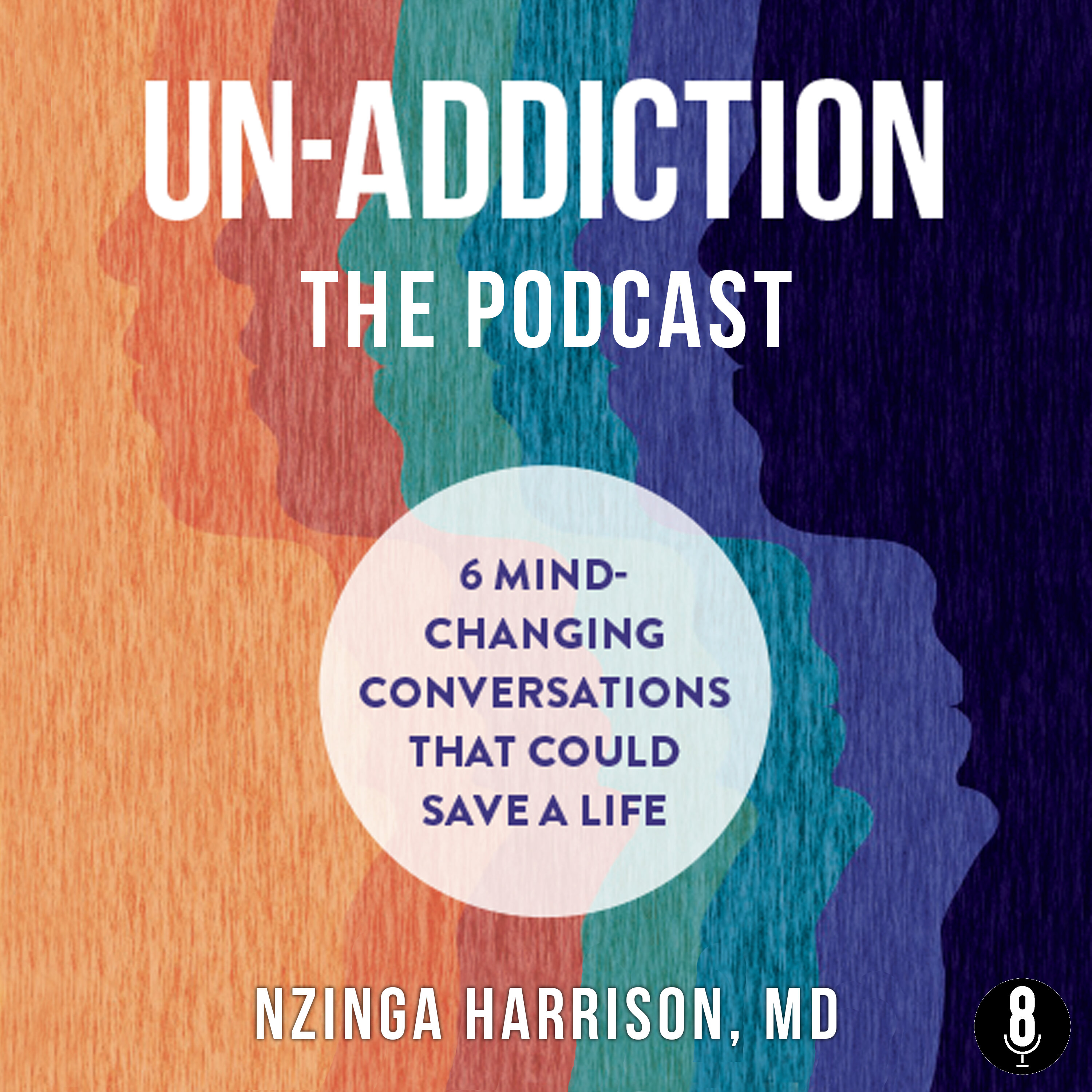
In this episode of *Unaddiction*, host Dr. Inzinga Harrison, a psychiatrist specializing in addiction medicine, speaks with Demi Burnett, a reality TV star turned advocate. Demi opens up about her path to recovery from alcohol use disorder, which began at age 18 when she used alcohol to cope with anxiety and social fears—symptoms later linked to her undiagnosed autism. Her drinking intensified over eight years, from binge drinking in college to daily consumption, including sneaking alcohol and experiencing severe withdrawal. A critical moment came after her second *Bachelor in Paradise* appearance, when she asked a friend to stay with her during detox, fearing she might die. Paramedics initially dismissed her shaking as dramatic, but she later had a seizure, underscoring the dangers of withdrawal. Demi’s autism diagnosis in 2022 provided clarity, helping her understand her addiction and reframe her neurodivergence as a superpower in sobriety. The conversation emphasizes the importance of recognizing addiction’s unique risk factors, destigmatizing recovery, and finding personal formulas for healing. Demi’s story highlights how vulnerability and support can lead to transformative change.
This is an I Heart Podcast. Guaranteed Human. Welcome to Unaddiction, the podcast. My name is Dr. Inzinga Harrison. I'm a board certified psychiatrist with a specialty in addiction medicine and co-founder and chief medical officer of Eleanor Health. On this podcast, we explore the paths that can lead to addiction and the infinite paths that can lead to recovery. Our guests are sharing their own experiences, the tools that have helped them along the way, and the formulas that allow them to thrive in recovery one day at a time. Demy Burnett is an American television personality turned social media influencer from the Bachelor and Bachelor in Paradise. Shout out to Bachelor Nation. She's an advocate for body positivity, LGBTQ+ rights, and mental health awareness. In 2022, Demy was diagnosed with autism and hopes that in continuing to share her experience, others can feel less alone. We had so much fun on this episode. There is so much more to Demy and her life that she shared with us, including her experience with alcohol use disorder and how symptoms of autism were a major factor in developing that addiction. And how autism has become her superpower as it relates to staying sober. All right. Thank you, Demy, for joining us on Unaddiction. So I am a psychiatrist and addiction medicine doctor, been serving people with addiction for my whole career. And I just recently wrote this book called Unaddiction, Six Mind Changing Conversations That Could Save a Life. And the idea of the book is like, there are an infinite number of risk factors that can bring us to addiction, but they kind of fall into these six categories. And I teach how to have those six conversations. And since there are infinite number of ways in, then there are totally an infinite number of ways out. Because you can combine all of these and everybody's personal journey as their own personal journey. And so the word unaddiction is like, what do we need to unlearn about addiction that we think we know that's actually not helpful? And what do we need to undo from like a stigma perspective, the stigmas we have that are like making it worse for people? And then what are the conversations that we want to uncover all with this idea that we could have fewer people suffering from addiction and finding a path to recovery? So that's awesome. Yeah. You're awesome. You're funny. No, seriously. That's so cool. So with that setup, we have the podcast and folks like you, thank you so much coming on to have these conversations, right? Like, what was my path to recovery? And this idea of your magic formula, knowing that that will change over time, but like, what are the pieces that keep you grounded in recovery? So maybe somebody listening will be like, oh, that sounds similar to my path. Oh, I can relate to that part of the journey. Oh, maybe I'll try that part of that formula and maybe it's part of my magic. So that's the idea. Yeah. Okay. I love it. I love it. This is doing like really good, helpful things, you know, helpful stuff out there. That's a, I love doing things that it's not like, you know, just kind of, I mean, it's always fun to talk about pop culture and whatnot. But it's nice to like juice, it feels good and rewarding, not rewarding, maybe fulfilling that sort of to talk about the stuff that can save lives. Yeah. So then let's jump in. Do you mind sharing with us whatever, whatever detail, however you want to share with us what your path to recovery has been? I think that that's the best way to, you know, help help people to be super open about it because I know that it's very shameful. And so I think to, I think the way my brain works is that to fight the shame, I own it. I'm not, I can't feel the shame if I own it, you know, that's like after recovery or, you know, during recovery. So I fell in love with alcohol. I was like 18, went to college and I had like freedom for the first time. I had strict upbringing, very strict. So I didn't like, it's a party that much in high school. And when I did in high school, I mean, I was like a senior and I would just get blacked out. So then I went to college and college was, I mean, I was blacked out all the time. Like, I mean, every other day, I just, I, everyone knew I was going to be blacked out too. Like I just, I loved, I loved it. I loved it because it, it took away that anxiety initially, you know, of, do I have the right to exist the way I am in this space that I'm in? Does that make sense? Yeah, but do you mind clicking into that a little bit was like, was there something that was making you feel maybe you don't deserve to exist in this space the way you are or was kind of just a general feeling? Well, it was just like a general feeling I had all the time of like not knowing, like not feeling. Well, and that is also underlying neurodivergence. You know, that was underlying autism that I, I didn't know I had and I had been like had this like secret, but it was like only with myself and it was like all these things that I hid and I tried to cover up and make sure no one saw me doing. And so that was like my worst nightmare was like anyone knowing about any of that kind of stuff, but like I didn't know it was autism. I didn't have a name for it. So the alcohol it kind of like it took away this anxiety of that part of me spilling out, you know, so I had more freedom to exist. However, I wanted to because I wasn't scared. But it also made it easier. So while it made it easier for me to be myself, it also made it easier for me to slip into like masks of characters because I wasn't afraid of somebody calling my blood. Does that is that that makes sense totally totally. So alcohol was like the best thing ever for me because it I finally felt like I could enjoy light because I wasn't scared of. And it's like I always want to find like an emotion to like you're like a directly to pinpoint what I'm afraid of. But I'm really just not not even sure I think it might at the end of the day be a lack of control over how people could react and like maybe people could react and I'm thinking of so many different ways more than just rejection. I'm afraid of people like they could get violent me. I don't know like I could I could go anywhere like my brain could I just I can panic from people's reactions. And so I had that alcohol took away a lot of that fear of like other people's reactions to me. Yeah. So I that was like in college I really started like drinking but I wasn't drinking every single day. I ended up moving back in with my parents, but I hadn't really had a drinking problem yet. But I would say that that's when I kind of started drinking every day, but I did have a job. So I on my lunch break I would go have a drink because I needed something to help me get through that last half of the shift. And then I get home and have drinks. But it wasn't to the point to where I was waking up and not feeling good. But this is all in a span of you know I'm 28 now. I've been so over two years so but from when I was 18 to when I was 26. What happened to you? It's a long time. Yeah it's a long time. Yeah. So it started I mean it's still a lot of alcohol being consumed and still like some blackouts here and there. But now let's say like the bachelor I'm 23. I'm I'm trying to get as much alcohol as I can. I have the best time of my life. I get I mean I am petrified all the time at all of these things I have to do after the show. So like you know these big events and things I remember going to Ellen and like I'm just drinking my way through all because I'm so nervous. And I'm just so scared I'm getting humiliate myself so I know if I get drunk then I'm going to just be a Lucy I'm going to be loose and I'll be able to be myself and it'll go great. Yeah. So I was like I need to have that alcohol though in order to be myself like that is what I truly I believe. I was like to not to be afraid to be yourself. Yes. Yes. Yes. And it was like a mental thing in my I was like a mental thing that I had though like I'm not going to be safe until I have the alcohol like you know like I need that first. So it's kind of like the way things went in my head was like a rule of how it goes in my head. And if I couldn't follow that rule that I had sorry that's my friend Sam. She actually was my friend from college so she's seen me through all of this. Did she come in the camera? 'Cause I didn't see her.
She must have been just right on the edge. - Hi Sam. - She's just packing real quick. She's throwing something away. - You don't have to duck. Hello Sam, how are you? - She said you don't have to duck. - I'm good, I'm good, I'm good, I'm good, I'm good. - She's the best, she's the best. I love her. - So that was the rule in your head. Yep, you had to drink in order to be okay to be yourself. - So then I just start smuggling alcohol everywhere. Because I need to know that I can't rely on going somewhere and they're being alcohol, I gotta bring my own. So around this time, this like post-bashiler days until then I go post like bachelor paradise the first time. And then COVID, then I started dating someone and when I was dating this person, I wasn't drinking as much because they didn't really like to drink, but I still needed it because I couldn't even relax in this relationship without it because I was so scared of them thinking that I was a weird freak because I was like, they're gonna see that weird side of me are like that. Like I'm a, I need to be able to like not care. Like I need to be able to relax. I need to be able to be who I am, but it's like I didn't understand, you know, like you can't not be who you are, but you know, that's the side point. - And at some point, you don't want to not be who you are, right? Like that's what's so human about this story is like you were dying to just be able to be who you are and have that be safe. - Absolutely, absolutely. You get it, you get it, yes. And so in my relationship, I started, this is when I started like really sneaky drinking. Like I would hide alcohol in like the night stand I had and I would like drink it when they weren't around and then like brush my teeth. And he had said something a couple of times, but that's like when we were all drinking, he was like one time I remember I threw something like no one was in the room but me. And I was just mad and I threw, I remember it was a bag of sugar bear hair gummy vitamins. And I was like throwing all the stuff at the chair and I remember I had to, I hit the edge of the TV and I broke the TV and I like forgot that I did it. And then the next morning we like turned on the TV and I was like, oh no, I was like I have to tell you something. And he was like you did what? I was like I know, I know. I was like oh my god, this is so embarrassing. So of course I just made it want to drink more. - Yep. - And then after while we broke up, I was just devastated 'cause this was like, I was with him every day during COVID. And so I just started drinking and even more, even more. Then I got to the point where I'm drinking every day and I am, I have to. Like I don't want to anymore, I have to. Like I'm getting violently ill. - In between if you don't drink, yeah, withdrawal. - I'm waking up with the, I'm waking up with the shifts and I'm like I can't do anything 'cause I had moved on from a bottle of wine a day to I needed some, I couldn't drink the wine in the morning because maybe two bottles of wine a day 'cause I couldn't drink wine in the morning 'cause it would make me sick. So I was like I need to get this done faster. So then I went to liquor and I went vodka and I mean I'd chase vodka with anything and it was easy. And so then I was drinking almost a whole bottle of Cheetos a day. And like I mean I was, oh my gosh, I still have this journal that I have from when I was drinking as much 'cause I felt so sick. Like and I knew things were not going good for me and I could like feel like my body shutting down. Like I was like I'm gonna die. Like I know I'm gonna die. And my friend actually recently passed away from like this same kind of thing. - Oh man, I'm sorry. - Yeah. And my friend here, her dad actually passed away from it too. So it's like a very close subject. And so like, you know I've seen it happen to two other people and like it happened to me. So like I don't have a partner. I don't have someone who's gonna be at my house with me all day long every day. A lot of the time it's just gonna be me. So I can't stop drinking by myself really. Like I'm like I- - I'm dangerous 'cause you would be so sick and nobody could potentially be there. Yeah. And I didn't really know that I was like waiting for this opportunity, this like moment to have someone with me because like I didn't know that but it was like all subconscious 'cause I was like looking back on it. I didn't see why I did it. But my friend Natasha stayed the night with me. This is like post-bachelored the second time I went to Paradise. Second time I went to Paradise. I was so drunk during that. I first of all, when I went in there, I went in with contact bottle solutions or contact bottle, contact solution bottle. - Oh, full of liquor. - Drink 'em all before I even got to the beach. Like in the hotel before I got to. - Yeah. - So then I was waking up getting withdrawals and I was like desperate. They don't start serving drinks 'til noon. So I was so desperate, I was drinking the mouthwash. - Yeah. - Drinking the mouthwash. - I've been taking care of people with alcoholism for a long time and this is actually very common. - And I remember that I had heard someone say that they knew someone that was an alcoholic 'cause they were always drinking mouthwash and they're like locker. And I was like, well maybe that'll get me through. And it did. - Yeah. - And it did because I would have had withdrawals there in Mexico like what would I have done? I mean that would have been a whole thing. - Oh. - Woo. - Mm-hmm. - While they're filming. I do not want my intervention while we're filming. - I know, 'cause you know they would have aired it too. - Oh my God, it would have been so exploited. - Yeah, it would have been so exploitive. I just read this article. Sorry, I mean, I break into your story, but I just read this article, I forget what it was in, but about the housewives franchise and how it's specifically around alcohol and alcoholism and addiction, how exploitive. - Oh my gosh. I believe it just like thinking about what I've seen of the housewives, yeah. It's a lot of reality TV's, does it? It pumps out the alcohol. - Yeah. So you're friend Natasha is spending the night? - Yeah, so post, at the second time I go on Bachelor of Paradise, she was on there with me. She's saying in my house, she lives in New York and she's saying in my house in LA and we wake up the next day and I'm like, I have to tell you something and she's like, what? And I'm like, I kind of have a super bad drinking problem and I really want to stop, so I'm not gonna drink anymore after today, but can you please make sure that I don't die? I was like, 'cause I don't know what's gonna happen. So what was it about Natasha that made her safe enough for you to be able to take this plunge with her? - You know, I don't know. She's just, I guess, she's just who she is. Like we had gone through a lot of stuff together, like being on reality TV together. She is just a like a nurturing kind of person too. Like she's just, here's the thing. I think that it's because I know, I knew that she is a kind of person that wouldn't like let me hang in. Like I knew that she was a kind of person who would, like subconsciously I knew this 'cause I wouldn't just like assume, you know, I wouldn't assume this, so I set her up. But it's like, I, she's the kind of person who would help someone and truly help them, not just like half-help, like, like actually be in the moment and care about them. Like, you know, I just seen, probably because I'd seen her, I've seen her talk about her friends and the people she cares about and how she knows so much about so many of her friends and stuff like that. Just, I guess I had made a bunch of subconscious observations about her character and I knew like, she's gonna, she'll take care of me. - Yeah, and so you told her and then? - She was like, of course. And then I immediately just started yacking non-stop and she goes, okay, well, you're going to the hospital or you're going to rehab and I said, I'm not going to rehab. I have all these animals at my house. I can't go there. I don't know what to do. I was like, I'll go to the hospital, that's fine. So we call the ambulance and I'm like, vigorously shaking. Like my whole body is like, I mean, - Yeah, this is alcohol withdrawal. - This is alcohol withdrawal. - It can be deadly for, okay, sorry, let me break in as a doctor and drop a statistic here. You're starting to describe the development of the DT and one out of five people with the delirium trimmings, the DTs that does not get detoxed will die. So like if you're listening, Demi was not being dramatic when she told her friend, I'm gonna stop drinking and will you make sure I'd not die because it can be deadly. - Yeah. - So God bless Natasha, right? - Oh my gosh. - I'm going to the hospital. - Natasha's the best. Well, here's where we get, it gets interesting before we get to the hospital because, because like you just said, I'm wasn't being dramatic. So the ambulance gets here. I'm sitting on my couch shaking, like crazy. And they take my vitals and it's too men, too white men. And they treated me as if I was being,
dramatic. They said, Oh, you'll be fine. You'll be fine after a few days. It's going to be rough for a couple of days. And then they start giving me just a pet talk about, you know, not drinking. And I might listen. Why are you trying to make me cuss on this podcast? It was so frustrating because I felt so terrible. And I was just like, everything in my body is telling me, I'm on my way to death. Everything in me. Yeah. But so Natasha stays with me because they gave me some so friends. So I stopped puking. We get an IV lady to come. And the IV lady is like, Hey, why are you shaking? And at this point, we had called this guy over. And I didn't want the guy to know that I was having alcohol withdrawals. But Natasha, Natasha, I was like, what do we do? And she came up, she was like, we'll tell me about food poisoning. I was like, okay, great. I've never had food poisoning before. So I was like, sure, I don't know what it's like. And so that's what we told this lady. And she's like kind of looking at me funny. And then we get done with the IV. And she's like, I'm really concerned about the shaking. And I was like, and she was like, okay. And so then she leaves. And then Natasha is leaving. She backs up all her stuff. She's leaving me with this man. And she's, because this man's going to watch over me. And she's in the parking garage. And then I'm up here by myself. And she's with him. He's helping her load up the car. She's like, let me go to say bye to Jimmy one last time. She walks in within one minute. I start having a seizure. Oh, alcohol withdrawal seizure. Which by the way was 100% predictable by the level of alcohol withdrawal symptoms that you were having with the two white men paramedics treated you like a hysterical. Yep. So they they had to come pick me up again. The same man came and got me. I'm just like what what did they like I want to see the report that they got for that day. Like I want to see where it says that they came undermined my undermine me. And what I was saying. And then had to come back because I was on the brink of that. And you know what I imagine. Obviously I can't know. I imagine they didn't have ill intent. And they didn't say to themselves one out of five people dying. We're just going to take the chance that she's one of them. I'm guessing that's not it. I'm guessing they looked at you and they didn't see a person who fit their mind's eye for what a quote unquote severe alcoholic looks like. And they saw a girl they saw a girl in a room full of squishmallows shaking on her couch and they said she's fine. Like they I mean I'm used to it. It's up in my whole life. Nobody's ever like taken me seriously when it comes to that kind of stuff because I'm so dramatic. So you have an alcohol withdrawal seizure. They take you in the ambulance to the hospital. I have to say they're for three days. They're pumping me full of Adam and loved that. I asked the I asked the guy on the way out. I was like, hey, can I have some of that Adam Van? He said, you don't need it. And my parent, my dad and my stepmom flew in. So they stayed with me for like a couple of weeks because like after like I was so sick like my legs were like alcohol like affects your nerves. And like that's whenever I knew my alcohol problem was getting really bad because I think my legs are feeling weird. And it's kind of hard to explain slash remember now. But I just couldn't walk like I was having a really hard time walking around like my legs felt so weird after I got out of the hospital. Yeah. Do you know what that's about? Yeah. So I'll severe chronic alcohol use actually depletes your B vitamins both your folate and your B12. And B12 has everything to do with how your nerves can conduct their impulses. And so you actually get firey sensations. What we call neuropathic pain, which is like burning. You can get numbness. You can like not feel where your feet are on the floor and start losing your balance. Yes. Yes. That's like what it was. It was like numbness. Yeah. Sounds like B12 deficiency caused 100% by alcohol. Wow. Um yes. All I remember too like all of my levels were messed up whenever I got there to get a cat scan to, um, but everything was fine. Um, and yeah. Then I got my parents kind of took care of me. Um, and just for like a week or two and then they left. I had a meeting with a doctor, my like primary care doctor, um, to get me on, I had to get on like anti seizure medication. If I don't think I guess you that's like you have to do that for a while if you have a seizure. Uh, but it was like Natasha. I mean, we already know she's the hero, but like she even more so like when I got to the hospital, she called everyone. She told like contacted people my phone, let everyone know what was going on and like had people get there like before she left. I mean, she took care of me so much and um, oh my gosh, I just, what an angel. What an angel. But yeah, so the after I stopped drinking, I mean, I did it like a month, two months and then I was like, why is this so easy? Like, why am I not like no one could make me drink right now? Like there's no way. I, but it comes back to a rule. This is a new rule. The rule is we don't drink. That's just the rule. So like my brain doesn't even consider it. And that. So your autism is serving you. Whereas your autism, right? Yeah. Your autism is serving you now with this rule and how rule bound your brain is. I love that, Demi. And that's how I discovered my autism because I like or like rediscovered it because like in college, I had this epiphany where I was like, I think I'm autistic, but it was like a very short-lived thing because everyone was like, no, you're not. And it was not as talked about then. And that was like 10 years ago. And I drank that away. But I had come to realize it again because I was like, how am I able to follow this rule I made up? Like I just made this up, but like I cannot break it. There's no like no one could pay me to do it, you know? And so yeah, and that's how I figured out that I was autistic and like, because that's I didn't know what rule bound meant. Like I didn't really understand it. So if anyone had ever asked me if I was rule bound, I would be like, no, but it's like, oh, my, my rules, the like the rules that I think like our valid apply like, you know, those rules. Yes, yes, we don't, I don't break, I don't, I don't do drugs. That's a rule. I don't drink. That's a rule. I think that's so cool, Demi. So my oldest son is 18. He's a freshman in high school. He was diagnosed with ADHD when he was six years old. And so we worked really hard for him to know that like this is who you are. It's this is a condition you have. This is amazing, you know, like the here's how you use it to your benefit, et cetera. And so we were on vacation in Mexico. This is such a, you're like, what, where does this story come from? I promise you it is related. No, I'm not, I'm into it. I'm into it. So we were in vacation on vacation in Mexico. He's 16 years old and they're like trying to sell us a time share. And I'm a psychiatrist. And so people love talking to me about all the things. And so the salesman is like telling us about his childhood. I know that sounds so crazy, but he's like trying to sell me. Yeah, he's like telling me about his childhood. No, I believe it. It's like when a, when someone's like, it's someone's like, I'm a nurse and they're like, I got this thing over here. Exactly. So he's like telling his father's child, he had a lot of trauma. Had a lot of trauma. He's like trying to deal with like overbreast he's trying to sell us a time share. And my 16 year old son says, you know, it's like my ADHD. He said, you can consider it like a ace in a deck of cards. It can be the low card or it can be the high card. Isn't this? I know. Okay, so the listeners, you can't see Demi's face, but she's feeling it. Yeah. He's feeling it. Well, like right now, your autism is like the freaking ace of spades right now against alcohol. His disorder. How cool is that? It's so cool too because like, well, I don't drink for one, but also, I'm not tempted to if I go places. So like if I go out, like I hate, I don't like to go out, but say I'm going to see some friends or something. Everyone's drinking. It was like, oh, sorry. And I'm like, I truly cannot express to you how much I am okay with you drinking. And more so, get drunker because your drunken spirits make me have a good time too. It brings you guys up to my level of silly. Now everyone's ready to get extra silly. Okay. And then at the end of the night, do you know how wonderful it feels watching everyone else be drunk and you are not and you're like, look at all those mistakes I didn't make. Not that, you know, not not not disrespect to anyone who's getting drunk and sloppy. I've been there done that. But it just feels good to know that like, hey, I've kind of got it more together now and I'm not going to feel like crap tomorrow. And this is awesome. And you remember everything. I got to go to wedding in Paris. Imagine if I was drunk. Yeah, it reinforces the value of the rule. Yes. So this is like the second question, which this rule seems like it is at the center of your magic formula. Are there other things or beliefs or behaviors or people like anything at all?
that is also part of your recovery formula, like keeps you tethered and not drinking, not doing drugs. - Yeah, I think I'm gonna burp. Sorry. (laughs) - Please keep that in. (laughs) - I knew it's gonna come out, and I was like, I'm just gonna come out when I'm talking. Like I just need to let it happen. - It will not be edited out, did it? - I am here, I don't care at all. That was obviously one of the cutest verbs I've probably had. (laughs) It was like, hold on, excuse me. - Yes. (laughs) - So anyway, the magic formula, anything else it goes to the table. - Yeah, yours. - Definitely, like, the understanding of why the drinking was happening too, so not only am I drinking for the autism thing, but I didn't know I was drinking because I was afraid of people accepting me, not accepting me, or if I was doing it right as in socializing, I didn't know at the time that's what I'm doing. I'm just doing, 'cause it makes me not have to think about it. But now, I'll sober, there's so much more clarity and so much more analytical thinking. And so now I'm figuring out the reasons behind these behaviors, and then experiencing them sober, and being like, what am I gonna do? How do I, 'cause I feel scared, I'm like, oh, this is probably, this is a time when I would have drank, what am I gonna do? And a lot of the time, it is, I need a safe person with me. So like, I need someone who I can look to and I can just be like, (mimics a voice) or something, and they, there's nothing I could do with to where they wouldn't be safe still. - Yeah. - Because that, people need people, and I'm not asking a lot of somebody, you know? Like, just to, hey, if I look like I do in the headlights, that's 'cause I'm feeling more socially awkward than you could ever imagine, and I'm screaming for help. So whenever I come up to you, just love me, okay? Just love me back, whatever it is. Just let me do it because that's me, like, grounding myself back. That's me, like, getting that feeling out, you know? Like, no, for me, I don't know. Or sometimes I'll be like, oh my gosh, I just like, if I need to tell you, I just had this motorcycle, or I just waited a bit, but I don't actually, like, we don't need to talk about it. I just needed to get it out, maybe even literally. Sometimes it will be, I need you to hug me. Please squeeze, I'll ask my friends, like, please just hold me, hold me, hold me, because I just need that pressure real quick, and I'll be like, thank you. It's like, you're squeezing it out of me that, like, fear. So, yeah, there's other, like, tips and tricks. I find, like, what I'm interested in. So, a lot of the drinking was about social, and living my life so much for the social aspect, and the social value, and, like, social, like, am I doing the social thing, right? You know what I mean? And, like, focusing on that, where, of course, you don't know who, like, you are, and you are your loss. Like, you have them in focusing on any of the things you actually like, 'cause you're so busy, scared, you're too busy worrying about if people are gonna think that it's weird that you like them. - Yeah. - So, taking away, like, a lot of the shame, but doing that, it can be very lonely and isolating, because you kind of realize, I don't like a lot of the people I've known, and I've been around me, and, like, you know, they don't, they don't, like, bend it, not benefit me, but, it's not- - Yeah, they don't nourish your soul. - Yes, exactly, exactly, and they don't make me feel good. And once you start feeling good emotions, and you start, like, learning about yourself, and feeling good about that, and you wanna share that, you know, and then someone's making you not feel good about that, that is awful. Like, that sucks, and that makes you feel a negative energy, and sometimes you have to protect yourself from that energy, and it's like, you don't wanna lose the person, but you also know that you're not gonna keep growing in this way that makes you feel good, if you have that someone kind of judging you. - Yeah, I mean, that was such a, like, master class rundown on how to put together a formula. You were, like, first, I, like, understood the root cause, which was, like, social, right? And then you were, like, I was able to know what the trigger is, which is, like, when I'm feeling so awkward, and I either have to get it out, or somebody to squeeze it out, and I know what the fix is, and I have the support system in place that I already told them in advance, if this is how I look, this is what it means, and this is what I need, and then I have to set healthy boundaries. I'm like translating everything you said into, like, psychiatrist speak, right? Like, it is literally how you put together a magic formula, and I love that you were, like, so open through this journey to, I think it really started exactly, like you said, when we first got on, like, the moment a person can be safe being themselves, the rest of these pieces of the magic formula can open up, because you can actually just ask for what you need. And you can actually just say, "No, that's not what I need," and so I'm not here for that. But it does start with feeling safe. - The, the, exactly. The biggest thing about this all though is that I am so privileged enough from white privilege, pretty privilege, reality TV privilege, et cetera, to have, I mean, I knew I wanted to go on reality TV because I wanted to get on TV somehow, because I wanted to get out of the town I was in, because I needed my freedom. So I privileged enough to have this freedom now, to where I don't rely on anyone else. So I, that's the thing is there's probably so many people who feel like me, but they have to, they're still relying on people who they can't just not talk to, who they can't get away from. And that is what is the biggest problem with all of it is, not everyone can go be a reality TV star. Like, I feel like since I got put, since I'm in this position, I need to talk about it, you know? And I, I wanna do what I can because I don't know if I, I don't know how I would be if I wouldn't have gotten to this place of where I can take the time to dissect myself, dissect my behavior every day to every level, to the point where I have compassion for everything I've done for myself so much so that I can, I'm giving it, making excuses for everybody 'cause I'm like, oh, I understand why they did that 'cause I could totally see, blah, blah, blah, and like this is nothing to do with me. Like them yelling at me, whatever. You know, but it's also like, there's a line, there's a line where it's like, am I gonna be feeling bad though? Like if I start feeling bad, then I can't be around it. If it's, you know, I don't know abusive, it's such a big word, but. - Yeah, abusive is a big word. Painful is on the same spectrum. And I think we're kind of conditioned to be like, it wasn't that big a deal. No, it's not that important. No, it doesn't matter that much, but those things are additive. - I know. - That's a raditive. - Or so conditioned to the, to the, - Yeah, well it can just be. - Sweet bit under the rug. - Sweet bit under. - You know, it's especially, - Never stays under there. - I know, it's especially interesting with family dynamics and how like the family is, everyone's sweet bit, everything under the rug, not talking about anything and just okay with it, with the unhealthy dynamic, even if I, you know, bring light to it and all I get, it's still like, well that works for them. Except it doesn't, because then you're drinking mouthwash. - Yeah. - Okay, listen, this was amazing. So time flies. - Yes, it does. - When you're having fun. - I know, I know I talk so much. - That's a good conversation. No, I loved it. I loved every minute. So I wanna ask you the last question. - Yeah. - That I always ask everybody. I started out at the beginning and I was like, unaddiction, what do we need to unlearn that we think we know? What do we need to undo from a single perspective? What conversation do we need to uncover? If you wanted to leave our listeners with one piece of unaddiction wisdom based on where you've been, where you are, where you're going, what would it be? - Hmm. Oh my gosh. Like, I mean, there's just so much. Like, it depends on where they're at and their journey. So like, who am I speaking to people who are trying to get unaddicted? - Yeah, speak to them. - I would say that even though you are ashamed right now, like about the drinking, don't let that shame stop you from like asking someone for help because you're gonna be way more ashamed when you have a seizure in front of your friends unexpectedly, you know? Like the shame is gonna come no matter what. It's not that bad. It, because from there you only go up and you can once you get through this, like, I mean, I never could have imagined that I couldn't drink. Like I was like, I guess maybe by 30 hopefully else stop. Like, I don't know, I don't know how I'll ever stop. And now, like, I can't imagine something, what it would take to get me to drink. It's, you can get there is what I'm saying. And I mean, I was drinking mouthwash. Like take the time to to like get to the root while you're drinking because. That's like the most important part of how I mean the rule yes, but the rule it couldn't just Stay there without me knowing why it was there, you know, I was like how is this rule working? You know right who knows I mean, I don't know if it would have stayed or not who could tell because I had to investigate immediately and Spreaking me out. I was like shouldn't it shouldn't be you shouldn't be this me but more than just that figure out what you need the alcohol for Well, you need whatever it is for and Just don't stop drinking cool turkey along Make sure you like I said get the help don't I mean, I know you'll be ashamed to say don't be ashamed I know you'll be ashamed the shame ain't that bad you'll be okay Mm-hmm. I love it. I love it. Thank you so much, Demi. This was so awesome to talk to you Thank you. It felt so great to talk about this Thank you so much for tuning in My book on addiction six mind-changing conversations that could save a life is now available for pre-order at bookshop.org Union Square and Company Barnes and Noble Amazon and wherever books are sold if you like to this episode Please share it with someone you think may need to hear it also Please subscribe to this podcast and leave a five star review that helps us reach any and everyone who may be looking for support in the face of addiction This is an iHeart podcast guaranteed human
Podcast Summary
Key Points:
Dr. Inzinga Harrison introduces *Unaddiction*, a podcast exploring addiction risk factors and recovery paths, emphasizing that everyone’s journey is unique.
Demi Burnett shares her experience with alcohol use disorder, starting in college as a way to manage anxiety and social fears tied to undiagnosed autism.
Her drinking escalated over years, leading to daily consumption, withdrawal symptoms, and dangerous behaviors like smuggling alcohol and drinking mouthwash.
Demi’s low point came after a second stint on *Bachelor in Paradise*, where she asked a friend to stay with her during detox due to fear of dying from withdrawal.
Paramedics initially dismissed her severe withdrawal symptoms, but she later had a seizure, highlighting the life-threatening risks of alcohol detox.
Demi’s autism diagnosis in 2022 helped her understand her addiction, and she now views her neurodivergence as a strength in maintaining sobriety.
Summary:
In this episode of *Unaddiction*, host Dr. Inzinga Harrison, a psychiatrist specializing in addiction medicine, speaks with Demi Burnett, a reality TV star turned advocate. Demi opens up about her path to recovery from alcohol use disorder, which began at age 18 when she used alcohol to cope with anxiety and social fears—symptoms later linked to her undiagnosed autism.
Her drinking intensified over eight years, from binge drinking in college to daily consumption, including sneaking alcohol and experiencing severe withdrawal. A critical moment came after her second *Bachelor in Paradise* appearance, when she asked a friend to stay with her during detox, fearing she might die. Paramedics initially dismissed her shaking as dramatic, but she later had a seizure, underscoring the dangers of withdrawal.
Demi’s autism diagnosis in 2022 provided clarity, helping her understand her addiction and reframe her neurodivergence as a superpower in sobriety. The conversation emphasizes the importance of recognizing addiction’s unique risk factors, destigmatizing recovery, and finding personal formulas for healing. Demi’s story highlights how vulnerability and support can lead to transformative change.
FAQs
The podcast explores paths to addiction and recovery, hosted by Dr. Inzinga Harrison, a psychiatrist specializing in addiction medicine. It features guests sharing their experiences, tools, and formulas for thriving in recovery.
Demy Burnett is a television personality and influencer from 'The Bachelor.' She shares her experience with alcohol use disorder, linked to undiagnosed autism, and how her diagnosis became a superpower in staying sober.
Demy used alcohol to ease anxiety from undiagnosed autism, feeling it helped her exist without fear of others' reactions. It masked her neurodivergence, but led to dependence and severe alcohol use disorder.
She started blacking out in college, drank daily to manage anxiety, smuggled alcohol, and progressed from wine to liquor. She experienced withdrawal symptoms like shaking and vomiting, indicating physical dependence.
Demy asked a friend, Natasha, to stay with her while she stopped drinking. She had severe withdrawal, called an ambulance, but paramedics dismissed her symptoms. She later had a seizure, highlighting the danger of untreated withdrawal.
Dr. Harrison notes that one in five people with delirium tremens (DTs) from alcohol withdrawal can die without medical detox. Demy's seizure shows the life-threatening risk, even when symptoms are dismissed.
Chat with AI
Loading...
Pro features
Go deeper with this episode
Unlock creator-grade tools that turn any transcript into show notes and subtitle files.
 PodcastTranscript AI