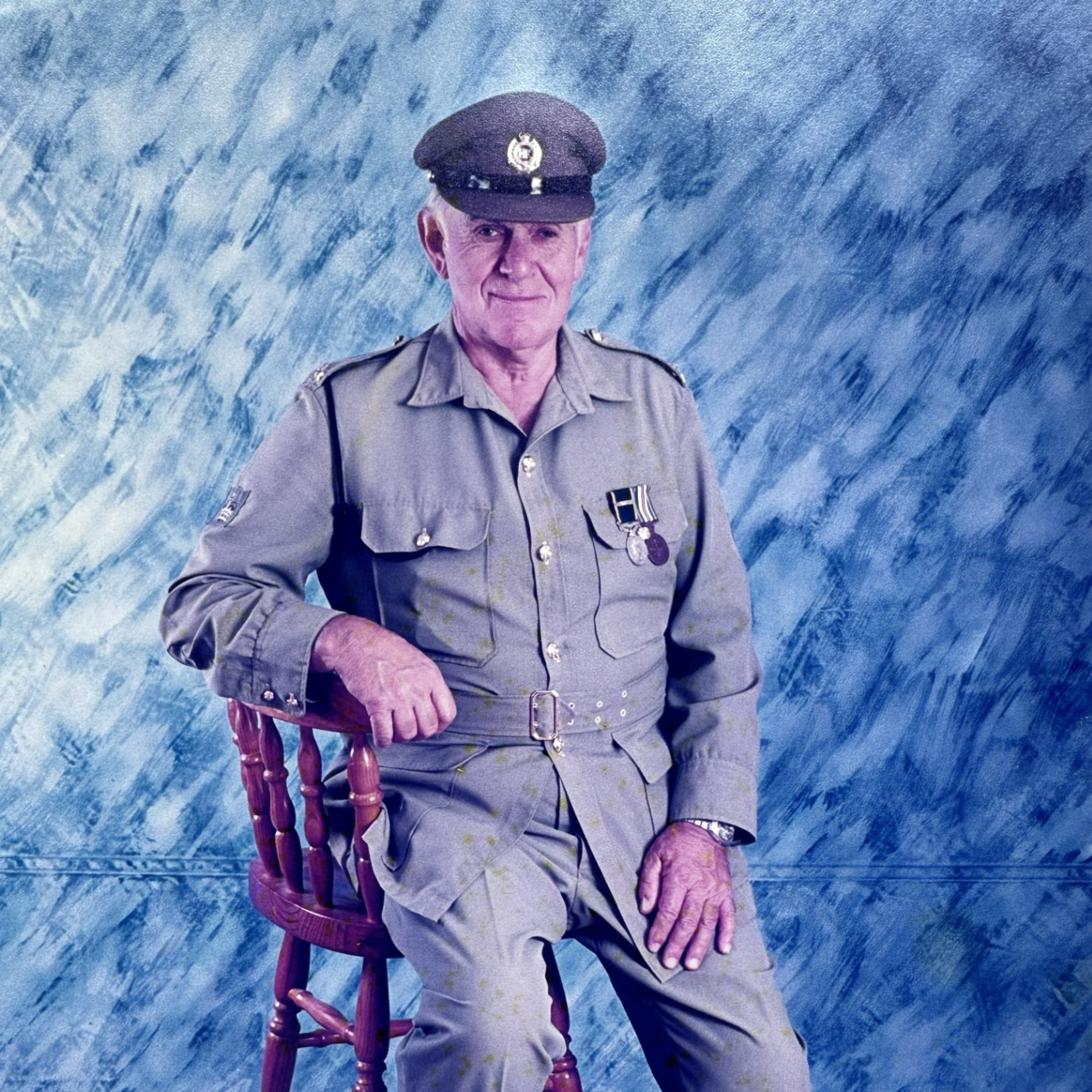
Colin Walsh, a longtime member of the Castledare community, shares a life story marked by diverse roles and formative experiences. Born in Broken Hill in 1934, his childhood was influenced by World War II. He developed a passion for music early on, learning piano and later the double bass as a foundation member of the local Police Boys Club, an institution that provided structure, sports, and camaraderie, greatly shaping his respect for community and discipline. Pursuing a trade as insisted by his father, he became a butcher before joining the army in 1953. In the military, he excelled, becoming a Warrant Officer and transferring to the engineers as a Squadron Sergeant Major, where he specialized in explosives disposal—a role involving considerable risk, as illustrated by anecdotes of disarming live ordnance. These varied experiences as a pianist, butcher, veteran, and businessman contributed to the honest and trustworthy character he is known for today.
[Music] Hello and welcome to Casted and Connections. An initiative of Hands Up Casted and where a group of enthusiastic locals have come together to capture, preserve and share stories of people who have a connection to Casted and in this episode we dive into the life of Colin Walsh, a pianist, a butcher, a veteran and a successful businessman. Colin and his wife Gay have been members of the Casted and Community for almost 20 years but it is Colin's life before coming to Casted and that helped shape him into the honest and trustworthy person that he used today. At nine years of age Colin recalls the memorable and interesting events of his past that will have you on the edge of your seat. Today we're sitting here with local Colin Walsh, Colin, how are you mate? Good thanks. Good. Thanks very much for taking some time any day to sit down and tell us a bit of your story. Not a problem. Firstly just give me a little bit of background about yourself where you've come from and sort of how it come that you got to Casted. Well I was born in broken-in in 1934 to Jesse and George Walsh and I went to school where first of all at the Rowart Town Infants. My sister was born four years later in 1938 and she was a very sickly girl Patricia and she spent most of her younger life in hospital. I'll progress through the Rowart Town Infants School and then moved on to Birchwood School where I went from third to sixth class and then from there to the Broken Hill High School where I finished my education in that time the second World War started and it always had me better see young lad where all of the young men are gone. I didn't realize that all including one of my encounters had all gone way to the war. My barber included and it took me a while as a little fella though. That's seeing him that there was a war on that all gone. So how old were you at that stage? When the war started I was five. I was 39 and I was 11 I think when it finished. Well and I guess the impact of not knowing where those people are would have been profound really. It was yeah. They used to bob up on levercays and yeah okay it's apart from their next old neighbour without the middle east we'll only see him. He never came home once and then came and went to their allowance but apart from that things went along pretty well. When I was 10 in 1944 my mum and dad met my father as a musician and they decided I should learn music. So I took piano lessons and they bought me a piano which was not a very good one but dad was earning your money and he didn't get much money. He'd been knocked back when he volunteered for the AOLF but he'd been in the first World War in the British Army and he was a medically unfit. Anyway they managed to make up 40 pound and that bought me a piano to learn on and I went to a friend of ours around the corner Mrs. Baron. It was a very good teacher and she taught me piano for 16 shillings a week I think it was. Wasn't very much money. I had two practical lessons and one theory lesson in that. When the war finished which was a great thing for some reason I was on a school because there was a war on when the war stopped. School stopped. It didn't happen that way I'd present. Yeah it kept going. Yeah the school kept going. Yeah it was very disappointing that but things settled back again and the wrecking had really boomed. Yeah men came back to wrecking who and the process of lead went through the roof because people were building houses and they're using lead-based paint those days and cars were back on the road and they're using lead in petrol so the money on the mines jumped incredibly and from in that time flat the property of Rogni went from about 20 thousand to 40 thousand. Pretty quickly yeah and it was a great place to be brought up. Yeah there was must do five piece of theaters and a live theater and boxing stadium and a dance every night of the week five dances on Saturday nights and it was great. In 1946 the Zinc mine which was a big mine in Broken Hill managed by a Canadian, a giant case built the Place Boys Club. Okay what was the Police Boys Club for those that wouldn't know? Well it was a club system the New South Wales Place set up and it was one of every major city through New South Wales and there was Renmore the Place it was called the Place in Citizens yep Boy's Club but citizens were on the committee and anyway they Zinc mine built that and it's a beautiful building it still still goes still there after eight years or so now. And does the Police Boys Club still run from that or it's something else now? It still runs now but the police have nothing to do anymore they've got a lot of some energy now and and she runs it they're having a lot of problems there with the the Ethnics that have come into the club and reckon that we're getting a fair deal and all the rest of the game but in that was 1946 in 1947 the Zinc Corporation presented the club with a set of brass band instruments so I learned to play the double V Chirba which is what Shane Kelly plays in the band here and in that band and a world-class Trombonus that the called Tom Nackerel who was a broken ill man originally and that been all around the world as a musician and they brought him back and gave him a Zinc mine and he used to teach us every afternoon of the week and we got up to be the Australasian junior champions. That's a pretty impressive you know hang your head on. It was made in New Jersey. So with your music call obviously you've got a real passion for that with first with the piano and then with this instrument as well how long did it take you to pick up the hang of it and you know was it just practice after practice we're better or did you take to it like a duck to water? Well I did pretty well yeah I came through the piano part pretty fast and I was playing big Abitures and after two or three very happy with me and then we formed a orchestra at the police boys club and I played piano in the dance man you know in that one and to play for dancers and that and concerts in the club. The Axel Club itself was very well-appointed at a fully equipped gymnasium. A game is room with two billion tables and a table tennis table in it and a little equipment library and it becomes an all. I have a way out the back where the football club. As a young fellow I imagine a place like that to be able to hang out with your friends and be able to do some of the things that you're really passionate about would have been really important in shaping what sort of person you become. Well it was I mean yeah it gave me a very healthy respect for the police for a kickoff. I mean as it did all of us I mean we all greatly respected the police and there was never any boys club boys in trouble which is what to say because they're very large membership. I was a foundation member the day they they call for members of Zedalorn, Napa and I was member number 83. Oh wow to go into the club and as I'll say we had a top Colts football team I played soccer. I also played basketball and bare-minton for the club and I was together every every night in train and weightlifting boxing wrestling we used to run to two or three miles every night. Well it sounds like you didn't have any time to get in trouble. That's right. Now we're pretty busy. Weight was four nights a week and the club used to be having on Saturday mornings and Saturday afternoons and of course we had to play whatever sports we played and then then come back. So how many members you're not member number 83? How many members would the police boys club have gotten to? I should say probably maybe four or sixty hasn't. Well that's one. Yeah. Not more than number one son. Do you want it when he was old enough? Yeah. That time I was sitting on the board of management when he went in but I was and that was just a part of giving back to something that was so important to you. That's right. Yeah. I was a club captain in 1952. 1952 I think and that was along with the captain of the club and I used to swim for the club. We used to use the Zincorporation Swimming Pool. They used to build lot of airplanes and carpentry class and another class where they built electric trains and they were very busy. You can get there and learn a lot of things. Yeah and I imagine a lot of those kids coming through that have taken part in some of those classes would then use them to become a trade in whatever field that they were passionate about in that club. Yeah. They did. Yeah. And being the captain of the club column what did that actually entail? Oh well, how do you name actually? You got to make a speech every year and then if they have a presentation arts and stuff like that. And how well received was the club within the community. Obviously the kids really enjoyed it and the police obviously valued it but what about the rest of the community there in Broken Hill? Well it is the only club that survived. Wow. They built a big one at North Broken Hill that went down the hall and they built the Methodist Church built a big one in South Broken Hill and River and the Gothamoy was a fan of that and when he left the club died. That was another good club you got to learn carpentry and all the rest of it. Yeah. What do you think it was that separated your club compared to the other ones that didn't succeed? Why is the one that you were in the wanton to be able to stay strong and continue to be so successful? Well I think the hours would have helped because it used to open every day of the week at two o'clock and close at from six to seven and open from seven to nine thirty so you had a little and satellite it was open satellite morning then close to the air then sat the air for one o'clock till five. Yeah close Sunday but I think there was one of the main reasons that you can always go there. Yeah. And mummy school more sick in her home because if it wasn't a home she actually music girls at the Police Force Club. Yeah. Yeah. I was to take my big bystander the practices of it after that and that. Yeah. Yeah. All in all it was a great organization to be a member of you know. Yeah. They clubs all over over the New South Wales and you could go on visit them. Yeah. And they raised several Australian boxing champions. Okay. Like one called Jimmy Carruth. It went through his entire boxing career without getting a mark on his face. Wow. And he was a Olympic boxer and then went professional. Yeah. Yeah. That's very impressive as well. Sounds like that. Yeah. Obviously had a fantastic foundation and got some reward for some of the work that they put in as well. Yeah. Well, when I was getting on all there about nine into twenty the managers of the club, his system all arrived in broken ill. Well, we got together and I married him. Yeah. Yeah. Yeah. In the long run. But then I went to school when I did my Troters of Butcher with a big company in broken ill at seven butchers. You know, so you called P. K. Conroy's. Yeah. And was that something you were passionate about? It was just an industry that you thought I can get in that and be successful. Was it the money? What was it that drew you to the the booturing? Well, my father insisted that I have a trade. Yep. He bought a trade was a Molder, which he'd done his trade in England when he was a lad. Yep. And he insisted that I get a trade and he got me a job. Yeah. Oh, there Conroy's as a, as a, yeah. Butchers are pretty much for a stripy unfile of a week. You hit Rodeo? Oh, he had dressed up for 30 shillings a week. So I took the job as a butcher. Fair enough. Yeah. And then I went, I was into the army then in 1953 and that's when I had a butcher con or. Well, no, I went in as a, to the basic training as an infantryman. Yep. And that was where I, I, I, I, I, I, I gave us 12 weeks hard training, marching and drilling all the rest of it. And the day the coin was quite coronation, we must, the Yip battalion mastery and that's unbelievable. And yeah, well, yeah, I can't imagine that the feeling you would have being a part of something that was so special for so many people around the world, really. That was magnificent. Yeah. As I say, there's only three of my group that I know of the still alive, you know, they all went off for this reason. One bloke showed himself. Yeah. I think he's married, went bad and they went out late and joined the police force at a old location with the police commissioner when they're trying to shoot him. And when that file, he went on and shot himself. Oh, no. And but, but my, my, my most of them have died of natural causes. Yeah. The last one, the dog was only last year. And they, well done with their daughter, but either they've been there. No, he had you known, but there are still as far as on those trevus. Yeah, well, they took part in that. What a, yeah, what a special occasion. And it was, I mean, the handful of years left. It's amazing, really. Yeah. So just take me back a little bit, come on, went, what, how did you go making the change from becoming a butcher to then joining the army? Was that a big decision or something that was easy for you? No, no, it was quite easy. And then I, I went on finishing my basic training, I transferred into the catering core and, uh, qualified up to, uh, chef standard. Yep. And, uh, with the rank of Warren Officer, the soldier major. And I, I made that before I was 21. Wow. And I was the youngest Warren Officer in the core in the, in the, uh, catering core. Yep. And, uh, I suppose it would have been our 10 years ago, they conferred life on a life membership on me in the association and the core. Oh, wow. They made a lot of membership with the both of them. Uh, that then I was with a, the Warren Officer Caterer of a, uh, uh, Royal Australian engineer's regiment. Yep. In 1960, uh, they reorganized the army and, uh, they cut, cut back and that regiment was cut down to a, to a squadron, which was a third of the battalion, yeah, the regiment. And the, uh, major that was taking over the, uh, squadron asked me, will I come over, come back to the engineers, as a squadron sergeant major. And I said, air battle all the rest of the Warren officers you've got to the senior to me. I said, they were all second world war soldiers, you know? Yep. And, uh, he said, they're too old. I said, were you all one of them? I said, you, you are a second world war officer. So that's right. So I'm going to be the commanding officer. That's Tiffany said, I don't want all men as my senior non-commission officer in the unit said, I want you. Yeah. And that's a testament to, I guess, what you've done previously. Yeah. And that was in 1960. So, yeah, I'll transfer it back to the, uh, engineers becoming an ex-spersed expert. Yep. And, uh, and that, that's where I stayed as a squadron sergeant major. So how do you become an explosion expert? Talk us through that process. But by doing courses, yeah, you know, I went to Ordnance courses and learned, uh, all about the explosives here. They worked out the years and had to disarm them. And, yeah, I did the problem the spasors here. Wow. Disarm if necessary. And the bow on the spot. And, uh, and, uh, handling experiences generally. Yep. Yeah. It's very interesting. Be very interesting. But I imagine it'd be daunting and scary in the same aspect. Oh, you didn't find that. It was only when, uh, you had to go out and, uh, possibly destroy something like a three point five rocket, which you know, was Bersuka. Yeah. When, when, when one didn't go from you had to go out and destroy it. Oh, because, uh, uh, bow it on to you, you had bow it in situation. And, uh, you had to be very careful that you didn't get between, get in the sun. Yeah. Because one degree, uh, uh, variation in temperature could set the phase over confused off. Oh, you go with it. Yeah, that's, I remember many of you guys, like calling across the ground to get out closer and then you go and aid or a rocket. And very genuinely racing yet. And putting a slab of tea and tea alongside and the sprinting you're seeing in between the charge and the, uh, rocket. So the wave of the gas through and then, uh, they'll be crawling back again, you know, calling that is unbelievable. That's something that, that, and here's my arm is standing up like, how to be pounding. You know, then, Jesus, if I make one mistake, because that mean the, uh, the, uh, firing mechanism might just be called up with a little bit of grease or something and we could let go. So did you have many close calls? No, no, not there ever. Remember? Well, that's good. Uh, the worst situation I ever had was, uh, one time we were on the downing river on an exercise and, uh, we were doing live firing. And, uh, one of the, uh, rockets didn't, uh, didn't, uh, uh, ignore it. And I, I, I sent one of the runners back to the case store to get the demolition kit. And they came back and said, they called the master, they got to put a lid on. Oh, no. Oh, I see. He's glad he's joking. I said, we got a live blind there. So just can't leave it. So I, I, uh, got a few vehicles in it, ran the local, uh, sheep stations. One of the boats come back with a pack of a parcel of a newsfavor. He said, uh, I've got some drilling knots. I said, that's the best we could do. I said, well, I don't have to do anyway. I opened up this pack of the drilling, and I was sweating. And that is buddy dangerous. Uh, because the sweat is, uh, no triglycerin. Yeah. And you can just scrape a bit off and flick it in the gas being. Uh, that's the only time I really, really worried me. And the, uh, didn't try to separate it. It was all fused up and everything, ready to go. Wow. It's a fuse and, uh, detonation. So I took it out as it was in the paper that put it along the side of the, uh, the rocket, which, uh, theoretically, it shouldn't have set off because, uh, rockets got all the way exposed in it. Gilling knots all the way exposed for mining here. And put it against them, uh, up to then, uh, they were electric, uh, fuses. I'd use a car battery to say, "Lock." All right. So I hooked it all up and went back and, uh, luckily it, uh, it was enough to, ignore the, uh, the rocket and got rid of that. Wow. That was the only one that, uh, I thought this could be it. Yeah. Yeah. If, uh, anything went wrong. But as you said, you felt like you couldn't just leave it there. No, I couldn't. No, no, you couldn't walk away and, yeah, and leave it. That, that reminds me of the day I arrived at work and the accident said to me, we just got a call from a house out in South Broken Hill call. He said, uh, both two of the bomb and his backyard. No, I said, as he said, yeah, he said, his name's Proctor. I said, I'm not him. He said, "Dee," I said, "Dee," I said, "He's supposed to be on recording." I said, "He's supposed to be causing me a car to leave. He worked for the, uh, the pilot in Civil Way to be open." And, uh, he said, "Really, you better get your kitten gear and never look at it." So I went and knocked on the door and out came Dury and I said, "You got a bomb in the backyard, Dury." Yeah, it might, yeah. He said, "Didn't expect to see you." I said, "Oh, I am the bomb expert." I said, "No, I'm the one that's looking at it." I said, "Where is he? He's down the backyard." And we're going down the saw there and he picked up a shuttle and I said, "What are you going to do with that?" He said, "I'm going to dig it up." I said, "How do you know, I'll say, we see, could I have buried it?" And I said, "Dury." I said, "You went through that, the old buddy said a little more through the desert, through the Pacific and said, "You actually buried a bomb in you a bit yard." So you, to the now and buddy, been that buddy said, "Anyway, I said put the shuttle away." We're about to say they said over there. So I went over there and very carefully got down and he screamed all the gear, we went for my hands and I said, "Where'd you get it?" He said out of the rubbish dump. He pulled into town with him. Oh, right. I said, "Another buddy must stay." Anyway, I'll dig it out and I looked at it and it was an aerial practice bomb and it had been used in the and then for another said, "Squad save minus." It won't get off a ship, but that does not alleviate you from bringing it into town. He said, "What you can do is I'll take it back to the unit." So it's harmless. So they're put it in the trophy room, yeah. Yeah, and that was a that was a funny one. Yeah. Interesting. A little story there for sure. Anyway, the squadron worked all over the place. We went to say the story and built a big yesterday on the Murray Bridge, a triny range and several other stripped of land. Hercules the Army training area at Kelton and South Australia. And in among that I was a bit sure on money. Some of my friend, the man who was the president of the Bremen's, he was his union. Any chance of getting any work playing piano? Jaron, he said, "Yeah, not a problem." He said, "When you want to start?" I said, "Any time." He said, "If you get on the phone, you run back." He said, "For all day, not the pick and whistle, no telling in Bramble Street." And he said, "It's worth three-pion, three-pion ten." Yeah. "For made to midnight." So they said, "It's good to make." So Dan, I went and the lady at random, I'm playing the one, later in the place, come out and she said, "Mr. Torby, your aunt's Torby, she has still a lot of your blood, five rupees of music." And if you know anything, and I said, "Well, she said, "Paul Butterfly." I said, "Yeah, I can play." That's so applied it. And when I went up to get paid that night, she gave me the three-pion ten, she said, "There's an extra ten shurings." "Aha, nice." I said, "What's that for?" She said, "Mr. Torby left for a drink for playing." That used to happen every Friday night. Then I finished up there and I went to another hotel called the Southern Cross. So I stopped there for 12 months and after that, I was lucky enough to break into the club, and I started to play around the clubs and all the rest of it. I was pretty busy. He gave me that up and all the army here and that. Then in 1972, we left broken all my way to Adelaide. And took the family down. Steve and I just finished at high school and his sister was still at school and the little fella was still in kindergarten. So we moved down to Adelaide and I was transferred to South Australia as the regimental sergeant major of the Reserve of Engineer, University of South Australia. So did you move because of the transfer in the army stuff, or you moved for family reasons and then the army thing followed? Oh, both. And of course there was not much future in breaking it all for young people at the time. Population dropped down about 16, 17,000 and it was hardly the job and Stephen had the brains to be better than I was. If you could have gone on the get his leaving, he could have been an engineer. Anyway, we went to Adelaide and as I said, I went to Central Command as the AOSM of Engineers and I was very lucky to break into the music game there. And got to know a few people and doing the free motions, musicians, Logis South Australia and we had a big band and several small ribs and I worked with all of those. Stephen, the main role, got a job with a sole optical-making lenses for us and he helped to develop that photo, sensitive lenses, the ones that turned brand. Yep. Well, he took part in the Oh wow. Experience on that and then after he was at Finnsys Trade, he decided to do in the police force. Yep. He drove to the Air Force, we got knocked back. I'm medical reasons, but they the Commonwealth Police grabbed him. Meanwhile, I took a job with a big butchering company in Adelaide, the biggest private butchers in Australia, 24 shops of family and turners and I took a job there for a couple months for another job and I stayed there for 24 years. Oh wow. I got out of the I was too busy I resigned from the Army. Yep. So in the beginning there when you started with turners you were running both being a butcher and still being involved in the Army? Yeah, yeah. Yeah, well you wouldn't have much time at all really? No, I didn't. No, and a lot of traveling. I mean, it was a long way to go to the unit from where I lived. Yep. And I had a bit of a difference of opinion with the commanding officer with one of the squadrons and I thought well, this is no bloody good to me. I'm going to do it there. Yep. So I gave it away and as I'll say I eventually joined the the three motions. Yep. Above and everything went pretty well. I worked my way up to be an instructor at turners teaching in their factory. Okay. Teaching you which is the kind that we expected the job to be carried out. Yep. That would have come with its own challenges. I imagine. Yeah, yeah. I mean, I used to get at one black come there in Italian. And I was saying, what's your butcher experience? Well, he said, I haven't got any. I said, what? He said, I know nothing about butchering. I said, what do you do for a living? He said, I was a singer on a cruise ship. I said, very good. He said, I'll see the job advertising the paper. I'll see the job advertising the paper. So I piled for it and got it and put boots and knives. Yeah. So I'll call him or I'll say listen. I can't think we're done there. Very Bill Greene. So listen, Bill, I said, why he doesn't know anything about butchering. So we have the teaching from Toll, I said, that weren't too long. I said six weeks ago there's any of us. Yeah. I said, don't tell anyone else. And Monday he said to me, I'd love to try shop work. I said, I'll see what I can do for you. So I got on to the forum and I said, well, he wants to try his hand at shop work. And I said, and he's got a good advantage to work down the central market. And George said, what's that call? I said, he speaks Italian. Yeah. Being Italian. Yeah. I said, there's a lot of Italian customers down there that were the hard to serve. So he said, not a problem. So we sent him down there on for a thousand satellites to learn the job. Yep. Which you picked up. So all the mate was preparing a warehouse or something and they go into the market to sell? Yeah, it was all preferred back at the factory. Yep. Which was I down the road from the central market anyway. But yeah, they picked that up and then he was here for three or four months and he came in one day and he said, I'm thinking about leaving. I said, what for me? Simple as a job offered for a job I added the clean. Some of them had lady said in the butcher shop in the wallest butcher shop and they want some of them manage the butcher section that can speak Italian. Because a lot of Italians out there and I said, well, mate, if you can improve yourself, get going. Yeah. So anyway, he left us and went out there and did very well. So your first impression quickly changed after having a couple of weeks with him and taking him somewhere? That's right. It was good. And willing to learn. Yeah. That was very handy. Anyway, I could he sing? Oh, yeah. He was good. He had a good voice. Yeah. And he had a beautiful wife and he went very well and the next thing I'll say to him, he was in Moas store in the Edlight one day and they was worried they would have enough in the sudden. I said, what are you doing? Well, he said, I'm so in carpets. That's a bit of a challenge. But he did that. But then turns, which is run pretty very slightly. They never used to do any stocktags, which is incredible. Got a bullet manager from Edstore to actually manage the county. He called me in the office one down. He said, listen, Carl, he said, he said, I want you to do something. I said, what's that? Jim, he said, I want you to take over the contract division. That's serving all the big hotels and the nursing homes and Oh, yeah. Okay. And sending me to Darwin and Salas Springs and a pretty big contract, really. And all the big drilling rigs, the big broadsend guestfields, but what's the name of the place? You see the story? I mean, maybe up there he said, when you were taking it, no, what's happened to the bikes around you? The president said, oh, secondable. Oh, right. I said, did you? He said, yeah, he said, they were gone. Wow. And then I said, what was Eddie said? He said, I want someone honest. Yeah. To run, and he said, I know you're honest. He said, because you took over the the social club, which was an horrible, which is an horrible mess. He said, and you were built that up to where it's turning over 50,000 a year. And also, he had you know that he said, that you can't, does you hold it? And now I'll tell him about it. And he said, he said, you can't be poking any of the money. I said, oh, no. And they said, well, he said there was, for one thing, there was up around a hundred boxes of dripping disappearing every week and they counted for not going through the books. Oh, wow. Well, these bikes were selling isn't keeping them in the money. Anyway, I said, okay, I'll take it on. Yeah. So before we go on to the contract call, what did the social club do to make its money? $50,000 or less? That was. Well, I got permission to put raffles into the hotel over on the corner where everyone used to drink. Yep. On Thursday and Friday nights and put beer tickets in, you know, they put those in, they sold those for us. Yep. And I got a cake of cold to put a soft drink, a fridge in the slot percentage I'll be adding in the lunchroom. Yep. And gradually, and all the members paid a dollar a week. Yep. To be in it. Yep. He said, you've really amassed a lot of money. And I said, well, when I took it over, I came back to it. I said, no, I left it because I distinct with the board. Yeah. And I said, all left it was $3,000 in the bank. And when I went back, those time broke. Oh, right. And I said, they've done nothing. I said, oh, done it. What happened to the money? Yeah. He said, we'll must have gone somewhere anyway. I had to build up from nothing again. And what would they help of the present? And I said, I'll take it over in one condition that I am the secretary treasurer. Yep. I'll run both jobs. Yep. And I'll have complete control. And he said, there's no problem. So and that's what I did. And built it up exponentially. Anyway, I think the first week I was out in the, I'll take it over this Italian load company said, is this where I buy at the black market dripping? I said, well, he said, my friends tell me you have cheap dripping. I said, well, I said, we have dripping. And he said, I'd take it up four boxes. So I got four 24 K-lay boxes and took it out to his gate. And he went to give me $40. And I said, what's that for? We said, that's for the dripping. I said, you're wrong. I just said, they are $20 a box. Yeah. I said, you pay the lady in the office. I said, oh, don't add money. Yeah. So you go in through that door and pay her. He said, you've shoved her your dripping. I don't want it. I said, that's all right. I said, he said, I won't be back. I said, good. They're very good. So I put the dripping back in the, what's I'm never saying them again. Yep. Another day I walked in these are one of the chefs from hotel in the room. She haven't given the box and I said, what are you reckon you would do? She said, she's right, mate. I said, another attempt. I said, there's not a right at all. I said, get out. Yeah, right. I said, leave that key there and get out. Well, this marry, there was a man using an eager, he was giving him treatment. He was getting $300 a week in the pocket. Yeah, right. And scared to think how long the stuff like that was probably happening. That's right. Yeah. It wasn't. I went and said, did you math? I said, look, Jim, I want that bloody door into the order and cutting hearts. So we can open the top half and have the bottom half as a platform when they can raw checks on. Yeah. He said, what for? I don't want anyone inside the body. All the room except myself and the staff. Yeah. He said, there's no problem with that. So we got the, got the, what matters, man, the people who haven't, and that we're going on the stock taking. Yeah. And he was my ampower when I used to stockpaker and for all the head cam around and there was a spot check with me. He came in one day, he said, cross call, he said, we can't occur you, Dr. and I said, well, normal one. Jim on the side was by valentine social wagons. He said, you should be drove in the body roll, Royce. I said, what was that? He said, the money I'm making. He said, the body, too, no, it was terrific. I said, well, that's because it's all going out legitimately. I said, there's none. You have through that door, but it isn't going to count, no, with it. Yeah. So, and that's how it went from then on. And, yeah. When they shifted me out, they were going to shut the factory in, they moved me down to Port Road with my branch. And I stopped there for a couple of years and then Jim came there one day, he said, look, mate, he said, you're going to have to travel. And I said, well, is it? He said, well, you got to go to Darwin and you got to go to Alice Springs and get around the Aboriginal missions and everything was going on. And I said, that's no good to me, Jim. Yeah. I said, I'm a professional musician part-time, I said, I'm working till three nights a week. I said, well, I can't afford not to do that. Yeah. So, I resound as a, as I said, most of the contracts. Yeah. So, what did the contracts entire? We probably skipped over that when we went back to the social, but so you got the contracts. So, then what did it mean for you in our work sense? Well, we kept all the orders. Yeah. The big nursing and risk savings, which was massive. Yeah, that about eight nursing homes and a lot of big hotels. Yeah. So, what sort of turn-over a week are we talking to meet? Tons. Yeah, tons. Yeah. Yeah. Yeah, several hundred thousand. Yeah. The table would have been there. Yeah. I'll have myself in the three other bushes and two office schools and a school packet. Yeah. Which was a funny one that we had this school packet and she stabbed a little girl together down to a supermarket up there. Yeah. When I got there, the years' board date was a month out of the date. She put the years' board date from. Oh, no. Month behind. And there was no good of her. So, I'd send her stamping the chain up to Darwin to get them to. I meant it. I meant it. And put our supermarket business on hold until it came back. Yeah. So, we could use it again. We flew it back. Yeah, well. We flew it back. But what you mean is to support big orders to all of those big hotels and the nursing homes and the clubs. Yeah. And most of the fishing chicken shops. Yeah. They'll there. Yeah. Because they kept their process pretty good. They had put them pretty well. Yeah. And it was good. During that time, I got divorced from my first marriage and most of them that during the coming of the post-school and having the federal place. Yeah. And then I met Gahie after I've been. Oh, my after ten years and Gahie and I got married and yeah, yeah, I got a job working for a mob in Adelaide making a spark like leads for motorcars. Yeah. Two and a half days a week or something like that. Yeah. And then when I turned 64 and not in 94, I'd had a gas fall. The boat that was running the business and the boat was a man rule. Yeah. And I couldn't bloody see any of them. I was getting that point where I'd have been out in the back yard with them having a punch up. Yeah, right. And I didn't want to do that. So Gahie said, well, it's about time you retired. Yeah. So I pulled out. I was still doing all the play and work and the restaurant Gahie was still working in the city. Yeah. And we're off at a pet food shop. Okay, that's a bit of a change. Yeah, I put me on my bike. We had an idea of some. Okay, he said, well, she said the pet food shop alongside the pool's pet shop was up for sale. They wouldn't know we'd been in Boeing and I, no, no, I don't know how to do that. Then you were laid. Not most of them laid away. The next one was the guy. I think we will buy that pet food shop. She said, "That was a quick change." I said, "Well, we'll go out and see them." So we went up there and went in and I said, "Amace, you want for your show?" He said, "10,000. We'll walk out with stock, which wouldn't have been matching." I said, "How much are you taking a week?" Amace wasn't very much. She was only maybe 10 or 11, 11 hundred a week. And I said, "Okay, we'll take it over." So I said, "Give me a month." And he gave me all your supplies, names. So I went really personally and seen all the supplies went up to Oraru and seen the bike up there where we bought kangaroo from. And the teed up other ones I wanted to do with them. So we'd put it up and took it over there where we struggled for a few weeks and it took half and went to 13 hundred and then 16 hundred and gradually went up until we were taking 4 or 6,000 a week. And it was good. Yeah, well. So what was the fact that what made you change your mind originally, no straight out and then 12 hours later, yep, I mean? Well, I had to run around and look for a job or a cab of jobs a month. When I went in and to see about getting work, the lady in the office said, "We'll put you on a pension call so I'll donate it." She said, "No, you will put you on a pension year there, money, not yours." She said, "The one thing you'll have to find, try and find two jobs a month." And come in once a month and report them. Well, I did that for about eight months or so, and then they went in one day and said, "Don't worry about any more. You're not going to get a job. You're too old." And we'll put you on a full pension, which they did. And yeah, I got a bit boring. I was home all the time. The guy was at work, three days a week at least. And even after we took on the shop guys still reminded the jobs you were doing in the city. But we took over the Patford shop and I ran a lot of butcher shop. And I was just like, "I'm nice, I have all the cut in there. I make meatloves and chicken and beef and kangaroo." And I used to make special meatloves for people that doves that need special darts or they call them a thing. And as I say, we built that up beat. So I'm sorry, Colin, just go again back to where you said about how you wanted to go and meet all the supplies personally. What was it that made you think that that was going to have the best impact? Well, I obviously people face to face can't. It's been on talk on the phone. Yeah. And what you all did. And everyone I went to, they all wanted me to start and they can't. I said, "I'll pay as I go." I said, "I'll get my order every week. On the second day the order comes, send the account and they'll pay. I'll give the driver a check." Which you all did. And we knew exactly how we were for money. We never spent a spend in a cell into debt. And yeah, a lot of them were amazed, especially the dry goods places could be somebody who had a lot of dry goods every week. And the boat was amazed that we are in system paying cash. He said, "Most people that want to pay cash, they said, "Well, I do." And that was it. But as I say, I had a little deck down as a butcher shop and I used to get a man or a girl and he gave me a hand in the shop. Capital days a week in days to come up on Thursday Friday and Saturday. Yeah. Well, we worked on house to build it right up. And I was still playing with dance bands occasionally of a weekend. So did you see that when you're playing in those bands, pardon me, those bands? Did you consider that as work and a job? Or you did that because there was a passion or a bit of both? Well, I loved it. Yeah. I loved to play. As a matter of fact, I'm the owner of the headlady. I'm choosing to do a concert on Wednesday. Yeah. And that'll be the third time in four or five months. It would have been the headlady. Because you've got some some of your friends that you used to play with that you catch up with as well, aren't you? Yeah. And two of us were having a 90. Yep. And the rest are in their 80s. That's very impressive. And the mainly we all came from the musicians, Masonic Lodge, in Adelaide. Yeah. And the trumpet player, he was an Australisian class. He was a top trumpet player in Sydney, Sydney and all that. But it's good to get in. Yeah. It's amazing that you can still do that. Yeah. I mean, there's no one in town either. It's my rhythm. Yeah. Every god, he wouldn't be the joy and a band in Hamilton when I first came here. And I said, it's a lot of can't be bothered. Yeah. I said, I spent half my life touring around New South Wales, playing for country dancers. Yeah. Yeah. I used to fly up to Timbara up the Cloan's and Border and all over the place, playing for all year dances. Yeah. And race club dances and the things of that. I said, I'm not interested anymore in doing that. Yeah. I worked in Adelaide, mainly around the hotels and clubs. Yep. And when weddings occasionally. Yeah. And it was good. There was one job. Three of us took. We went there for one night staying and stayed for seven years. Oh, right. Yeah. It was so popular. The dance, they just had one night to see if they'd take off. Yeah. Well, it did. Yeah. And we were pretty popular and we played there once a month for seven years. Yeah. And we did the night we were, there was a big boring around the corner. One night at a boring, their dance more than half of their attendance. Because they're all at your show. They all kind of were plus because most of them used to go with their dancing teachers. And the one night wouldn't play requests. They had their orchestration set out to do that. It was a 16-piece band. Yeah. They used to play with orchestrations and they had their orchestra and they were saying they were a program and they couldn't change it. But one of the instructors could ever say, "Oh, we played on the bummer first goal after the next day. It's not a problem." Yeah. We played the next day and then it's rather the bummer in or dancers of people didn't normally do. Yeah. And they get this sheet and stuff and they used to love it, you know? Yeah. Yeah. Yeah. As a matter of fact, the under the one-lane camera and one-note to see why we were not going to shoot the other way. Yeah. But as simple as just listening to what the crowd wanted. That's wrong. Yeah. But as I saw, I played over in Adelaide and this as far out as Manumann Murray Bridge and Rotary the O'Ceeons and more than I think it was the first to go to Adelaide when I was playing there. I could have had a lot more work. But I opened Maggie Beard's restaurant for the Capinda. Yeah. You heard of Maggie Beard? I do know Maggie Beard. Yeah. Yeah. Well, I opened a restaurant that the Fizz and Farm actually had an 84 and Soul IP in there. Yeah. That was as far as they were away to the Murray Valley. I'll never went to the Red Markering at those places. Yeah. But I went to Morgan one night and there was a fear run to do a ball. Yeah. So we're talking like ATO G's have been able to find music. That's impressive. Yeah. A lot of people expected you to come and play at the same rate that you played in Adelaide. Yeah. All the while I grew one night at a lodge show and the the secretary came up and said, could you bring a band to while I grew and the do we have an installation ball? I said, yeah. I said, what's the brand you love about? Oh, I said, oh six places. I said, I can do that. He said, how much will it cost us for our six place bands? I said, well, probably from it depends where the you provoke us with accommodation. Yeah. I said, probably, yeah, I bring an 800 dollars musician. What? We can get a life of a 34 place band for 600 dollars. I said, get them. Yeah. Yeah. Also, I can get 150 in Adelaide. I said, oh, then I have to come up with it to get it. Yeah. That's something a lot of you couldn't expand a lot of people. Yeah. The one boy who said to me, we got a commander and do a community hotel dinner dance. So next set in order said, we said, he asked $50,000, so he didn't say I'm good at it. He said, why not? I said, well, if I buy a tyre on the way, I'll be at a pocket plus petrol. And I said, and once more, I can get a loose $100 down. Yeah. Yeah. Yeah. Yeah. I saw my wallet. Yeah. So let put a stop to that. Yeah. And when, like, to get those geeks, is it just wear them out, like back then? Yeah. Yeah. Yeah. And you're getting, you have a good show, you get another one. That's right. And people I used to know when the Juntao trio, where you went to the 74-hour cell club to do a capital job, so we stopped there for 21 years playing as a trio. Wow. And he was one, he used to get a lot of work with him. And this other boat he'd speak to me, it worked for nothing Rod Miller. He once so cute, he would explain me a word for nothing. I didn't know that a lot of work, straight like hills with him. Yeah. But I did a reasonable amount of agency work to, you know, for being agents. Yeah. Yeah. In the clubs and hotels, I was at the Australia for a couple of, a couple of seasons as a resident to the band. Yeah. But funnier with those, mobbys, you're not going back once and that's it. Oh, okay. Right. You sort of burned the bridge and they say him not. But yeah, you get that difference in your outlook. Remember in Bracken Hill, when New Year's morning, I was a bit see because I blighted at the Legion Exertions club, they might be formed, they get able to a club and a fan call. And or Tom Bolton Smith and Wayne, you're aware of Col. I'll say again, Tony, he said good, he said could you support me with the band tonight? And they will land you. Well, it's well, Angie. And I said, we're in the band for a week. We said we want to have a bit of a dance. And I said, I said, everyone's on holidays. I'll see what I can do. So I rang, Rian, Tony, many said, I said, what do you want to try out? I said, yeah, that'll do. So I rang, I've a trio and I was rang, I've a set year, I've got a band. So off we went and got up there and there's 22 men playing cricket. And about 22 women sitting on the edge of the field and I said, where's all the people? He said, this is it. And I said, you're joking. He said, no, he said, we just, he saw there be no seven dance. I said, that's good. He said, you still could do whatever it was. You know, $100, which was not, I said, I'm not worried about that. I said, I'll do it for nothing for you, man. I said, you bought it when you got to me. Yeah. And anyway, yeah, we did a little bit, they had the time of their lives, you know, we played the one o'clock in the morning, but that was it. You've been to breaking all now. Have it. No, no, no, that was over the sandstrain border. Yeah. Yeah. Last thing you wanted to do after getting home at two o'clock, we still be trying at one o'clock. So we drove out there and did that job. Yeah. I didn't. When we went back and I said, I gave away playing seriously with dance bands in about, I think I did my last job exactly 24, 24 years after we left Broken Hill. Okay. I did my last job and I came out of the gas that I'm finished. So I'm not working professionally anymore. Yeah. And but I was still doing work around nursing homes. Yeah. And with a little group called Evergones and where you used to do three or four jobs a month. Yeah. Called it, called it. And I was good. Yeah. All I've read, we applied and they were good, good little jobs. You just to keep the hand in. Keep the hand in and I'm sure there'd be a lot of self-satisfaction going in and be able to do that as well. You've some joy to some people. Yeah. And then of course, Guy was having problems with a bit of sickness and we lived seven kilometers from Port Stenbeck, all refinery. And if there was a west wind, it used to blow the fumes from the Arabia airplights. Yeah. Even used to put all of us on the windows. All right. Well. And Guy said, we've got to leave. We can't stay more on two crew. Yeah. So we came to work over here to Victoria and the air sun was living at Konda. Yeah. And we said we'd come over and look around for a house over here. So we looked all over the place and we looked all around the coast and see how the story came here and is a door to the sister of Wolf running seven days. She said, look, oh, just before that we sold the shop in Melbourne. Yeah. We went in there for ten and sold for twenty-four. Yeah. And how long were you in the shop for? Two years. And we built a lot from nothing. Yeah. Really struggling to go to a booming business. I have to turn over and at twenty-one thousand a year. And that's why the boat boarded. So I'm interested in the shop that that tastes twenty-one per cent profit. Yeah. So he took it on and we sat around home and did nothing. Guy gave it a work away and used to go for drives and all the rest of it. And then we, as a so we came over here looking for a house and door to all causes. There's a house, a castle. So we hopped in the car and that came over here. And yeah, anyway, we looked at some of the old places where the forestry man would bought the land and the houses. Yeah. We looked at the few of them and we thought, no, we don't want to be in the mongol. All the streets, so this one came up and we came to look, didn't even measure anything that's leaving anything at fit. And we said, yeah, we'll take it. It was a bit more than we could afford, but doing one together in the Eglie. So she broke it down. You can't be be said. She said, don't give her a map. She said, I'm sure, do you want to bring it down in the process? Well, husband was also a free person. And I hope to. So we sold it. We managed to sell the house and had a very quickly because it was a maelot. Yeah. Beautiful garden and tree, well, fruit trees in the yard. Yeah. Beautiful front yard and roses in that. We get rid of that. Yeah. We swapped over. We paid for this. What we go for there is an outlet. Oh, perfect. And plus 7,000 sars tax. Yeah. But then we moved over. So was it the house that you were drawn to? Colour the area or what exactly? We liked the town for kickoff. Yeah. I mean, I arrived in town and okay, in Iron town and the first person we met was Beth Knight. Yeah. And we've always said about that. Beth was the first person we knew. Yeah. And she was beautiful, you know. Yeah. Made us welcome. Then I went around the place station when they in Booney Reed was a place sergeant. Yeah. And he said introduce himself. He said, "What do you think of it?" Oh, I went there to see if I needed a license to care when we pocket off, which I had to even say of Australia. Yeah. And the, no, he said, "You're in the country, mate." He said, "You're in the license." He said, "What do you think of casting?" I said, "I'm having magnificent." And he said, "Well, when I first come here," he said, "We parked in front of the police station. We were on the main street." And the boat said, "When we were in the good, it's a good eye." And he said, "Well, to my wife, this is a place for us, friendly people." And then of course, we met back in the town hall. She was the same. And so we bought the place. And moved every hour and I was missing the music a bit. And he said, "Well, why don't you go and see the hospital regularly and see if they could cast a musician out." So I went to hospital and they knocked me back on the spot. I said, "No, we don't want to, we don't want anyone to apply." So, it's fair enough so it would regularly grab me. And I went around there and applied there if we choose a. if we choose a. Yeah, all things if we choose a. No, once a month, I want to choose a bus. And then there was only a few weeks in the middle of the call from hospital. I said, "Could you come here and apply?" And I said, "Hey, often you want me to sit here, but every Saturday afternoon, I can manage that." So we got out of here, good you were and they tried to cheer it. So I'll see for a lot of years. And then Aggy gave me a plane away for the happy hours and they said, "Could you do Tuesday afternoon, you want some month?" Yep. For the happy hour. And I'll say, "Yeah, that's no problem." So I only did one, I think. And then I ran around about that time, I've been living for Barry Davis. That wasn't Barry Davis. Stockdale. A local stockdale approached me to apply the same assistance. Yep. Well, I took Lebanon to and I applied there once a month for several years, you know. Yep. So you finally got that music that you were missing when from Adelaide. But I didn't get the play with the band. Yeah. And Shane said to me, "Why don't you come come into the into the brass band with Willispear double B?" Yeah. He said, "You can sit for me." And I said, "I haven't got to lip any more, mate." I said, "I'll draw them out, you can't back it." Your lip goes a little rubber. Yep. If you're not playing, you can't control it. All right. So I said now, I said, "And my wind's getting a bit short." I said, "I'm getting on a bit." But in between all this, when I turned 70 and Adelaide, it was on a satellite. We had a birthday party together, that night. A friend of ours was at birthday. So it was a, I think it was, it was about 42 degrees in Adelaide that day. And I said to the guy, I said, "I don't think we had not said to anybody else." She said, "Oh, you've got to go." She said, "They were expecting you." So I said, "Okay, so then we get to the all with having the the party." And we're walking through the car parking. I said, "There's wrong, Edwin Scott there." I said, "I've been thinking here this chapter where we're going to the party." Anyway, we walked into the all and he came out the front and said, "How old are you?" He said, "I'm 70 to the day." I said, "Oh, very good. Same age as me." We walked into all this, and we walked in this 10-percent and the starts started playing happy birthday. And they said, "There's me singing happy birthday, Lynn." And they were all singing happy birthday, called. And I looked at the spin, I thought, "Jesus, Lynn must have more money than I thought he had." He goes, "There's a thousand bucks with musicians standing on the stage." And I knew all of them, you know? All of them, all of them. And yeah, yeah, Paul the 50 and the birthday party put them on for me. Yeah. And then I looked up the other and they're all, there's all my cousins that come from broken elm, all around the place, they're all here. They're all live in me. Yeah, very tricky. So, so when we came to the Cassadin gate to in 60 and they were to say, "Look, we love the prosperity on fur." "Is there any wearing Cassin we can hold?" They said, "Yeah, but Gala Hall would be a good spot." They said, "Okay, so we'll tee it all up." So they fixed it all up and they also took my instruments out to Gala, play Cassin and they said, "You can't play there unless you get permission off of Lynn Pavell to play." And I said, "I'm not worried about that." I said, "The Gala will never play it." Gala again, anyway. I said, "Look in the monster." There's a job at Gala and I've been invited by a dawn. Milk she wants me to come out and back her. Yeah, when she plays, Gala said, "I thought he went playing the Gala anymore." So this is different. This is a job for a friend. So, yeah, we went walking the hall. He's all going to sing, "Sunday, we're happy birthday." Milk she burst her crown. So you got one back on her? Yeah, it did. And mother and mother, anybody know from Sijana? A week before she'd go back to Sijana, Gala and play and come back again. Oh, right. Well, big trip. Oh, yeah, yeah. Yeah. So we, you guys and two of mother, you never told me about this. I said, "Wouldn't the wind surprise you?" Yeah, that's right. That's good. But yeah, they all came down for a mat-lade for it. And we called them mostly. Yeah, that's amazing. Then I started having more sickness problems, you know, a couple of years back. And the last few years, I've been really good. But I'm coming good. Yeah. Good now. Yeah, the weather out. Bloods and transplant. Yeah, okay. And many years ago, I had a transplant in the American Museum. Yeah. And I mean, my casket, I mean, that was on here. There was nothing. And I'd do it. Kidney sound trouble. Yeah. That was different. I think seven, also, there used to be in hospital. He moved and was out of it. Yeah. Yeah. Yeah. It also, we knew you were going through the hospital. Calls back again. Oh, nice that they knew you, I guess. Yeah, that's a good one. You know, a regular, you know, as a name to a face of the things. Yeah. Ken McKecwin said to me, "You know, Bernie comes home, but you never, ever discuss those in hospital." And he said, "But when you're in there, she always comes home and says, "Calls in hospital again." Of course, Ken's in the lab, you know. Yeah. And yes, she always comes in the used to come home until, you know, I was back in there. I knew them all. And I spent various times here from over an hour, up to a four, the four, and all I think. Yeah. And then I was up at Rapid Bacchial, about an hour, and then at the Canberra, we guys told her, she's going to car, I've practically, uh, clearly had the, uh, uh, Kahuna. Yep. And the, oh, the heart attack. All right. And, uh, we had our caravan up there, and, anyway, you know, you're not going to come out. She said, "You better bring Colin up in the end room, we're a swarmer, and I wasn't getting any better, and Pines in the chest, and then she'll get the ambulance, so she, uh, run, uh, uh, run the ambulance and the chap coming in from Kahuna, and he was, he was his wife, who was a Gary Colin sister from here. Yeah. And he got in, uh, casted him, and then he told me, "Have it a Kahuna." Well, uh, the doctor there went around and saying, "I'm a technical, because I have friends," and he said, "Look," he said, "Who can't you go and say, ask me, so you saw I've got a good mighty Melbourne, Professor Dick, you should go to him, so, oh yeah, mind the moment, and when Dan and saying him, yeah, I have over the years of going, going reasonably well, and, you know, the bad turn every now and then, yeah, but now I'm okay, yeah. Yeah, good to see you. Yeah, fighting fit. Yeah. So, Col, I think, um, pardon me, through the time, obviously since you've been in cash, and you've been involved in a number of different community events as well, whether that be the Freemasons or Rotary, or you're a part of the board, but I'm particularly interested in the work that you had helping establish the Magic Gardens, which is unfortunately, fall away from COVID, but just talking me through some of the work with that. Oh, yeah, I forgot the most I was present at the Gerdon Club, and at the time, and Robby Green, who's a great organist, and said to me, he said, "We all organise again, shall we?" And so that's saying, good so we took it to the meeting and they just did it. So, Robby came up with a name, Magic, music, and gardens in Kessland. Yeah, perfect. It was, it was good. And that was a big hit. Yeah. And we ran that for two or three years, a Gerdon Club. Gerdon Club lost its membership over the years and followed it up. And then Rotary and lost it all over. Yeah. And the band. Yeah. But we used to put the money between the, I think the band and the schools and the eagerly. And the hospital, I think, we used to give everyone a chop of the money when we had, yeah. Yeah. Every year. Fantastic. But it got very hard to fall in garden, so I don't know whether it's still. Yeah, well, I think there was talk I spoke to, to Jane Green, a little while ago, and she mentioned that there was discussion about it coming back, where that's at, I'm not 100% sure. But hopefully we can see it again, because I guess the one down for probably of Kessland is the lack of non-sporting opportunities for people. So things like the the garden club and the different music places, the more of them that we can have opportunity for people to be a part of the better. So fingers crossed that can come back. Yeah. So, Col, we want just, might just finish up with one last question. What do you consider as Kessland to, to you and Gain, and now how do you view Kessland in your eyes, obviously being here for the lot sort of this last part of your very, very impressive career? It's magnificent. Yeah. I wasn't living anywhere else. As a matter of fact, the guy was getting sick a few years back. We thought that we'd have to go somewhere else to live. But we couldn't think of where to go, so we stuck it out here and things came good. But, yeah, it's a great spot. I mean, we don't pay war to race because we, by a few loads of a year off of Bob Beaver. And we're going to have a lot of our own wood on the property we go, go, it's cutting out those days. But I used to enjoy being down the paddock every day, cutting wood. And I got to be quite friendly with a lot of the birds. And then they get in, sort of, the creek goes to public creek out when that was running. And I sit there and the birds just vacuum up and sit on you. They're so friendly. And we love it here. That's a good tale. Yeah. The one, the regret I've got is that there were no musicians that you're apart from Erichotia to form a dance band. Yeah. No drummer at that time. But I've got my case of orchestrations there in the, I haven't seen a lot of days since we've been in the band here. Yeah, okay. Yeah. So, yeah, they offered me the job of drum major of the band. Yeah. They take it from Dick Chaffey. But I wasn't particularly interested in that. Yeah. Yeah. But we love the town. Yeah. And fantastic. And absolutely grateful and feel privileged to hear some of your stories and some of your amazing achievements. I think it's fantastic. And yeah, thank you very much for your time. No problem. Yeah. Really hope that others get in much and join me now to listen to what you did telling it. Thanks very much. Thanks a lot. No, thanks, Carl. As you have heard throughout Collins interview, he had a great passion for music. Planned the piano both professionally and socially for more than 80 years. Sit back and enjoy a piece of his art to conclude our episode. [Music] [Music] (gentle music)
Podcast Summary
Key Points:
Colin Walsh was born in Broken Hill in 1934, and his early life was shaped by World War II and his family's encouragement to learn music, starting with piano lessons.
He was a foundation member of the Broken Hill Police Boys Club, which played a crucial role in his youth, offering sports, music (where he learned the double bass), and community, fostering respect and discipline.
After being apprenticed as a butcher by his father, he joined the army in 1953, where he rose to become a Warrant Officer and later a Squadron Sergeant Major in the engineers, specializing as an explosives expert.
His military career involved risky bomb disposal work, including a notable incident with an unexploded rocket and a bomb found in a civilian's backyard, highlighting his dedication and calm under pressure.
Colin and his wife Gay have been part of the Castledare community for nearly 20 years, with his diverse past experiences shaping his character as an honest and trustworthy person.
Summary:
Colin Walsh, a longtime member of the Castledare community, shares a life story marked by diverse roles and formative experiences. Born in Broken Hill in 1934, his childhood was influenced by World War II. He developed a passion for music early on, learning piano and later the double bass as a foundation member of the local Police Boys Club, an institution that provided structure, sports, and camaraderie, greatly shaping his respect for community and discipline.
Pursuing a trade as insisted by his father, he became a butcher before joining the army in 1953. In the military, he excelled, becoming a Warrant Officer and transferring to the engineers as a Squadron Sergeant Major, where he specialized in explosives disposal—a role involving considerable risk, as illustrated by anecdotes of disarming live ordnance. These varied experiences as a pianist, butcher, veteran, and businessman contributed to the honest and trustworthy character he is known for today.
FAQs
The Police Boys Club was a community organization in Broken Hill that provided recreational and educational activities for youth. It played a crucial role in Colin's development, offering sports, music, and trade skills, and fostering respect for the community.
Colin began taking piano lessons at age 10 in 1944, encouraged by his musician father. He later learned to play the double B-flat tuba through the Police Boys Club brass band, becoming part of an Australasian junior champion group.
Colin became a butcher after his father insisted he learn a trade. He started as an apprentice at P.K. Conroy's in Broken Hill, earning 30 shillings a week, which laid the foundation for his later career.
Colin joined the army in 1953, starting as an infantryman before transferring to the catering corps, where he became the youngest warrant officer. He later served as a squadron sergeant major and explosives expert in the Royal Australian Engineers.
Colin handled live explosives, including disarming unstable rockets. One close call involved using makeshift dynamite to detonate a dud rocket during an exercise, which he described as his most worrying moment due to the risks involved.
After WWII, Broken Hill experienced an economic boom as mining production increased due to demand for lead in housing and automobiles. This led to rapid growth in property values and vibrant social activities in the town.
Chat with AI
Loading...
Pro features
Go deeper with this episode
Unlock creator-grade tools that turn any transcript into show notes and subtitle files.
 PodcastTranscript AI