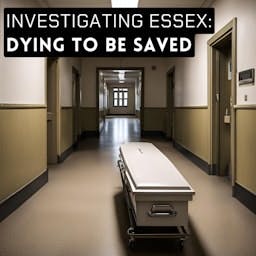
Abigail Smith, a young woman with autism, died by suicide in February 2022 at age 26 after a prolonged and repeated failure of mental health services in Essex. Her story reveals a pattern of neglect, trauma, and misdiagnosis that began when she was just 18 months old and continued through her teenage and early adult years. Despite her love for singing, horse riding, and creative expression, she was repeatedly moved between institutions without adequate support—most notably the Sun Orbin Centre in Colchester, where she endured severe mistreatment, including physical restraint and emotional abuse. Her care deteriorated significantly when she was transferred to the Lyndon Centre at 18, despite strong parental objections. Key failures included a lack of autism-informed treatment, failure to monitor her safety, and the abrupt discharge from the hospital without notification—just 32 hours before her death. Abigail’s final act of self-harm occurred after being discharged from a unit with no follow-up or community support. Her family, including mother Lisa and stepfather Greg, describe a system that systematically failed to protect her, with staff monitoring her phone calls, misrepresenting her condition, and ignoring her distress. Tragically, Abigail's death is not isolated—previous cases of youth fatalities at Sun Orbin Centre have been documented, including deaths by suicide or self-harm. The inquest into her death has been delayed multiple times due to missing records and institutional non-cooperation, raising urgent questions about accountability and reform. Abigail’s final voice—recorded during a stay at a mental health unit—expresses profound isolation and despair, saying, “I’ve been in my room last night. I was crying and crying. Not one member of staff came here to see if I was OK.” Lisa, who describes Abigail as a “kaleidoscope of ever-changing colors,” hopes her story will inspire change, emphasizing that the system must evolve beyond recommendations to include enforceable statutory action. The podcast concludes with a tribute to Abigail’s creativity, love, and resilience, and a message of hope through her song “Yours,” which she recorded herself. Her family now cares for a dog named Ted, fulfilling her lifelong dream of having a pet. This case highlights the urgent need for systemic reform in mental health services, especially for autistic young people, to ensure safety, dignity, and support.
Warning, this is a true crime podcast and is not suitable for all audiences. Please use
discretion. This episode contains descriptions of suicide. Please take extra care whilst
listening.
Hospital, Announ, an institution providing medical and surgical treatments, a nursing
care for sick or injured people. Treatment and care are the two words in that description
that really stand out. We expect hospitals to make us better. Whilst that's not always
possible, there is one thing for sure. We shouldn't go into them to come out worse.
And in today's heartbreaking case, that's exactly what happened. I'm Naomi Channel and
this is Investigating Essex, dying to be saved.
That is the voice of Abigail Smith, a girl who loved to perform, to sing, to write her horses,
to go out with her mum and her main aim in life was to have her own place and a dog.
But her life was cut short and she never got to fulfill that dream. Abigail, who was known
affectionately as Abby, had autism. She first entered the mental health services in Essex
around the age of 12, but by the age of 26, Abby was dead. Abby's story is an important
one. It's tragic, upsetting and triggering. When I was in production for this podcast,
through 2024, I saw that Abby's inquest was being held in August 2024, a month after
the release of this series. But Abby died in 2022, and because Abby's case is complex,
and because of admin errors and other errors from E putt, the inquest has been postponed
a few times. But when I read about Abby, it was so powerful it just made me want to get
in touch with her family and to get her story. Because her failings won't instant. Whilst
reading the articles and documents, it was clear that Abby is another patient who was
repeatedly failed over a 14 year period. I reached out to Lisa Wolf Abby's mother, and
both Lisa and Abby's stepfather Greg met me on Zoom in July 2024. They've moved to
the South Coast now, they own an nursery, they have three children between them, four including
Abby, and two grandchildren who are the apples of their eyes. But there's a void that Abby
used to feel, and I can tell from the get go, that this will be a deeply emotional conversation.
Lisa, can you remember what it was like when you found out you were expecting Abby? Did
you, did you know you were having a girl? I chose her name Abby Gayle before I was even pregnant,
so I wanted to write a book with the name Abby Gayle in it and thought it was a very beautiful name
and it was going to be the next. If I ever get pregnant again, it was going to be the name I used,
so I had already had her name. And yes, I do remember being pregnant, although it was a traumatic
pregnancy. Abby was Lisa's second child, and they had a brilliant bond. As I mentioned at the
beginning, singing was one of Abby's biggest passions in life. I think she was encouraged a lot
by her friend. They all thought she had a lovely boy, and so it was encouraged and Abby had spent
a lot of time in different establishments for different mental health reasons. Primarily,
I feel, because her autism wasn't necessarily understood, so I think that her friends encouraged
her, and it was just something she really enjoyed doing along with also writing.
When Abby was around 18 months old, Lisa had a feeling that something was different about Abby.
It was really hard to get a diagnosis for Abby. I knew from Abby being 18 months old that there
was something different and wrong that needed investigating, and then I embarked on what
was to become a ten and a half year battle to find out what was the issue,
and it wasn't that I wanted autism diagnosing. It was that I wanted somebody to see what I saw,
and to say to me, "This is the reason for that, and to just give me a plausible reason for some
of the behaviors that I could see." We were on a merry-go-round of educational psychologists and
consultants and doctors until Abby was ten and a half, and when she was ten and a half, it was
finally diagnosed. Abby was diagnosed with autism, and off the back of her diagnosis,
she started to receive extra support at school. But at this time, they weren't living in Essex,
they were living in Stockport. But when Abby was 12 years old, they moved down to Essex,
and Lisa says she saw a big difference between the care and support available to Abby in Stockport,
compared to what was available in Essex. I remember the, I can't remember the acronym for that,
but it's like, "Then can't have been on the phone to me," and they sought to laugh when I said how
much support Abby had had in Stockport, and they said, "Oh, things are a bit different here,"
and Abby had gone to mainstream and had no support whatsoever, though she'd gone from having
full time to support, to no support whatsoever, and her mental health started to suffer as she had
no support. So eventually, I think we don't need, she's only been in mainstream, I don't know,
six months a year, I can't remember. And at that point, you know, she tried to have
gone from school, the doctor, the police been called out and things like that to find her,
and the head teacher said that he would exclude her if it helped me to get her into a more
appropriate school. Abby then started to go to a school for children who had severe learning
difficulties, but sadly, Abby's mental health continued to get worse. She was seen by a psychiatrist,
we'll just call her Kate for the purposes of this podcast, and it was after she saw her that
things seemed to escalate. I mean, things got worse, but she was doing things like writing out a
wheel and leaving her jewelry to a sister, and she was drawing pictures with graves on it and
things like that. And I wanted to get her as much help as I could, so I went to the school
who had referred her to input psychiatric outpatient services. Kate came out to see Abby,
and she said, "What will do is?" And it didn't even sound like it was urgent or desperate or,
you know, a crisis. It sounded like, "Okay, we'll take her in, and we'll do a two-week assessment,
just so we can see some of the behaviors." And it all sounded very sort of routine, I guess.
So Abby was taken in for a two-week assessment. She would have just turned 16 at that point,
bearing in mind that Abby wasn't 16 in her head at all, and that was my first dealings with
Equal, when Abby was sort of re-diagnosed with her autism, and then, when she was probably about a
year later, went into the thing to organ centre in contact. Lisa told me that Abby's autism meant
that while she looked like a maturing teenager, mentally, she thought and acted like someone
much younger. It was then that Abby was taken into a mental health unit for the first time.
There's an organ centre in Colchester. The centre describes themselves as a therapeutic
education centre that provides services for young people and their families. On paper,
this sounded like exactly what Abby needed, but Lisa soon began to realise that that was far
from the case. So, Abby going into central organ centre was possibly, other than her dying,
it was the most traumatic thing that's ever happened to me in my life. It was horrific,
and I really struggled because I wanted to tell you everything, because I think it's really
important that people understand that things can go wrong, and I want things to get better for
people that may follow Abby. But I do feel as if my hands are a little bit tied.
The reason Lisa's hands are tied on some certain subjects is because, as I mentioned,
Abby's inquest is one month after the
release of this podcast. It's an inquest that has had to be postponed twice because there
have been significant failings that have led to Abbey's death and there is a lot of evidence
to go through. But what we can say is this. There is a lot of evidence that shows the care
towards Abbey and others who were in the unit when Abbey was there, of very significant
safeguarding failures. Through this series you've heard a number of allegations, including
sexual abuse, patients being attacked, the frequent and unnecessary use of restraints and
problems with certain prescription medications. When I asked Lisa and Greg if any of them applied,
they both said all of the above and these will be discussed at the inquest. Her treatments
whilst she was in there, it was horrific. Godlover, Abbey diorised everything, so everything
is written down and it has been passed to, I'll say this, Abbey never recovered from her
treatment at the St. Orban Center and in January she wrote statements, didn't she? In January
she wrote something down and showed it to me and it was a statement about her treatment
at the St. Orban Center and she showed it to her care coordinator and her care coordinator
as I said, "I'll take you to the police. Do you want to go to the police with this?"
And Abbey was going to, but she took her life before she was able to go to the police
with it. But it was horrific and I could reel off the story after the story and have you
sitting there and going, "Oh God, never, that's terrible. Oh, but God, no, that's awful."
You know, I saw things, I was told things, I was treated in a way that no parent should
be treated ever. I think I was accused of things although they didn't actually come out
and say it. Her phone calls with me were monitored. You know, I'd never, ever done anything
to Abbey. I didn't even shout it to let alone raise a hand or anything that our phone
calls were monitored. And if you read all these diaries and I take them an entire suitcase
of her writings to the solicitors who bless them, have to go through everything with the
fine tooth comb. You can't imagine how much she's in there. You really can't. It's not
only $30.40. More probably. I mean, it literally is a diary of her life. It really is. And
she wrote in it conscientiously because that was part of who she was, that she did write
everything down for her own memories and her own thoughts. That's the way that she
processed things. And, you know, we were privy to what she wrote in the diaries. And some
of it was funny, some of it was terribly sad, some of it was tragic and horrible. And obviously
I've read the diaries from her time at the St. Albans Centre and heard both of Lisa and
Abbey talking about it. And you can't believe that as a lay person, as somebody from the
outside, I came in not knowing anything about mental health service and mental health issues
and things like that. So for somebody coming in from the outside who has a very utopian view
of the world that you go into these places, they picture you come out. And to hear the story
of what happened and then seeing it with my own eyes in Abbey's last few years, it was
amazing. I couldn't, I still can't really process how sensors like these can take people
in and actually manage to make them worse. And we always said that Abbey was way worse
when she was in a unit than she ever was on the outside, way worse. Because she would
go in and see and experience horrible things, that would then become part of her. And she
would then reenact these things, thinking that they were normal. Abbey was very chameleon
like in that she could turn herself into the person that needed to be present and when
she was. So when she was in the unit, she acted like one of the people who was in the unit.
When she was out in the unit, she acted like a member of the public. And you know, all
those different places, she could turn when she was with us. She was herself because she
knew that she could be herself. It was her most safe space. But even when she was at home
on her own, she wasn't herself. She was playing a part. And all that stems from having
to play the part when she was in these units in order to get by in order to get some kind
of recognition that there was a problem. And she did it very well. But all the time she
was documenting mainly through her diaries, but you've seen through videos and things like
that through TikToks, nature and her life, all the things that were happening and all the
miscarriages of justice that she saw them that were going on are there for everybody to
see. We can say that without worrying about, you know, should we or shouldn't we, we
can say that because they're out there, people to see, you know, the ones that are out there,
watch them and go, this can't be right. This is there's something wrong with our system
because nobody should do this. There are a few things out in the public domain regarding
some of the things that happen to Abby, including her being held down and injected. On one
of those occasions, Abby wrote this in her diary. I've had so many staff holding me down,
but a staff member came in, knelt down and stroked to my head and said, come on guys,
get off her now. All she needs is a hug. The staff eventually got off me and the staff
member gave me a hug, but I didn't deserve to be mistreated and tortured. I thought it
was meant to help people get better and recover. Instead, this has left me broken, not being
able to ring my mum and tell her about what really went on behind closed doors.
When Abby was 18 years old, she'd been in the mental health unit for two years. But
because she was now technically an adult, she had to be transferred to an adult unit,
despite her autism, making her feel and think like a younger person. Lisa had heard things
about the Lyndon Centre in Chelmsford, and she begged them not to send Abby there. She
begged them for a centre that would have specialist staff and treatment for people with autism.
But when Abby was 18, she was transferred to the Lyndon Centre.
She went straight into the Christopher unit, and the Christopher unit is the high intensity
unit, and the consultants at the time saw a very different Abby to the one that was seen
on the St. Auburn Centre. I don't think she portrayed herself any differently. He just
thought things through a different lens, and actually Abby was discharged back into my
careless six months later. But she just didn't get the level of support in the community
that she needed.
With Abby back at home, Lisa was hopeful that she would continue to improve. But her
two years in mental health units, Lisa said, made their relationship feel more like
care and patience than mother and daughter, because that's what Abby had become used
to. And whilst many think that the two roles should or could merge into one, it's important
to remember that it's almost impossible for one human to take on the sole care of a
person with extensive mental health issues, trauma and autism.
Abby was also a self-harma, and she had made attempts on her life, and this was something
that always petrified Lisa.
I wanted some help, I really wanted some help, so that I could feel as if I was offering
her the best version of me, I'd have mum, and I went to social services to pay, she's
refused the help. But what can I do? And they said, well, you can't do anything. The
only thing you can do is if you live separately from her, you just have to accept health and
help. And at that point, we'd been on the council waiting list for a house together, and
I hadn't really envisaged the life without Abby. I'd always thought that we were going
to be close in some way, because I would always have to give her that support, and social
services said to me, you'll have to go on the health and leave separately. And I'd said,
"Do that mean she'll get the help?" And they said, "Well, yes, she'll have to get help,
if she's too vulnerable to live, then she'll have to have help." So I kind of felt as if
my arm was behind my back a little bit, and I. think the social worker had a meeting with me at home to come home and said to Abby, "You know,
I think it's best if mum lives, you know, if you both live separately and you have some help."
And Abby, usual Abby self, was like, "Yeah, okay," because she'd say things that she thought
people wanted to hear. And then he behaved differently afterwards or questioning the afterwards,
which showed that actually she hadn't understood what somebody was saying, but nobody ever got that.
And that night, Abby tried to take her life again. I think I was seeing you at that point.
So I'd gone out to meet Greg and I cooked Abby at dinner and I'd left her at home and I was
checking on her and it was, I'd got a phone call to say Abby's taking no windows, but I went back
to the flat and the paramedics were there and I was just absolutely in big, and I said to the paramedic,
he didn't take Abby in and he said, "Yeah," and I said, "Okay," then it was a first responder,
so he'd only got room in his car and I said, "Okay, I'll follow." I'm just going to get my
father together and I'll follow in about an hour. He was like, "Okay, that's fine." And by the time I got
there, the nurse said, "Well, coming out to me and saying Abby doesn't want to see you,
everything wants to come in." I was like, "Okay." So I went back home, I think I went back to yours,
and then I had social workers wringing me, I had nurses wringing me, do you remember how I had
two phones in my hand. And on one ear, the nurse from me put in the ward, not mental health services
clinicians. On from the ward, we're saying to me, we're really worried about your daughter.
She's ripped a cannula out, she's running down the road, we've got the police, we've called the police,
security and chasing her, and in the other ear on the other phone, I've got social services
from the hospital going to me, your daughter's absolutely fine, when are you coming to collect her?
We need you to come and collect her now. And I'm looking at Greg who can listen to me having
these two conversations. And I said, "I'm not coming to get her." I need you to,
you know, I'm having a conversation with somebody else who said to me, she's clearly not fine,
so I need you to just assess her because she needs help, the community to make sure that she can
live. And I need you to assess her and I need to figure out what kind of support she needs.
Which was possibly the worst thing I could have said. I absolutely should have gone and got her,
because Abby spent the next five years in the hospital. During those five years,
Abby was transferred between different units nine times. This was because the treatment
Abby was receiving, Lisa says, was not adequate for both her mental health issues and her autism.
You may remember a similar comment being made by Julia Nota in episode four when she was talking
about her son, Chris. Drugs, restraints and holding them in inpatient facilities without adequate
support was ultimately what both Lisa and Julia felt was slowly killing their children.
When I met Greg, I missed was before her second lengthy admission. When I met Greg,
I said to him, "And this is quite difficult to say because I should have, if I could see it,
this clearly, I do think I should have been able to do something about it." But I said to Greg,
"She's going to die. One day, I'm going to get a call and she's going to be dead."
And I'm, you know, before you have anything to do with me and before we have kind of a theory
of relationship, I think you need to know that I have a daughter who you're going to have to support
me one day because she's going to die. And to know that and to not have been able to do so,
something is quite difficult. But Greg watched me have phone calls from how many people?
Beyond counting. You know, there were always things going on and we had countless phone calls,
both sent her from police, she's absconded again, she tried to take her life again.
I got to tell her that we were leaving. We were doing some PR on her right now. She walked into
McDonald's, there's blood running down her face. And it becomes the norm for us. So we would go,
"Okay, as long as she's still alive, as long as we, you know, she doesn't die yet, that's fine."
Or I'd hear the phone up and I'd say, "It's dead." And it becomes kind of your norm. And obviously,
nothing should have like that should be normal. It should, it should never have been allowed
to repeat. She should have had the help to stop it repeating and she didn't get it.
A significant issue that Abby faced was the different approaches in how to monitor and treat her.
Just before she died, she was taken to Baselden Hospital in Essex and was clearly having a
very serious mental health episode. The staff there assessed her and put her on a 2-to-1 observation.
This means that there are two people who are constantly watching her. This level of observation
is put in place when there's a serious threat that the patient might harm themselves or others.
She was then transferred to the linden center where they used four ambulance crews to make sure
she got there safely. Four. Lisa and Greg had real concerns about her going back to the linden
center because they strongly believed that Abby just needed support in the community rather than
going back into a mental health unit. Abby was taken off observations at the linden center.
Remember, she'd just come from having two people watch her at all times to nothing.
Abby would also share her thoughts and feelings via her social media. The next voice you will hear
will be Abby's from a video she recorded when she was an inpatient at the linden center.
I've been in my room last night. I was crying and crying. I couldn't stop. Not one
member of staff came here to see if I was OK. I've been in the system now for eight years of my life. And it's not helped. I'm checking out when I get out here. That's it for me now.
I love you all so much.
And after just 10 days at the linden center, Abby was discharged. The linden center did not tell Lisa
or Greg that Abby had been discharged. This was on the 14th of February 2022. And just 32 hours later
on the 16th of February, Abby would be dead. We're now going to talk about the day that Abby died.
And another warning here that this is going to be very hard to listen to.
Just for context, Poppy and Charlie are Lisa's grandchildren by her daughter, Charlotte.
I got called from Abby's care coordinator saying I was in surgery at the time and I picked the phone up and
Abby's care coordination to me. Have you seen Abby? And I said no, I'm at work. And that's how it happened. And
I'm safe saying this bit. That night we were supposed to have Poppy and Charlie. They were coming over to
they were having a sleepover. I think Charlotte would go in somewhere. And I drove back
to the practice manager. And I'd said something feels a bit different about this one.
I'm a bit worried. I'm supposed to be having Poppy and Charlie tonight. I can remember feeling
really confused. And the practice manager saying to me, just go home. I went home. I was trying to
bring Greg, drive down the A12, going, you know, you were on Zoom delivering safeguarding. I think
ironically. And I would say something else a bit different. We've got Poppy and Charlie saying
tonight. And then I think I went into like auto pilot. And I said, I need to buy Poppy and Charlie
sweets. I'll meet you at the sweet shop or buy Poppy and Charlie sweets. Just I'm going to have a
normal day. It's going to be fine. Let's just have a normal day. I will make it a normal day.
And I met Greg at the sweet shop. And Abby's friend sent me a message on my phone. And it said,
oh God Lisa, have you read this? And it was a newspaper article saying woman's body found in
brain tree. And I just said, Greg, it can't be. Can't be. Can it? It can't be.
I can't remember if we went, I don't think we went into the shop. We just, no, we didn't.
Did we? Yeah, we didn't remember that point. We still did. We still did because we still didn't know
anything. And we're convinced. And then we've been in that position so many times that we
were like it can't be. When we got home, we phone Charlotte. Lisa's on the daughter. Abby, kids don't
have you seen and have you heard from Abby, have you seen this report? And Charlotte went to her flat?
Charlotte, I'm going to drive over there. She's around the corner. Charlotte went to her flat to be met with the police saying. Come with us. Come with us. We need you to identify some bits and pieces and ask you some questions.
And then he said, Charlotte, oh my god, I need to come over and Charlotte say no, the police they do not come over.
Don't leave the house, stay away from her. You're not going to send someone to us, which is when you know.
Abby entered the brain tree recreation ground at 7pm, and her body was discovered by a man just after a
11pm. The police arrived, followed by an ambulance crew, and Abby was officially pronounced dead at 12-15am.
She died by suicide via neck compression, and she was just 26 years old.
There is more to this case, but as I mentioned, due to the inquest taking place in August 2024,
some details need to be held back for now. Details that only make the situation feel even more
heartbreaking as if that were possible. Lisa and her family had lost their Abby.
The girl who gave the best hugs, the girl they described as a kaleidoscope of beautiful colors.
Abby was later rest. Her young Nusa nephew were told that their beloved auntie Abby was no longer here.
Her family had to learn to live without her, whilst also wanting answers.
They wanted to know why she had to die. She entered countless services that were supposed to save her
life. Lisa and Greg knew that an inquest would ensure that he put would have to give evidence.
But at the time of publication of this podcast, Abby's inquest has been rescheduled twice,
because there were concerns that he put and other organisations involved in Abby's care
had not handed over all the paperwork and evidence they held to the coroner.
This echoes the case of Chris Notar in episode 4, how his inquest was delayed,
after damning emails with unprofessional comments were withheld from the investigation.
This is a question for both of you, Lisa and Greg, what are you both expecting from the inquest?
I am expecting there to be recommendations made that he put might have to follow.
I am fully expecting he put not to follow those recommendations that are made,
because somebody else is going to come after me.
I think as you asserted too, the recommendations that have been made in the past
have not been acted on, and that's one of the reasons why things are still as bad as they are.
Had they been acted on, we don't know for sure that things would have been different for Abby
or for anybody else, but it's quite likely, and we'll sit there every day in the courtroom and
listen intently to what people say and know full well that actually we probably won't hear the
real story, we'll hear parts of the real story, and whatever recommendations come out at the end,
whatever judgment comes out at the end, we'll satisfy ourselves that we've done our best,
we've done our bit for Abby, and then when the inquiry comes around, we'll do our bit for
everybody else, because that's all we can realistically do, because actually as much as what happened
to Abby as the same as everybody else should be affecting real change, every time this happens,
it's not, and it won't do until there are statutory actions rather than non-statury recommendations.
The Sun Orbin Centre in Colchester, where Lisa believes Abby received the trauma she never
recovered from, went into special measures and was rated inadequate by the Care Quality Commission
after more children died on their units or after receiving treatment there.
I went to look for information on these deaths and I was confronted with a list of names,
teenagers who had died before and after Abby died in the Sun Orbin Centre or shortly after being
discharged from it. In August 2014, 17-year-old Charlotte Cobalt died by injecting herself with
animal antibiotic on her father's farm after receiving treatment at the Sun Orbin Centre. Her
family and friends went on to raise money for the Centre, in memory of Charlotte. 14-year-old
Madison Naylor died by hanging in her room in the Centre in September 2019. 16-year-old Molly
Anne Sargent died by hanging in Woodland in West Mercy Park in Essex after being an impatient
at Sun Orbin's in October 2020. 16-year-old Elise Sebastian took her own life
whilst she was an impatient in the Centre in April 2021. 18-year-old Morgan Rose Hart was found
ligatured in a mental health unit in July 2022. She had previously been an impatient at Sun Orbin Centre,
the Care Quality Commission sent unannounced inspectors to the Centre after reports of a
serious incident in September 2021. Upon inspection, the Inspector said that the Centre was inadequate
and stopped them from taking new patients until significant improvements were made.
They found that some of the staff did not have the appropriate skills or the experience
to look after vulnerable patients. Staff told the inspectors that they were overworked,
and a high number of agency staff were passing through, meaning that the young people's needs
were not often recognised. They required immediate action, and over the course of a year,
they were upgraded to 'requires improvement'. At the time of publication of this podcast,
they still required improvement. As I wrote this episode, I looked at it not as a producer
or a journalist, but as a parent, and I realised that hearing these details creates a problem.
What if one of my children became mentally unwell? What do I do? Is the aim of this podcast
to stop people from putting their loved ones in these services? No, absolutely not.
I read an article by a teenager called Alice during my research. She said she owes her life
to the treatment she received at the Sun Orbin Centre. She is a success story, and there are
many others like her. They save and improve lives. But I wanted to provide a space for the
children and young people who weren't improved, who weren't saved, and were traumatised,
because they also deserve to be heard. The CQC also have a partner service, called the Patient's
Association. If you have any concerns regarding the treatment of yourself or a loved one in these
services, they're there to help and listen, and I will list their details in the show notes.
I asked Lisa how she would like Abby to be remembered. She said that the best way she could do
that was to read me parts of the eulogy that she'd written and read out at Abby's funeral.
And then you're going to hear a song. The song is called Yours, and it was originally by Ella Henderson.
But the version you're here today was by Abigail Smith.
Abby, you're a kaleidoscope of ever changing colours and patterns. My little kaleidoscope,
I love sharing colours of life with you. If I cry, I will carry on. You're always so sporty,
and I've smiled at finding all of your British gymnastics awards for your unbelieving.
You attained all the levels from one to ten, and I remember watching how free you looked when
you were taking part. When I took your rock climbing, the instructor said to me that you were
a natural athlete, and again, you seemed so free. The more adrenaline into you, the more you
seemed to revolve in it. I remember you meeting Greg for the first time, and how much you liked him.
We've played Divni Trivial with you from the other game together, and we took you out for meals.
I remember the day we took you to Cosmo, and your complete delight at being able to choose
anything and everything you wanted to eat. More than anything, I remember your face when you saw
the chocolate fountain, and how you came back to the table for your camera. You recorded your
whole life through a picture and video. You stood and recorded the chocolate fountain on your camera,
not caring who watched. You always ended up visiting together with Dutch meaningful hugs,
Greg always said you gave the best hugs and always held on so tightly. You were an accomplished
horse rider every week for years we would go together.
I would drive and amount them up the where door was and we would fit in and I would fit in the shed in the cult
usually wearing a mitten with a hat to try to keep warm and watch him proudly whilst he wrote the horses enjoyed himself
I always took a camera as long as I'm still up to what a good video
of you on all the different horses and I was so relieved I have all his memories
even if I'm not in the picture I know I was there
you enjoyed watching so popular in such a current age in the street you said it was kind of
casualty more chilly than when were you used to be so worried if you came to say with them
but even though you sent your sky box to explore them you still missed them and so great hat to
double record you were doing singing you created that loaded so many TikToks of yourself singing
and had a baseball group of good times thank you to Julie thinking I think it thought you
are new to express yourself when you struggle to find the words we sat the hours apart hours
of creating memory books together all our adventures they are littered with photos tickets postcards
and cutouts what was special days on your letters and cards from people have been equally
lovingly stored and kept safely I have read all the diaries that you left and I promised
that where you have expressed concern that are things that you have seen and been subject to
I will do my best to be your voice I wish I were articulate enough to paint your particular
colour scope of colours inside every person's head here today so that they could truly see you
and your individuality and the shifting facets of colour that dance along a rainbow's edge
it may have been far too brief but I was privileged that you are my youngest daughter
and beyond proud to have been your mother I can't say goodbye but I will say that I love you not
to publish it which is the same way I added on many many phone calls I know you are safe I know
you are peaceful I know that Rocky is looking after you I will miss you beyond eternity
the beauty of my pillow that holds me in the night
Lisa and Greg recently rescued a dog he's called Ted and they got him because owning a dog
was Abby's dream Lisa said they pour all the love they gave Abby into him and that Ted is Abby's
dog they're just looking after him until it's Abby's turn
if you've been affected by anything you've heard in this podcast please see the show notes
for services and organisations who can help you'll never alone next time we're going to hear from
someone who was an impatient at a London Centre
[Music]
Episode 8 is out and available to listen to now I've been Naomi Channel and this has been
Investigating Essex, dying to be saved
[Music]
[Music]
Podcast Summary
Key Points:
Abigail Smith, a 26-year-old girl with autism, died by suicide in 2022 after years of repeated failures in mental health care across multiple institutions in Essex, including the Sun Orbin Centre and Lyndon Centre.
Her care involved severe safeguarding failures, including unnecessary restraints, sexual abuse allegations, staff mistreatment, and a lack of appropriate autism-specific support, with documented trauma from inpatient experiences that worsened her mental health.
Despite evidence of systemic failings, the inquest into her death has been postponed multiple times due to incomplete records from health and social services, echoing similar delays in other high-profile cases, and raising concerns about accountability and systemic change.
Summary:
Abigail Smith, a young woman with autism, died by suicide in February 2022 at age 26 after a prolonged and repeated failure of mental health services in Essex. Her story reveals a pattern of neglect, trauma, and misdiagnosis that began when she was just 18 months old and continued through her teenage and early adult years. Despite her love for singing, horse riding, and creative expression, she was repeatedly moved between institutions without adequate support—most notably the Sun Orbin Centre in Colchester, where she endured severe mistreatment, including physical restraint and emotional abuse.
Her care deteriorated significantly when she was transferred to the Lyndon Centre at 18, despite strong parental objections. Key failures included a lack of autism-informed treatment, failure to monitor her safety, and the abrupt discharge from the hospital without notification—just 32 hours before her death. Abigail’s final act of self-harm occurred after being discharged from a unit with no follow-up or community support.
Her family, including mother Lisa and stepfather Greg, describe a system that systematically failed to protect her, with staff monitoring her phone calls, misrepresenting her condition, and ignoring her distress. Tragically, Abigail's death is not isolated—previous cases of youth fatalities at Sun Orbin Centre have been documented, including deaths by suicide or self-harm. The inquest into her death has been delayed multiple times due to missing records and institutional non-cooperation, raising urgent questions about accountability and reform.
Abigail’s final voice—recorded during a stay at a mental health unit—expresses profound isolation and despair, saying, “I’ve been in my room last night. I was crying and crying. ” Lisa, who describes Abigail as a “kaleidoscope of ever-changing colors,” hopes her story will inspire change, emphasizing that the system must evolve beyond recommendations to include enforceable statutory action.
The podcast concludes with a tribute to Abigail’s creativity, love, and resilience, and a message of hope through her song “Yours,” which she recorded herself. Her family now cares for a dog named Ted, fulfilling her lifelong dream of having a pet. This case highlights the urgent need for systemic reform in mental health services, especially for autistic young people, to ensure safety, dignity, and support.
FAQs
Abigail Smith was diagnosed with autism at age 10 and a half. Her diagnosis led to extra support at school initially, but her care deteriorated significantly when she moved to Essex, where she received little to no support in mainstream or mental health settings.
Key failures included prolonged lack of appropriate support, inappropriate use of restraints, staff mistreatment, being held down and injected, and being transferred between units without proper assessment or community support.
Abigail's autism meant she mentally aged much slower than her physical age, so she often felt like a younger person despite being 26. This made her vulnerable to trauma in care settings, which she internalized and reenacted in her behavior and diary entries.
Abigail was transferred to the Lyndon Centre when she turned 18, despite her autism. Her parents feared it lacked specialist autism support and believed she would be placed in a high-intensity unit where she would be further traumatized.
Abigail was discharged from the Lyndon Centre on February 14, 2022, but her family was not informed. Just 32 hours later, on February 16, she died by suicide in a local recreation ground.
Multiple cases of deaths or serious incidents at the Sun Orbin Centre, including teenagers who died by self-harm after treatment, and a Care Quality Commission rating of 'inadequate' due to poor staff training, overwork, and lack of experience.
Chat with AI
Loading...
Pro features
Go deeper with this episode
Unlock creator-grade tools that turn any transcript into show notes and subtitle files.
 PodcastTranscript AI