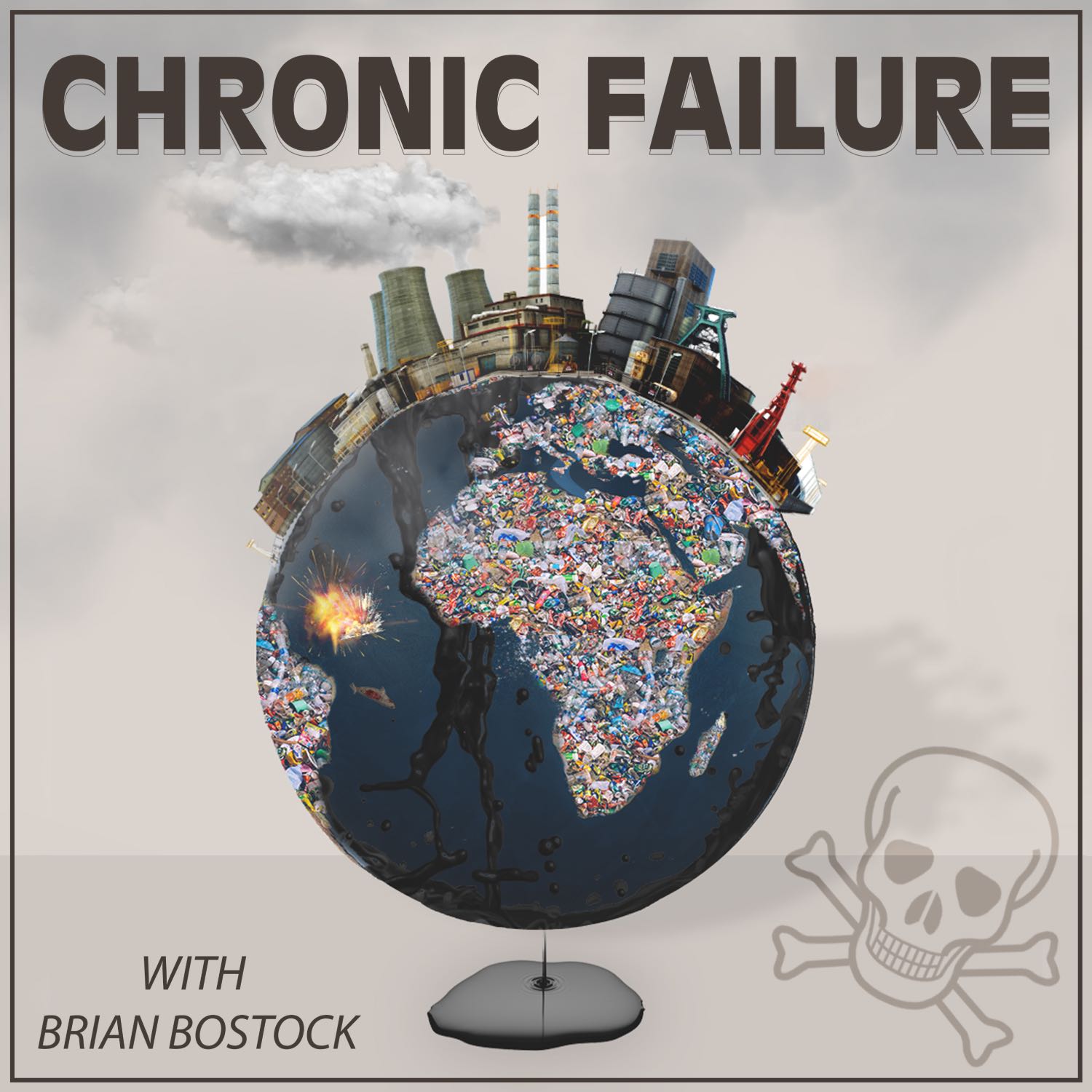
The Grassy Narrows First Nation has suffered from severe mercury contamination, stemming from the Dreden Chemical Company's uncontrolled discharge. This incident mirrors the Minamata case in Japan, where mercury poisoning led to health issues. Grassroots activism by the Ojibwe Warrior Society aimed to address injustices and push for recognition. Legal actions against Reed Paper sought compensation, ultimately settling in 1985. Despite government reports and recommendations for environmental cleanup and support for affected First Nations, negligence and lack of action prevailed. The government's stance on indemnifying future mill owners from prosecution raised ethical concerns. The ongoing struggle highlights the systemic failures to address the health and environmental impacts on the Grassy Narrows community, emphasizing the need for accountability and justice.
Transcription
5011 Words, 30517 Characters
Hey, everyone, and welcome back to Chronic Failure. This is your host, Brian Baustock. For those of you who have listened previously, welcome back. And for those of you just tuning in for the first time, welcome. I appreciate the listen. I only have one announcement this week, and it is that I will be putting out a current events episode, the first of every month, kind of recapping the previous month. So the first current events episode will be the first of March, and every first Wednesday from there on out. So just keep an eye out for that. It will be interesting. Like I say, you have to take it with a grain of salt because these issues will evolve from when myself and my team are doing the initial research. And if things change drastically, most likely we will make updates in following current events episodes. With that being said, let's go ahead and get into this episode. Today's episode will be talking about how life for the people of the grassy narrows first nation was left in tatters. Following the discharge of almost one tone of mercury into the waters that make up their ancestral territory. What followed was a fight for justice that persists to this day. I hope you enjoy and thanks for listening. The Eugiboy community of grassy narrows is located on the banks of the Wabagoon River in northern Ontario, Canada. The people of the grassy narrows have historically depended on the fish of the river for employment and sustenance. There's was a peaceful, profitable and vibrant existence. Chief Simon Fobister Sr. famously referred to the Wabagoon River as his people's lifeblood. The grassy narrows reserve is situated roughly 62 miles downstream of the Dredin Mill. Now the Dredin Chemical Company, associated with nearby Dryden pulp and paper company, operated a choral alkali plant on the headwaters of the Wabagoon River, where it emptied out into the Wabagoon Lake. Between 1962 and 1970, Dredin's choral alkali plant dumped uncontrolled discharge of mercury into the river system, including the Wabagoon and English rivers. For the grassy narrows community, the river of time was cleaved into two, the past and the present, on April 16, 1970. On that day, the Ontario government closed the commercial fishery, downstream of Dredin citing toxic amounts of mercury present in the waters that rendered the fish in edible. Thus began a difficult existence for the people of grassy narrows. The past cleave of time was filled with a life of fishing, community and vibrancy, and the time that follows the 1970s brought disease, unemployment and suffering, but most of all in justice. The Ojibwe or Oshinabe community of grassy narrows call the banks of the Wabagoon River home. The grassy narrows first nation are also called Asubicia Siu Wang Nidom Anishinabeck First Nation. The community of grassy narrows was forced to relocate to this semi-accessible area, a reserve. This was ordered with several things in mind. Under the pretense of accessibility, the promise of infrastructure and services, and the right to use their land for fishing, hunting and trapping. Now today the community is home to roughly 1,500 people. As mentioned earlier, the river is the lifeblood of the community. This community depends on local fish for sustenance. These fish are generally northern pike, large mouthbass, whitefish and especially walleye, and these are larger fish. The grassy narrows members were also employed as fishing guides for local sport fishing lodges, which serviced wealthy sports fishermen and fostered a booming fishing and tourism industry. The nearby commercial fishery, the Wabagoon English fishery, employed many members of the grassy narrows first nations as well. Between 1962 and 1970, the Dredin's Chloralcoli plant discharged uncontrolled amounts of mercury, and estimates are believed to be between 9,000 and 11,000 kilogram, into the Wabagoon and adjacent river system. Dredin chemical company used mercury in the process of producing bleaching agents for its nearby paper mill, and the untreated waste was dumped directly into the river. The results of this chemical dumping would be one of Canada's worst environmental disasters, affecting the grassy narrows first nation community to its core for three generations. Before I continue on with the grassy narrows, I want to actually take a look at a parallel story that unfolded in Japan. So I'll give a brief overview of the events in Minimata, and how they contextualize the situation in the grassy narrows. In mid 1950s Japan, cats displaying strange behaviors began roaming the streets of Minimata, a small fishing town, and this was referred to a dancing cat fever. Often times these cats would just twitch and seemed off balance, and they had difficulty moving normally. At the time, Minimata was a small industrial town near the southwest Kaiushu, the most southerly of the Japanese islands. In 1953, residents of the town residing near the Bay Area of Minimata began displaying symptoms of what appeared to be a nervous illness. Three years later, in 1956, the mystery illness reached epidemic proportions. Effective people began observation and treatment at the Kumamoto University Hospital. Effective people displayed varying degrees of incapacitation. Some of these patients exhibited numbness of the extremities, slurred speech, unsteadied gait, insomnia, emotional disturbance, cognitive confusion, drowsiness, and stupor, and often times, several of these symptoms would be alternated with periods of restlessness. Now, the majority of patients exhibited deafness and disturbance of vision, and all the patients exhibited cerebral ataxia, which is poor muscle control that causes clumsy, voluntary movements, difficulty with walking and balance, hand coordination, speech, and swallowing, as well as eye movement. Now, the second thing that all patients exhibited was dysarthria, which is muscles used for speech are weak, or you have difficulty controlling them. Now, around this time, operating in Minimata at the time was the chiso corporation. This factory produced artificial fertilizers and dumped its waste water directly in the Minimata Bay. It was found that all patients that reported to the local hospital regularly ate shellfish caught from this bay. In some instances, symptoms would abate during their hospital stay, but resumed once they returned home and began consuming this shellfish again. Now, it was because of this that health officials were hinted towards the problem being specific to the bay. Following testing, it was reported that the toxic action of some inorganic chemical compounds found in the factory affluent was responsible for the poisoning of the Minimata residents, and the vessel for the poison was the shellfish that they ate, which was caught from the bay. These findings were reported in 1958 in a landmark paper published by the Lancet, a reputable medical journal. Now, in this journal, doctors Douglas McAlpine and Shakur Araki, the authors of the study, were able to show the link between mercury and human neurological issues. The collection of symptoms pointing to a poisoning of the nervous system was henceforth called Minimata disease. It is a poisoning disease by which methyl mercury damages the nervous system, particularly the central nervous system. Now, this means, by 1958, the correlation between mercury and Minimata disease was well documented in Japan. Now, let's shift our focus back over to the grassy narrows. The situation in the grassy narrows would persist for over half a century. The sentiment of the inaction pervades through this saga, especially in relation to the powers that be, i.e. the government, stakeholders, and the corporations. By 1970, the river systems were extensively contaminated by mercury, making the fish unsafe to eat. In a famous bit of political fear, George Kerr, the Ontario Minister of Energy and Natural Resource Management, ordered Dredin to stop dumping mercury by March 1970, stating seemingly at random that doing so would result in the mercury levels lowering themselves out in the local fish populations in about 12 weeks. Now, at the time, the scientific community reported that such a feat would actually take between 50 to 70 years. For whatever reason, the information that he relayed was not only inaccurate, but it was grossly unfounded. It is important to note that there was an ordinance that referred to water affluence and neglected air missions that was posted. Even with that, airborne mercury pollution continued unabated until 1975, and it is suggested that prior to halting the use of mercury altogether, Dredin stored mercury waste in barrels on sight. On April 6, 1970, Renee Brunelli, who was the Ontario Minister of Lands and Forests at the time, closed the Wabagoon English Commercial Fishery, located downstream of Dryden's Chloralcoli plant, aiming to cut off the source of mercury poisoning, rendering the fish inedible. Now, doing so actually removed one of the primary sources of income for the residents of grassy narrows. And with this move, unemployment rose from 5% to 90% within this community. Additionally, all sport fishing-related activities were ordered to cease, which affected places like nearby Ball Lake Lodge. Ball Lake Lodge employed as many as 300 grassy narrows' community members as fishing guides. Now, this situation ended up creating Ojibwa resistance. There's a quote here from Shuuun Kiwa Ten, a grassy narrows' former trapper. And it says, quote, "All the families in the community would be fishing. Every household went fishing. They sold their fish to the Kenora market." In an article published by the Globe and Mail in October 2018, Shuuun Kiwa Ten recounted how the community of grassy narrows used to live off the land. And it was actually a time when the community was prosperous, growing, and employed. After the closures of the fishery and lodges, the government did little to help the people of the grassy narrows' community. There were just a few token economic gestures. The government gave non-contaminated fish to grassy narrows' community members. They also gave out $62,302 in forgivable loans to fishermen. On top of that, they subsidized non-native-owned tourism lodges to facilitate the employment of members of grassy narrows' first nation. While these actions did help a little, they were ultimately insufficient. And they also left out the social repercussions, which meant poor mental health and substance abuse resulting from job loss and constantly having to fight for basic human rights. The health effects, which was the minimata disease and any environmental remediation, which was the poisoned waterways. In 1974, a group of Ojibwe activists seized Anna Kanabe Park in nearby Canora, Ontario. And this was inspired by the American Indian movement or aim, which was gaining traction in the U.S. during the '70s. They wanted to take up arms against the Canadian government, and they named themselves the Ojibwe Warrior Society. The Warrior Society set a new model for indigenous resistance that is still in use to this day. Now, it is distinct from aim as it represents one community, which was the Ojibwe community. This long-lived form of activism promotes connection to community as a form of personal accountability, and it makes members accountable to the movement itself. Richard Green, an original member of the Warrior Society puts it as such, quote, "The mercury crisis really inspired us. We had to do more serious things to make our grievances known." Now, the mobilizing helped the residents of Grassianeros gain agency and matters where they were historically left out, such as health care, education, and economy. And it also set the tone for a culture of resistance and fighting, the echoes of which permeate to this day. What got major attention was when the Ball Lake Lodge owners Barney and Marion Lam took on the Dryden Chemical Company. The lambs were forced to close their profitable multi-million-dollar lodge in 1971. The lodge was located on the shores of Ball Lake, which was contaminated, and locals reported seeing fish-eating birds flying lopsided. It employed over 300 grassianeros residents, as mentioned earlier, many of which were fishing guides. Part of the appeal of this wealthy tourist attraction was the shoreline, where fishing guides would prepare the fresh fish that guests had caught on their excursions. The lambs ended up suing the Dryden Chemical Company in 1971 for $3.75 million in damages, as part of the prep work, for the case, the lambs hired a University of Western Ontario graduate student named Norvold Femreet to collect samples of local flora and fauna for testing. According to his results, it was found that mercury levels far exceeded international standards, which ended up being among the highest recorded in the Western Hemisphere. The lambs ended up inviting a couple, W. Eugene and Aileen Mayoko Smith, which were photojournalists working on their book titled Minimata at the time to grassianeros. The couple expressed that the symptoms they witnessed in grassianeros were comparable to those they had seen in Minimata, and this was the first link proposed between the two incidents. The data collected by the lambs helped establish links between the Minimata incident and the situation at grassianeros. This ordeal also illustrates how the knowledge that the bodies of water were poisoned started becoming common knowledge between interested parties, which were community members, journalists, and scientists. It also highlights the notable absence of any official recognition on behalf of the government or corporations, a trend that will sadly be maintained through the rest of this story. Between 1975 and 2002, Professor Mazazumi Harada of Kumimoto University, the same university that observed the initial batch of affected residents of Merimata, undertook a study documenting the long-term effects and presence of many mono-diseas in Canada. He conducted analysis of hair specimens from grassian arrows' residents, and according to his findings, 87 residents were over the safe limit of 100 parts per billion. 61 residents were in the 100 to 199 parts per billion range, and 26 residents exceeded 200 parts per billion. He sums up his initial 1975 results as such. Quote in 1975, we proved that the Mercury Pollution was affecting the residents' health through our clinical research on the contaminated residents. Furthermore, Harada found that the levels of Mercury found in the residents that he tested were, quote, "three times higher than the limit set by health Canada." And it should be noted that in April of 2020, a retrospective longitudinal study analyzing data collected by health Canada between 1970 and 1997 stated, quote, "the consistent findings between our different analysis and association between long-term Mercury exposure from freshwater fish, assumption, and premature mortality in the grassy narrows' First Nation community." In short, Harada was correct in that there was a provable contamination at the grassy narrows, and the health of the residents was being effective adversely. The government's official response to this claim was presented in 1975 by Leo Bernier, the Ontario Minister of Natural Resources, and their official response was, quote, "there were no real damages to the First Nations of the grassy narrows area, and that the federal authorities had verified that." Now, let's take a step back and look at the Mercury contamination in aquatic environments. Let's take a look at the process of contamination. So the glacial clay and high turbidity of the rivers are two favorable agents for contamination. Bacteria in the water metabolizes in organic mercury, and that bacteria is then consumed by smaller fish, and it becomes lipid soluble methyl mercury, which is toxic. Now from there, these smaller fish are eaten by larger fish. So through this process of biomagnification, mercury levels are toxic by the time humans consume them. Now notice we're seeing this biomagnification again. We also saw this in our DDT episode, where DDT was entering the environment, and lower down in the food chain was consuming or being contaminated with this DDT, and it would slowly build up within every step up the food chain until it was entering humans that were eating larger fish being caught in the sea. And I should have probably pointed this out earlier, but the grassy narrows community members often eat fish up to three times per day. So this resulted in a large amount of mercury being eaten. Now because mercury bio accumulates in the environment, it cannot be removed from the body, and it can be passed down generationally. In 1977, the grassy narrows first nation began legal action against reed paper, the London-based conglomerate in charge of the Dryden chemical corporation and Dryden paper. Now they were seeking compensation for the negative health effects of the mercury poisoning, as well as the negative economic effects resulting from the mercury poisoning. In 1979, tangentially, reed paper begins the process of selling the Dryden paper and pulp mill to great lakes forestry products. Now this sets up a sad duality. At the time, the Ontario government's primary concern is facilitating the sale of Dryden and keeping the mill operational. It should be noted that this is directly opposed to the immediate closure of the fishery and ostensibly forced closure of places like Ball Lake Lodge, even though both businesses employed mostly members of the grassy narrows community and were arguably the victims not the perpetrators. Now as a side note, this is my read on this whole situation. I just thought that it was such a telling, interesting, and frankly blatant indicator of how little value the grassy narrows residents had compared to the growing forest and mill industry. In 1985, the grassy narrows first reed paper lawsuit was settled. When this lawsuit is settled, about $17.4 million is put into a compensation fund for the victims. And the government also granted future indemnity to Dryden and any future owners regarding prosecution for any wrong doings regarding mercury poisoning. And this is what I find very interesting. In this settlement, the government saying whoever owns this and runs this, they can never get in trouble for any wrong doing regarding mercury poisoning. So they're setting themselves up because these companies now have they're not liable for anything. The government itself is taking that liability, which doesn't seem like something that any government usually would want to do. But that's just my take on it. Around this time, a Royal Commission originally established in 1977 reports back with recommendations. The recommendation was that the government should play a more active role in supporting northern first nations. So this support came as treaty rights needing to be respected and not broken, respect for the use of land for fishing, trapping and hunting, opposing clear cutting. But of course, the recommendations are ignored. In 1984, a government steering committee formed to look at environmental problems in this region. And the committee recommended cleaning an 80-kilometer stretch of the Babagun River. They also stated that it would take 70 years for the fish to be safe to eat. And on top of all of this, the cleanup would cost $13.5 to $20.4 million. That's a 1980s money. And this was to be stomached by the provincial government. In response, the Ontario government launched its own study, which opted against remediation in favor of a letting nature take its course approach to reducing mercury pollution. Now, the lawsuit I mentioned was one of a few of the many lawsuits in conflicts that resulted from the dried and chemical corporation dumping uncontrolled amounts of mercury-laden waste directly into the lifeblood of the grassy Nero's First Nation. We now recall two things. Air emissions of mercury went unpoliced until 1975. And before halting the use of mercury altogether, dried in wood store its waste in barrels onsite. This catapult's us to examine the lasting impacts of this environmental disaster and to talk about the scope of its effects to this day. In the 1980s, the federal and provincial governments consistently refused any responsibility for the remediation of the environmental disaster at grassy Nero's. The effects of the situation were being felt in grassy Nero's not only on a health level, but in ensuing generations plagued by despair. The situation was grim. Residents were constantly fighting for the right to use the land safely and to be treated with value. It nod at the mental health of the grassy Nero's residents as well. As the second generation experienced a loss of livelihood, the community was in a state of unrest. Then chief Stephen Fobister recounts this time in a 1987 interview with the Canadian Broadcasting Corporation. "There were homicide cases in the community, suicides, overdose of pills. There was a lot of violence and parties were just about all over the reserve. You couldn't find a single sober person." Now Fobister knew that in order to bring justice to his people, he had to get the government's attention. So in 2014, he went on a hunger strike and his aim was to accomplish several things. One, bring attention to the ongoing environmental catastrophe. Two, was to increase monthly disability payments. The third was garner support for mercury poisoning and the final was to create a care facility for minima to disease on the reserve. Fobister was insistent that the environmental disaster was far from over. The health effects were being felt in third generation residents of the grassy Nero's, with children being born decades later, suffering from the hallmark symptoms of this minima to disease. Now the residents were constantly told that the river and its ecosystem would clean itself naturally. But in 2016, a team of Japanese experts on mercury poisoning released a report showing that 90% of grassy Nero's members still suffered from mercury poisoning. Furthermore, in a 2017 article by the Toronto Star, it is expressed that the current owner of the Mill Dom Tar commissioned a report by a private environmental consulting firm which states that the province knew decades ago that the site was contaminated with mercury. The report also states that as of that time, the site likely still was heavily contaminated. This report also revealed that well samples from the Mill site have shown over the years that the soil still contained extremely high levels of mercury. It states two areas where the mercury is still present. The first is the area under the old Chloralcoli plant where additional contaminated soils are known to remain present beneath the building and the second was the ditch beside the river where there has been no monitoring. Now after these reports came out, the grassy Nero's chief Simon Fobister resumes the sentiment of his people, quote, "For decades I have been seeking justice for my people for mercury poisoning, searching for answers, searching for help. Never once was I told that mercury poison is still under the mill right next to our river. I was told over and over that the mill site was cleaned up and that the problem ended in the 70s. I now see that was a deception and my people have paid the price with their health. In recent years, more action has taken place regarding the mercury poisoning. On April 2nd, 2020, the Mercury Care Home Framework Agreement was signed and this was the government promising to begin the planning process of a care home for residents of the grassy Nero's and this would cost $19.5 million and the planning process encompass detailed designs and construction of a mercury care home. Later on on July 26th, 2021, a revised mercury care home framework agreement was then signed. The government actually amended it to allocate additional funds reflecting the operational needs and so this bumped the funding from $19.5 million to $68.9 million and this funding would cover operations maintenance and specialized services delivery of the mercury care home in the community and this revision also entailed periodic funding review that may be required to fulfill the goals of the mercury care home. It is said that the mercury care home will offer specialized care to residents to address their unique health care needs as well as supported living for those who require it. As of now, they are expected to break ground on the project in 2024. Aside from government action, indigenous activism continues to this day. Currently there are blockades against continued logging in the grassy Nero's region. Clearcutting promotes the release of even more mercury into the environment and activists make the point that they're not only doing this for themselves but for the good of everyone in the region. Unfortunately, the health of the younger generations is still in peril. Young people on the reserve do not know a reality where there are plentiful jobs and no disability. Chief Obestor explains reality of the situation in the 2017 CBC investigative piece Children of the Poisoned River. Now in this he explains that it's the youngsters that he worries about the most. Two of his grandchildren are severely affected by symptoms associated with this mercury poisoning. In fact, one of them has difficulty with his balance and often has the sensation that he's going to fall forward. He also has problems with memory and concentration and suffers from extreme headaches. He also has this to say, "They're never going to grow up normal. They have to go to appointments in Winnipeg with a neurologist just about every month. We struggle to make those appointments. There is no help." Medical services only cover a fraction of the travel. When it comes to Canada, grassy Nero's is not a unique situation in which indigenous peoples have suffered systemic oppression for generations. This case was, however, new in that the sheer scope of its negative effects ranging from a deterioration in physical health to the collapse of the community by way of mental unrest and unhealthy coping mechanisms. In a quote from Anne McDonald of Miyagi University, quote, "It was an unprecedented case that has left its mark on Canadian environmental policy and indigenous communities efforts to assert their rights for environmental protection and restitution and/or compensation for adverse impacts incurred by environmental pollution." At the end of the day, this really comes down to despair and defiance. The rallying cry of the 1970s with movements like the Warrior Society, birthed an era of long-standing activism for the indigenous people. What started as an environmental movement has grown to a cry for social change. In this generation, battles hopelessness but finds meaning in connection and a return to ancestral traditions. In an investigative article by Jody Porter for the CBC titled "Children of the Poisoned River," 17-year-old grassy Nero's resident, Shane Lune says, quote, "These past few generations, it has been getting worse for us. People look at us as drunks and addicts and that's not our fault because we're grown up in a really bad environment and because all we see is bad stuff. That's all we believe in, bad stuff." Pointedly younger generations like Chanas are echoing the sentiment of the Founders of the Warrior Society, where the importance of maintaining a sense of community is key to not losing sight of one's self and the movement. The article also cites that Lune said she found a deeper connection to her heritage in which she took part in traditional, on a chave healing ceremonies. She was quoted as saying, "I feel like the ceremonies heal us and me especially. I felt like I was needed there. I actually felt wanted. I felt happy being there, but at the same time, I was crying so bad because I just felt so overwhelmed and I just needed to let go of everything." So it comes down to the feeling of being wanted and of belonging. Such a stark dichotomy between that feeling and the feelings espoused by elder Juda Silva when she found out about the 2016 report stating that the government was aware of the long-standing presence of mercury prior to the Dryden Chloralcoli plant being decommissioned. And she had this to say about that. It shows how lowly we are, the Anishabe to the government and corporations, like we are not worth it to be alive. They knew about this poison and they did nothing. They didn't even tell us it is awful. This story holds so many frustrating dualities. The parallel stories of Minimata and the grassy narrows, the preservation of the Dryden Mill and the immediate closure of the Wabagoon English fishery. A people left alone without assistance while a government aided foreign conglomerate lines its pocket at their expense. Now I want to leave you today with a haunting quote by former chief of the grassy narrows, Stephen Favister. This quote perhaps emblemizes the flame of defiance that still burns bright amid the difficulty of a generational fight weighing on the soul and attacking the body. Quote, "It was a good life. In our bodies, in our minds, we're always going to be gathering off the land." Now hopefully this week's episode wasn't too emotional. It was pretty tough to read about basically a people being treated as throwaways. This is part of why I wanted to do this. Not only to get the message out of environmental disaster happening in the world, but the injustices that come along with those disasters that unfortunately are usually swept under the rug, even more so than the disasters themselves. Next week's episode will be a little bit different. It will be the first current events episode. The topics we're going to cover are going to be the Ohio train derailment that is in Ohio in the US. We're going to take a look at Italy facing droughts as the Venice canals have been running dry as well as Volkswagen facing possible recalls after an environmental NGO wins emission software lawsuits. And there will be a few other smaller topics to go along with that. It should make for a worthwhile episode. Again, I'll be doing episodes like this every month, so you have that to look forward to. Now before I go, I want to thank my researcher and writer, Chloe Kibby. And of course, I want to thank you, the listener, for tuning in. I greatly appreciate it. And with that, I hope you'll join me again next week. [MUSIC]
Podcast Summary
Key Points:
Grassy Narrows First Nation affected by mercury contamination due to Dreden Chemical Company's discharge.
Similarities between Grassy Narrows and Minamata incidents in Japan involving mercury poisoning.
Grassroots activism by Ojibwe Warrior Society for justice and recognition.
Legal actions against Reed Paper for compensation and settlement in 198
Government's negligence and minimal support despite health and environmental impacts.
Summary:
The Grassy Narrows First Nation has suffered from severe mercury contamination, stemming from the Dreden Chemical Company's uncontrolled discharge. This incident mirrors the Minamata case in Japan, where mercury poisoning led to health issues. Grassroots activism by the Ojibwe Warrior Society aimed to address injustices and push for recognition.
Legal actions against Reed Paper sought compensation, ultimately settling in 1985. Despite government reports and recommendations for environmental cleanup and support for affected First Nations, negligence and lack of action prevailed. The government's stance on indemnifying future mill owners from prosecution raised ethical concerns.
The ongoing struggle highlights the systemic failures to address the health and environmental impacts on the Grassy Narrows community, emphasizing the need for accountability and justice.
FAQs
The environmental disaster in the grassy narrows community was caused by the uncontrolled discharge of mercury by the Dredin Chemical Company into the river system between 1962 and 1970.
The mercury contamination led to health issues like Minamata disease, unemployment, loss of income from fishing, and suffering within the grassy narrows community.
The government closed the commercial fishery, provided some financial assistance, subsidized tourism lodges, and resisted taking full responsibility for the damages.
Both incidents involved mercury poisoning leading to similar health effects, demonstrating the harmful impact of mercury pollution on human health.
The grassy narrows community mobilized through activism, legal action, and resistance to demand justice, compensation, and environmental remediation for the damages caused by the mercury contamination.
Chat with AI
Loading...
Pro features
Go deeper with this episode
Unlock creator-grade tools that turn any transcript into show notes and subtitle files.
 PodcastTranscript AI