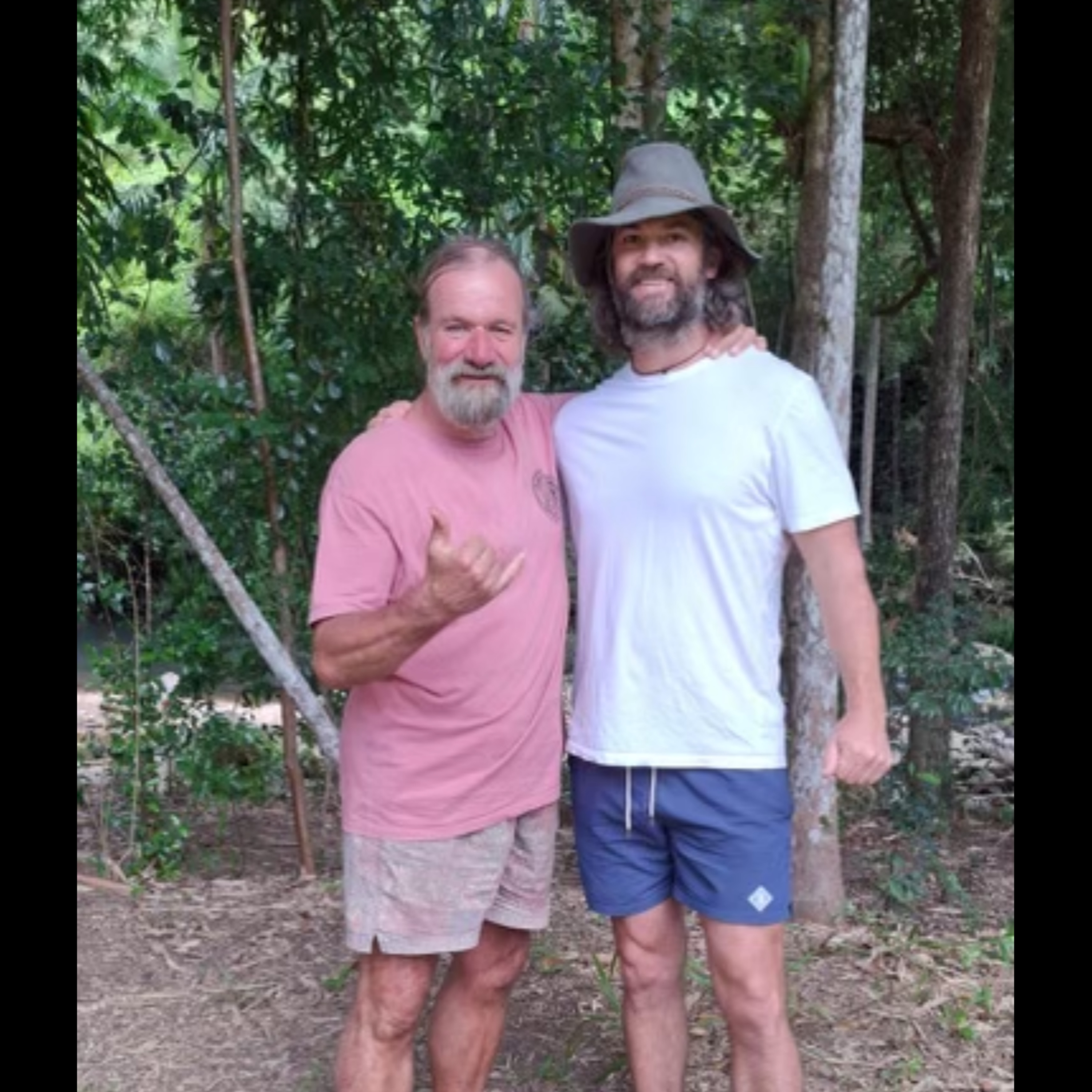
This episode of "Casted & Connections" features an interview with former AFL player Max Rook. While acknowledging his successful football career, the conversation primarily focuses on his life post-sport, particularly his deep commitment to the Wim Hof Method. Rook explains how discovering this practice of cold therapy and breathing exercises during the COVID-19 lockdowns transformed his health, alleviating chronic knee pain and improving his mental well-being. His passion led him to become a certified instructor in Poland, and he now conducts workshops to share the method's benefits, emphasizing its role in building resilience and managing stress.
The discussion then shifts to Rook's upbringing in Castlemaine. He shares fond, vivid memories of a childhood spent outdoors on the family's property, engaging in sports, fishing for yabbies, and dealing with the frequent presence of snakes. He describes a tight-knit family with competitive siblings and acknowledges that his focus was always more on sport and outdoor activities than academic pursuits. The interview paints a picture of Rook as a multifaceted individual, moving from a hard-nosed footballer to an advocate for holistic health and wellness, while remaining deeply connected to his rural roots.
[Music] Hello and welcome to Casted & Connections. An initiative of Hands Up Casted & where a group of enthusiastic locals have come together to capture, preserve and share stories of people who have a connection to Casted & Connections. X-AFL coach Brendan McCartney describes him as honest, brave, reliable, much loved, and one of my all-time favourite footy people. Max Rook quickly upgraded his Casted & Legends status to cult figure of Jelong and the AFL with his hard-nosed style of play, ability to play at both ends of the ground and his flowing long locks of hair. Max, a two-time premiership player and Jelong Hall of Famer takes us through his journey to the AFL but also reflects on his time growing up in Casted & there is much more to Max than his football ability. He also discusses his newfound passion for health improvement, a method that anyone can introduce into their daily routine. Sit back and enjoy this episode of Casted & Connections. Please note that due to the current concussion class action there will be no discussion on this topic in this episode. Hello, welcome back to Casted & Connections. Today we sit down with a man who needs no introduction on my dad but Max Rook, Max thanks so much for joining us. Thanks, Kane. Thanks for having me mate. It's my first one. Oh awesome, that bit of a privilege really. You're thinking you would have done plenty of media in the past. Really looking forward to telling your story and the connection that you have got to Casted and so I just saw in this episode we might start a little bit different. I'm interested to know a little bit more about what's happening in the life of Max Rook, probably post-COVID. Okay, post-COVID so when did that finish? Well, it's probably still going, I guess. It's a good point but let's say for sort of from the last couple of years. Yeah, okay. Well, one of the good things that happened to me during all those lockdowns years ago was I was in Melbourne at the time and it just gave me, I didn't obviously have to end up going into work and it gave me a lot of time to reflect and to work on myself basically, particularly around health and I've sort of about six months before that I'd come across the Wim Hof method and started practicing that and yeah, throughout that lockdown period it gave me plenty of spare time and I just was practicing that flat out every morning for a couple of hours along with some mindfulness and whatnot and just became obsessed with it really and I just started to notice these really good changes in my body, health-wise, like Wim Hof, chronic knee pain that I've had for years since footy disappeared and I wanted to learn more about it so 2022 I think it was in middle of the year I ended up heading over to Poland to become a certified instructor and sort of seeing stand amongst a lot of other things. That's been one of my main passions and six to the last 12 months I've started running workshops around Jolong and different parts of Victoria. I'm trying to spread the message I guess and seeing if I can help other people along the way. That's awesome, Maiden. So, fantastically you're able to find some real health benefits both probably physically and mentally from the mindfulness and the Wim Hof stuff that you've been able to introduce to your life just on the Wim Hof though. Can you just explain for those that are listening that might not know what Wim Hof actually means? Yeah, for sure. So Wim Hof is the name of a bloke from the Netherlands I guess and the Wim Hof method is obviously named after him so he had a few issues himself back in the day and he was quite depressed. His wife had committed suicide for young kids and in his hometown he basically at a low point in his life he said he started calling and he just wanted to get into the icy water the lake in town so he jumped in the water and started breathing the way that it felt natural for him and just couldn't believe that how good he felt afterwards and went back day after day had some tremendous benefits and yeah a lot of things happen over time but basically the Wim Hof method was born from there and he said all sorts of world records in his time and now spends a lot of his time just just spreading the message and trying to get out to as many people in the world as possible. That's amazing. So in terms of the time that he spends in cold water or the time that you might spend in cold water and then the breathing as well can you just go a little bit into a little bit more finer detail around what that actually looks like from a practical point of view. Yeah so it's quite the cold exposure in particular is quite individual so it's around adaptation so gradual adaptation and basically it's about around being uncomfortable I'm sorry getting comfortable in an uncomfortable environment so anywhere from some people they may or they need to be in the cold water for a minute some people might want to go longer two to three minutes but yeah it basically depends on the individual. So Max with the cold therapy for you what's a normal time for you to be able to be in the cold therapy and how often are you doing that? Yeah there's a couple ways you can do it I mean I've just basically have a cold shower every morning I've been doing that for about five years now so having a cold shower every morning is enough just a couple of minutes if you've got access to our ice bath which I bought at a book my own ice bath about two years ago I just like to mix it up so I'll do that roughly probably three or four times a week and anywhere from two minutes to five minutes roughly depending on how cold it is so the one that I've got is pretty good one of the odour ones and can set the temperature to whatever you like. That's awesome mate so is there a temptation at all when you know we're in the middle of the winter and you're hoping this freezing cold shower just to put that hot tap on a little bit or not? Every day every day I reckon yeah that's the I guess the great thing about it but I feel like it doesn't matter how often you do it that thought always pops into my head how can I avoid this yeah um I guess that's why I make myself do it um because once you get through that little mental barrier or that hurdle um yeah you benefit to great and you feel always feel amazing afterwards that's an amazing uh show of mental strength isn't it in a bit of resilience like we've been having discussions recently with a number of people around the lack of resilience in people for you to be able to mentally prepare yourself and and push through those those barriers is maybe why you become such a successful football player through your career? Well definitely definitely does test your resilience and helps in previous resilience for sure like such a simple mental exercise um and yeah like I said I I bow every day I just want to turn the hot on um I want to finish on hot or there's a message in my brain it tells me to do that but um yeah it's it's definitely a great way for anyone wanting to improve their resilience or like in such a simple little things you can add into your day that's amazing I don't I know you have tried to get me on board but I'm not going to jump back on the shift any time soon unfortunately sorry mate but for those it's just it's too
hard I'm mentally not as strong as I used to be. Well, you just really start small. I feel like anyone can do it. Like imagine if you told yourself you had to do it for three seconds, do you think you could do it? You'd want to hope so, but no guarantee. I'm sure you could. And then it's just you just gradually build each day. Like you might start at one second. Normally I tell people to start at ten seconds, but you battle that much to start at one or start at Lukewarm instead of full cold. It's all about gradual adaptation and just small increments each day. And yeah, I'm sure you could do it, mate. Alright, tonight I'll give it a try, I promise. I'll go back and give it a try. Just on the, we'll just digress a little bit there, mate, and go back to the training when you travel overseas to become the Wim Hof instructor. What does the undertaking the training look like and how long's the course and what did you have to go through to become that certified instructor? Yeah, so there was a couple of online components first. So there's a theory, a basic online course for the start, I think might have been a 10 or 12 week course. And then from that point, you could apply to head over to Poland and then apply to getting there if you'd been accepted. Then there was another online component, a quiet in depth one that had to be completed. And then the other part of it was through the, through the time when I was trying to get it done, we couldn't leave the country, I think. So I got drawn out over a couple of years basically. But I think we've set out travel restrictions or anything, you could get it done. I'm not sure exactly how quickly, but maybe six months, maybe. Yeah, as long as I talk that's the thing. I mean, things I love about one of the natural like you basically, you're breathing in there and you're using cold water, which you're using to share, which you probably have in any way. So yeah, it's natural. It doesn't cost much at all. And there's so many benefits, like so many different stories of people who helped heal themselves, whether it be mental illnesses or physical things like, I mentioned with my knee pain, I know people have suffered from MS who have got their medication. I know people have healed, you know, heart conditions through it. There's all types of stories. That's powerful, very powerful. Yeah. So do you think, Max, when we started talking about Wim Hof, you mentioned about how the post-COVID time, when you weren't going to work, you were looking at it, you are looking at it as a positive experience in your life. Do you think that was because of the Wim Hof method? And you wouldn't look at it the same way if you weren't doing these things? Just because, you know, there's lots of people around the country that were locked away by themselves, not been able to send family and friends, by not going to work. That created a menstruation on a number of people around the country. Yeah, for sure. I mean, it's not to say, I look back on it and think, well, it was a blessing that I had that time to be able to practice and really make it a habit for me. And of course, there were still a lot of stresses for everybody during that time. I mean, not being able to see family and friends and not being able to be in a restricted and in travel and being out of work and financial pressures, all these sorts of things. But I guess I was lucky that I came across this and thought of practicing and one of the things that it's great for and breath work is great for us. There's people that practice it, no. For handling stress. So, it was perfect timing for me to come into that. And, you know, it wasn't just that. I was sort of getting curious about my health and trying to look at more holistic ways. I could do things and change in my nutrition and all that, those types of things. Yeah, it was sort of a big piece of the puzzle, I think, for me. And I'm still learning about different things I can do to try and improve my health. Yeah, I'm pretty grateful that I came across it when I did. So, mate, do you reckon you would have got to that stage if it wasn't for COVID? Well, I did come across it beforehand, probably six months before hand. So I feel like the timing for me was like I said, it was perfect. As far as having that, you know, that time during the day of work with practice, I wasn't at work. Yeah, I don't know. Yeah, it's interesting, isn't it? Like to look at the different perspectives on how it could potentially have worked and not worked in various scenarios. Just one last one on Wim Hof before we move into your childhood. Have you been lucky enough to meet the great man? I haven't. No, I was pretty disappointed. He wasn't there during my instructor course. Yeah, I was quite hopeful that he was. So we're in Poland, he's got, well, I believe he's in the Twain, he's he has in Netherlands and the property in Poland is where he does most of the training, but not sure why he wasn't there on that case, but I'm not lucky. Yeah, I've got intense, you know, back there, I think, and there's all sorts of different training you can do to upskill yourself and different levels of coming in instructor. So, yeah, I'd like to meet him one day for sure. Definitely. There are a few resemblance with the long hair and long beard between you both too. So I think it'll be a nice fight to see his back together. Well, I don't have it here at home, actually. Clean, clean, chave and all that. Well, you better grow that back before you head overseas again. All right, mate. Well, we might go right back now into your childhood. What do you recall as your earliest childhood memory? Early swan. Rememberable one, maybe not at the earliest. Okay, remember one. I remember one of my birthdays, I'm not sure what year it all I was, I was probably in primary school, that's the sure. I've got a lot of memories just around home. Just, um, data got a 10-acre property out of 10, as you know, and just got a lot of memories around around the property. Um, yeah, I remember having a heap of kids over for a primary school birthday and we were all yabbing in the dam, trying to, I think we had a bit of a competition, see who catch the biggest yabby. Yeah, just things like that, mate. We still have a lot of snakes growing up. Mum and dad built a house, well, sort of an old Chinese cottage, apparently, and very small and they basically built walls around it out of mud bricks from the dam. So remember helping them as kids, we used to make the mud bricks and had the little, you know, what you call it, little framel, yes, stomping down the mud and making these mud bricks. They were pretty strong memories, yeah, from my childhood and the house. I don't know if it would have made, it would have got ticked off from a building, Inspector and Officer, there was plenty of gas in it. We used to have steaks inside the house and all the time. I remember we had a baby sitter over one night and me and my little sister were home and she just made us get on one of the beds. We had to sit on this bed for a couple of hours until her dad was able to come over and take care of the snake, little things like that. She was probably more scared than what you guys were, I guess, if you were so accustomed to it. Well, I don't know, I don't know, I don't know, it's dangerous as a kid but because we, yeah, there was so many of them, I don't know, yeah, you just kind of custom or used to get used to them a little bit. I knew not to go near them too, I'll get too close to them but, yeah, there's a fair few of them. And something you just grew accustomed to seeing and being around and you were sort of okay with that? Yeah, I know I was just keeping a look out when you're out time. There was another time, we've just swimming a damn a lot in summer and I think Charlie and Locky Beatmer have it, a good friend of mine and we're in the dam and then all of a sudden I saw this snake across the top of the water heading straight for us. We had to scramble out as quick as we could and I don't even know if it was looking at us or not but we thought it was. It just gets going. In the straight line, straight past us that, yeah,
Oh, that's amazing. Yeah. And I imagine they would be very fond memories that you hold close to your heart. Well, I don't know if those snake memories are that fond, but yeah, I can definitely remember them. I'm doing your friends become close, I surely. Yeah, probably. I don't know. I think a lot of my childhood was around animals and sport with the main things. Yeah, nature. I'm a day used to take a camp in a lot. I love footy, cricket, athletics, basketball, swimming, basically, whatever was available in town. I was lucky enough to have an older brother to play sport with in the party, or in the backyard, and two sisters as well. So we just love playing games, kicking the footy up into the tree and trying to read it or wrote off the trees. Yeah, there was good times, mate. Spend a lot of time outside mucking around and whether it be sport related or just fishing, the abyan, whatever it might be, just spending a lot of time outside by the sand. Yeah, for sure. Yep, I don't think my one of the things I'd always were too messy, but often, yeah. Often she'd kick us out and say, "Don't come back into our tub in a time." Yeah, it was very, very peaceful. And yeah, we got-- it was pretty enjoyable, mate. We didn't have too many issues to worry about back then. Yep. Yeah, no, that's fantastic. So you just quickly touched over a couple of years, siblings. Do you want to go in a little bit more detail about them? Oh, yeah. How many of you've got, son? Yeah, so all this for us, my older sister, Carly. And then there's about two years between each of us, the mother, brother, son. Then me, on the third, and my younger sister, Emily. So we're all about two, two and a half years apart, basically. Yeah. And we always, the dominant one, when they come to the sports scene, or did you have a bit of competition? It was definitely competition. I always thought-- I guess, if you look at us, I thought the younger we got in the siblings, probably the better we got at sport. But the worse we got is, for our school and marks, and that's a good thing. So I would have said it really well at school. I think she was high 90s, and up doing a marine biology course in Townfield. And then my brother was, I think, his scores are in high 80s. And he came with that. And then myself, I might have been, I don't know, in the 70s somewhere. And then Emily, who she was very good in her field like she used to do to our school, and didn't quite get to professional level, but was almost any professional there for a little while. I don't think she'd do well at school at all. OK, that's interesting. So just with Emily, doing a lot in the athletic field, her and Catherine Mitchell would have been in a similar age, would they? I think only two or three years apart, yeah, but their best friends have done a lot together over the years. And obviously, Catherine just finished the most recent Olympics. Yeah, but they were really close and spent a lot of time together over the years and helped each other be training and whatnot. Yeah. Oh, that's amazing. And she had it at the Catherine Mitchell's listen. Did everyone pray out here back at home and I think to have her and then yourself, you know, in your own respect, be able to go on to IFL and really make a name for yourself to come from this little town is something that we're all very proud of. And we hope that you are as well. Just on the schooling mate, so would you describe yourself as a good student that didn't quite get the marks or were you just there because you had to be? Oh, well, there was parts that I did enjoy. I really enjoyed maths early on and I love PE, obviously. I also enjoyed home economics, doing a bit of cooking. There was times where I didn't enjoy school at all and would have loved to have not gone, but yeah, there was other times where I didn't mind it. I made some really good friends. But yeah, at the end of the day, I probably just wanted to play sport. I wouldn't say I pushed myself too hard with the schooling stuff and definitely didn't do as much homework as I was supposed to, but I was just too interested in out being outside and playing 40 and cricket and those types of things. Yeah, fair enough, mate. It is interesting to see both your parents being teachers that your A will to be given such a license to be outside. They could obviously recognise that that's where your passion or your future was going to be. Well, essentially, I might have just been sick of this when I was a kid. Yeah, I saw it so that I could be patient quite. No, imagine that. No, they're always very supportive in what we wanted to do as individuals. Mum was keen for me to pursue athletics more so than football. I think she was ever too keen on me playing football, but I was never going to make it anywhere decent in athletics. And football is what a life's so. Yeah, she's still supported me. Yep, fantastic. And so you mentioned the athletics and the cricket as well. We always just, you felt naturally comfortable when in football more than the others or it was just something that you enjoyed more. I think it's just something I enjoyed more. It was the thing that I practiced the most. I would have throughout my years from I didn't start playing 42-11, I think, in the under 14 copy, casted in. But yeah, I would say from that time on until I finished school, I would have most days I would have practiced fully on American. Or at least five or six days out of seven. Yep. So I wouldn't say I was great at it as a junior. But yeah, it was my passion for sure. Yeah, fair enough. Who was it for the that you played for in the under 14-2 locally? Tigers. It was just there was three teams, cats, tigers and hawks. Yep. So I swam for door. No swam for door swamper was coach and cat. So I had Mickey Black, I think. And then not so, not so bright. Surely he doesn't get the credit for turning into an AFL player? Well, I think he does. He gets the fair bit of it. [LAUGHTER] He definitely takes it. Yeah, that is a great start. Yeah, I was very small in under 14. So I don't know if I touched the footy that much. But he's the love running around. Yeah. Awesome. So in that time, mate, who do you remember whether a team mates or opposition was the only one in that time that you thought really stand out, thought, where are the other gun players of the competition? Yeah, and it's funny. I actually just ran into this bloke in Jolong the other day. I hadn't seen him for probably 20 years. I reckon it was Mick Lailey from the effort. He played for the cats and he just dominated every game. Or I think I might have even tagged him in one game. Or he used to get tagged in the 14s. So it gives you a bit of an idea of how dominant he was. But I'm not sure where I think he ended up in Melbourne, maybe playing some leaves down there. But yeah, Mick Lailey was quite dominant, I thought, back then. Yeah. Now that's awesome, mate. So you said you weren't very talented. Now you've probably been a little bit modest. But where do you think you got your sporting ability from? Well, I guess it's a combination of things. So Mum was pretty fit back in the day. And she played for a reasonable level of hockey at one point. And then Dad obviously loved Woody and played cricket till he's mid 40s, I think. Yeah. He's decent at 40. I saw him in his later years, really. I think he was a better cricket than 40 players. More report. Maybe similar in that he was more passionate about football. Would that be accurate or? About cricket, mate. Yeah. Yeah, maybe. Oh, well, I don't know. Maybe I think he was more talented at cricket. That could have just been from. from more hours as well, more practice as a young kid, which I think that's what it was for me, I just used to practice for you the most. And eventually you got my skills to, you know, high enough level. Yeah. But yeah, combination of obviously, moment, dad and then putting in the work, I think. - Yep, I'm sorry. - I'm just going to put this one. - And would you remain in forages and role models as you're growing up, or were there any others that really stand out? - Yeah, that definitely was. I used to, when he coached Stanford, and I was quite young, I was one of the team mascots, I think. So I got pretty close and, yeah, got to watch him those early years. And then I used to just enjoy watching the cast and boys of seniors. And I don't know if I had anyone in particular, maybe Tony Lisco, but also I love watching those, the tough guys as well, like Van Dam, Glen Oldridge, and Justin Munroe, both Carl and, yeah, all those older guys, and even earlier, I remember when grumpy Smith was coaching, Tim Williams and those sorts of guys were playing, Andrew Kerr, but I mean, that was pretty, pretty good team. Back in the early 90s, I think they were in the ground final in the year, every year. So he looked up to those guys a lot. - Yep, would have been very, very exciting to watch. Some of those guys were in the round, that's for sure. Just quickly on the mascot, that's seafood mate. So when I think of mascot, and I'm talking on AFL player, I'm thinking of a big inflatable type suit that you're wearing. Did you have any outfit when you're down at seafood? - I didn't think of that, no. No, I just meant all my outfit was the plane kit, so there's a long sleeve to have the jumper and short socks, boots, everything. - Yeah, I actually have got one. One story to run off the back of that, that I have heard, and you can either agree or deny, that when you were a youngster down in the seafood days, you actually used to run laps in your gumboots and be going laps and laps around each of the players. Is that true or not? - I don't know, I don't know if I'll be wearing gumboots, would I? - Well, that is the story goes, and the story actually goes that they were even on the opposite foot. - Well, that part could be true. (laughing) I don't know. But I did use to run, I'm not with them. Yeah, that was the job. I mean, that's what I meant when I said I was a mascot, just run out of the team during the warm up, and then just hit near the bench there. I used to love it, but training nice as well. I used to run around a little bit. I'm not sure how much though, mate. - Right, I will be a little bit. - We're going to say that it's true and that you lap down the senior players at the time when you're at training, we reckon. - Well, yeah, who knows. (laughing) - Now one that really fascinates me, mate, when AFL players, and I don't know whether you're in this cohort or not, but when they say, "All I wanted to do when I was older was play AFL." Is that something that definitely resonates with you or did you have an idea of something that you wanted to do when you got older? - I would say it definitely resonates, and that was me for quite a while. And then I would say it probably changed as well. So I would, yeah, up until probably on the 16s, or when I was about 16 to 17, that was always my dream. And then when I got a little bit older and, I guess, maybe reality setting, and out of few setbacks, probably realize it is a chance this might not happen. Yes, I guess, I definitely always had that want. Yeah, in there, but there was definitely a few years where I thought it probably wasn't going to happen if I was being realistic. - Yeah, okay. So at what point did you realize that that dream was gonna come true? Or what pathway did you take to be able to get to have the illustrious career that you had? - I don't think I ever got to a point where I thought this is definitely gonna happen. And look, I said up until I was about 15, 16, I was a dream, that was what it was for me. And then for those next three years, when things like representative teams started coming around and under 16, under 18, 40, I didn't make a lot of those squads. Yeah, I sort of had to check myself and thought, well, how is this actually gonna happen? And then three years, where I was started making plans for it not happening. So my intentions were after not making, I guess the TAC Cup level, any of that, I just focused on, I just wanted to play a good scene, 48 casted in and do as well the crew, but I'd almost, almost, - Could it work? - Can you say defeat sort of thing? - Yeah. I've considered that I was gonna end up going to the sandfall probably for Adelaide or Perth, I thought. And I was gonna focus on doing some at university and just try and play at the next half level that I could in one of those competitions and then see what happens from there. So that was sort of the plan. And then maybe because that was the plan and I didn't put too much pressure, I'm not sure. I was obviously lucky if you things happened and fell more away, but I just get to want to play good foodie and casted in, may end up making the South Australian country team I think my last year and division that they got from that carnival I think was one of the things that helped the Jalong recruiters show some interest. Yeah. - Okay, so how do they come about getting that footage of that game? - Do they have scouts that are there or how does that work? - I don't think they would have had scouts at the carnival. I mean, I don't think it was a high level carnival, but I've got a feeling, like maybe my dad sent something through or maybe one of the guys from the team, whether it was team manager might have passed it on. Not I'm sensual, I'd have to find out, but that was definitely in contact with a few I feel clubs I think he sent letters to a few recruiters in my last year or two at Castedin. And it was definitely a member of recruiters coming down to watch, watching play a few games. I didn't know heaps about it, but I believe dad, along with a couple of other people, try to get a few recruiters down just to watch a few games, sort of all stem from there. - Yep, okay, so just before we go a little bit back into your time playing in the scene as it casted and with being picked up, how does it actually eventually that, you know, do you get a phone call and they say, look, we're going to pick you up in the rookie draft this year? Like how does that actually work? - I, they were in contact, I think, a few months before the draft and gave me a program. To complete. And then I think there was a conversation, I might have even gone down to Jalong for a training session for one or two days. And then from that point, it was, yes, you're in our, we're thinking about you, but there's no guarantees. And so when I went back home, I don't think I was super confident I was going to get picked up but was in the rookie draft, but yeah, I knew I was a champ. - Okay. - So I'm hoping basically. And then on the day of the draft, yeah, the phone rang, I got a phone call when I said that we've been picked up in the rookie draft and pack your bags and come down. So, yeah, I was down there that night. - That's awesome. How did that, as Jalong supporter is a youngster grown up, how did that actually make you feel to think my dreams actually come true in one that I'm going to be on an IFL lease, but two, it's for a club that I supported and absolutely a dole grown up. - Yeah, it was pretty cool. Yeah, obviously something that I worked towards for probably eight years, I would say. Yeah, it was pretty special. and then also quite surreal.
that next few days and then it started meeting some of the guys that I really looked up up to like Gary Hockey was still there and yeah that was that was pretty weird walking into or even just walking into the club was it was hard to believe I think. It'd be very daunting I reckon as a young young stuff from the sticks down into the big smog especially like that first few sessions yeah it was mate I was just I feel like I'd let I'd let it pretty sheltered life up until then and it was probably a bit naive about a few things but yeah it was very surreal and I just tried to soak in as much as I could and probably took me a long time to to feel relaxed and feel comfortable in that environment. Yep that's awesome mate and just one quick one again before we go back sorry for I'm hoping that there'll be a few youngsters listen to this and listen to your story if there's a couple out there that might be good enough or they might their dream might be there to go and play I felt but they're not being looked at through these pathways what's your message for them? Keep going and I think they'll find you just so the way the world is now everything online the diligence from the IFL clubs the amount of people that are involved in recruiting now I'm really confident that they'll find you in a matter of way a lot of these days so I think just if you've got the drain there just to stick out and keep going and that was basically what I tried to do but I feel like I was lucky in the end that they actually found me because back then it would have been a lot harder to be across everybody. Yep absolutely hopefully hopefully that really hit time with a couple youngsters and get in there trying hard and hopefully we can see the next max rook come out of casted and very very very shortly. I'd love to see the next you'd come out of casted and follow their dream and make a fail if that's what they want to do. Absolutely so back to the junior 48 casted mate and then eventually you're seeing you debu what do you remember of those times? Sorry seeing your 48 casted. Yeah yep. I don't know if I remember my debut as such. I'm trying to think no I don't think I can but I just remember being being the young kid getting looked after I was very skinny felt like I was skillful. I could use both sides of my body I was I was an outside player really. Yeah mate I played as a sort of running centre forward but yeah I just just felt like the kid and had all these you know strong tough men around me that looked after me and I just tried to I guess play my role and just do my thing and and yeah I just remember so many times they they looked after me and I just tried to listen and you know do my thing. Yep and how old were you this staggment? I think I was 17 my first year in Iteen I was born in December so I 18 for most year 12. Yeah so yeah old for my year but yeah 17 18. Yeah and you mentioned that you maybe weren't didn't have the biggest frame out there on the football field. Did that shy away from I guess how you're known as being Max Rook the tough player that's in the AFL like was there still that edge to you back then or you develop that as your career went on. I think it was something I developed I mean I know my dad was always known as a tough player my brother as well but I didn't feel like it was a big part of my game like I said I felt more like an outside running player I had really good endurance and that's what I tried to use and yeah I think it was something I developed more so when I got to the AFL I felt I spoke no fear of the recruiters since I've since my career finished in the AFL and even since and notes that some of them had and one of the one of the ones I remember was I think it was some of them all thought actually that then I was probably too soft and my brother was a lot so a lot harder which he was yeah back then so yeah I was definitely wasn't a tough player back then. Let it be funny to read back now I'm pretty sure that'd be rotten something a little bit different I reckon. Yeah well let's just yeah I guess when you're part of a team you sort of you've got to find it your spot and how you can help a team and and for me back then it was you know to play my strengths and that was to run and provide an option and hopefully keep your feet all will set a few up. Yep no that's awesome mate so as as a 17 year old playing senior footy at Kesson did you and obviously being at school did you have a part-time job what growing up as well? I did for a little while my mom and dad had the nursery in town so that was all our part-time job basically I was back in a pipe or it but after school my studies we had to go there and help out for a bit just probably one of the reasons why I used to live to get I said I had 40 training on Bidela there maybe I did just to get out of there but I also I worked at a butcher a couple of nights after school every week which was pretty good making the snacks and yeah that was about the only part-time job well then I had I did some hay card in the summer which is pretty tough work but good pay that then. Definitely would have helped the hay carding I imagine would have helped do some character in you as a young fella. I think so mate yeah as most people remember that it was one of the hardest workers going around back then so yeah that was a long day it was hard work and then I think what helped set me up a bit too was that those last few months before I got drafted was my second year of hay carding I think and I was doing long days hot days back then and then going home and completing the program that the captain sent down so I was pretty much can't I work out after that and then they can go to sleep I'm just repeat is that for a couple months and probably yeah I was in pretty good shape when I first went down to Jolong which probably helped me. I guess it comes back to the earlier Wim Hof discussion and about the water and the resilience like I'm sure there were nights when you finished hay card and you thought Jesus I don't not want to do this program whatsoever but you just made yourself do it. Yeah no doubt mate every time I reckon but yeah this comes comes back to when you've got a really clear goal I think and motivated to do something that takes us there bit to get in the way of that so it wasn't a super tough decision as fatigued as I was at the time I you know I wasn't going to jeopardize a chance to get drafted by yeah not doing it just just because I didn't feel like it. Yeah no fair enough was there one with one last one from the the Kesson Saini foodie days do you feel like you had sort of one break through a game where you thought yeah I am still good enough or was it just a series of play my role and do the right things. Oh I still I thought I was probably good enough at that time I thought I was on track I just wasn't making any rep teams or I wasn't getting the game at the time I was in the TAC but I had to indicate as long the way that I was good enough I mean the Rebels back then were I think they're bottom two so I for a couple of years there and the only other they got one of the guys that was in the Western border league was nice and love it by her and he was playing Rebels most weeks I think and I played against him a couple times and did pretty well did pretty well on him so I kind of knew that I was around about the mark but I just wasn't like I said I wasn't getting any exposure I guess yeah at that time. No fair enough fair enough we might move move forward mate and go into your first A-Field game I believe round two two
2000 and two against Adelaide? Yeah, that sounds right. How how did you or how long out before that game, did you know that you're actually going to finally get your first game and what does the lead up to that first game look like? I think it was early that week or could they midweek or not 100% sure. So, and it was, yeah, early in the wake, I was actually working for Team McGraw at the Tom's. I ate, he's a builder in July, he was back then and, yeah, I was doing some work with team and, yeah, it was a massive, massive wake, obviously, and I was very excited. But back then, I think if you're on the interchange bench, you're basically on the bench until something happened. And I think it might have been the second quarter. Louis was actually the guy that came off and for me to go on for the first time, which was pretty cool and Bema boss at the time, he wrote me a pretty, pretty kind note before the game and, yeah, game is a really good advice. That type of thing. So it was pretty special. And what do you remember as the game unfolded? Did you get much of the footy? What was your disposal like? Were you able to lay any tackles? What do you recall? I do actually recall my disposal was slow. So I remember my first, the first time I went to ball, just how fast it was. Just got the ball like any other time and I went to kick it and it got smothered by mockingly, I think. And I just, in that moment, I just think, we're remember thinking, well, but you just didn't have time to think. And it took me a while to get, I get a hand on it. I think I was on the, right there and my second game, it was pretty electric back then. He could run and jump and, yeah, I didn't play well at all. I would say, but there was moments. Within the game as a game went on where I thought that I could actually, I could actually do it. And I just remember off to the game, thinking that the next time I'll get a chance to play at that level that I was going to make sure that I was up to it. That's what I remember. I didn't play well at all, but I'll just remember that that thought after the game. Yeah. And how long did you have to wait for that next game? A week or so. Yeah, we played the next game of it. The tag Brent Harvey, I think, in Melbourne. And first few minutes of the game, I think it was going inside their 50 and Lee Cola came out and cleaned me up and Brent Harvey swooped on it and kicked the goal and pretty short who I was supposed to be tagging at the time. And I just remember having the win knocked out of me and could barely breathe. But I felt like a turning point as well. And from that point on in the game, I think I did a pretty good job on him and sort of pushed through it. And from there, yeah, that gave me a lot of belief after that game. Awesome. Here I was thinking there was a big gap between games. And it was the next way. That was really silly of me, but anyway. So you're youngster. I presume you're living down in July now. Are you living by yourself? What do you have some housemates? I think I moved in with a couple of other players pretty quickly. Or first few years, sort of moved around a lot actually. And yeah, just a couple of other guys that were drafted in the same year as me. You've now lived your childhood dreaming, your playing AFL 40. What does a week on the track look like? Whether that be physically on the training track or in the gym, you know, your diets, what sort of sacrifices did you have to make on a weekend weekend basis? You're already testing me now. I think I can't remember there. Yeah, day to day sort of stuff too much, but it was more probably the weekend things and the things you sort of sacrificed or you missed out on were just the social fence. So I missed, I missed, you know, birthdays, my mates and my family and, even weddings and things like that. Things that looking back on. I probably wish I hadn't to have and it's, I think it's good to see now that you see my days these days. They're going to wait off to go, you know, I might go to their sisters wedding or things like that, which I think is a good thing. So back then, we, we were everything. But yeah, I'm not sure the balance was right in the end. Feel like I missed out on the few too many good things. Yeah, okay. So in terms of the week on the track, so are you training five days a week or what's that? No, not five days. It's sort of, I guess it would fluctuate depending on what time it's, type of season, I preseason. I think it would generally be three solid sessions on the track. Maybe Monday, Wednesday, Friday with the day off. Somewhere there in Minnesota, day of morning session somewhere as well. So Monday, Wednesday, Friday will probably the big days. But yeah, definitely not five days a week on the track or anything like that. I think, yeah, recovery is just as important sometimes. Yeah. So given the body times repair. Yeah. And then it's probably changed a little bit over the years. I guess that's not yet. Yeah. So in moving forward, then made in 2003, I believe you're named Jolong's most determined and most dedicated player. That's got to be something that you're pretty proud of. Yeah, I was at the time. I don't know if they do even have that award, but yeah, it was a pretty good deal. A pretty big deal for me. I guess it was my second year. I had a pretty good year. And I think I had a lot of a lot of tagging jobs. So playing on really good players, which was, which was pretty cool experience. Yeah, I had some good guys on some really good players and. Yeah, I guess I'd close it for myself as really determined and. This one back then. So yeah, it was pretty happy to achieve all gets a recognition. Yeah, that's an amazing achievement, really. So Max moving along to 2007 was a couple of things that I want to bring up in that period of time. But I believe there was a spirit award, which you were a part of creating. Yes, I was a part of it. So there's a lot of things that happened to the end of 2006, started 2007 and one of them was up having a pretty bad year and I think we had a later security coming called Jared Murphy. Yeah, and we set up a few things such the thing that I use and one of the things that we did was. We had a little ceremony where everybody in the team wrote down pretty sure they wrote down. What it was, they wanted to be or become maybe that season, something along those lines. And yeah, a little little fly in the team meeting room and got all the ashes and the smoke and encapsulated in this. It was like an African Plask, I guess you would call it. And yeah, we captured essence or the spirit of that room in there and that was that's what we played for. So we used to we used to divide on each week who deserve the spirit award and that would sit on. Prior to playing for the top of their locker each week and. Yeah, right up until the grand final that was, that was what was playing for each week. And yeah, my source has told me that you were a driving force in that. In 2007, it was also, I imagine a very frustrating year for you with some injuries throughout the year and not been able to play many games. Yeah, I think I that was your out of there, a few hamstring injuries, wasn't it? I believe so. Now it was, I think I had quite a few during the preseason, maybe three or.
And then I think it was about halfway through the year. I had a really bad hamstring injury. Um, where pretty short tour, or it tore across the muscle fibers. Um, so it was basically, it was either seizing over or head over to Germany and, um, see if I could get it fixed at a different way. So, so what do you mean by a different way? Um, well, I think the common way to fix that particular injury was to have surgery. Um, but there was quite a docks at the time, new of a guy in Germany who, uh, what would you say? I have a different way of thinking or, yeah, basically, he'd healed plenty of athletes, plenty of Olympic athletes and, um, APL players and that top of thing, um, whether it be hamstring injuries or other soft tissue injuries, it got them back in record time. Um, so the club would look good enough to spend the money, I guess, and have faith in me that I was going to off something for the team. And yeah, they sent me over there and, um, I basically short story, got back into on a play, played the pre-learn final, I think, before the grand final. So, so what did he actually do here to fix injury? Well, it was a little number of things. So, um, he used to use, uh, homeopathics, I think, so inject into the muscle, muscle tissue. And then he had a team, basically, uh, video, um, the dieterist, the chiro, I think, is about four or five different practitioners. And so, the course of the week, I would just basically rotate around and see each practitioner and get treatment. Um, yeah, and I was there for a week, just constantly rotating around each practitioner, I get treatment. And today, I've got there, I could barely walk without a limp, which was about a week after the injury, I think, maybe two weeks. And then the day of a home, of the, of the plane, went to the parking along and did my first jog. I wouldn't call it quite called a run, but, um, you know, was jogging pain free. Yeah, I was able to get back to the finals, which was pretty cool. So, when you were able to then come back in, like, I think, um, yeah, qualifying final or pre-learn final, we nervous at all that you weren't going to be able to hold up. And you were potentially going to let the team down by becoming injured or you had confidence at that stage that your body was at a level that you were able to play your role. Now, it definitely wasn't confident at all. Uh, yeah, sorry. Before I got back into the A-field team, I played a B-field game at Bendigo thinking, um, I think we just started wearing JPSs. So they knew how fast and how far we were running at that stage. And I wasn't allowed to run over a certain speed. I think I'm more than being, I don't know, for example, 25 km/h, which should barely get anyway, but, um, the ride came out to me at one point. It was a 50-50 ball on the wing. And, yeah, we're about the same distance away from the ball, land there, the opponent. And, anyway, the runner came out after me and said, "Oh, you just went a little bit too quick. That last effort. You need to make sure you don't go that fast again." And I was, yeah, it was, it was pretty hard, like, I was like, "Well, what am I supposed to do? Sort of see." So I didn't really reach top speed. I don't think, um, and then, um, even the pre-ling final, you know, I didn't have much confidence. I wouldn't say I'd really push myself at training because it was, I was in that frame of mind where it could be any step, any kick. It was going to go, um, yeah, it wasn't a great state to be playing for the end. And, even, I remember before the pre-ling final, which is obviously one of the biggest games you can play in, and former came up to me and he said, "Just make sure you take it easy, but," he said, "Don't go too hard. Just let the other 2021 blows do it, basically." Well, well, this was just before I was about to run out, so I was like, "Whoa." Okay. That was a mess with your head, I'll imagine. I mean, I knew what he was trying to say, and it was a lot of the fact that, yeah, he wanted me to be there the following weekend, and that, but, you know, it was pretty hard to do, going to pre-ling, and just sort of play with any self a little bit, is probably what he was trying to say. And I don't know if I was smart enough back then to be able to do that, but, yeah, there's something that always start with me. And I did play with him myself a little bit, I didn't play well at all. I was a very tight game, we just got over the line. But once we got to the grand final, I was at the point where I wouldn't say I was confident, but I was, yeah, it was like it doesn't matter now, so I wasn't going to go with him myself. And if it was going to re-injure it, or so be it, I was just going to go flat out, which I did. And I reckon about 15 minutes in the first quarter I was spent. I just didn't have the fitness behind me. So I didn't offer heaps again, that game was just lucky that, yeah, we were so far in front that it didn't really matter. I think I was cramping up sort of late in the second quarter, maybe early in the third, but, like I said, we were just lucky that we were up by so much it didn't really matter. Yeah, and obviously got the ultimate success, which is fantastic and you're able to do it a couple of times, but what do you recall from the post-match celebrations? Not a lot. I remember, Paul said to myself to the game just to take it easy, try and enjoy the moment of such a massive thing for the club in the whole town. I'm just not to get too carried away and, yeah, I really enjoy the next few days, which was great advice, but none of us listened to it. And everyone, yeah, got carried away. So I don't remember to crowd the next day at Gingipark and just thousands of people who were there, which was pretty amazing, but not too much. Not too many other things other than that, mate. What was your, uh, mad Monday costume? I couldn't tell you. I didn't matter at that point. Didn't matter. I don't think, yeah. Continue to move along. You then, um, in 2008, a backer regular in the side, but obviously end up with the ultimate heartbreak losing to the Almighty Hawks. He touched your team, right? Yeah. Pretty happy about that. Yeah, so how do you go about some bad from that though? Is it in all seriousness? From, oh, I, well, oh, I was. It was, um, if you look back on it, I guess it was our best years of team as far as the home and away season anyway. Yeah, we just, I think we'll play in some of the best fully we play. Actually, that may not be true, but we'll be eating teams as easily as we've ever been. Be teams. And you just went into games knowing that we're going to win pretty much and it became unhealthy. I remember. Yeah, there was just this vibe that there was a lot of people getting a lot of recognition, a lot of individuals are winning a lot of awards and stats will be coming really a big thing. And I feel like too much of a thing and people were looking at stats and players. So they're getting picked on stats basically and the team just lost that, that real connection, I guess. And the real team, it became more about numbers and that type of thing. Yeah, there were, there were little winters all throughout the season where you could see that something wasn't quite right here, but it didn't. Obviously, didn't get addressed. And then on that grandfather, I will, we'll just play it. Also very good. And yeah, we had some opportunities that we didn't met.
most of them and that's what happened, I know, good enough to capitalize. So it was pretty tough going in, sorry, recovery, not recovering from that, but you know, when we're probably going into that and hot favorites, beaten most teams throughout the year, yeah, it's easy to start thinking too far ahead and I'd say that's what happened, which made, 2009 pretty important. I think everybody was super keen to make sure that we took our opportunities if we got the chance again. So would you say in the 2009 preseason, everyone come back extremely hungry and almost disappointed with what was distrusting that green funnel? Yeah, I think so. I remember straight after Grand Files a lot of anger, you know, the team wasn't in a good place, the club was in a great place. Yeah, so there was a lot of drive, you know, it was a bit more, I guess there's a bit of a ruthlessness around attitude, right? Yeah, and then moving right forward obviously able to get the ultimate success again in winning the flag in 2009, but I want to talk about your role in that, in that flag, I actually arguably norms me as a medalist for the day in the view of a bias cast at Tony and but I guess setting the tone early with tackle on ref, kicking the first goal and being able to keep the last goal as well. You know, thanks mate. I mean, I was wrapped just to be able to give a decent contribution, I guess. I didn't feel like I had in '07 or '08, you know, I was just happy to contribute and get the team off to a good start, but that was one of the toughest games I played in, I was very close all day and it was probably one of the reasons why I ended up kicking that goal after the storm was, you know, I just couldn't leave anything up to chance. I think Rappoy at the time, I just remember thinking, what if the score was wrong? Like I was just that determined to make sure that we weren't going to lose that guy. Yeah. Yeah, that was your next question, but that's why I kicked it. No, it wasn't actually my next question, but I'm glad you mentioned it, because I actually did see us when I was looking up some stuff, but I guess just back on, you mentioned you felt like you weren't really having an impact. Would it be fair to say that you got high level praise internally from your teammates and your coaches, but probably didn't get the recognition of some of the work you did externally? Yeah, I definitely got good recognition from inside. I mean, we played in a team of some bloody good players and many of them all were Australian, so, you know, I wasn't going to get that much recognition and that was, I didn't want to. And the guys that, like I said, there were some great players and they were able to back up week after week and I always felt like, well, I wasn't in that league. I struggled to back up week after week and often when I did have a really good game, I wouldn't the next week. We'll be very often that I backed it up with another really good game. So yeah, there was, I did get a lot of internal recognition and that was the most important thing for me. Yep, absolutely. So we've just painted a picture of this fantastic AFL world where it's almost like a mighty oasis. I presume that it's not all sunshine and roses all the time and there's some pretty difficult times through that journey as well. Yeah, I mean, there was my, I was pointing as ups and downs, like, like, most things I guess in life. And yeah, everyone's different too, like, different individuals go through different things and there's probably some guys who, you know, maybe some of their career was mostly good for the majority of it. I think the main things that I battled with were injuries and even looking back, I think I was battled with isolation a little bit as far as even just, I know, Jolong's not renowned as one of the cities, but I did battle. It did feel like a big city, and I've come from Castigan and definitely battle with that at times. But yeah, the injuries were the thing that I guess affected me the most. Yeah. Yeah, no, fair enough mate. I've got a couple of true or false questions to throw at you. If they're true, I'd like a little bit of an explanation as to the origins behind it. So the first one, you and Corey Enroyte, sat in an empty fridge for a couple of hours post an AFL greenformal celebration. An empty fridge. That is the intel I've got. Yes. Well, I would say false for me, but I wouldn't believe it Corey. No, I would do it yet. Fair enough, I will leave that one as false. Okay, so the next one, you once completed a two kilometre time trial in a Bella clover. Well, it could be true. I can't remember it or picture it, but I could imagine myself doing it. Yeah. I did do it. I did barefoot for one floor again. And I did it with headphones before. So headphones were all the, what are they now that I put by whatever that anyway. Alright, cool. I can't remember if that, yeah, maybe I did. Alright, you once stole slash borrowed a taxi on a footy trip in Thailand. Yes, typically, I did borrow one. We won't leave that there, I think, but that's a story for another day. So with some of the insights that I did get, mate, there are a couple of stories that they thought that maybe should be told. So I've just got a little snippet of each one and I'm hoping you will elaborate on it. The first was to ask you about Dr Hackett. Okay, yeah, Dr Hackett. I think I've still got some vision of him. I don't know why, but there was one of the years during my career, I'm not sure what he said. I think it might have been AFL media were doing some things and basically I had to come up with some content and I came up with Dr Hackett, who was based on Dr Harry, I think, so the episode I remember was done at Brad Oltons' house or property with his goat and his dogs and his chelks and whatnot. Yeah, it was pretty bad. We made, actually, one of my thoughts was pretty funny. Basically, Dr Hackett would go to people's property and check on their animals and whatever illness is or ailments they had, he would treat pretty quickly. I think the first episode was okay, but then the next episode I sent through, I think I just got an email back and just said, "Oh, I don't think we'll be dead. We need any more content." And that was bad. I didn't do anything else. That's classic. All right, what about. I still got the vision somewhere. All right, you'll have to dig that one up and send it through. I'd much appreciate so in there. Yeah, I'll go back. All right, what about Minnel of Madness? That was something, I can't remember why. It was just something families to do on the main training day for the teen meeting just to give you laughs and whatnot, but you just had to, you had a one minute to come up with whatever you like and perform in front of the group basically. So what was your go-to act? What was it random? I just thought it was a wizard and
I think I just performed a couple of card tricks and did a different juggling of something. I didn't know what I was doing and I don't think anyone else knew what I was doing. Yeah, it's got a few laughs, that was a very thing. Yeah, that's absolutely fantastic. What about noodles and mints with Brendan Sanderson? Brendan Sanderson, yeah. Well, lockdown was a bit naive. We didn't go out, but then a much in in Casterland. I think we had plenty of fish and chips and that was about it. It repeats it every now and then. So when I first came down to Jolong, they took me to a restaurant called La Paria or Lippery, as a Italian restaurant and I just I didn't know anything on the menu. So San O said, "Oh, what do you normally eat?" I just said, "I'm into noodles normally," which is what mum used to cook a lot. He said, "Look, I don't know, just get this one, get your bow and nose." And when it came out, it said, "Oh, yeah, that's it. That's mince and noodles." Something wrong with both. Yeah, we didn't eat that much as it's cute. That's good. I've got one more story I saw. It was about, "Where was you taking you out of a session at St Mary's?" Yeah, I think I remember that earlier, I'm talking about getting drafted. So I think when I came down to Jolong just before the draft, I was supposed to be trained and I believe there was a few recruiters, I'm not sure while I have a, I got taken off the track basically and they they hid me in the cobberum because I think North Melbourne or North, there was a couple of recruiters there watching whatever reason. So yeah, they took me off the track and I just went inside and that was it. That also made the couple of good stories there. So just moving on in retirement. So 29 years of age, did you feel like it was cut short due to injury, were you mentally drained, achieved everything? Was there what was sort of the decision around the retirement? Yeah, I didn't have a lot of time to think about it, to be honest. I basically went in from my end of season meeting or whatever and yeah, I wasn't sure what I was going to do at that time and the doctor said that, yeah, my knee, I don't know, I've had a lot of, what's the word, a lot of surgery on the knee-skiss my knee, so I've been losing a lot of knee-skiss and he basically said that yeah, if you keep going, like if you're going to need knee replacement, or it's on me 35, so I didn't like the sound of and had a bit of a think about it and yeah, the sound of that that was it. So it all happened pretty quickly, I wasn't entirely expecting it. That is basically an injury. Yep, okay, okay. It's looking back at your career now, 130 odd games over nine years. How does it feel being a kid from little old cast and making it in the big time and being able to be a two-time premiership player and playing 135 games and Jolong Hall of Famer as well, how does that make you feel? It's pretty satisfying when I think about, I don't think about it very often and being good actually, you've got me probably remembering some nice moments, but I wouldn't say it's something that I think about too often these days, it's not too I run into someone from that era or I'm reminded by some story that I actually think about it. At the time, it was pretty satisfied that all my dreams as a kid growing up was wanting to play AFL and then as soon as I was able to do that, it was to win a premiership. So to be able to achieve that was very satisfying and there's always, always think, oh, we should maybe I could have done this a bit more of being a bit better in that area, there's always times I think back of things I could have done better or improvements, but end of the day it's never going to be perfect and I feel we're very blessed and it was very lucky as well to be a part of that time for everything to align. Absolutely and I guess just go back to the internal recognition to be able to be inducted into the Jolong Hall of Fame just reiterates that you were very highly valued member of that team and an integral part of both those premierships. So well done mate. No, no worries. Moving forward then posts your AFL career, you worked into some assistant coaching jobs at the elite level over a number of different clubs. Is that something you always thought you might do post career or it's just an opportunity that you took once it come up? Yeah, not at all. I remember thinking when I was playing that definitely don't want to get into coaching, but just changes, change so quickly I spent 12 months out of 40 and got involved in local 40. I would say it discovered a bit of really discovered some passion and I just sort of I probably realised the chance I'd had and coming in as a youngster from the ocean. There's so many coaches had a bit big influence on my career. All of a sudden I just feel I wanted to get involved and wanted to give back and wanted to help other young people and share whatever knowledge I've accumulated over those years. So once I got into coaching I really loved it and yeah I just loved trying to help young folks be the best I could be. Yeah, that's also mate. Now I'm sure that they would value every bit of input that you would give because your knowledge of the game is fantastic. Just back to when we earlier discussed about COVID and how you've seen that as a positive what do you feel like because of COVID your coaching career at the elite level was cut short? Well yeah basically it was but it wasn't the only one. There were plenty of others as well so I was at Melbourne at the time. Yeah I mean I'm not sort of wanting to dwell on that and I love my time coaching but I just took it to the side as time to step in a new direction and I think yeah let me to the Wim Hof method and being able to take that now and do some other things and you know throughout weekends and all that type of thing so yeah that's the way it went so yeah fair enough and I guess even through that while you're in that assistant coaching role as rewarding as it would have been working with the youngsters and various bit coaches and players there was still a very big time commitment and the sacrifices you're still needing to make. Yeah that's right that's a very consuming job being involved as a development or assistant coach and yeah 40s and 1 priori so while doing that I didn't get it a lot of time with family and that type of thing. Yeah but I was I was able to I had some really good times and just been able to spend time with those young folks when they're coming through like at Melbourne when they're on the rise I was lucky enough to be part of that and I knew that our contract was some really good success I was ashamed to miss you out on that but yeah it was I really enjoyed yeah touching young folks and being part of that team still. And I guess that probably is a nice little segue into my next part mate so both in 2012 I think it was and in 2022 you're able to come back and help us here in Castanat the footy club in the first year in a playing capacity but in 2022 and 2023 and while both playing but also a mentor role with me as the senior coach so I guess just go through what it was that made you think that you wanted to come back to your hometown and help coach. It was always something that I thought about and it was yeah if I hadn't been so invested in AFL would have liked to do it all but I just I don't know it's where you grow up and I obviously had strong feelings for
of the club in the town and love our members' lives. Maybe when all the kids and wanted to help make that, or create that situation for the next group of youngsters. It's obviously a different level, but I just love being a part of it. Even though there's probably half the guys there, I didn't know their names or new people come into the town and another guy, but something I really love. Remember the 2012 game? I was a fresh face youngster in the seniors, but we played North Gambia at home who'd beat Nisper about 130 odd points last time we played him, and we lost by about 40, but it felt like we won the game. It was a strange feeling out there. We were all forever grateful for you coming back and helping out anyway. I mean, I don't. I just want to see that everyone in the town does too. You want to see the team doing well, so it's not much fun when you're getting beat by hundred points every week. It's really hard to go to the smaller towns when you're competing against the big towns. We've got lots of cheers from and plenty of employment and that type of thing. The small towns just thrive on the footy and netball clubs going really well, changes the whole atmosphere there. So on the small town thing, in 2023, you were able to then go out and coach all the way districts for a year. I'm interested to find out from you how you handled the challenge of coaching at an elite level to then coach at a country footy level. Yeah, it was really tough. So all my districts is basically an area like their ground is based at Jelly Brand, which not sure how many people that might live there, maybe 50 or so, but yeah, it sort of covers all the way down to Lavers Hill and Crosscarlo River, pretty big area. A lot of dairy farmers and blocks that are working long hours, so footy for them is all that. Having a beer and having some fun, getting together. So the hard part was they wanted to improve and have some success as a team, but they didn't really have the time to put in the effort or the training that was required to make those improvements. So it was definitely a challenge and there was so many, I guess, my main job or what I had to work out was focus on the things that were really going to matter and I was saying it's a limited amount of time with them. I just tried to build a really good camaraderie and team spirit and skills weren't going to improve when you're training once or twice a week. So focus on skills wasn't really going to get us that far. But yeah, we were able to win eight games, I think, which was twice as many as a year before and I think, before that, I didn't win any, so it was really good fun, wonderful people down there and it reminded me a lot of home actually, growing up at home, just really grassroots footy. Which I think that leads us into probably one of the last questions coming up. So you mentioned home, casted and you get back here every now and again, but what does cast actually mean to you? Well, I guess it's where I grew up and I feel I always feel connected. So and it's not the end of the strange, but there's probably the two things that make me really feel home now are river redgames and the rolling green hills. So it's normally like when I get about sort of 20 minutes past Hamilton that, you know, I just get a sense of calm and almost an nostalgic feeling of, yeah, coming home, I guess. I see those hills or I see those redgames from or else it always brings you back to home. You don't understand how many other people would say the same thing, like we've recorded a few podcasts now and it's always the rolling hills and the river redgames, like it's quite ironic really. Yeah. I didn't realise it until a few years ago actually. I think over the last few years we've all been moved around a lot last few years. But some of those lockdown periods and that just being able to go back and really appreciate it and then going back to the city again, it's just made it's sort of all kicked in a little bit. I feel over the last few years how much it does, how good I feel when I'm there and how peaceful it is and then when I come back to the city, I realise I don't know what I'm saying here but it's just a different energy, I guess, what I'm trying to say. Yep, that's awesome mate and hopefully one day we'll see you about the streets and you've moved back locally and you can experience that day and day out. Next to, I've got a couple of clothes, what's next in store for Max Rook? Good question. I'm really interested in what I'm doing with the breath work. I'm really interested in learning more about health and energy and just the body and how we can heal ourselves. So I'm focused on that, learning more about the power that we have within ourselves that we often don't realise and our ability to heal ourselves. I'm interested in health and just focusing on my family. I've been present for my family and my friends basically. That's awesome mate and we have got the last few quick fire questions just to finish. So just short little punchy one line is to finish. If you have to pick Gatorade or Powerade? Powerade. Are you a folder or a scruncher? So we're seeing the cupboard or the fridge? Fridge? What? I've been. Pineapple on pizza? Yes or no? Yes. The best player you played with at Casterden? Oh. Adrian Collardt. The most talented player to not reach for their potential? Painted to say him again actually. Okay. We'll go with that. The best coach you played with all worked under? The toughest opponent? The team you least like playing? Don't say hauls on. Police like playing. I didn't really enjoy playing Brisbane the early days because they were so good. That's awesome mate. Thanks for everything in sight and thanks so much for taking up a couple of hours of your time. Really appreciate you being able to tell a bit of your story and your connection to Casterden and we hope all goes well for you in the future. No worries, all mate. Thank you. We hope you've enjoyed today's episode of one of our homegrown heroes. Jump over to one of our other episodes to continue the Casterden Connections journey with us. Please don't forget to follow our podcast and share it with your family and friends. Thank you for listening.
Podcast Summary
Key Points:
Max Rook, a former AFL player and Geelong Hall of Famer, discusses his post-football passion for the Wim Hof Method, a health practice involving cold exposure and breathing techniques.
He details his journey to becoming a certified Wim Hof instructor, highlighting the method's benefits for physical and mental health, including managing chronic pain and stress.
Rook reflects on his childhood in Castlemaine, recalling memories centered around sports, nature, family, and growing up on a rural property with siblings.
Summary:
This episode of "Casted & Connections" features an interview with former AFL player Max Rook. While acknowledging his successful football career, the conversation primarily focuses on his life post-sport, particularly his deep commitment to the Wim Hof Method. Rook explains how discovering this practice of cold therapy and breathing exercises during the COVID-19 lockdowns transformed his health, alleviating chronic knee pain and improving his mental well-being. His passion led him to become a certified instructor in Poland, and he now conducts workshops to share the method's benefits, emphasizing its role in building resilience and managing stress.
The discussion then shifts to Rook's upbringing in Castlemaine. He shares fond, vivid memories of a childhood spent outdoors on the family's property, engaging in sports, fishing for yabbies, and dealing with the frequent presence of snakes. He describes a tight-knit family with competitive siblings and acknowledges that his focus was always more on sport and outdoor activities than academic pursuits. The interview paints a picture of Rook as a multifaceted individual, moving from a hard-nosed footballer to an advocate for holistic health and wellness, while remaining deeply connected to his rural roots.
FAQs
The Wim Hof method is a wellness practice named after Wim Hof from the Netherlands, combining cold exposure and specific breathing techniques. It originated when Hof, dealing with depression after his wife's suicide, found relief by immersing himself in icy water and breathing naturally, leading to significant health benefits.
Max Rook practices the Wim Hof method daily with a cold shower every morning and uses an ice bath three to four times a week for 2-5 minutes. He emphasizes gradual adaptation, starting with short durations and increasing over time to build resilience.
Max Rook reported that the Wim Hof method helped eliminate chronic knee pain he had since his football career. He also noted improvements in handling stress and overall physical and mental health, which he found particularly beneficial during COVID-19 lockdowns.
Start small with gradual adaptation, such as beginning with lukewarm water or a cold shower for just a few seconds. Increase the duration incrementally each day to build comfort and resilience in the cold environment.
To become a certified Wim Hof instructor, Max completed online theory courses over about 10-12 weeks, followed by an in-depth online component. He then traveled to Poland for practical training, though the process was extended due to travel restrictions during COVID-19.
Max recalls growing up on a 10-acre property, making mud bricks with his family, and dealing with frequent snakes. He enjoyed outdoor activities like yabbying in the dam, playing various sports, and spending time with siblings and friends in nature.
Chat with AI
Loading...
Pro features
Go deeper with this episode
Unlock creator-grade tools that turn any transcript into show notes and subtitle files.
 PodcastTranscript AI