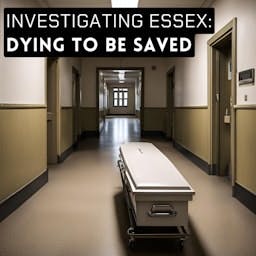
This episode of Investigating Essex, Dying to Be Saved, exposes a widespread and systemic issue of sexual assault within mental health inpatient units across Essex and England. The podcast highlights numerous documented cases, including staff sexual assault of patients at the Linden Centre and Lakes Hospital, where victims reported being left alone, abused, and dismissed. One patient, a 16-year-old girl, was sexually assaulted by a registered nurse at the Priory Mental Health Hospital in 2003–2004; despite her delayed reporting and lack of belief from staff, she was later found guilty of misconduct and struck off the nursing register. Other cases involve staff grooming patients with alcohol, sending explicit messages, and exploiting vulnerable individuals, including children. The trust's failure to properly investigate, suspend, or protect patients—such as a patient who was discharged and later died by suicide after being groomed—demonstrates a deep-rooted failure in safeguarding protocols. Only 17 of 200 NHS trusts have dedicated sexual safety policies, and investigations are often closed without informing victims or taking systemic action. The podcast underscores how stigma, poor training, and lack of oversight allow abuse to persist, with patients often blamed or dismissed. These failures not only violate patient safety but may have contributed to deaths, such as the case of a young woman who died by suicide after being discharged despite clear signs of distress. The report calls for urgent reform, robust oversight, and mandatory safeguarding standards in mental health care. This episode is part of a broader investigation into the treatment of vulnerable individuals in Essex Mental Health Services.
Warning, this is a true crime podcast and is not suitable for all audiences.
Please use discretion.
This episode contains descriptions of suicide, self-harm, and sexual assault against adults
and minors.
Please take extra care whilst listening.
This is episode 6 of a multi-part series.
If you haven't listened to the prior episodes, please go back to the beginning so you can
follow along.
So far in this podcast series, we've heard from families whose loved ones have died
whilst in the care of Essex Mental Health Services, or within three months of their care finishing.
But there is another significant problem, something that's happening across mental health
units all over the country, including in Essex, sexual assaults on vulnerable mental
health patients, including children.
I'm Naomi Channel, and this is Investigating Essex, dying to be saved.
I want to say right off the bat that I think the majority of people who work within the
NHS are nothing short of angels, a large number of my family members work within the NHS,
and the pressure and strain they are under almost every time they go to work is evident.
It's a tough vocation, and the pandemic really highlighted just how incredible the system
can be.
But there will always be those who are not angels, being incompetent is one thing, lying
and doing harms of vulnerable people is another.
What I will disclose today is based on facts, with information extracted from public records
and freedom of information requests.
I think I've heard time and time again through the production of this podcast, is references
to sexual assaults and rapes on the inpatient wards.
I've been looking into units under EPUT, that's the Essex Partnership University Trust,
but I've also come across countless reports of sexual assaults in all hospitals and inpatient
facilities across the NHS.
This is a very real problem.
These places hold some of the most vulnerable members of our society, and there are worrying
numbers of staff, patients and visitors, exploiting these vulnerable people.
Staff and visitors are often also victims.
The official data surrounding sexual attacks is difficult to comprehend.
More than 200 NHS trusts in England recorded 35,000 incidents of sexual violence or misconduct
between 2017 and 2022.
37 police forces recorded almost 12,000 sexual crimes allegedly committed on NHS premises,
almost all of them were in hospitals.
This again was between 2017 and 2022.
This included almost 4,800 sexual assaults, and more than 2,800 rapes.
Only 8% of sexual offenses committed on NHS premises, such as hospitals and mental health units,
result in charges or occult summons.
Only 17 of the 200 trusts in England have a dedicated sexual safety policy.
I wanted to find out more about the sexual assaults that have been reported in inpatient
mental health facilities in Essex.
Some of the 2,000 deaths being investigated as part of the Lampard inquiry occurred after
a sexual assault in an inpatient facility had been reported.
For example, I'm certain you will remember this harrowing call from episode 1 made by
Matthew Leehee.
He made this call when he was an inpatient at the Linden Centre in Chelmsford in 2012.
I am two days at our sexual assault hospital.
And since then here I've been raped and the doctors refuse to acknowledge it I've been
raped for the last 2 days and I'm bleeding heavily and the doctors refuse to leave me.
The staff have raped me.
Can you tell me where you are?
Chelmsford in Linden Centre.
In Linden Centre.
I wrote you a line?
Matthew Leehee.
Matthew Leehee.
Matthew Leehee.
Matthew Leehee.
Matthew Leehee.
Yes.
When is this happened?
When is this right now?
I hope that you can put a drop of the open in the mental hospital 3 days and it's not a dream of sleep.
Okay.
Are they getting you a medical attention?
I don't know.
I just told the doctor that she said, "Chu-Fu is in a surgery.
Chu-Fu is in a surgery.
She says, "I think because of this, I'm actually being called 24/7 observation.
But this is when it occurs during the 24/7 observation.
I just will take enough observation today and now that I'll be back on it because I'm
told them what happened.
They're here.
Hello?
Hi.
How are you?
I'm fine.
I'm good.
Matthew died before that claim could be investigated further.
The sexual assaults that have been disclosed to me during this production have allegedly
been committed by both staff and other patients and visitors on the inpatient facility wards.
In front of me is a freedom of information request.
In it, there are several important harrowing questions.
They all related to the numbers of documented allegations of sexual assaults from patients,
staff members and visitors, against patients, staff members and visitors.
I'm going to give you these numbers and break them down section by section.
And hopefully make it easy to follow.
Freedom of Information Request reads, "Question.
Over the past five years from 2017 to 2022, how many incidents of sexual violence allegedly
perpetrated by the staff against patients has the trust recorded?"
alleged sexual assault, staff towards patients, 38.
In appropriate sexual behaviour from staff to patients, 15.
In appropriate sexual language from staff to patients, 2.
That totals 55 incidences, 19 of those were formally recognised and disciplinary action
was given.
There have also been four alleged sexual assaults from a staff member towards another staff
member over those five years and 9 incidents of inappropriate sexual behaviour from one staff
member to another.
Over those five years, 33 members of staff were formally disciplined for sexual misconduct
and/or sexual violence against other staff members.
When the public inquiry was announced, a woman came forward and shared her experience
of being a rape survivor whilst she was an inpatient at the Linden Centre in Chumford.
In the same unit, Matthew Lee, he had been on when he made that harrowing 999 call.
She said this in a statement, "To protect her identity, no personal details will be given
and the following audio is not her voice, but they are her words."
I was placed on a mixed ward with men much older than me who had a range of serious mental
health illnesses. Three weeks later, I was raped by another patient.
I didn't fully disclose the details to staff at the time.
I don't think I really had the words to explain, but I asked for birth control.
The member of staff I asked laughed at me.
At no time was I questioned about the incident or offered any support, and no changes were
made to my care arrangements.
I experienced it.
some actively cruel treatment from staff, including being taunted and goaded to self-harm and run away,
and I also was not kept safe due to poor practice. This included staff sleeping and being distracted
when they were supposed to be watching me on full-time observations to the point that I was able
to abscond from the ward and take an overdose which nearly killed me.
This former patient does also want to recognise that there are many lovely,
caring members of staff that work at the Lyndon Centre, but sadly, some of the ones she says she
encountered were not. In 2018, a mental health inpatient was sexually assaulted by a member of staff
at the Lakes Hospital in Colchester. She admitted herself voluntarily, seeking help for depression
and suicidal thoughts that she'd been having. Whilst she was a patient on the ward,
a male member of staff came into her room where she was alone. He touched her inappropriately,
he kissed her and massaged her, and she said that she felt scared and powerless to stop him.
The girl reported the incident to the hospital immediately and the police were also informed.
But incredibly, the member of staff was not suspended whilst the investigation went on.
He was simply moved to another ward. The police carried on with their investigation
and shortly before they concluded, the member of staff absconded and was unable to be traced.
The hospital started their own internal investigation, but then closed it without informing the victim.
It was then that she approached law firm Lee Day to see if she had a civil case that she could
bring against the trust. A spoke to Katrina Rubens, she's a senior associate solicitor at the law firm,
and she said she specialises in abuse claims and human rights, and she wanted to help this patient.
So I'm a solicitor who specialises in abuse and health care settings, and you know,
that obviously brings about some very particular features of a case, because someone who's
an inpatient in a hospital, particularly for mental health, inpatient is already very vulnerable.
So she was looking for solicitors with specific expertise in working in sexual abuse and health care
cases, and then she instructed us to investigate her case because she can really
disappointed about the way in which the trust had handled their own investigation,
and unfortunately in her case. So she, as I said, she was sexually assaulted when she was an
inpatient on a voluntary admission basis after she'd suffered suicidal ideation and low mood,
and she'd been concerned about her own safety. So she admitted herself to the lakes,
and she was an inpatient there for a number of weeks when she was assaulted by a member of
health care staff, and when she was alone in her room, and the perpetrator ended up actually
absconding, and the police were unable to trace him, which meant that they didn't have a successful
police investigation, and our client had relied upon the hospital in Essex, been conducting,
an effective and safeguarding investigation, you know, trying to understand how this could have
been allowed to happen and what background checks had been done in the perpetrator, had there
been other complaints about him, why did he have such sort of easy and unmonitored access to the
female patients, and unfortunately none of that happens in terms of their investigations. So
we brought a legal case relating both to the hospital and the trust responsibility for
the sexual assault itself, but also the way in which that they then handled the investigation,
which had actually really exacerbated her anxiety and her stress around the assault itself,
and basically they closed the investigation without even telling her, and we saw that through
the records that were disclosed in the case, and so she had thought that safeguarding this
investigation was being undertaken, and it wasn't, and the investigation was closed without any
investigative steps being taken at all. So the claim was successful in that we achieved
some compensation for her and a formal letter of apology for her from the trust, but I think what
the lampard inquiry has shown more obviously in relation to death, which this wasn't a case that
thankfully resulted in our client's death, and but kind of serious concerns about safeguarding
investigations throughout the trust in its mental health and patient units. Katrina, did you
find any real challenges with this case? Specifically because you were working with a patient
who was in a mental health facility, and just knowing the stigma that they'll still exist
around validating and believing mental health patients through my research for this podcast,
I've seen time and time again that people saying they weren't believed because they were an
inpatient of a mental health facility. Was that a challenge for you at all in your case?
I think that's a really good point because there is a in society and in medicine there's an unfair
bias towards individuals and patients who have pre-existing mental health diagnoses, but because
someone has mental health diagnosis doesn't at all mean that they are lying about their experiences,
and that stigma can definitely come into play in the way in which trusts investigate and handle cases.
I'm not sure that necessarily was what happened in my client's case whether it was just kind of
almost pure negligence in that they didn't get around to conducting the effective investigation,
and thankfully in her case there wasn't serious concerns raised, but whether or not this had
happened or not. I think the perpetrator's actions afterwards to the fact that he, for example,
had absconded and you know lent support to her account, but it is definitely an uphill battle
in terms of challenging that stigma. It's not something that prevents us taking on a legal case,
you know, we treat clients, you know, in the same way that we treat any other client, it just means
we do have to take kind of their history and I suppose for more than that this might be brought up by
the the other side, you know, when we add some litigation, it's an adversarial process and as a
claimant they have to prove their case, but I think that's also where particularly in
mental health settings and inpatient settings, effective safeguarding investigations are so important
because that's how you, that's how trust builds up a picture of whether, you know,
first of all, whether an individual working on their behalf and poses a risk to patients,
so do they have good recording and monitoring processes where by any small and minor concerns
are getting flat and that can help pay to picture, including, you know, misuse of shift patterns,
or, you know, if it's a male perpetrator, persistently being on female wards when they're alone,
and they shouldn't be there, is all that data getting captured properly so that it's not just the
patient's account on on its own, and then secondly, making sure that they have really robust
systems in place that look at the systemic issues, so not just the issues of individual staff members
and saying, you know, this is one bad apple within this particular trust, but instead looking
holistically at how the trust deals with sexual safety issues and in its premises so that can,
you know, go from training of staff on, you know, the quarters of staff, the kind of way,
you know, whether staff are allowed to be left alone with patients, what are the one-to-one checks,
like even looking at the building and looking at, you know, particular areas in the building,
which may be, you know, have less foot traffic and less through-fall, less people sort of checking in
on what staff are doing when they're left alone with patients, and that has to be done totally
holistically, and from the kind of other cases I've done in the involves sexual abuse and health
care, there isn't a single system that is imposed by the central NHS or NHS England and
commissioning services or the government that requires a specific set of safety standards in terms
of sexual safety and sexual harassment in hospitals, so from what we've seen in the case I've done,
it's been a real close call of lottery, so in this case on half of my client who was at the lakes,
the safeguarding issues were dealt with really badly in terms of the investigation after the
report was made, so as I said, you know, the investigation took, you know, over a year to conclude,
and then they didn't actually notify the client that the investigation had even been concluded,
when the complaint was first made, her family asked for a copy of the trust safeguarding procedure
and its policy for investigating complaints of sexual assault, and no member of staff could find
that and give it to them, so that they would have an idea of how to guide their relative through
that process, and so there's just a lot that can still be done in terms of the structure of
investigations into these really serious complaints, and then also the wider picture of ensuring that
more minor concerns about staff are properly kept
so that it's not just the vulnerable patients' word as well, although that should be taken very seriously and that should be enough, sadly we see that often in cases, you know, it isn't always so the patients themselves and the victims are really relying on those systems being in place for proper investigation also for their account to be corroborated if that's necessary.
A spokesperson for EPIT said, "We offer arsoncy apologies for the distressed experience and we're pleased to have come to an agreed settlement which we hope will help towards the recovery process."
In March 2018, the BBC started an investigation into their Essex Mental Health Services after a patient and her mother told them that she had obtained illegal class A drugs
through a member of staff. She was on a locked ward and the drugs were being given to vulnerable in patients. In this case, the young woman on the ward had to be taken to A&E following her use of this class A drug.
Thankfully, she survived that incident but said that afterwards the incident was treated more as a behavioural one from the patients rather than the main issue centering around how the drugs had been brought into the unit by a member of staff.
The patient also told the BBC that there was a constant smell of cannabis in the ward but the staff never seemed to acknowledge it.
When the BBC approached EPIT, they said they were unaware of such allegations but they promised to open an investigation.
The trust also said that they had recently strengthened their search policies and that CCTV and drug sniffer dogs were now being used to deter drugs and alcohol from getting into the units.
Now you might be wondering what this has got to do with sexual assault. Well, there's one word that I want you to focus on for this next case.
Gruming. Because that patient that told the BBC about the drugs also had something else happening to her in the ward that was just a shocking.
She told the BBC that she had been in a sexual relationship with one of the healthcare assistants on the ward.
He was bringing in bottles of lucasade with alcohol mixed in it to get her drunk.
He would also bring her her phone charger to use even though this is an obvious literature risk.
The patient also said that another member of staff had made inappropriate comments towards her and sent her sexually explicit messages on her mobile phone.
She has been in and out of the mental health system in Essex for years but in 2018 she was discharged from the hospital but she begged them not to discharge her.
She told them that she was going to kill herself if she was let go.
Her parents turned up and begged them to keep her in the hospital in a safe place.
Her mother recorded video as proof of her begging for them to keep her in the system and in the impatient facility.
And that recording finishes with her saying that if her daughter dies, they will have blood on their hands.
And sure enough, after this patient was discharged, she jumped from a railway bridge on a disused railway.
She was taken to hospital by helicopter ambulance. She survived but she had two fractured vertebrae in her back.
She spoke to the BBC from her hospital bed and it was just heartbreaking to listen to.
This woman had been groomed and sexually assaulted and sent explicit messages by two members of staff.
And yet she needed help so badly that she wanted to be in there with the people that had abused her.
The trust told the BBC that they couldn't respond to individual cases due to safeguarding rules but admitted that they had investigated 13 cases where there were reported sexual contacts between staff and patients.
Four of them were referred to the police. One of them was a sexual assault.
These sexual assaults in inpatient units are not just happening to adults. They're also happening to vulnerable children.
In December 2003 to January 2004, a registered nurse from the Priory Mental Health Hospital in Chelmsford sexually assaulted a child patient.
His name was Tune Hawkkeck and he sexually assaulted a girl who was just 16 years old. She was suffering from severe mental health conditions.
He touched her genitals and breasts. He told her that he wanted to be with her when she was out of the hospital.
He told her that he could save her and that he planned to take them on a romantic trip to London.
He also made her touch his genitals.
This was reported years later as a historic abuse case and the Nursing and Midwifery Council conducted an investigation into these accusations.
The victim had documented her abuse and in her witness statement she said,
"The day I was abused by Mr. Keck was around December 2003 or January 2004.
I believe the rehab trip that day was to the pantomime and I chose not to go. All the members of staff and the patients left about 3pm.
A member of staff who was due to do the Twilight shift came in early to go to the pantomime as well.
The way it worked out was that the only people left on the ward were myself and Mr. Keck.
I believe he viewed this as a window of opportunity to be alone with me."
In her evidence she stated that Mr. Keck stated, "I can't believe we're alone."
He denied all of the allegations but also did not provide any details for his version of events.
The girl had come forward 14 years after the incident because she said, "I had no self-worth and thought that nobody would believe me."
Evidence from her, another patient and another medical professional, all built a case against him.
The case was heard by the nursing and midwifery council and even though it was a virtual hearing due to COVID restrictions,
Mr. Keck still refused to attend the hearing. He was found guilty of all charges and he was struck off.
But by this time, he'd already retired. If he ever decided to come out of retirement,
then this man would not be allowed to work as a nurse again.
Next time, we're going to hear from a family who say their daughter went into the mental health services in Essex as a child
and the trauma she received from her time in there, meant that she ended up dead.
Abby never recovered from her treatments at the St. Auburn Fender and in January she wrote a statement and showed it to me
and it was a statement about her treatments at the St. Auburn Fender and she showed it to her care coordinator
and her care coordinator said, "I'll see you to the police."
Episode 7 is out and available to listen to now.
I'm Naomi Channel and this has been Investigating Essex, dying to be saved.
[Music]
Podcast Summary
Key Points:
Sexual assaults by staff and visitors are frequently reported in mental health inpatient units across Essex and the NHS, including cases involving both adults and children.
Between 2017 and 2022, over 35,000 incidents of sexual violence were recorded across 200 NHS trusts, with nearly 4,800 sexual assaults and over 2,800 rapes, yet only 8% resulted in legal charges.
Multiple cases in Essex mental health facilities—such as the Linden Centre and Lakes Hospital—reveal systemic failures in safeguarding, including lack of investigation, failure to suspend perpetrators, and denial of patient safety measures despite clear allegations.
Summary:
This episode of Investigating Essex, Dying to Be Saved, exposes a widespread and systemic issue of sexual assault within mental health inpatient units across Essex and England. The podcast highlights numerous documented cases, including staff sexual assault of patients at the Linden Centre and Lakes Hospital, where victims reported being left alone, abused, and dismissed. One patient, a 16-year-old girl, was sexually assaulted by a registered nurse at the Priory Mental Health Hospital in 2003–2004; despite her delayed reporting and lack of belief from staff, she was later found guilty of misconduct and struck off the nursing register.
Other cases involve staff grooming patients with alcohol, sending explicit messages, and exploiting vulnerable individuals, including children. The trust's failure to properly investigate, suspend, or protect patients—such as a patient who was discharged and later died by suicide after being groomed—demonstrates a deep-rooted failure in safeguarding protocols. Only 17 of 200 NHS trusts have dedicated sexual safety policies, and investigations are often closed without informing victims or taking systemic action.
The podcast underscores how stigma, poor training, and lack of oversight allow abuse to persist, with patients often blamed or dismissed. These failures not only violate patient safety but may have contributed to deaths, such as the case of a young woman who died by suicide after being discharged despite clear signs of distress. The report calls for urgent reform, robust oversight, and mandatory safeguarding standards in mental health care.
This episode is part of a broader investigation into the treatment of vulnerable individuals in Essex Mental Health Services.
FAQs
The episode focuses on sexual assaults and misconduct against vulnerable patients, including adults and children, in mental health facilities across Essex and the NHS.
More than 35,000 incidents of sexual violence or misconduct were recorded by 200 NHS trusts in England during that period.
Only 8% of sexual offenses committed on NHS premises result in formal charges or police investigations.
Yes, both staff members and other patients, including visitors, have been alleged to have committed sexual assaults on vulnerable patients in inpatient facilities.
The patient reported a sexual assault by a staff member, but the hospital moved the staff member to another ward without suspension. The perpetrator later absconded, and the hospital’s internal investigation was closed without informing the victim, leading to a successful civil claim and a formal apology from the trust.
Yes, in 2003–2004, a registered nurse at Priory Mental Health Hospital in Chelmsford sexually assaulted a 16-year-old girl. The nurse was found guilty and struck off the register, though he had already retired.
Chat with AI
Loading...
Pro features
Go deeper with this episode
Unlock creator-grade tools that turn any transcript into show notes and subtitle files.
 PodcastTranscript AI