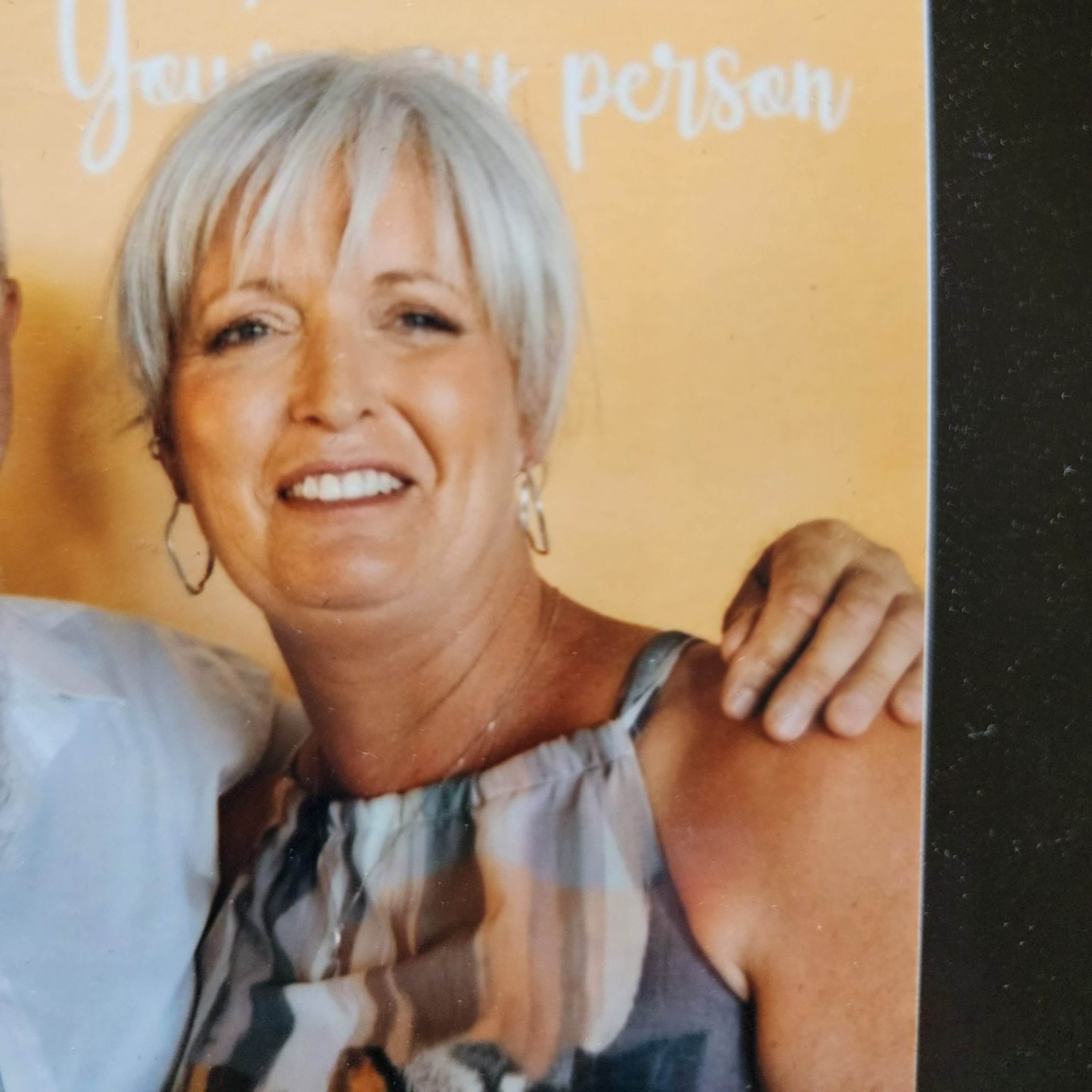
Linda Cleary shares her life story, beginning with a happy childhood in Castlemaine where her family ran a service station. She became a hairdresser but developed multiple chemical sensitivity, forcing her to stop. She married Mick, had two sons, and faced profound tragedy when Mick died of bowel cancer at age 43, leaving her with teenage sons. The family utilized both Western and alternative therapies during his illness. Years later, her son Gus, who struggled with mental health, especially during COVID-19, died by suicide, a devastating event Linda did not foresee despite having a support plan in place. To cope with her grief, she turned to art therapy, using drawing to visually chart her emotional journey from anger and sadness toward acceptance and healing. She also worked for years as a teacher's aide, supporting children with autism and ADHD. Throughout her challenges, Linda emphasizes the crucial support of her Castlemaine community and the importance of mental health awareness.
[Music] Hello and welcome to Casted & Connections. An initiative of Hands Up Casted & where a group of enthusiastic locals have come together to capture, preserve and share stories of people who have a connection to Casted & Connections. Some things discussed in this episode you may find upsetting. If yourself, a friend or family member needs help finding support or crisis resources, please contact Lifeline on 131114 beyond blue on 1300 W2 4636 or a trained healthcare professional. Lifesnted about waiting for the storm to pass. It's about learning to dance in the rain. [Music] Loving courageous artistic caring, brilliant, fun loving, resilient are just a few ways to describe our guest today, Linda Cleary. But to me she is my forever friend. Welcome Linda. This was Linda's life has been filled with much love and joy but also tragedy. Linda grew up in Casted & the son of Merlin Bruce Kelet. Tell us about your childhood, Linda. Okay, on a nice happy childhood, grew up in a service station with parents and his brother and wife had a Kelet service centre which was where farms plays on now. So yeah, we spent a lot of time down there filling up oil bottles and washing windscreens and serving petrol. Yeah, it's fun. We had a good life. Yeah. And I've just realised that's where your level task comes from. Yeah, probably. Didn't that but it's never clicked with me before. There you go. Yeah. So you had an idyllic childhood in the small country town. Yep. You also have siblings. Yeah, J. and Jason. And Jason's got a business in Warnable. He's two years younger than me and James two years older than me. Yeah, she's got a business here in Casted & so you're the middle child. Yeah, the naughty middle one. Yeah, we know that. So when you left school, you went to school here in Casted & the both primary and secondary school. Yeah. Yeah. About what sort of a student were you? Middle of the road, I'd say. Didn't really love school. Yeah. You looked much mischief. Oh really? Just really happy to get an apprenticeship as a hairdresser and yeah, did my tape in Melbourne and love that. It was a three week block at a time. So all the rural students went in together. Yeah, it was fun. Yeah. So you did? So who did you do your apprenticeship with? Judy Burgess. Yeah. Yeah. Yeah. She was a great hairdresser. Yeah, really, really good. So I learned lots of great things off her. How long were you hairdresser for? Well, I started when I was 16 and I still do just dry haircuts now, but I got really led to all the chemicals. Okay. So yeah, I started getting lots of migraines and no one could really give me any answers. So it did a process of elimination and worked out that's what it was. And then I also got Glangela Fever, which then ended up being crunny for teag because my body was too toxic from other chemicals. Wow. So I got quite sick. Yeah. So I'm now like, yeah, multiple chemical sensitivity, they call it. Yeah. So I've learned it to perfumes and fragrances and things like it's hard to go shopping because a lot of shops now have candles and incense sticks. You know, lots of strong fragrances. I don't shop much. Yeah. I had to travel in a car with someone because the low-pable have these smelly ball things in the cars and you'll just get really sick like not just a headache. Body goes into total pain in every single muscle and you just want to curl up into a little ball. It's very painful. Yeah. It must be really hard to do with, you know, everyday life. Yeah, it is. It took me a long time to work out what I could and couldn't do. But it would be days in bed with her reaction. So that wasn't fun. One day, this is probably one of my best favourite days is when Dr. Cosm realised how bad I get. I was waiting outside the Dr. Sclenic because I couldn't go and sit in with everyone else due to perfumes and chemicals and everything. And the gardeners were going along with Roundup and then I got a sphere reaction from that and he saw my reaction how bad it gets. And from then on, I was able to take a pretty slime for a 5-tap period and feel the things together and yeah, that helps me survive these days otherwise I'd be in bed a lot. Yeah. Yeah. Must be very difficult. So why do you were hairdressing? You met Mick? Yeah, probably it was more probably playing footy in the pilot's outfit. Yeah. Okay. Lots of fun times with you, Lars. We aren't going to get in that truck, but I think. Okay. Yes, those sample days were very, we did have a lot of good times. So that was actually where you met, I'd. Yeah. I'm not exactly sure. I suppose we were just all hung around together and fun nights at the pubs. Back then we had three pubs and we'd have fun nights, like just one night for example. We had a W night where everyone was, everyone had to use a W in front of and so I was winded up and Mick was weak and George was waged and in my last big birthday, George wrote me a birthday card and every word had a W in front of it. So that was fun times. So that's the legendary George Hilli, and we're talking about it. Yes. So you and Mick got married in 1990? Yeah. And can you remember much of the day? Yeah, it was great. Lots of fun. Everyone around that we wanted and, yeah, partied at the custom football club rooms, just now cast in the Samford Football Club rooms. Yeah. Yeah. So your early days you lived down in League Street? Oh, McIvoy. McIvoy, sorry. That's all Fleet Street, isn't it? Yeah. Yeah. So that was your first marital home? Yeah. Yeah. So good times had there. Yeah. Great. Enjoyed that and yeah, the only reason we moved out was because the boys started kicking the football over the house onto the road and we thought we need a few acres. So your first sunset was born in 95? Yes. And then just was born in 97. 95. So not much resting between. No, not really. Yeah. So pretty sick off our car so they gave me a drug called Intimation, close off the love house in my stomach and it closed it off beyond my eyes as well. So I couldn't see probably for about three months. A big, green and yellow spot everywhere. But yeah, it's okay. Good. Just a while. Yeah. So you settled into married life and raising a family. You were still to hairdresser? Yes. Yeah. Just wound it back a bit. Yeah. Went to a Cindy Dawson for a while and on pride of that. That would have been a fun workplace. Yeah, it was great. Yeah. And then I just did a bit of mob off the wall and then I set up my little cell in at home which was perfect for when the kids were little. And then we had Mick get sick. What happened there? Yeah, Mick diagnosed with bowel cancer. We had a five year battle with that. He was being, what could you say? They were training him for piles and all hemorrhoids if for the right word. But yeah, they ended up being bowel cancer so it has sigmoid I think the second name, it is bowel and he ended up having a clostomy bag, quite a few surgeries, quite a few reactions to things. We had interaction to even the chemo where he was flying back to Melbourne and currently hearts, patterns from the chemo. Yeah, anyway.
He passed away, 43 years old, pretty tough time for a soul. Boys were only 13 and 15, so he was pretty tough on them. And it was such a. Loveable character, everyone just loved him. I see a lot of you know, both the boys had a lot of mixed traits. They're sense of humour there. Larykinism, if you like. Yeah, that's for sure. Yeah, especially Zack. Yes. Yeah. So that must have been a really tough time for you. And I suppose dealing with mental health at that time for yourself as well as everyone else, you may probably going through the cancer with an active ear gourd use as well. Yeah, he did. We saw Starday Manning Jolomlet did emotional release work, so energy work. And each time we got a Jolomphal chemo, we'd also go on to this man. And he would help with pins and needles in his feet and hands. And it would help both of us actually not be so nervous, so strengthen our nervous systems as both you'd say. Yeah. He was great. And even the boys were happy to go to him as well, even though it was quite different and alternative. It was definitely amazing work. Yeah, so it was something that you sought out and you found that really helped the whole family. Absolutely, because I don't think just Western medicine is enough. You don't really look at a big picture. Yeah. So Raiji Mik pass you away. What was he doing? He was a butcher by train? Yeah, it was a butcher by train. He ended up being the boss at Department of Sustainability in Raiji Mik pass. Yeah, so he loved that job. That was a big leap from butchering to the environment. Definitely. Yeah, DSE family, I called them. They were amazing to me. And he was sick and to me and the kids. Pretty thankful for that. Also, a butcher shop family, Mik used to work on Monday nights at Smith's Butchers, back then with cousin Jack and Sam and all their little crew. And play many tricks on Sam in particular, like he'd get his sheep's eye and sick it on the tap. Sam ago washed his hands and go, "I'll keep you to an eye on you." There was a note. So he would do things like that to Sam. It was a lot of fun they had Monday nights. Yeah, butchers shop families pretty important to us. They've been there all the time for us and yeah. So apart from friends, yeah, what's a good friends and good family around? Are you thankful for all of that? So it probably comes back a little bit to the cast and community. It's a whole, you know, maybe I'll throw this question in here. Now, what does the cast and community mean to you? Everything. People have been amazing to us. I love living in Castan. We have thought about moving a few times, but this is home. Can't do it. There's something really special about Castan. It's the tree through the street. It's the river going over the bridge. It's a valley. There's something really special about Castan and the people that live here as well. Yeah. Okay, so after my passing, you started working as a teacher's teacher. Yeah. I've got a primary school for 12 years. I've actually loved my job. Just worked with some of the more difficult children, kids with autism or ADHD. Yeah, just generally was the go for and loved it. Yeah. And no doubt you would have a great rapport with the kids. Yeah, it seems to get on pretty good with most of them. Yeah, especially with the naughty ones, I like to challenge up the naughty ones. That sort of fits in a bit with who you married already. Yeah, you're right. I like to knock people out. Yeah. You also have written a book. Oh, yeah. Yeah, I worked with an autistic boy, Adam. He was 22 or 23 at the time. So I've written a book on with Adam at the Castan and railway station. And also wrote quite a lot of the Warwick book. That's been Zachary's accident, so I passed that book into someone else to finish that with Adam. But yeah, love to work with Adam. He's so fun. Really interesting to work with an autistic person. You know, Adam often would say some of the funniest things and not with some of those things. One of the funniest things he said was we were working in the library in the Castan Town Hall. And we were sitting working way and get distracted quite easily. You know, this lady came in and she sat down with the couch to grace food, her child. And Adam was really uncomfortable with that. And it wasn't quite 10 o'clock, but I said, 'Dad, I think we might go make a cup of because that was part of my job to help him belong and to read the play. And anyway, so we all know about a cup of and as we were going over to the other part of the town hall, he said to me, 'Linda, we just witnessed something like an eclipse.' And I said to Adam, what do you mean, an eclipse? He said, 'Well, what we saw in there, it was beautiful, it was natural, but under no circumstances should you look.' So there are some things that Adam says and it's just priceless. Yeah, love to work with Adam. It's wonderful. I just thought it's something I was just thinking about. After Mick passed away a couple of years later and you were feeling a little, you know, it started to feel a bit lonely and we were talking about just getting out there again. And you wrote a list. Yeah, I wrote him a little checklist. Thanks to another friend actually who unfortunately was excited as well. But he felt he jumped in too quick after his wife passed over the cat son and he was just a great support to me. And because of his conversation that we'd had, I'd such write myself a bit of a list of the person that I would want in my second half of my life. I just didn't want to fall for anyone who paid me attention. Yeah. Anyway, yes, so on my list I made sure that I wrote, I needed to be with someone who ended up so deaf and I ended up with a mortician. Pretty funny. Yeah, it's priceless though. Yeah. It's priceless. And so is he. He's priceless. He's been awesome. He's her girlfriend and Mick's and mine always been friends and it just works for us. Yeah. Yeah. Very lucky. No, he's very lucky. So then we had Zach having a very year-old son, Zach having a tariff, which must have been pretty horrific for you. Yeah, we were in Roman holidays and he was heading to work really early in the morning and come around the corner up near the Angling block and there was a truck in the middle of the road because the road's quite narrow and he got to the side of the road in loose gravel when they lost control in here to red come. Very, very lucky to survive spent three months in Melbourne. I spent a lot of time with him as well nearly lasting three times. Yeah, he's survived. He's very tough. He's amazing really. Very lucky to have him. He's an amazing young man. Yeah. So you got through that little, what we say, he kept with his neck. Yeah. And then what else was going on in your life at the time? About that time. At the time. I was just working with the kids which he loved. Yeah, school and getting things together with the pev and yeah. Yeah, we just drawing quite a bit. I did quite a lot of counselling after me so that helped and then I also did a lot after. Guests passed too. So on that lender, just passed away just before Christmas in 2020. Yeah. Yeah. Guests always struggled with his mental health, struggled to belong. But we openly talked about everything he was in the Hedden subject for us. Traveller Longpath and very open with our conversation. He went to boarding school in Ballarat just a bit of a background.
He was really good at footies, so I got a scholarship to um, Clara and college in Pellerat and loved that time. He really enjoyed the frenzy maid and it was a good time for him. Um, but during COVID he just slipped mentally a lot. Um, he wasn't playing his sport, he wasn't doing training. Um, he wasn't releasing that field of hormone that we know that most people need to release for their mental health. Um, he became very probably alone as a way to say it. Anyway, it's been quite a bit of time with him, especially the last five weeks before he passed. And we had a really good plan. He was on his marriage with a person, he was singing counsellor. Um, he, yeah, he was very open with his thoughts to me on everything that was going on. Um, but yeah, something happened that morning because we had a plan. He was coming home, the Christmas. He was going to help me with a lot of things at home and we did have a big plan of what was going to happen because I knew it's going to be difficult for him. Yeah, yeah, and then we just got up. Yeah, the police got into the door and after I'd done 10 phone calls, I mean, you normally access off the one. And um, I thought he had had a car accident. I was going to even pinpoint exactly this spot where he had the crash. But I wasn't that he'd actually taken his own life. So yeah, pretty devastating. Didn't set come on. I'm quite intuitive. Didn't not see that coming at all before we had a really good plan in place. But mental health is complicated. Um, the coroner's office rang me one day and the lady told me that seven young men suicide every day. So there's really a big problem. Don't know how to fix it, but it's really quite a big problem. So awareness is probably, awareness of the triggers and stuff like that is probably good thing. Yeah, yeah. People, and that's one of the reasons you're here today is to we're not experts. We don't know, but you're just telling your story, sharing your story. Yeah, yeah. I think phones have a lot to answer to. Yeah, you know, we still don't have those as phone. Don't know where it is. And please don't have it. His mates don't have it. It's nowhere. There's nowhere in my house. So I feel that something ticked him over the edge that morning. And really that's all takes. So it must have been really horrendous those days following Yeah, coming to terms with it for you and extended family friends every month. Yeah, everyone was devastated. Everyone was devastated. Yeah, it was just got reaching just and just didn't know unbelievable. Yeah, I suppose. Yeah, I still go to the cemetery and see him in front of him go, how the hell did this happen? Yeah, making ghosts in the same grave. How the hell did that happen? But you know, that's just life isn't it? Throws you challenges and you have to work through them. Man, Linda, our therapy has been part of your healing process and something that you've found really, really helpful. Sure. And you've bought a book along today with some of your art from when you first started. Yeah, so I've found sometimes it was hard to talk about how I was feeling, so I needed to draw. So in every two weeks I could have counselling and so my book shows journey of how much better I got mentally as I went along. So the first couple of pages of a very ordinary just pretty much dots and trees, limbs on trees. And then I just got brighter, got more flowers and see that. Brighter. Colors and things. I didn't use in the early days I just didn't even use colour either. It was just black and white, that was it. I had no colour. And then I drew a picture about oxygen and anger, so there was lots of circles and sharp lines and I was just releasing my anger and breathing through it. Put through feathers. It was just sort of softly letting go. Love mandellas, so I really enjoyed drawing mandellas. What do you like about mandellas? Not really sure, I just love them. Just the symmetry, very symmetrical girl. Yeah, well, I'm happy when I come out of my history, I've always had my two ovaries. That's how symmetrical I like to be. So yeah, and then I got up to the counselling sort of learning about the choices. So I drew a big signpost and one side I drew acceptance, happiness and healing and on the other side of the signpost I had sadness, blame and victim and so I sort of just drew a fork and the fork in the road was which which way to go, which way to move forward and obviously the acceptance happiness and healing was the right way to go. So I chose that. And another one of my sessions, we talked about juggling. I've found this really, really good. So pretty much you choose things to go into your juggling circle. As each ball has a name and so you choose what is true to you, what makes you the happiest. And so one ball might be family, one might be love, one might be creativeness. Just things like that anyway, that are true. And the glass ball, there's anyone glass ball and that is the family ball. All the others are rubber. So if you drop the glass ball in your juggling, you start to pretty much with family breaks. It's a really hard to mend. They can bounce in or bounce out of your juggling scenario. So yeah, the first ball is about you and you're adding or you take out and you let go. Each ball needs to be a choice with your true values met. And if you draw it out on paper, it's quite. It's very powerful. Yeah, it is actually and it's a really good tool for a soul to think about. Because you can only juggle so many balls. That's exactly right. Yeah, another analogy is the bucket and I people talk about it with the buckets too full it over flows with mental health and then you have an episode but I feel like the juggling ones actually better in reality. And something important you said before about Ling-Pilth was we can't be up all the time. We can't be live, you know, we can't be on a high all the time. No, you can't. You know, I played that great calzming as well. It's not normal to be on one level. You're happy, obviously. That's the best life. Yeah. Yeah. Crazy long. So you've got another little book here with lots of writing and lots of pictures. I wrote and drew a lot like a picture here of tree that's got eggs splatted all over it. Napples splatted all over it. Yeah. That was one of my angry days and I just went out to the tree and threw eggs and apples at it. I was just so angry with myself. I feel like a sheep mother. And yeah, angry with gusts for leaving us and angry COVID-19. Just everything. That was just wasn't a good day. Then, you know, there were days where I just couldn't deal with too many words. My brain was overloaded and was forgetful and numb in decisive, tight and vacant. And then there was days where I just thought, I'm so tired, I need to sleep and I've gotta go with it. So, you know, your body is filling your grief and you have to lie down and you have to sleep and do what you're fighting tell what she's to do. Yeah, you gotta listen to your body and otherwise it'll just crumble. So, yeah, I put some days like that. I just put a duck at the front door, I put a book out and just saying that, you know, we very much appreciate your visit and I'm sorry I've missed you, but I'm exhausted today and I'm having a sleep. Please leave us a message and thank you so much for your visit. Love from all of us. So, that's just one of my little self-help days that I needed to rest. Yeah. Yeah, that's pretty. The thing that was important for us was going to the river. It was healing, so we did have a boat shed at Nelson in the river. Yep. And that was probably one of our saviors and with some great friends as well. We really enjoyed our time down there. It's peaceful. It's calming. It's water is very healing. Yeah, it's so important, you sit there, we'll get in the cracks, we'll watch the birds catch a fish. Just try to catch a fish. Are you actually caught a fish? Yeah, I'll have caught a fish. I'll try to catch a fish. I do love to draw at the river as well. That's my pace down there.
Yeah. This is a very full book. So the art therapy has been a wonderful way to help you through this period and it's probably a really good thing for other people in the same situation to perhaps consider. Absolutely. Yeah. I think we'll finish their linda. Would like to make a little reading. Okay. Which, so this is just something that I read at Gus' funeral. Don't know how I got up and read it, but I did. Just needed to send out a bit of a message to people that you know it's okay to have mental health issues, but it's not normal to be on the one level all the time, but this little first just rang really true to me and I'd read it to Gus before he passed as well and he really took it on board. Anyway, here it goes. It's a tale of two wolves. So there's an old, old story about a chara-cai Indian elder who was teaching these grandsons about life. The wise old man said to the young boy, a fight is always going on inside of me. He's a terrible fight and it is between two wolves. One wolf is evil. His anger, shame, envy, sorrow, regret, greed, arrogance, self-pity, guilt, resentment, inferiority, lies, false primes, superiority, self-doubt and ego. The other wolf is good. He is joy, peace, love, hope, serenity, humility, kindness, empathy, generosity, truth, compassion and faith. The same fight is going on inside of you and inside of every other person as well. After the grandson thought about it for a minute or two, he asked his grandfather, "Which wolf will win?" The old man simply replied, "The one you feed." So which wolf do you feed? Thanks, Linda. Love you. Sorry. [Music] We hope you've enjoyed today's episode of one of our homegrown heroes. Come over to one of our other episodes to continue the casted and connections journey with us. Please don't forget to follow our podcast and share it with your family and friends. Thank you for listening.
Podcast Summary
Key Points:
Linda Cleary grew up in Castlemaine, had an idyllic childhood, and worked as a hairdresser until developing multiple chemical sensitivity.
She married Mick, had two sons, and faced tragedy when Mick died of bowel cancer at 43 after a five-year battle.
Later, her son Gus struggled with mental health and died by suicide, a devastating loss for the family.
Linda found healing through art therapy and counseling, using drawing to process grief and emphasize choices in recovery.
She values her Castlemaine community deeply and has worked as a teacher's aide, supporting children with additional needs.
Summary:
Linda Cleary shares her life story, beginning with a happy childhood in Castlemaine where her family ran a service station. She became a hairdresser but developed multiple chemical sensitivity, forcing her to stop. She married Mick, had two sons, and faced profound tragedy when Mick died of bowel cancer at age 43, leaving her with teenage sons.
The family utilized both Western and alternative therapies during his illness. Years later, her son Gus, who struggled with mental health, especially during COVID-19, died by suicide, a devastating event Linda did not foresee despite having a support plan in place. To cope with her grief, she turned to art therapy, using drawing to visually chart her emotional journey from anger and sadness toward acceptance and healing.
She also worked for years as a teacher's aide, supporting children with autism and ADHD. Throughout her challenges, Linda emphasizes the crucial support of her Castlemaine community and the importance of mental health awareness.
FAQs
Casted & Connections is an initiative by Hands Up Casted &, where locals capture, preserve, and share stories of people connected to the community.
Linda Cleary is a lifelong resident of Casted &, a former hairdresser, teacher's aide, and author who has experienced both joy and tragedy, including the loss of her husband and son.
Linda developed multiple chemical sensitivity from long-term exposure to hairdressing chemicals, leading to migraines and chronic fatigue, which forced her to stop hairdressing.
Mick was diagnosed with bowel cancer and after a five-year battle, including surgeries and chemotherapy complications, he passed away at age 43, leaving Linda with their two young sons.
After her son Guests died by suicide, Linda used art therapy and counseling to process her grief, creating drawings that reflected her emotional journey toward healing.
The transcription recommends contacting Lifeline at 131114, Beyond Blue at 1300 224 636, or a trained healthcare professional for support during crises.
Chat with AI
Loading...
Pro features
Go deeper with this episode
Unlock creator-grade tools that turn any transcript into show notes and subtitle files.
 PodcastTranscript AI