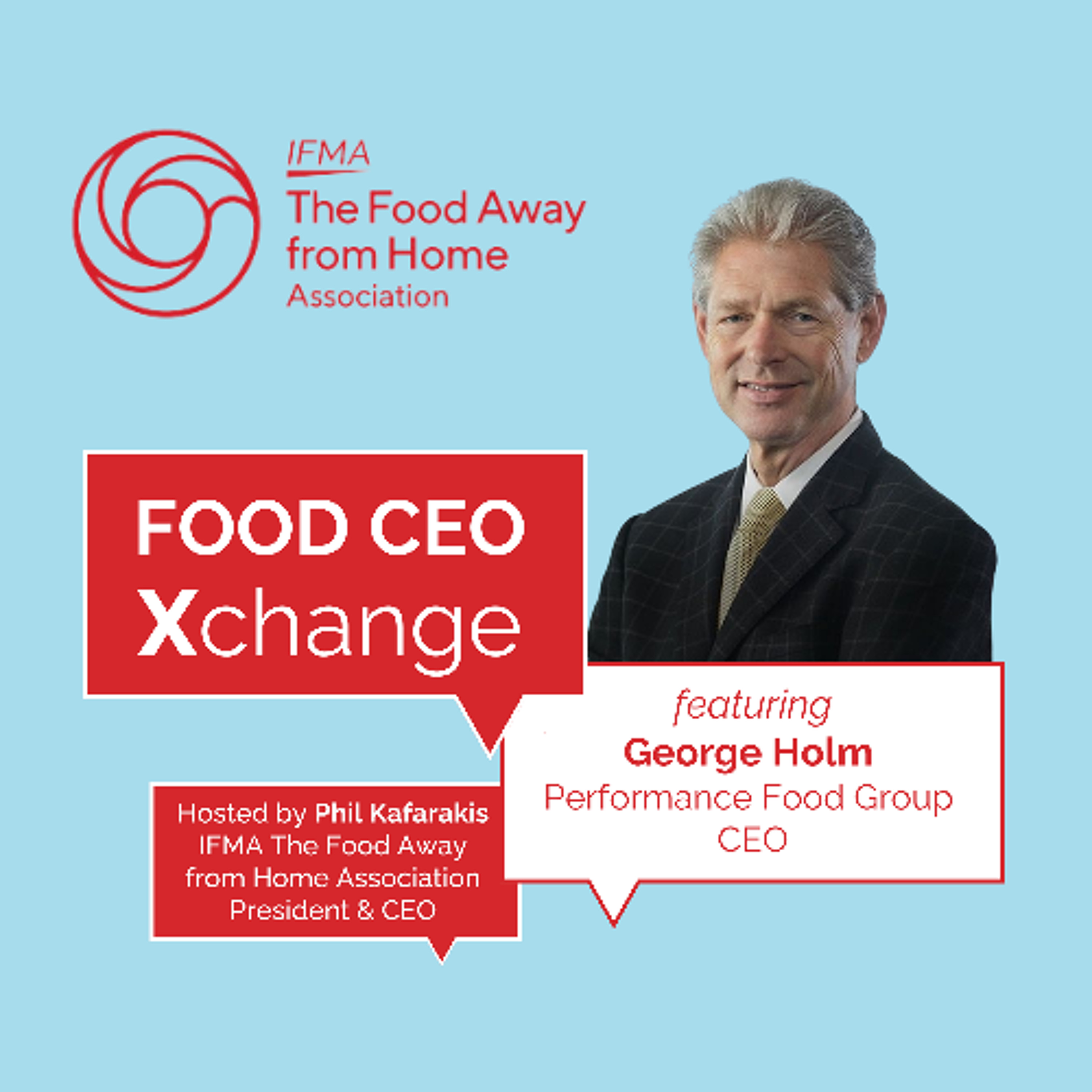
In a podcast interview, George Holmes, CEO of Performance Food Group (PFG), discusses the company's evolution into a Fortune 100 food distribution leader. Growth has been driven by strategic acquisitions such as Vistar, Roma, Reinhart, and Core Mark, each integrated while preserving autonomous cultures and leadership. PFG operates through three core divisions: Performance Food Service for restaurants, Core Mark for convenience stores, and Vistar, which includes the innovative Green Rabbit e-fulfillment business for temperature-sensitive, direct-to-consumer delivery. Holmes emphasizes a decentralized management philosophy, allowing local leaders to resolve operational conflicts and maintain supplier and customer relationships. He highlights technology's role, like Green Rabbit's customized packaging and climate-control systems, in addressing supply chain complexities. Looking ahead, Holmes anticipates continued industry consolidation but notes challenges from regulatory environments, such as unenforced laws on pork and vaping products, and prolonged timelines for building new distribution centers due to permitting issues.
Hello there and welcome to another episode of IFMA's Food CEO Exchange podcast. This is the home to exclusive conversations with Food Industry CEOs about the future of their food away from home businesses. I'm Phil Kaffer. I'm your host, President and CEO of the International Food Service Manufacturers Association. You can find us at www.ifmoworld.com. At a keynote session during the IFMA Food Within Association's 2024 Presidents Conference, I had the great privilege of speaking with George Holmes, CEO of the Congress Food and Company, AFG. I'm pleased to share a portion of the conversation we had at Presidents Conference with all of you today. The next session, we're going to talk about its supply chain. We're very privileged to have a 46 year history with George Holmes, the President and CEO of the Performance Food Group. Who's been in this business that long? Okay, Performance Food Group acquired in 2008 by this star, which is a company that he founded in 2002. Under his leadership, Performance Food Group has grown into a Fortune 100 company. It makes it one of the largest and most respected food distribution companies in the U.S. He also had a career 18 years in Cisco, where he was a senior leader, including his SVB work on operations. If anybody understands food service better than our next speaker, please make sure you talk to me at the break because I would love, I would love to meet him. Please welcome to the stage George Holmes. Thanks for being here and thank you for preparing. I know you got some slides. You like to share with everybody and we're going to try to go through these slides quick so that we can get to your questions. That's the biggest reason to be here. Just a little bit about the company. Our main areas of business, number one, would be restaurants and that's our Performance Food Service division. Then if you go down kind of the number two area would be convenience retail, and I should say convenience food service as well, would be kind of our second largest category. And the others, the bulk of our businesses and our Vistar division other than healthcare where we do very little business. This is a little history of where we came from, with P.F.G. and Roma being much older businesses than we first started. So in 2002 we bought a company called Multifood's Distribution Group, and it was a division of international multifoods, which was a public company at the time, as since been bought by smuckers. So we had to change the name and what we came up with was Vistar. And the key acquisition since Vistar would be number one Roma. Today it's not a real large part of our business. It's about a $4 billion business, but it's really a lot to do with who we are, and it's kind of where we came from. Then Performance Food Group we bought in 2008. And that's really what really kicked us in because it gave us some scope and some scale in food service where before that we were quite small from a food service standpoint. The next really important one would be Reinhart. And we bought that about two months before shelter in place, so it's kind of a tough time to do it. And that's been a huge success for us and we've been able to double the earnings of that company since early 2020. And then we got into the convenience business, something that we talked about for a few years. We were hesitant, hesitant to be involved as a cigarette distributor. In the end, we went small at first and bought E.B. Brown. I always felt that if we couldn't get Core Mark after that, we would be able to at least sell the business to Core Mark. But our plan was to be able to purchase Core Mark which came together. And it's also been a big success for us as we've had significant increases in earnings. And then another important one for us that we don't talk a lot about is Green Rabbit. It's an internet fulfillment business and we had put up three of these ourselves. They're big like 250 to 350 thousand square foot buildings. It's for the most part pick and pack very few case sales. And what we do there is we fulfill for other people. We have a couple sites of our own which quite frankly we don't do well with because we don't understand that business or how to market it. I just had the Amazon fresh person up here. That's actually about 27 percent of our business in Green Rabbit is doing fulfillment for them. And then we cover most of the country with one day service part with two day service and our goal is to get from six up to nine or ten distribution centers where we can have next day service to basically all the heavily populated parts of the country. And then I'll just at a high level tell you what our three businesses do. I guess it's kind of a simple standpoint. In performance food service it's almost entirely restaurants and you know some culinary type business and 52.9 percent of that business as of last quarter is done with our own brands. Core Mark is primarily convenience store business. We have some of the turnkey programs we have on the screen there. And that's where we just go into a location, a lot of mororal, a lot of more single unit locations and we do a turnkey food service program for them. And then this star it's basically a single serve immediate consumption business. The parts of it that are not that are Green Rabbit as I mentioned and then we do a significant business with dollar stores. Now we should move to your questions. Yeah well first of all thank you for that. Very prepared. I know this is a quiet period. I know you got a big week this week so thank you for that. And we want to hear from you. You know what the deal is. Go to the session. Put the question in. We'll look at it and we're certainly addressed at George's wide open. And I got a couple for him to get us started. The acquisition strategy obviously has been terrific. The cultural component of this thing. Talk a little bit about it. Can you give a little insight to everybody about your philosophy and how you've kept? Well we operate very autonomously so we have different cultures. We find over time kind of all blends together. We other the things that were required to do as a public company. We let that integration go at the speed of the people that we purchased. Brands would be a good example. We do not require any company to stock any items or to stock brands. It's something that our people of corporate have to go out and earn and they've done a great job. But it takes time and we understand it takes time. People have relationships that they have a problem breaking. We respect that. We let them do that. It's a very very slow process. I look at the Reinhardt companies. We don't even require them to change their name. And they finally have all used the performance name for their company. And that took years. But it was worth doing and it was their decision. I think that helps us a lot. But if you look at our company today, I think we have different cultures still. It's different if you're running a business that basically it's all pizza Italian versus we have right now six companies that do over 10 million dollars a week. We have three that do over 20. So they have different cultures. They have different structures. But what we always stress is the companies decision. And one of the things I'm very proud of as I look at our Reinhardt companies and other than retirement, we have all the existing out co-presidents that we had when we bought that company. So that's kind of how we do it with a culture. Right. And you're a big believer though. You're telling me about somebody's operating that one area, whether it's the DC or different businesses. Yeah. I mean it doesn't make necessarily what we do right and when anybody else does wrong. But it's just what fits us. And just a believer that you have to have a leader in a building, particularly in food service. There's just natural inherent conflicts that take place. Somebody has to make sure the day crew and night crew are getting along and the drivers and the rotors and the salespeople and the credit manager and the salespeople and purchasing. I'll say the salespeople and anybody. And it has to be somebody there to get that done. So you know we're real serious about making sure we do that. And it's hardest for us where we're small. That's where we have the highest turnover because they don't have the scale and we ask a lot because we're centralized with very little things. So people wear a lot of hats and that's actually harder to run in our organization than one of the big ones. So I'm assuming the same model exists now. You just close Cheney. You know everybody's excited to see what's going to happen with Cheney. Yeah. But its business is usual. Absolutely. And the reason I say I think that'll be our best acquisition. Like I said, it's hard to duplicate what happened to the earnings of Reinhardt. They were extremely well-run company that just struggled to grow. And that is not Cheney's problem. Cheney grows tremendously. And I think that the reason that this will go well for us is we have as much to learn at performance food service from them as they have to learn from us. And they have a different go-to-market strategy in our presence. Our co-presidents will be watching that close. And I think it will have an influence in our company. Yeah. So you clearly know the distribution business been around it many many years. How do you see the transformation of that business? There's a lot of consolidation. As you look out, how do you see what's happening in the supply chain here in the future? Well, I think we'll see continued consolidation. It may be the last wave of larger ones. I can remember early on after we bought PFG people telling me, well, you know, FSA is never going to sell. Reinhardt is never going to sell. Shamrock is never going to sell. Benny Keith's never going to sell. They may be right with those. Cheney never sell. And, you know, as they say, never isn't always a long time. And I think there will continue to be consolidation. Technology, you know, technology has had a big impact. We're a little slow there. The last mile. Yeah, but you talked about the rabbit. I mean, I don't know how many people know about the rabbit. Let's talk a little bit about the rabbit. Yeah. It's it's highly perishable type business. Chocolate is very large for us because we understand how to handle it. The temperatures, everybody knows, you know, chocolate can melt at certain temperature, but it also turns white at a certain temperature the other way. We put together a pretty good system. I'm sure that probably everybody in the room gets something over the internet. I do it myself. And it's frustrating when you get this big giant box. And what you are actually getting is a small part of the internal part of that box. But, you know, we're distribution people. So we know the cube. We know the weight of of every item. And we create a box that that prod those products fit into and a schematic for the person that's loading the box. I think that's a big help for us. We were primarily owned by Blackstone at the time that we put the system together. And they also at that time owned weather.com. So we integrate it that into our system. So every individual order the system knows what temperatures that's going to deal with. So with that, we know how much dry ice to put in there. And we produce that dry ice. So we're not overproducing. And then the system also with the packing schematic it won't put, if it's got dry ice, it will not put the chocolate close to it because obviously we don't want to get cold enough to turn white. So I think we've got some good advantages because of our system that we have in place. Our first one is not sophisticated. We'll be going back and redoing our initial facility, which is in Mississippi, but actually suburb of Memphis. But it's great business and it's a big part of our future, particularly for Vistar. The interesting thing about how you built PFG is that you've leveraged all these different segments. I mean, who would have ever thought about vending back in the day and the coffee service? Right. You know, ironically the first acquisition I tried to do was Reinhardt. I couldn't get it done in the raise body. But multifoods was for sale then. And they had some pretty severe earnings issues, which I think sometimes can be good for you if you're the buyer. But they had a very high market share. And I just couldn't see how somebody with that kind of market share couldn't be successful. So one of the keys for us was that being our first acquisition because we capitalized the business at a dollar a share. All it was was one dollar a share. And then when we sold wellspring reinvested at 25%, but 75% of the non, I guess, employee ownership was blackstone. We sold it to them at 377 a share. While they owned us, we got $3.20 in dividends. We were public at 19 and we're 80. And I think a lot of that just has to do with the first acquisition we made had really good earnings growth potential. And what we really did, you know, we just bought, leveraged up, paid down debt, bought again. And there were twice we had to go back to the public markets. That's with Reinhardt, where we sold some stock to get that one done. And then with Cornmark, they took their existing shareholders to a cap of it in our stock. But otherwise, we've been able to do it just through cash flow. And you know, back then, the whole DSD model was changing too. So that helped us a lot and actually tremendously invest our because we had such scope of customers. Matter of fact, Nama did several years after we bought it, but they did a study as to how many vend operators were out there. And they just should have taken our customer list because when we got the study, we sold more vend operators than they found. So anybody that was delivering directly to a vend operator could take and do that through us instead. And we did pick up a lot of business in vending and even more so in office coffee service by being able to take those suppliers out of distribution. I'd love to see that happen in convenience as a load tougher. They're becoming restaurants with drive-throughs. But you know, as we talk about that complexity on the supply chain that you've been able to make work, you've also focused on the branding side of your business. Clearly, with what you showed us, your brands, your proprietary brands perform at a very high level. It's stuck a little bit about your philosophy there with national brands. I know you have national brands, but proprietary brands and the work you're doing there. Many of our largest suppliers are actually privately owned and family owned businesses and flexible. And we have suppliers that don't have a brand. So there's not that friction that sometimes happens. Are you selling our brand or your brand? And the other thing is we do very little health care, very little contract feeding on the food service side, very little lodging. And we can build our product specifically where they're doing a product, our specification, for restaurants. And I think that helps us. I think it keeps us more focused. Because if you look at our convenience business and our business, it is almost all national brand business. So I'm assuming the innovation side of this comes from those companies, right? It does. I would say our suppliers come to us with things more often than the other way around, but that happens as well. I think another key is I mentioned earlier that our people don't have to buy our brand. So if our procurement marketing people put together a product and they go to their customer, which is our opkos, and they don't want it, they failed. And they got to go back and they got to work at it. And they got to reintroduce. Maybe the price point's wrong. Maybe the quality of the price value relationships not right. Or maybe we just fail, which is fine. If we weren't failing with some of these brands and we're not trying enough, I think that's key to our people in the field, those of you who deal with them, they're not easy to please, right? They shouldn't be. So that helps us. I don't know. Barnwell's here. We won't talk about him. But you know, it's interesting in that in that simpatico, the relationships with the supplier community. And then again, the beyond that, the work you're doing with sustainability, the work that you've been doing with culture and DEI. I want to give us a little sneak preview of how you've been able to manage those hot topics. Yeah, we have people responsible. Quite frankly, I don't get all that involved. I make sure that we have the right people that are doing it. You mentioned Scott. Scott's very involved with it. And we've made tremendous progress because of that. As we are looking at the legislative environment these days, I know it's a hot topic for you. Tell us a little bit about how you see some of that, you know, impacting distribution and supply chain. And then the effects it would have with suppliers. Well, you're take. Yeah, there's always something going on. And I think what's happened is that we have a government today that will put things in place. And they won't put in place ways to make sure that happens. And I'll give you a couple examples. One would be the pork situation in California and in Massachusetts. Somebody decided that the way pigs were raised was not good. And somebody I guess in California and they came up with this spec, having not really talked to anybody. And part of it was it has to be, it couldn't be in a 12 by 12. They're put in at night, they go in a 12 by 12 area. And I believe it's 12 by 24 in California. Well, the problem is that they fight kind of like sheep fight. They build up speed and they ram each other. So that's what's going on. And it's not been a good thing. But what's happened to us is that we've lost significant pork business for some reason, even worse in in Boston than in the major cities in California. Because the smaller distributor will just go and they will sell product that's not authorized. But they don't have anything in place to reinforce the laws they put in place. Another example, not our favorite part of the business, but is vape. There's real strictness. There should be concerns around vape and there's strict laws with it. I don't want to see anybody smoke or use vape, but a product like jewel did take a lot of people from smoking to vape. So these laws were put in place, but right now the Chinese imported vape business is a 4.2 billion dollar business in the US. 4.2 billion. That is Senate hearing on it. Beginning the hearing, they tried to say, you know, it really isn't happening, but one of the senators brought in a display from the closest convenience store to the capital building and that kind of had an impact, but yet still nothing to enforce it, nothing at all. So I think that's a problem. I think another problem too is that it takes us today so much longer to build a distribution center. Now part of that was for a while, the availability, materials, the availability to people, but we took almost three years to put one in, once again in California, and our project was stopped a few times for, you know, just different reasons, mostly environmental reasons, and I'm all for the environment, but it was, it was crazy. It was just plain crazy. And I think that we're going to continue to see more and more legislation. There's a lot around food safety as there should be. It's the scariest part of our business, but things tend to get overdone. And as it affects you as the business, right? You hold your suppliers accountable for bringing that, the information, the solutions to you. There's a relationship there between how that works. That should be clear to the community. I doubt we have a supplier that doesn't take it real serious, particularly around food safety, very, very serious. And with your own brands, you know, we rely on them. So what are the headwinds as we think about distribution and what's coming down the pike? I mean, you continue to acquire. So I'm assuming acquisition will continue to be a strategy. But what are those headwinds that you're worried about? I think labor is a big one. Labor. Obviously, you know, it's very, very difficult during and after COVID for a period of time. Our youth doesn't find the industry particularly attractive. Our sales force, our average salesperson gets almost a year older every year. But the same goes for our drivers. And we track productivity close and our most productive drivers today are 50 years old and older. For a decade, that's the decade that has the best productivity. And the 21 to 30 have the lowest productivity. And I think that's scary for our industry. And I would imagine I'm pretty focused on only what we do, but I would imagine many industries are in that same position. Yeah, I think everybody's got the same problem, but I think so. It sounds like you have culturally built businesses that have sustainable leadership. I mean, you were talking about the folks at, you know, at Reinhardt that are. Yeah, but we do have even the aging out issue, even at the upco-present level. It's hard to develop people into a job like that. There's a lot of lifestyle parts of it. A salesperson's that too. I mean, they're. they spend a good bit of time working when everybody else is off, particularly Sundays. The growth side of your business, you're putting up facilities now, right? And some difficult parts of the country. How do you see that happening? Well, you on time, you on schedule, you thinking those are going to materialize? Right now, for the most part, yes. We are on schedule, and it really takes having people that are pushing every day and, you know, following that timeline closely. We're spending more money on distribution centers right now than we ever have. Early on, even after the purchase of performance, we spend a lot of our money building out in Vistar, and, you know, we need it more cooler and more freezer with the changing customer base. We have that same issue with CoreMark several of our convenience accounts. Well, it's about half. About half of our food service and convenience goes through a performance food service warehouse, and about half of it goes through a CoreMark warehouse, because they don't have the coolers and freezers. So, you know, we're dedicated to spending the money. We, I guess, warn our investors that we're going to be spending the money, but we're able to do it still with good cash flow, but it is frustrating the length of time it takes. I mean, we plan for that now, but the lengthiness of it is frustrating. There's a shortage of frozen warehousing in this country, right? How much of that are you plugged into? And what are you doing there as it relates to frozen? Yeah, struggling. And it's consolidated tremendously that business as well. There's a lot of projects in the works, you know, which should help, but it's a difficult area for us. We're building bigger freezers in our own buildings. We're doing summary distribution, particularly in CoreMark where they have very small freezers, but when you're, I never like to touch something an extra time. Good things don't happen because you did that, but we're doing more of it. And more of that. Yeah. So, in this world of margin pressure, and we're not going to talk margins, because it's a dark period for you guys, and in this world of trying to get as much out of the productivity as possible and the relationship with the suppliers, how do you see the programming elements of what suppliers bring you and the whole idea of the return on investment from promotional categories and the rebates and some of the transactional components of that? Yeah, I mean, I think our procurement people would probably tell you we don't get as good a deal as our large competitors, and they would probably their department, procurement department, probably says that too. I think our suppliers do a pretty good, well, pretty good for us. The GPOs are a tough one for us because we have very little business that's impacted by GPO. Some of those customers with the GPO deviated and everything, actually buy the product for less than we do. And I think it's one of the reasons that we're often not even one of the top three suppliers with, you know, some of the branded products, and we're just not competitive. Part of it is that we're not real involved with that customer base. And this sounds critical, but it's just factual, but you don't see a national brand in the kitchen very often. They've kind of lost the kitchen. So it's the non-commercial business where those brands tend to be big, and that tends to be a small part of our business. But when it comes to our convenience business and it comes to our single serve and our impulse by business, our suppliers, and many instances the same ones that are very difficult from the food service side are really good to work with. Yeah. And as you think about their opportunities, where should they be focusing? What are some of the things that should be bringing you? What are the opportunities is you continue to build out your platform? I think bringing us good ideas for our brands. And like I said, we're not anti-national brand at all, but our margins are so much better when it's our brand of product. And I think part of it is that, you know, it's a good price value in general, and there's, you know, not a lot of expense behind it, but also our people get excited about it, particularly if it's something that our brand of product and our competitors brand of product isn't the same product, just a different label in the box. And that's where that's the most successful for us. So in your structure, you still have the op-code where things get going. Yes. And you have, I don't want to say limited control, but can you talk a little bit about how you operate the op-codes and what happens in Richmond and how that dynamic is up? Well, all the brands are developed in Richmond. That would be a nightmare. They could go out and, you know, decide who our brand of products are selected by. We try to make sure that we have the best programs we can have as far as earned income. It's part of the business. And we know that ours is about half of what the competitors are. Part of that is because, in many areas, you can kind of pick how you're going to do that, and we'd rather have the better cost of goods. So we have corporate programs, but for the most part, they can still do things locally. There are suppliers that come in and they give us a program. And that's it period. It's a corporate program. And then our people in the field try to get something out of them, anyway, and get to be. At least you admit it, George. Oh, yeah. What they do. You know, they do. But, I think, for the most part, in the field, they still make the right decisions for their customers and for the company. Is it best for an emerging supplier to go local and try to get some business and prove themselves out, or should they be going corporate to figure out, you know, whether they're accepted or not, or if it's the right product category, or what you're looking for. Not to make them complicated for them, but they should do both. Okay. Now, they're a very regional product. You know, they're going to spend a lot more time and energy with local. And we still appreciate any help we can get in the field. And product knowledge is training. We take product knowledge extremely serious. And typically that supplier is going to have better product knowledge than we do on their product. Do you have some priorities you want to give them as suppliers with respect to what they should be thinking about to bring you? Things that are value added. You know what? A story telling a story helps. Like our Brave Heart Beef. We've got a great story. And I think half the time people buy the story and not the product, although the product is excellent. And, you know, cover all the basis. I mean, the sustainability good packaging. Sometimes I see some of the packaging out there. When I ran an article, I wouldn't want to handle the product just because I wouldn't want to deal with the shrink and the problems with the drivers. And, you know, I think sometimes people have to take cost out, but I think before you, you'd get poor packaging and your raise price. So I think that's it. So that's going to be key. Yeah. Yeah. We can't thank you enough for being here. I know you don't do these things and it's great to get the true authentic perspective from you. Thank you so very much for being part of our transformation and being such a great friend of the supplier community and a great customer. Thank you for being with us, Jordans. How great was that? Thank you for listening. We'd love to get your feedback. So please leave a review and like this podcast. It's important you follow us on social media at ifmoreworld.com and join us again next month for another inspiring CEO exchange.
Podcast Summary
Key Points:
Performance Food Group (PFG) has grown through strategic acquisitions, including Vistar, Roma, Reinhart, Core Mark, and Eby-Brown, becoming a Fortune 100 food distribution leader.
The company operates with an autonomous, decentralized culture, allowing acquired companies to integrate gradually and retain their leadership and identities.
PFG's business is divided into three main segments
Technology and innovation, like Green Rabbit's temperature-controlled e-fulfillment system, are key to adapting to supply chain demands and supporting future growth.
The company faces challenges from industry consolidation, complex legislation (e.g., pork and vape regulations), and lengthy permitting processes for new distribution centers.
Summary:
In a podcast interview, George Holmes, CEO of Performance Food Group (PFG), discusses the company's evolution into a Fortune 100 food distribution leader. Growth has been driven by strategic acquisitions such as Vistar, Roma, Reinhart, and Core Mark, each integrated while preserving autonomous cultures and leadership. PFG operates through three core divisions: Performance Food Service for restaurants, Core Mark for convenience stores, and Vistar, which includes the innovative Green Rabbit e-fulfillment business for temperature-sensitive, direct-to-consumer delivery.
Holmes emphasizes a decentralized management philosophy, allowing local leaders to resolve operational conflicts and maintain supplier and customer relationships. He highlights technology's role, like Green Rabbit's customized packaging and climate-control systems, in addressing supply chain complexities. Looking ahead, Holmes anticipates continued industry consolidation but notes challenges from regulatory environments, such as unenforced laws on pork and vaping products, and prolonged timelines for building new distribution centers due to permitting issues.
FAQs
PFG's primary business areas are restaurants through its Performance Food Service division, convenience retail and food service, and its Vistar division, which handles single-serve immediate consumption and internet fulfillment via Green Rabbit.
PFG has expanded via strategic acquisitions, including Multifood's Distribution Group (renamed Vistar) in 2002, Performance Food Group in 2008, Reinhart in 2020, and Core Mark, leveraging these to scale operations and increase earnings.
PFG allows acquired companies to operate autonomously, respecting existing cultures and relationships. Integration, such as brand adoption, proceeds slowly and voluntarily, with decisions driven by the acquired teams.
Green Rabbit is PFG's internet fulfillment business, specializing in perishable goods like chocolate. It uses temperature-controlled logistics and custom packaging to provide one- to two-day delivery, serving clients such as Amazon Fresh.
PFG develops proprietary brands tailored for restaurants, but does not mandate their use by acquired companies. Success depends on earning customer preference through quality and value, while national brands dominate in convenience and Vistar divisions.
PFG encounters issues with poorly enforced laws, such as pork regulations in California and Massachusetts, and unregulated imported vape products. These create unfair competition and compliance complexities for the supply chain.
Chat with AI
Loading...
Pro features
Go deeper with this episode
Unlock creator-grade tools that turn any transcript into show notes and subtitle files.
 PodcastTranscript AI