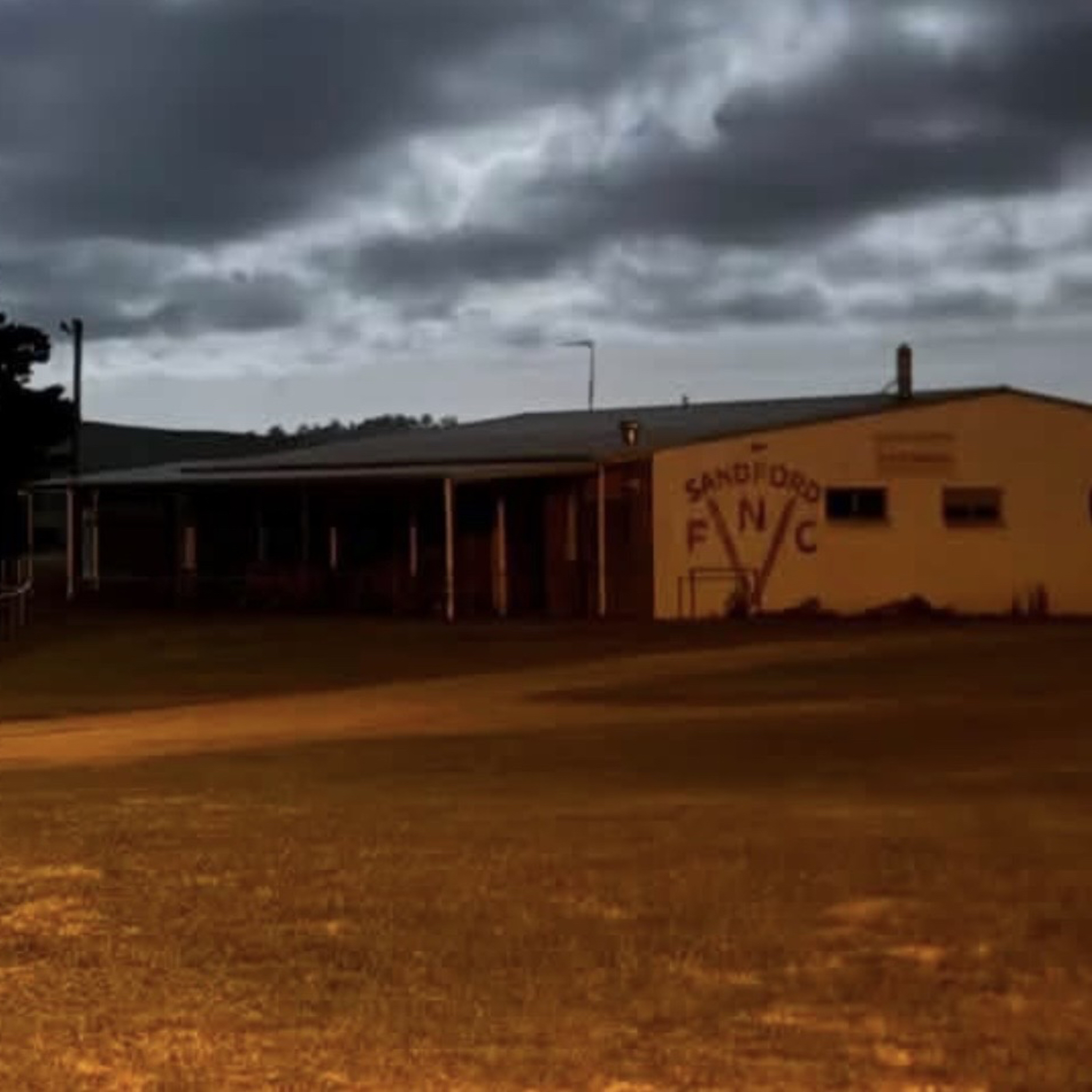
Episode 49 - Sandford Football/Netball Club 140 Year Reunion
58m 49s
The Casterton Connections episode celebrates 140 years of the Sanford Football Netball Club, highlighting its rich history, strong community bonds, and enduring traditions. The club’s "nipple song," created in 1986 to unite players across football and netball, reflects its inclusive spirit. Generations of families—like the Harveys, Lalis, and Doyle—have been central to the club, fostering a sense of belonging beyond sport. Key memories include the 1990 grand final victory after a goalpost break, a 1968 premiership win, and legendary stories of pub antics, training mishaps, and community events. The narrative emphasizes how the club functions as a family, with members sharing personal anecdotes of loyalty, camaraderie, and lifelong connections. From early training runs to post-match gatherings, the culture of mutual support and fun defines the village experience. Emotional reflections from long-time players underscore the deep personal and cultural significance of Sanford, where sport is intertwined with identity, heritage, and community pride. The episode ends on a heartfelt note, celebrating the lasting legacy of a place where people play, grow, and stay connected through shared memories.
Hello and welcome to Casterton Connections. An initiative of Hands Up Casterton where a group
of enthusiastic locals have come together to capture, preserve and share stories of people
who have a connection to Casterton. This Casterton Connections episode celebrates
the 140th year of the Sanford Football Nipple Club. A reunion of all things village and
in the village way, not all things went smoothly. Our sound system wasn't behaving so we apologise
for the equality of our live recording. The banter, friendship and pride in Sanford was
very obvious on the night. We hope to have captured just a little of that camaraderie.
Okay, our personal thing on the agenda tonight is about to call on Shane Guil and Sharon Guil
to take up their little notes on the chairs and we're going to start off the old Sanford
theme song. Okay, so we've got the right people here to do it and it's not me. Now, just
before we sing this song, I want one stubby of VB to live it up to me and I'm not paying
for it and now I'm going to tell you why. At the grand old age of 39, I made a comeback
down here at Sanford, down for the seconds and I'd never got to sing the victory song.
We used to get locked every week by $30 at least but there was one momentous occasion
who applying breakfast home out here in the dead of winter and it was about seven minutes
to go and believe it or not, we could not lose that game and there was a slap of VB stubbies
on the grand before the siren went. Now, what did I do? Rushed up, had a peanut on a sandwich
and a can of fanta and went and did a light shift at the bloody hospital. So I made a stubby.
Thank you, Bert. Way shareable.
Oh, I'm not paying for what you need.
God, I would sing with gusto to the tank song. Oh, we're from Sanford, town. The muddy
village we're from Sanford, town. Out on the field, our boys are never weak or slow.
We ever had a comb, a comb all along and sing the song. We're proud of our girls.
Away from Sanford, town. We have the village, all that boys will stand up tall.
From the big to the small, we have our eyes on the ball away from Sanford.
The red and the white. We have the village, we'll call up a fight. Okay, I'm not funny at all. But the nipple song, the nipple song came about because we didn't have one.
And we were always listening to the football song, which we were very proud of and the village.
And suddenly we had teams of netballers making finals. And we would be running up the dirt tracks
after getting off Charlie McCone's bus. And through the dirt we would be waiting for the
senior footballers at half time to go back on the ground. So the trainers, including
Birgill, would stay at the door and wait and keep guard. So the Helen Harvies and the
Val Harvies, and everyone else, and we could run you in Habershaw in the change rooms.
And now they give you grants for women to have their own change rooms. So have the things
improved. So our football, our netball song, we had to have a tune that we thought everyone
already knew. And I was a bit biased, being married to a Shira. So we chose to go this
year, because everyone could sing it. You all know the tune. So I'm sure you can join
in. And now when it was written, it was 1986. And it was the first year we were having
teams in finals. But I see on here, because it will still rhyme, we're saying 20-26. And
that's great to acknowledge that there will be nipple teams in the finals this year as
well. So here we go, joining close. Down in the field, lich, the news has gone around.
And nipple teams, our finals, bound, will play a fair, we'll play, I'll always play
a fair, we'll play a fair, we'll play a fair, we'll play a fair, we'll play a fair,
we'll play a fair, we'll play a fair, we'll play a fair, we'll play a fair, we'll play
a fair, we'll play a fair, we'll play a fair, we'll play a fair, we'll play a fair,
we'll play a fair, we'll play a fair, we'll play a fair, we'll play a fair, we'll play
a fair, we'll play a fair, we'll play a fair, we'll play a fair, we'll play a fair,
here tonight for different reasons. Rex Harvey could make any good make of health reasons.
John Peach lives in Queensland now, Darryl Baldwin and Bruce Harvey, all members of that
side for the spill hall. Our first A grade netball
premiership team in 1990, which was just something
believable for the club. The members of that
team were lawless low, Tracy Lially, Karen O'Connell,
Denise Gule, Lizard Thimmshurst, Barb Toma, Natalie Toma, Anna Flanders, Paul Humphries,
Sharon Gule and Lynn Kent.
There was a milestone moment for us in the rest for the rest of the evening we have there
traditional readers sponge cake grapple. So everybody that ever come in or fully trained
in Thursday night, read or have the sponge cake here and whoever won the cake, she'd never
lose the room. She'd be cut up and everybody there before we go. So we'll see what happens
through the sponge cake tonight. Okay, so make sure you get a ticket in it just the memory
of Rita. And I would like to mention on that.
'Klanis Mcdonald' has made the cake for us and she's made it in red as old tea.
Later on we have two specials made 140-year reunions to be auctioned.
The auction will be run by our four fully club captain of Matraglion.
Thanks very much for doing that for us.
We appreciate it, and now we'll hear a glass to start the interview.
Okay, let's go.
Thank you.
This village gives a moving race.
No matter what job, creed or race.
This village forms life-long friends.
Never let the spirit of this village end.
Welcome, everyone.
I'd especially like to have my first two guests.
Bartoma and Shane Giddings to the stage.
Shane and Barb were both significant contributors to village life.
Quite a few decades between them, Barb arrived a little earlier than Shane, about 1986 in fact.
So a different era altogether.
Barb completely changed the culture, the neple culture of this club.
We're going to start with Barb.
What was your first impression when you first roped up to Sanford?
Oh, that was put me on the spot.
I was approached, I think, with on the Thursday night.
I was sitting there grooming the dog in these two built walk-in and said,
"Hey, would you like to coach the Sanford Netball Club?"
I said, "Well, okay."
We better have a training run, just play on Saturday.
So we had a training run Friday night from memory.
And then Loa said to me, "Well, we've got two teams, AMV.
We have to pick teams to play tomorrow."
So we had a training run, and I just ran a normal training run from memory.
And I thought, "Oh my gosh, I think I've got a challenge here."
So I picked these two teams, to be honest, I didn't even pick them on a netball ability.
I picked them on their fitness and their agility.
So I announced the two teams, and it was all good.
And then I think a brave little girl came up to me some hours later after I announced the teams.
She said, "Bar, you've picked these teams.
You've picked the girl to weigh a grade.
She's never played netball before."
So that was a good start.
Anyway, that was how I began at Sanford.
So, Fridge, your first impression, when you rocked up in the 2000s?
Mom was a little bit different. Andrew Russell was running a lap,
drinking a long neck as he was running past.
He'd have a skull, put the long neck down, do another lap, and do it.
I was flying a wild, I was like, "Wow."
I like that.
I really don't know where to go, but after that.
I want to touch a little bit on the inclusiveness of the club.
Fridge, I'd like to talk a little bit about that.
The thing I find about the Sanford footy club is it's not a club.
It's a family.
I've been in a lot of footy clubs.
Our one now is not even close.
We talk about it a lot.
There's something about this place.
I'd rock up on a Saturday in four doors open.
I'd get in the car and in the day four doors are shut.
This place will craft my kids.
They're safe no matter what.
I'm pretty sure I got ripped off a lot because I'd go to the bar and I'd already owe 50 bucks before the game started.
But it's just the way it was.
This place is special.
Being involved in footy clubs now.
It's really left us out tasting a mouth, being a such a good club going to another club because it's really hard to find.
That culture and I'm always comparing, you know, serpents to the other club.
So it's really hard.
This place is incredible.
The people in this place have always been incredible.
So welcome and you ain't got to look around here today to see what it's like.
It's not a football club do a lot of these people in their life.
And that's the thing I loved about it.
And everyone, I remember Ali Scott coming over to my house.
I coached after Ali and Ali said exactly the same.
He ended up the board.
He had Pete Jarrett, all these people before me, a coach club, still around the club helping.
They just make this feel so welcome.
And it was just so, it was completely different.
This place made you better.
So those of you that don't know.
Freakies involved heavily involved West Gambia.
So just a question for you, Freakie.
West Gambia play class 7 and 7 in the grand final.
Who are you going to bear it for?
I actually said it out so I before.
It sucks to leave the grand final.
We lost one last year.
My son's playing on my son's playing this year.
I don't think that's a real possibility this year.
I think that's going to happen.
It'll be a bloody miracle if we happen to get that far.
You know, I wouldn't be upset to lose the cast and 7.
He's self that'll really suck at cast and 7.
Lots of bad.
So, but I just want to touch a little bit on the way you change the culture around the club.
Because when I first started playing here, which was back in the 70s,
or just say that quite, I was only a baby.
We would rock up, get out of a car and think, oh shit, we've only got six players.
What are we going to do?
Oh, yeah, we have a cigarette.
And all of a sudden we've got this demon of a coach who's got us running laps and doing all this stuff.
And we're thinking, I can remember someone saying to me after our first game,
you got a 44-gallon drummer D.P.
Because it was pretty, pretty damn rugged.
But by changing the culture within the club to teach us how to play Nepal,
to how to play position in Nepal, but also how to win,
which was something we'd never, ever done.
How did you do that?
I was pretty easy, I was, to be honest.
Because the first game that we had, we were standing in a paddock at MacArthur from memory.
It took stats.
And the stats told me that there was nothing wrong with the ability of these girls,
they just didn't know Nepal.
And you were hungry.
You were hungry to learn.
You just accepted everything that I asked us to do.
You made me feel welcome.
You were just great to work with, you were hungry.
And you took everything I said on board.
And to be honest, I had a lot of, a lot of things in Nepal.
But I've never turned a team around of you girls in 12 months.
And that was purely because you wanted it.
You were dedicated.
You could see that you were achieving.
And you just went from strength to strength.
But you did it all.
I just gave you the drive.
[APPLAUSE]
So it reached just a couple of quick ones.
What's your best on-field memory?
We go on.
Hey, hey.
It's probably not best of it.
I enjoy talking to people like a legend of the club.
I'll give you a cry.
You know, you hear that your coach on the side,
that he classed the best I'd ever played.
I like hearing that stuff.
So it's not really, you know, on-field, be great.
I still remember having a Dartmore guy by the throat.
And he had made by the throat.
We were exchanging pleasantries on the field.
And the umpire ran up and said,
"Don't boys, you're going to throw the white medal away.
We've got done by 80 points.
I've got three votes and won the medal and he missed out.
So I'm stuck with him."
So yeah, that was pretty good.
Okay, another quick one.
The best player.
You've ever coached him.
Those are English and is not one.
You wouldn't be in the top five.
It probably been the bottom five to be fairly honest with you.
Um, no, this club is pretty special.
We had a lot of great players, but you know,
I give this, I was lipping up to this guy before.
nabtu ni'n gwaith. Prowau ni'n gwaith.
a football player, pretty very well on that end.
Your Chris Hart, this club will go all the way.
You know, that guy run through a brick wall for anyone.
And he done it for me many years on,
so he locked me crazy. People like that,
they just kept going.
They're the kind of footballers I like.
Okay, quick or careful for Bob.
I just want you to reflect on the 1986,
which was your first year and we got to the Grand Final
and lost, didn't we, Bob?
And we had a bit of a cheating at Andy and Carol Norsecutts
because this hadn't been built at that time afterwards.
And what happened?
Swamper, would you like to elaborate on this?
Where are we at?
Swamper was hiding in the pantry.
Where are you, Swamper?
He's reminded me several times.
Do you know my speech back there front?
Those girls were the better team on the day,
and they didn't win the Grand Final.
They lost, narrowly, only because they didn't believe
they could win.
So I felt, I failed them,
because I taught them how to play netball.
I hadn't taught them that they were winners.
And I think I might have,
they were visually celebrating coming in second.
And I think from memory I might have told them,
they were better than second.
They should have won, so why are you celebrating?
Is that right, Swamper?
Something like that?
Swamper reminded me of what I said several times,
mainly on the other end of the tennis court.
Now, I'd like you to just reflect a little bit on the,
on the famous 1990s,
first day great primary shift win.
And what happened on that day?
Never happened in my life before,
half a 30 years of netball,
and it hasn't happened since.
The goalpost broke.
Yes, nine goals down.
So we had time, didn't we, Sharon,
to fix all those things that hadn't gone right in the first half,
while someone was fixing the goalposts,
and turned the match around.
Yes, we won by two.
And it was a fabulous feeling,
a great feeling to the club.
Well done.
Yeah, I can remember Karen Brown,
I can't remember who you are.
Yep.
We always said it was Green Power Taylor,
the one with that game.
Green Power Taylor, Karen's Green Day,
used to come every week at matches play.
His standard follow count was to shoot it,
follow around it, chained,
as she was playing,
but it still paid her for every bloody goal she threw.
And Green Power passed away that year.
And we always said it was,
bloody Green Power Taylor,
caused that goalpost to break.
It gave us time to regroup and go on and win the game.
So thanks Green Power Taylor.
(applause)
Okay, I'm just going to finish off with you guys.
Although I think you have touched on it a little bit,
what does the village mean to you?
It means a lot.
This place is very special.
I was saying before at the bar,
to lock my kids at more of a connection to Cass and Sam,
than they do.
We're skimming with it, paid with a lot of their grandfather's,
the great grandfather's in that team in the century,
the grandfather, paid a cast in it,
and I've been a part of the seventh culture and club,
so this place is very special to me and my family.
(applause)
It was the most welcoming club.
I felt very comfortable here.
I felt welcome, I felt appreciate it, I suppose.
And I'll remember it for the netball,
but also for the family life here,
there was always kids in frames and kids running around.
Everybody was looking after everybody else's kids
when they're on and off the court,
and I especially remember all the fun
that we had in this room,
post-matches and post-saturdays.
It was a great environment and a great club,
and I really miss it.
(applause)
Okay, thanks guys, thanks very much.
Yep, yep.
Who's the last person? Go kick up.
Chaffee!
I had decided, paid me to say it.
Thank you.
The layly, broker, and Harvey families
have been on an integral part of the village over generations.
Richard would be the quieter sailing.
(laughter)
And Pam probably the noisiest Harvey.
(laughter)
Both of you grew up in Sanford.
What's your earliest memories of footing and net net?
My first memories was with probably private tokens.
We thought of tokens.
Every Thursday and Friday night,
we came over with sweet rooms out,
probably only six or seven.
Started off that way,
and that was my earliest memory,
and I'm still here today.
Still carrying on.
(laughter)
My earliest would probably be going way back when my dad
he played at the old recreation football ground.
And my mum would all ask for a piece in the car,
and we'd head over there with dad,
Georgie Doyle and Laleys.
Joe, Norm, all those.
So we can remember, you know, down to that old football ground,
as kids, you know,
so it was really fun and we. So you had your dad was a trainer, yeah?
Yeah, and you paid netball
and all your brothers played footy.
And were they all in the premises?
Robert said Bruce didn't play,
but he went and might've been 19 or 20.
Was he Robert I don't know?
You could send him a photo when you were late.
Yeah.
Okay.
Really?
Bruce had a fairly wrap up.
He broke his leg twice,
so he had to get the football away.
Yeah, but I think he was in the 68,
and the bad guys anyway.
Now Richard, you had all your uncles,
I think I don't know when you tell us about how many
your uncles played,
and also, you've got something
really special named Charles today too.
You know, I think all well.
All well, all my uncles played,
fully at some stage of their life,
like Gerald went in and played in Castigan,
and four boys played in the 68 grand final,
and a couple of them were in the team in the century.
So, and so the laylers played for a fair while.
With my hand in the moment,
I've got the 9-8-26 premiership medal
that's my grandfather, Alex Lali, must have won
and I haven't heard of anyone else that's got one,
anyway, and if you'd got one,
let me know.
Bruce would reminisce about that.
Yeah.
(applause)
I mean, that's just incredible.
It's 100-year-old, that medal.
100 years old.
Do you believe that?
Okay.
Um, what, you know, the town,
there's lots of town, play, family names within the town
that have played throughout the time at Sanford.
You know, what was the fuel in the town?
How involved was the actual town ship?
I know, for example, Richard,
before this bill, the pub was the hub,
and there were so many generations of laylers
that went through the pub as well.
Can you reminisce on any of the shenanigans
you may have heard of, or that you remember
that happened at the pub?
(laughter)
Well, I think everyone has been in this room
to know it's been into the pub.
So back in my day, having a pub
like my memory sort of went when I was in the pub.
(laughter)
So I can't remember many playing days and stuff like that.
But yeah, there's a lot of stories to tell.
Like, hey, carding, wood shops.
Even when we built this, this was a big building.
We thought, "Oh, we've got a bit of a worker bee."
So we started digging.
It was like 35 degrees.
And then we dug all the foundations and never
and then someone decided, "Let's put that in war up today."
So we put the in war up,
and come back next day after a few sheriffs
and a barbecue.
Yeah, the war was filled down here.
(laughter)
Well, I don't know the concrete, but maybe so that means.
(laughter)
So Pam, do you remember the other families
that played my channel?
To be the moral girls, Nickball?
And I've heard you tell stories
about people having to dig their lines out.
When I first started playing over at the State School,
but there was a court here somewhere?
[BLANK_AUDIO]
there was just one, yeah it was just one that was some of the two Nora schools and
had the hotel, Charlie, Bonnie, Dorena, June, I played and Helen Jones and
Jeannie McKayne, Jeannie Larley, and we often used to call Pat Humphries in for a
live game but she used to have to milk the cows before she can so she's coming
about the boots and all the paynecks. But she filled in, I remember in 80s in the
middle 80s we decided because we as you said we played at school that's down
at court we had and Karen O'Connell, Karen Graham was secretary and I was
president and we thought I'll blow this, we'll do some records and have some
nights and things to raise money, so we could build around court I think
so anyhow we had all this fundraising and that and I think we had to have
six thousand dollars at the time and Helen, Karen was working in Hamilton so
someone said to put us all in here but she get just big interest and of course
everyone knows what pyramid was from July and Karen I don't whether she can
remember but we were, she was working in Hamilton and she rang me up and she
said oh Payne, she said I've just been up the street, let's talk about
pyramid going bus, what do you think we should do with our money and this was our
six thousand dollars that would really really hard to get, so anyhow I got in
the car and bit Karen and Hamilton, I don't know if she can remember this, can you
Karen and we withdrew it all out on the Tuesday or Wednesday or something
and pyramid went fast on the Friday so we were lucky we got all our money just
because of Karen here in Colt, yeah that was good, yeah there was other stories
about how he used to rock up in the roles to play because he had to go to a
dance but not, that was Rita, my order was you too, we did her a one time we used to
play a hero and the girl gashes they were really good net bulls but we were
over it's like you know so Rita had the hair and rolls because she was playing and I
had jaw blades and I had to wear a pair of pink fluffy shirt slippers, you're
playing pink slippers, no I don't hate chess those days, well you got flogged, did you?
we went to Yambak, we went to Yambak and there was six of us and we thought oh it's
only six oh there's Sessley Connan sitting over in the car there she's come with
Jimmy a boyfriend, Sessley Kent at the time, we'll get her out to play so we've got
drag around the car and she had wheat, you know the wheat, the cork platform shoes on
so she couldn't play anything there or store all the white, all bloody play then
she said, so she gets out there and the umpire is telling you to tow the line she's
"I can't tow the bloody line, I can't even see where the line is" and what was that score?
we got beat with 96 to 4, but it was a good fun, oh dear, so just a quicky to finish
off with you guys, you know what does Samford me to you?
Oh it was really great, like oh okay, yeah we all grew up and now we've all just played
of course next ball right through and um Colomat involved really heavily with the footy club
and act so um yeah we really miss it but it's lovely to come back, we've been in
gelong 25 years now but we still keep up with all the golf golf and everything so yeah it's
a great little tan to grow up with.
Okay yeah well Samford to me is everything really up in your own life, school here made
the cast in school didn't do much good but um yeah everyone here has been around the
football club that we bought the pub, started that off been there 15 years, it's been disappointing
now when you draw around the corner it's fallen down, a lot of memories in there and a
lot of memories in the club itself so yeah I've played, I have a 300 senior games here
and loved every minute of it so that's why everyone's here, it's fantastic turn out
and really special, the people that put in the effort to make the effort to come here
and the ones that done a lot of work, well done, thanks so much guys, I really appreciate
your time and thanks for not telling any tales Pam.
968 prepship player Bruce Elijah along with the Jeremy Cameron of the village Kim Dozer
also and accompanying them is the Barbie doll of the netball court Kerry Harvey.
Start with you Bruce, congratulations on your prepship in 1968, 8 years ago, what actually
brought you to the village? Well that's a very good story because I just loved the village
because I couldn't get a game of casting and anyway at the age of 21 I was a little
mate Rexie Harvey, Denny Harvey who was by far the best player I played with but I played
with some other very good players that Rexie was very very good but who invited me to come
out at the age of 21 after playing tennis for ten years and I loved football so I thought
out to the village I go and would you believe it the first year I played one of a prepship
and I thought this game is easy. So I developed from there and I went on through the years
with some great players and you know there's a few here tonight that played with us in 68
Bosos here, Joey's here, Joey Smith, Robbie Harp is here, Manny Collins here, Manny's
over there, full back, Manny, Manny drove a truck, I don't know when you know that and
still does. But our coach in Humphrey who was just an
absolutely brilliant player, Manny had ringing up every Tuesday and Thursday night and so
you're sorry I can't come to training, I'm here in that straight down he was alone so
Manny didn't try to help a lot but I'll tell you what, full back he was just a fantastic
player. We won the 68 grand final but I halfway through the ring said to us all because
I think we can win this prepship. Now it's a bit unusual for a coach to say to a team
that you can win a prepship but we decided amongst ourselves that we'd have a really
red hot go. At the end of training every night Ian would take us over to the race course
which is out there as you all know and we had to do a lap of the race course. Remember
that Bozo? Yeah so at the time the grand final came against Cavendish we were very very
fit and I could go on and on about this but I better not have I? No thanks. We will come
back to you because there is a few other questions I want to ask but I can see that the
local side was champion of the deck to say something. I don't know, I can keep him quite
for too long. When was the first show you played who coached? I think my first game here
would have been in the reserves. I think it would have been in 99 and Mark White would
have coached Whitey and then I would have played my first senior game. I can remember it
was against Weston's here. I think I played reserves that day as well and then back in
the days when you know forget about rotations I sat on the bench for three quarters I
come on in the last quarter but first he would have been the coach. And Kerry, don't
blush. Do you remember your first game and how old you were? Well don't really remember
my first game but it was in 95 and you weren't really allowed to be playing then because you
weren't supposed to play to. I think it was high school but I was just feeling for that
year because here all the time with Mum so drag on the court really.
So, back to Bruce, you're mentioning many more about driving the trucks and stuff.
Now, if anyone has seen the 68th Premiership photo, there's four people missing.
Manic Harlem, Joey Smith, Ann Lewis, and I think the boy you bold, why you bold.
Now, I've heard several rumors.
I heard that the photo was taken over at the school, the day after the grand final,
and they didn't turn up because they were still drunk and hung over.
However, many times tonight, that could not have possibly been true,
that he was actually probably working.
What's your verdict on that?
Now, I can guarantee they were all drunk.
One more guy from the 68th Premiership is Cole Brooker.
He's out there somewhere, and Cole had, we had a, I told him before the,
I remember a little story where we were up at Cavingish one day,
and we're kicking down to the long end.
And anyway, the ball went out of bounds near the goalposts and Cole jumped the fence,
and immediately jumped straight back over the fence.
There was a dirty, great snake right beside the ball.
We did retrieve the ball and carry on.
So, Dosa, you would have won.
Well, I think you're the Jeremy Cameron, a Samford really.
Brilliant goalkeeper, grateful forward, I hate pumping up, but you were.
You would have won a few league, best in golfing in a ball, so I presume.
I know you did at Samford, and also, did you have a hand pass?
Wouldn't it have been worse to waste the time?
I let league, oh yeah, yeah, I think so, he probably won one.
One, one here, one, one here, so, yeah, more, more, one, one, one, two or three.
Maybe I'm not sure, but yeah, look, you know, it's a forward-lowest.
You're only as good as the supply you give it.
So, all the credit goes to everyone else, doesn't it, doesn't it?
[APPLAUSE]
That really hurt, didn't it?
So, Kessler, what about your scoring?
I'm talking about on the netball court now.
[LAUGHTER]
Well, I, I don't know whether many people know this.
Carey's actually married, and his name is B.
That is true, isn't he, Kessler?
That is true.
Right?
So, I was planning on moving away after school, and I was underage.
So, I got a little lead card, and got to go on the netball trip.
My mom got to go, and I was underage.
So, not naming names, but I got handcuffed to a fella in a pub.
And, of course, legally, no land-gun get drinks.
So, obviously, someone was getting them.
Then, the next thing that Annie's got her jacket on back
the front, she's the meanest stuff.
Lisa Poole was the flail girl.
And I got married to this guy, well, we're handcuffed to him.
And then, of course, the next time I went into it,
he's might say, since--
Yeah.
[LAUGHTER]
Go to his job, apparently.
I didn't know about that.
Carrie, there's another thing that you were telling me about.
When I asked you about, you know, how many premierships you'd won,
and so forth, and you would have won a few MVPs, and all that sort of stuff.
And Carrie says to me, oh, I don't really know.
I have to go through all my medals.
But she did win something really special.
Tell us about the park, the Jody MacMac.
Got few.
Oh, I shouldn't do your hair.
[LAUGHTER]
So we had one year, and I was playing A-grade Danny then.
And-- oh, I don't know.
My truck had saved me.
Anyways, I spent a fair bit of time on the bench,
and we're about to get the new Courts built in Jody Mac.
See, Jimmy, Kaz, maybe we'll get a little plaque.
We'll put down the bench, we'll put your name on it.
Due to the character, one is benching me.
Pumping me up?
Get there. Get on your bench.
[LAUGHTER]
OK, just a few things to finish off with.
What's some of the funniest memories
that you've had at Samford?
Each of you.
I guess one of the funniest was when we went spotlighting on night.
And there was four of our trucks, and we're
hardly geared up with shotguns, rifles, bone arrows, whatever
else we've had.
And out we went for five hours and ran the moccombaura
on all over the hills, and we had decided
to gather at the moccombaura to finish and camp the rabbits.
We got home, and at 1 a.m. in the morning,
there was not one rabbit caught.
So I guess it was very, very good for the farmers
that there was no rabbits around.
There's another story.
We went woodcutting one day.
And again, we gathered around 1030 in the morning
and caught a lot of us in different fields and so on.
Chainsaws and ready to go.
And we left for the moccombaura again, and out we went.
And oh, we had a couple of drinks as we went.
And we lit a fire, had lunch around 1 o'clock, 1230.
Hadn't started the chainsaws, but by 3 o'clock,
the drinks were going very well.
And we decided we'd better go home.
We never had any wood.
Yeah, well, there's probably two things
that I think are in regard to that.
Probably the first one is, and we don't condone drinking blows.
We don't, but my first footy treat.
Now, I remember it, we were like,
me and Pester P to born pretty much the same age.
And we were chomping at the bit going of footy treat.
We got off we go to our labelling.
So as you did, you made a penis carpark as it was.
I think it's elders carpark, man.
So 7 o'clock in the morning on the last day of labelling.
No worries.
Young and coppy, so I said, right, oh, big sun.
I'm going to drink with you.
By the time we got to tail and bend, my memory is,
we drank 21 VB stubbies.
I was first out of the bus, and I fell out.
He was second out, and he just stood beside me.
Look at me going, eh, eh, eh, eh, eh, eh, eh, eh.
They're walking into the pub.
I'm probably the second thing that, you know,
and Bryson, I was only talking about this not long ago.
We took, like, like, years ago, early 2000s.
I'm pretty sure Hursty was the coach.
You know, the ground used to get a bit hard.
So we had a time we used to train at the fire track
in there at Castanon, not Australia, I think it is.
The fire track track.
Anyway, so, you know, I stick at Hartman in the summer,
you know, preseason.
I'm trying to, you know, this is, this is, you know,
we're talking 20 years before Gover.
So the old, the drinks was the old, you know,
you bring out the, you know, the 20 cups and the 180-liter,
you know, container with the, with the big block of us.
And then Jim Gell was in charge of this at the time.
Now, I'm not suggesting, for a minute,
that Gary didn't mind a tip, but you'd have a drink
and you just had this film on your mouth
and, you know, just really, really strange toast
in your mouth.
And the more you drank the first year, you got.
And it was really, really strange.
And the water was really cloudy.
So we come back down to Sam, and these were not for months
before we took a bit of a deep dive
and a forensic investigation into what was going on.
Well, what gave him was doing it?
He was filling up, not even a hand, he knew this.
He was filling up a cask support, empty cask support
to make the ice blocks.
(audience laughs)
Well, I reckon he must have only half drank it.
(audience laughs)
Because what we were drinking all pre-season
was half-port, half-water.
(audience laughs)
These big ice blocks, clear any water.
And it was horrendous.
And we were really, really, really angry with that.
So you're going, you're having a drink,
and you're like, "Jesus, this is terrible."
And then you move on,
and then you get cursed, it's freaking pure cordial
'cause he was a diabetic.
(audience laughs)
So yeah, we were no good that year,
and I put it down on the fact that for all pre-season
we were half-tissed drinking it.
Gayo is poor.
(audience applauding)
- There were probably many funny times over the years,
whether it would be neckbone tricks
or people flushing monies on the way home
from neckbone, you'd be dropping along
and all of a sudden the cows pulled out
for somebody taking a look, there it is.
(audience laughing)
But one thing that does sick out, which funny,
good for the club, I don't know,
it was a real club person, the coach was.
We needed a defeat machine.
Back then there was no grants or anything like that,
so shiny gittings it says, well,
if you can raise $1,000,
Carrie can wax my back and my chest.
(audience laughing)
So that we did, better raise that straight away.
So up on the stage, up in the front here,
I had been waxing dead there,
we did the back and the heart rate went out
and he doesn't obviously have a great heart,
so when we got through that,
and then we optioned off some strips.
So I paid about the pull off a strip
and every strip on the chest,
he came up with this clenched, ready to go,
and we saw, ah ah, back down you go.
(audience laughing)
Not a knife, would you be ahead of him since?
(audience laughing)
For now, I saw him on the final.
(audience laughing)
(audience laughing)
Okay, we'll just finish off on a serious note.
And asking each of you,
one of us to everyone else,
what does the village mean to you?
Start with your kiss.
- Well, I obviously played all my neck ball
out here in two in March,
so it was I guess home every Saturday,
every Thursday night, from the time,
I could probably, I don't know,
walk when mum was always out there playing,
and I'll talk three apparently, I was.
So yeah, it was home, everyone was welcoming,
there was no, oh, we don't talk to them,
we don't talk to that one.
It was, yeah, really, really good.
Loved every minute of it, Eddie.
(audience applauding)
- Yeah, a lot of stuff, I think, you know,
just probably a quick anecdote to, you know,
describe the, you know, what Sam meant to me is,
I'm just back from New Zealand on a trip,
without the family, and three weeks ago,
just before I went, the weekend before I went,
South Gambia, where I played a few years,
which is a fantastic club,
they had their 100 year celebration,
I was mentioning, speaking to Megan about this,
and she's like, why aren't you going?
I'm like, I look, trying to do the right thing
by the family, you know, like a few things coming up,
so she's like, yeah, but it's really, really important,
and then I said, look, I said, it is,
but I've got the Samford 140 reunion you're coming up,
and that's home.
(audience applauding)
- Well, as I said, the Samford Club gave me a chance
to play football, I had a great number of years
and was very chuffed to end up in the team of the Century,
and I was just so happy that I was welcome down here.
However, the Castleton Club also played a big part
in my life, in that my father was secretary in the 1950s,
and I've casted a football club,
and I spent many Saturday down in the club rooms
with, as a 10 year old boy, with all those players,
and I'm going to work, go tomorrow and see Shane,
and thank you for giving me a call the other day, Shane,
I appreciate it that, and I do wish the two clubs
that have joined that we can really make something
of this year.
I think we're in a sensational position to win,
one premiership made to a net ball and a football,
and all the very best, Shane, thank you very much.
(audience applauding)
My memories of Sanford are celebrated in the pub
and the new club rooms.
Thursday night dinners after training,
the awesome ladies' committee, family nights after games,
hey, Caddy, good shopping, summer training,
the almost always top of the table netball teams,
and the sometimes top of the table footy teams,
the dozens of people who put in because they love the club,
the way to be involved felt more like a family
than anything else.
I love my time at Sanford, so when Richard and Tracy asked me
to write a poem, I was more than happy.
My only regret is that I can't be there in person.
Football at the village.
I took a trip not long ago,
where the country makes me shitter,
past what was the old town pub,
down across the one in River.
The day was cool, the wind was still,
I could hardly hear a sound,
leaving on the old pipe fence of the Sanford football ground.
I walked across the village grass,
the light now fading out,
then in the cold, still air of winter,
I thought I heard them shout.
Kick the ball to swamp it.
You couldn't hit a barn.
Great mark, Ivan Tomkins.
Free kick, David Karen.
That's standing in the middle.
The memories all flowed back.
Emma, taking screeners,
Darren Karen, bus to pack.
I remember driving through the gates,
pouring rain or nice and sunny,
and every day I ever played,
doodles there to take your money.
Across the ground, behind the coach's box,
there's a picture forming in my head,
McFadden, with a long neck
at the Sunday session shed.
Cars have lined the boundary.
No matter who the village first,
cheering names like Sullivan,
Harvey, Doyle and Hurst,
and when Hacker lonely waved the flags,
although you'd have to try,
you didn't have to kick him straight,
just kick him bloody high.
Sometimes our skills weren't quite as good,
and other teams were fed up,
but the opposition always knew,
yet don't fuck with the fritter.
Remember, Ian Humphrey's telling us,
you played just as you trained,
and Jackie Smith could get a kick,
but not many meters gained.
Paul Herbert, starting all in ball,
then what's the opposition's suck,
or hit one in a crunchy tackle laid by Johnny Brook?
Nick Harris, take a saving mark.
John O, get the ball and go,
and those who work behind the scenes,
Andy Northgeth, Gavin Low.
Do you remember David Miller?
How Rex Harvey played the game?
Things have changed so much since then.
Nothing stays the same.
Now it's cold and dark and soaking wet.
And as I sit down on the grass,
I see something in this piece of dirt
that in mind memory always lasts.
Hard as rock in autumn,
then in the winter time it's mud,
but when you breathe the village air,
it gets into your blood.
Thanks for the opportunity.
Wish I was there.
(soft music)
We hope you've enjoyed today's episode
of one of our homegrown heroes.
Jump over to one of our other episodes
to continue the casted and connections journey with us.
Please don't forget to follow our podcast
and share it with your family and friends.
Thank you for listening.
(soft music)
Podcast Summary
Key Points:
The Sanford Football Netball Club celebrates its 140th anniversary with a reunion highlighting decades of community spirit, inclusiveness, and enduring traditions.
The club’s iconic "nipple song" originated in 1986 as a response to the growing presence of netball teams, creating a unifying anthem that all residents could sing.
Pioneering figures like Barb and Shane Giddings transformed the club’s culture by emphasizing skill development, team unity, and emotional growth over mere competition.
Generational involvement from families like the Harvey, Lali, and Doyle clans underscores the deep-rooted, familial nature of village life and sportsmanship.
Memorable moments include the 1990 grand final win after a goalpost break, the 1968 premiership team, and legendary stories of pub shenanigans, training antics, and drinking traditions.
The community fosters strong bonds through shared activities like post-game gatherings, fundraising, and family-oriented events.
The club’s identity is rooted in inclusivity, welcoming people of all backgrounds, ages, and abilities, where belonging is more important than winning.
Personal and emotional reflections emphasize the lifelong impact of playing and being part of the village, with many attendees expressing deep nostalgia and gratitude.
Summary:
The Casterton Connections episode celebrates 140 years of the Sanford Football Netball Club, highlighting its rich history, strong community bonds, and enduring traditions. The club’s "nipple song," created in 1986 to unite players across football and netball, reflects its inclusive spirit. Generations of families—like the Harveys, Lalis, and Doyle—have been central to the club, fostering a sense of belonging beyond sport.
Key memories include the 1990 grand final victory after a goalpost break, a 1968 premiership win, and legendary stories of pub antics, training mishaps, and community events. The narrative emphasizes how the club functions as a family, with members sharing personal anecdotes of loyalty, camaraderie, and lifelong connections. From early training runs to post-match gatherings, the culture of mutual support and fun defines the village experience.
Emotional reflections from long-time players underscore the deep personal and cultural significance of Sanford, where sport is intertwined with identity, heritage, and community pride. The episode ends on a heartfelt note, celebrating the lasting legacy of a place where people play, grow, and stay connected through shared memories.
FAQs
The song originated in 1986 when the club needed a tune that everyone could sing, especially as netball teams began competing in finals. Since they already had a strong football song, they adapted it to include netball, and it became a unifying tradition for the community.
Barb Gule was instrumental in transforming the netball culture in the 1980s by coaching with a focus on skill development and team spirit. Her leadership helped establish a winning culture, and she is credited with teaching players not just how to play, but how to win.
The 1990 win was historic as it was the first premiership in the club's history. It was a turning point, marked by a dramatic comeback after the goalpost broke, allowing the team to regroup and win by just two goals, which became a defining moment in club history.
The club functioned more like a family than a typical sports organization. Members shared meals, supported each other’s families, hosted celebrations, and created traditions like post-game gatherings, making everyone feel included and valued.
The pub served as the social and cultural hub of the village, where players and families gathered after games, shared stories, and built lasting friendships. It was central to the club’s identity and community spirit over generations.
The 1968 premiership team included Bruce Elijah, Joey Smith, Manny Collins, and Rex Harvey. Notably, the photo from that year is missing four players—Manic Harlem, Ann Lewis, and others—leading to stories about them being drunk or working at the time.
Chat with AI
Loading...
Pro features
Go deeper with this episode
Unlock creator-grade tools that turn any transcript into show notes and subtitle files.
 PodcastTranscript AI