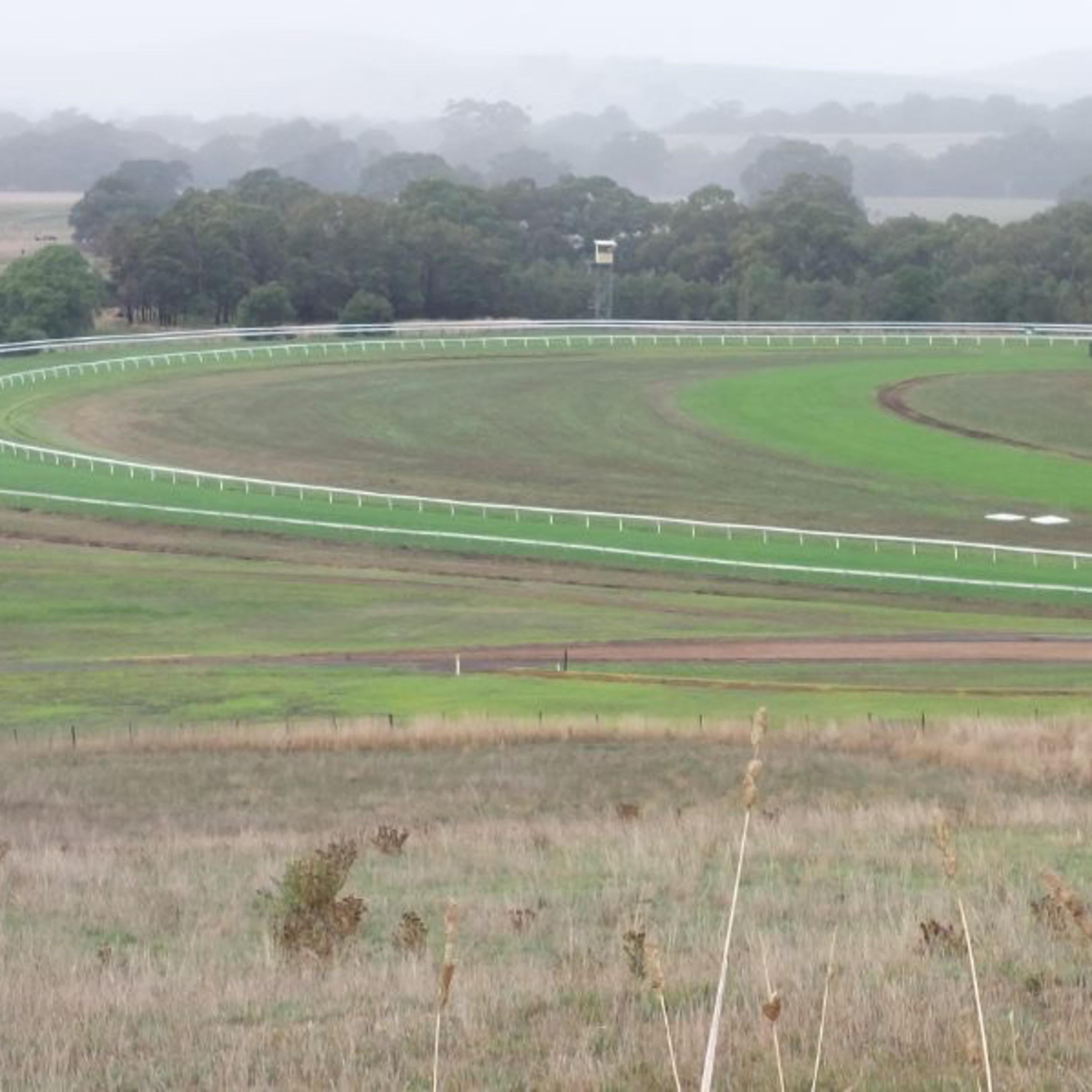
Episode 45 - 1972 Casterton Cup: The Royal School/Regal Vista Scandal
53m 0s
The 1972 Casted & Cup meeting became infamous due to a meticulously planned ring-in scandal. A horse named Royal School, purchased for $350 in New South Wales, was substituted for the inferior Regal Vista after being deliberately raced poorly in Gippsland to avoid suspicion. The deception was executed with precision: the horse was quickly removed from the track after winning, and the owner, Rick Renzella, collected the trophy before fleeing. Jockey Jim Serke, who rode the third-place horse, identified the ring-in immediately after the race, noting Royal School's superior performance. The betting plunge was dramatic, with odds dropping from 50-1 to 7-4, and substantial sums were wagered across multiple locations, including Darwin and Adelaide. However, much of the winnings remained uncollected due to fear of exposure. The subsequent legal proceedings resulted in Renzella serving two years in prison, while the trainer and jockey received life bans from racing. The horse itself was also banned for life. The scandal brought lasting notoriety to Casted, with local figures like Father Kirby, who donated the trophy, expressing deep regret. Despite the shame, the event remains a notable part of the town's racing history, illustrating both the audacity of the scheme and the enduring consequences for those involved.
[Music] Hello and welcome to Casted & Connections. An initiative of Hands Up Casted & where a group of enthusiastic locals have come together to capture, preserve and share stories of people who have a connection to Casted & Connections. [Music] In this episode of Casted & Connections, we are exploring an event where one horse was replaced by a much better horse for monetary gains. The clever deception took place at the Casted & Cup meeting in 1972. A date the bought in for me to the town of Casted & Connections. We are chatting to four people that were there on course that day and they are sharing their recollections with us. Jeff Mitchell's grandfather Harry was president of the South West District Racing Association and a committee member of the VRC. So the Mitchell family involvement in writing at Casted & Goes back a long way. Now, Jeffrey, welcome. Thank you. We just wonder about your recollections of the day. recollections of the day. Casted in June the fourth, 72. Casted & Cup meeting which was held on Friday because it was at TAB meeting in the nose days. Country racing got the big races on the Friday and then we'd race again on the Saturday. It was just a normal day's racing for all concerned. It was a few of the air for all the fashions in the field and everything but just normal, up much excitement. You win the fashions on the field? No, I didn't go in that year. Okay, just what I'd ask. So, do you remember the race being run? Yes, I remember the finish of it. The race itself didn't sort of know memorable moments out of it. Apex star that was the favourite was in a handy position for most of the race and then everybody got to their feet on the corner when this royal school came out of the blue and flew down the street. Jockey trying not to make it win by too much but he had no hyperholding it and everybody looked at it and thought what happened here. So, you're saying that Jockey was holding it back? Well, without trying to be obvious but he wasn't, he definitely wasn't urging it on. He didn't have to. Once he let it go, it just went. So, were you aware that there was something fishy or? No, nobody had any idea until weight was declared and after weight was declared, trying to have a name of Serke told the trainer of Apex star that he believed it was a ring in and named the horse as a regal vista that he had seen both over the run on separate occasions and could tell the difference in them. The reason he didn't tell him until afterwards was that he backed the horse himself when he saw a big plunge in the bedding and didn't know anything about bringing the plunge in the bedding and thought well I better get on this too and he went, nobody knows how much he won but he probably won a fair bit. So, that was on course? That was on course, he backed the chairs. So, were all the other bits in because there was only a slight plunge on course or a gym picked up on it? It came from 50 to 1 into 7 to 4. So, there was a fair bit of money on course, paid dividend, TAB, dividend of $3.50 which in those days are on a 50 cent bet, not a dollar bet. So, equivalent to $6.47.60 today. The double paid $111.90 which wasn't bad money for 50 cents. So, what else happened on the course that day? What after the race, what's all the rumours about where the horse went? What happened? After a circuit told, but you know from Hamilton, the track, the track, the track, the track, the track, the track, the stewards called for the horse straight away but the horse was gone, drive as soon as it came off the track. They didn't even wash it down, they just put it straight on the track and the way they went. Renzella, the owner of the horse, stayed and collected the trophy. And I was basically collected whatever money he had on the horse and the way he went. So then Ruma went right for the rest of the afternoon as to what was happening. The whole thing was so well planned because they bought the horse in New South Wales. They raised him twice in Gipslein. This is Royal School. They raised him twice in Gipslein and he came last and second last in Gipslein. Then they moved him as far away from Gipslein as they could stay in Victoria and brought him to Castan and knew that the stewards in Gipslein wouldn't be the stewards in Castan so they weren't going to notice anything. And that was, it's that well planned that they would have got away with it if it wasn't for the circuit, noticing the difference in the horses. I'd actually read somewhere where they were saying, you know, like the fine cotton ring in one was knowing it was a bungal practice. I compared to this. This was so well planned. It was planned two years in the planning. They bought the horse in New South Wales. They paid $350 for him. He won one race in New South Country race in New South Wales and that was about all he did. He was bought because he was a donkey and because he did look a lot like Regal Vista. So that far back was? It was planned that far back. Yeah. Now it was planned from the day they bought the horse. That's what they're going to do. So when you say die, do you know who they are? Rick Renzella and another chap by the name of Martin MacDomara. He was a co-owner of it. The two of them bought them. As to how much MacDomara had to do with it, I'm not sure, but he was a co-owner and he got banned with the rest of them for his involvement. But I don't think he wasn't on the course. He wasn't. He was a sort of tried to be a silent partner. So this whole sting was quite sophisticated because we hear that there was money taken out of Darwin and Adelaide and Melbourne. Very sophisticated. It was backed. The betting on it, I've discovered, it was a bit strange. Renzella the next day went into a T.I.B. in Melbourne and drove out 33, $750. There were two people that had found accounts and they got $9,000 and $16,000. There was still $61,000 that no one knows whether it was really collected and if it was, they think that they probably didn't collect it because once the ring-in was discovered they thought, "Well, we're in trouble if we go and collect this bet so it could maybe still be sitting there and collect it." 61,000 days a hell of a lot of money enough to collect if you had the tickets for it. I should donated the cast and racing club really, shouldn't I? We had a good idea. All the Jeff Mitchell superannuation funders. I bought us fame and it may have bought us shame that we didn't actually work it out but it was that sophisticated and event. So after that there was court cases and your Harry Mitchell was involved. Yeah, for start off there was the racing inquiry into it which took place in Melbourne, war-warnable and then moved to Melbourne because they suddenly got QC's on both sides and big time inquiry and then it moved that the police charged all the people involved with fraud. So it became a civil matter and it went on for weeks and weeks and weeks and my grandfather was away from home. I'd been probably six weeks or in all not in one stint but
in Melbourne for court cases and then back and then back down there, he cheered the inquiry into it at the racing level, but then he was at the legal level he was there to give evidence. And what were the results of the racing inquiry? They pretty well handed it straight over to the law once the law got involved in the criminal case of it and left their options open, I suppose, that if the law didn't penalise them, then they would have, but they left that to the law to work out the penalties. Back to the race, the jockey said to the jockey of the second horse, "Hey, Pekstar," he said, "I've got to win this race. I've got a lot of money to get on it." He told them afterwards he got $4,000 for riding the horse, the race was only worth $500. That was a fair bit of money, yeah. So what happened to him in the end? So it was the jockey? The transport operator? Branzella was the owner and major instigator. He spent two years in prison. The co-owner, Mac tomorrow, I'm not sure what he got. Caravan, the driver, and Affleck, Kennavar, the driver, got 12 years, banned from race course. Would the jockey be the jockey? He got 22 years, banned from racing. Affleck, the trainer, got life banned from training, and Branzella, two years, and life banned for training. Royal school, the horse, they banned it too. It must have been complicit in the arrangements. Of course. Although the horse had no idea what was going on and did nothing wrong. It didn't even race. It didn't matter. It was banned for life. Oh, probably. Who knows where that pool thing ended up? I've read since that the trainer, Affleck, that was banned for life afterwards, got a job in Queensland as a steward. Oh, really? Under a different name. Really? Did they ever find Regal Vista? No, they didn't. They found Royal School, but they never found Regal Vista again. I don't think it just disappeared. What about immediately after the race, the trophy was presented by local parish priests? Everything at that stage was all. No one knew anything. The president of the club at the time was Kevin Stark. He presented the trophy. The trophy was donated by the parish priest who was on the committee of the race course. He was devastated that a scandal like Ranzella would end up with his trophy and he went to his grave, regretting that he ever gave that man a trophy. So was that Father Kirby? Father Kirby, yeah. So you used to have bits of shingh noodles up in the press retreat, didn't you? After the races, he had a hell of a party up there anybody that came to town for the races they were invited to his party. I was invited, Cain, I were invited. We had people from Hamilton staying with us and the reason I got invited, I used to play cards with him on a Wednesday night, but. That wouldn't be 500. Solo we played? Yeah. There's another part of this story, the Mordenhylth, Steple. Got nothing to do with bring-ins. No. Unless we're your tellers. No, we've laughed him a grandfather died. I asked the racing club if we could sponsor a race in his name and well in the name of the property, in honour of him. I know I insisted to be a steeple because steeple as races were what he really liked and that's what I like. So we're still going today with the Mordenhylth Steple. Something else to that though, too, isn't it, the actual hedges? Yeah, he was on the committee involved in the planning of the hedges, which for those that don't know, that's the only race course I think in Australia, definitely Victoria, but the way they race over the life hedges and that's for those that haven't been, they want to go and have a look at a steeple chase and cast it in the course. It is magnificent. Just the horsemanship and stuff. Yeah, it's like the old fashioned hunting the hands and point-to-point races and that's how it's the skills of the jockeys and just the sheer love of the horses jumping the fences. They really enjoy the race. That's good. So we're with the hedges planned, do you know? Early in the last century. Yeah, yeah. Yeah, yeah. No one had 20 problems. Yeah, around then. Okay. So they still the original ones? Yes. They would have to be replanted, wouldn't they? No, they just keep ruining them and they keep grounded. So what is the actual plan? They retire a pivot, I think. Okay. Yeah. I don't know. I've been close to them that I'd say a pivot. I'm not a botanist. No, and you have many hats, Jeffrey. Yeah, but that's not one of them. Dear, well, thanks for your memories of the day. No problem. Yeah, and your knowledge about what happened? The insides. Yeah, it's a famous connection. A lot of history between the Mitchell's and the race and the racing at Castel. And I followed it probably more than others because of the grandfather's connection. He came home from the inquiry and he told them to tell us what went on and then he came home from the lore and Melbourne. Yeah, it was an interesting time. Yeah. And the Mitchell's with a race horse owners. Never owned a race horse and I wouldn't have called him a ponder either. He hardly ever had a bet. He just loved the atmosphere of a race course. Horse flushing, people connected with racing. Great history. Thanks, Jeff. Today we're speaking with Michael O'Connell, a life member of the Castelton Racing Club. And part of it today's journey is about looking at the reflections and the recollections of people that were on course that fateful day of the month and handy cap in 1972 with a an event that bought fame and shame to Castelton, the ring in between Rawl's school and Marie Galvestre. And Michael, you were on course that day? How did you end up on course that day? I was up north, I had a broken hill sharing. We came home to Castelton because we had about a week to spare and before we went back up to sharing another shed. And so I had worked at the Barrett as a barrier of ten to the Castelton race club for a couple of years beforehand. And anyway, I came back and Jack Gorman, as you call him the manager now, he said to me, "Can you work on the stalls?" And I said, "Yeah, I can work on the barrier. I can be a barrier attendant." So I was out there and the Castelton Cup came up of course, which was a race that was getting better in the middle of the afternoon. And I was standing at the back of the stalls and a couple of horses came around and another little horse came around and a little bit smaller than the two previous ones in. And I thought to myself, "Gee, that's a smart looking horse." I don't know what that is, no, I didn't have a rice book with me so I couldn't look it up. Anyway, we put them in the barriers and away they went. And of course the race was run in one by Royal School, as we found out later, Regal Vista. But when we, when I was race day finished, because I never come off for course. So when the race day finished I was out the back and just got in the car and went home, probably paid. I think back in those days I got $7 for the day. So I went home and next morning we were going back up to back up to Broken Hill this year and we were sharing about 200 more. I only have a side of Broken Hill this next station and oh yeah, we headed off at about four o'clock in the morning because we needed to get to Broken Hill for a midday session. Who's way me? Who was with you? Bobby Child and I had a David Benesim myself. Anyway, we get up there.
nd of course a few beers and we went on and had it up to break out to to Mount Stewart out of Mill Prinker and anyway so we're sure for the week and come back in town on Saturday morning. Into Broken Hill. Broken Hill. Got a got a paper and here's all about casting and cupping Royal School and that was the first thing I'd heard about it from from after I'd let him out of the stalls so that was about my my involvement actually with the actual running of the cast in Coffin. Michael, did you or did you not hear something at the back of the barriers from a jockey? I heard a bit of a, I heard a jockey say to one of the jockey mates that he said I hope this thing can win because I'll get a few ball if it does. So that was the jockey of? That was the jockey of Royal School. And I forget I think his name was Wood. And so that's yeah and of course they're not heard later about Jim Serke being there because I think he's also ran third. He picked our second in Royal School first and Jim said to Jack Barley he said that's not that's not Royal School. And that's about some kind of little what I know because I was out on course and didn't actually come in amongst the crowd you know. So it was a good looking horse like you could. A smart looking horse. It was interesting that you didn't pick up any conversation after the races or at the barriers about it was just a real fast. It was really well hidden. Yeah it was because I know I never knew a thing about it until we got into broken hill the following standardiser. And you were almost famous. Almost. Yeah. But you didn't push him in though. No I know Paddy Murphy. I'm pretty sure Paddy told me that he was the guy that actually put the horse in the stall. Yeah. Yeah. Yeah. Yeah. I was working closer to the rail than he was out further here. All right. Thank you. I'm very sorry. So from a life member it's lovely to just get all these reflections about how people saw the day, what they didn't see and where the actual truth lies which we're pretty sure we know now with Mr Renzella going to jail and being banned off race courses for the rest of his life. Yeah that's for the year. That's what happened in the wash up here. Yeah. All right. Thanks very much. No worries. John. Well we've got with us at this moment, Alan Podley Upton who was an observer on the day of the big Royal School regal vista ringing back in 1972. Where were you observing from, Podley? Up on the top, huh? Yeah. Up in that area and I happened to be talking to a ex-local. You can name names. His name was Lindsay Hurley. Oh. Okay. And we were talking over beer and he said, "What'll win the month of handicap?" Oh, I said that thing of Jack Barling's. He picked star. Now he said, "You want?" Huh? He said, "Here's $200. Get it on the best order you can get. Get it on what? Which horse?" On Royal School. Okay. So I thought to myself, "Well, if I'm going to put $200 on for him, I'll really have someone for myself." So I put my own money on first and he'd go back up and the horse'd Julie wins and bolt of the end. And I collected the money and I went back and he made a funny comment. He said, "Some of the surets will be happy with this." Now, it was all organized by a chap called Rick Renzella. Right. So he was the owner of the horse, yeah? I don't know whether he earned it or what. There was a lady in Hamilton. She was a hairdresser. She was involved in it. Anyhow, when they went past the post, Jim Cirkey said to Jack Barling, "Just Jack's horse for a second." You've been done to Jack. He said, "That's not Royal School. That's a better horse than that." And that's what involvement I had in it. Yeah. So Jim Cirkey was a trainer at Colerade, wasn't he? Yeah, yeah. I heard he was. Jim was quite capable of tricking Sue, but that's beside the point. And anyhow, that's what happened that day. The horse won the race, had one really good races in Melbourne and Sydney, regular vista. Yeah. And there was no way. There was nothing around here, which could have been eaten. And they doctored it up, but there was a lot of money not collected after the race, because the parish priest, Father McGraw, was the club treasurer. And some of the local parties were not going to collect their money, in case they got pulled in as part of the scheme. Oh, okay. Yeah, and it was too as rare. So they're not collecting the money from the local bookies, do you mean? Yeah, from the local bookies. Okay, did you collect yours? Yep. Mine wasn't big enough to be involved. Yeah. But when you got blocs, when you got blocs, they made hundreds. Yeah. They were being very cautious, because they didn't work out. They had their suspicions at some point in the year. Something went down. So, do you reckon anyone else like in the bar on the course knew at the time? Do you think there was a lot of people at New in the crowd or not? Oh, yeah. There was a lot of people up the hill. Because the bar and the dining room were all in one building. My grandmother was the caterer out there. So, anyhow. In the bar, catering for the food and stuff, yeah. She did the one half for the catering on the front half facing the course with the bar. Okay. Yeah. And then those days the bar was very popular. Yep. I think it still is, isn't it? Yeah, so that's what happened. Yeah. Now, we know that there's a lot of money taken off course. Yeah. But was the plunge recognised on course? Would people see something coming or just evolved? Yeah, Jim Cirkey said as soon as they went past the post. He said to Jack Barlin. Who was Jack Barlin, sorry? Hamilton, Triner. Okay. Yeah. And he said, Jack, he said you're putting dotted. He said, that is not a horse that I know was royal school. That is a class horse. But they had painted him up a little bit on the nose with some white paint. Yeah. They put him at the time, he did it. But they were off the course pretty quick. Yeah. Yeah. Oh, 1972, by the time it was done. So? Well, over 50 years ago, isn't it? Yep. But anyways, this is just a story about everyone's recollections or reflections of the day and the story you tell was very popular one. It was interesting that no one smelt a rat on course. And yet they backed it from large odds into quite small. Oh, I was backed in Melbourne. That's where they got their big money. I'd like to say to me, when this horse went past the post, he's long gone. 'Bai Hind, let horse of making good job.'
- Japa. (laughing) He said, look at the size of it. Little did we know that he'd been a, he'd won top class races in Melbourne and Sydney. And that's what I recollect often. But all of the, what the hell are the hallabaloo after us? - Yeah. - On course? - Oh, I know, no. - Just after you mean after we did. - Yeah, when it went to the stewards and yeah, they found out what had happened. Most of that was done in Melbourne. - Are we allowed to ask how much money you made on it? - Who made? - Yeah. - Probably a couple hundred dollars. - Well, which was a lot of money back then. - It was, I'd been working pretty hard. (laughing) - I started work at 10. - Yeah. - Oh well, thanks for sharing your memories with us, Potley. - No problem. - And we hope to be here a bit more of your story in another episode. Another person there on the day of the infamous race was the daughter of a local trainer at the time, Heather Mullen. - Heather's recall of the event is pretty, pretty, what would you say, detailed. So over to you, Heather. - Well, it was the most exciting thing that ever happened in the cast and race. (laughing) And Riggle Vista was the best horse that had ever had in the yard. - Yeah. - It was only there for one night. But yeah, they arrived up on the Thursday. There was no boxes left at the race course, so they were sent up to our place and they had it in the yard. And the next morning, Ian Trillore, who was a apprentice to dad, was out there and Steve Wood, who was a jockey, had taken the rug off and he said, "Che, we'd let ours get those scars." And Steve said, "It fell backwards off a horse float." So Ian went inside and said to my brother David, "You want to check those scars out." So the two boys knew the scars on it, but it raised, and it won the month of handicap. And Apex star came second, that was Jack Barling from Hamilton. And old Jim Serke had been to, they record every race course in Australia and knew every horse and he recognized the horse and he backed it. And then he walked past Jack Barling and said, "That was not royal school that beat you." So Jack was a fiery character. So he fled up and went into the stewards room. And we had a lot of like young stewards who turned out to be top stewards later, but this was very early in their career. So they said, "I will go and have a look." And when they went down the horse had gone. So they packed them up and gone straight home. But everybody on the race course was saying that was a ring in, so it was all over the town at the time. Yeah. And then Monday's paper was all over the paper and they were looking for the horses and they eventually found them. But when it came to stewards inquiries and court cases, my brother and dad, you know, David and Ian and my dad had to go down for all these court cases. And other people in town like Oli Roberts who was the clerk of the course, so they were all involved in all the follow-up. And David was saying they were at the police barracks and they could identify the horse. So where was the-- in Melbourne? Yeah, the police found both the horses. At one stage they were looking over at Port Mac, thinking they were in Cray Pots, but they weren't. Yeah, I do remember that action. I remember that room going around. But the boys could go in there and identify them. As I said, we were at the races every week. Not Melbourne horses, but every other horse on the course we saw it every week. So we could identify horses really easily. And so yeah, it was sort of a stir at the time. Yeah, sure. That's sure. So both the horses were at the police, both the horses. Yeah, they found regal vest-- no, they had regal vest, and they found royal school. And the police had them there when they were doing the court case. So the boys were taken out there because when you grow up with the horses, you can identify them. Plus when it's got scars on its bones, it's pretty easy to tell. So that was the distinguishing factor? They very, very much alike, not like the Job in Queensland when they painted the horse, but these two were really identical, but it had the scars. So I don't know why he thought he'd get away with it. But I did hear that royal school won more maids than any other horse in the state at the time. OK. They used to like pulling the ring in quite a bit. Oh, I see. You reckon it happened? Yeah. And other times, too. Yes, they'd done it with a number of times with different horses. Most of the betting was on the daily double. And apparently, there's still tickets sitting at the Balaclava TAB that nobody ever went back to collect. So I'm not sure what happened there. So it was all tied up with that. So where were you-- do you remember watching the race? Yeah, I was working at Melbourne. I'd come home for the races. And I'd been down at the stable that morning, but I hadn't been out to look at that horse. I'd just been talking to ours and then rep the races. And I remember saying, oh, that's the thing that was at our place. I should have backed it. So yeah, I remember watching the race and saying, oh, I should have backed it. One funny note was eventually when the stewards finished all their inquiry, the horse was qualified and everybody moved up. And the horse that had run forth, a little miracle, to Casco, was raised by Bill Pieden, Gordon Lewis, Mark Wright, and Bruce Chamberlain from Melbourne. And months later, Bob Dad got a phone call from Bill. And he said, you're not going to believe what I've got. He said, I've just been arrived. Just had a check for $50 cent here, which was the prize money for the fronting third in the month of Maddie Care. And Bill Recondy was going to frame it and put it on his wall. I don't know if he did. They thought that was hilarious. At all this time later, they finally get the prize money for it. Certainly took a lot of sorting out to get to that end result. So when they were down at the court case, were they providing evidence about how the horse arrived at your place and how it left your place? Well, I think they were there, like basically saying, yeah, it arrived and this happened. But it was up to the boys to say, yes, this is the horse. It's Dad was involved too, because it was in his yard. So they're asking questions about it arriving and whatnot. But it was nothing unusual for us to have horses arrive if there wasn't any room at the race course. We'd quite often get horses the overflow, so. And the horse that was stable at your place was? A regal vista. Right. Because it had the scars on it. Yeah, they brought it up as royal school, but it was differently regal vista. Because Jim Serkin knew every horse and there was always stories that he'd mean to every race course in Australia. And I think he collected his winnings before he told Jack Barley what had happened. So we have heard that. I could imagine Jack would be really pleased with that. He was a fiery character at the best of times. So he did his nanor and they went, oh, well, go on, have a look. And they'd gone already, so. So did you notice any plunge in the ring or heard of any rumors about money going on to this horse? Most of the money was through the TAB and through the doubles, the daily doubles. So I would have backed to casco, because casco was our horse. So you had a horse racing in that event? To casco, the one I was talking about. Oh, yeah. They trained that for you. So I would have backed casco. I mean, I would have eventually got my money back. They disqualified it on the day I would have got my money back. But yeah, so I'd backed her. But then I was just saying, oh, gee, you know, so. It's an, if you're looking for a horse like that, I mean, I wasn't, I was old enough to bet. But you'd sort of not watching the whole field unless there's something special going on, so. But when you're just backing your own horses. Right. And then after the races, there was no movement at your stable. So there was no horse went back up. They put it on the float and they left town straight away. So it was open. There was nothing up at our place after the races. It was just that overnight and then they left to go to the races. And were the stewards at your place that night? No, because there was nothing there. They knew the horse had left town. But it was interesting. As I said, they were junior stewards. But some of them ended up like was end up being like chief of stewards and that years later. So they obviously picked the right meeting with a few rookies. And the starter picked up on something on the horse. He said there was something unusual. Yeah. And then the other stewards said he was also, did the wait. And they said we mustn't have given it enough weight. Which it well came in very long. So it was a bit of excitement. It certainly created a story around a beautiful little village and a bit like the fine cotton that this thing has stuck. Yes. Well and truly it's about as famous for what the cast and Kelp years. Well, people remember it. But as I said, so many people say, oh, this happened and that happened. I said, well, no, that's not quite right because I remember it because I have very good memory. And I said, I can remember so much about that day and the horse and what happened. So I'm being so closely involved in it. It all sticks in your mind. So what about the trainer? Did you dad know the trainer? Oh, apparently.
he wasn't Ross Efflick, wasn't all that involved. Like Ricky Renzell, who owned it, he was the one that organized it. Steve Wood, the jockey, he tried it a number of times himself after that, and then he ended up, he actually ended up as a racing steward in Queensland. I guess he would have known what they were doing wrong. But apparently the float driver and Steve Wood and Ricky Renzell and they said Ross Efflick wasn't as much involved. I'm not sure, he probably did get rubbed out, I don't know, I'm not sure, but the others all did, so. Just the latest and the long line of chunky goings on at the races. Okay, what are the chunky goings on were there then? Now you've opened up a can of words. There was a horse that won the casting cup, I think it was 1954, and it was Jim Circus horse. And he had it stable up at 1am we call it, Emily Lawrence, Emma, forget her husband's name because he died before we got there. Anyway, this horse won the cup and the steward's went on, okay, so they swammed it and it came back positive for nicotine. So 1am went to the steward and said, "Oh, well, I'd sprayed my parsley with nicotine and that horse ate it, that's what it was right." So till the day my mum died, she'd said, "I could do it some of 1am's parsley." So what's nicotine do? Just make it supposed to make the boat, supposedly, big, and go faster. Okay. I've just got a vision of a horse running down the track with a cigarette. No, it's just a thing, whenever I see parsley now, I think of honey. Yeah. Yeah. Really rubbed. So you spent a lot of your life around the race course? I'd tell people I grew up on the custom race course and every race course between, say, Narrow Court and Warner Wool, I'd been to a number of times and I was reading an article recently about some woman in the industry and they were praising her up saying, "Oh, she's been strapping horses since she was 15 and I said that she was a late starter." And I said, "What do you mean?" I said, "I was strapping horses." I was 10 when I was in grade five and grade six. I broke my arm two years running and dad used to get all the rat bag horses and he got sent this one that was supposedly uncontrollable and he arrived in our stables and I just fell in love with him and he was my baby. I was walking around Gambia Roses leading the horse with my right hand and my left arm in a sling and the owner came along and he went, "Oh, what, she should be doing that?" And I said, "It's all right." He said, "That's sad." And he won't do anything while he had this goddess. I'm 10 years old and I was strapping horses. And then you dad, you dad, he was a successful trainer? Oh, you know. No, he was very ill. He was sick all of his life, so he did all right for someone that was sick. Yeah. I mean, he loved the horses. I was so they came first because you could be holding a horse and it would kick something with its back foot but it was your fault because you were sick. So how did dad get into the industry? Well, he was orphaned as a child and his uncle said, "What do you want to do with your life?" And dad said, "Oh, I thought I'd like to be a jocky because he was only tiny." And his uncle was a friend with Jim Cummings, so he went down. He was actually a apprentice to Jim and then he went to Perth during the war and then when he came back, when he gave up riding, he was forming down at Jim's stables for a long time. So he only came and then he did other things and then we ended up down here training horses again. And Cummings related to bad Cummings? That's father. So it's her. Yeah. Don't you, as the old bush trainers were in those days, for instance. And it's just gone completely out of my mind that while dad was there, Jim had an apprentice who actually grew up in Kastan and was killed in a raceful. Wow. And his name was Keith someone and I've just gone blank. Yeah. So because I was, did research on him for someone that had gone in and he said he'd grown up in Kastan and I came up and he was apprentice for Jim and I thought that was dad was there, but as my sister pointed out, dad just talked about a lot of mates that were killed in race falls or whatever because he used to happen a lot back then. Yeah. So why do you think it happened more back then now? More safety. Yeah. I think, and you know, your horse is there were the strict rules and regulations and, you know, like the helmets and that didn't have straps. So they'd come off. So there was another Kastan jocky, Barney Casey was killed in a raceful and he's very last right. So, yeah, it's just, you know, it was just the way it was. But no, it's a lot, even though it still does happen, you know, you see it happen more often, or not quite often, but occasionally. So, as I said, they're the only industry where you're doing your job and you're followed around by an ambulance. Yeah. That's true. That's true. So you would have seen lots of, so what are your other memories of, you know, hanging around the race course and stuff? Oh, just different. There was a trainer that his courses were before they sort of got cracked on the swelling his sources and coming off their heads and, you know, he arrived, raced them and leave. What do you mean off their heads, like they mean? They don't. With whatever, I don't know what he was using, but. Yeah. So you'd see things like that and we, one year, we had a dad thought he'd win the Kastan Cup, but the jockie at a mate whose horse was running and he held the mare up and that said, let it go this far out. Me held her up and held her up, but his mate's horse didn't come, so he let it go and she got beat and my nose. And in other years, she put her foot in a rabbit hole on the track and that was the end of that. And, you know, she was a model in front and she lost it because she'd sort of stepped in this hole and done the leg-ins. That was interesting because they took, tried to breed from and she had, I didn't know, her horses have the equine equivalent of her actually negative blood. Oh, I guess she couldn't have holes, which I thought was interesting. But, you know, you just see so many horses and, you know, like there was the steeple chases which I'm most horrible people, I love jobs racing, but there was a bad fall one day and there was four jockies. I came down that just out of the track and I was asking a lady who'd been married. I said, was character in that, no, no, she said no and she told me who it was. And then I was reading one of Jack Gorman's books and he's a photo of Carrot sitting up in hospital after the fall. Oh, I can't see. And you just sort of, you grew up and when we cleaned out the racing museum, I said, everything in there on you and I said to someone, that's the world we grew up in and there are stories we used to listen to and the things we heard all the time and some of the were hilarious and can't be repeated. Oh, yes, I can. But yeah, that was just the world we lived in and loved every minute of it. So there would have been a few characters around, you know, local people that were regular punters on the course and stuff. Yeah, lots of punters and different people that you'd see every week and you'd sort of we'd used to have a one day, we would sort of, I was watching this train and come out and someone spoke to him and he nodded, so we'd race over and back this horse and had a nice healthy wing. Oh, okay. But, you know, you sort of did hear things and see things and it was just the way we were, you know, it was out there working and some nights you'd be out at the course if they'd taken, say, we had a two horse float, so if you had three or four horses at the mount, they'd bring one lot home and you'd be sitting there till it was dark for like, I'm back for the other horses. And we had one crazy horse that she just, I don't know what was wrong with her, somehow got to the races and the ones had gone out with the first light said, you're looking after her and she was impossible to lead and I don't know why, but you've got to lead them and push against them like normally if you're leading a horse, you lead it where you're walking on the inside, but I'm trying to push this there around the mounting yard and I always ended up doing like loops at the corners just to get her to keep going and she was being an idiot and we used to get planes land in the middle, people from over done codeways to land in their little sisters, but playing a game down from Adelaide related jockeys and that's that was a bigger plane and he couldn't land, so he flew really low up the straight and I'm hanging on the end of the reins of this horse and she's on her back legs and she's gone straight across the mounting yard and if the nuns had heard me, I would have been on penance for six months. And then she ran a mile last, so Dad said, right, we'd take her home after, so we'd put her in the float and we'd get down there by our farm and she went off again in the float, so he said, you're going to have to walk up through the cutting yard, three o'clock right after that, when everybody's coming into town to do this, and I'm trying to push this horse and I'm walking against the traffic and she's pushing me out onto the road, but we did get home eventually and she was on a truck back to Adelaide the next one that came through. So do you have any other recollection at all of the actual day again? Also, the follow up with, I was back working Melbourne and we caught up with David and I was for dinner occasionally and it was on the day I didn't have a lot to do with the horses because I wasn't strapping that day, so it just seemed to be like, soon as the race finished everybody knew what had happened and I couldn't believe how quickly the word went round and I was like, hey, that was a really good answer. Because I was reading about it and it was just so well organised, the actual sting was really good. Well he'd had plenty of practice all day, I didn't know that. He'd done it and I was, he ended up, I think actually.
―I think it was one of the reporters ended up with the horses, ―but there were photos of him with both horses there over the time. ―And I laughed because this reporter said, ―because he'd been so involved and he knew the horses. ―He was the only one that could tell the difference. ―I know a couple of stable lads that could I take to Michael's. ―Yes. ―Because we could just, we saw them all the time when you were, ―and it'd be at the races and you'd go, ―oh, that's such a such a horse. ―It wasn't a great one, ―that wasn't terribly successful, ―but it was a great childhood and I loved it. ―Yes. ―It was quite a joke, ―yours later I had dealt with jettess and fanned it as a legit horse. ―Bit like. ―It's too late. ―Tit like. ―So, you know, it was quite a stir that way, can you say? ―But then we probably went to the Hunt Club Ball ―that night and everybody talked about it ―and back at the races the next day. ―So where was the Hunt Club Ball? ―Caribou. ―Okay, the whole night out, yeah. ―Because we used to go to the old-time dances out there ―because the supper's out there with killers, ―but you'd go to the Hunt Club Ball ―and we'd get home be late, ―but it was just fantastic fun, so. ―Yeah. ―And back in the days we had a Hunt Club, too. ―Yeah. ―Okay, well, thanks very much for your recollections, Heather. ―It's quite a appreciate your input. ―Yeah, it sort of surprises me that there's still so much interest in it. ―It was 54 years ago. ―50s, yeah. ―Yeah. ―And see, that was. ―That was pretty sick at the time, ―and Mum sort of said that hastened the end of his career. ―All those trips to Melbourne and that didn't do it many times. ―No. ―But he did, not only in '73, cast and cop, ―he got to see that because I was out there pushing his wheelchair, ―and we had to go up to Hill to watch the race. ―Yeah. ―Oh, the woodman easy. ―No. ―Oh, there wasn't much of him, but. ―Yeah. ―So nice. ―He was a great life, I loved it. ―Yeah. ―Okay. ―Well, thank you. ―Thank you so much. ―Thank you. ―Thank you. ―Thank you. ―Thanks, Hill. ―The Royal School Regal Vista Refaire and following court case ―was big news of the day and still resonates within the community and beyond. ―We sincerely thank our four participants, Jeff Mitchell, Michael O'Connell, ―Allen Upton and Heather Mullin, ―for sharing in knowledge and memories of the day. We hope you've enjoyed today's episode. Jump over to one of our other episodes to continue the ―castlin' connections journey with us. ―Please don't forget to follow our podcast and share it with your family and friends. ―Thank you for listening.
Podcast Summary
Key Points:
The 1972 Casted & Cup horse race featured a sophisticated ring-in where a superior horse, Royal School, replaced the inferior Regal Vista.
The deception was planned over two years, involving purchasing the horse in New South Wales and running it poorly in Gippsland to avoid detection.
The ring-in was exposed by jockey Jim Serke, who noticed the horse's superior performance and identified it as a different animal.
Major betting plunges occurred, with odds shifting from 50-1 to 7-4, and significant uncollected winnings remained after the scandal.
Legal consequences included prison sentences for the owner (two years), life bans from racing for trainer and jockey, and a ban on the horse itself.
The event brought both fame and shame to Casted, with local figures like the parish priest regretting involvement in trophy presentation.
Summary:
The 1972 Casted & Cup meeting became infamous due to a meticulously planned ring-in scandal. A horse named Royal School, purchased for $350 in New South Wales, was substituted for the inferior Regal Vista after being deliberately raced poorly in Gippsland to avoid suspicion. The deception was executed with precision: the horse was quickly removed from the track after winning, and the owner, Rick Renzella, collected the trophy before fleeing.
Jockey Jim Serke, who rode the third-place horse, identified the ring-in immediately after the race, noting Royal School's superior performance. The betting plunge was dramatic, with odds dropping from 50-1 to 7-4, and substantial sums were wagered across multiple locations, including Darwin and Adelaide. However, much of the winnings remained uncollected due to fear of exposure.
The subsequent legal proceedings resulted in Renzella serving two years in prison, while the trainer and jockey received life bans from racing. The horse itself was also banned for life. The scandal brought lasting notoriety to Casted, with local figures like Father Kirby, who donated the trophy, expressing deep regret.
Despite the shame, the event remains a notable part of the town's racing history, illustrating both the audacity of the scheme and the enduring consequences for those involved.
FAQs
A horse named Royal School was substituted for a slower horse, Regal Vista, to win the race for monetary gain. The deception was planned over two years.
Rick Renzella, the owner and main instigator, spent two years in prison and was banned from racing for life. Other co-conspirators, including the jockey and trainer, received bans ranging from 12 years to life.
Trainer Jim Cirkey noticed the difference in the horses after the race and told the trainer of Apex Star that it was a better horse, not Regal Vista.
The horse was quickly taken away and never raced again. It was banned from racing for life, even though it had no knowledge of the scheme.
No, about $61,000 in bets was never collected because the conspirators feared detection. Some local bettors also avoided collecting their winnings to avoid suspicion.
It's a steeplechase race named after a property, sponsored by the Mitchell family in honor of Harry Mitchell. It features unique live hedges, which are rare in Australian racing.
Chat with AI
Loading...
Pro features
Go deeper with this episode
Unlock creator-grade tools that turn any transcript into show notes and subtitle files.
 PodcastTranscript AI