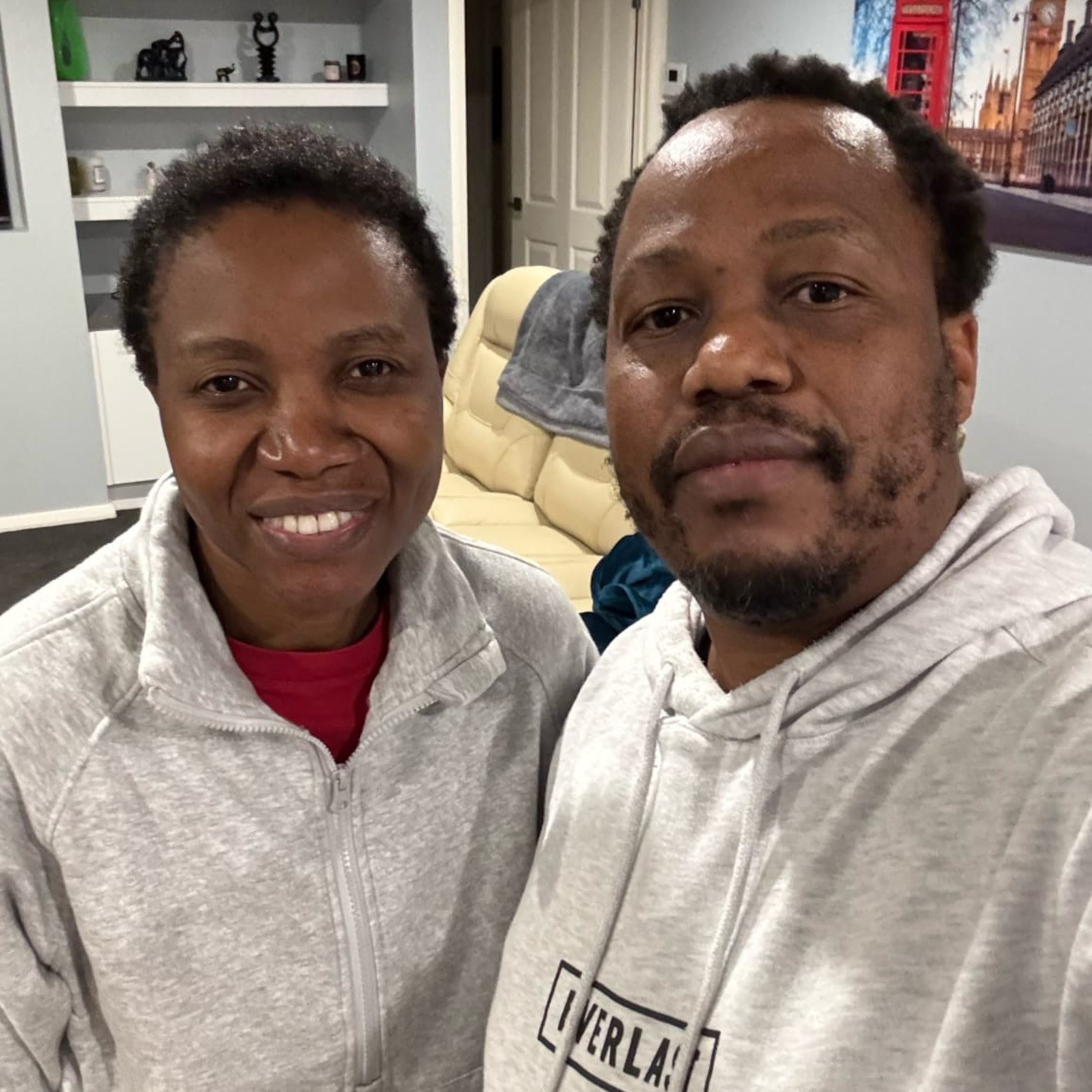
Muza Makore, the guest on Casted & Connections, recounts his upbringing in Zimbabwe. He was the oldest of five children, raised primarily by his grandmother in Kadoma, a small town. Their home was a four-room house in a high-density area, lacking running water and indoor plumbing. Despite these hardships, Muza recalls happy times, feeling rich due to his grandmother's love and basic necessities like a fridge and school uniform. He moved to live with his father at age five, experiencing a significant upgrade to a house with indoor water and a toilet. He attended a Salvation Army boarding school for high school, where he learned discipline and self-sufficiency through chores and cold showers. After completing his O-levels, Muza spent two years at home, unable to secure a job due to limited opportunities. He briefly worked as a laborer digging holes for a power company. Initially dismissing nursing as a "girls' job," he was persuaded by his aunt to apply, eventually training at a nursing school. Muza reflects on his journey from a humble beginning to a successful life with a family in a beautiful home, emphasizing the value of his grandmother's care and the resilience he developed.
[Music] Hello and welcome to Casted & Connections. An initiative of Hands Up Casted & where a group of enthusiastic locals have come together to capture, preserve and share stories of people who have a connection to Casted & Connections. [Music] The oldest of five kids raised by his grandmother in a ghetto in Simbaabwe. Our guest on Casted & Connections today, Muza Makore, has had a long journey to be where he is today. In a beautiful home with a beautiful family, overlooking the valley to Sanford. Welcome Muza. Thank you. My pleasure to be here. Can you tell us about those early years with your grandmother? So, I was raised with my grandmother. That's probably the earliest memory I've got living with her. We can describe it as a ghetto, but it's actually high-density living. If you look on the map, it's much box houses with a spester's roof, four rooms, a kitchen, a dining, which is a lounge, and two bedrooms. The bigger bedroom was my grandmother's. The smaller bedroom was for me and my cousin, because it was a two of us staying with my grandmother. That's probably the earliest memory I have, maybe three, four years old. And they were happy times for you? I love that. Those memories I still have them. Now I'm older. I realize how lucky I was back then. The love that my grandmother had for me was just amazing. So, how come you come to be living with your grandma? So, my father got a girlfriend and I was born. This was in the rural area, so there wasn't much happening there. I'm told one of my uncles went and saw me and my mum was there, so they took me to their homestead. I lived with them for a while. I don't know how long nobody can tell me now. But my grandmother said to me, "Oh, this is my grandchild. Look, I'll take him with me." She took me to a small town called Kadoma. That's where I grew up until I was in the F5. We called it grade 5. Then I moved to live with my father and my stepmother. So, you lived with your grandma in this small country town, which was a farming area? No, this was like a town. They mostly. Most towns in Zimbabwe, back then were mainly farming area. My grandmother used to work at a textile company. I think she made packaged t-shirts, which were sold to the UK. Because I remember on the 5th day, we used to get t-shirts. I think it was called "Squad Ford". It was a British company, like a subsidiary. This area grew up in Kadoma. We had a lot of cotton farmers. People would probably sell their cotton. They used to be a genery called David Whitehead. That's where most people used to work. Because I remember that because it was like 24-hour factory. Everybody in town went there shifts. That was the employment for the area. Basically, and then all the other services like this, hospitals, schools, police, shops. David Whitehead, when I grew up, I thought it was the biggest company they had. I think it's still there right now. But cotton has changed so much now. I don't know how well they're doing. You're living in your standards to some people, well, the same poor. You felt quite rich in that you had a fridge. You had food on the table. In a lot of ways, you weren't poor at all. You had a very rich life. I think poor is just a term that you may use. If you don't know anything more, you'll never realize how poor you are. I think, "Oh, my goodness. We must have been poor." But I didn't see it as that way because I could see other children. I went to school there. I remember I had a pair of shoes. I had a complete uniform. I had socks. I used to know kids that would come to school with no uniform, no socks, bare feet. I used to remember I used to get a pair of shoes every year. I used to put them on. I remember one time because you wanted to save your shoes when it rained. I would take the shoes off and put them in a paper bag. They were not strong shoes. So, a little bit of moisture and rain damaged them. There was nothing wrong with the work bare feet all the time. So, they probably had nice clothes for Sunday to go to church. So, you would have your Sunday best. I looked at it now. It was the same clothes for every Sunday for the whole year. But it was perfect. It was my Sunday best. And everyone was the same. Everybody was the same. You could tell that so. Because they still put on the same clothes the last week at church. Because it was Sunday best. Went to school in inconsection? So, I studied my primary school in Kadoma with my grandmother. Yeah, till I was in grade five, which was probably year five. And then I was a bit older. And I think my grandmother felt that it was time for me to maybe start living with my father. So, when they said, "Oh, I think it's time you move in and start living with your father." I said, "Oh, that's fine." So, I then moved up to live with my father who was an electrician. He had a good job and he lived in a low-density area. So, these are slightly bigger houses with a big yard, a lawn, a spot for a veggie patch. And yeah, it was a bathtub which was inside water. With my grandmother, we never had water. The house is used to living where there would be no line. And then in the middle, we would have toilets, which you would have your toilet. So, to get your toilet, you have to walk out through the big gate to the toilet. So, this was with your grandmother? Yes. So, they were communal. Yeah, kind of communal. But you never owned. But they were in a laneway that everybody in the tap of water was in a laneway. And there was no hot water system. We called them geese, which is a brand name. Yeah. There was no water system. And the toilets were outside. But when I moved with my father, the toilet was inside. There was water. Yeah, it was pretty amazing for me. And I really enjoyed it. Having a toilet in the house. And this was like a normal toilet like the ones where you sit on. But with my grandmother, it does drop ones. Yeah, but yeah. Long drop. But they had flashing water. Yeah, they were not like pit latrines. Yeah, they were flashing water, but not just the toilet seat to sit on. So, your grandmother had no running water in the house? Yeah, no running water in the house at all. So, what about washing and stuff like that? Yeah, you just still just wash outside in that laneway. Yeah, it's a laneway. Yeah, you'll have your own tap toilet. Yeah. But then a laneway. So, yeah, you just get a big, but we call them dish. You put a dish out there, water, soap, and then you do your laundry. And I bet you you were spotless. I was in your closet with spotless at Animate. Oh, when I was young, I never used to do my laundry. Yeah. When I was two, year five, now I probably started doing my laundry when I was in boarding school. That's like, we used to call it form one. Yeah. That's where I started to do my own laundry, because at boarding school, they're different from what they have here. You hand wash your clothes, you do everything you iron. Yeah. So, as a child, nah, I didn't, my grandmother did everything for me. Yeah, but your grandma would have kept you spotless. Oh, yeah, yeah, yeah, yeah, yeah, yeah, she would have. She'd go, she'd go, she'd go, she'd go, she must have been amazing. So, she'd be working all day. Come back home. Come back home. Cook me for you. Sprout and your cousin ends. And you know, hand wash the clothes. Oh my god. Yeah. So, we actually, the only thing we did was we were taught to cook, because we had an electric stove and she was also afraid that we might get banned. So, I think I started cooking young. You could make yourself tea. So, breakfast, we call it tea. So, that would have been roasted moorah, put some tea leaves, milk. sugar and bread and then put some spread which could be majoring.
or jam or peanut butter. So you should be able to do that so that when she's away, you could feed yourself. - Yeah. - And then warm up would you lift something in the fridge for lunch? But we never had lunch, per se. We used to, like I said, we used to have two square meals, like breakfast, which was almost at 11. And then you'd have your tea, dinner, which was your evening meal at about six o'clock. Yeah, so most people would have just those two meals. And even up to now, I have brunch, I don't have lunch lunch. - Yeah, yeah. - Yeah, I eat late and then F.T., which is where I'm used to it. - Yeah. - The kids would eat all day, but not me, or even my wife doesn't eat all day like that. - What about electricity? - So there was electricity, but it was the electricity that, if you put too many things, the power would trip. - Yeah, and stop. - And stop, and you have to go outside to the second breaker and lift it up again. - Yeah. - Yeah, so I think eventually that was fixed because they did change the second breakouts because they had limitas on them so that people don't use too much energy. And there was never a meter to charge. - Okay. - Maybe that's why they had that mechanism that you can't overload it. - Yeah. - Because everybody paid like a flat rate for water and power. So it still comes to your house. Yeah, but you pay a flat rate. But I think now, in there a few times, there's a meter you pay for what you use. You actually prepay for electricity now. - Yeah. - Yeah, they've got prepayed meters you go in by the token, you input the digits, and then you get the power. - Okay. - Yeah. - Okay. So now we're back at your dad. So you've got four siblings, two sisters and two brothers. And you're the oldest bossy one, or perjume? - Bossy. Well, I'm not bossy. Just me. - Yeah, just me. - So I've got my brother, my sister, she's in South Africa. She's maybe a year because she's my stepmother's daughter. - Yep. - And she's a year younger than me. Tapua, she was born in 1984. And then I've got a sister, Vimba, she was born in 1987. And a brother, she was born in 1991. So tapua and Vimba, they're all in Zimbabwe, Shamiso and Sniasha, the last born in South Africa. - Okay. So your age, there's a bit of age, 'cause you were born about 79. - Yes. - So we're in the under the one roof altogether, or do you have left before? - No, no, so I think from grade five, I was under the one roof for grade five, grade six and seven. And then after grade seven, you go to high school, which is four more and which is probably grade eight. So I then went to a mission school at boarding. So that's when I did my high school. - So that was a salvation? - Yeah, so this school is called Howard High School. It's in a like a rural settlement of tuition. There's actually a big hospital there, which is also run by the Salvation Army. Yeah, so there's a school at a hospital. So that's why I ended up doing my high school, which yeah, boarding and. - So how was that for you? Was that how was that experience? Did you enjoy it or.? - So I think the first few months, like the first two months are hard, you're young, and everybody else, because there was people from like four more and we should be like, yeah, seven, two, yeah, 12. And then when you come in as a four-one, you're the youngest, you look. - Yeah, the little kid. - Yeah, all these people, some of them look like men, because of the young people. - Of course I do. - Yeah, but after it's a routine, you get just do it, the siren goes off, you wake up at six o'clock, you walk to the dining, you go have porridge and tea, you come back, you shower, and just cold showers at boarding school, and then seven o'clock, you're in class. So school over there starts at seven, over here school starts at nine, so that's something I found different. - Yeah. - Yeah, seven o'clock when class ready for lessons, and then we'll do the lessons till about, we'll have a break at 10 minute break at eight o'clock, eight, 10 actually. Then come back, do two more lessons, then go for another cup of tea and bread, and then half past 12 would go for lunch, and then having hours break and two o'clock were back in class for two lessons. So the lessons used to go for 35 minutes. - Yeah. - So the school actually, like lessons used to finish every day, at three, 10, and I remember that vividly, you'd be like, oh, I'm tired, I need to go home. - Thank goodness the school lies over. - Yeah, but after three, 10, you probably go home to the dormitory for 20 minutes, half past three, sports field running around doing sport. - Yeah, so what sort of sport? - So Bragg B, Soka, Soka is pretty popular? - Yep. - Yeah, there was volleyball, but I was never interested in volleyball. Gels would play-- - You probably weren't tall enough, let's be honest. - Oh. (laughing) - Well, maybe it was taller when I was younger. - Oh, okay. - Yeah. (laughing) - Yeah, so Gels would play basketball. - Oh, 'cause it was a college school, wasn't it? - Yes, yeah. - So, college schools are common, and they're probably more common schools they have. - In college-borning schools? - Yeah, so I think it was classes would be in the middle. The Gels will still be on the other side, but the only thing about the Gels will stills, where it was fenced and juro-walled, like they're a perimeter. - Oh, a fenced-oranda to keep you out. - And actually a wall perimeter, and a fence in the front, but the boys were stills, where just clusters, they didn't care too much about us, but Gels were got the special treatment, and everything was nicer. - Well, depends which way you look at it, I think. - Oh, yeah. - Gels was sort of locked in, wasn't it? - Yeah, but they're nicer facilities than boys, we think. - Okay. - Yeah, so, yeah, it was a co-ed, and we were boys in a class with Gels and boys, school captains, you'll have a head-girl, head-boy, which are captains here. - Yeah, so, I really enjoyed my life at boarding school. - So, did you have to do chores and stuff like that, at boarding school, or did you. - So, the setup of the boarding school was good. We did everything for ourselves. - Yeah, I guess. - Yeah, so we would have people that worked in, that we would have the dining hall that would cook for you. Yeah, so we had those ones, but your dormitory, you'd clean it yourself, we used to have a roster. So, and so, in pairs, because they had rooms, and think we had 12 people in a room. - Yep. - So, the two pairs would do every week, and we would. - All right, tight in the round, yes. - And then, there's days, which were preserved, like, saved for, we call it general cleaning. Like, when's the afternoon, after school at 310? People would do general cleaning, which is, it slashes, slice the grass around the hostel, plant flowers, weed, and then, on Saturdays as well, you'd have two hours of just cleaning the school. Even in class, we didn't have people that would clean sweep the class for you. - You would find it, yes. - We would still have the same roster that, sorry, so, we cleaned the class every morning before school. So, we basically looked at ourselves, after our students, we didn't learn those skills. - Yeah, and then you do your own laundry. - Yep, okay. - So, the education itself was, was it based on, like, I'm thinking maybe an English education as in the same sort of setup or not? Do you remember where, like, you had the, you call subjects of English and maths and stuff like that? - Yeah, so, our, like, education system is set up on the British border. - British one, yeah. So, primary school basically do four subjects. I think now they do an extra one, but when I was at primary school, we used to do Shona, which is our native language, English, maths, and content. So, content would involve agriculture, religious studies, a bit of science. It was, like, a mixture of everything. So, you'd write a final exam in grade seven, and then that would give you points to go to high school. And then at high school, you would have, like, the more subjects are now individualized if you have science as science. Maths, English, agriculture, fashion, and fabrics. I did building as well, because they needed everyone to do a technical subject. Yeah, so, I think they were history. I think I did about eight. - It's kind of exactly. - Yeah. - So, eight subjects. - Very similar to that. Yeah, but before the first two years of high school, it's just a lot of subjects and a lot of work. And then after that, we do what's called all-level, which comes derived from general certification of ordinary education, which is still British. And then you do the two-year course. This is when you can pick subjects to say, "Oh, I think in life I want to do this."
So the science becomes chemistry, physics, biology, and geography, you still can do agriculture, you can do building. Yeah, so I picked up sciences, I'd always been interested in science. So did-- - Where do you think that come from? - Look, it's just fascination. Yeah, you-- - Periodicity. - Yeah, it's the things, like I didn't even do, like doing an exam for my native language. I was like, I won't need that. - Yeah. - I didn't do it, and I hated history because you have to read old stories, try to make sense out of them. - Yeah. - And didn't enjoy that. So I dropped all those subjects. So I ended up doing just seven, and of the seven, I'd pass them all. And then, but I didn't have like straight A's, like some A's, some B's, some C's. And then, thought of going to A level, which is 11 and 12 over here, I finished at year 10, 'cause I was like, oh, just try to get a job, and hopefully do something, because I thought I was pretty good on my hands. So I thought, it'd become a builder, or doing a apprenticeship with my father's and electrician. But the system doesn't just let you do those things. There's too many people, and there's less places to be absorbed. So I ended up staying home for a bit, two years, I think. And then, I applied to do nursing. Like you said, I'm sure that I could have applied to become a cop, but you can't, because you're sure to they've got it. - Okay, actually, yeah. - So that was your first choice, to be a policeman. - Oh, God, idea, because they were, you could readily get a job. - Yeah. - Yeah, and so I didn't, yeah, they said, now you're too short, right? It was like, okay, that's fine. So I ended up getting a place at a nursing school in the city. So I trained it at a row of Spiro. Why do you think you chose nursing? - Now, when I look at it back then, I probably was a little bit caring. I used to look after my siblings. - Yeah. - Even if they had a cold, I'd be asleep, and I can hear somebody coughing, and I'd be like, "Oh, there's medicine in the fridge. "Be like, yeah, take your medicine." - Yeah. - I used to be afraid of the cross, like the red cross on cars, when I was, yeah, it scared me. - Why, why? - I don't know, I was just scared. And now I look at it, I'm like, that red cross reminds me of when I was a child. - Yeah. - There was just horror stories from Spiro's growing up. - Oh, I'm trying. - So you'd be like, red cross is no. - Yeah. - And then, maybe, maybe, maybe, death or something. - Oh, that's kids, we didn't understand what it meant. - It meant, yeah. - So, and then I then aunt, she was a nurse then, and she said, "Oh, did you see the adverts in the paper about nursing?" I think you'd be good at it. And I was like, "No, I don't think so. It's a girls' job." - No, that old chest, no. - Yeah, that's it. And then, she said, "Look, our operates a CV." And then I said, "I can write an application later, but I've never written a CV." So she helped me do that. And then I applied. And then, when I applied, actually, it got a job, waking at the power company, where my father was awake, is a laborer, so boys that get a three months contract. You go, you dig holes for poles. - Yeah. - They don't, we didn't have equipment. - Did you do it? - You have a hand? - Yeah, and I was short. - So was that your first job? - Yeah, that was my first job. - Yeah. - So I was not sure that everybody else would be showing how deep the, the whole need to be, and everybody would be above the knees. And for me, it was the West. They would show me, "We just need you to get it there." - And it was at work. - Yeah, we're fine. - But I loved it because you got paid. - Yeah. - And you didn't have to spend the whole day at home. You'd be, yeah, so that was my first job. Actually got my nesting place. Was I was actually waking there? So I had to go in, resign and say, "Look, guys, I'm going to do nesting." - Yeah. - So-- - And did they react to that? - Oh, everybody was surprised. - Yeah. - Because everybody just thinks, "Oh, if you're at home, you didn't pass an actual effect. I had passed my year 10 well." And then when this came, I was like, "No, no, no, I actually passed and I'm going to do nesting." I was like, "Oh, really?" So you'd be living in the city. - Like, yes. - So did you want to live in the city? - Oh, yeah, so as you get older-- - I'd venture for it. - Yeah, you don't want to be at home. And you know everything. So that was exciting for me. I was like, "I'll go to the city." - Yeah, so I ended up doing nesting and my aunt, she's a registered nurse, she lives in Perth. She's been here a few times visiting. And we still laugh about it that, "Hey, look at you, the girls job." - Girls job, yeah. - It turns out well for yourself. I don't see like that anymore. - No. - Yeah, but yeah, so that's how I got into nesting. So I started nesting in September 1999. - Yeah, so did my three years at the other school of nesting, which is different from uni. We were all hospital trained. - So at old school, like, used to happen here. Yeah, well, you were hospital trained, on the job, basically. - Yes, so-- - It's really like an apprenticeship, you know? - It is, it is so. - Yeah, and the best thing is they provide you with accommodation and-- - So there was a nursing home. - Yeah, nursing home. - So we'll say many other boys, or mean? - Oh, so in my class, they were eight boys. - Okay, out of 30s. - Out of 32 ladies. - Yeah. - Yeah. - Okay. - Yeah, so, yeah, and it was good because you'd get a living wage. You've got accommodation. We got paid good money. Yeah, I think I look at it and I've got pictures and I think, "Oh my God, look, go into town, buy whatever I want." Come back, big then, the economy was so good. Yeah, that you'd survive. We knew I knew parents, like a mother or a father that was training nursing and looking after a whole family. And so they had those wages waiting now. - Wow, so the wages were so good. - Yeah, and I was alone. I just spend it the way. I bought a can, bought a TV, bought a radio, bought shoes and bought cassettes. We don't see these when I collapse, so I like music. So, like cassettes. Yeah. So, yeah, that was, I still talk about my friends or when we were at the nursing home. Because it used to have limits, you couldn't stay out after 10. - Yeah. - And then you'd like to go to the club, come back late, but you'd be rushing, catching a taxi. Because once you're logged out, there were the rules. - That's it. So, they're on the job training. So, what did they then entail? So, to start with, you know, what were your jobs as far as on the board? - So, I think the-- - Well, it's a presuming you're in a board? - Yeah. - But you don't go to the board straight away. - Okay. - So, I think the first eight weeks, we call it PTSD, preliminary training school. So, this is when you're taught etiquettes. And I remember the first lesson was answering the phone. - Etycate. - Yes. - Etycate, okay. - Yeah, so etiquette is different from here. Nesses over there, if your senior comes in, it's like the army. You stand up. - Yeah, I'm too young to-- - Oh, okay. - I'm too young to sit down. I don't know if they still do it now, but when we did get-- So, we were told etiquettes, and there was also subject called nessing theory and practice. Yeah, this is when they tell you a few other things that are expected. You've got to have a good meal. You've got to have your hair cut to this length. You don't need nail polish. You've got to have short nails. You know, all those hygiene things. - Yeah. - So, that eight weeks is just fun. You don't even go to the ward because you've got no idea. And I used to think, oh, now we're doing nessing. Maybe in a week's time, I'll be giving medications and jabbing injections. That takes a while. So, after that's PTA is those eight weeks being taught how to survive the ward. You're then putting the ward for a month, and then you go, that's when you start. I think the first things you do is do nesses, like taking vital signs. So, you take vital signs all day. That's what you do. - Yeah. - Vital signs. - And of course, it will be all pain and pain feeling. - No, no, no computers, pain and pain, but this is the 2000s. - Yes, the olden days. - And then you didn't even shower your patient because they told you don't know how to, you have to do an assessment. - Okay. - To say, oh, yes, you can shower your patient and then you get signed off. Yes, all you do that. And then you go back to a study block. And then they teach you, I think the first complex tasks were dressings. Then we were taught how to do dressings. And then you go practice the sign off and you get an assessment and then you ticked off. Then you go back to school again. You do pharmacology, which is exciting because, you know, all that's nessing for me, drugs. That's what I thought. - You into the drugs. - Yeah, I was thinking, yeah, 'cause nesses, my understanding of nesses was those nesses that the clinic as a child, you go there feeling and well. What was a child, if you're feeling and well, everybody.
body, got an injection of an antibiotic of some sort. - Yeah. - So that's what I thought nursing would be. And then you do that, you get that pharmacology tick off and then slowly integrated into giving medications in the ward. And then third year, everything comes off. You manage the ward, you can run the ward, allocate your juniors. So it was, it's pretty good. I look at it and think, oh my goodness. - So did you ever make any mistakes? - Oh yes. So we always say being a student is the best time to make a mistake because it won't get to the patient because you've got somebody always looking over. Yeah, you would do that and they're like, oh no, no, no, no. That's wrong. - Yeah. - So what was some of the funniest things that happened like we knew of? - So we, we've got funny stories of ignorance. You know, night shift and you have to do observations all the time. Some of them were not necessary, but because you're a student, you have to do them to be ticked off. I've had a story that one day this guy just got bored doing, he was working in an orthopedic ward. People in orthopedic ward were broken bones. They were not sick sick. - No, yeah. - That plus does some of them had pulleys to just straighten their legs. And he goes, you see this temomira? Waves it around like a wand. Everybody's had their temperature done. Then he went. So these people, they knew and they have first, the first thing in the morning, they told the sister and judge, sorry and so didn't do observations in three o'clock. They waived the temomira and told us that temperatures were done. - Yeah. - Yeah, so that was hilarious for me. So whenever we did anything, we told, can you please do your temperatures because these patients, they know, don't be waving the temomira and telling them that pharaoh signs are done. - So you moved on up in the teaching hospital. - Yeah. - And then there was this little female person come along the scene. It became a student. Jetsup. - Okay, so. - What happened there, Musa? - So I finished training. Started working. I was moved to another big hospital and I was working in a pediatric ward. So I think back at home, all my career, I mostly went in this pediatric surgical ward with the bands you need with a few of my colleagues. - Which I can, I can just see you working with kids because you, yeah, you just got that rapport with children. And I think you'd be brilliant in a pediatric ward. - Yeah, so I, sorry, so on. - So I went in that pediatric surgical ward and then I took my early days, then see this nice young lady. She had braids that way, I call them funny color. She's got a color for them. I was like, how come you got, I never seen braids like that. I'm like, they look reddish, pinkish and she told me the color. She was very nice and then she was working that ward, I think for a few weeks. Then I kept seeing and I was like, oh, you know what? I like you. Everybody's like, I know, no. 'Cause she was a student, yes. I like we've been warned, male nurses. That's what they do to every female nurse they meet. And I was like, oh, I'm serious. And then one thing later, another asked me out, she goes, oh, yes, I was like, take you to a movie. I actually couldn't remember the first thing I did for a, so when you said, what did you do for, I'm like, I don't know. - Yeah. - Then it took me to a movie because she was from small town, which didn't have a movie house. But I'd been in the city for the past three years. - So she was from a small country town as well. - Yeah, so from a long, right, from a long, - Yeah, so she comes from, we call the triangle area or cheerleads where they grow sugar cane. It's just sugar cane plantations everywhere. Yeah, so I convinced her she remembers sugar cane movie, watched the movie. I can't even remember what the movie's called. - Because you had eyes only for her. - It's been a long time, 2002. That's a lot. - That's not that long. - Yeah, so yeah, ended up, say, she didn't believe me. She did investigations. - I also see such a act. She didn't actually believe what you were telling her. - Oh yeah, everybody thinks every male you meet is probably married. Like I was in it. I watched my uniform. We used to wear whites. - Yeah. - Yeah, and watched my uniform properly ironed them. So I look at my pictures and think, oh my goodness. Is that me? - Yeah. - And then yeah. - So because you were so neat and tidy and spiffy, all Chets' friends thought that you must have been married. - Yeah, that's what I was. - Because no man could look after himself that way. - Yeah, so they thought I was married. And then eventually she's like, oh, where do you live? I'm like, are you coming to have a look? And then when she saw where I lived, I was like, oh my God, such a bachelor. I didn't even have a match. (laughing) Yeah, so convinced that I look, yeah, I think we're meant for each other. And then she said, okay, let's see. Yeah, so two years later, got it pregnant. - Oh, did you? I don't know, okay? - Yeah. - So. - How did that happen? (laughing) - I don't know, I don't know, I don't know if baby's a maid. (laughing) Yeah, so add to rush and do the traditional formalities of getting married, yeah, so. - Tell us about the wedding. - So we-- - I just found this fascinating. You know, because you had a cultural wedding. - Yeah, we didn't have a white wedding. So it's just a ceremony. Yeah, you have to get your uncle to find a go between, which you're in. - So your uncle? - Yeah, my uncle. - Yeah. - Yeah, so my uncle will be like, you wanna get married? Do you have the money? And I said, yeah, I go, I go money. And then I was like, oh, how much am I here? It is because I think that will be enough. And then we talked to Chiaza's aunt. Who will tell Chiaza's father that look, Chiaza wants to get married? And then his father will like, oh yeah, that's fine. Can you talk to this go between? So we can't talk to Chiaza's father directly. - Oh, okay. - Or else we'll get a, you know, like, oh, if fine, because you're breaking protocol. - Okay, so you have to get a go between, who then relies your stuff to-- - To Chiaza's father. - To Chiaza's father. - Yes. - So, and they chose that guy and we talked, my uncle went there. So my uncle is a neutral guy. He could go to Chiaza's family. - Yeah. - No problem. - Yeah. - But I couldn't. - Yeah. - Yeah, not allowed, per se. So Chiaza's father's like, yeah, that's fine. We'll give you a date and we'll expect you to turn up. So we're giving a date and then we turn up and then Chiaza was already there and she's behind there. And they say, oh, Chiaza, all the girls come in. - So Chiaza's like, I'm presuming this costume as in you dress up, like, sort of stuff. - No. - You can. - Yeah, okay. - But Chiaza's father was like, nah, that's not important. - Yeah, okay. - We'll do, so I think we arrived at Chiaza's house like two o'clock in the morning. - Oh, we, that's you. - You, my uncle and Chiaza's uncle, he offered to drive. - Okay, so just the three of you. - Yeah, so Chiaza was with us, but yeah, they usually was coming. - Yeah. - So the three, two o'clock we got there, we got settled at showers and went to bed and Chiaza's father's like, we're ready for them. That's like three o'clock in the morning. - Oh. - I'm like, oh my God, 'cause I was tired, the fed drive. And then it's like, oh, we're ready. So we went up, Chiaza was like, getting the house. I was in there, I was being told what was happening. And the girls were lined up and they were told, do you know these people? - So the girls, who are the girls? - So there was Chiaza's other cousins that lived there. - I can. - Yeah, so they were asked all of the girls, as do you know these people and Chiaza's like, so I think the question probably started on my uncle, who, what do you want? Is if they don't know, like, we're here to pay the bride price and they're like, okay, ladies, do you know these people? Everybody's like, no, no, no, no, no. And Chiaza's like, yeah, I know them. And then my uncle says, is that the one you want? And then my uncle says, yes. So you could pick the wrong one and two ladies. - Oh. - People always laugh about that. Yeah, you know, you're passing, they're like, yeah, we want that one, that's why we're here. - Did you feel like pretending to point to another one? - I wasn't there. - Oh, you were there. - Yeah, my uncle was there, so now he's a decent guy. So he knew Chiaza anyway. So I think we're here for that month. So Chiaza's like, oh, do you know them? Okay, that's what's happening. So they Chiaza away, oh, they told to go sit outside. It's an adult thing. So yeah, so they, you'd sit there. So we'll probably sit on the floor. If there's a sign of respect.
and then they get a container or a plate, you have to pay for it. So that when they say, also they basically charge you for what they think it costs to raise a daughter, which it's not a true reflection, it's not even a figure, it's just, - Yeah. - Yeah, my, you can't just get somebody else. - Yeah. - So you'd pay for the plates and then they tell you, okay, for marrying a daughter, for us looking after her, we want so much money. - Yeah. - And then you don't have to pay all of it, or we were told you shouldn't pay all of it. So you pay half. - Yeah. - I said, look, we don't have that kind of money. We'll pay half and then once they've settled, we'll come back and pay the difference, the remainder. And then so there's a part where you pay money and then the favorite part is the cows. So you have to, when you marry, you have to get ahead of cattle, which is old practice and take it to your in-laws. So when you're getting married, if everything is in order, you actually bring your cattle and they'll be outside. - So how many? - 10. - 10 cows. - Yeah. So 10 cows, I asked why 10? And then recently realized I said, oh, they think your wife would give you 10 children. - Oh. - Because back in the day, you needed your kids to help you on the farm, on the piece of land. - Okay. - So in my father's generation, when my father's family, there's 10 of them. - Okay. - My grandmother's 10 children. - Yeah. - Yeah, I've got three and I think there are too many. (laughing) Yeah, so yeah, that big family is to help on the piece. - On the land. - On the land. - Yeah. So it's just standard people judge you 10 cows. And I didn't even pay them, I was like, kind of for that. We'd do all the money things, so you still pay for money. - So how many cows did you provide any cows? - Back then no. - Okay. - There was cows, cows expensive. - Yeah. - And they're symbol of wealth. So back in our cowsher, to see if somebody was rich, you'd look in their cattle crowd. If you see a lot of cattle, they're rich, because they didn't have money. - Yeah. - Yeah, so they're butter things with cows, - Yes. - And I had to pay two goats, because she had those pregnant as well. - Yeah. - Yeah, so it's-- - So what's the significance of that? - So you give them two goats. One is for you to eat the kill one and you eat it when you're there, so that you're providing food. - Yeah. - And then the one they keep it so that it can reproduce. And they have wealth. - Yeah. - Yeah. - So it's same as the cows. You have to then get a real cow. So I didn't pay the cows. I asked how much money they were. - What, yeah. - So that's what's maybe 2010. I was already waking here. - Yeah. - Then I pay them. But there is also a mother's cow, like the mother has to have a real cow, which you don't kill. - Okay, it's for each one. - To breathe through, yeah. So that their mother can also have wealth, because the other cows that you give to Jesus father are basically used if Jesus brother gets buried, they'll still just take the same cows and go pay the bride price for the brother. - Oh, yeah. - So it's just a revolving dog. - Yeah, revolving cow. - Yeah, so Jesus mother's cow, where to get that one, it should be, yeah. So those are the traditional aspects. So we did that traditional wedding. - Yeah. - So, and they were saying that you can never finish paying a bride price, doesn't matter. - Yeah. - Yeah, it's just formality for people to say, you owe us. - Yeah. - Yeah, so I still, I could pay whatever was written down, but I simply wouldn't pay, because it's supposed not to be finished off, I still owe them. - Yeah. - Yeah, so that's our culture. It's sort of venture to enrich yourself. - Yeah. - Yeah, so that's basically it. But we ended up just getting a wedding at the court, Majesty's court to get a marriage certificate, which would mix immigration or every other thing easy. - Easier. - Yeah, because we got properties. If anything happens to me, Jesus would just say, I've got a marriage certificate. - Yeah. - Yeah. So that's, yeah, it's basically the wedding. And it's a nice event. After you've been accepted, you're called in, and you're now the sun. And then you get, they cook, they have food. They have like a party that whole day. - Yeah, a party. - Yeah, they do party. - So what about food? Was that, give us a bit of an example of, you know, the food that you would eat, say, celebration? - So rice is special. - Yeah. - I was talking to some other people from Australia, they're like, back in the day, rice and chicken was special. So rice and chicken is special. - Yeah. - Yeah. - So all functions will have rice and chicken. - Yeah. - Yeah. - So most people, while in the villages, would have their own chickens, that's what it is. - Yes, yeah. - And it's like Christmas. - Yeah. - Go to Africa, Christmas is rice. Oh, where I come from. Rice and chicken, cold slow. - Yeah. - Yeah. So we mainly eat beef and gods. - Yeah. - Some people don't like pig and sheep, Martin, we used to call it, not a lamb. - Also, there is quite a few, isn't there? - Yeah, so on your piece of land, you can have all that. - Yeah. - Yeah, so. - And what about cro-- - Like, maybe cro-- - Myes is big. - Yes. So we, we eat maize every day, three times a day, if we have two. So you can use it to make porridge. Like, you can get polenta, which is yellow here, and make a porridge. But we have white meal, which we buy from on Gambia. There's shop at Connohites there. They sell that maize, which we make salsa, which is-- - Which is a lot of-- - A thickened porridge, which you can peak with your hands. - Yeah. - Yeah. So we cook that every other day at my house, even Akai enjoys it. - Yeah. - Yeah, but we don't force them to eat it, but we like it. - Yeah. - I can go for a week without having salsa. And then for the meat or protein, we make a relish, could be casserole, stew. So you pick up your salsa, you dip it in whatever could be. - Oh, yeah. - And then you eat, so the salsa is bland. People will be like, oh, it's tasteless, which is tefila. - Yeah. - Yeah. So it's just carbohydrates in there. - Yeah. - So we still-- - And you grow a lot of your own-- I know what you're saying about. When you came to Australia, you have the pafer mangoes. - Oh, yes, no. - Yeah, so mangoes, when they're in season, you don't buy mangoes because every house-- - That's mangoes. - That's mango tree. So you just say, a senior ripe mango, can I get it? They knock yourself out. Avocado is never bought as avocado is growing off. Over here, $3.95. They're like, okay, I might have won because I miss avocadoes. - Yeah. - Yeah, so there's things we wouldn't sell like to each other, like watermelon, when they're in season, everybody's got them, pumpkins, when they're in season, everybody's got them, or all the fruits. So kiwi fruits, actually, we actually had a kiwi fruit tree and you'd be like, oh, over here they sell them. - Yeah. - And light cheese, nobody likes them. And everybody's got them. - Yeah. - Yeah, so we never-- Yeah, it's different that you have to ship mangoes from Queensland, which makes sense. That's why maybe they put a prize on it, they get on a car. - So I suppose it's the Trump-- So you weather, like it was, is it a tropical climate? - It's tropical and it's not humid, like somebody said. - Oh, okay. - We went to Queensland once and it was humid. And I said, oh, yeah, they're like, oh, you'd like this weather. I'm like, no, it's humid. - Yeah, you know the dry heat. - Yeah, it's not dry heat aside. It doesn't get as hot as here. - I call, they would be 18 degrees, a hot day would be 28 degrees. - Okay. - And all our rainfall is between mid-October to April. - Okay. - Yeah, so that's our rain season. - Yeah. - Yeah, so I came to Australia in December, it was a rain season. And then it was hot. - Yeah. - Very hot. I was like, what the hell? - Yeah, it is hot. And then Mary and said, oh, you know, you need to put moisture riser. - Sunscreen. - Then I was like, oh, no, no, no, no, I'm black. Don't get sunbend. - Oh, I think this last words. - They were. And then one day I came to it, I'm like, oh, my face is tight and sore. And then she was like, look yourself in the mirror. You see all that peeling? It's a sunbend. I was like, oh, okay. Ever since I put on sunscreen, but I had grown up from when I was born to when I came here. - Never using sunscreen. - Yeah. - Never. Because we don't have extremes. And winter was the first two winters were very cold because it was raining in winter. - Yeah. - Yes. - Which you were not, you used to be riding in the warm months. - Yes. It was very, but we were lucky. We used to live at Jim Marlowe's house. Used to bring us, give us firewood. Because we would run out. - Yeah. - Or it got too wet for us.
or anyone to deliver wood. So Jim would have a pile and just get some off my pile. Yeah. So it's good. Well, move on to your actual journey to Australia and how that came about. So you were in a nursing group. Yeah, so we'd always looked at going abroad. So you start with the preliminaries like trying to register in Australia, which we thought would be hard, but ended up being easier than we thought, because we had one, a sister of a friend that had already come to Australia. And we could do all the paperwork, but we couldn't afford the Australian dollars and we didn't have a visa card to pay. So this lady said, I'll pay for two people. But once I pay for you, you'll probably get a job and you come here. I don't want the money. Which was just 150 bucks, 150 dollars. So this is a woman that was working in Australia. Yes. I didn't know them. Oh, you didn't know them. She's the one of somebody I knew. Yeah, so a friend of a friend. So they didn't want the $300 they paid to your two people register. They said, of my money, can you just pay for two other people so that they can get registered? Because it took like initially six months post-registration. If you've got a relevant experience, you'd been Australia in no time. Yeah. Because they were struggling to feel less in jobs like it is now. Yeah. So they did that. God registered. And I also got registered in Canada. And the people that had gone to Canada were vitally upset. It was cold. Oh, OK. It was because it wasn't in Toronto or Vancouver. Yeah. It was just getting scared where it is really cold. In the rock. Yeah, they said it was just cold and they were miserable. Yeah. So they're like, oh, you could come here if you want, but we're trying to go to Australia with warmer. At least we can survive the heat. So was it like we frightened about leaving your homeland sort of thing? Were you concerned? Like you had a little graph who was only two. Yeah. So you have that. Instead, feel of their own. Yeah. But looking at other people that had come here and they'd return home, they were telling you-- Come to Australia. It's OK. Look at us. You can afford anything you want. And then it's good for the kids. We've got these. We've got that. We've got these. We didn't have a car. It's about a way that would change the night drive a slice of this, but no car. And as soon as you get there, you can buy a car. They're like, oh, really? So you had that fear, but you'd have that excitement as well to say, I'm going-- and coming from a third world country, going to a first world country, you'd be like, yes. You see Australia on TV, but probably be do it. Do it right over there. Yeah. And with the kind of jobs I had, we had-- it doesn't pay a lot being in a third world country. It pays better being in a first world country. So I had the fear, but I so had that optimism that this could change my life. And it did. Yeah. So did you have your job here in-- was casted in your first job in Australia? So what happened is a group of us, like my nesting colleagues, were mostly recruited in Alice Springs by the same recruiter that eventually recruited me and brought me to Castellon. So these guys, they went up, I think, 20. They went on the one plane. So they ended up at Alice Springs, but they've all left now. So I got a few jobs elsewhere, but I would tell whoever was doing my interview that I just need somewhere where I can go with my wife and son. And you need to do a visa for the three of us, if you're going to do a visa for myself. Because it's hard-- then it was hard for you to come and then try to get a visa for your family, like your wife. To follow? Yes. So I talked to a few people. They were reluctant to think about it. But I talked to Maryanne in an interviewer that said, look, if you can't do a visa for my-- So Maryanne is-- No, so Maryanne is the manager. Yeah, managing a nursing service at the hospital. At the hospital, yeah. So she said, look, it's a small town. It's pretty remote. And it would be good if you bring your wife and child. It would be perfect. So she said, look, we're happy to give you the job. Yeah, you've been probationed. See how you go. But we'll do visas for your wife and your son. So that's how I ended up here. And I remember I left Zimbabwe on the last day on the-- I actually worked at night shift. And then later on that day, I was on a plane to come to Australia. Wow. Because you needed to leave a bit of money at home. So I actually did a night shift. So I left Zimbabwe on the 30th of December 2007. And then I started at Castaron. On the 7th of January 2008-- Yeah. 2009, I can remember. 2009. Yeah. So what happened in between then? So no, no, I just got the dates mixed up. So last day of 2008-- 8? And then you started-- 2009. Oh, yeah. 2008, my goodness. Time flies. Can't even remember when I started. Well, Raf was two. Yes, I'm trying to think. So 2008, took us was born in 2010. Yeah. So 2008. Oh. Anyway, you've been here a long time. You know what I'm still local. What was your first impression when you sort of-- did you drive it? Well, actually, you were telling me about going through customs. Yeah, so I didn't drive to Castaron. So-- No, you were coming through customs. Yeah. So I came through path and you'd watch, home in a way. What's it called? Border security and people are being asked, you've got your qualifications in the bag. I guess I do have my qualifications in the bag. And do you have any money? It's like, no. Do you know where you're going? Yeah, I've seen it on a map, but I don't know. OK. The guy looks at me and realizes, oh, this kid is actually-- oh, this man is actually serious. And then flips my passport. Then he sees the visa. It's a white visa. It was called the 497. It's like, oh, yes, that's fine. Go. Yeah. Whereas this day and age, it might have been a different story. Well, I think if you're coming for work, they know you'll have your qualification in the bag. Yeah. So there's an end up. Yeah. So flew from-- Oh, by the way, this was the first time I'd ever flown. Oh, it's well. Yeah, I'd never flown. What about chance, sir? She-- No, first trip to Australia, first flight. Oh, my God. Yeah, so didn't realize how big Australia was. Yeah. So three-hour flight from Peth couldn't believe it. To Adelaide. To Melbourne. Oh, to Melbourne. Yeah, so God, they married and died when we were waiting for us. Yeah. They're like, I'm married and I'm like, oh, the boys come to pick you up. Yeah. Has it ever to behave? Yeah. And then, since I look, we've got this bus. There's a hospital bus. We got in the bus. And they drove, stopped in Balorat for a meal. Yeah. And-- So you would have been so tired probably in jet lag. We were in jet lag. Yeah. And then didn't even eat much. Yeah. Because the taste of the food was so different. Yeah. That takes a while, three, four months. Yeah. Like, I couldn't eat the chicken. It was tasteless. Yeah. Could eat the beef. I don't like the lamb anyway. So-- Yeah. So yeah, they drove us. We got here early hours of the morning. We lived in that hospital house opposite the-- Caster and Central. Yeah. So we went to bed. And because of the time difference, we couldn't sleep because Simbaubu is nine hours behind. I get it. So the time that people here are sleeping, we're waking up. Yeah. So probably stayed till seven. And then fell asleep. Then woke up about 4 p.m. And then got out of the house. And we'd seen the shops. Because when they said, there's the shops, you can look down and do whatever you want. And then-- So you walked down the street? We didn't. We got lost. Because the sense of direction-- yeah, we came that way. But when we woke up, the 10-- so we went towards the high school. Yeah. And we went towards the high school. And then walked down. It felt like-- And you went down the hill towards my gambler. Yes. And you're going, where are the shops? So I walked up to the golf course. And came back. Then we asked, couldn't find the shops. And they're like, no, no, no, no, shops are that way.
So yeah, so I know it was pretty good. So then you started, you started work and. Yeah, so I started working. I think the first week is just orientation. Yeah. It gets in through there. Yeah. It's too many. It was too peg excitement. New people. Yeah, so. And you're trying to feed in. Yes, they are. Like it's. Yeah, we did try to feed in as well. Yeah, I think it takes a month or two to realize what to do. And then eventually you can do it slowly. And then you've got to prove yourself as well that you can do the job. Yeah. So you know that. And so when we first arrived in Australia, the supermarket was next to the pharmacy there. Oh, yes, yes. And the top pub was actually open. That's where we used to drink. At the top pub, yeah. Yes, the top pub was still open. Well, there's a little bit of a story about you. I think it was your first paycheck, wasn't it? Or something like that. I knew. That's. That's Judy Matthews story. She loved that one. So I didn't realize you got paid every fortnight. Yeah. Because in the end of the month, we get paid every month. Yeah. So Judy Matthews goes, "You guys get paid?" I'm like, "What are you talking about?" "Oh, you got. " "Oh, no, no, we haven't been paid." "Did you even look in your bank account?" "No, we didn't, because we didn't realize we'd been paid." And it's like, "It shouldn't be pay sleeps. We used to have a folder in the dining room. It took us there." "Today's your pay sleep." "Today's your pay sleep." Opened it. "Oh, a lot of money." Yeah. Couldn't wait for the shift to finish. Yeah. So ended up in the supermarkets. And I remember one of the school students sitting in the supermarket was Jess Hamill. I remember that because I asked Jess with the ATM with money. Yeah. And she looked at me and said, "This guy's something is wrong with him." "Why do they ask whether they take the money?" Yeah, ATM's got money. I'd come from Zimbabwe where ATM's didn't have money. Yeah. So they were quite often the ATM's in Zimbabwe. They had no money. Yeah, they had no money. So I realized the ATM had money and took a chunk of it. They were like, "Well, you should be taking so much money." "Oh, I like money." Yeah. So that was hilarious. And that was like a culture shock where you see, "Oh, ATM's always if money." Yeah. And then supermarkets were full with food. And being on a wage like we're getting at the hospital, you can afford anything in the supermarket. So we bought beers. Of course, beers. Beer beers today. So who's way? You are. So I actually came with smuts. So smuts and I share the same surname, but I'd never seen him before. We're not related. It's just a common surname. Yeah. It's like Smith in New Zealand. Yeah, in Australia. So smart and I, we drank all the beer. I could get those days. Yeah. So you bought beers and then got into the back of the youth. Yeah. Yes. Got into trouble with the police. And I realized you're not supposed to sit in the back of the youth. With the beer open. So were you doing minies? No, no. We're just going up the hill, going after the groceries. Do you think I'll just sit in the back and sip on my good stuff here? And then you were ashamed to say it now and I can't sit in the back. So Shane Kelly was the policeman of the police? Oh, yes. Yeah. So I probably thought, "This African voice." Yeah. So the other thing you were saying about the toilet paper, you couldn't believe it. Oh, yeah. So I couldn't believe how cheap toilet paper was. Yeah. Yeah, we used to buy toilet paper but it was, it costed an arm in the leg. Yeah. And then you're like, "Ooh, there's two-ply, soft, fragrant oil." And I'm like, "Oh my goodness. This people have got it all." Yeah. You knew you hit the big toilet paper. Oh, yeah. So I had a fragrant toilet paper. Yeah, like I hit it. And we didn't call it toilet paper, call it tissues. Oh, tissues. Yeah. And then tissues, yeah, the little thing. Yeah. Yeah. So yeah, and I was pretty good. So yeah, that's probably by those exciting days when we first arrived. So Mosey, you know, you were sort of the first Zimbabweans or Africans, I suppose. In the year, one was some of the first. Yeah, so we were. Did you come across any racism at all? So we were not actually the first ones. There was Ozias, Ozi, who lived with the vineyards there, came with his wife. I can't remember his wife name. And Lina, Lina, and Aspand they came together. So they were the first Zimbabweans. But it wasn't long before you. Yeah, so I think it was a year after. Yeah. Yeah, so those were the first guys. So we said, racism, I don't know what, some people, whether they're racist or not, some people just don't know and want to know. Yeah. Yeah, but there's probably, like I say, flashes of subtle racism that people feel threatened. They feel, I think I've had comments like, oh, these foreigners are coming to take our jobs. Yeah. But I, some people, you tell them, no, but look, if I didn't come, that job was never going to be filled. And back then, there were not even a lot of foreigners. I look at the way it is now. Yeah, compared to, yeah. 80% of people that were get a hospital come from overseas. Yeah, that's right. Yeah, so there's a little bit of that. And some people, like I didn't, I couldn't say it was racist and people see what you want to put in your basket. Oh, they want to look at what you want. Yeah, what to buy. And when you're paying, they actually need to see, I remember just, you know, one of the shops when we first came, we were walking around. Some people kept, you'd think, back then, I didn't realize that somebody was always looking at me because I was to touch everything. Oh, yes. When I get money, I'll get this, when I get, and then somebody thinks you might steal stuff. And then you think, eventually, I think one day, one of the shops, the guy goes, stop following them. They have money. They're nurses. They'll have a lot of money. So people were following you in the shops. Yeah, shops. So I sure you weren't still anything. Yeah, I think there were small things to write for them in your pocket, but I was never offended because I wasn't going to steal it. I don't think I would have stolen anything anyway. I'd money was getting paid. That's right. So there's a little bit of that and politics comes to it as well. And people are protective of their country. I get that. Yeah. Yeah. Yeah. Yeah. I think it would happen to anyone if you think to anyone. So anyone that's different. So it really stains from ignorance. It doesn't actually. Yeah, that's it. Yeah, I think that's what it is. I think some people have never gone out of their country to just see that people will still accept you. They're still good. But there's nice people in town. Like I felt one year we should leave. Like go. So when we came, you were on a contract. Once you finish your contract, those people does good by you. They tell you if you want to go, you've done, you've paid your dues. Yeah. So that's why people realize that at most you have foreigners that they come, they do their two or three years and then they go, that was the agreement in the first place that come. You wait for this long. And then that's it. Yeah. So we thought I would go and then looked for a house in Melbourne. Yeah, got some. But before go to find out if there was a school close by and there was none. And then Chesa was like, yeah, you might want to go live in the city. I don't see the fastest. She was waking in Portland then. And then I was like, there's nice houses. And she goes, you could get some land or buy an old house and renovate and it would be a nice house. So we got lucky. We then got a block of land and Chesa designed a house and we got builders and it was a dangerous built. Yeah, it's a beautiful home. And so that's like I always see on the TV or radio. That's those Australian dream on your own house, although I'm still paying for it. Yeah. But it's the best thing that's ever happened. You have your own house. You can put the rooms away you want. Yeah. Yeah. So that was the best thing that could have happened to us. So actually, I probably should backtrack a little bit. Chesa's been such an integral part of the community as well and we've really left her out a little bit. But she started nursing as well. Yeah. So Chesa came to Australia and finished her nursing back home. So she started enrolled and started from scratch. So she did an nursing at RMIT. I think she was in the last group there in Hamilton. Yeah. And then when she finished, I can tell you that as I can remember. She got a graduate at Portland. Yeah. She worked in ED. Yeah. She was there for a while. And then eventually there was a spot here which she took up and then she's been working in district nursing ever since. Yeah.
but not as much as she enjoys sewing. Sewing, yeah. She's got a market. She goes to markets to sell things that she does at home, craft crafts. Yeah, I think she enjoys that more than anything else. Yeah. So she's got a creative bit. Yes, so no, she's very creative and she's probably the best thing to ever happen to me as well. Yeah. And also, you've got three beautiful children. So Raf's now 21 in April. Oh my goodness. And he's a unique. Yes, he's in Bendigo now. Yeah. And then you got to Kuzwa and her-- And Nakae. And Nakae. Tukuzwa is 11. 11? Yeah. And Nakae is great too. Yeah. Yeah. Keep you busy. But would have kept her very busy, even though she was nursing and-- Oh, yeah, I think Tukuzwa is the one that kept her busy. Because she went to uni with Tukuzwa. Yeah. So I was still a baby. And she was told, oh, she wanted to postpone it. I was like, why? Oh, I've got a baby. They're like, no, no, no, no. Bring the baby to-- Baby, yeah. So she was going to lectures. If there was no baby Cedar, she would just take Tukuzwa with it. Well, maybe some of those lectures might have sunk in here. I'd become a famous doctor or something. Oh, I hope so. I hope so. Keep you in your old age. Yeah. So that's the flexibility of studying over here as well. Yeah. Yeah, you could do that. Yeah. So you've been involved in the community-- oh, no, the other thing I was going to talk to you about was Foody. So-- Yeah, he's a free-o supporter. They tell me. Oh, I like for you. Yeah, how did this come about? So I never used to understand football. Yeah, and I remember Shane trying to explain-- Thank you. Yeah. --trying to explain Shane barracks for St. Kilda. Not-- then I was like-- I played rugby. They're looking at all the tackles. Yeah. Until I went home, came on a flight from South Africa to Peth and said next to an NFL player who told me they were, and I didn't believe them. So you're sitting beside an NFL player? You didn't even know. Yeah, so the guy tells me I'm 10-die. I play for a free mental. And I'm like, OK, and they realize this guy's not even interested. Yeah, he doesn't know. He's just pulling my leg. So one day he says to me, what are you doing? I'm like, I'm at home. He said, if you watch tonight, I wear a jersey. Or we call it a jersey, a Gen Z number 30. And then I actually realized, oh, I was actually sitting next to AFL royalty. Yeah, he was on Telly. Yeah. Flying 40. And you just thought, you got his phone number? Yeah, I remember. And you thought, oh, this place, pull my leg. The series, plane, foot. So I thought, ah, look, if the team took you in, they'll take me into-- [LAUGHS] So I end up, yeah, I mean, loyal, the first supporter. Yeah, I can. And your own football career? No, I don't play football. I like it. You dig, though. No, I did hear a whisper. Just training with the boys running around. But did you play it again? No, running around. So I'm the guy that blows the air horn at 40. Yeah, you're the guy that has the-- what do you call it? A voo-voo-zel. A voo-voo-zel. Oh, I can't say it. Yeah, so I used to-- so my kids play football. So every game, if we're not working, we'll go watch the kids play and watch the senior games and make noise, they're fun on the weekend. Yeah. So we like that. But my kids, they feel embarrassed. Don't do that. That's a joy of having teenage children. Don't do that. Don't do that. Don't do that. Don't do that. So now we enjoy sports. Like, Rufaro has grown up. He's played a few games with the local kids. And they never won games. And eventually, they scored a point. We celebrated. Even if they got-- they did lose. And they scored. They still celebrate. Yeah. And they ended up winning matches. I remember the excitement. And they couldn't sing the-- The theme song. Because they'd never sang it for six years. So that's good. And then TK still plays the enjoys food as well. Yeah. So-- They both play basketball too. Oh, yes, they do. Yeah. So Rufaro used to play for Castelon a lot. And then I think the last year, there's too many things. So he just played for school. Yeah. They played a bit, but now just plays for school because it's convenient when you play at your school on a Wednesday. Do that. And then spends a night over at that school. Does a bit of study. What about Nikar? And you think she'll be a-- At least for just a pretty little girl. Nakae, like, swimming. So-- She's a boss of the family, though, I hear. She's got everybody wrapped around a little finger. Especially dad. Oh, no. Yeah, well. She's the second girl in the house. It matters well. Yeah. OK. So she likes basketball. Yeah. I don't know about football, but she goes to little whoops, like, snow boys well, because they have all their friends play. So I think she was just assimilating to all the sport. Yeah. Yeah. Now you go back to Tizim Dabwe a little bit, like trying to get back anywhere, because you still got family. Yeah, we do. We still try to go back every second or third year. And because I probably came to Australia older, I still-- I am very attached to Zimbabwe still. Yeah. Yeah, you might think it's a little perfect, but I love it. It's perfect. Yeah. It's perfect. It's your family. Yeah, it's, like I always say, to people, is it good in Zimbabwe? Do you like it here? I like both places. It's good as explaining how nice an apple in a banana is that completely different things, but we enjoy them both. Both, yeah. So I love Zimbabwe. Yeah. I couldn't go to Bali for the holiday. I'll say my money to go to Zimbabwe. Yeah. Yeah. So that's the-- I love Zimbabwe. And I love Australia. It says my second home. Maybe my first home now. Yeah. Yeah. So I remember you saying to me about Shane, saying, Shane Gil saying to you, that you're not Australian until you get a barbecue. Yeah, that doesn't just say. I like that one. So we thought, get a barbecue. Go to cheap one, $450. After six months, it was rusty. That was the worst of mine. Eventually, I ended up saving enough and buying a good barbecue, which I've had for 10 years now. It's so good. So don't buy cheap barbecue. So I think you're-- And I'll see now. I've got a barbecue. Yeah. I think exactly right. I've got a barbecue. What else could there be? And you like beer? Yes, and I like beer and meats. And meats? Yes. What more could you want? But I've just remembered the running. You used to run everywhere. Yeah, my wife said that was crazy then. Yeah. What was with that? Don't know. Just decided to run. Yeah. So-- You bit like Forest Gump, just-- Oh, yes. So I just got home one day and I decided-- I don't want to drive a car. I just want to walk everywhere, just walking led to wanting to go to the shops, get home faster. So they just-- right, it's downhill, because I just just live on Gambia Road. Oh, with-- It's too much. Yeah, downhill. So it's easy. Coming back was hard. Then I realized, oh, maybe I should be young. I might just see if I can get to the shops and bake faster. And I think I remember one day, I got from the house, the shops, and baking eight minutes. Wow. And I was like, oh, my god. And then once you do it for a week, if you don't do it, just feel-- oh, I should just go for it run, or walk. That's how I started running and walking and riding and push bike that lasted for five years. And then I was like, I'm tired of running. That's it. Actually, I actually changed jobs. And I think the timing, because I was working in Hamilton, time you get home, you'd have that hour drive, exhausted. And then eventually, it stopped running and never ran. So when did you say change jobs? You did-- So I did nursing from when I came to 2017. And then did-- started paramedicine when I was nursing, because it was something to do. And then I did paramedicine and then got a job with ambulance Victoria. So I ended up becoming a paramedic. And I did my graduate year in Hamilton. And then eventually came back to Castella. So did I, was it? Do you like the paramedics? Yeah, it's better than nursing or-- Oh, look. Nursing is my-- Oh, it's a bit of a-- No, no, nursing is my comfort zone. Yeah. So sometimes you need something that just keeps you on your feet with paramedics and you get a read. You got to think outside the box. There is a lot of protocols. You have to use-- you have to figure out what's wrong with a patient. And-- Be more diagnostic stuff. Yeah, and it just keeps my brain working. Yeah. Well, if we nursing becomes a routine mostly, it's the same things that you do. You might get something out of the ordinary once or twice.
But with being on the ambulance, everything is different all the time. So I actually enjoy it. I still do casual nesting shifts. Do you have some really yucky ambulance jobs? What do you mean yucky? Well, you know, do you come across accident? Do you have car accidents and stuff like that? Do you have to attend or what? Yeah, you still attend accidents. And it's like you driving, you could still attend an accident. Yeah. And we get called to those jobs. Yeah. And after time, the people we call them passabies or people standing by, they would have done stuff already. Yeah. So it's a good job that everybody gets involved. Yeah. And it's supposed to be different every day. Yeah, it's different. Yeah. And it's not as traumatic or like too many accidents could go for three or four months without even. Yeah, okay. And the cars are safe now. Yeah. People are able to crash, get out and yeah. What's the worst job, worst one you've done? Worst? No, I've been. Scenario you've had. Not really a worst scenario, but I wouldn't want to go to a very unwell child. Yeah. Yeah. Yeah. Yeah. Yeah. Yeah. You think they go out the window because they're too unwell. Well, I've been there the worst job, people dying is natural. So I don't call that a worst job when your time comes. Yeah. It comes. Yeah, but there's just sick little people. Yeah. That'd probably be my worst job. Yeah. Yeah, you worked in pediatrics. So I worked in a Benz unit with PDR. Yeah. Yeah. So I eventually, eventually you realize that you've got to do those dressings every day. They would cry, they would, but after two or three months you see them going home with all the bands you would. That's so good. Yeah, but yeah, they cry. They're painful. They're awful. So I would like to sort of finish up on a question I asked most people, which is what does cast it in main to you? So firstly, I'm grateful to have been brought here and I've been accepted, I could say 99.9%. You can't get a hundred, some people still not happy. And for me, it's a small town. I've raised kids here and the community, it makes, what makes it easier is the community knows you. I know I'm only ambience mostly and as soon as I get in, they're like, oh, it's Mousa. And then you're like, yes, they know me. So whatever I say, they've got that trust that I've got the best interest. Yeah, and the town is so small that I remember, I always tell people this one that, oh, I tell my kids, if you do anything stupid or something silly, we probably air about it before you get home. Yeah. And I remember one day somebody duck black head, no helmet riding a push bike and somebody thought he was my son and they called me. And then I was like, oh, no, I think he said, home, I just left him. And then I said to the far away, you see, that's what happens in a small town. They look after each other. They realize they're a child and you don't have a helmet. And sometimes you have to listen to what if somebody knows better, sometimes just listen. They could be making a lot of sense. So we've, I think we're feeling the community well and the kids they know, they've got friends here. And it's a very nice town. Like it's small. Everybody knows who you are. Even if I go to the pub in workworm, somebody would like, Johnny lived. I'm like, oh, no, no, no, I'm just doing a bit of exercise. Or even walking from anywhere, they're like, Johnny lived. I'm like, no, no, no, I'm fine. Yeah. Yeah. So that's because they know you are. I love that. Alrighty. Well, thanks so much. Well, you know, I tested and really appreciates the Macquarie family. You've just done so much for our community. I hope today, I think we've learned a lot from you too. Yeah, now the community has done, they've accepted us. So we're probably more grateful for them for accepting us. Okay. Thanks, Mousaam. Now my pleasure. Thank you. We hope you've enjoyed today's episode of one of our homegrown heroes. Jump over to one of our other episodes to continue the casted and connections journey with us. Please don't forget to follow our podcast and share it with your family and friends. Thank you for listening.
Podcast Summary
Key Points:
Muza Makore was raised by his grandmother in a high-density area (often called a ghetto) in Kadoma, Zimbabwe, in a small house without running water or indoor plumbing.
He lived with his grandmother until grade five, then moved to live with his father, who had a better house with indoor water and a toilet, in a low-density area.
He attended a Salvation Army boarding school for high school, where he learned self-reliance, including doing his own laundry and cleaning.
After finishing his O-levels, he struggled to find a job, initially working as a laborer digging holes for a power company.
Despite initial reluctance, he pursued nursing after encouragement from his aunt, eventually training at a nursing school.
Summary:
Muza Makore, the guest on Casted & Connections, recounts his upbringing in Zimbabwe. He was the oldest of five children, raised primarily by his grandmother in Kadoma, a small town. Their home was a four-room house in a high-density area, lacking running water and indoor plumbing.
Despite these hardships, Muza recalls happy times, feeling rich due to his grandmother's love and basic necessities like a fridge and school uniform. He moved to live with his father at age five, experiencing a significant upgrade to a house with indoor water and a toilet. He attended a Salvation Army boarding school for high school, where he learned discipline and self-sufficiency through chores and cold showers.
After completing his O-levels, Muza spent two years at home, unable to secure a job due to limited opportunities. He briefly worked as a laborer digging holes for a power company. Initially dismissing nursing as a "girls' job," he was persuaded by his aunt to apply, eventually training at a nursing school.
Muza reflects on his journey from a humble beginning to a successful life with a family in a beautiful home, emphasizing the value of his grandmother's care and the resilience he developed.
FAQs
Muza Makore is a guest on Casted & Connections, raised by his grandmother in a high-density area (ghetto) in Kadoma, Zimbabwe, as the oldest of five kids.
He was born in a rural area and his uncle took him to his grandmother's homestead; she decided to raise him in Kadoma until he was in grade five.
Despite limited resources like no running water and communal toilets, he felt rich due to his grandmother's love, having food, a fridge, and a school uniform. He had two meals a day and learned to cook.
He moved to a low-density area with bigger houses, indoor toilets, running water, and a bathtub, which was a big improvement from his grandmother's home.
He attended Howard High School, a Salvation Army mission school, starting at age 12. He adjusted to a strict routine, did chores, and enjoyed sports like soccer.
It was based on the British system: primary school with four subjects, then high school with eight subjects, leading to O-levels where he chose sciences.
Chat with AI
Loading...
Pro features
Go deeper with this episode
Unlock creator-grade tools that turn any transcript into show notes and subtitle files.
 PodcastTranscript AI