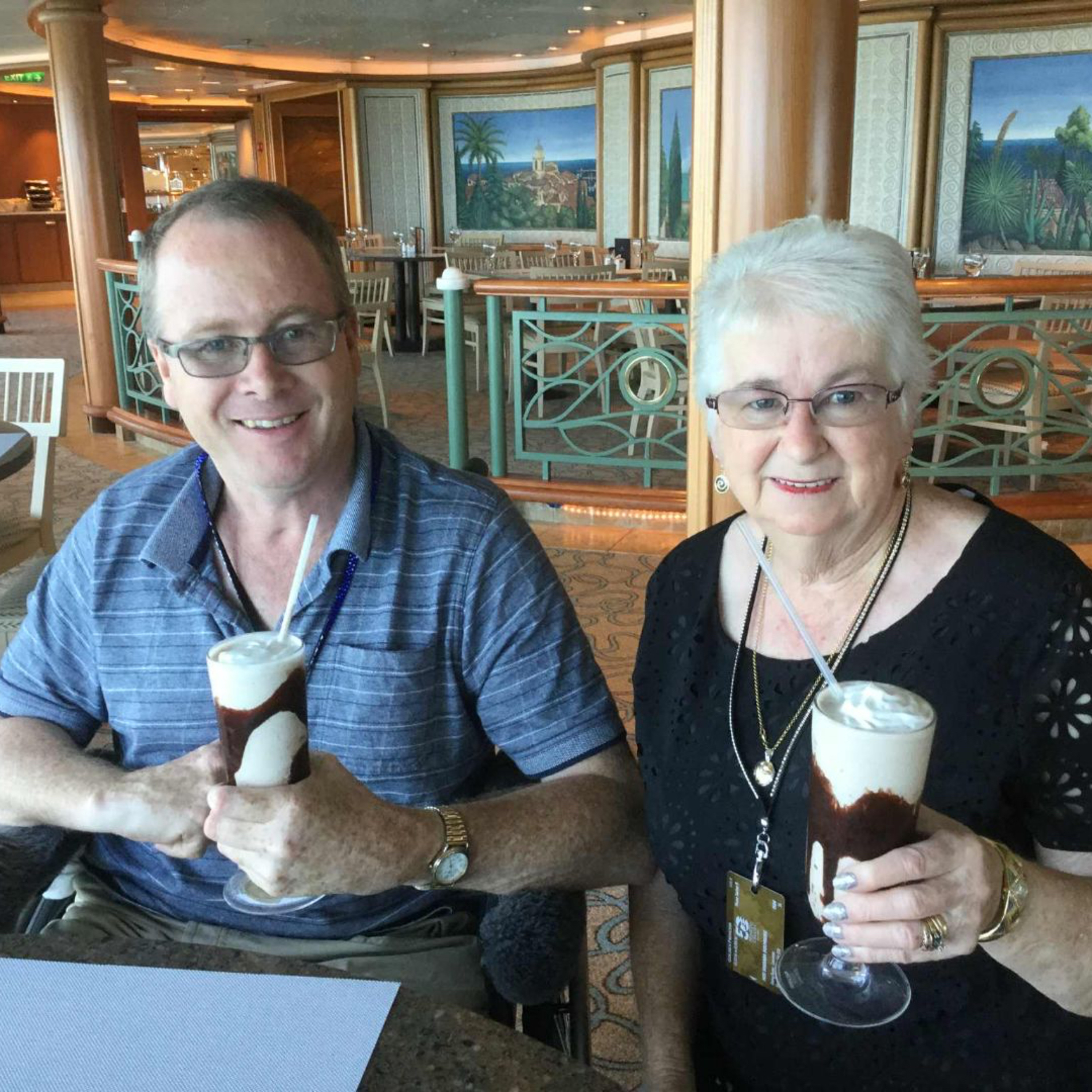
Barb Homburg, a longtime resident of Castlemaine, reflects on her childhood in post-war Kensington, Melbourne. She recalls early memories like walking along Epsom Road amid cattle droving and her father's strenuous work loading coal trucks by shovel. Her education at a strict Catholic school involved disciplinary measures and an attempt to make her write right-handed. After a commercial course, she left school early, working jobs such as a receptionist and at Coles, where she wrapped goods in paper and string.
Barb describes a lively youth playing sports in the street, watching cattle being driven to slaughter, and being a Queen's Guide and leader. She met her husband, Wally, at a dance at the Melbourne Town Hall. Her stories capture a bygone era of Melbourne, detailing the livestock industry's presence in urban areas, family life, and social customs before her transition to country life in Castlemaine over sixty years ago.
[Music] Hello and welcome to Casted & Connections. An initiative of Hands Up Casted & where a group of enthusiastic locals have come together to capture, preserve and share stories of people who have a connection to Casted & Connections. [Music] From growing up in Kensington in the big smoke to a far-mouton Robin for our guest today, transitioning to country life was at first a bit daunting, leaving all the mod cons of city life to no power and a wood stove and adjusting to the isolation it wasn't easy. But for over 60 years, Barb Homburg has called Casted & Home. Welcome to Casted & Connections, Barb. Thank you. Barb, you were born in Melbourne just before the end of the Second World War. What are your earliest memories? My first thoughts was my third birthday when I left home, when mum was busy and I went down Epson Road where there is a lot of traffic and well not so much in those days but and they used to bring the stock from the Flemington railway station down to take them to the holding yards and I was picked up by a lady who was coming to my birthday party and I got into trouble. Okay, how did you get into trouble? I put in my room for a while while everybody else was having the birthday party and I went to sleep. So you had your birthday party without you? Yeah until it was cake time and then I was allowed out. Okay, so you walked up Epson Road so that's the road that goes from Flemington across the front of the showgrounds here somewhere. That's right. From the race course to the showgrounds and the Flemington station was where all the cattle coming? Yes, they're off a different angle road. They used to bring them across the tram line and all. Can you imagine it these days? No, I can't. So that was to the livestock yards that were there at Flemington. Yeah, yeah, which a lot of people would remember. I mean, I can remember them being there. Yeah, it's an elite area now but it wasn't in those days. Yeah, yeah. So you grew up in Kensington which is just down the road from there. Yeah, well it's sort of next to it. Yeah, so you had two siblings and you're the youngest of the three. Yeah. And dad was a truckie? Yes, he was. He drove trucks for his father's business and then the father left it to Dad's older brother and he drove trucks and loved every minute of it, I think. Yeah, yeah. So was he livestock? Being closer to the car? No, he was coal, coal, briquettes, fuel mainly that I can only remember coal and briquettes and in those days the tip trucks weren't very big, not like these days and he used to load it with a shovel into the trucks which was really hard work and it was only later in late years that they had the front end loaders that they load them. Yeah, so he wouldn't be a fairly fit man. Yeah, and he used to sometimes come home and it'd be yellow from a yellow fertilizer that was an odd, it was sulfur. Okay. And he used to load that as well and he'd come home and he'd be all these hat and everything it'd be yellow. Yeah, so he loaded that with the shovel as well. Well as far as I can remember he did everything virtually by shovel and we were allowed one day each school holidays to go with him. Yeah. And that was a real treat. Yeah. And all the everybody was told I've got a daughter in the truck no swearing. I wouldn't get down to it. Well today I don't think. Yeah. Very good. So growing up, you know, preschool those days I suppose you just played in the streets would have been pretty well. Yeah, we went to, we had kindergarten too. I am. And memory from kindergarten when I was four was it was the kindergarten teachers birthday and they bought her a bunch of violets. And tied wool to it and she and we hid the wool all around in the kindergarten and it led to we gave her the end of the wool and she took it and fired it all around the kindergarten till she found the card and the violets. Oh, that's really cute. Some different. Yeah, it is something different. So then you were off to school? Yes. And some of my first memories of school was getting smacked with a ruler from the nun, sister Irene, never forget her right through primary school. And so it's a name etched in your memory? Yes, forever. And she had a piece of bakelite, the shape of a ruler. And we, I must have been talking that there was about six of us lined up with our hands out and I wouldn't put mine out and she grabbed it and put it out and then she broke that bakelite on me. I was just disgusted with that. Did you ever do whatever it was again? Well, you don't really remember what it was. Well, I was generally a really good kid in school. I went through being prefects and school sports captains and all sorts. I wasn't a bad kid but maybe that was the start of me behaving myself. Yeah. Oh, I learned the hard way. So you went, I had Catholic primary education with the mercy nuns. Yes, at the Holy Rosary School in Kensington. Yeah. And I remember I was left handed and we went in grade three and I wasn't allowed to learn to write with pen and ink because I had to stay with pencil until I could write, write handed, I could write with pen and ink. And so I started up, there's no hope. I'd never be able to write with my right hand. I fed myself left handed, played sport left handed. And so I finished up, I didn't want to go to school and that was rare for me. And so Mum had to come down and have a talk with the nun and I was allowed to after that. Yeah. And but they never tried it again on me because we had I-ros that just come in, hadn't been in very long. The one that I wrote. Oh, by-ro. Yeah. So that was the, I was allowed to use it when the other kids used it as well. So I mean, I've heard that a lot of times how everyone was forced to write, write handed, even if they were left handed. And you're just just saying about the pen and ink. I'm wondering if it was because of the nibs of the pen. No, it was just that I tried it, they always tried every year to get me to write, write handed and it had nothing to do with. That was just a form of trying to force me. Yeah, trying to make you do something you didn't want to do. Well, I couldn't, which you're not very good at that anyway. Not really. But I can't get food in your mouth now with my right hand. I have trouble sometimes. And I'm right handed. Do you say, anyway, so you went to the primary school at Kensington and then what was after that for you as far as your education went? Well, I went. Mum and dad hadn't paid my sisters fees at the private school. It's an other wishes. So therefore, I couldn't go there. I always wanted to be a teacher. Yeah. Mind you, I always wanted to be a nun until I was about 13 and a half two, but I would have made the worst nun that you'd ever come across. And so there was a new course going at St Mary's in Asgard Vale and it was called a commercial course and it was put on by the nuns of our Lady of Dissillon. And it was about an hour each day was either English or maths. And then we had one day of sewing, one day of cooking, one day of typing and commercial short-hand. Like the Secretail type skills. We had the typing and typing every day because you needed the practice of it. But from those days I can remember trying to cream butter and sugar that was out of the fridge and getting blisters on my hand from the spoon. It was no. Just with a wooden spoon. Yeah.
just with the little air thing else. You had to cream it right up with the wooden spoon. But anyway, it was a good basis of learning cooking and I've still got some recipes from those days. - Yeah. - Yeah, never. I loved it. I was hopeless at sewing and they gave up on me at sewing. - What sort of things did you make at sewing? - Well, I used to do smoking on babies clothes and stuff like that. I could so straight, but I couldn't do the hand stuff. That I could do a bit on the machine. - Oh, so it was with a machine. - Well, and I'd try mostly hand. - So needlework as they call it? - Yes, yes. - Yeah, yeah. So then I decided that they're asking, the nuns were asking for the fees for them and I was too embarrassed and I never went back to school after the October. - Yeah. - I went and got a job as a receptionist in a place that sold stuff for people with disabilities. - Never. - Never thinking that later down the track that would be of great interest to me. But anyway, I was employed as a receptionist and when somebody came, she used to treat ulcers and things like that on people's legs and do badaging and that as well. And I'd go down and get them and take them up to the next floor in the lift. And then when we were slag, she said, "Now, do you so?" I said, "I can so on the machine, but she want me to sew these jock straps and I was hopeless at it because there was lots of levels and I wasn't very impressed with it. And I said, "What did you want?" - Nothing for. - Just to sell. As aids for, you know, for. - Oh, I guess so. Yeah, well, I'd really had a fairly sheltered life. I didn't know what they were for. - So were they bearing sizes? - Oh, I can't remember. I just know that I was horrified. So we agreed to part after four days when I would sew these jock straps. And she paid me for a week. And I'm going home on the train. And I had my past, I'll end out of my bus. - Oh, no. - And when our family started work, you always got the first week without having to pay board. And so that was counted as my week. - Oh, no. - So the first week, I started, when I started the new job at the overseas telecommunications, my first pay, I had to pay board. And that was a third of the wages, which was 13 pounds, two shillings, about $13 a week. And I had to give a third of it. We all did. - Yeah. - We all did. - That was a normal thing. - Yeah. - Did you work at Coles? - Well, didn't you work at Coles? - I did. I worked at Coles from the day I turned 14. I couldn't get in before that was in. 1959, I think. And yeah, it was. And I went there, if you sat day morning when I was at school doing the commercial course. And we got a dollar for three hours. - Yeah. - So, and that was full work. That was just like. - So what were you, were you a check out checker? - Well, they had these big long counters and you were in the middle of the two counters. And one I was on was, say, shoe repairs and glassware and crockery and stuff. - Oh, so it wasn't just a grocery store like we would think of Coles, too. - No, it was just, no, there's no groceries at all. - Okay. - It had a good lolly department. I used to want to work in the lolly department. (laughing) And if you, not having plastic bags, if you wanted like to buy a dozen glasses for a party or something, we had to wrap them individually in newspaper and then put them on brown paper and then tie that brown paper up with string. - Yeah. - 'Cause it wasn't much. - And that's a taper round. - Yeah, and actually that's probably quite trendy now as a gift wrapping thing. People do tend to wrap things in brown paper and string. So there you go. - Just gone back. - Yeah, and full cycle. - To have been able to just wrap the glasses in this paper and put them in a plastic bag, it was very hard jiggling the glasses to fit in brown paper and use paper at the same time. - Yeah. - So yeah, and that was the only test to get in there was mental arithmetic and so on the paper. - Yeah, so you actually saw you. - You said aptitude test. - Yeah, okay. - So I got everything right, so I wasn't worried about that. But we didn't have calculators then either. - No, that was all pen and paper. - So do you reckon you were quite academic, really? - You never struggled at school at academic. - No, I was always in the top five or so. I was tops at religion most years or in the top two. - Wanting to be a nun? - Yes. (laughing) - Yeah, I don't know that the order would have coped, perhaps, be honest. - I don't think so. - Okay, so just tracking back a little bit about, the activities you did after school and stuff when you were kid at home in Kings and Chin. - Well, there weren't many cars in our street. I think only about three or four and footies season, the boys and the girls all played together, playing footies and we had. - Just out in the street. - Just out in the street and in the summer, we played cricket, we just went with whatever was on at the time. And there was one lady and she had a nice garden. Well, most of the gardens were pretty good. But we were allowed to go in and get out tennis ball if we were playing tennis as well. And none of us liked her very much. - No. - Because she was, we'd let us get our balls. And sometimes she kept it and sometimes she kept the football. And yeah. - There's one in every neighborhood, isn't there? - There is. And we lived on the bottom of a hill. And when I went to ride, I pushed the bike up to the top of the hill and gone on it and didn't know how to do breaks. And we straight down and had a curve at the end, well, I just stared straight into a light pole. So ended up bruising myself in unmentionable places and ended up at the doctors. - Oh no. So I was pretty. - Yeah. - A bit more careful after that part. - Very much so. - And you were telling me the other day that you used to love going to the, and watching the cattle. - Yes, well, about half a kilometer from our house, I suppose. We walked down the end of the road and there was a few acres and it was, a lot of NSC grew up and it was all taller than us kids. We had tunnels and everything in it after school, playing it. And sometimes I'd pack my lunch and go and sit on the fence to watch the cattle or the sheep go, go buy. Now I can distinctly remember some of the drove it's saying, "Little girl, you shouldn't be here by yourself. You should just go home, but I didn't." - Yeah, yeah. - Always rebellious. - Yeah, so. So when you say watching them go buy, go buy from where? - Well. - From the rowey. - Well, they had two places where they unloaded and some seemed to come from a different direction towards, more towards new market and they went under the bridge, under the road. And we could sit there and just wait whether it be sheep and they were going to a bridge that went over the Meribon River and up to Anglicis where they were slaughtered. - Okay. - So when they come by train to Flemington, they can't at all, all the stock. So did the drivers come with them on the train? - No. - Or was their drivers the were actually based in milk based there in Flemington? - Yeah, they were. And my uncle lived with us. We, he was a driver and he bred dogs in our backyard and we were renting the house and he came from up near Dubbo and he bought the house and so we all lived together. - Oh. - And he used to be one of the drivers. - Yeah. - So that was sort of a bit of an interest in the dogs, but just one of the things that I remember about dogs, we weren't allowed to have our own dog because he had his. So my sister, she was friends with the neighbour on one side and they had a cock as a manual and I was friendly with people across the road and they had a kelp across. And so one Sunday morning, we used to walk their dogs for them and one Sunday morning, dad used to take us in to St Francis Church, Right?
in the city because they didn't have a sermon in there and it could get out quick. Or else it was only five minutes. And so one day I took the dog in the car and we left the window down a few inches, it was in the window dog. And the dog got out. Well, I was so upset and cried and cried. And the owner of the dog was a returned service man who had a very bad implement and everything that was his dog and I felt so bad about it. Anyway, about three weeks later I came home from school and mum said, "There's a surprise for you." And I said, "What, the dog's home?" "Oh, I just cried with relief." "Yeah." "But I loved that dog." "Yeah." So you were saying about when they drove the cattle from the railway station to the yard, the new market, that there was places. Can you just drive that for me, you know, how they did that? Well, where they unloaded the trains was at another Pasco Vale road. There was a railway and some yards up there. And they took them down the road and into gates that went down and under the Epson Road. Yeah. Sometimes they were on the road before they went down, down to go under it. And they had little parts for pedestrians to go in as the cattle were coming. So like little holding yards for people, like a reverse? Yeah, that's right, like a part, size for bathroom. Yeah, so. And you just go in there and wait until they went past. Yeah. So that was. But a lot of them. Others were just unloaded by trucks. And that was small towards new market. And then they came direct under the road. So not all the stock came along that road. Only the ones that had come down by train. Would there be any strays? Get away already? Well, yes, there was. We would be getting ready for school or going to school. And a stockman had come on the street and he'd be yelling out, "Stock on the loose, "stock on the loose." And we just went into people's yards and stayed in there until. Behind the fences and till I went or we didn't see any, then we'd get out and go a bit further. But it was just what I found out in later years. Some stock just go silly and there's nothing you can do to stop them. And that was mostly what they were like. But during that time, there was a bull that got loose down in the shopping area in Rayschools Road. And it actually did go into the China shop. I was just going to say, was there a China shop there? Yeah, and it did go in. But it didn't do very much damage at all. And it was next to the pub that was owned by Doug Allen, yet who used to be on television. Uncle Doug, they used to call him. Right. And you have to be old to remember that. Okay. And yeah, mum used to work down there in the pub for the canalunches, like sometimes. But she told us, but people used to rush in the shops. But this was just a bit quick. Yeah. So there you go. So you were also a girl guide? Yes. I was a Queen's guide. And then I became a guide leader. And during that time, I met Wally. And we used to take a load of girl guides to competitions in the back of the Kombi van. And in those days, there was no regulations. And he had it like a car seat and we had loose chairs. And they all came and off you went. And off we went. Yes. Same happened when I was working. A whole lot of us went up to the snow in the Kombi van. And back to the Kombi van. So when would this be about the 70s? Oh, 60s. 60s? Oh, nice. The swing and 60s. Yes. Okay. 162. Okay. So how did you meet Wally? My friend from work was, she was going to be 21. And she lived out the other side of Melbourne at Box Hill. And so I needed to have a partner to take everybody else at a partner. So I went to Munipon's Town Hall. And on every tram in Melbourne had Munipon's Town Hall where romantic tunes lead to honey moons. And it did. There you go. So the Munipon's Town Hall. Yeah. And they. They metna wasn't there, was she? I didn't see her. But towards the end of the night, all the couples, she stood together for the last slow dance. And there was a bouncer there and he was a big ex-boxer and he used to come and separate you if you got too close. Can you imagine the unwons today? Yeah. So it would have been very funny. Yeah. Okay. So just backtracking again, you start after you little standard calls then you started. At the Overseas Telecommunications Commission. Yeah. Which was a government run in Asia. It was. It was. I think it was somehow connected with the PMG, the most postmaster general's department to be came to the post office which became an Australian post. Yeah. And we did all the Overseas Telegrams and there was the second floor at work where all the boys used to do that and we did the book work up on the fourth floor. Okay. The managers were all on the third floor. So this is in the city? Yeah, right in Lone Star Street. Would you believe it? Just up from St Francis Church where I used to go. Just to go Sunday morning with Dad. Yeah. We need to start it to go. Yeah. Yeah. So you did like that work, Bob? Yeah, I did. It was a big office full of girls and we had a great time and we went to everybody's birthday parties and most of the weddings and one couple that I still keep in contact with today and they're both in their 80s and yeah, I got a email from him the other day and I was friends with his wife, Winston. Oh, I'm lovely. Yeah. So this would be in the early 60s? Yeah. Yeah, this was early. So no, this would be in October 60 that I went to work. Okay. And yeah, just. So when is overseas, what do you say overseas telecommunications? Telecommunications. So commission. So did you decipher the telegrams or? No, we had the men used to sort them, sort them into alphabetical order. There was a couple of aged twin men that did that and they sort of in to alphabetical order but they were all like share purchases and stuff like that for overseas companies and you know, and then that basket from say A to C used to come to one girl and then the, it was divided up into four accounting machinists. And then we would take, oh, okay. So I was employed as the typist. But I was, they sent me to accounting machine school and I learned to become an accounting machinist. Okay. Yeah. Okay. So you imported the stuff of the telegrams the day? Yeah. And we typed them directly onto the accounts and then people used to, then the accounts got sent out. Yeah. Monthly. Yeah. So this is pre-computed days people. It was. Yes. Yeah. And during that time the computers took over or started to take over and we had what they call a teleprinter and the paper, it wasn't sheets of paper, it was a roll of paper. And in about two feet of typing, you're only allowed to make two mistakes and then it came out on a roll with all punched holes and that roll was then sent to Sydney and the accounts were made up from that roll. Sent to the Sydney to then be inputted into a massive computer. Yeah. Which was probably the size of a big room, big lounge room. Yeah. Okay. So that was the start of what I can remember of computerizing stuff here. So that was a bit dawning because not to make more than two mistakes in two feet of typing. Yeah. It was pretty ordinary. A lot of pressure. That's right. And before that, if we did a letter, we could do up to six copies and that was nerve-wracking two because if you made a mistake, you had to put pieces of paper into it. Yeah. There's no delete button on a typewriter. Nothing.
- No, we weren't even any. - We were about the old white out. It used to be pretty messy. - No, there's no white out. No, it was a rubber. - Ah, okay. - Yeah. - It was pressure stuff for somebody who was only 14, 15. - 15-year-old, yeah. So how old were you, you met Bolly? - 17. - 17, okay. - Yeah, so I'm thinking many ponds dance hall, 17-year-old, we're looking at the music was pretty cool back then. - Yes. - The old swing in '60s with the rock and roll. - The rock and roll? - Yeah, rock and roll and chummy checker and under the stick. What was that called? - Oh, the limbo. - Yeah, we did the limbo. - You'd be able to still do that now, record it. - Oh, I'm sorry. I tried a few years ago, I fell on me back. - Oh, I did, yes. - Oh, a good few years ago. But we did that at the party that Wally and I went to that I met when I went to get a partner to take me out to do that. - Oh, I saw you showing off. - So we all were. - Yeah. - And he wondered what struck him because he'd been fairly sheltered because his dad was the boss of where they were. And so he didn't get to mix with a lot of young fellas. - Yeah. - And he went to learn to dance properly. - Yeah, I don't. - And of course we were doing all this stuff. - And stuff. (laughs) - We swirled and rolled under the stick and Charlie chubby checker. - Yeah. - Yeah. - And he wondered what on earth he'd struck with all these girls. - Yeah. - Never been involved with anything like it. It was a real eye-owner. - Yeah. - But he did enjoy himself. - Yeah. - And just a little bit on Wally because he was a very, very intelligent man. - Well he worked with his dad in a engineering business. - Yes. - Well his dad owned the business, yeah. - Well he worked with his father and his father's brother in a business and then they split. And Wally and his father went out to airport west and his father designed the factory and Wally mostly built it with the assistance of his father, apart from getting the concrete delivered in. - Yeah. - That they did everything to it. - Yeah. - So and they made wheelbarras and we sort of Wally suffered from nerves and so the wheelbarras were at a time and there was a war between Kelso and another mob and so it's hard to sell them and Wally wasn't really a salesperson type, he was a bit quiet for that. - Yeah he was more of the hands on making things. - Yeah and he wanted to just take in, in work from other people. - It was a very good welder. - Yes, he was a good welder. When we shifted to the farm we bought the machinery up. Well his parents came up for a funeral from his mum's mother and the farm was for sale and because his father thought that he couldn't take the pressure of business that to, you know, perhaps it was the farming and that's how we come to come to be on the farm and all her relatives were here. So all his cousins were here and they were regular people every year to come to Castan to have a holiday on the farm. - Yeah, so he knew the cousins that lived here and it's right. - Yeah, yeah. - So he had a Vanguard motor out of a car that they used to have and he fitted it up to a welder and when he wanted to weld anything he started the Vanguard motor up. - Wow. - And there was no such thing as mig welders and stuff then. And the same, it started motors up to drill with this big drill and he had a, he did fit or in turning as well. And eventually we went over to the electricity and he and when the boys, I think one of them, well two of them were still home. We did the first renewing of the two sections of the Sheepyard's down at the, for the show. - At the Castan's say yes. - Okay, so Wally built those. - Wally was known to be a good welder because the council had bought his wheelbreras and many, many years afterwards I was still wanting to replace them. And he built, he made these ramps to load the cattle with, and he had a new idea so that when they had the top decks that they, some of them had four decks and it was always a problem to get the four decks. Well, he designed something that they could load the four decks from and there was other showers came down to see these loading ramps. - Yeah. - So that was quite good. - Very inventive man. - He was, yeah. - And that sort of stems to probably from his dad as well. - Oh yes, yeah, but it seems to be a natural ability in them because Philip, my elder son, he did a lot of, sort of welding and inventing while he was at the smelter, at Darren's the same. And Glenn was too before he had his accident. - Yeah, yeah. - So, and you also said about the dad, 'cause he was the inventor of the drag saw? - Yes, new record machinery company. - Yeah. - And you can, it's on the web now, if anybody wants to look. And yes, and he was trying to sell those drag saws or swing saws or whatever they're called, both. (laughing) And he was up here selling, trying to sell them and he went to Nalangi where Wally's mother was and that's how they met. And the family, when they came out from Denmark, they lived on a farm in South Ecclean down there warnable and he got saw back side and that from traveling up so much to see her that they, he put a spring on the motorbike and we never knew while his father was alive that that patent is still in the Melbourne. - Wow. - As a patent, yeah. And the spring for under the sea. - So the fellow from Ophid who was researching the drag saws and the new record machinery stuff, motors and things they made, he made motors as well. And he found it in the patents office. - Wow. - Yeah, so. - So really, you should be getting a bit of a dosch from all the springs on a bike as bumps. - If only, yeah. - So yeah, and they shifted after I got married, the whole family shifted down to Melbourne and that's when this factory started. - Oh, okay. - So the whole family started. - Yeah, so. - Yeah, okay. - So yeah, so you come from a very interesting background, Wally come from a very, and then to come to Castagen, how was that transition for you to move from the city? - Well, I was really a city person. - Yeah. - And worked in the city. And to come up, we got married in 1963 and we came up onto the farm in '65 and I was pregnant with Philip at the time. - Yeah. - And it was a slow travel in the Colmey van 'cause we had a full of stuff. And no electricity. We had this motor to start and no gas stove. So you had to add to it. - Yeah, the wood stove. - The wood stove, which was very poor. And hard to deal with. - And you would never have cooked in a wood stove either. - No, never. No. So that was a big eye opener. It was sort of, you know, turned the washing machine on you started the motor up and there was an old Rina washing machine. And yeah, and then when I had Philip and he was a bit of a strapless as a baby and so I put him on the bottle and we had a carousine fridge and he'd be yelling his head off through the night. And this was after about three months and yelling his head off and he'd get up in the fridge, had malfunctioned and froze the milk. So we didn't have any gas either. - Yeah. - So maybe he wasn't three months old. But anyway, so he had to turn the tap on and try and thaw the bottle out with him yelling. - Yes. So I'll never forget that. And the house you still fill with black smoke from this carousine fridge. And Donald Vell, who shifted the same month as us. - So this is Donald Vell by men? - By men.
to us and they were lucky. They'd come from Kahuna and had a kerosene and a gas fridge in the one. So you were in jail. Yeah, I was. But Wally's father came up and he saw, we didn't have gas and he's waiting till 10 o'clock to have breakfast on the wood stove and he went straight in and bought a gas stove from the casted and co-op. Yeah. Yeah. And I thought it was heaven. Yeah. I bet you did. We made a huge difference. But I can imagine I just had a vision of you, this smoked filled room, the baby in your arms screaming and you know, like they would have been daunting as a new mum like being your first child too. But I just loved the smells when you went outside. Yeah. And I remember when I had fill up and the magpies on the lawn at six o'clock in the morning because they bought the babies at six o'clock on the dot. Yeah. And the magpies, chirping and ran and I'll even know when I hear those magpies. Yeah. Yeah. That brings back those memories to me. Yeah. Yeah. Something I was just looking at about the disco ball. Was that about? Oh yes. When you were. Oh that was. You prefer to dance at Perran, wasn't it? Yeah. Instead of at Moonipon's Town Hall where I used to love to go about that was before I met Wally. Yeah. Because they had this disco ball and I was absolutely fascinated with the disco ball. It was too far to go. So yeah. Oh dear. So you were Mollie lived two years in Melbourne before you actually moved up here didn't you? Yes. About two years in Melbourne. Yeah. And then you moved and as we've just talked about you went through all those things and then you settled into the neighbourhood let's say you were got involved within the community. Yeah. Right. Yeah. With Wally went down to the hall meetings and stuff like that and then when it came to school time I went to the lady's accessory and then school started and. Did the boys go to Don Robin? Yes. The boys two of them went to Don Robin. Yeah. And I was president of the mother's club there. And when I finally left they gave me a pen and I've still got that pen to today and I keep getting refills for it. Yeah. Yeah. Wow. Yeah. So that's a long time ago now. So your life there? So you had the three you had you've got three boys you know and Phillip Darren and Glenn. So then like what did you do like for your social life as a as a young married couple you know couple with three kids? Well all the cousins were all a bit younger than Wally who were some were I think grey and raised from some bit older but all the cousins used to come around and and see us and we did have parties and we went to parties. You did have parties. I had heard a whisper about these parties and we went to parties you know two and we were friends with Noreen and Jeff Kerr and Alan and Jan Howard and Margin Stewart Kerr and we went to Cabaret's together with the couples most. And we were the Cabaret's they were mostly in the town hall and they were really good days those those bands and what the kids were asleep out in the car or well actually we get a babysitter sometimes we pay for a babysitter and then when Darren was about one Wally's mother and father decided they couldn't look after themselves in Melbourne anymore and they shifted in and she they used to morn the kids well we went out and then we joined the badminton and played basketball and yeah and their main sport was badminton that we played for years and Wally and I played into town badminton and we won the mixed doubles for the into town. Wow and that was that was good fun yeah yeah yeah a lot of good things. I got a lot a lot of good times yeah yeah so there's a few wild boys out that way there wasn't there there was a couple of the Reese boys were a bit people all well there was about seven of them all up yeah and I remember then one time they came in they said we're not going home until the sun came up and so they sat outside at the back porch waiting for the sun to come in and I drinking them and I don't know they weren't drinking that had enough by then I think they just sat there and my sister and a husband had come up from Melbourne with their five-month-old daughter and they're absolutely horrified at these fellas staying so late there's three of them yeah so we yeah but we were sort of at place where they call in and see us and and one of them went around a corner too far fast out on the back roads and running to a gum tree and they landed two o'clock in the morning at our place and so Wally gave them a bucket each and said there's a bed there's a bucket and if you miss the bucket you clean it up and get out so anyway we got up next morning and took the fellow back into town that belonged in town and then returned the other one to face the music with Dan yeah I remember wasn't there if someone had a car that was called the beer can yeah there was yes who shall remain nameless that's right yeah so the actual car yeah which was a Toronto yeah I think so I'm not sure I'm not sure on that yeah but I know some of them were driving out the Dunrolyb and the road and it was foggy and they didn't see the turn and just went straight into the paddock and then got up and walked home yeah so how how they all stayed alive I don't know and I often think about it these days but there was no drink driving rules in those days yeah so little very lucky boys really yeah so move along one of the other I came to the other things that you were telling me about Wally that he'd made around the town which I thought was interesting which was the stands at the tennis courts the light towers that the football club put up and they started to bend and they wanted to fix them and they didn't know who to ask and Wally was known for making things a bit too strong more than weaker so they consulted with him and they took his recommendations to the council and they did it and they used to get him to come in if they had a problem yeah to see them and this lady is the signs the advertising signs around the football ground yeah they came back to him and we made the the signs yeah and he had arthritis in his hands by this time and so he did all the welding and cutting of the sheets for them and so I did the pop riveting on the signs yeah he did the four corners and then I filled it in but oh my hands were sore after that yeah they were there'd be no no no sewing jock straps after that part no there's no long fingernails either not that I ever had that yeah yeah and they used to make gates to water for farm supplies to yes yeah well when we when we did the sal yards down there the boys used to help us well and said it I put in the over the wells the gray stuff I forget what they call it yeah yeah and to protect it from rust yeah so we all sort of had a handy in those as because we did it in two lots two yeah so yeah yeah so you know you can drive around town you can see lots of things that Wally has had a hand in so yeah yeah I remember Ellen Spratling saying well we know that well he classed Wally it's the best welder in town and he said anything that was ever made was was made to stand yeah I think he did something up the tennis stand up at the up at the high school okay somewhere where Ellen Spratling was involved anyway yeah yeah yeah and I we have still got a wheelbarrow at our place that is still going yeah still yeah nothing wrong is it still going well I don't use it very often mind you they were heavy yeah they were heavy yeah yeah I've got one at home that needs a new train it but those days are gone yeah so anyway you'd settle into you know you've got the boys
done their schooling and so forth. And then in 1993, you had a bit of a disaster. - Yes. - Happened with your youngest, young Glen? - Yes. We had lost an FU to motorbike accident in Melbourne and though that family came up to us every school holidays that was Wally's sisters, child and they came up every school holidays. So, and they had lived with Wally when he was younger for eight years. So he was very close to these kids and he was devastated when he was killed in a motorbike on a motorbike and he was, he didn't want our kids to ever have motorbikes. - Motorbikes, yeah. - And we didn't have them. - Which is for him. - Until Darren started the cookies and I had to work on motorbikes. And so, Wally let him have a motorbike at home and Glen just thought it was wonderful. And he got a motorbike and had it, not he didn't keep it on our farm because we didn't know anything about it. And about a week before his accident, we found out that he had the motorbike and anyway, we had to go to London to do up Wally's mother's house, which was rented out at the time. And the police knocked on our door and there was a helicopter going over. Little did we know that it was our son in that helicopter because we were under the, under the flight path. - Okay. - So, yes, all up, we spent, he was in a coma for seven months and we spent two years in Melbourne, Wally had come home and I'd stay down there and go out and visit him. - How old was he? - He was just short of 21. He had the accident in January 93 and he was 21 in the May. And we had a party and a lot came down from Castan and when he was in hospital. - Yeah, well, he was still in the coma. - But they used to get them up. They put him in wheelchairs and fully support their head and everything. And Wally said, "Well, if it's the last thing I do, he's going to have this knife in his hand because his hand was pretty tied up." And so we've got photos of him cutting the birthday cake and everybody was all upset. Didn't worry, Gleene won a bit, but the rest of us were all pretty cut up. And the hospital was very good. They closed that room off for the afternoon for us and then Gleene came out of the coma after seven months and he came in normal and they used to put him in a taxi and he'd come over to us for the Sunday and it was Beth first. And when he'd been with me, I used to show him photos of the dogs and people and he said the word "Boof" at home 'cause that was the dog's name. - Yeah. - Was that the first word he spoke? - The was the dog's name. We had photos of it, but then we put him in the taxi and he went back to the hospital and the nurse was feeding him through the tube in his stomach. I used to feed him through the tube in his stomach when he was home. And the nurse always talked to him, though a wonderful adult impure, the rehabilitation hospital. And she said, "Well, Gleene, I wonder who one Beth is today and he said, "Perkins." And she said she nearly fell over and he started talking from that day on and when we went to the hospital the next day, we were met with the whole ward was jubilant because somebody had a ward full of head injuries and they're all on a high. - Yeah, because there was some improvement. - Improvement and success. - So that was sort of a big highlight. - I hope you're telling him off his first word not being "mom" after all that. - I was "Boof." - Yeah, damn dog. - But when we sort of try to get him see how we could trigger something to bring him out of the coma, he had a dog called Larry and the other, and his brother was Moe and "Boof" was the father. And so Darren put the dog in the shower with him and drove down the dog, hated the bath and drove down with him. We had to drag the dog through the hospital 'cause he just stuck his feet out in front of him. - All these strange smells, blend just looked at him. Well, what's that? So we tried to get him to touch it. He wasn't that impressed at all and the dog wasn't impressed with Lenay, they had the wrong smell. So that didn't work. So he just went home again. - Yeah. - Yeah, but he always loved that dog. - Yeah. - So it would have been so hard and been a lot of so much intense physiotherapy I presume. - Oh yeah. - And occupational therapy. - And it must have been a strain on you, like on the family as a whole. Because you're in Melbourne, Moe Lee sort of going backwards and forwards. And the two other two, it must have been a huge strain on everyone. - Darren really, he did the farming and then, and Moe used to come home and like at Crutchington and at Cheering and I came home at Cheering as well to cook for Sheering. But I didn't come home as much as what Moe Lee did because we'd started renovating the back of our house and we had to have it fit to ring Glen home if he was ever gonna be able to come home. So that was-- - Did you ever think he wouldn't? - There was times, yeah, then we thought he wouldn't. And the hospital told us when we were bringing him home that the matron air said we thought Glen was gonna be one of these ones that would never wake up out of the coma but she said it proved them all wrong and they put a lot of it down to the fact that we did a lot of exercises and strain stuff extra within that we didn't just sit there when we were visiting for the afternoon. So thus your four days of work with that disability lady set you in good stead in all way. (laughing) - Yeah, would I believe now I'd go right through that shop and see what I could find that would help Glen. - Yeah. - So I pop into any disability shops because you don't know if you don't look and see-- - What things can assist him? - What can help. - Yeah, so yeah, anyway, he lived with us for 15 years and then Philips said I think he had a place in Portland that he'd bought three months before the accident and he only made those three payments. So we put the deposit down on it and it was a unit with room for two more units on the back of it. And so the money was coming, the payments were coming automatically out of his wages and the Portland smell it was very good and they just kept paying sick leave and-- - So Glen was working at the smell job at the salon. - Yeah, he'd only been there nearly 12 months. - Yeah. - So they were wonderful. And during the time he was in the coma, they said a bus, a small bus full of the fellows that he worked with down and they visited him. And then when he came out of the coma, they sent in the bus down again and we've got photos with all of them and yeah, they sort of, they were really, really, the smell was really good. And they kept him on their books for two years to give him a chance to fully recover it. And then he had a superannuation payout. - Yeah. - So that was the end of that. And the three sons of all worked at Smelted Darren Still down there, Philips. Just about ready to retire. - Yeah. - Yeah. - And you've got grandchildren too? - Yes, it's two grandchildren from Phillips, yeah, Philophenies wife and two step-grandchildren from Nikki Darren's wife and great grandchildren from them as well, which I do see. - Get a lot of joy, yeah, a lot of pleasure. - A lot of grandkids. - Yeah, so and I had one come up, one of my grandsons came up to visit from Chalong on Christmas Eve and stayed with us and he ended up having Christmas lunch at Darren's, Darren asked him to stay. He was going to his mum's at Warnable for tea and he had lunch with us and his partner.
and yeah, so the two boys are now settled both qualified lawyers and so right for life, hopefully. Yeah. So that's good. Yeah, well, you've been a great mum, I think, for what you've been through. I can imagine how hard it would have been. I can't imagine how hard it would have been for you. It's great to see Darren, like he's very happy. And now, and he's a Gully, in our aged care facility and doing really well there. Glean is, yeah. Glean, sorry. Did I say Darren? Sorry, Darren. Sorry, Darren. Yeah, Glean's, he's pretty happy. He was out with me at Christmas time for a bad abouek. And when I took him back, I sort of feel bad sometimes taking him back in. But he's facelied up and he got back into his normal routine. Yeah. He's got a couple of aged friends up there and he, Jim came up and had coffee that afternoon and Glean's facelied up and Glean trained some to use. He's coffee machine and they have coffee every morning and afternoon with each other. And they check on each other. And if Jim hasn't been up, Glean's down knock on his door. Yeah. And if Glean doesn't answer, Jim goes in and checks and he calls out of his in the shower. So, in reality, he's been relatively independent to a degree. I mean, I know he needs assistance, but he's been independent in a way that he can make his own decisions. Well, sort of. Yeah, he's got a degree of independence. Yes, he cannot say that. Well, we were very lucky, really, that he could get himself in and out of bed, because therefore he didn't need theorists overnight. Yeah. He showers himself and rest of himself. So, there's no need. Yeah. And he's sands of deteriorated a bit and therefore he just makes the porridge that you cook for 90 seconds in the microwave. And that's his breakfast. And then he has the meals from Italy, which he absolutely loves. And slings off at me when I'm going home for sandwich and he's sitting down to a roast. He's roast, too. So, he's really enjoys it. The meals in there. But even when he was living in Portland, the days that he didn't have anybody, he just used to cook for himself, you know, like frozen meals, something. He sort of didn't see people. There was only carers that he saw. And so he used to sit out at the gate and as people walk by, he saw them. And even when I take him down shooting now, which is twice a month, he'll go and sit out at that gate and he sees, and he talks to those people that used to talk to him. Yeah. And they're always pleased to see him. And if he's not out of the gate and they know he's there, then he'll come in and knock on the door, say hello. So, yeah, that's, I find that nice, too. So what do you think is in the future for you, Bob? You're still a Spritely 81-year-old. I don't know what the future holds. I just take each day as it comes and do what I can to prepare Gleen for when I'm not here. That's any person, any mother with a son with a disability, he's faced with that. And try to get my head around that. And to sometimes it seems worse than other times. And I just do me brain talk to get it in perspective that everybody gets old and your time comes. And when it comes, it comes and there's nothing you can do about it. And I talk about it to Gleen. And the fact that he's in edgley and if need be can progress into a room there makes it a lot more peace of mind for yourself. Yeah. So, and he's always got on well with older people. Even after he had his accident with older people in the pool that were doing rehabilitation down in Portland. And he used to go and visit one fella that shifted to Hayward. He had a care he used to take him up there. And he was good to his grandmother, the Christmas before he had his accident. He got his shave around and was shaving who was kissing. I don't think there's many 20-year-old kids would do that. No, no. No, I don't know. And she yelled at him, "What the hell are you doing?" Because she was pretty well aged by then. She lived in the middle of it. Seven I think she was. So, yeah, that was something. She was in edgley at the time. Just to finish off bar, I would just ask you, which I do like to ask most people, what does cast it and mean to you? Well, cast it and it's home from the time we drove when Wally brought me up here when we were engaged. And we stayed out with Margin Jories. And he pulled into the lookout area up there. And I saw this most beautiful town in the gully. And then we drove out along the flat and everything. And I thought it was just so lovely. And to this day, I still like and look at the hills of Castorland. And that's what's home to me is the hills. So, that's all. Never wanted to go anywhere else, live anywhere else. We thought about shifting to Portland when Gleen was living down there, but. No. Gleen, you didn't. Thanks, Bar. Okay, thanks, Slas. Please don't forget to follow our podcast and share it with your family and friends. Thank you for listening.
Podcast Summary
Key Points:
Barb Homburg grew up in Kensington, Melbourne, with early memories including a childhood escapade on Epsom Road and her father's physically demanding work as a coal truck driver.
Her education was marked by strict Catholic schooling, where she faced challenges like being forced to write right-handed, and she later took a commercial course before leaving school early.
She worked various jobs, including at Coles (a variety store) and the Overseas Telecommunications Commission, and had a vibrant youth involving street games, Girl Guides, and meeting her husband at a dance hall.
Barb shared vivid recollections of the area's past, including cattle being driven through the streets from Flemington railway station to the yards and her family's connection to livestock droving.
Summary:
Barb Homburg, a longtime resident of Castlemaine, reflects on her childhood in post-war Kensington, Melbourne. She recalls early memories like walking along Epsom Road amid cattle droving and her father's strenuous work loading coal trucks by shovel. Her education at a strict Catholic school involved disciplinary measures and an attempt to make her write right-handed. After a commercial course, she left school early, working jobs such as a receptionist and at Coles, where she wrapped goods in paper and string.
Barb describes a lively youth playing sports in the street, watching cattle being driven to slaughter, and being a Queen's Guide and leader. She met her husband, Wally, at a dance at the Melbourne Town Hall. Her stories capture a bygone era of Melbourne, detailing the livestock industry's presence in urban areas, family life, and social customs before her transition to country life in Castlemaine over sixty years ago.
FAQs
Her earliest memory is from her third birthday when she wandered down Epsom Road alone and was picked up by a guest, leading to her being sent to her room during the party as punishment.
Her father was a truck driver for his family's business, primarily hauling coal and briquettes, loading them manually with a shovel before front-end loaders were available.
In Catholic primary school, she was forced to write with her right hand and was not allowed to use pen and ink until she could write right-handed, which she never managed to do.
She worked as a receptionist at a place selling aids for people with disabilities, but left after four days due to discomfort with sewing jock straps, which she found embarrassing.
She worked at a Coles store without groceries, wrapping items like glasses in newspaper and brown paper with string, and earned a dollar for three hours of work.
She played football and cricket in the street with neighbors, explored local fields with tunnels, and sometimes sat on fences to watch cattle and sheep being driven to slaughter.
Chat with AI
Loading...
Pro features
Go deeper with this episode
Unlock creator-grade tools that turn any transcript into show notes and subtitle files.
 PodcastTranscript AI