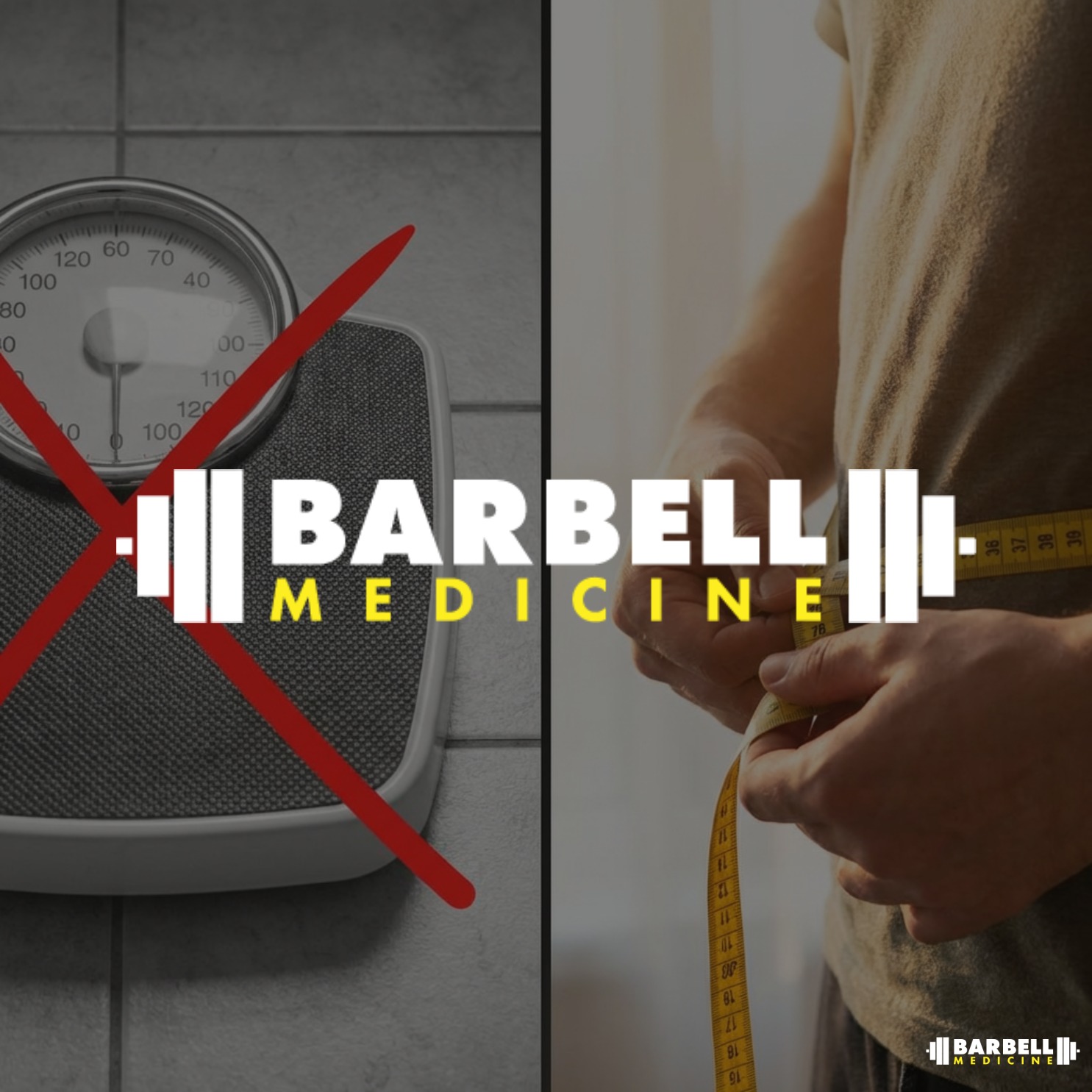
Episode #390: Why Your Waist Matters More Than Your Weight — The Science of Visceral Fat
from Barbell Medicine Podcast
44m 34s
Tämä jakso korostaa, että perinteinen vaaka ja BMI eivät riitä arvioimaan terveyttä, koska ne eivät huomioi rasvan jakautumista kehossa. Visceraali rasva, joka kertyy sisäelinten ympärille, on erityisen haitallista ja liittyy metabolisiin sairauksiin, kuten insuliiniresistenssiin ja sydän- ja verisuonitauteihin. Sitä ei voi nähdä ulkoapäin, ja jopa normaalipainoisilla henkilöillä voi olla vaarallisia määriä visceraalia rasvaa. Vyötärönympärys on yksinkertainen ja tehokas tapa seurata tätä rasvaa, ja vyötärönympäryksen suhteen tulisi olla alle puolet pituudesta terveyden kannalta. Harjoittelu ja asianmukainen ravitsemus voivat johtaa kehonkoostumuksen muutokseen, jossa rasvaa vähenee ja lihasmassa säilyy tai kasvaa, vaikka paino ei muuttuisikaan. Tämä parantaa merkittävästi terveyttä, vaikka vaaka ei sitä näyttäisikään. Lisäksi rodulliset ja geneettiset erot vaikuttavat rasvan jakautumiseen, mikä korostaa tarpeett
[Muutko] Katsomammuutitariokset! Sittarihoita pistepi! There's a finding in the exercise science literature that I think changes how most people should think about fat loss. Studies were subject to aerobic exercise for months and didn't lose a single pound. Scaled and moved start to finish. This refat still dropped by about 6%. The diet only grew. Same body weight, no weight loss, they showed about 1%. Same scale number, but roughly 6 times the effect on the fat that most directly predicts metabolic disease. But the scale didn't register any of it. That gap between what the scale reports and what's actually having inside your body is what this episode is all about. We're going to cover the biology of fat distribution, by some fat is categorically more dangerous than other fat, how to actually measure the right things and what the evidence says about the best ways to change them. Some of what we cover is going to push back on things that you've probably heard. I'm Dr. Jordan Fagenbaum. This is the Barbell Medicine Podcast. The scale is measuring the wrong thing. But not because it's inaccurate, but good scale is very accurate. The problem is what it's measuring. Scale weight combines every tissue compartment in your body into one single number. That skeletal muscle, bone, organs, blood volume, the glycogen stored in your liver and muscle, whatever's in your GI track right now, and several liters of water distributed across every cell in your body. Now none of those compartments are static and all of them vary independently of fat tissue, and some of them vary considerably. Take glycogen storage. It alone varies by 300 to 500 grams based on what you've eaten in the past 48 hours. And each gram of glycogen holds roughly 3 to 4 grams of water alongside it in the cell. So that means that a carb heavy weekend, dinner out a few drinks, birthday cake, they can all add 2 to 4 pounds to your scale reading, and that has nothing to do with fat tissue. Even after a hard training session, the inflammatory response in stressed muscle draws in additional fluid. You can wake up a pound or two heavier after a workout you otherwise be proud of. 2 to 4 pounds is the typical scale swing from a single carb heavy weekend through glycogen or water retention alone, but that's zero change in fat tissue. And that's the floor of the noise that you're working with. There's a density issue too. Skeletal muscle has a density of about 1.06 grams per milliliter. Fat tissue sits at 0.9. That means that a pound of fat occupies roughly 15 to 20 percent more physical space in your body than a pound of muscle. Yeah, 1 pound of fat is the same as 1 pound of muscle on a scale. That just takes up more room. Now, if you've been training and replacing lower density fat with higher density muscle, your body is getting physically smaller while the scale stays flat or drifts only modestly. Those fit differently. Your waist is getting smaller. The scale is unimpressed because mass is mass, regardless of what it's made out of. This though is body recomposition losing fat while preserving or gaining lean tissue simultaneously. It produces some of the best health outcomes available, but the scale is completely blind to it. If the scale hasn't moved but your waist has, something is clearly working. The tape measure is just picking up something that the scale can. Scale weight combines everything in a one number, which makes it nearly useless for tracking fat specifically. What we actually want to track is where the fat is. And that requires a different tool and a short detour in a symbiology that may change how you think about your midsection. Not all fat is the same, and the type that lives inside your abdomen is operating on a completely different set of biological rules. You can have a completely normal BMI and be carrying dangerous amounts of the most metabolically disruptive fat in your body. Doctors sometimes call this normal weight obesity. That's when the person looks relatively lean. They're height to weight ratio is normal. But internally they're carrying significant visceral fat that standard health screenings usually don't catch. That's because these screenings typically just use BMI and people often skip the waist circumference. I had a consultation with a gentleman not too long ago about weight management. Yet a normal BMI and on paper he looked relatively healthy until I had a measure's waist. And it was at 40 inches. He also sent me his labs and they told a different story too. He had impaired fasting glucose. His triglycerides were elevated and he had low HDL. Every metabolic marker was pointing in the same direction. This has probably been building for years, while everyone around him including himself was reassured by a normal BMI. Nobody had measured his waist. That scenario is more common than you think. And it's the reason why fat distribution matters more than fat amount in some cases. And when we say fat subcutaneous fat is what most people think about. It sits between the skin and the muscle. You can grab it. You can find it on your hips, thighs, arms and on top of your abdomen. Abdominal subcutaneous fat is relatively quiet, metabolically speaking. It produces fewer inflammatory signals per unit mass than visceral fat and it doesn't drain directly into the liver. Peripheral subcutaneous fat at the hips and thighs appears to be actively protective in some respects. It efficiently traps circulating free fatty acids and it produces hormones like adiponectin that seem to support metabolic health. Women store proportionally more fat here than men, which is part of why pre-menopausal women have a substantially lower cardiovascular risk profile than age-match men at a similar BMI. Now, visceral fat is anatomically different. It sits inside the abdominal cavity, packed around the intestines, the liver, and the pancreas. You can't see it or feel it from the outside. Someone can look, lean standing in front of you, and be carrying substantial visceral fat internally. So what is visceral fat actually doing? The honest answer is that the scientific literature has three competing theories and they're not equally supported by the evidence. Now the first and most well-supported framework is what's called the overspill and ectopic fat hypothesis. The idea here is that visceral fat isn't necessarily a primary independent cause of metabolic disease. It's more accurately a marker that the body's safe subcutaneous storage capacity has been exceeded. Every person has what some researchers call a critical fat storage threshold. When subcutaneous capacity is saturated, fat overflows into the visceral compartment and, more importantly, into ectopic storage sites, primarily the liver. It's this ectopic fat accumulation, particularly liver fat or hepatic fat, that does the most direct metabolic damage. The data supporting this interpretation is pretty compelling. When researchers put visceral fat and fatty liver into the same statistical model and ask which one predicts metabolic syndrome independently, fatty liver wins decisively. In one analysis with an odds ratio exceeding 70, while visceral fat lost its independent significance entirely. When surgeons have selectively removed large amounts of visceral fat during bariatric procedures and compared outcomes to weight loss alone, there's no consistent additional metabolic benefit beyond what the weight loss itself produces. If visceral fat were an independent primary driver of disease, removing it surgically should provide a clear benefit above weight loss alone. The evidence though hasn't reliably shown that. The visceral depot appears to be a highly visible signal of a broader systemic problem rather than the main culprit itself. So that's the first theory. The second theory is the portal theory, and it's the one you hear most often. The fat depots inside the abdominal cavity drain through the portal vein, that goes to the liver, and every free fatty acid and inflammatory molecule released by the visceral fat goes straight into the liver circulation at concentrations the rest of the body never sees. The liver responds by producing more glucose, developing insulin resistance, and subsequently accumulating fat. And this cascade eventually is what produces metabolic syndrome. Portal vein concentrations of interleukin six are measurably higher, roughly 50% when compared to systemic levels, which confirms that visceral fat is doing something that the portal theory predicts. But the theory's primacy is challenged by those same oman-tech to me trials. If the portal drainage route were the primary mechanism, severing it surgically should rapidly improve hepatic metabolism above and beyond what weight loss alone produces. Consistently, it hasn't. So the portal mechanism is real and contributing, but it's probably not the quote root cause. The third theory is hormonal, and it operates through a feed forward loop that's worth understanding some detail. This role fat over expresses an enzyme called aromatase, which converts testosterone into estrogen. In men, elevated estrogen signals the brain to reduce testosterone production. The brain is more sensitive to estrogen than testosterone in this regard. Now, lower testosterone levels then make visceral fat cells more efficient at accumulating or sequestering in coming fat from the bloodstream, which drives more aromatase activity, which drives testosterone lower. The loop runs in both directions and doesn't stop on its own. This mechanism is well validated, but it's better understood as a secondary loop that accelerates fat accumulation and complicates fat loss rather than the foundational driver of cardiovascular or metabolic disease. We'll come back to it in detail later because the clinical implications, particularly for men, are significant and usually under discussed. On top of these three mechanisms, visceral fat also releases proteins called adipocines that function as hormones. For example, visceral fat increases the secretion of PAI1, plasmidogen, activator, and hivitor1, which impairs the body's ability to break down blood clots and creates a state of elevated clotting risk. It also increases angiotensinogen, which feeds directly into the reenin angiotensin aldosterone system and contributes to hypertension, also known as high blood pressure. It also paradoxically underproduces adiponectin, the adipocine that normally increases insulin sensitivity, reduces hepatic glucose output, and protects blood vessels from plaque formation. More visceral fat means less adiponectin, which means less of the signal that protects you from the consequences of carrying visceral fat. That's a meaningful effect. I think that cardiorespiratory fitness is a confounder that's worth mentioning here, because large prospective cohort data consistently shows that people with high fitness and high body fat has substantially lower cardiovascular mortality than people who are lean and unfit. Fitness partially decouples adipocines.
from mortality risk. This doesn't mean that this real fat isn't a useful target, it clearly is. But the relationship between fat and health outcomes is not as clean as a simple linear story. Now, let's talk about how to actually measure this real fat because this is where a lot of the nuance lives and where most health communication falls short. MRI and CT are the gold standards for directly quantifying visceral fat volume. In clinical practice and for tracking at home, we use Wacer conference as a proxy. It's a reasonably good one. Imaging studies show that Wacer conference correlates with total abdominal fat above 0.8 in most data and with visceral fat specifically around 0.7. Those correlations are good enough for tracking change over time, which is what we actually care about. But here's where it gets more complicated than most people realize. There are three different standard measurement sites for Wacer conference and they don't give you the same number. First up is Enhance. This is the large US population surveillance study that provides many of the reference ranges used in American medicine. It measures at the Iliac crest, the top of the hip bone. This is typically the lowest point of the trunk. The WHO standard measures at the midpoint between the bottom of the lowest rib and the top of the hip bone. And this is what was used to validate the widely cited clinical thresholds for Wacer conference. 94 centimeters for men and 80 centimeters for women. Then there's the umbilicus, your belly button. It's the most practical site for self tracking. One, it's the easiest landmark to hit consistently on your own. You can see it and feel it. And it shows the highest sensitivity to this real fat changes over time when it comes to manually measuring your waist. It does typically read a few centimeters higher than the WHO midpoint site in people carrying central fat. Now here's the practical implication. If you're measuring at the belly button and comparing it to the 94 and 80 centimeter clinical cutoffs for Wacer conference, those are the ones that were validated at the WHO midpoint site. Those thresholds are approximate guideposts for you, not necessarily hard lines. The trend matters more than where you land on any single reference anyway. So pick one site, measure it the same way every time and track the direction. We recommend the belly button because it's just easier to locate. This far it happened. As far as how to measure, it should be first thing in the morning after you go to the bathroom, but before you eat anything, it should be standing up straight and relaxed. Exhale gently and measure without bracing your trunk. Take three measurements and average them out. For the waist to height ratio, you can divide your Wacer conference by your height as long as you're using the same units. A ratio below 0.5, so your waist is less than half of your height, is associated with substantially lower cardiovascular and all cause mortality across virtually every population study. Now the main thing here is you want to be below 0.5, but above 0.4 because that indicates that somebody might be carrying insufficient amounts of body fat. Still, waist to height ratio seems to outperform BMI as a single number predictor because it captures essentially located fat rather than just total mass. This is one of the reasons why we put it in the Barbell medicine, vital 5. Now, there are ethnic specific thresholds for Wacer conference and the biology behind why they exist matter more than what they're usually given credit for. For people of Asian descent, the clinical thresholds are lower, roughly 85 to 90 centimeters for men, 75 to 80 for women. For many South Asian populations, even tighter cutoffs have been proposed. And for individuals of West African descent, the standard thresholds may actually overestimate metabolic risk at a given waist measurement. These aren't necessarily arbitrary adjustments because they do reflect genuine differences in body composition and fat distribution that has specific biological origins. For any given BMI, individuals of South Asian descent carry higher mean body fat than people of European descent with a greater proportion stored viscerally or in the abdomen. Individuals of West African descent tend to carry greater lean mass and lower total body fat at the same BMI. The relationship between an anthropometric measurement like BMI or Wacer conference and actual internal fat distribution varies meaningfully by ancestry. The tool is reading something real, but what is reading does vary by population. The evolutionary biology behind this is genuinely interesting, though I want to be clear up front that what follows is kind of a hypothesis, not necessarily settled science. One framework called the variable disease selection hypothesis proposes that these differences in fat distribution reflect long-term genetic adaptations to the specific infectious disease pressures these different populations faced over thousands of generations. It's an interesting argument, but the research is still developing and we should interpret it accordingly. But the argument goes something like this. Immune responses are metabolically expensive. Different pathogens impose different metabolic demands, populations that are faced with intense pressure from specific types of infections may have evolved fat storage patterns that were optimized for fueling the immune responses those pathogens required. South Asian populations historically face severe gastrointestinal infections, which monsoon conditions made endemic. The hypothesis is that visceral fat positioned directly around the organs involved, draining to the liver, and capable of releasing energy and inflammatory signals into that local circulation, they may have been selectively favored as a fuel depot for mounting rapid local immune responses against gut-borne pathogens. The architecture that makes visceral fat metabolically problematic in a modern environment of calorie surplus may have been adaptive in an environment where gut infections were leading cause of death. For populations with intensive historical exposure to malaria, a different pattern may have been favored. Malaria treatment requires sustained, metabolically expensive fevers. Intramuscular adipose tissue, so that's fat stored directly within the muscle tissue, provides a local, immediately accessible fuel source for the high metabolic demand of a fever. The hypothesis here is that populations facing heavy malaria burden may have evolved towards higher intramuscular fat storage for exactly that reason. Now again, these are hypotheses, not proven mechanisms, but they provide a biologically grounded framework for why identical waste measurements carry different metabolic implications across ancestries, one that goes deeper than an arbitrary clinical adjustment. The populations are genuinely different in ways that likely have deep historical roots. Okay, now let's talk about what the relationship between waste change and waste or conference change can actually tell you about the quality of the weight that you're losing. If you lost 10 pounds over the last two months, how much would your waste have changed? Most people couldn't answer that and neither could their doctors, but that ratio is one of the most useful monitoring tools available and it tells you something specific when it's off. Across studies tracking weight loss, the commonly cited figure is approximately 0.7 kilograms of weight loss per one centimeter of waste reduction, about 1.6 pounds per centimeter. Worth noting, the primary data behind this number comes from studies conducted in men. That matters for interpretation and we'll come back to the sex differences shortly. For now though, treated as a rough orientation rather than a universal benchmark. In high quality, structured weight loss programs where the people are doing progressive resistance training, they're taking in adequate protein and they're doing their conditioning, the ratio improves. Six month intensive interventions have shown waste reductions of 10 to 14 centimeters alongside roughly 6 kilograms of weight loss, putting the ratio in the 0.4 to 0.6 kilograms per centimeter waste circumference reduction range. Less weight loss per centimeter of waste reduction because more of what's coming off is fat. At the other end, rapid weight loss without resistance training often pushes the ratio above 1 kilograms per centimeter of waste or conference loss. That's the signal that lean tissue is being lost alongside fat and lean tissue loss barely moves the tape measure. The scale cooperates, but the waistline doesn't. So the reference figure is roughly 0.7 kilograms per centimeter. Call it about 3/4 of a kilogram per centimeter and remember this comes mainly from male study populations. Well design programs can get that ratio down towards 0.4 to 0.6, but if you're above 1.0, over 8 to 12 weeks, lean mass losses likely play in a significant role. Again, these are population averages and individual variation is wide, driven by sex, baseline fat distribution, age, and the specifics of the weight loss program. Again, we can use them as calibration benchmarks, not as precise predictions. Back to the sex thing, women tend to show a less favorable ratio than men, particularly in the early phases of weight loss. Three kilograms of weight loss corresponds to about 3.5 centimeters of waste reduction in men versus about 2.8 centimeters in women on average. The explanation here is fat distribution. Women store proportionally more fat in peripheral subcutaneous depots, the hips, the thighs, the gluteal region, and those depots tend to be mobilized before the abdominal depot responds significantly. The waste catches up, but typically later on in the weight loss journey. So what does this practically mean? We can track the weight and waste circumference under consistent conditions. First thing in the morning, after you go to the bathroom, but before you eat, daily weights averaged into a trend line are generally more informative than a single weekly number. The day-to-day swings from glycogen and fluid are noise, and the moving average filters them out. For a waste circumference, weekly measurements at the same site are sufficient. You don't need to do it more than once a week. But over 8 to 12 weeks, if the weight is dropping, but the waste isn't moving proportionally, particularly if the ratio is running above 1 kilo per centimeter of waste circumference reduction. If the waste is shrinking and the scale is flat, that's body recomposition, and you should enjoy it while it lasts. Ultimately, the scale tells you how much mass you've lost. The ratio tells you what that mass is made out of. And one of the less intuitive findings in the literature is that exercise doesn't just change the ratio by preserving lean mass. It targets visceral fat through a completely different biological mechanism that operates even when the scale doesn't move at all. But before we get into any interventions, there are two underappreciated factors that actively work against this whole program, and they don't get positioned that way often enough. The first is sleep. Sleep deprivation dysregulates two appetite-related hormones, leptin, which signals satiety and grellen, which drives hunger. When you're constantly under-sleeping, your hunger signals are low.
are elevated and your fullness signals are blunted, independent of anything else in your program. Seven and nine hours of reasonably high-quality sleep is where the metabolic data lands. Since it's not necessarily just a lifestyle recommendation, it's to help your physiology here, specifically around hunger and satiety. If you're chronically under-sleeping, you're working against your own hormonal environment regardless of how well the rest of the program is designed. I wonder if that's what influencers mean when they say you have to balance your hormones. Speaking of hormones, the second thing here is cortisol, and I want to be specific here because the cortisol belly narrative has been both overstated and under-discussed at the same time. The mechanisms are real. Visceral fat carries a higher density of glucocorticoid receptors than subcutaneous fat. Those are receptors for cortisol. At a post-tissue, also contains an enzyme that locally regenerates active cortisol from its inactive form, which means that the visceral fat storage site is experiencing elevated cortisol activity even when a blood cortisol level looks normal. This is pretty well-established. Now the population level effect is much smaller than the wellness industry is telling you. A meta-analysis of 14 prospective cohorts, over 23,000 subjects, found essentially no meaningful relationship between psychosocial stress and subsequent weight gain. About 69% of the included studies found no significant relationship. The main driver of stress-related body composition changes is behavioral. Eating more, moving less, sleeping less, and not a direct hormonal rerouting of the fat into the visceral storage site, at least not by cortisol anyway. Addressing the behavior matters, and you should save your money on cortisol blocking supplements because they're not really doing anything. Sleep and cortisol don't get the last word in the story, but they have earned a place early in the conversation about what's working against you. Now, let's talk about the finding I opened the episode with this time with the mechanism behind it. In studies where aerobic exercise produces no meaningful weight loss, they have the same body weight start to finish. Viscual fat still drops by about 6%. Dietary restriction alone, without exercise and without weight loss, it's only about 1%. The same scale number, but roughly 6 times the visceral fat effect, through a completely different pathway. This comparison is directional, not a controlled head-to-head analysis. The exercise and diet-only groups in that analysis aren't perfectly matched, but the finding is consistent across the literature, and the mechanism explains why it has to be there. Viscual fat cells have some unique receptors that other cells don't. They carry a higher density of beta-3 adrenergic receptors, the receptors that respond to adrenaline and related catacolomines by activating fat release. They also carry a lower density of alpha-2 receptors, which normally serve as a break on fat mobilization. The net effect? This role-fat response far more readily to the catacolomine surge from vigorous exercise, especially aerobic exercise, when compared to subcutaneous fat. These receptor differences may have an evolutionary origin. This role-fat appears to be built to function as a rapid release fuel reserve, one that drains directly to the liver through the portal vein during periods of intense physical demand or stress. The architecture that makes it metabolically problematic in a sedentary calorie surplus environment is the same architecture that makes it preferentially responsive to vigorous exercise. During a hard workout, especially if it's conditioning, the sympathetic nervous system produces a catacolomine spike. It's noradrenaline and adrenaline, and these hit the visceral fat preferentially. This is one reason people who exercise consistently tend to carry lower visceral fat at the same body weight compared to people who don't work out, even when total calorie intake is similar. Repeated adrenergic activation from exercise is specifically mobilizing that internal fat storage site. The second mechanism is where things get really interesting, because this is all about myocines. These are proteins secreted by contracting skeletal muscle that act as hormonal signals to other tissues. During vigorous exercise, working muscle releases interleukin six at levels five to thirty times above resting levels. This exercise derived interleukin six or IL-6 enters the systemic circulation and acts on fat tissue to stimulate fat mobilization. The combination of visceral fat's receptor architecture and the circulating IL-6 signal means that visceral fat is being targeted through two independent pathways simultaneously during every hard training session. For skeletal muscle, the tissue that is moving your body is releasing a signaling molecule that tells fat cells to release stored energy. That's happening independently of the calorie deficit. Let's take a second with that. Your skeletal muscle, the tissue that moves your body, is releasing a hormone that tells fat cells to release stored energy. That's happening independently of what's going on with calories in and calories out. It's just a different biological pathway, and it's one that pure dietary restriction doesn't activate. When it comes to exercise, aerobic training and hit high-intensity interval training generally outperform resistance training for acute visceral fat reduction. The cataclycloamine response and the calorie expenditure per unit of time from cardiovascular work are the primary drivers here. Metanalysis found that exercise alone produces about 6% visceral fat reduction versus 1% from diet alone. That's the adrenergic and myokine mechanisms at work. Resistance training's contribution to visceral fat operates on a longer timeline. Medine tissue built or preserved through lifting weights protects resting metabolic rate. And prospective data consistently shows that lifting weights is more protective against age-related waste circumference gain over years than equivalent conditioning volume. The mechanism is metabolic, preserving the tissue that keeps your baseline energy expenditure elevated. Now when diet and exercise are combined, the waistline effect is larger than either produces alone. Head-to-head trial show diet alone produces waist reductions around 2.2 centimeters over a typical intervention period, each 12 weeks. Now when we combine diet and exercise, then we see about a 5.7 centimeter reduction in a waist circumference over the same time frame. Adding exercise also cuts lean mass loss roughly in half. From about 20 to 30% of weight loss as lean tissue on diet alone, down to approximately 10 to 15% when exercise is included. As far as how much exercise is needed, the aerobic dose where visceral fat reduction reliably shows up in the data is around 150 minutes of moderate intensity work per week. There's still more to be had above that as more volume drives more effect because there's a dose response relationship here. Now those mechanisms operate through the adrenergic and myocyan pathways. They require physical contraction. You've got to exercise. This brings up a clinically important question about GLP1s, which are the most effective weight loss pharmacology that we've ever seen. These drugs, somaglotide, terzepatide, and the emerging triple agonist retatretide, they produce weight loss through appetite suppression and delayed gastric emptying mostly. They create a calorie deficit primarily by reducing hunger, but they don't activate the adrenergic pathway. Also, they don't produce the myocyan signal, and the body's response to a sustained calorie deficit, regardless of how that deficit is created, is to draw on both fat and lean mass. This is exactly where the weight to waste ratio becomes clinically useful for people using these drugs. If the deficit is being created pharmacologically, without exercise pathways being activated, the ratio tends to suffer. This isn't a reason not to use these drugs necessarily, especially when they're clinically appropriate. It's a reason to understand what needs to be added to get the most out of them. Consider this. Somaglotide at full dose produces an average of about 15% of initial body weight loss. Terzepatide, a dual GLP1 and GIP agonist, reaches about 20%. Both show real reductions in visceral fat and liver fat that translate to improvements in metabolic syndrome. The direction is clearly right. But the body composition data is more complicated. Dexas substudies from the step 1 trial. This is x-ray technology that looks at body composition and bone mineral density in the step 1 trials, what looked at somaglotide over 68 weeks. Well, approximately 39% of the total weight loss was lean mass, as measured by dexas. Terzepatide does a little bit better. The surmount 1 trial showed that lean mass losses were about 24%. Retatretide, again, that's that triple agonist targeting GLP1s. GIP and now glucagon receptors, shows around 33% lean mass in a recent study published in Lansing Diabetes and Entercology. But before drawing conclusions from those numbers, we need to go through some context. Dexas measures lean mass as everything that isn't fat or bone, including actual skeletal muscle, but also water, glycogen, organ tissue, and intramuscular fat. That's important. Fluid and glycogen shifts during rapid weight loss gets recorded as lean mass loss. Dexas does intramuscular fat loss, which is a favorable adaptation. Dexas records them as lean mass loss too. These percentages, from these studies, likely overstate the actual skeletal muscle loss. We have some evidence to show that that's likely true. The surpas 3 MRI substudy tested this directly. It looked at fatty infiltration within the muscle, something we call myosteotosis, when people were using Terzepatide. The drug significantly reduced intramuscular fat compared to placebo. That's a favorable adaptation, and it's exactly the kind of change Dexas would miss a tribute to lean mass loss. Functional data also points in the same direction. In the semoline study, patients on semaglotide showed a 4.5 kilo improvement in handgrip strength to 12 months without exercise mind you. The prevalence of sarcopenic obesity dropped from 49 to 33%. A recent review concluded that skeletal muscle changes with GLP1 treatments appear adaptive rather than pathological. That said, a 24 to 39% lean mass loss on Dexas is comparable to what diet only interventions produce without resistance training, which isn't really a high-barred clear. What would happen if these drugs were combined with something that actually preserved muscle mass? And that's what the belief trial demonstrated directly. But Magrumab, a myostatin pathway blocker, combined with semaglotide, produced 22% total weight loss with 93% of it coming from fat mass. This is 72.
2% coming from fat mass with some agglotide alone. The direction the field is moving is towards protecting lean mass while producing fat loss and the pharmacology to do that is beginning to exist. For people on GLP1 agonist, adequate protein, which is around 1.6 grams of protein per kilogram body weight per day, and resistance training that is progressively loaded, make a meaningful difference to what's being lost and what's being preserved. The drug handles the deficit, what you do alongside of it, shapes the composition of the outcome. Before we move on, I want to address something directly because the public conversation around GLP1 agonist and muscle loss has a framing problem that I think is doing real harm to real patients. Now the argument you'll hear from a lot of popular health media goes something like this. GLP1 agonists cause lean mass loss, therefore they're dangerous. Therefore people should be cautious about using them and otherwise skeptical. That argument treats the risks of the medication as if they exist in a vacuum. As if the alternative to taking the drug is something other than continuing to carry the weight. But here's what the lifestyle intervention data actually shows for people with obesity. Across intensive lifestyle programs, the best ones with dietitians, behavioral support, structured exercise, consistent follow-up, roughly one in 10 people achieve and maintain clinically significant weight loss at five years. That's a success rate for people who engage with these programs. The other nine are not dropping out or failing to try hard enough. It's just that the biology of weight regulation is genuinely difficult to override through effort alone and suggesting otherwise is moralizing weight loss. These anti obesity medications produce clinically significant weight loss in a substantially higher proportion of patients. Some aggletide at full dose averages around 15% of starting body weight. Terzepetide does even better, closer to 20%. Again, these are average outcomes, not the best case scenarios. When it comes to the muscle loss question, we just covered what the trial data actually shows. Dexa percentages that likely overstayed real skeletal muscle loss because of fluid, glycogen, and intramuscular fat changes. Meaningful reductions in myostiotosis on Terzepetide, hand grip strength improving on some aggletide, sarcopenic obesity prevalence dropping substantially in the semoline data. The concern is real, but the framing that these drugs are consuming your muscle just doesn't hold up against the evidence when you look at it carefully. There's also an intellectual consistency issue worth naming. The same people raising the loudest concerns about lean mass on GLP1 agonists are largely not applying that same scrutiny to unregulated peptides to aggressive calorie restriction without clinical supervision or to vitamin D maxing, which is a documented cause of hypercalcemia and kidney damage when people take it in the quantities that some corners of the internet recommend. The selective application of alarm specifically targeted at a drug class that is effective for obesity, it's worth noticing. Untreated obesity at the clinical level carries substantially elevated risk of cardiovascular disease, type 2 diabetes, sleep apnea, several types of cancer, osteoarthritis, fatty liver disease, and all cause mortality to name a few. The conversation about whether a patient might lose some lean mass, lean mass that is substantially preserved with adequate protein intake and lifting weights, has to happen alongside the conversation about what happens to that patient if they don't lose the weight. Now none of this means that GLP1 agonists are appropriate for everyone, that we should put them in the water, or that the muscle loss data doesn't deserve attention in clinical practice. It certainly does, and we've walked through how to account for it. It means that the risk benefit analysis has to include both sides of the coin. Appropriate use in the right patients with the right support is in a controversial position. It's just medicine, and there are no gold stars for going through out life without needing medicine. Now let's come back to the aroma taste loop that I introduced earlier, because the clinical picture here is worth going through carefully. This role fat over expresses a romatase, which converts testosterone to estradiol, a type of estrogen. In men, elevated estradiol feeds back to the hypothelamic pituitary gonadal axis, which is the brain to testes pathway for testosterone production. The hypothalamus reduces GNRH output, the pituitary follows with less luteinizing hormone, that's LH, with less LH reaching the testes, they produce less testosterone. This role fat is directly suppressing testosterone through this pathway. Testosterone deficiency then worsens the situation in a specific way. You see testosterone normally inhibits the enzyme responsible for pulling triglycerides out of circulation and into the fat cell. When testosterone falls, that inhibition is lost. That means the visceral fat becomes more efficient at accumulating fat, which drives more aromatase activity, which suppresses testosterone further. The loop runs in both directions and it compounds over time. Now to be clear, aromatase is one of several ways that visceral fat reduces testosterone levels. Insulin resistance, which visceral fat promotes through the portal mechanism directly impairs testosterone synthesis at the level of the testes. Elevated inflammatory cytokines from the adipose tissue, those are the adipocines, suppress the hypothalamic pituitary GNRH axis independently. And then there's detail for more recent research that often gets overlooked. When estradiol conversion was pharmacologically blocked in men with adequate testosterone levels, they gained body fat regardless of their testosterone dose. Estrogen, when it's produced naturally with testosterone present, appears to be critical for the body's ability to regulate fat accumulation. The clinical tendency to suppress estrogen in men on TRT, especially by TRT clinics, well that can undermine exactly what you're trying to accomplish metabolically. See this pattern all the time. Gradual central weight gain over the years, declining energy and decreased libido. The interpretation is usually testosterone deficiency, which may be true, but the cause is most commonly visceral fat accumulation driving the hormonal changes, not a primary testosterone deficiency that's driving the fat gain. Treating the testosterone without addressing the visceral fat leaves the underlying loop running. Testosterones affect on body composition operates differently across three ranges, at which range or in determines what's actually happening and what intervention makes sense. In testosterone deficient men, those with confirmed low testosterone on laboratory analysis and they have symptoms, testosterone, or specifically the lack thereof, is genuinely limiting to body composition. Born it to normal physiological levels produces real changes. Lean mass begins increasing within the first month. One to three kilos over the next six months is representative in the literature. Visceral fat reduces over the same time frame as insulin sensitivity improves and the inhibitory effect on fat accumulation is restored. Now within the normal physiological range or eugenatal range, this is roughly 300 to 1,000 nanograms per deciliter, depending on the lab. Testosterone is no longer the rate limiting factor for muscle gain. The training stimulus is this is why men at the lower end of normal and men at the upper end of normal gain similar amounts of lean mass in response to the same resistance training program. The signal to the androgen receptors is sufficient across that range. What determines how much muscle mass is gained is the training load, not where the testosterone level sits. Now above the normal physiological level, this relationship changes. High doses of testosterone produce androgen concentrations well beyond what the body could ever generate on its own. At these levels, a clear dose dependent relationship between testosterone exposure and lean mass emerges that simply isn't present within the normal range. The most well described mechanism for rapid muscle growth and strength increases is forced cellular remodeling of muscle tissue. Super physiological testosterone levels stimulate aggressive myonuclear addition from the satellite cell pool. These are basically stem cells for the muscles that can be called into action to help a muscle grow. To simplify, the more myonuclearized someone has in their muscles, the more muscle protein can be produced, which means more potential muscle size. This overcomes the intrinsic biological constraint of the myonuclear domain, allowing muscle fibers to grow to sizes unattainable in the eugenadal state. This is also the structural basis for the two to threefold greater absolute gains in fat free mass and strength observed when super physiological testosterone is combined with exercise. High doses likely augment the non-hypertrophy-related strength gains, i.e. improved motor unit recruitment and contractility, the a non-genomic pathways, and significantly enhanced recovery by reducing muscle protein breakdown. The most direct evidence for this is a controlled study that randomized men to four different groups for 10 weeks. placebo with no exercise, placebo with resistance training, super physiological testosterone levels with no exercise and super physiological testosterone with resistance training. The no exercise testosterone group gained more lean mass than the exercise only group. The most muscle gain, the anabolic signal at super physiological concentrations, is strong enough to drive muscle protein synthesis without a training stimulus. Exercise amplifies it substantially, but is no longer a requirement to produce the effect. That mass also decreases at these concentrations, directly through angiogen receptor-mediated inhibition of fat uptake by the cells, and indirectly through the increased lean tissue raising resting metabolic rate. The cost side is also dose dependent and worth being clear about. Regardless of whether someone is on replacement doses, that's testosterone replacement therapy or TRT, or if they're on super physiological doses of testosterone, endogenous production of testosterone shuts down. That's what your body normally makes on its own. The hypotherlamic, pituitary, gonadal axis, or HPG axis detects exogenous antigens from outside the body and stops generated on its own. Typically, after stopping, depends on the dose, the duration, and the specific compounds used, and can be prolonged in some individuals. Based on the most recent evidence, TRT level doses tend to produce neutral to beneficial changes in blood-lippid levels and do not increase heart disease risk. At super physiological doses, however, the lipid picture worsens as does the risk of heart disease in a number of other conditions. How someone weighs the risks and benefits is a personal decision, but the takeaway is that the effect of testosterone on body composition varies wildly from testosterone to efficient to normal to super physiological levels. There's one more pharmacological tool worth knowing about, mostly for what it reveals mechanistically. NASA Moral in is a synthetic.
growth hormone, releasing hormone, that means it bumps up growth hormone, and it stimulates pulsatile, physiological levels of growth hormone release from the pituitary. Now this was used for HIV associated lipodistrophy, mostly due to the medications that were being used to treat HIV at the time, and lipodistrophy just means, "Hey, people got storage of fat in weird areas." In this case, the visceral adipose tissue site, which was harmful. So in this population, it produced roughly a 15% to 20% reduction in the visceral fat area with essentially no change in subcutaneous fat. Now to be clear, Tessa Morlin is FDA-approved only for HIV associated lipodistrophy. The evidence in general obesity populations is limited, and its absolute effect on visceral fat is pretty small when you compare it to GLP once. It's really not competitive as a clinical tool for most patients in its current form. Its value instead is more like a proof of concept. The growth hormone access can be selectively targeted to preferentially mobilize visceral fat without disturbing subcutaneous fat. And in fact, this is another one of the reasons why exercise works. When you exercise growth hormone levels go up and macro-t hormone binds to the growth hormone receptors in the visceral fat, and that can reduce visceral fat storage. Now whether that mechanism at some point becomes clinically useful in the future, well, that is an open question. Here's where everything we've covered comes together in a practical framework. The primary measurement is wasser conference. Pick a site, the belly button, being the most practical for self-monitoring, and measure it consistently. First thing in the morning, after you go to the bathroom, before you eat, standing up straight, and relaxed. Exhale gently, don't brace or tense your midsection, and take three measurements. After them together, you can do it once a week. That's totally sufficient. The two reference numbers to keep in mind are 94 centimeters for men, which is about 37 inches, and 80 centimeters for women. That's about 31 and a half inches. These are the WHO midpoint thresholds. So if you're measuring at the belly button, treat them as approximate. For people of South Asian descent, the thresholds are lower, and for individuals of West African descent, they may actually overestimate at a given measurement. For those people, we can use a waist-to-hide ratio and below 0.5 is a good predictor of lower cardiovascular and all-cause mortality, again, provided above 0.4. Generally, outperforms BMI across ethnicities because it captures central fat rather than just total mass. Again, that's why we made it a part of the Barbell Medicine 505. For tracking the quality of the weight loss, the reference figure in general programs. Again, derived primarily from studies in men, is about 0.7 kilograms of weight loss per centimeter of waist reduction. Well, structured weight loss programs are lower, 0.4 to 0.6, but if the ratio runs above one over eight to 12 weeks, lean tissue loss is likely a significant contributor. The levers here are protein intake, make sure that's at least 1.6 grams, a protein per kilogram, body weight per day, and make sure you're lifting weights in a progressively loaded fashion. As far as exercise goes for visceral fat reduction, aerobic work is the primary driver through adrenergic and myalkine pathways, targeting visceral fat through mechanisms that caloristriction doesn't touch. Around 150 minutes of moderate intensity work per week is where the visceral fat reduction signal reliably appears in the data, but there's a dose response relationship above that. Lifting weights doesn't produce the same short-term visceral fat loss, but it does protect lean mass loss during any calorie deficit. It also helps preserve resting metabolic rate long term, and appears to be more protective against age-related waist circumference gain than equivalent amounts of conditioning over the years. Both modalities have a role and they're both doing different jobs. We should do both. Getting a sufficient amount of high quality sleep is important to make sure that the hormonal environment around you supports what you're doing. Pharmacological options, like gel-pupinagonists and TRT inappropriately diagnose testosterone-efficient men, well, they work best when lifestyle inputs are in place and they produce better compositional outcomes when people are eating enough protein and they're lifting weights. TRT and genuinely testosterone-efficient men address as the aroma-tacelute from both directions simultaneously. Seems to have a net beneficial effect when it comes to lipids. GLP1 agonists are clinically powerful tools whose body composition outcomes are substantially better when there's an exercise foundation in place. For most people, exercise and diet are the foundation. Getting enough sleep makes everything work better and if these lifestyle interventions plateau or if the clinical situation indicates we should move faster, pharmacological support can be useful, especially with GLP1s. If we go back to the person from the introduction of this podcast, they did months of exercise, but the scale was flat the entire time. They still lost 6% of their visceral fat. Nobody told them this was happening, the scale certainly didn't, but the tail of the tape measure and the ratio are the instruments that track what actually matters here and it's worth knowing how to use them. And now you do. I'm Dr. Jordan Vagenbaum, thanks for listening to the Barbell Medicine podcast, catch you next week and every week right here on the Barbell Medicine podcast. (upbeat music) (upbeat music)
Podcast Summary
Key Points:
Painoindeksi (BMI) ja perinteinen vaaka eivät välttämättä kerro rasvan jakautumisesta, mikä on tärkeämpää terveydelle kuin kokonaisrasvamäärä.
Visceraali rasva (sisäelinten rasva) on metabolisesti vaarallisempaa kuin ihonalainen rasva, ja sitä ei voi havaita ulkoisesti.
Vyötärönympärys on käytännöllinen ja luotettava mittari visceraalin rasvan seurantaan, ja vyötärönympäryksen suhde pituuteen on parempi terveysennustaja kuin BMI.
Rasvan menetys harjoittelun ja ravitsemuksen avulla voi johtaa kehonkoostumuksen muutokseen (rasvan väheneminen ja lihasmassan säilyminen), jota vaaka ei näytä.
Geneettiset ja rodulliset erot vaikuttavat rasvan jakautumiseen, mikä vaatii erilaisia terveyssuosituksia eri väestöryhmille.
Summary:
Tämä jakso korostaa, että perinteinen vaaka ja BMI eivät riitä arvioimaan terveyttä, koska ne eivät huomioi rasvan jakautumista kehossa. Visceraali rasva, joka kertyy sisäelinten ympärille, on erityisen haitallista ja liittyy metabolisiin sairauksiin, kuten insuliiniresistenssiin ja sydän- ja verisuonitauteihin. Sitä ei voi nähdä ulkoapäin, ja jopa normaalipainoisilla henkilöillä voi olla vaarallisia määriä visceraalia rasvaa.
Vyötärönympärys on yksinkertainen ja tehokas tapa seurata tätä rasvaa, ja vyötärönympäryksen suhteen tulisi olla alle puolet pituudesta terveyden kannalta. Harjoittelu ja asianmukainen ravitsemus voivat johtaa kehonkoostumuksen muutokseen, jossa rasvaa vähenee ja lihasmassa säilyy tai kasvaa, vaikka paino ei muuttuisikaan. Tämä parantaa merkittävästi terveyttä, vaikka vaaka ei sitä näyttäisikään.
FAQs
Vaaka mittaa kaikkia kudoksia yhtenä lukuna, joten lihaksen kasvu ja vedenpidätys voivat peittää rasvanmenetyksen. Lihas on tiheämpää kuin rasva, joten keho voi pienentyä vaikka paino pysyy samana.
Viskeraalirasva sijaitsee vatsaontelossa sisäelinten ympärillä ja erittää tulehdusvälittäjiä suoraan maksaan. Se lisää merkittävästi metabolisen oireyhtymän, tyypin 2 diabeteksen ja sydän- ja verisuonitaudin riskiä.
Käytä mittanauhaa napakohdassa aamulla tyhjällä vatsalla. Mittaa kolme kertaa ja laske keskiarvo. Vyötärönympärys on hyvä välillinen mittari viskeraalirasvan määrästä.
Vyötärönympärys jaettuna pituudella antaa suhteen, jossa alle 0,5 liittyy alhaisempaan sairastuvuuteen. Se kohdistuu keskivartalon rasvaan paremmin kuin painoindeksi.
Eri mittauspaikat (lantion yläreuna, kylkiluiden ja lantion välinen keskipiste, napakohta) antavat eri tuloksia. Yhdenmukaisuus on tärkeää seurannassa, ja napakohta on käytännöllisin itsemittaukseen.
Noin 0,7 kg painonmenetystä per 1 cm vyötärön pienentyminen on tyypillistä. Alempi suhde (esim. 0,4–0,6 kg/cm) viittaa tehokkaampaan rasvanmenetykseen ja lihaksen säilymiseen.
Chat with AI
Loading...
Pro features
Go deeper with this episode
Unlock creator-grade tools that turn any transcript into show notes and subtitle files.
 PodcastTranscript AI