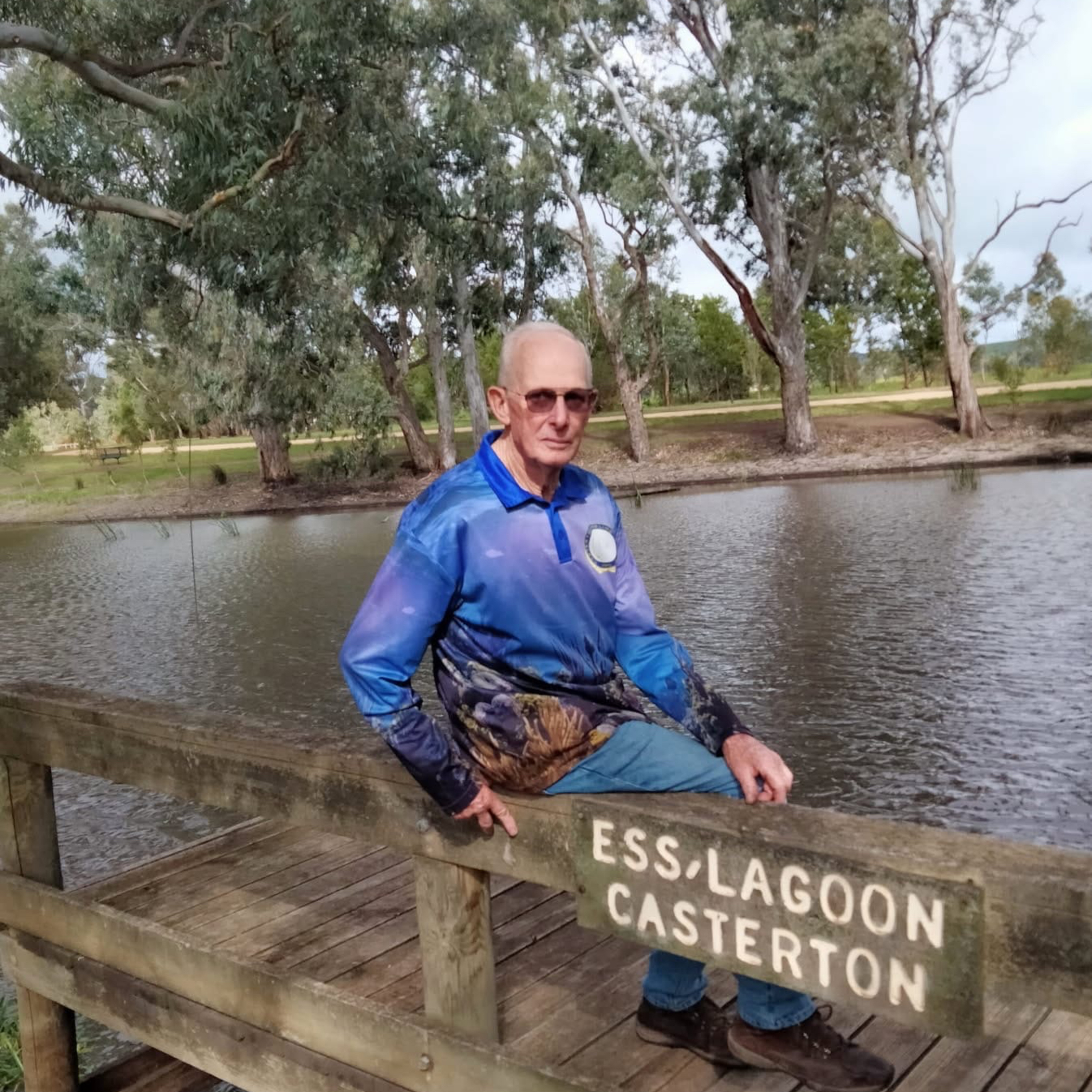
Brian Murrell, a quiet community contributor, shares his early life growing up on a farm in Englewood during the 1950s-60s. His childhood involved typical rural chores such as herding sheep and dairy cows, cutting firewood, and maintaining a large self-sufficient garden and orchard. The household relied on wood stoves and chip heaters, with baths being a weekly family event. Brian recounts several dangerous childhood incidents involving firearms, including being accidentally shot by his brother, resulting in a bullet lodged in his shoulder, and evading gunfire during sibling fights. He attended local schools, often wagging classes in high school with a group of non-academic friends, and left after Form 4. Before joining the army at 17, he worked at a perilous timber mill in Dartmore, where he narrowly avoided serious injury. His early exposure to guns and rural resilience prepared him for his subsequent army service, highlighting a life shaped by hardship, self-sufficiency, and community ties.
[Music] Hello and welcome to Casted & Connections. An initiative of Hands Up Casted & where a group of enthusiastic locals have come together to capture, preserve and share stories of people who have a connection to Casted & Connections. [Music] Brian Murrell is a quiet, unassuming man that can be seen most mornings with his wife of 48 years Vicki walking the dogs down Henty Street. But there is more to Brian than that and today on Casted & Connections we're going to find out a little more about this quiet achiever who has done so much for our community. Welcome Brian. Thank you, Lois. Born in 1952, the third child of six to Bill and Joyce Murrell, Brian Henty said blinks grew up at Englewood on the farm on NOS Road. What was some of your chores on that farm? Brian? Well, I wasn't really the farmer one so Keith, the brother was mainly the one that liked the farm but yeah, I got roped into rounding up sheep and dairy cows and helping. Mostly at the sharing time and helping press wool and all those little jobs that need to do in the sharing shed. Yes. The gathering and cutting the firewood which in the kindling mostly for lighting the fires which obviously them days out in the farm we didn't have electricity so we relied on the wood stove and open fires for heating. And cooking I presume? Yeah and wood stove was for cooking and chip heater for our bath time. Yeah. Anyone hasn't seen a chip heater though. Light a fire in them and water runs through and heats by the time it comes out. And it's quite hot and water's quite hot isn't it? Yeah. And that was well pretty efficient system really. Yeah it was an upgrade from the wash tubby out on the lawn which started while we were very young. Yeah. And yeah it was a weekly Sunday wash. Yeah, I was just going to say how often you know I can remember back in the early days where it was sort of wasn't every night you didn't have a bath or a shower like you did today. It was out in the bath and the cleanest one in first and the dirtiest one in last. Yeah well that's basically what happened once the chip once we got too big for the bath tub oh the little tub on the lawn we ventured into the bath tub with the chip heater and that there was always dad first. Yeah. Oh I hope so. By siblings in age virtually to the youngest one got the dirtiest water. Oh who was the youngest poor Paul the rain. Oh Paul the rain that's not very fair is it. Okay so you had sheep and cows and also you had quite a big garden there. It was a big size. There was actually half an acre of the yard which was 300 by Cypress hedge. Yeah. And half the or one side of the house probably took up a third of an acre and that was planted to vegetables and dad also had a veggie garden down at a natural spring down the middle of the farm which he grew potatoes and peas. So relatively self-sufficient and yeah we had a huge orchard there too. Yep. With apples, pears, mulberries, quenches. Yeah. Figs yeah it was very extensive orchards. I suppose mum did a lot of preserving. Preserving, making jams and chukkows because we had chukkows and terkeys and geese and chukks so we had all the requirements basically killed our own sheep on the farm. Yeah so other than flower and sugar I suppose. Yeah. Yeah when the dairy cows we had milk separated. Got the cream and the cream we sent away we returned with butter as part of the payments. Okay yeah. It was pretty well self-sufficient and for some reason the chukks and the terkeys always reserved for Christmas. Rest the time was mutton and mutton and more mutton. Yeah yeah Christmas was special. Oh I am rabbit of course. Yeah well nothing like a good rabbit's stew. Yeah we used to go hunting so. Yep. So you kids used to go hunting? Yeah well we all started hunting very early age trapping, shooting. I think I started shooting with a 22 about six and then I tried Dr. Gray to the shotgun and dad said no you can't have it until you're 10. So oh wow. It's 10 year old for we started using the shotgun and of course we always duck season gown-cheek and ducks as well as rabbits. You had a few instance with your brothers too? Kids, hot tempered brothers always fighting and guns are involved well it's always going to not end well. Not end well so yeah I finished up accidentally mine but I finished up with a 22 round bullet in me shot in the arm and lobbed in me shoulder still in me shoulder or so. From one of your brothers. Yeah. Come on naming shame. Well it's 7. I think I was now from memory. Johnny was two. Yeah. We had five of us in the front of Dad's Morrow shoot. Yep. And we're out corned-o shooting. Yep. And I left there's the rifle where it's me older brother Jim always seemed to have it loaded in the vehicle and because three boys on the seat with Dad and Johnny on the floor because he was only cut to your old. Yeah. So we could fit in the unit. So on the way home I thought I know that gun's loaded so I just shifted it from me chest putting on to what I thought was between our arms because we're overlapping way more seating. Yeah. Yeah. And bang. Oh. And just after I took me hand off it. Oh. And Dad said who's been shot. I didn't feel a thing. I looked around the back of the seat there's no bullet hole and I looked down like a sea a little burn hole in me jumper so I said I have. So it didn't hurt. Never even knew I shot. Yeah. Yeah it went into the bone. And traveled up through the marrow and busted out of the shoulder and his lob still in my shoulder to him. My shoulder blades. Wow. So yeah Dad being Dad said oh well better take it to the hospital I suppose or doctor so yeah on the way in he decided to stop roll the cigarette and pop it in the mouth and open the bottle of beer and drinking it on the way in and I'm thinking I'm going to start dying here. I forget it. We don't know where the bullet's gone. We know it's inside me somewhere so went around to Dr Sullivan who was an old war doctor. So this was in 59 so yeah the war had been finished a while but he was still blas I about war injuries obviously seeing so many during the war. Okay. Yeah my brother raised him quick quick he brother's been shot. He said where? He said in the arm the bullet hasn't come out and he said oh it'll be okay just take him to hospital and I'll be up after lunch. He wanted to continue. So he went up the hospital and they nurses wrapped the bandage around it. They said just keep an eye on it you start seeing blood coming through the bandage just give us a buzz and we'll come in and nothing happened nothing happened and I felt all wet and sticky and I looked down and all the blood was running under. Oh I knew you were around. And down onto the bed a couple of weeks later after I don't know how many needles in the bum I got for panacellum needles. Yeah. And doctors and he said your name it because he took a blood test and said you've lost about 30 of blood so I nearly led to death while I was waiting for it to come through the bandage. Wow well dad was having a smoke in a bed. A bed. Yeah. And a couple of the occasions that we got a bit hot headed the boys did. Yeah. One aimed at the other and gun misfired luckily with the 22 so no.
another time out camping and we got into a fight with one of my brothers again. I had him on the ground, I said to the others with us, just hang on doing, let me get away because I know what he's going to do. He's going to try and shoot me so soon as I started taking off through the scrub, they let him go and he got up and I could hear all these bullets, a wizard passed me years, I was zigzagging through the scrub. So I run about the 13 kilometres up to the main road and hitched like a ride back into town from Chetman. So this is probably set you up for your future in the army really, hasn't it? Well, certainly didn't make me scared of bullets. I was a bit wary, obviously, but it was just. Yeah, part of life really quick. Part of life, yeah, just brought up with guns all my life. Yeah. Had no fear of them, so. Yeah, we're just probably not a bad thing. I suppose you could have a little bit of fear though, wouldn't you? Oh, you would if somebody started shooting at you. Yeah. Zigzagging and hope they don't eat. One of your other favourite jobs, or was it the favourite family job was emptying? Ah, the toilet. Yeah. That was. Dad had been a fence and contractor. He had a post-old digger and he dig numerous holes out in the paddock near the toilet and was a can, which needed to be pulled out of the back door of the toilet, carried through to the paddock and tipped in and filled in. So that nobody won the really do the job, so it seemed to be always overflown by the time. Because no one wanted to do it, so. No, but you couldn't even sit on the seat hardly. Oh! Oh, yeah. So you're trying to carry it, but any young kids. Yeah. And it's a 20. Well, 20-leaded in today's language. Oh, it'd be pretty heavy. Yeah, it was very heavy and it was very hard not to splash it all over. Oh, oh, okay. So was that the naughty kid got that job that week? Or. No, I don't know. I think it was handed down to the younger. The youngest, the poor youngest. Not the youngest in me. Oh, actually. Are you the youngest boy? No, you're not. No. John, the day came, what, five years after me. So, they were a bit younger, so they weren't capable of carrying it. Yeah. Okay. Were you the responsible one, you think? Yeah, I've seen to be. I didn't do the sheepworks. I got the dirty work. Yeah. I don't think you were very lucky in that regard. Okay, so you went off to school, to the primary school in Casterden, took grade four, was it? Yep. It was, um, we used to either walk into school, which was three and half mile in the old language. Yeah. Or it was wet, the neighbours, or mum would run us in to schools. The walk back home at night, they'd come and pick us up, pending on the weather. Up that big hill. Up that big, two big hills. Wow. Yeah. Yeah. Yeah. So, do you remember much of those days, early days of school, you had teachers and stuff? Yeah, I can only remember one, which is Mrs. Oliver. Yeah. And she was down in prep grade one, too, I think. And why I remember, always using a wooden batten to smack us with the naughty, sir. And I used to break that many of them. I had to go with her up to her house in Tucket Street one day, carry back a box full of these batten, so she could, so she could whack you with the, she could whack and then break in a month or so. Oh dear. And then you went off to Dunrobbening Grove, five and six. Yeah, the buss had started running in the school bus run, started in, I think it was 63, so the bus came up past our house, so if you wanted to use the bus, you had to get off at the first school, which happened to be Dunrobbening, so I spent grade four, five and six in Dunrobbening. Who was the teacher there? John Bell, or? John Bell, and Miss Ray. Miss Ray. Yeah. Who was Jean Black? Jean Black. Yeah. She was Miss Ray at that stage and boarding at Blacks and happened to meet the son of Ken there, and they got married eventually, so. Literally one time. So a classic example of a teacher bullying, I suppose, and Mr. Pendelberry's away. That was Mr. Pendelberry after Mr. John Bell, that's right. So on the final year, Mr. Ben and grade six. Oh yeah. And we went across to a house, across the road from the school, which was owned by G-Lane. Yeah. And we got into trouble then, Miss Ray made us ride out the, the spelling list, that night for punishment. Oh, you got a pretty lighter, I can't. I've done that. Went back next day, Mr. Pendelberry found out what we'd done, so he said, right, you're right, not the spelling list. So when home and started right now, again, Dad said, what are you doing? Said, right, not the spelling list for going across the road. He said, no, you're not. Get in the gate. We're going to see Mr. Pendelberry. Oh, okay. Dad goes down, banging on his door, forces way in and Mr. Pendelberry quickly up into the bedroom and hit under the bed, so. So Dad couldn't get him out, so. So he'd been calm down a bit and we tidied it off back home. So did you ride out the spelling list? Yes, I did. Good. Good. Do you think it's helped with your spelling? Oh, I think it might have been. But now I use predictive texts. Yeah. Yeah. And sometimes that's not right, is it? So then you went off to high school in town here at Castoran, in high school. Yeah, I went four years. Yeah. And then what happened? Well, I was. Were you good scholar? Yeah, I had a scholarship from Form 2 to take me through to Form 6. Yeah. But yeah, I just couldn't stand school any longer. Form 4, age I could leave. Yeah, you're old enough to go. Yeah, Mum said, no, you go back to school otherwise. Oh, get a job. So I tried to get a job over the Christmas holidays and failed and said, right, go back to school. I said, no, I'm going to join the army then. Yeah. Yeah. So you said, all right, join the army. So. What do you think? Because you went too bad at a scholar. So you think it was because you were so used to the open spaces and stuff like that that you didn't. Yeah, I think I got bad habits when we moved into town. It was too easy to work school. Mum and dad both working. Oh, okay. Got into a group that didn't like school and found it easy to work out a system, be out of way school. Oh, now what's that system, Brian? Well, the role calls in the morning. You went to school in the morning. Yeah. And when it was in the afternoon lunch, you had the morning off and went after lunch. Oh, right. So, yeah, continually wagon school and me grades just dropped in that. I still passed, certainly wasn't the scholarly anymore. Yeah. So and back then there was probably about 600 kids at the school, so they wouldn't have missed you so much. Yeah, that's what it was. Yeah. There was for my BCD in one, two, and then I think I dropped three in form four. It was some like that. Yeah, it was really big grades. Yeah. And each grade probably had 20 odd students. Yeah. Yeah. So you weren't really missed you and your mates? Who were your mates at the time? Mead Smith or Moe Smith. Yeah. Peter McKenzie. Yeah. Peter McLaughlin. Pretty well bunch. Yeah. All the kids that weren't very academic and I played football with them and it was easy to get let us try. Yeah. So you were playing sport at that stage, so you were playing footy? Yeah, we were playing junior footy. Yeah. For that. Well, at high school I was playing baggalla, genius. You must be playful. Started with Dunrobb and Dergham. Yeah. 63 to 65. And then we moved in a drought year of 65 to from our farm up to Wanda Dail. Working for Dad was working for Waldo Koff. Yeah. And I played one year there of Northerners football club. So Northerners, so they were around their carapult. Nareen. Nareen, sort of that area, it's all that kids that were living on farms. Yeah. So who was some of the ones you played with there? Oh, John Connore.
and John Cox and French. It was fairly good. That's how football was. Yeah, he had a football. Alan Beaton, Crashbeat. Yeah. There was a lot of good footballers come out of that area. Yeah. Yeah. So that was a footy oval for the-- It didn't have one. Oh, OK. We played in town. Yeah. We trained at the school there just across from where we lived there. It was more in the paddock, not a oval. Yeah. And when you played for the double d's, who was the coach and he was coaching then? Ralph Boyd, and we trained at Nanjila. Yeah. Nanjila Hall in the paddock. Yeah, in the paddock there. The northernest folder and most of the mates that it's school with were playing baguette. So you went out there? I went and played for baguette. What position was your main position? No, I nearly always rock. Yeah, because you were taught. It's enough forward. Yeah. And what other sports did you play then? Back as a kid. I was playing in the team. I was for Dunn-Robin. Yeah. When I was out there. Who'd you play without there? Do you remember? No. Yeah. Probably-- Hortles. Later and you and I probably just huddled and all those. Yeah. Quite a few. Kids out there that played tennis. Yeah, it was pretty strong little tennis club. Yeah. Yeah. So you-- yeah. So you back at school and you left in form four, but you couldn't join the army. No. How old were you then? 15? 16. 16? Yeah. Turning 17 and April of that '69. So I had to-- I got a job at the-- what they called a spot mill that Dartmore, which was owned by Sid Carter. So what did you do there? So it was a timber mill? There was a timber mill. And they got all the-- what they call break logs, which were the rough logs from the outside plantations. And that-- Pine? Pine, yeah. Automatic mills couldn't really handle them because of all the rough knots and stuff on them. So I started off into breaking down saw where they dropped the logs off the log trucks onto skids. Then you had to-- not winched them, but you rolled them down the skids onto the saw bench and then you cut them into pieces. Oh, yeah. So that the then saw benches could handle them. Yeah. Yeah. If I was only 16, I was a bit too-- wasn't quite strong enough to really handle some of them big logs. Yeah, you'd be pretty fine, I'd imagine. Yeah, I was. Yeah. Yeah, so they put me onto what they call a gauge, a benching gauge, which you operate the gauge, the thickness of the boards. They wanted to cut. Then the benchman was on the end of the log and I was at the front and feeding it into the saw. And I looked at the benches and the two they both had fingers missing. I thought, no, no. This is a real good. I thought, well, this is a job for me, you said. I'm a patient, and yeah, and it was-- those spot meals were dug into the ground so that you get the slope for the skids to work properly. So yeah, they were angled into this hole in the ground because they bit rain. I used to fill up the water and yet to wear rubber boots to work. And yeah, I had the old school jumper on, the woolen jumper on. Feeding the log in one day and the jumper got caught in one of the knots just to be out, pulled me out. Took it through. Oh, God. Yeah, and he just got it out in time. I think that'd be scary than having a new brother shooter, you wouldn't? Yeah, of course. And they also had a lot of them logs. They had cracks in them when they fell on. Yeah. And they had a tendency when they started cutting them to chatter. Then they'd get caught in the saw and the saw flick them straight back. OK. So they had two saw benches inside the spot. And L1 was a 16 inch log and 16 footer. And one was a 8 foot saw. And they had this wooden door in between the two saws. Yep. So if the logs start to back, the bench you could feel a start and the crack. Yeah. And he'd yell out, "Daw!" Yeah. And you have to. And the other bloke had the swing the door shut. So the log didn't spear down and hit them. OK. OK. So it was quite dangerous, really. It was. The bench he had died. Couldn't feel him going. And the bench he'd say, "On the floor." Yeah. Or come back and hit me. Yeah. And looking at the roof, there was holes through the roof where some logs had gone straight through the current gate of roof. So I was trying to get out there as quick as I could. So. Yeah. So you just basically were doing your time there until you could get into the army. Yeah. Well, I wasn't. The intake was July. So. Yeah. So that too. There until I turned, oh, July went into the army and the intake. So where did you go? You went to Melbourne to join? Yeah. Albert Park. Yeah. And camp down there that all the recruits went to and hopped on the bus from there and off to Capurca. Yep. Near Waga Waga. Yep. For basic training. So. Yep. So you did your six weeks, was it? Six weeks. Ten weeks of basic training, yeah. Yeah. No, I made a mistake of probably using my expertise with a gun. But nearly turned me into an infantry man because the first time with the range was a 25 meter range. Yeah. And we used them. SLR's 0.72, two six rifles. Yep. And with the peep sight. And you had to have three sighting shots, what they call sighting shots on a target. So I had three shots and they pulled the card up. And the supervisor said, "Yani, hit it once." I said, "Not possible. You can't miss of those things." Yeah. And he said, "I'll put under marker flying glass." And he said, "You put them all through the one hole." Oh. Okay. And there's what, "Ah, huh." And he just say the burn marks were gone through the second and third shots. Wow. So when you went in, did you have anything in mind that, you know, what area you wanted to go in to? I was supposed to go in as a trade tradesman to go into signals, call, or as a radio mechanic. That's what you wanted to do. That's what I was supposed to be qualified and pass the exam to do. But when I got to recruit training, they said, "No, we've got no record of that. You go into infantry." Yeah. He said, "You've already qualified as a marksman out on long range." Yeah. And you know, initial shots were that good that, yeah. We wanted to be a marksman in infantry. And I persisted with the trade training qualification and re-lented and said, "All right, we'll send you to signal school." Okay. And it went from there down to Balcom, down on Morning Peninsula to the old school to signal so you know. Trainers and operator keyboard, which is a sci-fi machine that sends coded messages. Like, bleachly part if anyone's watched that movie. Yeah, I haven't seen that. It was like a telegram. They used to send on a tape, it was punched onto a tape and fed through a machine. Yeah. And then I got posted to Canberra, top secret facility there, sci-fi center. They called it 135 signal squadrons. So you were sort of coding? Supposed to be. Yeah. That was what you trained for. What I was trained for, but when I got there, I didn't have a security clearance for some reason. You had to have a top secret. So what year was this? '79. Oh, '69. So Vietnam would have been happening? Yeah, been gone for four years. Yeah. Yeah, so while I was working security clearance, I went and worked with the director of signals. Yep. And Russell Haas, which was the main military establishment in Canberra for all the directors of H.Core. And that's, yeah, I went up and worked with the signal department there. And as a clerical assistant, they said, you go washing your time as a keyboard operator. We're going to send you back and do a clerical course. So that's what I did. Yeah. And then I come back to the same 135 signal squadron. Where was that in Canberra? In Canberra. Oh, in Canberra. Still at the cypher centre. Yep. And then I was there as a clerk tech, which was in the stores, room ordering the stores. Oh, yeah. Distributing the stores there for all the cypher machines and whatever else in there. The wall is there. I tried to get a posting to Vietnam. That stage, yeah.
of war service to get a depends service loan, home loan. So, not that I will, if I'm going to be in the back rooms and the admin center at Vietnam, I'm not likely to come under fire. So, I thought it was probably a fairly risk free. Risk free job, yes, or? Job I thought going over there, but there. Yeah. That thing. They said, no, you can't be spared. So, you're not getting your postings, so I'll retry it again a bit later on. I had to approved for a start by my unit and then pack your bags to go to Kanungra training Sunday where you're conditioned for the jungle warfare sort of thing. Where was that? That Kanungra up in Queensland in the rainforest sort of. Okay, so it's sort of tropical. We're the condition. Jungle training. Yeah, conditioning it to the Vietnam conditions. Yeah. And I had to backspack and then same thing. Can't spare you. So, you're stayin' yes. Oh, okay. Yeah. So, yeah, that put it to me. Ambitions to get to Vietnam. Yeah. Maybe it was a good thing in Hanson. Oh, it was because they changed their rules and said you only had to have military service to get a depends service. James Lane then, so. Yeah. So, I didn't need to have war service. So, what rank did you get to in the signal school? Oh, it's finished up, so I went from 135-6 squadron down to school to signals which had then moved to what's only in a new establishment out there. I was there as the clock there too and they decided to send me to do a pay course, pay analysis. So, I went and done that and qualified and became a pay rep for the school to signals. Me and another bloke and one civilian worker. We'd done the pay for the whole establishment there. Yeah. I was only looking last night. It was 140 staff just on the school to signals. So, without all the students, I don't know the total figure of the pay's we done each. Each week. So, mainly you were doing clerical work throughout your army but you still had to do your physical training and all that sort of stuff too didn't you? Knowing being a training establishment is still very regimental and you had to do all your prior work and fitness. I said an example more than anything I suppose and keep the new recruits or the new trainees. Yeah. So, you'd be relatively fish at that stage? Yeah, I was fit and play. Oh, I was only twenty. Early twenty. 18. Oh, okay. 18 and 19. 19 probably by that stage. I had to cover. There were three winters in game. I know that. Yeah. So, you went there was in July, so three winters and cambers, pretty traumatic. That was enough, you reckon. So after camber you then went back to what's on you? Yeah. And you were travelling home to play footy, weren't you? Yeah. Yeah. Each weekend or? Each weekend. You're in the footy season. And off season two. I just put stand being in Melbourne and wanting to come back home, down fishing. Playing sport. And wasn't there a little girl from Sanford on the scene by then, wasn't she? No, that was a little bit later on. I went from school to signals to, well, they got me to run clerical courses there after I'd qualified as a pay rep. So I was sort of then I'd done the scene in a clerical course. So I was fully qualified in every aspect of the clerical side. So they said, now we'll run our own clerical courses now so you can formulate a course and run them. So you become a teacher. I'll run a couple of clerical courses there and they decide to send me to Puckabunjil to teach advanced clerical courses there for two courses there. And they sent me to Singleton with school cadets just for a bit more experience. Which I didn't really know because school cadets still use World War II equipment. Oh, yeah. Radios. And you probably didn't even know how to use them, did you? No, I didn't. I never seen them before. So I was teaching myself how to pull them apart and to bring guns and how to operate radios here on the night and teach them the kids the next day. Did you like the teaching aspect and sharing your knowledge with people? Like it sounds like? No, I think I just got forced into it. Yeah, you didn't really particularly like that. No, I was never wanted to get up, like getting up to your public speech. Yeah, yeah. But yeah, just a way turned. They just kept sending me on courses. But it would have given you some skills. Oh, yeah. Yeah, for like a lot. We had to do courses to become corporal, which I've done to learn military law and discipline and trade techniques and all this stuff. Then same with sergeant. Do the courses again qualify for sergeant. It seems like I was nearly always doing courses. Yeah. Then I got a posting to 126 signal squadron, which was a special forces unit with a commando reserve commando attachment. Okay. That was same at Botswana. Yeah. That's when I got promoted to sergeant. Running the well, the admin side of the unit there and doing all the reserve pay and all the answers as well as the regular army ones. Yeah. It was also going to Fick Barracks, Albert Part. One day a week to record archives, put it on to Marka, Fitch, on the Second World War, sort of. So I'll just reserve the history of the Second World War. Yeah. As I briefly mentioned before, you met Vicky at the Cobblewood Room. And that was when you were still in the Army, wasn't it? Yeah, I was still in there. It was in 1974, I assume, at a guess. Yeah, round of up. Back in football and the Cobblewood Room was great support of all sports in town, really, the moral family, the Vicky and Kay, so I know you always run dances. But the Cobblewood Room on the Saturday night, so. And it was the place to go. It wasn't back in the early 70s. Football Club Room, since everyone went to the Cobblewood Room and they had a dance here. Vicky's with one of their friends and my brother and somehow the brother got a bit too drunk, so I sort of had to take a home. Sort of had to take a home. And that was it. That was it. I love it the first time. Yeah. So I took a while to get the relationship going because I was coming and going and the Army was still there. Yeah. Did you use to write letters or did you? No, no, just we come home. Just each other on weekends when you come home. And after got out of the Army, me back here, obviously, the first job was pine planting, around like Monday sort of area there, so. And done a pretty hard day coming home and off its job. When I think. But you would have been relatively fit, guys. Still fit, but not for that type of work. Yeah. It took a while to. Back breaking, took a while to break himself in. Yeah. The other workers was sort of planting down my roaster. Let me catch up. Yeah. So you all moved to the next set of blocks to make sure we all stayed together, one to travelling together. Yeah. But there by time we finished, I was paying them back and planting down their roaster. Yeah. One time I got a bit of fitness. Yeah, and one time you worked out. Yeah. I suppose it'd be a bit of a rhythm to it too, wouldn't it? No, yeah. Yeah. So you were back here. Where were you living with your mum and dad? They're in Jackson Street. No, they moved to Hendy Street. Oh, Hendy Street, OK. Next to the old Sunday school. Oh, up the top. Where Burns's new house is. Oh, yeah. Yeah. Oh, yeah. The house I lived in was demolished. Yeah. Burns is brought to block and built a new house. So I was dying there. Yeah. So you're back living with mum and dad and courting Vicky. So 76, I brought our existing home. OK. So when you got married-- So three and after we got out of the army and brought that house. And we married in '77 and been in the same house since. Yeah. Yeah. So it's been a great partnership between the two of you. Yeah. Done a lot together, really, over the years. I think he wants his family.
started, she became a stay home mum and looked after the kids and children. Three girls. Three girls, yeah. Karen and Denise in that order. Keep you pretty honest, wouldn't they? Oh yeah, they're in girls, you know what they like. You wouldn't have too many worries with the wardrobe. The boys trying to put something over here and they're going to have stay over at friends and all those tricks the girls got up to and actually weren't even staying there. Well listen, this is coming from a bloke that was wagon school, you know. That's right. You can't really go off too much. No, no, no, that's probably. Well, do you think they get the Nordy nurse from their mother or yourself? No, it gets from those. Mum was a very shy young girl and probably didn't do any of them Nordy things. Oh, I don't know about that but we weren't, perhaps we weren't go there. She's not here to defend herself, is she? Okay. So you're back here and you're planning plines and then you went on to work for pan-track, was it? Very lowry hand. Yeah. Had a mill out the road where you're very honest and very real and everything looked really rosy, he was clear in scrub blocks and turning the scrub blocks into farmlands and had all these nice glossy pamphlets. These new development city he was going to make and the houses they were put in on him and building out of the timber they were cutting off these cleared scrub blocks. The trouble is he was taking a photo of next door neighbours. Oh, really? Yeah. But there it didn't out the man game be erode where the mill was, they were actually cutting more for palettes and they were assembling them there and sending them off in. Palettes of what do you mean, palettes? Palettes for stacking groceries and wood palettes. And my job there was actually pay rep and logistics officer. So that this is with hand track? Yeah. Yeah. And in between I'd go on the fork lift or whatever. Was there many workers there? Yeah. I don't know how many probably ten or so. Yeah, okay. But they had a twin-edger saw there that supposedly was going to make everything nice and fast and kept jamming. They couldn't get the set right on the two sewers and they wanted to can't wreck the other and they'd jam up and spend half a day trying to untammit. Jack logs out of the sewers and stuff like this. Yeah. So you're back on the timber work? Yeah, I was. And pay checks started bouncing and trucks started getting re-processed. Got a bit rubbery there old checks, did they? I still got one up home. So that sort of fell through fairly quickly. Yeah. So a few of the friends were pine folding. So we went into the pine industry then pine folding for 15 years and out in the bush and enjoying that side of life instead of being in clerical which I never really wanted to be in the first place. Yeah. So I was back out in the bush drawing all the elements. You've got a real love of the bush haven't you? Yeah. So you class yourself as an environmentalist? I love it. Like that. Yeah. I would say that. Yeah. You love the land. You love the bush. Nature. Love nature. Waterways and everything. So that probably brings us on to, well I think it's a bit of a passion with yourself. You know, the caring for the rivers like you are the, with the friends of the Gonealg, Giorer are, you know, you've held several committee positions. Yeah. Not in Friends of Gonealg. I've been Vice President. So. Okay. The duration started in 205 and still Vice President to this day. Yeah. That link with that has been other groups. Friends of Gonealg was trying to get people back to the river and joy. All aspects of the river and that's why we sort of formed that group and we've had art competitions to create a yearly calendar to involve the schools. We used to run a tug of war across the river down near the bridge to draw people down to the river. We had a war control which was add on to the existing Kelpe trail around town. We decided. So you developed that group? We want to develop that. Yeah, we wanted the river part put on to it. So we don't matter on our own. Wow. Yeah. That's impressive. Yeah. It was, the previously, that was just grazed by farmers. Yeah. He used the long paddocks to get grazed there. Stunk. Yeah. So we had the boss of Dwellp at that time at the Department of Land Water Planning. He was joined our group and used these summer crew to train them to use a raco which they cut the trail right around the river section there and we put a crush on it. That was the first track was just a walking, width of a walking track there with Crusher Dustin. Yeah, all the blokes. Lost some blisters, training for, use a raco which they may use during the firefighting time. Yeah. Yeah. So then that led on to the junction walk and trail come about because it was a mystery to most people including me that I'd been to the junction fishing but a lot of people in town had never actually been there and we decided to work with the farmer that owned the land and he got a grant from Gunnell Copkin. CMA to fence the frontage and allowed us to put a walk and trail down there. And it's a fantastic walking spot if anyone hasn't been down there. It's just a, it's a credit to you really. Yeah, it's originally supposed to go right around down the Gunnell going to run to Wannand and connect back through a road between the two rivers. The fence didn't allow us to have enough margin to properly maintain that Wannand section that he used down the track. I just decided myself to clear some obstacles along the Wannand and moat that section too with the ride on moan. And now the walk and track you can go right around both the Gunnell and Wannand River and in fact it was circuits. And the first out of Cutnet was with a self-appheld hand slasher. It would have been pretty hard work, I would have mentioned. Yeah, it was a 3,200 metre walk and track. Yeah, it was up and down a few times just to keep the grass off it and then eventually we decided to put Crusher Dust down the Gunnell sides. We couldn't get trucks around on the Wannand side and parks, we wouldn't allow us to put Crusher Dust on that section. So I still do cut that today. So if anyone does that walk, what are they likely to see? Can you do a bit of a description of it for us somehow like this? Yeah, it's just a very scenic walk and it's got an interpretive signage there explaining the history of the junction either both pre-European and indigenous histories and also just explains what we do with re-snagging in the river after it had been de-snagged during the late 60s 70s. So that was the mitigate flooding of Castan supposedly. Oh, is that the reason why it was. Yeah, they wanted the water to disappear like quicker, so they had been impeter by snags so they decided to start clearing. One day, river down to Miring and taken all the logs, suspect trees off the side of the river to let the water flow faster and stop flooding Castan all the time. And that really did not work? It did not work, did it? And it was. Just caused a load. More damage, yeah. The field of river up the sand. A lot of trees fell in from the erosion of the soil, so. Yeah. Can't miss with Mother Nature. No, she knows best. Yeah. Yeah. The other thing you were a little bit involved with was the whir, you know, there was one stage talk about putting a whir in down near the bridge, down the main street there. Can you explain to people like, you know, you were opposed to that, and the reasons for that? Yeah. Well, it's probably been proposed three times that I know of over the years to have a whir in somewhere in Castan, not necessarily where we put the temporary one, but they just. I tried to explain that they looked out at the. where the Wondow River joins to the Gnull. There's a big sand bar there that's still coming down the Wondow River, which formed a good swimming hole, was always like a natural wee there. That was because of silitation. And I thought the same thing was going to happen in town. CMA eventually agreed to put a temporary wee in in 2000 to 2003. And just with rocks on the side and then red gum sleeper barriers, which could be removed during the winter flow and a type of fish ladder so the fish could still move over the wee. But it just, yeah, with the soft sedimentary banks there, the water was still hitting the wall and going around the sides and eventually trees were starting to fall in. It was never going to work. It said if we try and put some instructor in, it's just going to feel like we're seeing eventually. And with the tumbling of water over the wee, it was likely to impact buildings down further on the corner there. So it was decided to try a different track, took the wee route, repositioned the rocks that were there to form a little choke so that you could get. It was a natural choke above the river, above the bridge I should say, where the water rushes down, then slows, then drops sand under the bridge, then the next choke is down south of the bridge, where the water speeds up again and then scares another hole the other side of the bridge. So it's up to date, it's still work, we got water both sides of the bridge and it's not eroding the footings of the bridge so it's actually work better than the wee. It doesn't have to maintain and it's a natural hole there all the time now. Another thing we're talking about, you're saying about the junction, about the indigenous, it was a nack, it was a boundary of the three language groups. Yeah, the in the canel soil in this area, which is good to tomorrow south of the Wannorn, east of the Canelg, Burendic, which ran towards Mangambia, they were on the west side of the Canel, and the Jardwood Jali is east of the Canelg and north of the Wannorn. Yeah, okay. So castens virtually in Burendic, most of it, over the bridge is in Skundicmara. Oh, okay. Yeah, yep. Servicitation, Nostro, Nolo, that's Jardwood Jali, and Goodticmara south of the Wannorn, where Runsbury, Sandford, Danter, Junction. So this is because I was always of the understanding, you know, which I don't know why, that I thought the three groups was at the Hummicks, and this is another little bone of contention between you and myself about the Hummicks. The Hummicks out, you know, out retreat way. I was led to believe from a TV series by, I can't think of his name, Flanagan, and the guy from Roy and HG, Roy Slaven, did a TV series on the Great Divide quite a few years ago. Tim Flanagan, Roy Orish. Yeah, I think that's his name, Tim Flanagan. He's a paleontologist, his new paleontologist, or anyway, scientist. And in that TV series, they stated that the Hummicks was the start of the Great Dividing Range. So whenever I have people from away come, I'm always bragging about that. That's the start of the Great Dividing Range. But you inform me that that's not true. That's right. That's right. Baleys Rocks is the start. The start. Yeah. Because all the streams and creeks south of Baleys Rocks run south. Yeah. And finishing the sea, the ones north of Baleys Rocks run north and finish inland to Bulldogoon or the Whimra up into the hind marshes and stuff. So there you go. If you've got an apex, Baleys Rocks is the top of the apex. The ones on the south side is running to the sea, ones on the north side are running inland, finishing in terminal lakes. So to me, that's the start of the or the finish of the Great Divide. Yeah. So I've no longer got bragging rights with Baleys. No. No. You've just really burst my bubble. You know that, don't you? Okay. So you've been involved with the friends of the Gleinau, but you've also your great fishermen and involved with the Angling Club as well. And the other thing that really impressed me, Brian, was your involvement with developing the Eslagoon. As per your, it's such a beautiful spot and it's such a great, brings so many purist to town. How did that come about? Well, I was always fished there as Lagoon, along with the river and being an Angling Club. It was in my interest as well as all our members, obviously, to have the best facilities down there that we could have, not only for the Anglers, but for the town people and visitors. So we had competitions, fishing competitions down there quite often. And whenever we fished, it seems to be a north windblown. It was always chilly and I thought we need fire like a windbreak. So the Gneelg Shire approached me one day and they said they got a $10,000 grant from the Gneelg Kopkin CMA to do an environmental project in Cassen. What do you think you can do? I said, thought about it for about two seconds and I said, a plantation down to Eslagoon would be great. So they had evolved into the plantations that are on the north side of the Eslagoon and we put them strategically to try and break the wind coming in there and allow us to have a bit of peace when we're fishing there from the Nordley winds. It also obviously then is going to create insect life and birds and more food for the fish and the gneelg. The Gneelg Shire didn't consider that part of a parkland and when I tried to get them to do some more maintenance down there and regular cutting they said, "No, it gets one cut a year and that's part of the program unless we get a vigorous growing season like probably this year." You might get two cuts and I said, "Well, it's not really good enough. It's probably the second most tourist attraction in Cassen and we're not utilising it as much as we could." So they said, "Well, use concudity if you want." So the money left over that $10,000 planting project. We had enough to supply petrol to ride on mowers for a couple of years and so we went down there just me on one mower, a biggie on the friend to Gneelg mower and another bloke coming helped us occasionally and we kept cutting on the north side where there were plantations and just tidied it up on the south side along the edge of the just with spraying and stuff on the south side because it's a two big a job to do the whole lot with ride on. So we maintained our northern side and till the money run out and our approach shire and said, "Money's run out. We need some more money for fuel." They said, "No, we haven't got any for you." So that's the end of our mower and you can take it on from now on. So the shire then reluctantly started cutting it occasionally and now they do regularly since another one of my involvement was the executive in the Caston Business and Tourism Association and was approached by the Caravanra Motorhome Club of Australia to would we be interested in setting up free camping, self-contained free camping in town. I said, "Yep, they said where would you put it?" I said, "Obvious one would be Estlagoon, people love water, camping by water." Some of the conditions were that you had to have a dump point so that they could empty their self-contained vehicles. I did suggest on the entrance to Odom Park at the near-the-skate park there, originally, but that one didn't get off the ground but luckily they put it in beside the Caravan Park.
and they're the association actually funds the top four that dump points. They provide the top if we can provide the Syruj points. So that was done by a council. And it's, you know, like it's so well used and it brings a lot of money to the town because people, I know with free camping, there's not many free camps spots that are within walking distance of a shop of your shops. So it's very, very popular because it's not that far to walk to the shops. And people will spend the money in town. Yeah, great. They do and it's also some local scamp down there too. Yeah, I do believe I have myself. And it's also got rid of a lot of the rubbish that used to come down there from mainly fishermen. And they don't take the blame for a lot of it. They'd light fires right along the edge and drop their rubbish in it. Throw cans and bottles in their fires, they'd lit and stuff. But now it's sort of kept that element away because there's too many free campers down there. Originally we got how down for doing the planting down there and putting the free campers there and they said, "Oh, be people crappin' in the plantations." Dropin' all their rubbish, but nah, it's not happening. It doesn't happen, doesn't it? No, no. Please just turn into a beautiful scenic tourist attraction. Actually, I noticed, I was only down there on the weekend, the water's a bit, got a bit algae in it, is it? Or it's a bit green looking? No, it did have a bit of algae in earlier. Is it just that it's so low? Yeah, that doesn't help. It's got a zola plant, it's a little floating fern. It looks like algae to some people. It's an oxygen depleting plant though, not good. Sometimes, some use it, nearly covers it. It develops from high nutrient inflows of the surrounding paddocks and like where it comes off, where the cattle are begracing on paddocks and a lot used to come down from the nursery overflow of their catchment dam and stuff where they use a lot of nutrients in the nursery they used to. So that's not being used now, the nursery. So the zola is not growing as much as normal, although the one at the island park gates has got a fair bit of a zola inside this year. What do you think the general health of the river is at the moment, the Glenog and. Well, in my opinion, it's best I've seen it since. Well, I've been born, so. Yeah. That's. I'm going back to 52. Obviously, I can't remember the early years, but Rockland was built in 53. So that. I've been to the Glenog River, the. So what was the reason for Rockland being built, too? To supply water to the Wimera farmers. Yep, okay. The only problem is it was the Nerth Channel system and 90% originally of the water that was sent out of Rockland was lost through sea pigeon ab aberrations. So every 100 gallons sent to the Wimera, only 10 got there, so it was very, very inefficient. Yeah, it's okay. And Stavin of the Gnomell of its natural flows. With that, the efficient deteriorated big time. But now you believe that the. Because there's environmental flows, let go from Rockland's, isn't there, for the Glenog. Now, since they piped it in. I think I was on the piping committee back in 203, which when they were commuting piping the system, they were eliminated all the waste. Yeah, endless of aberrations. So for aberrations and sea pigeon, they got rid of. Because they used to run the farms into dams. That's where they stored it on the farms. So that was more of aberrations. Now it's all piped straight to the taps. The savings were immense. Or nearly all of that was allocated to the Wimera chair between the Wimera and the Gnomell rivers. When the pipeline finished, we've been getting a constant environmental allocation and it's released at the appropriate times to. So it's made the river, the health of the river in place? Yeah, it's kept, well, the first few years was a bit of fiddling to try and work out how much water it's needed to. Yeah. An initial stage was still they wanted to keep the river alive to harrow. That wasn't good enough for me. Good on you. We wanted to reach the Wimera River at least. And you were saying about catching two pong and. What else was it? Estry perch. Yeah. All back prior to Rocklands and prior to my days, a fish was called a native perch, a prolific Gnomell system. And I heard from old timers that they used to catch them right through town, up the Wondron, both rivers. Yeah. And a lot of them used to catch them down here at the Gnomell River Bridge, off the bridge and stuff like that. And I spent 45 years fishing the river and never even seen one, little-owned caught one. Yeah. Now nearly every time I go fishing, you catch them. Yeah. And now, come out of the estuary where they restricted two after Rocklands was built around the ever-down-round, the estuary esterine part, which is the title flow part. Now they're all the way back up to Nilly Rocklands. Wow. So that's back to where they were pre-Rocklands days. So it's sort of proof that the health of the river is in good stead. Yeah. And also, if you had ever been to the Sanford-Bagallor Bridge, the Gagin Station to measure flood levels, and that structure is a cement structure across the river, and it was eroded down below it. And anyone swim in there used to use that a type of sauna, a water flow and over the top of it and hit in your back. Yeah. Because there's a big drop. There's almost like a little waterfall. Yeah. Gnomell Cop can see them are again, decided to get to fish up the river. We needed to remove, or not remove, the structure, but improve them. So the fish could get over the top of them. So that's what's happened. If you go out there now, you'll see a series of rock groins where the fish can move from groin to groin, and over the top of that Gagin Station. Oh, OK. There's another one up at Growsneet that done the same. Where we saw a Ford put across the river there, where the river had changed channel and anabrange occurred. So the farmer had an island there that he needed to get to, that he owned. So he put a had a Ford put in, but it was restricting the fish movement over that too. So we put another one of them rock groin fish ladders there, so that fish can now move through the entire system up to Rocklands again. So the two pong and also disappeared, same reason. There are fish species that lives in the fresh, but needs to go to the estuary to breed, same as the estuary perch. So now they can do their full life cycle and come back up after they breed into the fresh. And life cycle continues. Yeah. You're also involved with Growsneet, the angling block up there, which also has campers and so forth there. Yeah, that was gifted to the angling club by owners of Growsneet, Doug Simpson, back in 1968, 1968. So it was a piece of land that became the first list to their operation. Being only a small block on the west side of the river and they own, probably on the east side of the river. They used to own, land up a plagiarlo friday, the bridge being built. They used to use that block where they gifted to the angling club as a holding pad, it was way too forward to river with the sheep or whatever. And also they used to leave one vehicle on the west side of the river when they needed supplies. They'd be able to rail across the river, jump in the car, get their supplies and go back and roll back across and then drive back up to the homestead. So yeah, when the bridge became built there, it was a piece of land that wasn't being used, so they gifted it to the angling club. Which is great. So fishing has been a big part of your life. Now for us amateur fishermen out there who can never catch a damn fish, what's your favourite bait? What do you give us some tips basically? Worms, worms. Okay. Worms has got all rounder for. Anywhere. Fresh water fish too. Yeah, okay. It's a knot in the sea. Not in the sea, no. You've got to fish with the local boats, whatever's in the sea, so. I can remember working with this Logan Pham, who used to go down the Esla Goon every night. He's only young fella.
and fish with cheese. Yeah. I would say, well, I would have fished like cheese, you know. It's got oil. That's oil, so. Oh, okay. And particularly, a lot of cod fishing has done with cheese. First though, it was because it was shrimp in the Murray. It was attracted to the oil coming out of the cheese. They swam on it and the cod did just go and they go, "Oh, a lot." So he wasn't silly, I think he was. He was a bit silly. Not quite right, because now they catch him up. They'd like Charlie go and other spots and cheese and Rockland's now. Since he's been stalking him up there. And I believe it's just the smell coming off the cheese and same corn. Yeah. How many times the fish see corn? Yeah. Carp and trout. It's a great bait for the Estlegun for trout. It's a corn kernel, so. Well, there you go. And in the rivers, you catch carp and corn too, so. But you usually use worms. Worms. Okay. Because everything keeps worms. Fresh water. Fish that is. Yeah. Okay. Well, I'll have to get on to the worms. Okay. Now, just back a little bit to your working life. You and Vicky used to bought the store in town, the business. The shoe shop. Yeah, we had milk bar before that. Oh, sorry. Yeah, you did too. You decided to go into business and, yeah, you had the milk bar for a couple of three and four years. Yeah. It was after pine falling when harvest has come in and we're all put out of business. Yeah. As pine fallers. Yeah. So you decided to go. And when you. Milk bar was. The allocation was. Yeah, available. So we got talked into taking that on. When we were in pretty hard jacket. Yeah. How old were the girls then? I only. Still primary school. Yeah. One of them at two at high school. So. Yeah. It was a milk bar, delicate test and green grocery and bus depot. That's right. So it was very intense. Pretty busy. So it was just up from the old Pieden store. Yeah. It's where the. Currently where the. Op shop is now. It's a personal shop. Yeah. Yeah. So it was prior to supermarket opening all the time. So we did. Oh, yes. Okay. So you had some groceries and lines. Grows you lines. Yeah. And we had all the lollies mixed lollies. How many of them did you eat? Not sell. Oh, quite a lot. Girls at Mullenby though. That's fair. That was the. When you. Days when you brought a bag of lollies. Oh, they. 20 cents. Yeah. 20 cents were the mixed lollies, please. Oh, yeah, no musk sticks and all that sort of stuff. Yeah, and we had ice creams and we had fish and chips. Yep. Cooked chickens and chicken packs like they do up the top shop now. So what did you open from. What were the opening hours? Seven to eight thirty. Long days. Every day. Yeah. And the weekends up to one o'clock in the morning. Oh. Hard work. Oh, it was. I mean, two of us and the girls. Yeah. So what did you decide. When did you decide to buy the, um, she shop? Well, we just got burnt out with the milk bar take away, etc., etc. And sold that to pot upton. That's right. I'd forgotten that. Yeah. The she shop was up for sale. So seven day a week down to five and a half. Yeah. And did you know anything about shoes? No. So it was almost like semi-retirement. Yeah. Yeah. One business to the other one. You're selling a product, don't you? Yeah. Yeah. I was doing a little bit of repair about letting people know too much because it wasn't qualified and just do enough to keep the ladies happy with new heels and stuff like that and soles and stuff. Basically we just retiled and there. So what did you notice the change in the shoe? Fashions over time? Yeah. Yeah. Yeah. It was very hard to. What do you think was the most stupidest looking shoes? Oh, that's pointy toes to letters. Not bad. It's not bad as a murder weapon though. No. And the crocs, I wouldn't even stock them for a start. They're ridiculous things. They're popular, aren't they? Yeah, wider numbers that we've eventually got them in. Yeah. I love the crocs. I do hear the echoes, see. They're pretty versatile sort of a shoe, aren't they? Yeah, they're good for camping and everything. Yeah. They're not the most efficient stuff here. They don't matter if they get wet. Yeah. They're walking the water with them and stuff, so. They just ugly though, aren't they? Anyway, yeah. So. They were last at their 27 and a half years. Wow. That's a long time, isn't it? A long time, did you have many smelly feet? Did you always. How'd you go with that, still, I think? There's a few, but yeah, basically, more of the odd shape feet. Yeah, yeah. I suppose a lot of feet, different shapes, different sizes. If you didn't have shoes with bunions and stuff like that. Yeah. Yeah, one of the glows, the odd men had really bad bunions too. But it was the only odd smelly one, so. Yeah, well, that's fine. A lot of them just didn't wear socks or something, which was probably the. Yeah. The biggest thing that. Then you offer them socks and. What was your biggest. What was your biggest seller? What would have been your biggest sellers? The lady shoes. The lady shoes. Yeah, lifehars. What about mockies? Yeah, mockies. I've boots. I've still got. Dogs. Mockersons from your shop. When you sold out, I bought three feet. Yeah. And obviously, you've got some. It's slippers, which is a big sellout. Oh, yeah, yeah. There's not many places, dogs, slippers. No, I suppose. And particularly ones for the elderly people with the velcroes and. School shoes, stuff like that, I suppose, being regular. School shoes, yeah. It was just a constant, during the. Yeah. Work boots. They had no rules, doors, had them. We did sell quite a lot of work boots. Yeah, boots too. Yeah. And gum boots. Did you have any failures? Like. Oh, a lot. More, I did, I'd get the hoes in. Yeah, stuck with those. Yeah. And that's why you and Vicki now walk around with these weird looking shoes on. Yeah. It's still got. Actually, most shoes deteriorate by just sitting, not using them. Oh, okay. Yeah, we learnt that. Yeah. So, I only got it. well, some brains, I only got 12 months, shell fly. Yeah. And the soul start breaking down since you put them on. Wow. So, it's the type of material in them. In them. And I suppose the quality is not as good. They're good quality. They're good. All of it was the biggest offender for breaking down. So, we'd stop stocking them, only try them once. Yeah. You can't have them on the shelf for any more than 12 months, well, they're not worth having. Some. well, as you may realize, you've got to stock the whole range of sizes. Yeah. They have very big size boots. Yeah, yeah. Some of the smaller and bigger sizes were slow moves. It's really difficult, I think. Very difficult. And we had problems with schools changing their colour. Ah. Sacred Heart went from navy to black. Okay. And we'd already ordered all the navy sandals and stuff. I'm sitting there dying all the navy sandals black. Like. Yeah, it's a little things like that, a bit of noise. Yeah. So, then you, with the shop, you decided to get out. And what was that for what reason, and what was I doing? No. Well, I'd reached 71. And Vicki was wanting to retire. She was getting to the retirement age, so. and I'd developed prostate cancer. And Vicki was having some trouble with atrial fibulations. So, I don't know, I think we better time to get out and retire and do some stuff we want to do. And a bit of travelling and leisure work instead of working all the time, so. Yeah. So, how's the prostate cancer journey been for you? Well, it's still ongoing, but hopefully, being given clear by the oncologists. So, I didn't know I was diagnosed stage 4 at an initial stage. Given two to three years by one oncologist, the other one said, "You might get five to seven there with your treatment, your on, so. I've gone three, so I went to third, so. Yeah. And I'm still feeling good. And you were saying, like, your PSA count, which is a blood count, that guys have for. Prostate. Detection. Yeah. Well, it was always normal. Yeah, it was normal for my age group, according to the doctor. And just that I was in extreme pain from the swallowing prostate. It was pretty. on anal nerves and given me real grief and I said to the dog, "How come I need so much pain?" So he said, "I'll jump up in the bench and we'll do a physical." And so there, the digit, and I said, "Ooh, I think we better send you somewhere else." So, I'm quicker as I could. I'm oncologist and diagnosed with stage four after MRI and biopsies. And then, yeah, I've always then stressed to people that if you're going to have a PSA test, don't be relying on that entirely. This is my brother. That's the second brother died of prostate with a low prostate cancer. With a low PSA cancer. His low PSA, he was stage five when they finally decided to test him and to look at the authority into his bones and then moved into other organs and finished up. They had taken his life and other two brothers, the oldest brother, Jim. He was diagnosed the same with a low prostate cancer and he was the same as me. Just got lucky to get over it with radiation and hormone treatments. Now the young brothers just being diagnosed. My research into it found from the test at 70% ACA PSA tests. It's not a complete, it's a guide, but it's certainly not a good one. Not sure way to get tested. So if in doubt. Of the physical. Yeah, push to have the physical and find some of your long fingers, skinny fingers. Yeah, okay. So it is a very important thing. It is. Yeah. And be mindful of any family history, particularly. So always push for you. Push for things to go further. One thing I just remembered when talking to you the other day was about when you were growing up. I don't know where I'm going to get you into trouble or not, about being a firebug. Yeah, I don't know whether it runs in the family of boys or, but we've seen it all fascinated with fire some reason. Two older brothers were the first offenders. We had, as said, cypress. So you learnt from them, really? Yeah, yeah, yeah. Yeah, yeah. A gym. We had this cypress head right around which I said a half acre block, that was a really big hedge that was almost continually cutting. So there's always lots of clippings that need to be burnt. But some of the time comes, the day it always put a firebaker around the house, just to play out firebaker. The gym and Keith decided to try a little fire inside the firebaker, because it wouldn't get out past a firebaker, they said. So they lit some of this hedging and put the match back in the box, which went up in flames. The match back in the box and it was still a lot. Still a lot. They threw it over the firebaker. As it was a roar on North Wind and all the summer and grass was all dry and off it went down the paddock. The neighbour was Sam Burst and who was a chief fire officer. So the Samuel Burst? Yeah, so him and rounded up some fire trucks and they chased it down the paddocks. I'm not sure how far they got the bar to gun you, right or not. Not sure how to fit. There was a bit of a lesson. Learned should have been anyway. But didn't you then set fire to a palm tree or something? No, that was me. Oh, that was you. Okay. We had palm tree right beside the house and a couple more in the garden. Just all this very hair down the stem of it. So I thought, no, my nail, quick, that would burn if I put a match to it. I don't know. I don't know why I had an old gun. There was an old gun there. When I lied it, I just built it out. That I lit it. The time I bent down the gun, get the gun was up top of the trees. It just roared straight up into the fronds and they poor mum just had a goitor out, which is a thyroid condition. Yeah. She had very weak neck muscles and trying to throw buckets of water up onto it to put it out. So eventually she did get it out. Did you get the strap or anything? I did. I think you might have deserved it for me. I think so. Then young Johnny decided, the other brother, the youngest one, decided to try a few years later obviously. Yeah, he lit it out, down the paddock. And it burned underneath the moroseute, the dad owned. Lucky didn't catch fire, to just burn straight under it. Underneath it. Straight towards the edge, but they got it out where the fire broke was. So it's really all James Folt, because he was my star. He was a man of the kind. Yeah. Yeah. So he's got a lot of hands. Two or really? Two orders also. Tosh all your bad habits, didn't he? The tear that strap I remember now was a razor-strop. Oh, yes, yes. Yes, yes. The cut right, right. Mum used to always use that. I thought I'm going to get rid of that thing, so I chopped it up. Threw it in the under the edge. So it couldn't use it anymore, but that was nice. Wide leather strap, which didn't really hurt. More noise than hurt. I mean, it didn't hit you hard enough. No, we just had to lie over the bed and drop your trousers. And she decided to no strap anymore, so round the corner to the lemon tree and get it lemon twitch. Oh, I think that would hurt more. Nengrined stick, which hurt a lot more than the razor-strops. We used to get the fly squat, as well. We used to get, if you're really bad, you got the handle. But if you're not so bad, you only got the other end, so it's fine. Same different. It's flatter and that nerd as much as you. Dear, well, it's been great chatting with you, Brian, and really want to thank you for everything that you've done quietly for the community, because you're not one that gets out of their hands and puts yourself out there too much as far as accolades go. But the amount of things that you've done for the town is just amazing, and I'm sure most of this is really appreciate what you've done. So thanks for chatting with us today. That's okay. Always like to stay in the background and let somebody else do that. I did forget, just, I've gone a bit early with the thank you there, and I did forget to ask you about what cast it and actually means to you. Well, obviously a lot for me to keep coming back to it, so I like it because it's nice and quiet. It's a friendly town. We don't have parking metres and issues like that. And I love the river. They're so close to it and be able to follow it up and down. There we go, most facilities, or they do find you've got to travel a little bit for medical, but generally it's just nice and quiet, peaceful place to live. Well, thank you, Seeps. My thank you very much. Okay, thank you. We hope you've enjoyed today's episode of one of our homegrown heroes. Jump over to one of our other episodes to continue the casted and connections journey with us. Please don't forget to follow our podcast and share it with your family and friends. Thank you for listening.
Podcast Summary
Key Points:
Brian Murrell grew up on a farm in Englewood, performing chores like rounding up livestock, cutting firewood, and maintaining a self-sufficient household with extensive gardens and orchards.
His childhood involved dangerous incidents with firearms, including being accidentally shot by a brother and evading gunfire during fights, which later influenced his lack of fear in the army.
He attended local schools, often wagging classes in high school, and left after Form 4 to work briefly at a hazardous timber mill before joining the Australian Army at age 17.
Summary:
Brian Murrell, a quiet community contributor, shares his early life growing up on a farm in Englewood during the 1950s-60s. His childhood involved typical rural chores such as herding sheep and dairy cows, cutting firewood, and maintaining a large self-sufficient garden and orchard. The household relied on wood stoves and chip heaters, with baths being a weekly family event.
Brian recounts several dangerous childhood incidents involving firearms, including being accidentally shot by his brother, resulting in a bullet lodged in his shoulder, and evading gunfire during sibling fights. He attended local schools, often wagging classes in high school with a group of non-academic friends, and left after Form 4. Before joining the army at 17, he worked at a perilous timber mill in Dartmore, where he narrowly avoided serious injury.
His early exposure to guns and rural resilience prepared him for his subsequent army service, highlighting a life shaped by hardship, self-sufficiency, and community ties.
FAQs
Brian grew up on a farm in Englewood, where he helped with chores like rounding up sheep and dairy cows, cutting firewood, and maintaining a large vegetable garden and orchard. The family was largely self-sufficient, relying on a wood stove for cooking and heating.
Yes, Brian was accidentally shot in the arm by his brother with a .22 rifle, and the bullet lodged in his shoulder. He also had other incidents where guns were involved during fights or while hunting, making him wary but not fearful of firearms.
Emptying the outdoor toilet was a dreaded task. It involved carrying a heavy, often overflowing can to a hole in the paddock, which was messy and unpleasant, typically assigned to the younger children.
Brian attended school in Casterton and later Dunrobbening, but he often wagged school in high school, leading to dropping grades. This restlessness and dislike for school eventually prompted him to leave and join the army at age 17.
Before joining the army, Brian worked at a timber mill in Dartmore, operating a saw bench. It was a dangerous job, with risks like logs kicking back or clothing getting caught in machinery, which made him eager to leave.
Brian joined the army in July 1969 after turning 17, partly due to his disinterest in school and a desire for change. He completed basic training at Kapooka near Wagga Wagga after initial processing in Melbourne.
Chat with AI
Loading...
Pro features
Go deeper with this episode
Unlock creator-grade tools that turn any transcript into show notes and subtitle files.
 PodcastTranscript AI