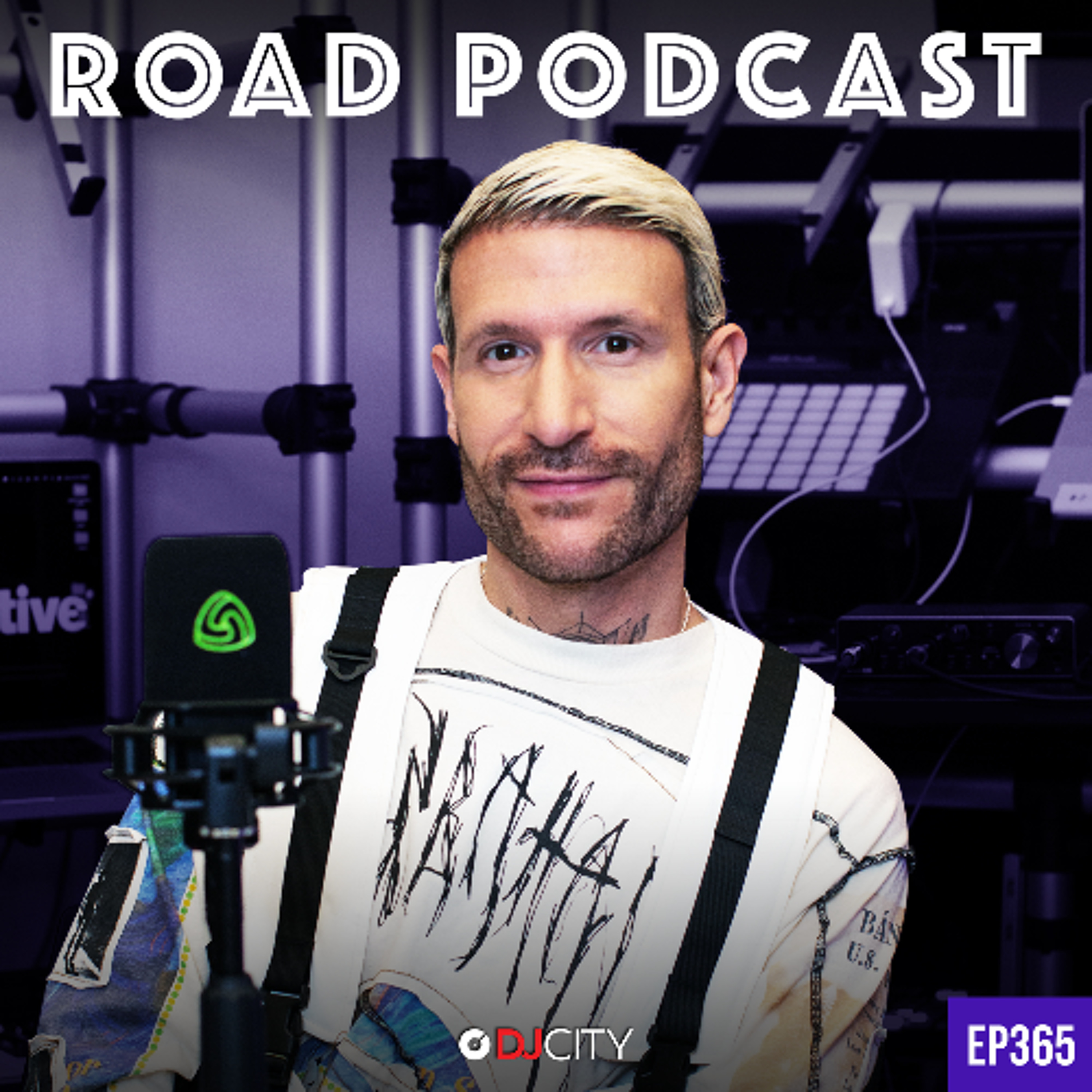
Episode 365: DON DIABLO "The Visionary of Future House on Imposter Syndrome & Humanizing A.I."
83m 14s
In this interview on *Reflections of a DJ*, host DJ Crooked welcomes Dutch electronic music icon Don Diablo. Diablo is recognized as a pioneer of Future House and the founder of the Hexagon label, with a career spanning collaborations with artists like Rihanna and Ed Sheeran. He details his intense touring schedule, including a sold-out New York show with little sleep, and explains his preference for curated, intimate performances over large festival main stages like Tomorrowland, where he values longer sets and creative control. Diablo discusses tailoring his DJ sets to different cities, blending classic hits with new material to balance nostalgia and innovation. He also shares insights into his early career, recalling being exploited as a teenage producer without pay, and emphasizes that music should remain a joyful, process-focused hobby. The conversation touches on his relationships within the Dutch DJ community, where he sees himself as an innovative "outcast," and his desire to support emerging artists by occasionally stepping back from spotlight opportunities.
- Ayo was good, was good, was good. Welcome to Reflections of a DJ. The role park has presented by DJ City and Beat Source. I am one of your host, DJ Crooked. God bless to my brother, DJ Never Never Forever. We have invaded the Sound Collective Studios here in New York and we have a special guest. He comes from a long lineage of legendary Dutch producers and DJs. He's one of the pioneers and honestly the face of Future House, responsible for shifting the sound of dance music in the mid 2010s to today. He's built one of the most innovative platforms in the dance world with his label Hexagon. You know, which isn't just a label, but it's like a full-blown community, a creative ecosystem that's celebrating its 10-year anniversary this year, congratulations by the way. He's produced for names like Rihanna, Ed Sheeran, Justin Bieber, Madonna, Gucci Mane, you know. He's been a regular into DJ Mags top 100, cracking the top 10 multiple years in a row. The man's a visionary, a builder, and still one of the most forward-thinking artists in electronic music were honored to have Don Diablo. - Thank you so much. - I love this intro, yeah. (laughing) This is everywhere. (laughing) It was a mouthful. I mean, to be honest, I am a handful. (laughing) - So you just came from San Francisco, like you're on an hour's sleep. - I'm on an hour's sleep, which usually is enough for me. - Really? - To be here. It was either be here and not sleep, or sleep and not be here. So I opted for number one to be here. - And this is crazy. You have a big show at Pier 17 at the rooftop. - Yeah. And you know, it starts in about like two hours. You're about to DJ in like four hours. - Yeah, I think a three and a half hours. - Three and a half hours. - The thing is, it was already sold out a couple of days ago, so that always takes a lot of stress away from me. - Okay. - It's usually, you know, one of the worst things about touring and doing tours is sometimes, you know, when you have all that stress of all the stuff that comes next to making music and being creative. But luckily, this tour has been great. Most shows have been sold out way in advance. So I'm excited for New York. - But this is typically how you schedule this. It's just like this, our sleep, you know, interview right into your DJ set. - Well, to be honest, not preferably not, but also like tomorrow morning I'm playing in Toronto. So actually, straight after the show in New York, I think I got two hours of sleep. Then we go back to the airport because we were playing early in the afternoon in Toronto. And then actually I fly straight after the Toronto show. I fly back to Amsterdam. - Wow. - Get a haircut, shave the beard. Change the wardrobe. And I'm gonna just finish one track in the studio. And then I'm gonna fly to the Middle East. - Wow. - Yeah, it's a little hectic. It's summer, you know? - Yeah, how do you prepare like for your DJ sets? It's like, almost you have to do that. Weeks and events, months and events. How does that work? - No, honestly, I'm still doing it in the plane. I'm doing it in the hotel room. I'm just constantly thinking about it. For me, the most exciting part about DJ sets and doing shows is having new music, trying new stuff out. But also like, I read the crowd, like, you know, like yesterday or the day before I saw people in the crowd. They had signs with the chemicals or somebody with a monster sign. Sometimes, 'cause I only have 90 minutes or two hours and I have hours of music that I created. And a lot of new stuff that I haven't released yet that I wanna play. So I really always have to make all these tough decisions. But when people, you know, they wanna hear the big records. I try to make versions that fit, you know, within the sound of now. So you can hear it like, it still has the chorus and the core of the track. But like generally, it feels, you know, it all has to fit together in one set, you know what I'm saying? So for me, it has to sound like futuristic for thinking and where, you know, when necessary, some of these big records that you still need to have the emotion. 'Cause I think music is nostalgia, right? It brings you to a certain place. I always forget about this. 'Cause I'm just excited about doing. - You forget about it, yeah. - No, I'm just excited about doing new things. So I come to a show and then people are like, I never realized, oh, maybe someone have saved, you know, they've saved like, for a couple of maybe even years to come to one of my shows. And then they want to hear the big records that they've been playing for the last couple of years, you know what I'm like? I'm just excited to play new music for them. So I think for me, that's where the balance lies to figure out like how to do exciting future thinking, you know, for thinking music. And at the same time, give people the nostalgia that they crave, you know? - Yeah, are you noticing a difference in demand in the different cities you go to? Like New York is completely different from San Francisco and obviously from Europe or the Netherlands, right? - 100% yeah, yeah, yeah, yeah, I think so. I think, like what do you notice? Like what's, what is New York gravitating to versus like the West Coast, like Cali or San Francisco? - I think like, you know, and West Coast usually, I play a little bit more swaggy. It's a little bit more like house hip-hop, with hip-hop vocals. And I think for New York this, you know, I, it's the same, but I, there's also that like, usually I play extended sets, you know, shows sell like quicker because it's like, the fan base in New York is crazy. So, generally that's market, right? - It is, I think it's my biggest market, yeah. I mean, you know, the West Coast is big for me too, but New York has been, you know, it's always been crazy. I don't know why, but I, you know, that also means that you, not everybody could be at the show 'cause these shows are sold out. So usually that brings sort of an extra emotional layer, you know, that it makes it a little less random, I guess, you know, because people are really going out consciously buying tickets. They're fans on another level. So you actually then try to look at like, can I play some of these more emotional records, sort of in a, a little sort of block, you know? I'm playing, I would say like, I play one hour longer, usually in New York as well. - Wow. - Yo, Rody's and Rody's for Life. You already know that we rock heavy with DJ City. It's our go-to record pool to download the latest music, edits, and remixes for DJ sets. So now, Rody's listeners can join DJ City for only $10. - $10? - Only $10. - That's almost 70% off the first month. Make sure you scan the QR code, or click the link in the description, or go to DJ City.com/offer/road to jump on its great view. This event, right, at the rooftop of Pier 17, it's like a pop-up, right? A bit of? - Yeah, I mean, yeah, exactly. It's a venue that, you know, it's really, it's not something you just randomly walk by, you know? - No. - I think sometimes you have these shows where like, you play in these venues where like, it's like soft ticket, right? - Mm-hmm. - This is really, it's a live-nation, hard-ticket show where like, usually it's just bands playing there. - Right. - We're doing production. I think that's exciting to me. They're like selling out a show like that because people are really consciously gone online, searched for my name, bought a ticket. And I think that's different than when you go to a venue where people are like, I know it could be a Friday night, people are already going out. Oh, Don Diablo, let's go check that out. - Yeah. - I think this is different because it's, you know, it's a different venue, different production. I'm playing longer. It's a sunset set, you know? So it's light and then you have the sun, and then it's something to go, we go dark, you know? So I think that, you know, calls for a different set. - Are you trying to curate like these new experiences because like I'm surprised you're not at Tomorrowland, you know? Like, this is actually, you're right, actually. Now for me, the thing with me is, I don't really like repeating, you know? For me, I've played tomorrow that many years. Even then at some point I asked them like, "Hey, can you get me off the main stage?" 'Cause some people were like, Don's not playing on the main stage. He deserves main stage. I'm like, no, that's good. Like, I'm actually, I asked him to go like, on the main stage, I get to play one hour. I'm very dependent on who's playing before me and after me, you're playing to a very general crowd. So for me, it was like, actually, I asked him like, Hey, can we, can I play, you know, in the freedom stage, on the freedom stage, where you've created an anima, we can do a bit more production, visuals, and also very important for me. I get to play in 90 minutes instead of 60 minutes sets, stress me out. I'm just sitting there like, just scratch, literally scratching stuff out like. - Right. - It feels like for a fan, I feel like guilty. You know, when I walk up stage, I feel dirty. I'm like, is it because you're thinking like, how do I, how do I jam pack all these thoughts and these songs and all these remixes into an hour? - Yeah, and you know, it's just like-- - 'Cause there's gonna be fans, but at the same time, when you play at a stage like that, you have the opportunity to play in front of new fans. - Mm-hmm. - People who haven't heard of you, but also like, obviously, it's a big stage. A lot of people are playing the same records. People hear the same music over and over. People get accustomed to a certain style and a certain way of DJing and it might be a lot of haze and hoes and a lot of countdown stuff. You know, I think doesn't necessarily fit what I'm doing. So I'm trying to find something maybe a little bit more intimate. I like dark, you know, I like to play in the darkness. I'm a futuristic guy, you know, I like visuals. I like futuristic settings. But like, yeah, that's so that for me was a conscious decision and sometimes I think it's good, like, even when you're in a relationship, right? It's great when you always wanna be together, but it's also good to sometimes just step out of it and you know, go do your own thing for a couple of days and then when you see each other again, it's gonna be extra special. - Right, right. - I think, you know, a lot of these cases, a lot of people are doing the same circles. You're there every year. You become, you become like furniture, right? So for me, it's like, I don't mind not doing something for one year or two years, even. Even I'd say like Ibiza or Vegas, you know, I could do one of these residencies, but then at the same time, it gives me a little bit, a little bit of anxiety. Because I don't like doing the same thing over and over, going to the same place, week after week after week, in the same venue, I think life is so short. So I really just wanna figure out like, are there like weird cities, weird venues or places I've never played? This could be small, it could be big. - Yeah, for me, that's kind of where it's exciting for me. - Yeah, the timing is kind of crazy 'cause like, look what happened at Tomorrowland with this main stage burning down and-- - It was a little, it was crazy 'cause yeah, like I got a phone call from my agent and live nation saying, congratulations, close to 4,000 tickets, New York City, solo show, you sold out, and then five minutes later, you know, I see the news, like the main stage Tomorrowland is on fire, which is horrible, you know? Like, I see all, I'm in this group with all of my Dutch, you know, fellow DJs and everybody's just, they're all going in. It's a little weird 'cause I'm obviously not there, but emotionally I'm there, you know? 'Cause Tomorrowland is in my heart and the people that go there, they're my fans, you know? So it's also like, it's heartwarming to see people at these sets on these livestreams wearing a hexagon or a dandelion of the T-shirt. Even though I'm not there, that goes a long way for me and I think, yeah, me not being there doesn't mean it's not, you know, I'm not there in thoughts, you know? And I'm actually now, X-rayer like, I really would have loved to play that state, 'cause I think- - I was gonna ask if, you know, they had to build some stage in the last 24 hours and it's like completely stripped down. It's almost like going back to the essence of just the music. - And that's exactly what I love. - Yeah, I was wondering if that's the thing. I'm like, I'm not necessarily about like big, like, big on elves and like, you know, like, like, magicians and all this crazy stuff, like that's not necessarily that. - The pyro and everything. - Yeah, yeah, I mean, that's why daytime main stage sets for me are a little tricky, 'cause, you know, I'm Don Diablo. So I genuinely like nighttime or like darkness, I like futuristic stuff. So, you know, main stage tomorrow and would be for me would be like sunset or like dark set, you know, a little bit late in the evening. But now I see this stage. It's got this huge LED. I'm like, all right, this is like a giant version of the freedom stage, you know? So yeah, I'm a little, and that makes me a little, you know, a little, a little foam, a little foam, a little foam, but the thing is for me, this is what, you know, the industry should be about. It should be about taking things with granted. Sometimes you gotta take a step back. And sometimes you gotta, you know, when I do, don't do something for a while and then go back to it, I'm just extra hyped, you know, I'm extra excited to be back. And I think, yeah, I think more people to do that. Now also for me, another reason for me to sometimes take a step back, there's two reasons. It's sometimes it's just general anxiety, you know, or the other thing is, it's for me is like, give someone else a chance, you know, like, there's so much young talent out there. Let me not play the main stage this year and give some other young talent the opportunity to play there. 'Cause I think sometimes the circulation is small. You know, it's, it's harder for young DJs to get in there. It's always the same names. So for me, yeah, I like to do different things and sometimes just, you know, blah, blah. So other people get a chance to do that. - You mentioned you were kind of like, you know, you're talking to your fellow, like, you know, Dutch DJs and producers and like talking about the Tomorrowland. Are you guys a pretty tight community? Like, with the whole Dutch scene? - Actually, I'm more of a, I'm a more of a, I'm a spectator. - What do you mean? I mean, because like, in dance music, like, some of the biggest names and producers, obviously, from the Netherlands and, you know, all these Dutch producers, Tiesto, you know, Afrojack, Chuck E. Hardwell, mine, Garrix, like. - No, I mean, we're, you know, we are always, we're all friendly, you know, I think that's the main thing. And one per, like, like, let's say an arm in, you know, I go to dinner, I do dinners with arm in, we, you know, we're good friends. - Yeah. - You know, so there's different levels like, or like, let's say, Martin, for instance, he invited me to support him at his LA shows. They were all these sold out. - Right. - It's just like, you wanna come by and just, so there's a different-- - So you guys are like a tight-knit community. - Yeah, I think the, yeah, and I think the one thing for me, I have always felt as an, like, an outcast because I guess, like, musically, I am different. And sometimes, even my colleagues, they're like, Don is a widow, you know, they don't always get what I'm doing. I'm always like trying to stay ahead of the curve, like, sonically, musically, creatively, which sometimes could be a little bit confusing, or even like, you know, what you don't know, sometimes feels a little scary, you know, like, I think sometimes people are like, you know, what's Don gonna do? What is he doing, you know, I think-- - Did that start early on, like, kind of when the dirty, dutch scene was hit? And you were kind of still figuring out what you wanted to do and where you wanted to sound, what you wanted to sound like, right? - 100%, I think, I've always been, I mean, I started out like, you know, in rock bands, and then I started producing hip hop, and then I was, I think I was 13. I was just trusted into this basement, producing for other people for a couple of years, and I had this Don Diablo project, which was my project, but at the same time, I think I put out like, 60 records at some point, it's one of us, 14. And then my mom was like, how does this work? Do you get, like, paperwork or, like, contracts, or maybe, like, a statement? Like, how many records you've sold or how does this work? Like, I told the world, I got like, 3,000 euros, you know, like, last year. So, I'm, like, and they're putting my music out, like, I'm working with these artists. Sometimes I wouldn't even see the artists, I just be, they'd just be like, make a trans record, make a gabber record, make a chemical beats record, right? So, I'm just doing it, and I'm just like, oh, you want to release this? This is great, you know? Only later on, kind of figuring out, like, oh, this is kind of weird, and I'm not getting any royalties or nothing, you know? - You got, like, completely taken advantage of, it was almost like a, like, child labor sweatshop for production, right? - In a way was, yeah, this was way before at all, you know, yeah, the, it was a different industry because there wasn't really any internet, you know? I'm 45, so this is like 33 years ago. - You were 14 years old and you're like mass producing all these tracks and not getting paid anything, you know? - I had no idea what was going on. Until I was like 15 years old, someone told me, like, hey, there's this record called Casa Deo Diablo, I put out as Don Diablo. I had multiple names that I used, but this particular project, kind of took off, so I had a booking request to play somewhere in the UK. I'm like, whoa, that's crazy, but I weighed about, like, I would say 70 pounds more than I do now. So I was like, and my hair was like, you know, almost touching my bum. I hadn't go to the hairdresser and I think I had, I had maybe like five years. - You were like a complete studio rat, right? 100%, like completely pale. So it's so for me, it was like, I got that invitation and then somebody sent me a picture. I was like, oh shit, that's me. 'Cause I actually hadn't looked in a mirror. I'm the type of guy, like, when you don't look at it, it's not there. You know, I try to avoid confrontation sometimes. So the whole thing was, I'm not looking in a mirror. I can't judge myself, you know? That was the same thing with music. For me, I never listened back to the music I made. I just made it, gave it to the suits. They did whatever they did with it. But for me, this is what I try to, you know, make young produce to understand. It's really about the process. It's really about having fun. And nowadays you just, you make the song and then it's all about like trying to market it. You're looking at everything else that's happening around you. You're looking at numbers. You're looking at a lot of anxiety, right? For me, it was just like, oh, I'm just pressing buttons, moving mouses and touching keyboards, twisting knobs and having fun. I think that essentially is what music should be. It should be a hobby, right? That's how it starts. I think a lot of kids are, they're taking it too seriously from the start. I think the main thing is, it's a hobby, you know? They're thinking too far ahead. You're thinking too far. You're thinking about, you know, when I went like, I was a BMXer, you know, and I did this for fun. I wasn't thinking about becoming a pro BMXer. Right. I just, maybe I could win a local competition. I also used to play checkers. At some point, I competed in national championships. But I wasn't thinking about becoming a professional checker player. I just had all these little books and I liked the concept of training my brain. That actually helped with making music because a lot of making music is also about making a lot of decisions and thinking ahead. It's almost like playing checkers. But at the same time, I'm happy that I was a BMXer because this allowed me to be physically fit, you know, and to fly around the world because we could be the like European championship, world championships. I was always last. So this always, this actually also prepared me for being a loser, you know, the first part of my career and having those rejections and people say no and nobody giving me any recognition. So I think that, you know, that was an early lesson for me. Yeah. Some of your early aliases when you were 14 or 15 was what Dave Mitchell? Now, I can't believe you know that. The Raven. Yeah. Batteries not included. Yeah. Skip Donner. Yeah. Chemical Beats. Yeah. What were all these aliases? Like, what came out of this? What was the thinking behind this? That's such a young age. The fun part is that this and that. This is pretty Spotify and pre-I change, right? So it's all that I have them on a vinyl somewhere. The idea was, you know, some of these were attached to other artists. Some of these were just records that they weren't printing out and was like, let me put them out on their another name. So there would be a trans aliased Dave Mitchell. The thing is, I'm a 13, 14 year old kid from a small village in the Netherlands, you know, that's not sexy. Right. No. So I was like, let me come up with an aliased because back then you could do that. People weren't verifying stuff on the internet. You were just like, Dave Mitchell, he's like 28 years old, 30 years old, he's from Chicago or Detroit. He said that's something like that on the vinyl, at some point I ended up on a, I had this discussion actually because I was making music like a lot of gabber, a lot of music that I think electronic music is divided in levels of credibility, right? So there's, it started like techno, the people in like black, you know, outfits and hair is like to the side and all of a sudden below like the low we go at some point you go like hardstyle and hardcore, that's kind of where I started in the hardcore, right? So a lot of my friends were into techno, so they were like, you know, you make, you make all that, that hardcore bullshit that, you know, it's, we are the elite, we are techno. So at some point for me it was like, okay, who are your favorite techno artists? And they were like cock, cock's, you know, long gone gay. So I said, okay, okay, start listening to some of these compilations, became a big, long going gay fan and I had this, this track that I made in a couple of hours and I put it out as Dave Mitchell ended up on a loroy, create a compilation. So my friends came in, I put the compilation on and I played there and they were like, oh, this is, this is dope, yeah, oh man, unfortunately, it's, you know, not the type of stuff you do or are creatively or technically capable of, but, and I was like, guess what, that's actually my record, you know? And they were, and I was like, I made that in like a couple hours for fun. So I think this is the thing, I think within the electronic music we should be respecting each other and not, you know, thinking in all of these sort of boxes, and I think back then that was what it was, you know, one of my first tours to Australia was like, with Danny Toneglia, Karl Cox, Pendulum, Daisy Roskull, but also, also I think we even had cash on tour, you know? That was a lot of fun for me because I felt accepted, you know, I felt like at some point I was emceeing during a Karl Cox set, he was crowd serving during my set, Danny Toneglia was in the booth on the mic. This is crazy, you know, like that would never happen now, like we have all these genres, it's all boxed off, we have all these different stages, and you know, there's all different levels of coolness. And even now sometimes I have to like fight to be on this lineup or there's always that thing. Like, are you house or you're underground or you EDM or what are you? Like sometimes you're associated with the artists that you're performing with, right? And I'm like, I don't know, I just make electronic music. That's what I do, you know, sometimes it's left, sometimes it's right. But it always has that, I would say there's always that, you know, that left field appeals to it, you know? Right. So you loved the fact that there were no, like subgenre, there were no borderlines that have loved that. Yeah, I loved that. And it must have been so validating, right? To be amongst these legends and just, and being around them, it's kind of like, well, was that kind of around a turning point where you started figuring out what you wanted to do? Like, sortically? Yeah. I think like the early years were important to me because I was able to figure out like, okay, how do I make a hip hop beat, how do I make a, you know, a gabber or a hardstyle kick? How do I sonically do these things? And then, yeah, I think also when you start out working with hardware, everything, you know, after that is a little easier because at the time, I started with an Atari, I had to send all these MIDI signals, you know, and then basically try to figure out how to work on a chi sampler, a joint computer, all these, you know, refurb, sends delays, push it all through one giant mixer, and then do all the EQing yourself by hand. And then you record it on a dat tape. That was like, this is like the Pro2's inbox era, kind of? Yeah, yeah. Well, that was my, that's how I started, right? So at the shift to when you were actually able to do things, you know, in the box and even, you know, do all these things with audio and, you know, that just blew my mind. Actually, it's the same from the transition, transition from vinyl to CD. Revolutionary because when I walked around with all these vinyls on my back, I remember coming home one day from a show in Japan and I had like, I took my shirt off and I had all these, these blood marks from left to right on my shoulders, because I had like a lot of kilos on my shoulders and they were like blood, I had blood on my shoulders, you know, so then now I'm just traveling out with my USB. It's just insane. Like, I love it, you know, but it's, I think I'm actually blessed because I was, I come from an era where it was very hard to make music. You had to buy a lot of, you know, I work here, you had to understand, you had to read a lot of manuals, you know, you didn't have any YouTube tutorials. And then music touring was hard because, you know, it was hard to promote yourself. There wasn't any internet and also like, you had to bring, you had to, to be at home and think about like, I'm going to play in Brazil tomorrow. I'm now going through my vinyl collection. I'm only bringing 80 vinyls with me. I already have to make this selection at home. I have no idea what these guys are doing. Yeah. So you have to always make all these decisions. Now you just bring hundreds of records, you know, on your USB and you can just also like, you know, when you make something new, you can just easily test it out. Back then, you had to go to the, to the vinyl plant and you had to press it on, you had pressing on a leg and then every time you play the record, the quality became less, right? Right. So you're looking at this event, you're like, is this worthy of now me playing my lacquer, you know, this is white label and then it being, it's sounding worse than the next show I'm doing. Right. So you always have to make all of these decisions, you know, like sometimes you're like, I had all these nightmares of my record ending while I was looking through my vinyl suitcase. I'm like, oh shit, the record is going to end or the needle skipping all that is much better now. So a lot of people were like nostalgic about everything was better back then, I, I don't believe that's true. Yeah. Did you start as a DJ first or producer first? Definitely a producer. Yeah. I mean, I have this little arrow where I played and then I, you know, I think I played for two, three years and I just, just playing in empty rooms and nobody caring about me. So I was like, DJing is not for me, no, I tried that. I think from age 15 also, so you, oh, okay. So you started as a producer, you did some shows early on and you were like, I'm just going to focus on producing. Well, yeah, I did, I did shows because I actually, I, I was a promoter first. Like, you know, I started, this is the thing, I need money, you know, I wasn't making money from the music. Right. And I needed to buy more gear. So I started throwing events. And on these events, I would program myself that I would DJ and then I would just play some of the neighboring events. Some point I started touring a little bit more, actually I started touring more abroad than actually in my own country. I might break through internationally way before I broke through in my own country. They were like, who's this guy from Holland who's flying around the world? But I think the main thing was I didn't enjoy the grafts, you know, the grind of like playing these empty rooms all the time. So I just, I was just into making music. And at some point, I had, I think the real breakthrough came, I would say right after my, I moved to London, I signed this giant record deal with Columbia Records. I just got this apartment in London, I was sitting down on these boxes and like, okay, I'm going to do it. This time I'm going to do it, you know, because I had so many disappointments in the industry. And as I sat down on these boxes about the unbox, oh my gear, set up my studio, my mom called me and she said, hey, sit down, dad's very ill. So I had to go back to the Netherlands, spent more time with my family, not long after that. I had a conversation with my father, he's like, I'm not going to be here much longer. We're talking weeks. So then my whole mindset shifted, you know, I was like, I got to stop messing around. I got to do this for my father. I just had to sort of divine sort of, you know, intervention where usually I, I come from a lineage of like a family where everything was super off on guard. You know, I was named after Captain B for Don van Fleet. He was an artist, he wasn't in all these crazy bands, he was working with Frank Zappa. They made these 12 minute songs with 1800 tempo changes. Like all this was crazy. So for me, I wasn't making music with a chorus or anything repeating, I was just doing weird stuff. So then I had this conversation with my dad and he looked at me and said, listen, Don, like, I'm already proud of you. You know, you don't have to be the weirdest, most out there guy. You can be, you can be successful and still be creative, still be respected, you know. And I'm already proud of you, you know, I'm going to be watching from above. And I said to my dad, like, in this, I'm going to take this and bundle it and I'm finally going to be successful. And I think I was 35 years old, you know. Wow. So it was either quitting or it was, or it was that. And then I just wrote this song in the hallway on this little cell phone, actually wrote this little melody while my dad was in the hospital bed. I took that road a song around it together with JP Cooper. That song became the anthem for a standup against cancer in my country, went up 10, all of a sudden people saw me as a human. From there on, I just got inspired, I just, I got a little bit more, I became a little bit more outgoing. I went outside a little bit more. There weren't really any pictures of me at that time. If you look up on the internet. And I think from there, and I was like, I started to realize how valuable time is. It's the most valuable thing we had. So I made a trilogy back in time, anytime, nighttime. And the idea was to make this music that was very futuristic, just in case I would pass away the next day. And you know, I wouldn't be able to show my vision of the sort of the future of music and electronic music. So I think that kind of became my version of Future House, which was more melodic, more emotional. And I think that was my break. These three records went up 10 on B-Port, and I'd never had a big record on B-Port. And from there on, I grew in, I think I was already number one biggest selling house music artist on B-Port for maybe two years in a row, and I still didn't have any shows. Honestly, I had like, I was just sitting in my underwear watching the Tomorrowland live scene, watching the EDC and ultra live streams. People just playing my records like, you know, I had, I think at some point I was number one, a thousand one track list, number one producer that year. But it took me, it took a long time for people to realize, to put their records together. This is Don Diallo, it's this guy, so you know, this is a sound, I think that's also important to remember. I think sometimes I'm unable, I get people like, hey, I've got a record that's like, it's number 12 now in the top 10 progressive house on B-Port, where are the shows, you know? I tried to explain to them like, oh, I had maybe like 12 number one on the main charge, you know, and I didn't have any bookings, you know? So I think patience, you know, and just being humble all the time, and also like realizing that success is going to come and it's going to go, you know, but I think the main thing is you have to try to leave a legacy and have to find a way to create a sound at yours. I think whatever I do, whatever genre I'm in, whether it's drum and bass or house or pop or whether I'm working by myself with someone else in the studio, I think people can always recognize that Don Diallo touch, you know, that's where I sort of really started drawing that out like, okay, there's the piano, there's the vocoder, that's the sound design, the synth patches, how I design that, it makes me comfortable because I hate doing sessions, you know? But also making music becomes very lonely, you know, I've been in, I've been in this room like from age 12, I guess, to like 35, 36, 37, almost 25 years just by myself, just looking at these walls, thinking to myself, is this good enough to put out, you know, am I good enough to be here? I think that, you know, in that round that area, I started to enjoy the idea of like getting different inputs, working in a different way from, you know, the way I was just to work here. What do you think your dad felt the need to tell you something like that, like he's proud and you don't have to, you know, be on my guard, were you going through something at that time that your dad was familiar with, did he see something that you were going through and wanted to put you at ease or, you know, yeah, it was good, it was good, this is the road podcast, reflections of a DJ, we're here in New York City and we have invaded the Sound Collective. Now I want to explain what the Sound Collective is, like I'm a man lefty from the Sound Collective here. Lefty, thank you for having us and hosting this beautiful studio for us, exactly what is the Sound Collective here in New York? The modern state of their facility with tons of production gear and one side of it is you can be a member and you can come here and pay monthly to use the rooms and the gear and sign out. We live in our space, we have a state of their studio, we have all these production stations, DJ stations, instrument practicing rooms and such like that. And you also like teach, you have like classes and sessions, right? We have intensive programs, short-term programs that people can come and take Saturday classes on DJing, production. There's like kind of a community building within where there's like DJs, producers, musicians, up and coming producers, people honing their craft and learning and DJs and nice things that come here in practice and you have all the new gear so they come and check that out and get familiar. And the DJs will come in from out of town and be like, let me get a day pass so I can just get a refresh in the 3000s and the V10. And what's great is that a lot of our guests, everyone from like Clark Kent to the technician to like Camillo, they come in here and they're just like, holy shit. They want to play with all the gear man, yeah. I didn't even realize this but you guys have like studio spaces where people can do live streams and they can do their Twitch streams, yeah. We got a whole green screen setup already, multi-cam, full on, switcher, like we also do a lot of events here. We're bringing a lot of outside talent, organizations, we got a big event coming up with DJ City, Beat Source and Cerrado. That's part of our family. Yeah. We did a big one last year with them. We got another one coming up. For our listeners, is there any way we could hook them up with a deal or, you know, like if they put in a road podcast code, yeah, tell me about it. What else do you have in vision for this deal that sounds like we're well on our way? Why don't you tell them? You're working with us. They'll where they can type in a code for like road, yep, and they'll get a month free, right? Yeah, on our online platform. We have a whole online platform with like masterclass style, education, different categories and everything, instruments, drums, I mean, and then we have these things that we're launching now called Pro Paths. So you can choose like if you're a producer, you can take the Ableton Pro Path, the Logic Pro Path, you know, Cerrado Studio. Goes through a wide variety of knowledge besides just stuff and that skillset and discipline. So our road listeners, if you're in New York, you can check out their facility. You can do a day pass, a week pass, a monthly pass. You can check out their site, you have access to all the education online. Soundcollective.com. We also have a YouTube channel that has some of our content from the educational courses and all of our events are live streamed and put up there. I hope we can come back here and use your facilities again. Looking forward to it. Shout out to Lefty and the Sound Collective. Thank you so much. I think, yo, I mean, there's, you know, I grew up with my brother who's, you know, suffering from severe depression. We've always gone, I had a lot of, went through a lot of these different clinics, a lot of medication, trying to figure out what our place was on this planet. I have one brother. I have two older brothers. One is like happy, go lucky, very successful businessman. Yeah. And then there was us. I was the third guy, like, you know, I had two brothers. One is handsome, he's successful, he's a business minded. Then my middle brother is like super creative, super musically gifted. And then there was dawn, you know, so I felt like I didn't have a place in this world. Right. It was all this pressure though. That was a lot of pressure. Exactly. I, I felt like there wasn't really a reason for me to exist for a long time, you know. So I've, I've always put everything at stake. And your father saw that, right? My father saw that. And I think he, you know, I mean, my parents were very worried. Like, I was never, never around girls, you know, I didn't, I didn't think they could even grasp like what my preferences were, like from food to sexually. He doesn't need, he doesn't go out like, what is he into? Like, I think he's just into staying inside of his room. I stayed most of my, you know, my youth, all of my youth, I stayed inside, didn't have any friends. My only friend was the computer, you know, so you're very much an introvert. I, yeah, I think, yeah, so I really have to teach myself to, to, I think once I, I've created this Don Diablo moniker, you know, like Don Diablo to me is a superhero type guy. Where's this futuristic outfit? He goes on stage. He becomes a different, it's like Clark Kent, Superman, you know, like, it's, it's, it's Bruce Wayne Batman. Interesting. For me, that's kind of how I get the energy and the power to become this different person. But then I go back into my room and I'm like, I'm making notes and I'm already like, you know, opening a dog, trying to figure out like, okay, what can I change here? What kind of change there? Making the sets better. And I was always like, punishing myself, I would say. Really? It's hard for me to enjoy success, or there's always that feeling of like, I mean, there's a massive form of imposter syndrome. I'm always, it came from the way I grew up, but also it came from where I grew up. It also comes from being Dutch. It also comes from like the interaction with, the interactions with my colleagues, you know, not being, not always being accepted, not always being understood, maybe not even within my family, within my friends, within between my peers, in my country. Like, I've never won a prize in my country, you know, I've been in the top 10 for like, you said like almost 10 years, but I've never, like, like most of these guys have just basically to have a cabinet full, you know, with prizes. So for me, I felt like, I've never felt like, I never felt home anywhere, I never felt accepted anywhere, only by my fans. I think, I don't even call them fans. I call them, you know, family because all your hexagonians? Yeah. I mean, I'm actually now designing a Don Diablo logo because there's never been a Don Diablo logo because I didn't, I don't want to feed into the ego like that. Like, I don't want people to walk around with a Don Diablo shirt. I've never had my face on a shirt like, like a rock band or a rapper or, because I feel, this is, I'm trying to create something that's, it's about you. It's about the fan. It's about experiencing something that is more just listening to a record. It's about feeling like you are a part of something, right? Well, you put that label first, the hexagon label first, right? Yeah. Yeah. And it kind of built the community and that was first. So you didn't feel the need to like, push the Don Diablo brand as well. Yeah, yeah. And I think also that, again, it's that old idea of like, I don't want to be at the forefront like that, you know? Well, why is that? It's like, because you feel that Don Diablo is like an alter ego. Yeah. Yeah. It's like, hopefully, represents who you are or do you just feel it as it's like this kind of alter ego that you have to kind of feed. You know, I'm, there's just millions of thoughts going through my mind every day. You know, like sometimes I look at Don Diablo, I look at me and I'm, I'm, it, it's, you know, like it's literally, um, I hate it. You know, I'm like, I would hate that guy. Like it's for me, I'm always thinking about artistically, musically. Sometimes I'm, I'm somewhere I go to an event like, I don't know, I would go to like the other day I was invited by Solomon and his crew to come to his event. And I was, she's like, very small. I'm like, you know, and then my friends are like, Don, you're just, you work, you, you're making a record with a chemical brother. She just did a record with major later. You're working with, you know, like Jamira, quiet, like, Nelly for top, like all they're doing, all these crazy stuff. Like, yeah. And when I walked there, like, that, it's funny because, you know, the, the promoters, like, you were the guy people wanted to take pictures with. It was like a dozen DJs walking around here in the VIP. So that, that sometimes, you know, it makes me feel like, I just feel like a small kid. Every time I walk into a room somewhere, that's the way I feel. So I think the, the, I'm trying to, to, I did, the thing is I did realize when I put a person, because I've been making music for so many years without it having a real project or a person connected to it. I think once I started making Don Diablo real person and I'm being honest about me, I think the reason why I have fans that are, that have like tattoos in their neck and or giant the twos on their back is because it's, it's not about raving. It's not about, you know, just about music. It's really about, um, also being very honest, you know, and, and a lot of my songs, especially like when, when I really came up, they're about my father, they're about, uh, life. They're about anxiety. They're about trying to figure out who you are. It's about not being able to sustain a relationship because you don't feel like you're good enough. So I think all these things are relatable. But when you look from the outside in, you'd be like, you know, this is, you know, it's a guy playing records, pushing buttons. Generally people like, right now I'm, I'm in the, in the world of fine art as well, right? So I think there's a perception, uh, you know, it's crazy for me to have my work in between the Banksy and a Picasso, right, at, at, at, at fairs like Art Basel and, and, and to have my work displayed in the harbor of Hong Kong, that's like, that actually gave me confidence on another level. Hmm. Because I think a lot of people look down on DJs as sort of like, you know, it's, it's, it's, you have people that are in classical orchestra. It's seen as more high-brow art. But being a DJ or producer, it's very sometimes just mumble-jumbled. Like, what are you doing in that booth or even making music? A lot of like, uh, people are like, what, like, how, like you press a button and the music comes out, right? That's how you do it. Not knowing that every day of my life since age 12, every sound, every conversation, every piece of color, every movie, every piece of influence, every emotion has gone through my body and I've tried to translate that into something sonically and emotionally. I think, you know, you don't really get to talk, you don't really get to have the conversation like this, honestly. You know, it's really just pretty basic, you know, I think people don't perceive electronic artists as, you know, as they would abandon. They would be going talking about the lyrics. It's more of a, you know, it's a different type of, um, they view it differently. So it's like producing and creating the art, um, producing the music. Is that cathartic and therapeutic for you versus like performing and DJing? Is that, is there more anxiety with the performance? Can be. What's good, everyone? This is Nick from Reflections of a DJ, the Road Podcasts, whether you're just discovering the Road Podcasts or a day one listener. If you've been loving the content or what more, here's your chance to support the podcast. Get closer to the action and unlock exclusive content by joining our Patreon. This is for loyal listeners who are early access to new episodes three or four weeks ahead, your name and the credits of every video episode and access to our exclusive road edit packs. Now for the hardcore supporters, we've got our tier two roadie for life subscription for just $10 a month. This is an all in package. You'll get everything from tier one plus a monthly bonus episode early access to our road 10 and road talk interviews behind the scenes content are in the crate series along with exclusive under release content. This is your chance to support the podcast and get more of what you love. Join the family today at patreon.com/roadpodcast. Like the link in our descriptions, we appreciate you. Let's keep this journey going. But the actual production and the creating of the music, that's really a little bit more of an extension of you inside, right? I mean, writing the music, yes, sometimes producing, it can become very frustrating because I used to produce and I just, I used to focus more on the technical part and then I would get the song, would get lost. So now it's like, I try to focus on creating the melodies, the lyrics, the idea, or where the direction I want to go into and then I go. And sometimes, yeah, you shouldn't already be producing too much while you're writing music. That's the one thing I've learned. You can always, and also, you don't have to do it alone. I think there was that whole era when I grew up, that was the code. You do it by yourself. It's like a punishment, like a torture almost. You have to figure, like, even if there's records going to take me three months to crack the code, it's like a pride in an ego. There's no band that has that ego, like, you just want to make the best record. I mean, I think Fred again is a good example, you know, the way he interacts with people, the way he works with other producers, he's not afraid, you know, like, to go through a different process than all of us, you know, have been doing and he's insanely creative, insanely talented, but he's also not afraid of working with other people that have similar talent, you know, and I find that very inspiring, you know, because I think sometimes this industry could be a little toxic. It's like, oh, you worked, you know, you know, sometimes you would, you would basically write the record, then you would arrange it, you would produce it, you would engineer it, and sometimes you would, you would do the mix down together with someone else, and people were like, oh, shit, you know, like, you didn't do the mix down all by himself. I'm like, guys, like that, there were a lot of steps that I went through. You know, to create this song, like right now, I'm at a point where I think it's good to like, yeah, I'm inspired by people like Fred, like to see him do this, and, you know, and for myself, as well, I find like working together now is the last years, it's been, it's allowed me to be more creative, to be more me, weirdly enough, right? And it's more fun, because it's dark, you know, like, producing, like, good, very dark. I used to see them, I worked on these, some of these records for two years, and they come out, and they flop. So your mind explodes, or sometimes you make a record, it's not about knowing that you can do it. I mean, I know I can do it. That's fine. Like I've been doing it for years. But I think it's more, it's the process becomes more fun, it's less lonely, no? And I think it also gives you a certain time pressure, because you could work on a record for years. And then you send it to the A&R, you get a remark, and it feels like a, like, it's like a dagger in the heart. Like, listen, I list every little EQ, every little, every volume set at everything, every sound, little piece of sound design has been weighed out. It's so meticulous, right? It's so meticulous. I've thought about it, but then it's like, you become, it becomes so personal, and like, it becomes, it's just scary, you know, it's just, it's just, it's not healthy. But, you know, I think, yeah, going back to the same with doing shows, like, you know, I used to not want to do shows, because my brain was like, no, no, it needs to be, it needs to blow, like, craft work out of the wall. It needs to blow a, a, a, a, dive punk out of the water. Now, I'm like, let me just go out there and just play SoRex first and make people happy. And in the meantime, my brain is still like, you know, that was, that was okay, it was good, it was good, but wasn't like my blowing, but for some people, it was, you know, and I think that's the one thing you have to accept. But it, yeah, for me, my brain is constantly, isn't with making art, you know, I'm always like, I'm, the next piece I'm working on, I've been working on it for two years, and it's been, it's been a secret, you know, it's, I've been working on with a group of scientists, a group of, of, of a, a test lab in, in UK that I set up, it's, it's, it's a whole thing. And sometimes my, even my, my people around me are like, don't you even know, like, is this yeah, we're going to see the day of light, I don't know, there's a lot of things that I don't, that I do, I think the main thing is, whatever you put out there is only a fraction of what you actually do, and in my case, at least, right, there's, there's like a, there's hundreds of songs. There are, there are like hundreds of ideas that I've had, musically, visually, technically, you know, that I've, I've, I've, I've created, sometimes I've just created, you know, things that I use to make my music, that people don't know about, and I think that's how I started making art, right? I had these things in my house that I created because I was like, that's expensive to make, to have like, a designer ping-pong table, you know, with lights in it. It's right, that's, it's 100k. Let me just design that myself. That's kind of how I started designing furniture, designing the inside of my studios, and then from there on, you started making art. And then at some point, point, it was like, do you sell this? Again, I think that's how you start. You start making music because it's fun. And then at some point, someone will say, this is nice. You should maybe put it out. Not like, I make a music because it should be put out. I make a music because I want to rise in the B-port charts, and I want to play at a festival. I want to play it tomorrow and one day. No, you should be making music because you want to be creative. It should be an ex, I think I would, I think that's also where we're going to in the future. People are afraid of AI because it's going to make everything easier. But at the same time, it's going to revolutionize the fact that people that don't have the financial means, or even sometimes, you know, the time to put all this effort in. I think making music is therapeutic. And I think in the future, people, you know, it will be easier for people to have access to tools. And, you know, financial means are not no longer a factor in being creative and making music. It's going to make it, it's going to basically make everything a lot more fair, I would say. So you don't see AI as like a cancer to like human creativity? No, I mean, the thing, a lot of people see it that way, you know, the name, the upload comes from the fact that when I started out, I saw this documentary of a lady. She was yelling, this is a Spanish lady, Mexican lady. I think in front of this venue, the way they were playing electronic music at the time in the 90s. She was like, Diablo, Diablo, like music from computers, but that was evil, you know, like, so that, to me, going back to that, there were like, Oh, is there a, you're making music with machines that, you know, you're not touching a guitar or a traditional piano. So I think we're going around in circles every single time that's going to happen. I think you can use, there's always going to be a human element, right? With anything that we do, it's, it's one, we got the iPhone or, you know, these cameras, the phones with the cameras, you know, photographers were like, now, damn, you could put on a filter. All of a sudden, you have these amazing pictures, but that doesn't make you a photographer. It allows you to make better pictures, you know, with your family, you know, I think that's just technological advancement, but it will also show the people that are making music with AI, solely AI through a prompt. It's tough to make actually like actual good music with heart and soul. I think at the end of the day, yes, the technical aspect will become easier, but the main thing is you're going to have to put your heart into it. You're going to have to attach yourself to it. You have to give it an emotion, give it a story. I think at the end of the day, that's what people will latch onto. It's not just about the technical part. I think especially in our scene, we're very focused on that part. I think that will be, you know, it will be easier for people, but I think the main thing is you have to tell a story. You have to be a storyteller. How do you consider the downside of AI where it's kind of like maybe eliminating all these jobs and like specialists in certain fields, you know, like, that's the biggest worry about AI right now, you know, that it's going to eliminate all these specialists and people who have dedicated decades or years into crafts and like musicianship or artistry, you know. I mean, I look at it from two sides, you know, at some point, I'm like, wow, this is exciting because I just literally, you can run a song literally through a plugin and it will just analyze it and you just basically do an A/B and it will literally just mix the record down for you and it sounds solid. That was shocking to me. I'm like, it's going to save me a lot of time and I can ignore it, you know, even like, you know, you insert a sound and synth plant will, you know, emulate that sound and you can use it. It's a synthesized sound you can use in your song now without actually having to use the sample. It will allow you to separate stems, it will allow you to create new types of sounds. It will also like, I think, you know, what we're looking at electronic music, right? All the demos I get, they're using like, you know, they're using vocal loops from splice. Is that more creative than creating your own vocal loops, than creating your own melodies, sounds, drums with AI? Yeah. Just grabbing it from a platform, something that's somewhat, that another human has created for you. Is that more creative than working together with an AI, creating something unique? Maybe. I don't know. Like, I don't know the answer to that. I would say, you know, the amount of demos that I get with the same splice loop, generally where we were already heading into a certain direction of like, I mean, when I started, I have to get into studio with a singer, I'd have to write these lyrics, then I'd have to record them. I'd have to stack these vocals, mix it, engineer it, and then I'd have an acapella. Nowadays, I just go on splice and there's a lot of good stuff there. They're the big records, right? Like, you hear these records, you're like, oh, this is a smash. So I think we are already there. Things have become more easy. Like, we're already working in the box. We have these plugins that are like so convenient. Like, when I started out with all the hardware, it was hard. You know, I had an akai sampler. We could put like one mb on a floppy. I had like a whole like a box with like, floppies that I would stick in. And there were all these MIDI signals and mixing it down and sending a dat tape. The dat tape, we get lost somewhere in the mail. And I'm like, holy shit. What do I mean? There's two weeks you didn't get my record. So I think there's all these challenges that we've overcome. We went from vinyl to CD, then we went to Mp3 to USB. Like, I think there's all these different things we went through. And I think it's scary. It's absolutely scary. I'm scared. But I think it's really, you know, you have to adapt to the times. You have to figure like, how can we make AI human? How can we use it for human process? I think at the end of the day, it's all about hard. Again, it's about telling stories. It's not just about making things easier technically. I would say, honestly, that's making the world more humane. Because for me, as a producer, if I had these tools that I had now, I would have actually had a private life. I probably would have had kids, you know, I would have saved so much time. Like, honestly, like doing the way that my process right now, it allows me to do so many things by myself very fast, very creatively. That would have cost me like a lot of time, sweat blood tears, effort, frustration, anxiety. That would have been saved from that. I think that is a beautiful thing. You know, you can actually see that's something positive. It will allow you to maybe go out, have a walk in the park, maybe take your mom out to dinner, maybe have an actual real life relationship, not just, you know, being stuck in these four walls. So you're actively using AI and like you have a new single, the devil works hard. I love that it's called the devil works hard. But the DJ works harder. DJ works harder. It's a great single, by the way. And did you use AI in producing this? Like was it implementing anything from like the demo? I think generally right now, I am using a lot of AI in creating vocals because I can actually make these vocals sound more authentic, sometimes like a reference track or the actually. Yeah, right now, I'm just into like a couple of new records that I've been making. I just read basically, in this case, it was actually it's about who came with the idea with the vocal. So he sent me the label, send me a rough demo. So I ended up, you know, taking it from there. But a lot of these, the funny thing was a lot of it sounds like I'm on the same sort of level there because a lot of records I have come in up. They've got that sort of 90s type, you know, vocal that feels a little throwback, but it feels fresh. It's really hard to find these acropellets. And then you have to go and clear it through these record labels, publishing master, all this crazy stuff. I think right now it allows you to be more creative. But also while maintaining the sort of sense of nostalgia, right, it still feels like it feels authentic in some weird way. Even though it's created with AI, it actually feels more human, more vintage. Then, you know, you just grabbing a mic and trying to do, you know, trying to get the same type of feeling. So right now, the way I'm doing it is I'm just writing something myself, then I record it, and I just, I replaced the vocal. And it'll sound like a female rapper, you know, from the 90s. No, which to me is like, that's a dream to me. It makes me way more creative. I think there's so many people that would disagree with you. They would like hate this process. Like, no, I mean, most people, I get it. I get it. Most people just like to go to splice and grab a vocal and just chop it on a track from me. The idea, I think, of course, the idea, the idea of going through a process where you just put in a problem that you have a whole record is ready to go. That's a little much. You know, I think maybe in the future we might go there. And that's, that sounds like a horror scenario to me. I think the idea is also that, you know, AI is taking from somebody, you know, even though you're like your singer, you're getting these 90s female hip-hop vocals, but it is taking from somebody. Yeah, but I mean, isn't that what the culture has always been about? We were just grabbing a kick from splice and we got, you know, or we've come from a drum machine that you didn't, you didn't actually synthesize that kick. But typically that person would get credited, do you know what I mean? And it's almost like right now, it's kind of like, do you know, like, do people make records with splice? Do they credit the people that made the vocal sample on splice? I don't think so. You just take it. You play like a subscription. Right, right. And then you just take it. No, no writers are, you know, they're, they're, they're amazing records out there. But, you know, I don't see them crediting the original writers of the loop, the vocal loop, or the, the synth loop on splice, you know, I think, um, I've, I've, I'm, you know, people have sampled my records and I, I see it as, you know, I'm, I'm honored. You know, it's like, that's kind of what we come from. That's, look at Daft Punk. They've always been sampling records and even back in the days, you can't always clear everything. But I, I always, when I use, when I take something from another record, I always clear that, you know, I, I feel that's important to, to make sure you respect the original songwriters. So ever like, even like, you know, um, at some point there was a record that I put out, they, I, I cleared the snare, you know, that was sampled from, you know, I, I tried to be respectful with that. But that, I'm old school, you know, at the same time, I feel there's going to be a new generation of producers that are not going to have the same background as me. And I could be out there like, Oh, you know, you're sampling all this stuff that's coming from a certain, you know, it's sort of an unknown library, you know, we don't know where it's coming from. But at the same time, we're all using the A-man break, you know, and we're not paying, you know, the, the, the rifle owners of the creator of that drum that he, he passed away. Poor, you know, like, I think there's a lot of hypocrisy. It's like, it's like, it's like, people hating on NFTs, right? Like the blockchain and, and NFTs, it's like destroying the environment. But at the same time, I like sending someone something diddly, a piece of art that they can enjoy put up on their TV is probably going to be, you know, it's going to be more environmentally friendly than, you know, sending a whole, like a giant package across the other end of the world in a, in a, in a private jet, you know. But I think the thing is you cannot, this is the one thing I try to stay away from. It's, it's opinions on AI, it's politics, it's sports. You know, I respect everyone's opinion. I think that's important to say, I think there isn't, there's no wrong, there's no right. I mean, at the time, I had a discussion with my mom, she was like, going to the bank, she's like, oh, I need to, there's no, there's no person at the bank. I need to like now do it digitally on the computer. I just want to have this little slip that I fill in with my pen, push it through the wall. And I'm like, but do you know who's at the other end of the wall is going to, which person is going to take, you have no idea. Go behind the computer. And now my mom's like, she's doing all this, she's making, like she's buying stuff on the internet. She's into it, you know, she's gambling on the internet. So I think it's just change in mindset is what you're saying. It's change your mindset. And I think I'm a futurist. So I think the main thing is we shouldn't, we shouldn't work, we shouldn't work harder, we shouldn't work smarter. I think the main thing is we're not going to stop it. So we could be negative. And I would say 99% of the comments when you mentioned the word AI is going to be negative. No one's going to be positive about it. Sure. You know, it's going to be, we hate it. We hate the song. We hate this. We hate that. I'm like, at the same time, let's take a music video, right? You make a music video with AI. It takes a lot of creativity. It takes time. It takes inputs. The same as making music. And then there's like, oh, it's made with AI. It's trash. I'm like, well, let's see, let's look at it this way. You want the music to be for free, right? Because you're on Spotify. You're probably on a free subscription. You want to listen to my music for free. You want to watch the music video for free on YouTube. We got to figure out like how to give all this stuff to you for free, you know, like, and still have a private life. I could be on the set right now with 20 people doing my wardrobe, doing hair and creating, you know, like, sets and then having a like, we can. It's going to be tough because like a lot of starting artists, I think it's going to be, especially for them, it's going to be, it's going to be, you know, a revolution because they're going to be able to create things to create a world that's living inside of their head that they normally wouldn't be able to afford that that would be for the elite. I think this will make it will democratize the industry, you know, but people who don't have the money, the tools, the experience or the backing from a giant label or big management will now be able to be super creative, to show the world what they're capable of. And it comes down now to, you know, there are no technical limits anymore. It comes down to being creative. It comes down to having a personality. It comes down to putting your heart into it. And I think that is probably actually what's catch people, you know, that now I really have to do something that comes from me and I can't hide behind the technology anymore. I think, you know, I think that is a scary thing to think about, but that's the one thing, I've, that's the one thing I needed to teach myself because I've always been about the tech, you know, I think once I needed to become a real person that people can connect to, that is the scariest thing I can do. And I'm going back to when I had that conversation with my dad, writing a song for my dad's funeral was the scariest thing I've done, you know, that song I played it for 50 people, it was about my dad's life. It's about my, in the end, like, you know, the person that gave me life, the most, you know, one of the two most important persons in my life, writing that song, putting that song out, making a video for, if you look it up, it's called The Artist Inside, you know, that that video consists of footage that I've shot like since, you know, I was born, I had a camera. I've always been, you know, my love has always been music and film and art. That's the most personal, most scary thing I've done after that I made a song called Thousand Faces, which is 10 years after my dad's passing. I think doing stuff that is that personal that, you know, that, you know, that's the scariest thing you can do. And I think, you know, we should kind of move away from all the technical talk, we should be talking about how can we make, you know, that connection with fans on a human level? How can we give fans and the industry something that will give them hope, you know, and I think also, how can we make it more fair for young artists, you know, who don't have the means, who don't have, sometimes they don't have to, they have to have three jobs, you know, to get by, to make sure their family is fed. Maybe this is great for them, you know, that's the way I'm thinking. It's probably, it might not be great for me, but that's not what it's about. I think a lot of people are negative because they're afraid it's not going to benefit them. I think you have to look ahead of that. It might not benefit you, but it might benefit someone else. And look at it like, think one step ahead, like figure out how it works, master it, become a master of it, you know, I think that will take a way to fear. Yeah. When you look back 10 years in the past, and you know, you launch hexagon, you're label, and it was kind of the beginning of like this future house sound that was changing from big room EDM. And when you look back, you're celebrating 10 years, congrats, by the way. And you kind of look at all your artists, and how they come up, and like, how do you see the, the sound of the label? Yeah. And your sound, how did it evolve in the last 10 years? How do you see it? Because I feel like, you know, there were some, I don't know, I know, would you say there were some rough patches throughout the years? Yeah. You know, in the last 10 years? Absolutely. Yeah. What was some of the, I mean, what was maybe some of the hardest times that you went through in the last 10 years? With the label, or from me, for the label, for the label. Well, for the label and yourself, yeah, I don't know if it was aligned. I think the one thing, you're right, you're a specialist, and you are, you're a music lover, you're a music head, you know? So you will know the distinction between big room EDM, tech house, and future house. A lot of people are like down the aisle of future house, thus he is EDM. So you know, so I think that's sometimes becomes a problem because when you get bigger, you start playing with all these massive DJs. Right. At some point, you're like, I'm one of them now, actually, right? That's, that's crazy. But you know, I don't see it that way. For me, so I'm, I feel like I'm still a left field. I'm still, you know, I'm not doing that main stage EDM. I'm still, if you go diving to my catalog, I'm still trying to be different. I'm still trying to go against the grain. I'm still trying to do something that feels artistically different from, you know, some of the music that's being played on a lot of the main stage. I am playing the main stage, so I have to find a middle way. Yeah. Just for a little reference, you know, like I was DJing in Vegas, you know, during the EDM boom, 2010 to 2013, and it was like huge, like obnoxious buildups, dramatic, like dross, super, like super sauce synths, you know? This is why I don't play in Vegas, you know, like us. It was like this very, you know, became very broish, you know, like very fist pumpy. Yeah. So future house was kind of like the antithesis of this all. Like, you know, I remember the first track that kind of changed everything was Chameen's promises. Which kind of changed everything and even created the label of future house from a sound cloud tags. And then there was like Oliver Heldin, who basically kind of brought future house to the mainstream with Gecko. And then you kind of brought this new approach, this kind of new energetic like festival energy to future house. And you know, happened with any time. House time is anytime and anytime is house. Cutting shapes is probably the biggest example of that. The main thing for me was to try to figure out a sound that could work on the same stages that you just mentioned. That we would have the same energy of playing in front of 34,000 people, you know, but it would also work in a club. It would still feel intimate. So I think the idea of it is like it has both the combination of a sounding futuristic and exciting from an innovation point of view technically and musically. But at the same time, it feels nostalgic. It kind of grabs back to the old school. I was gospel vocals a little bit, right? Yeah. Yeah. Yeah. I think that's really got me into it. And that's why I started. I was interested again in making music and in creating this movement, right? I think that's the thing. I never had my music has never been supported on the radio, like a lot of my big peers, right? They've had a lot of support coming from the outside, from the industry, from the radio. That's never been the case for me. It's for me it's really been a grind, like record by record by record. And if you're looking at my monthly listeners, you know, on Spotify, it's around, I think I have like about two million subs, right? These followers have been, it came from grinding, you know, like song by song by song. And I think that's a different path than when you have an actual like a massive record that's supported all over the place and you're known for that one record. This was really about a movement, like we're trying to create something that felt innovative. And I think at the beginning, when I started with spinning, I was like, I said to them, like, hey, guys, like when I had my first couple of big records, people started kind of copulating, copying and emulating my sound, right? There were sample packs, Diablo sounds, hexagon house, all these things. People like, is this from you? I was like, no, I don't want to do sample packs because I don't want to, I feel like that also degrades your artistry. Like, here's what I do, but here's it is in a package, just cook it up, and here's all the ingredients, do your own thing with it. I think it was more interesting for me to watch all these kids try to create the sound that I was making, but doing it differently. I was watching these tutorials. I'm like, that's not the way I made it actually, but you did it very creatively, and actually you're doing it better than me. So I went to the label, like, you guys were releasing records that sounded like my records. That's not cool. The only thing the only answer I could have for that is like, let me start a platform, a label, and all these records that are sounding, you know, within the same region of my music, let's blend it together, let's create a movement, and that's what became, you know, hexagon, and that's how you want to control a little bit. You wanted to kind of control the movement. Well, that was the first time, essentially, that I got a little control over my career, over the sound, over others, in a way, before that was just floating. I think that's what it became clear to people what Don Diablo was, you know, and I think the one thing talking about, you're talking about your highs, right, that the high was, like, we're just, at some point, I was the number one artist on thousand one track list, and I was the number one selling artist on B-port, which meant, and this was really important to me, I felt accepted, because it wasn't really about me playing a lot of shows, or like having big records on the radio, I was supported by the DJs, like all the, like, the number one most supportive artist at that point, you know, like, all my records got played all over the world, but all these other DJs, I think that was massive for me. And then a lot of people came to the label, and we started building artists, and I think this is where the, where the low point comes, right? And this is, you don't really talk about this. Well, before we get to the low part, I just want to say, well, even seeing like your music video for any time, right? Yeah. Yeah. Like, it was just all these cameos from all these, you know, huge EDM DJs. But it was also like very DIY, like, I just, I edited that video on my laptop in the plane. So a lot of things that I did back then, I was, I was just making my own artworks. I was just making my own sound, and I was making my, my own music videos. I was coming up with my own narrative, I was sewing my own clothes, you know, like, I had a vision in my mind, like, direct sleeves should look like this. The video should look like that. I can implement it here. I make this record. And so I had this sort of five year vision that I rolled out with no management, no label. Really? Just me. Like, a lot of people, like, your team rocks, you know, like, I didn't have a team. It was just me. I think that's what I wanted to take away from for some of the other artists. And I'm like, I wanted to make them feel like they were a part of some, there was a platform. And I think, but at the same time, and this is time you don't really talk about, there isn't much loyalty, you know, there is not much loyalty in the music industry, right? It really is a doggy dog world, right? You would work with these artists, you would build them. And to be honest, I'm not about having people sign strangle contracts, but I've been taking advantage of, right? So I've, the label has always been about, from the start, we get 50% to the artist. Not the 20, 18% that the other labels were doing 50, 50. I want to empower you. Also, we're not giving you this triangle contract. We're giving you the freedom to understand that you hear by your own free will. But that also bit us in the ass a little bit because at the end of the day, when someone holds a bigger sausage in front of an EDM producer, DJ, generally, they are attracted to money, they're attracted to fame, they're attracted to bigger perspectives that go beyond loyalty and looking back at where you could come from. Right. So a lot of these artists, they went out, like, we get them from 100,000 streams to like 30, 30 million streams, and then they would go to a major label, they would go to a competitor. A lot of the competitors actually looked at Hexagon, they would be like, oh, this is doing well in Hexagon, boom, let's offer them 10, 20, 30K, triangle contract, maybe one or two shows that this is one event. A lot of my competing labels were, you know, sign artists from me like that. A lot of people in my label were like, don't, just give them, just make them sign a triangle contract, give them less percentage, do this. I'm like, at the end of the day, no, I'm, I'm, how could you do that? Right. After what you've been through. Exactly. For me, is that, and any end of the, at the end of the, it was the one gratifying thing, then for me, what to see was that usually when they did go to these other labels, they didn't have that guidance. Sometimes I would actually be mixing those records for my artists, you know? I would help them with the NR to a point where I almost be co-producing, or sometimes I was, it would sound like my record. So sometimes your generosity, and from what, you know, you learned at an early age, all of this like horrible experiences with the industry, and your generosity to some of these artists, they didn't realize they were taking advantage of it, or they didn't even acknowledge it sometimes. Yeah, I mean, I generally, I'm not, I'm not a negative guy. Right. So, you know, I've, I've had a lot of, but that's just the reality of, of the, some sort of the situations, right? That's it. I mean, I'm, I'm, I'm, this is why I don't really speak about any interviews. I don't go ranting on, on, on my Twitter, like, hey, there's another guy that I built from scratch that I worked on for four or five years when he only had 12 streams, and then all of a sudden he's signing with my colleague label, the label of one of my colleagues who just offered them a show to open up somewhere in Ibiza for them. To me, it's like, I applaud. I'm happy. They come to me sometimes like, what should I do? Like, do what makes you happy? I'm just here to spread happiness before I leave this planet. I'm, I'm here. I'm, I'm a, I'm a surfing. You know, like, I'm, I'm trying to figure out how can I make as many people as happy if possible? And that's my main goal. You know, like making music, doing shows, that's the only thing that gives me the, like you're saying, I've slept maybe six hours in the last four days. But the fact that there are fans, they have, they have letters, they have tattoos, they have flags, they have a story, they're human beings. That gives me so much energy. That goes beyond me feeling betrayed by another artist on my label that was like, oh, I got 3,000 euros more here. Let's go for this, you know, for this opportunity right now. I think that's great. At the end of the, I want you to be happy. I'm not about trying to keep people with me against their will. You know, I think it's really about free will. It's really about, it gives me anxiety. The idea have to be responsible for other people. I think the beginning of the part is where it's interesting for me when I can build someone, I can help them, I can guide them, I can beat a shaperone, I can be the mentor. And at some point, I'm fine with letting go because, you know, I don't want that responsibility for someone else's happiness. You know, I'm going to give it my utmost. But at the end of the day, spread your wings, give it your best shot. And I'm always going to be here. I'm going to be, you know, to give you advice. Yeah, that's, I mean, that's a great outlook. And, you know, congratulations on 10 years of Hexagon. And I know you got to go do a show and you got a big show at the PS 17. But we can add a lot of, we can add a few more minutes. Yeah, yeah, that's good. I want to make sure we talk about beat source exclusives. You're one of the first people to sign on to beat source exclusives. Beat source is the first streaming service for DJs. And they just launched this program, the exclusives program, which is featuring like never released remixes edits, bootlegs from some of the biggest DJs producers like yourself. And you're one of the first to participate in this. Yeah, yeah. So, maybe you weren't even going to talk about that. I'm. I think the main thing is a lot of complaints I get sometimes from the fans are like, you're putting out, you're teasing a lot of music in your shows, you're teasing a lot of music on your socials that we never get to listen to. A lot of this has to do with copyrights. A lot of this has to do with also I want people to go to my show and have an exclusive experience, because you're buying a ticket. I don't want to be lazy. I don't want to go in there like, oh, I'm just playing my biggest hits in the original versions. And I'm just playing someone else's edits and bootlegs. I want to grind. I want you to go like, shit, I was on a Don Diablo show last week. It already completely changed the whole show insane, you know. But at the same time, I want to be able to be, you know, to provide for some of the DJs in the community, some of my best, you know, versions. I call them re-hexes, because I don't really call them bootlegs or remixes, because I do, I strip the record, I completely, you know, make it into a new song, a new record, new chords. I make the production as if it's going to be my next single, you know. So it takes, there's 20 versions sometimes. I test it, I try, I go back. So it's not just a fleeing thing. For me, for me, these these are very much a part of who I am as an artist. So when I heard about this opportunity, having some of these records out there for other DJs to use for fans to listen to in a more beefy way, I was like, this is exciting, you know. So that's why I wanted to be one of the first joint remixes of Human League. Do you want me? I mean, don't you want me? That's crazy. Like you could never release that shit. No, I mean, in some cases, I do like, you know, like, somebody like, I've just cleared the patch mode. I've done a Jamira choir record. I cleared Justin Timberlake, Timberlake, Nellie Frittal. So a lot of these records, I'm able to clear because of the position I'm in, but at the same time, you know, like, you know, I make these records for fun. Again, it comes back to being a hobby, to me being in the bedroom, doing the stuff for fun. And I think it also shows the passion that I still have as a producer, as a DJ, as a musician, and the fun, you know, of making music and doing these things. I love doing something and then seeing the reaction at a show. But sometimes I do forget to share it with the rest of the world because I feel I'm already on the next train. Yeah. I'm moving, you know. And there's even like remixes with Drake and Future Jumpman. There's all kinds of, but to be honest, some of these beats are just beats, you know, that I made for my own album or for my own project that I just need an acapella for, you know? So they might actually still come out as a Dondi album original. But yeah, right now they're just there for the DJs, for the community, for the fans to use to enjoy and to smash the crowd with. So you have like 10 tracks available on beat source exclusives, but you're going to post more, you're going to like submit more. That's very likely. You never know with me, you know, I'm a little bit low over the place. So yeah, I think, I mean, I give it my utmost with everything that I do. I'm just very critical. You know, I want all of these to be, to be at the highest quality, you know? So yeah, as long as I'm, it's humanly possible for me to give my best shot, that's going to be more, that there will be more. So there's a lot more in the treasure chest. So with your New York show coming up, right, you're going to perform in a couple of hours and you know, in 90 minutes actually. So I think that we have to do have around it. But I can talk at hours for you, honestly. Yeah, with you. I mean, I, you know, I appreciate you coming here and making the time for us. Yeah, of course. Thank you. And I'll see you at the show. I'm going to stop through. Yes. And yeah, man, I want to see what you have any exclusives that you're going to drop tonight. I mean, it's going to, this is going to come out later. So you have any exclusives that we're looking forward to. Oh, I mean, I don't know, like you cut this out or not, but I did a record with Ace of Ferck. I did a record in it raw. Did this definitely record obviously with Clooney. So there's a lot of like hip-hop and fluent stuff that I'm going to play. Nice. I've got a record, which I think like is like sort of a Coachella end of the night type of record, like, end of the festival. Like isn't it's an indie anthem? Like I'm very inspired by bands like like MGMT, you know, like all these sort of like imaginative creative emo electronic type bands. So there's a bunch of that stuff. I'm going to be playing a lot of new versions of Don Diablo classics that I've made over the last two weeks. Great. So I'm just very excited. This keeps me excited because I just don't want to always play the same records, you know. Well, Don Diablo, thank you for coming through on the world podcast. The devil works hard, but the DJ works harder. I remember that. I appreciate you coming through, man. Thank you. Appreciate it. Thank you guys so much. And thank you for listening. Yeah. Thanks for tuning into the road podcast. Don't forget every Wednesday, we have new episodes on all major streaming platforms. And every Thursday, the video versions go up on our YouTube page. Please subscribe to our channel, youtube.com/roadpodcast. And to find exclusive clips of the pod, please visit youtube.com/djcity. And we'll see you next Wednesday.
Podcast Summary
Key Points:
Don Diablo is introduced as a pioneering Dutch DJ/producer in Future House, founder of the Hexagon label, and a chart-topping artist with major collaborations.
He discusses his hectic touring schedule, balancing sold-out shows with minimal sleep, and his preference for intimate, visually-driven sets over large festival main stages.
Diablo emphasizes adapting his music to different crowds, blending nostalgia with forward-thinking sounds, and his early career experiences of unpaid production work as a teenager.
He reflects on the Dutch DJ community, his role as an "outcast" innovator, and his philosophy of treating music as a fun, process-driven hobby rather than a commercial pursuit.
Summary:
In this interview on *Reflections of a DJ*, host DJ Crooked welcomes Dutch electronic music icon Don Diablo. Diablo is recognized as a pioneer of Future House and the founder of the Hexagon label, with a career spanning collaborations with artists like Rihanna and Ed Sheeran. He details his intense touring schedule, including a sold-out New York show with little sleep, and explains his preference for curated, intimate performances over large festival main stages like Tomorrowland, where he values longer sets and creative control.
Diablo discusses tailoring his DJ sets to different cities, blending classic hits with new material to balance nostalgia and innovation. He also shares insights into his early career, recalling being exploited as a teenage producer without pay, and emphasizes that music should remain a joyful, process-focused hobby. The conversation touches on his relationships within the Dutch DJ community, where he sees himself as an innovative "outcast," and his desire to support emerging artists by occasionally stepping back from spotlight opportunities.
FAQs
Don Diablo is a pioneering Dutch DJ and producer known as a key figure in Future House, credited with shaping dance music since the mid-2010s. He also founded the innovative label and community Hexagon.
He prepares on the go, often selecting and editing tracks during flights or in hotel rooms. He focuses on balancing new, unreleased music with nostalgic hits tailored to each crowd.
He finds West Coast crowds prefer swaggier, hip-hop-infused house, while New York audiences are more dedicated fans, allowing for longer, emotionally-driven sets with deeper tracks.
He prefers intimate, dark, and futuristic settings over large main stages, seeking unique venues and longer set times to curate special experiences rather than repeating the same performances.
He began producing extensively at age 14 in a basement, creating numerous tracks under various names without understanding royalties or contracts, essentially working in an exploitative pre-internet music environment.
He emphasizes treating music as a fun hobby initially, focusing on the creative process rather than marketing or numbers, to avoid anxiety and maintain passion.
Chat with AI
Loading...
Pro features
Go deeper with this episode
Unlock creator-grade tools that turn any transcript into show notes and subtitle files.
 PodcastTranscript AI