Today's episode is brought to you by Genizen, a best in class CDMO with over a decade of experience
and state-of-the-art viral vector facilities. Visit Genizen.com to learn how their advanced
manufacturing solutions can accelerate gene and cell therapies from concept to commercialization.
Hello everybody, welcome to this episode of BioVenture Voices. Excited about the guest today,
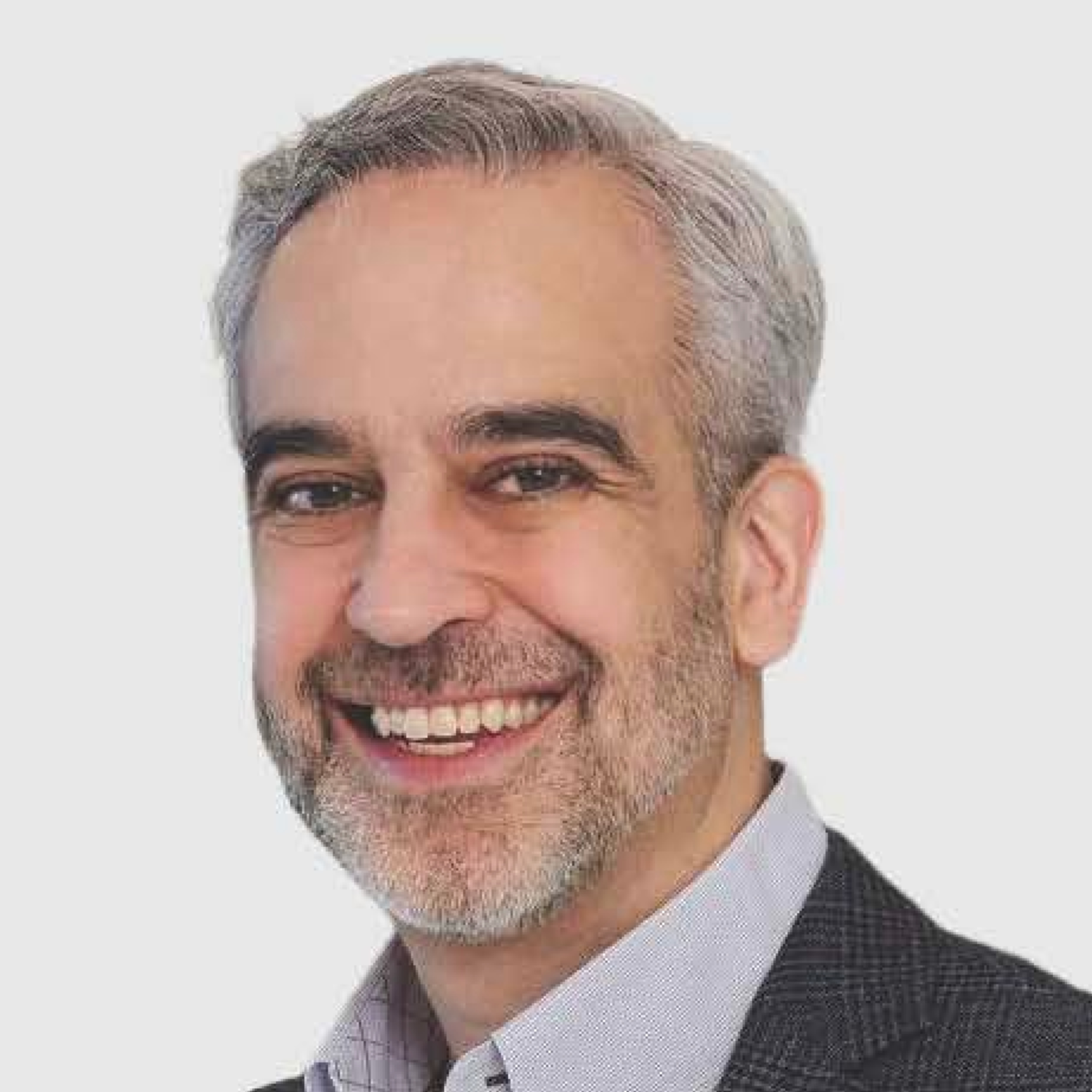
we have Brett Zabar, who is the managing director head of Global Life Sciences for General Atlantic,
larger PE firm within our industry. He's had a great career with various stages of investment
that he's been involved in and now working for a much larger, you know, multi-vertical private
equity firm that's well known in the industry. Brett, great to have you on the podcast.
Great to be here and thanks a lot for having me. Yep, so Brett, we have a lot of members of our audience
who are new to the industry and don't know us older players and if you were at a conference and you
ran into a 20-something person in the industry and they say, "Hey, what do you do?" or "Who are you
in our industry?" How would you give a brief description of kind of where you sit in our sector?
That's an interesting question and yeah, one I have been asked in real life. Essentially,
we look for innovations in life sciences that we believe have the potential to change
medical practice and address the most critical unmet medical needs and seek to allocate capital
to companies developing those innovations with the goal of getting them into the hands of physicians
and patients. Awesome. So I like to start off going back to early influences and, you know,
I know you did your undergrad at Yale and you had a degree in, let's see, biophysics,
molecular biophysics and biochemistry with a English, either double major or minor. So going
back to before you decided to go to Yale to pursue those degrees, where did you grow up,
what did your parents do? Do you have siblings? There's early influences and what, you know,
influenced you to pursue the degrees you did at Yale. Yeah, I love the I love the deep cuts,
so happy to start at the beginning. I grew up in Montclair, New Jersey, suburb of New York City
and really came from a family that was kind of deeply embedded in healthcare and medicine.
So my father was a physician. He was a. Your nose and throat had a neck surgeon
as well as my grandfather on his side, also Nianti. My grandfather and my mother's side was an
internist in Greenwich Village after serving as a captain and a doctor in the US Army in World War Two.
I had an uncle, several great uncles and a brother who all went to medical school.
Well, so it was it was in the air. But you would have had some explaining to do if you did not pursue
an MD, it sounds like. I will actually, Chris, I'll never forget a conversation I had with my mother.
I don't remember exactly how old I was, but I couldn't have been more than 13 and it was something
along the lines of Brett. You can be whatever you want to be when you grow up. You can be a basket
weaver. Just be a basket weaver who went to medical school. That's great. Well, all right, so,
so Yale, were you a good student? I mean, getting a deal with those small feet. What made you pursue?
English is always interesting. We've had a lot of guests who have kind of more of a liberal arts
and kind of, you know, soft teachings versus the hard sciences. What made you to pursue that
before you pursued your MD? So, I was always loved English, loved literature and also wanted
Camp Deep Exposure obviously to the science side. I knew that I really wanted to be in medicine,
all jokes aside about basket weaving. As I was growing up, I spent a lot of time
watching my father and his career and would often go to the hospital with him on rounds in the weekend.
You know, I was the eight-year-old kid that he would bring in next to him while he was kind of
removing someone's packing after nasal surgery saying, you know, do you mind if my son is here?
It's kind of hard to say no to that. So, you know, really kind of with that exposure,
saw how much my father loved his career the way he spoke about it around the dinner table and
thought this is really an incredible combination of having the ability to help people day-to-day
while also having the autonomy to do your own thing and effectively, you know, run your own
business. So, that really kind of drew me to medicine and, you know, the science side of what I
studied in college was honestly not that far beyond what I needed to do for my pre-medical requirements.
So, you know, it was fortunate that, you know, I offered a major that allowed me to fulfill the
requirements and then also go deeper in the aspects of molecular biology that I was interested in.
And at the same time was passionate about various areas in English literature, in particular,
believe it or not, Victorian novels and Shakespeare were where I spent a lot of my time and also had
several semesters where I was really going pretty deeply into the intersection of medicine and
literature, specifically individuals who trained as doctors but then really became who they were
as writers, including, you know, obviously individuals like Arthur Conan Doyle and Anton Chekhov,
really a rich history there for people who ever want to learn about it.
Yeah, before, like, medicine got institutionalized, right? There were almost a philosopher
scientist, right? There was a more of an interplay there. So, you went to Harvard for medical school
and then practiced in the clinic at Johns Hopkins, anything given your heritage and your family of
MDs, anything that struck out in going to Harvard for medical school that maybe was different than
your parents or, you know, other folks in your family experienced. What were those influences
early on and then tell us about the move to Hopkins? So, Harvard was an amazing place to study medicine
obviously because there's so much cutting edge science going on there and Boston is a wonderful
place to be a graduate student in the sciences because of such the incredible concentration of
town and research. So, you know, I really tried to kind of plan my experience there so that
I had exposure to, you know, different Harvard hospitals that were at the time kind of really known
for that particular area. So, for example, it was very fortunate to spend my most of my general
surgery time at Mass General. I was able to do my psych work at McLean Hospital. I was able to do
a cardiology month at the Brigham. So, kind of all of that really just were, those were incredible
experiences, not just to be in those institutions, but to have exposure to the mentors that I had
in each of those places. And this obviously is a recurring theme kind of throughout, won't be a
surprise throughout my experience, along the way had individuals without whom I would never be
able to do what I was doing, what I'm doing today, who were helpful to me in terms of making
decisions around where to pursue training after medical school, how to manage kind of my interest
in medicine with my desire to explore things outside of clinical medicine. So, you know, they're
a handful of people to whom I'm exceedingly grateful and remain grateful. And it was really in
medical school while I was at HMS that I could begin to realize, I love medicine, I love being in
the hospital, I love being in the, the cath lab, the patient bedside, these were all good things.
But I also felt like I didn't want to wake up as a 40-year-old cardiologist and regret not having
tried the other path of things that I was interested in. And at various steps along the way, so for
example, when I was in college, I spent a summer focused on policy working with the Senate Health
Education and Labor Committee, I spent a summer working on research in medical malpractice,
really at the intersection of policy and medicine. And, you know, I was also interested in industry,
and specifically in biotech. And I thought that if I didn't at least explore other ways that you
could use this amazing medical degree that I could wake up as this 40-year-old cardiologist and
wonder what if. And I really, I always try to focus on what I would call just the path of least
regret. And for me, that path of least regret was exploring opportunities at consulting firms
that would allow me to kind of get broad and deep exposure to different areas of the healthcare
industry. I did a lot of research looking at different firms, different roles, ultimately in my
fourth year of medical school, I applied to McKinsey, was fortunate to get him off of there, was able
to negotiate with the firm to not actually start until I had done my first year of policy.
And that's like, I get this question a fair amount from medical students and people that are
early on in their careers, kind of should I do a residency, how much training should I do,
and my advice usually is that this is just an incredibly personal decision.
For me, as I said, you know, I love being in a hospital, I like to work with patients,
doing the first year of residency, completing your internship, allows you to take the
USM at least step three, which in turn lets you get a medical license. And I wanted that at least
minimum clinical experience. So again, I was able to defer McKinsey for a year, I applied to
programs, I applied to a categorical medicine program,
And it was very upfront. I basically said, "Look, I've got this offer. Go to McKinsey, I don't want to do a transitional year. I'm looking for the first year of a categorical program. Can you work with me?"
And they were extremely, programs were extremely receptive.
Well, that's excellent because a lot of folks look at that as a fork in the road, which path do I choose? And you got your cake and needed to in terms of McKinsey's flexibility there.
And I think, you know, I've interviewed some other folks who had a consulting background. This was the time, late '90s, where the consulting shops really did want to get more like trained, right?
Medical, right? And scientific. It wasn't necessarily all about the business degree and, you know, can you know, no strategy. It's really, we need some domain experts.
So that's great that you were able to do that and that you knew even the fourth year medical school that that was what you wanted to pursue. I'll also mention that, like, at that time, it was pretty lucrative to go and be a cardiologist at 40, right?
There was a lot of clinics and all that. So, you know, I think the money path might have even been easier at that time to consider that. So it was clearly a passion.
So tell us about, like briefly about McKinsey before you move to the investing side. What were those experiences? And what did you leave with that that you think prepared you to move to the investing side?
Yeah, well, I'll say before entirely leaving Hopkins. I'll just mention that Hopkins was amazing in that, you know, they knew I was coming there for a year.
And when I left, Charlie Weiner, who was the program director at the time, really kind of said what, like, you couldn't even dream of hearing, which is, you know, we know you're going to McKinsey, you told us you were going to go to your thing in New York.
If it works out great, like, come back and tell us what your career is and teach the residents about it. But if it's not what you thought, you should come back and finish your residency.
Wow, wow. And that was like kind of a golden door, right? And so it was really kind of allowed me to do the McKinsey thing with with no risk, which was more than I expected.
But kind of tremendously empowering in terms of the risk that I was able to take when I was in McKinsey clients, I was working for et cetera.
So was fortunate early on at McKinsey again to kind of find some really amazing mentors who are now, you know, friends 25 years later, I'll call out a particular Michael Silver.
Who recently retired from McKinsey and was a senior leader in the pharmaceuticals and medical products practice.
And in that role, just had an opportunity to really kind of develop building blocks that would subsequently become critical for the work that I did on the investing side.
And this is really kind of understanding deeply within pharma and biotech how these companies are organized, how decisions get made, factors around product strategy, product launch, R&D strategy. And the ability to get that exposure early in my career, when I was, you know, it's 26, 27 at the time, was really foundational.
On top of that, it really helped me begin to build a network that I continue to call on individuals, both peers who are now, you know, senior leaders at companies, senior investment leaders.
So just to give you a sense, I mean, Bruce Booth and Adam Copeland, I are all peers from the same period of time at McKinsey.
And it was just a tremendous opportunity again to build that foundation. And I think, you know, there's a little bit of a window in the consulting role.
If it's not something that you want to do forever, where if you want to make a transition, you know, to the investing side or outside of McKinsey is really, you know, an ideal time to do that.
I think it again varies for individuals, but you know, anywhere in that, I think three to six year window is a great time to think about, you know, are there other ways that I want to apply this background, this network outside of consulting.
And that was what took me to the investing side initially in 2004.
Yeah, because many, many feel that they're either going to commit to the partner track, and then that's a longer right commitment.
Or they say, hey, I've got some great exposure and I want to do something else. And so Aisling was your first investing role, if I understand that correctly.
And what's interesting about your career, Brett, is that one, you've been at firms that really run the gamut of investing strategies across our industry.
I think I would say is more pure play venture, right? And then you went to foresight. We'll talk about that as well in terms of multi stage investment and public equity exposures and now large private equity that can pretty much do anything growth equity, but also, you know, syndicate and leading investor rounds on the venture side.
So that's an interesting evolution, but let's go to Aisling, you know, a lot of our older listeners understand Dennis Purcell and his legacy there. But what, what were the, did you look at other firms?
What was it that Aisling did they find you? Did you seek them out? Tell us about that experience while you were there as well.
Yeah, well, getting to getting to that first investing role is a process for many people. And, you know, for me, kind of the fit with Aisling, and at the time, as you may recall, it was actually the longest name in our inner, I think, our sector.
It was the Perseus Soros biopharmaceutical fund. And it was really a joint effort between the George Soros investment platform Soros funds management and Perseus LLC, which was a DC based firm. And it was really the right, for me, it was the right combination of investment stage.
It was generally late stage, and I was looking for later stage investments because I thought, well, of course, that was the area that was most interested in and was a great fit with what I'd been doing in McKinsey. And a great track record, terrific people that I really wanted to work with, and it was geographically correct because I really wanted to stay in New York City.
And I really am enormously grateful for Dennis who taught me a lot of things. Of course, for those of you who may not know him, Dennis previously led the life sciences practice at Hamburg and Quest, which was known as H&Q, which really got the H&Q meeting started, which of course is now the JP Morgan meeting.
And so, you know, really kind of was at a place that was a tremendous kind of node of relationships and biotech history. And, you know, Dennis taught me a lot of things among them was kind of how to consistently think about how are we different, how is what we're doing differentiated from other investors that are in our space, and how are we going to outperform based on what's different.
So, asling at various points in time, you mentioned it was, you know, predominantly venture capital, but also did later stage investments. So, you know, before I got there, the firm had participated in the LBO of quintiles.
I was very closely involved in the creation of the company that became Catalan and the purchase of those assets out of Cardinal PTS with Blackstone, which was, you know, my first experience working very closely with Blackstone, which is terrific.
And there was also a consumer angle to it, that their investment, as you may remember, in Adams Respiratory Therapeutics, the creator of Mr. Nugus. So, was at Asling for 10 years, and, you know, again, got exposure to a wide variety of investment types there.
And I'll just, I'll mention one other thing that I'll give Dennis credit for, which was really teaching me in as an investor, the advantage of being patient.
And I don't mean kind of just patients with an investment over time, but patients in terms of how decisions get made and the kind of benefit of sometimes just not precipitating a decision, just waiting a little bit, you're going to get additional information that's going to be extremely informative and probably change the outcome.
Yeah, you know, and I adopt a lot of that philosophy to worry, let it come to you, right, there, there's a timing, right, perfection that we can't predict, and you can't force it. And also, there's this idea that a lot of younger people in their career feel like it's all about avoiding problem, but sometimes you need to, you know, if the stakes are low, let them learn the lesson through a mistake, right.
And, and, and then they're, they're converted, right. And then you, it's much easier than saying, no, that's wrong. This is the way we're going to go versus, okay, let's go ahead and do it your way. And then they ultimately come back and say, wow, that didn't work.
And then it's a, it's a learning lesson, right. So I love that philosophy.
Um, so what led you to, I mean, 10 years of long time, 10 plus years at Asling, and I saw that, um, foresight, first, I have to say this, when you left foresight, we're going to go into foresight, I've never seen this before, and it really speaks to your character, Brett, but a statement from Jim Tannenbaum that said, wow, Brett's leaving, what a, I mean, you know, just like a communication of how, you know,
how they wish you luck and like, it just doesn't happen other than a sentence and a press release when there's a transition for somebody. So I thought that was notable, because I, I'd never seen that before, but he mentioned that he had given you advice when you were, you know, an MD in Hopkins, so, but what, what, so you guys knew each other, but what led you from Asling to foresight.
Yeah, so, so Jim is obviously just a fantastic investor and extremely well known and respected in our space, and, you know, again, we'll get to what I learned from Jim, different from what I learned from Dennis, but really, you know, tremendous amount, and it goes back to actually my third year in medical school is when Jim and I were first connected by my wife's cousin, who is at Yale with Jim, and I was just talking to him about, oh, I've got this interest outside of just clinical medicine said, oh, well, you've got to talk to Jim.
And I'll never forget it because I got like the original notes from my conversation still down, it was in 1997, I can like picture where I was sitting, and Jim was at a company that he was starting at the time, the dance medicine, which subsequently became.
third events, of course, a very successful biotech company. And so we just maintained a relationship
over the years. And Jim got foresight going in about 2012, you know, had a very, very successful
fund. One, a successful fund too. And the firm was just at a very steep part of its growth curve
and had the opportunity to move from foresight, from asling to foresight at that kind of steep
part of the curve where the firm was really kind of growing, looking to do more in particular
in therapeutics, but also with the ability to continue some of the very late stage investing,
like the cattle and type deals that I was doing. And it was a great fit and great timing.
So I came on board there at the beginning of 2015. Yeah, that's great. Yeah, it's funny.
Advanced medicine was one of those first that I remember, the stealthy, like nobody knew what
they were working on. It's kind of like what Moderna's reputation was in the earlier days,
right, before we knew Moderna, but I remember it was like, what are they doing? What is what's
going on that became therapists? So what from the strategies? What do you feel you learned
differently or was it just an enhancement of what you were doing at asling in terms of just
from the investing side and even thinking about how to manage investments or selecting the right
investments? What was that influence from foresight? Yeah, so very, very different in terms of
style overall. And I just kind of point out a couple of things. First, Jim and he really kind of
this trickle down through the rest of the firm has an amazing ability to see around corners.
And what I mean by that is he was very, very early to the impact of GLP1 on just society.
And I mean, we had conversations back in 2015 about some of the early data, the weight loss
that was being seen and kind of how transformative this space would become over time.
We had conversations just a few years later where Jim was extremely excited and focused on the
potential for machine learning and ultimately AI to transform our space. And you see some of these
things reflected in the foresight portfolio. So kind of really kind of the ability to take a
step back and think, okay, what are the most, what are some of the most important mega trends
that are happening in our sector and how are they going to impact our space?
Was I think an area where Jim is really exceptional and something that I became more focused on
as a result. In addition to that, I think the ability or the importance, I learned the importance
of taking additional risk at the right time. And the fact is if you need to be in companies
that really work and investments that really work in order for this whole business to work.
And therefore, you have to take risks, but you also have to understand the risks that you're
taking. So just getting more comfortable with having conviction, meaning in when you have
that conviction, was also kind of a key part of my own personal development while I was while I was
there. That's great. All right, so I'd like to move to Gerald Lannick and just to frame this
for the audience. You joined around the time that, you know, historically, right? We know like
Barbara Pinkis, Client of Perkins, right? There were large PE firms invested in health care,
mixed mixed success historically. But you saw this push toward mergers in private equity,
you know, with Blackstone Claris, right? You saw Carlisle step up with Abingworth,
you saw EQT in Europe, LSP, you saw, you know, a patient square developed, you know, from KKR
lineage, you joining General Lannick. So a lot more emphasis on larger pools of capital,
what we would call, you know, traditional private equity versus, you know, VC or early stage VC.
And so, you know, one of the frame there for the audience, but what drew you to General Lannick,
or what drew General Lannick to say we need to get more of an expert in life sciences?
They had been doing health care and obviously broad-based investment across many verticals.
So tell us about that and what drew you to that opportunity, clearly having access to capital
wasn't going to be an issue. Yeah. Well, I think I give a lot of credit to GA for identifying
life sciences as an area to which they wanted to commit, the firm wanted to commit in the long term.
And I think it really grew out of the observation that over the next several decades, there's
going to be so much innovation and growth coming out of life sciences that to remain a leading growth
equity platform, we really wanted and needed to have a significant life sciences platform.
And at the same time, as you pointed out, there's several ways to go about that. And, you know,
there, I think, advantages for each approach. But I do think one of the advantages of having a
more of a homegrown effort is that culturally, that practice can really grow up and thrive
within the context of the broader firm, where, you know, most of the time, the other investments
are going to be very different. And that's certainly true for us at GA, and I think it's true
in other platforms as well. I mean, when you look across the portfolio at GA, most of our companies
in the portfolio are not just revenue generating, but they're profitable. As you know, as well as
anybody else, I think most of our companies are years away from revenue. So it's a very different
profile. And I think one of the advantages of this more kind of homegrown and organic effort
is that as we're growing the platform, you know, we can really work with our partners to show them
kind of how, even though the financial profile of our companies look different, what's underlying
them as growth equity investments is actually very similar. And that is really centered around
incredible entrepreneurs, a focus on growth and innovation, where kind of the technologies that
we're advancing and the products that we're advancing are really going to change the field that
we're looking to introduce them into. And also that there is a global aspect to these products.
We haven't really touched on this yet, but of course, you know, one significant difference
of GA from the other firms we've been talking about is that this is really a global effort,
a global platform. And the ability to make investments in companies that can apply their successes
and assets around the world is always an important part of our strategy. I'll just kind of highlight
one more thing, just kind of how we got here. Our CEO, who's been with the firm for decades,
Bill Ford is also personally involved and personally committed to innovation in life sciences.
In addition to being on the board at Memorial Sloan Kettering here in New York, he's the chair
of Rockefeller University. So he absolutely gets kind of what we're doing why it's important
and has been, in addition to our vice chairman, Dave Hodgson, who's the former chair of John
Topkins Medicine. Absolutely champions of what we've been doing here. Yeah, wow, that's great to
have that top leadership, right? Understanding the need and supportive. Looking over your portfolio,
again, I think part of what you probably need to do with a company that has profit, you know,
for profit companies, you know, just to name a few since you joined, right? You have Sincor,
you have Karuna, you've invested in Seaport from that. But Karuna, with a commercial product,
you've got Akiro in there. So, you know, talk about that a little bit that you've actually
been able to demonstrate that your investments can lead to revenue generating products. It was
that an important kind of milestone for you to provide credibility to, you know, the life science
investment strategy. Yeah, I think you really kind of did the nail on the head, which is, you know,
all of those companies that you've mentioned are developing what we would consider truly practice
changing therapies. And, you know, when I came to GA, really, I saw the opportunity as one where,
you know, we could take GA's historic strengths in other sectors and apply them to life sciences
at a time when really the sector needed it most. And just to kind of mention some of those,
of course, it's the patient capital, which we have just because of the way the investor-based
structure to general Atlantic, we can be in these companies for, you know, as long as it takes,
and as you know, it often takes a long time in life sciences. Number two, there's a real focus
on value creation and working closely with entrepreneurs. People at the firm and the firm is really
structured to provide advice and resources to our companies over time as they're growing up.
And that spans from our growth acceleration team, which is really kind of a mini-McKinsey that
exists within the firm and works with our portfolio to our human capital team, which is extremely
closely involved in talent management and development within the portfolio. We get involved when
we're recruiting teams, when we're building out teams. There's a huge focus on talent and
management within the firm. And also to our strategic marketing and communications group and our
capital markets team. I mean, these are just resources that are very, you know, they're quarter
what we do at GA. And within life sciences, they're highly distinctive because, you know, as a,
kind of even a midsize or larger venture capital firm in biotech, biopharma, you just, you don't
have the resources to have these. And, you know, that provides a real strategic advantage to us.
So, again, the ability to deploy those into our portfolio has been an advantage.
advantage. But I think really overarching all of that has been the strategy and this
gets to your point of what, you know, fortunately we've been able to demonstrate of deploying
additional capital over time and scaling capital as those companies are growing up and
as pipelines are maturing. And this is really a critical point because it advances our
strategy as a firm and it's really exactly in our view kind of what these companies are
looking for and benefit from when they have a relationship with GA. And you know, just
to give you an example, you know, a typical initial investment for us is is rarely less
than 50 to 100 million dollars. Whether that's in a private round or, you know, a public
round or even, you know, if we're, you know, in very select circumstances, we have the
ability to buy on the open market. And we're only making those 50 to 100 million dollar
initial investments when there's clear line of sight to deploying additional capital over
time. And again, that can be in any form of structure often, you know, it can be an additional
private round, I can be an IPO. But the point is over a period of years for our core positions
we're really looking to develop two to three hundred million dollar positions, you know,
they can be larger than that, our investment in royalty pharma, for example, was substantially
larger than that. And, you know, those become core investments that can work within the
context of a larger growth equity firm and can be very impactful for these drug development
companies that are, you know, obviously highly capital-consumptive and need to raise capital
at scale in order to advance. And ideally can do that with capital partners that they
can work with over time as opposed to having constant, constant recycling. So now coming
back to your original question, kind of how is that played out in the portfolio? You know,
if you look at a company like Immunicore, that was one that we funded through multiple
private rounds and multiple public rounds, you know, fantastic team, the CEO, Behesion
Jeal is amazing. We, you know, helped finance that company through the launch of their
first product, which is a leading product now for the treatment of Yogi O'Melanova. And
that's generally our approach, right? The company that we believe has an important asset
within an indication with high unmet need. And, you know, we're looking to fund that through
approval and commercialization. But it won't always work out that way, right? I mean,
there's situations in you named, you named Karuna, Sincora's another, and Akaro obviously
another, you know, sometimes these companies are going to get bought along the way. And
while in those circumstances, we won't have the benefit of continued years of accretion
and IRR, you know, we're not, we're not going to complain because it's a great step in
advancing the journey of those medicines towards patients. Yeah. Well, and I, I, I, I, I know
Behesion and she came out of, you know, leading Metamune and knew I was talking to her back
then, which was just, you know, toying with the idea of coming over to biotech. So everybody
knew she was going to be. And then I, I was a peer and worked with Andrew Chang back in
the day when I was a Gilead. So you definitely invest in companies that have solid CEOs and
obviously Karuna as well. So the, the large pools of capital, I've always been curious
about this in early venture, right? We have to kind of do the math of, okay, what's the
step of going to be? What's the valuation? Is it going to attract the IPO investors?
Are we going to get too rich with our post money? And we think about position size when
you're, when you're deploying that much capital, how much attention do you pay for how much
ownership do we have? Do you do models of like, where could this go in the billions of value?
I mean, because, you know, I understand you just want to invest in good companies. They're
going to grow. You've got a long-term view. Just, it was always curious how PE approaches
these questions versus an early VC firm. Yeah. Well, so first, I should say that valuing
these companies as you know is hard for specialist investors. So you can only imagine what it's
like in a large private equity firm. And, you know, that said, you know, we do spend
a lot of time developing pretty detailed models that get down to a DCF level, even for,
you know, a drug development company. And what that does is really, I think, focus a lot
of our decision-making conversations as a team. And, you know, with our investment committee,
again, about what risks we're actually taking here. So it is a different level of rigor
than I think you would find in a smaller, earlier stage firm. But I think it does drive for
us, you know, important aspects of our decision-making. Ownership is certainly a consideration. But
I'd say more important than a number or a threshold number is what ultimately is our
degree of positive influence or potential positive influence with a team, with a company
that we're getting involved in, whether it's public or private. And are there receptors
on the other side in terms of the management team for kind of partnering with us? And
is there shared vision for where the company is going? And in particular, R&D priorities.
So, you know, those are key facets for us. More important than, you know, we also, as
you're suggesting, work backwards from, you know, what's doable at different points
in time. And I think, you know, up to this point, fortunately, we've been, you know,
pretty, pretty disciplined on that front. The thing I'd say we look out for the most,
which can be, in my view, you know, one of the, if not the most impactful driver of returns
or lack of returns is dilution over time. And as you know, you know, in our business,
you know, we have companies that may continue to make progress in their pipeline, but they're,
you know, what you can call serial diluters. And just back in the market, all the time raising
capital, regardless of price and, you know, in situations like that, you can have drugs
that are working in pipelines or advancing. And it's just very hard to generate a return
for your investors because of the dilution over time. So that's, that's a huge factor
for us.
Yeah. So, with the check sizes, you write, it's clear that you could demand a board seat
in every company you invest in. What's your philosophy on that? And when do you want
to step in or do you like to avoid it? Yeah, just given the size of the investments,
as you said, we tend to lead or co-lead most of the deals that we do. You know, we tend
not to be dogmatic regarding a board seat. Again, it's much more about are there receptors
on the other side? Do we have a shared vision for where things are going? You know, really
what we found is, you know, part of what has made us a preferred partner is our combination
not just of patients and scale, but also flexibility. And we found that that flexibility has been
very important in terms of gaining access to what we consider, you know, some of the best
assets in the class. And, you know, just to take your, your caro example that you just
mentioned, you know, our first investment in that company was when it was public. And,
you know, we worked very closely with Andrew, who is amazing as you alluded to. But Andrew
also had an incredible team, including either CFO, the White and many other members of the
management team. And we worked very closely with them at different points over time around
capital formation strategy around kind of communication aspects of communication strategy.
So even though we weren't on the board, we found it was an extremely receptive management
team. And, you know, that's that really for us as the criteria.
Yeah. So, you know, I work for Perceptive Multi-Stage Investor and it sometimes creates conflicts
when the public fund, when we have a venture investment that goes public, generally we try
to cycle off. What, what in terms of exiting, right, because you're a firm that has a long
term view, you can continue to invest. Whereas, you know, venture, we have specific goals
for our LPs where, you know, we may sell early even if we believe there's upside, right,
to give some money back. How does the exit strategy differ for a large private equity firm
than maybe a traditional venture?
You know, look, I don't think the fundamental pressures are all that different in the
sense that like, you know, if you look across the industry, regardless of stage of investor,
especially over the last five years, I mean, DPI is an issue for the industry, right,
full stop. So, you know, because we've been fortunate in having a number, in our practice,
you know, just to focus on that for a moment, we've had a number of acquisitions as you
pointed out that have generated distributions. And so, you know, we've been able to, in
certain cases, leverage that into, you know, staying very patient in other situations where
we believe there's significant incremental IRR. And I mean, this has been so incredibly
important in our portfolio because we've had a number of situations where the underlying
assets are very high quality, but I mean, drug development to quote our partner Rob Perez
is never straight line. And there are, there are hiccups. So, just to give you a handful
of examples, you know, Centessa, which is a public company where we were, you know, we
were significant investors in the Series A back in January 2021.
For the audience, this was a roll up of a bunch of Medici companies that ended up going
public during a tough time to go public, but they've really showed the perseverance to
come back with a market cap, you know, that's healthy.
Exactly. I mean, this, so this is a company that really at one point, you know, had a stock
price in the, in the mid single digits and is now a multi billion company, multi billion
dollar company with great assets in the erection space for sleep disorders. And, you know,
I think the, you know, that company was able to come back not just because they had, it
had great science and, you know, ultimately, terrific assets in the sector, but because
they got capital allocation, right?
They, uh,
terminated programs that were not going to have a differentiated profile reallocated that capital to
these potential significant value drivers and avoided that, you know, hugely diluted financing
that I alluded to earlier. That would have kind of killed any possibility of return. So that's,
you know, that's going to be a good investment for us. And it took, you know, we're five years later.
But, you know, it's, you know, they have survived. Another example of that in the portfolio
is Farvaris, which is a company, also public company. They are developing an asset for the treatment
of a rare disease called hereditary angioidema. And, you know, we just exited one of our companies,
Astrea, which was a program we started at the speed stage. So we know the space well, and it's great,
the innovation that's happening in that area. But, but go ahead. No, no, it is, and congratulations.
It's a great, it's great technology. Astrea developing, of course, a long acting injectable that,
you know, we think it's complimentary to Farvaris is, you know, we believe best-in-class oral products.
But, you know, this is a company that at one point several years ago was in the low single digits,
at two dollars a share, after the FDA put a hold on them for a preclinical fighting. And, you know,
now that stock is in the, you know, mid to high 20s, after having made a full recovery and
demonstrating to the FDA that this is actually a non-issue and having terrific trial results. And,
you know, if you, that's a great example of what we're trying to do because, you know, we had our
initial investment, and we made multiple additional investments over time working closely with the
company, catalyzed some of those public financings. So ultimately, this is a, you know, a good size
position for us now where there's been real value creation. But, you know, the company had to come
up through a period of real down drafts following those challenges. So, let me, I'm just to take
him back to your way earlier. A few minutes ago, you know, seeing some of those cycles and really
focusing on the fundamentals and distinguishing between, you know, where is their good science and
great products versus something is dead is critical to being patient. Otherwise, you're just
killing IRR. Goes back to the dentist, Purcell, advice early on, right? Yeah. So, I want to understand,
so tell me about the team. You Rob Perez, senior advisor on the team, you've got Jason Pitts,
how big is your team? Because it's hard to find on the website exactly. I don't know,
I couldn't find a filter by the life sciences, but how have you grown the team since you joined?
So, the team now, the team that's focused on therapeutics is about 10 people, and our center of
gravity is in New York. Jason is in San Francisco or San Mateo and Henry Pettit is in London. So,
we do try to establish a global presence. We've got, you know, a healthy part of our team that's
either as an MD or a PhD by background. That's certainly important given the work that we do.
We have a dedicated, a small but dedicated research team that's focused on the technical aspects
of what we do, and our network of advisors is super important as well. And, yeah, again,
I'd say that, you know, a key part of the growth has been the support internally from the firm
for what we're doing, and we've been able to attract great people because, you know,
they see that commitment. And, you know, I'd also say, again, this is a great time to have this
conversation. It's not that long after JP Morgan. Yeah. Yeah. You know, there are enough examples
of doing what we said we were going to do, where, you know, we're being kind of, it's paying off
terms of, you know, being so hard because the timelines are longer. And so they have to trust
that it's got to materialize. And over, you know, you joined in 2021, I think. So, you know,
it's not a long amount of time to prove that the thesis works, right? And obviously, we've come
coming out of such a cold winter over the last several years. You know, there's nothing more
that speaks stability than working for a large P firm that has, you know, over a hundred billion
dollars of AUMs, right? But in fairness, of course, I mean, the challenge now is, you know, we're
operating in a different valuation environment, a very different valuation environment than the one
we were in nine months ago. And so, you know, especially on the public side, a lot of super high quality
companies are much, much more expensive than they were. So, you know, of course, that's, you know,
that leads to kind of a different set of challenges in terms of putting new capital to work.
So, you know, we're constantly, I should say that the firm overall is a highly thematically driven
investment platform. So, whether you're talking about our financial services group, consumer,
healthcare services, technology, the firm is always thinking about secular mega trends that
will drive investment activity. And what are the power alleys that we want to develop real
expertise in? And the life sciences sector is no different. So, you know, we think a lot about both
disease areas, therapeutic areas, even specific technologies where we're looking to develop some
of that expertise, try to understand those areas extremely well and then deploy capital in those
areas over time. And in the environment we're in now, we're obviously, you know, again, public companies
have gotten much more expensive. You know, we tend to spend more time on the private side where
companies are thinking about a potentially throwing IPO market, how to get there, and again,
how to capitalize themselves over time. Yeah. So, just on these themes, there is a lot of innovation.
None of us have really figured it out. We're trying to read the tea leaves and figure out how
to not to be too early. We all know that technology is going to transform medicine in some way.
How are you thinking about evolving strategies of investments with, you know, AI, tech bio,
new tools, right, LLMs that intervene like just how is that making you think differently? And do
you get involved in the non therapeutic verticals like device diagnostics, right, health tech? So,
just talk a little bit about that and where you see the investment trends moving for your practice.
Yeah. So, so to answer your last question first, we do get involved in those other aspects of
the life sciences sector. For example, we have an investment in a company called Ultimate Genomics,
which is a next generation sequencing company that's developed an $80 genome. And this is really
on the basis of an incredible engineering innovation, which has enabled them both to
read accurately and use much lower volume of reagents to get to those reads. And, you know,
fits very well in some of the emerging applications for next generation sequencing, not just on the
clinical side, but also data generation at scale and, you know, a lot of of great applications
for that technology. So, that's, you know, one example. We have an investment also in the
diagnostics and tools side in a company called Path AI, which is using AI applied to and machine
learning applied to imaging and digital pathology. So, you know, we've been, and also Ultima uses
machine learning in their reading software. So, you know, we've picked very selective spots where
there are clear applications for these advanced analytics that are in term, you know, driving value
in very concrete ways. On the therapeutic side, you know, just given general Atlantic's historic
strength in technology and, you know, the fact that we're so focused, our team is so focused
on life sciences, you would expect correctly the application of AI and ML within drug discovery
to be a focus for us. And it is in terms of just really the expanding time in the space,
trying to get to looking to understand what companies are doing and where they are. But we don't
yet have capital deployed there. I believe that we will over time. There are a number of proof points
that we're, you know, like you and others, you know, continuing to wait for. So, I do think
over time that will be a significant source of value creation, but we at least haven't put a
marker down yet. And in the meantime, are looking again in these concrete areas where, you know,
differences are being made. And, you know, I think that range is in areas from, you know, digital
pathology, as I mentioned, but also into clinical trial design, clinical trial execution,
site selection, you know, areas where those technologies are making today a measurable difference.
Yeah. Are there any, I mean, we're in an age where there's so many modalities in the toolbox,
you know, it really in the last five to 10 years, you've seen a interesting target where you have
multiple modalities going after the single target. Any priority or deprioritization of certain
therapeutic areas or modalities or are you truly agnostic as long as, you know, it has potential
to make an impact. So, I wouldn't say we're 100% agnostic, but there are, you know, there are
definitely places where we're spending more time than others. So take cell therapy as a good example
that's like easily beat up on, right? Just given kind of the challenges in the space over the last
several years, cell therapy is not a focus for us, but there are, you know, very selective
applications of cell therapies that we think have potential to have, you know, extremely meaningful
patient impact, where we are continuing to pay attention. You know, if you look at, you know,
in vivo CAR-T, you know, that we see as an option.
an area where there could be, you know, very, very disruptive innovation over the next short
to medium term, with implications for, you know, large-scale cell therapy for the treatment,
for example, of hematologic malignancies. So, you know, gene therapy, overall, I'd say it's an area
where we are, you know, selectively. We're looking at a lot of stuff, like us. We look at a lot,
we say no to a lot, but we're looking for that diamond in the rough, right? We remain selectively
active, yes. Yeah, yeah, yeah, that's great. And then in areas where we are active, you know, this
won't be a surprise to you at all, you know, we gravitate a lot towards, you know, large disease
areas with, of course, significant remaining unmet medical need. And what are those, you know,
certainly cardiometabolic disease, certainly oncology, particularly is applied to oncology conjugates.
We've been very active in clinical stage neuroscience as an example. You mentioned seaport at the
beginning of the conversation, one that we, you know, are especially excited about. And then
on the cardiometabolic side, last year, we co-led the creation of Verdeva Bio, which is a obesity
metabolic-focused company with assets from China. They have a leading once-weekly oral platform
that they're applying both to a GLP1, as well as a rich and diverse amulet pipeline. And that kind
of amulet piece of it was really a critical part of the story. But I think that's a good example
of, you know, this was a large, this was a $410 million initial financing with a, you know,
a group of, you know, well-respected larger investors. But we're in there with the belief that
we'll have the opportunity to deploy significant additional capital over time. Yeah, and just to touch
on two other areas, I and I and Cancer, there have been some headwinds of skepticism,
increased skepticism of early-stage cancer, predictive power, and read through, and even early,
early studies that might show a signal has it played out with the larger population and sustained
effect. I and I is a little bit, you know, been more of the bell of the ball recently. Any comments
on those two, two verticals? Yeah. So on the cancer side, I don't know, are you referring specifically
to kind of more on the I/O side? Kind of weird. Yeah, well, I/O for sure. But I think just the idea
that it's really hard to trust tumor mouse models, PDF. It's just, you kind of have to get that
proof concept, which CNS has always been a little bit that way because I had really poor translational.
And so I just have seen more skepticism of early, early-stage cancer. I know you guys tend to
invest later. And I and I seems to, at least the crowding around certain targets that might,
you know, the new, you know, TNF alpha class, if you will, right? You've got a lot of emerging
targets. So just curious, if there's any opinions on those two sectors.
So yeah, I think on the oncology side, and actually this is really true for I and I too,
we're always going to tend to, we're always going to try to take less biology risk and more
engineering/chemistry risk. So, you know, what that means is, you know, and another way of saying
that is that we're really focused on investments that we believe for whatever combination of reasons
are de-risked relative to stage. And so in cancer, you know, because people sometimes ask us,
well, what stage of development do you invest at? And of course, the answer is, it depends,
because, you know, you can have a much better sense of what you have with the right 10 patients,
the first 10 patients in an oncology drug, but may need to wait till you're finished with phase 2
in another area. So, in oncology, specifically, you know, vast majority of things that we're looking at
have at least some clinical data that we can look at. An exception to that would be solved
therapeutics, which was an ADC company that we invested in several years ago, because we knew and
you know, had a very high degree of respect for Dave Johnson and the team there.
So, you know, the areas, the times in oncology, when we'll go earlier stage, and I mean pre-clinical
no clinical data are going to be circumstances where we have a high, a super high degree of
conviction in the team and have worked with them before, and/or super high conviction in the
technology and targets. But yes, we're tending not to make kind of earlier stage
pre-validation investments in oncology. Yeah, pre-validation is the key there, because a lot of,
there's a lot of new target ID and, you know, the old saw of, you know, confusing correlation
with causation still haunts, right? Sun along these emerging targets. So, I want to just touch on,
yeah, go ahead. I know, and then very briefly, I was just going to say on I and I, that's another,
I think, example that is really unfolding in real time, because, you know, not long ago,
there was, there continues to be, there wasn't, can it just to be a huge amount of enthusiasm in
particular for bi specifics in I and I. And we've had a number of data readouts recently, you know,
the, the new map molecule that was acquired by J and J is just, you know, one of several,
where the outcomes were not what, I think, you know, we as a, kind of ecosystem we're expecting or
hoping for, just kind of more indications that, you know, a lot of these molecules will end up being
developed more empirically than I think we might have hoped initially. So, you know, a lot of that,
I think, needs to still play out, but that also creates opportunities as these targets and
combinations become validated to develop, hopefully, best in class options. Well, and, and you,
you increase the number of permutations when you have these bi specifics and the differentiation
and what incremental value or differentiation of data sets becomes challenging, because you don't
know which combination might emerge and is the, is the incremental and then you've got side effects
that could like, it is an interesting space to follow to see who the, who emerges at the real winners
in that. So, I want to touch on just two other themes to close out today, Brett. So, the first one is,
so I, I moved to the investing side after 25 years on the operating side, you know,
Abbey, Selge, or Gilead, Selgin, CEO of Surrepta. So, I, I consider myself an operator first and
an investor second. You clearly have a master, an amazing amount of experience over your career,
but have not been, you know, an operator, you know, in the, in the trenches. And I want to
explore that a little bit. You've got Rob Perez, who was, obviously, you surround yourself with
people on the team, who can guide that. But talk to us a little bit, because I'd say the, the most
notable, uh, investors, most of them have not spent much time, right, on the operating side.
Just, just share your opinion on that thoughts. Does it not really matter? You gain enough experience
sitting on boards and talking to management teams. Uh, how do you relate to the 20 year CEO
operator, right, when you're navigating that and guiding them as an investor? Uh, you had,
you know, again, I'm, I'm just trying to highlight for the audience. Is there a real distinction
here? Or do you think the lines are so blurred now? It doesn't matter if you've spent time in a
company versus making investments across dozens, right? I think it absolutely does make a difference
and is highly enriching, uh, as an investor to have done something other than investing.
So, um, you know, it's interesting if you look at kind of a pure private equity path, you know,
typically, you know, there are many people that might go, you know, spend two years in banking
after college and then work at a firm for two years, go to business school, come back to a firm,
and, you know, that can work extremely well on the, on the private equity and, and buy outside.
I think in life sciences, um, whether it's, you know, consulting or working with a company,
having some degree of industry exposure before you're really kind of diving into your investing
career is, I think, immensely valuable, largely because of how humbling it is. And, um, you know,
this business, as you know, just requires generally, I think a large degree of humility.
There's a lot of luck involved in what we do and being in the right place at the right time.
And, um, in an operating role, um, again, I'm conflating a little bit here, you know,
operating consulting, just being in the industry leads other than investing. You really get to see
a lot more of that. And I think it also really dramatically opens your mind to other points of view
the way other organizations work, um, and, uh, just generally increases your empathy. And I think
that's extremely important as an investor. Yeah, you know, when I come across MBAs who want to
just jump right into business development and do deals, I'm like, you know, you really, like,
just do a stint in project management or strategic planning or clinical development or regulatory
or CMC. And because when you put a model together, if you don't really understand the reasons for
the underlying assumptions, right, you're, you're flying a little bit blind. And then, you know,
I was a senior advisor for BCG for, uh, a few years after, you know, uh, the operating career. And,
you know, the thing about, uh, lifelong consultants is they, they're like, why don't they do what
we tell them to? And they don't realize the dynamics in an organization where you can't really
implement it as easily as you do on a, you know, on a, on a slide presentation. And so that usually
is an awakening of culture and politics and people get in the way of the right, the right strategy.
I love something you said and it really brings it home. This idea of like really being able to
think or visualize or just understand like what it is you're putting into a model. Like it just,
it changes everything, right? And, um, I, it, um, it, I think it enormously increases, uh, quality
of judgment. And something else you mentioned just to pick up on briefly, kind of clinical trial
execution is I
I think one of the most important extrinsic capabilities
and backgrounds to bring into the investing role today,
because there's so much competition, of course,
and in some ways increasing equivalence in chemistry
and molecules that execution is really becoming
a critical differentiator, not just in terms of recruitment
and actual trial execution, but also clinical trial design.
- Yeah, well, and I think execution, I separate, design is
even more critical and really understanding
when you do that first pre-clinical experiment,
having an eye on, that's what we call our North Star,
what's that trial design gonna look like and how to,
and we spent years thinking about what does that trial need to do
and executing obviously on that good design is key,
so we're speaking the same language.
The last thing I wanna touch on, so I've talked to pure play,
all they do is biotech, therapeutics,
broader life sciences that do device diagnostics,
and many also go into tech, so they're tech and life sciences,
but with a P firm that on your own website,
you have climate, sustainable infrastructure,
growth equity across verticals,
you mentioned your investment committee,
so I often explore what synergy
might exist with having tech focus in form life sciences side,
but this is kind of a whole other reservation, right,
climate set, what is that like,
does it make a more challenging to have to educate
and explain how different, and just maybe talk about
how that dynamic across the pools of capital you have
that are focused on some big verticals
around climate and sustainable infrastructure.
So the firm has organized into several large businesses,
core businesses, we're part of the global growth equity business
as you're alluding to, we have a credit business,
climate, and also sustainable infrastructure.
Within global growth equity,
we're actually organized by sector and geography,
and what I found is that the real power lies
in kind of bringing relevant networks and expertise
from those sectors and geos to bear
on investments we're looking at, we're applicable.
And that has given us an advantage,
both in terms of sourcing diligence
and then value add once something is in a portfolio.
And one of the--
- How many verticals in growth equity are there?
- Five.
- Okay.
- So just a name, so life sciences tech, I presume.
- Financial services, consumer healthcare.
- Got it, okay, very good.
And kind of climate is often included in that.
So basically, I'll give you one very concrete example
is our sector presence, our geo presence,
excuse me, in China.
We have an individual, an operating partner in China,
Victor Lee, based in China,
and he's been incredibly helpful
in both sourcing and diligence of assets
and companies from China, right?
And you can get more done in a in-person meeting
conducted in Chinese than you can
spending a week in a data room.
Similarly, in Europe, having a presence there
has been helpful accessing innovation
from European companies that are seeking
to expand their presence on the US capital markets.
And it's over time range to India, Southeast Asia,
a diverse range of places.
And then on the sector side, you mentioned technology,
that is one of the more obvious areas of intersection.
We've looked at a number of relevant software companies
where having the tech team's involvement
has been absolutely critical.
Thinking about metrics of success
that aren't usually on the tip of the tongue
for life science or therapeutics dedicated investors.
And then finally, just to your question
on the investment committee, I am routinely positively surprised
by the types of questions and conversations
we're having at investment committee
that are just kind of fundamentally
really good business questions
that we just often don't think enough about,
I think, in our sector.
So from my point of view, we've been able to do,
we've been able to operate kind of across the range
of therapeutic companies that we've really kind of highlighted
as important for the firm to be involved in.
And our colleagues and members of the investment committee
and other sectors have only helped
broaden our thinking both in terms of managing positions
over time, growing positions over time
and adding value to these situations.
- Well, Brett, thank you.
I mean, like one, to just take us across your career,
but also importantly,
giving our audience a better understanding
of general Atlantic and where you sit
across our kind of investment horizon and what you do.
If somebody were feeling like they wanted to approach
general Atlantic, because again, smaller firms,
sometimes it's easier access.
Do they reach out to you on LinkedIn?
Is there like, I'm thinking general Atlantic doesn't have a,
if you have a biotech pitch deck here submitted here,
but like, or do you just rely on network?
- I'll make it easy.
I mean, I'm on LinkedIn,
but also, my email is
[email protected]
and we'll make sure that, yeah.
And I'll just say be patient, 'cause we're all busy.
And so I know, I often don't get to emails
until a week or so after I receive them.
So Brett, just, I like to close with something,
maybe a person, did you build a family
or you have hobbies, anything you want to share
of what you do outside of our industry?
- Yeah, absolutely.
So very fortunate to have a wife of 27 years.
We met as undergrad, she's the practicing doctor
in the family, so I've got an out there.
We have two amazing kids.
My daughter's 23, my son is 20.
My daughter is actually interested in life sciences.
So she's got the bug.
My son is studying mechanical engineering
and aiming to be in the automotive industry.
And we live in New York, raise them both in New York.
And it's just hard to believe how quickly time goes, you know?
- Yeah, yeah, well congrats.
And you're pretty much almost empty nesters now.
It sounds like so.
You got another year's ahead with your wife, that's awesome.
So all right, well thank you, Brett.
I think the audience will really enjoy hearing this episode
and thank the audience for tuning in
to this episode of BioVenture Voices
and look forward to seeing you in the next one.
Thanks so much everyone.
- Chris, this was really a pleasure.
Thanks so much for having me.
- Thank you.
 PodcastTranscript AI