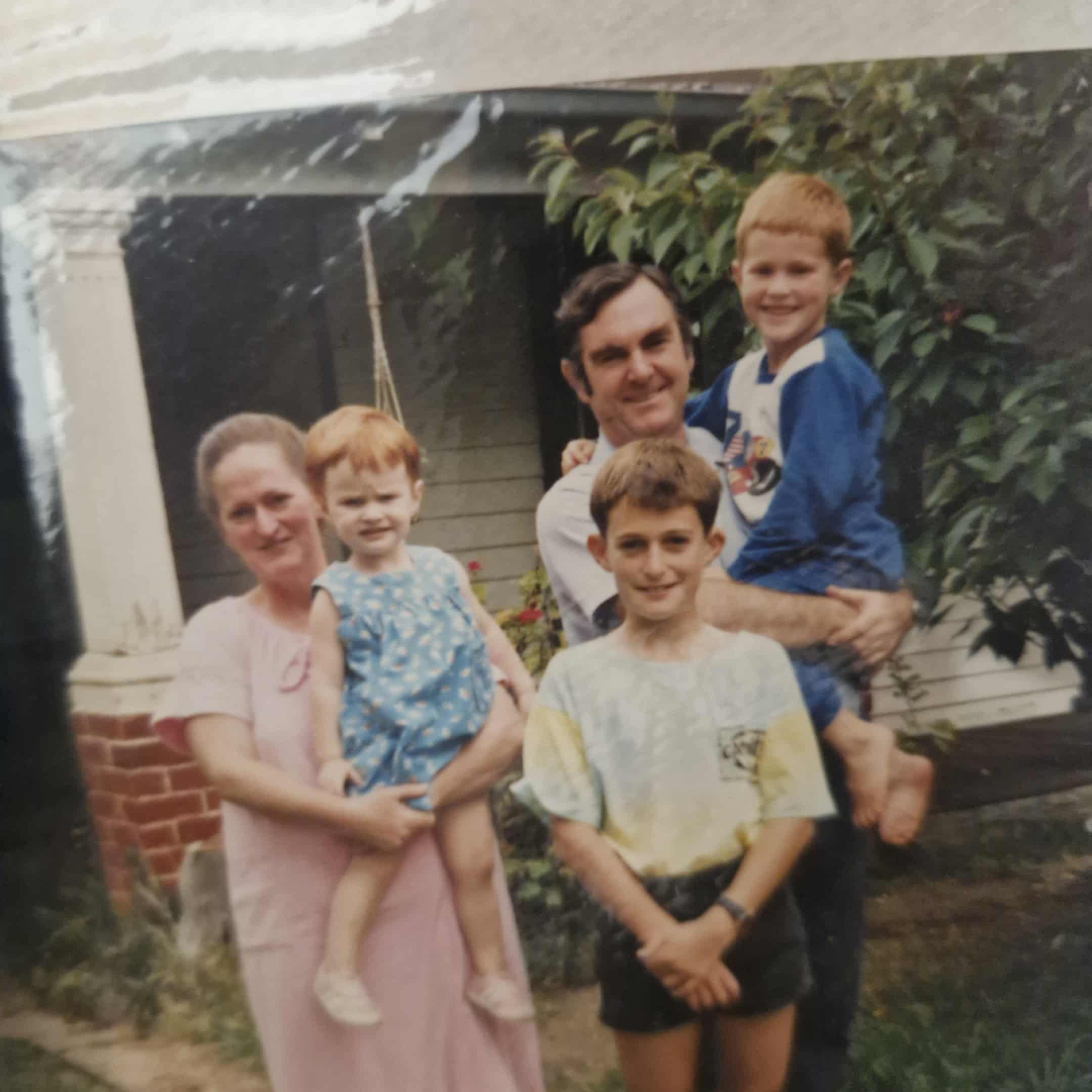
The transcription features an interview with Gavin Larkins, a former owner of Warwick Homestead, discussing the property's history and his personal experiences. Founded in 1843 by Scottish cabinet maker George Robertson, the homestead is a major historical site in Victoria, comprising over 30 heritage buildings and known as the birthplace of the Australian Kelpie dog. Gavin and his family owned it for roughly 30 years, striving to preserve its original state by making only sympathetic, period-appropriate renovations. He gained valuable historical knowledge from Ruth Patterson, a descendant of the original family, who shared intimate details about the homestead and its founders.
Warwick functioned as a self-sufficient community with diverse structures including a conservatory, blacksmith shop, stables, and a museum housing everyday artifacts. Gavin highlights George Robertson's meticulous attention to detail in construction. Personally, Gavin feels a strong emotional tie to the property but has chosen not to revisit it since selling, wishing to safeguard his memories from changes made by the current owners. He concludes by reflecting on the homestead's unique, irreplaceable place in history and his family's meaningful time there.
[Music] Hello and welcome to Casted and Connections. An initiative of Hands Up Casted and where a group of enthusiastic locals have come together to capture, preserve and share stories of people who have a connection to Casted and. Welcome to part two of the Warwick Homestead mini-series. Today we are telling the Warwick story through the eyes and memories of Gavin Larkins. Gavin and Carol, with kids David, Peter, Andrew and Bridget in tow, moved to the Casted area some 30 odd years ago when they purchased Warwick Homestead from the Patterson's Descendants of George Robertson. Warwick Homestead, founded in 1843, birthplace of the Australian Kelby, is a significant historical landmark and popular tourist destination nestled in the Rolling Hills 20 minutes north of Casted and in the Glenelg Shire. Founded by George Robertson, a Scottish-born cabinet maker who immigrated to Australia after leaving Scotland in 1839, his arrival saw him in Tasmania where he stayed for a month before sailing to Victoria with Timber known as Van Demons, cladding to build his future empire from. He arrived in the fledgling state of Victoria in 1840 where he stayed with his cousins, cousin for three years in Wandavale before purchasing his land here at Warwick. With more than 30 heritage classified buildings dating back to 1843, the Warwick Homestead complex is arguably Victoria's most significant historical settlement. Have a listen as Gavin recounts his memories of Warwick. Gavin, thanks so much for sitting down and joining us today and sharing a party your story. Pleasure's mind. Very good. Why don't we start with your connection to Casted and how long have you been here and how would you describe your connection? Oh, I think I've been here about 30 years I think. And my connections, my mother was born and bred just out of Casted and a bit of Sanford. And it's always been a holiday spot. And Warwick was always a fascinating person in my mind. I was never out there but anyway, we decided my wife, Carol, and herself decided we would come this way and Warwick happened to be on the market. And we had, I forget how many years now, but we had four children and we read them out there. And we had a good time until the tide turned and then we lost Andrew. And then I lost Carol to cancer not long after Andrew. But Warwick is the most exciting property. Well, I think it is anyway. It's been changed with the present owners. And I tend to think that that spoiled it but that's their opinion. When we purchased it, it had been in one family. And so things really hadn't changed that much. And I didn't want to change it. So anything that needed changing, it was in keeping with the period of the house or the buildings. And of course, it was settled by George Robertson. And he married his first cousin, Mary Robertson. And they didn't have me surviving children. But he put so much into that property and buildings and all the rest of it. And I don't really think people around really appreciated what was out there. And of course, now it has changed and like most things do. I haven't been back since we left. I've been invited to go back but my memories about their are so vivid. And every now and then I hear stories that the caretakers out there or the caretaker tells people. And so I don't want to go because what has been spread around is not correct. And the patissons George and Mary, they were kelvenist. And they would just down the line. And they wouldn't put a step out of place. And the thing is when I hear things that are said now, I think it's really sad. Because there's not many places like Warrick in the Strait. But the thing is we've got to move on. So I've been told. So it's moving on and I'm still back there when we left. I'm sorry we left. But when we lost stand true, he was the farmer. The other two sons weren't interested. And our daughter was interested but she hadn't long had a baby. So she couldn't take over. Anyway, there'll never be another Warrick. That's very well summarized in the end there Gavin. I think you are spot on that's one of a kind and will never be replicated. I haven't been back because I believe we had our time there. And we had a good time there. And you want to preserve the memory that you have. Yeah, what the place was like. Yeah. And we were able to talk with the older, the second generation of the Patisons. We had a good relationship with them. And the information that they gave us was important. And can you remember some of that information Gavin, what they passed down on to you? Well, they passed on their young years. Which was very important. And they. Now what they passed on was their family. Their family's time in Warrick, which was really good because it wasn't his sale. And it was. Most of them, the Patisons really liked Warrick. The thing is, they sort of didn't want to let go. If they had let go to say one of the family, it would have been better and it would have survived a bit longer. But anyway, that's life. So did they pass down any historical type things to you that you were then able to relay or were there facts about the property that they helped you understand and learn? Because you mentioned earlier that you didn't want to make many changes because you want to keep it as it was. Was that through some of the information that they gave? Yes, well, the thing is, I have a site for seeing things. If there's been a door there and it's been closed up, I want to know where most people will let it be. But because Ruth Paterson, she was the second generation, I could sort of say it every week. What was so and so. It must be wasn't important to people, but it was important to me. And you have an example of one of the things that you wanted to dig a little bit deeper and find out about. Do you have an example of something that you learned that you thought, "Well, I'm glad I really asked that question." Well, I got to know George and Mary because of Ruth. She lived there with her mother and she was very disappointed. She didn't want to live. So the thing is, Ruth gave me an insight into the family. Other members of the family didn't want to talk because they didn't want to talk because they didn't get on with the others or something like that. But the thing is, they passed that on. But I can't pass it on. Well, I hope we're trying to get some of it passed on through this. If we can pick your mind and get some of that information. That's what we'd like to do, like to try and share that information. Well, the thing with Warwick and say, "Ruth, she would open doors because she loved the place and she didn't hold back." And she would tell me the way it was, not the way somebody might want to, you know. She was a great one, her information and her feel for the property. You could feel sad for Ruth because she really loved the place. And I think she was the true member of the family that should have possibly finished up with it. The boys had their ideas which didn't always go the same way. And now I, it's through Ruth. I had my own Ruth. She's long since gone. But they've all gone. Oh no. The Gia Paterson, the second Bob Paterson's family. His, I don't know, his daughter, but his two sons are still alive and four grandchildren. But no. I guess they wouldn't have the connection that has been in the past. Like you mentioned, how Ruth was deeply connected to the place. I guess Ruth through her eyes passed on that connection to you before you left as well. I guess that's the difference, isn't it? Like they wouldn't have any connection there at all. No. No. Well, the thing is when you walk into a room, it wasn't the most decorative house because there hadn't been a lot of decoration carried out over the years. But I would, in the frant hallway that was a curtain there. So why was there a curtain in a place like George Robinson was such an exacting person. So I sort of, I wouldn't let go of that. And then one day I found a marble surround that used to be in that room. I've been the shade. Unfortunately, it had pieces missing. But that was changed for the wooden surround because it sort of took up the wall space. So there was a cupboard in the drawing room. And so there was a bit of timber or something closing that up. And it was opened up on the other side. It wasn't the most decorative way of doing something because they spilt the entrance hall with a curtain and all that. But no. No. Yeah. So for those that are listening to Gavin, they might know what is at Warwick. So what is actually at the homestead in terms of the buildings and things that are there? Well, it's 30. 30 buildings. That's a lot of buildings. Yes. And I think some have disappeared now. So what were the buildings? Obviously, they don't have 30 huts. What are all the different buildings there for? Well, for start at the homestead, there was the the separator room. And what's the separator room? Does that count? The husband and wife away from each other or what's the plan there? Yeah, that's right. No. Percy Buckle. He was all rounder. He would milk the cow. And then they would separate the milk. And that would sort of go down to the little hut behind the house. And the separator, everything had been washed and all that. And then there was the laundry. It had sort of been moved around. And it disappeared. It became a part of a bedroom over at the second cottage. And that was all done by hand. Nothing more than. And then there was the all-month memory. So would there have been like stables for horses and things like that? But there was the oh, they kept some special plants in the conservatory. And that conservatory was heated all those years ago. And the fire, the fire, I was able to suck out what had been covered over. Worst of being inquisitive. But the conservatory was known to be the oldest freestanding conservatory in Victoria. Oh, really? Yeah. But then there was the second cottage. And George had his office over there. And he was robbed one time. And he was tied up. But anyway, one of the workers come in and found him. But that was known to be his office. But it became a residence for different members of the family. The blacksmith shop was there. And the hall was used for school for the young ones. So is that just for people that were living on the property or people in the general district? No, I mean, only the ones from the property. And anyway, and church was there when the minister would do his room. And they had dances there. So that is a very interesting building. And then you moved away from that and the stables. The stables were for the workhorses. And most of the patissons were horse riders. So their horses were housed in a separate section. And then there was the pigsties over there. They were very modern for their time. They kept everything more or less like the house. You know, nothing was just good enough. And this was George and Mary. And the patissons carried that on too. Then there was the museum. The museum was three rooms. But originally there were three sleeping quarters. And the staff that worked on the property, they had decent living conditions. And of course, there was the kitchen and there was a cook over there. And they had a cook for their meals and all that. So they didn't go without anything. They were looked after. That was one thing with work, with patissons. They kept that tradition up. So it might seem a bit chilly for me to ask, but with the museum, like I think of a museum and things from the 1890-1900s, obviously this is the time we're talking about. So what would they had in the museum? Well, they were the working articles from the house, like separators and candlestick moulds and plates to keep things warm. They would put a little plug out and fill that with hot water to keep it hot. And it was everything was housed in the museum. So just a little bit of everything that I did, there was a piece of that kept. Maybe there might be something from the blacksmith or something from the separator room. The Victorian government, they were interested in the museum with the contents. It wasn't just foods, things thrown in. So what did that look like, Gavin, if they were interested in the museum? So they approached you to try and get some of that history, did they? Well, they, because we kept the museum going, they were satisfied. It was going to be classified and they didn't do that, because it wasn't, it was intact. And is it still today? Like, there's still the museum and bits and pieces still there today that people can. Well, I would hope so. It's interesting to wander around the buildings and to use your imagination a bit. I'd be fascinated to walk around with you and talk about it with you, but obviously you had mentioned that you'd want to preserve your memory as they were. I really want to go down there, but that would be an amazing experience, I would think. No, well, I used to go around when was people there. But then I cut that out because five hours, and you wouldn't be getting anything else done, you know. And then if somebody else arrived, you couldn't sort of say, oh, so and so, so we cut that out and there was a brochure that gave this a bit of a story of the buildings, what they were. Well, if you change them all and let me know and I'll drive you out there and we'll go around there together, that's what we'll do now. So obviously, lots of different buildings, lots of workers required to run everything that was going. Do you have any idea how many people would have been there at any one time? I think there was supposed to be about 30 there because there were gardeners and there was a stopman and and and and then they would have kids and things as well, I guess. But it was a family, it was a family setup. One day a gentleman arrived and I showed him through the home, and he said, I was here when I was 18. He came out from England and he said it was interesting. One day he said I was cleaning the windows and the lady of the house said to me, if I put some carousine on the paper, it would be easier to clean the and he said, and I thought, what would the lady of the house know about cleaning? And I said, well, the lady of the house was originally one of the maids and had married the master and of course, oh he said, he said little things like that, but there was always something that could come and tell a story about work. But they weren't things that you would sort of repeat and they weren't any any big issue. But just interesting part of history and how things developed over time, I guess. Later I, yeah, I hope it doesn't change too much. I haven't been back and I don't want to go back. So with the, I'm just going to digress a little bit, Gav, with the conservatory you mentioned about the special plants. So were they native Australian plants or what were some of the plants that they did have? Well, they had, what's his name, orchids, they were very rare orchids. And they had sort of disappeared, the members of the family took them and we had some given to us. And I put the mails because of the weather and the blessed calves got in and ate them. Oh no. They were rare orchids. Did the calves turn into the steak on the table the next night? I think it would have been pretty disappointing. Yeah, no, they, they, and beside the conservatory, there were two other little conservatories where they would rare all their own plants and all that. And they were all heated. And I guess being out there with all the different, different buildings and different setups like very self-sufficient. So like would have grown, they're all their own projects and all that sort of stuff. Yes, yes, yes, I wouldn't. And see, they were isolated. So they had to produce what they wanted because to go to Portland to meet the boats was two weeks they were. So they had to sort of. Which I guess they do on necessary, like it's a necessary evil. They would do it occasionally when they needed to, but were trying to avoid it at all costs. Yeah, yeah. And it was known I was told that George, the result of the tap, had a reason for meeting one of the boats and he rode horseback down to Portland and back. And the sort of driving down and back was easy today, but he knows those horse rides. Yeah, plenty of nights camping out, I'd imagine. The 20 year and then. Obviously you're touching again on the 30 buildings mate and I don't want to harp on it too long, but when George and Mary settled there, I presume they just built them one by one. You mentioned obviously everything's built by hand. So did they do in your opinion? Did they just start with the homestead and then build everything as a necessity as they thought we need to have that, we need to have that develop that way? Well, that's the way I understood it. And he's his first cottage was one room and it's still out there in between the homestead. And then from there, there was a kitchen built. So yeah, literally built things as they come across them and needed them? Yes, as they needed them. It's crazy to think today, isn't it? Yeah, how they survived until that was built like, yeah, just so many things run through your head. And see, they couldn't go down to bunnings. No, and by Yara Timber, because the weather boards, the original weather boards, was split-paling. And that was a knife with a handle and they had hit that and they'd go like that and it was split. Right to get the angle. Yeah. Now all they've had to come from Tasmania. So you had to wait for the boat to come in and then you had to take your horse and carry stand up Portland. Yeah. So as you sort of looked at things, nothing was easy. No. And nothing was just thrown together. He had a clock in the cottage. He had a clock. And it wasn't just, it was perhaps 8-10 inches, not quite that high. But it just didn't sit there. There was the timber that went across the fireflyer, was a piece cut out and the clock was set in. Now there was no need for that. And he piped. The timber work was piped and no, it just, to me, it was fascinating. Yeah. Everything was thought about to every sort of degree. And it wasn't just thrown together. You know. Very considered. Yeah. Yeah. Yeah. And maybe that's where your love for furniture and things come in and we'll get into that a little bit later. But continuing on the Warwick line, is it the birthplace of the Kelpe, obviously, was originated there? That's something that you found out. Is that right? Yeah. Can you tell us a little bit how you found that out? Well, there was someone there and said about the Kelpe. And of course, there was a member of the family there. And they asked up and said, George had the original, it was a long-haired colleague. And anyway, then different ones disputed that up in New South Wales and all the rest. And in the finish, the Helpe Association Sydney, what's his name? I forget a name. Anyway, the president, she, she comes to the light and said that it originated in Warwick. What the stoppin that happened to be at Warwick at the time, he wanted this pup and in the finish, he got it. And he went to New South Wales. And that was made to a dog called, yes, that's right, boss. And of course, then, that that beach was made it. And of course, then that went further on. So it's an interesting story, just the dog. You know, the actual origins. Yeah, yeah, absolutely. I'm also led to believe that the Great Australian Bike Race might have started at Warwick. That's right. That was a couple of years after we were there. What do you remember about that? Those times. The buses, the bus, the riders in. I didn't, I did count them, but all these buses coming down the drive, and I'm thinking, so what the hell are we going to do? Because when you got down there, there was nowhere else to go. But anyway, I gave them a bit of a dice and they found the spots for that. That was really interesting. And how did that come to be a thing? How did the buses get there? Or did they just turn up? Or had they spoken to you previously? It was arranged with the organisers. I wonder how they landed on Warwick. Interesting to know. I sort of didn't take a lot of notice. I thought, oh, well, the gates open. I didn't want to restrict anyone from coming. But when they arrived, and it wasn't just 10 or 20 coaches, and they were so organised. And then when they left, or before they left, there was not a piece of paper or a thing. A very respectful. Yeah. There was the organisers to do that. And no, so that was very interesting. And we're talking, you know, hundreds, thousands of people or something like that, do you think? No, no. No, I wouldn't have thought it was that many. No. And where did they ride? Did they just ride? Oh, they wanted a long ride, it's like they do. But I just get now where they did ride from Warwick. And did they end up staying the night and you give them a bit of a tour? No, no. When they left, they packed up and they arrived and they disappeared the same way. Yeah, okay. No, that was interesting. But we had some very interesting people that arrived out there with the Rolls Royce and all the different car firms, you know. And some we catered other morning tea or lunch or whatever. And so we met some very interesting people. And what were they doing there, Gav? It was just a stopover for where they were going. Now, the main thing was the meal. But then some, the one I can't remember the who we cater for, but there was 350. That's a few. For lunch and anyway. Well, and just you and Carol catering. Oh, did you have more? No, no, no, no. We had a help. Yeah. But, now Carol, she was great. There was always a hot sweet and all that and all soup and all the rest. Now, she worked hard out there. Anyway. Oh, good. What about Easter celebrations? I believe there were some big Easter weekends. Is that right? Oh, yeah. Easter Sunday was always a special day. And they chose to draw quite big crowds. I wouldn't know how many. Yeah. Just can't the same thing coming out for a meal and to get together or. Oh, no, they'd come and they'd look around and we allowed the different ones. They have stalls out there. So it became a real gala sort of thing. And became a tradition, I guess, to be on. Yeah. Every Easter Sunday. But we didn't charge. They were just welcome to come out. And that made the day. So we, the Paterson's charged $5 to enter. And we just left it at $5. And the present, the present owner is $25. So cost of living, I guess, inflation. Everything's going up. What about filming of women of the sun? Oh, yeah. I was never lucky enough to view that. Did you. No, just something that had come across, across me desk that I'd heard about, that you might know some information about. No, well, that that was filmed not long before we purchased. That would that would have been interesting. It was where the authorities were moving the averageials from the banks. They were moving on to the reserve. Yeah, that was that was that was a that was a big thing. They put up buildings and I altered things and all the rest. That'd be that'd be interesting to view that. So that was just before your purchase. Yeah. Yeah. Yeah. Yeah. Oh, well, obviously being so old and like you said, there's not going to be another one like it. I presume all the places are heritage listed, which would make everything really difficult. But did you get any support from heritage Victoria or anyone like that? Oh, yeah. Yeah. No, they and the restrictions. We weren't supposed to alter anything. There was a $10,000 fine. But I didn't want to I didn't want to I didn't want to modern eyes or anything. So yeah. But anyway, one day the head of heritage is another person that arrived. At three o'clock in the morning, I stopped doing a job in George's cottage. There was 10,5 inches of the studs along one wall had rottered out and and anyway, I I dug me to all that up and I put a plate down and then I I jacked it up and put it on rocks like they had rocks. And these two gentlemen arrived and I wasn't working out there at that time. And he said, what are you doing? Gavin and I said, I will I just finished jacking George's cottage up. Oh, he said, you had no right to do that. We didn't we didn't give you a start or that. You know, there's only a couple of pieces of timber that's holding the roof together. And that could have collapsed. I said, I took that all into work hound and and it didn't collapse and it's now out of the out of the mo and it's up and dry. And so anywhere I forget now what I said, well, I'll tell you one thing. I had planned to go a bit further because the windows, the glass had gone and all of it. And I said, well, I can assure you, I won't be doing any more. And that was the finish. I didn't I didn't do another thing to George's cottage. And I just thought, damn, you treated me like an idiot. So, but no, in the in the finish, we had a good relationship with heritage because like I said, that I wasn't altering things. It's a tricky one isn't it? Like you're obviously just trying to preserve it as well. You're not trying to actually change how the facade looks or anything like you're actually just trying to make sure there doesn't perish even further. That's right. Yeah. No, it's um so a bit of grief but you end up staying out each other's way. The $10,000 fine, that of the interesting. I said, well, I won't be paying it. I'll be going in. There's obviously putting a rumours around the traps about ghosts. Do you have any thoughts on the ghost stories and things like that at warry? Yeah, Mary, Mary was definitely there. And what makes you say that? What makes you say that she was definitely there? Well, people didn't believe it, but the family, have family, sort of witnessed things. I'd love to hear what's something that you witnessed. Like give us an example of that. Well, you could be in the dining room and a door would close, but everyone was in the room. And we got that way we'd get up and go out and look at the snow in there. We got so used to it. Bridget, my daughter, she, one morning, she came in around about six o'clock to me and she said, "Dad, I'm not frightened of Mary Robinson." And I said, "Oh, so I got up and and I listened to her." And Mary took it to the old cast and cemetery where the buried in a quite elaborate grave. And anyway, Mary, she was taken there and she said, "And George was asleep." And so I listened to that. They went up to school and when they come home, I took her aside and I said, "What happened?" And she related the same story. But surprising, the people that would be visiting, not a lot, that would say, "Dear Lord, you've got a spirit in the house." And we'd just say, "Oh, yes." But one day, the uniting minister from Tarryu, and his wife turned up. And anyway, when they, they've been through and we got to the dining room. And anyway, his wife said to me, "You realize you've got a spirit in the house." And I said, "Yes." But I never sort of made a big thing. I wanted them to tell me what they witnessed. And anyway, I showed them a photo. A girl in cast was married and she was coming out to borrow the have a photo statement. And there, in that photo was this photo. And it was George, you could tell who it was because we had photos of George. Anyway, in the photo of this person's wedding, right? And I don't know whether it's a week later. There was a bike ride from Colenrain and my cousin and his friend was riding. And when they come back, he was about four o'clock. And they went over to the same window. And there were three panels of glass. And the second panel was a vision. And it was a more or less a female. So he was always going to give me a copy, but that didn't turn up. The different people, the witness things, some people, one lady used to come every holiday and stay in or just a building up at Chetwyn. And she would come down each time and she spent her time over in George's cottage, the workshop, and she was fascinated by what she could know. So far, too many incidences for it to be a coincidence, really? Yeah. That obviously didn't worry you? No, no, I didn't worry Carol. One night, or one to the Peter and Dave, they had the chicken pox. And anyway, they said to their mother about why was she walking around? And she said, "I have, but you have been." And they had to be married walking because there was no one else in the house. I went to the toilet one day. We never were almost here to go there. One of the kids wanted me. But anyway, this day, I heard the noise come down this passageway and it stopped outside the door, which was glass. And anyway, I said to that you will use their name, but nobody answered. And then that form moved away back. And they were the sort of thing that used to happen. Happened all the time and used, we just used to it. Well, we just took it for granted. And then when people would tell us of what they were witnessing, you know, it became more interesting. One check, there was a couple of one day. And one was Fleamon. And he went into Andrews' room and come out. And he said to Carol, "Does he want to sleep in that room?" And she said, "Yeah, well, they should never sleep in that room." It's so, I'm just beginning to hear how it was rather frightening this chapter. He was used to being at sea. And when he came there, he was crying. And of course, he said, he didn't say what was, you know. But there was a lot of things that happened. And we never advertise that they were just things that happened. Yeah. Yeah. Wow. And he used to living around the ghost. Yeah. Yeah. Crazy to think. But clearly, as I said, too many times for it to be a coincidence. Well, there you have it. Gavin Larkin's Memories, painting a picture of the history of the Warwick Homestead. Be sure to tune into next Fortnite's episode, which would be part three of the mini series and the final with Scott Farquhousen. Thank you. [Music]
Podcast Summary
Key Points:
Warwick Homestead, founded in 1843 by Scottish immigrant George Robertson, is a historically significant settlement with over 30 heritage buildings and is recognized as the birthplace of the Australian Kelpie dog breed.
Gavin Larkins and his family owned and preserved the homestead for about 30 years, maintaining its historical integrity by making only period-appropriate changes, based on insights from the previous Patterson family, especially Ruth Patterson.
The homestead was a largely self-sufficient community featuring various specialized buildings like a conservatory, blacksmith shop, stables, museum, and worker accommodations, reflecting George Robertson's meticulous craftsmanship and the property's operational scale.
Gavin expresses deep personal connection and nostalgia for Warwick, choosing not to return after selling it to preserve his memories, as he feels subsequent changes have altered its authentic character and historical narrative.
Summary:
The transcription features an interview with Gavin Larkins, a former owner of Warwick Homestead, discussing the property's history and his personal experiences. Founded in 1843 by Scottish cabinet maker George Robertson, the homestead is a major historical site in Victoria, comprising over 30 heritage buildings and known as the birthplace of the Australian Kelpie dog. Gavin and his family owned it for roughly 30 years, striving to preserve its original state by making only sympathetic, period-appropriate renovations. He gained valuable historical knowledge from Ruth Patterson, a descendant of the original family, who shared intimate details about the homestead and its founders.
Warwick functioned as a self-sufficient community with diverse structures including a conservatory, blacksmith shop, stables, and a museum housing everyday artifacts. Gavin highlights George Robertson's meticulous attention to detail in construction. Personally, Gavin feels a strong emotional tie to the property but has chosen not to revisit it since selling, wishing to safeguard his memories from changes made by the current owners. He concludes by reflecting on the homestead's unique, irreplaceable place in history and his family's meaningful time there.
FAQs
Warwick Homestead is a significant historical settlement founded in 1843, located about 20 minutes north of Casted in the Glenelg Shire, Victoria. It features over 30 heritage-classified buildings and is known as the birthplace of the Australian Kelpie.
Warwick Homestead was founded by George Robertson, a Scottish-born cabinet maker who immigrated to Australia in 1839. It is considered one of Victoria's most important historical settlements, with origins dating back to 1843.
Gavin Larkins and his family purchased Warwick Homestead about 30 years ago from the Patterson family, descendants of George Robertson. They moved there with their four children and lived there until personal circumstances led them to leave.
The homestead complex includes around 30 buildings such as the main homestead, a separator room, laundry, conservatory, blacksmith shop, stables, pigsties, a museum, and staff quarters. These structures served various agricultural, residential, and community functions.
The Australian Kelpie breed originated at Warwick Homestead from a long-haired collie owned by George Robertson. This was confirmed by the Kelpie Association in Sydney, establishing Warwick as the breed's birthplace.
Gavin made minimal changes to the property, keeping renovations in line with the original period. He relied on historical information from Ruth Patterson, a descendant, to maintain authenticity and understand the homestead's history.
Chat with AI
Loading...
Pro features
Go deeper with this episode
Unlock creator-grade tools that turn any transcript into show notes and subtitle files.
 PodcastTranscript AI