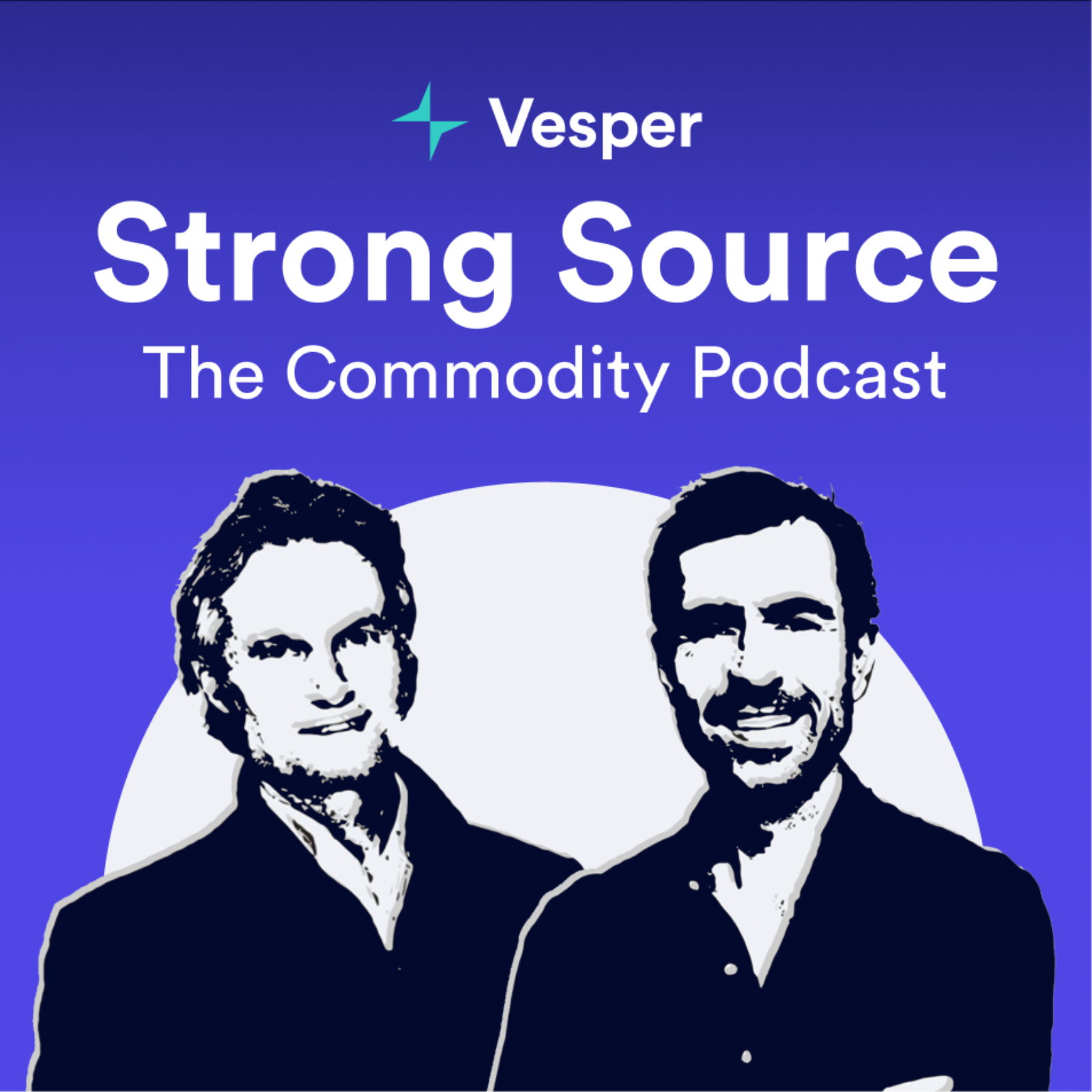
Jankees van de Wield’s career in commodities is a story of opportunity, resilience, and personal initiative. Starting as a 16-year-old dropout in a small Dutch suburb, he was given a chance by a local businessman to work in feed import trading. This early experience sparked a lifelong passion for commodities, where he learned to analyze markets, build commercial insight, and operate with hands-on experience. Over decades, he moved through key roles at major firms like ADM, Bungie, and EDNF Men, each time adapting to corporate changes and market challenges. His time at Boongi in Brazil was particularly impactful—there, he transformed a failing operation into a growth leader through transparency, strong leadership, and cultural alignment. He left ADM after being let go due to corporate restructuring, a pivotal moment that taught him the importance of speaking up and understanding corporate culture. Despite setbacks, he remained committed to building businesses, eventually joining a Brazilian grain company and becoming a board member of a Swiss trading firm. Van de Wield emphasizes that success in commodities comes not just from academic knowledge but from entrepreneurial spirit, personal conviction, and the ability to act decisively. He believes that companies should value diverse talents—both academically trained and self-taught—highlighting that real-world skills like communication, resilience, and team spirit are often more valuable than formal degrees. His journey underscores the importance of seizing opportunities, staying loyal to mentors, and building trust through integrity and action.
[muziek]
Goed weekend, van Amsterdam, van de Vespere Head office in de centrum van Amsterdam,
voor je hebt een andere strongsource, commodity podcast.
En ik ben heel excited about the guests that we have today,
Jankees van de Wield,
en ik ben door de profile van de beste boek van Commodatisch Trading,
dat ik op de World voor Saal heb.
Ik denk dat hij leert de World voor Saal uit.
Hij heeft een heel veel plezier.
Commodatisch trading en niet alleen trading,
maar ook een zinier.
In veel echte trading firms,
Among them ADM, Bangie, Volkafé, EDFman.
We hebben heel excited to have you in de podcast.
In de podcast, ik ga naar je historie over een heel langer koeien.
Welkom in de podcast.
En ik ben betekent dat veel mensen in de audience
heel excited to listen to you.
Ja.
Indeed, guys.
Oh, thank you, thank you for every need.
It's a pleasure.
I think you guys doing a great job
for putting Commodatisch,
specifically aggregate commodity world,
een beetje meer in de limelight,
uit de transjes en het is superimportant.
Thanks for having me, it's a pleasure.
I had one question for you.
I see that a lot of the people
within the commodities,
they stay long at the firm,
and you made some switches
from top company to top company to top company.
I'm not so interested about in the different cultures.
What was my most burning question was,
what was for you the reason to switch?
What was for you the moment that you said,
now I'm going to switch?
What was for you every time?
Was there something like a little fire,
a little spark that you said,
that's the reason why I want to switch to a new company?
Well, I'm delighted that you assumed it was my choice.
Actually, the switch from ADM to Bungie was not my choice.
It was the choice of the company.
Maybe we should start at the beginning
if it all might make more sense.
I didn't start.
My career was ADM.
I've been in commodities since I was at the right page
of 19 years old.
I'm slightly distinct from your usual guess
as to a matter of fact that I'm not an academic.
I'm an ice cold dropout.
I grew up in a little suburb bar in the right cold,
it's close to Rotterdam.
And my salvation for lack of better words
was really that I grew up in a great environment.
Unfortunately, at that age 16,
I had some, my father died very young.
I was a very rebellious and the authority person,
little kid, who preferred to spend his life
on the tennis courts and the hockey fields
rather than at school.
So really, I mean entering commodities
was not by design.
It was by fate and luck.
I mean, I did my military service.
When I came out of the service,
one of the people that lived in my street,
he said, "This is going nowhere with you."
And I said, "Yeah, you're probably right."
Or, "What do you suggest?"
He said, "Well, I have a company
that imports feedstuffs
for the compound feed industry."
"Why don't you come work for me
but you have to go work to school in the evenings?"
I mean, I'll never forget that man.
I mean, his name was Adi Clayon
and the company was called Clayon on Holst,
which was at that time
one of the four really significant
importing companies here at Granaria,
Schoulten, Clayon on Holst,
and there was a company called Adriaan
from the fallow.
So, no hindered by any knowledge,
I said, "What do you actually do?"
He said, "Well, we import serenio and tapioca."
And it's for the animal feed industry.
And I said, "Okay, when do I start?"
And he said, "What do you do tomorrow?"
I said, "Well, as you know, not much."
So, I still had a blazer
and a shirt and a tie.
So, I showed up the next day.
We didn't discuss salaries.
And I asked him after a week,
I said, "Are you actually paying me?"
He said, "Yeah, you're making 1500 golders a month."
I said, "Is that gross or net?"
He said, "Groes, of course."
So, that was it.
That's how I started.
And the goal of rule was,
I was sitting next to him,
listening in at his old headsets.
And he said, "You can say everything?"
Except for, "Yes, no, I'm booked."
That's how I really started my life.
And I'm eternally grateful for the man.
And so, the first, you know,
what do you do the first six months you listen in?
That company was significant,
because they had a turnover of about,
at that stage, 500 million golders.
Their strongholds were that the man himself,
Ari Clayon, was a fantastic trader.
They had silos in the south of Holland,
where we shipped barges
from Rotterdam to those silos
and trucked out to the compound industry.
And at that time,
the compound feed industry had,
there were like 200 independent compound factories.
Every village had a tennis club and a compound factory.
And I enjoyed it.
We didn't have royalties.
You know, we tried his Chicago.
We didn't have anything, right?
We, the commodities were traded
and guilded for 100 kilos.
That's how it was.
And I'm giving my,
oh, in my age here, right?
I'm 63 years old.
So, it's not that we were backwards
in the, like, Fred Flintstone,
but it wasn't there at that moment.
So, and then I enjoyed it.
I enjoyed the thrill.
I enjoyed getting calls from the bank
to dollars up or down.
And it turned out to be that,
you know, although, as I said,
my academic background was probably insufficient.
And right now, in this day and age,
I wouldn't even get past it from the door.
I had an ability at that stage.
I felt, and I guess they did, too,
because they start increasing my salary
and giving me more jobs.
Then I could connect the dots.
What is really relevant?
What inputs have a relevance?
And I could pick out from the phone calls
I was listening into.
What is significant?
What is insignificant?
So, took it from there.
And I was, I was there.
I was, I was loving it.
I, you know, I started to become an adult.
And so, I got my own client list
and started making calls.
And I got my own little commodity.
And I remember my first trade was
two trucks of molasses
from Peter Kremer to Copenhagen.
I'll never forget it.
That had such an impact on me.
That I rode out my first trade slip.
I mean, I tell all my friends.
And the beauty of that was all my friends
who did finish high school,
actually 90% of them
dropped out of university after one year
and started to be entered nurse.
So, we were edging each other wrong.
You know, we were comparing salaries.
We were comparing what is relevant.
What is, and we were super competitive.
We don't get me wrong.
We had a good amount of fun in the weekends.
So, we still kept playing tennis
and all these tournaments.
But to me, it was super relevant
to have a detective environment
where I grew up in.
I had great friends who were supportive
and I supported them.
And so, you go on and on and on.
And I did that.
I was there for three, four years.
And unfortunately,
the good man died over a heart attack.
And so, when I was 23,
I started to run his book.
And it's irresponsible in hindsight, of course.
But we were the extension of Unilever
at that time for domestic produce
soy amille in Holland.
Right at that time,
ADM purchased the mill
and the airport from Unilever,
which was at that stage
the largest crushing plant in the world.
So, you know, you could see things
becoming a little fragile.
Then he died.
I took over.
At first year was great second year.
I made some mistakes.
But for me,
the passion was gone with him gone, right?
And he had some directors
and they had some outside advisers.
And it was, I could see.
So, a good friend of mine
who was one of our leading brokers
called me up.
He said, "I want to leave the broken company.
Do you want to join me?
Do you know anybody who wants to join me?"
And I said, "Yeah, it's me."
So, actually, he became a broker
for soy amille
in a company that was called Brudelet.
And it was basically a partnership.
So, I joined him
and it was remarkable.
It was in one and a half year
we were one of the top soy amille brokers in Europe, right?
And we were making a lot of money
for that period.
And it was very unsatisfactory
because I can advise everybody
who wants to go in communities
be a broker for a year.
Because you get to know people.
You know, a broker is basically
a cash broker
if somebody was in the middle.
That is basically this recorded.
It's in a necessary evil at that time.
But you took it.
The money compensated for that.
And at that time, my fiance,
who later became my wife,
she visited us in the office.
And there were two burning moulders
at the estuary.
I was wearing shorts
and a T-shirt.
We heard that
Jean-Chillapfer was fashionable.
So, we bought two Jean-Chillas.
What we didn't
to breed in a big cage in the office.
What we didn't know,
we bought two males.
And you get to drift, right?
And it was like a little bit of
a mixture of Wall Street
and Wolf of Wall Street.
It's highly rewarding,
but greatly unsatisfactory.
And at that moment,
as I alluded to,
ADM had bought
new leaves factory
and played basically
at the start from school.
They didn't want, or you know these were people they didn't want to stay, or they didn't want you leave people, so they need it's merchandisers.
And they approached me and they made an offer to cut my salary in half and become a merchandiser working 14 hours a day.
And I initially said, "No, my partner at the time said, "Look here, you're going to kill yourself. You're a broker. You smoke, you're out entertaining clients."
And as a matter of fact, that was the stage where every month I wiped out one customer to trade with, because there was, they were going out of business, there was consolidation.
So companies like Crone and Bechtur, etc., which were huge names, they disappeared overnight, right?
So I called ADM back and I said, "Look, if the offer is still on the table, I'll come as a merchandiser."
So you know, and that's what I did, that's how I ended ADM. And my boss was a man called Wim Krunabong and he came from Bungie.
And there was my predecessor who then went over to manage the Rakesheed Factory in Skrik, was Hank Collins.
And most people were very important to me. You know, Wim was a, he became sort of my first mentor, how to do business.
He was an unbelievably hard-nosed trader, turned general manager, worked like a dog, knew the markets inside out, and he led my example, which was really important.
Now, of all my great mentors and leaders, I picked up the good things, but also realized they're not bad things, but like they're, since I would like to see different, right?
Hank Collins, who went over to manage Skrik, he was probably one of the most intelligent people I've ever worked with.
And he was there on hand to help me out. So we joined in to a commercial and I saw a meal, which was, it sounds. I don't know, I don't know how we did it.
Whatever, 5,000 tons of soya meal a day, we, we saw it, I would admire juice, but also trucks and everything.
And there was no team, we did it all, you know.
Well, I mean, we did it all by ourselves. We had to currency, we booked the freight, we had to write a trade in the book, and then later in the official book.
So you worked from seven to eight, and I've never been out here in my life, it was great.
You know, I worked there for, I did that job for two years, more or less, two and a half.
And it emerged, you know, win my boss, who was super busy managing speak, and he was managing another acquired plant in Eris, England, which was at that time, you know, times was before China, right?
China was an exporter, not an importer. The largest soft seed crushing plant, so, you know, he was buying memory of the beans, so he ended up buying beans.
And we had a great team of young Americans coming over from the Midwest, and it was a joy, but after two years,
somebody needed to manage the earth plant, which was a new acquisition, which was basically losing money at that time.
So logically, the first candidate was Hank, who ran the speak plant, but he had four kids, so he said, say no.
And they asked me, do you want that? And that was merchandiser to say, they called it merchandising manager.
So you're responsible for the commercial part, not the factory itself.
And I said, yeah, it's fine. When do I start? He said, well, tomorrow. So here we go.
Back up your stuff. I told my partner at the time, how do you like to go to England? She said, I just have a new job, and she was an academic, right?
She had a doctorate in statistics and mathematics. She had a great job. She said, well, let's do it.
We went, and my first managerial job was the Rape Seed Soft Sunflower Seed plant, and there is highly complex. On the river Thames, was it tidal, and it was basically chess.
The plant should have been built about 50 kilometers more north or south, but that place was horrible, but it was old.
I didn't even remember who was getting out of processing, really didn't invest in diamond it for the last five years, so it was really derelict.
But we made it work. It was, it was great. Great job. First time managing people, and responsible for the PNL.
And, you know, the engineering part was a huge, was a huge sector. So everybody who comes in ADM, first thing you have to do is walk in the plant, understand what is going on, really what drives it.
Because no matter how good a trade you are, if you have a half percent yield deficiency, you don't make money.
And that was ingrained in the company's culture. You have to understand the processing.
No matter how good a trade you are, or you get the market right, you give it all away in insufficient processing.
When I learned that, I still reported to WIM, my boss, who was very supportive, you know, told me to do your best, was great advice.
And we went there. And this was a time, you know, ADM, I don't know about Carville, but it was not a bonus culture, right?
You just worked hard. And at the end of the year, you get a salary increase of 5%, and if you didn't consistently well, you get a promotion.
It was great. I mean, I was totally happy with that. And everybody around me was totally happy with it.
Nobody, you know, nobody talked about boners or phantom shares or share options programs at that time.
It was just like you did well. You had a reasonable salary, and you get a promotion, and you get a salary increase.
And you could live very well of that. So that was it. I did that job for five years.
And that was long to come back to your job hopping comments, but that was five years there for ADM.
And we converted the plant from a crusher to a crusher refiner, later monitoring.
We took over one of our customers. We converted our customer into our partners.
And after five years, you know, basically, it became a little bit of a deja vu, you know, not many things happened for the first time anymore.
And ADM bought a plant in mines from the Wehran group, and they said, "Well, you want to go there?"
I said, "As what?" I said, "Well, then it's general manager."
Which is the other thing. And it's a smaller plant, right?
I mean, we crushed less soy beans than we crushed rapeseed, and everybody was thinking, "Why are you going there?"
But it was nice. It was, you know, mines not too far from Holland.
And it was a significant challenge because we had to basically let go 30% of the workforce in Taiwan, which was hard.
But I thought, "Okay, I have to do it myself. Otherwise, how do you establish credibility with the remaining people?"
We did that, and commercially became kind of a satellite of your report, because those markets were intertwined.
And so I could focus on more the general issues rather than the commercial issues still.
I think I'd be interested in it because they will never leave you.
And we did that, and we turned it into a profit center.
Specifically, it went very well. We also had a little bit of luck, because Napoleon said, "Give me a lucky general rather than a skillful one."
And I can, after 40 years in that business, the man was so right.
You know, I've seen brilliant people fail, and less brilliant people succeed just because of luck.
And the market was in a favor, and nobody questions profits, right?
That's a big problem of the commodity industry. Profession of question losses are debated at a long time.
So my factory suddenly became profitable. We increased our refining output.
And after one and a half years, the Indian bought Grace Coco.
Now, my time immediately is eyes light up, because that's where.
And so my old man, so we in Krunabon, was asked to lead the Coco plant, Grace Coco.
And so the new manager for the European, at that time, ADM controlled European business.
So while he was ADM controlled, because they all said, "The oil mill in Hamburg, which was 85% owned, and in lear, biodiesel factory, and we didn't manage that actively."
So my, it was asked to go back to Roland to run your reports. There's a general manager and then ERIS and mines.
So after one and a half years, we packed our bags again and went back to Holland for both a housing in Rotterdam, renovated it.
And I actually lived in that house for about two months, because, yeah, that's how it worked, right?
And you didn't, the funny thing is you never questioned that.
The loyalty to the company and to the people I worked with was so high. At that time, we had a new European president for ADM.
It was a guy called Paul Nohalom, ex-gargarial, ex-conty man, an American.
And he kind of, he kind of took me under his wings at that time.
So he's like really my second mentor and pushed me hard in developing myself, going back to the grease and, you know, go study more.
And don't rest on my laurels, just keep developing while at the same time still working 15 hours a day, very generous of him.
And he put me in that position of manager and later, after two months living in Holland, I decided to combine all the assets in Europe under one management.
And he elected that I should run that, which was a surprise to me because the man who ran Hamburg was an older man than me.
I was at that time, maybe about 35, 33 or something. But he decided I needed to run that.
And happily did that, thinking we set up our headquarters in Rotterdam, make a tax agreement, and some wise person in Topfer, which was 85% security set.
It's probably better if they sit in Hamburg, because that makes sense, right? So moved everything up, left our new house, moved to Hamburg, only to find out because of the ownership structure and the antitrust laws, we couldn't even talk to Topfer.
to cover. So we said in an.
next to their office builds really the European headquarters from scratch. And building something from
scratch becomes apparent when you actually find out that you want to dump your waste paper in a bin
and you don't have the bin. So you have to go out and we didn't have secretaries. We were four or
five people running the commercial side of the business. And so we did that, build it up.
It was successful. The integration also because the people in Hamburg were very receptive.
Usually I have to treat it with a little bit of care. I think we talk about to managing more
senior people, I mean in age, it was my first challenge of not being Dutch. And why do I say that?
Because being Dutch and I'll come back later to that, the Dutch have this image of being outspoken
and saying what they think, etc. Really, it doesn't work in the corporate world. And I found out
later the hard way because then I'll finally answer your question. So we ran that for two years
then Moholam went to the US to become president of the company, of the whole company, replacing
a guy called Joe McNamara. And he brought me to the US to run their US business, which was
completely out of my comfort zone. Because you certainly talk about other segments than just
buying, selling, producing, it's the carry, it's the US system. I ran that for two years.
I never felt really comfortable doing it. But I had a great team everywhere. I worked, by the way,
I should mention that we had fantastic people. So before going to the US, I always managed to cover
my deficiencies, which were many by having great people next to me or just below me. So that was,
for me, was fantastic to operate like that. The US was different. I was the first non-American
there really stuck out by accent language behavior. But I was in that office that, you know,
everybody always talked about, at the end of the huge trading floor, masses amount of people
with about eight glass offices on the site. And you really had arrived if you had one of these
glass offices at the site. And guess what? At this young age, they put me in one of those
glass offices. And I couldn't believe my luck at that time. And the floor is intimidating. But
what I learned in there is that the Americans were just so hospitable. Very senior people said,
you're not going to stay in a hotel in the first weeks. Come to my house. And when you're
then wife and daughter arrive, you buy a house, don't live in a hotel. So they took me in. I was
reporting to a man called Joe Cantor, who was in charge of the global processing. Marolam was
a president. He kept, you know, he made sure I was doing okay. And, you know, at the age of whatever
37, I felt like on top of the world. And I thought, this is the job for the rest of my life.
Now, every job I had in ADM, I would always have been happy if that would have been the job for
the rest of my life. Because of my background, I was feeling fortunate in every job I had. And I was
feeling proud that I was successful. But I never aspired or pushed. Now people that listened to
this probably think, now, yeah, bullshit. Now, I really believe that that was every job was going
to be my last job, my final job. And there wasn't a case. And then ADM changed management style. They
wanted to make a platform where Bill Cantor and Joe Rice became platform leaders. And they wanted
to make, they made me in charge of global processing. And really it was, it was great for me.
That was, you know, fantastic that I was recognized. I was fiercely loyal to, to Mo'Hollam.
People that became in that platform I felt they were not happy with being there because they,
they thought it was a layer of bureaucracy. And the most some co-soldants brought in and did
ask though, who do you think runs the company? I said, well, Mo'Hollam runs the company. He's a
president. What I didn't realize is that those co-solders were actually contracted by the
board to the CEO as a member of the board. So I didn't see that coming at all. And Mo'Hollam was,
was let go. I nobody understood why, but he was let go. And three months later, now I'm answering
your question. Three months later, I was let go. And until today, the reason was, yeah, the layers,
it's a try and a stooped debt. Until today, I still haven't got a clue. Why? Other than me being
outspoken, probably pointing out the wrong person leading the company, you know, at that time I was
reading a book by Jack Wells from the gut, which is all about honesty and saying what you think,
etc. I can advise anybody under the age of 40, don't read that book because you're not to be
positioned to speak from the gut in these corporations. People want to hear your opinion. They don't want to
hear what they do wrong. So I was, it was a brutal lesson here. I was sitting on top of the world
flying around in the corporate jets. And over from one day to the next two days before Christmas,
they say, well, you're not, you don't have a job anymore. And you believe it or not. And I know
most people in these podcasts talk about their self assurance and and successes. Until today,
twice a year, I have a dream about that or even a nightmare as you call it. It made a huge
impact on me. But as you on cloud said, every now, they'll have some for they'll, it also
will be valid up to down to the ground, right? Because I was told later by good friends, I was
becoming pretty arrogant and and pretty full of myself, which is kind of normal. I guess if you
know where I come from and what you achieved and the lifestyle you lead. But I have good friends
and colleagues that said, look here, you became insufferable, which is fine. I mean, it's great. I
and I realized it later. And then my, my then wife pointed out that they were all right. And I said,
okay, that's it. So now what? I love the cater. Nobody loves the cater. I love the cater. I went to
the gym at 4.30 in the morning, was in the office at 7. Left the office at 3. My daughter was 2.
I had a great life. So I thought I'm going to buy, I'm going to buy a company here and there
was not realistic. So I put out my feelers, you know, I didn't use headhunters. They were not
so not that much around at the time. And there were two companies that showed it interested in
contracting me. It was noble and, and I met both the CEOs, which was at the end. And both were
unbelievable charismatic people. The one job was in Brazil. The other one was in Hong Kong. So
neither of them are, and I picked Boongi because I knew most of the people there. So Boongi contracted
me to run the Brazilian business. And I was put there by white planes. It's significant because
you know, they really, you know, again, there I was the the old one out, right?
With that difference that most of the people did not or pretended not to speak English. So I went
to a monastery and learned Portuguese in two months and went to Brazil in Santa Catarina. It's
called, which is in the south. And I can tell you, it's, it's beautiful. You go from the cater
where you have days that you don't see the sun to Brazil, you know, lift, lift 10 minutes from
the beach. And the business was fascinating. There were 27% market share in Brazil. I came in
there with a background of processing, orientated efficiencies. And I could, I could make an impact.
Despite the fact that I didn't know Brazil that well, I mean, I, of course, I knew some of
Brazil. And got in there and worked for three and a half years as their Brazilian acc leader
reporting to a CEO. And everything was fine. It was great. The CEO of the Boongi there, Alberto
Weiser did an amazing job in basically turning Boongi around from an almost defunct,
disappearing B of ABCDs to the powerhouse, which is share priced at with over $100 that was
continuous growth. And I know for effect that was in ADM or Cordial St. Cargill,
everybody was scratching their head like, how does he do it? And how he did it was he was
transparent. He communicated actively with the investor bases banks. And, you know, and
in Boongi was a was a force, the record was, and the people there, because Boongi didn't have the
same culture as we could get back to culture later, maybe if we have time, but it was basically
a combination of people that used to work for Andre, Cargill, Conti, and some old Boongi
diehards, one or two that were still there. And it was probably a collection of achieved
compare with, I mean, I don't know, but he sends your men or something like that, or very
underneath. It was just like the best of the best, smartest people I've, I've seen in the industry
guy called Brian Zeckman, who's now back there, phenomenal brain, right? When you told him,
well, you made a joke to him like, why is the market up? And I do my famous story. There's more
buyers than sellers. He said, no, that's not the fact the buyers are more motivated than the seller.
You know, that kind of approach in the markets. And I learned so much there for my colleagues,
for my peers. Now, you know, I did three and a half years, four years. It was not easy here because
some of the resilience didn't really want me there, because I was sent there and didn't want me
there. I, at a certain moment, I went, went back to, to Alberto and I said, look, I gotta leave here
for multiple reasons. And I don't really want to go into why, but, and so they said, okay, finally,
you did a good job. So, offer you a job in Europe. And basically it was like an equivalent of
the mind's job, and I sit there. And I, at that time, I was the IMD in Los Angeles, let Bungie
sponsored. Yeah.
And that I can recommend to everybody at that age to build IMD and do the executive development
program.
And my head hundered called me and while I was there and he said, "Where are you?"
And I said, "You know them?
Well, I'm in Switzerland now, so."
And the Volka Faye job came up, which was, for me, a better alternative than staying
with Bungie.
I hated leaving Bungie, I must say, because I considered my colleagues in some of my
seniors' friends.
And I hated lying to them that I wasn't going to Germany.
I was going to leave the company, but I had to do it, right?
It was more lucrative.
My wife, at the time, who was German, had a preference to go to German-speaking area.
My daughter was five, six years old, and she was basically Brazilian, and I mean, she
was born in Hamburg, but she was Brazilian.
And I said, "Okay, we'll go, but this is going to be the last move we'll make as a family,
because it becomes. become having an impact on everybody."
So we went to Switzerland, to Volka Faye and winter tour, where I looked at winter tour
to live there, and forget it, and we lived close to Zurich, and ended the coffee business.
And now your question is probably, "What did you know about coffee?"
And it was absolutely zero.
Nothing.
I knew I drank it every day too much.
And later on, the students, you never say you drink too much.
So I ended the company.
As part of EDNF men, they bought it two years ago, more or less out of bankruptcy, but
still paid the FD price for it, and they had a group of people there working, and to
be honest, it was a disaster.
It was a disaster, I mean, they had. It was a challenge, but what I found there, if I hadn't made my wife and daughter the
promise, we'll never going to move again, I would have ran through the door after two
months.
And the CEO of EDNF men was a guy called Graf Elmgito at the time, and I said, "Why didn't
you tell me the state they were in?"
He said, "Would you have come?"
I said, "No."
He said, "That's it."
He said, "But figure it out, and fix it."
And I had a CFO at the time, the lady called, and I'm named because I want to honor these
people, right?
I mean, the lady called Jetteldeen Pico, which was probably the most driven person I'd ever
worked with, and her career and later, but Stella, she's now the CEO of SDS, and CEO, right?
I mean, it's phenomenal, and she was there already frustrated because she was left on
her own, and you know, a CFO alone cannot do it, by installing position limits, risk management
tools, position, really, position reports all that, and an Excel sheet.
So I came in, and I supported her, and she supported me, and everything the company needed
was just a change in personnel, and some senior people, maybe six, seven people, because they
had unbelievable knowledge.
They were still number two in volumes, and all the know-howers there in coffee.
And I will never, you know, I realized I will never learn what they have already forgotten.
I mean, it's unbelievable what they had in knowledge.
What they didn't have was the ability to turn it into money and self-believe, because
they were just beaten down by the results and the bad positions of one or two head road
traders.
I can say it now, it's, you know, I'm not covered by that end of the year anymore.
There's just road traders in Colombia, which left them as open positions, but think about
it, you know, they were number one supplier of Starbucks, Nestle and Espresso, et cetera,
and the best know-how, they're just going to convert it.
So it really took me, took me one and a half year to turn it around, and it's mainly
by putting discipline and changing people.
He had people in origin that were all Swiss, became localized, didn't work.
You need Brazilian companies to be, you know, run by a Brazilian or somebody that became
Brazilian or Honduras, et cetera.
He counts, run a company with expats.
And we did that.
It was a Hacurian task, I must say, but highly enjoyable.
We, I hear papers.
Okay.
And, you know, everything was, as I said, it's about creating self-belief, but also
if you're your banking system belief that you're on the right track and the results didn't
prove that initially, but so what we did, unusually, is we went public quite a bit.
We did interviews with leading magazines, et cetera, just to show the world that focafé
not only is still there, but we're back.
And inquisiting focafé is that, look, it didn't have been, there's a Schumer company that
has a molasses and a coffee division.
My goal is that, in two, three years' time, there's a coffee division, a coffee company
that trades on Schumer.
It was completely, you know, a more than at the time, but that's how it actually, unfortunately,
to say that after three years, I mean, coffee became the leading earner in the lead of
men.
And as things go, right, when people think you can do one trick, they think you can do
another.
We had a liquid product division, which had like a 50% market share, but for some reason
was not performing and the reason it was not performing was, they were diversified in
areas that they really didn't understand, like biodiesel.
Now, you probably know, Martin, you see more bankrupt biodiesel traders and con biodiesel
departments that brought down well-established companies, long bean oil, short palm oil and
all that and no correlation, whatever, to the gasoline market.
So they asked me if I wanted to take it over and took it over and it was very simple.
We put the number two in charge, which is a guy called Adi van der Speck, a fantastically
professional, a fantastic professional, and started developing a direct farm liquid mixing
business and basically got rid of everything else that was distracting.
And happy to say, liquid product division got a performing like clockwork, you know, hardly
used working capital, had fantastic results by far the best return on capital employed
and it was beautiful.
And I was very happy with doing that leading some myself to all the coffee, overseeing liquid
products and then they gave me research and then of course, EDNF man's CDO became chairman
and they started looking for a succession, Phil Howell became CEO and he what brought
me, he wanted to bring me over to run the shingle as well and everything on it like an
executive committee and I probably should have never done that really.
I mean, sugar was at that time, the problem was man is and I saw one of your questions
that I asked before is that, you know, what went wrong there, man was at that time basically
financing long term assets with short term capital, which goes very well if, you know,
if the overall result is good.
So I went to London, my family stayed in Switzerland because that's what I promised.
I rented a flat there next to the office.
I really never got sugar turned around, right?
You know, all the other departments continued to work like clockwork, research, we hired
some fantastic professionals and they're still there having a lot of exposure on Bloomberg,
Kona Haak, you probably heard of her.
From a quarry she came and it was phenomenal, very satisfactory, but I just, she where I
couldn't turn around.
It had assets in Mexico that were basically under water was a joint venture partner that
had no money and we had trading in London, but sugar trading was very hard at that time
and it continued losing money and overall, man also went into financial division, financial
product division and in fairness to the banks, we were poorly communicated how they was
done.
So the banks felt like, wait a minute, we're financing a commodity company and now they're
having a financial product division, which is might indirectly compete with us or maybe
they don't understand it and reality is they didn't.
So we had a massive fraud in metals, which cost the fortune, like we won't say how much,
but it was a distraction and at that time she was, so I'm cutting through for times
like, should a killing assured man just had to let me go because I ran responsible for
the commodities, right?
And there was a call from my boss, Phil, he was the CEO and he said, look, the board is
questioning if you can turn around and I said, well, the reality is I cannot turn sugar
around unless we take a hundred million right off, which the company couldn't have at
the moment, because at that time for, for governance reasons.
And so if that's the question, no, probably not, and I was at that time 55, and I was doing
with the idea of doing something else or retire, actually, I said, why don't we make this
easy for everybody, just make me a good deal and I go, and I went and that's it.
And that never holds me because I understood why they did that.
And later on they brought in, you know, other people and Chris LaHoney was on your, on
your program.
Yeah.
He became the, he became basically the factor in charge and I understood he did a fantastic
job there.
And after that, you know, I went and I walked the coming out of Constantinago as everybody
does.
He's a midlife crisis or a post midlife crisis and I changed my life completely after
that.
I worked for some hedge funds, first as an advisor, later as a partner in lending, which
was a non-starter.
The risk just outweighed the benefits.
And then there was another partner, we set up for private equity and we tried to set
up a Ukrainian business.
Enjoyed it.
One and a half year.
We learned a lot and I traded for the company for some of Ukrainian products until three
months ago.
I still did that.
exporting corn when missiles are flying over the silo and then I realized that all that is not
for me. I mean, they stole my, the private equity might still set up a Ukraine business,
but you know, the focus of private equity is first, let's calculate how we divide our own
profits and fees and, and rather than create the business. And it's not, it's not for me.
I hope they were successful. So here I am now. After a long story, I apologize for it. I'm a,
I'm a board member of a Austrian trading company called VA Intertrading. And I'm recently
took on the chairman of the board of a company called Sipal in the Brazilian grain company,
was about, you know, five, six million tons of predominantly Matembrosio export. And I really
enjoy those two functions. And they keep me busy enough not to be bored, but at the same time
after whatever 42 years, I also realized that being more disilluxually that I didn't have for one
time, right? So, yeah, that's, you know, in a, in a nutshell, well, big nutshell, but my career.
That was just an amazing drink. So I was just listening 45 minutes. I wrote the other things
out with you, Matem. Yeah, like, like I said, this is living the world for sale. And, and that's why,
you know, I, I was, um, carefully listening to you. And I'm, I'm 100% sure that the audience
will also do it like that. So I made a lot of notes. And I also think you made some really
interesting quotes that I'm going to use for, uh, for LinkedIn. And you said, uh, that my eyes were
lighting up when you were talking about ADM buying Grace Coco, but my, my eyes were lighting up
much earlier already, because, you know, I started my career in oilseeds processing.
ADM was one of my biggest competitors. I hanged on. It was, was, was one of them. And if I have to,
to, to recap your story and also give some advice to, to, to, to young people, what are the
expresses to me is that you have been someone who has been extremely entrepreneurial. And a lot of
young people, I believe they, they think, okay, you know what, I'm going to land in a traineeship
in a large corporate. And then I'm going to sit there for like 20 years and go up to the ranks.
And they are worried about work life balance. They want to live in a nice city. But if you look
at, at your career, you have lived everywhere. You've taken on all the opportunities that,
that were proposed to you. You've done things which you thought were not impossible.
Were, were, were impossible. You didn't have the academic background. You did it anyway.
I think that's a very good example, because we may have the tendency that commodity trading is
entering is large corporate career grind. But what you have done, you have built things. You have,
you have led things, you've changed things through market cycles, through corporate cycles. I think
that's, that's, that's a great example of how you can live a career rather than say consciously
build a career basis, the things that you think you have to do. You had no idea, but you performed
and, and that was the way you got all those opportunities and you, and you took them. I think
that's, that's, that's for me. If I look at what you've done, I think I thought while listening
to you, I should have had that approach more, because look, I, I stayed in that large corporate
for all those years. I did different things, but in hindsight, I think, you know, you are probably
a more exciting, interesting example then than what I've done staying all those years in one company.
But what I also, also a little bit, is what it feels that you had leaders around you and people,
managers, whatever. And they say, okay, young case, you're a great guy for the opportunity. Can you go
tomorrow? But nowadays, I have the feeling it's more about, okay, can we, we have a conversation with HR,
you have five conversations with the line managers, blah, blah, it's the right person. Okay, then,
then indeed, talk to your family, you want to go, can you go, what package are you going,
then your three months later and you maybe have a deal, yes or no? You just, you grabbed your
opportunities, right? And you know, my father always told me, like, recognize an opportunity when
passes by, and you did, right? And I think you can say a bit of luck here and there, but I think
you create these opportunities by being a person, by, by grabbing it and, and being who you are.
I think what is so nice about this is that it's not, you know, where we talked about a lot,
you know, about, you know, you and your young and, and, and the Tunisian side, but you came
in via a different angle. I really liked that part as well. And I think it's, it's, this is a story
for the books where you say, well, somebody in the street just grabbed you, gave you an opportunity,
put you next to him, you know, and you, and you honor that. And the loyalty that you have is also,
you know, it's, it's been very, very strong to, to these people around you over the years. I feel,
but also to your managers, the respect that you have for, for people in the industry, I think it's
that's really nice. It's a beautiful story. Yeah. Yeah. Well, it's, it's, thank you for that,
first of all, but, you know, it also, you can't do that alone, right? First of all, I always said,
yes, because I have this inherent insecurity of being, basically, this is the thing I do. So,
I better keep doing Excel. And you need a partner that, and a family that, that supports you in that,
right? But I totally agree is more time right now is the, you know, the, the work, life, balance,
and which I respect, right? Time's change. But sometimes I hear, you know, 25-year-olds,
20-year-olds talk about, you know, I'm thinking going 80% and I just cringe. It's probably also
better that I'm not there anymore to manage these people because I just couldn't accept it. I mean,
I was, I was, like I said, I was always grateful for the chances and also grateful for the people,
but I was fiercely loyal to them and I always kept in contact. And until I found out that it was
always me who called, right? So there was one of those people I mentioned in the call that I,
one day I called him on Christmas Eve from a Brazilian airport and I said, look, this is the last
time I'm going to call you. He said, why? He said, because it's always me who's calling. And I'm
grateful to you for all your guidance. But if you don't, if you're not the next person calling
me back to wish me a happy birthday, and I wish you now a happy Christmas, Merry Christmas. But if
you don't call me back, no, of course I'm going to call you back. You never call. And, and of
Kate, then I feel that I did my part, right? I mean, it's not like I'm blind love and loyal to
human. You got to stay, you got to work on that too from both sides to, you know, I made the guy
successful too. By, by firstly told me the tricks, then I executed the tricks, but you know,
because I did it well, he or she, you probably guess what I'm talking about, but it doesn't matter.
He also was allowed to move up or further. So it's, it's a double edge sword. So if you talk about
one of the things that you mentioned that wrote down, and I think it's a fun one for the, for the
industry, for the, for the listener, the, the rogue traders. Do you think that is actually still
possible to be rogue trade with all the limits that are now in companies and everything? Is that
still actually something, you know, case that you think is possible? No, absolutely. Yeah,
absolutely. And, you know, again, I listened sometimes, most of the times to your podcast and,
and Chris Mahoney made a great, great comment that I repeated a few times. He said, the best
risk policy is your people, a risk mitigate. And, and that resonated with me because he's right.
Right now, everybody that has a phone can do a rogue trade. You know, if he represents,
and he's paid, he's paid representative of company, he can buy yourself something and not put it
in the system. And you can have whatever, whatever systems you have, those people exist. And I
still see it to, to, to day that a, unfortunately, most of the time you find these things out with
people leave, right? Or I'll let go for another reason. But until today, I mean, there's absolutely
no protection against bad people. And I think, you know, I recently saw an interview with Warren
Buffett for some reason. They keep coming up his Instagram. He's talking about that, right?
When you cannot deal with bad people because they will always do something to screw you over.
And then, unfortunately, you know, it's, it's, look, systems, policies, they mitigate it a lot of
it by people saying, look, that, you know, you have limits, et cetera. But if you have a person
that is sitting there for personal glory rather than the great of good for the company,
you will damage your company. Now, totally right. And, you know, when I started, there was no
compliance. The word that exists. No. There was a long and short, yeah. And there were,
and there was a process. So we knew our positions. But, you know, the late 90s, early 2000s,
no one had heard about D var or stress, yeah, or working capital. You know, working capital
was a long issue. Look, indeed, indeed, where we worked at ADM and definitely at Cargill,
we never really thought about the need to discuss that except for, at some stage, later on,
metrics for return on, on capital. But it was never kind of a worry that we thought about working
capital as well. Can we buy something or, or not, right? But there was always, yeah, money was
was there but when we did have
compliance later on. And we had risk policies. You know, I thought these compliance people,
I said, look, I can have a chat now with someone in Nigeria, do a business, do not enter
it in the system. And I can decide to execute that trade, yes or no. No one knows that I
have done this. And so indeed, exactly as you said in Chris Mahoney, your culture is the
most important thing indeed to create an environment where you can call each other out and where
you can say on the desk, guys, is this the right thing to do? Also with deferred positions,
liquid exposures that you need to mark the mark, which you can mark the mark for a long
time before they become physical. Yeah. And one strike out and that you have an environment
where people know that if they do a trade and do not immediately enter it in the system,
but if someone sends a confirmation, it can be a broker, it can be a counterparty. And
you find out that they have done that. They're out. Right? So absolutely right. So these
rogue traders, exactly as you said, they are usually there for their for their bonus.
And they may leave when the bonus is in their bank account. And the position has never
been executed. And that's why at some stage, there were clawback clauses, a mile of people's
contract. So that if you turned out that you got your bonus, you left. And the position
that was marked the market for a long period of time pumping up your PNL wasn't justified,
you would have to pay your bonus back. Those are all things that are part of learning
by doing by corporations dealing with these type of people. Yeah, you're 100% right. And
you know, I mean, basically, Andre was brought down by one or two people, right? And he did
as well. He did as well. Absolutely right. And those people do show up at other companies.
And then you asked the question, how nervous do you hire this person or we can control?
We have controls and we can control in not not because those people have a mindset that
it's just yeah, it's more than like criminal. And you can't control yourself. And young
case, I have one important thing to refer to also for the audience of youngsters willing
to work, but maybe also for some, some people who work for a trading company and think about
attracting talent. Look, you said you were a high school dropout. And a lot of young people
nowadays wonder, okay, what is it? What is it need? What do I need in terms of education
and other things like coding or not coding to enter the commodities industry? And most
large corporations, they request a masters. And so people have graduated from university.
A bachelor is often not even sufficient. And if I then look at you, although you started
in a different era, people like you exist. And they may be much more capable of doing
all the things that you have described than someone who has a master's degree. So what
I figured out last year when I was visiting Trafigura, they have a graduate program, but
they also have another program. And that is what is called an apprentice program. And
what that is is they actively try to hire youngsters without a degree. So people from
the street, if you will, or from, you know, underprivileged backgrounds. And I find that
a very good approach that as a corporation, you say, well, okay, let's not only focus
on these more theoretically educated people and definitely also some of the silver spoon
people, but make sure that we also have access and give opportunity to people without a
network and without an education. And, you know, you are a great, so do you believe? So
and this is also then the criteria, okay, that look, if you look at, if you show that
you're academic, it shows that you can learn very well and that you can read the books
itself. But if you are a good trader, you need also different skills, right? The commercial
skills, the handy on the phone, understanding, reading people, etc. And that's not something
you can read from a book, I believe, right? So I think that the characters, like characteristics
like that. Yeah. But therefore, I think that sometimes people that may, maybe you can
even say is people that don't have all that academic or maybe better traders than other
way around. Also because, yeah, I look here. I mean, the fight, fight themselves. Nothing
you say is wrong, but in reality is, and it's, I got, if you allow me, I got a great
example for that, you know, while I was still at that, in Holland at that tennis club, right?
A father of a son, a kid came to me and he said, my kid wants to drop out of school. And
he, and now, you know, there was four or five years after I started working. And I said,
why? He said, well, he said, if you can do it, he, why can't I? And so I said, well,
send the kid to me. So the kid came to my house. And I said, you make a mistake. He said,
I was lucky with one man, not even recognizing my talent, basically feeling concerned about
my future. He gave me that opportunity. As far as I know, you don't have that. So finish
your, finish your school. And he finished his school and he did some studies. Three years
after that, he started working for me when I was at the age of them, but you're right. Realistically
is that if, if we're, the apprentice program is a typical Swiss thing, right?
When there's this, this you take into depending on the size of your company to what you do
and 15 apprentice, I think it's wonderful. I think it's wonderful. Not because it's a charitable
thing. It gives you access to the diversity of people. And I'm also mortgages against outsourcing
of functions within a company. If you outsource, you'll never have the person working in the mailroom
becoming the CEO as some of in the history happened, right? And if you outsource, you eliminate
those, those things. If you decentralize other functions, you'll never have that. You don't
get exposure to these people anymore. Now, there's a cost to it. I realized that, but I think
realistically, a daughter or a friend of mine realistically graduated from the 80s and Zurich,
which is one of the top universities and she was interviewing for a job. The first two interviews
were her AI. She never actually met in person. So the third interview, then she met a person.
Realistically, if you don't have the papers or the credentials, it's very hard to even get
in the door. And it's only worked with context or the apprentice program. I'm not saying academics
are ours. I'm not saying non-academics are better, but I believe that you need to have a
blend of the two in a company in its street fighters in its thinkers to put it in simplistic terms.
And I think that when I interviewed and I interviewed, I mean, like you guys probably,
mean more than I want to remember. And I always went for the EQ part, not the IQ part, because I knew
that if we were hiring a financial person, there were people in the company that knew more about
finances than I will ever learn. So I didn't focus on that. I just assumed financially it's
pretty sound. I focused on will this person fit into a company and is his last job or is it
his growth potential? And then funny laugh, I looked at sports on the back page of the resume,
you know, and I did Iron Man and Marathon, but also the level of team sports, right? If there
wasn't a guy who was proudly saying that he did an Iron two, Iron Man's and five Marathons,
nine out of ten, those people are not used to working a team because you need to be a selfish
person within your family or your friends, circle of friends to do an Iron Man because you have
no time for anything else. And I know that from experience, right? When I did one, okay,
I'm not less not carried away, I did half Iron Man because with 100 kilos it's kind of difficult,
but it takes a toll on your surroundings, on your friends, on your family, et cetera, because
all you do is work, train, sleep, eat, that's what you do. So you can, you can bet your
butts that if person says I did five Iron Man's most likely will not be a team player.
So it's a variety of things when I watch on interviewing people and I'm, you know, in all,
in all, in all, I don't know, it's not very often I was wronged. Iron Great People is a fantastic skill
for being a commodity trader and a business leader. It's crucial. I had a little laugh about your
broker story. I didn't know that you also were a broker, but the funny thing is I never forget
the first time I met a broker. Maybe you know, maybe you know them. So my, my boss was, was a little
balancer. And he was, yeah, I know, yeah, he was running a multi-seat factory commercially. And he's
now the CEO of Darren, Darren Howard. And he was, he was my manager and he was driving in Nissan Sunni.
And we were visiting mustard oil seats. Who had a BMW 7 series? Exactly. You know it. And we were,
we were, I thought him, we were arriving at the, at the restaurant and we were there. And I thought
hey, you know, we are Cargill. I'm with my, with my boss in his Nissan Sunni. And then most of
the arrived in this BMW 7 series. And the guy made a shit load of money. The guy made a shit load
of money. So, you know, sometimes you need you left about brokers, but you, you left, you left
to the bank. So yeah. But in the end of the day, you know, like I said, the money was fantastic.
But the international. Yeah, but the international. intellectual challenges very differently. And I also like to clarify for the for the audience,
you mentioned merchandising and merchant. That is something that people often do not understand.
There's nothing to do with the shirts of a sports team, merchandising like that, merchandising
in trading and that's something that is used in the ABCDs is trading around assets.
And that's correct. It's one of the most interesting things that I've learned from a young
age in Cargo. And so people often think trading is always the market going up or down,
looking at the screen, the rivetive trading, but merchandising is being responsible for a factory
that runs 24/7 or a combination of factories running 24/7. You are responsible for all the
physical stuff. So the raw material you buy, the products, the semi-finished products, they go out
of it 24/7, people in the factory, things that break down and around that, making money.
As a determining where you sit on the margin curve, trading physical and derivatives,
you call it connecting the dots, I was almost forgot, I almost forgot about ADM error and speak,
but now you said it, I go back to the late 90s because we were constantly talking about
what is ADM doing? What is Hank doing? Yeah, it was a chessboard. Yeah, it was absolutely fantastic.
And then we didn't understand how tuffer worked together with ADM. Now, by the way, also something
funny you said about ADM didn't have a bonus culture, but obviously we were always talking
about our big boss that was Randy McNagg about the bonuses they got at tuffer and ADM.
Now, you tell me they had a lot of bonus culture, right? Well, it took for my day of head,
I know they had, ADM didn't, and he was in ADM also at some eyebrows. We only 85% of the company,
and according to German law, you can't control. And there's a hundred crooks about the
wrote a book about that called "Werte für Falle". You might want to read it, it's quite interesting.
But the merchandising, you're absolutely right. I mean, it's trading, but it's much more than that,
right? You have a planning that you showed that your factory runs out of storage in four days,
and there's one rule the factory can never stop. And an factory never breaks down
where you haven't sold. The factory only breaks down where you're sold out. So it's. And it floats that, and you know, you have to maneuver logistics. And I think merchandising,
the phrase is much more accurate. I mean, trading people look think about screen trading,
or not even cash trading anymore, but merchandising is more complex. And like you said, how do you
get young people in it? I think that what you guys are doing is fundamental, right? Bringing it out of
the out of the trenches and bringing it to people's attention. And when I was. That is
easy to do to get out of the trenches. Well, I always use the example, right? When I was trading
soy beans and corn, and we were at a dinner party with some really, you know, some kinds of
interesting other times, you know, not so interesting people. They asked me, what do you do? And I said,
well, you know, we involved in soy beans. And they said, "Ah, interesting. I went to my wife,
and what do you do?" And as soon as I went to coffee, it was the question was like, "Oh, what is
the best coffee? What is it?" You know, soy beans and corn, all people related to is GMO.
"Oh, you're poisoning my kids." I said, "Well, you know, probably without those varieties,
the whole world will die of hunger, right? Without some modification." And yeah, then we,
by locally produced organic, yeah, you're about to 1% the world population actually can afford that.
So there's a lot of unknowns about our agricultural business, and you guys are doing a great job
of that. I think Kingsman is doing a great job in getting it out there. And I think we need to do
much more of it because it's the one crucial business. You see right now, it's the street of
Formos being closed, Dubai is out of fresh products in eight days. So it's crucial. Thank you.
One final thing. Because you made so many nice comments, which I think is also important for young
people already working in industry. You said profits are not questions, questioned, only losses are.
That's a very strong note down as well. Look, I have had several times that I received the P&L
with a large profit. And I said, this cannot be true. And the risk is, when you think,
it cannot be true, but you know, it's actually nice that the system spits it out or the finance
team spits it out. 99.9% of the times it bites you later on. If you know it cannot be true,
if the system produces that profit, you know, at some stage, you come with an with an unexplainable
loss later on, right? So profits are nice, but you need to be 100% sure where they come from.
And also, indeed, when you have these large illiquid positions that you need to mark the market,
who is doing it? Has someone challenged this person running the position? Right? So it's a great
thing. And obviously when losses are there, yeah, everyone is right on it because they want to
explain it. Is it real? Right? But the same approach that needs to be done towards the profits.
But what did you say it is another example of, again, learning by doing through market and P&L
cycles, right? 100% right. And, you know, the new accounting methodologies of bringing
in market to market has changed a little bit of that already. But I mean, to be honest,
and I'm not talking about a school year, the problems in Volkofe were in complex option strategies
in coffee premiums going far forward, which produced short-term results and long-term,
you know, problems. And, you know, there was nobody to claw it back from. So, you know,
profits are, you know, the people go from here out to zero and then, yeah, and then what,
you can fire them, but the company's sitting there as it was 100 million loss, right? So it's, yeah.
Well, I think it's always with these, and I think it's a really good one, but with the profits,
is you have to keep looking at your business even though you're making profits because
these same people and the same system and same processes can also create losses. Right? So,
is it, where is it coming from? I think is a very, very good question. And was it
sometimes luck of the market? Was it by great S&Ds? I don't know, right? Can be all kinds of things,
maybe great acquisition, but if you then not look at it for the different moments in markets and
different years, because we also knew from all the people that have been in our podcasts,
outperforming a market is impossible. And so I think it's, I think it's a really good one to close
this podcast with because we're far over the hour. And I think your intro was helping us with
that, but I love the intro. So I have no regret at all of that. So thank you so much for that,
your case. And your story, I think, is very inspirational for youngsters, but also I listened
like a brookie to it. So thank you so much for sharing this. Anytime guys enjoyed it. And like I
said, time is not a problem for me anymore. So happy to, happy to help you out. Thanks a lot,
okay. So I'll keep it all. Take care. Careful, bye bye. Thank you. Bye bye.
Podcast Summary
Key Points:
Jankees van de Wield started his career in commodities through a chance encounter with a local businessman, not by academic or planned design.
His early years at Clayon on Holst provided hands-on experience in trading, where he learned to identify relevant market signals and build commercial intuition.
He transitioned between companies due to evolving market dynamics and corporate decisions, not personal ambition—his moves were often driven by necessity and opportunity.
At ADM, he rose through the ranks, gaining deep operational knowledge and managing complex plants, while learning that processing efficiency is as important as market pricing.
His time at Boongi in Brazil was transformative, where he rebuilt a struggling business through transparency, strong leadership, and cultural alignment.
He left ADM after being let go due to corporate restructuring and outspokenness, which later became a defining lesson in corporate culture and self-awareness.
His career reflects a deep belief in entrepreneurial spirit, personal initiative, and seizing opportunities over following a traditional corporate ladder.
He advocates for inclusive hiring—valuing practical experience and character over academic credentials—and emphasizes team dynamics, resilience, and trust in leadership.
Summary:
Jankees van de Wield’s career in commodities is a story of opportunity, resilience, and personal initiative. Starting as a 16-year-old dropout in a small Dutch suburb, he was given a chance by a local businessman to work in feed import trading. This early experience sparked a lifelong passion for commodities, where he learned to analyze markets, build commercial insight, and operate with hands-on experience.
Over decades, he moved through key roles at major firms like ADM, Bungie, and EDNF Men, each time adapting to corporate changes and market challenges. His time at Boongi in Brazil was particularly impactful—there, he transformed a failing operation into a growth leader through transparency, strong leadership, and cultural alignment. He left ADM after being let go due to corporate restructuring, a pivotal moment that taught him the importance of speaking up and understanding corporate culture.
Despite setbacks, he remained committed to building businesses, eventually joining a Brazilian grain company and becoming a board member of a Swiss trading firm. Van de Wield emphasizes that success in commodities comes not just from academic knowledge but from entrepreneurial spirit, personal conviction, and the ability to act decisively. He believes that companies should value diverse talents—both academically trained and self-taught—highlighting that real-world skills like communication, resilience, and team spirit are often more valuable than formal degrees.
His journey underscores the importance of seizing opportunities, staying loyal to mentors, and building trust through integrity and action.
FAQs
Ik verliet bedrijven omdat ik nieuwe uitdagingen wilde en omdat ik mijn ontwikkeling wilde voortzetten. Ik ben altijd op zoek naar leidinggevende ervaringen en concurrentie in de markt.
Ik had geen vastgelegde motivatie, maar ik had een sterke behoefte aan groei en uitdaging. Elk verlies was een gevolg van een verandering in de markt of een nieuwe kans voor ontwikkeling.
Mijn eerste werkplek was een klein importbedrijf waar ik bij een man in de vijfentwintigjarige leeftijd begon. Ik ontdekte het waarde van marktverkeer en begon zelf te handelen.
Een man uit mijn wijk, Adi Clayon, gaf me de kans om te beginnen bij zijn bedrijf. Hij zei dat ik een boodschap kon geven en ik begon met een salaris van 1500 gulden per maand.
Ja, het was essentieel. Ik heb altijd een sterke loyaleheid gehad naar mijn collega’s en leiders, en ik ben blijven in contact met hen, zelfs als ik naar een nieuw bedrijf ging.
Rogue traders blijven mogelijk omdat mensen persoonlijke beloning zoeken en de systemen kunnen omzeilen. De mensen die dit doen, doen het vaak voor hun eigen voordelen en niet voor het bedrijf.
Chat with AI
Loading...
Pro features
Go deeper with this episode
Unlock creator-grade tools that turn any transcript into show notes and subtitle files.
 PodcastTranscript AI