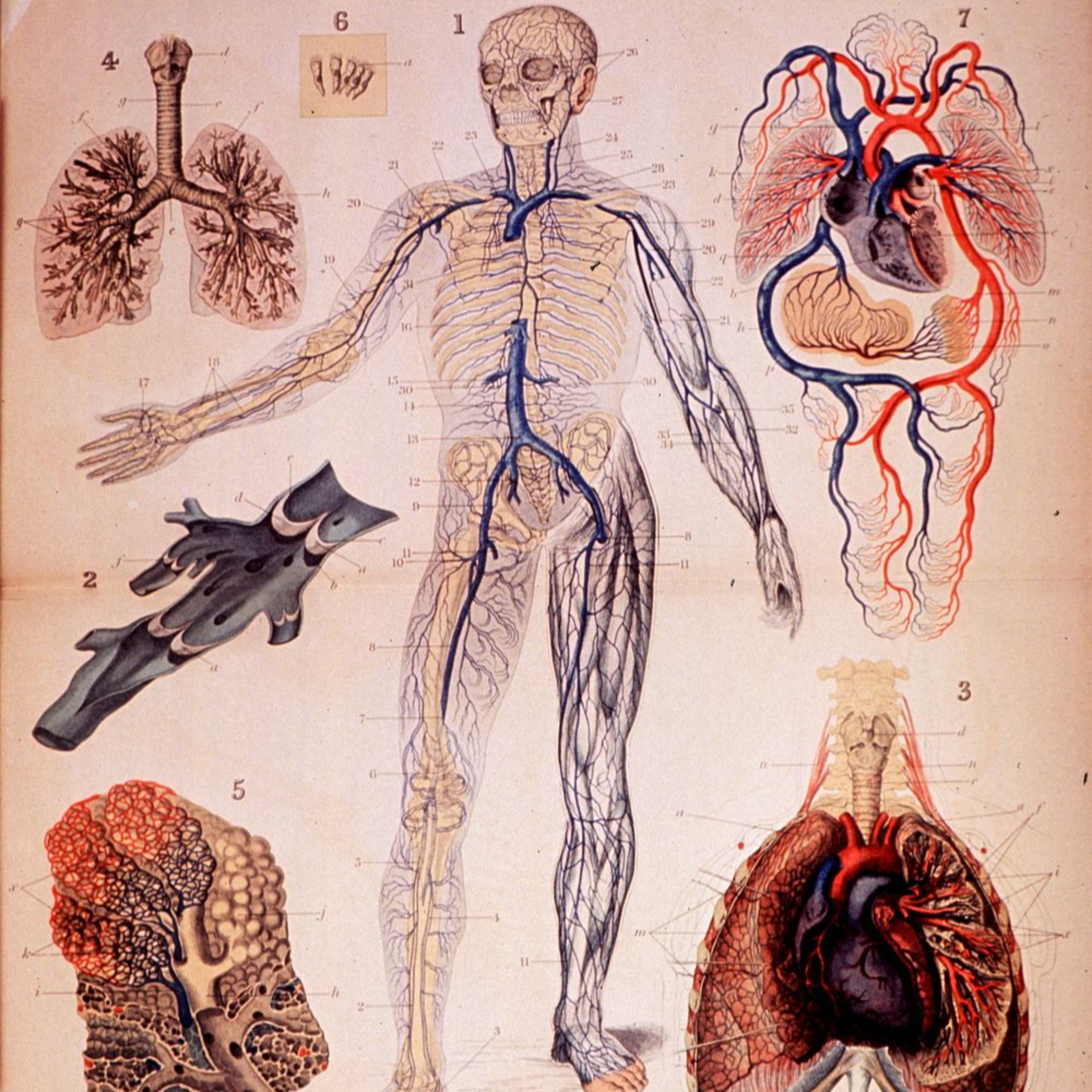
In episode 32 of Pulse of Physiology, Dr. Jim Davis introduces the cardiovascular system, emphasizing its crucial functions in delivering oxygen, nutrients, and hormones while removing waste products. The system comprises the heart, blood vessels, and blood, with the heart acting as two pumps for different circulatory circuits. Blood vessels, including arteries, capillaries, and veins, create a closed-loop system for efficient circulation. Blood serves as a transport medium, carrying essential substances and playing a role in immune function and homeostasis. The cardiac cycle, involving systole and diastole, ensures continuous circulation of oxygen and nutrients to tissues. This episode sets a foundation for understanding the cardiovascular system, with a promise to delve into blood composition and physiology in the next episode.
Transcription
819 Words, 5436 Characters
Welcome to episode 32 of Pulse of Physiology.
I'm your host, Dr. Jim Davis, and today we're beginning our exploration of the cardiovascular
system.
This episode will focus on the functions of the cardiovascular system, including its
role in transporting essential substances, maintaining circulation, and supporting homeostasis.
In our next episode, we'll shift our attention to blood, discussing its composition and functions,
but for now let's start by understanding why the cardiovascular system is vital to life.
At its core, the cardiovascular system is a transportation system responsible for delivering
oxygen, nutrients, and hormones to tissues while removing carbon dioxide and metabolic
waste products.
Without an efficient cardiovascular system, cells wouldn't receive the materials needed
to function, nor would they be able to eliminate harmful byproducts.
The cardiovascular system is composed of three main components, the heart, blood vessels,
and blood.
Each component plays a unique but interdependent role in maintaining circulation and ensuring
that tissues receive what they need.
The heart is a muscular organ about the size of a fist and it serves as a central pump
of the cardiovascular system.
At rest, the heart pumps approximately 5 liters of blood per minute, which is a little
over a gallon, but during maximal exercise, this volume can increase to 20 to 25 liters
per minute, which is closer to 6 gallons.
This ensures that active muscles receive the oxygen and nutrients required for energy production.
The heart functions as two separate pumps, each responsible for a different circulatory
circuit.
The right side of the heart pumps blood through the pulmonary circuit, sending oxygen-poor
blood to the lungs where it picks up oxygen and releases carbon dioxide.
The left side of the heart pumps oxygen-rich blood through the systemic circuit, delivering
oxygen and nutrients to the rest of the body.
Each side of the heart consists of two chambers, an atrium, which receives blood, and a ventricle,
which pumps blood forward.
The coordinated contraction of these chambers creates a one-way pressure gradient, which
ensures that blood flows in the correct direction through the cardiovascular system.
However, the heart alone isn't enough to deliver blood throughout the body.
It needs a network of blood vessels to distribute blood efficiently.
The human body contains approximately 70,000 miles of blood vessels, which form a continuous
circuit that allows for circulation.
There are three main types of blood vessels, arteries, which carry blood away from the
heart to the tissues.
These vessels have thick, muscular walls designed to withstand high pressure.
Next are capillaries.
These serve as the exchange sites between blood and tissues.
Their thin walls allow for the diffusion of oxygen, nutrients, and waste products.
Finally, there are the veins.
These are the vessels that return blood back to the heart.
Unlike arteries, veins contain valves that prevent blood from flowing backward, which
helps it move efficiently against gravity.
Together, these vessels create a closed-loop system that ensures blood reaches every part
of your body.
The third major component of the cardiovascular system is blood, which acts as a transport
medium, carrying oxygen, nutrients, and waste products throughout the body.
The typical adult has approximately 5 liters of blood composed of two primary components.
There is the plasma, which is the liquid portion of blood, and carries dissolved substances
like glucose, hormones, and proteins.
Then there are the formed elements.
This includes red blood cells which transport oxygen, white blood cells which support immune
function, and platelets which assist in blood clotting.
Blood's role extends beyond transportation.
It also helps regulate body temperature, pH, and immune responses.
The cardiac cycle refers to the series of events that occur in a single heartbeat, including
periods of contraction, also known as systole, and relaxation, also known as diastole.
During systole, the heart contracts which pushes blood out of the ventricles and into the circulation.
And diastole, the heart relaxes and allows the chambers to refill with blood.
This cycle repeats continuously to ensure an uninterrupted supply of oxygen and nutrients
to tissues.
So let's summarize with five key takeaways.
The cardiovascular system serves as a transportation system, delivering oxygen, nutrients, and
hormones while removing waste products.
The heart functions as two separate pumps, circulating blood through the pulmonary and
systemic circuits.
Blood vessels provide the pathways for circulation with arteries, capillaries, and veins working
together to move blood throughout the body.
Blood serves as the transport medium, carrying essential substances in playing a role in
immune function and homeostasis.
The cardiac cycle consists of systole or contraction, and diastole, or relaxation, ensuring continuous
circulation.
And so that's it for episode 32 of Pulse of Physiology.
I hope this episode has provided you a foundation for understanding the essential functions of
the cardiovascular system.
Join me next time for episode 33, where we'll focus on blood, including its composition and
critical roles in physiology.
Until then, keep questioning, keep exploring, and stay curious.
Podcast Summary
Key Points:
The cardiovascular system delivers essential substances, maintains circulation, and supports homeostasis.
Components of the cardiovascular system include the heart, blood vessels, and blood.
The heart functions as two pumps for the pulmonary and systemic circuits.
Blood vessels include arteries, capillaries, and veins, working together to circulate blood.
Blood carries oxygen, nutrients, and waste products, aiding in immune function and homeostasis.
Summary:
In episode 32 of Pulse of Physiology, Dr. Jim Davis introduces the cardiovascular system, emphasizing its crucial functions in delivering oxygen, nutrients, and hormones while removing waste products. The system comprises the heart, blood vessels, and blood, with the heart acting as two pumps for different circulatory circuits.
Blood vessels, including arteries, capillaries, and veins, create a closed-loop system for efficient circulation. Blood serves as a transport medium, carrying essential substances and playing a role in immune function and homeostasis. The cardiac cycle, involving systole and diastole, ensures continuous circulation of oxygen and nutrients to tissues.
This episode sets a foundation for understanding the cardiovascular system, with a promise to delve into blood composition and physiology in the next episode.
FAQs
The cardiovascular system is a transportation system responsible for delivering oxygen, nutrients, and hormones to tissues while removing waste products.
The cardiovascular system consists of the heart, blood vessels, and blood.
The heart serves as a central pump, circulating blood through the pulmonary and systemic circuits.
The main types of blood vessels are arteries, capillaries, and veins, each playing a unique role in circulation.
Blood acts as a transport medium, carrying essential substances, supporting immune function, and maintaining homeostasis.
The cardiac cycle includes systole (contraction) and diastole (relaxation), ensuring continuous circulation of blood.
Chat with AI
Loading...
Pro features
Go deeper with this episode
Unlock creator-grade tools that turn any transcript into show notes and subtitle files.
 PodcastTranscript AI