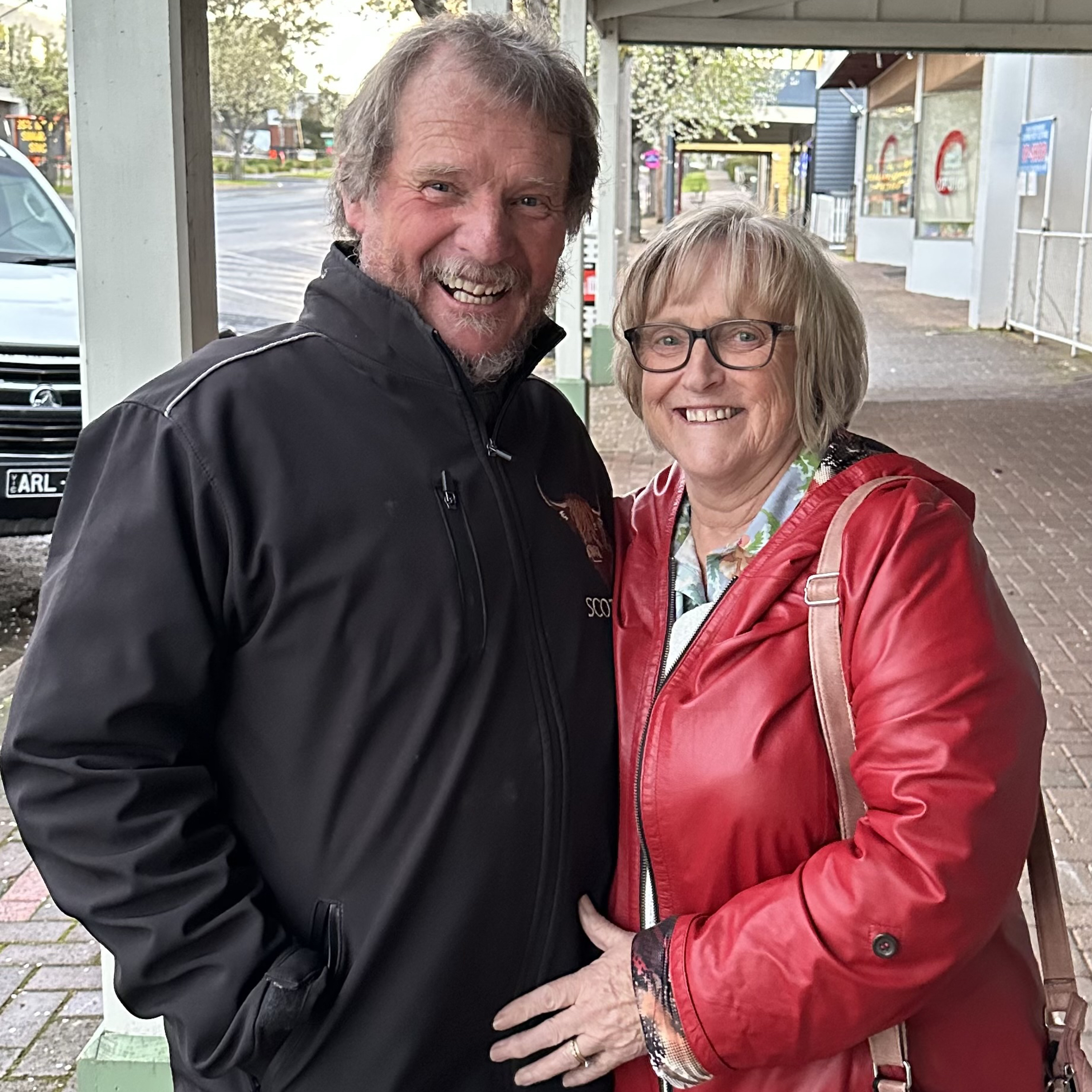
Chris Hutchins discusses his longstanding ties to Casterton, beginning with playing cricket for United in the late 1960s and later driving a school bus into the town for over two decades. He shares details of his upbringing in Coleraine, where he and his twin brother enjoyed an active, TV-free childhood filled with informal cricket and football, and recalls his father building the family home. After finishing school, Hutchins started working at Telstra in Hamilton following a fortuitous meeting, then became a bus driver after being made redundant. He met his wife Kate through rope quoits and they have a family. A significant portion of the conversation focuses on his cricket career, including playing in Casterton, the folding of the Coleraine cricket association, and later helping form a new Coleraine team. He also mentions a refused clearance when he sought to play for a turf-wicket club to improve his game, highlighting his dedication to local sport.
[Music] Hello and welcome to Casted & Connections. An initiative of Hands Up Casted & where a group of enthusiastic locals have come together to capture, preserve and share stories of people who have a connection to Casted & Stumps, Sun and Saturday skies, Crigot has shaped a lifetime's ties. Whether on Willow, the battle begins, plenty of cricket of losses and wins. For Chris Hutchins, the fields he stage, a story of Crigot across every age. Thanks for tuning into another episode of Casted & Connections. Today I'll start with a little bit of a disclaimer that maybe people could argue that the connection to Casted might be that great being that this person doesn't live here but I'm sure as the episode unfolds, one, to understand that he has got quite a connection to Casted & Chris Hutchins. Thanks so much for joining us. Now, Arice, thanks for having me, okay? No, please don't. So just on that point mate, how would you describe that you are connected to Casted &? Well, about not early, now late 60s, I started playing Crigot over in Casted & with Yonod and then mid 90s, I started to drive a school bus daily in and out of Casted & from Marino and did that till about 2020, was it? I think so, yeah. Yeah, so I spent a lot of time over this way and in the general vicinity and area and that's how we've become to meet each other, with me a little 13-year-old boy jumper on the bus for the first time and yeah, obviously our relationship has grown ever since. So where do you live and what did you do before becoming a bus driver? I live in Colrain, have all my life and met and married Kate and so we're both there, we've had our family. For the first 20 ideas, I worked for Telstra in Hamilton in the office and was made redundant there about 92-93 and then after a couple years I was offered a bus driving job from Marino, out through Tahara to Hedi, patient, oh patient, Al Hedi and then into Casted & so I did that for almost 20 odd years, I'd say it was. So you mentioned your lovely wife Kate and she's in present company at the moment, so make sure you're on your best behaviour but where did you meet Kate and how did I guess you become to be married and have a beautiful family? Well I wasn't allowed to play sport during the school week while I was at school, we had no TV and once I finished work I started to play coids, rope coids, have you heard of that Kate? I do know rope coids, yes. And it was there that we met, wasn't it Katie? Yeah and then yeah after about 10 years we got married. Fantastic great story and you've got a few kids. Yeah I'm he's the oldest Benjamin and then Ebony and now we've got grandchildren, about seven. Oh yeah good. Best thing about the image you can give him back is what I hear. Yes, that's definite. So we might just touch on your mention about not being able to play sport during the week. So did you think that well at that point in time, did you think your parents were being unfair with your friends playing sport at that time or what was sort of the dynamic around that? Mum and Dad's idea was that you get a good education, they said to us that they were paying extra money to send us to Monovay and therefore we didn't have a TV in the house. So I think it was about three months before I finished year 12 that the first TV came into the house. Yeah. And so we, then once I started work, I bought, I was one of the first to buy a colour TV in colour. True story. So we went from black and white to colour, been in six months. There you go. Yeah, yeah. So that was that was good. So how did you pass the time like during the week, a lot of study or did you spend time outside? What did the week look like? When we came home from school, we had a few jobs to do but there was kids out around what we call a block, which is around the show ground area as you go into Colour Ain't from Caston. Yeah. The kit, we had a roadway up over the hill into the back of the footy ground there. So it was cricket there for eight or nine months of the year and then football for three or four months of the year. Yep. So when you say you didn't play sport, it was an organised sport, but you're always outside kicking about and playing with around rocks and whatever else. We were fortunate that we had a just, well we called it a turf wicked but it was just dirt on the roadway. Quite a number of broken windows. The house that Dad built was cement sheet paneling so there was quite a number of them broken and the twin brother and I carried, we left handed. Yep. Because if we were right handed we hit the ball into the house. So we batted left handed so we could belt it across the road into the paddock. Makes sense. It explains a lot actually watching your cricket journey over the years. So my dad was actually a very good cricketer. He was right handed. So perhaps we mirrored him as a left handed to right handed but down the track it was because we used to hit the ball into the house. Yeah fair enough. So your dad built the house that you grew up in. Yes. How did it start off? Is it one bedroom sort of thing that gets extended on week by or year by year or? No. He built a laundry. Well what became the laundry was just a kitchen, a toilet, a bit of a shower and a bedroom and then he built the house over the next few years. He was a painter by trade and worked in with builders so he learnt the building capabilities that way. And then when the twin brother, they had two children my eldest brother and sister they are inside the house and then when Kerry and I the twins come along he built a verandering out the back with three beds in it and a sewing room for mum and yeah that was the house. Oh well. Amazing development really yeah. I'll tell you a little story. Dad built everything on the house. His brother was the selector for the football team, you know, main selector or big selector. And he come to dad one day and said listen can you come and play football for us and dad said no I've got to put the spell on the south side of the house Uncle Jack was a plumber and said to him you play food for me on Saturday and I'll put the spout for you on Friday. So Uncle Jack put the spout on. Dad went and played football. Mum was in the hospital with my sister just been born and dad broke his ankle playing football. Oh no. So the spout was instead of running from the front of the house to the back of the house the water run the other way and the spout rusted out pretty quick. Dad had to hobble home on crutches with mum and a new baby daughter in the prayer and he said well if that's the football club I'm not playing now now. He never did it. So just an interesting little yeah that's a great story and you were where the old hospital was in Kaurin. Yep. Well they had to walk from up there home. It should fare hike. Out to the Kaurin showground area. Yeah so he wasn't happy. I can imagine. I can imagine. So you siblings mate so obviously touched on that you've got a twin but you've also got some other siblings would you say that you and Kerry were the closest out of siblings or did you just beaker and fight what did that dynamic of the kids look like. The oldest brother is six years older than us so he taught us a lot to play cricket and foodie and probably some bad habits other than my sister, Danette. I think there's four years that is 13 months between him. So we sort of closer to her because she was a real longer but to twin brother and I yeah we had a fight so things like that but we always had it make to play with and being the two of us that attracted a lot of the local kids to come out and play with us as well. So after our after school we probably have eight to ten to twelve kids kicking the foodie up and down the road or playing cricket with us. So we were we were never lacked in having friends around but we always had that mate behind us. Someone covering you back. Yeah and some of those kids that kicked around with them and had a bit of fun with you still are you still friendly with them now. Yeah Wayne Rigby as an example. Ian Bryan and Bobby Atchison. A lot of the others have sort of passed on over the years and all moved away so and then there was a lot of town kids who'd come out so yeah but the ones are re under block. So it's stuck really close. Yeah yeah yeah yeah yeah. Oh as you're getting on then mate obviously you mentioned like Kerry got your back. He's just together thickens thickens these growing up and I guess take us into the early school years. What do you remember from those times? Yeah we're all always together and if you've one got into a fight we'll lose too. And yeah we looked after each other and it was good. Yeah you always had you had someone there. And did you go to school in Corane? Yeah we went to St. Joe's. Well yeah St. Joe's and then off to Monoay. So both primary school and and at the secondary college what sort of scholar were you? Average. Yep. My older brother he skipped grades all the way through. He was first year he did Metric. He was too young to go off to university. All right. So he repeated. Yep. My sister came to the casted and to the college at the girls' school up here and she was as broad. Now I'm between her and her told her we had to split their brains in half. That was how excuse me. One you still stick with today? Correct. Yeah so yeah no we I suppose really if we had a concentrated bit more we probably would have done a bit better but you know when we're at Monoay they used to say to us you're not as smart as your brother and you didn't play football or cricket like your brother because he was over there all the time. The more they said that to us the more we re-builder gassed it. So I never played much more of Monoay until I did year 12. Yeah. And then they sort of said why didn't you play earlier? I said because you used to ridicule. I used to I'm not as good as me brother. Yeah and yeah so that was that was it yeah yeah and ended up getting through and passing you 12. Yes. Yeah. Took me two occasions and I got through. Yeah. Yeah so yeah you got through and enjoyed it. Went into Telstra then. Yeah. I came over to Castan and worked at the post office here for six weeks. Yeah it's about six weeks. And was Greg the postmaster then or someone else? Peter Gullamon. Oh right there you go. I delivered a letter or telegram into the post into Peter's room and while I was in there there was this bloke sitting there and as I was leaving Peter said to him that bloke's got HSC. Which stands for what sorry? High school certificate or matriculation. Yeah okay. One of those things there. And he finishes up here on Friday and about eleven o'clock I had to deliver a telegram. I went out to get the bokeh out and this bloke had parked across the door of the I couldn't get the bokeh out. So I had to go back in and look for him and he came down from the exchange. Yeah. Used to be the telephone exchange upstairs. And he said to me, "You finish up here Friday?" I said yes. Well he said, "How'd you like to come and work for me?" I said, "Oh that'd be good. When can I start?" And he said Monday. I said, "Who are you?" And he said, "I'm Pat Cassidy, the district telephone manager." "Where's your office?" He said, "84 Friend Street in Hamilton." All right. He said just before you go he said, "I'd better give you a bit of a test." He said, "Can you spell?" I said yes. He said, "Well you're going to be doing a telephone area. You're going to have to deal with telephone exchanges." I said, "Yeah, I fear that." He said, "Spell Terry, you can." So he spelled it for him. And then he said, "What about Connie Wierry-Cator?" I said, "Yeah, that's okay." I spelled it. "Conon were tall." So I spelled it. And the last one he goes, "Gringey-Gel-Gena." I said, "GRO and GE, but we don't spell the rest of it." It's just known as Gringey, not Gringey-Gel-Gena. He said, "I fear enough." He said, "I'll see you Monday morning, 830." What do you think he was trying to achieve? Well, to see whether you know the area or. No, because you were dealing with exchanges, I think he just checking to see whether I could spell or reason how to spell. I don't think I could spell some of those words now. I can't. But the thing was, on Saturday nights, they used to have a nightboy in the exchange. And we used to go in there, not supposed to, we used to go in there and you'd see the words up on the exchange board. And also, I used to really do holiday, school holidays at the delivery boy in Colerade. So, you did learn the areas and also the names, you know, had it spell places and things like that. So, it was handy. He asked the right questions, or the right places. Oh, you had the right answers. Well, what about a start? So, just quickly back on the schooling, how to mention that maybe you want the best students. So, from a disciplinary point of view, what did that look like back when you were at school? Did you ever see a strap or anything like that? Only once or twice. No. In Forms 1 and 2 at Monoay, there was a, see you could get the most strikes. Strap, yeah. And for a long time, there was four or five of us well in the lead, but towards the end of the year, the hands got a bit tender. So, we gave up on that one, but you caught the strap pretty much right through to Form 4 and deserved it probably. On occasions, but, you know, I reckon I was hard done by - No doubt. No doubt. There were some protected species amongst the boys we call them borders. And if you sort of stood on their toes some of the priest would hit the day boys here. Yeah, okay. Yeah. All right. So you've started your first job and you're playing some sport. So are you still living in Colrain and playing footy and cricket for Colrain or? No. I said earlier I started cricket here. Eight sixties. Yeah. I reckon it was about four or five years. I played with United. So that was your first time playing competitive cricket was four United. The years before coming over here Colrain had its own cricket association. Yep. And dad had his own team. And from about six or seven years of age, dad always ensured that we took whites, runners and our cricket gear. We'd play along the fence lines and things like that and we got to sub the field. So we'd been doing that all the way through. Yep. What was your dad's cricket team called? The Oxidentals. The Oxidentals. Yeah. Right. There used to be the Oxidentals which is the West. Yeah. Orientals which is the East United. Colts. About four teams that I can remember in Colrain. There were others and then you had outlying areas. Ballacol which is as you go from casting the Colrain you'll see Ballacol road. It's up there somewhere. We're Tongvale which is out the Grinchie Road. Yep. Had Melva Forest. I think there was Tarrinley, Marino, Coney Wiery-K, Pigeon Ponds, Balmara, Grinchie, Melva Forest. There sort of teams that I can remember. There were probably others. Yeah. But yeah, no dad. I guess it's the show that how things have changed isn't it. I guess a lot of soldier settles is probably around at that time and yeah, I think anything to do like yeah and think now like yeah there's no any of that. I mean the team so not as many people I suppose. There was usually the fathers and then the kids coming through. And a lot of the families sort of dads age you'd probably have well dad had ten brothers and sisters. Yeah. Yeah. And listening and going to the grounds with dad you know they'd be three or four or three or four Grinch at Pigeon Ponds. Yeah. There still is. Yeah. Yeah. Yeah. Different their cousins there. Where as they were actually brothers probably. And the same at Grinchie or Balmara Coney Wiery-K, Marino. There were emidants over at Marino. Yeah. Probably three or four or five over them. So that yeah that's how many emidants are in Cas and Marino now. Not as many as they would have been ones upon a time that's for sure. Yeah. Yeah. Yeah. Yeah. To me that was a stand-out sporting name. Yeah. Just but there's I can't think of their names over there now. Yeah. Yeah. Sorry I got off track a little bit so at United. So in the in the 60s so you're playing and seeing you cricket here if you know what it is in the casted and comp. Yes. Yeah. Yep. Who are some of the players that you're remebered playing with or against? Yeah. Both good bad or other wars. Well at United at the time Billy May. Yep. Played in the 69 Premiership Sly for Castedon. cricket. Ah, Fuddy. Yeah. Billy May. Billy Hargraves. I think he might have been married to a girl from up on the hill there. Anyway I can't think of the family name now. Billy May. Billy Hargraves. Billy Davis from out Carapookway. Gill Masters had a house out coming up and then go up that boiling down road. Yeah. That brick somewhere there. Billy May. Ross Asprey. Oh, yeah. Ross Asprey. I still see Ross around. He came out to Wonderville last year with his son. Yeah. And very disappointed he didn't see me bad. John Poe. A new would have been the young back of the sword. Yeah. When the Colrain Association folder, Dad brought Kerry and I, Wayne Wigby and Doug Van Herban. You would remember Doug from the school. Yeah, taught me at school, yeah. Yeah. And Kate. So the four of us came over for a couple of years and Doug and Wayne dropped off and Kerry and I came over and then we left here and went back to Colrain and started up a cult site. Yep. He was a young kid and in the Hampton Association. Back in the cast in the society. Yeah. We had two teams in Castan and the reason why we came to Castan was when the Colrain Association folded. Dad said to the, the powers of the, well, what about the boys? And they said, "Oh, we don't want them." Really? Yeah. We were only 11 or 12 or 13 or something. I don't know what it was. Pretty young. So that's why Dad brought us over here. So we stuck it out here for a while and then we back started up this team and we actually beat the kids side, beat the seniors, got the old bikes. Yep. We got into the finals they didn't and they said to Kerry and I, "We want you to play it come over to our side." And we said, "No." Yeah. You told us you didn't want us once. We don't want Junior. So that went on for about 12 months. We didn't, we weren't an actual separate club. We were two sides in the one club. Yeah. This Junior site had really no say. So down the track they said, "We're going to Hamilton." And we couldn't, we wanted to say he and they said no. And that was the way of getting us younger blocs in with them. Yeah, okay. So they put in an application for Hamilton for two teams. I think it was B and C and Hamilton said, "No, you're going over there as a A and C." Okay. So we went over there that first year we missed the finals and then we were playing in the A grade. Yeah. I was the captain. Yep. So how old were you? That's no charge. Me 20s younger. Yeah, probably early 20s. Yeah. For three seasons, the first season we missed, the next two seasons, we got three seasons, we got into the green final and then Marshall too, he took over his captain. We got into the green final. 78 that had to be. 79, I applied for a clearance to buy that. And they refused my clearance and I had to stand out a cricket for 12 months. What was the reason that you wanted to go to buy that? I'd been to Melbourne Country Week. Yep. I'd played all the interassociation games and they're all on turf. Yeah. I wanted to and at that stage, Conor I didn't have a turf weekend. Hard weekend. Yep. And the green finals were always on turf. Yep. All the finals were on turf. And I wanted to improve my cricket. Yeah. So the there was an opportunity came up to take there were four or five organizations running Bingo at the Coran Hotel. And they got about $500 a season, which was six months, three or six months, I don't know what it was. And Kate was, they, Kate and the sisters played Bingo and I'd go along. I didn't play it. After a while, I got to do the books and I realized that there was money in it for the organizations. So I went back to the cricket club and said, "Hey listen, one more wants to pull out. How about us get in him and raise and funds so that down the track we can get a turf weekend?" And they said, "No. Too much hard work. We don't need that sort of money. And a turf weekend is out of the question." And I said, "Well, if you're bloke, so not going to help my cricket, I'll go to somewhere where I can improve my cricket." Well, I had every team in Hamilton chasing me. College had a turf weekend. Hamilton had a turf weekend. Now at the top of the later. Yep. So I didn't want to go there. San Andreas and Super Marys used to play on Melville Oval, now tonight, but they didn't have their own turf weekend. North Hamilton had a hard weekend. I wouldn't mind going to North Hamilton because they were down the list. Bioduck was down the list, but they had a turf weekend. The Bioduck weekend was the hardest weekend. It was a tricky one that one. To really bad on him. Yeah. And I thought, if I'm ever going to improve my cricket, that's where I'm going to. So I went to Bioduck. Yeah. And look, I'm a cricket enough and I could talk this all day and we'll definitely come back to some more cricket stuff, but I don't want to lose the other part of your life as well. So I guess the one lead on that I want there. How did you feel? A young 20 year old, all you want to do is play cricket and get better and you've got to sit out for 12 months. How did you cope with that? It was very difficult. Very, very difficult. And probably if I hadn't had to stand out at cricket and realized just how much I wanted to play cricket, I wouldn't be playing cricket today. Yeah. And how old are you today? For the listeners that don't actually know? 71. And still playing cricket. It's amazing story. So that's probably the. So what you're saying is it was a very challenging time at the time that it made you really respect what it meant. Yes. That sort of thing. Yeah, definitely. I did have a 1956 FJ Holden and I spent a lot of Saturday afternoon Thursday night, Saturday afternoon working on that car. And I still got that car too. But that was probably the saviour. Yeah. Yeah. That was, that was, yeah. Connected. So we'll come back to the cricket. I want to talk about the other sort of, so Fuddy, I know that you've told me a couple of stories over your time about Fuddy. And correct me if I'm wrong, but and maybe you already mentioned earlier, but Kerry was a better football than what you were. Yes. Definitely. Did that hurt to say? No, no, no, no, no. So did you play Fuddy at Colrain or somewhere else? No, I played all me Fuddy career pretty much at Colrain and a few games on Perman up at Pigeon Ponds. Yep. But again, Fuddy was only a feeling for the cricket season. Yeah, just a far some time. Yeah. Yeah. I think it was about 78, was it, Katie? We went on a cruise during the Fuddy season. Yeah. And um, first week we're out on the Saturday afternoon. Didn't worry about Fuddy. Second week, oh, last, who won the Fuddy during the week? This sort of thing. Yeah. So I went and bought a shortwave radio during the week so we could listen to the Fuddy on the high seas and it was a sinkilda SN game and I, we listened to it. But when I came back, I trained for about six weeks by myself and at the Fuddy Club. I didn't play Fuddy at all. I hadn't played before I left. I just wasn't interested. And then I started playing in the reserves and I finished up playing about the last seven or eight games in the seniors. Yep. So I could play Fuddy. Yeah. The next year I started off, I put in for it after about 10 weeks in the season. I lost interest again. Fair enough. Now, one of the stories I'm not trying to get you to tell was about a day that maybe you and your brother were still on votes off each other. Well, in the under 18s, I, at the end of the season, they came to do the counting of the votes. The twin brother was runner up in the league based in Ferris to Paul Cranich who was went on and played at Colingwood, come back in Coast Hamilton. I never got a vote for the whole season. In the club best in Ferris, I actually won the club best in Ferris. Carry come through. And I remember working down here at the post office with a chap who was an umpah. I won't mention his name. And he said to me, Jesus, why aren't you playing Fuddy? I said, no, no. He said, I am poor just last year. I am poor at Colingwood court often last year. Yeah. And he said, I couldn't believe it. He said, you kick the ball, get the ball and get a kick. The next minute you're up there getting another kick. And I let him go for a couple of weeks and in the end I had to say to him, hey, listen, do you realise that was two of us? I've got a twin brother. He said, no, no. I won number nine and carry wall number six. And to this day, I don't think he believes me like a twin brother. And then when I went to the office in Hamilton, the same thing there. There's two blacks there that were umpahs and they said the same thing to us. And you let him go because it's an embarrassment to them to realise that possibly they may have done the wrong thing, but it didn't matter. No, not at all. I guess the question is, who do you think is the rightful league runner up best in Ferris? Is it carrier? Is it you Chris? No, he's names on the he's names on the thing he can have it. So we'll move on, I guess to, I don't know, say late nine years year, I'm driving the school bus. Now obviously we got to know each other in the 2000s. And I always knew as a man of many jobs. So you wanted us run through at least how many jobs you had and yeah, at the same time, I reckon it was you know 10 to a dozen. Yes, the kids on the bus call me 10 jobs. Yeah, driving the school bus and in between the school bus run, Kate and I had a gardening handyman business. So really we only had two jobs, gardening or handyman. Okay, right. That envelope into 10 different parts of it. Yeah. And then in the evenings we cleaned a supermarket here after the bus run. Yeah, maintaining the ovals at Sylvester. Yeah, that was part of the gardening business here. Yeah. Bit sort of a side one, you got your own farm, you cut wood. Yes. What's other bits and pieces? Yeah, yeah, no, it was pretty, it was good. That was busy. I reckon, yeah, lucky Kate had controlled the half of the other sounds. Well, we're very lucky that we've got three really good kids, but I'll have to give the credit to Kate for raising them. I've always said that to you have an eye. No, she. She was at home pretty much when the kids were at home. Yeah. But during the daytime she'd be out working with me and then the Kate and the kids would come up and do the supermarket, clean the supermarket with us. Yeah. So how many hours have we talked on a week Derek and you would have taken over? You leave home at 6.30 and you get home anywhere between about 9ish of an evening. How many years did you do that? 15, 18 years. Long time. It was. Yeah. Yeah. Long time there were a lot of hours, but I wasn't. It was good. You know, the kids, three kids through MonoVay and three. I was the cricket player. I did stop of a Saturday at 11 o'clock. How'd you do that? To get to cricket or to play golf during the summer. During the winter months. People would bring me up and say, "Listen, can you come and do a job?" So no, Saturdays. That was my outtime or my time. Outtime. Fair enough. I do remember also on the bus runs through the landing season. Driving through, obviously putting your farms. Whenever you'd see one down, you'd always stop and jump out of the paddock and help pull the line. Yeah. That's just the way you brought up. And no one would ever have known that. No. But from probably me and you. Until now. Yeah. So hopefully there's some farmers listening that are grateful. Hutchies probably saved a few of your lambs. Well, it was not only the lambs, it was cows. If you saw a cow down or something and you saw the farmer up the road or the next door neighbor, you'd tell them and hopefully we'd got back to the owner. Conversely, the farmers would be taken their stock across the road from paddock to paddock across the road. I was pretty much on time and they would keep the stock off the road for us. As you were away, I used to say to the parents, "If you're late to pick the kids up, you had to supply cream cakes." Well, cream scones. Do you remember? No, definitely remember. Look at the size of your name. That's just a cream cake. That was firstly because the parents down the road would be waiting to pick their kids up if I was on time. But secondly, I had a lot of farmers along the track who were waiting for me to come past before they shifted their stock. There were some people earlier on. Wasn't just because you wanted the cream puffs. No, no, no, no, no, no, no. But that's a work well, didn't it? Yeah, definitely. Yeah, we all got a fair to cream puffs. Yeah, they never made it back to Cade, unfortunately. No, no, that's right. That's what was behind that. Yeah. So I don't know whether you've seen much of the new proposal around the bus routes in regional areas and I'd be interested to get your thoughts on it because obviously we're leaving an area which is very remote and something that might say it takes 15 minutes actually could take longer. I'd be interested to see what you think about the new proposal. They put out if you've seen it. I have seen it. There's going to be some kids going to miss out on their runs. It just doesn't, like it's obvious that someone in a glass office has put the pin through the routes. They haven't been out to check it. She's not a straight line. Is it between here and cut her own? No, I'm glad I'm finished. More run. Yeah. Fair enough. So we more go back then. To cricket. So you've had you 12 months off. You get to buy it up. What does it look like? You mentioned that the wickets are a bit tricky. How did you feel like you fit in? And what was just sort of output in the first couple of seasons? The people of buy at act were very, very welcoming to both Kate and I and my family. Dad used to come to the cricket with me sometimes mum did. But they're very welcoming, very community. Yeah, good. 8081 was my first year as buy at act. We happened to win the Premiership that year. First time since they've won an A grade Premiership since 1937. Wow. And I also won the PF Christie Award that year. Which is for those listening that might not know. It's bought the umpires sort of a best and fierce I suppose. Yeah. And what was your season? Like obviously you won that award. But like how many runs did you turn out? Were you bowling? I hope you weren't bowling. No, I didn't bowl much. But batting was. I can't remember the figures. Now, but it was fairly successful. But I have always felt that that award was probably more from the fielding than interesting in that year, particularly or any time. Yeah, right. Okay. I went up because and you won it twice. Yes. And should have wanted a third. Is that correct? Oh, I think so. Yes. But now it is. Yeah, I put a lot of time and effort into me fielding. And I still do actually. If I if I can possibly save a four, I will. Whereas others tend to give up. You know, runs on the board. Or if the runs you stop the ones you don't have to make. Yeah. But yeah, they probably put it down to batting. But when you talk to a lot of the old um, umpires and things like that after a while, they used to say to me that yeah, your batting was well, a good, but you're fielding. Yeah. That was the thing. Just the next step sort of thing like a cherry on top sort of. Yes. Yeah. Yeah. I didn't have the bowling side. A lot of them that won it either batting or bowling, but they said to me it was the fielding as well. Yeah. Yeah. Yeah. So I remember quite often you reminding me, um, you're only as good as your next things. Correct. Yes. So would you say there were many times where, um, so you had a good day and then you followed it up with a not so good day or. Yes. It's a perfectly level of cricket, isn't it? Um, I didn't make a lot of centuries, but I made a lot of big schools. Yep. 70s, 80s and 90s. However, if I made a century, I got almost bet on three ducks in a row after that. Pretty much. Yep. Really? Yep. I can make 99. I'll get going at 99 the next week. If I made a century, do you think that's a more uncertain? Well, one day, I'll tell you a little story. One day I went up to pigeon ponds and made a century. Who were you playing against? Who was playing for pigeon ponds? Who were you built in around the park? I think there was a bloke, um, Stady James. It could have been McCray, some names like that. Um, it was in this cast in association. Yep. I can't. Anyway, it doesn't matter. The next week, I go up to do them and I get there early. And, um, there's an old beat up, lean cruiser you at the gate. And I get out, the gates are shut. I get out of the car and go and talk to him and the two players are sitting there drinking. One's got a long neck in his hand and the other bloke's got it between his legs. Anyway, they come along open the gates, they go in, we like park my car and I think they might have opened up a second one each. And we were debat first and, um, I'm not even being with you, nodded at the time. Anyway, one of those blokes was the open embalaler and the other bloke was standing with his hands on his knees in about the gully. And the, as they walk and add on to the green, one boat put his long neck over there beside the post and the other bloke put it over the other side of the entrance. Well, it came into bowl and short outside of the offstump. How she's breadin' butter? What do you think I did? Square cut it straight to gully. But it's like, hardly, he's still standing on his hands on his knees. And the ball was a bad ankle hide and he just let the hand picked it up through it in the air and I'm out for a duck. Do you think that's mental? That might just be some bad luck. I reckon it was extremely bad luck. Well, though, we did say it's a good level. It certainly is there. No, it wasn't, yeah, it wasn't as if I played bad shots to get out. That ball was whistling. So you mentioned that, like, you've made a lot of high schools and I think you had told me once before from, I think it might be 80 or 85 or something, you've got every 85, 86, 87 right through to 100 and quite, like not once, like a number of times. So again, does that come back to a mental thing you think that you couldn't get to the three figures or do you just, again, put it down to a bit of bad luck or. Well, you've seen me bad. If the ball's there, you're headed. Yeah. You don't most are around. I could have been dropped a couple of times, getting to 90, I'm for all I remember now, but if the ball's there, you play it. You don't look for averages or high schools or anything. You just play it as it is. That's the way I've played me cricket or played any sport really. Do your best, enjoy it while you're there and take what it comes. At Bite, how long did you play for Bite, before you moved on again? I played there till about 88. And is at that Bite, the story about the fastballer with the lick and the ball? Yes, that was in a screen final. You better tell that one too, Erakon. We were playing San Andreas in a club game and we noticed their opening ball. I would always walk back to the ball, back to the, in his run-up and he'd be lickin' the ball. So, come grand final day, it was a fairly hot day actually. We all oiled our cricket bats all of us. Oil was almost drippin' off of them. I'd always oiled my bat. The last thing I did before I go to leave home was oiled the blade of the bat. And still to the stay. And anyway, we all did. And this bloke by about 10 or 12 overs, he's. And he was one that normally would bowl sort of 30, 35 and hunt really, be the difference, wouldn't he? Yes, and he, he, uh, dehydrated fairly quick. From lickin' the linseed oil. Yeah, so that was, you know, was it cheating on air part? Oh, I guess, is him lickin' the bowl cheating? I don't know. That's right. You know, no, I don't think it was cheating on air part. It was reading the situation because he was doing the wrong thing. But anyway, we happened to win that great fight. Great tactic. Yeah. So, Adboyduck, so, um, to about 88 and then where did you end up after that? When, I was at Melbourne, country week, and there was three or four Corangos there and they said to us, "Hutchy, if we ever get a turf wicket, would you come back?" They asked why I left and I said, "Because you didn't have a turf wicket." I said, "If you just get a turf wicket, yes, I'll come back." That was a mistake. Corangos got a turf wicket about 88 or thereabouts. And they, those four come to me and said, "Ae, remember this?" And I said, "Yes, will you come back?" I said, "I told you I would. I'll come back." So, I went back for two years, but things hadn't changed, so I went back to Boydder, two years, two seasons later. And I stayed there till about 1999, two years. First game of that year, I played, I played Tahara at Sylvester Able and they had the boundary line in about 20 yards off the wing and about 40 yards off the goals. And I just said to them before they started to play, put them back or I'm gone. And they said, "Nope, this is our home game. We played the grand as we want to." And I said, "You've got seven or eight of the 13 games here. The other side is a coming. You've only got one game." So, that's cheap bonus points and things like that. And I said, "I'm going. If you don't put them back and they didn't, so I played that game and then I didn't play the rest of the year." There you go. So, what changed have been within the club dynamic? Just people? Yeah, just different people and different values and stuff like that. They were more for winning. They were in big league. So, you know, so I came the following year, I came over, Andrew Russell, Kate Sniffy, he said, "Come over and play with me." And he was at you night. So, that's when I came to you night and I played there for, I went to lay disbanded and then I went to casted and Sarah enjoyed me time with you night and also with casted and then when we went to Hamilton. So, yeah. So, we'll touch on that recent stuff just in a sec, but just to digress a little bit. So, Melbourne Country attended a few of those. About 20 years? 20 years. That's just a few. How did you find that experience? One, obviously playing on some premier grounds and wickets and things like that, but also playing with people you would play against. And, yeah, how did you find that? Well, I might have said to you earlier, I always wanted to play to my best, to play at the highest possible level. Beside club games, you had inter-association games, which I was always available for and Melbourne Country. So, to get down there, that was the peak. So, yeah, that's why I went down there, as a player and so often, as I could, and then a couple of years as the manager. Yeah. And did you have a favourite grand or venue over your time or just enjoyed the whole experience as a whole? Just the whole lot, yeah. And how did you go, how did you feel like fitting in, obviously, or not, obviously, for those that don't know, Hutchy, they actually doesn't drink? So, no doubt that there's that social side. How did you find that you fit in in those scenarios, but also when you move different clubs? It really didn't worry because they respected me as a non-drinker. And I like to spend a bit of time with the players and things like that. I'm not one for walking off the field and shooting through. I like to, you know, Kate's complained on a number of occasions for getting home late. Many a night from Boyduck was two or three o'clock, and on occasions, the sun might have even had to look over. I haven't been that way while I've been over here in Kasson. Have I? I don't know. There's been a few times and what Kate probably doesn't know is quite often Hutchy will say, "Was that Barbie girl? You got a haggar head a bit longer." And I think, like to your credit too, Hutchy, you're really invested in wherever, and I obviously can't speak of previous clubs, but invested where you go. So, like, you want to know about, you know, our families and get to know people. I'm a bit more of a deeper level, so I guess that helps integrating into the team that you're playing with as well. Just quickly on the country week, did you have a top score, a really good campaign that sticks out? Yes. I think when I first started going to country week, Hamilton, we'll go back a little bit further. When we first came over here to play cricket with you and I did, there's a bloke he buys in name of Kevin Farrell. He rang Dad up and asked Dad, very early February, if the two boys could go to Melbourne country week, were about 16, 15, 16, and Dad said, "Yes," because he'd always been to country week. And it used to be Colour and Castan, so Dad had a lot to do with Kevin Farrell. Kevin said, "I will look after the boys." So Dad said, "Yes." Ask us if we want to go. We went. So, we went down to country week as very young kids. Then we missed quite a number of years and then when I went back to Hamilton, I went down to Melbourne country week. That was good. When you talk about Castan down to Melbourne country week, there was, we get down there and a bloke for the name of Roger Richard
son, who happens to be Alan Richardson, the footballer, he's brother. He had a taxi. He turned up at seven o'clock on the Monday morning and he took, and each morning and he would take us to the greener wherever we played. He'd stay and watch and then he would come back, pick us up, and have a few drinks with the older boys and went on for the week. And the next year he was there again. Never let us down. Blokes, Ricky Burgess from Marina, who used to come down. Can I take her the others? That's okay. So if we're talking about your personal achievement, what about that higher school or best campaign, what do you remember? When I went back with Hamilton, they were in C grade or D grade. After a few years, we did win it. Say that if we were in D grade, we won that, got promoted. Then we won that, went to B grade, then we got to provincial. That was good. I remember one year when we went up to provincial, we'd play Mornington Peninsula in the final at Charlton, I think it was, or I said, I remember, I think it was Carlton. And they beat us, but both teams were promoted to provincial. The following year, we played them first up on the Monday at Arden Street, North Melbourne. And they had this real quick, a real quick bowler. And a bloke by the name of Benson, surname. He'd just gone back from Peran to the Mornington Peninsula, opening bowler at Peran. And I remember getting hit on the toe. They reckon this left arm bloke, not Benson, the other one. They reckon he had been up to some AOS joint, and he'd been clocked at some 130, 140 or something. And he hadn't taken any records, he was really struggling. And Adrian Fernand said to me, come on, let's get stuck into this bloke. Well, he started a new over, and up until then he run up, he had a step, he's ever gone wrong. I remember he run in, and I lifted the bat up before he rolled it, and the bloody thing hit me on the foot, and broke me toe. And I couldn't move me front foot. And then for the rest of the year, with the five balls, he didn't wear thigh pads in those days. And the five balls hit me just above the pad. And I couldn't move me leg then. So I just sort of swung and swiped and carried on. And I got about 69 or something like that, but I couldn't play for the rest of the week. And where that bloke hit me on the leg was a great big blister, big blood blister. I had to go to the doctors and get that drain. So you found a bit of rhythm? He did. Very much so. But that was good. Nendon, I think it was the next year. We went back, and we played Aubrey Bauder on the Monday at Clean Fairy. And first we batted first. I got 105. We then had a, you have to play at Tom, you know, at Melbourne Country, we slide. And they didn't bat their overs. So we went back in. And I got about a third ball day. Level. I think I finished up with a hundred. I came back, had to bat on the Saturday. And I finished up with 105 for the week. So yeah, it's just the way cookie crumbles. Yeah, sure. I'd go back, you know, if they said to me, will you go to the Melbourne Country, watch, I'd go. And I guess on that country point, even remember, and as a kid, you're lucky to go watch the under 17 country, I can wonder what like you'd always go and watch. And obviously just a lover of cricket. Yeah, support that in any way. Yeah, yeah. Just look, just try and help the kids, you know, I've had more day. But yeah, just to, well, as you know, I used to turn up and tell you Black Swat today. Absolutely. Absolutely. But now I just just love me cricket and try and help out the kids as best I can. Yeah, absolutely. Nice to use some rain on the roof, coming through the microphone. Yeah, it's good. Keep the farmers happy. Yes, we need to. Yeah. Yeah. All right, we'll jump. I guess forward to what I'm going to call modern time. And I guess time that I remember with you. But before I just talk about your career and the different clubs, I'm interested to know in your opinion, the difference between the Hamilton Association and the Castan Association, obviously playing both before we've jumped over in, I don't know what it was, 2017 or something. But yeah, the differences, whether that be in standard or what have you. Well, when I sort of first started playing in Hamilton, you probably had six good bats, yeah, six good bats and say three or four good bowlers, and some of those bats were good bowlers as well and a wicket keeper. And then like the Australian teams, the wicket keeper had to be a good batsman. When I come back to Castan, you probably had three perhaps four good bats and two to three good bowlers and you had filling players, not not filling as in useless, but players are probably maybe were talented, but didn't really apply themselves or. Yes, yeah, that type of thing. And then when we went back to Hamilton, the standard over there dropped, you probably only had four or five good bats. And three perhaps two, three or four reasonable bowlers and a couple of fillings in all sides. Would you say that? Yeah, well, obviously it's been quite different for us like when we first went across the B-grade and obviously did really well. And then our first year in the A-grade in the Hamilton Association played in the St Andrews in the semi-final and we got beaten pretty easing the end, but we did get the rough, rough end of the stick with the toss and the weather. And probably since then we haven't really achieved the heights that maybe we could have. That was the best we had been when we first went across. And there's no doubt that we have some commitment issues within our side. So it's a bit hard to gauge. And I guess it comes down to well, one, just the people in the area, but two, I think the amount of time that football takes up now has played a really big factor. Like you've got some really talented cricketers that might only play every two or three weeks because they want their weekends to do other things, go fishing or camping or whatever it might be because footies take up so much of their years. So yeah, thinking about the the cast and association, whether that be when you're first at you don't want to at all in the latter years, obviously now with cast and who are some of the better players that you see have seen play across the competition. I mentioned earlier Billy May. He was really good as a batting and bowling. I was sorry to make 159 on the gauge street over one day and that well, we batted, we fielded first. I think you finished up with the 10-weeks. And he wasn't going to be there the second week. So he went into bat, opened a batting. I think he made 159 or something, 150 odd anyway. And then not out overnight. Couldn't be there the next week. He was good. Yep. The Wimbals were all good. Well, yeah, I'll say all of them. Neil Baader was good. Who else would I have footballers had some good lakers like he by the name of Hando. Yeah, okay. Bob Hando. Dougam had the Macalines and David Robbie was another good good trigger up that way. Who else am I think of? Bob Vary was very good from Coleray. Very quick. But yeah, I can't think of just one off hand. Yeah, absolutely. That's great. So we'll go to, you know, I did obviously folded it. And as you said, you thoroughly enjoyed your time there, but you get to cast it. I remember at that stage, I don't know what you that would have entered. There's an seven maybe something like that. I just a young puppet, Marino, sort of feeling in place in the seniors, we know they were short or whatever. And as I said before, absolute cricket, nothing, but remember looking at scores or playing like you would come in at number six or seven and you would very, very rarely be out like you'd be 40, not out, 50, not out, 60, not out. Like, and I think, and again, correct me if I'm wrong, I think you might even piped in, deal, grish for the bat and average because he might have had more runs, but you went out less times, in fact, come in late the order. Yes, that's right, that's right. I think I had an average, we had 160. Yeah, like unbelievable. What you think you've just broken the back of the side then out walks is short little left hander, smaction around all parks. Yeah, I actually looked at the bat last night. It's on the in the land room above the fireplace. And I think it was 164. There you go. Unbelievable. Just quickly then, touching on bats. What sort of bats have you used over the years? Anything to someone who give me, really. The dad made us up a bat. He bought two club bats from Wish Arts in Coleroy and their motto was, the first hundred people to make a century with their bats got a free one. All right. So, dad had to resue. He made a century, so he claimed the bat. The handle in one broke. He didn't use their bat to make the runs either. The handle in one broke and the blade in the other broke. And, carrying oil, I've started to play cricket a bit. So he took the good handle out and put in the good blade of the bat. And that was how bat till we were 21. For our 21st birthday, an uncle bought us a bat each. A grey nickel's bat, which we thoroughly appreciate it and enjoyed. And then, after that, I bought a super scoop, grey nickel super scoop, which was the in thing, two heavy for me. And then, I was over here one day, a sport store down there and I bought a dunk on firmly. And they were really good bats. And then I had two or three of them. And, somewhere along the line, I got a cookabara, Kahuna. And they were good. And I've still got one now. It's in the bag. But last year, Linda Nockley from Portland, met me over at, at Mount Gambia for an over 60s. Imagine he said, "Hudsey, I've made a bat for you. Just got it here for you. We were leaving to go to Switzerland on the, we were there on the Tuesday. We were leaving to go on the Wednesday to Switzerland to play cricket on ice. All right, how much? So I paid him for it. Kate said, "Well, now I've got a bit more money to share with you." A.C.'s. So I used that. I came home from cricket on ice, went to a chukka for the carnival up there. And I took the bat up there and used it. Very nice bat. And then we went to the boulder. Well, we're at cricket on ice. We might just hold this story. We'll hold this story for a sec. We will get back to the last bat, Hutchy's Cooks. There's a quite interesting story. And I still can't quite wrap my head around it. But anyway, we'll get to that in a minute. It's hard for me to think. And now I'm going to jump forward. Hard to me to think that your career has progressed the older you've got, if that makes sense. And I just want you to try and explain to the listeners, like the over 60s you obviously play. But what that's, no, sorry, let me rephrase that. Where it's taken you, where cricket's taken you since joining the over 50s over 60s and what you've been able to see. About, I started about 2014 in the over 60s. 2015, we went to Darwin for a carnival up there. Most of the Hamilton side went up there. 2016, we went to Samoa and played in a carnival over there. Most of the Hamilton side went. We had a couple other players that were top up players. We went over there. 2017, 18 and 19. We didn't go to because the bus operators put the screws on me a bit. Wouldn't let me have time off. Then about 22, I think it was. We went to New Zealand. Oh, 2018, we did. We went to England with the South East Coasters. 20, we'll say 2022. We went to New Zealand and played the South Island. 23. We went to back to England. 24. We went to South Africa. 25. We went to Malta. Oh, sorry, cricket on ice in Switzerland. Playdex only played on ice. That was February. March, April, May. We went to Malta, Greece and Turkey and played cricket there. And some believe it. It is. Like where cricket has taken you. You've literally gone around the world playing a game that you love. Yeah. And if possible, we want to go to South Africa, or South American next year. Yeah. Sometimes, I don't know. We don't know when that chips on, but after so that caravan that you never used. Yeah. So with the over 60s, how do you actually get involved with that? And if there's someone out there that loves cricket that wants to be involved, what's the best way for them to. Just contact me or anyone over 60. Anyone that has contact with the over 60s and everyone is more than welcome. Creed ability doesn't matter. It's just the case of involvement after 60. And how did you get involved? Please pain and bluey foresight. Well, obviously, you still play cricket here locally with us. They tested me from about when I was 58. Come and play. We can get you in. And then as soon as you turn 59, we're in during your 60s to year, say you can play. And I said no. Let someone else play all weight till I'm 60. So I waited till I was 60 and then. Have them look back. No, it's been great. Did you have a favourite sport where, you know, travelling all these places? You know, one that stands out as an absolute highlight for you. Switzerland was great. Like that is unusual. I reckon playing on ice. On ice. So how does that. What's that look like? How does it actually work? Well, that's that St. Moritz in Switzerland, which is a big skiing area. And there's a big lake in the centre of town. And that freezes over. Now, our cricket was from Tuesday to Friday. The previous weekend, they held a horse races on the ice. Saturday and Sunday, after our cricket, they held horse races on the Saturday and trots on the Sunday. The trots didn't have the wagons didn't have wheels. They had sleet. Yeah. It's just a big eye. They had those big snow and you know, how they prepared slopes and that on the. They brought that down each morning and prepared the ice for us to play on. Then they just rolled out the. They had sort of rolled the wicked area a little bit harder. Then they put the artificial turf on like. Synthetic down. Yeah, like we do at a wonder valve. We used to do at a wonder valve. We'll be in here even. Yeah. And if they create. There's two games. One over there, one there. One of the grounds actually had a water hole in it. Lucky that one ended up there, though. There was only one person. And that was the umpire. But yeah, and if you hit the ball, you need that. I think it was dead ball. You think someone with their wrist matrix should be absolutely blown their mind thinking this is insane, but. All right, now we'll go back to the last bat story. So I might lever that and let you tell the story, mate, because you will do it far more justice than what I will. When we went to Switzerland to play cricket on ice, we went to a captain's manager's meeting and the organiser of the tour gets up and he said, "Well, I've got this cricket band that's available for everyone to use as long as you allow us to use it." And there's a lot of English people here in Germans and international cricket sites. So the story went that there's a leading cricket bat manufacturer in India who they say make around about a hundred thousand bats a day. World War distribution. That's a lot of bats. It is, it is. And that Willow is wearing out. Can you wear what Willow's use for? No, I'm not sure if that's a direct question, but I'm going to say no. No, it's it's used for cricket bats, medicine. You know where aspirin comes from. I'm going to say Willow, reading the white. Yes, so you can see that there's a shortage coming up shortly for Willow's supply. On top of that, America is just starting to play cricket. You've got the 2-20 games that they're going on and it's expanding rapidly. So there's going to be, there will be cricket, Willow available for top cricketers, but not for cricketers like you and me. This batting manufacturer have invested in excessive $1 million into making cricket bat a cricket bat without wood, without Willow. Right, yeah. At the moment, it is illegal to use any bat that doesn't, that it's not made of Willow, will white. But if the Indians are manufacturing them, it will become usable. Yep. This mob that's done the research have made 20 bats. And it's, I believe it's been made out of carbon fiber, titanium and whatever else. The bat that I've got is when you look at it, in the meat of the, on the edges where the meat of the bat is, would be two inches. Yeah, probably. Yeah. And perhaps up to four inches wide at the point, at the back of the bat of the meat area, looks very heavy. But that bat weighs the same weight as what Don Bradman's bat was weighed at. Which would have been like four times smaller than what it this is. Yes. Don Bradman's bat weighed 2.8 pounds, 2 pound 8 ounces. And that's what this weighs. Very evenly weighted and it's beautiful to use. Almost feels like it's a hollow plastic, doesn't it? When you pick it up. When it hits, when you hit the ball, it's hollow. Yeah, definitely. But it's very good. And what about like the power and how does it stand up and obviously creek by balls pretty hard? Yeah. You can't really tell that it's not a non-wheel-a. Yeah, okay. Obviously they've invested all that money in the technology. They've been able to design that. Yes. So what's, oh, firstly, did everyone use it in Switzerland? Yes, everyone did. Well, a lot of the opposition, when they played us, used it. All our side had to go with it. I used it every day. I just rebrewed in it. And then we would finish, just say we played the first game in the morning, then the afternoon side, some of them come up and say, can we use it? Yes. Drop it, give it to sound so we'll use it tomorrow. So I mean, it did swap around. And what was the general feedback from people that used it? Obviously you loved it, but most of them wanted it. Yeah. There was one Indian chap came up to me on the third or fourth day and said that he wanted it at that path. And I said, well, you better go and see Derek, the organiser. And at that meeting we did before the thing, Derek said that it cost a million dollars research and that those 20 bats made. He said, you can do the home work, but you say, I think that works out about $50,000 each. This young chap was prepared to pay the $50,000 there and then. Yeah, right. Speaks volumes itself, doesn't it? It does. So it was brought back. And then when we went to Malter and Greece and Turkey, we had a second one. And with improvements to what you had in Switzerland? So we used it over there and you had to pay extra for being overweight. And Derek said, I'm not paying that. Hachi, you can take that home. So and all the other cricket gear that we took over was given to X-Pet, Afghanistan, Sri Lankans, Bangladesh, India, Pakistanis. We played against in Greece or Turkey where it was. So you got a $50,000 bat for paying a $200,000 excess in your bag. I think you've done it right. Yeah, yeah, yeah. So it's, it's, can I play with it now? Legally? No. Will I play with it? I'm going to have a ride. Until I'm told not to. Fair enough. And I'll bring it over here to the cast and boys. Then I'll have a hit with it at train. And what's your space in 50 years time? We'll see them readily available everywhere in every sports store around the world. I'd say so. Yeah. Yeah. Because Willow's wearing it. Yeah. Yeah. Yeah. Yeah. Yeah. Cool. So when you're on these trips, Hachi, do you get much time either side of the actual cricket to see the sights and see some of the country as well and learn about their culture? Yes. The chap that organises out the tours, like there's about probably 10 or 15 operators doing these types of things. We go with exotic cricket tours. And he's looking at the, when he first started up, he was only cricketers. But now it's, everyone takes their wife. And in my case, it's the wife who sees the trip and says we're going on it. So that's how lucky I am. Yeah. Yeah. But say when in Switzerland, we saw places before we played cricket. I think we're there for about 15, 18 days or something. So we went up to Zammak, which is the highest point of the snow suit area. We saw the matter horns and things like that up there. Then we got on the glacial express, which is the slowest express train in the world. And we went down to, from there to St. Moritz. We were there for a week and a half or so. And then we went back to Zurich and come home. But the women are generally in England as an example. The bus would take us to the cricket ground. And then the women would call the bus driver to take them. Shopping or something? Yes. Yes. Seenyke. And they'd be back a bit after lunch and watch the last hour and a half, two hours of cricket. And then we, there was a couple of places where the bus driver took him into the little town, say like Sanford. And they'd have lunch at the pub. Well, you'd have drinks and presentations and carrying on at the cricket ground. And then the women would say, "Hey listen, there's a nice little joint on the way home." So the men got to see what they saw. Yeah, okay. That's good. It's not just rigid cricket. You do get to see the countryside. Yeah. And had you been overseas much before you'd started the over 60s cricket? No. No, never. Kate and I went on a New Zealand in 1977. We went to on a cruise in '78 and Hawaii in '82. So a long time between drinks? Yes. Yeah. I was kitting off these. Yeah, of course. Of course. Yeah. So that was. It's even that itself, though, is a massive life change, like. Yes. And potentially stepping out of your comfort zone, even just to try and do that. It is. Because you don't know what sort of cricket is you're coming up against. And you'll take New South Africa as an example. And New Zealand. A lot of the smaller communities where we play couldn't actually have a team of over 60s. So they would have anything from 20 to 60s. Yeah. Okay. So and some of those, like, are really good cricketers. So we don't always play against over 60s. Yeah. But where possible you do. Yeah. And I think we had previously touched on like and some ex-international cricketers. Yes. Yeah. Yeah. Yeah. Yeah. Now that's. That's the. You get all capabilities, don't you? Yeah. And some of those ex-cricketers, I've always got long well with. But if you talk to the locals, they may not have a borrow. But they're just. Yeah. But we've found them all. South Africa. I met Darrell Colony, who happens to be Warnies Bunny. Yeah. I went up and shook his hand and said, "Dowthick, you know, my cousin." And he said, "Who's that?" I said, "Shame Warn." He told me to keep going. But probably in a different language. Yeah. Yeah. I think it might have been South Africa and also. But he he came back to me, you know, it was good as gold. Yeah. And Darrell Colony. Colony Han, Dave Colony Han was another South African cricketer who he was good. Yeah. It really good. And there was a Rudy Webster, I think his name was. He was a Mattreferree. All right. He played with his agaesters. And I chucked him off at him. I said, "Look, before the game, you haven't been talking about it." And I said, "Well, just remember, when you come out to bat, you don't get any of that. There's no TV replay or nothing like that." And I happened to be bowling when he was come into bat. And he took a block and I took a couple of steps and I stopped. I said, "Just remember Rudy, no TV replays here. If you get hit on the pads between point and square leg, you're out LBW." Blomy, dead of our three balls later, I hit him on the pads and the umpire, I give him out LB. And you know, little things like that. And he after the game, he regular he was out. But he was out no matter what, didn't matter. And that's the spirit of the game that is over 60s, pretty much played in. There are some negative people, but that's just all fun. Yeah, for sure. So, how did you mention earlier, 71, still playing cricket on a regular basis? What do you think you can put that down to? Yeah, probably a good one. Like that's a massive effort. And what did you say? The 60s just started. Like, "Oh, I can't do the master on the other top hand. That's a lot of years of cricket." Yeah. It's, well, we'll just go back a step further. Keri and I were born in the August. Dad started playing cricket in the October and we went to that match. I've always, you know, I've always been a cricket. Yeah. Although I probably didn't realize at that age, but we've always been decreed over Saturday. So, yeah. Amazing to think that physically you can still do it as well though. Like, there's obviously the mental side and everything else, but physically to be able to do it and overcome a few injuries, like a broken leg, drop in a catch and things like that. But we might leave that one. Cut the finger off. Yeah. And that, like, went on and made 102, I think. He did, yeah, more than more than that. Can't remember. Yeah, no, no. Yeah, just, yeah, like, oh, I've been lucky all the way through. I would have said, probably Saturday that my cricket was finished because I had a pretty bad back for the last three weeks. And then, yes, when you would cut and then, it's all right. You read it about tomorrow. All right, Hutch, I've just got one to finish. And I'm very appreciative of your time. At the start, I mentioned about a bit of a disclaimer saying that maybe there wasn't much of a connection to Cassadin, but when you look back, you've driven the bus for 10 to 15 years every day from Colorado, Cassadin. Obviously, played cricket for you. Marina. Sorry. Played cricket for you, no, I did play Cassadin, still playing Cassadin, District. And it's one that we like to ask all I guess, like, what does Cassadin mean to you? And I might even extend it to Colrain and the wider community. What does this place mean to you? Well, Cassadin's always welcomed me. And I sort of felt that I perhaps owe them something for that welcome. And, you know, with the cricket, as you were, I tried to put back into what I get out of it. And it's just, everyone's accepted me. There's probably a few people out there saying, why is that silly old bugger still playing cricket? But as you've heard me say, I'd hate to see his play short. As long as I'm not keeping young kids out of the game, and I can put something back, then, yeah, I'll continue to do it. Absolutely, mate. And yeah, I mean, ever since I met you, you've always shown an interest in, well, me, but also, yeah, what's happening in the town and follow everything that we do. So, I don't know that you do owe Cassadin anything, but we thank you for what you have done over this way for such a long period of time. And thanks for, yeah, your time this afternoon and Kate thinks as well. Hopefully he hasn't embarrassed you or bored you too much, but, yeah, I'd like to thank you both for making the trip over. Now, I'll raise a surprise at game any time. Thank you. We hope you've enjoyed today's episode of one of our homegrown heroes. Jump over to one of our other episodes to continue the Cassadin Connections journey with us. Please don't forget to follow our podcast and share it with your family and friends. Thank you for listening. [Music]
Podcast Summary
Key Points:
Chris Hutchins' connection to Casterton stems from playing cricket there in the late 1960s and later driving a school bus into the town from 1995 to 202
He grew up in Coleraine with a twin brother, sharing a childhood of informal sports, a strict upbringing without TV, and a father-built family home.
His early career began at Telstra after a chance encounter, followed by nearly 20 years as a bus driver after redundancy.
Hutchins has a deep history in local cricket, playing for United in Casterton and later helping establish a Coleraine team, facing administrative challenges like a refused clearance when seeking to play on turf wickets.
Summary:
Chris Hutchins discusses his longstanding ties to Casterton, beginning with playing cricket for United in the late 1960s and later driving a school bus into the town for over two decades. He shares details of his upbringing in Coleraine, where he and his twin brother enjoyed an active, TV-free childhood filled with informal cricket and football, and recalls his father building the family home. After finishing school, Hutchins started working at Telstra in Hamilton following a fortuitous meeting, then became a bus driver after being made redundant.
He met his wife Kate through rope quoits and they have a family. A significant portion of the conversation focuses on his cricket career, including playing in Casterton, the folding of the Coleraine cricket association, and later helping form a new Coleraine team. He also mentions a refused clearance when he sought to play for a turf-wicket club to improve his game, highlighting his dedication to local sport.
FAQs
Casted & Connections is an initiative by Hands Up Casted & that involves locals capturing, preserving, and sharing stories of people connected to Casted & Stumps.
Chris started playing cricket in Casted & in the late 1960s and later drove a school bus daily from Marino to Casted & from the mid-1990s until around 2020.
Chris grew up in Colrain, where his father built their family home. He has a twin brother and older siblings, and they often played cricket and football together as kids.
His first job was at the post office in Castan, which led to a position at Telstra in Hamilton after the district telephone manager, Pat Cassidy, offered him a job following a spelling test.
Chris met Kate while playing rope coids after he started working, and they got married about ten years later.
He began playing competitive cricket with United in the 1960s, later helped start a junior team in Colrain, and captained an A-grade side in Hamilton, aiming to play on turf wickets.
Chat with AI
Loading...
Pro features
Go deeper with this episode
Unlock creator-grade tools that turn any transcript into show notes and subtitle files.
 PodcastTranscript AI