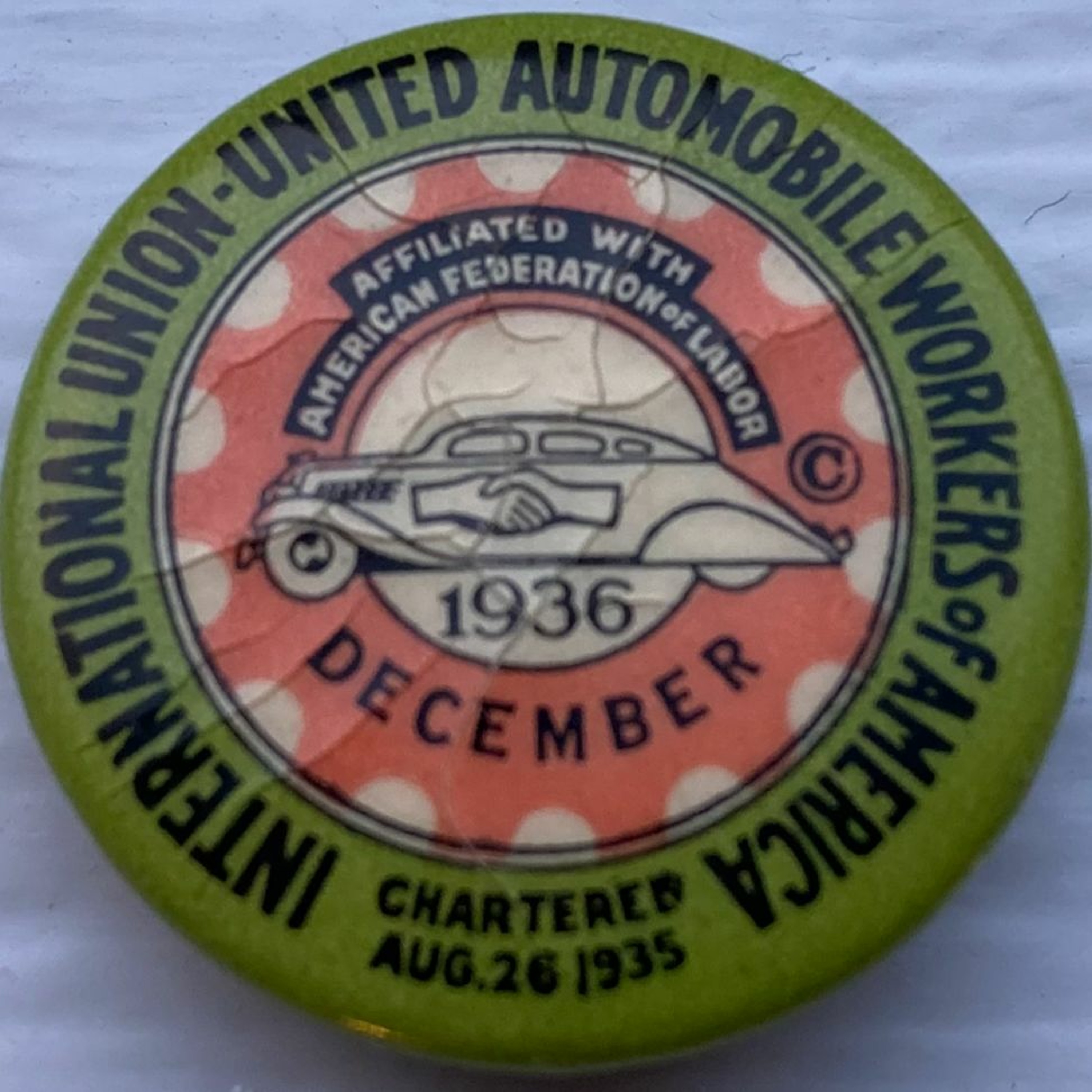
Sit-down strikes emerged as a powerful tactic employed by workers in the 1930s to protest against poor working conditions and demand their rights. The Goodyear sit-down strike in Akron, Ohio, initiated a wave of labor actions across different sectors. The historic victory at General Motors in Flint, Michigan, in 1937, following a 44-day occupation, marked a turning point for the UAW and the CIO. The successful negotiation between the UAW and General Motors, under Governor Frank Murphy's mediation, resulted in significant gains for the workers, including recognition of the union and rehiring of strikers. This victory not only demonstrated the effectiveness of sit-down strikes but also highlighted the importance of collective action and solidarity in achieving labor rights and fair treatment for workers.
Transcription
6446 Words, 37308 Characters
Factory occupations, you know, what, what better way to disrupt production than to just take over the building.
In the case of the Flint strike, it went on for a few months that they occupied those factories.
That was not the only tactic, of course, but that was the most publicly visible one.
And when they won, most observers, workers and other people attributed the victory to the sit-down strike.
We could argue about whether that was really the key thing, but that was certainly how the optic, that's how it looked to everybody.
And there was this epidemic, basically, of sit-down strikes thereafter all over the place, including, like, retail stores in Detroit.
There's this famous Woolworth strike where the clerks are sitting on the counter and occupying the store.
And so that it just inspired Copycat organizing all over the place.
Why was it so inspiring?
I mean, it's a pretty appealing idea if you're a worker who's treated terribly by your employer every day,
that you can just take over the whole enterprise and win rights by doing so.
I mean, I guess I think it's as simple as that.
Welcome to Organize the Unorganized, a podcast from the Center for Work and Democracy at Arizona State University and Jackubin Magazine.
My name is Benjamin Fong. I'm your host.
And on this week's episode, we're going to cover three of the initial major victories of the CIO in rubber, auto, and steel.
Now, if you tuned in to last week's episode, you'll know that one of the key reasons behind the founding of the CIO was John L. Lewis' desire to organize steel.
But the rank-and-file agitation at the time was in rubber and auto, and that is where the CIO knew it had to begin.
President of the UAW from 1970 to 1977, Leonard Woodcock.
Sit-down in American history means flint, but the sit-down strike achievement belongs to all American workers.
Acron rubber workers, for example, have the historic honor of winning the first sit-down strikes during the 1936-37 period.
The law said that workers should have the right to bargain through unions of their choice.
But the rubber companies, like the steel companies and the auto companies, defied the law.
They fired people who dared to join the union. They hired professional spies and stool pigeons to break up unions.
Goodyear cut the wages of its workers in November of 1935.
And then, in February 1936, the company fired 137 union members without notice.
That night, in one of the worst blizzards that ever hit Acron,
the Goodyear rubber workers set up an 11-mile picket line around the company's property.
The strike that followed lasted four weeks.
When it was over, the union had won recognition and seniority in the five-day week.
But once you won a strike in those days, you had to keep fighting to keep it won.
After this strike, the Acron workers had to sit down over and over again to keep their gains.
Auto workers and rubber workers turned in victories as a result of those struggles.
But 1936 and 1937 were years in which the crust of reaction broke in a thousand places.
Hotel workers, department store workers, hospital employees,
even elevator operators who called sit-down strikes between floors.
Every trade and occupation joined the parade.
Now, I'll get to many of the features of the sit-down wave mentioned in this clip.
Starting with the first CIO strike from February to March 1936 at the Goodyear complex in Acron, Ohio.
Professor Emeritus of History at the University of Acron, Daniel Nelson.
The idea of sit-down as a technique, a protest technique, was widely known by 1935,
certainly by 1935 and 1936.
As a result of the employer initiatives in mid to late '35, there were a number of sit-down strikes,
which culminated at the Goodyear Company with a massive strike in February of 1936.
The issue here was union recognition primarily.
And the employers attempted to use traditional techniques to break the union.
They sought to mobilize the local government and the state government.
That proved to be unsuccessful because of a very large number of union members in the local community.
The officials were reluctant to go along, and the strike extended for several weeks.
And finally, after a number of initiatives failed, Goodyear executives threw in the towel and agreed to a modest agreement.
But it was still quite an achievement, and it was facilitated in part by the CIO,
which the rubber workers had joined shortly before.
Lewis sent in a number of important organizers who handled the union's public relations,
which were critical in maintaining the support of a large number of local people.
And so it was considered to be a great achievement.
It pretty well wiped out the company union, which had been a force before that time.
It resulted in this modest collective bargaining agreement.
And it made the CIO look very successful because it was able to be a part of this victory.
Often called the first CIO strike, the rubber workers' strike began the period
that was later called labor on the march by various publicists and pro-labor people.
Rose Pizotta, an organizer for the International Ladies' Garment Workers Union,
had been dispatched to Akron for the strike, and when she arrived in the city, she reported,
"It was apparent that we were standing on the brink of a smoking volcano,
which at any time might erupt."
Nelson believes that conditions in the rubber industry had made it ripe for industrial unionism.
In that industry, there was no substantial group of skilled workers, of highly skilled workers.
There were a lot of jobs that were difficult and required some training and experience,
but there wasn't anything that required long education or very detailed experience.
The tire building role was the key one in the factory because that was the assembly of the tire,
and that could be mastered in a few days or a couple of weeks.
It required a great strength and persistence and a concentration.
It was very tough work, but it didn't require a great skill.
In contrast to the auto industry, where the tool and die makers were highly skilled people
and were very reluctant to work with the people on the assembly lines, for example,
there was none of that in the rubber industry.
There was a lot of solidarity as a result.
In summary, I think the rubber industry was, despite obvious differences,
a little bit like the coal mining industry in that there were lots of people who were very similar
in terms of what they brought to the job, and that was the basis for their solidarity in joining the union.
Victory in Akron was the beginning of a wider upsurge.
After the Goodyear strike, the sit-down became very popular, both in the rubber industry and by 1937 everywhere,
especially because of the sit-down in the auto industry at the Flint complex there.
The sit-down is quite instrumental in publicizing the CIO and mobilizing workers.
In December 1936, just before the General Motors strike in Flint, Michigan began,
John L. Lewis gave the following radio address.
The Committee for Industrial Organization is carrying its plans forward.
Extensive unions have been promoted and expanded in the steel, automotive, glass, shipbuilding,
electrical manufacturing, oil and bi-product coke industries.
Tremendous enrollment of the workers is underway.
On a bash by umpire opposition, they are joining the unions of their industries, literally by the thousands.
The year 1936 has witnessed the beginning of this great movement in the mass production industry.
The year 1937 will witness an unparalleled growth in the numerical strength of labor in the here-to-fore unorganized industries,
and the definite achievement of modern collective bargaining on a wide front for a here-to-fore has not existed.
No event was more decisive in proving Lewis' predictions correct than the victory over General Motors in Flint, Michigan.
Nelson Liechtenstein.
General Motors was the model corporation and the largest corporation in the world and in the United States.
It was both technologically, organizationally at the cutting edge.
It was the corporation that was studied at every business school for 50 years.
You want to have a corporation, you want to be a successful business, then model yourself after General Motors.
It was gigantic. It was in the industry's auto, which was then really had the excitement of Silicon Valley.
It was, you know, cutting edge. So the audacity of taking on General Motors and getting them to come to the table was really something dramatic and important, and everyone knew it.
They began in a few plants in Detroit, but the center of the sit-down strike activity would be Flint, Michigan, which was where the General Motors had its most important plants.
Then the moment came when history took a leap. On December 28, 1936, 6,000 Cleveland Fisher body workers walked off their jobs,
leaving 1,000 of their numbers sitting in to enforce their demand for good faith negotiations from General Motors.
Workers sat down in Fleetwood and Cadillac in Detroit at Guide Lamp in Anderson.
And in Flint on December the 30th, the night shift workers were startled to see trucks backing up to the loading dock and men beginning to remove dyes from that plant to other Fisher body plants.
That started the Flint sit-down. The men decided they were not going to let their jobs be hauled away.
For 44 days, the workers occupied the GM facility, courageously fighting off police threats and strategically maneuvering to occupy the most economically important plant.
This was Chevrolet #4, the real bottleneck where the motors were made.
In order to do so, UAW organizers staged a distraction sit-down at Plant #9 while secretly planning to take Plant #4.
Nobody knew, not even the men in Plant #9 knew what the whole total strategy was, and they went as it's thinking that this was the only bearing-producing plant in the country.
And that they were going to pull the historic thing that was going to shut down 9 and probably the rest of Chevrolet.
No, they're not even doing the whole plan.
That was Genora Johnson-Dolinger of the Flint Women's Emergency Brigade from an interview in 1976.
Dolinger's first husband was Kermit Johnson, rank-and-file auto worker and head of the Strike Strategy Committee.
Here's Johnson describing the seizure of Chevy Plant #4.
Although we didn't know it then, a real war was going on in and around Plant #9, the decoy.
Every city cop and plant police were clubbing the strikers and using tear gas to evacuate the plant.
In retaliation, the men and women from the hall were smashing windows and yelling encouragement from the outside.
Back in Plant #4, a relatively peaceful operation was proceeding according to plan.
A little late, but definitely moving now.
Up and down the long aisles we marched, asking, pleading, and finally threatening the men who wouldn't get in line.
For the first hour, the men in Plant #4 were being bullied not only by us, but by management as well.
Almost as fast as we could turn the machines off, the bosses following our wake would turn them on and threaten the men with being fired.
As the lines of marchers grew longer, the plant grew quieter, and finally after two hours, every machine was silent.
The men were standing around in small groups, sullenly eyeing members of supervision.
No one knew who belonged to the union because no one had any visible identification.
We had successfully taken the plant, but we knew that our gains had to be immediately consolidated or we'd face counteraction.
We had a few men go through the plant and give a general order that all who didn't belong to the union should go upstairs to the dining room and sign up.
While the vast majority were thus taken care of, a few hundred of us were left unhampered to round up the supervisors.
It didn't take long to persuade them that leading the plant under their own power was more dignified than being thrown out.
Hurting the four men out of the plant, we sent them on their way with the same advice that most of us had been given year after year during the layoffs.
We'll let you know when to come back.
Genora Johnson-Dolinger described the scene outside and the heroic role of the women's emergency brigade.
We walked down there and even until we got down there, they didn't know what was happening and then of course it was quite obvious.
They were throwing scabs out of the plant and there were some sister cups going on and they were trying to barricade and they were separating people.
It was a holy confusion.
At that juncture, Kermit and a couple of other guys at the main gate just yelled out, "Don't let anybody through that gate!"
They got a hell of a mess or something. They told us, you know, several of them who recognized us women.
And so we strung ourselves across the gate and I sent one of the, I knew by now that the plant police and everybody was going to know what had happened.
So I sent one of the women to call the brigade from the Pendelle Building back down again.
Shortly after that, the police came marching down and they told us the side were going in.
And that's when we stopped and we persuaded and we talked and we pleaded.
And we were talking to the captain of the police and to the officers too.
And we knew that we had a certain amount of appeal to them because they did have uncles or cousins or brothers working inside the plant.
And they'd been laid off and they'd been abused and they'd speed up with something in everybody in the city, working class, origin, middle class.
And finally they did get down down and they said verbally, "Well, we've got a job to do. This is our job."
And aside, just stand aside. And this is when we started pushing and then we linked arms and stood across the gate.
And then we just said, "Over our dead bodies, you go in here. Over our dead bodies."
The successful seizure of plant number four turned the strike decisively in the UAW's favor and the top brass of the CIO knew it.
And then of course, John L. Lewis was carrying on his histrionics in favor of the plant-poor Chevrolet workers because he knew what that meant to General Motors.
Everybody by that time in the CIO knew this was the only motor plant for all of Chevrolet.
This is the "Got 'Em Right" general in the gut. And John L. Lewis and we're going into a marvelous stage he's probably best role he ever played.
To break the greedy bosses, we would march all winter time.
Join the CIO. Come and join the CIO.
Eric Loomis describes here the theory of the sit-down as well as its reality.
You have a pretty organized group of workers occupying a General Motors facility and by sitting down and staying in there, the idea at least was that, A, in some ways, it would show workers' responsibility that they would do this but do this in a respectable way, right?
And so drinking wasn't allowed and they were very clean. A lot of the early examples of the sit-down strike kind of emphasized this respectability narrative.
But also that it was an effective tactic that would prevent strike breakers.
The problem with the traditional strike is that you would leave the factory and even if you had pickets around the factory, generally the courts were working on the side of the companies and so would basically force the allowance of strike breakers into the factory.
So this is intended to prevent that. The idea, at least theoretically, being that a company would not want to destroy its own facility.
However, if we're noting that GM would have been happy to destroy its own facility, GM wanted the police to go in and kick those people out at any cost.
And this is, I think, a key part of this broader story, right?
The reason that it doesn't happen, because the Flint police force is completely bought and sold by GM, is that the workers of Michigan had elected a guy named Frank Murphy to be governor.
And Murphy had campaigned on never betraying workers that he would not use the police or the National Guard to break a strike.
And he's close to the PR, you know, and is a good, strong liberal governor, but nobody really knows how he's going to react to this.
In fact, it kind of has a panic attack as it all goes down.
But in the end, although GM is demanding that he call the National Guard, he refuses to do it.
And it's really only after he refuses to call the National Guard that GM sits down and is like, okay, we give up.
If unions can or labor can neutralize that government corporate alliance, because you can't really ever expect government to really be on the side of unions in the United States like that.
That's really rare, right?
But if you could just neutralize it so they don't call in the cops or the army, then it really changes the whole perspective.
Nelson Lichtenstein also emphasized the salutary role of Governor Frank Murphy in the strike.
Now, one of the crucial things was the cost of the mood of the country, the state and the governor of Michigan, Frank Murphy, did not intervene to suppress the strike.
That would have been the normal thing to happen.
And that would happen later on.
But it didn't happen in 1937, in part because some Murphy was pro labor, in part because Roosevelt and Francis Perkins were saying, you know, don't do it.
And Lewis dramatically would say, in a meeting with Murphy, if you're going to send in the National Guard to, you know, basically shoot up, I will go to the factory, bear my breast, and you'll have to kill me first.
So that didn't happen.
And therefore, on February 11, 1937, in the governor's office in Lansing, a contract is signed between the UAW and General Motors.
Strike came to an end on February 11, 1937.
Governor Murphy announced the settlement terms.
For a period of six months, General Motors would not, without the governor's permission, deal with any employee spokesman except the UAW and the 17 plants that had been struck.
In the other plants, the union would be dealt with as representatives for its own members.
No discrimination against union people. All strikers would be rehired.
Union members could talk about the union during lunch and rest periods. All court proceedings against the union and its members depend.
The company would begin to negotiate with the union in good faith. It was a magnificent and historic victory.
Celebrations of the victory lasted all night. Everywhere there was a GM plant in Flint, in Detroit, Cleveland, Toledo, a dozen other places. A decisive advance had been won.
The crucial thing was General Motors recognized the UAW, not as the exclusive representative of all the workers, but as we recognize you as a representative.
And it sort of gave the UAW a warrant to then organize everybody. And that's what happened. They only had a few thousand members in February of 1937.
But by September, they had two or three hundred thousand and the majority of the General Motors workforce.
Well, the strike has ended thanks to these good men who are about me here.
The peace will be a lasting one because it was brought about without force and violence.
I trust it will mean a new mutual atmosphere of goodwill and good faith between employer and employee.
That was Governor Frank Murphy announcing the end of the strike. The UAW and the CIO had won a remarkable victory.
To borrow from Walter Ruther, president of the UAW from 1946 to 1970, they had made one of the most powerful corporations in the world say yes when it wanted to say no.
And that was not the only victory that was achieved. In 1935, the Wagner Act was passed, making good on the promise of Section 7A of the National Industrial Recovery Act by guaranteeing the right of workers to organize and laying out mechanisms and protections for them to do so.
In early 1937, the fate of the Wagner Act was very much still up in the air.
The Wagner Act passed in 1935, which has a mechanism for holding elections, negotiations, signed contracts.
The companies, all the companies were saying, "Oh, the Wagner Act is unconstitutional. We will not obey it."
So the sit-down strikes were, in a sense, they were designed to force the companies to obey the existing law as it was written.
That's the question now for it. We will do something illegal, but that's because you're doing something illegal.
And then once you stop resisting unionization and resisting the Wagner Act, then we will see sit-down strikes.
As American labor law developed and as we developed the National Labor Relations Act, the question of whether the protections that were given to workers and unions in the newly emerging labor law were constitutional
was very much contested. And there was a great shift in Supreme Court opinion on this, in which the decision was made that, yes, the National Labor Relations Act protections of workers and of unions were constitutional,
and they did not violate the fundamental property rights of employers. And that radical shift in court opinion was made while the large auto plants in Michigan were occupied by the sit-down strikers.
And they also, in another decision rule, the sit-down strikes were not legal, but they legalized the more orderly and conventional types of union organization.
Was it because the plants were being occupied by their workers and they had to do something to have a legitimate channel in order to prevent this terrible threatening activity?
You'd have to be able to read the minds of the justices, but to make a sudden change in a fundamental legal principle like that, you'd need some kind of explanation that indicated that they had something that was in their minds that hadn't been in their minds before.
One might see the Supreme Court decisions mentioned here by Jeremy Brecker as reflecting a broader employer mood in the country. Yes, to collective bargaining provided the industrial strife was contained. Steve Frazier.
Some elements of corporate America want to stabilize the workplace. They really do. And they're prepared to recognize collective bargaining institutions if they can count on the leadership of those union institutions to discipline the workforce.
Because a lot of these places become the site of constant turnover strikes, wildcat strikes. It's very destabilizing for corporate America to live like that.
On the other hand, they don't want to see their authority over the shop floor, and they're very lucky to do that. But to some degree, the CIO is where the Hillman, for example, is purely aware of that.
The union was the most stabilizing force in the garment industry since the 1910s, really. It establishes stability in a workplace that had been highly unstable, full of pockets of workers who would walk out in a moment's notice.
And then the sit-down strike makes that even more imperative. So I think it's part of why the steel industry, after GM is forced to capitulate, why Myron Taylor at US Steel says, well, maybe we better settle.
When results of the General Motors sit-down strike and the victory that the UAW-1 was very quickly thereafter, Myron Taylor, the head of US Steel, and John L. Lewis have a famous luncheon at the Willard Hotel in D.C.
And they basically agree, OK, the US Steel will recognize the Steel Workers Organizing Committee on the same basis as the UAW, not exclusive jurisdiction, but we recognize you as a representative and you have the right to organize in the plants.
Frazier and Lichtenstein mentioned here the last big CIO victory I'm going to cover in this episode. The agreement between John L. Lewis and US Steel President Myron Taylor to bring most of the US Steel workforce into the Steel Workers Organizing Committee or the SWAC.
The SWAC was formed in 1936, in the summer of 1936, with the idea of constituting a front by which it would organize basic steel and do so on an industrial basis.
As the union said about trying to organize basic steel, it also had to wrestle with some basic tactical questions. How would it accomplish this? And that inevitably involved it with something else.
And that is how to reckon with the great number of company unions that had been established in the industry beginning in the late 1910s and extending into the 1930s and even increasing with the enactment of the National Industrial Recovery Act in 1933,
and in many ways seem to favor the creation of these company unions. Well, they were there too, and they were not entirely empty shells. They had in some plants a fair degree of legitimacy and a fair level of participation.
They had to be reckoned with, but they also, I think, to CIO organizers loomed as maybe a convenient way to start in a lot of plants to build support. And so this strategy emerged of potentially capturing the company unions,
of building membership within their structure and capturing them. They were also useful in a context where the organizers were bound to confront considerable repression in the form, first of all, of surveillance and espionage.
And one way to evade some of that was to work within the structure of these organizations. It might seem a little counterintuitive because being company unions, they tended to be subject to company controls.
Nevertheless, to do the things necessary to organize a union, an independent union like the SWAC was attempting to do, required that the organizers do things that might more easily go unnoticed if they occurred within the structure of the company unions.
One of the enduring uncertainties about this whole bit to organize basic steel is how much support did the SWAC have in, say, the first six to nine months of its effort to organize.
The union, meaning the SWAC and the CIO, boasted all the time about how successful they were, how many people they were signing up. But there are strong hints and points at which people within the SWAC or CIO structure
acknowledged that a lot of this was bluster and a lot of the claims in new membership during this period were artifacts of propaganda as some of the leadership freely described things.
So there's some uncertainty about that. What there's not uncertainty about is that there were some substantial gains. This all unfolded alongside the chaotic and spectacular developments in automobiles.
Where, as many people know, on the second to last day of the year in 1936 in Flint, Michigan began the great General Motors sit-down strike that ended about six weeks later in a significant victory for the United Auto Workers and for the CIO.
There was later a victory and comparable victory at Chrysler. Well, it was during that period and during a couple of meetings in first in early and then in mid-March, 1937, that John L. Lewis met with Myron Taylor, president of US Steel, and
then confected between the two of them an agreement that brought most of the workers at US Steel within the CIO's orbit and essentially resulted in a kind of recognition of the CIO by US Steel.
And this was, of course, a startling development and a very significant one because US Steel, although its influence as an industry leader in basic steel had diminished some since the early 20th century when it completely dominated the industry.
It still exerted a great deal of authority in the industry and it was clear to everyone that while organizing US Steel wouldn't necessarily bring along the other basic steel producers, organizing the industry without organizing US Steel would be impossible.
And so this was an enormous watershed moment. And again, for many people, at least a quite startling one.
Now, this should be something of a historical puzzle. Why did one of the heads of the biggest corporations in America simply give in to the Union?
One reason that people have bandied about is Taylor's fear of CIO militancy. This was just a few weeks after the General Motors sit-down strike and it was basically concurrent with the Chrysler sit-down strike.
There's probably something to that, although it begs some questions about how effective a sit-down strike could be in a basic steel mill given the very different kind of architecture and geography of production in a steel mill.
So that's certainly a factor worth considering, how much of one is another question, but it's certainly worth considering. Something more fundamental, I think, has to do with the changing nature of management at US Steel in the way, in many ways,
a Myron-Taylor personified that unlike Tom Gurdler, Eugene Grace, other dominant figures in steel, Myron-Taylor, there was not, as they said, a steel man.
He did not come up through the ranks wielding a shovel up from the shop floor. He was a lawyer, graduate of Cornell Law School, and he, I think it's widely thought, had a different sensibility about things.
And not just in the sense that he wasn't as tough a guy as some of these, as Gurdler and some of these other people were. That may have been some truth to that, too.
But he had a different vision of capitalism and maybe a more forward-looking one, that he understood that what was in the offing with the New Deal was not the end of industrial capitalism, far from it.
It was a new phase, a new era in industrial capitalism, one in which it would profit the capitalist to be reasonable about things like organized labor.
Now, that's just a brief summary of the agreement between US Steel and the SWAC. I'm going to return to discuss steel organizing in more detail in episode five.
For the moment, it's worth noting just how differently the auto and steel campaigns were carried out.
Professor of Sociology at the CUNY Graduate Center, Ruth Milken.
Everybody focuses on the UAW. You know, when I was in graduate school and writing a dissertation, and I thought I would study the UAW, the UE, and the United Steel Workers, who were through the three biggest CIO unions, you know, at the peak during the war.
And I ended up doing just the UAW and the UE. But one thing that was so striking was that there was nothing written about the steel workers hardly, relative to the others.
Like nobody was interested, labor history. There's like two books or something, whereas the UAW, there are libraries about it. Why? Because the United Steel Workers was a top-down union from the very beginning.
It did not fit the kind of new left passionate view of, you know, what it was all about. And so it's not like the CIO was all this militancy and then it gets crushed with the McCarthyism or something.
It was very mixed all along. It wasn't as different from the AFVAL in that regard as we like to, as many people seem to assume or think.
Indeed, while CIO leaders were looking to channel sit-down militancy into union contracts, they were just as eager to contain the sit-down wave. Daniel Nelson.
Very quickly, unions wore out their welcome in terms of sit-downs. And while the CIO people were very encouraged by the militancy that was reflected in the sit-downs, they didn't like the sit-downs as a union organizing technique.
Not too much power was in the hands of what they considered the irresponsible shop floor groups. And so they were very wary of encouraging additional sit-downs.
In the case of the rubber industry, after 1936, and there were many, many sit-downs in the year after the Goodyear strike, mostly at the Goodyear Company and mostly among these disgruntled nighttime workers.
So the CIO began to work with the union leaders to fork the sit-down technique and to channel those energies into more conventional union activity.
There were similar attempts to contain the sit-down in the auto industry. Nelson Liechtenstein.
After the General Motors, they signed the contract in February, I mean, then, oh, wow, this is great. So while in General Motors, you might have had two or three thousand workers sitting down in the plant.
At Chrysler, you had 25,000 who sat down. Now, Chrysler had also had a company union, again, which had empowered and brought into it a lot of kind of levels of workers who were later, you know, excluded in the union, like Foreman.
And so Chrysler had a very powerful union is having a sit-down strike in Detroit like a month later than the General Motors.
Well, Lewis told them, stop, you know, this is too much. You're going to get a contract. You got to stop this massive sit-down strike, which was really, really was taking over the company.
And he used his whatever power he had to stop that radicalism. So there's no doubt about that.
But his argument was we have to cut a deal here. And if we go too far, then there'll be a backlash.
Now, from one angle, this is a straightforward repression of rank-and-file militancy.
But from another, it's a recognition that the sit-down tactic is a rather precarious one. Eric Loomis.
That tactic got a ton of play, got a ton of attention. And you saw different versions of this pop up very quickly.
But we're noting that it's a very, very, very difficult tactic to pull off, actually.
And if we're going to talk about Flint, it's probably also worth a brief discussion of the failed attempt by a newly forming union with the CIO called the United Chocolate Workers
to use the sit-down strike in its plant in Hershey, Pennsylvania, in the Big Hershey Plant, which was a complete and unmitigated disaster.
And part because they did not have the political support, and part because Hershey had bought his milk off of local farmers.
And so the local area was completely opposed to it versus the kind of solidarity culture you had in Flint.
And after that, it's really rarely used. And so we're thinking about the sit-down strike.
We do need to understand that it has a pretty sharp limitations, too.
And in fact, the United Chocolate Workers never organized that plan.
And truth be told, the Supreme Court simply declares the tactic unconstitutional in 1939.
Right. So one of the reasons that you don't see it today is that it's outright illegal.
And so we're talking about sit-down strikes in the present.
First of all, rather than just romanticize it, I think we have to consider, is this a good tactic first and foremost?
Like, would this actually work in a given workplace?
And then secondly, what are we going to do about the fact that it's in fact illegal?
Now, it doesn't mean that, you know, we shouldn't do that.
I'm not making evaluations or judgments here, but the fact is that, of course, declared unconstitutional.
At Root, the concern with the sit-down was about private property and whether the public would accept an impingement upon its mythology.
Steve Frazier and Eric Loomis.
You're in a country which has enormous respect for private property.
That's our culture.
And you're occupying factories.
You're taking over coal mines.
You're stopping milk deliveries.
You're stopping evictions from happening.
That's anger.
I'd say that's alienation from the normal order of things, from the sanctity of private property to seize a factory and stop it from running.
You know, this does not happen in America in a culture that has a kind of worshipful attitude about the inviolability of private property.
People turned against sit-down strike in part because it felt like an attack on private property.
We have to understand that unions were not exactly popular among the American people as a whole.
What you have here is a lot of Americans who strongly believe in this mythology of private property, and that very much includes many union members and the labor movement itself, the leaders of the labor movement.
And so while, say, some CIO lawyers were sort of pushing a legal idea that people had a legal right to their job, that their job was a sort of property, let's just say the American courts were not very welcoming to this.
And, you know, it really felt like for many Americans that this was a radical tactic that was perhaps communist.
Okay, sometimes it was and sometimes it wasn't, but that really threatened, like, the core identity of an America that defended private property.
On next week's episode of Organized the Unorganized, I'll take stock of the key reasons for the success of the CIO.
Why was this the moment when an Upstart Labor Federation finally organized the basic industries?
Thank you for joining me on this week's episode devoted to the great victories of the sit-down wave.
I'll let Melvin Dubofsky close out with the larger significance of the moment.
First half of 1937, there's a sense that labor is on the rise.
It's going to reorder the American economy and CIO is the spearhead of that movement.
It could completely change what could be called power relations in the U.S. economy between employers or capital on one end and workers and labor on the other.
Or at least that's how it looks and that's how the mainstream media perceived it.
They thought that revolution might be on the way and it upset them.
And so mainstream media tended to emphasize the turbulence and violence of the organizing.
It scared them. And politically, within the Roosevelt administration and among members of Congress, you can see emerging fear about the labor uprising getting out of hand and threatening the structure and stability of the nation.
That's how CIO looks early spring 1937, a radical, threatening labor organization.
[BLANK_AUDIO]
Podcast Summary
Key Points:
Sit-down strikes were a significant tactic used by workers to disrupt production and gain rights during the labor movement in the 1930s.
The sit-down strike at Goodyear in Akron, Ohio, marked the beginning of a wider labor upsurge in various industries.
The Flint sit-down strike at General Motors in 1937 led to a historic victory for the UAW and the CIO after a 44-day occupation.
Summary:
Sit-down strikes emerged as a powerful tactic employed by workers in the 1930s to protest against poor working conditions and demand their rights. The Goodyear sit-down strike in Akron, Ohio, initiated a wave of labor actions across different sectors. The historic victory at General Motors in Flint, Michigan, in 1937, following a 44-day occupation, marked a turning point for the UAW and the CIO.
The successful negotiation between the UAW and General Motors, under Governor Frank Murphy's mediation, resulted in significant gains for the workers, including recognition of the union and rehiring of strikers. This victory not only demonstrated the effectiveness of sit-down strikes but also highlighted the importance of collective action and solidarity in achieving labor rights and fair treatment for workers.
FAQs
Occupying factories, sit-down strikes, and picket lines were key tactics used by workers during the labor strikes.
Sit-down strikes prevented strike breakers, showcased worker responsibility, and pressured companies to negotiate with the unions.
Governor Frank Murphy, John L. Lewis, UAW organizers, and the workers themselves played crucial roles in the success of the labor strikes.
General Motors recognized the UAW as a representative of the workers, leading to a significant increase in union membership and the organization of the majority of GM workforce.
The Wagner Act, passed in 1935, guaranteed workers the right to organize, hold elections, and engage in negotiations with employers.
The labor movement spread to various industries, inspiring workers in hotels, department stores, hospitals, and other occupations to join in strikes and demand better rights.
Chat with AI
Loading...
Pro features
Go deeper with this episode
Unlock creator-grade tools that turn any transcript into show notes and subtitle files.
 PodcastTranscript AI