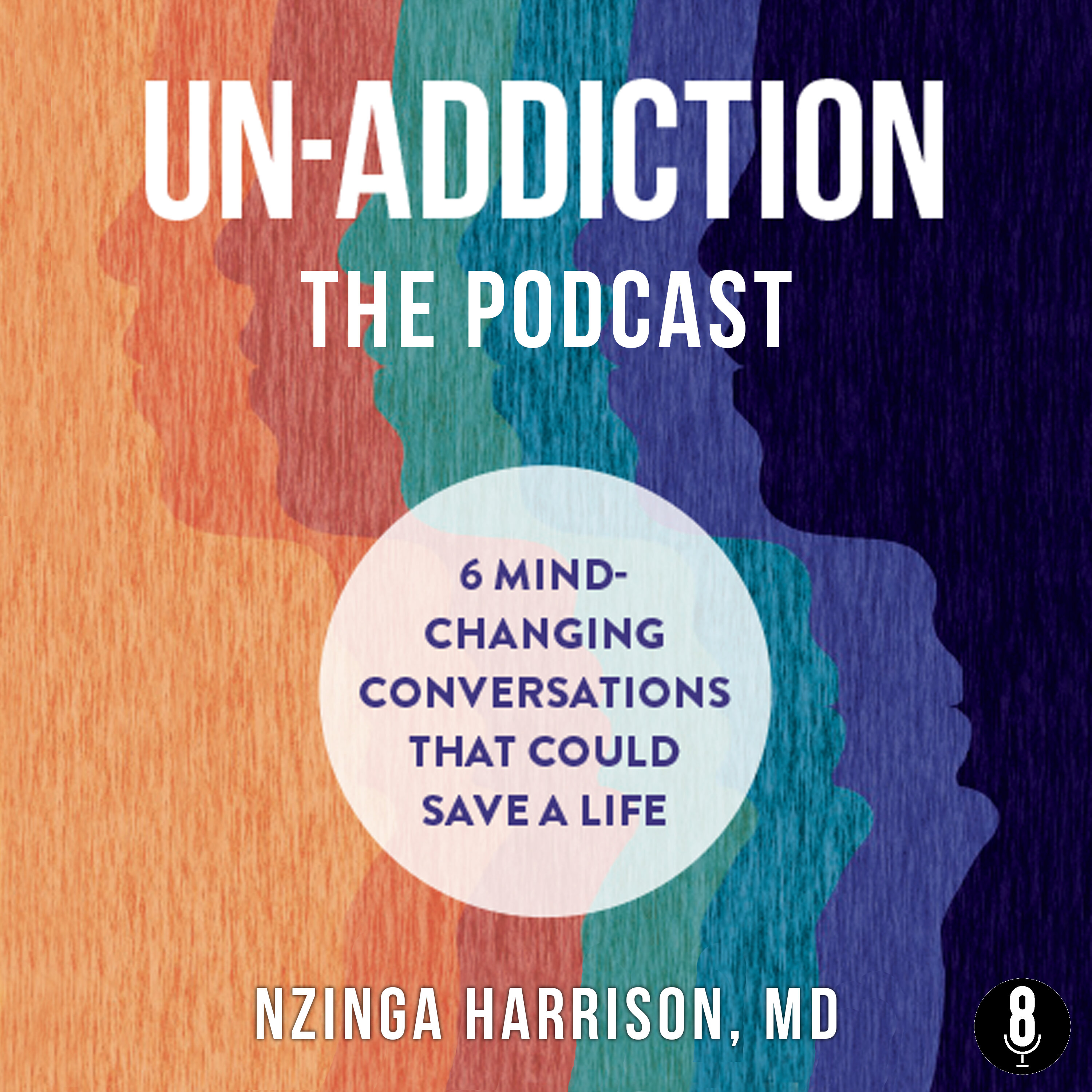
Episode 3: Chamique Holdsclaw, Mental Health Advocate
from Un-Addiction with Nzinga Harrison, MD
44m 17s
In this episode of "Unaddiction," host Dr. Inzinga Harrison interviews Shemeek Walholz-Klaw, a former WNBA star and Olympic gold medalist, about her journey with addiction and mental health. Shemeek was born to parents struggling with alcoholism and later learned her father had schizophrenia. At age 11, she and her brother were removed from their home and went to live with their grandmother. Despite this trauma, Shemeek excelled in basketball, becoming a top recruit and playing for the University of Tennessee under Coach Pat Summit. However, she masked her emotional pain to appear fine, a common pattern among high-performing kids. In college, she experienced depression at the height of her success and initially feared seeking help due to stigma. Coach Summit supported her by arranging off-campus therapy, which helped Shemeek recover. The conversation highlights how external achievements can hide internal suffering and stresses the need for adults to proactively ask kids how they are doing. Shemeek's story underscores the importance of undoing stigma around mental health and addiction, and having open conversations to support young people before crises occur, as promoted by the podcast's mission to unlearn, undo, and uncover helpful dialogues.
This is an I Heart Podcast. Guaranteed Human. Welcome to Unaddiction, the podcast. My name is Dr. Inzinga Harrison. I'm a board certified psychiatrist with a specialty in addiction medicine and co-founder and chief medical officer of Eleanor Health. On this podcast, we explore the paths that can lead to addiction and the infinite paths that can lead to recovery. Our guests are sharing their own experiences, the tools that have helped them along the way, and the formulas that allow them to thrive in recovery one day at a time. This week, Shemeek Walholz-Klaw joins us on the pod. I love this conversation so much, not just because she's amazing, because she is, but also because she takes us deep on how high performing kids can actually really be suffering and how we often don't recognize it. And so we talk about the question, how do we recognize it and how do we help our kids before the crisis happens? So let me tell you a little bit about her and then we'll jump into the show. Shemeek Walholz-Klaw was born and raised in Queens, New York. She first made her mark as a high school basketball star at Christ the King High School and went on to play collegially for the women's basketball powerhouse, University of Tennessee Lady Falls, under the coaching of Hall of Fame Coach Pat Summit. Shemeek was professional career included being the number one pick in the WNBA draft by the Washington Mystics and winning the Olympic gold medal with Team USA at the 2000 Sydney Olympic Games. So why is she joining the pod? Both of Shemeek was birth parents struggle with alcoholism, which ultimately led her parents to losing custody of her. After experiencing her own mental health crisis as an adult, Shemeek was dedicated her life's work to mental health and wellness activism. Shemeek was so glad to have you on the show. And also just I think having conversations is the way we will make a change. And I know that we have so much stigma, which I hate. You can hear it in my voice that it can be hard to have this conversation. So I appreciate you giving yourself in this way for the next whatever we're going to do 30 minutes. All right. Thank you. Thank you for having me. Thank you. So okay. I'm going to give you a heads up to the final exam. It's the last question. Everybody scores 100% because they're all no wrong answers. The podcast is meant to raise awareness of the book on addiction. So this is unaddiction in the podcast. The book, thank you for writing a blurb on the back of it, is unaddiction, six mind-changing conversations that could save a life. And when we were coming up with the title, we made up the word unaddiction with the idea that we would be helping people unlearn the unhelpful things they think they know about addiction. Undo the stigma that surrounds addiction and uncover the conversations that we need to make it safe to have if we really want to make a difference. Okay. And so the final exam question is what is one thing you would hope our listeners from your experience and from sharing your story, one thing you would hope they would unlearn or one stigma they would be proactively trying to undo or one conversation they would be trying to uncover. You'll have to have three just one. Okay. That's why I give it to you in the beginning so it can be percolating as we talk and then we'll come back to it at the end. Okay. Alrighty. So let's just open up. Tell us about Shemikwa. Who are you? How did you come to be who you are? What has your experience with addiction in your life been? Well, I was born to Willie Johnson and Bonita Holtz-Klaw in New York City. And I grew up in a household with my mom and dad. So I was about age 11. My situation was both my parents struggled with alcoholism. And now that I'm older, I can see my mom was, I think she graduated high school with me in her stomach. And I later found out that when I was in college, that my dad has schizophrenia disorder. So now I can see how my parents really were going through a lot, trying to manage. And unfortunately things kind of got out of hand and me and my brother were like taking away. We were like literally taken away by the state of New York after a situation. And we went to go live with my grandmother, my mom's mom. And this is your older brother or your baby brother? My younger brother, my baby brother, three years younger. I was probably the age of 11. So a lot was happening for me just because that household people looking at it, they said it's dysfunctional. It still was a comfort for me. That's my mom and dad. Being taken away, I left a middle class area to go live with my grandmother who was in a story of housing projects in New York City. So it was a big adjustment for me. And I was basically in warning. I was going through a really difficult time missing mom and dad. I'm not really understanding that they have like an illness. I was the kid. I always tell people like the kid that was watching television that has the backpack waiting for the parents to come. The come to visit and then they wouldn't show up. I would have these outbursts or temper tantrums as my grandmother used to call them. She realized that I needed help, right? That I need to talk to somebody. But you got to stay and also on the flip side. Here's my grandmother saying, what happens in your household stays in your household? That whole conversation and these streets, because now I'm in a different area. All that anger and frustration that you feel you can't let that out out there because you can get hurt. So I'm just trying to find myself. I wanted to wear my grandmother. What kind of paint your room? Black. She took me shopping. So she knew something was wrong. So she gets me help. My grandmother felt like was ahead of her time when it comes to our family and realizing that some people need therapy. And I went, but you tell a young kid this. And now I'm in at the community center and getting therapy. I'm living in an inner city environment. So it's a lot of minorities and I go into therapy and I don't identify with the guy that's there. He's a younger white male or whatever. But he wants to connect with me through basketball. So he has a little nerve group up and I found myself, okay, listen into a language shooting around. He's like, can you please talk about your family? I'm like, hold up. Wait a minute. Hold up. I just took your nerve basketball. I don't know you. And I think for me at a young age, because of that, feel uncomfortable, not feeling a connection. I learned to mask my feelings in my emotions. It's been like a game for me into my adulthood. It's like I figured out just what to say to offer that relief to my grandmother or whoever was the authority figure, you know, coaches or whatever. And so the thing that taught me what love was, sort of, sort of opened my eyes was the Allatine program. My grandmother took me there. Now that was a great call because I learned that my parents, you know, in young age, is superheroes, right? So I'm thinking they hate me. Well, why did they do this to our family? And I realized that they're sick. You know, the sick, they're trying to figure it out. Yeah. But they love me. They're going to get better. So that's sort of like my youth and what I went through. And, you know, we could dive deeper into like later in life as we go. Yeah. No, that was such a beautiful walking us through your childhood. I hear so many things in there that I want to pull out one shout out to grandma, like you said, for being ahead of her time. Yes. Shout out to Allatine. So Jada, if we can drop in the show notes, Allatine is a specific program, 14s, who have parental figures with alcoholism and provides that support. Cause like you said, Shemiko, as cool as I think I am, I am now an old lady in the eyes of an 11 year old or 12 year old, right? And being able to be with people your own age, who are sharing a similar experience gives you that connection to be able to share without feeling like you're going to be judged because they can understand. And then also we often see kids acting out when they need help. 11 is such a tender time. Even if you hadn't been removed from your parents home with the systems, think they're doing the best thing for kids, right? But we talk about this concept of ACEs in the book at first childhood experiences. And one of those is being taken from your home. And I tell the story about how disrupted that is for kids emotionally in terms of having patterns that you're used to. Yep. This narrative that you built for yourself, my parents didn't want me when really your parents had an illness, your parents do want you and the illness prevents them from being able to have you, right? So like all of those things you just shared, I think so many people will be able to grab on.
And I wanted this last thing on an emphasize that you said we often hear about kids acting out. Yeah. You figured out how to not act out, how to make the adults all around you feel safe, even though you didn't feel better inside. And there are so many kids. This is a ticking time bomb, right? It's an effective strategy for all of the adults to feel better so you can get some space. And then that time bomb is ticking inside, so can you keep walking us forward? Yeah, so for me, making my grandmother feel better because I looked at my grandmother, I so much respect for her. She raised her kids, they all went to college and stuff. And so she had blonde faith to take me on my brother. So I didn't want to be a problem. I just wanted everything to be okay. So while I'm having these emotional issues, it was around a time that I found a game basketball. And for me, my grandmother was so strict. I mean, to this day, people laughed, you know, when they think about my grandmother coming on a court where she would pop me. My grandmother did not play. It was like, it was like church, boys and girls club, everything. She was just about constructive things and structure. It was just like so important where Lutheran, so she made sure we, like, she was the head of feet and the homeless people. It was just like a lot of community, you know? And what happened was I found this game and it was started like giving me confidence, right? And the only reason I was able to play so much is because my grandmother could wash me from the basketball. Like the window her apartment was right at the court, so she actually let me go because she wasn't just going to let me hang out outside, you know? Sure. Because outside is not entirely safe, right? We're talking New York City and the late 80s, early 90s. No, you're not, not a young girl. Right. And she could wash me and then I started making friends in a new neighborhood and my confidence became, you know, more and more. You know, I was the only girl out there playing with the guys and at first they were like, we don't want a girl playing, but that girl became, you know, better than them. So it was like, hello, I was accepted now, right? Uh-huh. And with that, I found something that was my own, right? Like I feel, I felt like empowered. This, you know, sports and powers young ladies. Young men to young boys and girls, but for a young lady during this time, it was just like a confident booster, you know? And I'm like, oh my god, no one's going to, going to take this. So I'm out there playing with the guys. I get better and better and years pass. And I'm playing on all boys teams with, you know, playing against like Ron Artes, former NBA player, uh-huh. Metal world peace and Metal world peace. Yeah. Getting down with all the guys and it comes time, you know, to go to high school and I was going to go to St. John's Prep, which would have been probably like 15 minute ride from my house. And on the flip side, this coach comes Mr. Kenna's arrow, Christ the King, uh, high school. He's a retired New York City detective and he coaches there. And he comes down to watch me play and he talks to my youth coach and my grandmother's like, hey, we want her to come to Christ the King and my grandmother was like, no way. Not happening. It's not, it's not happening because, um, if people, she, their, her mind, if people, want to do something for you, there's a, there's an expectation, you know, that no one's doing anything for free. And I begged her and begged her. I'm like, Grandma, they suddenly play us to college. They were like the number one team in New York, you know, they said he's playing us to college. Um, it's a good academic school. Like, please, please, please. And after a month of me begging her every day, she's like, I, you're going to get up because I have to travel hour to high school on the public transportation. Yeah. Hour there, hour home and she let me go. Worth it. It was, it was worth it. So now, um, you know, I'm just coming into my own, you know, I'm, I'm more confident. And the thing about it was the confidence was just like this, this topper. It was still fragile. Young lady that didn't really want to talk about the things she'd been through. I just, you know, when things were just going so well and I'm feeling good and opportunities that, you know, I just kind of sped through to the next day. I went three out of four champ, I'm sorry, four out of four championships at Christ the King High School. I become top reddit rated player in my class. I had good grades. I was a baller. So now it's like, I could go to any college like all the colleges are recruiting me like where should make the whole school want to go. Now you think about all this exposure I was getting. I was in, I was on cover TV guy at high school. I wrote an article for like USA Today and still dealing with my mother. Guess I rehab comes to my darn game. She got a rehab as smithers, which is a big rehabilitation here in New York. So alcoholism. And she gets out and I'm walking up the block with her because I met her. I'm excited, right? My mom's getting out and I promise you I heard her and his lady said, I can't wait to have a drink. Three days later my mom was back drinking. You know, and I just remember her coming to my game. Imagine you're a star, right? So you're on a court and I look and you always want to hear your mother's voice, right? And I heard it and I'm like, oh my god. I'm like, she's drunk and I just look and I walk off the court. I walk off the court. You're the locker room. And I'm telling this story to say these were moments. I learned how to drive because my dad would pick me up drunk from practice. He would be, I would come outside of practice. He would be sometimes late, passed out behind and I would be like, all right, move over, drive myself the back way home on the highway. And so it's just no adult. I know my high school coach. I talked to him a couple months ago and I always wondered why didn't any adults ask me like, how am I doing? You know, like nobody could see it. No one, no one asked me. He's like, always check with your grandmother and then you seem like everything was okay because TV guide, 4.0 scholarships, right? I don't know if it's a 4.0, it was like, it was like a beat. It was a 4.0, right? You were doing great. Right, right. But those external things we look at to say like the kids are doing okay. And we have to ask. Right, right. But it's scary to ask because then you get no and you're like, I don't even know what to do with no. Right, right. And you become like, whether you're good at sports, academics, whatever, music, talent or dancing. When people see greatness in you, right, it's a term that you become coached. You know, everybody went to make sure to a degree. I'm okay. So when I would have a blow up in practice, oh, are you a racially equal, a whole team's restaurant to me, you know, everything was to make sure that I was okay and I was comfortable but the emotional issues were never addressed. Yeah. Yeah. And so you said you talked to your coach a couple of months ago and asked, why didn't you ask me how I was doing? It was like, you looked like you were fine. Yes, right. And so how did it get to the point who asked how old were you and who was it and then what came from that? Honestly, I was probably like sophomore year in college and I was playing at the University of Tennessee for legendary Hall of Fame coach Pat Summit. Sorry, I'm going to jump in sophomore year of college is like 20 years old. Yeah, I was a late in the sports age. So yeah, like 19, I started 19 for me, 1920. So we're a full decade in from 11 years old. Yes, yes. And now I'm getting, I'm on a big stage now. We won a championship, my freshman year in college is like, first of all, when I got to college, I was struggling with feeling like finding my tribe. I felt out of place, out of pocket. I didn't realize, you know, leaving New York City, which is very diverse as far as culturally and moving to Knoxville, Tennessee back in that time. I was like, "Wishtag Hispanic people, we're the age of people." Like, it was very different. So I felt I was really homesick. I'm looking for my tribe and my family and I was just really like wanting to go back home. But, you know, Coach Summit said, "Listen, once the season starts, you're going to find out what the sisterhood is about." And so I stuck it out and she was right. I had my sister's and my family, right? We're all here to get education. These 12 people on the team, we're all here to play for Coach Summit in his university. So we're like a family. Sports is like a building family. So things are great. I mean, we went in and we were just on a cover, I think, of sports illustrator or something. And all of a sudden, I just started feeling really down. And this was like the height of success. Start feeling down and academically, my grades started sliding a little bit. And I remember telling my friend Antonio, like, "Something's not right." I said, "I just know all this success and things aren't good." He's like, "Man, you need to talk to somebody." So, you know, my mom away from home is the coach. I go to Coach Summit and I'm like, "Coach." "Well, I call her in the phone. Let's talk about this." I'm from my dorm because this is before cell phones, right? So I call her and she's like, "Meet me by the office." I'm like, "Oh, no, no, no, no, no. Stigma." Because I'm afraid. I'm a captain. I'm a leader team. I'm afraid that someone's going to know that I'm talking about something so sensitive. You know, like, you're mine. Because typically people think, "Oh, like, you're mine. You're crazy. You're mentally weak." Or you're staying. So I got to keep up the show, right? So I said, "No, can we meet outside the office?" And she said, "Following." And I remember sitting there and I said, "Coach, I don't know. I just, I don't feel like myself." And she looks at me and she's like, "Okay." I said, "I don't feel happy."
She's like, "Okay, we gotta figure out what makes you happy." And at that age, I'm like thinking when she said it, I was like, "Is it playing video games?" I'm like, "At the time, is it hanging with boyfriend or hanging with my friends?" Like, I'm really combing through my mind to try to like figure this out. And she said to me, "Hey, do you want to speak to the sports?" Um, we had a sports psychologist on set, "Oh no!" [laughs] Because in my team, they see me. We're here, they're going to know something's wrong. So stigma was really impacting me. And it wasn't until co-submit, you know, being ahead of her time. So, "Okay, you can see somebody off campus." And I'll tell you, that's when things for me, like the color started coming back. I started having a better understanding. I would meet with this woman, you know, like once a week, Pam, we would just talk about things. And I'm getting, you know, I'm starting to feel good about myself. I could see a shift as far socially. I could see a shift. I'm back on my business academically. But it was that six to seventh visit when I walked in. And she had this window seat, and it had like dolls on it. And she said, "All right, today, you know, we all have like a childlike person inside of us, we're all childlike." All right, let's talk about your mom and dad, and I shut down. Ooh. And I never went back. And at that moment, I said, "All right, all right." I said, "Shelika, if I get 20 into, that's 20 points, 20 rebounds, and I'm like, "Raising it, no one's going to think that anything else is wrong." So, I'm just going to focus on that. And that was the problem. You know, that's not sustainable. That's not sustainable. And so, you never went back. Never went back. It was too scary. Too scary. And I just couldn't unpack that. I wasn't ready. I wish I was because now, you know, you older, and the place that I am now, I look at the younger me. And I just, you know, you think when you're thrown, I was young thrown into the spotlight, you know, like a game changer. So, it was like, you know, you've got to be protective of your environment. You've got to make good decisions and whatever. And I wish I would have known their strength and power and be immolable in getting the help you need because a lot of people, I talk to a lot of people on different backgrounds, but a lot of high-performing people, this is their journey. Maybe not their parents, you know, being alcoholics, but you're dealing with a lot, right? You're dealing with. Yep. And as long as I get 2010, nobody will know. Right. Everybody will think I'm fine, right? Nobody will ask. And so, okay, we kind of talked about, I'll call it like your first epic, which was like 0 to 11. And then your second epic was kind of like 11 and going off to college. And now we're in college. You have this beautiful experience with the sports psychologist or the psychologist off-campus. Then we get start to get to the route. It's too scary. You step away. You go back to the 2010 strategy. Yep. There's this concept. We always think about the adversity that kids have. Asus, people may have heard of it. I mentioned one, get in taken and go into foster custody. The other side of that is pieces, positive childhood experiences. And what you really described in that college period was participating in community traditions, a sense of belonging, feeling supported, having your coach who was a parent who genuinely cared about you, right? Like all of these add up. Yeah. So increasing the resilience that those negative childhood experiences try to erode. But still, until you can get to, and I'm going to use the words, and let's use this as a jumping point to the next part of your life, the vulnerability, having it be safe to be vulnerable, to have someone else know you're not okay, so you can start looking at what that is. Bring us into the next part of your life. Well, you know, so when you're, people understand when you're at a high, you know, when you taste a success, you constantly like, okay, I'm one, it's since you're young, you know, it's like this path is laid out for you, right? Especially in sports. It's like, okay, you play, you go to college, you play pro. So now, you know, I'm number one pick in the WNBA draft, and consider a game changer, you know, I sign, you know, big deals with Nike, Gatorade, so my face is places and stuff, and I get the goal. Now I'm drafted, I get to leave the South. I'm back when the East Coast and DC for the Washington Mystic, so life is good. But here I am now leaving that protective environment of my grandmother, right? Leaving that protective environment of Coach Pat Summit to now being, you know, 21 years old, you know, what means in DC by myself pretty much, you know? And trying to figure, figure life out, you know, here I have my own house, I have material things. And, you know, after a while, I'm just like, all right, someone needs to live with me. And I have one of my cousins, you know, come stay with me, Sharron. And things are going great. Like, you know, the season wasn't the best because when you're number one, you go to the worst team. Uh-huh. But I'm enjoying it. I'm enjoying the people and coming into my own, trying to figure this out. And then it was the Olympic year, so another high, you know, we went gold, that's 2000. And then my grandmother passes probably like my third season. And, oh, my world was like shattered. I always tell people, I buried my grandmother and I buried my emotion. So it went to where I was feeling after like my grandmother passed, it was like I was on autopilot. I had one of my best seasons of my career. I think leading the league and scoring and rebounding. But mentally, I was just trying to push through the day, you know. I was trying to have dreams about it. I'm like, if I dream about it tonight, I was just really suffering, grieving, you know? And I constantly just pushed through because you can't be sad, right? I'm pushing through, I'm pushing through. And then that's the strategy, that's the 2010 strategy. Right, right. Let's push through. Yes. And then my grandfather, the following year, and I mean, tell you, my grandfather, you know, God rest his soul, but we weren't close like that, you know. He was in my life, so he passed away. But my third piece was saying it was like a trigger. And I guess like I was headed to see my teammates to hang out and I pulled over. And I was just overcome with like all these emotions. And I just remember going to my place and like days passed. I guess I had the doctor say it was like an episode. And next thing, you know, I'm on ESPN, the ticker that people told me. And everybody's wondering where I'm at because it's the middle of my season. And I'm in my place, you know, really struggling with suicidal ideation. I'm pushing my grandmother. I just didn't want to be here anymore. I just remember I'm laughing, even though it's like serious, but I just remember like eating fruity pebbles. It was like my favorite little cereal. And I do remember eating those, but I was just like a zombie. And I know co-summit came the town and, you know, people came. But it's just like nobody could connect with me. You were so deep in what sounds like a major depressive episode triggered by the grief of really losing your grandmother, triggered by your granddad. But this is your how old by this time? 20. Yeah. 3M. I'm like, yeah, probably 23, 24 years. This is 24 years worth of all of that hurt and pain in emotion and always working the 2010 formula, right? Like being a high performer and looking great while suffering on the inside. Yeah, it's at hits the peak. And so how did you recover from that episode and what have things been like since? Oh, recovering from that. So you guys stand in the middle of the season. So having to deal with like the media and whatever. And, you know, I'm used to, you know, people can motivate me. People are close to me. All right, you could get through this. And my coach gave me the book, this is called "Unquiet Mind" by K. Jameson, Dr. K. Jameson from Johns Hopkins and she lives with bipolar disorder. So I'm like, read the book like one day. I read the book and I'm like, okay, I can do this because that's the athlete's mentality, right? And I remember when I, when it was an emergency, the team and everybody sent me to this psychiatrist and a goal coach in DC and I'm in the room. She's telling me on suicidal, my mom's there, my mom will tell you she's like, she didn't recognize me. I'm never, they said they had to put me on like medication and I'm going to hospital. I'm going to hospital, you know, and then I'm looking like, you don't even know me. I remember being so like, I popped up. I said, how are you giving me medication? And so they gave me a medication and I'm like, all right, I got this now, you know, you come down. I'm like, I got this. I can go play because I'm a people please, all right? I hop back on the court. I never forget I'm playing against the Detroit shot. It felt like really poetry emotion. It was like, I'm on this medication. Everything was like slow motion and I played that game and that was the last game I ever played for that team. I grabbed my stuff, no me shower. I left. I just left and I never turned and I found myself just like trying to run away from the intervention. So I went over to Spain. I was there in Barcelona by yourself. Yeah, yeah, yeah, yeah, you know, because I need, for me, I just need to be away from everyone. That's what I thought. You thought, sure, that's what you thought. So that's what I thought. So I'm running. I'm running because I don't want to do it.
with the issues and the press was, the media was not so kind because people can't, it's like a visible illness, right? If people see that you can put your words together and they see you and they don't know what's going on inside. Sometimes we judge people so people wrote harsh things about me and it was a lot of rulers. They said I had like new garrison disease, I was pregnant, just a lot of things are starting to come out. So I went away and then for a lot of women we played internationally. So I was over there, the Spanish team found out I ended up playing over there. Then I started getting a little calmer and figuring this out and then some media came over. From the US, Niko's came, a big reporter came over and did a piece for ESPN. And I think it was probably like one of the first times where I talked about like mental health issues. And I was afraid I'm not gonna lie, it took a lot. And the next thing you know, I go back, I requested a trade, DC didn't wanna trade me. So now I'm going to LA, but I got so much support. That's what I wanna say. When I finally got the courage to talk about my issues, people understood, people rallied behind me. I just wish that. - People have been there. - Man, but when you're young, you don't know that. - Because we won't talk about it. And that is like, I think the number one thing we can do for our young people, this is suicide prevention. What's the number one message you are not alone? - Yes, yes. It takes a hard time. And like for myself, just trying to erase like those generational curses. Like my son is three and we talk about emotions. - Yes. - And feeling, yes. - Okay, if you feel this way, because I don't wanna have him, because for me, it's like my life is a bag. I'm just packing, packing, packing, packing. And ultimately it exploded. And then when I explode, everybody's just caught off guard. You know, they're like, what has happened in whatever? But if I would have did the work, you know, really say, hey, you're a top level athlete person, like you're perfectionist to a degree. Like those people need support. You need to know how to process your thoughts and your mind. If I was given that tool set, I would have been in a much better place, you know? - Yeah, and I'm so glad you said that last sentence, because I heard you say, if I just would have done the work, and I was like, who was soon as she finishes this sentence, I'm gonna be like, if someone had just done that work for you, like as a child, giving you the tools to know that that's the kind of work. And then you said it. So my therapist would have been my in Zenga, you're just supposed to be listening. You're not supposed to be formulaing your response. (laughing) You said before I said it, yes, if we could just be making it safe, not just making it safe, letting people know they're not the only one like early from childhood, but also like making it known that this is necessary. Like you said, just packing that bag, that bag is going to explode. My, my sons, thankfully I am out of the one-year-old, three-year-old range. God bless you and your wife. So I have two boys, 16 and 18. So we just took the 18-year-old off the college. - Congrats. - Fortune man, thank you. And so, you know, we have our check-in, even as we were choosing college, I loved you said it earlier. I was like, don't worry about the academic prowess of the college, go there and see if you feel like you're gonna find your people. - Mm-hmm. - Like, are you gonna find your people? That's the most important thing. And so we recently had a call, me and Zaire, my freshman in college. And I was like, then college transition can be super tricky. You're away from home. I'm like, how are you feeling emotionally? How are you feeling psychologically? How are you feeling socially? Do you have support in place? And he said, he's doing great. And he was like, and also, I have my three friends and every Sunday we just get in to check on each other's emotions. I was like, oh, that's dope. See? See? See? That's awesome. (laughs) I was like, I legitimately, and anybody who knows will tell you I'm not exaggerating, like, burst into tears. I was like, this is what I want. - Right. - And so we're getting, first of all, this is beautiful. Tell us about today, 'cause we're getting close to our time together. So tell us about Shameek was life and purpose. - Oh my God. - Today. - So today. So after having setbacks, right? Setbacks are setups, but you got to be willing to do the work. And I had to really, I'm gonna say, clean out that closet. And I had to really like getting therapy. I was diagnosed with different things throughout my life, but mainly the bipolar. It was really affecting me. And I found the psychiatrist, counselor duo, right? So it was great. That's what helped me. They could talk to each other. And my therapist got, in Atlanta, I loved her. She shout her out. - Shout out. - I want to say her name. - Oh, okay. - She would kill me. - We not gonna say her name. But I always tell people, you have to pick your therapist. The person you're gonna date, you know, like the person. - Yeah. - Very, like, if it don't fit, I went to a lot there and I'm like, I don't feel connection. This woman, I judged her. I judged her because at first, I was like, this not gonna work. She not gonna understand me, you know, white woman from the country, you know, Kentucky. And I was like, man, but she was queer, but it was just like, it was like, I just not gonna work. And it worked. - Uh-huh. - She was meeting me well, was at, she was giving it to me straight. Man, she was like, every time you come in here, you're at the edge of your seat. She goes, you have, you know, some, some, I'm telling you, it's bipolar. She's, I'm talking to the psychiatrist. It's this, it's, you would like this. - And then she, you say nothing for a while, I got on the medication. I started like leveling out, once down a row, once down a row, she's like, do you realize you're coming here now, you're so calm and you're sitting and we're having a conversation. 'Cause I, I think I used to be rapid, rapid, rapid. - Da, da, da, da, da. And then I was just like, calm, life started really slowing down. And she goes, I think this is what it is, but you know, she, she worked with me. And I, you know, like in college, when I first went to Tennessee, I was ready to go home, but the coach told me like, you know, stick with it, you're gonna find your sisterhood, your family. I feared the unknown, right? And I did that again later in life with my therapy, you know, I said, all right, I'm in this, I'm gonna do it. And since then, I wanna say like, when I moved, I talked to her on the phone, we check in, if I need to, from Tana Taka's, I'll love her. But that was probably like 2000 and 2013, 2014 and I've been doing, I've been doing great. Like I found a regiment that works for me, I understand, I have to connect with nature, I have to take my medication. I have to have like some time for Shemekwa. I would got balance. Like I said, stable, my mental health, I remember recovery, you know, if I should, but I'm aware, I'm a woke man, all right? That's right, your eyes are open. Right, so I know like my feelings and I know how, I'm just, you know, I just have a different tool, tools, you know, tools right now that I can use. So, you know, I got married in 2016. Congratulations. We have two beautiful children, three in one. And I feel like the color is back in my life. And so I really loved sports, right? I loved it. I always thought like, I was gonna be a coach, you know, I said, I want to coach, you want to give back to the game. And everybody always asked me, "Tweight for us, why are you not a coach?" And then I'm like, this kid, when they heard this, right? I was at one in universities and the kids like, you are a coach, you're a coach in the game of life. And that empowered me. I was like, you're right. You're, so being a advocate and being a mentor, it's just like, you have amazing, you're educated, you got to learn this at a high level. So, you do your work, but I also, like, just being able to connect, these kids want to talk to someone. Yes. That's kind of like been through it or whatever. So, it's like a different relatability and all the amazing psychiatrists at the schools or whatever they're like, yeah, I can only do so much, but, you know, they get hyped off of sports and different things. And I come in, I connect with them. I'm like, oh, what's up? Like, what's going on? And they just like, open up. They're like, man, something a person like my kid would not talk. And then they met you. The parents that hit me and DM me and be like, they can identify with you, you know? And it connects. So, I look at it as nothing but God, you know, just kind of like, took me on this journey and empower me. But I like the character that it built. I like the person that I am today. And, you know, this is just the beginning. Like, I can't wait for the things that are to come. And I just, I'm just glad to be a piece of my health. Beautiful. It's beautiful. I love it so much. Thank you. I love it. You're about to, you're about to stunt me with this question that you asked me. Are you really going to, I'm going to bring it back right up to the top for you. All right. First of all, you have to answer, you only have to answer one. But you have answered all three of these questions. So many times in this conversation already. So just, whatever comes to your guts, say the first thing that comes, okay? What's the--
One thing you want people to unlearn, one stigma you want them to undo, or one conversation you want them to uncover, to help more people on this journey called recovery. - Man, I think like, this applies to any person, ethnicity, race, gender, all that stuff, but I'm gonna say more for like, 'cause I am a black woman, I get tired of us, and our community happens to push through that word. I just put my head down and I'm pushing through, throw that away. Why do you always have to feel that weight? That weight is heavy. I told one of my home girls, back when I was in Atlanta, and I'm going through therapy and stuff like that. I'm like, "Yo, we gotta be better." My wife friends, they're talking at cocktails, I'm like, "How about my therapy appointment at CUC?" And as soon as I mentioned therapy is like, in our community, it's like, "Oh, you know, she crazy," or whatever, and I'm like, "Yo, we gotta change that." So I'm thankful, like, again, my feeling universe is using me, because now my friends who, you know, not talk about these things, my family members that will not talk about these things, now discuss these things, you know, therapy, and you know, being ballast, because I mean, you know, you're an educator, educated woman, you have a husband family, and all this stuff, that's, you got a lot to carry to career family, that's a lot. That's all of us, we're dealing with stuff, you know? So yeah, just take care of yourselves. Yeah, beautiful. You said, unlearn the idea that you have to push through, undo the stigma of getting a therapist, and uncover the conversation at the party, talking about your therapist, please, and thank you. Yeah, yeah, definitely. You know what's interesting? I was somewhere years ago, right? It was like a big mental health conference, and I'll never forget, it was a guy from the military. I think it might have been on my documentary, "The Gentleman," and he's talking to me, and he's like, going deep, you know, he's a military PTSD, and he's like, he put, like, his 38 up to his head, or whatever, and he's sharing his story with her again, with crying, and another woman comes up after, and we're in a mental health conference, and she starts whispering. And like, and it's like, now the Gentleman has moved on, and like, we wiped out tears, and she's whispering, and I look at her, I said, why are we whispering? This is about mental health, and we're all here, we're all a failure community, and she hit me with a jab. She was like, you don't realize, I'm from a small town, 'cause I'm looking at things sometimes, I've been well-traveled, and I'm all environments, but, you know, I see things like big beer from New York, right? And she's like, she's like, I'm from a small town, and everybody's in each other's business, and you can't talk about things like this, so she says, I drove over, and I just went to meet you, and be a share, but this is how I'm used to talking, because it's so, like, she's so small, that she's like, you can share your business, and so I was like, wow, that makes sense. It makes sense. It makes sense. Well, listen, I love to this conversation so much. - Oh, thank you. This has been great. I'm excited for you in the book. I've just been caught up with some baby books, 'cause my, the baby, oh, she's growing like crazy, and they wanna get stuck on eating one thing, so I've been trying to get these recipes. I'm tired of these chicken nuggets and back and cheese, and then they throw in the food, so I'm just trying to work. Thank you so much for tuning in. My book, Unaddiction, Six Mind Changing Conversations that could save a life, is now available for pre-order at bookshop.org, Union Square and Company, Barnes and Noble, Amazon, and wherever books are sold. If you like this episode, please share it with someone you think may need to hear it. Also, please subscribe to this podcast, and leave a five-star review. That helps us reach any and everyone who may be looking for support in the face of addiction. - This is an I Heart Podcast. Guaranteed Human.
Podcast Summary
Key Points:
Shemeek Walholz-Klaw, a former WNBA star and Olympic gold medalist, shares her childhood experience of being removed from her parents' home due to their alcoholism and her father's schizophrenia.
She learned to mask her emotions to appear fine, even as a high-performing student and athlete, leading to a hidden mental health crisis that wasn't recognized by adults around her.
A turning point came in college when she sought help from Coach Pat Summit, who arranged off-campus therapy, helping her address her depression and emotional struggles.
The podcast emphasizes the importance of recognizing suffering in high-achieving kids, undoing stigma around mental health, and having open conversations to prevent crises.
Summary:
In this episode of "Unaddiction," host Dr. Inzinga Harrison interviews Shemeek Walholz-Klaw, a former WNBA star and Olympic gold medalist, about her journey with addiction and mental health. Shemeek was born to parents struggling with alcoholism and later learned her father had schizophrenia.
At age 11, she and her brother were removed from their home and went to live with their grandmother. Despite this trauma, Shemeek excelled in basketball, becoming a top recruit and playing for the University of Tennessee under Coach Pat Summit. However, she masked her emotional pain to appear fine, a common pattern among high-performing kids.
In college, she experienced depression at the height of her success and initially feared seeking help due to stigma. Coach Summit supported her by arranging off-campus therapy, which helped Shemeek recover. The conversation highlights how external achievements can hide internal suffering and stresses the need for adults to proactively ask kids how they are doing.
Shemeek's story underscores the importance of undoing stigma around mental health and addiction, and having open conversations to support young people before crises occur, as promoted by the podcast's mission to unlearn, undo, and uncover helpful dialogues.
FAQs
The podcast explores paths leading to addiction and recovery, aiming to unlearn unhelpful beliefs about addiction, undo stigma, and uncover conversations to make a difference.
She is a former WNBA star and Olympic gold medalist who experienced a mental health crisis. She joined to share her story of growing up with parents struggling with alcoholism and her journey to mental health activism.
She was taken from her parents at age 11 due to their alcoholism and schizophrenia, moved to her grandmother's home in housing projects, and struggled with emotions while masking her feelings.
Her grandmother recognized she needed help, arranged therapy, and took her to an Alateen program, which helped Shemeek understand her parents' illnesses and connect with peers.
She masked her feelings to avoid being a burden to her grandmother and because adults focused on her external success, like basketball and grades, rather than asking how she was doing.
Despite winning a championship and being a team leader, she felt down, homesick, and unhappy. She sought help from Coach Pat Summit, who arranged off-campus therapy, which helped her recover.
Chat with AI
Loading...
Pro features
Go deeper with this episode
Unlock creator-grade tools that turn any transcript into show notes and subtitle files.
 PodcastTranscript AI