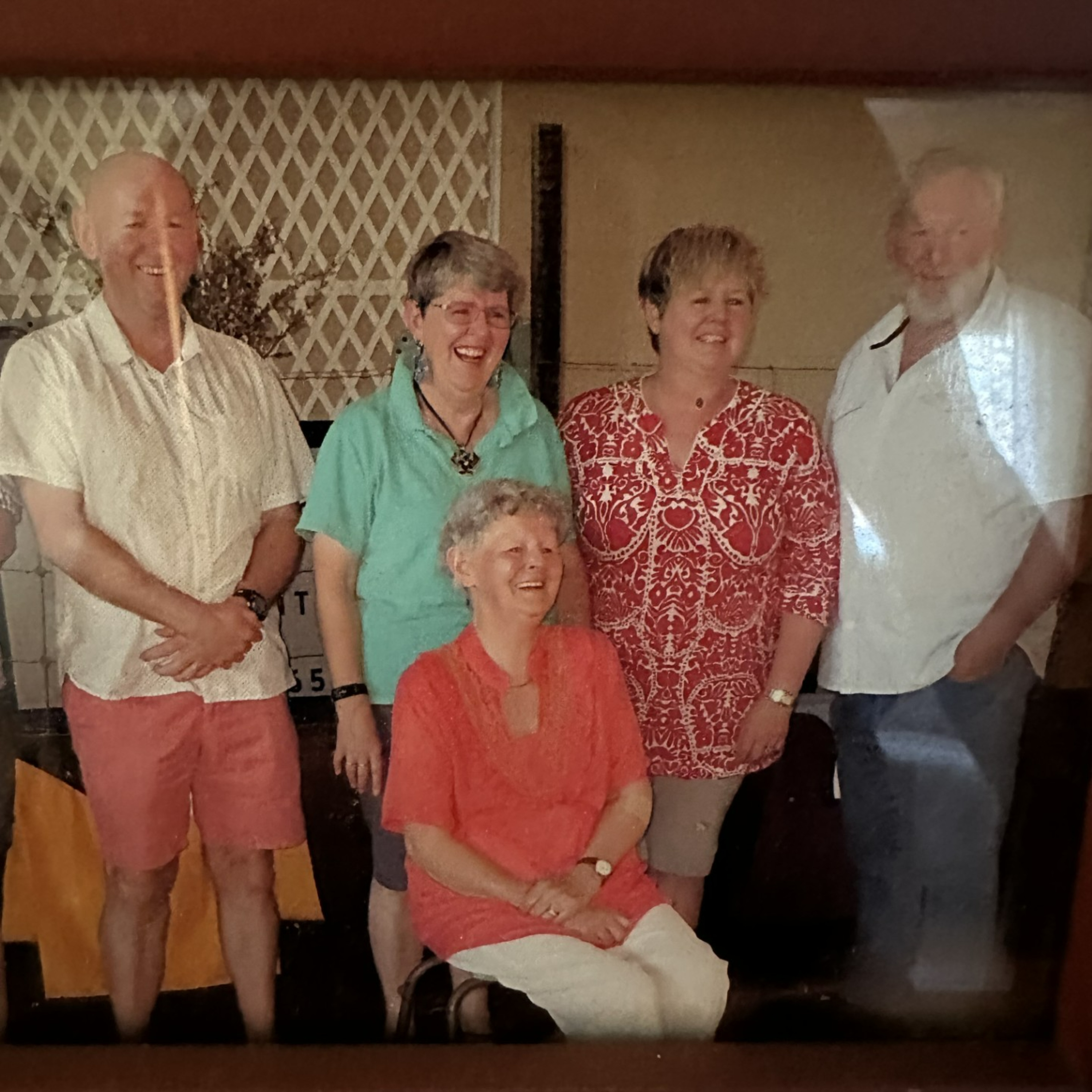
Episode 29 - Denise Houlihan: VISE Diaries. A life in the outback
62m 37s
This podcast episode centers on Denise Hullahan's experiences as a volunteer educator with VISE in remote Australian communities over ten years. The hosts discuss her consistent documentation of this journey through daily diary entries. Excerpts are shared, beginning with her arrival in April 2000 to live and teach with the Scott family on a vast Outback Queensland station. The entry vividly describes the long journey, the landscape, the welcoming family, and the adjustment to a new lifestyle surrounded by distinctive wildlife. A second excerpt details her transition to a new placement with another family, highlighting the continuous warm receptions and her role with the School of the Air. Denise explains she wrote the diaries as a personal record, never intending for wide publication. The diaries have since been digitized by Vision Australia, allowing her to revisit them and enabling this sharing of her unique perspective on remote life, education, and the meaningful connections she formed.
[Music] We acknowledge the traditional owners of the land on which this podcast is produced and broadcast and we pay our respects to elders past, present and emerging. We honour the deep cultural, spiritual and historical connections that Aboriginal and Torres Strait Islander people have to this land. Please be aware that this episode may contain content that refers to or discusses topics related to Aboriginal and Torres Strait Islander cultures, histories or individuals, including references to deceased persons. This may be distressing or harmful to some listeners. We encourage caution and offer our respect to those affected by this content. [Music] Hello, Kane Forbes, Lois Lo and Luke Balkan from Caster & Connections team today to bring you another fantastic story to listen to. Lois, how are you going? I'm going pretty well, thanks Kane. Good to hear. Joining us for today's episode will be. We have the pleasure of having Denise Hullahan back for a second recording. Thanks for joining us again today, Denise. That's wonderful, thank you. All right, so today's episode will be a little bit different to our usual interviews that you've been accustomed to listening to. And we're really excited to share something that's really special with you guys. So if you're returning, listen up. Thank you for your ongoing support. And if it's your first time tuning in, we hope that you enjoy this episode and check out some of our past interviews. Denise's full interview is now live on all the major platforms. In that chat, we touched on her incredible work as a wise educator, profiling across Outback Queensland and the Northern Territory, supporting families and teaching children in remote communities. Lois, for those who might not know, what does Vice stand for? Now correct me if I'm wrong, Denise, but I think it is volunteers for isolated students education. It is right, very good. So for 10 years Denise spent the years living and working in the Outback and what makes this journey even more remarkable is that she kept a daily diary the entire time. So today we have the honour of relieving a few of those diary entries with Denise. Denise, what inspired you to document your journey so consistently? And how do you stay motivated to write every day? Well, they all started with an article in Hamilton's spec about some other teacher who had gone as a volunteer in Queensland. For six weeks you're only asked to go for six weeks, so I thought well, I can do anything for six weeks and 10 years later I'm finished. But I only went for six months each in the two middle terms because I found it much too hot in the first and last terms even up in the North. I'm not sure only is the right description today, so that's a long time to be away from what you call home. Well, I had no one at home, there was only me, so it was good. Amazing contribution that you provided to those families and the support you're able to give but also I'd helped you through a tricky time, didn't I? Yes, there's a wonderful life for me and so many beautiful families and showed me all these special places and all the all around their stations and the towns and special education for me. Yeah, absolutely. So what do you think it was about the diary entries themselves, Denise? What did actually keep you so honest to writing those every night? Was it that you wanted to have a everlasting memory or just focus through the actual diary entries? Well, I used to just write every night just whatever happened and what I felt like about it because I felt like I'd write what I wanted in my diaries and I could say what I wanted about him, I wanted him and nobody but me would read the mentioned it was somebody would but the people involved, there were none of us in anything bad because they didn't have anything bad to say about most of them but whatever I did say I said to myself. And now the whole world knows. Well they will shortly anyway. Oh well, if they're bad the terms are right but no they're a wonderful life. I guess the teaching background coming out with the writing and yeah we're just the beneficiaries have been able to relive it with you through your eyes. So you'll actually, I did two or three creative writing courses through the casted and community centre so that helped me inspire me to write more. Oh there you go. Right. Very good. So where can we find these diaries? Can you add some information on that? Yeah so we're going to go through a few of them now and talk to them but there's about 600 entries obviously Denise being away for so long and yeah very diligent in writing those diaries. I have got a copy of all of those which Denise is very kindly shared with us and has said that if anyone would like to listen to more than what we're going to listen to today to reach out and we will be able to provide them. So before we do get into that there is housekeeping for lack of a term that we need to cross off. So we do want to acknowledge vision Australia's contribution to the diaries. They did digital, did digital ties all of Denise's handwritten diaries so that Denise could still enjoy them now that she's losing her vision. So the following information that we're about to play was read by a volunteer narrator and produced by vision Australia as part of the federal government's print disability grant program. So thank you very much to vision Australia and to Denise sharing her story but for vision Australia to be able to give Denise the opportunity to still relive these moments and we're now going to share those with everyone else. So look if you wouldn't mind could we start with the first diaries which is from April 1st 2000 which I think was your first visit in the voice program Denise. And ironically April 4th date does that mean? Nothing to offer. A new beginning no April 4th, 1st April 2000. Rosetta, Mt. Kuhlann area, Gavin and Donna Scott. Wow what a change of lifestyle in just 13 hours from Sydney to Outback Queensland via Brisbane, Townsville, Chartres Towers, Berlaken River, Veliando Crossing, Coulomb and a long rough winding bush track over rivers recently flooded, Fords, Creek Crossings, Catalgrids and very few fences. Frequent stops to avoid beautifully sleek bram and cattle feeding by the road and such feed lush green grass 18 inches high amongst almost continuous scrubby vegetation. Miles of China apples look like crab apples introduced by Chinese, Poulabas black butt, blackwood entirely different from Victorian variety, more grey green like tea tree, beautiful tall slim white trunks and limbs, type of gum, one of many varieties. Chartres towers are very old gold mining town with many magnificent old buildings and old-style houses built high off the ground with lots of lettuce work, shelters and onate cooling devices. The whole main street looks much as it would have done 100 years ago with all street veranders intact and buildings restored. Huge working gold mines some miles along the road. Dark when we arrived here about 7.30 pm, Donna and Gavin met me at the airport and we were soon very comfortable together so we enjoyed coffee then they drove me to see some of the town. Stopped at a roadhouse truck stop for lunch about two and what a meal. I had half-serve of fish which overlapped the plate with very few chips that filled the rest of the plate plus a big bowl of all sorts of salad, plate of bread and butter and a pot of tea. All delicious and all for $8.50. We had some interesting talks all the way home so the time didn't seem long and I wasn't too stiff when we arrived. Brooke 7 and Dylan 5 gave me a very friendly reception so we should do well together. The school room bedroom was a big caravan but it's very well set up with aircon and a big fan but no hangers or hanging space. A plenty of drawers I guess everyone lives in shorts and t-shirts. It was pretty hot all day but when AC in the car I didn't notice. Pog of a cyclone hitting the coast tomorrow. Hopefully we're far enough inland to miss the wind and only get the rain. They've already had 18 inches since January and another 18 inches in November December. Gras is all seeded and will dry off once the rain stops. 80,000 acres on this place but they have three others all around. A brother, father and a manager but all work together. Mac Gavin's mother on the track driving a big truck to meet the other son to bring home balls that he picked up in Bowen. Stock quarter horse stud dozens of horses used for stock work as well as cab drafting. Motorbike and yutes on the go from early morning. Not too impressed with the wildlife. Dingoes in the garden at night also kill calves and goats. Wild peaks nearby, cane tones and frogs go low. When I walked out of the house I saw movement and there were frogs or toads ag hopping everywhere. Great food for the carpets snakes that live in any convenient spot. All the odd brown or typen don't see many of those. Made a beautiful black headed python on the road about eight feet long as thick as my wrist. A beautiful coppery gold with black head. Stop the car so I could have a good look and he wasn't very impressed. Much hissing and spitting with his head drawn back but he didn't coil or rise up like tigers. I have to go to the house for toilets so I hope I can last the night. Donna's mother was here with the children. She and her partner live at about 100 meters from the main house. Gavin's mother about 50 meters is father at the valley, another property. Sunday, April 2nd. Work about 6am after a very good sleep. Once I decided the noises around me weren't rags in the wall but trees brushing their caravan. Found this morning that there's a tarp tied over the van and that was moving in the wind. Gavin was out on the bike chasing horses that had got in where they shouldn't be. Wow Denise that was just such a beautiful descriptive start to your diaries. I'm just wondering if you close your eyes now. What do you actually smell and hear of that time? I see cane toads, carpets of cane toads and I see two little children who are eyes wide open waiting to take me everywhere and take my hand and show me their wonderful places and all the parents and grandparents who made my life so wonderful. But another whole thing was was hot and dusty but there were head air conditioned half of a caravan lived in one half of a caravan and the school room was in the other half and there were no cupboards or anything but it was head air conditioning so that was the main thing but that was my first introduction to the outback. So what about the smells? No I didn't notice smells. What about the noise from around the air? You know there was a mud run if you cattle lowering or something but no it was very very quiet. I suppose I noticed more of the time when I went on but at that time I was just happy to get there and see what was happening and who was there and where I was living and it all settled down to be very good. So you didn't feel overwhelmed at all? No not particularly. People were wonderful and they were more overwhelmed than I was in fact. The mother of the children met me at the airport and she was a very late age. I was just about to go and get on another plane and come home and she came rushing and she said "oh I've been so so worried and so upset that I was waiting at the departure lounge." Well lucky to get on that plane today. Yes she was very lucky and they're by whole buy's adventure would have finished then. Well no she was very nervous anyway. They were all settled down. So your first impression of meeting the Scots was a good one and then that relationship was formed from then? Oh yes and then one of the parents lived by too so they were all part of the family. I can't get over listening to that how there was such an abundance of wildlife and I can't imagine to think of how you become accustomed and the way you describe that snake I think and that's not pretty in my eyes but no but they did cane tones. I mean every time I open my door the carpet of cane tones looking up there waiting to just listen to the waiting to eat. Yeah. I hope none of them ended up in in the caravan or in the bedroom. No I've done it in the caravan no. I just have to stamp my foot and they were all disappeared. The other thing that I think you descriptive writing of lunch on the way up you know eight levels 50 and you get this massive plate of magic and try to get that somewhere today. And imagine me trying to eat all that. One thing I'd like to ask Denise 80,000 acres that is a massive property and you tell us a little bit about that. No I didn't actually see much of that one they just they came and they took their motorbikes in their cars and they went everywhere and nothing they had any horses which was always used to on property. But no they took me out to see wherever they were. All their favourite places and their water holes and then and and he placed at the children love to go to anywhere they went into town they took me somewhere so it was a very you know very happy life the parents and grandparents were very friendly and the children even the little boy he he wanted to be in school. So I thought what was going to be there he was sitting outside playing with a playing with a pet towed of all things. He sat outside the school room and his parents went off working so I thought what he might as well he's five years old he might as well be in school so he came and he leapt it up. So that was all good. Absolutely and I think just on the farming so I had Denise in some of the other episodes you had written about some and it may not have been he would discuss but some of the issues that they had from the wild boars and their cattle and that sort of stuff so there'd be some clear challenges farming up there as well. Yeah it's like well I wasn't involved like I didn't sit and listen to them all in sympathise but I didn't have to be involved. So that was a big thing but there were so many problems that had to face. Yeah absolutely. All right we might move on to the next diary entry which is number 47 of the diaries and you're still in Queensland so have that one thanks. Monday 15th of May. Left motel before 8am had breakfast at a nearby service station at an hour at the beach, diad at a couple of jobs then we headed for Charters Towers. As we waited to order our lunch a nice looking middle aged lady Kang and asked me if I was Mrs Hullahan and so my next placement began well. She was Alison's mother Doreen Sealy and she had her mother Daphne 84 with her. We all had lunch together then transferred my luggage and had lots of hugs from all the scots and Chrisse as they left. Doreen had several jobs to do around the town so we went to drop Daphne with her sister a lovely sprightly 89 year old while we had a good look around as we drove from place to place. Met another very interesting lady, wife of the carpenter working on Doreen's house at the station Jirina. She's an artist among other occupations with some brilliant paintings, pastels, etc. that she's done. Went to the distance Ed's School of the Year, met the teachers, had a tour of the school, very educational. Back to have another cuppa with Daphne and Ilene, then finally we were on the road for our three to four hour drive out to Jirina about 5pm. Enjoy the new country to look at dark. About seven we stopped at a little service station at pennant, watched the beautiful silhouette of trees black against the clear green orange sunset. And thought of me being there or watching the same sunset at Coinder so far away. Drop Daphne at her home in Prairie, headed down the Muttabara Road, pretty rough in places, lots of kangaroos, very warm welcome here from Peter and Allison, who was probably more nervous than I. Big old rambling house, ground level with huge patio area, roofed and shaded by shrubs, ferns and creepers. Had a good sleep after such a long day. Peter and Allison urged me to take it easy tomorrow and just do whatever I wanted to. So I'll see what eventuates. Children all asleep when we arrive. Don't need some just an aura of how descriptive it is, like it's almost like we're living it. Like it's amazing. The amount of information you put in. That's my, I wanted deeper, wanted to share it, you know, to live it with me. And I hope that some people have enjoyed it, which I don't know how many people have read it, but I enjoyed it recording it because it's something I want to remember always, other than I need to write it down to remember it. Yeah. No, I'm so lucky. So when you listen back to it now Denise, what feelings do you have now? And maybe what feelings did you have then when one you're leaving the Scots, the first family that you had, but two you've now come to a new area and the second family. What do you recall of the feelings at that time? I remember they were more nervous than I was, I think, because I had had one, no, placement, so I was a bit used to it already, but they were the family with little children and I think the mother was even pregnant again, so. But to know I was quite happy to meet such a lovely family and the children were delightful, so. Yeah, and what about leaving the Scots like you'd spend? Oh yeah, so I do. That's many every day, every few weeks or months it was hard to leave, to leave a good family like that, but with all the promises to meet again and do this and that, but we never did. Yeah. Because you just don't get moved around in a country like that. Yeah, well, if they are somehow tuning into one of either your previous episode or this story's episode, hopefully they can hear it and maybe they'll make the venture down south and give you a visit. That'd be amazing. That'd be a wonderful wouldn't it? I think I've had my days of driving north, but I think I'm right here for the rest of my days, but I've had some wonderful experiences. Fair enough, I think you've done more than enough in the travel space. What about listening back to those Denise? How does it make you feel now? It makes me feel very, very lucky that I had those people to deal with and those experiences that they showed me all that they could have their property and their how it worked and all their cattle work and their children's work and school and the air. I was part of it all. Yeah. So I felt very privileged. So Denise, just geographically, you went from the Scots, which was situated actually where? It was in Queensland, wasn't it? Yeah. Do you remember what part of Queensland and then to here is it further north, south, east or west for us? I just can't remember where. Where was it? What was it? Chardest town? Chardest town, the school was it? Yeah, it was sort of very well west of where the Scots were. Yeah, okay. That was their school of air and Chardest town. So that was the base for school of the air? At the time? It was 100 km, didn't mean right up there. No, of course it's sort of like driving to Colreine for us. That is right. Yeah. So you mentioned about the artists, the creative, did you see much of a creative mentor in the people of the Outback? Were there many artists and perhaps more creative types out there, do you think? No, not the day. Not that they showed up very much, but they all did wonderful things on their properties and gardens and houses and things like that, but no, I suppose they all went away for holidays. I don't know what they did when I wasn't there, but no, they just had. They seemed to have good lives apart from their station work. Okay. So the school of the air stuff, were you involved with that at that time, with that family? Yes, that's the only reason I left home. I went to some school of the air. Is that my first placement I've ever forget now? This is the second one. Second? Yeah, well, the first one must have been up that area. So they're all school of the air? Yeah, as they all come school of the air. And the word got around each time as soon as I arrived at the first place, someone was re-assuming, she'd come to the next one and the next one. So your reputation preceded you? That's right, I only stayed for the two terms because it was too hot for the first and last term, so I declined to have anything to do with it up there then. And they're really hot, but they've got really hot. Fair enough, I don't blame you. But most of the houses, even the caravan, where they lived sometimes, they had air conditioning, which was livable. Sounds like it's a necessity rather than a luxury though. Yes, what I wasn't expecting luxury is that I had a comfortable bed and good meals and good company I was happy. So was it generated power? Yeah, it was like generators. Yes, it's generators. Which was better than lamps and candles. Yes, that's right. Which I had at home quite often. All right, very good. We'll move on to the Dio Entry 69. Tuesday 6th of June. Early start to go and find the straits and bring all the cattle from there into the yards. Alison drove the yut out or at least went out in it to where the motorbikes were, while she was out there listening to John Laws on the radio. She heard Peter Dowsley talking about the dog auction in Castleton and reading his poem about the kelp. They had the cattle in the yards here by 530 with no dramas. Already to draft off the old cows and winners, treat for botulism, lice, dock tail-ends, mark, brand, earmark and dip. Just a question about that one there. With a cattle, with a Brahman cattle or what sort of cattle would they actually Brahman? I think fascinating to hear so far away from home that the kelp auction gets a mention on the radio. Oh yes, that was. I'm sorry. Peter Dowsley was a great friend of ours, so we listened to all his and he did a lot of interviews with me and I taught his children in a extra after school. He was an excellent bush-powered too. He was still his. He used to love his poetry. He'd come and recited for me and I used to type it up for all his books or I had a computer at that stage and I used to type up all his poems for him. So you were so far from home and yet you have the mention of someone that you know? Oh yes, Peter was famous by that time at his poetry. Would have created a fair bit of buzz around the family that you're with. It was good. Good for him and for me to notice. He was still around. Yeah, absolutely. And what about the family that you're staying with at that time? I'm not actually sure who that is at the top of my head but did it help give them a better understanding of where you'd come from? Do you think? When I spoke about them, I spoke to them. Yeah, about the the Kelpie auction and on the radio. I suppose I mean I came from a sheep's stage. It should not a sheep's stage. A small sheep property and we had a few dairy cows and a few cattle so I had a bit of a mix of all. But I enjoyed and I know all the things that they had to do, all those list of things they did when they got the cattle in the yard. Yeah, plenty to do. And I didn't have to do any of it. So you could just sit and watch. That sounds like a good job I think. I like going out and the vehicle where they must it a lot of the time. So they must have just mainly with motorised vehicles not on horseback. No, very few horses. Helicopters. Yeah, Helicopter must ring. I noticed they talk about the radio and listening to John Laws. Was the radio on constantly up there when listening? I suppose it was but I wasn't, not in my room. Too busy reading and writing tonight. And teaching. And teaching of course, yes. I met you in a dance hall in Lolland. And recovering from teaching. In recovering from teaching. No, most of the children were wonderful. Speaking of which, what did you do for your dance time other than do your diary entries? How did you recover after a day? I used to go for long walks and the children all came and showed me their favourite spots and their favourite animals and their favourite places in the bush and took me to their special places and it skipped along with me and oh wonderful. I remember one little boy who was always running ahead and running back. He was only about five. He ran up this bank in a big waterhole and came face to face with a great big ball. So we all made a hasty exercise safely anyway. So you'd learn a little bit about the actual wild life in the area through those kids. Oh yes, it's true. Because they were all interested in whatever was went on around the mid-risk rate. That was so observant I suppose because that's and some families more than others but some of them just were just part of their life and it was there and they didn't notice it but I noticed a lot of things that they didn't notice. And I suppose it was pre modern technology you know they all didn't have a computer in front of them at that stage or mobile phone etc. So they're probably a little bit more involved with nature around them. But they had a computer for school lessons from school and they came from Elder Springs most. Yep. Great thanks for the insight today. So we'll go on to entry number 86. Friday 23rd of June. Quite day again today. John still away to leaving, Peter a whale day on the Lycrone. Allison had a bat migraine and Doreen seems very tired and in pain with her knees and feet. I was very tired too but after I had a rest for a while and went for a long walk I felt better. The girls all wrote their bikes with the inevitable spills in the sand and gravel but no great drummers. I figured if JoJo could sit up and yell that loudly she couldn't be too badly hurt. In spite of the others urging me to run fast. Another beautiful sunset and strong night-to-time perfume from the trees. Lizzie gave me a sticker for the best teacher in the world. Jessie told me with a big hug you're just so beautiful and I love you so much. I'll never forget you. When I said she would probably have forgotten me in a short time she said no I'll write your name down rang home all have colds and weather freezing otherwise everything's okay. Making me homesick thinking how long I'll be away. Is that child that couldn't remember her name hardly? Remember her thing I did. She was gorgeous. You're saying about the trees the perfume of the trees there Denise. Do you remember what trees they were? It was mainly like mainly young lips. Yeah you could lift your hair so it's in poppy waddles or something up you get in there but it all smelled beautiful as you drive through. Yeah so it was more like you're straight in bush just up not so much tropical. No just bushland. Yeah and the lick run. That was when they had to take your special lick for the cattle that put in in our spot in tanks or something and then that was just a supplement to their feed. Yeah. So that was a big adventure going to see the whole country when they went to do the lick run. Yeah so that took them better than a full day I suppose. It was probably half a day at a time and then perhaps more the afternoon but it was a very great experience when they took me with them. So it was just great. Yeah. They all loved showing me their country and all their special places so that was made it even more beautiful for me. Yeah made you included within the family and the farm life etc. That's right. Yeah lovely. Seeing some of those outback sunsets must have been incredible to Nase. Oh yes they were but I mean even the sunsets you were glorious but some saw them so were extra glorious and I was so lucky to be there at the right time. Well I'm going the other way now. What about the night sky? Well the Asakutai just often used to go out every night and go out and admire the stars that they were so so brilliant. You couldn't believe that you could almost touch them. Yeah but that was never I don't know why they were so different but I didn't ask any questions. What's the solution I guess? I don't know I just went out in the dark and and student watched them for a while every night and I didn't notice any difference about our day so they were all different at different times of the year but they were all last in bright and clear. Towards the end of the interview Danesha did say about home sickness. Can you explain a bit further about that? No I don't remember feeling homesick but I spoke once a time came I thought of all the things that they were the children the grandchildren. I suppose there was great grandchildren even then that were living near me. I'm near my home and my own children of them are their old adults and their children's grandparents themselves some of them by then but I suppose I was just wanted to get home and do what I wanted when I wanted without having to worry about anybody else. But I don't think I missed all the families but they were great friends all the time I was there they did everything to make me happy. Make you feel as honoured and the children were all beautiful even even the bad ones. I remember one fellow who gave me hell the whole time in school for six weeks and he said are you ready leaving? So I'll be so sad when you go well you're the best teacher in the whole world and then he's five year old brother saying well I wouldn't be sad because my mum's a much better teacher than you so that brought me down to earth. I didn't go back to the next three years. I was just the kids definitely have no filter do that they just tell you how it is. So did you actually go back to some of the places more than once? Yes, most of them only went for six weeks but I found needed special help and needed extra extra because their parents were sort of didn't have big help but the mothers were working on the station a lot of the time and the children only had sort of teaching you know during the morning and then they had to go out with their parents working in the afternoon. So I think I was quite welcome to not bother children so much seeing they had to stay in school. They would not rather be out. They were taught me more than I taught them probably. Yeah and they were all primary school age. Yes they all went out and they went to they had Ellis Springs, Warding School. Yes that must have been a big challenge for them. Yeah massive challenge. But they all seemed to like it though. Yeah I suppose it's just what they used to them what was done by their peers. It was most of the children there were from our back station so they were all in the good company. Yeah. All right so we move on to Dory 157 which actually moves us out of Queensland to the Northern Territory. That's right. Tuesday 3rd April, Met Julie and spent a very interesting hour discussing her assignment. How I feel about education as a member of this Aboriginal community. She was a bit shy and hesitant but soon became more assured and confident. I thought she'd be a young girl. The Sharon told me that she was about 45. A grandmother, sister of the traditional owner of the land and that she'd done three years of her dip ed some years ago. But when her husband started going with other women she became such a drinker that she didn't finish. So then she had to start again. She only has one semester to go so I hope she gets through because she has the making of a good teacher for Aboriginal children and firm ideas about what they. Denise can you just explain to those listening your first interactions with Julie and what involvement you had mentoring her? I've forgotten she would shoot one of their Aboriginal elders but I mean I wasn't I think that was just something extra when I was working on a station. I just said. Yeah I think someone reached out to say to you about helping mentor Julie so that she could become a teacher. That's right. So I used to go and I think she probably lectured me more than I lectured her but I didn't know. Apparently I was able to help her along and help her become a teacher of the Aboriginal children but I didn't have much to do with teaching them. But I know she's not bleeding. No she was a wonderful worker apparently. She did all that study and to be prepared to work with her own people. And after what she obviously means for us, we can shed a you know sounds like it was a little bit tough for her. So you said that you know you were helping her and then you just mentioned something about you learnt from her as well. So what did you learn from her? Oh just being an Aboriginal leader of things that you don't know about the Aboriginal people. You just really have the culture and so yeah. You just think they're there black people who many people think that some of them despise them but it's incredible what they learn and what they could do with their own lives if they're left alone and with some help. Yeah but she was a wonderful teacher and I enjoyed helping her as much as she enjoyed helping me I think. Yeah that was all part of my education. Learning from each other. All right great thanks Denise. So um, do I rent three one six five now? Easter Sunday 15th April Sharon had arranged for me to attend the Aboriginal Service at the local Anglican Church. So I'd usually arrived at 10 a.m. to see only one other white person there. The singing was just beautiful even though it was all in Kunwinchku as was the whole service. The little steel church with its stone flagged floor had lewers open all round. So while I said and listened I was able to enjoy the beauty of the billabong at the foot of Inialak, a rocky hill. This is one of three hills around Owen Pelley. Inialak, Argu Luq and Nim Babair. Very important to Aboriginal culture. Inialak in particular has many ancient rock paintings but unfortunately it's inaccessible in the wet. In the later afternoon, Derek took us all for a drive to the crossing on the east alligator river. As word had come, that four by four vehicles could get through. I was amazed at the amount of water and depth of mud they could drive through but there was still nearly a meter of fast flowing water over the crossing. The scenery along the way was spectacular. Very close views of the rocky escarpment where Aboriginal remains have been put to rest for long ages and are still to be found by hunters or anyone exploring. The people believe that their bodies must be left to return to the earth to continue life cycle and reaching the earth to support future life. Miles of flood plains covered with lilies, not quite blooming, lots of birds, families of aborigines camping and fishing, they light fires wherever they are and cook their fish, kangaroos, ducks, snakes etc. Wow, that's just fascinating. I find it. Yeah. I'm so lucky to have done all that. So that landscape would be really quite rugged. Is it the red dirt, red cliffs type place? Was it? Do you remember? Not that far off. I think it is more a little cattle country. Okay. Okay. Now what really interested me in that was the cultural verse religion thing and how similar they were in a way. You know, you're saying, I'm presuming Christianity within the indigenous community with missionaries etc was quite. You know, through the 50s and 60s was quite strong but yet they still had that, there's still that cultural connection. Did they run? I don't know what they did but they yeah. Some of them came to the churches but there's only I think one other aborigine lady was there when I was there but yeah. I think I went to the Anglican church because there was no Catholic church there but yeah, just better than nothing. Not much difference in many ways. Yeah. Just part of every Sunday so that was good. Yeah and I found that, you know, about the burial of the cultural burial of indigenous people. Very similar to in the Himalayas with Buddhists how they do exactly the same thing whether the the body is put back to the land for future youths for you know like other animals to survive on you know which is sort of pretty amazing isn't it. It's amazing rather than put them in big concrete places and just bury them deep in the ground. Yeah. Of the new way that's the way it is now I suppose. Did it ever feel strange to you Deney spend the only white person walking amongst these communities or did it just feel the norm? No they were very respond time. Only one time I felt a bit strange during this group of young young men sort of walking along talking together and I sort of I had to walk past them but they didn't just ignored me so that was all good but no I never had any trouble with any of them. Thanks Deney. So I'm really amazing in-sort into the indigenous community so thank you. So the next door entry is number one six six. Thursday 19th April after library Sharon took me to Inulac Art and Craft Centre. I spent half an hour admiring beautiful paintings and craft produced by the ladies from Pandanus but it was all pretty dear for stuff I don't really need besides there was no aircon and no seat in the display area so I was getting rather stressed by the time Sharon came back. Derek has a great collection of probably 25 to 30 Aboriginal paintings most as yet unframed. He gave me seven to choose from so I'd have one to keep but as yet I haven't been able to decide I'll pack it and post it home when I go to Darwin it's not framed. Often these wonderful artists come to Derek and others I presume with a painting to sell for beer gambling money and practically give them away. Some Derek has been given as gifts friendship appreciation of his work farewell etc. I don't know why they don't take them to the centre which is a co-op to help these artists by supplying the special paper a place to work promotion and sales. Many artists have a long list of worldwide exhibitions and collections and commissions yet apparently they can't wait till Monday for money. Two women tried to sell me a barc painting when I was out walking one evening and when I asked why they didn't take it to the centre they said it's not open. They were on their way to the club along with most others in the community who went their way there from all directions from about 515 onwards and needed money now. What other time is there? I love to watch all these people from babies to old people all walking in the same slow measured way makes us Europeans look silly as we do our brisk exercise walks in the heat. I still haven't got more than a scouring not from the mail teacher I meet on my walks. What a happy life he must. To be so interesting to know the art that Derek had offered you there were seven pieces. Can you describe what the different pieces would do you remember what the different pieces were and then which one you ended up picking? No they were just by their local intelligence I forget now. In fact I gave the one that I took home to my daughter or son in law son I think. That was going to be my leading question do you still have it somewhere? No I didn't know I had a big picture on my lounge wall that's where it wouldn't be because it was a beautiful painting but I think I gave it to a son or somebody. I hope someone who would appreciate it. Yeah absolutely. No I don't remember what was in it. They didn't did me anything specific. Lots of patterns and things. Some of them like dog paintings or Lionscage. Lionscage. Some of the Alice Springs there were dots. Yeah I cut up that area with their lines. Lines. But the difference they can do with dots and lines. I know it is isn't it? I find it sometimes quite amazing when you look at some of them in art galleries. It's like an aerial view when you're looking down on them isn't it? Yeah. Well I've got a big painting of all but that's a big fish. It's all done in lines. It's just beautiful. They gave it to me as a parting gift from up there. Okay. I got a frame that I had sitting up on my wall. Yeah. But I hope somebody is enjoying it now. I don't know. Nobody lives in my house anymore. Perhaps some of the children have taken it. Might have to bring it and put it in your room here to nice. That could be too. I never thought about that. Yeah. That's good. Because yeah. I didn't expect to be here long. Well we hope that you are. There's no chance of going home again. So whatever is there doesn't matter. I didn't go home a couple of weeks ago. My daughter was down from Sydney and she was staying at the house for a few days so they took me home for the Sunday and had a water round the garden and look around the house. Nothing could change so I just left again. Do you know any of the names of the artists that did the painting or are they all ones that just Derek had collected at all? They were just Derek's collection. I think I did have a big one to hang but I forget. I forget the name which probably on there but I have no idea what it was. That's okay. I'm still an amazing memory to have and just to have something to bond you with that. Yeah. Yes and the way they painted us some painted with lines and some painted through the south painted with dots. And you wonder how they could all make the same impression. Very visually pleasing. Sure. There's a many landscape art. Did you see many landscape artists you know in the likes of Namajira and people like that or not? I suppose there were a few. A lot of them put their work in the other springs. Yeah. I didn't know any of them. Yeah. All right so moving on we've got Dora and Tree 167 days left. Sunday 22nd to Tuesday 24th April. Derek and Sharon have been packing till all hours as Derek leaves Tuesday at 7am. So we were very tired and enjoying a rest when the phone rang about 3pm and their lives were shattered. Derek's best friend, the local police sergeant, had disappeared while swimming at a remote rockhole on Cooper's Creek. He'd been called in a whirlpool, washed over the waterfall and just disappeared before his friend Guy could grab him. Guy rang Derek on his sad phone to organise territory search and rescue while he looked for Jason in case he'd been washed up injured somewhere and there are huge crocodiles in that area. Sunday and Monday, all sorts of rescue crews searched and finally they decided after divers had checked that he was probably in a very deep narrow hole right where the water fell. The weight and pressure of water prevented a retrieval there. So all day Tuesday, two helicopters flew back and forth from the open ground here. Where huge filled sandbags were lined up to dump them in the stream 30 kilometres away to divert some of the water. His body was found about 5.30. Even though I hadn't read Jason, I'd heard so much of him since I came, that I felt a little of the awful anguish the whole community felt over those days. The phone rang constantly as people asked for news "what just shared time?" We listened to radio and TV news hourly. Poor Derek had to leave on Tuesday AM without knowing what had happened, though he knew Jason had to be dead. He had 27 hours alone on planes and at airports, so it all hit him. What a tragic story. Was it horrible for you? Yeah, I imagine even though not being close to the whole community in East, that would have been a really challenging time. It was very bad for everybody in us both. I knew him pretty well too, but it was very sad. All that waiting and waiting and waiting in the happen to just dam the creek and the waterfalls. It must have been horrible for the families. And then Derek had to continue with work and have no support networks around him. That don't envy him at all, but you're going to not know. No, it must have been very bad for everybody. Do you think in tragedies like that, did it bring the community a lot closer together? Well, they all certainly worked together on that. I didn't have much to do with them at the parts of the school. The family I worked with, but as a whole community, they all came together and there was food everywhere and people helping each other and putting up people to stay for the funeral, all the ceremonies, etc. So with the schooling side of it, Denise, was it carrying on as normal and the kids trying not to disrupt their routine or was there some downtime? I don't think he had any children with us only, but it was ordinary school. I think we probably had a day off, we were just feeling unanswered, but apart from that, they all just came to school. It was a very hard time for everybody. So we'll move on to Dory at 1.95. Saturday 6th of July, another quiet day went for a walk at 7am, beautiful to be out just before sunrise. Mended some more jeans till I ran out of cotton with only one pair to do. Paul and a Jeff had the day off to go fossicking at 7am when Bevan was going to take them to a place and leave them. I hope they find their way home. Jenny took us all for a drive this afternoon. I love looking at this country. I continued reading a book on Tai Chi and tried some of the new exercises from it. I might get this book and really try to do the whole thing, breathing, concentrating, meditating, etc. Rather than just the five minute routine I've been doing. That didn't last for a while. One thing about you, Denise, I think you're willing to take on new things and try something different, no matter what, which I think is fantastic. That made it all a wonderful experience all 10 years. In every new for Monday, the next one is going to happen, it's all good. And if it wasn't good, there's plenty of support. Just got a visual of you out in the middle of the outback doing your tranquil attempt to do your Tai Chi things. I can see little kids sneaking around the corner having a bit of a peat and tea. What an earth is she doing. That's right. Much better to come and I'll show you my favourite walk. So I had lots of lots of walk for little kids. And the fossicking, were they fossicking for gold or anything or gold? I think I think probably they did get some gold. Sometimes, but I never found any. Very good. All right. Just a couple more to go, Denise. So we'll move on to the Dyer entry 216. Saturday the 14th to Sunday the 15th of July. Everyone was away working all day. So I did some baking and cleaned out cupboard full of old china, crystal and silver, washed it all and replaced it in its clean home. Some pieces were just beautiful, generations old, but seldom used. Kerry and I made a pack to enjoy small pleasures. So we've been using some of these pieces as well as old table mats and enjoying the discovery of a new bud or flower, etc. in her hard one, but lovely garden. She's such a delightful, articulate person and we get on wonderfully. Because we finish school at two, and it's too hot in my room, I stay up at the house and do any jobs that might help carry, that she doesn't have time to do. For example, redo the pantry, clean the fridge, replace paper in cupboards, start dinner, cooks and biscuits, etc. that disappear so quickly. Never thought that I'd be back to hand-beating whisking when cooking, especially to make a pav using only a wire whisk. Not my usual size or consistency, but delicious, inspired of being a bit brown and chewy. Other than thermo, not true. I thought of mum making all those huge light sponges with her spiral whisk, beating each for 20 minutes. To lie the 15th, an English tourist was apparently murdered on the Stuart Highway last night. So we're all a bit weary as it's only a couple of hours drive to hear. So you're talking to niece about the garden and the small things, the pretty things if you like. So it's sort of a bit of a, in my mind, a bit of civilisation in a harsh environment. I think Kerry, the mother of the children, she was a very lovely lady and loved all nice things and good things. So we enjoyed sharing any bits that we found, bit in the garden or bit in her cupboard because she had some old stuff in her cupboard. We enjoyed sharing those. So what about water for the garden? Was that warm water or must have been I suppose? Yeah, there wasn't a great deal of air water. And I think the niece in one of the other entries you mentioned about sharing or appreciating those little things with Kerry and you started using some of the fine china to have your cups of tea together and things like that. So that's a nice moment. Yeah, that's the deepest love, she was a lovely young girl. She was only quite young. John, her husband was much older and very, very different. Yeah, they came together. I don't know. So she and I enjoyed lots of time together. Yeah, I'm fascinated around the the different tasks you undertook. I mean, you're there to help the students and their education and that sort of thing but you do so much more. That was my own good as well as he is. I couldn't just sit around doing nothing but there were so many jobs and Kerry was, she did a lot of work out on the station as well. Whatever I could do for her particularly was great for her. I'm sure they're very grateful as well. And then obviously quite comical talking about the making the pev with the with the wild whisk. Comical, I think it was amazing. You know, you have the idea of bepepe, yeah, your wrist must be very strong. Your arms would be aching. Oh, I'm happy she made these beautiful sponges up about that big, but this is well, better for 20 minutes. We have cooked them in a wood stove. Yeah, we're very spoiled really, aren't we? You think you think back back on that? But anyway, so in the back half of that interview, which in your diary entry you mentioned about the murder. Do you remember much around that? No, suddenly some English backpacker was murdered on the highway, I think. And I think in one of the other recordings that we may not be playing, I mentioned that the person was at large for quite some time. We were ever worried or concerned. The people they shot through your own gate, but that wouldn't have helped if necessary. Yes, everybody was sort of looking out for him. Yeah, he never came, so that was good. Yeah, it wasn't the felconia murder, wasn't it? It wasn't the felconia murder, was it? Could be, I forget now what the name was, it sounds familiar. So insightful and so grateful to be able to share it. So amazing. And as we mentioned earlier, in the episode that if anyone does want to listen to the rest of Denise's diaries, all 600 of them, please reach out. Yeah, because as Denise said, she wants more people to know what the experience of the app was like, and if this helps get someone over the line, she'd be very, very grateful. So on top of these amazing diary entries, you've written a couple of books. Can you tell the listeners what they've called and what they're about? I think one, the main one was readers, rogues and red dust. That was about the main hell, ten years. And I just realised last night that it's gone out of my book case at home, so I got in as we're there. It's probably able to get copies of it online or even at the local library. It was supposed to be a couple in the library, but yeah. But that was the main one. It's overwritten. I've been, I was teaching at the first in school, it was called colour. And on the hero, I wrote the story of a life in a tiny rural school that was in about 1953 or something. Yeah, what was that one called today? Just colour school, I think. Color school, yeah. Probably, yeah. But then, various others actually. There's one about Granny knows wasn't there? Oh yeah, all things are Granny, yeah, that's right. Oh, that's Granny. Granny, we need to know that's right. That was a great, grand children asking, Granny, we need to know, Granny, we need to know, Granny, we need to know. So I wrote down ancestors to all the things I needed to know, whether they ever read them or not, I don't know. So if people would like to hear more about this amazing lady, try and trust those volumes up, because I think you will enjoy them. All right, Denise, thanks very much again for joining us and sharing some more your story. Hope you've enjoyed as much as we have. I'd love to, I'd love more people in the country to know what the country is like. And what can be experienced is not all red dust and drought out in the outback. And even if it is they go through it. Yeah. So I've been very lucky to be able to do that for all those times. So many lovely people and children and country that I've never thought to see again at all. There's anyway, so that happened just after my husband died and I was sort of sitting around for two years. I think I had a one knee replacement or one hip replacement one year and another the next year and then there's supposed to be a knee replacement and oh my god. And then something came up and said, "It's time we got out of here." So that's when I started going to the outback and then all of us were wonderful. It's meant to be. Fantastic. Fantastic. So lucky to be able to have it all and a family that approved of it also. And didn't mind me all being away all that time and enjoyed what when I came home to tell them about it. We're lucky and grateful. Please share this with us today. I hope a lot of people enjoy the, get to read some of the books because there's something that most people are not lucky enough to experience. Yeah. And thank you for all this. It's good to know that at least some others will hear about it. Absolutely. Thanks very much to those. Thank you for everything there. All good. Thanks. We hope you've enjoyed today's episode of one of our homegrown heroes. Jump over to one of our other episodes to continue the cast of connections journey with us. Please don't forget to follow our podcast and share it with your family and friends. Thank you for listening.
Podcast Summary
Key Points:
The podcast episode features Denise Hullahan, a former volunteer with VISE (Volunteers for Isolated Students Education), who spent 10 years teaching in remote Outback Queensland and the Northern Territory.
Denise meticulously kept a daily diary throughout her decade of service, documenting her experiences, the families she lived with, and the remote landscapes.
The episode shares excerpts from her diaries, including her first arrival in 2000, describing the journey, the welcoming Scott family, the vast property, abundant wildlife, and her transition to a second placement.
Denise's motivation for writing was to create a personal record of her remarkable journey, and her diaries have been digitized by Vision Australia to preserve them as her vision declines.
Summary:
This podcast episode centers on Denise Hullahan's experiences as a volunteer educator with VISE in remote Australian communities over ten years. The hosts discuss her consistent documentation of this journey through daily diary entries. Excerpts are shared, beginning with her arrival in April 2000 to live and teach with the Scott family on a vast Outback Queensland station.
The entry vividly describes the long journey, the landscape, the welcoming family, and the adjustment to a new lifestyle surrounded by distinctive wildlife. A second excerpt details her transition to a new placement with another family, highlighting the continuous warm receptions and her role with the School of the Air. Denise explains she wrote the diaries as a personal record, never intending for wide publication.
The diaries have since been digitized by Vision Australia, allowing her to revisit them and enabling this sharing of her unique perspective on remote life, education, and the meaningful connections she formed.
FAQs
VISE stands for Volunteers for Isolated Students Education. It is a program where volunteers teach children in remote communities across Outback Queensland and the Northern Territory.
Denise volunteered for 10 years, initially planning for just six weeks. She typically served in six-month stints during the cooler middle terms to avoid the extreme heat.
She wrote nightly to document her experiences and feelings, creating a personal record. She also took creative writing courses, which inspired her to write more consistently.
Her approximately 600 diary entries have been digitized by Vision Australia. The podcast team has copies and can share them upon request.
Vision Australia digitized Denise's handwritten diaries through a federal grant program, allowing her to continue enjoying them despite vision loss. They also produced narrated versions.
She stayed with the Scott family on a large station in Outback Queensland, teaching their two children in a caravan. She described the lush landscape, abundant wildlife, and warm welcome from the family.
Chat with AI
Loading...
Pro features
Go deeper with this episode
Unlock creator-grade tools that turn any transcript into show notes and subtitle files.
 PodcastTranscript AI