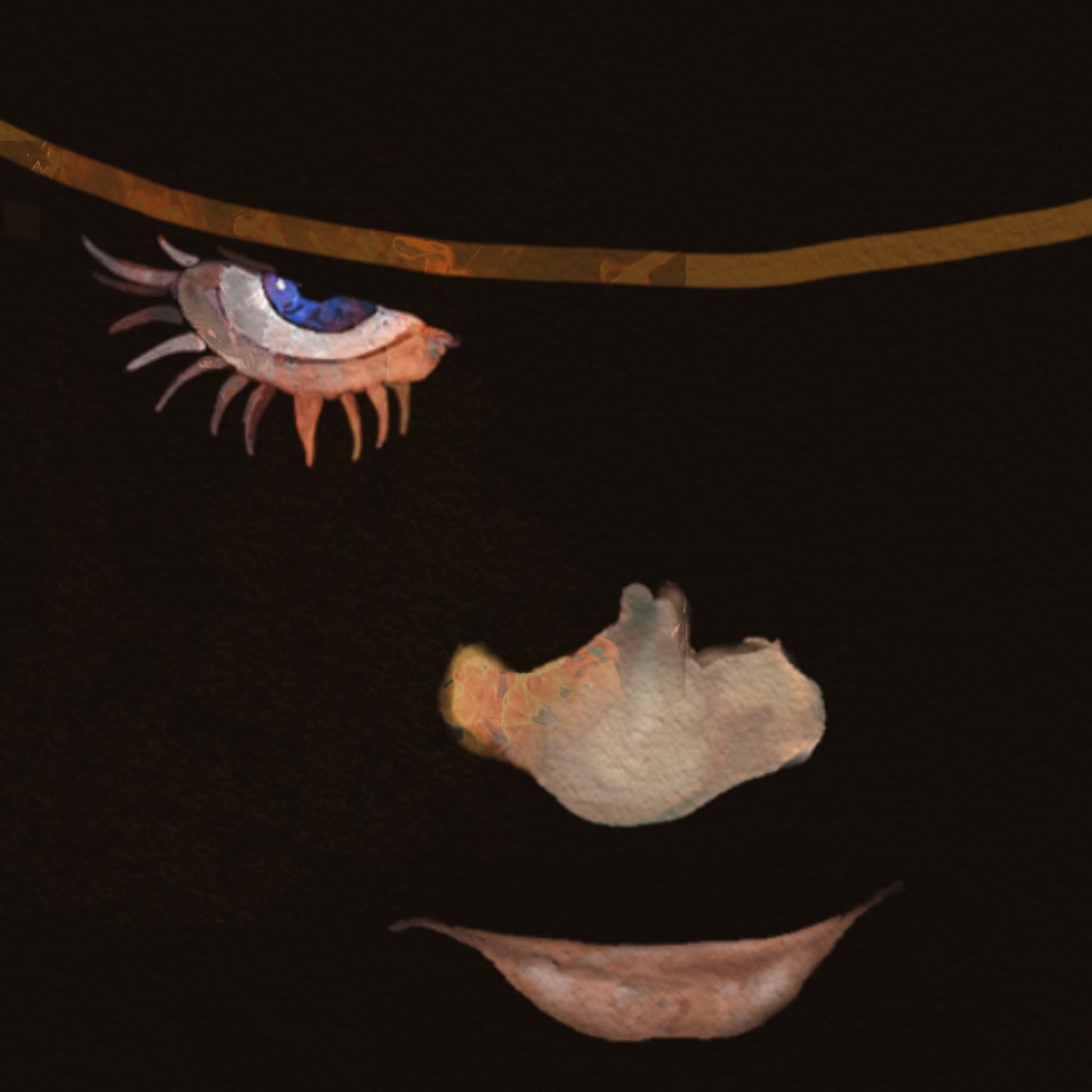
Episode 28: Malignant Narcissism: A Reservoir of Hatred and Violence
from Lives of the Unconscious. A Podcast on Psychoanalysis and Psychotherapy
30m 22s
This episode of "Lives of the Unconscious" explores malignant narcissism, a severe personality disorder that serves as a reservoir for hatred and violence. The podcast begins by contrasting Sigmund Freud, the "great disillusionist" who understood human nature, with Adolf Hitler, a grandiose and hateful figure whose march on Vienna is interpreted as a symbolic attack on Freud. Malignant narcissism, a term coined by psychoanalyst Herbert Rosenfeld, sits between narcissistic, anti-social, and psychopathic disorders. It is defined by five traits: sadistic pleasure in others' suffering, despotic need for control, Machiavellian manipulation, superficial charm that attracts followers, and paranoid distrust. Unlike psychopathy, it involves a perverse empathy that recognizes others' pain but delights in it. The condition often stems from childhood trauma, where helplessness leads to the development of an inner "dictator" that suppresses all weakness through self-hatred. This dynamic creates an internal "failed state" ruled by a tyrannical principle. In therapy, improvement can trigger self-destructive behavior as the narcissist resists dependency. While Hitler is cited as an extreme example, the podcast warns against reducing historical events to individual psychology, emphasizing that psychoanalysis is just one tool for understanding politics and power.
Lives of the unconscious. A podcast on psychoanalysis and psychotherapy. Episode 28. Malignant Narcissism. A reservoir for hatred and violence. How surely must such a man hate analysis? I am struck by the silent suspicion that the rage that drove him to march on that very capital was in fact meant for the old analyst who has made it his home. His true in proper enemy, the philosopher and dissabler of neurosis, the great disillusionist who understood and made such a genius understandable. His lines, penned by Thomas Mann, refer to none other than Adolf Hitler and his march on Vienna. The long time home of the founder of psychoanalysis, Sigmund Freud. Two protagonists, Freud, the great dissillusionist, who understood that the imp and the supreme ruler are in fact not so far apart. And in contrast, Hitler, the reckless gambler, who, like many of his contemporaries, took himself to be a grandiose superhuman genius, possessed by an apocalyptic hatred capable of setting half the world in flames and carrying out the most heinous crimes in human history. World history has certainly never failed to offer reasons and occasions to cause violence of all sorts. It is thus understandable how towards the end of his life Freud arrived at the following verdict. Homo, homini, lupus, man is wolf to man. Who in the face of all his experience of life and of history will have the courage to dispute this assertion? In form of violence in particular has played an especially sinister role, at least in recent history and continuing up to the present, the destructive power of narcissistic hatred. A particularly fateful expression of this has found in so-called malignant narcissism, a term originally introduced by the psychoanalyst Herbert Rosenfeld. It denotes a character disorder that occupies the borderline between narcissistic, anti-social, and psychopathic disorders. However, as we will hear, it is not to be equated with psychopathy. To the degree that we are inclined to make long-distance diagnoses of modern history, the figure of Hitler offers itself up as an extreme example of this kind of malignant narcissism. It would be accrued simplification, however, to draw conclusions about modern history on the basis of a single individual, and one certainly cannot attribute national socialism to Hitler's personality disorder. The concepts of psychoanalysis are an important but by no means sufficient ingredient for understanding modern history and politics. Thus, however, there is in the case of Hitler an unholy union between politics and personality, such that an analytic eye may be instructive here, especially in view of recent developments in politics. The phenomena of malignant narcissism, however, is by no means confined only to the upper echelon of totalitarian dictatorships, even if it is always found there. But it can be said to favor places where power is concentrated, including the power relations that exist within private and familial relationships. So what is malignant narcissism and what makes it so dangerous? Among the many psychoanalytic researchers who have worked out the specific features of malignant forms of narcissism, we would like to specifically mention the psychoanalist Otto Kanbag in addition to Rosenfeld, and we'll describe these features using five points. Number one, sadism. In other words, not only the willingness to exert violence on others, but the pleasure and enjoyment of their suffering. Joseph Stalin, for instance, had the habit of inviting to tea both those associates he was going to sentence to death, and those he was going to promote. Whoever received such an invitation knew that he would either rise or die. Stalin's greatest pleasure was in profidiously keeping his guests in the dark for as long as possible and relishing in their fear and powerlessness. This sadism is sometimes acted out openly and crudely, other times in ways that are subtle and highly sophisticated. Sadistic tendencies can be found in everyday professional life, such as a narcissistic boss who watches with pleasure as his subordinates fidget uncomfortably, fearful of a wave of dismissals, or who repeatedly keeps his employees in humiliating situations where they cannot defend themselves. Before they can be found in social situations in which the other person is helplessly at the mercy of overt, sadistic violence, such as prisoners in a camp. Sometimes, but not necessarily, sadism can shift into a sexual perversion, transforming into so-called sexual sadism, which is often acted out secretly since it is occupied with shame. Sadism is important for differentiating narcissism from psychopathy to the extent that it involves a certain kind of empathy. The suffering of others is definitely recognized, but this is a perverse form of empathy, a lustful empathy with the pain of others at which the sadistic violence is aimed. This is in contrast to psychopathy, which involves scarcely any empathy, where the other person is seen as a mere object of one's own interests without even the slightest inkling of how the other person feels. Number 2. Despotism. Attendancy to assume positions of power, to reduce others to positions of dependency where they can exercise complete control over them. Milignant narcissists cannot bear being dependent in any way. Most frequently, it is the other that is placed into a position of dependency, in line with the mantra, and if you're willing, I'll take as I must. The most extreme form would be the utter powerlessness of the victim in the face of a perpetrator. For example, in the case of certain perversions in which a sexual encounter is only pleasurable when the other person is totally and violently dominated. This is commonly accompanied by the degradation and dehumanization of others, and a readiness to violently break ties, even to the point of annihilating the other person if they refuse to be dominated. For instance, if they want to end their relationship with the narcissist, connected with this is number 3. Machiavellianism. Here, their pursuit of power is cynical, guided by nothing other than the accumulation of power. The good is that which serves a me, and end that justifies all means. This is accompanied by anti-social behavior, meaning behavior that denies the needs and rights of others in favor of one's own interests, the rejection of shared moral values, or the belief in being exempt from such principles. Be that in an aggressive way, such as overt physical abuse, violence, murder, or in a parasitic way through lying, forgery, theft, or deceit. Number 4. Charm and Charisma. This is among the most troubling tendencies of malignant narcissism. Namely, the ability to conform to social norms, albeit only superficially. To interact socially in compelling yet manipulative ways, coupled with an insatiable hunger for recognition, which, with malignant narcissism, tends towards subordination. Many narcissists manage to impress others, especially those who are insecure, dazzling and winning them over, inspiring open admiration and making followers of them, convincing others of their magnificence. They have a skill for appealing to certain longings and desires, and those who are sometimes all too willing to be seduced, especially if offered an outlet for their own aggression. In this respect, the psychoanalyst Wilford Beyond uses the term "weregressive groups," In other words, the longing to relinquish responsibility in a group.
to be rid of the burden of decision-making, thinking, and in general the burden that is one's own ego. Reverting to a childlike position of delegating one's own destiny to an omnipotent other who can provide for one's own needs while being able to give free reign to one's own cravings without having to take responsibility. It is precisely these regressive needs in the group that the narcissistic leader appeals to, offering themselves up to occupy this powerful position. The dangerous thing about this form of narcissism is that it does not directly disclose its destructive potency, but on the contrary arouses sympathy and hope. Number 5. Paranoia A basic, just-trustful disposition towards others, a tendency to be suspicious of others. The inability to form trusting relationships. The belief that one is being persecuted, exploited, or threatened by others. Paranoid tendencies come to the fore especially in the event of defeat or humiliation. In which case blame is placed on some other, on an insidious conspiracy or something similar. And to this end there is no explanation that is too far-fetched, even delusion will do. And anyone who contradicts that view is seen as part of the conspiracy, simply by opposing it. Even though it is the recognition of others that strive for above all, it is carried out with a basic cynicism or misanthropy. This mixture of sadism, egocentrism, tyranny, and paranoia has, as can be imagined, a disastrous quality. Especially when the narcissist can in fact seize positions of power and make his hateful fantasies come true. A task for which he can activate considerable resources. In research on people and positions of leadership, reference is sometimes made to the dark triad of narcissism, macavellianism, and psychopathy. However, with a slightly different emphasis. At the same time, the psychological inner life of malignant narcissism is often characterized by unbearable emptiness and meaninglessness, which nothing can fill. Not even real success. Indeed, malignant narcissism cannot be satisfied by anything. Not even the worship of an entire nation. This inner emptiness is an open invitation to all sorts of things, like so-called "worldviews" and ideologies, whereby studies have demonstrated that content is fairly arbitrary here. What is more important is how compatible it is with the structure of an individual's own narcissism. In addition to this inner emptiness, what is also often characteristic of the experience of malignant narcissism is a powerful feeling of being aggrieved and a persistent need for revenge. Indeed, envy is probably the governing affect in the case of narcissistic disorders in general. The chronic feeling that one is getting a raw deal. Nothing can be granted to other people. Joy is connected above all with the others' failure. Patriot and a thirst for revenge burns in the heart of malignant narcissism. A longing to finally get even with others, even if it is at the expense of one's own life and limb, even if the world is destroyed in the process. Aggression is not always directed against a specific minority, but is usually directed against anything weak, or that it at least appears weak. But we will come back to this in a moment. Although the feeling is of being kept back by the strong, the hate is directed at those that are supposedly weak, animals, children, women, old people, marginalized social groups. And truth, this hatred is the driving force of malignant narcissism, which also serves as a vehicle for drawing others in. For, after all, hatred is just as strong a bonding agent as love. One of the deepest cravings it arouses and others is the wish to become an angel of vengeance, avenging every instance of feeling wronged or held back. The promise of being raised out of some perceived setback and exalted into something glorious, be that a chosen race, divine warriors or anything else, all of which are mere templates for the narcissistic fantasies of superiority. This mechanism of enhancement and predestination forms the basis of many authoritarian movements and can be observed in sectarian structures which often form around a malignant narcissist. In contrast to psychopathy, the other is of tremendous, almost obsessive significance to malignant narcissism. There is a powerful bond, namely a bond through hate. The other must be attacked, their suffering must be seen and felt, they must be humiliated, tortured, killed. This is perhaps the origin of mankind's most destructive violence, for it surpasses any rational interest whatsoever. Malignant narcissism not only wishes to do away with the other, to dispose of him, to instrumentalize him for its own purposes, but also to humiliate and torture him in the process, even if it serves no rational end, and there are no limits to the monstrous creativity that will be employed. Herein also lies the colossal vileness of the National Socialist Race Laws, up to and including the concentration camps, designed not only for total exploitation, but also the total debasement of their victims. Another key feature of the inner experience of malignant narcissism is an inclination to self-hatred and self-destructiveness, which goes hand in hand with the hatred of others. As we have already heard in the last episode, narcissism is in no way linked with self-love. For the contempt also applies to oneself. Everything is submitted to the tyrannical principle of total domination, including one's own psyche, one's own body, one's whole life. Any weakness is denied, any pleasure, any passion, even eating and sleeping are reduced to their mere physiological necessity. If the ego or the body does not function as expected, it is manipulated, disciplined, subdued with drugs. Here, the example of Hitler may again be instructive, who was a physical and psychological wreck in the last years of his life, insufficiently sedated by drugs. There is a readiness to control oneself to the extreme, and if necessary, to annihilate oneself. Suicidal crises arise, especially in the case of failure, that can only be sufficiently blamed on others, according to the principle, better to take a bullet in the head than to cower as an underdog. In the psychotherapeutic treatment of malignant narcissism, this readiness for self-destruction is used as a means to gain power in the therapeutic setting, as Rosenfeld and Kanbegg have clearly illustrated in case studies. Paradoxically, such power struggles escalate at the very moment when an improvement is made in the treatment. For example, when anxiety or depressive symptoms subside. Such improvements are perceived by the narcissist as a triumph of a therapist. Thereby also granting the therapist some degree of importance, which entails the possibility of becoming dependent on their helpful support. However, under no circumstances can malignant narcissism accept being dependent on someone. Acknowledging in another, something that they may become envious of. Something so intolerable that even self-destruction is preferable. In response to the helpful improvement in the therapeutic relationship, self-destructive behavior arises, suicidal crises, self-harm, alcohol binges, or criminal acts. The self-destruction is perceived as a triumph over the therapist, who is made into a weakling, along with his senseless chatter, unable to counter the destructive potency of the narcissist. And in fact, it is often the therapist who feels weak and helpless in the face of these destructive dynamics. This of course occurs at the expense of oneself by destroying those parts of the self that need love, thereby plunging the malignant narcissist even further into despair. How can malignant narcissism be understood psychodynamically? We will see that self-hatred holds the key to the psychodynamic understanding of malignant narcissism. In the last episode, we heard how a narcissistic personality structure can develop. Malignant narcissism is so
to speak an extreme case of narcissistic character development. Often it arises in early attachment relationships from the traumatic experience of feeling powerless, inferior, of being at the mercy of others, helpless. The still developing ego learns that there is no answer to its need for love, its cries for help, and instead they are met with disdain, aggression, humiliation. Or if others, such as the parents, place their own needs above the child's in extreme ways. For instance, by abusing the child for their own emotional or sexual needs. Resulting an emotional neglect, even if the relationship may outwardly appear very intimate in loving. Frequently these early experiences of powerlessness and helplessness are faithfully reinforced in later relationships or in certain group dynamics. For example, through bullying in school, which serves as a tragic confirmation of the narcissistic principle, weakness has no right to exist. Their develops within the child's ego the experience that no other helpful persons exist. That childish neediness and helplessness can only lead to the absolute annihilation of the self. That it can only save itself by trying to control and extinguish everything weak and needy inside. The narcissistic defense consists in never again putting oneself in a position of weakness in which such pain is possible. This is done by gaining control over others, by dominating them, by avoiding at any cost one's own feelings of powerlessness, by occupying invulnerable positions of power. If not in reality, then it leads through one's own perceptions and fantasies. One's own feelings of inferiority are split off and transferred onto others. Others are made to feel weak, or at least made out to be weak, so that one does not have to feel weak oneself. In his work on narcissistic violence, the psychoanalyst Vinfried Trimborn distinguishes between three forms of narcissistic defense. In the first form, the other is sought for, sometimes like a voracious addict, while other times in a sadistic and degrading way. The other must always be kept dependent in a position of weakness. The second form brings about a narcissistic withdrawal. They isolate themselves from the world that they cannot control, erecting their narcissistic dominion in the inner world, which entails renouncing any external dependency, even for instance the necessity to eat, as is the case with some eating disorders. In the third case, one's own feelings of weakness and powerlessness are not only fought by forcing others into subservient positions where they can be dominated, or by trying to be completely independent of others, but also by negating the other person entirely. They are meaning their importance, and with it one's own dependency is denied, even if this involves actually annihilating the other. This last variant is what is meant in a far narrower sense by malignant narcissism. Herbert Rosenfeld has used a political metaphor to describe this psychological dynamic. The soul of a child who grows up in traumatic or neglectful circumstances is like a state where enemy reigns. There are no rules except the rule of the strongest. There are no helpful institutions or people to represent and protect one's right to exist and one's needs. In such a state, it is in fact a failed state. The mafia begins to organize itself. A godfather or dictator steps forward who brings a violent organization into being, which does, however, provide a certain degree of protection and structure, provided that one pledges allegiance to it entirely. Once a person has surrendered, there is no escape. Any betrayal is persecuted and tortured to death as a traitor. This is an image of what happens in the mental life of malignant narcissism. An inner principle develops out of the feelings of complete powerlessness, an inner dictator who promises strength and protection. It does this by eradicating everything weak and helpless, persecuting it with unbridled hate. In reality, it is the self-hatred of one's own infantile ego. Psychoanalytically, one also speaks of a savage super-ego, which in fact achieves a kind of mental equilibrium. However, it is an equilibrium of terror. As Rosenfeld describes, this inner landscape of the soul can often be discerned through fantasies and dream life, which are occupied by all powerful figures who oppress and torment the immature ego, often embodied by children or animals. Another common inner image is a mafia, mob or gang who persecutes and murders the imaginary ego, dreams that often gain particular virulence just at the moment in therapy when the person wants to break free from the inner gang to renounce the mafia. There is perhaps no better cinematic portrayal of such a gang than in Stanley Kubrick's clockwork orange. The paranoia of malignant narcissism is, in this respect, the return of the projected. It is feared in oneself what is seen as bad and evil is displaced onto others, who then appear as evil aggressors, corresponding to the mechanisms that underlie delusions of persecution. The tendency of malignant narcissism to externalize this inner dynamic by converting it into real relationships takes place with fateful consistency. Others of the identification with the inner tyrant and attempt is made to transform this ideal into reality. The hatred of one's own weakness and inferiority is transferred onto others. Here again is the mechanism of projection, where in others it can be fought against and exterminated. The murder of a victim as the most extreme possible consequence is in reality the murder of one's own detested self, which Winfried Trimborn calls the betrayal of the self. In the end, the secret main spring of hatred is therefore a murderous hatred of one's self. But here it is someone else who has to suffer the consequences and the pain. The narrative of malignant narcissism also ultimately includes real self-destruction, suicide. Which can be observed in the example of mass shootings as the culmination of malignant narcissism. Self-destruction often comes after mass murder. Or again in the case of Hitler, who shot himself among the ruins and corpses of his supposedly beloved Germany. At the same time, the sadism of malignant narcissism also points to a deep and extremely regressive longing to be in relation to others. Where the person hated is likewise sought longed for. Sadism, which in most cases is paired with pronounced masochism, is the attempt to merge with the other, to use violence to erase the boundaries between one's own self and the other, to become one with the other by dissolving them, by using violence to fuse them into one's own ego. It takes acts of violence that often go along with an experience of voracious intoxication, as if it was possible by force to undo all the separateness and otherness that is caused so much pain and suffering, returning to a state of indivisibility. What often lies behind this longing for death is the return to a state in which there is no frustration, no ego, and no other. The basis of which is found and the fantasy of an embryonic state in the mother's womb. Treating malignant narcissism is exceedingly difficult, often impossible. The crucial factor is how total the identification with the inner tyrant is, and whether the part of the self that is dependent and needy has been granted any right to exist. If this is the case, then it is in fact this childlike part that the narcissist is most afraid of losing, despite all murderous aggression used against it. The therapist is attacked and hated precisely because they give the childlike part a right to exist, and still the narcissist doesn't want to be abandoned. This poses considerable dilemmas and contradictions for the therapy. The therapist becomes the target of hatred, insults, and devaluation, not infrequently testing the limits of the profession, finding the childlike part that is in need of love, and being able to remain faithful to it, even despite all the narcissistic attacks remains the only chance of salvation.
This podcast is written and produced by Cecil Lutz and Yakkha Mullah translated in red by Solomon Lawrence.
Podcast Summary
Key Points:
Malignant narcissism is a character disorder at the borderline of narcissistic, anti-social, and psychopathic disorders, introduced by Herbert Rosenfeld.
It is characterized by five key features
This condition often arises from early traumatic experiences of powerlessness and neglect, leading to an inner "dictator" that suppresses all weakness.
Unlike psychopathy, malignant narcissism involves a perverse form of empathy and a strong bond through hate, driving extreme violence and self-destructiveness.
The podcast uses Adolf Hitler as an extreme historical example, but notes that psychoanalysis alone cannot explain complex political phenomena like National Socialism.
Summary:
This episode of "Lives of the Unconscious" explores malignant narcissism, a severe personality disorder that serves as a reservoir for hatred and violence. The podcast begins by contrasting Sigmund Freud, the "great disillusionist" who understood human nature, with Adolf Hitler, a grandiose and hateful figure whose march on Vienna is interpreted as a symbolic attack on Freud. Malignant narcissism, a term coined by psychoanalyst Herbert Rosenfeld, sits between narcissistic, anti-social, and psychopathic disorders.
It is defined by five traits: sadistic pleasure in others' suffering, despotic need for control, Machiavellian manipulation, superficial charm that attracts followers, and paranoid distrust. Unlike psychopathy, it involves a perverse empathy that recognizes others' pain but delights in it. The condition often stems from childhood trauma, where helplessness leads to the development of an inner "dictator" that suppresses all weakness through self-hatred.
This dynamic creates an internal "failed state" ruled by a tyrannical principle. In therapy, improvement can trigger self-destructive behavior as the narcissist resists dependency. While Hitler is cited as an extreme example, the podcast warns against reducing historical events to individual psychology, emphasizing that psychoanalysis is just one tool for understanding politics and power.
FAQs
Malignant narcissism is a character disorder introduced by psychoanalyst Herbert Rosenfeld, occupying the borderline between narcissistic, anti-social, and psychopathic disorders. It involves a destructive mix of sadism, despotism, Machiavellianism, charm, and paranoia.
In malignant narcissism, sadism involves a perverse form of empathy where the sufferer's pain is recognized and enjoyed. In contrast, psychopathy involves little to no empathy, treating others as mere objects.
The five features are: 1) Sadism, 2) Despotism, 3) Machiavellianism, 4) Charm and Charisma, and 5) Paranoia.
Charm allows malignant narcissists to superficially conform to social norms, manipulate others, and inspire admiration. This can lead followers to regress, delegating responsibility to the narcissist while giving free rein to their own aggression.
It often arises from early traumatic experiences of powerlessness, neglect, or abuse, where the child learns that weakness leads to annihilation. This leads to a narcissistic defense of controlling others and avoiding dependency, sometimes creating an inner 'dictator' that persecutes any weakness.
When therapy improves, the narcissist may engage in self-destructive behaviors like suicidal crises or substance abuse to assert control over the therapist. This is done to avoid acknowledging dependency on the therapist.
Chat with AI
Loading...
Pro features
Go deeper with this episode
Unlock creator-grade tools that turn any transcript into show notes and subtitle files.
 PodcastTranscript AI