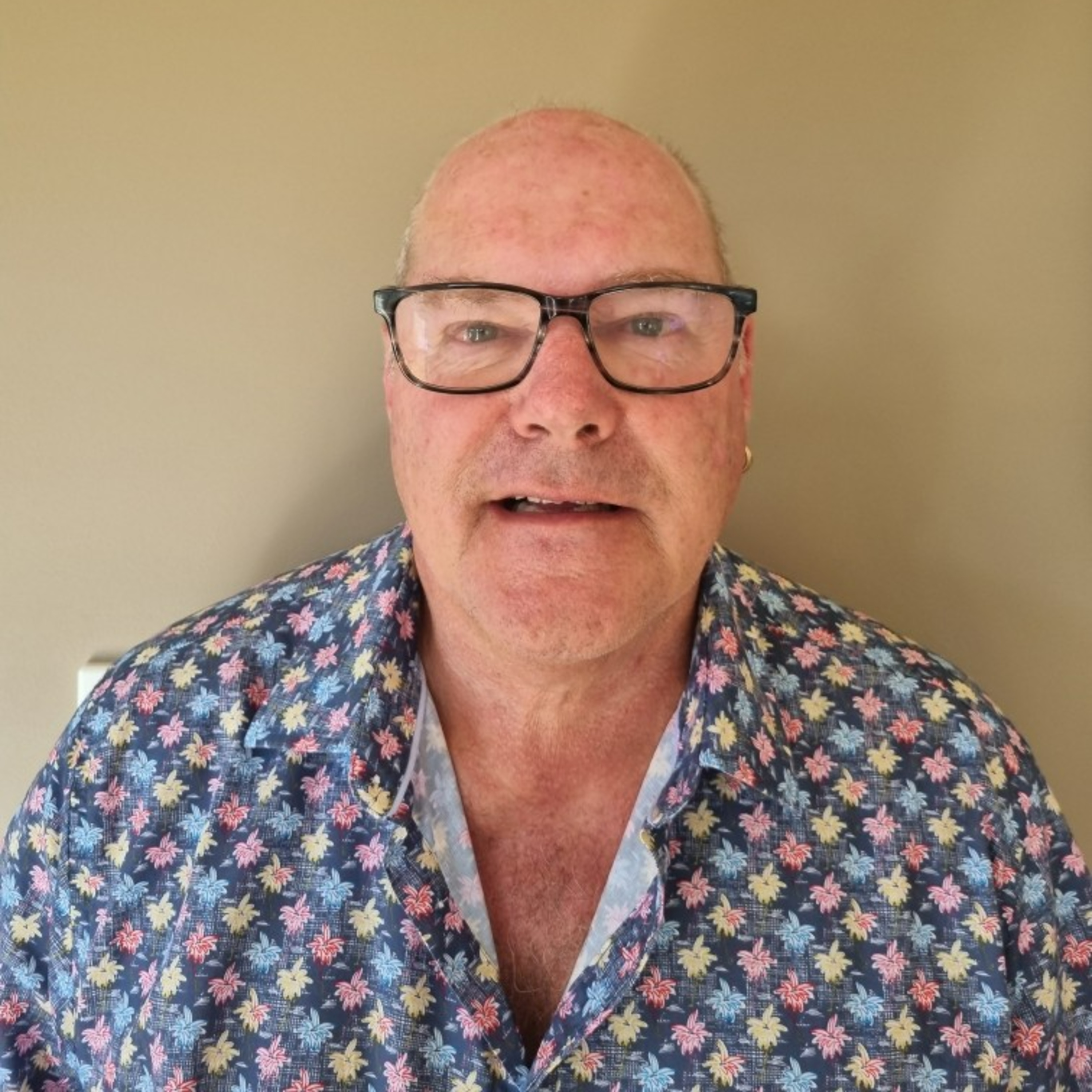
Shane Gill, born in 1961 at Casted & Hospital where he now works, shares his life story. He grew up in a large, financially modest family, the sixth of seven children, recalling a simple childhood filled with self-made entertainment like billy carts, river swimming, and riding his pony. He highlights his mother's extraordinary dedication in caring for the family and two sick elderly uncles. Shane attended Sacred Heart primary school and, after a local secondary school closed, was sent to a strict boarding school at age 11, an experience he found tough but formative. Unsure of his future, he was encouraged by his sister to enter nursing. He trained at St Vincent's, where he met his wife, Heather, and built a career he describes as a vocation. A standout memory involves a biker's compassionate visit to a lonely patient on Christmas, which taught him not to judge others. Shane emphasizes that nursing, while challenging, is deeply rewarding, requiring both toughness and tenderness to care for people during their most vulnerable times.
[Music] Hello and welcome to Casted & Connections. An initiative of Hands Up Casted & where a group of enthusiastic locals have come together to capture, preserve and share stories of people who have a connection to Casted & Connections. [Music] Born at the Casted & Hospital in 1961, the sixth child of Bobby and Jack Gill, Shane can still be found wandering corridors of the same hospital as a much valued professional healthcare worker. I asked a few people to describe Shane in one word. Interesting, humorous, compassionate, welcoming, comical, a bit of a wag, caring, obliging and unpredictable. So this should be an interesting chat. Welcome to Casted & Connections, Shane. Thanks for having me. The sixth of seven kids, broughting up World Book, recap, great. What's your memories of those early days? Well, a life that well-brooked with seven kids was, it was pretty simple. With seven children, my mum and dad weren't flush with money. We didn't have many toys much. We made our own fun. We used to make billy carts, we used to make one a week. Plenty of hills to go down, so that was good fun. We used to swim down at the river in the summer. We had a good swimming hole down the front. A lot of people from around the district used to come along, there'd be heaps down there. The shannans that come along, the crowsleys and the darts, we'd have a great old day, and barbecue, whatever. I had a horse, a little shatland pony, Nanny. I rode Nanny every day. Every ride after school, you know, it was six to those ten. And one day Nanny didn't come when I called her, she all white came. We found her up the paddock. Branch fell off a tree and where all Nanny was underneath, so that was the finish of Nanny. It was a bit sad, but we had good times. The two of us. You and Nanny. Nanny? Yep. Yep. She's a foster little devil, she's trying to bite you every time you get on, even though you're out of every time. Anyway. So you still haven't good times with Nanny? Yes. Yes. Very much so. Okay. So your mum must have been really busy, you know, you had seven kids and plus she cared for. She did. My dad's uncle's, Jim and Ted McAlone. It was their property. It was only a small farm, but Ted had a house up the back which was burnt down. And they were both sick men. No, it invulids in a way. And mum and dad took them in. I can't remember Jim. He was a bit older, but I can certainly remember Uncle Ted and he lived with us. He lived in the same room as my tell all the brothers, Gerard and Bernard. And I don't know how mum did it. Seven of us, tiny little lady. And you know, if you think I think in the nursing home, but one of the sickest and toughest people to look after, well that was Ted. He was bedfast. We used to have to get him up in the morning washing him and there was my job on Patrick's, young brother to push him out in the wheelchair to the fire and winter. And he'd sit there all day, mum would get him his meals and prepare him for bed at night. She did that for years as well as looking after a lot of seven kids. Amazing. It's only a little thing to mum. Yeah, it's pretty impressive, isn't it? It is. So you started school at Sacred Heart? I did, yes. I used to catch the bus in. Mrs Paa driving that car? Yes, Joan Paa was a bus driver. Now she would have to drop us off at Piedens because the government bus couldn't go up to the Sacred Heart, the private school. So we'd wait there for Jack McCallum to come along. You get on the school bus and go up the rest of the trip. It was interesting because then Bozo Lewis owned a little delicatessen there and he'd done. Each of us had a juggle oranges a lot of mornings. He's a juggler. Yes, so that ended at Thomas for that little time waiting for the town bus to come through. Yeah. So what sort of a school on with you? I wasn't the brightest bloke about. I had to work hard. When I was young from about the end of the grade two and three, era, I suffered a little bit of anxiety. I think I used to get this rash ran my mouth or run my lips around. It was very irritating. I don't know what it was. I went to Dr. Floyd and he put me on some malt, a big bottle of malt and had a great big teaspoon that every morning. I don't know what that did, but eventually I must have grown out of it. But distressing at the time, but I got through it. So did you have big classes? Actually, I caught up with Katie Floyd at her wedding long ago. She was in my class and we tried to go through them all. I think we got up to 20 in my grade, which is good. That's quite a few. I think overall the school was probably about 120 students when I went through. Did you have nuns? Different nuns for each grade you went through. Yeah. Good people. Yeah. Tough. Good. Do you ever get the stripe? The old ruler. Plenty of times. Plenty of times. Yeah. You can't tell us why. Oh. I don't have to elaborate on that, do I? No, you don't. No, you don't. You don't. So what about I remember you used to play for the double d's in Fuddy? I did. It was down Robin Durgan. Down Robin Durgan. I played in the other 13s. And then the under 16s. Love Fuddy. I wasn't the best footballer but it wasn't the worst either. I remember I played two years as a rower at Russell Johnson. He just grabbed it out of the ruck. He sent me right out to the hard forward flank and he just knocked it out there. No one could have beaten. I just pick it up and made it look good. I'd made it look good. Yes. Do you remember many of the other players you played with or against? Oh well yes. You had lots of teams wasn't it? There was. Well done. I'm doing them. RSL, cats. Jeff Newton was probably the best footballer I played with me by the double d's Stuart Munro. But there was lots you know Paul Carrey and your Gathrey and Kevin Quinn. Crazy boys that would come in which are will I think. But that's right. There were a lot of footballers about them in the days and good competition. Yeah. We used to train up at Durgan, cold shower afterwards usually. Someone had a little bit of copper. Who was your coach? Do you remember? Gerald McElay and Houston coach. Recall to be honest. Frank Hall of Han was always there. A lot of people on the sidelines coaching us. Yeah. So what about you also were a bit of a cricket arm in your down? I like cricket. I played a lot of cricket in Monterrey. But then I used to come home. I don't remember how I didn't play regularly for the Durgan. Durgan made two teams. Durgan won Durgan two and I was in two again too. Which believe it or it's made up pretty well made up of Gills, McElayns and a couple of the Divers boys and Errol Schultz and his son Mark and we pretty well had the team stitched up the full families. I remember one day I was last in the bat. So I was playing Paul McElayne. And we had about eight runs to win and we come in for afternoon tea and Gerald McElayne and John McElayne and Errol Schultz are all gay and you know, plenty of time, plenty of time. Don't rush. Just you know, are your shots. So I go out there and I'm facing first ball. I locked it. I'm an expel. I'd come down and I saw it sitting up and I took it and all mighty swing. Clean mist, stumps and bails everywhere. That was a finish of that. I don't think that impressed me anyway. Tony, you came in. You weren't playing playing for six shots. No, we weren't playing for six shots. Not at all. But that was enjoyable. Yeah. So when you completed your primary education at Sacred Heart, you then topped across the road to the old O-L-M-C, a lady of Mercy College. Yeah. Well, at the time, um, dad was the president of the Sacred Heart Parish and he was fighting during the school holidays to form one and two open at the Convent. And you know, I remember he spent a lot of time down at Ballarat with the Bishop, many, many meetings. Anyway, school started and thinking back, it was never going to work. There was myself, I think Kathy Humphries, Katie Floyd, and Peter McAlone. That was it. That was class. And we had our sister, Eurasia. So we went to school Monday and then we went to school Tuesday and Wednesday morning, my father woke me up. And that is never ever happened because he's always out working well then. I mean, I mean, troubled or something that's wrong. And he said, um, well, I'm sorry, Shine, but the school shot, you're off to, I'm on a, you're off to boarding school. I'd live in years of age. Oh wow. The only bonus out of it, they didn't start another week, so we got another week's holiday. It's happened to be the only bonus. This was pretty tough. Yeah. Yeah. Heading off to boarding school at the age of 11 when you'd been sheltered, out on the farm with your, your brothers and sisters and life was simple. Yeah. I guess the lucky thing was Neil Guthrie and Kevin Quinn were going to Monomy from Sacred Heart. So I had two mates, data, two people that, which was, which was, yeah, a blessing really. Yeah. They made the transition better. Yeah. So they boarded as well. They boarded. Yeah. So did you have many, how many boarders? Oh, look, when I was there, the fire can was probably 280. A lot of, a lot of boarders. Was it still in all boys school? Yeah. Yeah. It was. Yeah. Yeah. Yeah. Look into resting tombs. Tough. You know, you have to grow up quick because you're out there on your own. We had, it was pretty regimented. The whole day. You know, up at such and such a time, damn, get dressed off, off the breakfast, little bit of time before you went to classes, went to classes, had lunch classes after school, straight into sport for an hour. And then you had little bit of free time. But then you know, the classroom again, hour study before T. Yeah. Yeah. Then over to T for half an hour, back to the classroom for another two hours, every day. Set for the weekends. You get a little bit of recreation time when you finished it, not for about an hour or so. And then up to the dormitories. And the bed. Yeah. And there you were with 80 other bikes in the bedroom. Yeah. And then all far from and teeth grinding and carrying on and snores. Snores. Yeah. But good times. Yeah. We had a lot of ab originals who come down from emissions. And you know, at any given time up to 20 or 30. And they were older than us. We were in 21, 21, 23, 11, 12, 13. But they, they'd be 17, 18, 19. And they'd be still in our form. And in hindsight, you know, I knew they didn't want to be there. I guess the priests in that thought they were doing the right thing, breaking down for an education. But they resented it. Just got beaten from them most nights. And you know, it was much fun at the time. But I think back on that day, that was just their frustration. Yeah. And believe it or not, a few of them became mates. And they were good people. We used to have a long weekend every month or so, every six weeks, where you come home, you'd have the Monday off as well. And these bikes couldn't get back to the new territory. So sometimes you'd bring one home with you. And my dad would, you know, thought willing for that to happen. So, you know, they sort of became part of your family for that. We got them. Yeah. They like to talk, you know, a lot of skills and, you know, about their traditions and whatever. So there's good things about it. Yeah. Yeah. I can remember at the time a couple of years earlier, because I was friendly with Jeff Krozzly. Yes. And he used to always bring the guys home from up at Melville Island. That's right. Yeah. Yeah. Yeah. Yeah. Shirley, now, and Krozzly, who great of me used to take a lot in. Yeah. Yeah. So it was, it was different times, you know, but it was, it was very tough for those guys. Ah. Exactly. Taking it right out of their comfort zone. Yeah. You know, it was like, I can remember one of them telling me once about, you know, you hear the, um, the government playing coming in. You knew what was happening. So they all used to run off and try and hide in the bushes. Yeah. You know, so it was a bit, it was stolen, the generation, so pretty. Yeah. Of course. It certainly was. Yeah. Anyway. So your, um, your secondary school days were pretty regimented and tough. They were, but they were good fun. Yeah. You had some fun times. Yeah. You had some fun times, alright? I remember once, um, three, I think we must have all got a bit peved off with the, with the brothers and I don't know what it was about. So we decided to, um, late at night, a whole form. Most of us got out of bed silently, walked down the three sorts of stairs and all went over and we just sat on the main oval on the cricket pitch. As a, no, no, no. It's a protest. Okay. No, no, no, no. Look at him. Look at him. He really got torches going because like you couldn't see him and we think, oh, we've got him here. That only, we got caught because Father had run must have been at a very late meeting down the street somewhere. And of course, when he drove in there, we were in the head of the car sprung. I don't know, I don't know what they do to us, but yeah, wouldn't be in place, probably. Probably not. No. I don't remember one, but he must have been a deep sleeper. They took his bed with him in a down four-floor flight to stairs and put him on the oval. He woke up frosty, frosty is all hell and he woke up and here he was, he happened in the middle of the oval. That's just let well. Oh dear, oh dear. So you had your schooling was finished. So what did you do after you finished school or did you have inklings of going on to tertiary education or? I didn't know what I wanted to do. Last, to be honest, I knew coming back to the farm wasn't an option, it was not his small farm, it couldn't sustain all the sun, so it wasn't all that interested at that stage. So my elder sister Elizabeth, she was a nurse, she trained in at St Vincent's and she said, well, why not consider it? And I did consider it and I did it, but it was tough to do because not many male nurses about at the time and more, well, I'll be honest, my secretary of the time, he was a question. Yeah. Big time. A few blues over it, just quietly. Yeah. But I had to get 50% biology to get into nursing. Now the biology teacher at Monovay wanted to be a physics teacher, but he couldn't because there was already one there. So he was biology and he wasn't that interested in teaching as much. I only got 45%. So Hamilton, they accepted me and I was about to start there and then I got a call from St Vincent's head of nursing and they said, Shane, we need two males in the group, one's pulled out. If you study hard, young fella, we'll actually come to St Vincent's. So I decided to follow in my sister's footsteps and down I went. Yeah. And I couldn't remember the first day I lost. Dad took me down. Now, Barris Hannum was there with her daughter. So Barris's? Yeah. So eventually I married Heather Hannum. It was in our group. Yeah. And Barris said to me, not so many years ago, she said, you know, that first day I looked at you and I said to Heather, there's a nice young boy for you. I wouldn't know where the Barris was. Bullshit. No, not that. That's what she said. And sure enough, it happened. Yeah. There you go. So it was the first size or not? Well, I tell her I tried everyone and the whole 50 of them and ended up with her. No, look, it was love at first. She's a great girl. I'm very proud of Heather. Yeah. And you've been together really fortunate. And nearly 40 years. Yes. 40 years coming up in a couple of weeks. Yeah. Don't ask me the date. But, you know, I think you march really much. It was 50. I think. Is that right? No, it's not the beef. No, it's not. Well, too bad. Do you already? So, yeah, Heather, so you and Heather both studied together. We did. Yeah. Biology and anatomy. Yeah. No, we didn't do much of that. Larson, Catholic boy. Yeah. Yeah. Very. No, I cut that out. But, yeah, we studied along together. And for 40 years, we worked together. Yeah. People say that shouldn't happen. You know, spouses working together. But we've been fine. I don't think there's been any issues at all. Yeah. Yeah. It's been good. It's a bit of give and take. Yeah. Yeah. Yeah. It is. So Vincent's was a good experience. It was well known throughout the world that a few trainers are doing things. You get a job anywhere you want back in those days. So, very privileged to have lost there. So, did you work in a lot of different areas? Like, loosely. Yeah. Yeah. It was all the awards were named after sciences. Yeah. I think they have a lot of turns in now. But, you know, surgical, medical, rental, psychology, everything. You rotated around theatre. Yeah. Yeah. Patients ran by the sisters of charity. So. So, it was a good broad experience. Career wise. Yeah. Very busy. Yeah. Yeah. And some really good experience. And I've taught me well. Yeah. So, what about, you know, any instances that you can remember from those early days? It's saying, Vincent's, you know, things that Pat's shocked you or made you laugh or whatever. That stain your memory from those. One of the main memories I have, I might get a bit emotional, even when I say this. So, Vincent's was next door to the exhibition gardens. There was lots of old men and women, only men who'd lost their way. And, you know, the park bench was the home. The Nages used by Proud and keep more men out. And it was sort of an unwritten rule by the Sisters of Charity that every now and again, don't tell the government this, but we'd take them in and see if we could feed them up and give them a warm bed for a few notes. And remember, remember working within, oh, I can't remember. So, in Phillips Ward. And it was Christmas day. Christmas day in a hospital can be good. You know, you've got to make the most of it. We'd had jolly old time. The doctors had come around with a bit of trilly full of grog and all that back in those days. And you try and make the best of it for the patients who are in there. You know, you'd have the full-on meal and whatever. But I can remember about, I passed two in the afternoon, everyone's starting to wind down, they happen a bit of a sleep. I was doing my notes, getting ready to go up to Kilmwater, Heather's parents, by his fatigue. And I was sitting at the desk and I just felt a presence I come through the main door of the ward. And I looked up and he was the biggest meanest looking biker I've ever seen. You know, he had the leather's on and the chains and the ball tape, the tats. And I immediately thought, oh, he's crumpled. We had a duress of a button under the desk and I was had more finger hovering on it. And he come up and he said to me, is there anyone who hasn't had a visitor for Christmas? And we had one of these old chats from the gardens in, I said, I don't know if I'm over there, isn't it? A visitor. He went over, pulled up a chair, took the old man's hand and just sat there not long, about five minutes, quietly got up, thanked me and walked out. And I went over and he was just a little bar of soap, Johnson's baby powder and a Mars bar. And I thought, Shane, don't have a judge any on every again. Yeah, don't judge. Beautiful. And I went up to Kilmwater that night in the car, but I thought, wonderful. So that was one memory. Yeah. Oh, I used to see lots of, you know, stabbings and they come in after the guts fall out. Great fun. So nursing sort of, it's no job, is it? No, it's not. It's a vocation. It is a vocation. You know, you can't go in half-hearted. You want to know that you want to do it. And once you realize, you can be very rewarding. It's tough, you know, don't get me wrong. It's tough. You're dealing with people at their worst, most vulnerable time, and all the role, they seek them, and they go, "Don't talk to them." Yeah. That's that can get you. I always say nurses must be hard, as hard to cope with it all. It's soft as butter to deal with, and look after these people. Yeah, especially young sick guys. Yeah. Yeah. Yeah. Yeah. What do people do when they're young? It's hard. But you know, you're tough enough to, you know, otherwise you wouldn't be in the job. And you probably can't care for them as well, if you. No, you can't. You've got to distance yourself from your emotions, I suppose, to a certain extent. How do you go, you know, coping with, perhaps, because you live in local community, heavily involved with a lot of things. How do you go, like, coping nursing within the community when you know these people, you know, especially when you know people quite well-letter? Very young, a lot of the time, you know? Look, it's a privilege to look after them and help them. And they rely on us. They know us, and they like us looking after them. So you try and do the best job and give as much back to them as you can. Yeah. But it can get tough. There's no doubt about it. And it can get to you. It's up to me. You know, I'll be nursing the casted for 35 years now, you know, 23 for those of the judge-ness. And I reckon about five years ago, you know, a few things happened, a few things went wrong, and the pressure started to build up. And I didn't, I realized it for a good time. Heather knew I was starting to battle. No, I'm very in bits and knew I was starting to battle, and I was very nice to work with. And when I realized it, you know, I had depression. I had had a bad habit. And terrible place to be, terribly lonely, lonely place. I don't want to go back to ever again. So you just felt like you were alone and you didn't want to get out of bed in the morning, didn't want to face anyone. But people help you without even just little things. Heather was great, my family was great. Brian Colson was very good to me. Mary Ann Batson, she said, "Look, Shane, take some time off. Take a break. Took me around, you did. You don't have to get yourself right." So I took three months off and kept in contact with Brian and he had a little hurry to press the table. I was still on it. Heather, I don't know if you know, but for the sake of little pill, I don't care. And then when I decided to come back to work, Mary answered, "What? How do you want to do it?" And I said, "Well, I don't think I can handle full time anymore. It just gets to me." So she said, "Well, how about job sharing?" So I do. I job shared with Judy Colt. After a while now, I job shared with Paula Charlton. So I work seven days on and then I have seven days off. Working well. So that work, work life balances. Work life balances is help me immensely. And it's extended my nursing career. I love going to work now. Yeah, it's good, good feeling. So that, you know, you know, you said about people help you. So the stigma sort of has gone a little bit. I think from mental health issues, hasn't it? It has. It's not out about it. And it's amazing how many people out there have mental health issues. Yeah, well, when they realized I was battling a bit. Yeah. Oh, so lots of people come up and think they wouldn't even dream of having a share. Yeah. Yeah. Yeah. Yeah. It's out there. But as you say, you can get help. You can get help. Yeah. So always help. And it's important to try and get that help. Yeah. Professional help. Yes. Yeah. Paramount. Yeah. And you can get through it. It's all good. Not good. Not good, man. Real good. You certainly much appreciated in the community, especially well, not just, not just for your nursing skills. But I can remember someone going into hospital up there in your humour come forth when that person was in bed and you walked in with an intravenous trip with a bottle of red on one side and a bottle of white on the other. That'll be right. You can get them laughing, those patients. You can get them laughing. Yeah. It just helps. It does. They forget about their worries. Of course. Yeah. It's a marvelous thing. It is a very marvelous thing. I do believe that so. And I have seen some of the things that you've done. Have you? Which are a little bit eccentric, you know, in a way. Just margley. How would you call yourself into it? I would just do some crazy things. Like what? Okay. When I go to the beach, I take a bottle with me and I fill it up with sand and I try to get as much sand as I can. And I pour it out again. Do that every time I go to the beach. Very funny little things, you know. I saw a collari truck go past the kitchen window a few years ago. And I've always thought, you know, nice and clean they are. So rather than just leave it be, I bring up the company. I said, "Can I have the complaints department, please?" No, they're all probably shouldn't say. You know, I got on. I said, "This is not a complaint. Just want to say what a good looking truck." And they're clean, they are. Good on you. Well done. Yeah. Another song I'm a Elizabeth and husband Peter gave me a dryer. He had a nice dryer for it. Engaging party. Last of 30 years. You know, a close dryer. Oh, yeah, I don't know. Yeah. Last of 30 years. So I bring the company up to this. It's amazing. Yeah. I've had this for 30 years. Good product. You got there. Well, that's stupid stuff. Well, that's not stupid. That's one thing that's great, you know, because it's, I don't know, passing on being complimentary to people. That's great. It's a great thing. It is great thing. Yeah. Dressed up as a scare crow once. Yeah. That had been a scare crow exhibition out there, you know, in between the roads there of the high school. Oh, yeah. Well, it was about 30 scare crow. So I was knocked down and just sat there. Well, kids come along poking me and get her in on and I'd say something. Yeah. I have seen, I have actually seen you dressed as Buddha while sitting on top of a rubbish bin. I was rubbish bin, yeah. That was pretty impressive. I thought. Yeah, wasn't bad, was it? Because it was pretty late at night and you'd been sitting there waiting for about an hour. I had. I don't know why I was Buddha, why was I Buddha then? I don't know. That's my Buddha. Yeah, now he's a good Buddha. Yeah. Just be a good person, I think. Yeah. Everybody says talks about. Yeah. So, well, speaking of Buddha, I've shipped on to religion a little bit like you've been brought up quite with the strong Catholic faith. I've seen your family were strong Catholics with Catholic school, schooling all through your life, with the president for 10 years of the parish council. The second half of the parish council. Yeah. Then what happened? Well, I lost my religion totally. I did. I started a question everything about it. All this tool drilled into us. God come down saved us all. I got to thinking. Earth's a big place. Did he just come down to Jerusalem and hang around there for 30 years? I'm thinking about the rest of the world. He couldn't have influenced them because he couldn't get there. So he only come down and he did a few miracles. He made a blind man see and another like walk. Well, that's all good, but what about the other couple of million blind people? He didn't do much for them. So I started a question all that. So just Christian, just your Catholic faith or just my Catholic faith? I got generally. Well, I've got something there. I'm sure there's something looking over us. What it is, I don't know. I'm not sure it's what I was brought up with. Yeah. And then I see my professional, I suppose. People dying, young people dying. We're only putting this earth for 80 years or so. It's been around for billions, universe been around for billions. We're only for 80. You think we could live it out nicely, out all this suffering, war, whatever. So that's another question. If he is there, why is he there? We'll just have to. Not right. And I lost my brother, Bernard, you know, he's a gentle man and he didn't do much wrong. But gone. Oh, boy, done it. All interesting. Well, that is. Another thing I would like to talk about is your involvement within the community. It has been just so massive over the 30-odd years since you've been back here. Speaking of that too, back coming back, you said initially that you thought you would never come back to Kassar? No, I thought I didn't because of that. You know, the nursing stigma, I'm nervous heading off. You know, it must be. It must be. Yeah, it must be. Yeah. It was about a lot when I left and I didn't a lot. I don't need that. I'm not coming home. I'm going to be coming home. And we went to Bendigo for three years after we've been in Melbourne. And all of a sudden, I just some reason I felt the need to come home. And I thought, well, I will. I know I'll just face up to it. When I come back, there was a little bit of that about. And still he is today. But does it concern me? Not in this line of specific. The laugh at it. That's really key. I am what I am. I'm just interesting that there is still that bit of stigma for malnose. When there is quite a lot of it, it looks it's it's it's my new. Yeah. Because there is quite a lot of hell. I don't know what the ratio is out of this. Do it heavily towards the families. But even here, our local hospital is a few other malnose. Yeah, there is a lot to go through. And the other thing, I'm jumping all over the place. That's good. You know, the international nurses and so forth. I've heard how welcoming you are to them. And you go out of your way to do those extra bits and pieces for them. I can remember you're trying to teach a couple of girls how to drive at one stage. There was no at the minute. Oh, yeah, you know? Yeah. Yeah. They're wonderful people. You know, Laos, I am the Billy Conley of Castan. I'm talking about humour. I'm talking about the fact that he accepts everyone. Yeah. He said, and quote him, quote him, he said, "Any one that racists burn in their body is no friend of mine." And I'm not that too. And I guess I've got two daughters. And I imagine if they were over an indial rule, Africa or overseas, they would want someone who they can turn to a parent figure. And that's what I do. And hella does too, because it's an extent, but I know a lot of it. Here's I help them buy them and buying houses and cars. They lock themselves out of there, so I've got to go get them in and take them in the driving distance. But I enjoy it. And I get a bit back too. They start cooking for me. Yes, that's some good meals. Yeah. Oh, yeah. And you had a trip to India? Yeah, I had a trip to India. Christal went upon the George with us for a few years and I became good mates with Christal. And I looked out for him and he said, "Well, you looked after me, I'm taking your home to meet my dad and show you around India." I went. Yeah. What experience? Fantastic. It's a crazy place, but you know, and it's not the general tourist thing that you're seeing. You're seeing the real life. Yeah. I saw the real life. Yeah. I've seen so many people in my life. Do you remember their names? Oh, yeah, yeah. No, one of them. Millions of them. All going about their business. So you're involved with the community. When you first came back, I think you were in Apex. It's probably your first service club that you got involved in. Yes. I remember I didn't know Jeff Mitchell at the time, but he sought me out. So did you ask? Well, it sorted me out. Yeah, he said, "Look, I'll come along." He said, "Oh, I'll pick you up." So he came along in this big fair line with Peter McGelvin. We got down there at the middle pub and we had a few drinks before. Then you have a few after. Have a drink, Shane. Yes, I want to be here. So I got in the shape of these two blokes. I don't want to drink those. I'm not trying to keep up with them. Well, they dropped me off my place. They head off into the distance laugh and head off. I'm vomiting in the body. I'm raised guard now at the front. And that was my start, don't you? So that was your introduction? That was my introduction. You know, it was good for Heather. She didn't know that many people. No. And it was a way of getting her in the community. You know, I've made some good friendships. We did a lot of good round-tam. You did so. Yeah. So you probably also bit the start of the Kelbee Festival involved as well. I was down at the South Yards. Yeah. Steve Crosley had the idea that this could be a go-ah and between him and I and I, Connellan, started it off. I think that was, um, sorry, kept going. Yeah. I think that. Dead Powercroft was a. Dead was a bulb, I think. Yeah. Yeah. I thought she was a top-right. She was. I think 600 bucks was a top-bross. For the first year? Yeah. I remember this boat come down with a bit. Oh yeah, about eight dogs on the back of the shoot. You know, your trial and first we'll let them go and they'll pissed off the wood Sanford. I think we saw her. Anyway, that was the start of it and then now look at it. Yeah. It's such an amazing event for the two of us. It certainly puts a cast on the map. It has put us on the map. Not just Australia, but World War. Oh. Yeah. Incredible. And I still, I remember last year you seeing you running around with a. Picking up rubbish and. Oh yes, I do that with golf club, does that? Yeah. Because I'm sure you. That's the beauty of it. Every. Every service club, small club, can be involved. And our embosses. Yeah, and they get a bit backward when they. For all the refit. Yeah. So it's a great. All in. All in any. Yeah. Mm-hmm. So when you first come back to cast and you. You join Apex, I know I remember getting a phone call to say that you're in town and that your wife who I hadn't met was a really good tennis player. Yeah. I thought, "Right, I'll go and drag get her and netball players." So I thought, "Right, oh, I'll get on to her." So Heather, we got very involved with sport as well. As long as. And as well as yourself, you played a couple of games of. San E'Footy? Oh, yeah, all right. I've become back there at San. San Fin seconds. Yeah, I. I was just making up the numbers. You know, you couldn't. You didn't have Russell Johnson to do that. Russell Johnson then, I. But I had Gavin Lai, you know. Pretty awesome combination in the forward line there. We used to get flowed. You could have been pretty quick, wouldn't you? Oh. The two of you. Just like a blur. I was, yeah. Gee. You skip flog every week? We'd get flogged by 30 girls every week. And I used to play sometimes and then go straight to work at the late shift. And I remember one day, only about four minutes to go. We were in front and it was pretty obvious we were going to win the game. Without the word of doubt. There was a slab of VB on the ground before the game even finished. Did I have any of that? No. No. Peanut butter sandwich and a can of fander and off to work. All right. Oh, you still remember that? I still remember that. Yeah. Anyway. We had a win. Mm. Oh, that was exciting. I won the Newtaputa one year. Oh, did you? What was the Newtaputa? Newtaputa mark. Didn't used to give this trophy. It was a. Puted mug for the best utility. Yeah, I got that one year. Pretty proud of that. Yeah. Actually, would be. I've got a good, good year. You must have. I remember, um. One. once I wasn't playing this day, but my nephew, Aiman, had come home. And he was pretty good footballer. So they slaughtered him and none to my name. Of course he played in Blinder. So it gets to the, uh. the presentation on the count and the votes. You don't see it. Yes, uh. Samford versus Bringson. Three votes. Yeah, skill. Three votes. Yeah, skill. Three votes. Yeah, skill. Right, Sam. Right, you must have meant that. Well, that day. Oh, yes, I see. Out of it, out of a day, up in. I remember, Sam, Aiman got me the votes, all right. So the rest of you sporting. sporting pro-ess is now in golf and bowls. You know, from bowl to dinner, I do enjoy both. Don't play enough of either. Um. I work every second weekend. And then other weekends, you. Sometimes, you know, we were off doing things. Is it in people's eye? I don't. I've been playing golf for. 50, 60 years. I've never ever played regularly. Yeah. So I've never. got to wear a wanted to be. I'm so good at being a. reasonably good golfer. All right, I'm sure you're good at it. Yeah, yeah, I'm happy. Playing well, got it? Yeah. Um. Getting back to football, I was just as immersed in. Okay. There's a bit of a. A bit of a brag for me. When I was at Monterlay. Yeah. Collingwood used to fly the first day, doing down. To play in the hero's chill. Yeah. They put us up for the night. And then we played Victoria Park. Now, they give us a barbecue before the match. I don't know why you'd have a barbecue back then. That's what you did. Before the. Anyway, Stan Meggrove was cooking the barbecue. And I got to talk and to Stan. And then the game started. And the first quarter, I had it on a street. I kicked three goals. I just couldn't put a foot wrong. Yeah. And he were in the huddle at a quarter time. And this big hand goes on my shoulder. Stan, he said, "A scouts are about that." And I look at you. And I don't know what happened. I must have went to my head because for an 8-2 quarters, I don't think I touched it. And then I felt this big hand, telling me, "Child, at three quarter time, Stan said, 'I think I've stopped looking.'" Oh, dear, so just for a glimmer. Just a glimmer. A sec. How would you have gone playing colling with that? Yeah. I'm going to write. No. What about, would you prefer St. Kielder? There you are, team, I think. Team, yeah. Yeah. Really, my team. That's been a long. Never gonna make it, Laos, it's just a. Yeah. It's been a long journey for you with St. Kielder, hasn't it? Oh. Gee. Long suffering, you, Annie. Oh, it's the gate, yeah. And then I was nursing. And I'd have your second weekend off. And I'd have to be with the home game. You know, I gave it in the air. I didn't even smoke it by a pack of cigarettes and smoke it by your watch. And the lose every week, I don't think I was going to win much. Yeah. Sure, can you skip the train down? What's, what, what made you stay with them? Well, um, Mum's cousin was, uh, on half-forward flank for the Premiership team. Oh, there you go. Uh, like called Darrell Griffith. Griffith, Griffith, I think he was. If someone was Asian and Mum's and that's all the boys, Eric St. Kielder. Yeah. You still do? Yeah. Okay. Yeah. Hmm. Um, I so, uh, Rotary, Rotary. Is that your brother now or your brother? Oh, yeah. You do a lot with Rotary as well. I do a lot. Um, Rotary's changed. I remember when Doug Colter was trying to get me to Rotary. And in him days, you know, he was nice to, to Ireland, you know. Soon to hard, you want to be going to a meeting. Yeah. And you had to go to every meeting. If you didn't, you had to do what's called a make-up. Had another Rotary club or something. And I said, "Oh, well, that's me, Doug, you know, where'd you four go? You might be doing a meeting." Hmm. So they soon changed the rules. Chains the rules. Chains the rules. For the better, you know. So, well, I think they may have. Yeah, well. You know, it's, it's hard. You get to meet near there, but that'll lead. The Shane Gill Clause in the Rowntree Manifesto. That's it. Yeah, I'll take it. Yeah, I'll change it. You're famous. I know. Yeah. Well, you're also famous because you're probably one of the most sort of after MCs in the district. You like love, well, you're very good at being an MC. Yeah. You're the most famous. I also, yeah. Yeah. I think I am. Hmm. But I'll tell you right now, I am the most nervous person every time. Yeah. Yep. Absolutely shaking with nerves. To the point I think, I do die. What am I saying yes to all this? You know, I don't have to. But I do it because what's the word you want to hear if you asked someone to do something for you? You want them. So, yeah, I'll do it. Yeah. You can tick that off. Yeah. So, they say no. Well, you're going to go search and else. Yeah. I think I'll say yes. Yeah, so, it's you can meet, yeah. You can meet it to the community, which is we're so lucky. And once I start going, get up here, it's fine. Yeah. Yeah. It's just getting those nerves. It's shocking. Yeah. Yeah. Yeah. You've got a very war sense of humour, haven't you? And you're even seeing sometimes shows that. Yes. No, I don't get in a bit of trouble sometimes, you know. Oh, how? All the jokes. Why? What jokes? Well, a bit naughty jokes. Can't. Yeah, I can't. I can't. I can't. I can't. Oh, I can't get cool. No, no, no. I can't. I'm not telling jokes. You're not telling jokes? That's a good thing. Well, I mean, it must have been. I don't know something. It took over me one night when I was in the entertainer's and we were singing down at the bottom pub. I was singing, um, I lost, you know. What is it to be humble? Oh, yeah. Perfect in everyone. And, um, some people say, "I'm a statistical." But I said, "Some people say, 'I've got big testicles.'" But I don't know why. I did it. And Coroll is my chemo's in the audience. You know what I mean? I fell over. I don't know. I don't know. I wouldn't do a popular there. Just, I just did it. Some reason. Just, yeah. Just come out of that, man. Just come out of there, yeah. Yeah, yeah. Anyway. We're not all perfect, though. We're so. No. Not like the song said. No. Well, the song says, "You're not perfect." You're not perfect, can you? That's right. Yeah. So you were only breathing that point. And. I'll just go back to my nursing for a minute. Mm-hmm. So, but we're not always perfect. When I was training. I gave the wrong injection to the wrong patient. I did. Just by. She, uh, not checking with the. Mm-hmm. reads the nurse. And I nearly gave up nursing. I drove home straight away. Just. Out of the farm. I was a nurse. Just tore it. And, um, Dad said, "Look, set me down." And he said, "Chillin, you've made a mistake." He said, um, he said, "If every nurse was meant to be infallible, there wouldn't be any nurses." So he said, "You learn, learn from it." And. Get back to Melbourne. Mm-hmm. So I did. Yeah. He was a very wise man. You were dead by the summer things. Very wise. He was. Yeah. Very wise. He's a schoolteacher. I tried. I was a. Yeah, he was. Yeah. Okay. To the end of the district. I didn't know that. Yeah. One man banding him nose, you know? Yeah. You're taught that. Crypto. Crypto grade six. Grade six. Yeah. And taught them everything. Tought them everything. That's right. Mm-hmm. Oh, yeah. There you go. Um, so entertainers, you're. You have got a lovely voice, and you're going to. A bit of a reputation as being a. Very good vocalist. I can't hold a note. You can't hold a note. Can't play any instrument. No. Okay. Nothing. Yeah. And I regret that. Yeah. I've tried, but I've just. I've done good. Yeah. And then. To my brothers, Kira and Patrick, pick up any instrument they like, and they'll get a tune out of it. Yeah. Where do you think the music. Where do you think that's come from? Um. Within the family. It is in the family. Mum was, uh, one, 12, and they had the family band. Oh, okay. And then she was in it. She was one of the younger ones. But certainly the older ones had. Got a band, laser play. Yeah. Um. Yeah. We're in the grand the district. Weedings and such. Yeah. Um, my. One and only godparent. Oh, honey, bell, Kelly. She. She could play the mouth organ like you wouldn't believe. Yeah. And we'd go there most. Some days after mass. Yeah. And she wouldn't even be dressed yet. She'd be in the petty coat. Dancing around the laundry and playing this mouth organ. Yeah. And she'd end up with a Jimmy Shan. Okay. Oh, she was. She was brilliant. Yeah. Really, really good. So I think, you know, that's where you're from. So you did. You were in the. Was called the entertainer's gym. You were in the gym? Um. No, that was something different. The entertainer was set up by Pat and Arthur Garon. I can't, you know. I wasn't everyone's cup of tea, but the oldie certainly enjoyed it. Yeah. Just the whole way old. So what did you do with that? You just. We used to have a concert. Put on the concert probably two or three times a year. Yeah. Um. And then you put the sacred heart. Hall? Yeah. Um. And how are amateurs? Kathy Proudy, you remember? Hmm. Um. We'd sing a few numbers. Do a few skits and. Yeah. People enjoyed it. Hmm. What about one. Do you like any modern music, Shane? Or what's the genre of. I like all music. Yeah. I can appreciate all music. Yeah. You know, I can listen to, um. You know, the Rolling Stones AC/DC. I can listen to a banjo playing. Hmm. I don't particularly like classical music, but I can listen to it and appreciate the skill they have. Hmm. They're my country music. Hmm. Um. Pretty. Pretty morbid though. You know? Yeah, like the dog. Yeah. Yeah. The dog, the dog, the Mrs. is the best dog from the crops of the field. Yeah. Yeah. But, um. Yeah, I'm very fortunate that I can listen to all music and enjoy it. Yeah. Yeah. Hmm. Very good, but you can't play it. Not. I love singing Irish. Bellards. Yeah. Yeah. That's my favourite. Yeah. Yep. Old Danny Boy. Danny Boy. Give us. Give us stuff. Come on, give us. Give us a little bit of a. Yeah. Yeah, that little bit of that. Oh, standing vibration. Okay. Now, I don't know what to follow up now. I was going to talk about your farm work. Oh, yes. You know, when you were sort of tossing around with about leaving nursing and. Mm-hmm. And going through that patch there. Yep. You started doing a bit of farm work. Oh, I did. For. Um. Well, my brother Burner, who's no longer with us and lost Burner a couple of years ago, he used to work for Kevin Optum. Kevin had four big farms and was just uh. Burner himself. And uh. When I got this depression, I was having a battle. Um. Burner said, "Look, we were um. Mark and. Guarves to do. We probably made a bit of a hand. I don't know whether they did or not, but he was trying to. Yeah. pull me out of it. So we went out to uh. Kevin's Burrino property. And we'd get out there and I'd never met Kevin on your well-being. And uh. He said, "How long since you've been on a farm, Shane?" And I said, "Oh. About 40 years, Kevin." He said, "Oh, he's high." He said, "Pull me right." And we were. And not a care in the world, Kevin. Right, right, Ploke. Yeah. Yeah. It was a really really good tones with him. Yeah. Not a care in the world. Yeah. Funny, funny man. Yeah. He'd um. He'd just stop in the middle of the paddock and start telling you y'alls or about people, generations back. Remember there one day, um. He just pulled up. He said, "Um. He's talking about this one of the town trucks back in the day." And they must have um. Must have lived up a dergiment of stage. And he said, "Yes." He said, "This bloke came in a town to marry this girl when I'm Monday morning, married to the girl's mother. But he doesn't give you anymore, that's it." [laughs] Yeah. Uh. I remember um. We used to roll a high of a sausage down the hill and the same spot every time. But it. And it'd become an oil slick about a hundred meters long. Mm-hmm. Um. And especially in winter, now these paddocks are big paddies so this Kevin never ran to too many fences either. [laughs] And he had 200 acres to drive. And he'd be, "Oh, I'm the passenger. And he saw just a drive straight over this sly-d to patch down this hill." Uh-huh. And of course it stopped and then just started going side-based. Oh. And we rode it at a great pace. And I'm thinking, you know, we roll in any minute. Yeah. And we just got to the bottom and Kevin looked over. Didn't say anything. Just drove off. [laughs] Um. Yeah, he was very successful, Kevin. Mm-hmm. Um. I mean, I'm saying once. Talking about investing money, we. He said, "Ah, yes, he said, you know, they chased the big interest rates." He said, "I'd ride that five percent or something and ten percent of another." [laughs] Good advice. Probably he's good at it. Yeah, yeah. Yeah. But, um. Yeah, I can still go out there. I wonder if I can do another thing. So, did you enjoy that manual. Oh, lots of it. just take you out of your soul for. It did. Yeah. It was. Hey, you see, this work balance wasn't work to me. Yeah. Just a lot to. Yeah. A lot to cows. Um. A bit of a care whisper, I think. I know. Well. Can you give me an example of that? Well, they say. "You can't be scared of them." Mm-hmm. But you've got to respect them. Yeah. And that's. Uh, uh, took that one. Oh, I wonder if I can make one to ran in the morning. That's pretty much the advice for. Yeah. Any family. Yeah. Mm. Is that right? Yeah. Yeah. Alright, remember, um. One day, Burnett, at a couple of weeks off, he went up to see his daughter Maggie Yuppie. She left on the Queensland, so it's with his man Kevin. One Sunday morning. Kevin Rings. He doesn't ask you whether you want to eat it. Pick up five minutes. We're going up the check one property. We've got four big old wolves with a cell. And Patty Murphy's coming in the truck. Got a load of them. So what we go. And these big old here, if it bulls out our old, you know, had their time and they were getting a bit cranky. And I'm in the yard with Kevin's other side of the yard. And you know, they start to get a bit, you know, frisky. Look at how he said, "They'll kill us all!" I'm thinking, "Well, they're not going to kill you, Kevin." You're on the other side of the fence. Anyway, we've got a couple of in, but, uh, a couple of them break away, so. Ah, I bet I'm going to get them tomorrow. Well, you live to tell the tale, lady. I live to tell the tale, yeah. Oh, dear. So, yeah, then what do you get out of volunteering, Shane? If you. I get an immense. satisfaction of helping people. I do. It just. I don't know, makes me feel good inside. I don't know whether that's. gredient to me. It's part of the, um. country culture I doubt about it, especially in Gaston. Yeah, I think so too. You know, but a great volunteer. We have. Brigade in the whole district, really. Yep. Yeah, it's fantastic. So, what's the future looking like for you, do you think? Things are changing, you know. I'm still enjoying work, but, um. you know, 45 years, it's. it's. I can see that, like, at the end of the tunnel, maybe another year or two. Yeah. And, uh. I might just wander off. Um. I might totally retop that. I might do something else. Yeah. Oh, look, like tracks. I might. truck those and see. I might track it, yeah. I, uh. I don't know, I'll say this something might get in front of me doing this, but. I look at all the hay bales. Hundreds of thousands all over the paddocks. Um. far. I must be hard work for farmers in the peon and the backseller getting them in. I'd like to just. do that. I love doing repetitive things. I'd like to walk up the farm, I was. I've got a truck, I've got a tractor. That paddock there, I'll get them in here. Yeah. Well, it wouldn't have much. It wouldn't charge you much. Just love doing it. I wouldn't be speaking too loud, actually. I'd like to see if it's anything, if it's something's in it. Yeah. I love repetitive stuff. Yeah. What do you think that is? I. I don't know. I'm going to. well, Patrick, I was a brother, that's farm suppose. So, he got a. 10,000 bolts in 10,000 nuts, 10,000 washes. And he wanted him to put together. But, what made it? I'll do that. I could do it all day long. Yeah? You know, I do it all different ways. I might put them all on for about first 100, then I might put the washer on and put them aside. And, you know. Yeah. No, you're. So, are unpredictable, man. That's why I like sand pits, you know. Sand's filling up the bottle. Yeah. Pouring sand from one to another. When the grandkids come round, I know that. I'm going to go sand pit pops. Yeah. Oh, I guess. Now I'm damn well, I can't wait to get in it. Just pour them, you know. Sand from one container to the other. Like watching water flow, you know. Yeah. You know? Watching flames. It's sort of charming, isn't it? It's charming, isn't it? That sort of thing, isn't it? So, do you like nature, like getting out in nature? Oh, I do. Would you prefer camping in the bush or staying in the city, for example? Oh, the bush. Yeah. But, um, I love going to the city now again. Yeah. I go down, at least once a year, we go to Melbourne and we say, see, do you do for a few knots? Yeah. And I'm taking a show. Get a bit of culture. It's a nice restaurant. Yeah. And catch up with some family. Yeah. Do that? Yeah. Yeah. A down-on camp. Heather doesn't like it that much. With, um, water camp event. No, not a hut. Not too good of them in it. Got that storm bashing. Uh-huh. Got out of that line to get access to lately. I haven't heard yet. Oh, okay. Because that's sort of camping, but better. Good market camping. Yeah, a market. Yeah, but come for a storm, you know, and not getting any. That's okay. Yeah. So, you've got, you know, you've got three grandkids. Three grandkids. Three of them. Yeah. You know, Heather looks after him every Thursday. And if I'm here and you're here, you're here with the door coming. And I just, I don't know, just a lot and something like that. Milk's a cup. Milk's a heart. A hundred thousand. It's just mails. Yeah. Yeah. And I'm sure you'd, um, allow you to play some tricks with them and doing different things with them. No, we do, you know, um, one of the best tricks I've ever done. Wasn't with the grandkids. I didn't rent it past them yet. I will soon. So, I counted on my ties off when I was young. Working for the side. Yeah, I need you to do that. Well, it was a work and a bit sacred hut. And I was given dead, and I was only ten. Yeah. And I stuck me for, do you know? Bench saw, you know? Oh. Yeah, back in the day, they didn't have my cards on them. Yeah. Jammy for putting that in them. And, um, they started them back on again. Took me over to Hamilton. Yeah. Dad threw me in the back of the car, wrapped up at the Castle Hospital. Jab in the back side of some pethidine, I suppose, back in the car. Over to Hamilton. Barry Arons and Mr. Williams, sold him back on again. Yeah. Then I lost the couple. They died. Got my toes half the big one, the next one's coming. What did you do with them? I kept the stitches. I still got them, and a big pin, I had a big pin right through, down through my, uh, right, big toe. Yeah. I kept that. Yeah. But, um, what I used to do. So I went over at the beach with my little nieces, and I'd stick the foot in the sand and pull it out. Oh my god, I lost my toes. It's all wearing a sand and they're digging and crying and tearing on. You know, heaven is slapping me. That's a lot. Anyway. Oh dear, oh dear. So, um, you know, you've done a little bit of travelling overseas. Yeah, yeah, yeah. Nothing to enjoy though. Have a lost travel, then I do too. He had enough soon, me. I've to, um, Ireland, and he goes, he's got family over in Dorset. So she lost the currency, then we, you know, I promised, uh, take her out of every two or three years to catch up with the family, and then you, you know, you're over there. It's a long trip. So, we stayed for six weeks and, um, with, I'm saying, you know, the reasonable amount of euro, I suppose. Yeah. Different cultures, it's great. Yeah. Yeah. So, yeah, we hadn't had an island, uh, England, Spine, but you know, in a fortnight storm. Sounds great. Yeah, yeah, look at the fort. Hmm. Um, well, that's probably just about wraps it up. I think, Jane, unless there was anything else you wanted to discuss. I'll tell you a funny story about Apex. My funny story is. We used to go, came and date weekend down at Ponds Landing, you know, Boistroot down there. Mm-hmm. And, uh, I don't know much fishing, but, uh, plenty of Krog and, um, there was no phone service at all. Probably a couple of cases on the main road. And he one night, I won't say who it was, but fell in the fire and burned his hand and I, I was sobered up real quick of this. It's a serious year. Yeah. You need to get to a hospital. So, what do we do? Couldn't ring anyone. Had to get somebody at a service. So, Patrick, brother said, right, I'll volunteer. I'll have to drive. All right, long gone. So, we've got this plate. He's got to use hand in the bucket of water. We head off. I'm looking at one so I'm like, making sure he is still on the road and Pat's driving along. And we got to the Winup. That's where we get reception. And Pat's on the phone to the ambulance. And I said, "Ah, yes, we need the ambulance." Winup, we've got a serious burn. And the ambulance officer must have said, "Winup, how do you spell that?" And Pat said, "Spell it. I can hardly fucking say it." Anyway, we've got this chapter. Last one he's okay. He was the. He's the. He's the. I'll just finish off with. What does castor and mean to you? Well, that's pretty simple. Castor and. Is home. It's where my ancestors have lived for many generations. My mum and dad lived here. I lived here. And I called home. In fact, I was talking to my. One of my sisters said, "It's afternoon." And I was telling them I was doing this. And they said, "Yes, castor and it's home for us too." Okay. Something made of hang you had. And I hope that. There are gills here. Forever. Because it's such a great place. Yeah. Yeah. Awesome. Beautiful. Thanks, Shane. That's a pleasure, Lowe's. Well, after we finished recording with Shane, well, he thought we'd finished recording. But Peter accidentally left the button on. Well, I don't know that it was an accident. And there was a few more stories come out that we thought we'd like to share with you. You know, Lowe's. Thinking back to my school days, Monobay, you know, we played up a bit in the early years. We did. Yeah. Got up to all sorts of tricks. But when I was in Form 6, my good mate John Brownstone and I were elected pre-fax. And we took it to the letter. We were squeaky clean for about two months of the first. That must have been hard. It was very hard. But we did it. Yeah. Anyway, one night after study, we got called up to Father O'Neill's office. Now he's in charge of. the borders. Anyway, thinking, you know, you don't get called up there if you've. You've just done something wrong. And we couldn't think of anything. So up he go and then we went. You see, what's the problem, Father? What he said, there's no problem. The problem is this. You're 17-year-old boys. You've been squeaky clean for good and a sake. Go and play up a bit. And he actually said, and I let kid you not. He said, "Sneak down to the pub and have a beer or something." Forget the idea. He meant it. Yeah. And we did. Oh, yeah. Oh, there you are. There you go. Yeah. And you know, your mum was someone that I really admired too. You touched a little bit on her, but I know there's a few funny things that we should have probably talked about. Yes. When I was young, she was pretty serious and I was surprised. She had to be. She's bringing up all the kids she had to do what she had to do. But in her. In the later years, she was quite hilarious. COVID no doubt robbed mum of her mind somewhat. But in a nice way, she was just happy. She was happy, happily funny. And I think she, in a way, she knew she was. So she was in Cuba then, wasn't she? She was. She went in to get an alcohol cast. She was, I think, she was 96 when she went in there and she. As you know, she did make it to the 100. Yeah. But they sort of lose their filter a bit. The oldies wouldn't they? Anyway, this one day, I come to work in the morning and I'm working around the acute. And Marie Russell, who was working night duty, she come around and she'd, "Oh, God, she ain't over. I've had a rough night with her mother." Oh, so it was quite funny for a start, she said, but then, you know, we went on a bit long. She said, "What was going on?" Oh, well, she was under the bed most of the night. Oh, nice. Under the bed, where was she doing there? Well, apparently, picking spuds. Most of the night, yeah. Got her into bed about three in the morning. Yeah, I can't. But, um. I remember, I remember, I was talking about, um, when the Queen Elizabeth died. Oh, yes. There was a bit of a royal sauce. There was. My two sisters come up from Melbourne and they were relaying that, uh, the Queen had died and she died at Balmoral. What? Dotted Balmoral said, "A-Aaah, we're going to cater for that." She thought it was up the road. Yeah. Yeah. Yeah. Gosh. She, um, she was very good to all our international students. Yeah. She loved them dearly and they loved her. You know, if I'm under bit of a lot of relief, they duck into her room. I'm going to see Bobby. But once again, the filter was gone and she'd say anything to her. Yeah. And they took it in great stride. Yeah. And I remember one day, um, it was a nurse from India called Anna Swap Hall. Anyway, Anna's in helping my mother-in-law, scrubbing away and all of a sudden, my mom grabs Anna by the arm. She said, "My gosh girl, you be careful. You've been out in the sun far too long." [laughter] And Anna, you know, I couldn't wait to get out, so I'd tell the others and they, they don't own that for months. [laughter] Oh, bless her. Here, I'll follow you. She was a rapper. He was a rapper. Yeah, yeah. Good fun. Yeah. I remember, um, I think I told this one at a funeral. Dad had a heart attack when he was, at least, only 16, I don't think. Um, you know, a cardiac rest whole thing. Anyway, he come through it, okay. But, um, his diet was terrible. So, my mom decided, "Right, that's it." She's going to fix his diet. I think he's starved for the next few years. But it was about that time that mom used to start volunteering at St.Vinney's on Friday. Yep. Um, dad had going with her, and it was his job to, um, press a bail of clothes to go down to Melbourne. Then he was allowed to go down the street and talk to his mates and whatever. But it was his job to get the lunch and bring it back to St.Vinney's for the whole number of girls. He was allowed to have a couple of rounds of sandwiches, salad, usually even a little lean meat in it. Yeah. Because he was pretty good on the tooth. Anyway, one day he come back and he only had one round. And he didn't seem too interested in that. And mom didn't take too much notice of it, just all was a bit strange. Anyway, um, they go home after the farm and they usually drop in a peed and supermarket and get some gross reason. Anyway, um, mom went in there to get in the car and she ran into her old mate. Macy Balkan. And Macy said, "Oh my gosh, Bobby, I've seen someone enjoy their food before, but not like Jack the South doon and about lunchtime. He had the biggest hamburger you've ever seen." And he said that that was dripping down his chin. "Well, if he was starving before that, he got a bad time then." "Cord out badly." "Oh, probably Jack." Good time, say. Yep. Um, you know, you never talked much about the, I remember you were used to be in a group with Jim Schrapner. What was that? Oh, yeah, it was, um, I don't know, I don't think we had a name, it was just Jim Schrapner and friends. We used to put on a few players, no, no dreams. Yeah, because Jim was in the British Navy. Okay. And it was his job on board ship. And I think, Sully to do that was to entertain the sailors. Oh, yeah. So he had to put on a show once a month, which he did. And of course, when he come to Castan, he wanted to keep that going. So he got a few of us together and, you know, we put on these, sort of, humus melodramas, made it down at Sanford, but we'd go on the road now and again, we got the turgum. After Col Reign, do a few shows over there. Oh, yeah. But I remember one, one of the plays we did, you remember, you know, Brian Wimmshurst from turgum. Yeah. Brian was in this show and. Brian was in the show. He was in the show. He was in the show and he, um. Tell me what's why I didn't know he had. Well, he's got a good actor. Oh, okay. But this Royal Swarim, he needed to sing a song. And he couldn't sing at all. And Brian fully, you know, no problem. He couldn't worry him at all. But Jim and I could hold a note, so we thought, "Oh, well, I'm teaching the singer a bit." But the more we teach the worse he got, he got to the stage. He said, "Look, I. This is for the comedy, you know, I don't care if people laugh at me. We'll just go and like we are." So when we go and Brian gets up to his song and he's singing away, then the worse he went, the more they loved him. And I looked out at one stage and he's Bobby Laley. He was rolling at the aisles. Yeah, for our Brian. Didn't worry him though. He would have known. Yeah, yeah, he was. That had that talent. He did. He should have more did. There you go. You had a. We touched a bit on his sporting. Yeah. Stuff. Love sport. Yeah. Didn't play much when I was older. But I did, um, I'll tell you this, I used to enter a few competitions, you know. I remember, um, the first one. It was about 20 years ago. It was Rex Hunt and CMU and on 3-I-W. All right. And they'd have a comp at the morning, Saturday mornings, and they'd have a comp. All sorts of stuff. But this particular week was rolling up to the Grand Final, so it ran over the whole week. And what you had to do was come up with 50 words or less, why you liked listening to Rex Hunt. Oh, yeah. Anyway, this is what I come up with. The big men were about to fly when the wife gave me a winker per eye. The decision was there, which way to go into the sack or the radio. Sorry, darling. I'm listening to Rex. Telling you now is better than six. Now, I thought I'd leave that at all, and I just wanted to win the prize. And I did. And it was a. What do we? It was a signed, Sharon football, why the great man himself, Teddy Whitton. Still got it. Oh, why not? Hasn't touched a boot. No one's put their boot in with. Wow. Yes, it's a brighter place just around the corner there. And cabinet. You should have a sitting out at the end of the bed just to remind her of. I thought of that. Loan sits. I'll try that to. No, no, she's working tonight a bit of cleaning her own. One other I want to weaken to weigh in Melbourne. So long ago, the AFL were mooting that they might try and get the rolling stones. You know, for the Grand Final. Oh, for the Grand Final. I can't remember what exactly the tape was. Oh, the comp was. But whatever it was, I sent this in. I said, "The rolling. I've got tickets to the Grand Final. I'm in the stands." And the rolling stones had come out and they were just about to start. And the announcement had come over the PA for the whole 100,000. Gilly! Mixed crook. Jagger. You've got to come on. So I've all been in an ordeal a couple of numbers with the band. I think I've jumped a jack flash and a brown sugar. Now I want to weaken in Melbourne for that. That was a good fun. You're dreaming, mate. No, I don't. I'm dreaming. I don't think he got his strut. No, I haven't. No, he's tongue. I'll say one of your words in your tongue. That's you. Oh, well, just a few of you here in the air. Nothing. Nothing major. Nothing major. I did win a public speaking award for it with ABX. Yeah. Yeah. It was a national award and I'm talking about the prostate, really. Yeah. Do you remember much about that award? Oh, look, I've hit some of the long times since I've done it, but I had a balloon and an apple on a big stick. Yeah, it was quite comical. Comical, but we've got a photograph. Serious. In fact, I was speaking to a chap. Not long ago, we came into the hospital for a blood test and he said, "Chain, I remember that award we won and I should have listened to you then because I've got problems." Yeah. I should have listened to that. There you go. So it's really interesting, isn't it? Because some of us just, comedy does get a message, can get a message across. You can get a message across, exactly. Because, you know, people sort of. And I think they read, well, I know I do. I retain something that's funny compared to. That's right. Something that you think you'll think it up with. Yeah. With the message. That's exactly right. Exactly right. Yeah. So you and Heather are off travelling soon, too? Yes, we're off to. Rough the Island in England next Tuesday. Wow. There we go. That reminds me of something. A few years ago, we went over and we flew into Paris. And we're at customs, right? Very serious, you know. There was. The Army was there with snub nose machine guns. I have a sight of the system. It was scary. It was scary. Anyway, we got through that a lot. And a few weeks later, we were. I can't remember where we were flying. from, but we were flying into Dublin. And I'll say, dear, this would be interesting. So you had the customs there, when we get there. Anyway, we get off the plane, going to the airport. And I'm first in line to go up to the customs villa. And he's an old lady. He looked like John Donan. Okay. Anyway, I go up and he said, "Oh, Shane, he said, "How long are you with us?" I said, "Septembert days or so." "You said it's not long enough." He said, "You need longer than that." He said, "What are you doing?" And I said, "I'm just a tourist." He said, "Oh, you'll have a great time. You'll have a crack, as I say." Yeah. Now, Heather and I had been getting on pretty well. Now I give him, as it all. Anyway, I go off and sit in the seat. I've heard he come through. She sees the same fella. She comes up to me. Fire come in. That her ears. He said, "What did you say to that?" I said, "No." I said, "No." You said, "You don't even know what I'm doing here, and how long and whatever." And he said to her, he said, "Oh, Mrs. Guild, "he here on your honeymoon." He asked him to wait to get you to the boat, tell her. I think that's the difference, right? Oh dear idea. Did a couple, I've done a couple of videos, you know, just myself. I got in the kayak. I can't date a ask, what all? Well, I get in the kayak. I've got a kayak and I go down to West Lagoon and I get in the breeds. And I act as I'm traveling in the world. You know, like going around the horn, and then I go up a tributary in Africa and there's natives about. It's crazy. That's what I say. You have your same one. I have same one. That's a little bit of eccentricity. Yeah, I really saw what you were there. I can't remember where we used to. I think it was the African one, I was saying. You come out of the breeds. Yes, that's it. And yeah, I really thought, "Oh, I didn't know, Shane was ever so used to the mother." I think. Well. But you get a lot of fun out of traveling, don't you? Yeah, I love it. Heather, Heather logs it in. Yeah. Someone said to her, "Look, he has 50,000 spend on you kitchen or trip overseas." She said, "Give me the tickets." No, I'm with her. Me too. Get by with an old kitchen. Yeah, that's right. You know, you're saying one song for us. And I was going to get you to sing another one. Damn, we forgot all about you. Just a verse or two or something, I suppose. Just entertain me, please. Do you know Gordon Lightfoot? I do know Gordon Lightfoot. Yeah, he's a. A Sundance. Was that something? Sundown, is it? Sundown. Yeah, yeah, yeah, not a thing. What are his songs? And there was another one. What was the other one? I've got it. I've got no pee if he's actually. He's saying a very haunting song about the Edmund Fitzgerald, a tanker. I went down in the. And there were big lakes in America. But then this one here, I'm going to give you a couple of verses. Or a fairy tale sort of. Yeah, kids might believe sort of something. Light out it. Well, you know, can you just give us a couple of drinks? Yes. Right. When it's midnight in the middle, when the cats are in the shed, and the river tells a story at the window by my bed, if you listen very closely, be as quiet as you can. In the adulterium, it is the pony man. We're always there to greet him when he stumbles into town. He leads a string of pony, summer white and summer brown. And then ever seen to kick and bite, they only want to play. And they feed on candy apples, instead of oats and hay, there you go. Got the crowd here? The crowd in? Yep. You've drawn a meme. Oh yeah. Well. Have you got any other story? No, that's about it. La La Story. Yeah. I was thinking I could probably tell a few about you, but perhaps about you. Yeah, well. Vanne got. I don't know what sort of writing we've brought you here. Yeah. You sort of stuff. Probably not the other way. I keep it clean, apparently. So you've been told. Probably could go here. This maybe so. Yeah. And you probably got some release at my hero, too. Exactly. So let's just leave that for now. Yeah. Well, actually, speak near your release. Your siblings or your siblings. You mentioned. I was going to ask you this. I was going to put you right on the spot and say, "Rono, and of all your siblings, who was the bossiest?" Number one. Elizabeth, my oldest sister. She was the bossiest. How do you know about that? Okay. Who was the funniest? Jared, Ella's brother. All right. Well, four for ten of you. And you reckon it's now? Fourteen of you. So he says. Yeah, okay. Okay. He's grounded. Who was the cleverest? Other than yourself. Oh, well, once again, that was Elizabeth. Very clever. Very clever. Nursing, yes. Yeah. My sister Maria was a very good school teacher. Yeah. And the rest just did what they did. Yeah. Good at their jobs. Yeah. Very good. Okay. Who's most resilient? I believe it or not, Bernard was probably the most resilient. Because nothing married him. Yeah. Nothing married him at all. Yeah. You know. He just goes the flow. Who's the funniest? Oh, well, you know what I'm saying. You know I'm out of God. You think you got the Lord there, but we're at the Patrick's. Pretty funny, my young brother. Yeah. And when he gets going, him and Jared, when they get going, I'm going to have to take and tell us some yarns. Yeah. Just bounce off each other. Yeah, and get a few. few under the bell. Yeah. Hmm. Yep. All right. Okay. I'm. With those drinks. I think we better get them. We've seen enough. Yeah. Thank you, Lose. Okay. We hope you've enjoyed today's episode of one of our homegrown heroes. Jump over to one of our other episodes to continue the Kassadin Connections journey with us. Please don't forget to follow our podcast and share it with your family and friends. Thank you for listening.
Podcast Summary
Key Points:
Shane Gill, born in 1961 at Casted & Hospital, is a dedicated healthcare worker there and is described by others with words like humorous, compassionate, and unpredictable.
He grew up in a large, modest family of seven children, creating their own fun with activities like building billy carts, swimming in the river, and riding his pony, Nanny.
His mother remarkably cared for her seven children while also looking after two sick elderly uncles, one of whom was bedfast and required extensive daily care.
Shane attended Sacred Heart primary school and later, due to the closure of a local secondary school, was sent to a strict, regimented boarding school at age 11, where he faced challenges but also formed friendships.
After school, encouraged by his sister, he pursued nursing despite initial skepticism about male nurses, trained at St Vincent's, and met his future wife, Heather, during his studies.
A poignant memory from his nursing career involves a tough-looking biker who visited an isolated elderly patient on Christmas Day, teaching Shane a lesson about not judging people by appearances.
He reflects on nursing as a demanding vocation that requires resilience and compassion, dealing with people at their most vulnerable.
Summary:
Shane Gill, born in 1961 at Casted & Hospital where he now works, shares his life story. He grew up in a large, financially modest family, the sixth of seven children, recalling a simple childhood filled with self-made entertainment like billy carts, river swimming, and riding his pony. He highlights his mother's extraordinary dedication in caring for the family and two sick elderly uncles.
Shane attended Sacred Heart primary school and, after a local secondary school closed, was sent to a strict boarding school at age 11, an experience he found tough but formative. Unsure of his future, he was encouraged by his sister to enter nursing. He trained at St Vincent's, where he met his wife, Heather, and built a career he describes as a vocation.
A standout memory involves a biker's compassionate visit to a lonely patient on Christmas, which taught him not to judge others. Shane emphasizes that nursing, while challenging, is deeply rewarding, requiring both toughness and tenderness to care for people during their most vulnerable times.
FAQs
Shane's childhood was simple and fun-filled despite limited resources. He recalls making billy carts, swimming in the river, and riding his Shetland pony, Nanny, for enjoyment.
Shane's mother was a resilient and caring woman who looked after her seven kids while also caring for two bedfast uncles. She handled all their daily needs, including meals and personal care, for years.
Boarding school was regimented and tough, with a strict daily schedule. Shane had to adapt quickly, facing challenges like sharing a dormitory with many others and occasional conflicts with older Aboriginal students who were also boarding.
Shane was encouraged by his elder sister, Elizabeth, who was a nurse. Despite initial resistance from his father and needing to improve his biology grade, he pursued nursing and trained at St. Vincent's Hospital.
One Christmas, a tough-looking biker visited the hospital to give a gift to an elderly patient who had no visitors. This taught Shane not to judge people by appearances and highlighted the kindness in unexpected places.
Shane met Heather during nursing training at St. Vincent's. Heather's mother, Barris, noticed Shane on his first day and suggested he would be a good match for her daughter, leading to a long-lasting marriage.
Chat with AI
Loading...
Pro features
Go deeper with this episode
Unlock creator-grade tools that turn any transcript into show notes and subtitle files.
 PodcastTranscript AI