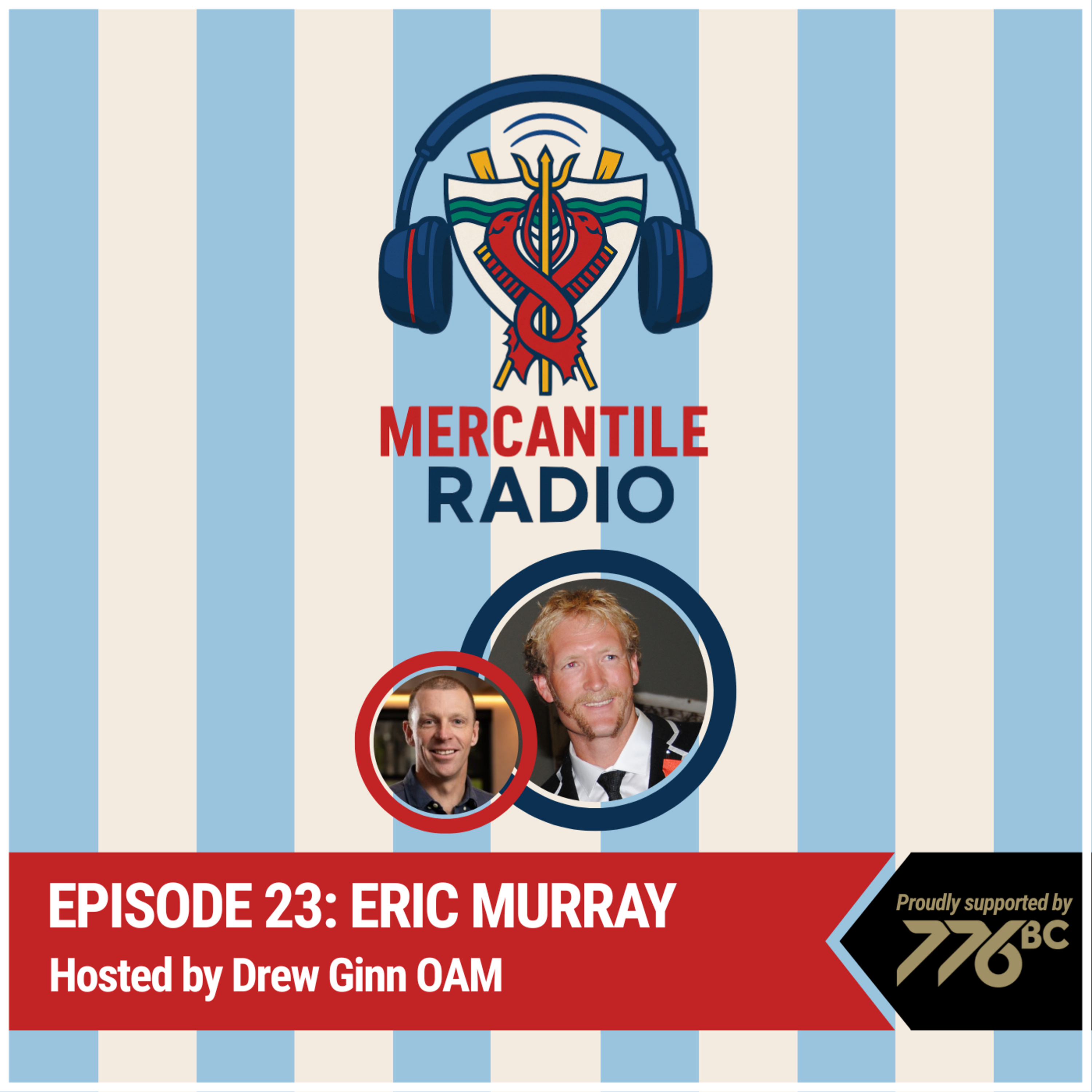
In this Merkantile Radio episode, host Drew interviews New Zealand rowing champion Eric Murray. The conversation begins with Murray's insights on the crucial yet overlooked role of the bow seat in crew boats, noting its importance for rhythm and stability. Murray then reflects on his Olympic career, describing the inexperience of the 2004 Games and the bitter disappointment of 2008, where his world champion four failed to make the final despite earlier success. This low point led to a break, after which he was approached by Hamish Bond to form a pair. Their immediate speed in trials signaled a new path. Murray attributes their legendary success to a shared elite mindset, complementary physical abilities (his power balanced Bond's endurance), and a willingness to endure coach Dick Tonks' grueling methods. Fundamentally, their partnership thrived on equality, constant collaboration, and a unified focus on making the boat faster, transforming past setbacks into a dominant and enduring legacy.
Welcome to Merkantile Radio, the podcast for rowers, coaches and supporters. We share stories and insights and lessons from the boat, the club and the broader rowing world. Join us on this journey as we dive deep into what makes rowing so enjoyable for so many. Before I start the episode today, just want to make a little announcement. We've loved doing the episode so far with our coaches and athletes that we've had a chance to interact with. It's all about creating a conversation. Merkantile Radio, the red and white transistra as I keep referring to it, is all about bringing those conversations to you, our audience. If you've been enjoying the show so far, please consider subscribing to us on Spotify. Send us a comment. Let us know what you'd like to hear about more. Any guests you'd like us to have on, any questions you'd like us to ask, it's all really helpful feedback. Now to the episode. Welcome to Merkantile Radio. We have an international guest with us today, Eric Murray from New Zealand. Enjoying your afternoon beer, Eric. Good to see you mate. Yeah, good day Drew. Very good to be here, actually. I keep running over your podcast and I saw you had Dono on here and Jimmy and I'm like, okay, hang on. Let's reach out because you're probably me some talent. You know, I thought, well, I'll probably be one that could put my hand up for that. Well, it's really a lot of the fact that you reached out and I'm going to ask you a question straight out of the gate. Do Bowsuit rowers get the recognition they deserve? Well, see, I've never a Bowsuit in a four or Bowsuit in an eight because I'm a big bastard. So I would say that the guys in the fours in the eight definitely probably don't get the recognition they deserve because it can make or break you in a rowing crew if you've got a very good Bowsuit, especially in the fours in the eights in the pears. But Bowsuit is probably the make or break because you have someone that's fighting with the show and it's just never going to go. And I've rode a lot of pears with people that have been horrific. But then I've rode with some people as well that it goes very well. And I don't know whether that's me or them or just a synergy or the between the two people. But it is an interesting space to be because there's probably jumping even further forward than where we need to go. When we actually dive deep into what we were doing with Hamish and I, I'm behind him the whole time. And I think that's the difference between a Bowsuit and anything else because if you're trying to get in front of the boat and you're trying to get in top of that and trying to produce the same power as everybody else, you're just putting lateral force on the boat and you're slowing it down. And so a good Bowsuit has probably some very nice feel, patience in the take up, which allows you to actually have a nice rhythm and a straight boat that doesn't fishtail down the track. But also, yes, they do have a lot of effect on that balance and whatever else with the rhythm. For whatever bloody reason, you know, and so it is it isn't interesting space to be, you know, I've road, I've road both sides, I can scale, you know, I've done Olympics on on stroke side and I've four and then Bowsuit then back to stroke side and then stayed on Bowsuit after that. So it is a very, very unique position. I think to be in a Rome crew. Yeah, absolutely. And maybe you've been far more diplomatic and politically correct with your answer. I'll just expect you to come out and say, "Oh, here goes Fars, unless the Bowsuit knows what they're doing." I want to start with you all with me. Pretty much. Yeah, pretty much. It's got a very good stroke thing. Hey, I want to ask you the question. 2004 2008, your first game's experiences weren't ideal for what you would have maybe gone in there planning to do. Tell us a bit about the 2008 experience and how did you take that and particularly use it a little for the future? Oh, the '04 we were green as, right? We were inexperienced. Should I have any been to World Champs in the Cox 4 and '03? You know, our Cox list for Scraped in by the skin of their teeth, they were fifth in the A and the B final in '03. So we were like, "Oh, yeah." And so that really opened the door for, I guess, there was eight of us going for six spots, you know, Robin, Nathan were in the pair and then, and then sort of everything's just sort of started to mix and mingle going into that '04 year. So we really had no expectations. And I think, shit, we were second in the B final in '03. And so going into the games, our final was our semi-final, and you know the case that happens with a lot of people. And you said at the Olympics all the time, and I always, the qualification year is always my most favourite year to watch rowing because people will race to semi-final as if it's their final. And then, you know, and they either make it into the final and you're home in the host, and then the final is just spread out a vent and you're like, "That's boring." But when you watch the B final, you're like, "Made, this is going to be sexy." Like, some things really going to, yeah, and it is. So, you know, when we were in the Olympics, we raced our semi, you know, we were second to the palms, but we were 100%. You know, and then two days later, when you back it up, we had nothing left in the tank and, you know, we sort of lucky we beat the polish and got fifth. You know, but it did because we were all green and it was all our first Olympics we were like, "Made, this is what creates a program." And so we had all these people, even Georgian Nathan, you know, getting fourth and everyone was just hungry and it was like, "Right, we're now. Now, Ron New Zealand had a men's program, whereas prior, we had muddled our way through. We had a four through Sydney, but nothing really sort of eventuated." And so, going through that sort of cycle between '04 and '08 was really just about getting people that were hungry, that wanted to do the work that were committed to be like, "Right, we're. This is full time, here we go." And then the '08 situation like, "Fuck, it's such a long story because, you know, like, we had Chris Nielsen who came in as our coach right after, and we had. We had Brett Crowe, great coach, but for whatever reason, you know, he left for Tazzy and Chris Nielsen came in, and I remember the very first row we rode for about two minutes, stopped us, goes, "What the fuck are you doing?" And goes, "You guys are working so hard, he's like, why are you working so hard?" But the New Zealand philosophy from what we were sort of brought up, which was just work hard, you know, just try and push it as hard as you can every time, and he was like, "You guys just. No feel, no synergy with the boats, you know, and so we started to develop a bit more of a feel with the boats and a process about, you know, what does make the boat go faster?" And we started to create, you know, some good movement, and I feel like we were unlucky in '06 because we had a dead heat in that semi-final, you know, in the rules, the bullshit rules that fees ahead at the time, we had to go and have a re-race with the Americans, lost to them via foot in that, and then we were. We were dejected, screwed, so we stared in the B final screw, that they got full. You know, so if we had had a seven-lane final, can you imagine what it would have been like, you know, it would have been whatever. But then in the '07 year, like we had James D'Alanger, came into our boats and we had just clips, you know, right from that word go, I remember trials, they just put us in the four. Bang! Right, oh, just found better speed, found out a race, learned how to do it, spent a month in lingaries, just south of Munich, before the World Chants. And, you know, we went on to win the World Chants, but they. There were three weeks there, we were just on a bender because we were. it was a bare festival and the town just greeted us with open arms, and I'm like, you put a bear in my hand, and I'm not leaving till it's finished, right? And so that time was amazing, but, you know, and we went in to. to. to Lusun and we had had success in Amsterdam, you know, we were the first ones to beat the British for like 23 races in the four in Lusun, you know, ended up getting third in Lusun because they wanted to figure it out like how we race. You know, we just had this blister in last 500, so when the World Chants came around, you know, we were able to put it all together, you know, we stayed in touch, we didn't ever fast start, stayed in touch in the middle, and it was like, if we've got a length, we're 500 to go. That was. it was us, we were gonna win. And so, you know, winning that was awesome, but the problem. there was a couple of things like, hey, I just got hit by a truck when we were cycling, you know, only brokers, scapular and collarbone, and we were out of the boat for ages. And then when we got back in, it was okay, but it didn't. it felt the same. But of course, I think everyone else had sort of moved on a little bit. And so by the time, you know, World Cups came around, we were floundering fourth and fifth, and we thought we had found some speed because we weren't trained in Penraff while everybody was back here in New Zealand and the freezing cold. And, you know, Robin, Nathan, we're in the double and our times, prognostically, we're pretty good. And we got over there in the first race, we just lost to the Dutch and the heat. And then of course, see if it's semi-final comes around and we're forced. You know, and you sit on the finish line going, as a point, there was like, please let someone's boat be under weight. You know, just some, you know, because everything's out of your control, and you're like, we've lost, we aren't going no final. You know, we won the B final, and of course, Dutch were in there, Italians were in there, so you got one, two and three from the year before, not even in the final. And that's not very good off, but of course, that's us. And then, you know, Ponds go on to win Aussies, you know, they could have, I think they were, but unlucky. They probably just, you know, they'd had a fantastic year, especially coming from a crew that was never going to the Olympics in the first place, right? And so for us coming out of there, I was like, I'm done. We're not fully done, but I was like, I'm going to take a break. And so came back from the games. I was working for Kiwi Rowing Schiffs that used to be here, you know, to do run of kids. Yeah, yeah, yeah. And, and so I was running that for the guy that was there, you know, and we were doing things and, and then Hamish basically just approach me and said, you want to go on the pier and give you a little bit of backstory about the pier. We, in 2007, we are, no, 2008 in January, we have the Cambridge Town Cup, which is the biggest regatta that we have here. And most of the schools are there, all the clubs are there. And I think Carl was sick or something. And so we raised the pier against George and Nathan. And we gave him a fuck in the hide. And it was about nine or 10 seconds. And we we we whipped over Kara Piero flat water about six, twenty, twenty one. And everyone was like, you know, and Hamish and I hardly forgot the train in the pier because we were so quiet. And so we always, but when James and I were in the pier and Carl and Hamish and the pier and that's him side by side, it was great, great training for a four, right. And so he sort of just knocked on the door and said, look, you know, deck and they want to put a quad together with Nathan and Joe and a few others and other ways. I've got I just not feeling it. Do you want to be in the pier. And I was like, yeah, but I'm only training by myself. I can't, I'm working. I need some cash, you know, lost funding. So I said, look, I'll train every morning, but I'm going to jump on the rail and the bike in the afternoon and do my own thing and run you Zele and agreed to it and then do you know got us and then we went to the trials, which is into March. And we whip down Kara Piero and six, seven, ten. And I remember the me I remember the media guy coming out this guy Richard Guy, who is a pomie guy used to do some stuff with great Britain. Come out. And he was like, and I, and I see because they don't give you the times. And he was like, may that fast he goes and he goes and like, it's six and a tent. And he goes, don't tell don't say anything that, you know, anyone that I told you. And I was like, and I knew it was quick because we were paced off the lightweight double and we stayed in from the heavy double, you know, quite a quite a distance given, you know, we had a thing. I think it was an eight second head start or whatever at the time. And so basically from that point, it was like, you know, the pier is going to be where we can go. And I sort of shelved work a little bit because I knew that, you know, here we've got an opportunity. And that's basically the way that it started, you know, out of detection of, you know, one year being super stoked that you've won the world chance to then be sitting on the finish line, you know, going dreams over. To them finding, you know, having a little bit of a mental break and say, well, do I take this and then to my hands a little bit. And it is like that to a degree with, you know, and I'm sure it's the same in a lot of programs where you've just got to find, you know, if you feel this space where you need to be like you need to fit in. You still got to prove yourself, but I was like, I'm going to do my own thing and go away. I'm still going to train art. I know what I need to do. And that was really the culmination of that break and just figuring a few things out. And that was where the key we pierced started. Yeah, it's amazing. And my reason for the line of questioning twofold two stories. So remember the great race, the Gallagher great race. And we had the Australian eight and you're eight. And I remember being there returning from the back injury and it had you in it. I had Marj in it. It had had Hamish in it. I remember Chris Nielsen make his comment out in front of the boat. Sheds one day going this guy, Hamish has a great rhythm. We've got a great quad building. That was his that was his remark. So we always knew you guys were coming and getting stronger and stronger as a squad. But also who it heard in Beijing. And I think it might have been either from Nathan or George, which they reference going yet, but these guys in the other pair to be us by a long way back in back in back in New Zealand. So we always were going to go to the pair. We always felt you're going to go to the pair. That was a great option. But to hear that. And the reason why I asked that line of questioning is I think for a lot of athletes when they hear the story of you guys and in the pair. It's almost like this overnight success. But it wasn't my interpretation was always that you guys had worked that it was so long. And for you in particular, you had two game experiences to get there. So tell us like what do you think the success was for you and Hamish. Why did it work because when you looked like you're paddling it wasn't always looking like it was exactly the same thing in personalities were different and I'm an advocate for difference. What do you think was so fast? I think one of the reasons it was so fast is that in Hamish joke to be able to one time we did quite a bit of public speaking and stuff together. One of the first ones he goes, I when we decided to do the pair. I knew I was the best and it was a second best. I was like fuck settle down pal. Like come on in there. And so you've got two people who truly believe that they the top in the program, you know, or and so we just had, you know, you had the hunger and the desire there, which is number one. You had the attitude, which I think trumps everything else, you know, to be able to drive to do what you need to do. And then you had the physical ability, you know, I was I was extremely powerful. I wouldn't say I had the endurance fitness that I needed to at the start, especially the sort of handle the training, especially under fucking Tonks. But we just started to figure out, you know, like things work reasonably well. You don't need to change your loss. And so we we tinkered with things slightly, we tried to figure out how to move the boat and be patient. And you know, we just started coming up with ideas around what needed to happen. And the speed was there, you know, and I figured out quite quickly that I needed to temper my ability, which was my power and be able to transfer that into the fitness needed through the middle of the of the race to keep up with Hamish because, you know, that guy, you know, you know, should he could hold incredible amounts of watts for long periods of time, but he wasn't the outright most powerful person around. So, you know, you got to try and find that balance. And we just figured out the balance. And then we just started to develop a technique and a feeling and to be fair, like Dick Tonks was a massive, you know, even though his methods are questionable, you know, his behaviors, questionable, his communication zero, everything about it is terrible. But the fact was when we brought in to go in into him with the coach, all you got to look at is a resume, right? And you go, well, okay, look at the people that he's coached, you got medals. Okay, your probability of you being successful was just taking a leap forward because you like they survived it. They did it might not have been enjoyable, whatever, but is this the way that it needs to be for me to win this gold medal. And that's all you're focused on, right? You're just like, right, what has to be done? No, you know, we don't know what you're doing session by session, get on the water, right? We're doing 32k today. You're like, oh, fuck, you know, like just am I prepared for this. And so it taught us a lot about, you know, learning how to work with each other, you know, navigate the periods that were a bit nasty, just the training that was nasty. And that was that was really the figuring out, you know, and because it's you have to figure things out, you know, there's no magic recipe. There's no like this is how it should be done. This shouldn't be done. You know, I don't know about you, but the crews that used to fuck me off all the time were the Dutch because they just looked so magical, so smooth. And they like trained for six months a year on the water and you're like, well, this breaks every single world that I've ever been told that you need to do more stuff on the water than not. So you're like, we're looking out there going, well, how can they do it? And we're doing 280k a week. And we're just like, we're dying here and feeling, you know, like we want to bash ahead against the brick wall. And we're still going fast. So it's just, you know, there's a different recipe book for different coaches in the way that want to do it. And so we just bought into Ducks program and we we just navigated it together. And one of I guess one of the main things was that there was no hierarchy in our boat, you know, we whatever either of us brought to the table in terms of thinking about what we need to do, you know, changes we want to make. We bought it with with a reasoning of like, I think this could make us go better and you'd be like, cool, let's try it. You know, and so we always bounced off each other, you know, something went wrong. It's not like, mate, you know, get back and balance off me to this. We were always thinking about like your car row appears one person. So we've got to get this right together. And so just making sure that we had that harmony. And, you know, the trust was always there because like we were just trying to outwork each other all the time, you know, whether we're in the gym, whether on your row machine, you know, like that's the thing. It's like, hey, this could quite comfortably beat me on occasions, you know, but you you you temper the distance down a little bit, a little bit, little bit, and I would start to creep in front of it. But that was his forte, you know, just that ability in that that fitness to be able to do it. But it is just an understanding, you know, knowing what works. And once you've got it, understanding that that's your benchmark, you know, and we we prided ourselves on on a couple of things. One was was having a realistic expectation, but that ties in with knowing what you're capable of achieving, you know, and I was listening to your one with with Cam and you know talking about the year. And it's like we knew before you go into a test, what you can do it, because you've done the test thing, you've done the practice, you go into it and you're there, thereabouts. There's no like, ah, see where we go today, we knew from times on the water, we knew from practices we're doing, we knew from the testing, we knew everything that this is about where we're sitting. And so as long as we go and do that, we're in the issue on of being at the top of field. And so that's what we prided ourselves on was just having that understanding. And like we don't don't get me wrong, we had a lot of races where, you know, undercooked injuries, illness, whatever it was. And your expectation is dropped a lot and you're like, hmm, fuck, I don't know if that's going to be enough to win. Luckily it was. But we always prided ourselves on knowing like what we were capable of achieving and that realism having a realistic expectation to be like, well, you know, this is what we can do, just go and do it again. There's no, you know, rain only on the old occasion, did you do a hundred two or three percent, you know, very seldomly in the perfect conditions. But everything else, if you're hitting 98% some beautiful flat water, you're going to do 98% when you're going to race, you can't give any more that's a, and so knowing that was was part of the key features to what we did. Yeah, yeah, I love that. And and talking to no Donaldson, I think it was episode three. He described time with you guys and I said, what was the defining factor? The ability to have a competition agree on something and then actually go out there and do it. He said not all athletes won a group, but definitely not all athletes can convert and actually make it happen. If you sort of think about yourselves and I want to find out a bit more technically for our audience, you're in the basket of the PE and hangish in front of you. What were the things that you were really focusing on the basket? I love what you said before about almost being behind it. I always felt like that in the basket, like letting the person in front really lead it and having the confidence that they drive it, you match up and accelerate through. That was the best you could do. What was your focus and then what were the technical things you'd be thinking about? Yeah, well, the main technical focus is that we thought, you know, if you dive deep in, you know, and because it's because we with Dic we never really, wow, we did too a little bit that it was basically self driven by ourselves was, you know, having the of peach force meters on the boat and, you know, like getting getting things like that and having, you know, the GPS speed and that type of thing to get a to get a figuring of what we were doing. Salarometer is that type of thing and we do just like, well, you know, you don't have to you're not trying to go, you know, if you break it down and you go, well, we need to find two seconds or you need to find whatever. How much is that per 500 meters that point five of a second that's how many how much is that to stroke what is that equate to them what's what is that to do to hear. And then and then breaking it down going, well, why are we going now to fucking start so quick and then fading, you know, yeah, and so so part of it like the technical side of it noise is wasting your energy right so as smooth as you can be whatever now we were still quite aggressive in terms of our trying to produce the power, you know, in Hamish specifically because he sort of trained around anywhere from 87 to 89 kilograms. So, you know, and I was always I trained around 100 maybe a bit over it and then I'd get to about 98 I think 97 was probably the lowest weight that I raised that. So of course you got 10 kgs discrepancy and I've got a meter and 1.1.3 leverage makes you go sideways all day. And it just and it is and so it's just about you know we started to to realize you know what your folks moving you know why are we slowing down into the front why we just let in is it the long, you know, it was sort of around that 2010, 2011 when your pod cup your voice and then came out and we were just like fuckers and everything we've been trying to do just really out there in terms of vocabulary and someone explaining it and we were trying to. And we were trying to tell jerk and he was just like you know we just like made like what are you doing and so we just realized you know that you've got a limited amount of energy. You've got a limited amount like if you do too much strength can't be fit you do too much for this can't be strong you know trying to weigh up all of these things but we just realize that like you just trying to leave the boats past the blade you know. No noises wasted washes wasted let the physics do its job you know if you if you if you release any tension of your hands and catch the oil drops in the water you know you get to the finish and just before the finish why you letting go of the blade why you still trying to hold it on any longer and if you actually look back on some footage of heinous racing but he's probably six inches in front of the body and of course that's it's against everything anyone ever tells you go this on as long as you can. And we were like but you look at the force could make we nearly bottomed off so why are we still trying to hold anything on we've using five watts of energy there where we could be using it earlier in the thing so a lot of our things just came about and realizing that what you're trying to do in a boat is the same is what you do on a row machine it's what we spend a lot of time on the you get it up to speed the only thing that slowing it down is you yeah so if you can learn how to tap it along and try and maintain this pace because if you lose speed you've got to bring it back up again and so if you bring it back up again like how do you hold it and we just that energy come from so everything was just around like patience not rushing any part of the stroke I don't know where I was part of the rain is I don't know if I became like rather holistic or just we started talking things like elasticity you know your natural compression just you know people go I'll get out to length of the front and so everybody's trying to reach for all this length and you're like well if you actually just let your body go your body's going to stop when it can't do any more so why are you trying to force it into these positions so we just started to do a lot of this work around you know smoothness and patience and tacking it a little bit more. And then we had a lot of questions and tack into the long and freedom you know inertia was one of the things we used to call and a race you know which is just free the hands around the back man like change direction use physics usually cost ability your back on the slide let it zip underneath your bang where you go and so it was just all around the these things that you know everybody's like and we dropped a whole lot of stuff like we're going to do you know we're going to focus on power tens here we're going to focus on it push here we're going to focus on this so our whole focus becomes the kind of thing that we're going to do. So our whole focus became and I think it was part of Dix program was that he just wanted consistent speed and so we used to do we used to do five K 8 K 10 K open rates you know touch type of things and so our whole philosophy was just like can we do this without slowing down and I think that translated really well into what we did is appear because in COVID I did a whole lot of data mining and I looked at all our races and I took everything off line from from world rowing and I tracked all our races and in our best races at then we we dropped two seconds between the first and the second five and we dropped nothing we actually went point zero to the second faster in the third 500 and then we gained about one more second towards the end of the race right so you we're almost even split now in some of the really big tough races. We actually negative split the race and so we were actually able to go faster in the second thing but it just came about because we were like just burning all this gas trying to keep up with everybody and and I was just like mate I just don't want to feel like death it likes six hundred meters and then and so we just we just we at the time you know one of our physiologists and our biomechanics guys he was actually looking at some of the data and saying they look you know people slow down four or five seconds you know the best ones the British and the Canadians Canadians through that O3O2O8 they they what do they do like a 122 first 500 then 130 you know you but they fight the five seconds gone there length and up so slightly I said you but that was that was part of what we thought about in terms of our technique I just had to make sure that I was just slightly behind Hamish all time and if you look at our four things that we got from peach you know Hamish really got on to the stroke straight away you know use a little bit of body off the catch but he was still able to drive the body through the stroke which is you know people are like eyes lifting off the front so it's a difference in lifting off the front but still being able to drive everything through the stroke and all I had to do was just be patient with the take up hang on to what he did through the middle and then just meet towards the finish and I could overlay a little bit more power while the boat was traveling forward because you're not getting this like it doesn't go as sideways when you're at full to full speed which is sort of through that drive rather than at the capture of the finish it's going to fish tail way more and so a lot of it just came about like this feeling of like the synergy between us and just understanding this being slightly behind time of him but letting him do what he can and I just backed it up you know and that was the simplicity around the technique you know we didn't we fuck may we've rocked around like people watch us in training I like that's ugly I even look guys like that's okay but it's a classic example is like you know when you get a race car you go to you go to you go to you go to Bethes and you hear idling it's like but of course but once it's once it's out it's like and it purrs and so that's the problem is that we're trying to do something really high but we're down low and all of this and so we try to relate what we do it low to high but we and hence in our training over the years we actually started getting faster and faster training so by the time we finished we were constantly at 21 22 while we were training just to stop this you know like this this trying to force the speed of the boat at low rating because everybody's just like you've got to be trying to hit 80% 78% and we're just like well look okay we will try and keep it a little bit freer and just try and be loose with it but we want to be able to make sure that we do a lot of that high end and so I think a lot of part of the programming stuff we did a lot of work getting up and rate which allowed us to then put that into practice when we were competing and rates quite high I think a lot of it you know we were doing 5k is rating 37 you know like going and it just felt easy and part of it came from Hamish you know like coming out into some look we can rate 37 and do 300 watts of stroke right yeah yeah that's what you do all you can rate 34 and do 330 strokes and right and the math is pretty similar so which one would you rather be doing forcing it lie rate cap into the long higher rate trying to find that equilibrium and that was sort of the development of what we figured out yeah but what you described there and I love the fact I agree the pacing for me was one of your extraordinary strengths to see a combination have the confidence to and it wasn't what you were starting so early you're doing 132 and what do you be great to 132 going 132 132 132 cut it down the course but to see a crew finally have the confidence to say get it on speed we've got the rhythm right we used to always describe it it's almost like how do you edit the recover by the 1000 meter mark so then as you lay a ring yes red but you gain feed down the back end but if you wrote we know for you simply or you just wrote hard you can't do that and that's it fine and that's a lot of the gain from us when we because we we started in the pier game like we've got a lead from 500 like it was just when we first our first our first year in the pier like even at we're chance we think we did three or two or something to the thousand in Poland and then we we died we died by like 10 seconds in the second can nearly last you know but it was just sort of like figuring out like you know when when we are at this high rate you know just trying to be bring all of these these words or descriptions you know which which we need to be into into the equation you know and so we use the taught we use the call things like stride you know trying to think about like how long can you make it you know tag you know clean every word that we described was something that obviously means a big sentence because you haven't got no time to have no conversation and discussion but they all meant certain aspects which for us were based around efficiencies you know because I like putting myself under pressure and competing but I don't like it because of the physical aspect of like this feels fucking terrible right we you know in the point it's lucky that we don't really remember it because we'd never do it again right and so a lot of it was just like how efficient can we be tap it along maintains feed you know sharp everything about it there was never like push 10 now you know none of this stuff it was all just about can how can we not slow this vote down as much as anybody else and I and I do it now I describe it to people and I'm like okay see this race that you're watching on screen yeah we see how we've we've gone from being level here to being five seconds in front of five and I was like we slow down by one second between that quarter and that quarter they slowed down by six so we didn't go any faster we just didn't slow down and I think that's a lot that's a common misconception and I think once people start to realize that that's actually what you're trying to achieve in a rowing race is actually not slow down right that that is that the crews that slow down the lease now there's there are exceptions to the rule and I get that but the main focus of what people should be doing is to try and figure out how long they can sustain a certain pace for which then put you in a position that if you've got a pole a very large rabbit out of a very small hat in the last 400 metres you can do it because you've also practice that as well and you've got a adrenaline you've got everything else now if you like going I doesn't matter this cruise passing off by length and we might catch on the finish you know I love that mate great insights and here's the question for you even you're now well and truly after competitive days on the same do you look back now are there certain races and certain moments in races where you just have those flashes of memories sort of pop up and you you really enjoy thinking about how proud you are of certain moments in time what do you what do you call out your mind well the one that always pulls up because it's a meme is when Hainer stepped his hand in the water at egg the let it will come and because we used to do it all the time right we did it in training and you do it in like a five K or something and and of course and yeah because we you know we had bought the handles we kept them clean and we did everything and and it was hot you know and then he just like and then we were running low I remember saying something must have been about 650 and then he just went and I remember just going along I don't think I said anything to the thousand because I was still like for that just happened you know yeah I was and because I couldn't quite catch up with what it was and I was like mate water was that and yeah and that was that one always sticks in my mind but to be fair the biggest race of the mission either I think really solidified or it was the carrot bearer will chance you know without a doubt without a doubt you know we we've gone overseas and it and to be fair we've been overseas for all the world cuts we went and raised in blood and you know we won we won that reasonably well against against the palms and then we went to and then Bondi got a stress fracture and so I ended up training in a double in the single with a stop chop and and we rate and we raised the blood international regatta and beat the stick brothers in the double and of course I never raised in a double never and I said to us I was like mate I'm I can't sprint out of the blocks I'm going to you know I'll probably fly out and then so we were like a length and a half behind and then I just said let's just motor through the middle and we just steam train being being we were gone came back from you know did did lose and we were like right we're we're good to go here and you know it was a very late you know it was November I think it was like the fourth in November or whatever the hell the world chance we're in everything was good you know we all our times and everything would great training was great he was piece of cake semi final we we we sort of went toe to toe with the British till about 1250 and then started moving away and they pulled pin just after the 1500 and we went into it and then it was just the fact that when we went into the tunnel we our race plan wasn't like let's just see how fast we can go it was very much like you know we'll get out you know the weather's weather's a bit choppy you know we'll just we'll be content to be where we are we'll just track what the British are doing and and we're all to that one there we both I think both us in the British went 12 seconds faster in the second thousand in the first so like it was always slow like the 500 caraperoid that sort of north west of these real shit but I just vividly remember like looking over and going I still there thousand and fucking still there I remember just before the 1500 having to like turn my head more than side by I was like fuck we're in trouble here and Hamish said to us afterwards we'll just get forward about he goes I was riding my condolence feet to the media in my head and I was like I was like Matt I never got that deep but I was like I could I could see where you're at and I think there's two things one Andy and Pete when you watch it back on video they really started to go before 500 yeah yeah and the other part was that I knew that I can course like the back of my hand man and I we came through the 500 and I knew where my kid are rowing clubs at 450 there's a little aisle and just before the high performance center that's a 350 you come just before the yacht clubs 250 and so I remember just starting to call I was because Hamish you could see him getting a bit touchy I'm in a look and I was just like hold and I was like wait and then I just started saying up I was like Fred up and then we started going and then we started getting this feed I think was they went early but they we were still holding really good pace we just we were always never going to lose contact with them and then of course we went with 350 to go we went full tip and so by the time we hit 250 we were at full speed and I just knew and part of it to be fair is down to like Nathan and Nathan can't Joe Sullivan because we used to do sprint finishes against those guys and you know how blister and fast they were and so we were we were always trying to hold on to them so we're done with practice and so by the time we got to like 100 to go I knew we sort of had it but it was still pretty rough and I was like we're still going to have to get across this line it's deafening everyone's expect you know one boom boom and we win by a 30 centimeters you know we win by about a foot and that one there I think really just changed our momentum of like we know we know we're good we know we just maybe to win off the boil slightly and didn't just focus on ourselves and so this is a slightly two-parted story which I'm slightly embarrassed to talk about but at the same time it's got fun and you know I had a huge respect for the British because you know top two guys in the team peed and had love fucking racing against it may any time I could just it was like unleashing Hamish right we just take off the leash and that guy like a dog of the bone he going he going and so we went they went to I think it might have been Danielis and they you know race there and then they never came to Hamburg because they had this they had a cold ice gear or what it was and I look in 11 and then we turned up to Lucerne and of course you know the first thing the media is in your face going British going so fast you know they're one by four lengths it's this that's like where and I was like you but didn't you see us like one by nearly 100 meters bloody Ham and Amber and I knew we had stepped up I knew we had stepped up in terms of like our intensities and everything and so when we got out in the race and Lucerne I remember going into the race and it was pretty stressful because they were on the other side of the draw we never met each other they were about the same speed and so I'm sitting at home going oh fuck okay I'm really mulley here we go and I just remember saying to Hamish in the blocks I was just like we're going to get out and we're going to go and we're not going to slow down until we're like in front like so we've gone sort of away from the whole you know just temper a little bit and be patient out of the blocks and whatever else we just went you know and we nearly we were nearly a length I love watching the race back again might across you know because he's just talking saying I expect the British to lead through 500 net it like 250 is like I ought to apologise like they got that they they they were just going to struggle here and we just went and we just went and we fucking just going care going care going and it was just like we didn't hold back and I was just chirping to Hamish going more more more you know we just kept going to go and we won by like six and a half or seven seconds whatever but it was when I did the old binoculars told out the old binoculars and the rest I was just like and of course the boat latched Hamish was like fuck did you do that I said I just told out the binoculars like yeah fuck good job I know but but that was that was just you know that was that was I think the great part about a really good rivalry which I think if we had never had that rivalry I don't think we might have ever got to the lengths of what we had because if you actually look at the races that we race against the British there was two or three where we gone you're out of there but they're all preliminaries but every time we come in the final I don't know if there was even more than a second in us like in every world cup everything the very first world cup in and that we raced against them in 2009 we were gone and then we just sort of we didn't sprint they came back to about a second and a half whatever but you actually look at the numbers and they're right there all the time so even though you see some amazing victories and stuff we had those guys would write up our date the whole time you know and those sort of races really just pinned what we knew needed to do because you had some of the best people in the world like fighting you and you know if you if we had not done our best race we knew we were probably going to lose and so having that in the back of your mind I think we would have had races maybe at certain times which would have just been like ah you know Hamish had a fracture if I could guess we're going very better doesn't matter if we get second or third we're not sort of good but Hamish just being so driven was just like now we're going to win everything you know and it was just like every time we went out what can we do what can we do so those two specifically I think one race we had 2011 and believe I feel like was probably one of our even though it wasn't we're record I still think it was one of our eyes that we were like half a second or whatever off it was but the first 500 was first thousand wasn't super windy the whole course wasn't super windy and and yet we both went so close like we were just just touching 6 15 or 6 14 or whatever I think that was really where we started to find our straps you know and then from that point it was like what we what we always did was we knew that was now the new benchmarks of what we've been doing up to it the speeds we're doing in our testing that now becomes with that's what expected you know like we've got to do that all the time so it's breaking all of that down same well how did we build up to that you know what was the program looking like here what was that there so by the time we turned up in London you know we were doing some some fantastic stuff and to be fair a lot of the best races I think we ever had were not actually in racing you know and I don't know if you'd be the same you know we erased we erased Nathan and Joe in peat and storm in a we were we level with peat and storm and we were only five seconds with Nathan and Joe on loose soon as our 10 day out before the Olympics and we beat peat and so we tracked him the whole way we beat one by probably two or three seconds Nathan and Joe only just passed us in the final sort of sprint but we did 615 on a flat loose end yeah and I know you I know you've got coaches that they're lying in that line and they've all seen their watches and stuff like that but the GPS don't lie and I was like I don't think there's anyone in the world could do that pace at all no fucking shot and so when that was that was us building into London I knew that things like this was going to be this was going to be on and then the race in London the heat still sits in my mind quite well because like Jermaine and Dorian like they in the pear they sort of like in the four they were sort of like they're like the French rugby ten so they're really unpredictable right do you reckon they're really unpredictable and and so in that race I knew they were going to blast out and I knew we were going to take a bit of time to get back in front of them but that whole race for us was just about maintaining pace and it was just like we don't need to sprint to the line but I mentioned I'd given up on because we had a few races where we're back off and it would and we'd rode terribly and you get to the finish you'd be like that was ugly man that was felt awful so we started going yeah and so we were like we're just going to keep the pressure on so we just keep the speed going and we just tapped it along didn't sprint it didn't do whatever but that was even split central and that's six I like you know and it was like and we finished it and it was like a great race you know no stress no pressure didn't feel overly uncomfortable didn't feel stretched whatever and you know sometimes I think you know we just lucked it with good water good conditions peak fitness and actually not been under stress you know and so it just made it made the rain just really really simple and easy and that those races in particular especially in those times I think we're some of the most important for us just to get I just just to solidify a whole bunch of stuff you know so that we could take a break after like the Olympics and then sort of roll back into it and then sort of change everything rewrite the whole book and then go back into it yeah and I love I mean some of the stories in example you shared there amazing I pretty a couple of reflections 2000 and and and 10 I can be watching the world the world rowing 40 paraphera and seeing you guys in jeagry just going neck and neck and what I love about it was it's not often you see crews exchange and continue doings jay you know I often you sort of see one or two efforts and if they haven't broken or someone gets back through the whole thing pulls apart but to see that battle so far down the line right at the very end was extraordinary and I've watched your blood race as well and it was interesting as to the approach the GB book on on both one they look like they're really long and quite aggressive in the first and middle part of the race and in blood it was almost like well we're conceding that we might lose a bit of speed on you but we're going to row our kind of race this way and see if we get a better outcome that way and and so just those inside the extraordinary welcome to all radio now a little acknowledgement of one of our great supporters 776 BC rowing a parallel 776 BC founded by two-time Olympian embaging civil-metallist Cameron McKenzie McCarge 776 BC makes a parallel with the same passion and intensity and desire to succeed as you as an athlete made by athletes for athletes so team it's a chance to go into a giveaway into the draw for 776 BC a parallel in 50 words or less tell us your funniest rowing experience and you will go into the draw for 776 BC kit want to thank 776 BC for the support of Mercontile Radio when you think about courses and venues obviously you've got to have everything right to go a world best time and use the underneath and we know it was was was pretty quick on certain times how much you reckon you could have gone everything you're describing if you really don't have it I don't like that still surprised us because I didn't think I don't think we had like I've heard you say in the past you felt like you could have probably done 16s and I sort of felt we were about the same I thought maybe on a real perfect we could be 16 to 612 you know I thought was if we had everything right right if all like if everything was was perfect but of course I think the only one in hindsight if we had if we hadn't done the Cox pair and the Cox list pair in 2014 I reckon we would have obliterated it like I I truly I truly believe we be under 6 6 I think we might have been even closer to 604 but because we took on the double up and you know the conditions were perfect you know like me we watched a video we dropped like a stone out of the first 250 and it was because when we were biking down to the lake you know we just raised a well hey missus always you know got a bit a bit a bit a bit of chirp and you know bit of but a bit of bounce and a step and he was just like lagging along and I'm like you're right he's like oh legs a bit heavy today and I was like well I'm not going to tell you mine are the same because you know I'm going to be here as the motivation and and so we knew we were going to be slightly undercooked or overcooked so to speak yeah but I I sort of knew that if as long as we just did what our what our forte was which was hold speed in the middle of the race that we would be fine you know and going into the last five I think we knew we had sniffer doing a really good time but of course we tried as I say we tried to lift the rate we tried to go faster and we were slower you know so maybe if we just kept the length and tried to hold it out maybe we would have equaled the time but of course 609 still phenomenal after after doubling up in a thing you know and doing a 633 cost yeah that was a funny one it's a real funny because that we you know we were trying to we always tried to find a way you know in the program and we sat down with no and in 2014 and we had the meeting at the start of you know after the trials and they're like yeah you're going by the whole of the melodies blah blah blah and I'm just like I want to do the cost and the cost was here it was and I was like oh okay and so and and I was like yeah look I've looked at the program we're not racing twice in any day so it should be fine and I was like well okay and you know so I emailed Rainer God bless the soul and and I said hey look we need an end-backer and he's and I said look can you keep this confidential that lost confidentiality real fast where people asking us real quick going you go down and double all right and so then we then we turned up on Switzerland and Caleb was in and doing the under 23s in the eight and we were so we went down to the I went down to the Audi or whatever it's in the thing and bought two 25 kg bags of sand and we strapped them together and that was Caleb and then but we but same thing with you know we we we just sort of like we'll just see how it goes we know I is dropper doesn't really matter and we soon started to realize you know all these people were like talking about this cost fair you know track drivers and maybe you got a big big than strong and all this and we just took the same philosophy into it that was like why are we trying to muscle this fucker along like let's just get it moving and then let's go and so even like in the final you know we we did a 137 first 500 then we did a 135 yeah it's just it's got it you've got to have that time you got to understand like what it does to get up to speed and how much energy you want to burn and whatever else so you know that was that was a really sort of interesting year for us just to like find something to break up wouldn't say the monotony but just try and find something rather than like we're just going and we're going to follow the same thing as every time you do this they didn't want us to go to Henley and so it was just like a really good way to like have a refresher and then obviously you got qualification so that's like we've got to be pretty serious here and that qualification year slightly just skipping back a little bit from your your story you know we trained here we didn't go overseas for as long you know we only went to the last World Cup and we turned up and we'd been having a real heavy loads we stayed in New Zealand like definitely a week too long as freezing goal and we got over there and like we won loose soon but it was a bit average and we'd actually got you know new carbon rigors from and a new boat from from M Pecker and Hamish just hated it's like that that's all this and so we rang up rain and we're like if you still got our boat from from last year yeah it's in the shed sweet can you deliver it to us in Switzerland so we got the boat and then we and then honestly without a word of a lie the first row Hamish was like this is it mate this is it finlay that boat same boat stiffer stiffer riggers didn't work for him you know and I I was like and feels a bit more like jetty but nothing else and so aluminium riggers yeah carbon vis element so so when we when we race when we were the rate the boat that we raced and the same happened in 2016 when we turned up was that they gave us new riggers and this new boat and we were going to race it at loose soon and then it was going to get shifted but to Rio we we we've trained in it and we were like this don't like it we were like can you give us the boat from 2013 and he's like yeah we've still got it and so we sent that to Rio and used that and it felt so much better but that 2014 year because we had sort of come over and cook everybody's like oh they're not going that well whatever once we started getting back into the grove and just like a climatising to Europe and getting our speed back from doing like we did a really hard block of training you know when we got into that final you know the first races we would we wouldn't say we were conservative but we were we were just racing nice structured races and then when we got on the final it was just like right let's just hold this speed and then 500 we're in front thousand we're nearly a length 1500 we're like miles gone and then and then it's another and then it's another 7C convictory at like 615 you know on flat water and it was just like well we're there we've stayed where we needed to with our benchmark and and that was as I say that was that was I think what we prided ourselves on the most was we lifted we raised the benchmark and then we just realised that we had to stay there because if you any crew that raises a benchmark everybody else has to chase and we don't we don't want to have to go back down and chase our own cells we want to be like well what did we do to get to this point and how can we continue staying there and that was yeah there was there was the way mate I really love it and we had a very similar philosophy particularly with James and then End of Dunks which was always setting our benchmarks out of standard we didn't get anyone else who was going after and so that kept us engaged but it also kept us really accountable so here's my provocative question for you and what are you going to take a peer you go under a sec minute oh shit I don't I don't technology technology conditions and the right athletes you know and because you know you're historically you know there's been some exceptions to the rules as to a degree but you wouldn't say that you appears are you biggest and strongest guys in a in a program right generally you've got you've got some big guys that know how to do it you know that type of thing but you don't have your two monsters on the row machine that then go out onto the earth out onto the water but if you could you'd be right there but it's just it's all physiology because trying to maintain like you think about trying to maintain a 130 pace and appear as just you know take 20 20 something years ago people trying to hold 130 pace in a four you know like of 20 25 years and what else you know it was like that that was a good time flat water maybe maybe we'll break six five fifty five five now you're like Jesus can appear to it I just don't I don't know I just I think maybe the technology but of course I think fees it does a good job because you know everything's reasonably restrictive so we don't get into an arms race America's cup job you'd have to have the physiology of the athletes and you just have to be so efficient on the right conditions you know so that you get it up to speed and and you just do not slide down you know and I couldn't tell you of a single race where I can't remember us like tapping in but a water here and you know just a little bit messy with a finish here or there nothing ever just went made I felt like we were flew down that track so I'm not sure if it could ever be done I hope it is done but I yeah you're gonna need those three aspects for sure yeah I agree the one I've been problems of even mine is I think with a gearing challenge I think of a double and a pair a similar sort of hulls yeah Christians have been below six minutes in the double okay take two athletes here so you go a big gearing then it becomes how can they row efficiently at that speed and as you say no one's and that's a physiology because it like you know you all you've got to do is just as get this get this maths and graph it and go well if we rate if we rate 40 and do 300 watts per strike where do we see you know but then what if we could rate 42 at 290 watts yeah it actually means that you're technically doing faster but then you got more effect on the bugs where's that negative side blah blah blah blah so that's the thing and it's like you know what what's how design doing and I don't I'm just not in the game but you know like if we really dive deep into it you could make some pretty wild you know how it designs because all these guys that are sitting there you know doing design and aerodynamics and water dynamics could be like hey I've got something it looks real weird but mate it's on payback wow we're good so I don't know I think that's something yeah that could happen but you're just going to have to yeah as I say like you you can't you've got to you've got to be able to and I think ever since we started rating high you know you had a lot of the light weights rating high you know Denmark Aussie you know South Africans could ray high and then it devout into the Aussies and the four rating high and and you know Romanians could rate high and everything people started to figure out well actually can rate high do less work for a but of course if you could try and squeeze both of those up and have a little bit more power and a little bit more work and keep the rate high that's probably where it's going to need to happen because it ain't going to be no I'm doing it 36 right it's going to have to be like you're you're basically whipping across the top of the water and just almost not being in the water at all and that's what will give you that speed yeah it's a lot it's the time out of the water I suspect there's going to be the gains and entry point double your technology here's the interesting part for you you've set record on the year ago across multiple distances and you've done what you've done in the pair with Hamish you would give it a ride to young rowers about the different ergo because you've used them all and then how they translate the year ago to on water to be really effective what would you advise me I would say anybody that's going on water should use a dynamic style of machine yeah because it's it's emulating what you're doing like it's it simulates what you're doing on the water you know you're hoping you're moving underneath you it's more about your legs opening up your body through the drive you know whereas with the static machine if you've got a bigger body weight you're always probably going to get more speed but you need to be able to do both because testing's always done on that and the the physics of it are the same and you can develop a stronger swing and that type of thing on a standard machine but learning how to do it on a dynamic and and you know the concept dynamic concept to dynamic which I don't know why I never I know why never took off yeah because it dropped your speed right your speed was slower I tell you what a machine I used that on every training session between 2012 we had we had one of the prototypes in 2011 we used the release we went whenever we went on for any training spot in Europe we had two to limit and we absolutely loved it right yeah we you you could you'd normally be pumping along I'd say 145's on or maybe a bit less on on the concept to for 60 minutes that's to do 147 148 people couldn't get their head around them right and they're like oh no no no don't like it and I'm waiting but this is not teaching you that your body positioning is staying still and then you're letting your hands go out and and if you can get that and I and I did some research you know the hand it's called non-contractive tension it's called passive tension so when you tell someone because I'm always like you've got to feel this hand tension it's all about how much weight you can hold you know in this hand position so it's called non-contractive tension and I and so we used to have that and then however much you could push your legs to then open your like through the drive right you because your legs have to drive your body through the drive if you could get that right you'd get reasonably okay consistent numbers and then you would take that into the water and you're pretty much set in stone on where you are and then the boat goes back and forward past you and so I'm like that's what we should be feeling that's what you should be aiming for and learning how to do it and then okay my speed just lying wise that because you're not fit enough you know you can't man you can't handle the amount of power that you've been out putting on all of that but at the same time they should all translate together because if you're doing the technique right on a dynamic machine you should still be able to head your legs driving your body back through a static machine with the same hang non-contractive tension as you were doing on a dynamic machine the dynamic machine is just harder but if you and it's what I teach a lot of people on the indoor side which I've been doing a lot more of is you're still using the same philosophies of inertia right and you're creating inertia around the finish you don't need a remit into your body turn on the force curve and look where your foot compare is it's nearly bottomed out so why are you trying to rip it into the body and then just letting letting the chain and everything pull you back to the front and you don't have to think about getting to the front just get there you know and this whole this whole you've got to be in this really stiff straight upward position it's like no you need to be in a stable posture that can manage the load that you're trying to prepare for it and using this natural compression which is a elasticity in the body to get you to a point to then let you contract and expand you know and it just flows like this and it's got to be continuous motion one after the other and accept like in a rowing boat right and this is one of the key philosophies I try and teach on the range is that that very first half before when you get the handle there's a take up period right you're never going to lose it right you you get it you lose it when you're at 38 strokes a minute under full tap but if you're traveling along at 20 strokes a minute there's that period and it's no different you put the blade in the water there's a period of time where it has to take up before you get that feeling of having the boat locked on you don't put the blade in the go I'm locked on baby like it doesn't work and so this whole this whole acceptance of you knowing that okay as I move out of the front the flow has to get picked up by the chaining in the gear and then oh there it is okay and that and so but that part there should be done by the spotty's elasticity of like you're getting because if you next time you're on the road mission yep and you just leave the leave the handle try and get yourself right out to like the full catch position and try and stay there really uncomfortable right now just let yeah exactly you know and it's just like trying to and I think that's what happens like going right back to the start of this conversation is the maturity and understanding what we were trying to do is all of these little things you know the coaches were like be nice and tall at the front be really really stable we're caught strong cause and and you know really reach for the catch and it's just like oh mate and then once we started to realize we'll look if you actually just let the fuck it happen it's gonna happen you know and so all of those types of things we started to do on the road machine which is what I try and teach people now it's just like just be natural think about what you're actually doing right when you're on the water you're trying to you're trying to make the boat not slow down yep should you be doing the same thing on the road mission can you miss us feed and then try not to let it slow down you know rather than going I've got to try and work every single stroke you're going to have to work on the water as well as the year right don't get me wrong but don't have that as your focus have your focus is like if I can get through this by having a cup of water and just tipping it slowly up with my energy reserves grab it's when you go and then oh shit where where the rest is going to come from I go to slow down through area that's where your issue is so just understanding those things and those philosophies of elasticity of of natural rhythms inertia momentum you know and and being stable yet not stiff you know be elastic all of these types of things I think from all the rowers that I've seen like yourself like Jimmy you know the Dutch there's a whole range of people that I've seen over the years they just have this this natural look about what they're doing and it doesn't look forced it doesn't look it looks partial like it just looks effortless and you're just like well but hang on I've been told to be in this really stick you know and I'll pick on the British because it's just this style you know it was very much strong because they were strong they were physically very very strong and been able to do it and you know just been able to to bring those back will help you develop as an athlete and so then you can figure things out as you go along because no one's no one's going to give you someone's going to give you a book and go this is how you should row but unless you understand it yourself and try and put those those into practice you're never really going to get it you know and as you said earlier on like you know we they run things and we just came from something you know it was being years tussin around there like in bottom of finals here and there and there so we started actually getting a more consistent figure of what we would try to do yeah I love that and and what you've said about the movement pattern for me I often challenge people and say can you row without using muscle muscle effort you know can you row with you said elasticity elasticity leverage momentum body weight and it's amazing when you have those conversations and the news and there we go example and you're chatting to someone and that you can see the light bulb start to switch on and it's almost like that leap of faith to go actually there's a way that I can move here that is actually efficient I love that that you've shared that when you're going for best test we spoke to Josh Dunkley Smith recently about his world record attempt you've had a crack at number of records we declared it I'm sure in your mind or in others around you any tips around what you've done to prepare that you can share with young athletes about really getting the best out of you yourself when you've got a test and a selection pet in particular or after you know the first one the hour world record came about because Dick Tonk's morbid psycho pathic fucking way that he coached was the last session before Christmas would go out for a row generally then we'd come back in and he'd be like all right we're going to do an hour tests it's hard to have that go it's right out yeah and then yeah basically yeah it's just full tip as fast as you go you know and so of course you know you're sitting there in the first couple of years and you know Marjay George Nathan everyone's there and of course everyone's just like right we'll see where we can go it's not something you really have a go act like I'm just gonna go to so you sort of muddle your way through that first part and you sort of get an idea and then when we hit our physiologist guy by the name of Dan Flos he started to do it we started to do a lot more like specific stuff when we were just training on the eggs and like if hangershaws injured because he got injured a lot if I've never got injured and Dan would send me programs and stuff and he'd be like all right let's do this I've talked to Britshire it's fine we'll do this so started figuring out I could do some pretty good speeds for a long periods of time just working on you know your heart rate zones and all of that and so working up to the hour tests that I've broken in 2011 we were actually on the dynamic for that one so we had technically accounts for a lot of good kids it was before they had to donate a record and and so we had been doing some 20 minute pieces and some like pyramids and all of this and he's like I think you can hold this pace you know I think you can hold 136 for like the time then I was like okay we'll give it a nudge and so that's what we do it you know and the only thing was that we had had a light day previously and when I jumped on the chain we had a plan of everything set out on piecebaker who's decided to roam shame and after 10 minutes my heart rates are like 190 and I'm like oh oops okay but of course I felt good you know and that's that's part of what I think athletes need to understand is that we try and work on all these heart rates but if my heart rates are 190 and I can still hold a conversation is that a bad thing you know if I'm still coherent and I'm not like like maybe on maybe the heart rate just trying to keep up with with what I'm doing so that one was was the first one and then we started I think the second one that I did was we'd been doing quite a bit of ergo's because they had terrible weather and and New Zealand for like for our training so we did quite a lot of ergo's and then I remember I think we were working towards something and I said to dick I can we have a guy at the 10k because John John Christoffer along had the 10k you know it's like 32 minutes and I was like yeah it's pretty fucking quick man it's faster most people do a 5k correct and yeah and so he and so we figured it out and we did some practice stuff and Dan's like look you can have to hold 131 so like you know 31 minutes and I was like okay and so we did some practice stuff towards it you know we did we did about four sessions over about three or four weeks and he's like look you know I think I can get you to about 22 23 minutes and then you know as long as you can get there with efficiency you'll bring it home and and we did you know it was one set year's like 31 31 something 31 and change and then we did the half marathon was probably even harder than the hour because you know that it's an hour and seven minutes and whatever it was and it was just like oh mate you know and I was trying to hold faster than I was for the hour you know and I think both I think both of those went by a column of Cape you know in covert where he was training for the Canadian team and and he was he was always like chatting to me on the internet going I am I go and I was like I knew that there was probably two or three guys in the world that could do that and I still think to this day there's you know that that half an hour what the 10k one could be beaten by someone but it's just getting past like you've got to do the prep you know and we did a lot of work in our two k prep working up to it and I've used that with people a lot of our coach with now and they've all been successful because you know historically everybody's just like I will do since thousand and we'll do since five hundred and I'm like Dan was like no we need to do things specifically targeted at your pace so for me I'm I'm you know I was I was targeting you know 125.5 because I wanted to I might have been sitting around 542 the whole time and and we were like well if you have a good day you might get closer to the 540 and we didn't do a lot of prep we only did 22k's a year but you have to do these steps in these pyramids where you'll go like 98% it's something you know for for a two minutes and then 99% 102% 105% back down and then do some 30 seconds where you're 110% of your speed and and and do all of these four minutes where you're like the first ones at 98 then you're at 102% then you're back to 90s sets then you're under 4% and you're you're tricking the physiology of your body but at the same time you have to be able to do it to to be able to find your efficiencies under the sudden stresses of your target so that when you go into the test you should be like look and the hardest part of my training program that I get to people which which gives you the complete also understanding of realistically expectation is 3 1/3 1000 meter pieces with two minute break in between at 100% right and so if you can do the first 1000 and and you're not the the whole thing is you don't sprint this out you're on your pace from five strokes into it baby bang and then all you're doing is just open the mouth relax the face find the way to tap it along code bone you get to the 1000 you're like oh that went too bad now the break is actually what causes you to feel fatigue so when you go into the next 1000 you've got to break through the feeling and do it again and you'll probably be pretty close maybe a second or two off it so you sit there and go shit you know you're trying to break six minutes for example you go oh shit I just did 602 if you put those together but now you've got to do the third one right and the third the third one's all about this and it's all about I'm going to die here like I'm already pretty much dead but if you can get it up to speed and then just remember the philosophies around what you're trying to do and tap it along now if you can only drop maybe another two seconds there's no reason why you can't put two of those together and hit that target that you've set yourself that you've been working towards right so you've been working towards the six man every single person that I've done it with I did it with Fin Hamill you know you've seen what he's done and the single and stuff when he was trying to make the lightweight team for for Tokyo and stuff like that I was helping him with his egg time I think he pushed under 16 what in 608 now the guy was trying to break into the program in New Zealand like he was on the outskirts 643 you know we just did these these training things but of course those are the types of things that you need and I just learned from being in two specifically like different programs with stick old school notebook stop watch to being not not every day talking to the but for bi mechanics the physiologist what's this doing tracking all the stuff so we came through the program of two completely different methodologies of what needed to be done and I realised that that one works not really great for the headspace this one works probably even better if developed probably and done right and that's why I truly believe that if you have a coach there's a very good relationship and and really good working environment with a good physiologist I think that that's where you find the most value in a program in any sort of sport as those you get those two people plus yourself mate you're in for you're in for a good ride well mate you've just led me to what I was thinking was what's the optimal team and and I think I you know actually this quick and I will actually do the things so what are the qualities of the coach in the optimal team and who else do me around that table at the very core and then what are the other layers out from there for my achieve achieve full business diagram yeah like like you know at the at the at the high end of the spectrum at the elite side you know which is which is obviously what I spent most of my time in like you need every S you could possibly imagine you know psychologist physiologist master's therapist physiotherapist you know all of the whole lot um everybody has their own little roles to play in like your development but it's about everybody trying to get to the point of like and what I use all the time when I'm coaching people is like all I'm trying to do with you is find your potential with what we've currently got right with what you you turn up I'll be like what's your potential today you know with you do a test today what's your potential so where could we take this what do we think it can be I don't think you can go and squat 250 kgs in the gym right no not going to happen but we could get you to this point so that's going to be your potential the only way for you to get more than that is to do a completely different kettle of fish so having all of those people to understand that and now I think a good coach is somebody that can collaborate but also like have the final say to a degree um you know and you know with with Noel when when he first came to the table and and we were like right you know great well we're gonna do um the greatest meeting of my life I know yeah he's like oh boys right how are we gonna win you another godmeadows and I said can we do less rowings and he's like sure he goes sure but we're gonna do more training and so that's why you know and I know it gets splashed around online a lot and I see the beings of it and everything else like we only we're in a train once down the water from 20 from 2012 to 2016 we train once down the water and we did a little bit more on occasions just to tidy a few things up but we did more effective training in that time than we did at any point in time in our career now there ain't no we're going for it we're going for a cycle today we're going to you know 80k eight she full banger she full race central between being a mish you know and if I could keep if I could keep up with him and he didn't drop me off the back he would always give me some kudos and go oh I thought I was gonna drop you there and then he and then the next day he'd find a mountain range and buttons and stuff and I but the thing is all he was trying to do was figure out how could I break here I you know and of course if I could keep up with him to a point you know I had his respect and then when we did stuff on the earth if we were like if I was like right we need to do some explosive stuff we need to do some real heavy stuff if he was right up there as well I was like no I feel like I'm number one in the world at the moment doing this sort of stuff and I reckon your number two you know I don't think there's too many other people that could could get there and that was what created I guess you know such a better environment for us to be able to work within the time constraints with our changing lives you know I've got a young one on the ground I miss his daughter's father the game married you know she's changing you know let's let's make sure that we can do the best with what you got but of course Noel was always there to be you know make sure things kept reasonably coherent because you know I'd had issues with my boy and you know he was diagnosed with autism and he worked fucking well on sleep and so getting these messages at 4.30 in the morning going I haven't been to sleep I'm not gonna be at training in the mornings I'm just getting pissed off but then and then I'm sending submitting to times I was looking back on training things as a couple of other times at 11 o'clock at night you know but on like if I don't train I'm affecting what we're doing and I know it's not ideal but what would you rather me do not train not do this so a lot of it is about keeping like the harmony and everything else driving motivation to a degree but also keeping accountability you know making sure that we're not going off track I think the best thing that we did with especially with Noel was that he had a really great track record of keeping all our data from year on year and knowing where we were at and so he could roll up and go right you know we took three days off after loose and then we went to train and then this weekend we started doing some quite you know full one minute full whack at the top pieces and it was actually in 2015 and I was like no I reckon we did those one minutes like two weeks ago and he's like no no no no no we did them on this weekend I was like no mate I reckon we did things so he looked back on a single and he goes no you're right and I was like I knew we hadn't done what we need to yet you know so having having collaboration but at the same time the hard line in the sand needs to come with the coach and they need to say yes or no and keep everybody's environment with with all the different personalities you know and he only really had to deal with like he's dealing with the men's aid on the other side but you know having to deal with everybody in the crew with all their different ways you know and the way that we all took and the way that we prepare and what we do going into things and the way we manage stress and anxiety and everything else you've got to have those people look and do it and if you've got two athletes and and I always you know we were the product of of a great structure of people yeah and and we were just like well what can we do to your can-hame if you try and push them squeeze out that little bit more blood and sweat and then we'll be in a good shape to win which is why sometimes I feel a little bit bereft is probably in a way you know that the coaches don't really get the recognition you know it's like I remember not always saying that it was you two you know I think it was all might have been oh Jay he was like no you know that if we win it's all us and if we lose it's all you and and it is to a degree you know and that's that's the sort of the shameful part about it but of course the coaches don't get the recognition because they're the ones that earlier than we are they leave later than we do they create what we do that then gets us better because if you've given me a program to do fuck off no idea you know like I already just gone for a row and then I boys should we do some thousand I would do some five hundred it's not we're going to do these step ratings are going to do this term we're going to do power strokes that's put a bungee on this but do let's do all of this you know because they're in the background with all of these other people just trying to work out what what your potential is and not not so much as more but as what it was where I think you went to a word row and conference one time and he said looks if your athletes aren't breaking you're not training them out you know I got two whole opposites of of the people but you're having having the right and I think a lot of it comes down to the fact that like one of my nutritionists I didn't like because you know well I'm just always wanting me to get you know get the old princess out and check out fat I wasn't whatever else and I always made sure I was in an acceptable range but of course she used to be like oh you know I think you need to knock off the bears and all that sort of stuff and I was like well you can knock off working with me if you can tell me that but of course at the same time I understood on both facets like what needed to be done but it is just also having people that you trust and it's hard because if you're only of a given an option you know but then if something's working like if it's not broke don't fix it but then how do you know if it could be better if it's not and we did that very often you know you just talked to other people find a little bit of a voice maybe just try something new and so people think we like we kept most of our stuff constant right set up in the boat basically constant a whole time three seven seven one one six eighty six baby for like eight years never changed it changed height change lateral pitch change fixed set up change a few displacements of the rigors there was about it you know but then we changed slightly with programs and what we were doing and see how that went technique obviously focus on a certain way we wanted to feel about something see how that works but just making sure you've got everybody on board that wants to believe in it and it's as hungry as you are is the only way that you're going to get it right but sometimes you don't have that luxury as well you know just depending on your programs and whatever so that's when it falls back on to you as a person to take your own accountability and be like am I doing enough that I believe is enough to be the best and what I learned over time was I learned that I thought that I had to do more right and and once we started to figure out that you don't have to do more you just got to do it better you know little things better here and there every day slightly with this figure out something it's more efficient the way you row the way you set up where you do something else that's where you find more benefit than just thinking oh but I've lifted more weights I'm faster on the ear gone let you know blah blah blah um just understanding what you can do as a person and go back to that whole potential thing just where is my benchmark where's my ceiling and just keeping on trying to just trying to poke your head a little bit more through that ceiling to see where you can actually take it mate I love that and and that's for me it's so philosophical and the principles are really evident and everything you shared um unconscious forests that we've covered heaps of territory and and I'm actually keen I'm going to say we're all we're going to come back and do a part tour and part three at dump sage with i reckon you and i can pick apart some things around what we've seen work really well not only for us to that but but also for squad um before I go to my rapid fire questions for you I've got a question around your race plan did you you you said you had the same set up with the boat a few things tweaked with peach and all that stuff did you do the same rate plan largely with the focus with it's certain stage of the race throughout your entire career or did that warp and change over time oh we we had the old classic in the four wow the four was always get out hard you know do something before the five over focus at seven fifty three three or four teams through the thousand you know try and get ready for the five hundred and then up every hundred meters from you go finish you know I'm pretty sure everybody's not going the same um and then what we started to do in the in the in the in the pair was realize that you know I think after watching the british sing to have like this something they used to do after like a minute you know like I remember hearing something about you can talk in about like after a minute they'd go for leonrix you know and rather them so we were like well okay well let's think about something quite similar but just in a slightly different way so for hey mission i we we always used to have like a stride call at about three hundred just after the two fifty and that was just to try and settle things down you know the you can't you you're not going to gain any more speed but you can definitely lose more speed from that point so then it was all about efficiencies and stuff and then when we'd push through like five fifty to six hundred we used to call a commit call which was like whatever and it was it was basically around like whatever we are feeling in terms of our effort right now this is what we're going to hold and and the commit was just about we're not going to let things overrun us in terms of the stress levels and whatever else so that by the time we got to about nine hundred then everything was just about tack and hands like uh free speeds was what we used to call um and then like we just used to say things like lever press like whatever just really technical focus so always in the third five hundred there was never any like oh go push push it was all technical calls as I say to not slow the boat down and then generally whatever had to come in the last five hundred was always dictated by how tight the race was but of course you've done enough in practice that we generally didn't even talk about the last five we didn't even we didn't really even cover it too much we were always like you know we're going to get ourselves to fifteen hundred in a good position and whatever we need to do to get to that point and then whatever happens there we're not we're not we're going to you know play it by ear but we'll evaluate at that point in time whereas I think a lot of people very much similar to like being on the ride machine you know everybody's like thinking about all these things and all these things it's like well actually there is a point like the fifteen hundred where you need to get to with with a certain clarity and focus and you sort of know what's going to happen in the finish anyway because you're just emptying the tank um but why focus on that too much because you're not you're not even there yet but you need to get to that point and so a lot of our stuff was about getting to that point and then whatever took over had to happen at that point um and you know if you've practiced some sprints you practice wines we used to do quite a few in practice where you'd you'd do like a really full solid session and then we'd be like right we're gonna we're gonna wine the last three hundred meters and just try and step on step on step on step on a bus we we would call it off if we ever started to feel like we were rushing that or we were losing state you know so so so so you're you're practicing this while you're under stress you've just done a massive session of fucking whatever and all of a sudden now you're you're under fatigue but you're trying to get the feeling of what would have to happen if you're in the final crux of a really close race you've got to get that feeling so that you train it up here so that all of a sudden you don't just go yeah you know shut the face down shut the shut the body down and really like drop into yourself um and so that used to be a lot of prep for that yeah absolutely awesome I love that and I think the thing for me is it's a bit like what Camic in the McCargit with you there we go there should be out no one known right you should have done everything you done in training so you know when you go there and do the performance you execute that so let's finish off with some rapid-fire questions and if you're with the Mercadale Radio you'll know that some of these ones I'll start with the the stock standard favorite rating course or venue what would that be for you and why? I'll lose in all day, lose in all day, um lose in because I think it's one of the most fierce courses in the world you know because you generally got a tailwind headwind, you never sidewinds you know you probably play around with a little bit of wash finals are great because you don't you know you've got big breaks and then and whatever in between and mr. Pitquix because you can get on the I can turn it to it's really um it is not going to lie um yeah that we're actually like to moon it quite well I know it's a slow course because the water's a bit colder and stuff like that but um it's just has a lovely feel about it um you know nice clean water and stuff but I lose in all day well it's just so lovely yeah and you've mentioned beers there in Pitquix did you have a favorite beer? anything that's free pal um yeah uh no particularly no particularly uh yeah pretty nice I like um I'm you know I I worked hard played hard right and I think I think sometimes it's lost on a lot of people you know thinking oh we've got to be so strict with what we're doing you know you can't have fun and enjoyment and you're like you can do both as long as it's not affecting thanks you know and it's like so you could go around to your mates based on a Saturday night have three or four beers feel a bit tipsy because you fit as a bit of go home and it's done absolutely nothing to you nothing but this whole ideology of like got to cut everything out mate I've got to be so strict I've got to do this can't go over ply can't have any chips can't do this fucking fallacy like it's it's terrible you know like you should be able to do these things like obviously you go and sink a thousand beers that's a difference it's kind of official together but having this whole like I've got to cut everything out where it'd be real strict with my bed times I've got to do this I've got to do that you've got to be fluid you know because at the end of the day life's short you know and why restrict yourself so hard to do this if restricting it feels slightly negative then just enjoying what you're doing and so I was always workout play hard baby it was great we'll love to hear that mate it's like you're running back in the 80s and 70s by the way favorite drill favorite drill and we did we did bugger old drills to be fair yeah and so I'm right because you've just like paddling along probably to be fair I think the one that changed and you know I know that you we did a lot on the floor we did reasonably you know we did quite a bit of square blade and stuff in the pair but you know the pair's so different because it's you know try to go outside out and square blade like what are you doing it for just to show off that you can fucking balance who cares so we didn't do a hell of a lot we did a lot of building stuff you know from the back and just getting a little bit of length and getting your elasticity I think the one that's it is an exercise and we learned it with Chris Nelson when we were in the four and I think it's what made us find really good speed was what we called builders and it was building the speed of the boat like sprinting yeah but building it with the intention of boat speed not the intention of like trying to get rating and so it was like building a bit more boat speed travel a bit quicker going forward do it again do it again do it again do it again do it again you know getting quicker and quicker and quicker and if if you started feeling like you were forcing it you just take it down all right and then you paddle for a bit start building it again and then the whole thing was it was like let's get because what we normally do and we're all guilty of it and they're still sitting out the coaches be like right we're going to do 30 strokes at race pace so everybody forces it into race pace and then you're like forcing the law whether if you can get it up to speed as efficiently as possible now you're on this whole journey of not slowing the boat down and you figure it out a way to get it there efficiently and then you hold on to it and so every time we'd be doing pieces with Dackel whatever else and he's like ready to bow you know where you can you can learn over time to do it a little bit quicker and a little bit whatever but we never just went right we're going to do 30 strokes like like we're going to jump on this fast that is really go for it so the builders were were part of what we decided was was going to be more beneficial to us in terms of finding that effective and efficient speed so using that as part of a program like whether you're in a four and eight whatever boat you're in it's just learning actually what all you've got to do is press a little bit more and move the body a bit quicker move the hands a bit quicker move the acceleration a bit quicker do it again do it again do it again bang bang bang bang bang and the rate will rise but you haven't had to force it and then obviously over time now you're trying to do that motion a little bit quicker so that it doesn't take you 10 or 12 strokes to get up to it but learning from an early age to build and build and build and how easy it is to build very similar than being on the ride machine you know rather than just going one two three bang into it actually if you just move everything a bit quicker and a bit quicker and a bit faster you get there take slightly longer but you get there and then you're like I think I can hold this way longer than I would be if I just smashed myself so that would be my favorite drill because I think it teaches you so much more about the sympathetic nature of what you need to be doing when you're at a higher rate in the boat or on the road machine mate absolutely love that and I think yeah to finish off with that is awesome because my favorite way of moving yeah it was very much that way of how do you build speed build build don't use much more effort or load in the hand than at rate money right and so if you get it 26th of first time get it to 32 get to 34 it's amazing how good your speeds are but how sustainable are when it's air right but but this is this is this is this is what I think athletes need to understand right is that if you're pulling 300 watts a stroke why I'm just use it because it's around number at 20 strokes a minute you get x speed now if you do 300 watts at 30 strokes a minute your speed is quicker right yeah but you haven't had to work any harder you just had to move quicker now take that again and go up to 37 or 38 strokes a minute now look at your speed and do the math and you're like holy shit that relates really to a good high speed but I actually haven't done any more physical work I've had to do the physicality comes from having to move quicker yeah and so does take more effort to move faster and faster and faster but your output so to speak hasn't changed yeah and that's what I find that we learned over time was figuring out that I don't have to just try and jump on it and put all this power behind the ore I actually just have to be more efficient and move faster and it will slightly raise a little bit but it's not going to go from one stroke at 300 watts to the next stroke it's 500 watts because that's really doesn't it's not how it works and so learning and understanding those things and doing it on the road machines the easiest thing is just looking at your watts setting a setting a this is the next slides on the road machine setting your watt target and then just trying to hold the watt target but just increase the speed of your rating and all of a sudden it's like mate like I'm I know it's hard because it's going to go up and what's the stuff like that but your actual output and energy shouldn't change dramatically it's only the fact that you're doing it and yes that's that's that's my take on it yeah mate absolutely love it and mate it's been it's the absolute pleasure I just think to hear your insights and story and journey I don't think there's many athletes who I would look at and this is recognition for you who had the career of consistent success to hear with injury and illnesses at certain times but to what what you and Hamish didn't appear two different coaches and to have success over such a period of time full credit to mate thanks for coming on the Merck and Tile Radio it's been absolute pleasure and thank you no thanks but I love listening to all all the stuff that you put in online I think see I never I never really wanted to get into the like the coaching side of things because I'm like I was a sort of rive I don't know how people coach me I'll be like that guy Eric Mary don't know about um but then but then insane that now that this you know the indoor space has got better and you know I'm starting to do a bit more coaching than that side of things on the frift side it is lovely to actually see what you can give back to people and I think what it's what you've done very well and and a lot of your colleagues and what we try and do is you know we can't I can't get someone the magic film you know and go now you're going to be an Olympic champion but I can tell you a few things that I learned along my way which I according to the philosophy that made it could help you slightly quicker not going to make you win an Olympic on Merck on L.A. well I think so I think it does great they can't put me on the back but it can help you get an understanding of it quicker and I think your understanding is is what we need to do and so it's always great to hear you chatting away and and we've always followed your journey we can say you're just feel the fellow you were just freed my time but then you were sort of there or there about you came in and now you know you did a great thing but you're able to jump into the into this program have a break I'll be back in the game do this you know and I'm yeah and it was it was great to share the water with you for sure no worries thanks Drone okay team we've loved doing the episode so far with our coaches and athletes that we've had a chance to interact with it's all about creating a conversation Merck and Tile Radio the red and white transition as I keep referring to it is all about bringing those conversations to you our audience if you've been enjoying the show so far please consider subscribing to us on Spotify send us a comment let us know what you'd like to hear about more any guest you'd like us to have on any questions you'd like us to ask it's all really helpful feedback want to thank 776bc for the support of Merck and Tile Radio
Podcast Summary
Key Points:
The podcast introduces Merkantile Radio as a platform for rowing stories and announces an interview with New Zealand rower Eric Murray.
Eric Murray discusses the critical but often underappreciated role of the bow seat in crew boats, emphasizing its impact on rhythm and boat speed.
He recounts his Olympic journey, including early setbacks in 2004 and 2008, a pivotal 2007 World Championship win, and the disappointment of missing the 2008 final.
The formation of his successful pair with Hamish Bond is detailed, stemming from post-2008 disillusionment, a spontaneous trial, and immediate speed.
Success with Bond is attributed to mutual belief, complementary physical traits, technical development, enduring Dick Tonks' demanding coaching, and a collaborative, hierarchy-free partnership.
Summary:
In this Merkantile Radio episode, host Drew interviews New Zealand rowing champion Eric Murray. The conversation begins with Murray's insights on the crucial yet overlooked role of the bow seat in crew boats, noting its importance for rhythm and stability. Murray then reflects on his Olympic career, describing the inexperience of the 2004 Games and the bitter disappointment of 2008, where his world champion four failed to make the final despite earlier success.
This low point led to a break, after which he was approached by Hamish Bond to form a pair. Their immediate speed in trials signaled a new path. Murray attributes their legendary success to a shared elite mindset, complementary physical abilities (his power balanced Bond's endurance), and a willingness to endure coach Dick Tonks' grueling methods.
Fundamentally, their partnership thrived on equality, constant collaboration, and a unified focus on making the boat faster, transforming past setbacks into a dominant and enduring legacy.
FAQs
Merkantile Radio is a podcast for rowers, coaches, and supporters, sharing stories, insights, and lessons from the rowing world.
Listeners can subscribe on Spotify, send comments, and suggest topics or guests to help shape the show.
According to Eric Murray, bow-side rowers often don't get enough recognition, as their role is crucial for balance and rhythm, especially in fours and eights.
In 2004, his team was inexperienced and placed fifth, while 2008 involved setbacks like injuries and a semi-final loss, leading to a break before his successful pair with Hamish Bond.
They teamed up after Murray's post-2008 break, combining hunger, complementary skills, and a no-hierarchy approach, guided by coach Dick Tonks's rigorous program.
Their success stemmed from mutual belief, balanced physical abilities, collaborative problem-solving, and full commitment to their training regimen under coach Dick Tonks.
Chat with AI
Loading...
Pro features
Go deeper with this episode
Unlock creator-grade tools that turn any transcript into show notes and subtitle files.
 PodcastTranscript AI